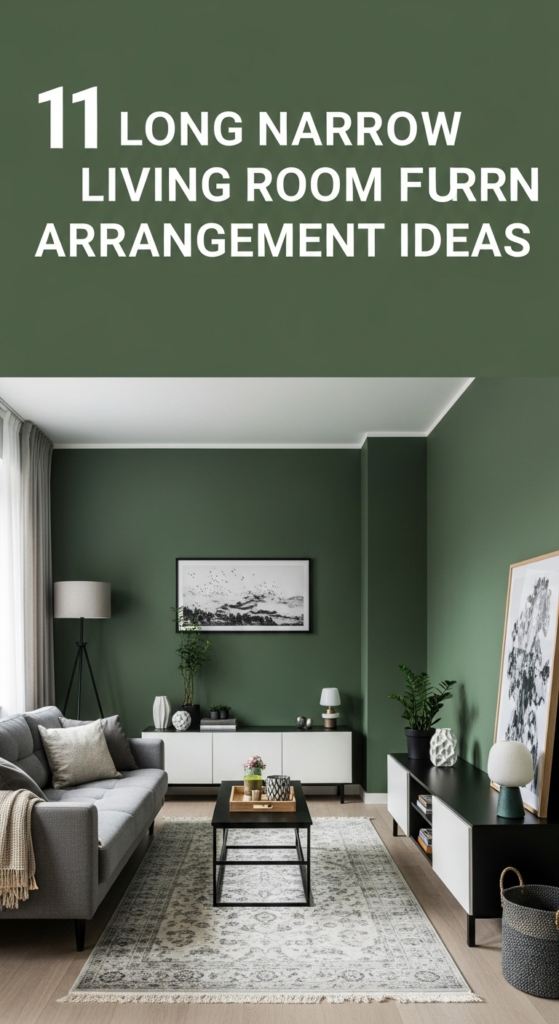
11 Long Narrow Living Room Furniture Arrangement Ideas
Long, narrow living rooms are one of the most common—and challenging—floor plans in modern homes and apartments. Whether you’re dealing with a classic railroad apartment, a converted loft, or simply an elongated room, the struggle to create a functional, inviting space is real. The key to success lies not in the furniture you choose, but in how you arrange it. A thoughtful layout can transform your tunnel-like space into a well-proportioned, multi-functional living area that feels both spacious and cozy.
The golden rule for narrow living rooms is to work against the length rather than emphasize it. This means avoiding arrangements that create a bowling alley effect, where furniture lines up along the walls and draws the eye straight down the room’s longest dimension. Instead, successful arrangements create visual breaks, establish distinct zones, and encourage movement patterns that make the space feel wider and more balanced.
In this comprehensive guide, we’ll explore eleven proven furniture arrangement ideas that specifically address the challenges of long, narrow living rooms. Each arrangement offers a different approach to solving common problems like limited floor space, awkward traffic flow, and the perpetual struggle to fit in all your furniture without creating a cramped, cluttered feel.
See also: Sitting Area Ideas in Master Bedroom Suite 14 Ways to Create a Private Lounge
1. The Classic Perpendicular Layout
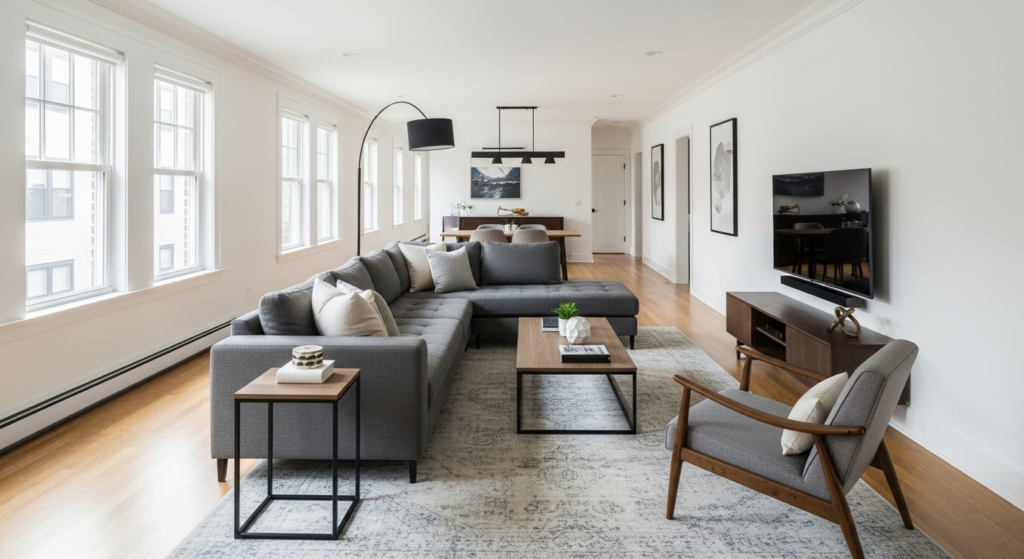
The perpendicular arrangement is perhaps the most effective solution for narrow living rooms, and it’s the go-to layout recommended by interior designers worldwide. The concept is simple yet transformative: position your main sofa perpendicular to the longest walls, essentially running it across the width of the room rather than along its length.
This single strategic move accomplishes several goals simultaneously. First, it visually breaks up the long sight line that makes narrow rooms feel tunnel-like. Second, it creates a natural focal point for the room—typically the wall your sofa faces, which might feature a television, fireplace, or gallery wall. Third, it establishes a clear conversation zone that feels intimate and purposeful rather than stretched thin.
When implementing this arrangement, place your sofa about two-thirds of the way down the room’s length, facing toward one of the short walls. Add a coffee table in front of the sofa and position one or two accent chairs either perpendicular to the sofa or angled slightly toward it. This creates a U-shaped or L-shaped conversation area that encourages interaction while leaving walkway space along one or both long walls.
See also: Master Bedroom False Ceiling Designs 14 Ways to Elevate Your Overhead Aesthetic
2. The Dual-Zone Division
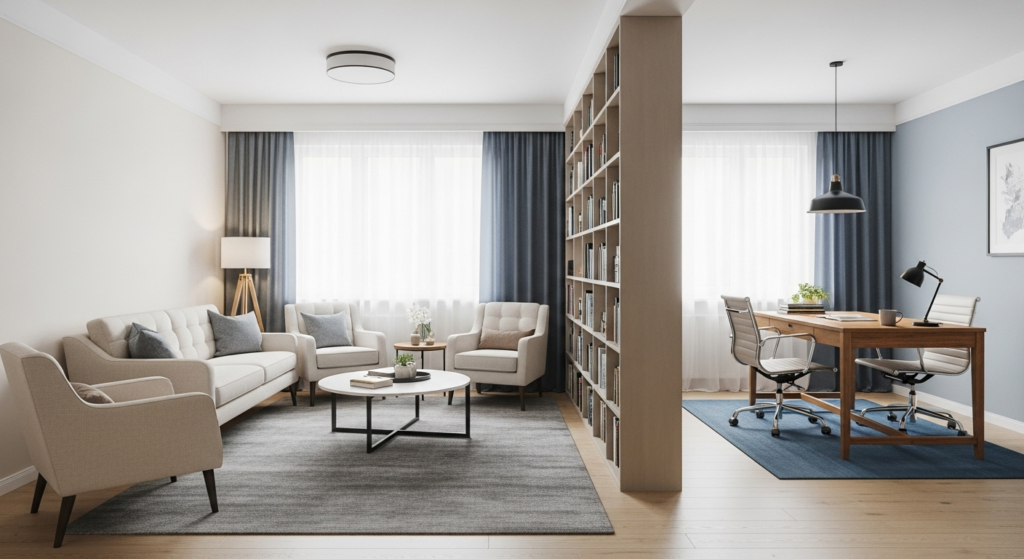
Many narrow living rooms must serve multiple functions, especially in apartments or open-plan homes. The dual-zone arrangement acknowledges this reality by intentionally dividing your narrow space into two distinct areas, each with its own purpose and furniture grouping.
Start by determining what functions your living room needs to serve. Common combinations include a main seating area plus a reading nook, a TV viewing zone plus a workspace, or a conversation area plus a dining space. Once you’ve identified your two functions, create separate furniture arrangements for each, positioned at opposite ends of the narrow room.
The key to making this work is clear visual separation without physical barriers. Use area rugs to define each zone—one rug under your main seating area and a different rug (even if in the same style family) under your secondary zone. Position a console table, bookshelf, or even just a floor lamp between the two areas to create a subtle boundary. This arrangement works beautifully because it gives purpose to the room’s length rather than fighting against it.
For example, you might place a sofa, two chairs, and a coffee table at one end for conversation and TV watching, then create a home office setup at the other end with a desk, ergonomic chair, and small bookshelf. The length of the room, which seemed like a problem, now becomes an asset that provides natural separation between work and relaxation.
3. The Floating Furniture Strategy
Most people’s instinct when furnishing a narrow room is to push everything against the walls to maximize floor space. Paradoxically, this often makes the room feel more cramped and tunnel-like. The floating furniture arrangement turns this conventional wisdom on its head by pulling key pieces away from the walls.
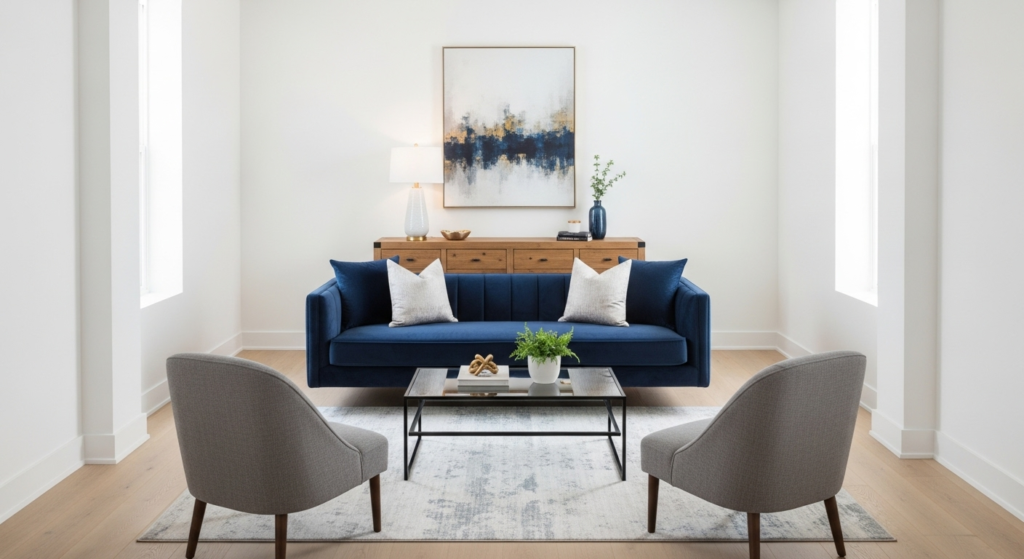
Position your sofa floating in the space, several feet from any wall, with a console table or low bookshelf placed directly behind it. This creates depth and dimension while defining your living zone. Arrange chairs and a coffee table to complete the conversation area, leaving clear walkways around the perimeter of your furniture grouping.
This arrangement works particularly well in narrow living rooms that are part of an open floor plan. The floating furniture naturally separates the living area from adjacent spaces like dining rooms or kitchens without requiring walls or heavy room dividers. It also creates useful space behind the sofa—perfect for a console table styled with lamps, books, and decorative objects that add another layer of visual interest.
The psychological effect is powerful: instead of feeling squeezed into a narrow corridor with furniture lining the walls, you experience a defined, intentional living space surrounded by open floor area that actually makes the room feel larger.
4. The L-Shaped Sectional Corner Anchor
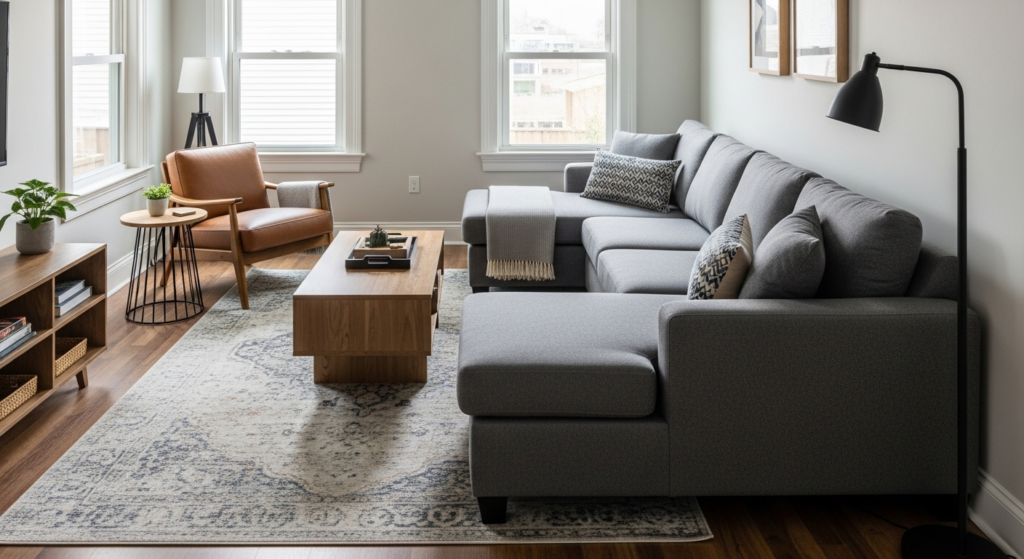
Sectional sofas can be tricky in narrow rooms, but an L-shaped sectional positioned correctly becomes one of your best tools for creating a functional layout. The key is to anchor the sectional in one corner of the room, with the longer section running parallel to the long wall and the shorter chaise or loveseat portion extending perpendicular into the room.
This arrangement accomplishes several objectives. It maximizes seating capacity in a small footprint, creates a cozy conversation area, and leaves the majority of the room’s center open for traffic flow. The perpendicular chaise section provides that crucial visual break across the width of the room, preventing the bowling alley effect.
Complete the arrangement by adding a coffee table in the open area created by the L-shape. If space allows, position a single accent chair across from the sectional to create a complete conversation zone. Keep side tables minimal or opt for nesting tables that can be tucked away when not in use.
One important consideration: in very narrow rooms (less than 10 feet wide), make sure your sectional’s chaise section doesn’t extend so far into the room that it blocks the main walkway. Measure carefully and look for sectionals with shorter chaise options designed for smaller spaces.
5. The Symmetrical Parallel Arrangement
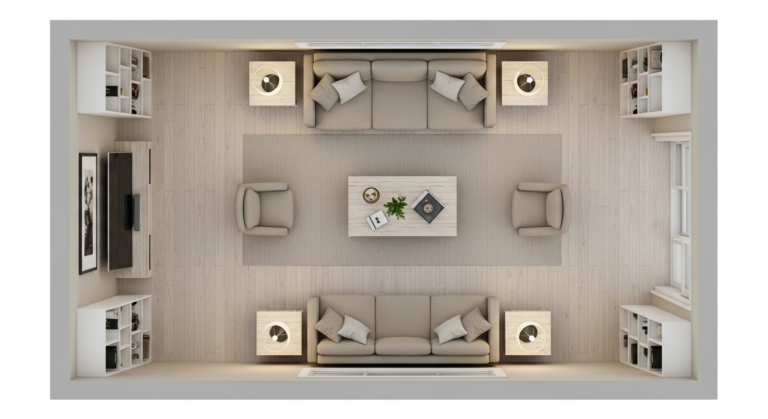
For those who love traditional, formal aesthetics, the symmetrical parallel arrangement brings elegance and balance to a narrow living room. This layout works best in slightly wider narrow rooms (at least 11-12 feet wide) where you have enough space for two sofas or a sofa and loveseat to face each other comfortably.
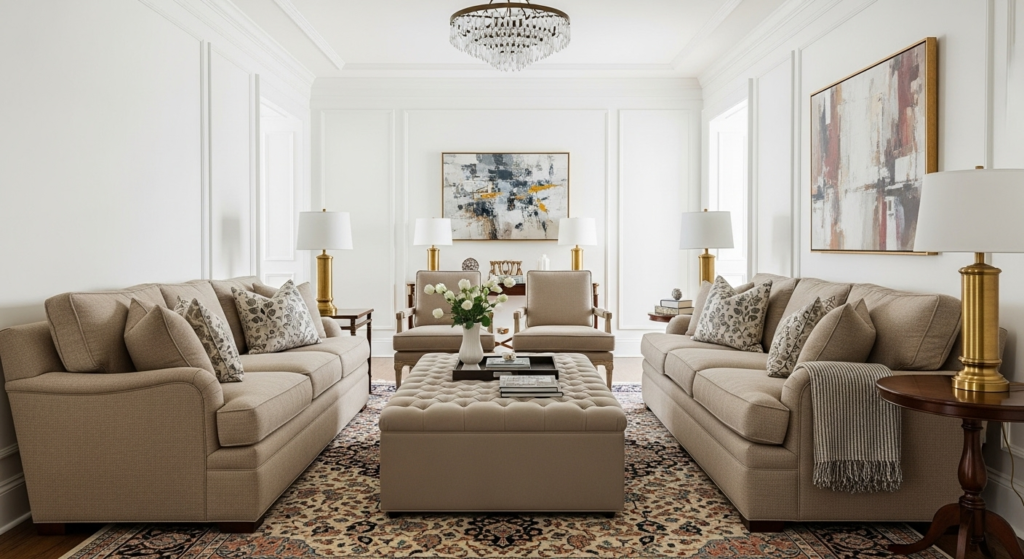
Position two identical or complementary seating pieces along opposite long walls, facing each other across the width of the room. Place a coffee table, ottoman, or pair of poufs centered between them. The symmetry creates a sense of order and sophistication while the facing arrangement facilitates conversation and creates a balanced focal point.
To prevent the arrangement from feeling too formal or rigid, add asymmetrical elements through artwork, lighting, or accessories. A statement chandelier centered above the coffee table draws the eye upward and adds drama. Side tables at the ends of each sofa can be different styles or heights to introduce visual variety.
This arrangement works particularly well in living rooms with a fireplace or architectural feature on one of the short walls, as both seating pieces can be angled slightly toward this focal point while still maintaining their parallel positioning.
6. The Angled Conversation Arrangement
Breaking free from the rigid parallel and perpendicular lines that dominate most furniture arrangements, the angled approach introduces dynamic visual interest while solving the narrow room’s proportional challenges. This layout involves positioning your main seating pieces at diagonal angles rather than squared up with the walls.
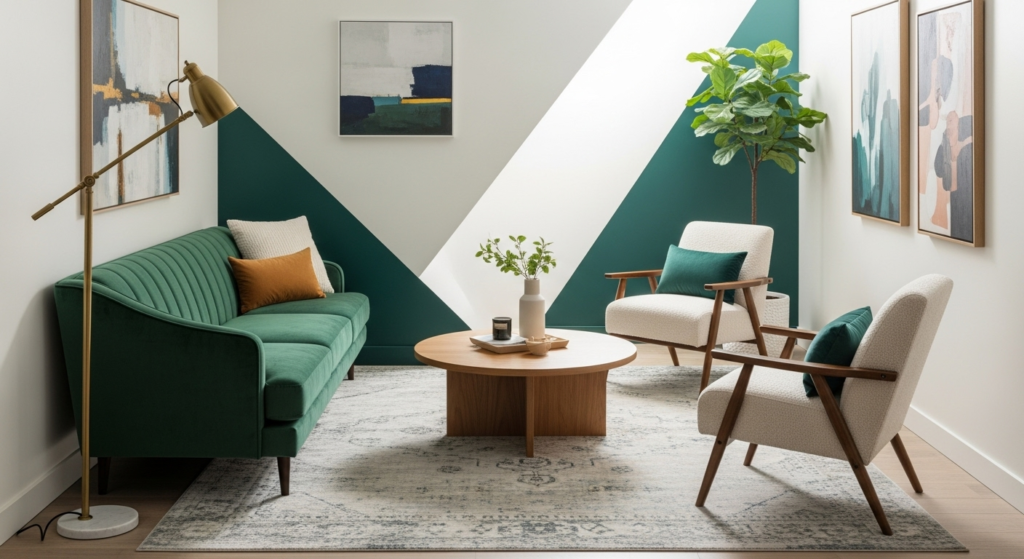
Start by placing your sofa at approximately a 45-degree angle in one corner of the room. Position chairs at complementary angles to create a conversation grouping that forms a rough circle or oval rather than the typical rectangle. The coffee table follows the angled lines, further emphasizing the diagonal orientation.
This arrangement works beautifully because diagonal lines are inherently more interesting to the eye than straight ones. The angles create a sense of movement and energy while visually expanding the space—our eyes follow the diagonal lines and perceive more square footage than actually exists. Additionally, the angled furniture creates interesting negative spaces in the corners that can be filled with plants, floor lamps, or small accent tables.
The one caveat: angled arrangements require more floor space to work properly, so this layout is best suited to narrow rooms that are at least 12 feet wide and relatively long. In very small spaces, the angled furniture may actually reduce usable seating area.
7. The Multi-Functional Modular Layout
Modern living often requires our spaces to serve multiple purposes, and modular furniture offers the flexibility to reconfigure your narrow living room based on changing needs. This arrangement focuses on adaptable pieces that can be moved, rearranged, or repurposed throughout the day or week.
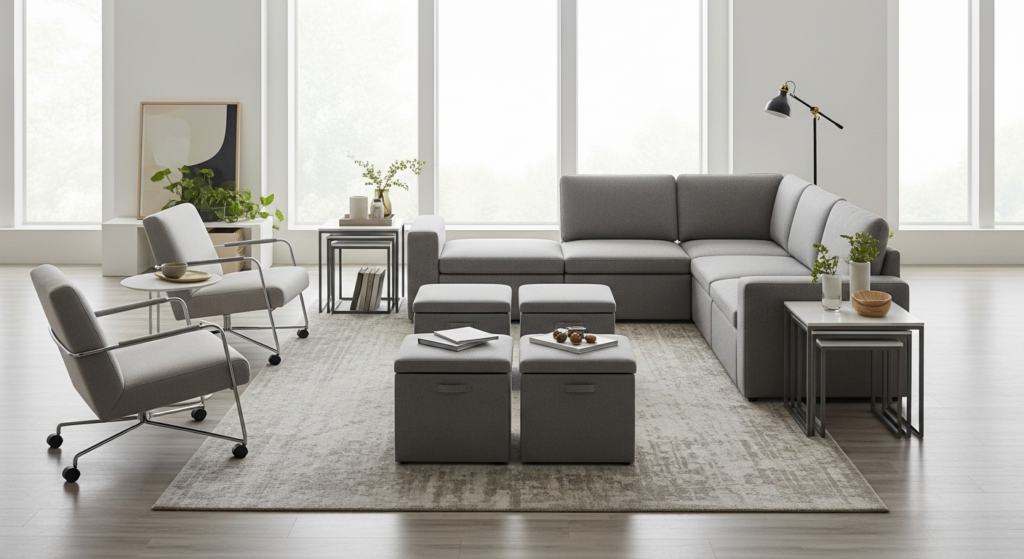
Invest in a modular sectional with separate pieces that can be configured in multiple ways. Add movable ottomans that serve as both seating and coffee tables, lightweight accent chairs that can be pulled into conversation groups or pushed to the perimeter, and nesting tables that expand when needed but tuck away when not in use.
The beauty of this approach is that you’re not locked into a single arrangement. For movie night, configure the modular sections into a large sectional facing the TV. For a dinner party, separate the modules to create distinct seating areas that facilitate mingling. For everyday living, arrange pieces in whatever configuration best serves your routine.
This flexibility is particularly valuable in narrow living rooms where the “perfect” arrangement may not exist—instead, you have multiple good arrangements that serve different purposes. Mark safe zones on your floor (perhaps with removable tape on the underside of rugs) to guide your reconfigurations and ensure adequate walking space in any setup.
8. The Window-Focused Natural Light Arrangement
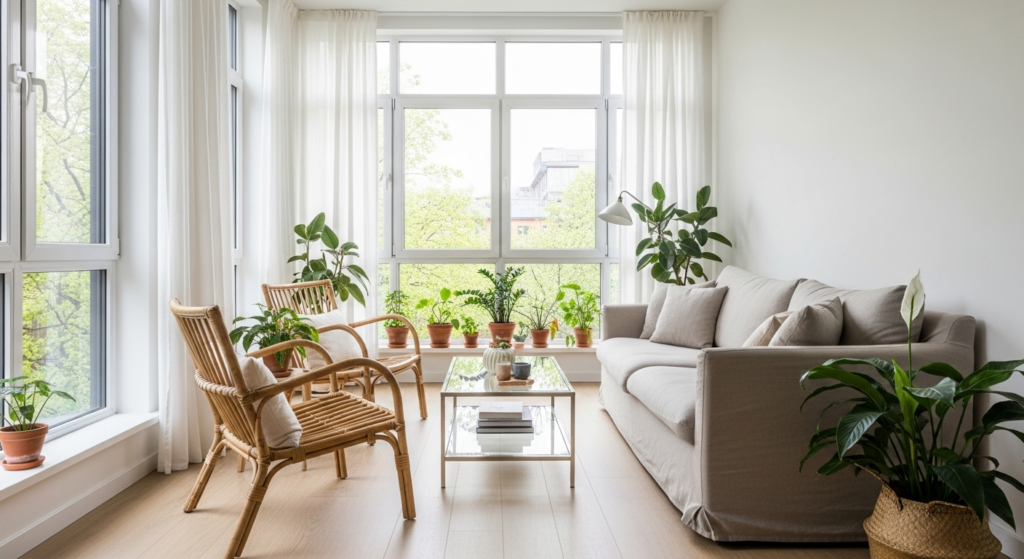
If your narrow living room is blessed with large windows, especially on one of the short walls, orient your entire furniture arrangement to celebrate and maximize this natural light. This approach creates a bright, airy atmosphere while giving your seating a pleasant view.
Position your main sofa perpendicular to the window wall but set back several feet to allow light to flood into the room. Avoid placing tall furniture pieces directly in front of windows, which would block precious natural light. Instead, use low-profile chairs, benches, or a window seat to take advantage of the view without creating a barrier.
Arrange additional seating pieces to angle toward both the windows and each other, creating a conversation area that feels open and connected to the outdoors. Use lightweight, transparent furniture elements like glass coffee tables and open-frame chairs to maintain the airy feel. Opt for sheer curtains or natural woven shades that provide privacy when needed while still allowing light to filter through.
This arrangement works particularly well in urban apartments where window views are premium features worth showcasing, or in any narrow room where maximizing natural light is a priority for both aesthetics and wellbeing.
9. The Entertainment-Centered Media Room
For households where television and entertainment are primary living room functions, design your furniture arrangement specifically around optimal viewing. This focused approach ensures everyone has a comfortable sightline while maintaining good traffic flow through the narrow space.
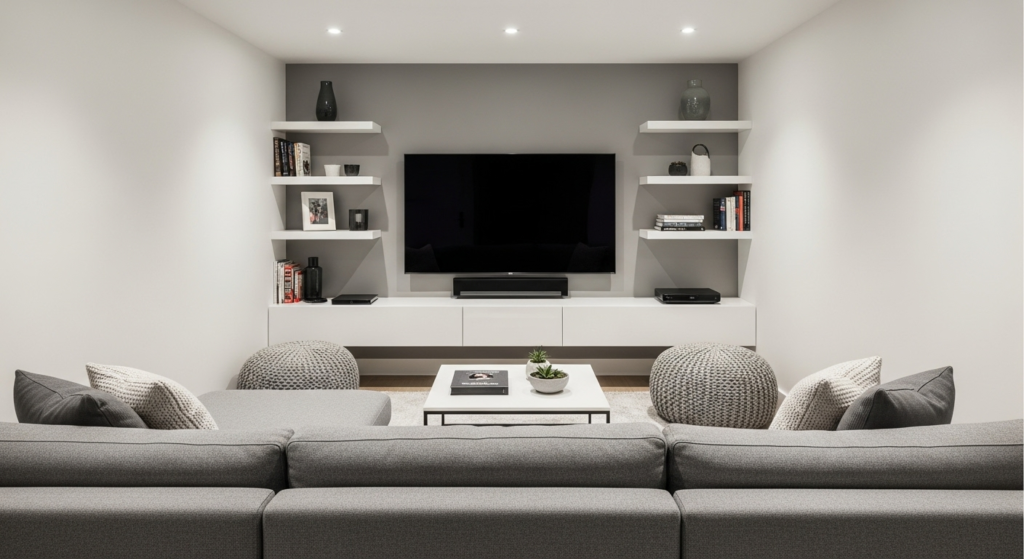
Mount your television on one of the short walls at the appropriate viewing height (typically with the center of the screen at seated eye level, about 42 inches from the floor). Position your main seating—whether a sofa, sectional, or loveseat—directly facing the TV at a distance that follows the viewing distance formula (screen size in inches multiplied by 1.5 to 2.5 for optimal viewing).
Arrange additional seating at slight angles to provide alternative viewing positions without blocking the primary sightline. In narrow rooms, this often means placing chairs at 30-45 degree angles on either side of the main sofa. Keep your coffee table low and minimal so it doesn’t obstruct the view, or use nesting tables that can be moved aside during movie marathons.
Enhance the media-focused arrangement with practical elements like built-in or wall-mounted storage for media components, a soundbar shelf, and strategic lighting that can be dimmed for viewing. This purpose-driven layout acknowledges that for many people, the living room is primarily an entertainment space, and the furniture arrangement should support that reality.
10. The Open-Plan Transitional Arrangement
When your narrow living room flows into another space without walls or doors—perhaps opening to a dining area or kitchen—your furniture arrangement needs to work with this open-plan layout rather than against it. The transitional arrangement creates definition while maintaining the open, flowing feel.
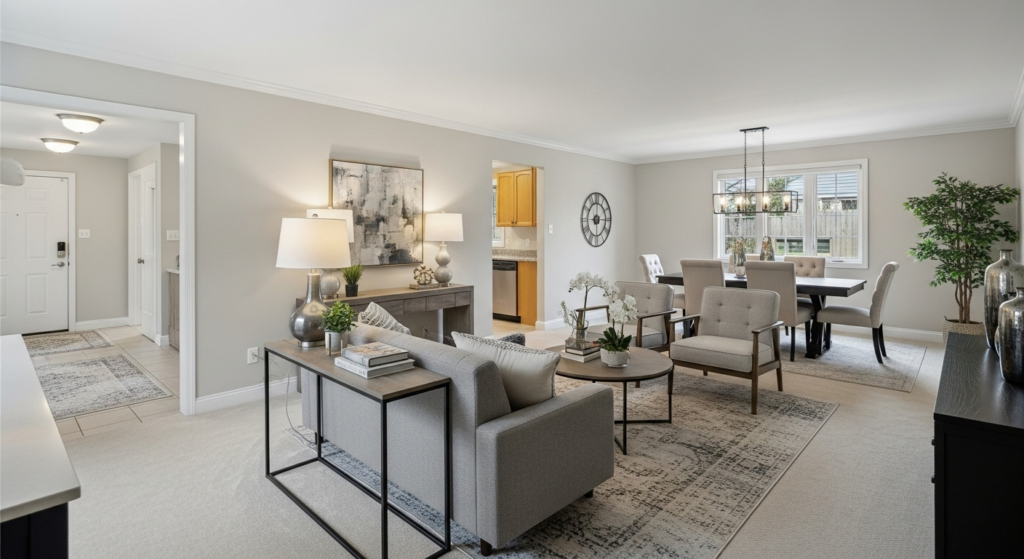
Use your sofa as a room divider by positioning it with its back toward the adjacent space. This creates a natural boundary between living and dining or kitchen areas while keeping sightlines open. The sofa back can be enhanced with a console table styled with lamps, books, or decorative objects, making it attractive from both sides.
Complete the living room arrangement on the “living side” of the sofa with chairs, coffee table, and accessories that create a complete, cohesive zone. The key is choosing furniture with finished backs and attractive profiles since pieces will be viewed from multiple angles in an open plan.
Consider using coordinating but distinct area rugs to define each functional zone—one under the living room furniture and another under the dining table. Maintain a consistent color palette and style throughout the open space to create visual harmony while the distinct furniture arrangements define separate purposes.
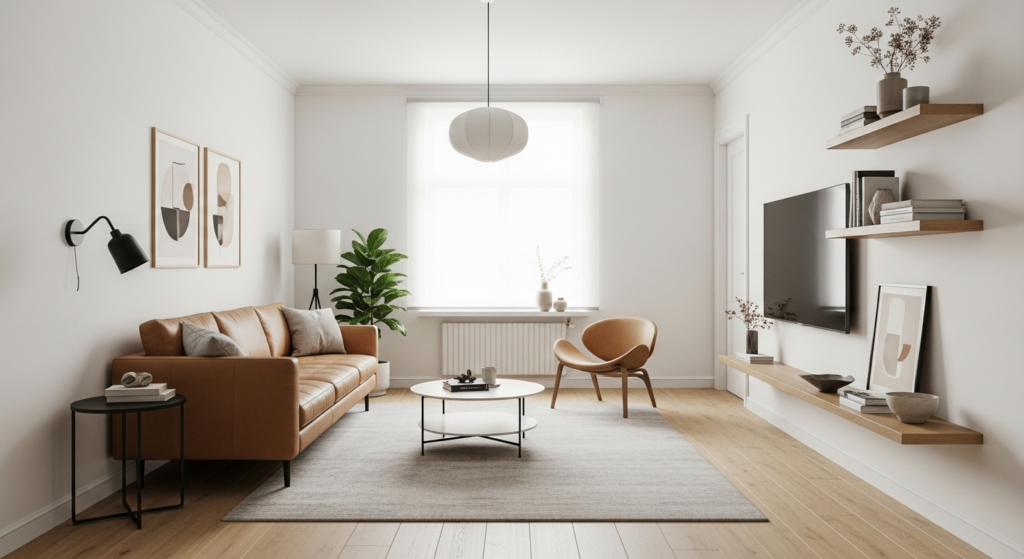
11. The Minimalist Open-Flow Design
Sometimes the best arrangement for a narrow living room is the simplest. The minimalist approach embraces negative space as a design element, using the absolute minimum furniture necessary for function while leaving generous open floor area that makes the narrow room feel spacious and breathable.
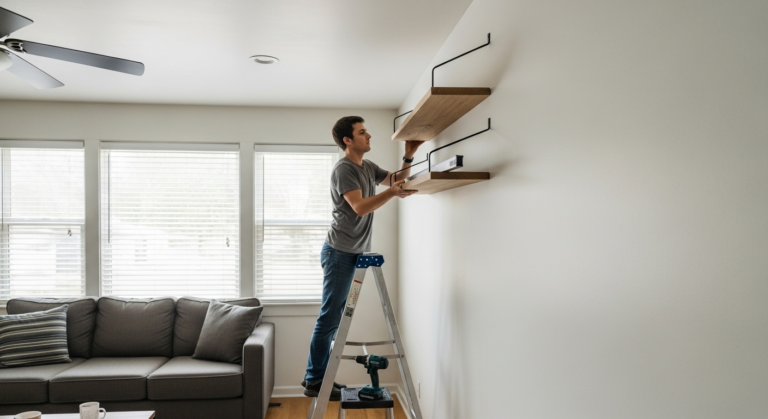
Select your furniture carefully, choosing only essential pieces: one sofa, one coffee table, perhaps one accent chair or a pair of floor cushions for additional seating when needed. Position these pieces in a simple, clean arrangement that doesn’t try to fill every inch of space. Leave walls bare or nearly bare, using wall-mounted shelving for storage to keep the floor clear.
This arrangement requires discipline and careful editing, but the payoff is a calm, serene space that never feels cramped or cluttered. The generous open floor area makes the narrow room feel larger than its dimensions suggest, while the carefully chosen furniture pieces become more impactful as focal points.
The minimalist arrangement works particularly well for small narrow living rooms where any attempt to fit in abundant furniture would create a crowded, uncomfortable feel. It’s also ideal for those who embrace minimalist lifestyle principles and prefer calm, uncluttered environments.
Making Your Arrangement Work
Regardless of which arrangement you choose, several universal principles will help ensure success in your narrow living room. First, always maintain adequate traffic flow—at least 30 inches for walkways, preferably 36 inches for main paths. Second, use area rugs to anchor and define your furniture groupings, with at least the front legs of your sofa and chairs resting on the rug. Third, consider scale carefully, choosing appropriately sized furniture that fits your specific dimensions rather than trying to force oversized pieces into a space that can’t accommodate them comfortably.
Finally, remember that furniture arrangement is not permanent. Don’t be afraid to experiment, live with an arrangement for a few weeks, and adjust if it’s not working. The perfect layout for your narrow living room is the one that serves your specific lifestyle, accommodates your daily activities, and makes you feel happy and comfortable in your space.