12 Corner Wardrobe Ideas
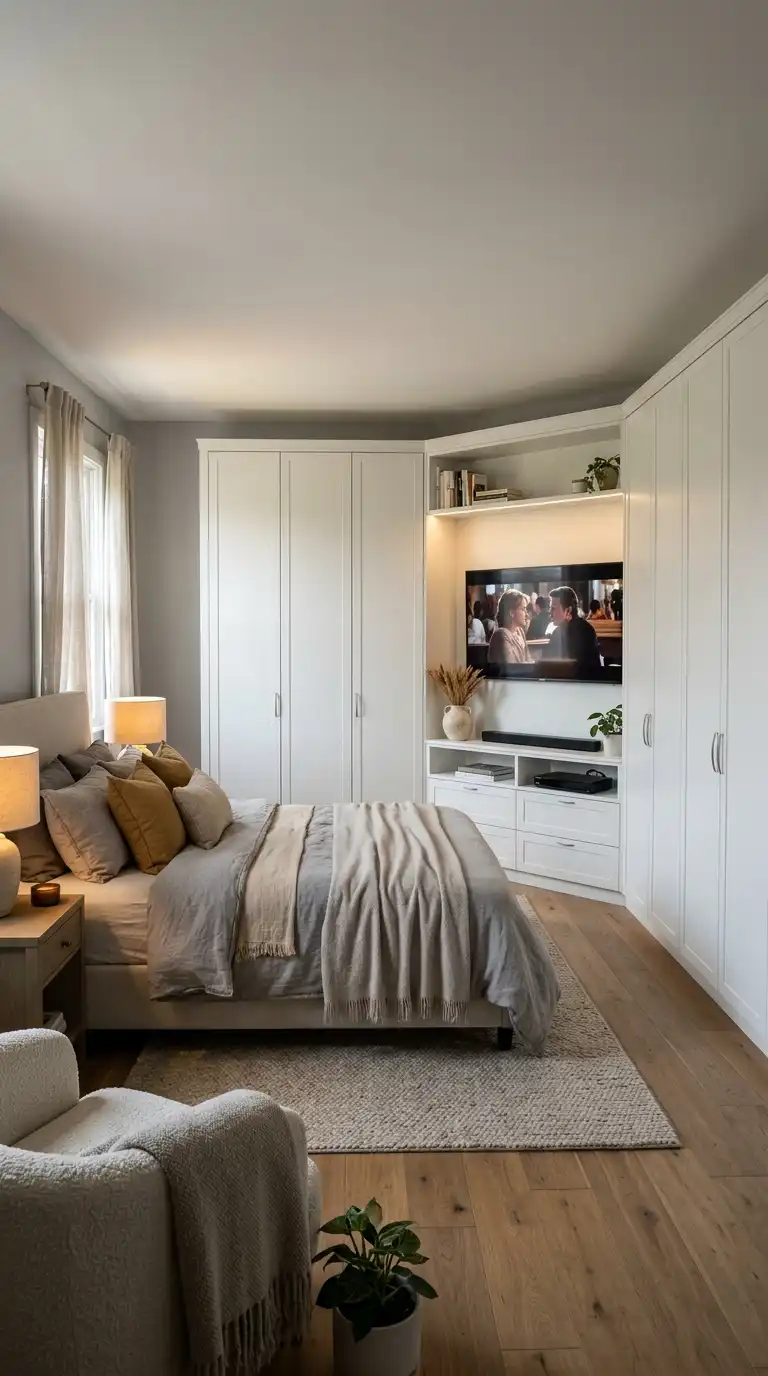
Corner spaces in bedrooms are often underutilized, yet they offer tremendous potential for storage. A corner wardrobe transforms an awkward angle into a functional and stylish feature, maximizing every inch of your room. Whether you have a compact bedroom requiring efficient use of space or a master suite where you want to create a dramatic storage statement, corner wardrobes provide clever solutions that blend seamlessly with your room’s architecture. From angled sliding doors to rotating carousel systems, here are twelve corner wardrobe ideas to inspire your next project.
1. Angled Corner Wardrobe with Sliding Doors
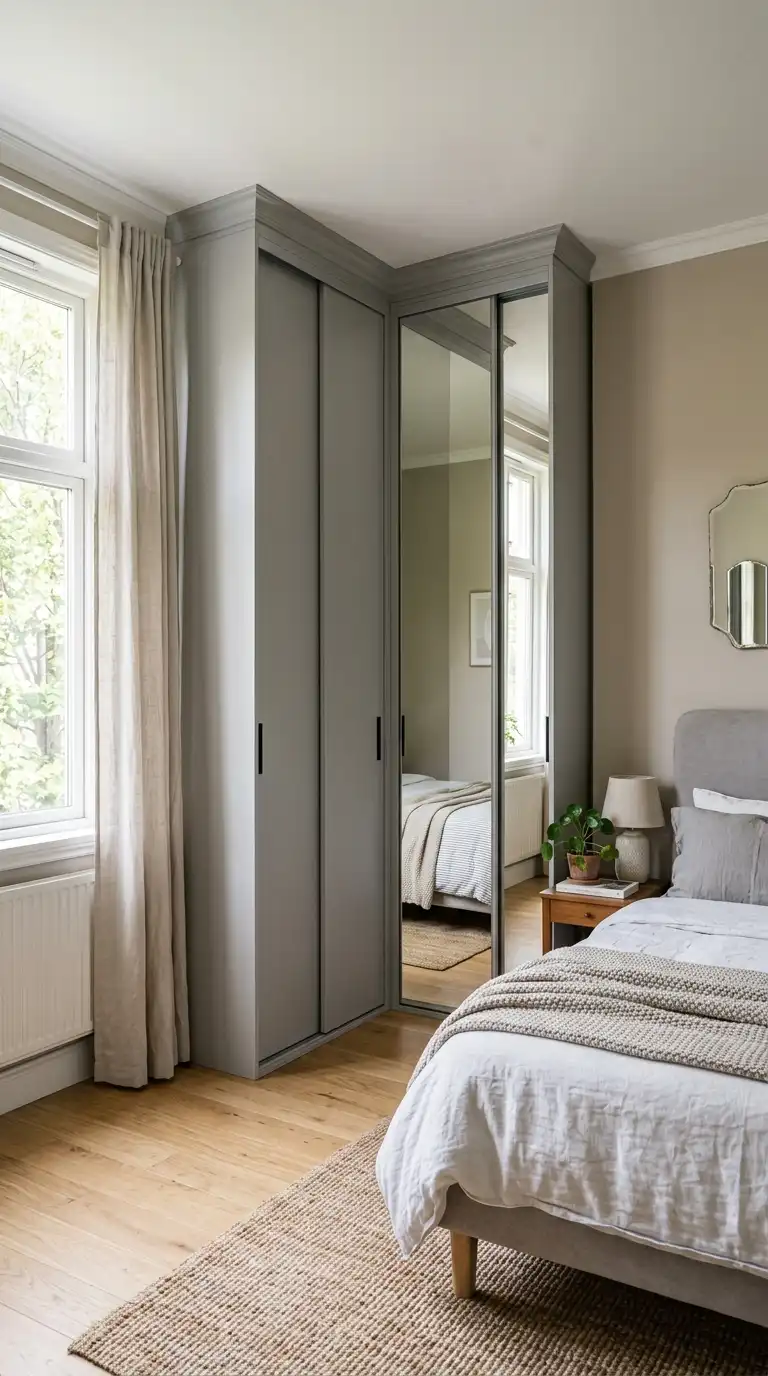
An angled corner wardrobe features doors that meet at a 45-degree angle, creating a seamless wrap-around effect that follows the room’s geometry. Sliding doors are ideal for this configuration, as they glide smoothly without requiring swing space. The angled front softens the visual impact of the corner unit, making it feel less bulky while maximizing interior storage. Choose mirrored panels to reflect light and visually expand the space, or opt for matte finishes for a modern, understated look.
2. L-Shaped Corner Wardrobe
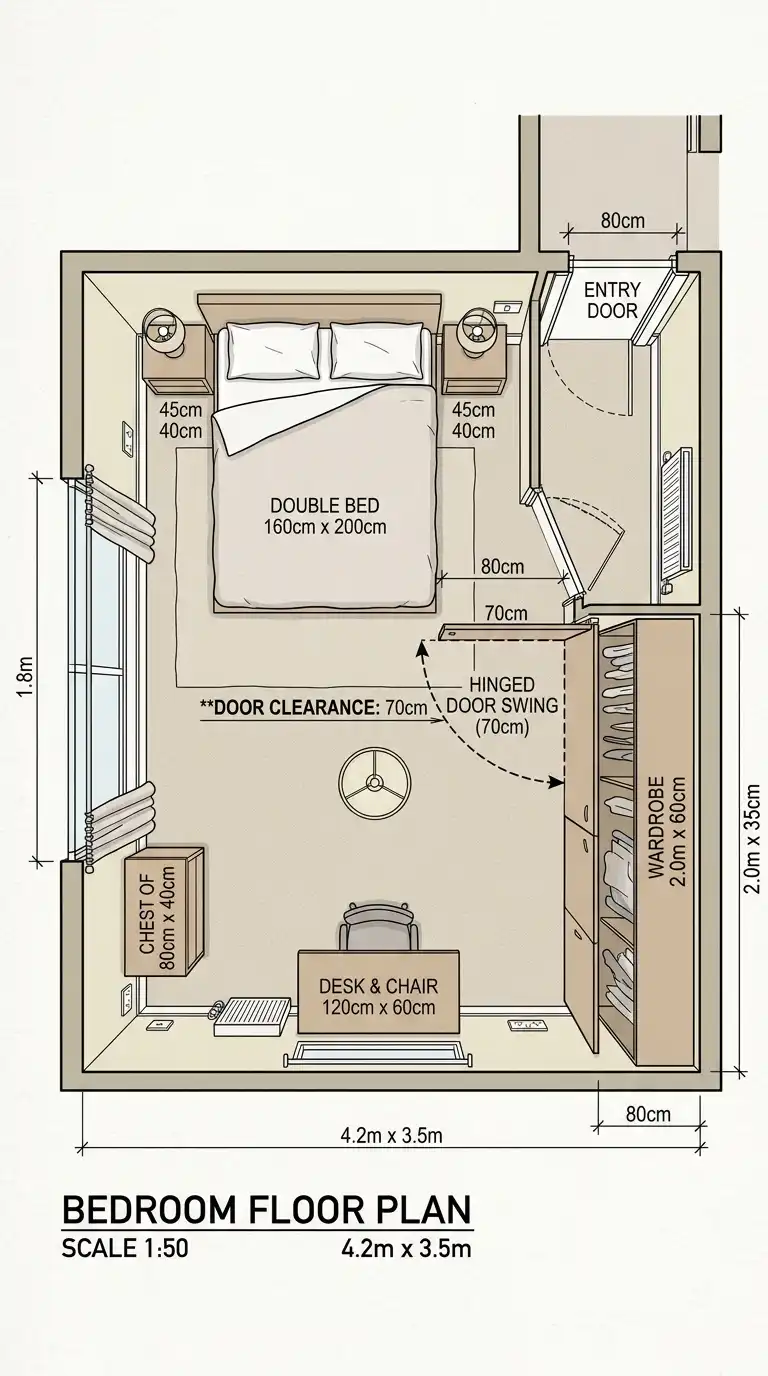
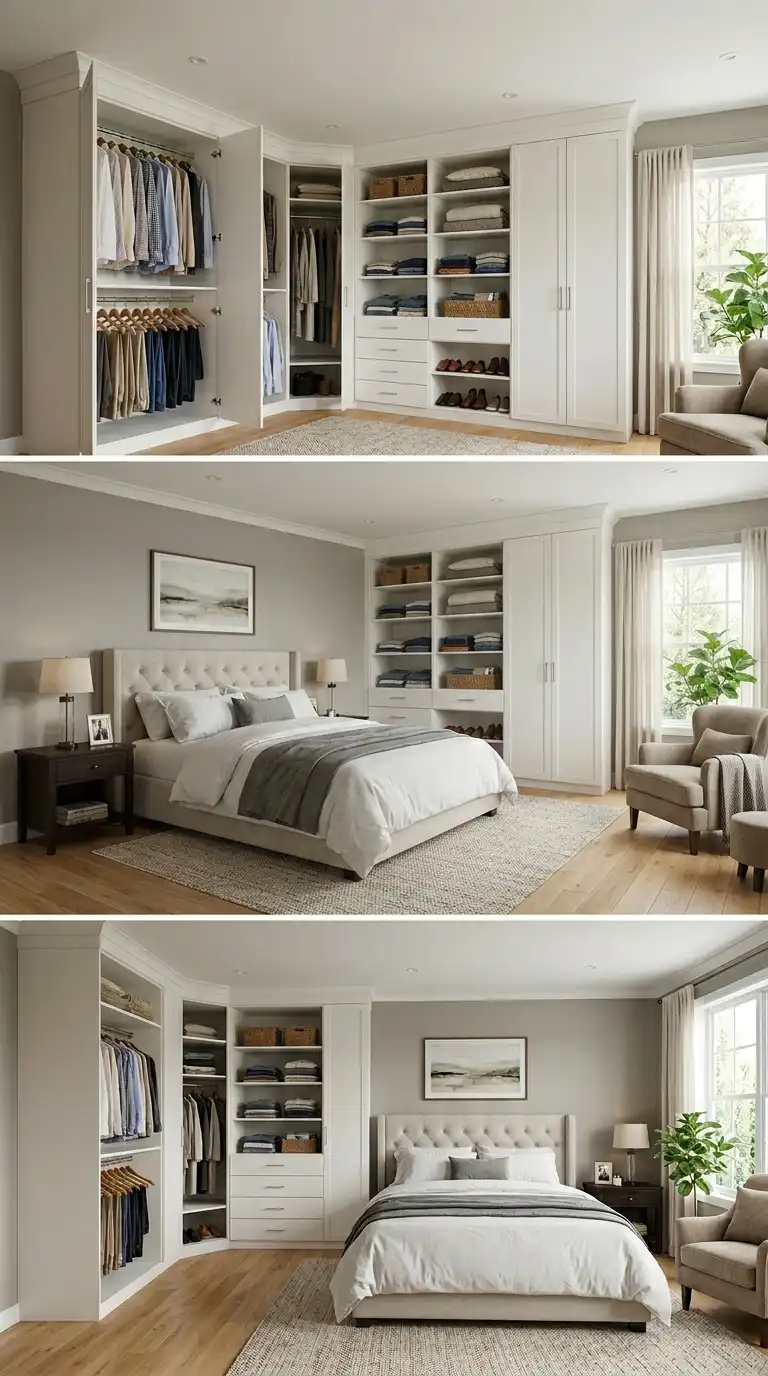
An L-shaped corner wardrobe uses two walls to create a wrap-around storage solution that maximizes corner space. This design is ideal for larger bedrooms where you can dedicate an entire corner to storage. One section can be designed for hanging clothes, while the other accommodates drawers, shelving, or a dressing area. The L-shape creates a natural division within the room, defining a storage zone while maintaining an open, spacious feel. Use consistent finishes across both sections for a cohesive look.
3. Corner Wardrobe with Carousel Shelving
A rotating carousel or lazy Susan system is the perfect solution for deep corner cabinets where items can easily get lost. These circular shelves rotate smoothly, bringing items stored at the back to the front with a gentle turn. Carousel systems are ideal for storing shoes, folded clothing, or accessories. Choose a full-circle carousel for maximum accessibility, and install adjustable shelves to accommodate items of varying heights. This design transforms a difficult corner into one of the most functional areas of your wardrobe.
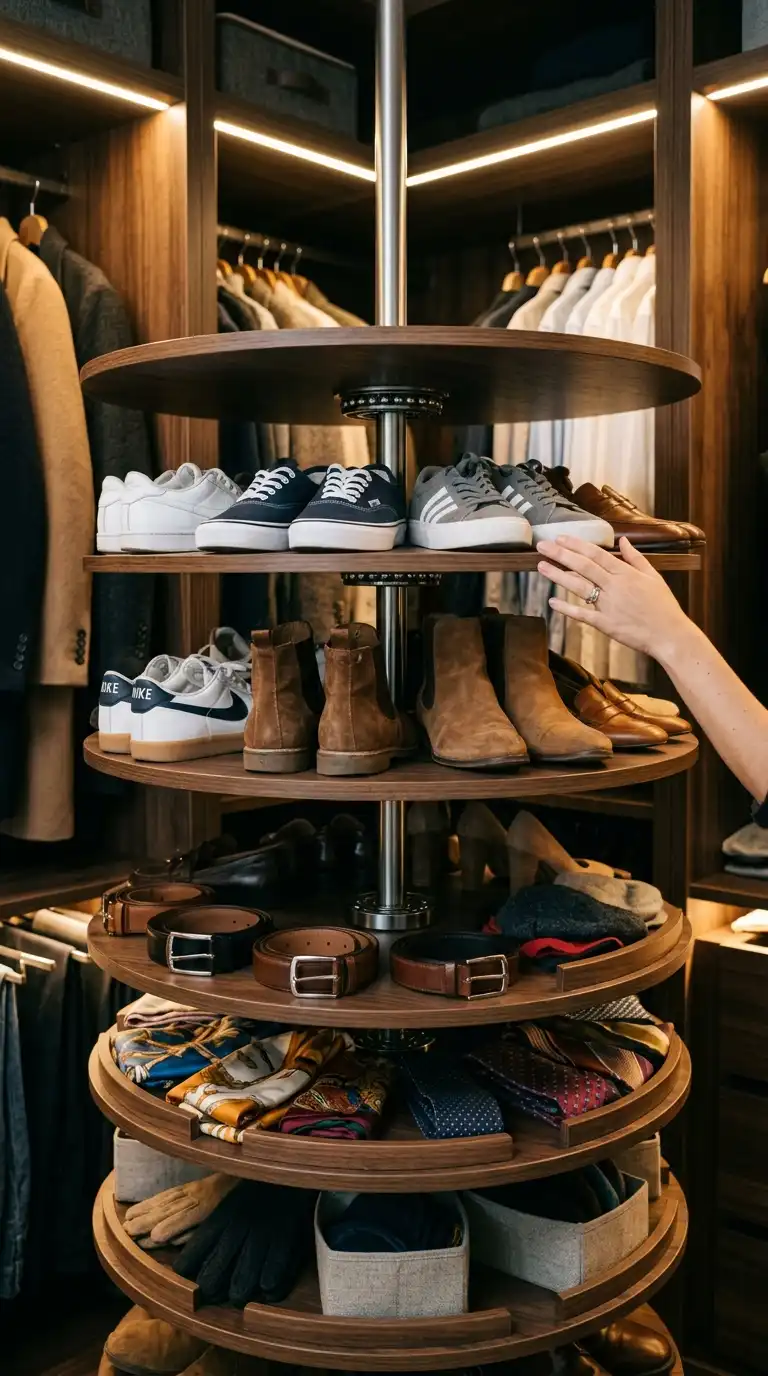
4. Corner Wardrobe with Diagonal Doors
Diagonal doors are a classic solution for corner wardrobes, creating a flat front that sits at a 45-degree angle to the walls. This design simplifies the door mechanism, allowing for standard hinged doors rather than complex sliding systems. The diagonal front creates a striking architectural feature, drawing the eye to the corner and adding visual interest to the room. Choose paneled doors for a traditional look or flat panels for a contemporary aesthetic. Interior storage can be customized with pull-out drawers, shelves, and hanging rods.
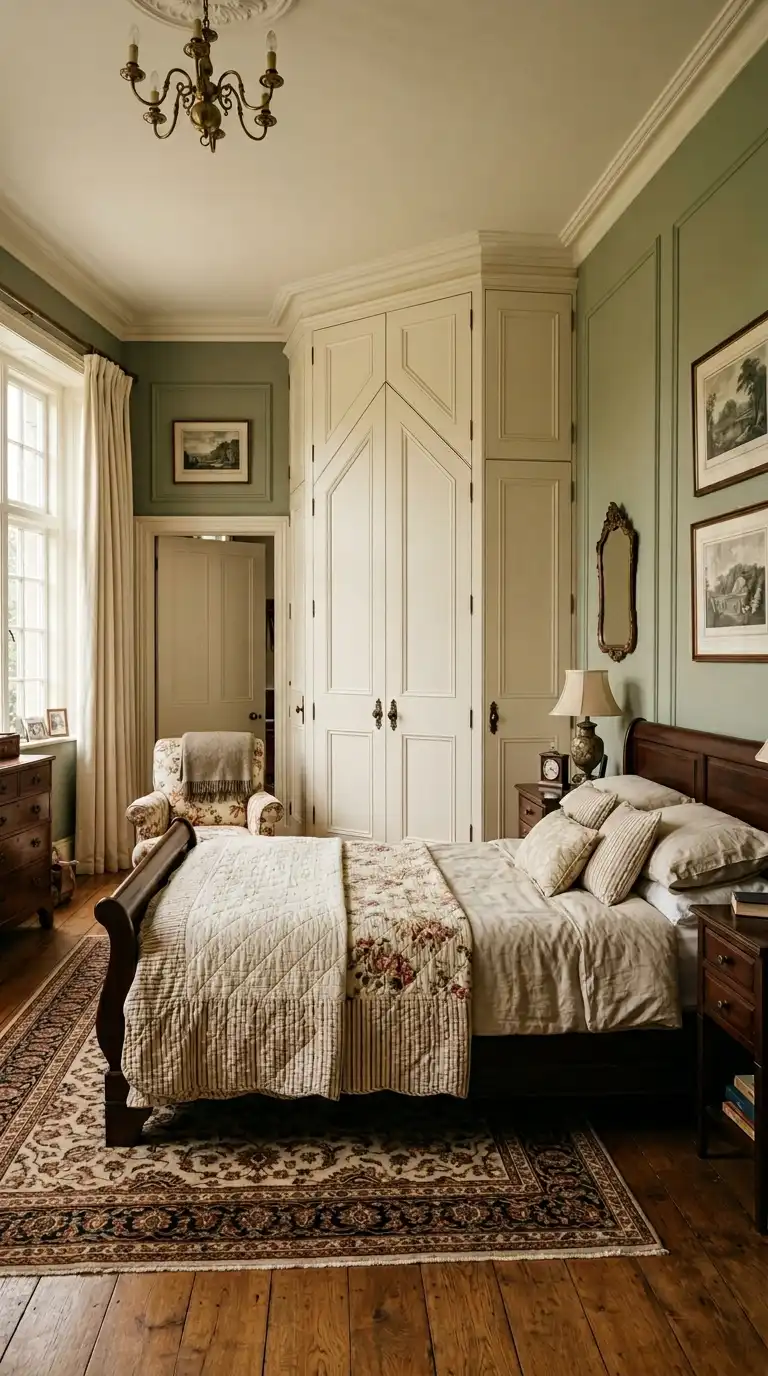
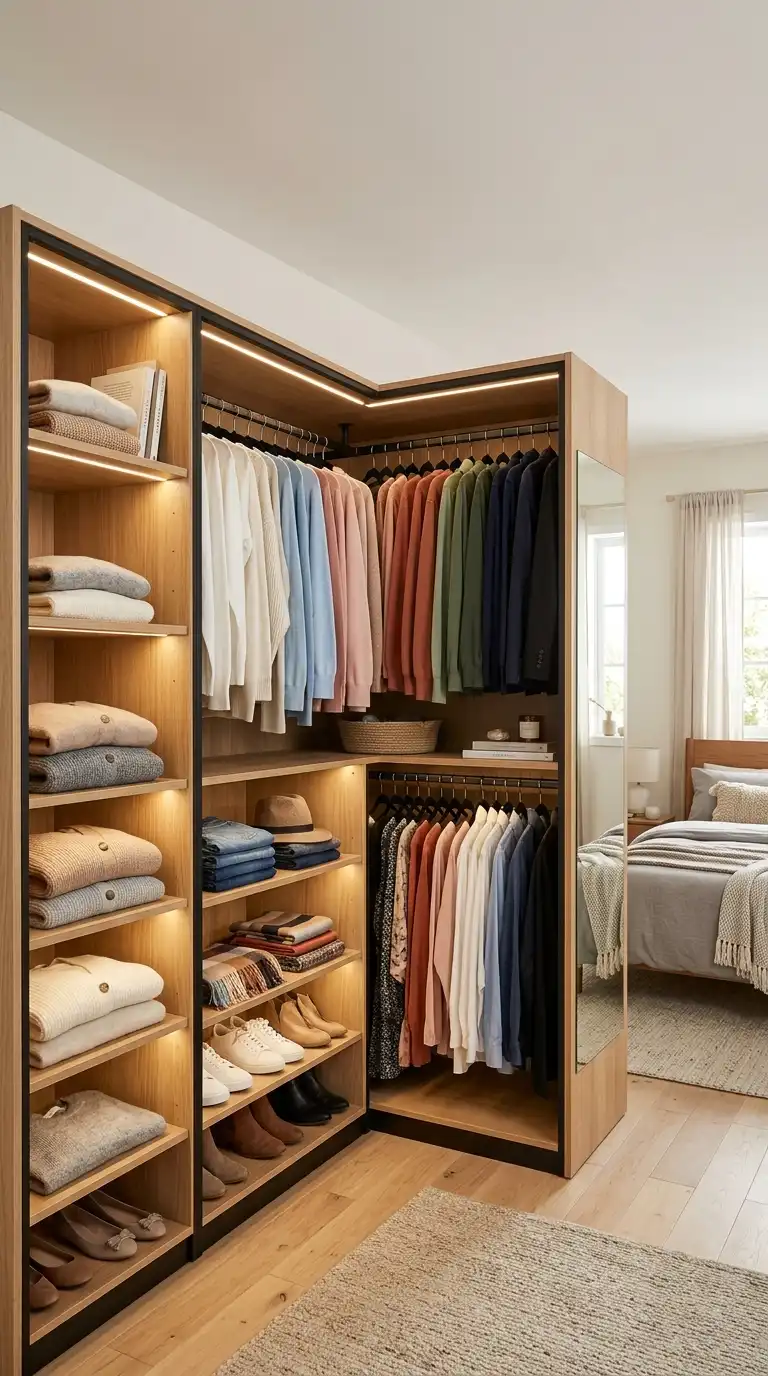
5. Open Corner Wardrobe with No Doors
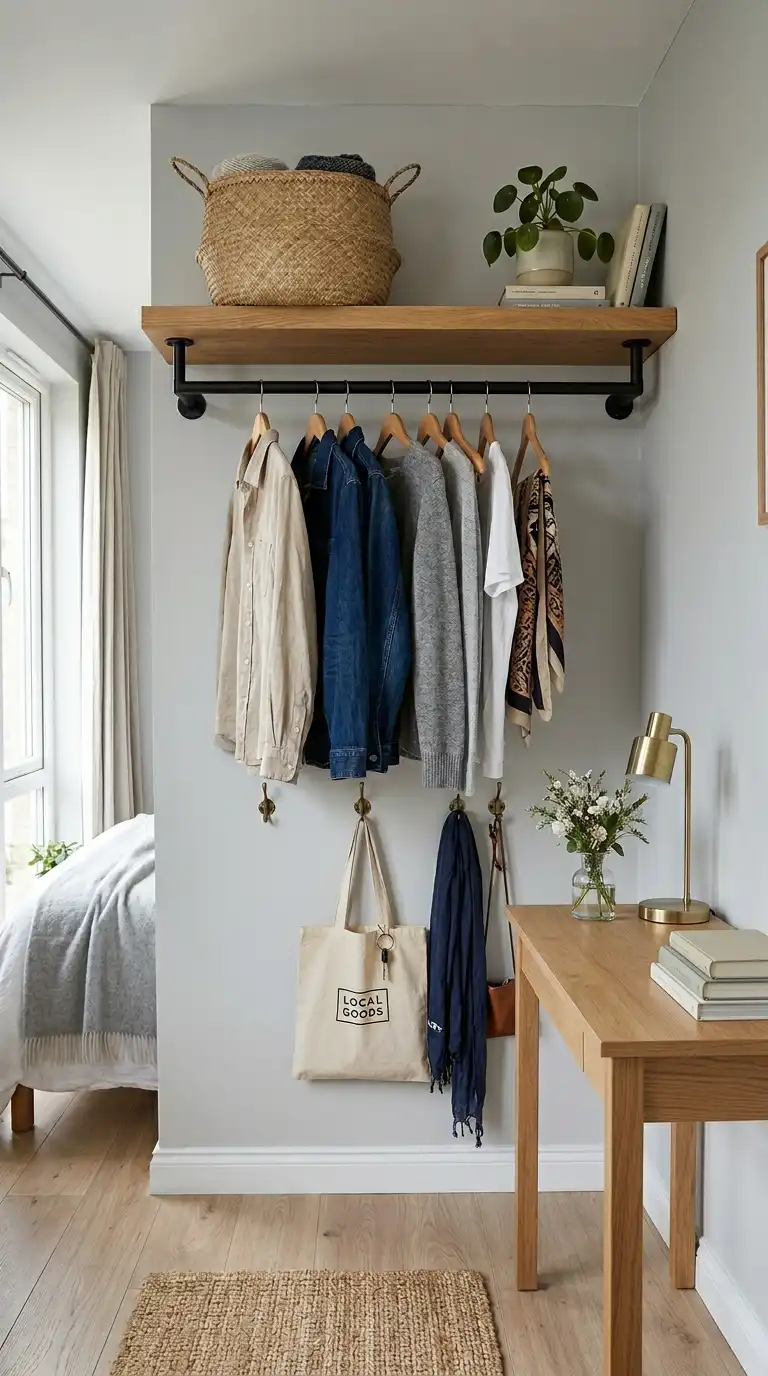
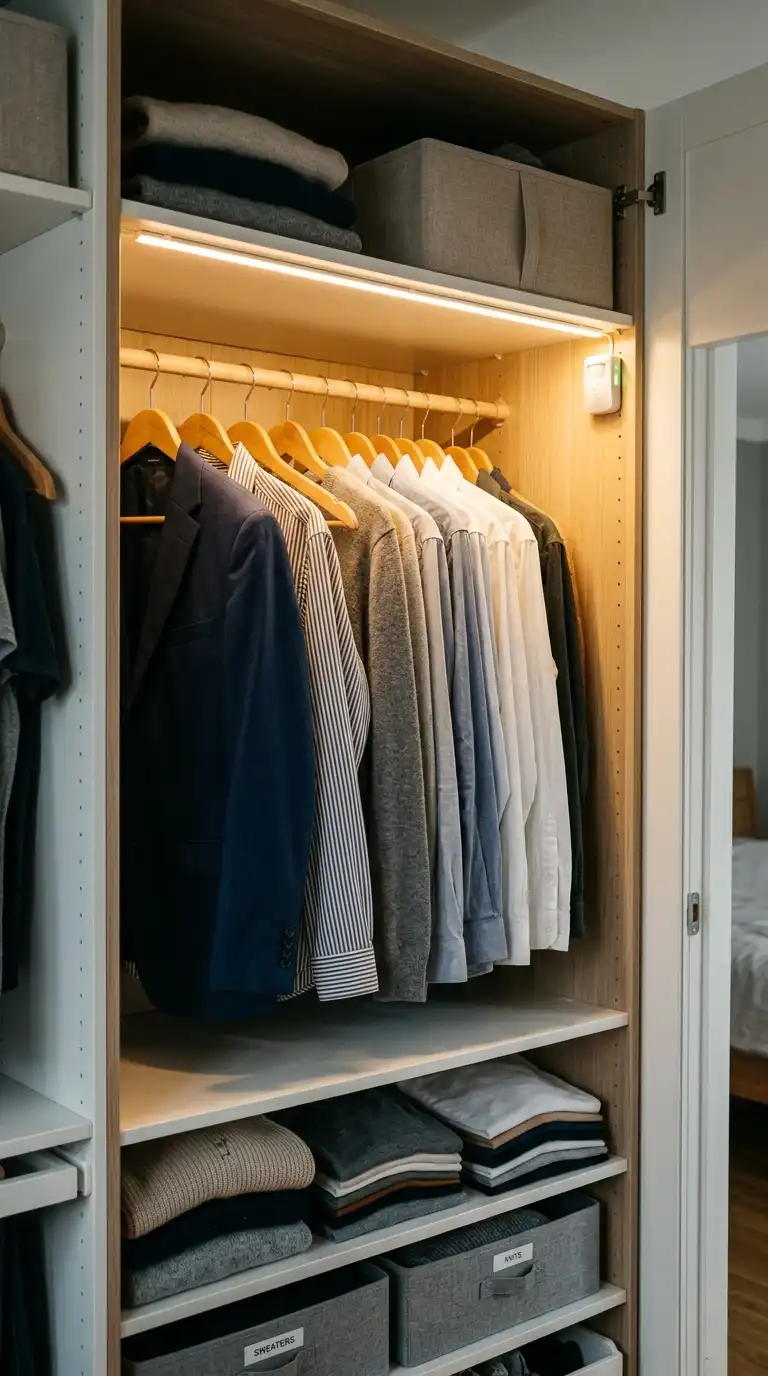
For a modern, airy look, leave your corner wardrobe doorless. This open concept allows for easy visibility of all your clothing and accessories, creating a curated, boutique-like display. Use uniform hangers and neatly folded items to maintain a polished appearance. Open corners are ideal for displaying your favorite pieces, shoes, and accessories. Add integrated LED lighting to highlight the contents and create a warm, inviting glow. This design works beautifully in walk-in closets, dressing areas, and master bedrooms where privacy is not a concern.
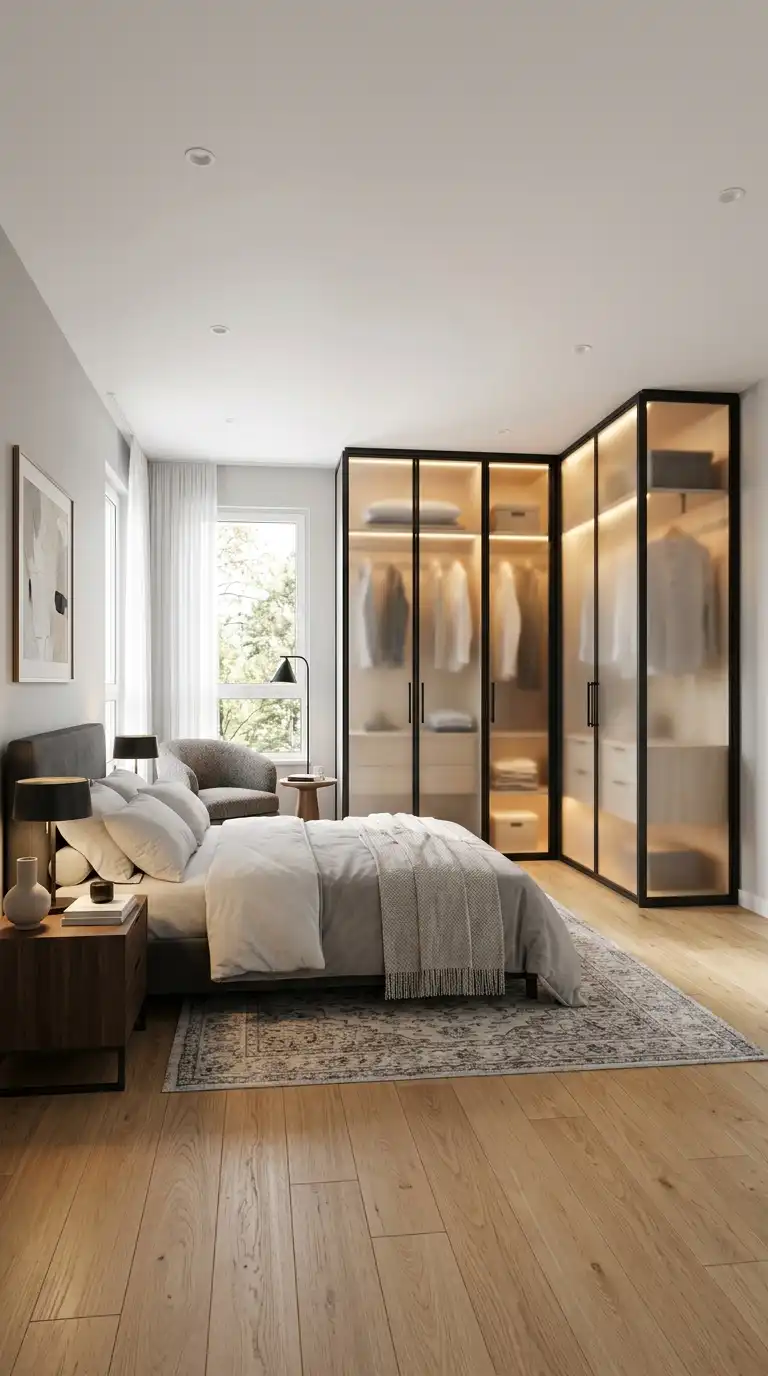
6. Corner Wardrobe with Wrap-Around Glass Doors
Glass doors on a corner wardrobe add elegance and lightness, allowing you to showcase your wardrobe while maintaining protection from dust. Use clear glass for a full display, frosted glass for privacy, or tinted glass for a dramatic effect. The wrap-around configuration follows the corner, creating a continuous glass surface that reflects light and makes the space feel larger. Frame the glass with slim metal in black, brass, or chrome for a modern, architectural look. Interior LED lighting enhances the display and adds a touch of luxury.
7. Corner Wardrobe with Pull-Out Corner Rack
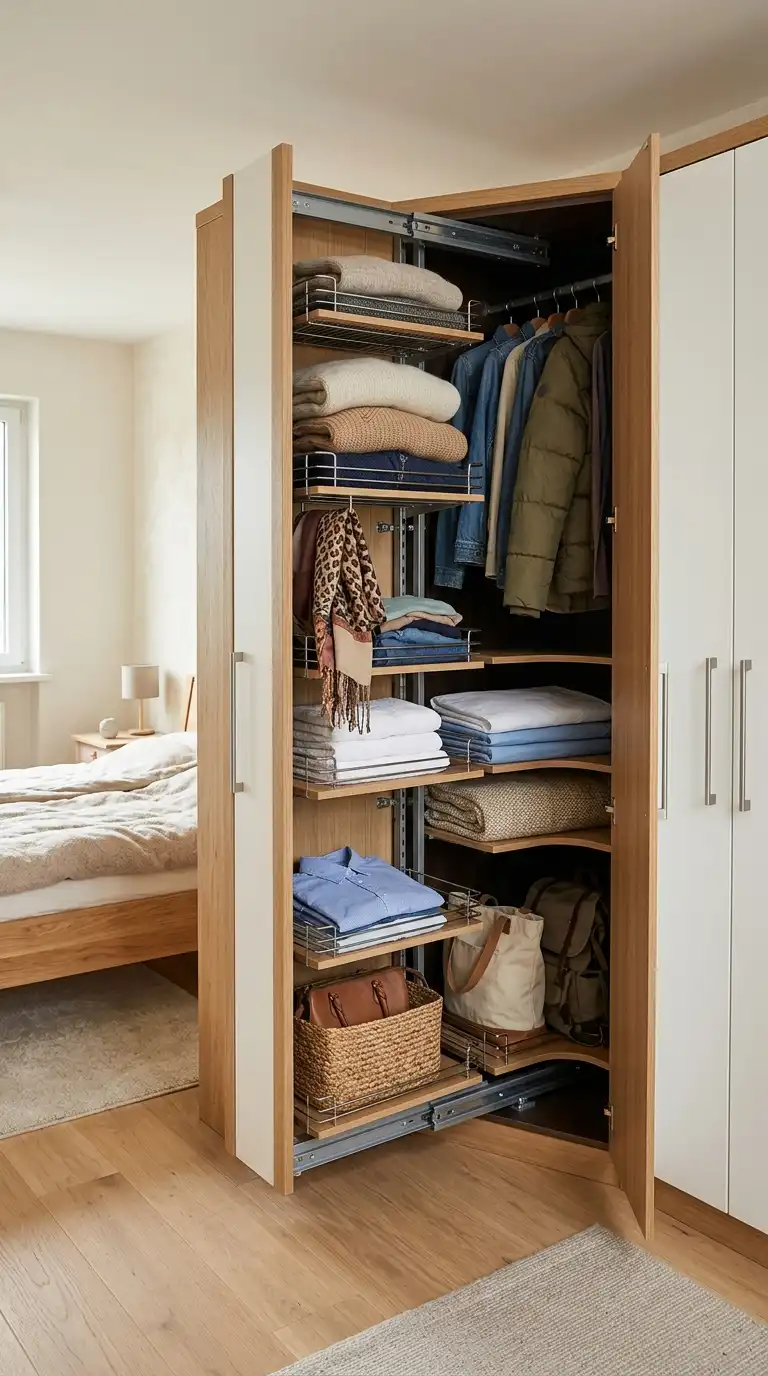
A pull-out corner rack is a clever solution for accessing deep corner storage. These racks extend fully from the cabinet, bringing all items into view. They are ideal for storing bulky items like bags, linens, or out-of-season clothing. Some designs feature multiple tiers or hooks for hanging accessories. When not in use, the rack tucks neatly back into the corner, maintaining the clean exterior. This design is particularly useful in compact bedrooms where every inch of storage must be easily accessible.
8. Corner Wardrobe with Built-In Dressing Table
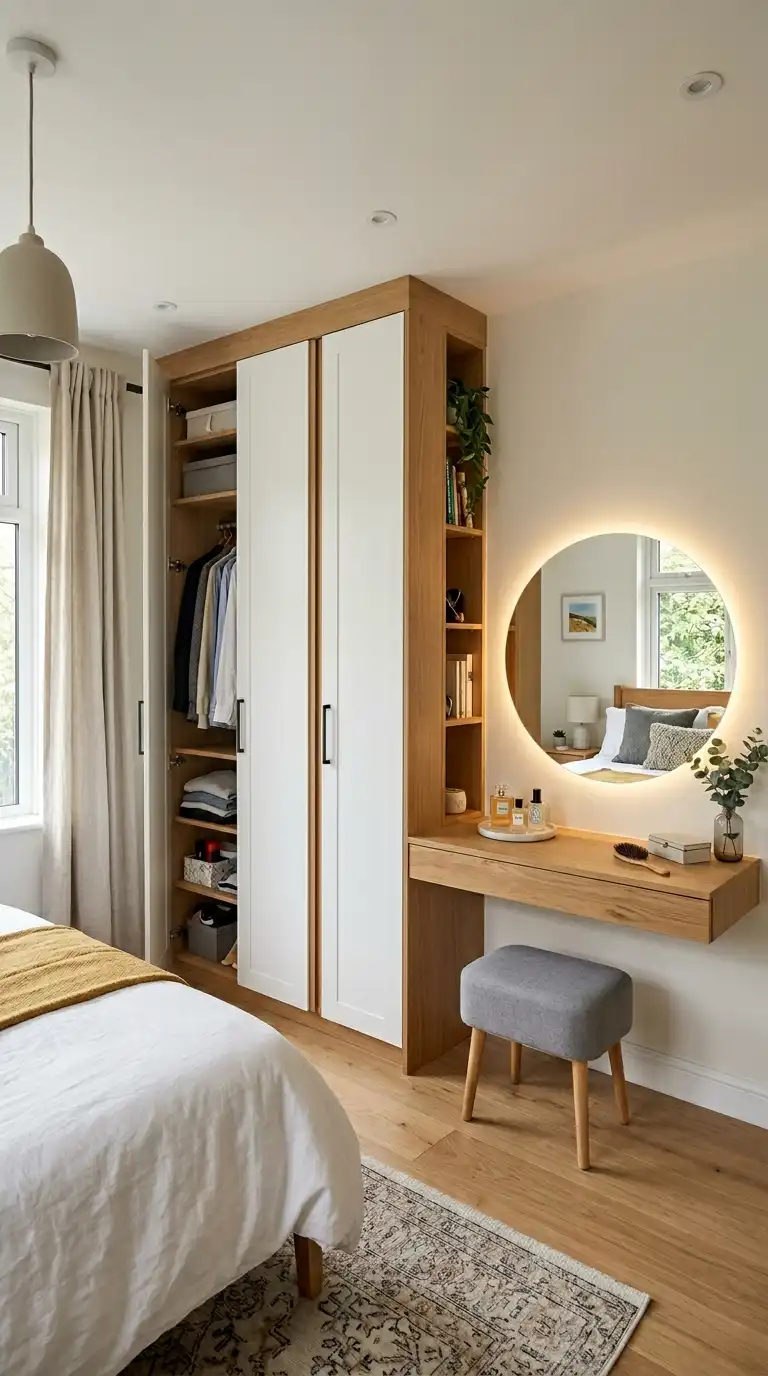
Maximize corner space by incorporating a built-in dressing table into your corner wardrobe design. Use one wall of the L-shape for storage and the other for a compact dressing table with a mirror, drawers, and a stool. The corner becomes a dedicated grooming zone that doesn’t encroach on the rest of the room. This solution is ideal for small bedrooms where a separate vanity would be impractical. Choose a floating table surface to maintain a light, airy feel, and add a backlit mirror for flattering illumination.
9. Corner Wardrobe with Curved Doors
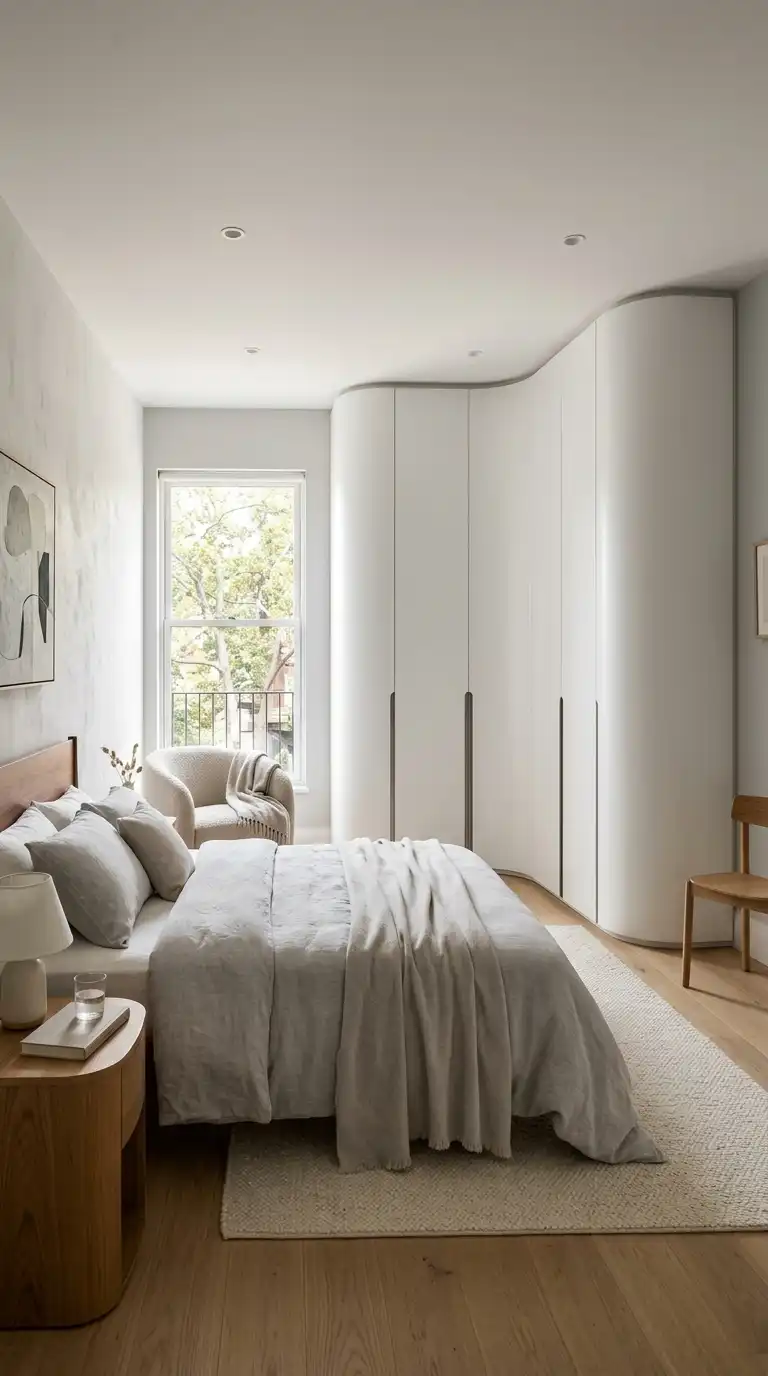
For a soft, sculptural look, consider a corner wardrobe with curved doors. The gentle curve follows the natural line of the corner, creating a flowing, organic form that feels less angular than traditional designs. Curved doors can be made from flexible plywood or custom-molded materials, finished in paint, veneer, or laminate. This design is a striking focal point in contemporary and modern bedrooms, adding a sense of movement and fluidity to the space.
10. Corner Wardrobe with Mixed Finishes
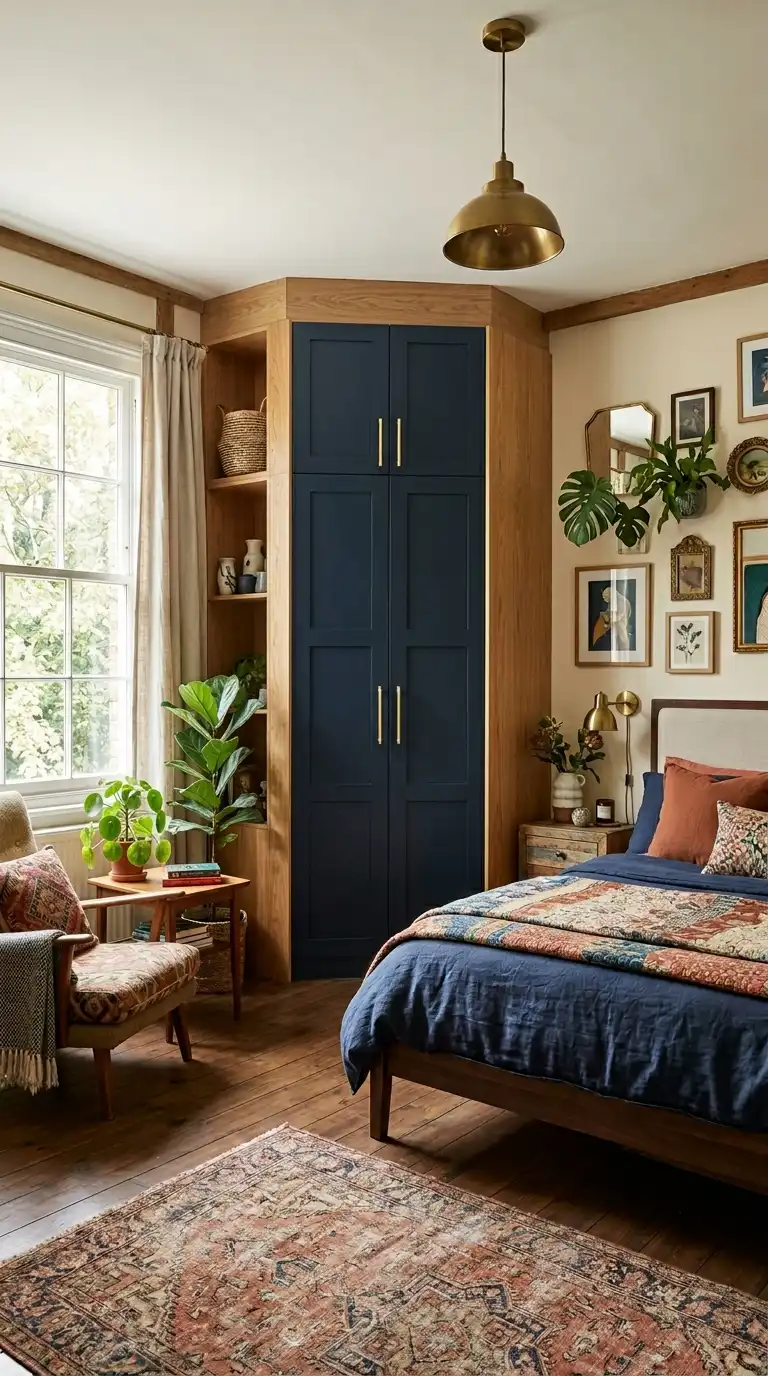
Use contrasting finishes to highlight the corner wardrobe as a design feature. Combine light wood on one section with matte white on the other, or use a bold color like navy or emerald on the angled front with neutral finishes on the sides. The contrast draws attention to the corner, celebrating it rather than trying to hide it. This approach works well in eclectic, contemporary, and transitional bedrooms where architectural details are embraced. Use consistent hardware to tie the mixed finishes together.
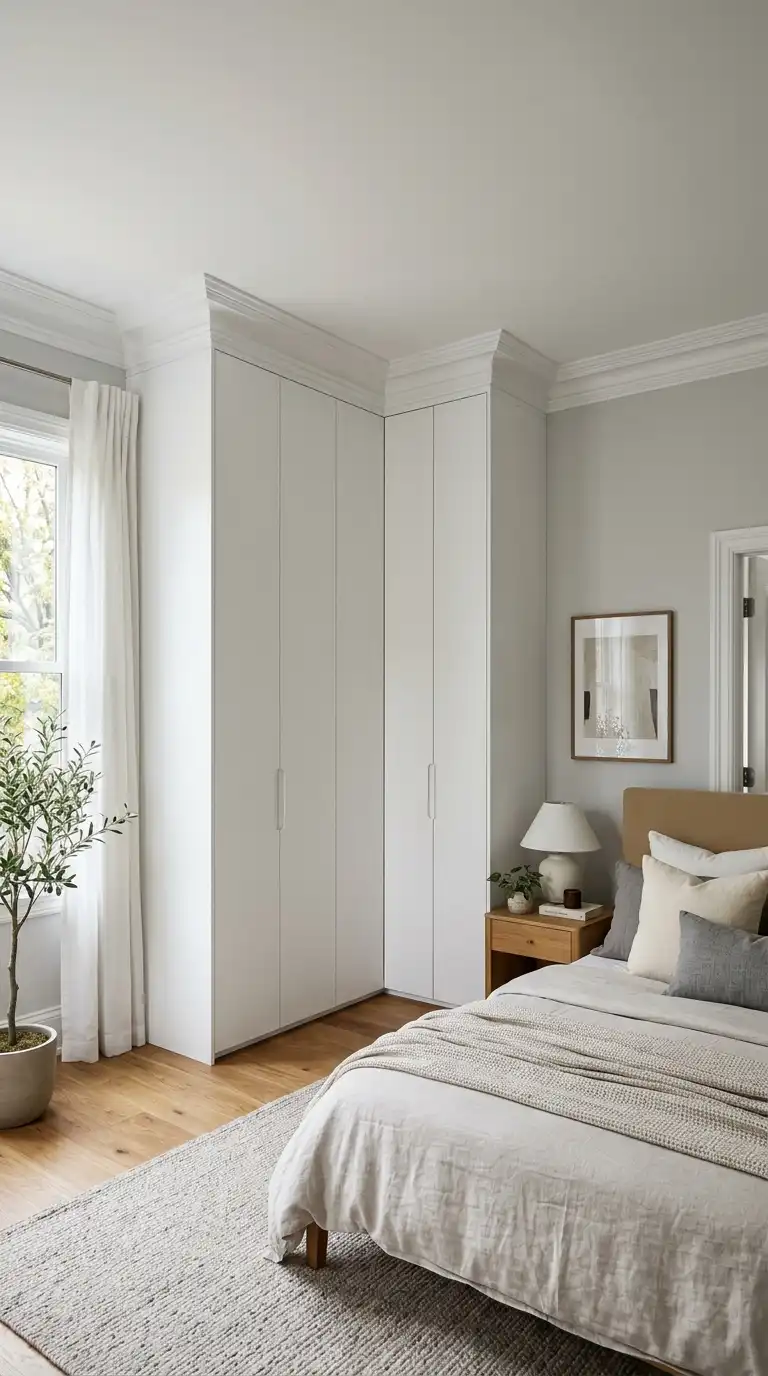
11. Floor-to-Ceiling Corner Wardrobe
Extend your corner wardrobe from floor to ceiling to maximize vertical storage and create a seamless, built-in appearance. The continuous surface draws the eye upward, making the room feel taller and more spacious. Use the top shelves for out-of-season items, luggage, or bulky bedding, and keep everyday essentials at eye level. Floor-to-ceiling designs work particularly well in rooms with high ceilings, where standard wardrobes would leave wasted space above. Add crown molding to integrate the wardrobe with the room’s architecture.
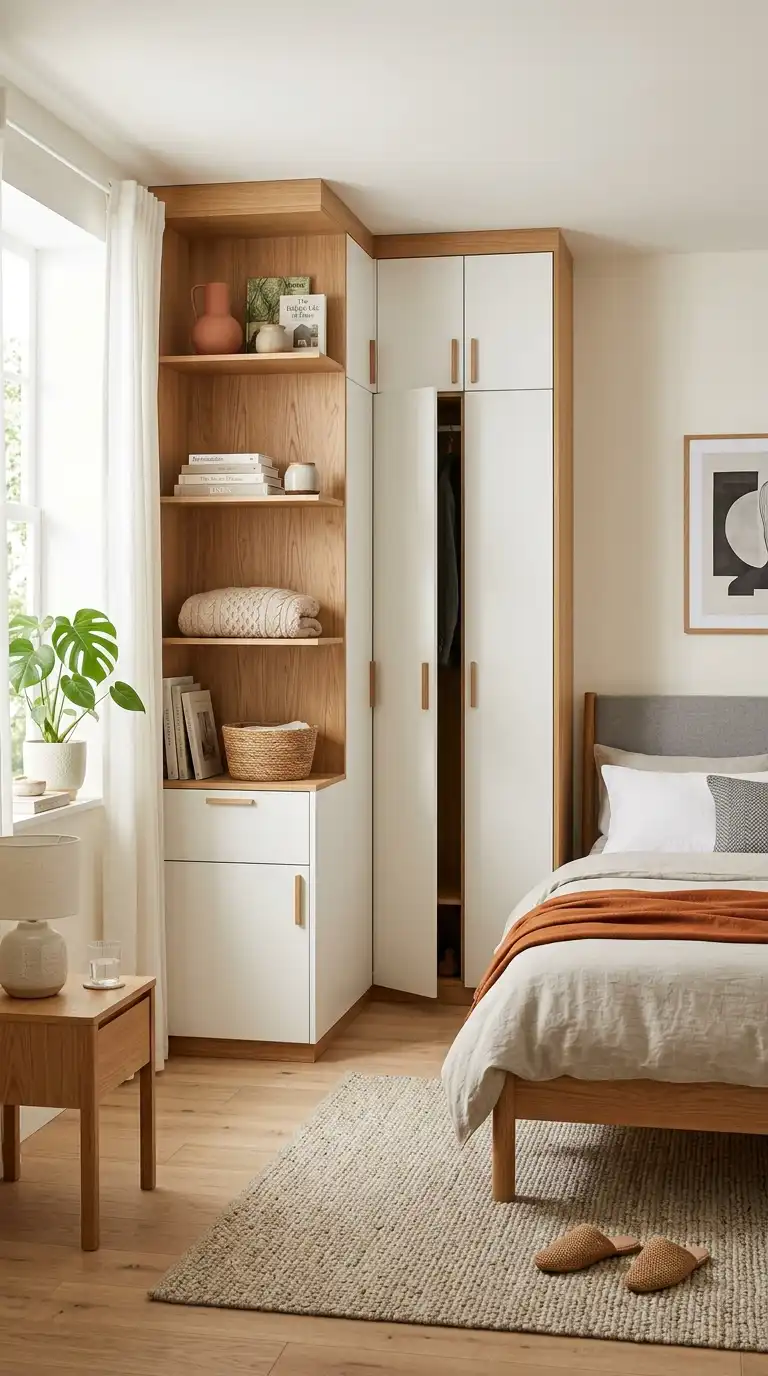
12. Corner Wardrobe with Open and Closed Sections
Combine open shelving with closed cabinets in your corner wardrobe for a balanced mix of display and concealment. Use open sections to showcase accessories, books, or folded knitwear, while closed sections hide everyday clothing and less visually appealing items. This approach creates visual interest and breaks up large expanses of cabinetry. Position the open sections at eye level for easy access and display, and use closed storage above and below. The corner becomes a dynamic storage feature that is both functional and decorative.
Frequently Asked Questions
- What is the best type of door for a corner wardrobe?
Sliding doors are ideal for angled and L-shaped corner wardrobes as they require no swing space. Hinged doors work well on diagonal-front units where the doors are flat. For deep corners, consider doorless designs or pull-out systems that eliminate door clearance issues entirely. - How do I maximize storage in a corner wardrobe?
Use vertical space with floor-to-ceiling designs. Install rotating carousels or pull-out racks for deep corners. Incorporate adjustable shelving, double hanging rods, and pull-out drawers. Use door space for hooks or slim organizers. Every inch of the corner can become functional with thoughtful planning. - Can I install a corner wardrobe in a small bedroom?
Yes. Corner wardrobes are excellent for small bedrooms because they utilize space that might otherwise go unused. Angled or sliding doors save floor space, and light colors or mirrored panels make the room feel larger. Consider open designs or glass fronts to maintain a light, airy feel. - What is the difference between an angled and an L-shaped corner wardrobe?
An angled corner wardrobe has a flat front that sits at a 45-degree angle to the walls, creating a single, continuous door front. An L-shaped corner wardrobe uses two walls, with storage extending along each wall and meeting at the corner. Both maximize corner space but offer different aesthetic and functional options. - How do I choose finishes for a corner wardrobe?
Consider the overall style of your bedroom. Light finishes like white, cream, or light wood make the wardrobe recede and are ideal for small spaces. Dark finishes like navy, charcoal, or walnut create a dramatic focal point. Mixed finishes can highlight the corner as a design feature. Match or complement existing trim and furniture.
A corner wardrobe transforms an often-overlooked area into a valuable storage asset. Whether you choose an angled design with sliding doors, a rotating carousel system, or an L-shaped configuration with mixed finishes, thoughtful planning ensures that every inch of corner space is utilized. The result is a bedroom that feels organized, spacious, and beautifully tailored to your needs.