12 Indian Living Room Designs for Small Spaces
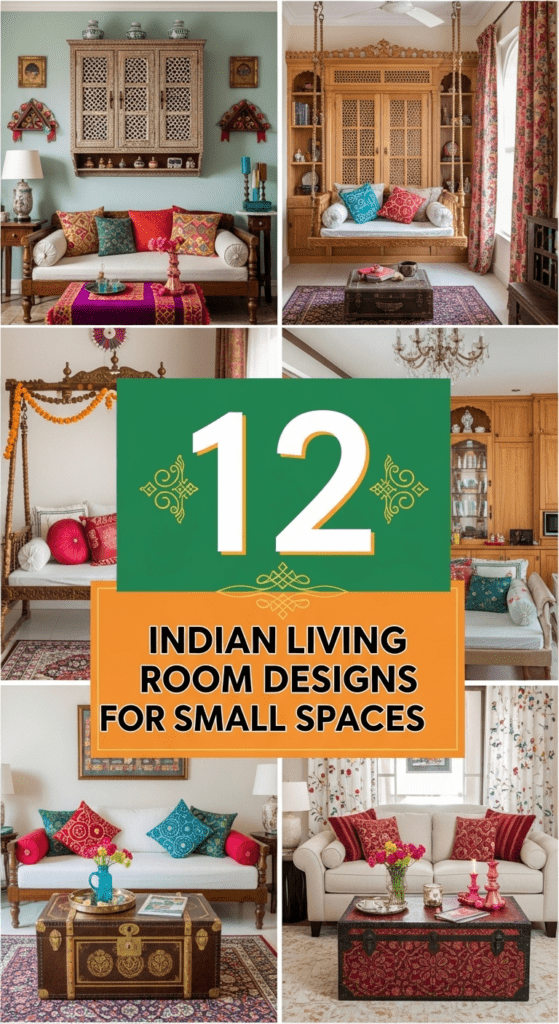
Indian living room designs for small spaces beautifully balance traditional aesthetics with modern functionality, creating warm, welcoming environments that honor cultural heritage while maximizing limited square footage. These designs incorporate vibrant colors, rich textiles, intricate patterns, and meaningful décor elements that reflect India’s diverse cultural tapestry. The following twelve designs demonstrate how to create authentically Indian living rooms in compact spaces without sacrificing style, comfort, or the warmth that defines Indian hospitality.
See also: Simple Guest Bedroom Ideas 12 Ways to Create a Peaceful Retreat
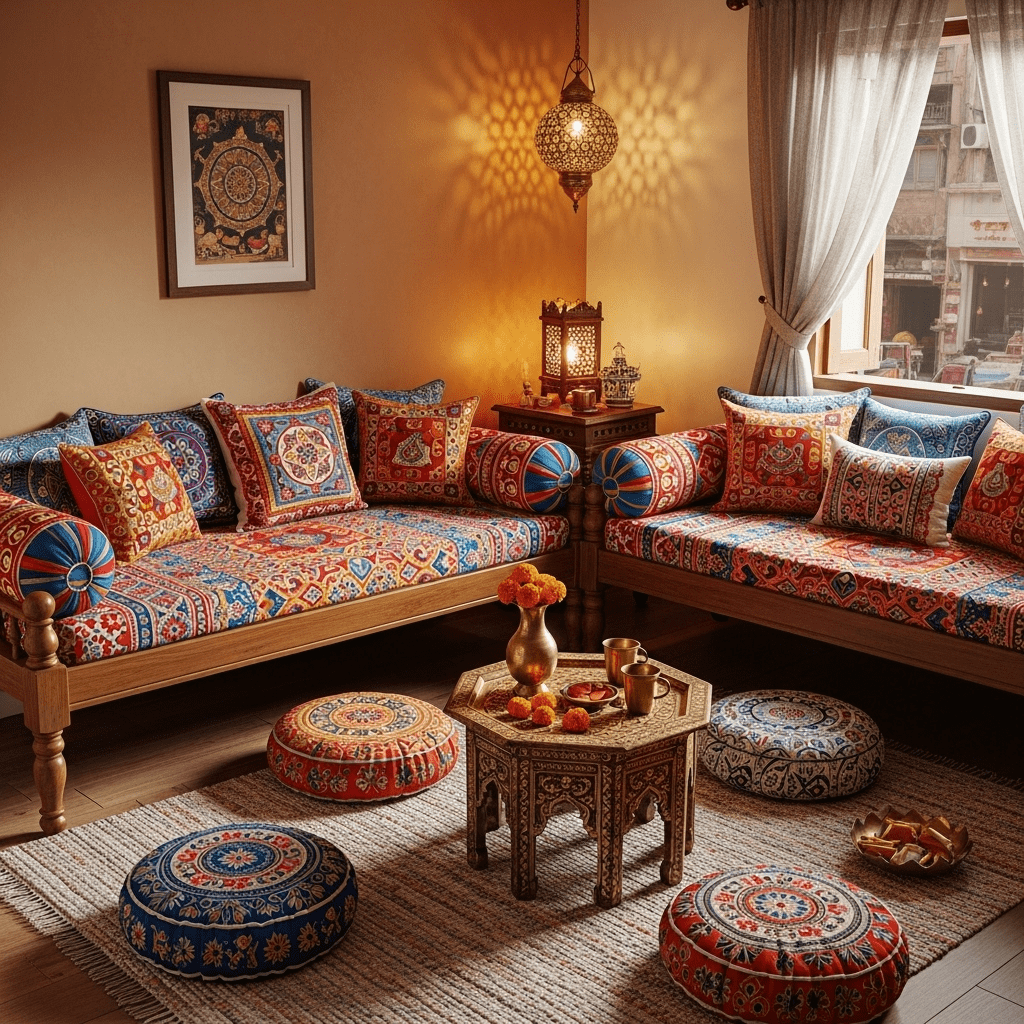
1. Traditional Diwan Seating
Low diwan seating with colorful cushions and bolsters maximizes floor space while providing comfortable, culturally authentic seating. This arrangement accommodates many guests efficiently in small rooms.
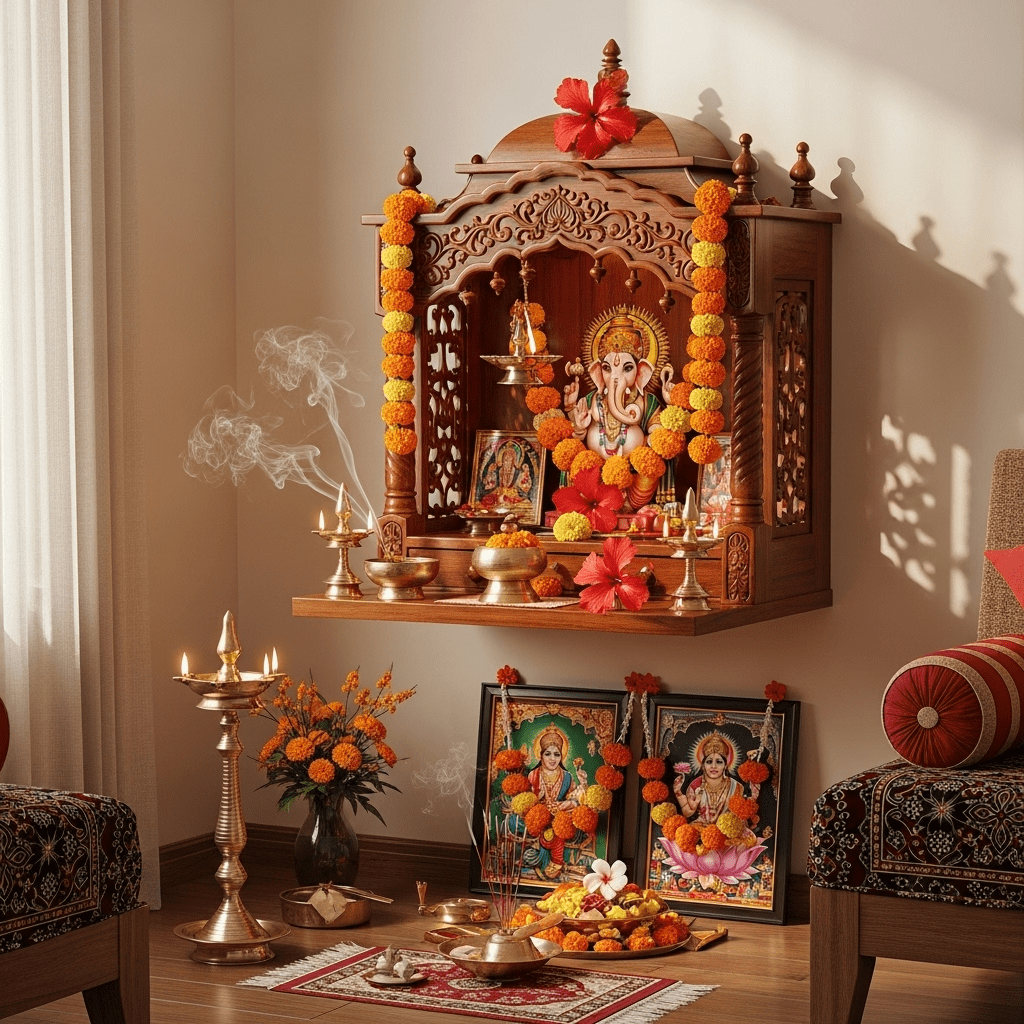
2. Compact Pooja Corner Integration
Dedicate a small alcove or corner for a pooja space with carved wooden mandir, brass diyas, and sacred imagery. This essential element integrates spiritually without consuming excessive space.
See also: Guest Bedroom Ideas on a Budget 15 Savvy Ways to Save
3. Vibrant Rajasthani Color Palette
Embrace bold jewel tones—fuchsia, royal blue, emerald green, and golden yellow—characteristic of Rajasthani design. Vibrant colors energize small spaces while celebrating regional aesthetics.
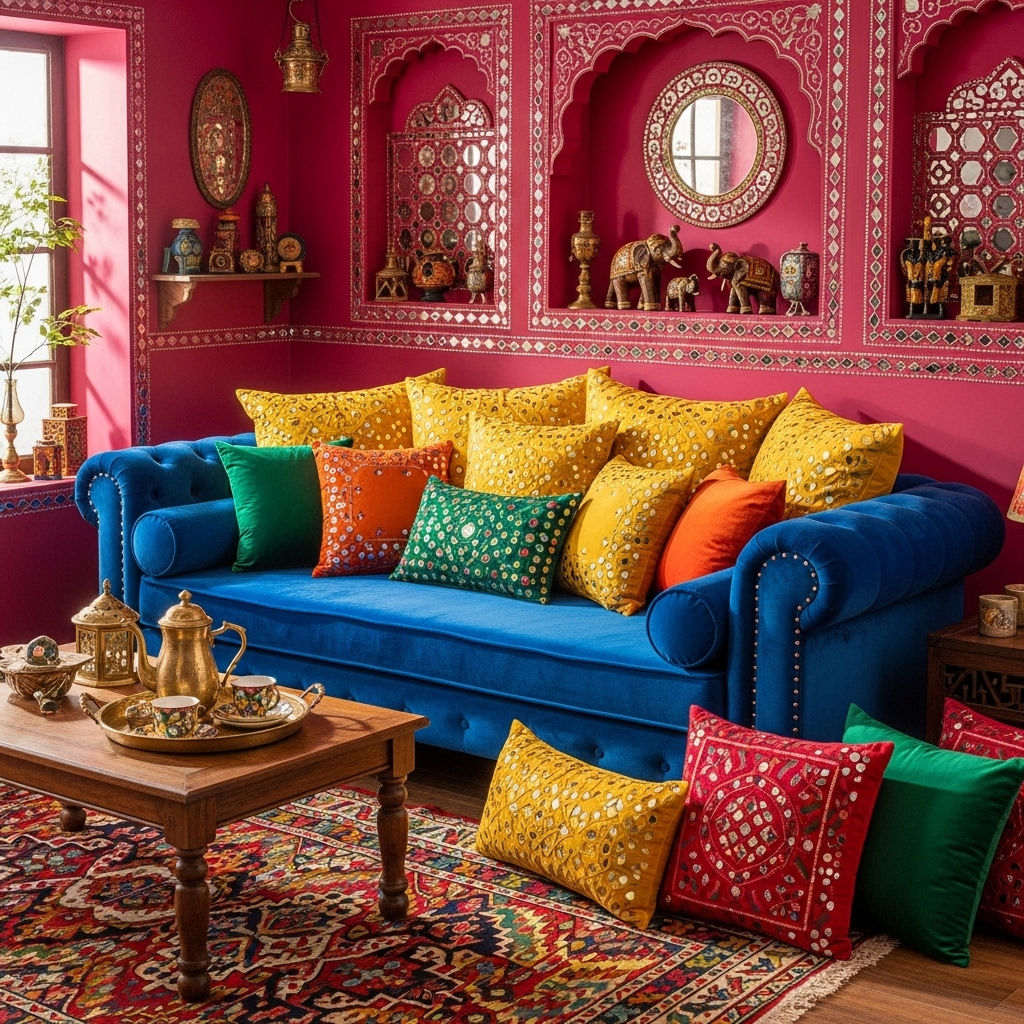
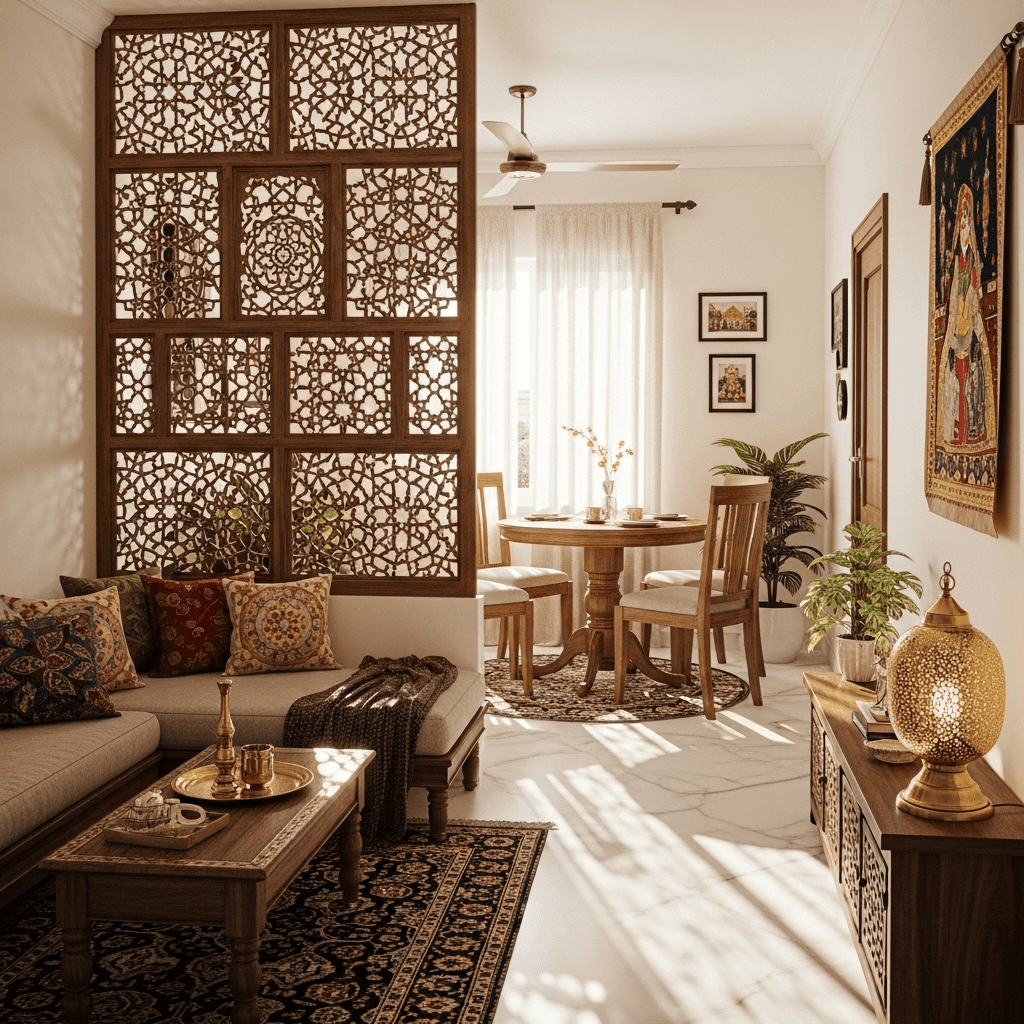
4. Jaali Screen Room Divider
Carved jaali screens separate spaces while maintaining visual flow and traditional architectural beauty. These perforated designs provide privacy without blocking light or air circulation.
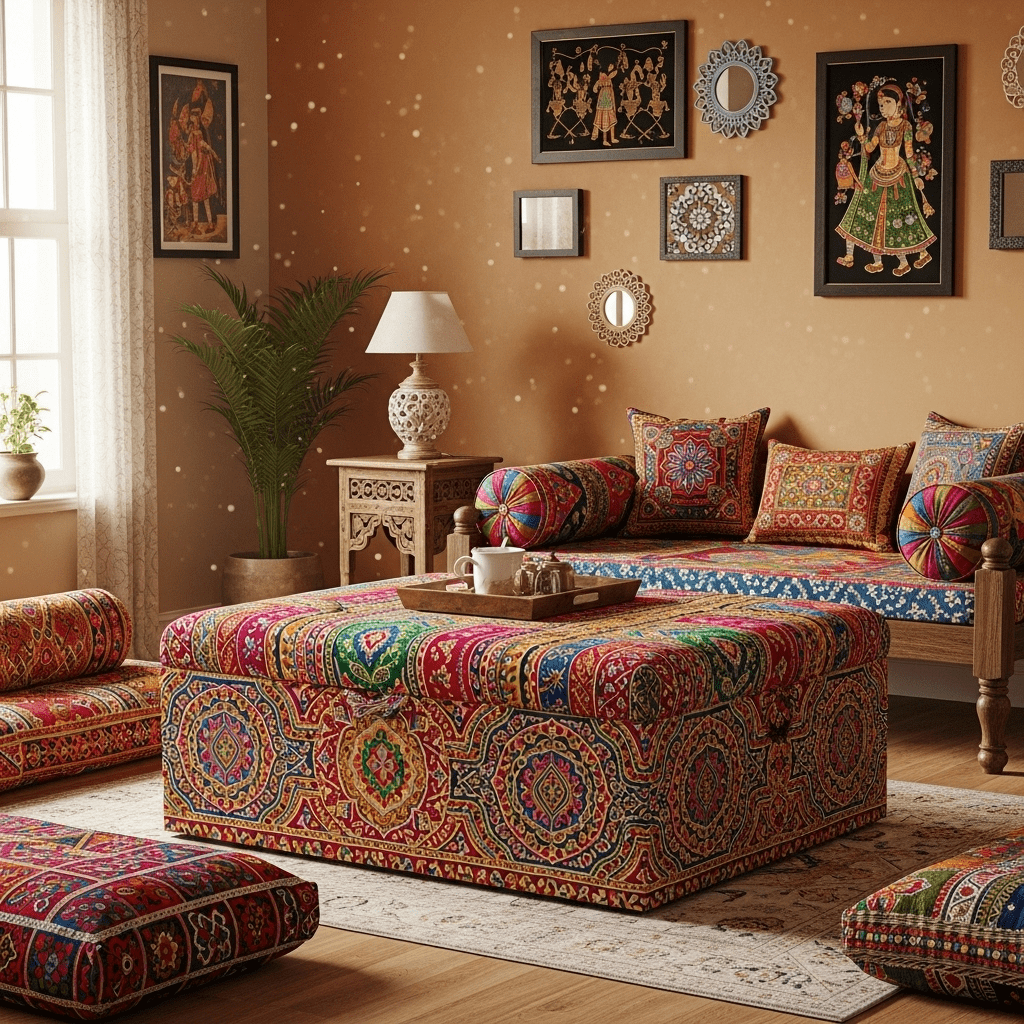
5. Multi-Functional Storage Ottomans
Upholstered storage ottomans in traditional fabrics provide seating, coffee table function, and hidden storage—essential multi-purpose pieces for small Indian homes.
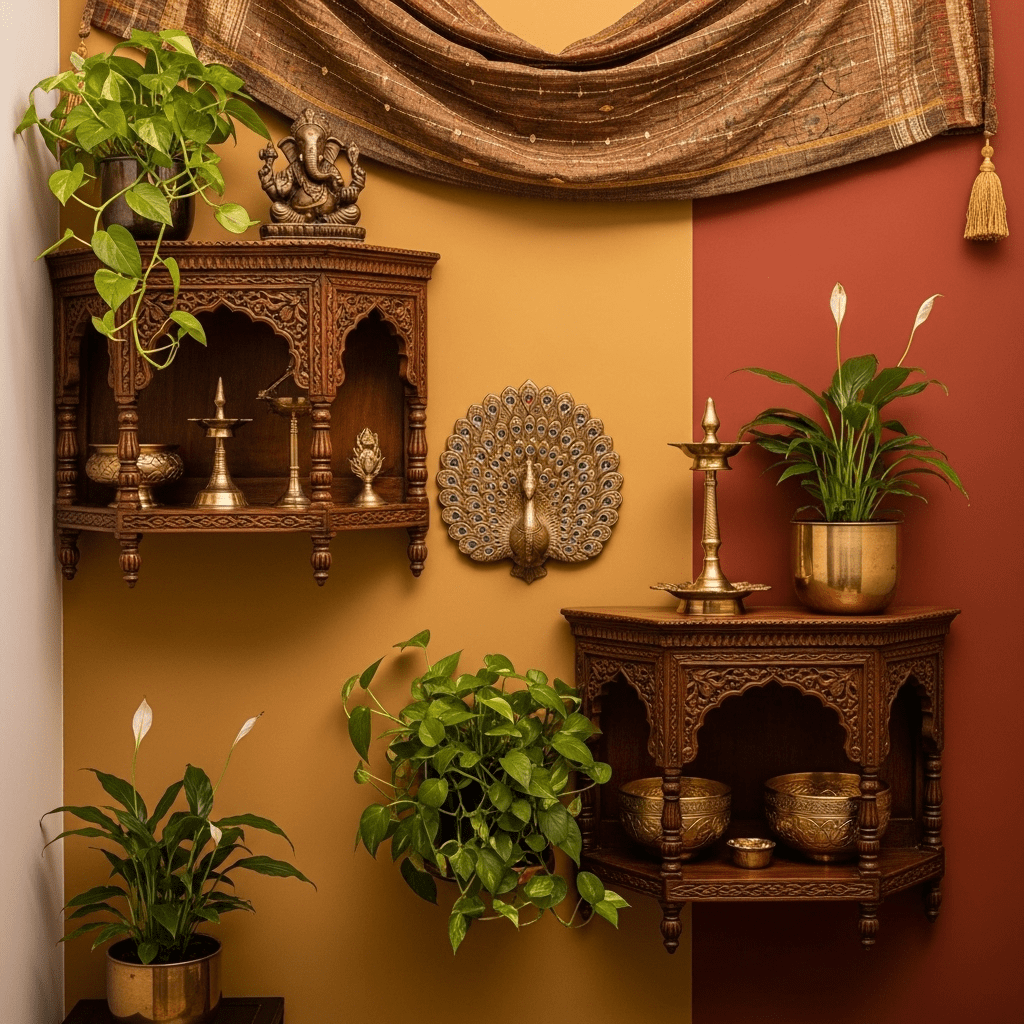
6. Wall-Mounted Jharokha Design
Install decorative jharokha-style wall shelving for display without floor space consumption. These ornate window-inspired shelves showcase brass items, plants, and decorative pieces.
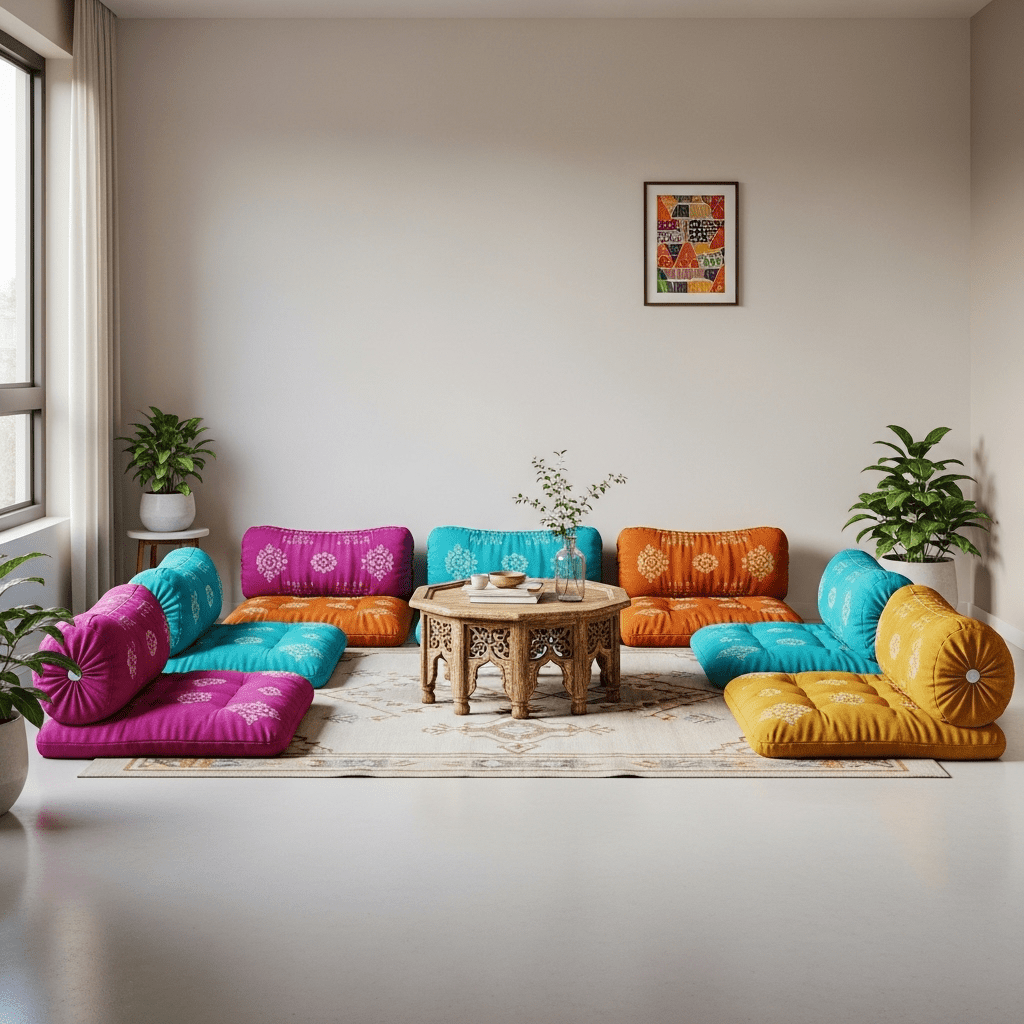
7. Floor Cushion and Low Table Setup
Eliminate bulky sofas in favor of colorful floor cushions and a low wooden table. This traditional arrangement adapts to various activities while keeping spaces open and flexible.
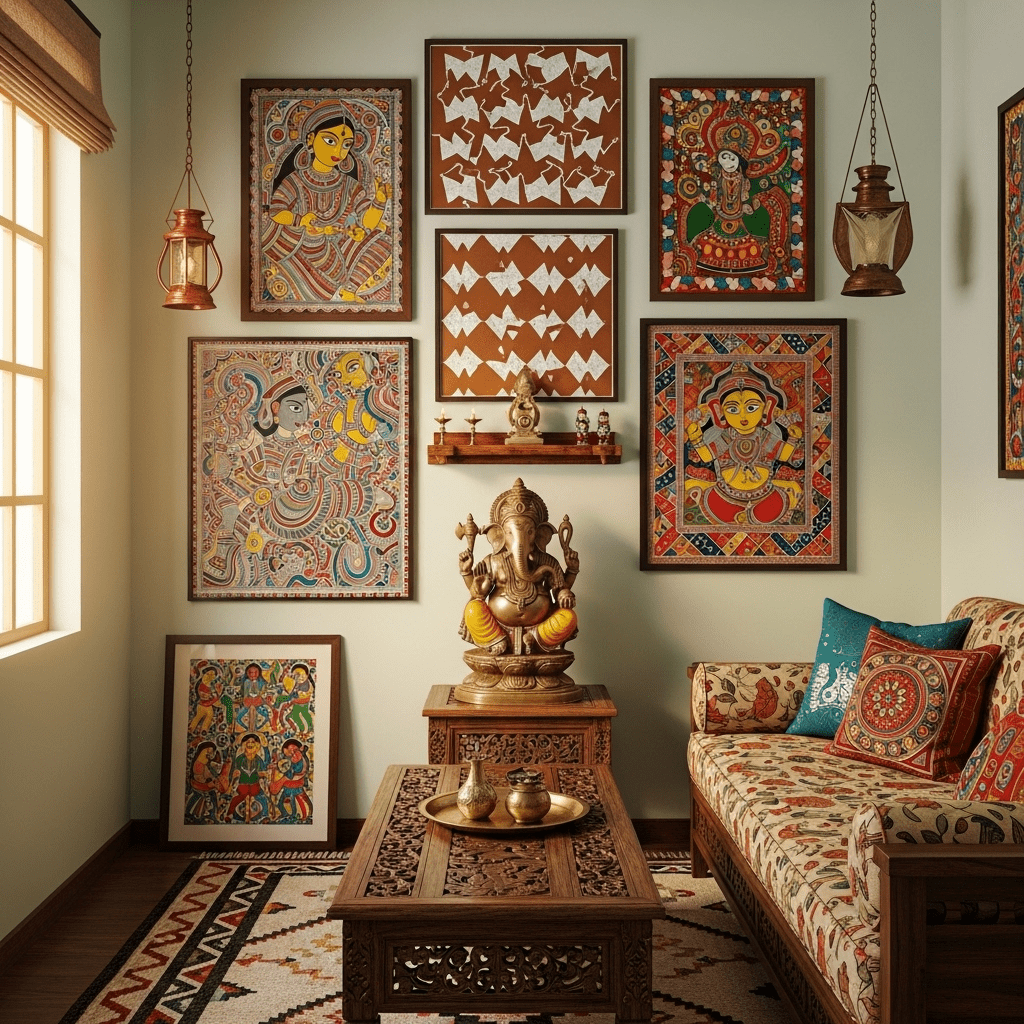
8. Vertical Gallery of Indian Art
Maximize wall space with vertical arrangements of traditional Indian art—Madhubani paintings, Warli art, Tanjore paintings, or contemporary Indian artists creating cultural focal points.
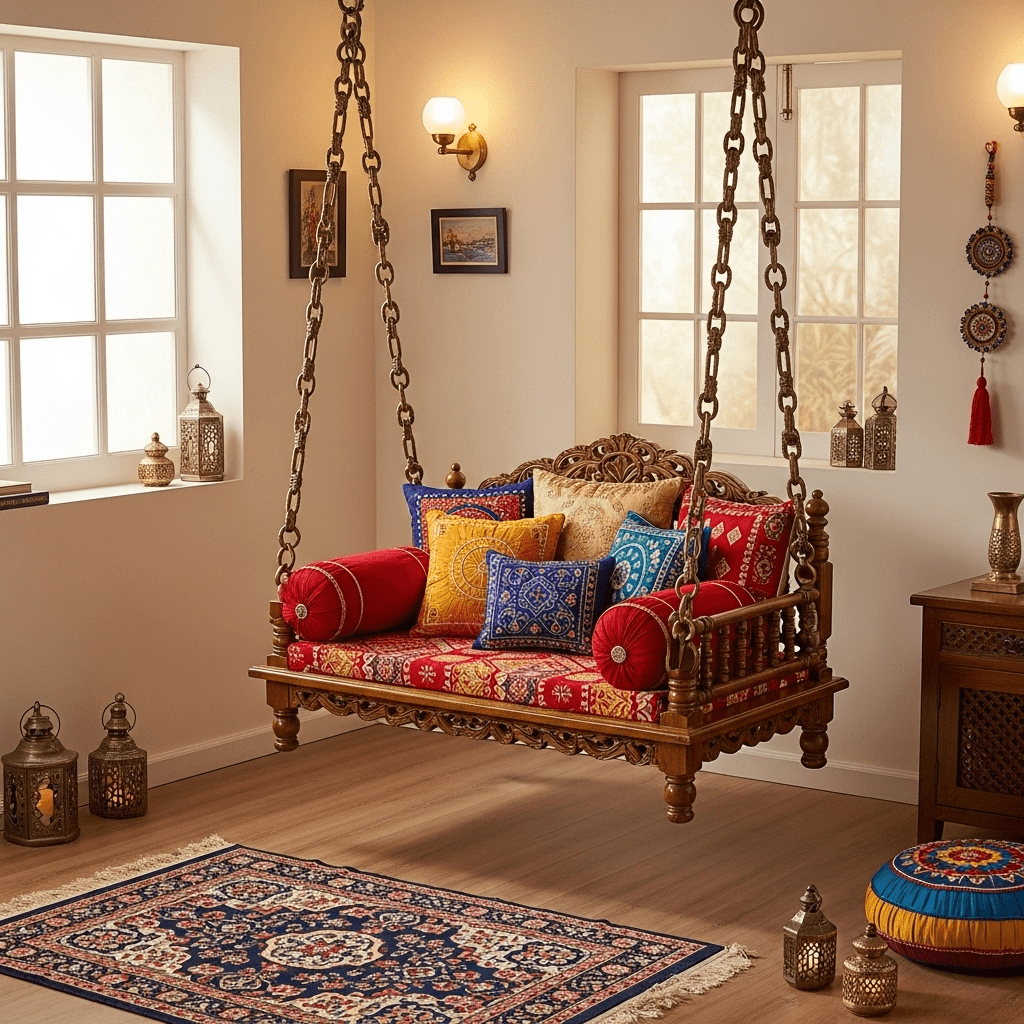
9. Compact Swing (Jhula) Integration
Install a small decorative jhula or swing seat in corner positions. This traditional element adds charm and functionality while consuming minimal floor space when properly scaled.
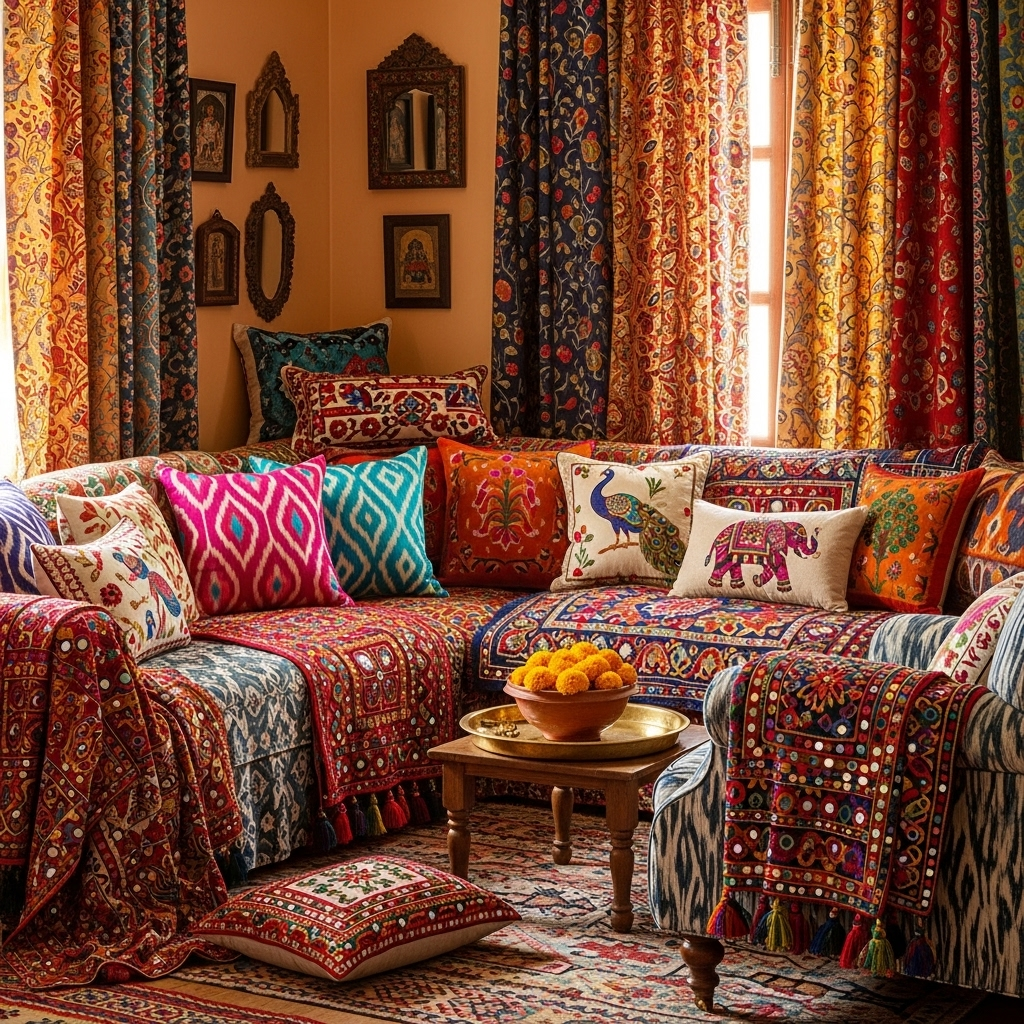
10. Printed Textile Layering
Layer Indian textiles—block prints, ikats, embroidered fabrics—through curtains, cushions, and throws. Rich textiles add authentic Indian character without permanent space commitment.
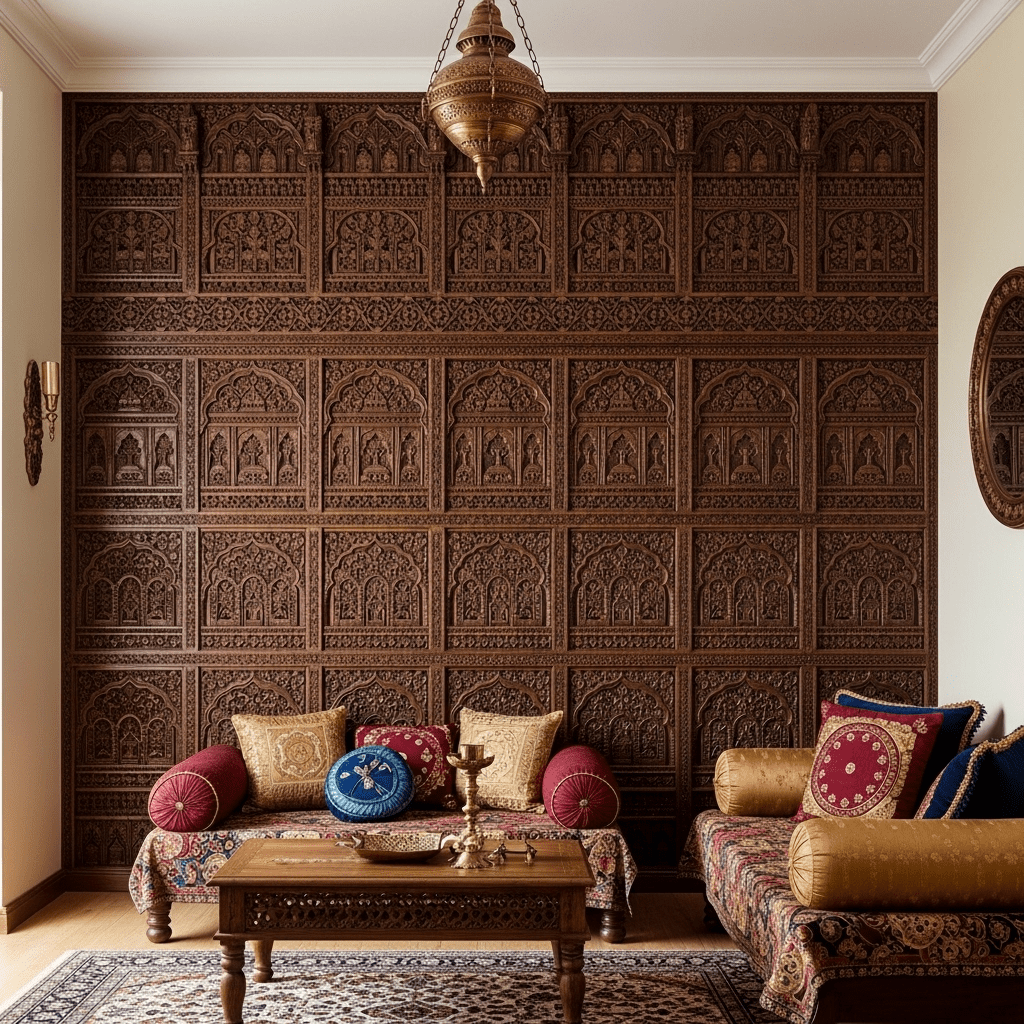
11. Carved Wood Accent Wall
Create a focal wall with carved wooden panels or reclaimed jharokha elements. Vertical emphasis and intricate detailing add traditional grandeur to compact spaces.
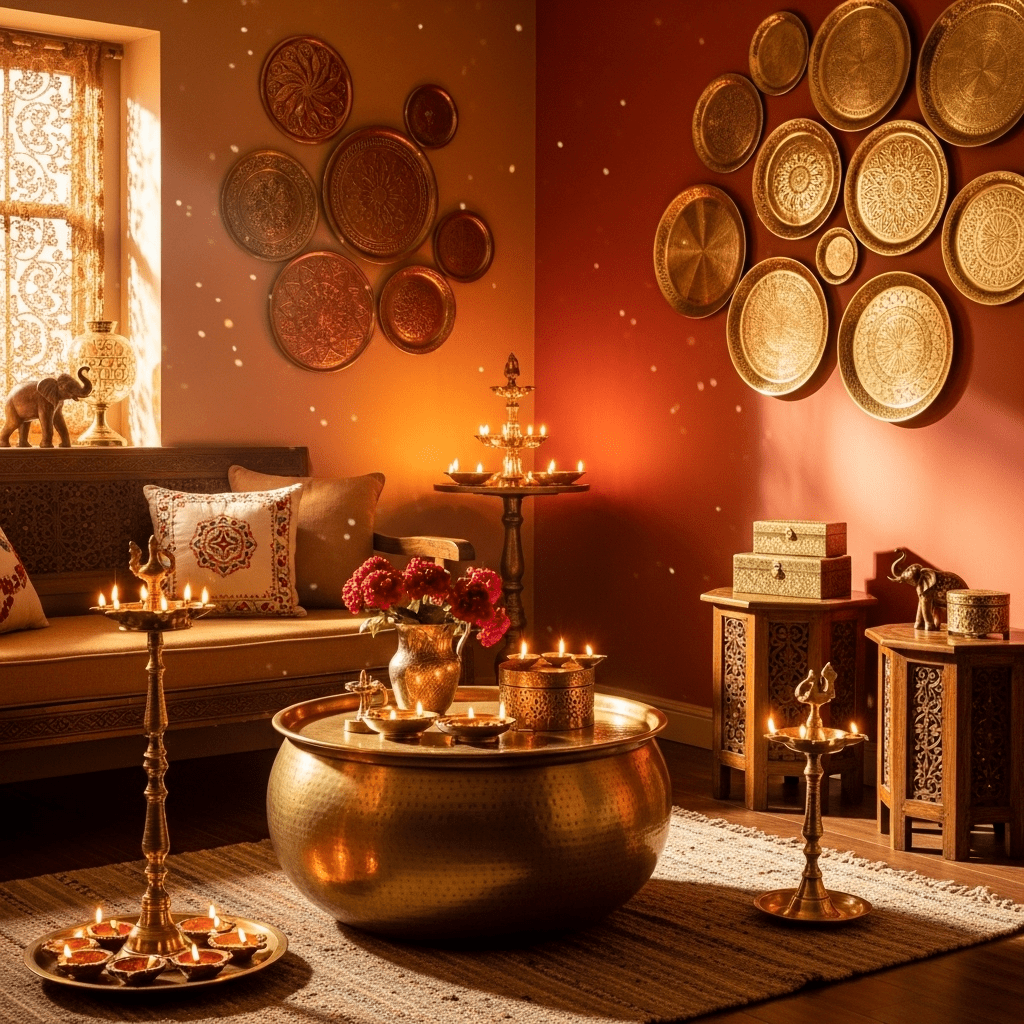
12. Brass and Copper Accents
Incorporate traditional brass and copper elements—diyas, vessels, wall hangings, and decorative plates—that reflect light and add authentic metallic warmth to small spaces.
Understanding Indian Design Principles
Indian living room design, particularly for small spaces, follows specific cultural and practical principles:
Hospitality First: Indian homes prioritize welcoming guests. Even small living rooms must accommodate visitors comfortably, influencing furniture choices and spatial arrangements.
Cultural Expression: Design reflects regional heritage, religious beliefs, and family traditions through colors, patterns, and decorative elements.
Multi-Functional Spaces: Indian living rooms often serve multiple purposes—entertaining, dining, prayer, and family gathering—requiring flexible, adaptable designs.
Color Celebration: Unlike minimalist Western aesthetics, Indian design embraces vibrant colors representing joy, festivity, and cultural richness.
Handcrafted Elements: Traditional handicrafts, textiles, and artwork support artisan communities while adding authentic character.
Spiritual Integration: Pooja spaces, religious imagery, and sacred symbols integrate naturally into living areas reflecting spiritual values.
Regional Indian Design Influences
India’s diverse regions offer distinct aesthetic approaches:
Rajasthani Style: Vibrant colors, mirror work, block prints, carved furniture, ornate details reflecting desert state’s rich heritage.
South Indian Aesthetics: Darker woods (teak, rosewood), brass and bronze, traditional kolam patterns, temple-inspired carved elements.
Gujarati Influences: Bright textiles, embroidered fabrics, colorful mirror work, detailed handicrafts reflecting festive culture.
Mughal Elements: Intricate jaali screens, arched doorways, Persian carpet influences, jewel tones, and gold accents.
Bengali Sensibilities: Terracotta elements, jute textiles, Madhubani or Kalighat art, balanced color palettes.
Contemporary Indian Fusion: Modern furniture combined with traditional textiles, art, and accessories creating evolved Indian aesthetics.
Color Palettes for Small Indian Living Rooms
Traditional Vibrant: Deep reds, royal blues, emerald greens, golden yellows—bold colors that energize and celebrate.
Earthy Warm: Terracottas, ochres, burnt oranges, warm browns reflecting natural Indian landscapes and traditional architecture.
Jewel Tones: Sapphire, ruby, emerald, amethyst—rich saturated colors adding luxury without overwhelming small spaces.
Contemporary Neutral Base: Beige, cream, or soft grey walls allowing traditional textiles and art to pop as colorful accents.
Festival Inspired: Bright pinks, vibrant oranges, electric blues reflecting Indian festivals and celebrations.
Strategic Accent Walls: One bold colored wall with remaining walls neutral preventing small spaces from feeling cramped.
Space-Saving Furniture Solutions
Low Seating: Diwans, floor cushions, and low sofas maintain open sight lines while providing authentic Indian seating.
Multi-Purpose Pieces: Storage ottomans, fold-out tables, nesting stools serving multiple functions without dedicated space.
Wall-Mounted Elements: Floating shelves, wall-hung mandirs, mounted artwork freeing valuable floor space.
Modular Seating: Individual cushions or sectional pieces that reconfigure based on guest numbers and activities.
Minimal Coffee Tables: Low, simple tables or eliminating them entirely for floor cushion arrangements in very small spaces.
Vertical Storage: Tall narrow cabinets utilizing height rather than floor area for storage needs.
Textile Selection and Layering
Textiles define Indian interiors and work beautifully in small spaces:
Curtains: Block print, ikat, or embroidered curtains adding pattern and color while providing privacy and light control.
Cushions: Mix sizes, patterns, and textures—silk, cotton, embroidered, mirror work—creating layered interest.
Throws: Colorful blankets or shawls draped over seating adding warmth and traditional aesthetic.
Rugs: Dhurries, kilims, or Persian-style rugs grounding furniture groupings while adding pattern and color.
Wall Hangings: Tapestries, textile art, or embroidered panels adding vertical interest without floor space.
Upholstery: Choose traditional prints or solid colors in rich fabrics like silk, velvet, or cotton reflecting Indian textile heritage.
Incorporating Traditional Elements
Pooja Space: Essential in most Indian homes, even tiny corners can accommodate small mandirs or wall-mounted prayer areas.
Brass and Copper: Traditional metals appearing in diyas, vessels, wall hangings, and decorative objects.
Carved Wood: Furniture details, wall panels, or decorative objects featuring intricate traditional carving.
Indian Art: Regional art forms like Madhubani, Warli, Tanjore, or Pattachitra adding cultural authenticity.
Mirror Work: Traditional Rajasthani or Gujarati mirror work in cushions, wall hangings, or decorative panels.
Jaali Screens: Perforated wood or metal screens providing privacy while maintaining airflow and visual interest.
Lighting for Small Indian Living Rooms
Layered Traditional Lighting: Combine various sources reflecting Indian aesthetic preferences:
Hanging Lanterns: Moroccan-style or traditional Indian lanterns adding ambient warm light and decorative interest.
Diyas and Oil Lamps: Brass diyas creating traditional ambiance, particularly around pooja areas.
Floor Lamps: Tall lamps with fabric shades in traditional colors or patterns illuminating reading areas.
String Lights: Decorative lights (similar to festival lighting) creating warm, festive ambiance year-round.
Natural Light Maximization: Keep windows clear or use sheer curtains allowing maximum daylight in small spaces.
Accent Lighting: Small spotlights highlighting artwork, pooja corners, or architectural details.
Storage Solutions for Indian Homes
Small Indian living rooms require creative storage:
Built-In Cabinets: Floor-to-ceiling storage painted to match walls, appearing architectural rather than furniture.
Storage Ottomans: Upholstered pieces hiding blankets, cushions, and occasional items inside.
Wall Niches: Carved alcoves displaying decorative items while providing depth and interest.
Trunk Coffee Tables: Traditional carved trunks serving as coffee tables while storing textiles and seasonal items.
Behind-Sofa Consoles: Narrow tables behind sofas providing display and storage without consuming walkway space.
Vertical Shelving: Tall narrow units storing books, showing decorative items, and utilizing height efficiently.
Budget-Friendly Indian Design
Authentic Indian aesthetics work across budgets:
Textile Investment: Prioritize quality fabrics—even expensive textiles remain affordable compared to furniture while delivering major impact.
DIY Art: Frame fabric remnants, create rangoli-inspired art, or display family heirlooms as artwork.
Thrift Traditional Items: Source brass, copper, and carved wood items from antique markets affordably.
Paint Power: Bold accent walls cost little but transform spaces dramatically in traditional colors.
Cushion Covers: Change cushion covers seasonally using Indian textiles without replacing entire cushions.
Plant Integration: Abundant plants in brass or terracotta pots add life and color inexpensively.
Balancing Traditional and Modern
Contemporary Indian living rooms often blend heritage with modernity:
Modern Furniture Base: Clean-lined contemporary furniture providing neutral foundation for traditional layering.
Traditional Textiles: Layer modern furniture with Indian textiles through cushions, throws, and curtains.
Selective Statement Pieces: One or two traditional furniture items (carved table, antique trunk) with contemporary seating.
Contemporary Art with Indian Themes: Modern Indian artists offering fresh perspectives on traditional subjects.
Minimized Pattern: For cleaner aesthetics, limit patterns to one or two elements rather than layering extensively.
Neutral Base, Colorful Accents: White or neutral walls with traditional color appearing through accessories and textiles.
Common Mistakes to Avoid
Over-Accessorizing: Small spaces become cluttered quickly. Edit decorative items ruthlessly, displaying only beloved pieces.
Ignoring Scale: Oversized furniture overwhelms; tiny pieces look insignificant. Choose appropriately proportioned items.
Blocking Light: Heavy curtains or furniture blocking windows makes small spaces feel smaller and darker.
Neglecting Flow: Maintain clear pathways. Indian hospitality requires easy guest circulation.
Mismatched Metals: Mix brass tones (antique vs. polished) intentionally or stick to consistent finishes.
Forgetting Function: Beauty matters, but small spaces must work practically for daily living and entertaining.
Seasonal Decoration
Indian living rooms often reflect seasons and festivals:
Festival Transformations: Add specific colors, rangolis, and decorations for Diwali, Holi, or regional festivals.
Summer Cooling: Lighter cotton textiles, cooler colors, maximum ventilation, and minimal heavy fabrics.
Winter Warmth: Layer heavier textiles, warmer colors, add more cushions and throws creating cozy environments.
Monsoon Freshness: Bright colors combating grey skies, protective covers for textiles, drainage-friendly plant arrangements.
Maintaining Indian Living Rooms
Textile Care: Regular vacuuming, professional cleaning for silk and embroidered pieces, sun exposure monitoring preventing fading.
Brass/Copper Maintenance: Polish periodically or embrace natural patina; clean with lemon and salt for traditional method.
Wood Care: Dust carved pieces regularly; oil periodically maintaining sheen; protect from direct sunlight and moisture.
Floor Maintenance: Clean rugs and dhurries regularly; rotate preventing uneven wear; air out periodically.
Pooja Space: Clean regularly; replace offerings appropriately; maintain lamps and incense holders.
Creating Welcoming Atmosphere
Indian living rooms prioritize warmth and hospitality:
Comfortable Seating: Ensure adequate cushioning even with floor seating; provide back support through bolsters.
Refreshment Access: Keep water, tea service, or snacks easily accessible for welcoming guests.
Pleasant Aromas: Incense, essential oils, or fresh flowers creating welcoming sensory experiences.
Temperature Control: Fans, AC, or ventilation ensuring guest comfort in India’s varied climates.
Flexible Arrangements: Furniture that moves or adapts accommodating varying guest numbers easily.
Cultural Sensitivity in Design
Religious Respect: Place pooja areas appropriately; avoid walking over or placing feet toward sacred spaces.
Shoe Practices: Design entry areas assuming shoes removed before entering living spaces.
Guest Orientation: Arrange seating facilitating conversation and eye contact reflecting cultural communication values.
Elder Consideration: Ensure some seating with back support and easy standing for older family members.
Privacy Balance: While welcoming guests, maintain some privacy for family areas through screens or arrangements.
Indian living room designs for small spaces prove that limited square footage need not limit cultural expression, aesthetic richness, or functional hospitality. By thoughtfully combining traditional elements—vibrant colors, rich textiles, handcrafted details, and spiritual spaces—with space-smart furniture choices and contemporary sensibilities, small Indian living rooms become warm, welcoming environments that honor heritage while meeting modern needs. The key lies in selective editing, multi-functional thinking, and prioritizing elements that truly reflect your family’s cultural identity and values, creating spaces that feel authentically Indian while remaining beautifully practical.