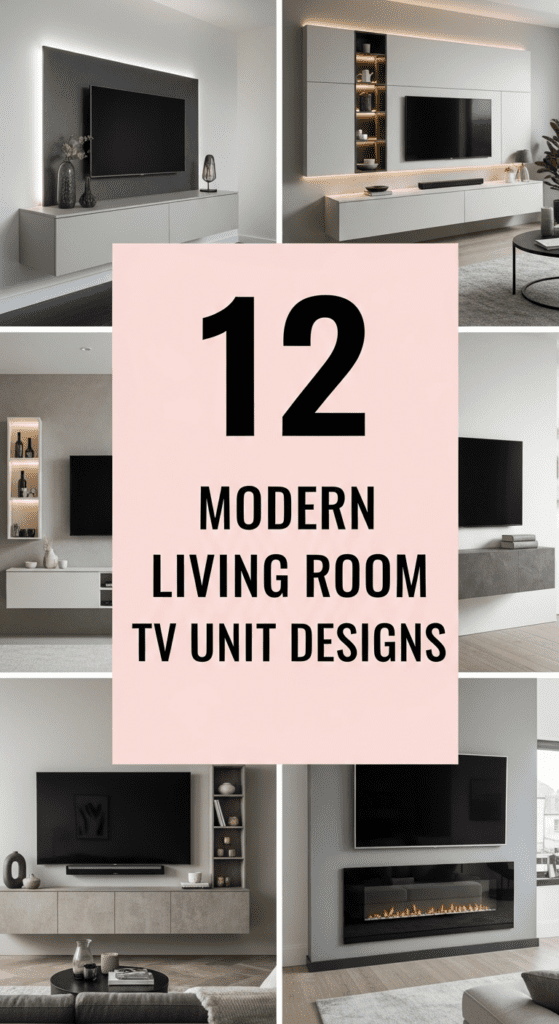
12 Modern Living Room TV Unit Designs
The TV unit has evolved from a simple stand to a sophisticated design element that defines the entire living room aesthetic. Modern TV units blend sleek functionality with architectural impact, offering storage solutions while serving as striking focal points. These twelve contemporary designs showcase the latest approaches to integrating entertainment centers into modern living spaces with style and innovation.
See also: Daybed Guest Bedroom Ideas 12 Ways to Maximize Style and Sleep
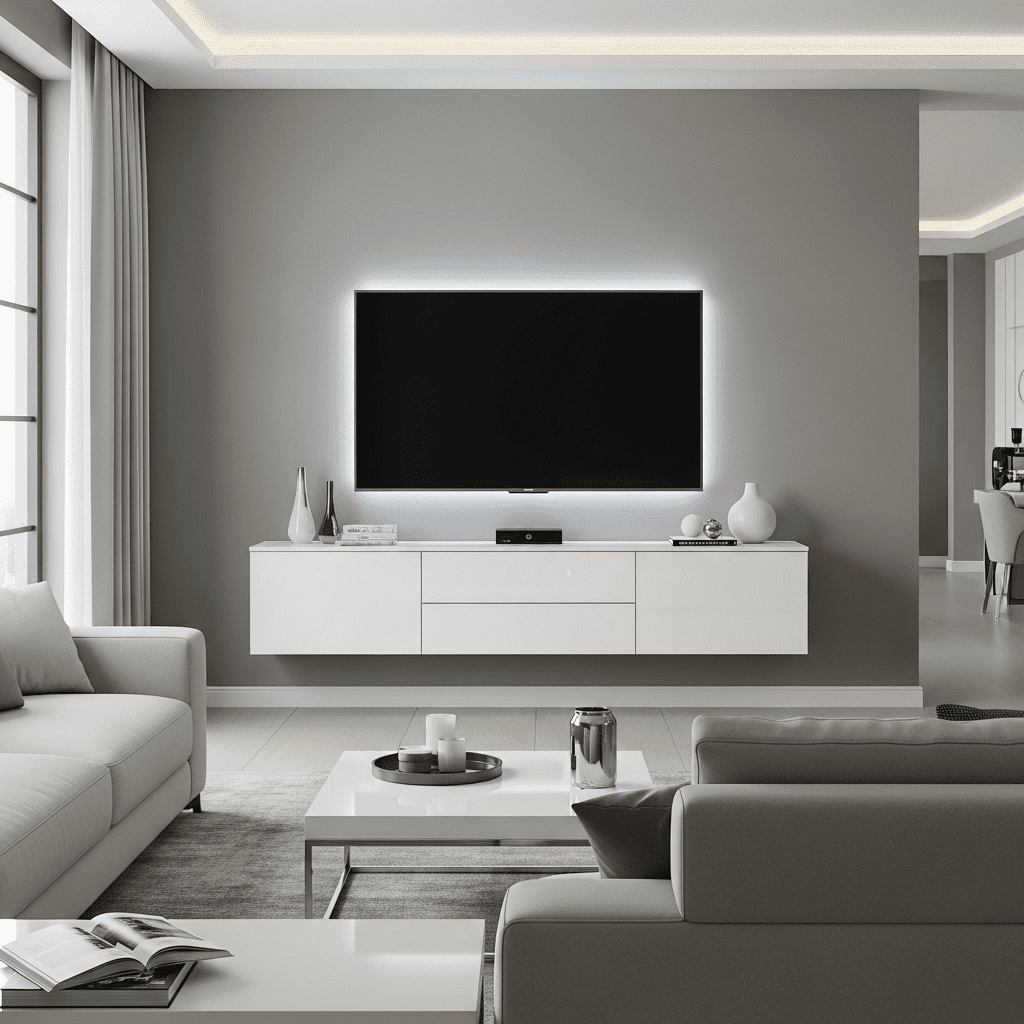
1. Floating Minimalist Wall Unit
The epitome of modern design, floating TV units create clean, weightless aesthetics. Wall-mounted cabinets with push-to-open mechanisms eliminate visible hardware while concealing cables and providing ample storage.
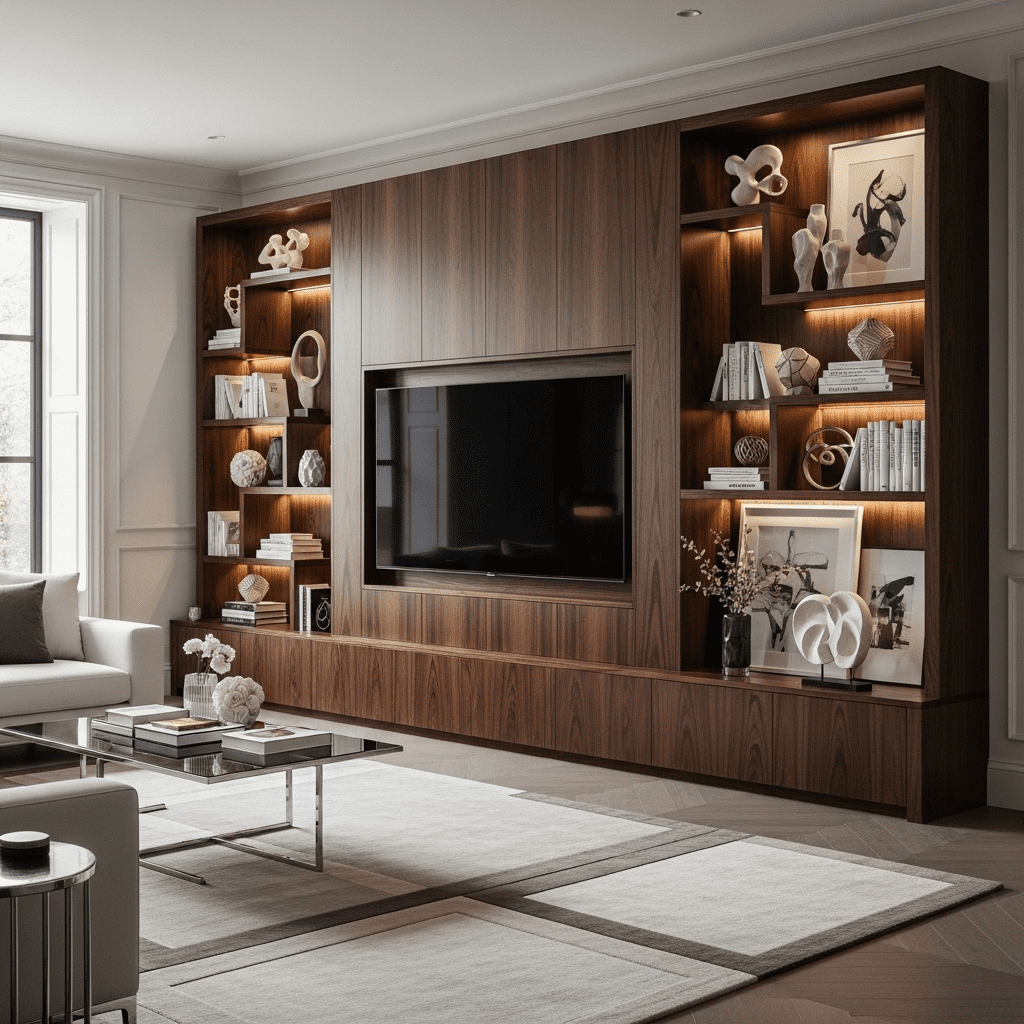
2. Full Wall Integrated Media System
Floor-to-ceiling entertainment walls make bold architectural statements. These custom units integrate the TV seamlessly within cabinetry, open shelving, and display niches for a built-in, high-end appearance.
See also: Vintage Guest Bedroom Ideas 12 Ways to Embrace Timeless Charm
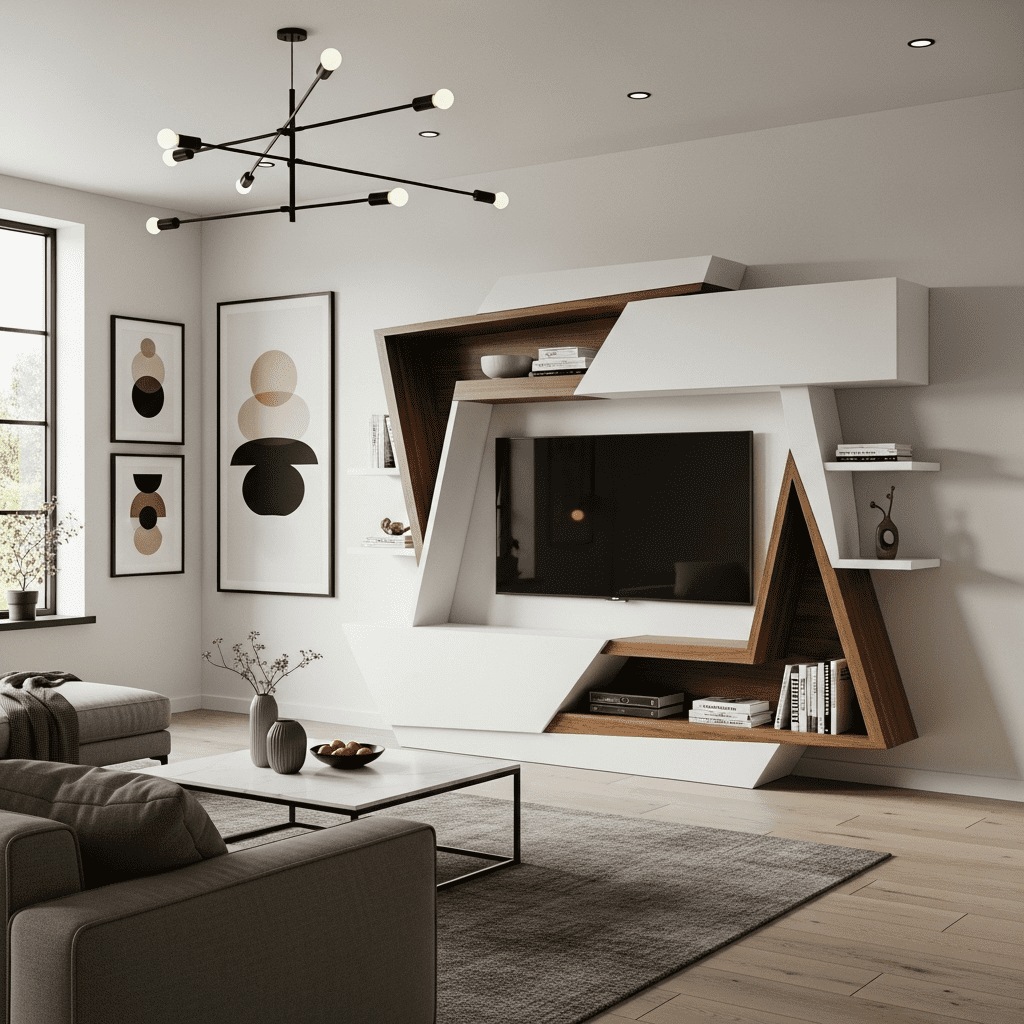
3. Asymmetric Geometric Design
Break from traditional symmetry with angular, geometric TV units featuring offset shelves, mismatched cabinet sizes, and dynamic compositions that create visual interest and modern edge.
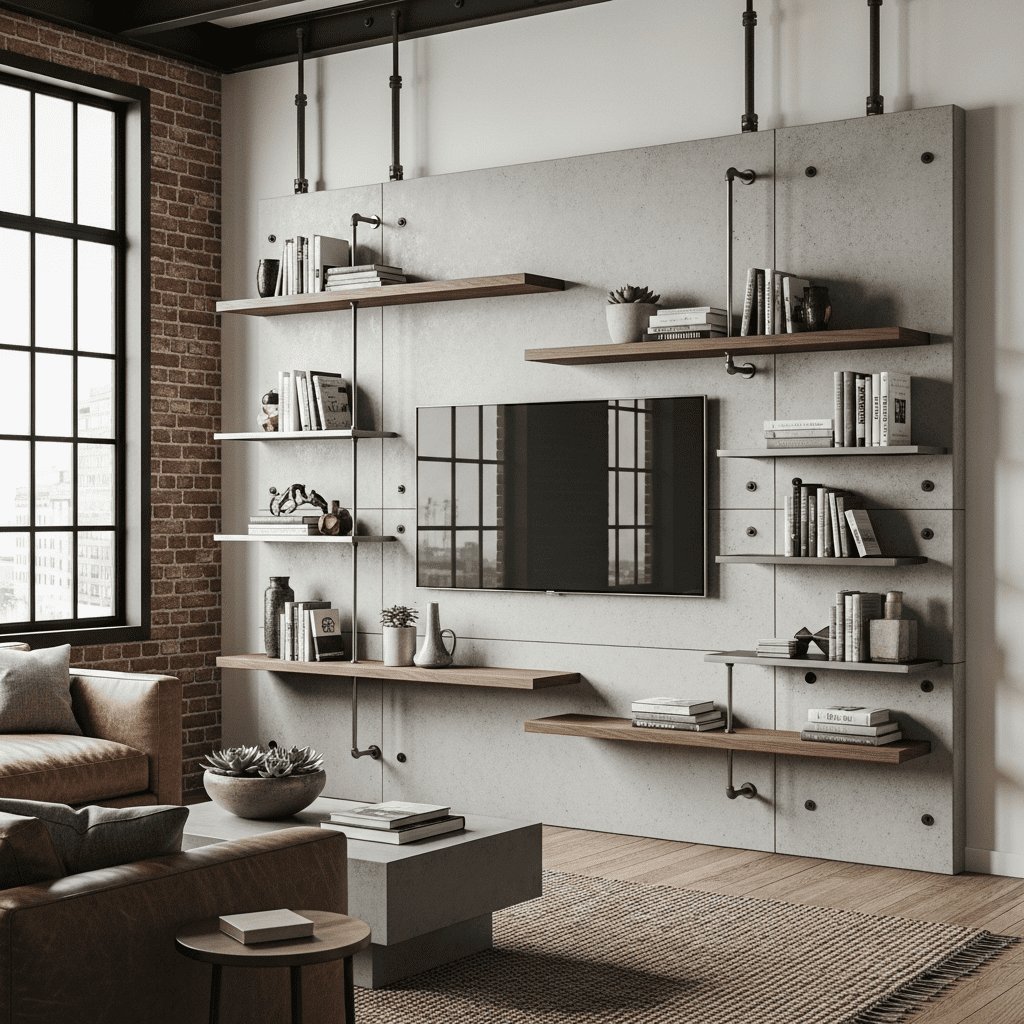
4. Concrete and Wood Industrial
Raw concrete panels paired with warm wood create striking industrial-modern units. This combination balances cold contemporary materials with organic warmth for sophisticated urban style.
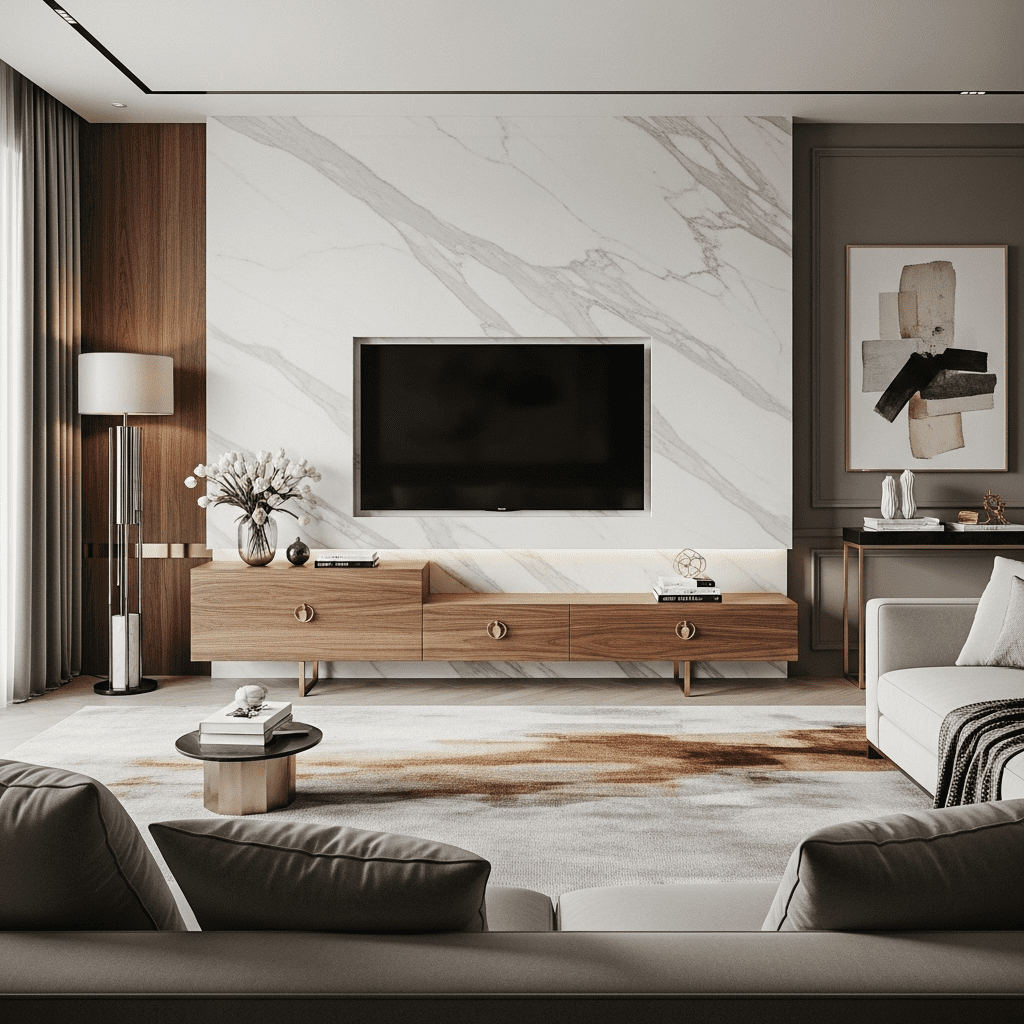
5. Marble Luxury Statement
Elevate entertainment centers with premium marble surfaces and metallic accents. Book-matched marble slabs create stunning backdrops while brass or gold details add glamorous sophistication.
6. Smart Motorized Hidden TV
Cutting-edge technology conceals TVs within cabinetry, artwork, or mirrors. Motorized lifts and sliding panels make screens appear and disappear, maintaining sleek aesthetics when not viewing.
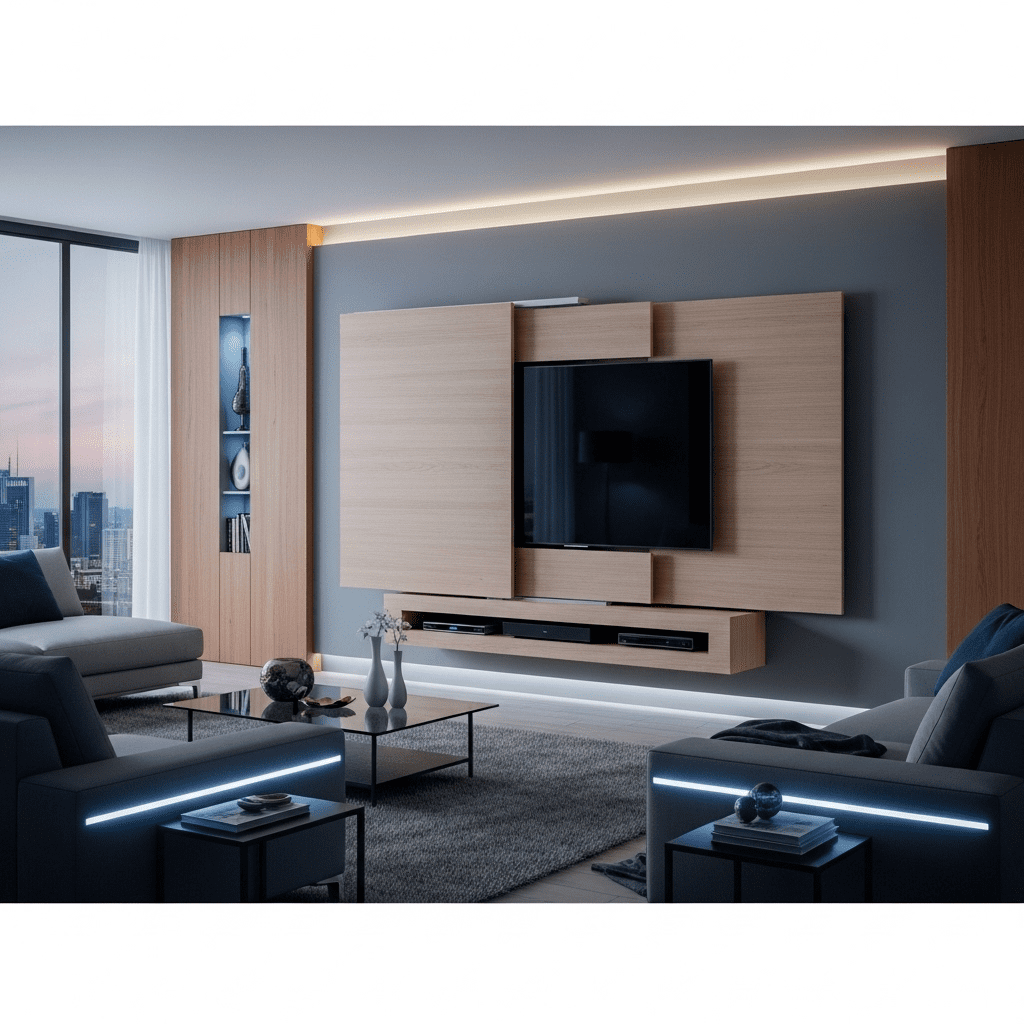
7. Backlit LED Feature Wall
Create ambiance with integrated LED lighting behind TV units. Customizable colored lights or warm white backlighting adds depth, reduces eye strain, and creates stunning visual effects.
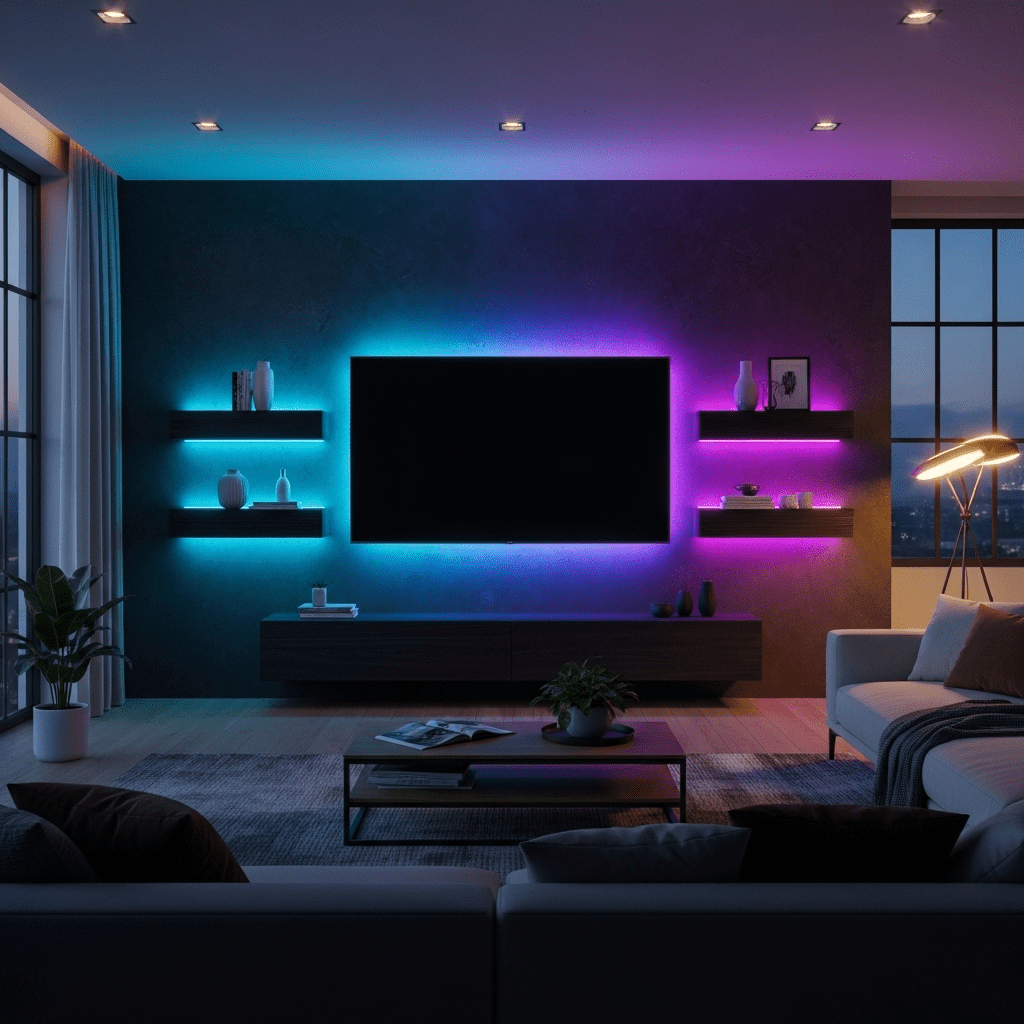
8. Open Shelving Display Unit
Showcase personality through open wooden or metal shelving surrounding the TV. Curated displays of books, plants, art objects, and decorative pieces create lived-in modern style.
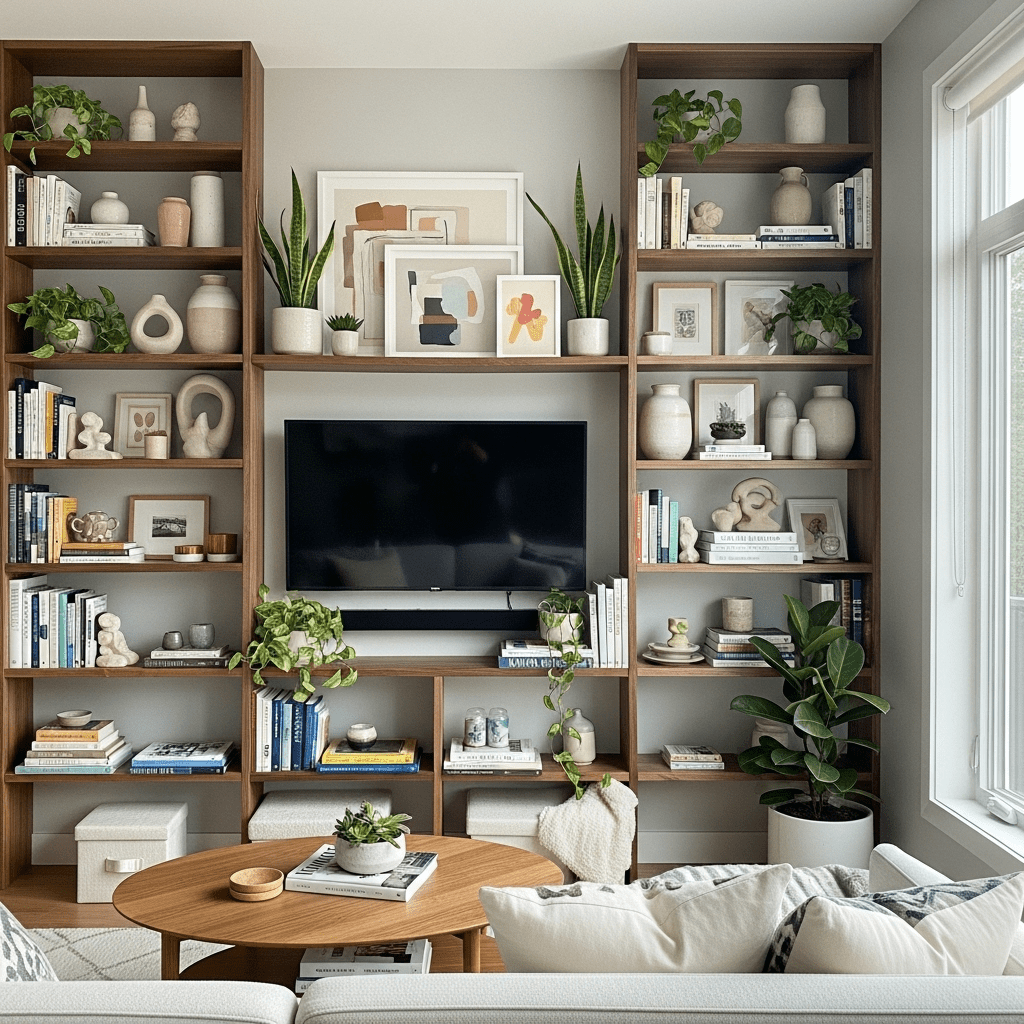
9. Lacquered High-Gloss Finish
Ultra-modern lacquered units in bold colors or classic white create reflective, glamorous surfaces. High-gloss finishes amplify light and add contemporary sophistication to any space.
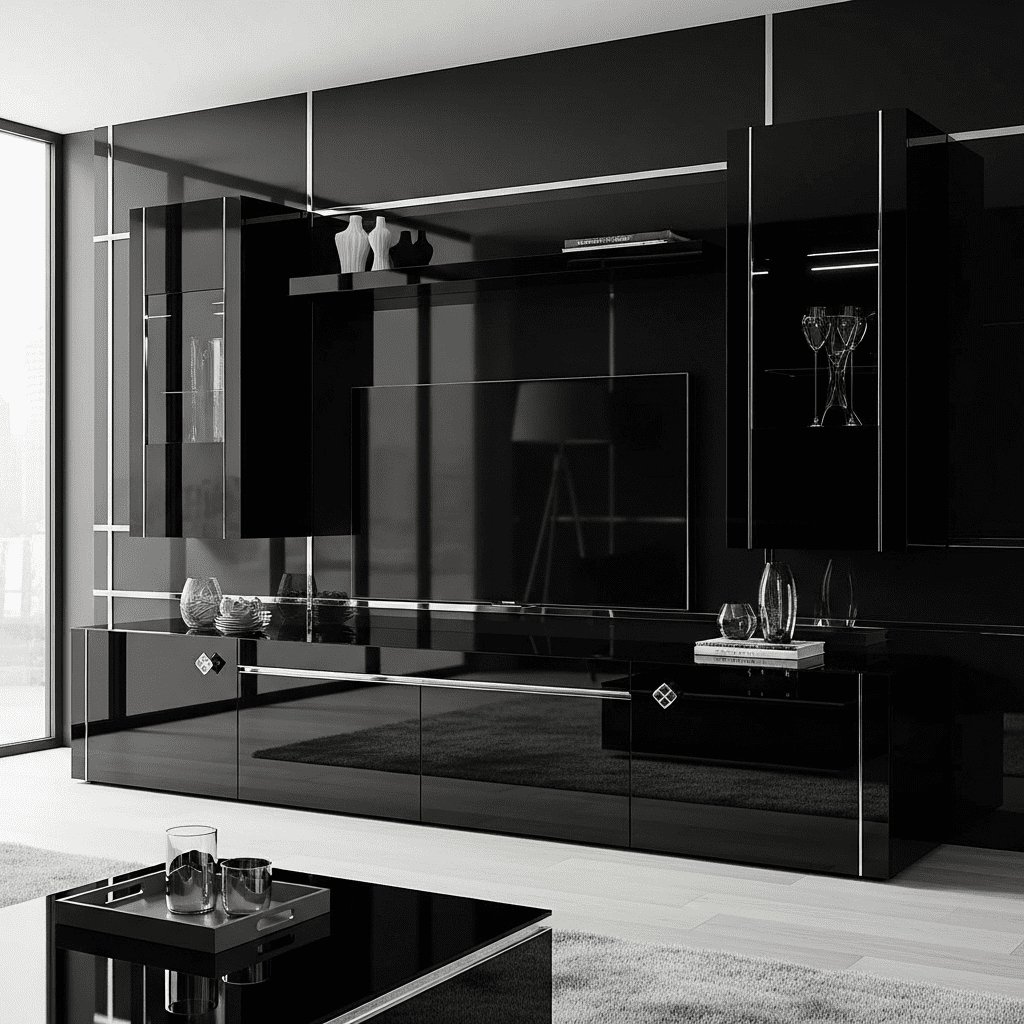
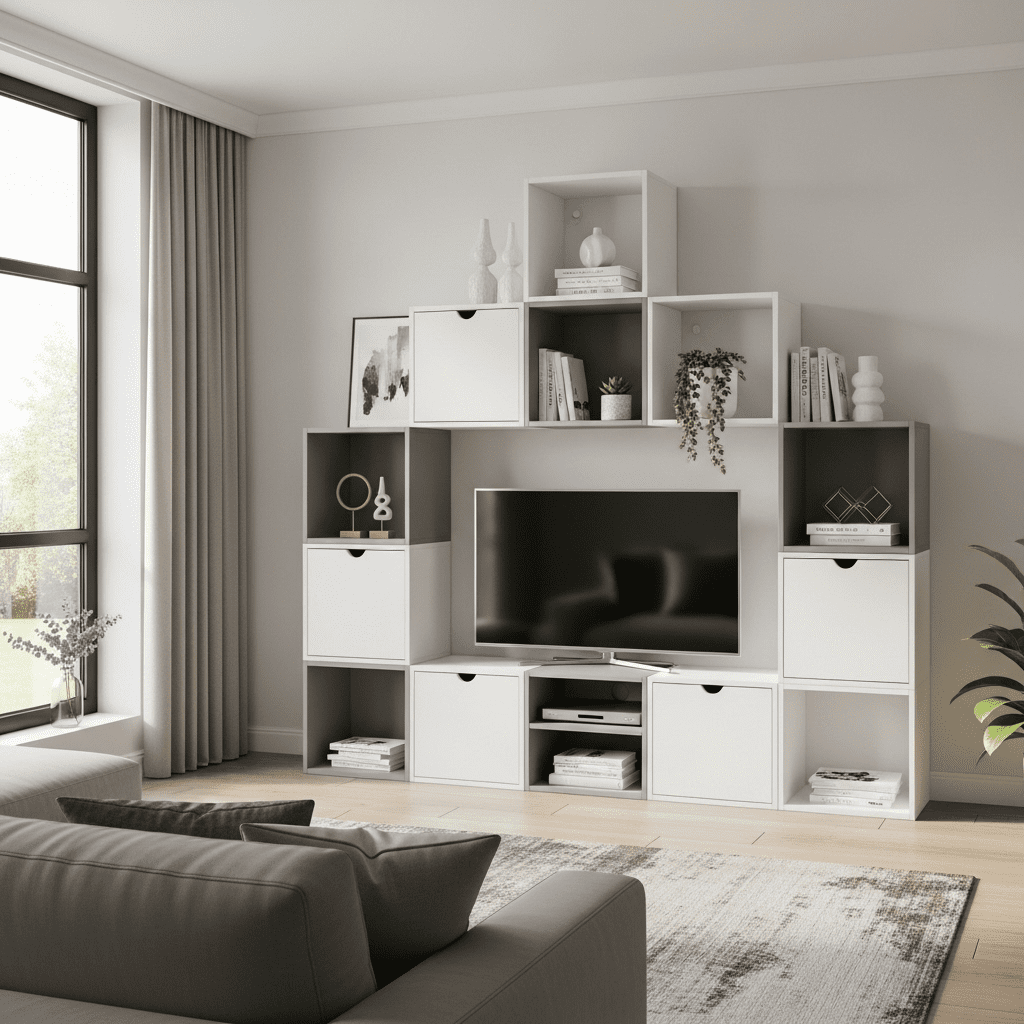
10. Modular Configurable System
Flexible modular units adapt to changing needs and spaces. Mix-and-match cubes, shelves, and cabinets in various sizes create customizable entertainment walls that evolve over time.
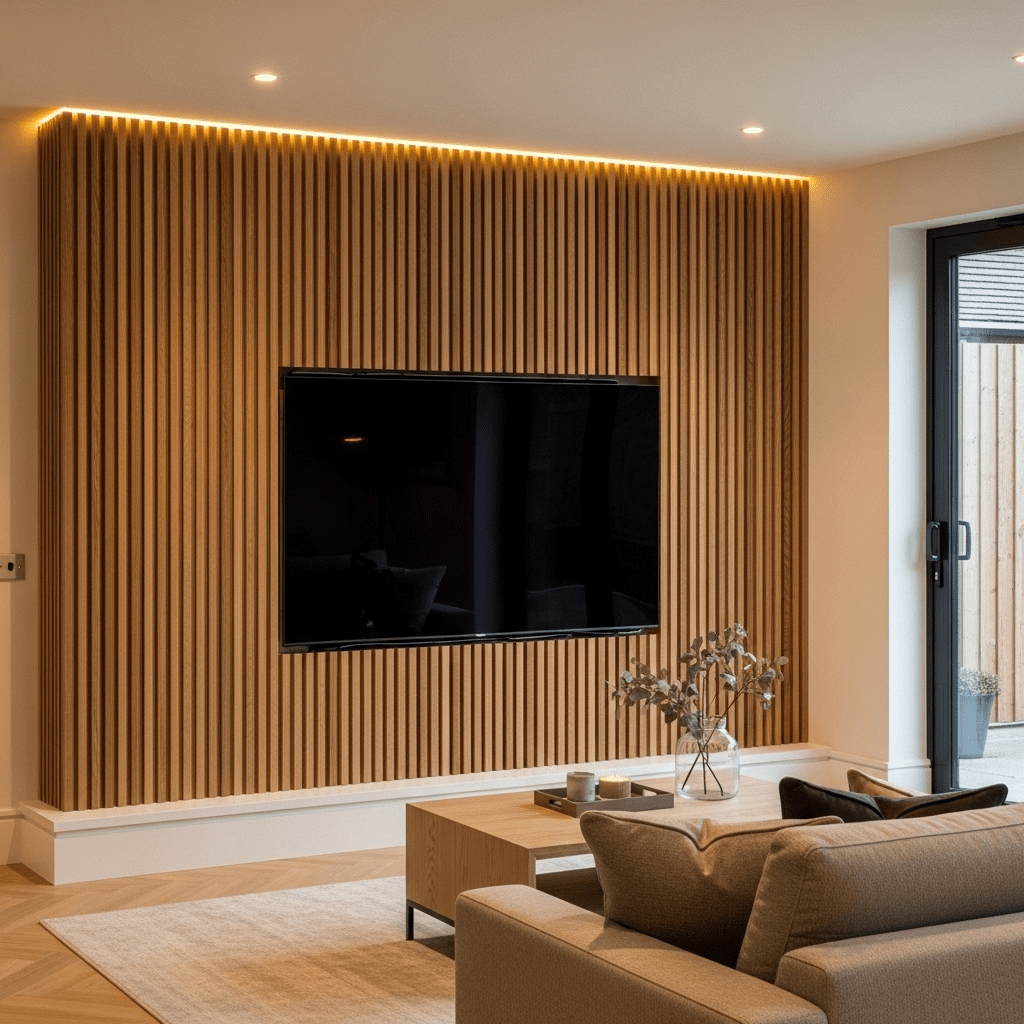
11. Slat Wood Textured Wall
Vertical or horizontal wood slats create textured feature walls behind TVs. This design adds warmth and dimension while cleverly concealing wiring and creating acoustic benefits.
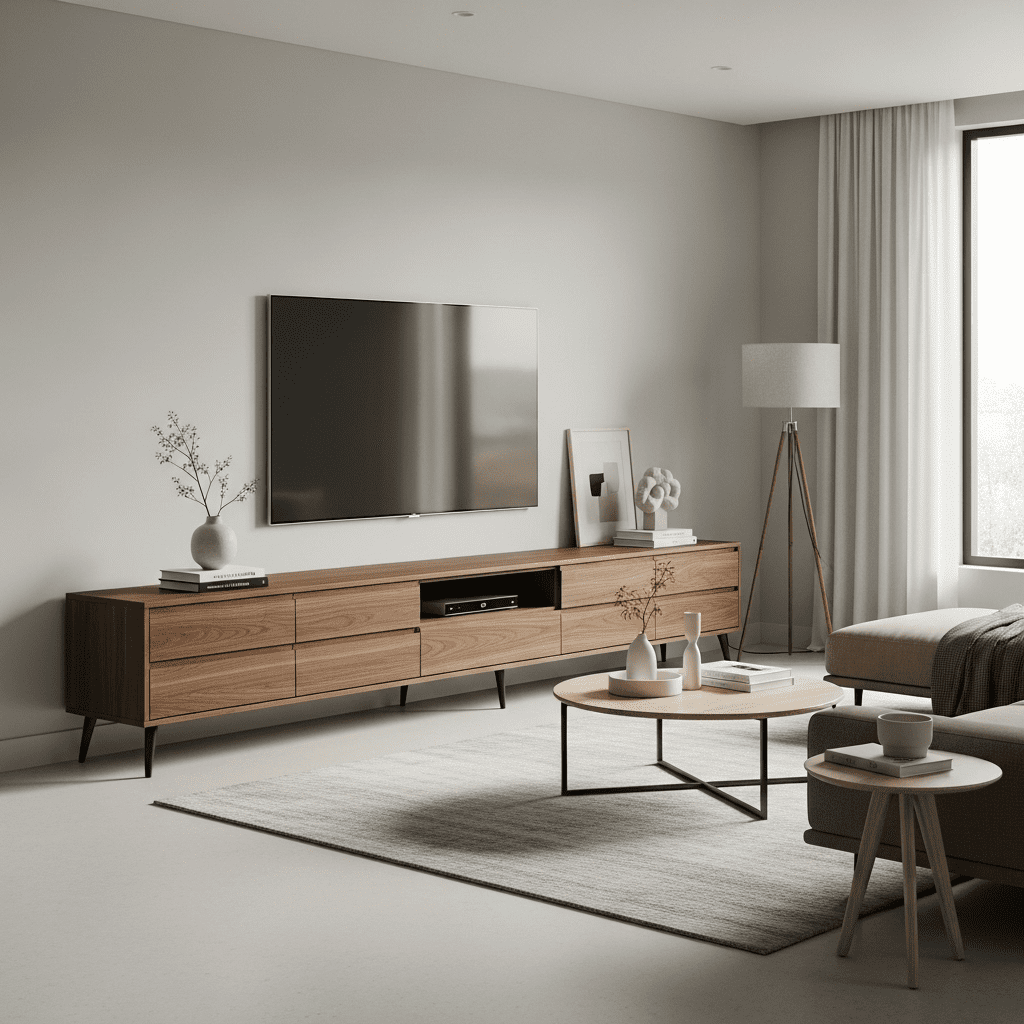
12. Low-Profile Long Console
Elongated, low-to-ground consoles emphasize horizontal lines for modern minimalism. Extended length provides ample storage and display space while maintaining sleek, unobtrusive profiles.
Design Principles for Modern TV Units
Modern TV unit design centers on several key principles that distinguish contemporary approaches from traditional entertainment centers.
Clean Lines and Simplicity: Modern design eliminates unnecessary ornamentation. Straight edges, geometric forms, and minimal hardware create refined, uncluttered appearances that feel current and timeless.
Material Authenticity: Contemporary units showcase materials honestly—natural wood grain, concrete texture, metal finishes—rather than disguising or imitating. This authenticity creates sophisticated depth.
Integrated Technology: Modern designs accommodate flat screens, gaming consoles, sound systems, and streaming devices while keeping cables, remotes, and equipment organized and often hidden.
Proportional Balance: Units scale appropriately to both TV size and room dimensions. The TV shouldn’t overwhelm the unit, nor should massive cabinetry dwarf a modest screen.
Choosing the Right Modern TV Unit
Several practical considerations guide selection beyond aesthetic preferences:
Measure Carefully: Know your TV dimensions (including with stand or mount), room wall width, and required clearances. Modern units often have precise proportions that don’t adapt well to incorrect sizing.
Assess Storage Needs: Consider what you’ll store—gaming equipment, media collections, decorative objects. Modern designs often prioritize looks over storage, so ensure capacity meets needs.
Cable Management: Modern aesthetics demand invisible wiring. Look for units with built-in cable channels, back panels with cutouts, or wireless charging integration for truly clean installations.
Material Durability: High-gloss finishes show fingerprints; matte surfaces hide wear better. Wood veneers vary in quality. Invest in materials that maintain appearance with realistic maintenance.
Installation Requirements: Wall-mounted units need proper stud mounting or specialized hardware. Heavy marble or concrete designs require professional installation. Factor these costs and requirements into decisions.
Color and Finish Selection
Modern TV unit colors typically fall into several categories:
Neutral Sophistication: White, black, gray, and beige provide versatile backgrounds that work with any décor. These classics never feel dated and allow other room elements to shine.
Natural Wood Tones: Walnut, oak, teak, and lighter woods bring warmth to modern spaces. Wood grounds contemporary design while adding organic texture and visual interest.
Bold Statements: Navy, emerald, or charcoal units make dramatic focal points in otherwise neutral rooms. These work best in larger spaces where they won’t overwhelm.
Mixed Materials: Combining wood with lacquer, metal with concrete, or glass with stone creates dimensional modern looks more interesting than single-material units.
Styling Modern TV Units
Even the most beautiful unit benefits from thoughtful styling:
Balance Open and Closed: If your unit includes open shelving, balance displayed items with closed storage. Too much on display creates clutter; too little feels cold.
Vary Heights and Textures: When styling shelves, vary object heights and mix textures—smooth ceramics with rough basketry, vertical books with horizontal stacks, organic plants with geometric objects.
Maintain Negative Space: Modern design embraces emptiness. Leave some shelves partially bare and space between objects. Crowding defeats contemporary aesthetics.
Cable Concealment: Use cable covers, cord management boxes, or built-in channels to hide wiring. Visible cables ruin otherwise sleek modern designs.
Lighting Integration: Add LED strips, puck lights, or picture lights to illuminate shelving and reduce TV viewing eye strain. Lighting elevates units from furniture to features.
TV Placement and Viewing Height
Proper TV positioning ensures comfort and optimal viewing:
Eye-Level Mounting: Center screens at seated eye level, typically 42-48 inches from floor to TV center. Too high causes neck strain; too low feels awkward.
Viewing Distance: Sit 1.5-2.5 times the TV’s diagonal measurement away. A 65-inch TV needs 8-13 feet of viewing distance for comfortable watching.
Glare Prevention: Avoid placing TVs directly opposite windows without curtains or shades. Glare makes viewing difficult and forces uncomfortable seating arrangements.
Budget Considerations
Modern TV units span all price points:
Budget-Friendly: Simple floating shelves with mounted TVs or basic IKEA systems provide modern looks affordably. Focus budget on quality TV mount and cable management.
Mid-Range: Well-made modular systems, quality wood consoles, or custom-ordered units balance cost with durability and design impact.
Luxury Investment: Custom built-ins, premium materials like marble or high-end wood, motorized systems, and integrated smart technology command premium prices but create showpiece results.
Trends in Modern TV Unit Design
Current directions shaping contemporary TV units include:
Disappearing Technology: TVs that hide in artwork frames, mirrors, or behind sliding panels when not in use maintain clean aesthetics.
Sustainable Materials: Reclaimed woods, recycled metals, and eco-friendly finishes reflect growing environmental consciousness without compromising modern style.
Smart Integration: Built-in wireless charging, voice-activated lighting, and IoT connectivity make units part of smart home ecosystems.
Minimalist Maximalism: While maintaining clean lines, some modern units incorporate rich materials, bold colors, or textural variety for personality without clutter.
Installation Tips
Whether DIY or professional installation, consider:
Wall Mounting: Locate studs properly, use appropriate anchors for drywall, and consider professional help for heavy units or uncertain wall construction.
Level Everything: Nothing ruins modern design like crooked mounting. Use quality levels and take time to ensure perfect alignment.
Plan Electrical: Install outlets behind units or inside cabinets during planning phases. Visible cords to distant outlets defeat contemporary aesthetics.
Allow Ventilation: Electronics need airflow. Ensure adequate clearance and ventilation holes in cabinets housing equipment to prevent overheating.
Modern TV units successfully blend form and function, providing practical entertainment storage while serving as architectural focal points. Whether you choose floating minimalism, integrated luxury, or modular flexibility, the right modern TV unit elevates your entire living room, proving that functional furniture can be beautifully designed focal points rather than necessary eyesores.