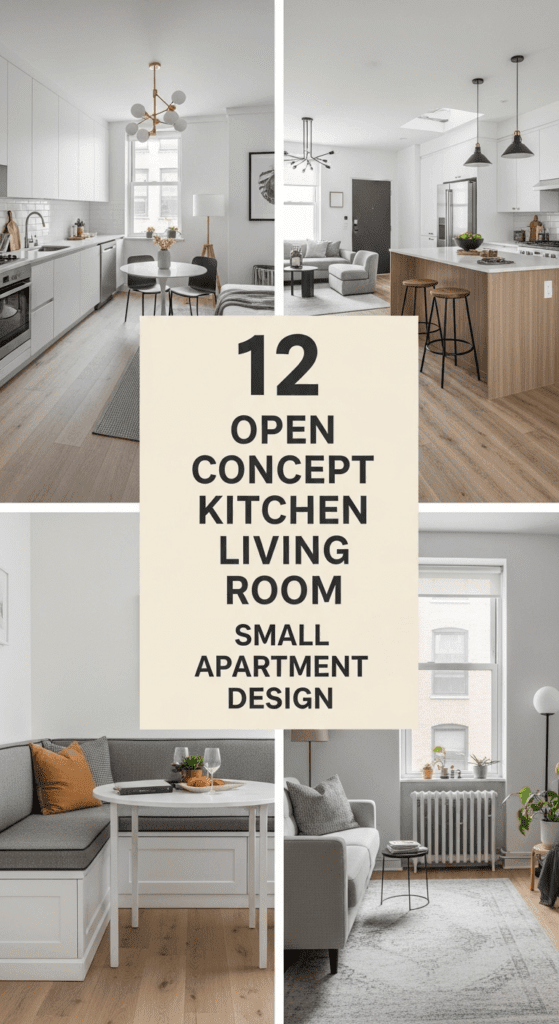
12 Open Concept Kitchen Dining Living Room Small Apartment Design
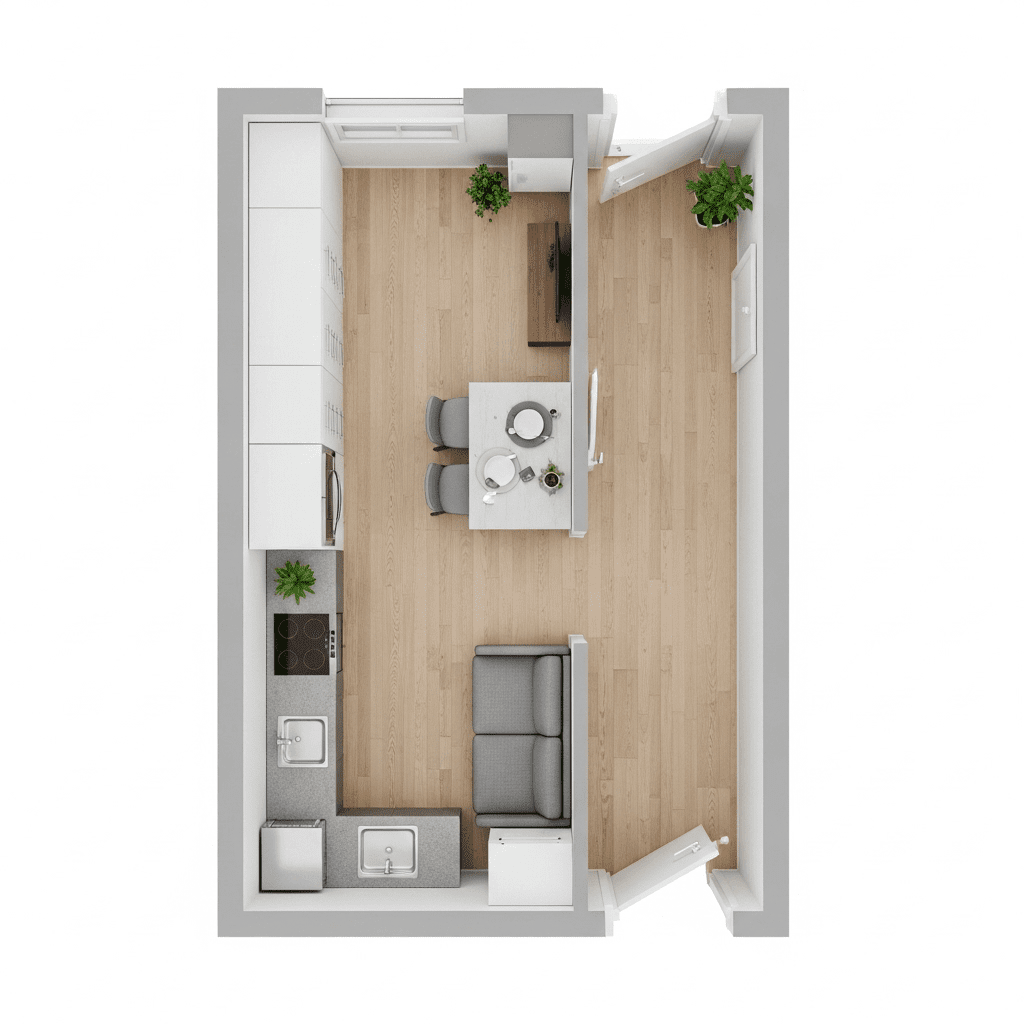
Open concept kitchen dining living room small apartment design focuses on the “uninterrupted line.” In a compact open-plan home, the challenge is to define three distinct functional zones—cooking, eating, and relaxing—without using a single wall that would shrink the space. By utilizing smart furniture placement, consistent textures, and “airy” transitions, you can create a high-functioning great room that feels expansive and organized. Here are 12 design concepts for your small open-concept apartment.
See also: 14 DIY Bedroom Ideas for Small Rooms
1. The Linear Wall Strategy
Arrange the kitchen, dining table, and sofa along one single long wall. This “galley-style” approach leaves the opposite side of the room completely open for traffic, making a narrow apartment feel much wider.
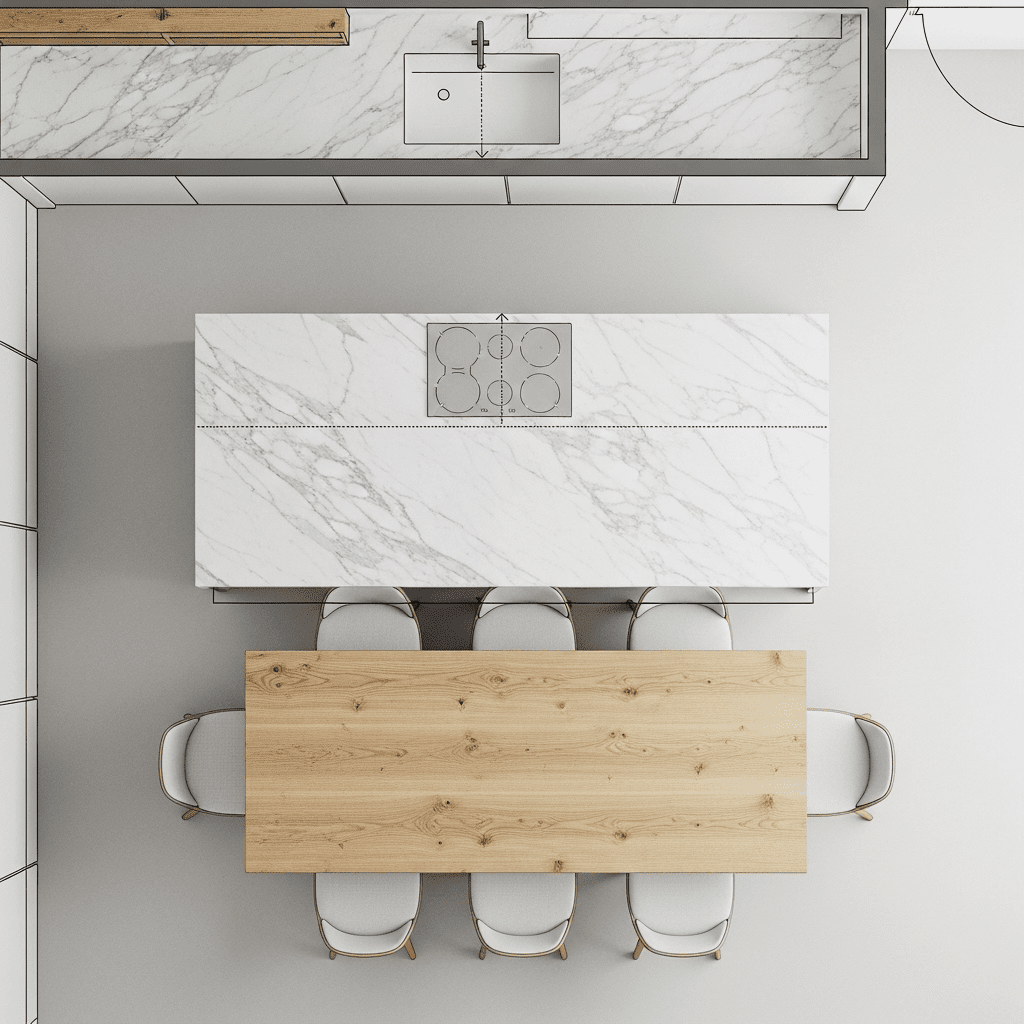
2. The Island-to-Table Extension
Extend your kitchen island with a lower-level wooden surface that serves as the primary dining table. This “stepped” design saves the floor space usually required for a standalone dining set.
See also: 15 Bedroom Ideas for Small Rooms Women
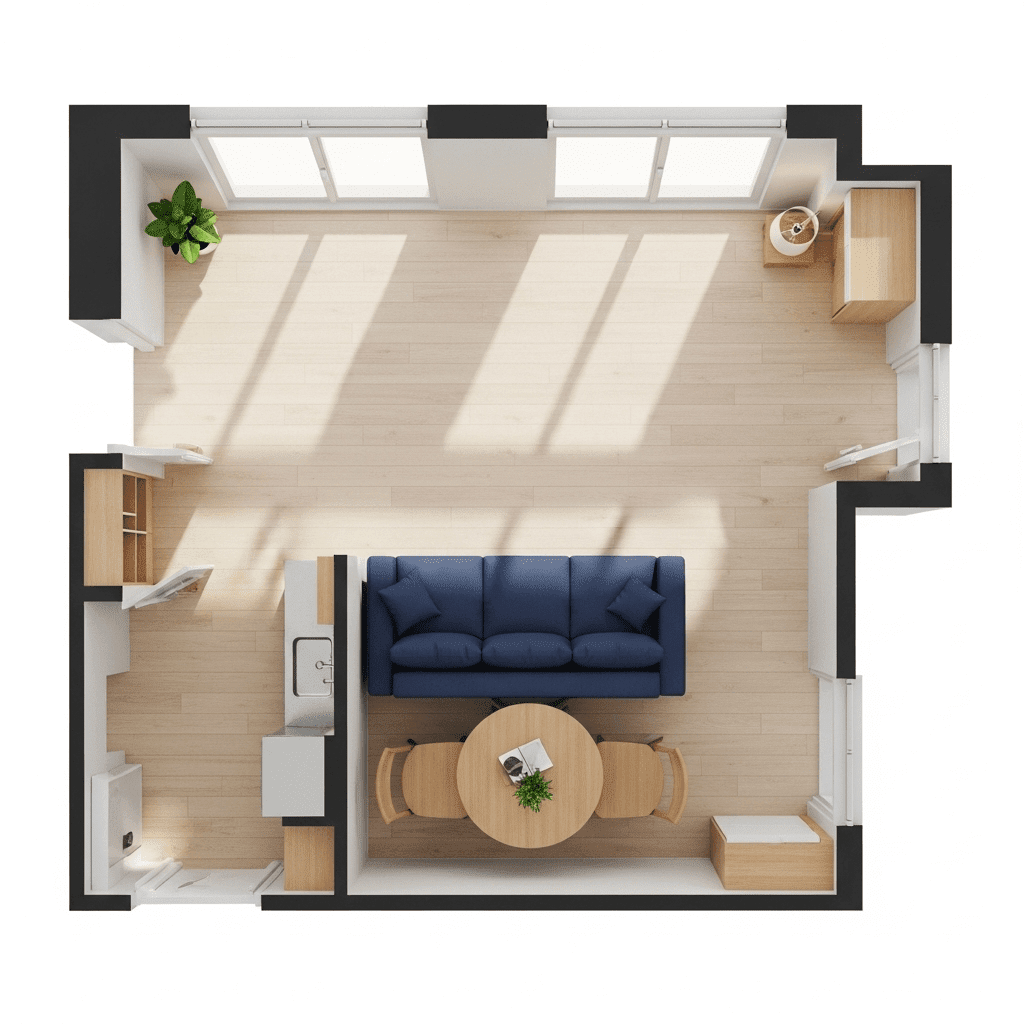
3. The Back-to-Back Sofa Split
Place the back of your sofa directly against the dining area or kitchen counter. This creates a physical boundary that separates the “work” of the kitchen from the “rest” of the living room.
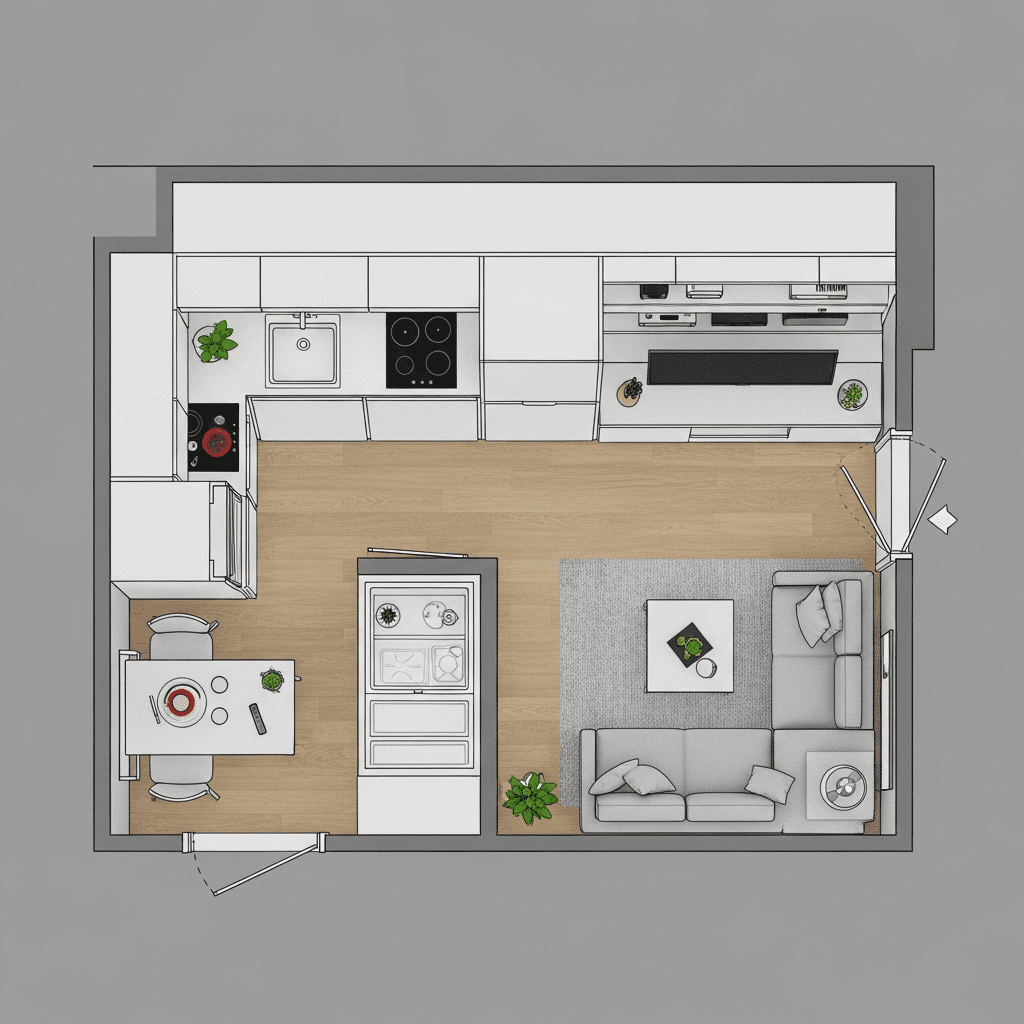
4. Continuous Cabinetry Camouflage
Run a single line of cabinetry from the kitchen all the way into the living room, transitioning from a pantry to a media unit. This visual continuity prevents the room from feeling “chopped up.”
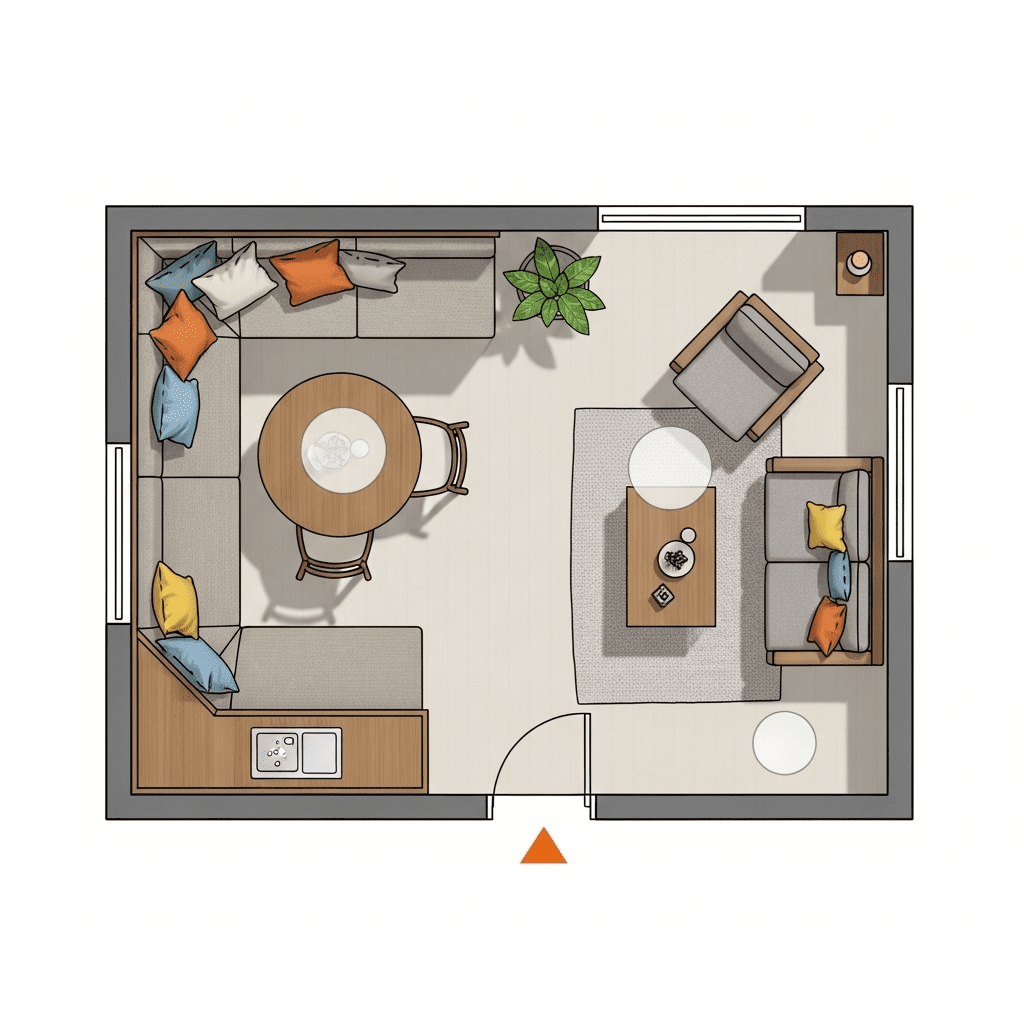
5. The Corner Banquet Nook
Tuck a built-in L-shaped bench into the corner between the kitchen and the living room. This creates a cozy dining “booth” that uses zero central floor space.
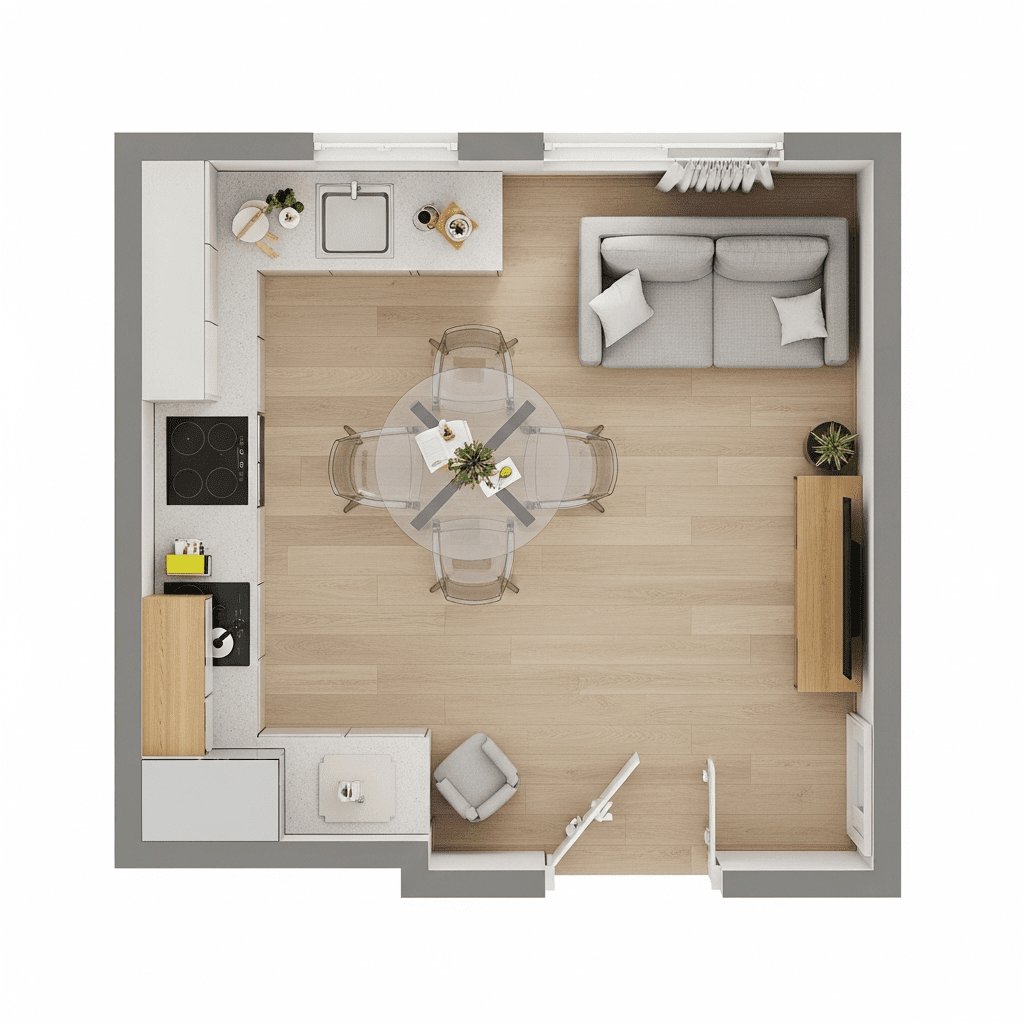
6. Transparent Transition Furniture
Use a glass dining table and acrylic “ghost” chairs. Because these items are see-through, the dining zone “disappears” visually, allowing the kitchen and living room to feel more connected.
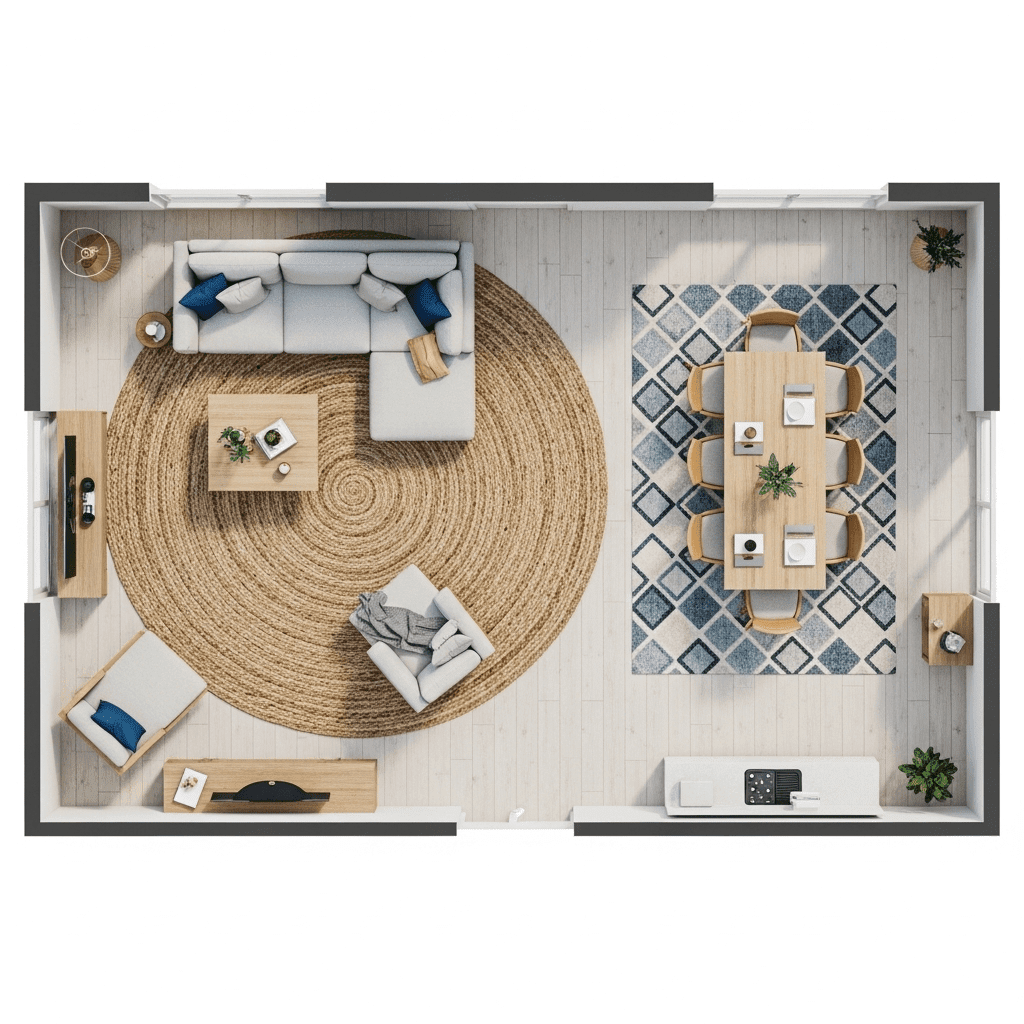
7. Rug-Anchored “Islands”
Place a large rug under the living room furniture and a different, low-pile rug under the dining table. This creates “soft walls” that define each zone without blocking the view.
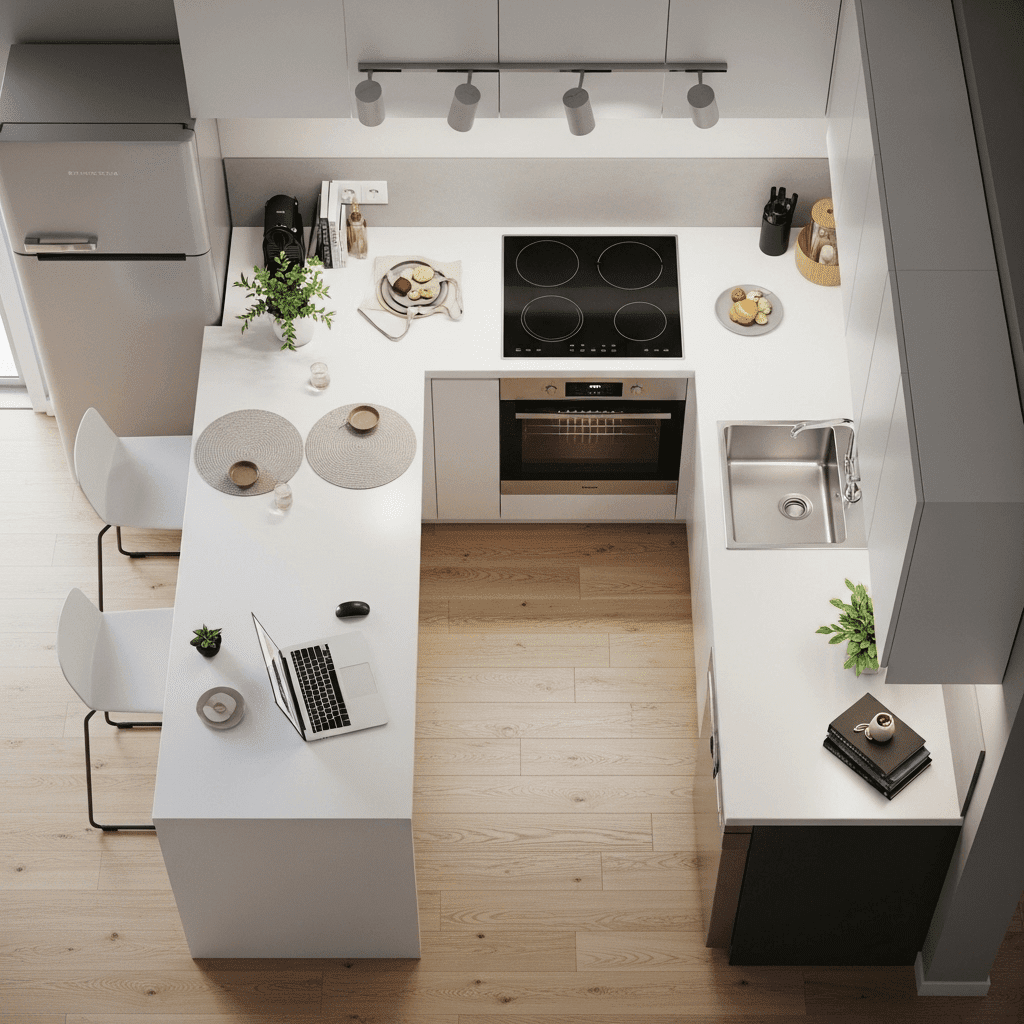
8. The Floating Workspace Peninsula
Install a kitchen peninsula that doubles as a breakfast bar and a workspace. This eliminates the need for a separate desk and dining table, freeing up the living area.
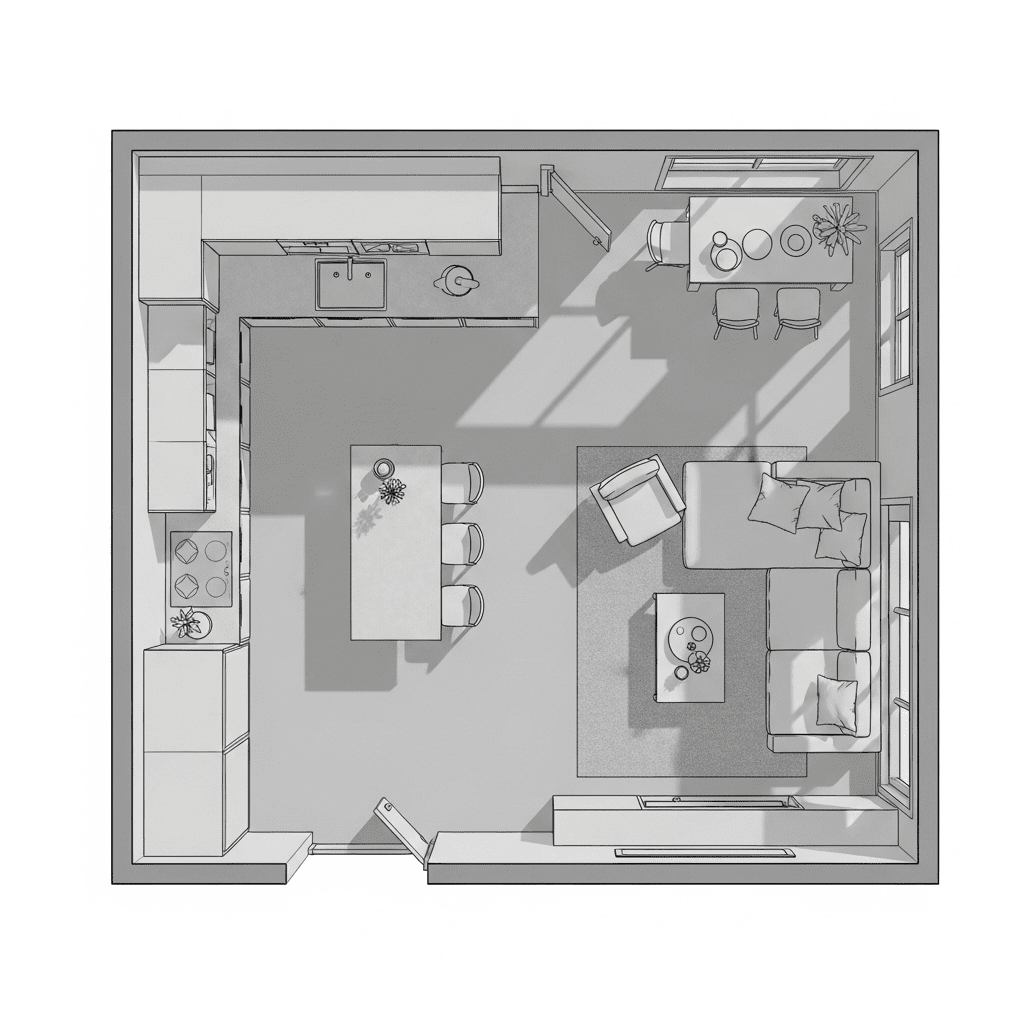
9. Unified Monochrome Palette
Paint the kitchen cabinets, walls, and even some furniture the same color, like a soft “greige.” This lack of color contrast makes the boundaries of each zone fade away.
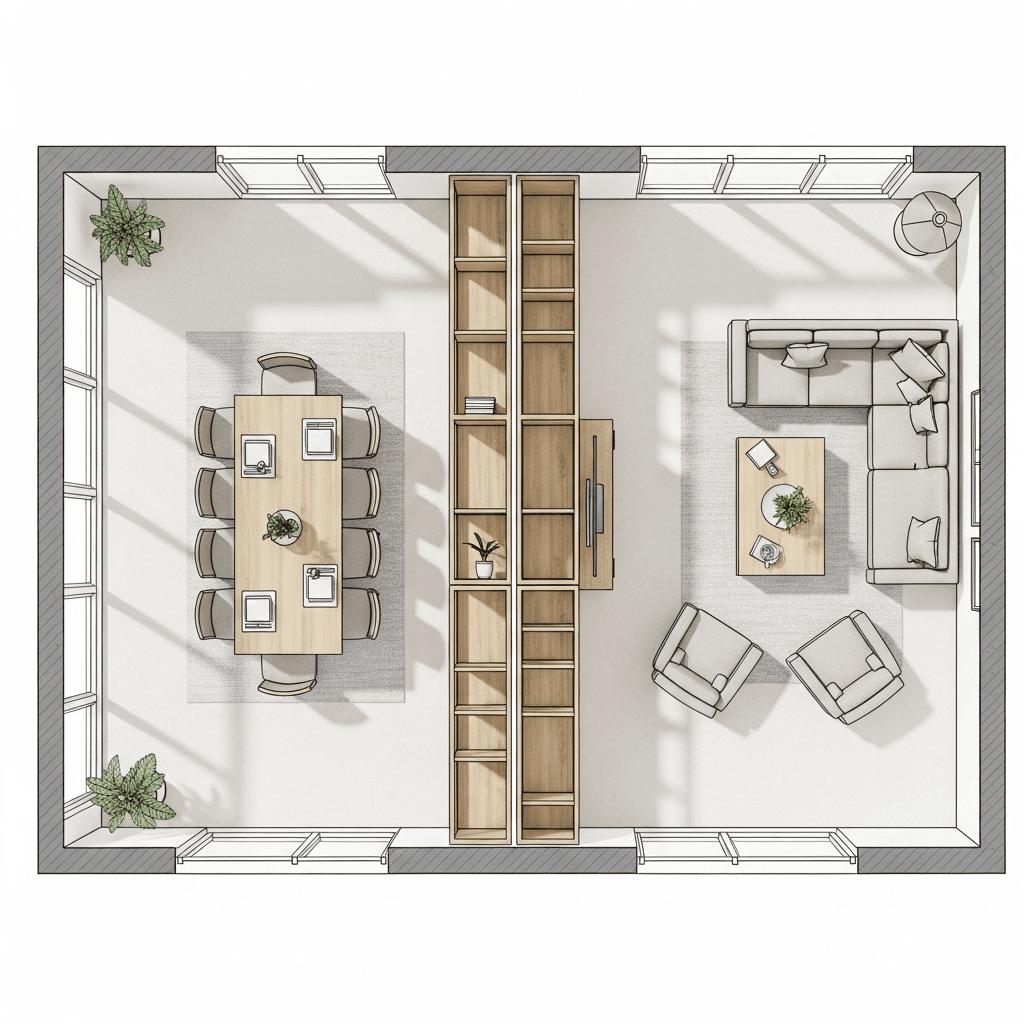
10. Vertical Shelf Zoning
Use an open, double-sided bookshelf as a “transparent wall” between the dining table and the sofa. It provides storage and definition while allowing light and conversation to pass through.
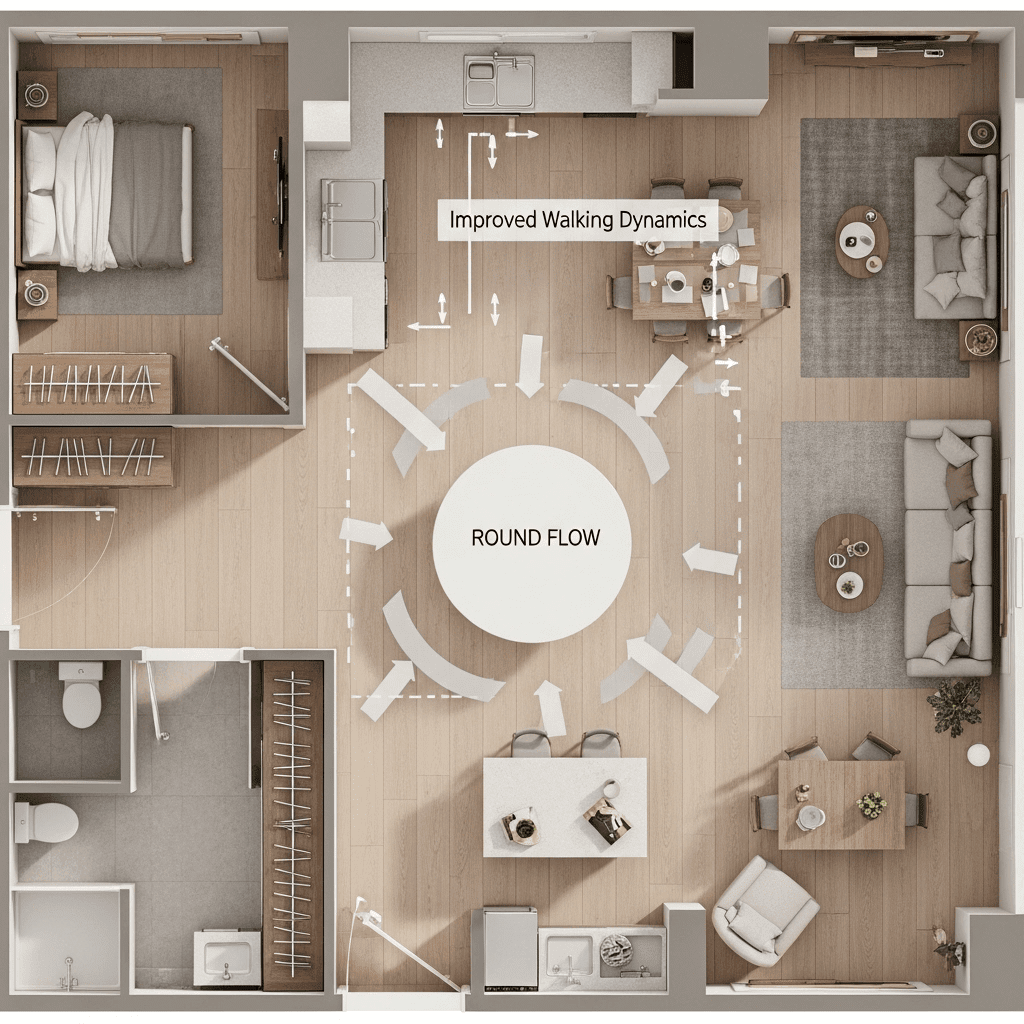
11. The Pedestal Path
Choose a round pedestal dining table. The absence of four corner legs makes the transition between the kitchen and the living room feel much smoother and easier to navigate.
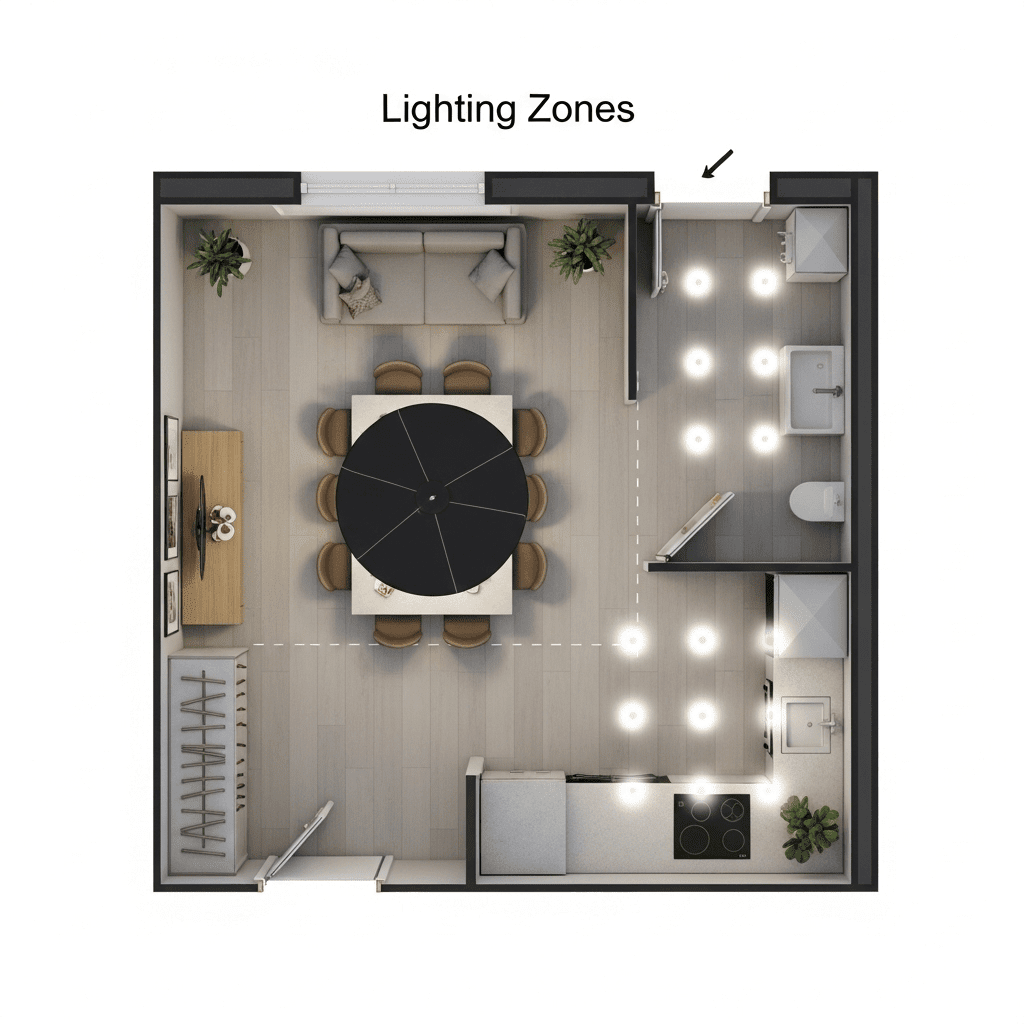
12. Pendant-Defined High-Low Zones
Hang a low-slung, dramatic pendant light over the dining table and use high-recessed lighting for the kitchen. The different “light clouds” define the rooms from the ceiling down.
Conclusion
Successfully designing a small open-concept apartment is about mastering the “visual flow.” By looking at your home from a top-view perspective, you can ensure that walkways are clear and that each zone—kitchen, dining, and living—has enough breathing room to function independently. Stick to multi-purpose furniture and a cohesive material palette to keep the space looking sophisticated and serene.