Skip to content
Rococo architecture developed in 18th-century France as a reaction against the heaviness of Baroque. It is lighter, more playful, and more intimate. Rococo is asymmetrical, pastel-coloured, and covered in shells, scrolls, and flowers. Rococo is not for cathedrals — it is for salons, boudoirs, and hunting lodges. It is the architecture of pleasure.
These 12 Rococo architecture designs span interiors, pavilions, and churches. Each design includes defining characteristics, decorative principles, and spatial strategies.
1. The Salon
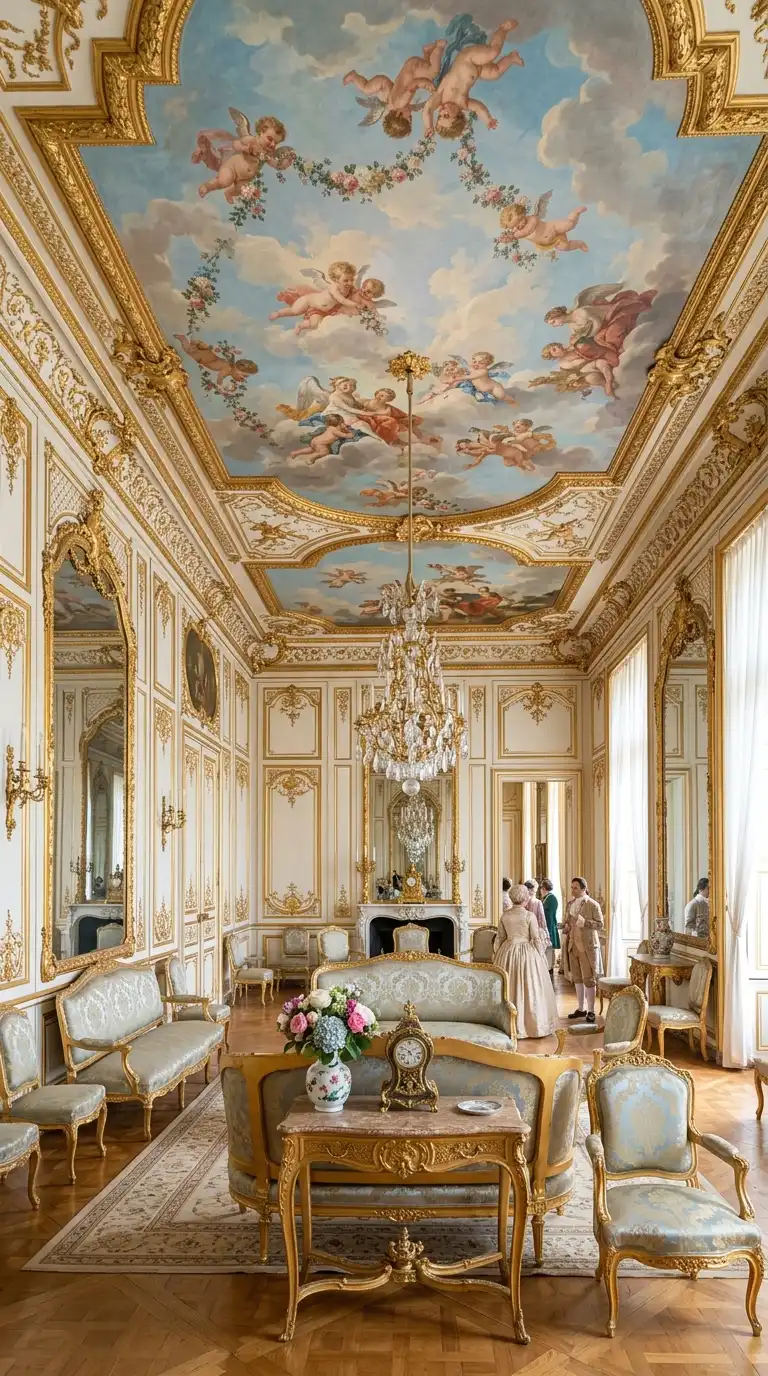
The salon is the heart of the Rococo interior. The walls are panelled in white and gold. The ceiling is painted with clouds and cherubs. The mirrors reflect the light. The furniture is curved and gilded. The salon is light, playful, and social.
This design is ideal for private palaces and townhouses. The emotional effect is light, playful, and social.
Quick Tips
- Walls must be white and gold panelled.
- The ceiling must have a painted fresco.
- Mirrors must be on the walls.
2. The Shell Motif
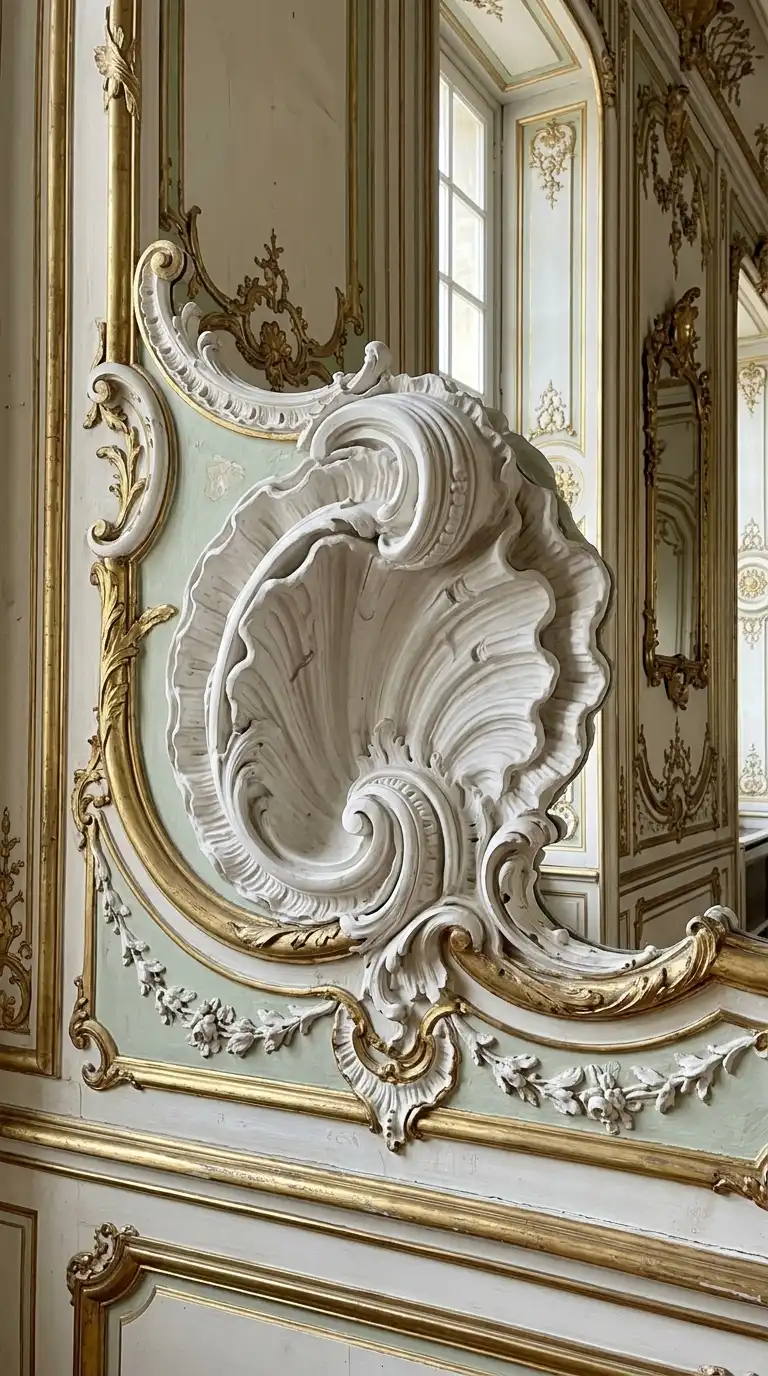
The shell (rocaille) is the signature Rococo ornament. The shell is asymmetrical and curving. It appears on walls, ceilings, furniture, and mirrors. The shell is carved in wood or moulded in stucco. The shell motif is curving, asymmetrical, and shell-like.
This design is ideal for all Rococo interiors. The emotional effect is curving, asymmetrical, and shell-like.
Quick Tips
- The shell must be asymmetrical.
- The shell must be curving.
- The shell must be carved or moulded.
3. The Pastel Colour Palette
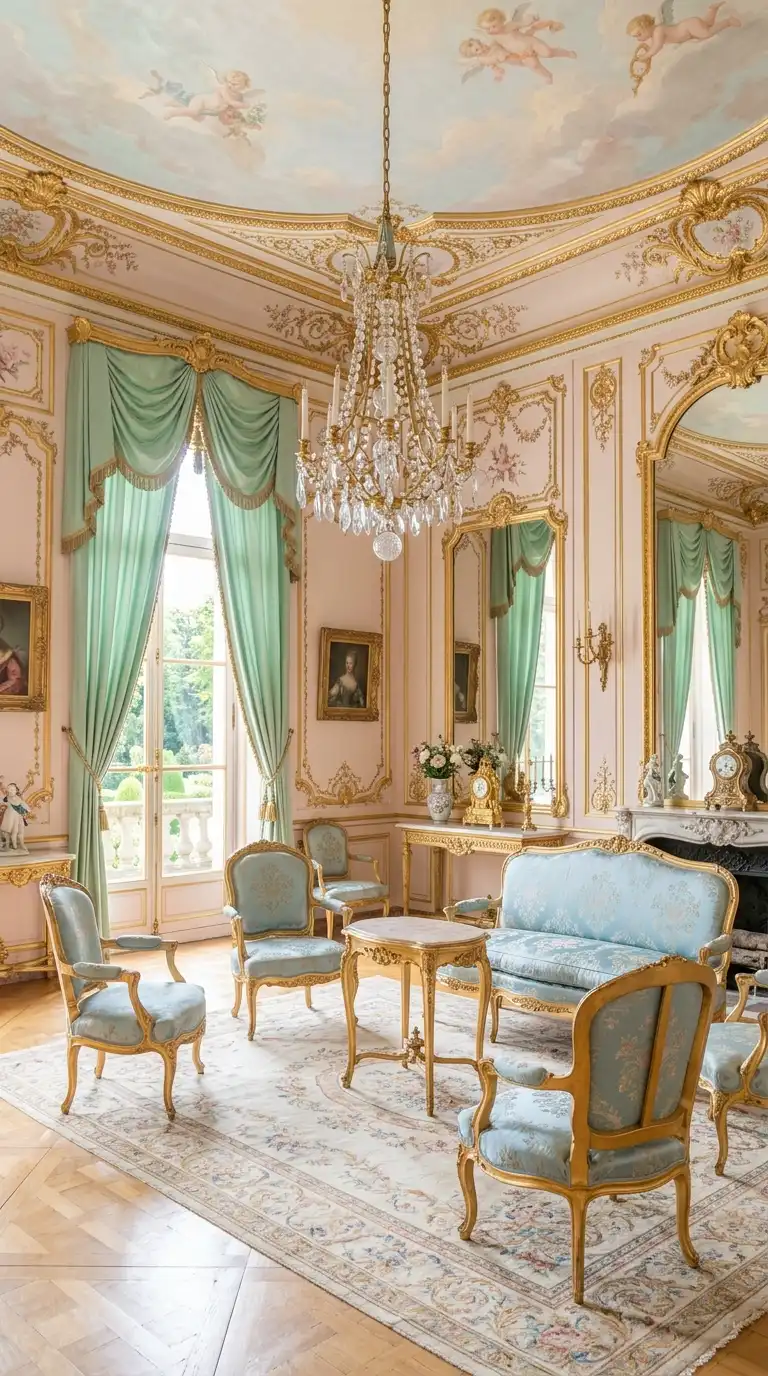
The Rococo colour palette is pastel: pale pink, powder blue, mint green, and cream. Colours are soft and light. Gold is used for highlights. The pastel palette is soft, light, and cheerful.
This design is ideal for all Rococo interiors. The emotional effect is soft, light, and cheerful.
Quick Tips
- Use pale pink, powder blue, mint green, and cream.
- Use gold for highlights.
- Avoid dark or saturated colours.
4. The Asymmetrical Composition
Rococo rejects symmetry. A fireplace is off-centre. A mirror is placed at an angle. A painting is hung high on one side. Asymmetry is playful and unexpected. The asymmetrical composition is playful, unexpected, and dynamic.
This design is ideal for all Rococo interiors. The emotional effect is playful, unexpected, and dynamic.
Quick Tips
- Avoid mirroring elements.
- Place the fireplace off-centre.
- Hang paintings at different heights.
5. The Boudoir
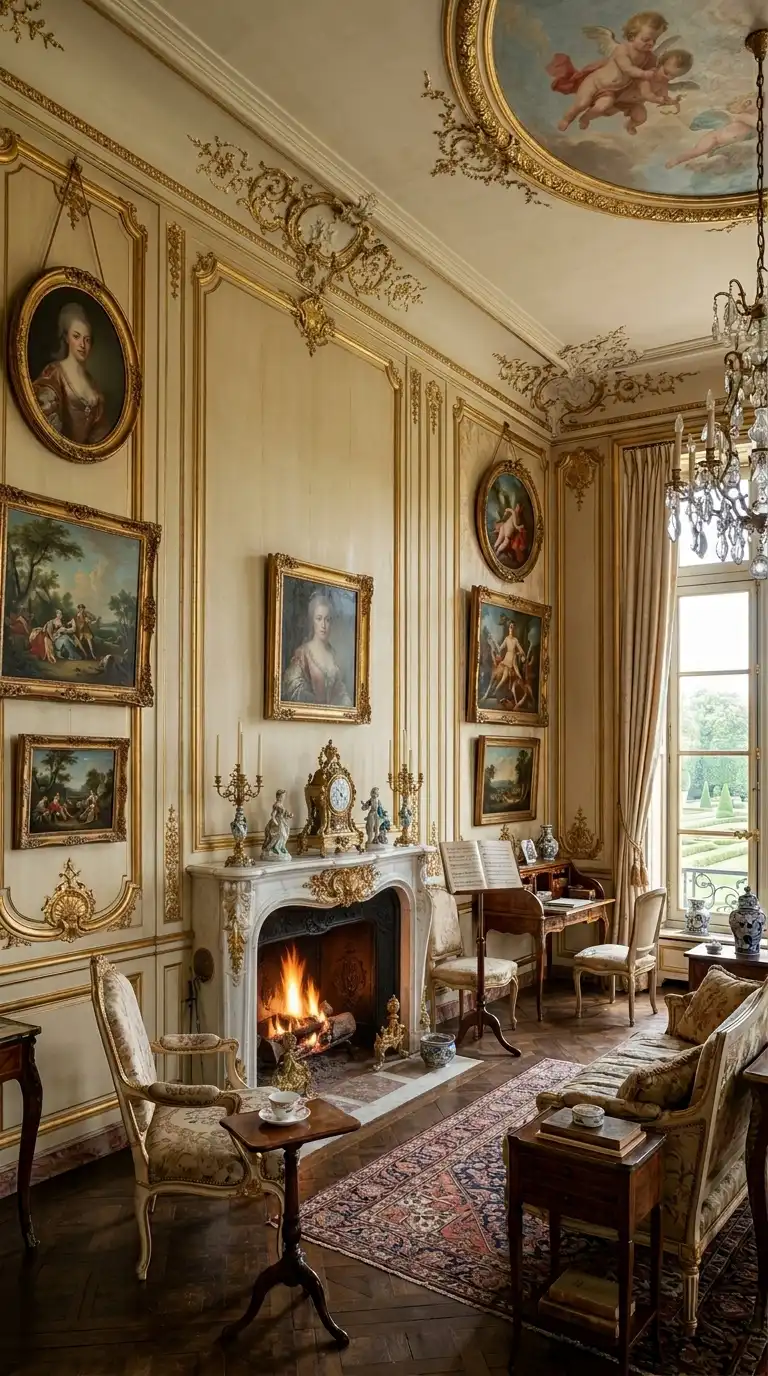
The boudoir is a small, intimate room for a lady. The boudoir is decorated in pastel colours. The walls have painted panels of flowers. The furniture is small and curved. The boudoir is intimate, feminine, and delicate.
This design is ideal for private apartments. The emotional effect is intimate, feminine, and delicate.
Quick Tips
- The room must be small and intimate.
- Walls must have painted flower panels.
- Furniture must be small and curved.
6. The Ormolu Mount
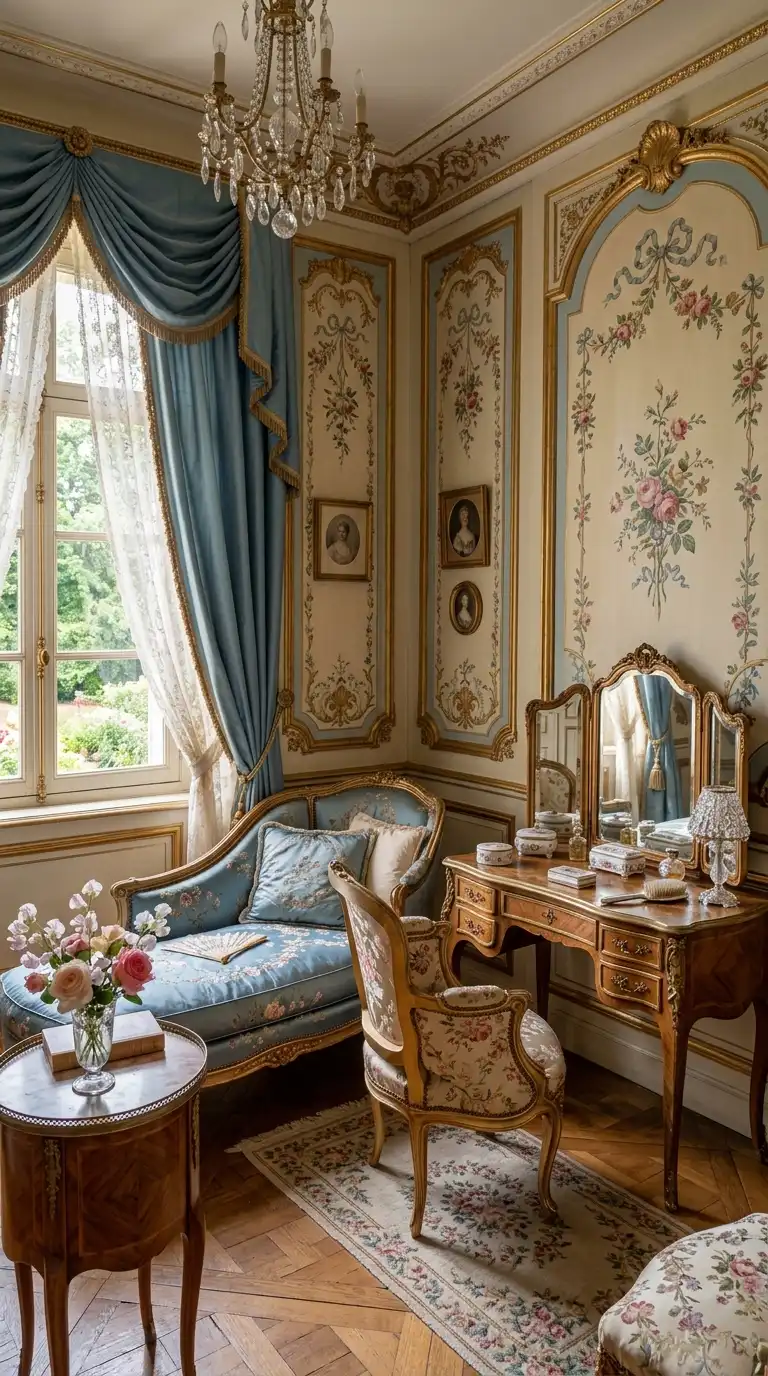
Ormolu is gilded bronze used for furniture mounts, door handles, and clock cases. Ormolu is cast in curving, organic shapes — shells, leaves, and scrolls. Ormolu is gilded, bronze, and curving.
This design is ideal for furniture and decorative objects. The emotional effect is gilded, bronze, and curving.
Quick Tips
- The mount must be cast in bronze.
- The bronze must be gilded.
- The shape must be curving and organic.
7. The Boiserie
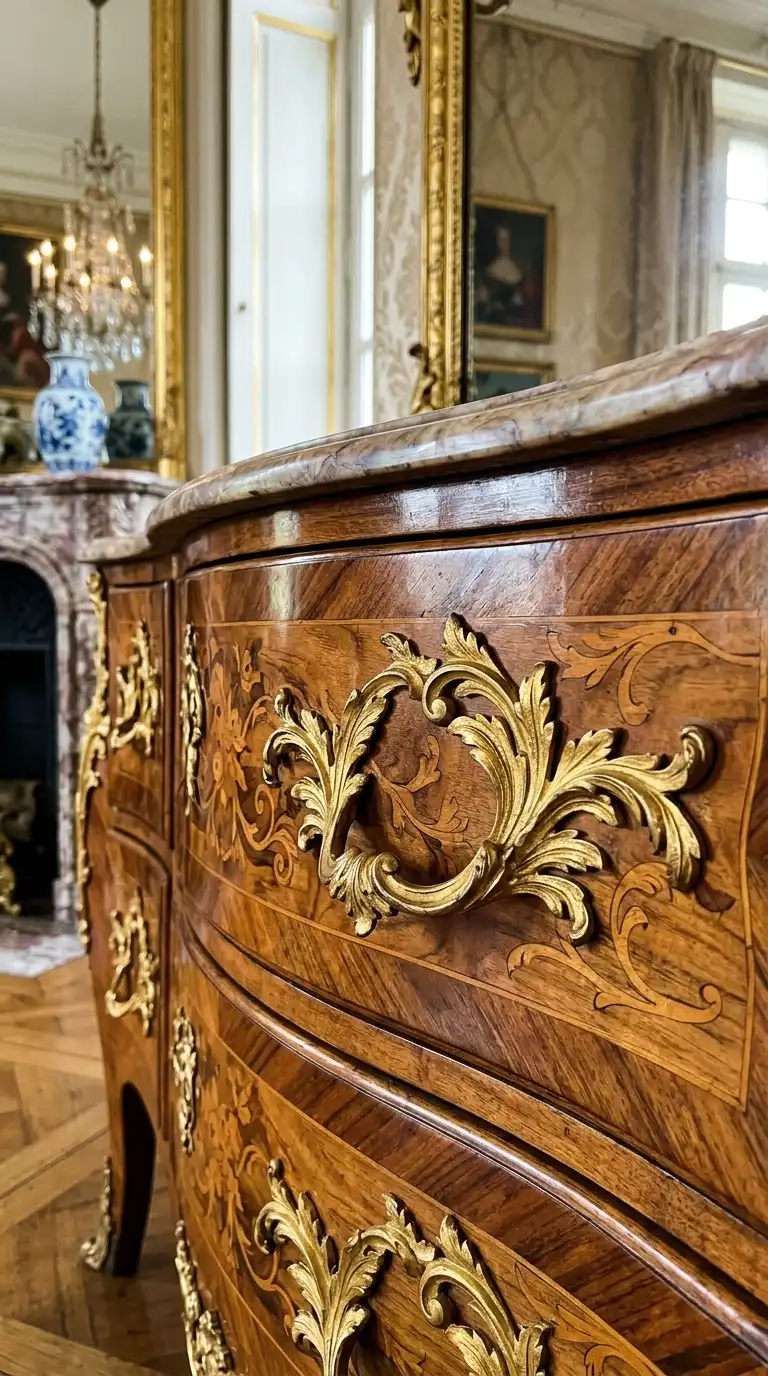
Boiserie is carved wooden panelling on walls. The panels are decorated with shells, scrolls, and flowers. The wood is painted white or pastel. The carvings are gilded. Boiserie is panelled, carved, and gilded.
This design is ideal for all Rococo interiors. The emotional effect is panelled, carved, and gilded.
Quick Tips
- The panelling must be wooden.
- The panels must be carved with shells and scrolls.
- The wood must be painted and gilded.
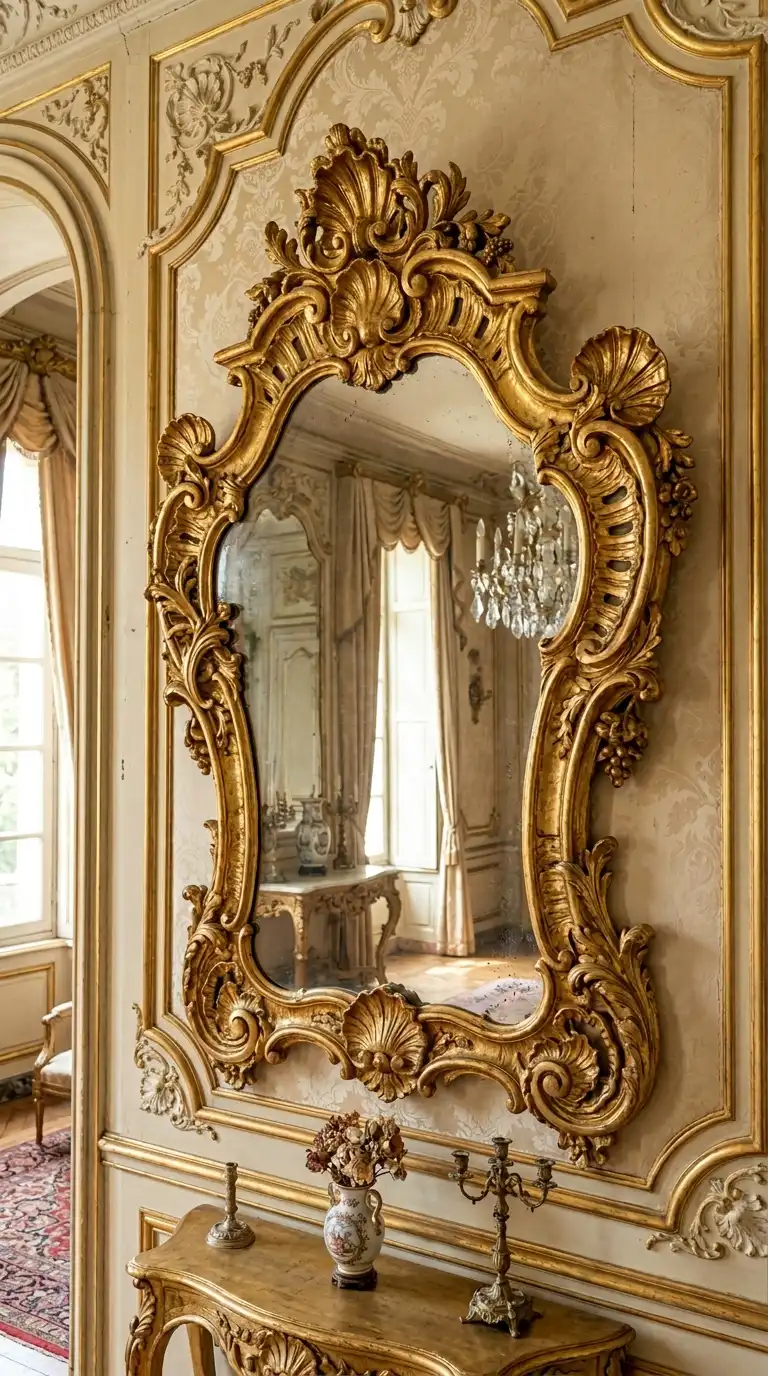
8. The Rocaille Mirror
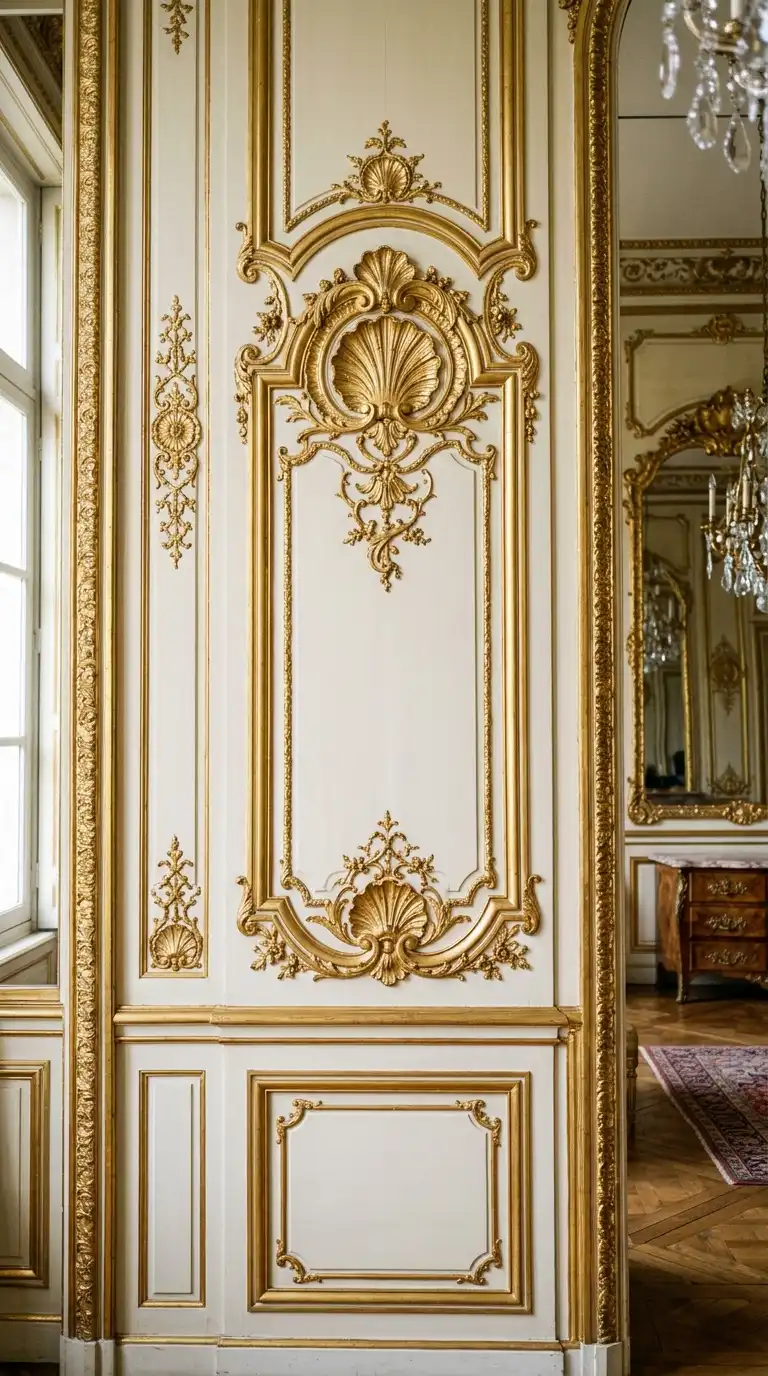
The rocaille mirror is a mirror with an asymmetrical, curving frame. The frame is carved with shells, leaves, and scrolls. The frame is gilded. The rocaille mirror is asymmetrical, curving, and gilded.
This design is ideal for all Rococo interiors. The emotional effect is asymmetrical, curving, and gilded.
Quick Tips
- The frame must be asymmetrical.
- The frame must be carved with shells and leaves.
- The frame must be gilded.
9. The Amalienburg
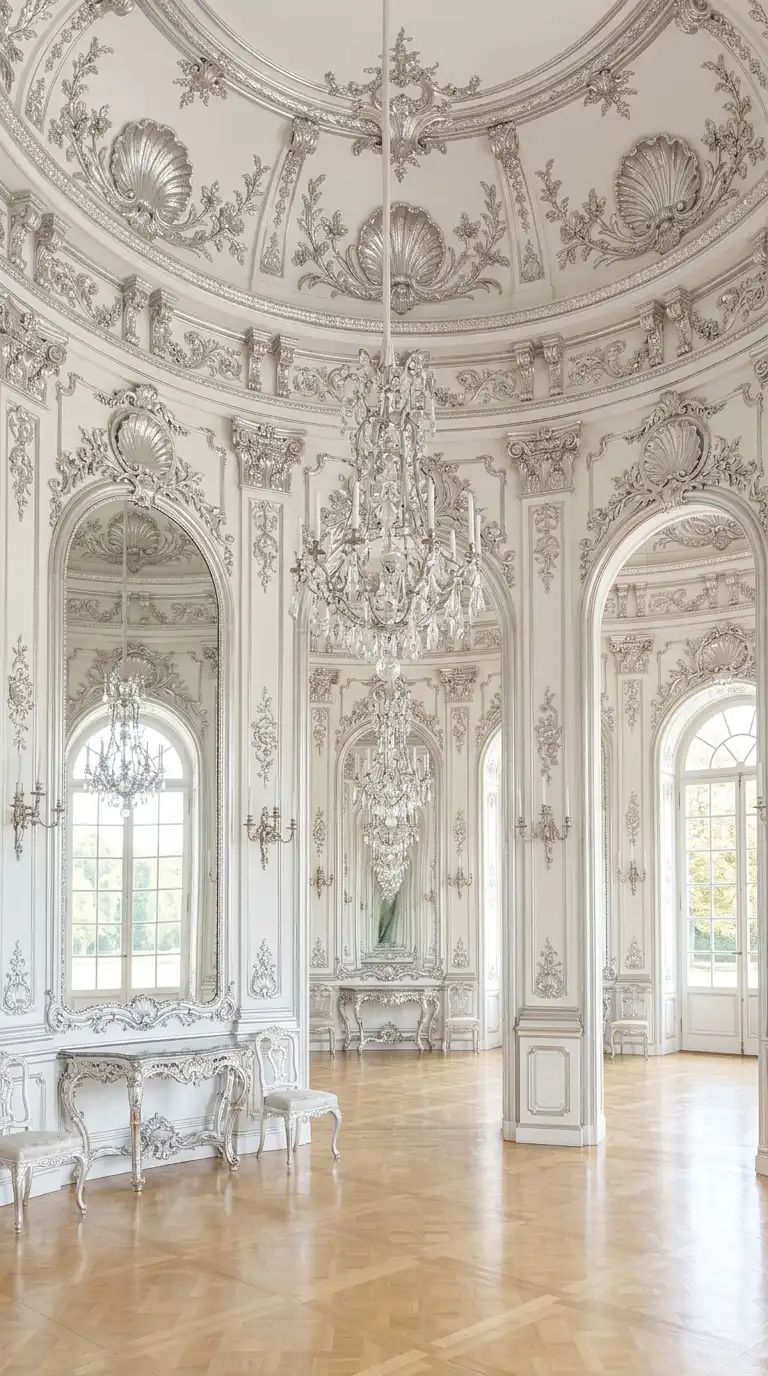
The Amalienburg is a Rococo hunting lodge in Munich. The exterior is simple. The interior is a fantasy of silver and white. The Hall of Mirrors is a masterpiece of Rococo decoration. The Amalienburg is simple outside, fantastic inside.
This design is ideal for pavilions and pleasure houses. The emotional effect is simple outside, fantastic inside.
Quick Tips
- The exterior must be simple.
- The interior must be richly decorated.
- The Hall of Mirrors must be silver and white.
10. The Dresden Zwinger
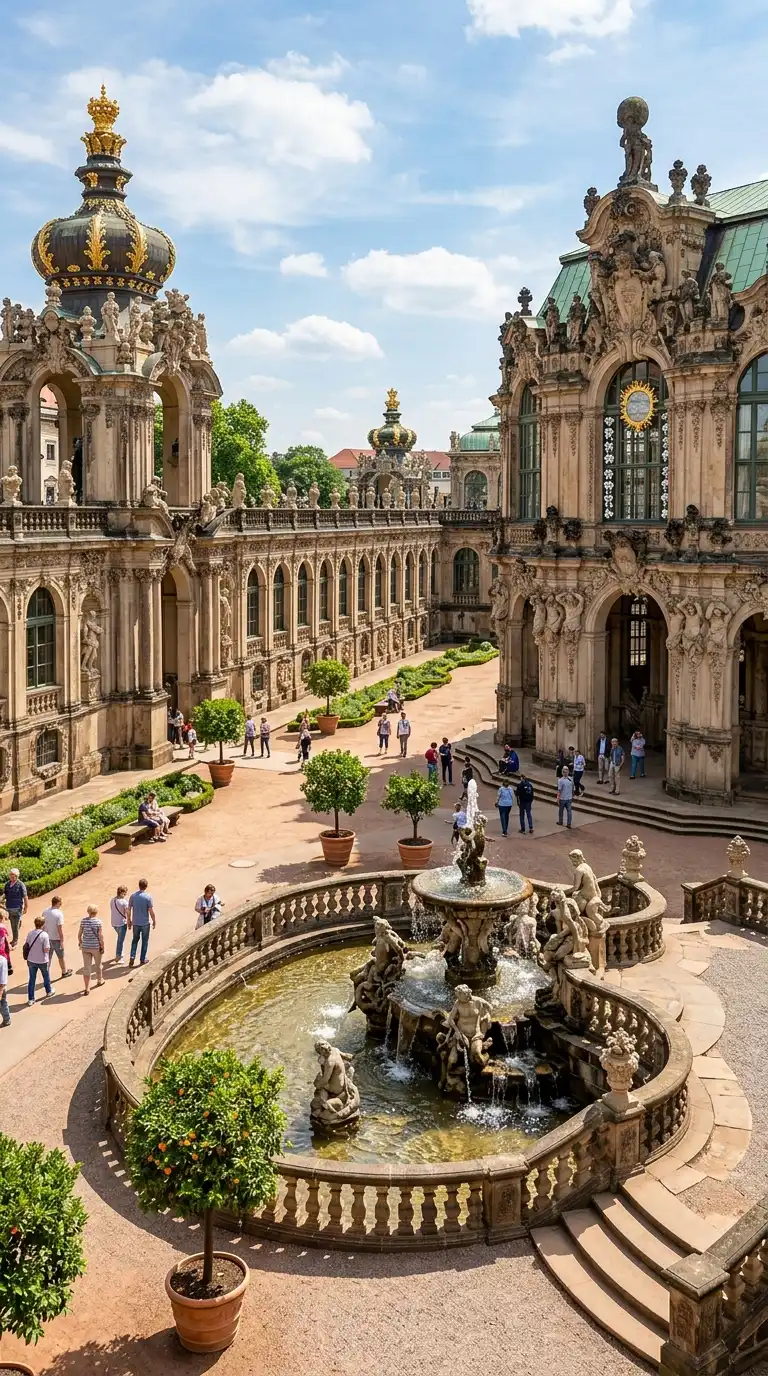
The Dresden Zwinger is a Rococo palace in Dresden. It has pavilions, galleries, and a courtyard. The stone is carved with shells and figures. The Zwinger is sculptural, courtyard-centred, and festive.
This design is ideal for palaces and cultural centres. The emotional effect is sculptural, courtyard-centred, and festive.
Quick Tips
- The palace must have pavilions and galleries.
- The stone must be carved with shells and figures.
- The courtyard must be the centre.
11. The Chinese Room
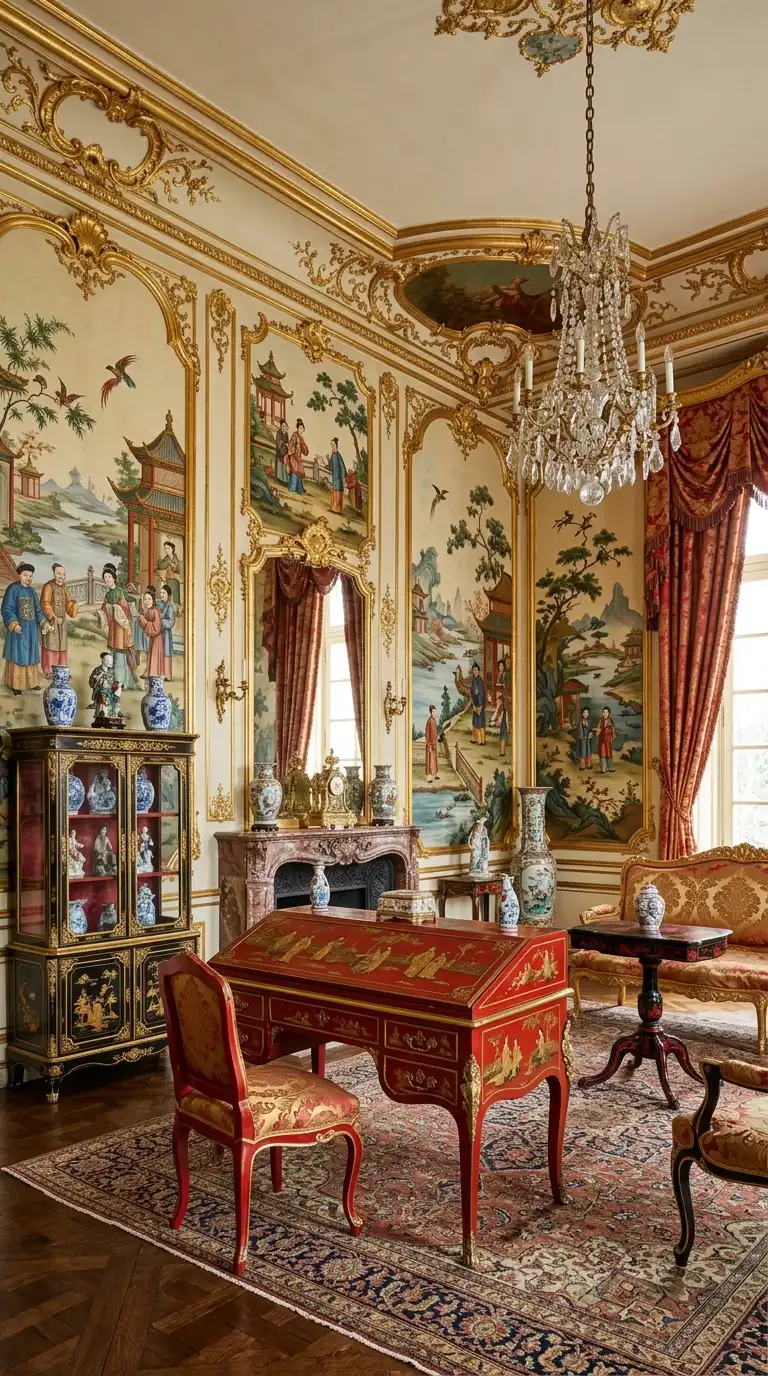
The Chinese room is a Rococo fantasy of Chinoiserie. The walls are painted with Chinese figures, pagodas, and dragons. The furniture is lacquered. The Chinese room is exotic, painted, and lacquered.
This design is ideal for palaces and pleasure houses. The emotional effect is exotic, painted, and lacquered.
Quick Tips
- The walls must be painted with Chinese motifs.
- The furniture must be lacquered.
- The colours must be red, gold, and black.
12. The Stucco Ceiling
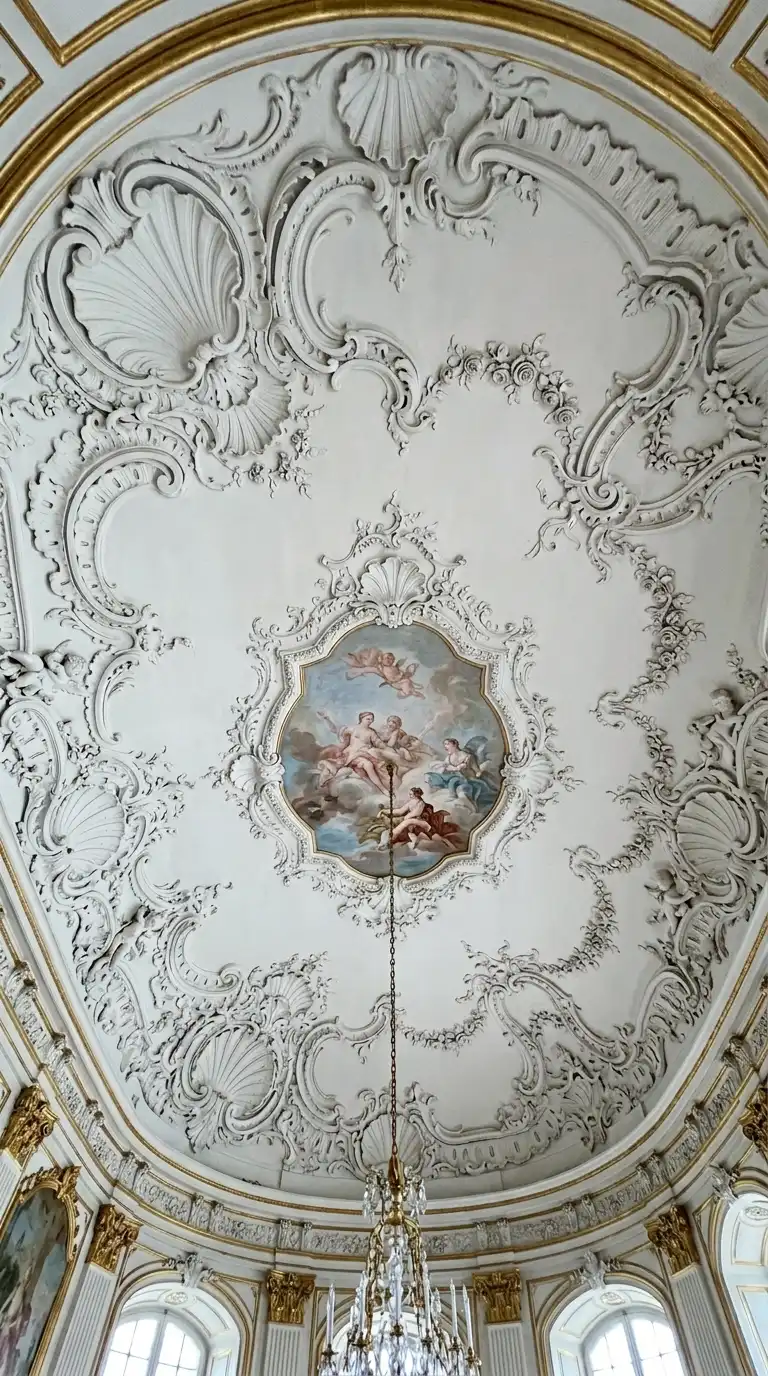
The stucco ceiling is a ceiling covered in white stucco ornament. The ornament is asymmetrical — shells, scrolls, flowers, and figures. The stucco is white or pastel. The stucco ceiling is white, asymmetrical, and delicate.
This design is ideal for all Rococo interiors. The emotional effect is white, asymmetrical, and delicate.
Quick Tips
- The ceiling must be covered in stucco.
- The ornament must be asymmetrical.
- The stucco must be white or pastel.