12 Simple Wardrobe Designs
Simple wardrobe designs prioritize clean lines, uncluttered surfaces, and functionality over ornamentation. A simple wardrobe should blend seamlessly with the room, providing essential storage without overwhelming the space. From minimalist sliding doors to open shelving systems, here are twelve simple wardrobe designs that prove less is more.
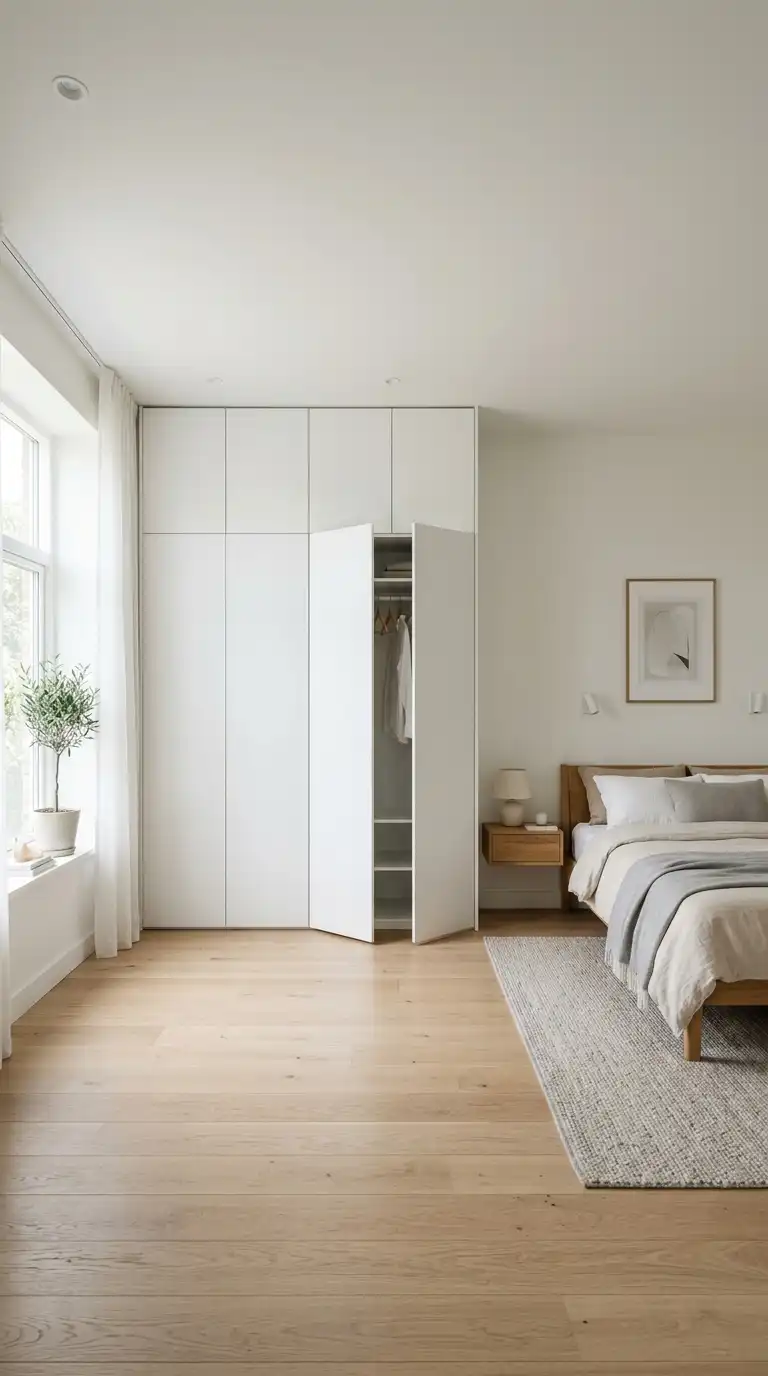
1. Handleless White Wardrobe
A handleless white wardrobe is the epitome of simplicity. The seamless surface and push-to-open mechanisms create a clean, uncluttered look that blends with the walls. The white finish reflects light and makes the room feel larger. This design is ideal for minimalist and Scandinavian interiors.
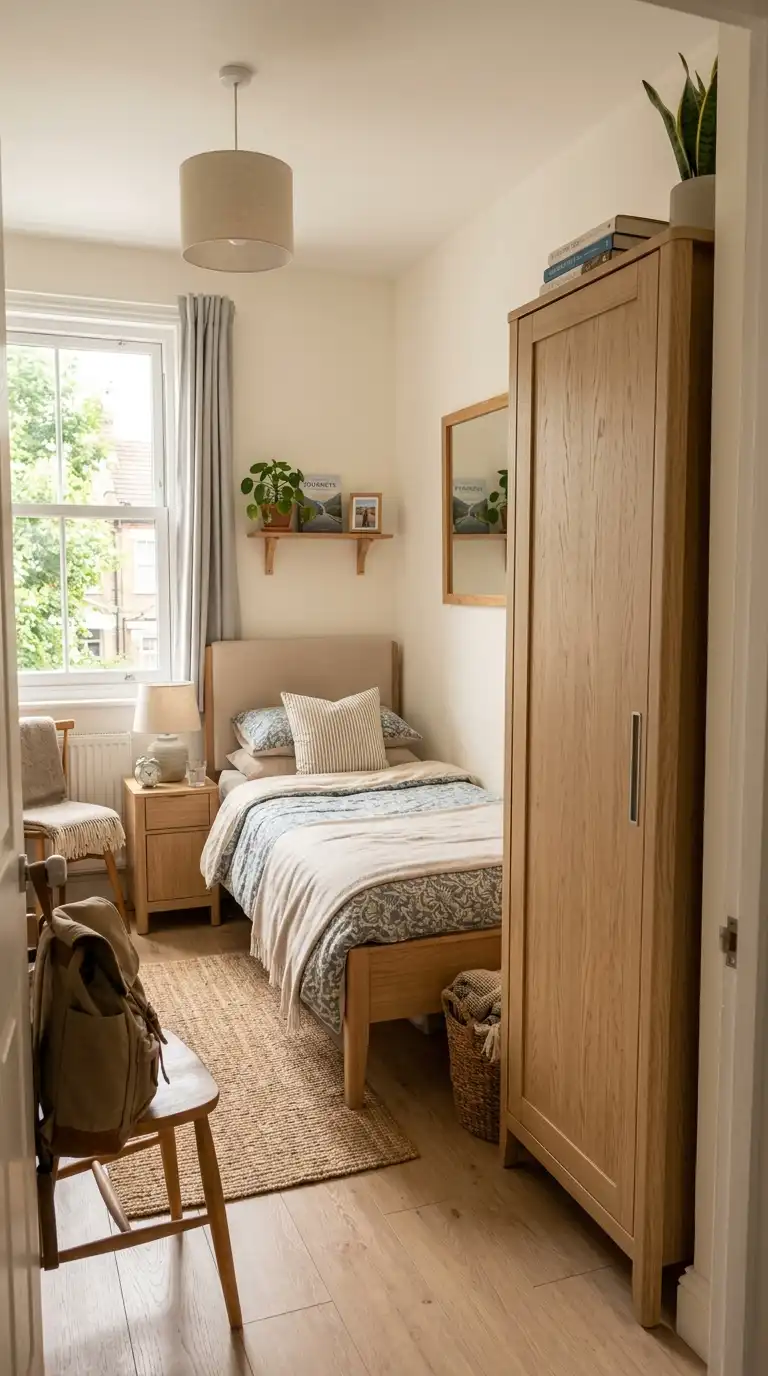
2. Single-Door Wardrobe
For very small spaces, a single-door wardrobe offers essential storage without dominating the room. Choose a simple flat-panel door in a light finish, with a slim handle or recessed pull. The compact footprint makes it ideal for narrow bedrooms, guest rooms, or alcoves.
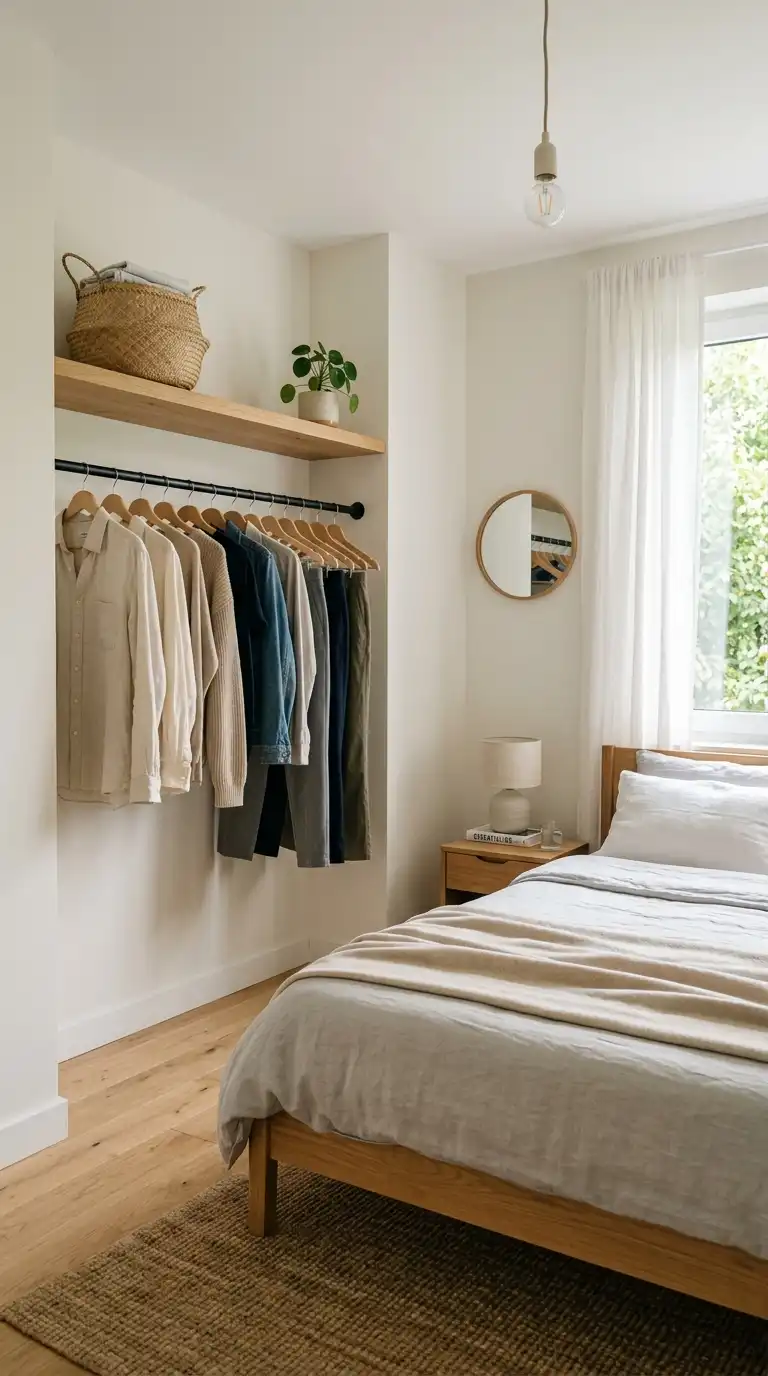
3. Open Wardrobe with Minimalist Hanging Rod
An open wardrobe with a simple hanging rod and shelf offers the most basic, honest storage solution. Use a single rod for hanging clothes and a shelf above for folded items. The open design encourages mindful selection and keeps the space feeling light and airy.
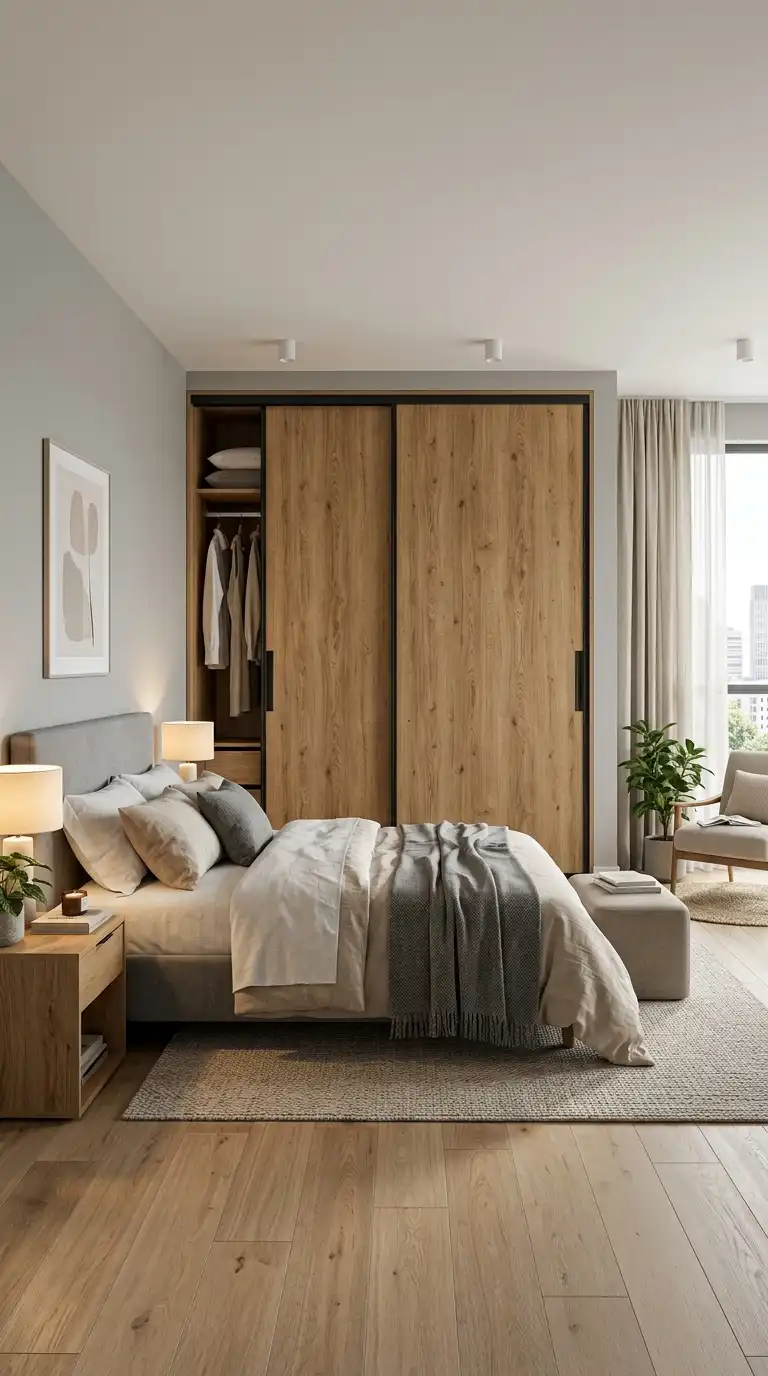
4. Floor-to-Ceiling Sliding Wardrobe
A floor-to-ceiling sliding wardrobe maximizes storage while maintaining a simple, streamlined appearance. The continuous vertical surface draws the eye upward, and the sliding doors save floor space. Choose a matte finish in a neutral color for a clean, understated look.
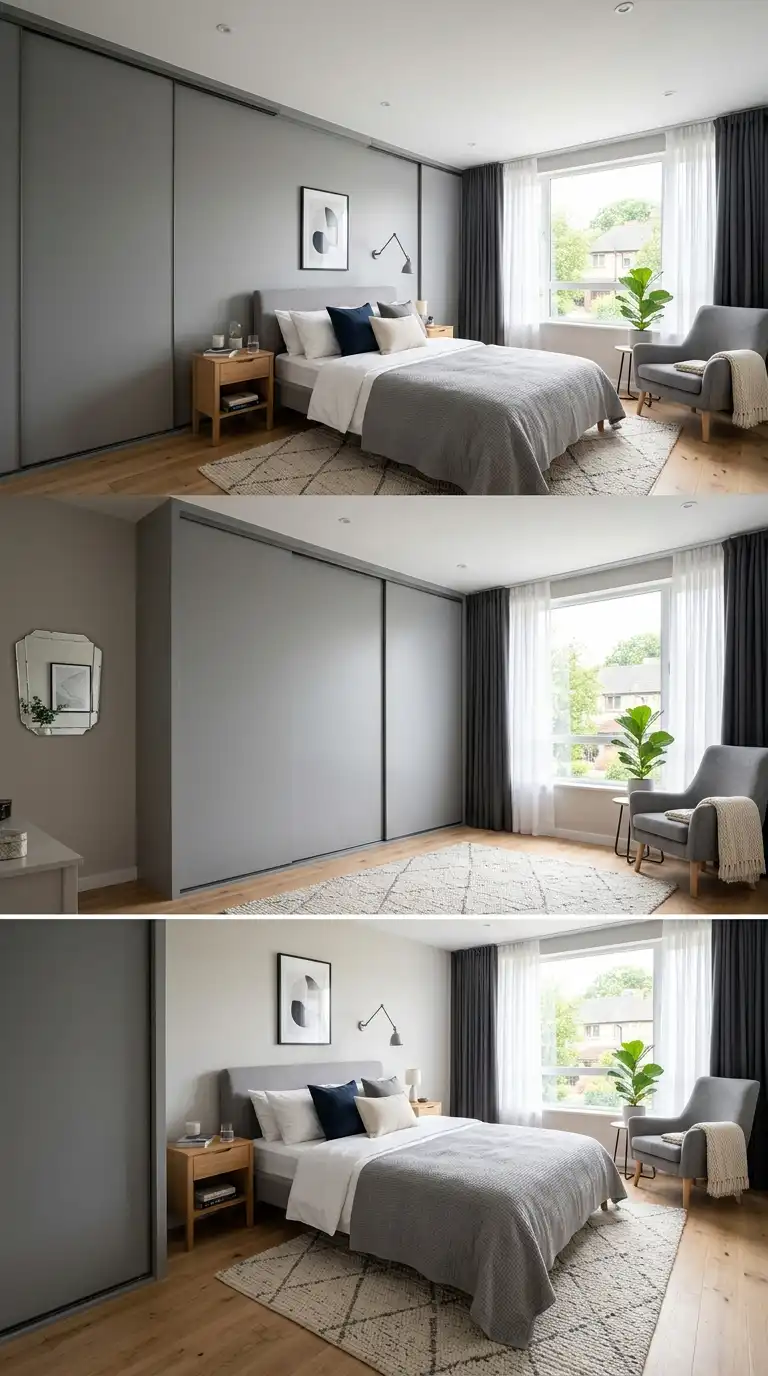
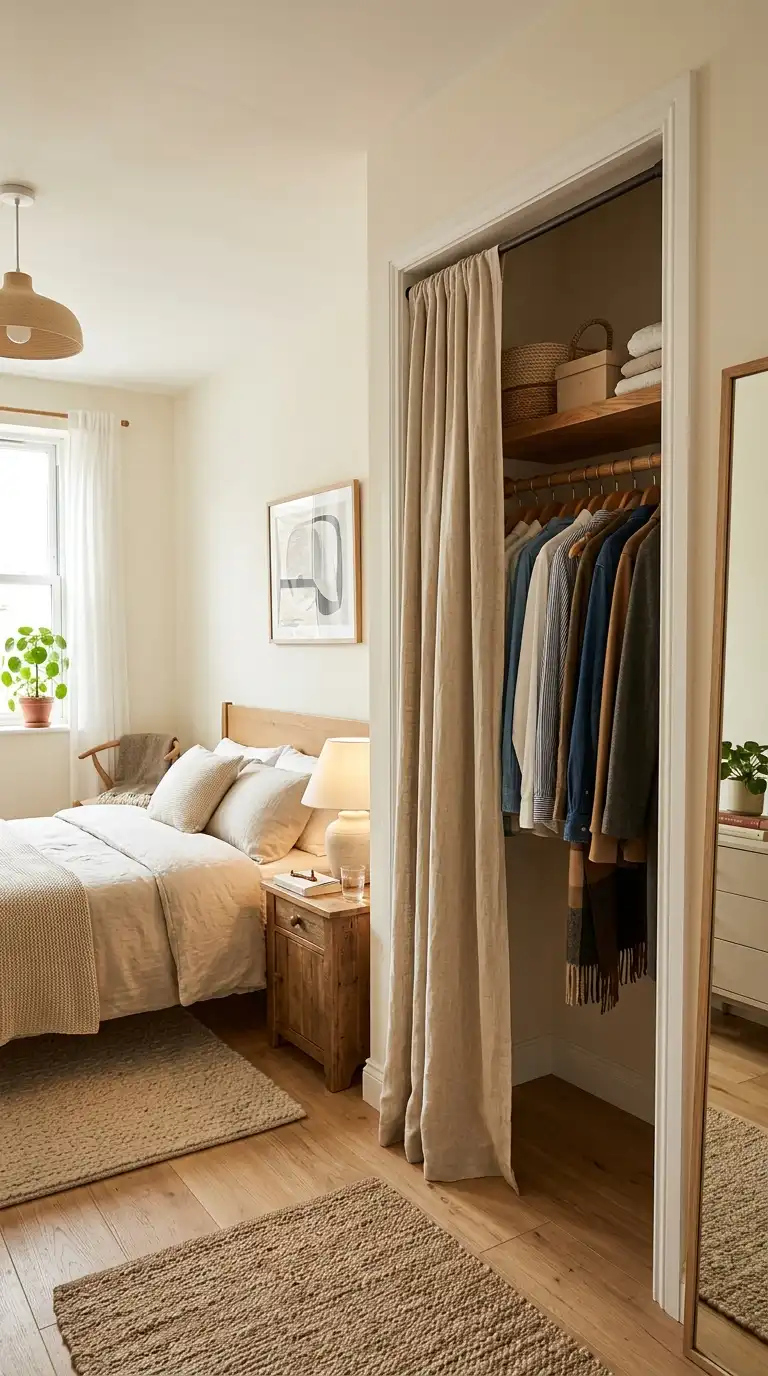
5. Built-In Alcove Wardrobe
Transform an alcove into a simple built-in wardrobe with a single hanging rod and shelf. The recessed space provides natural definition, and the simple interior keeps the design uncluttered. Use a curtain or simple door to conceal the storage if desired.
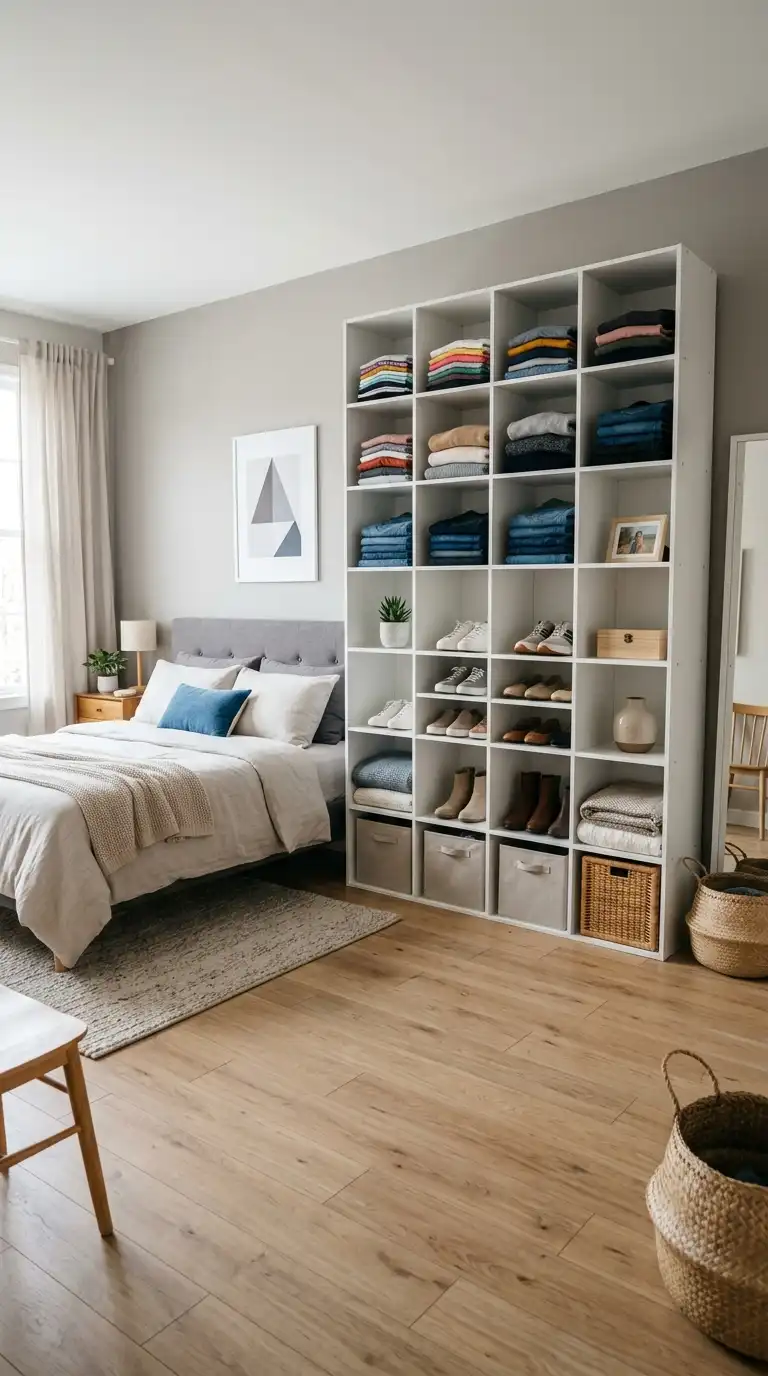
6. Modular Cube Wardrobe
Use modular cube storage units to create a simple, customizable wardrobe. Arrange the cubes in a configuration that fits your space, and use them for folded clothes, shoes, and accessories. The open cubes keep the design light and flexible.
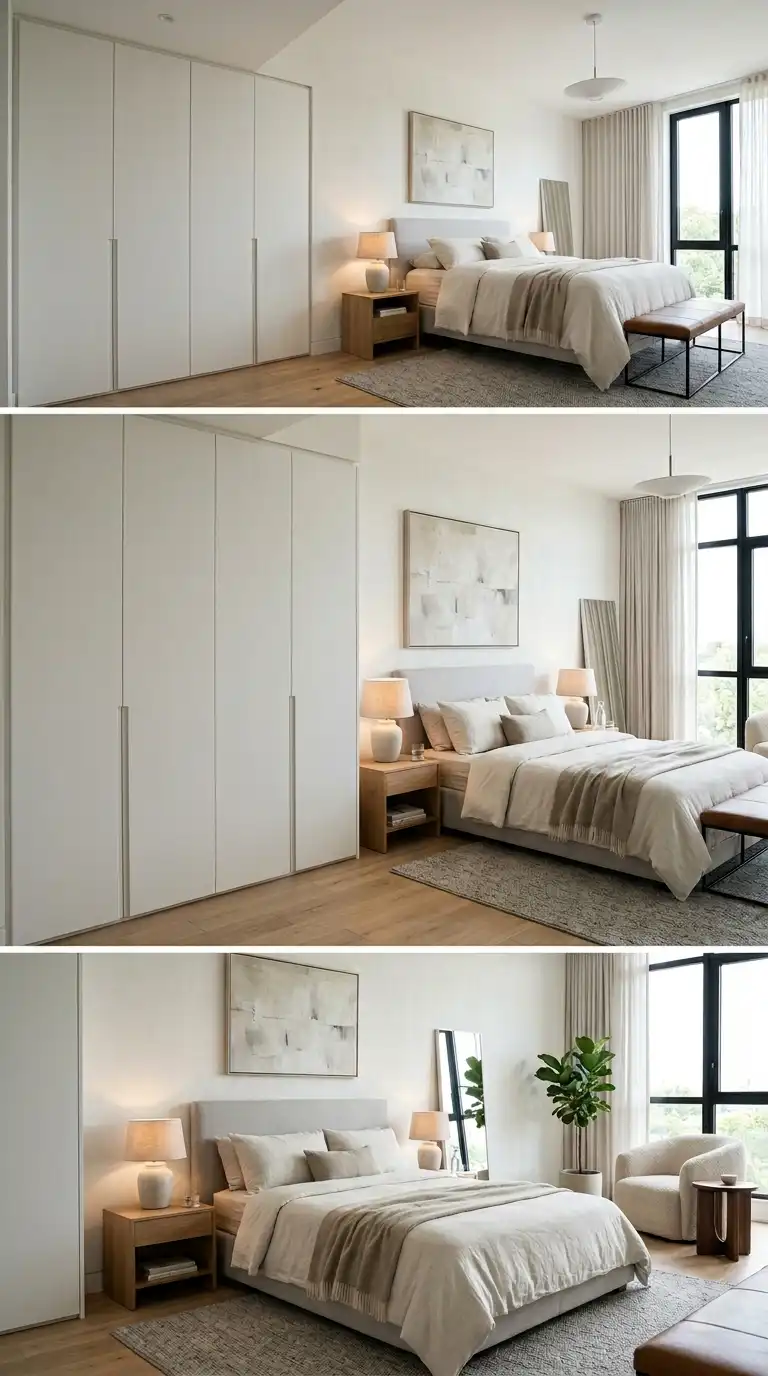
7. Wardrobe with Flush Panels
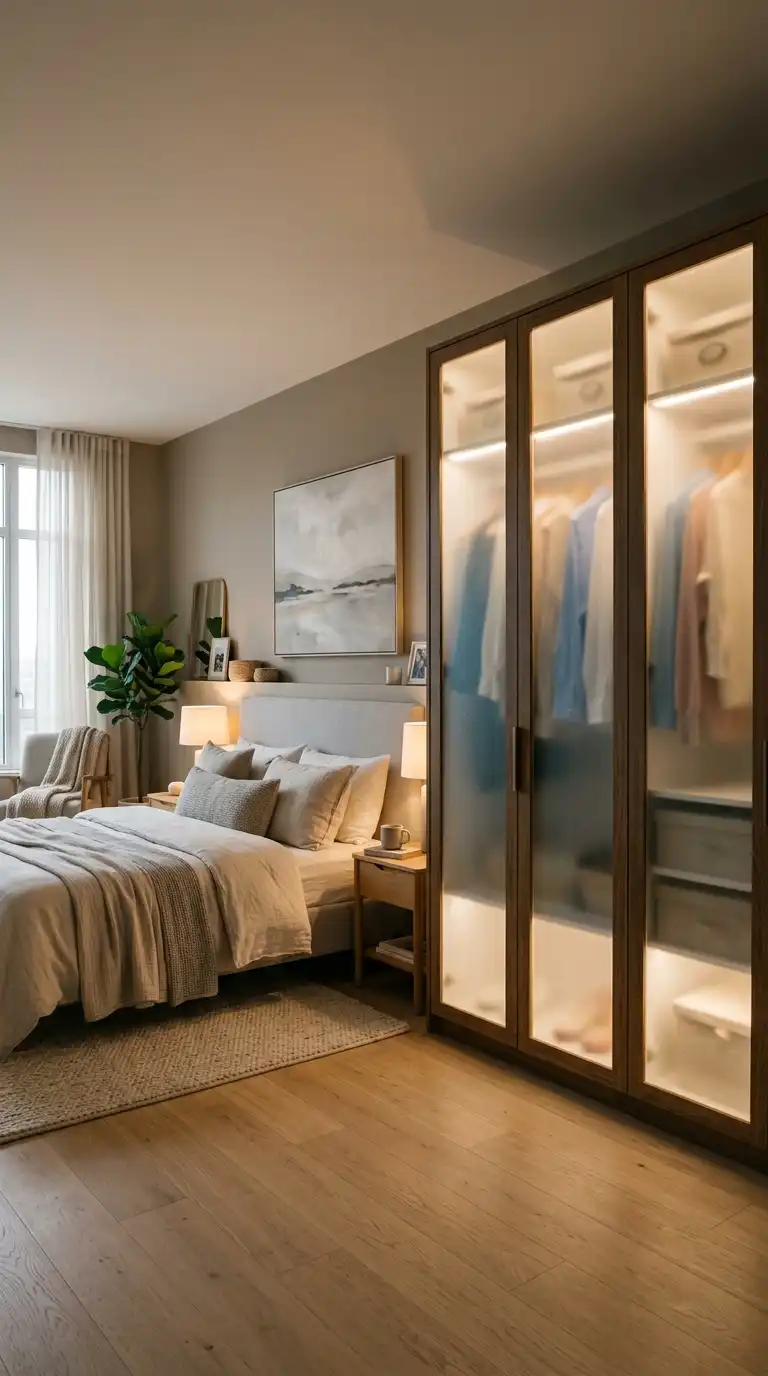
Flush panels create a flat, smooth surface that emphasizes simplicity. Use large panels with minimal gaps and slim, discreet handles. The uninterrupted surface blends with the wall, making the wardrobe feel like part of the architecture rather than an added piece.
8. Two-Door Sliding Wardrobe
A two-door sliding wardrobe offers balanced storage with a simple, streamlined look. The sliding doors save space, and the two-panel configuration is clean and proportional. Choose a matte finish in a neutral color for a versatile, understated design.
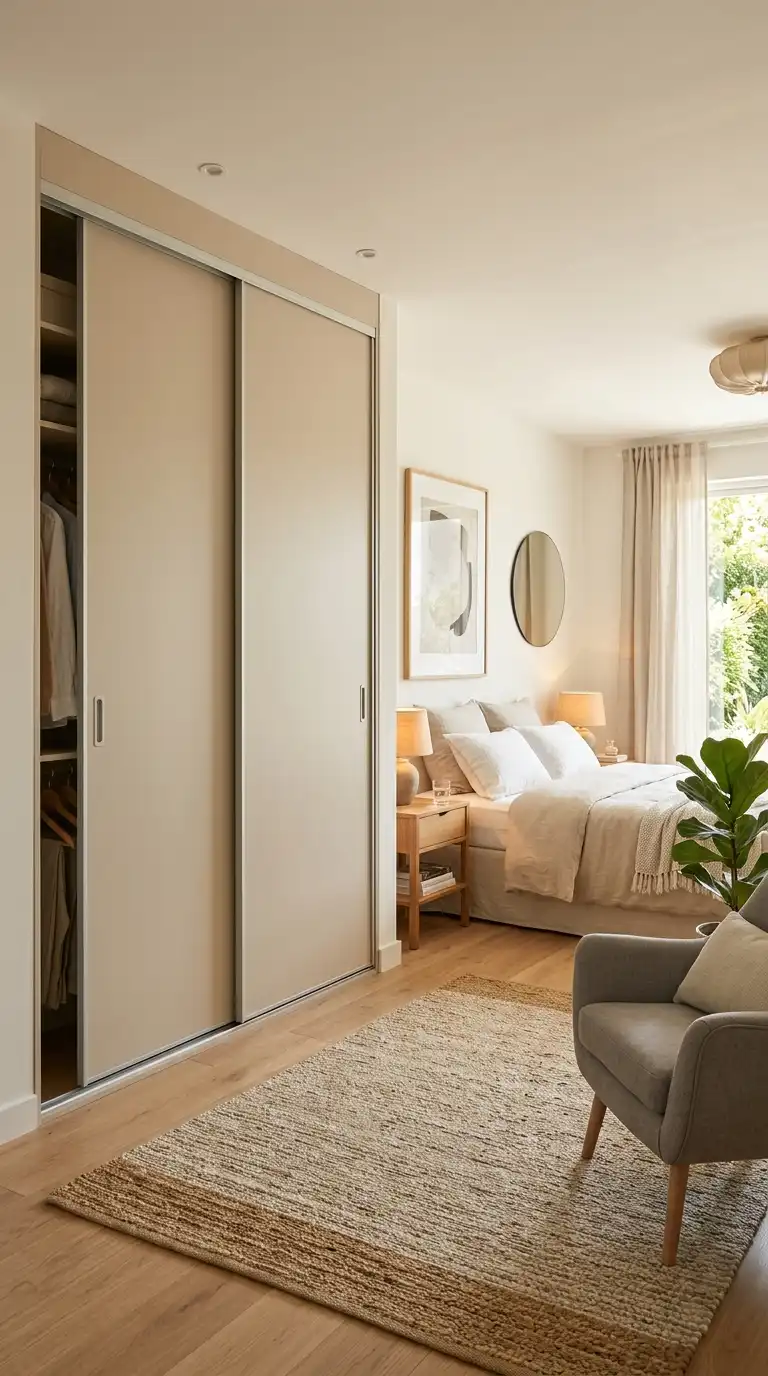
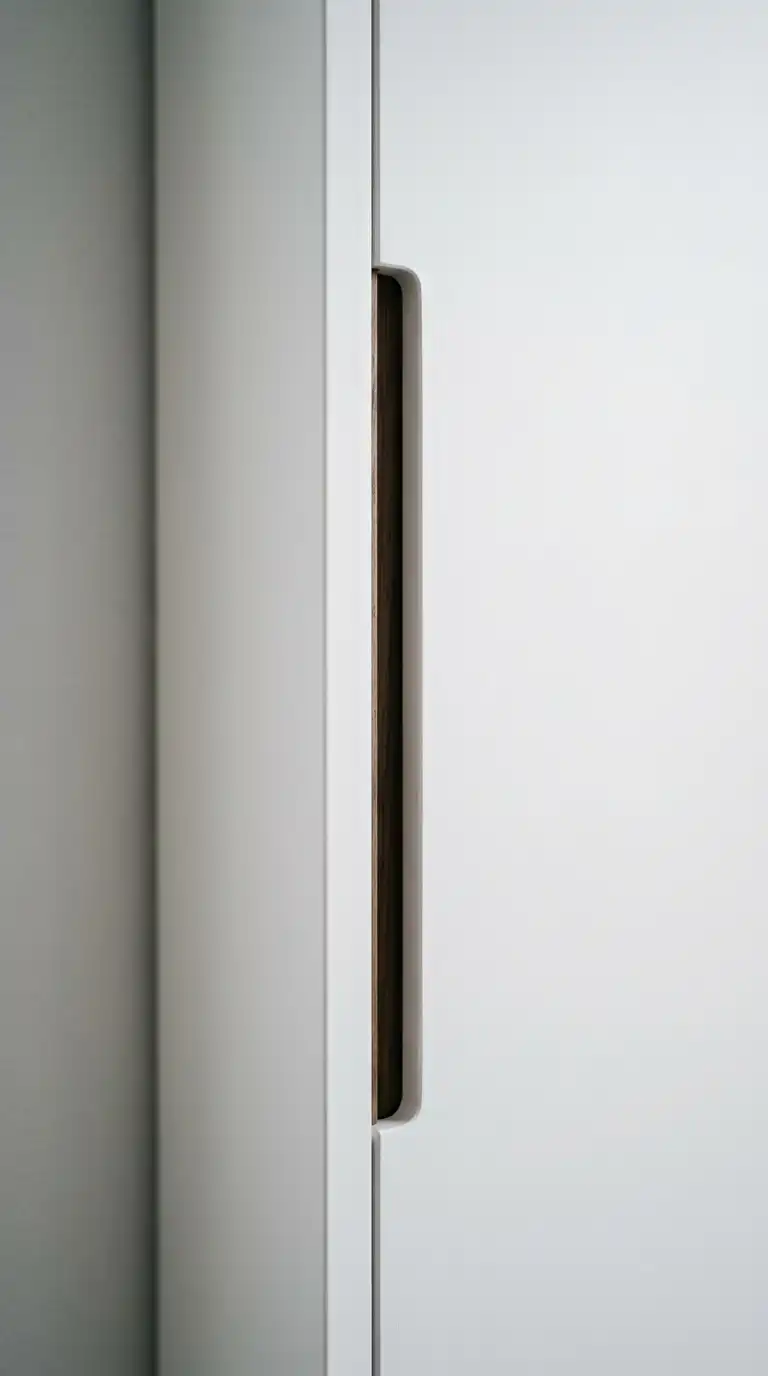
9. Wardrobe with Recessed Handles
Recessed handles—integrated into the door surface—maintain a clean, unbroken line. The handles can be a simple groove or a discreet finger pull. This detail eliminates protruding hardware, keeping the design simple and functional.
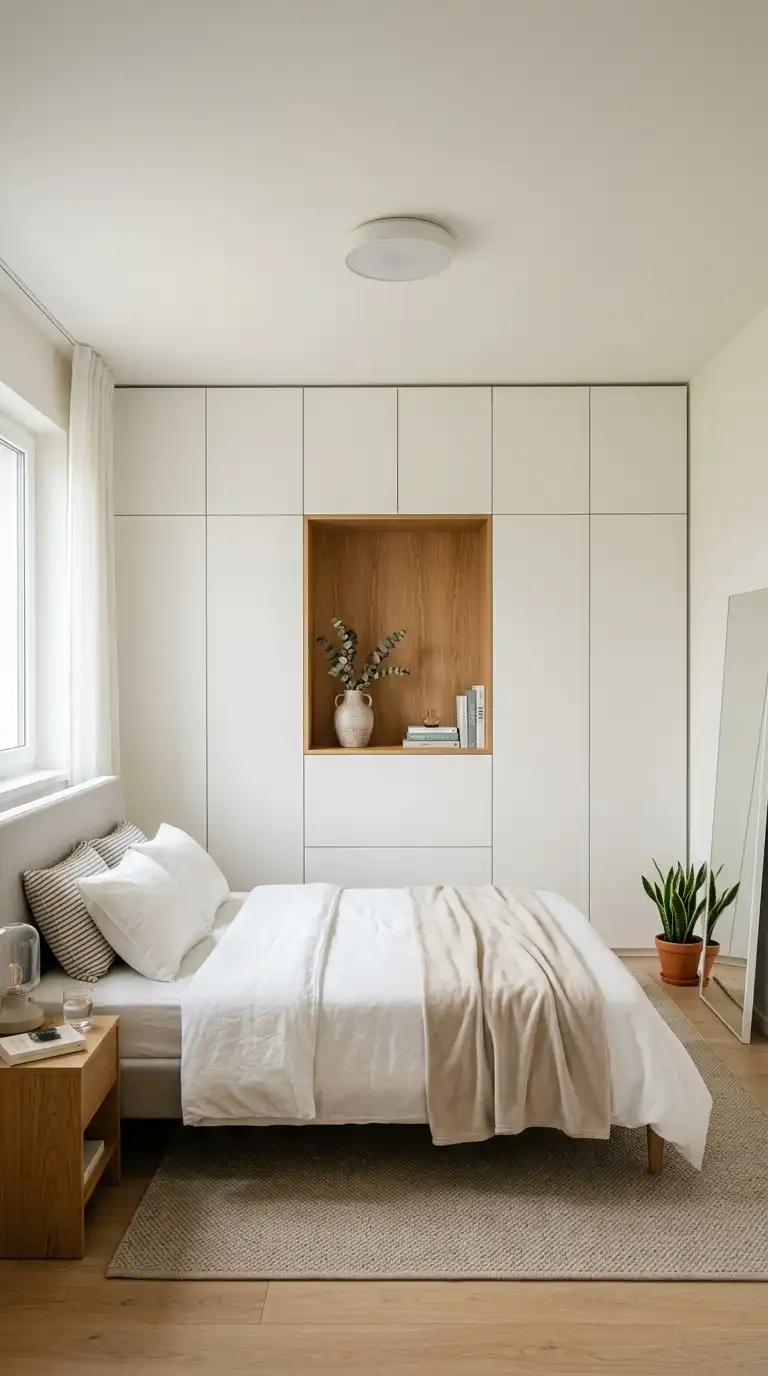
10. Wardrobe with Open and Closed Balance
Balance open shelving with closed cabinets for a simple, functional design. Use the closed section for everyday clothing and the open section for a few carefully chosen items. This approach adds visual interest while maintaining simplicity.
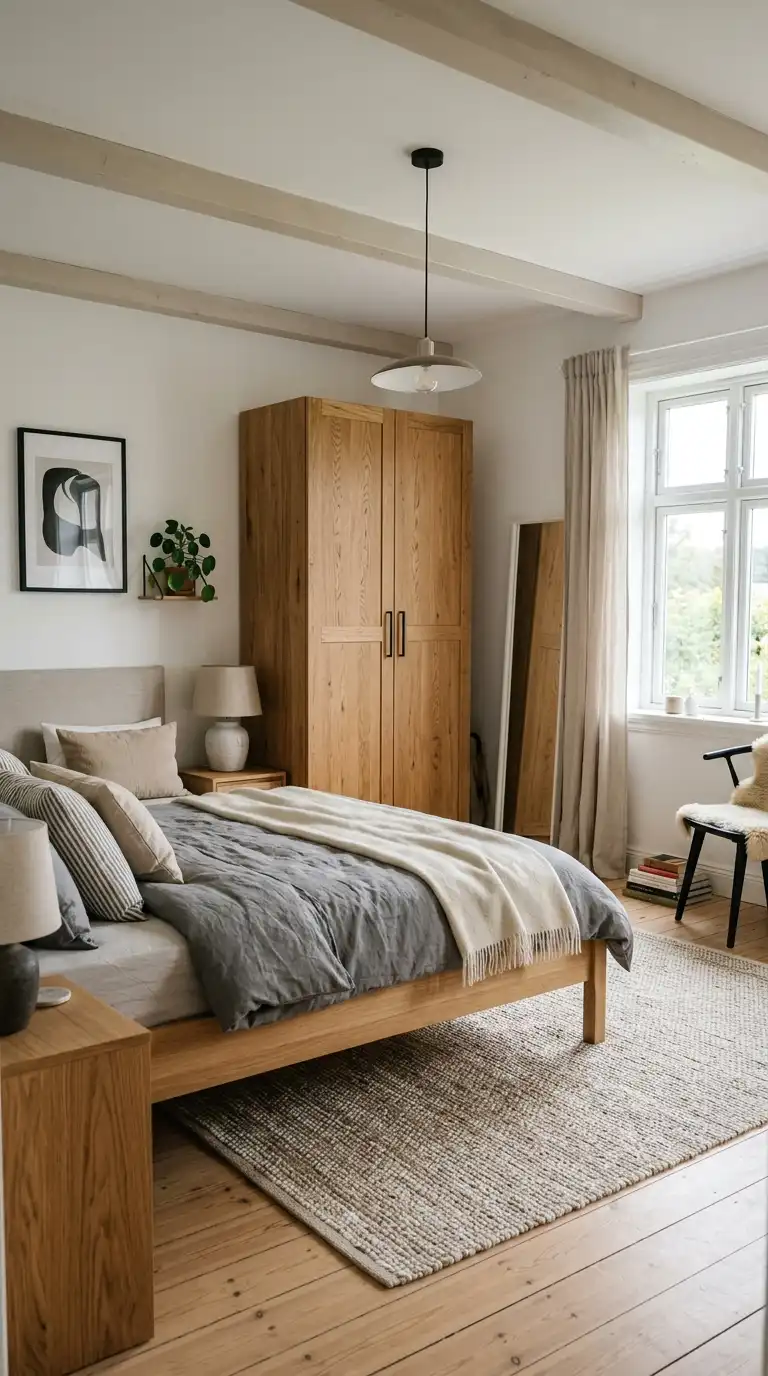
11. Wardrobe with Natural Wood Finish
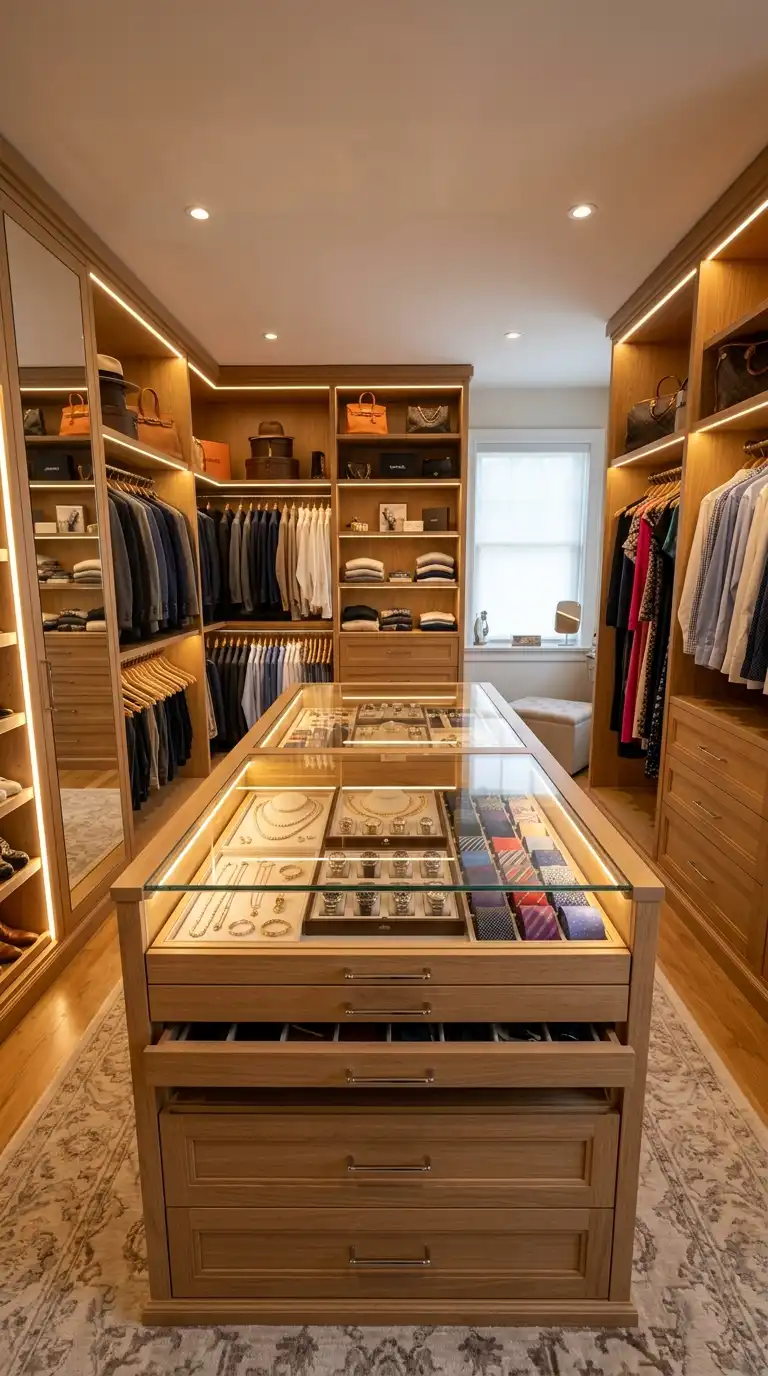
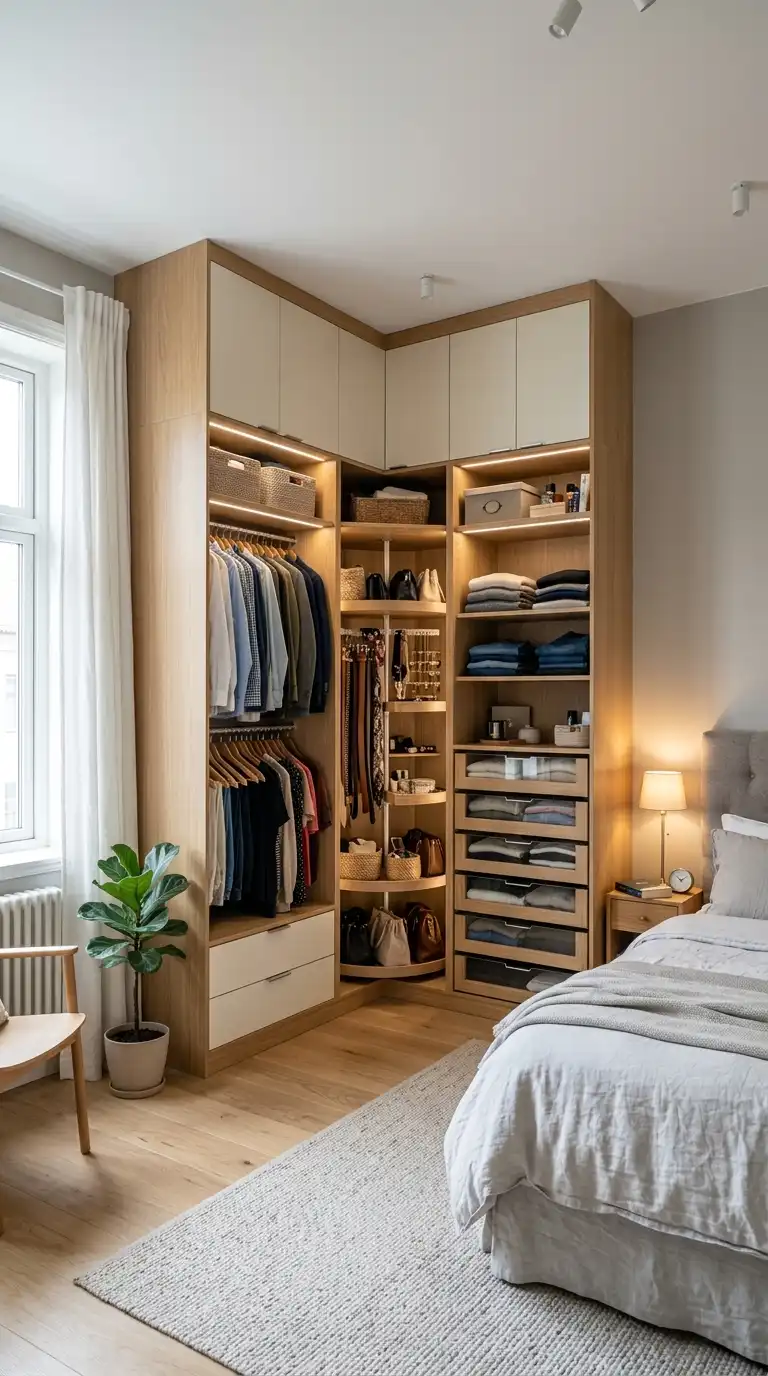
A natural wood finish adds warmth to a simple wardrobe without introducing ornamentation. Choose a light wood like oak or ash with a clear matte sealant that highlights the grain. The organic texture becomes the design feature.
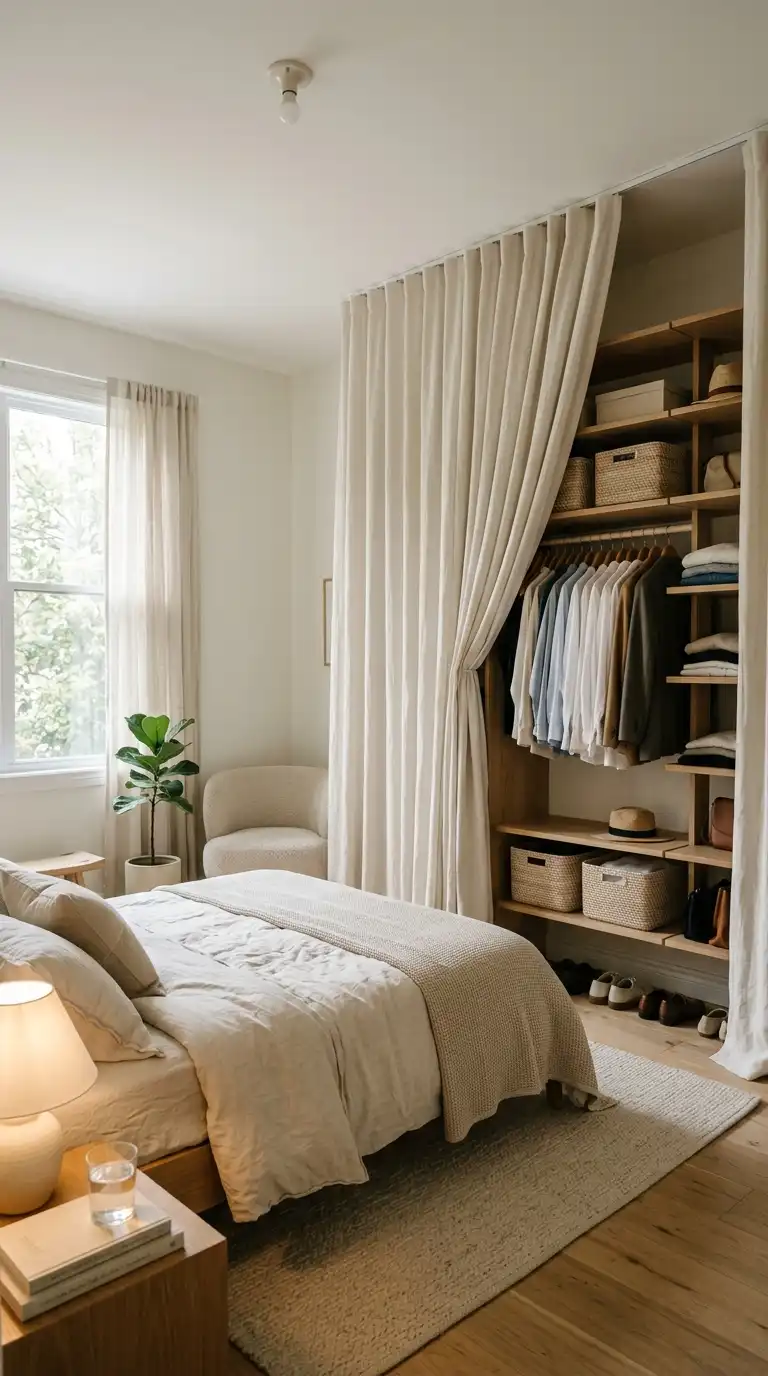
12. Wardrobe with Curtain Concealment
For the simplest storage solution, use a floor-to-ceiling curtain to conceal a basic hanging rod and shelf. The curtain adds softness and texture, and can be drawn open or closed as needed. This approach is ideal for renters or temporary spaces.
Frequently Asked Questions
- What defines a simple wardrobe design?
A simple wardrobe is characterized by clean lines, uncluttered surfaces, minimal ornamentation, and a focus on functionality. It often features handleless doors, neutral colors, and a streamlined profile that blends with the room. - How do I make a simple wardrobe interesting?
Focus on material quality, texture, and proportions. A natural wood finish, subtle hardware, or a well-proportioned layout can add interest without clutter. The simplicity itself becomes the design feature. - Can a simple wardrobe work in a traditional bedroom?
Yes. Choose classic materials like wood with simple paneling, and use traditional hardware in a minimalist style. The key is avoiding ornate details while maintaining the warmth of traditional materials. - What colors are best for a simple wardrobe?
Neutral colors—white, cream, light gray, beige, and natural wood tones—are ideal for simple wardrobes. These colors recede into the background and create a calm, uncluttered environment. - How do I organize a simple wardrobe?
Keep the interior organized with uniform hangers, matching storage boxes, and a limited number of items. The simplicity of the exterior should be reflected in the interior organization.