12 Walking Wardrobe Ideas
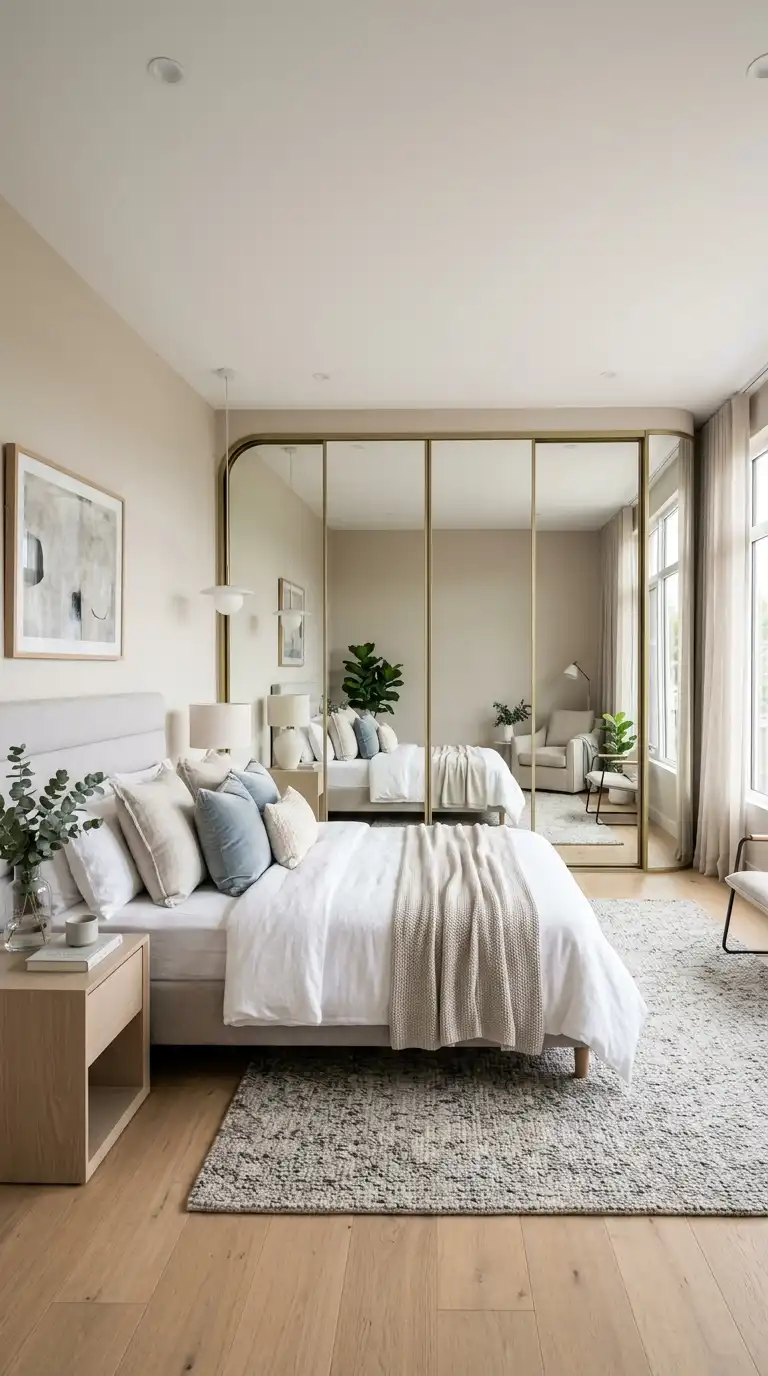
A walking wardrobe—often referred to as a walk-in closet or dressing room—is the ultimate luxury in home storage. It is a dedicated space where organization meets indulgence, transforming the daily ritual of getting dressed into a pleasure. Whether you have a spacious room to convert or a compact area to maximize, a well-designed walking wardrobe offers unparalleled storage, visibility, and ease. From boutique-inspired layouts to space-saving innovations, here are twelve walking wardrobe ideas to inspire your dream dressing space.
1. Boutique-Style Walking Wardrobe with Central Island
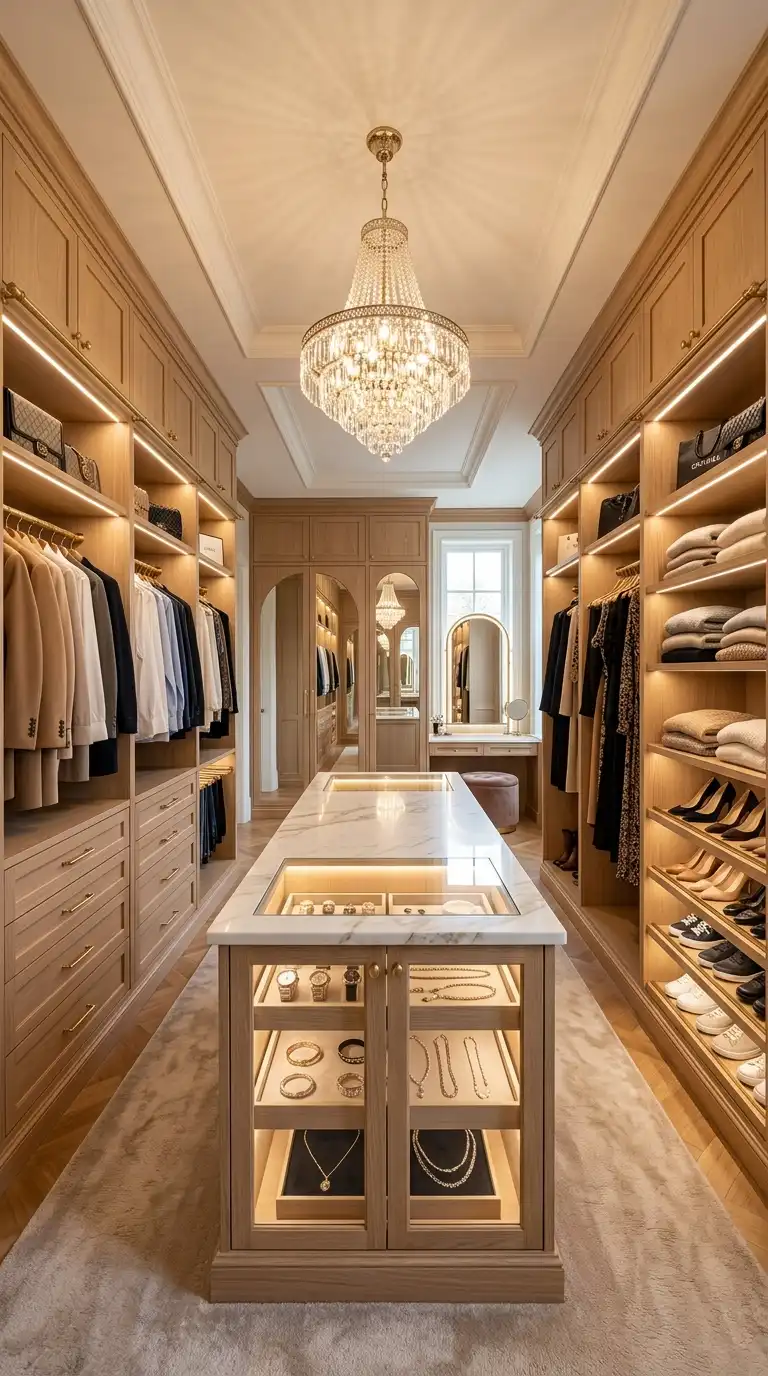
A central island is the hallmark of a luxurious walking wardrobe. It serves as a focal point, providing additional storage for accessories, a surface for folding and organizing, and a space for displaying jewelry, watches, or ties. Choose an island with a marble or wood top, deep drawers below, and glass-front display cases for treasured pieces. Surrounding cabinetry should include double hanging rods, pull-out drawers, open shelving, and dedicated shoe storage. Warm LED lighting and a crystal chandelier complete the boutique-inspired ambiance.
2. Open Concept Walking Wardrobe with No Doors
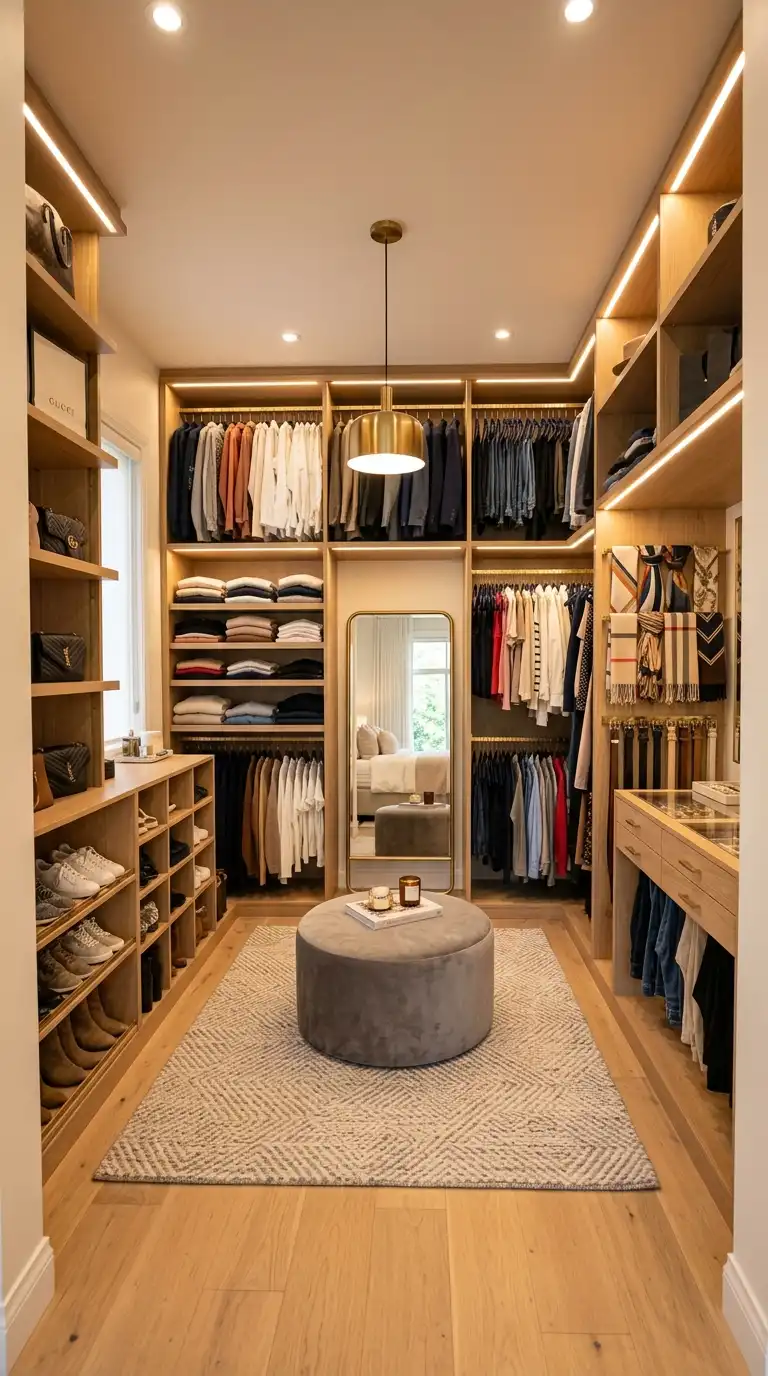
For a modern, spacious feel, design an open concept walking wardrobe with no doors. This approach allows for easy visibility of all your clothing and accessories, creating a curated, boutique-like atmosphere. Use uniform hangers and neatly folded items to maintain a polished appearance. Incorporate open shelving, hanging rods, and display sections to showcase your wardrobe. Integrated LED lighting adds warmth and highlights the contents. This design works beautifully in master suites and dressing rooms where privacy is not a concern.
3. Compact Walking Wardrobe with Floor-to-Ceiling Storage
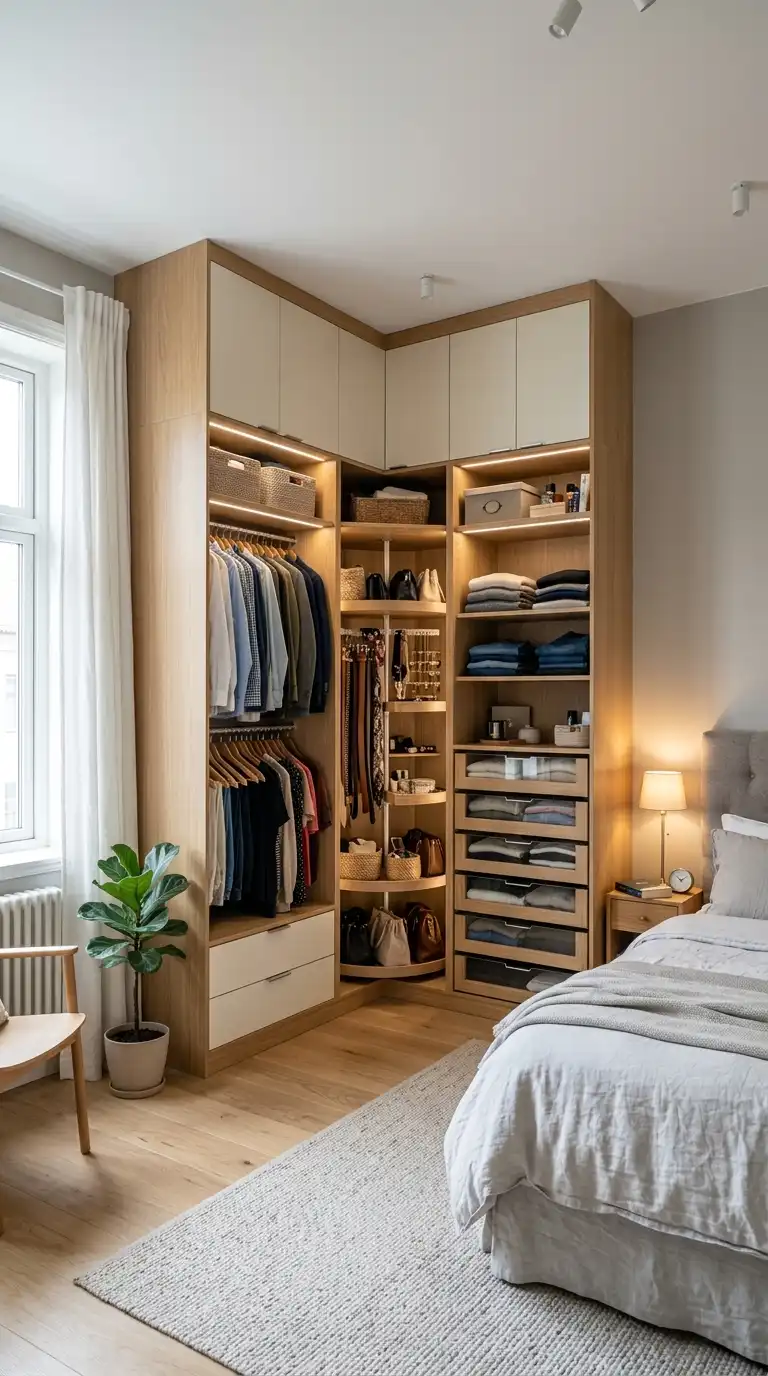
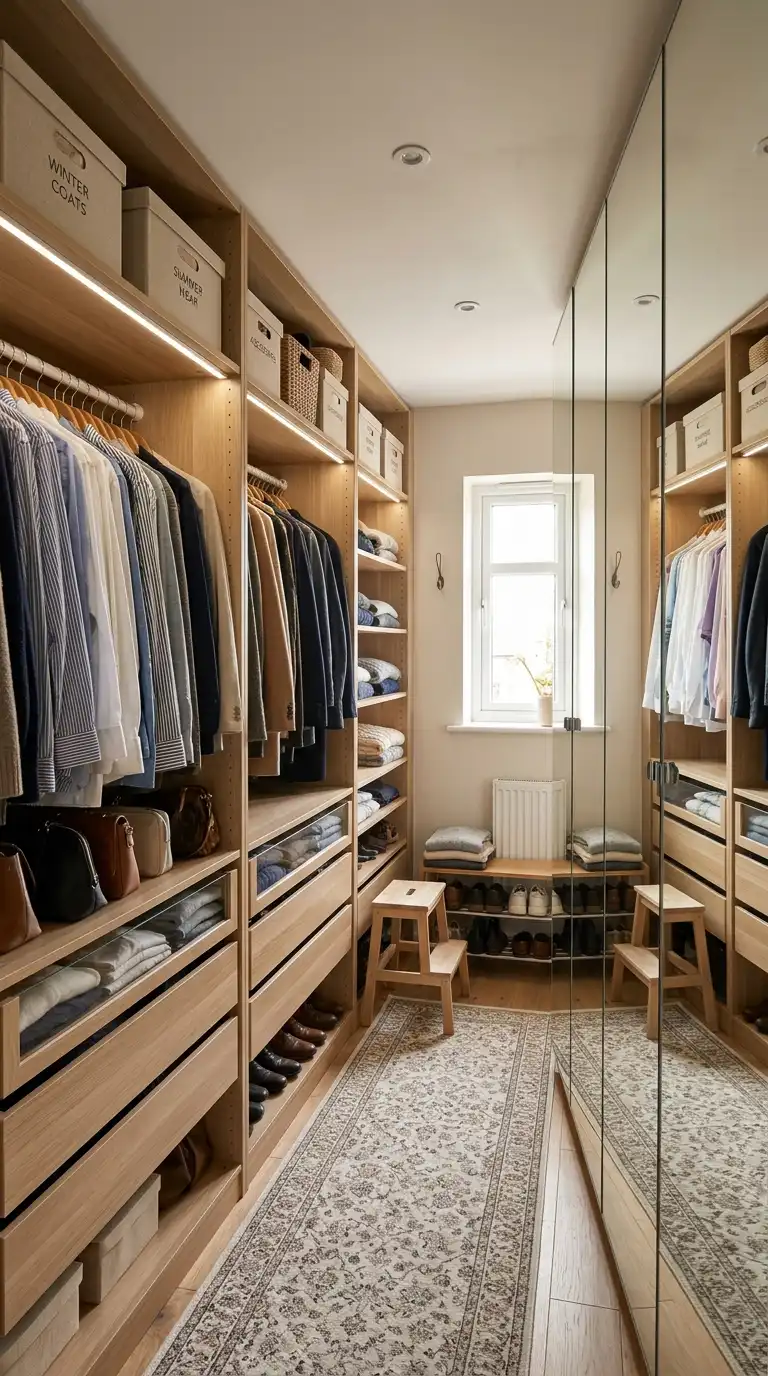
Even a small walking wardrobe can feel spacious with thoughtful design. Maximize every inch by using floor-to-ceiling storage. Install hanging rods at two levels for shirts and trousers, add pull-out drawers for folded items, and incorporate high shelves for seasonal storage. Use light colors and mirrored panels to visually expand the space. A sliding or pocket door can save space while maintaining a sleek appearance. The key is to prioritize vertical storage and avoid any wasted space, making every corner functional.
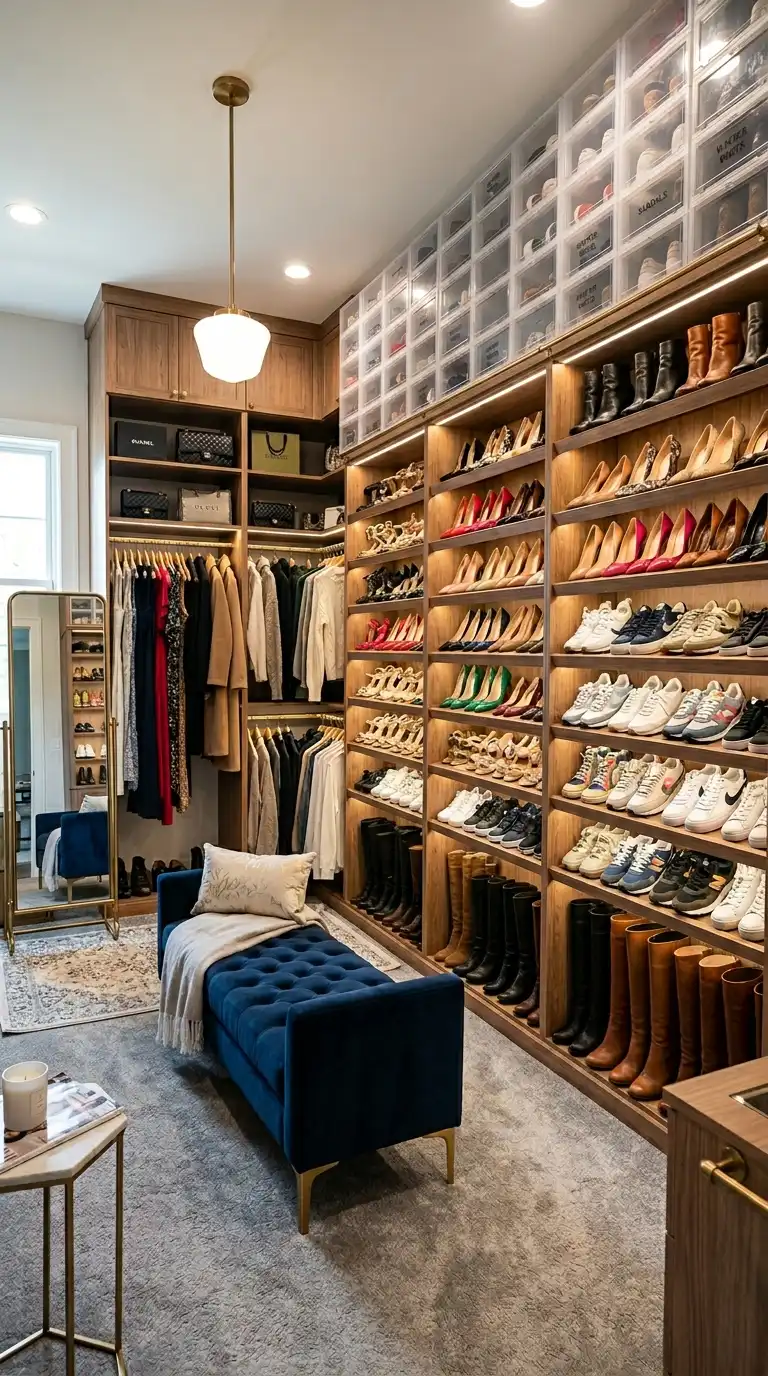
4. Walking Wardrobe with Dedicated Shoe Wall
For shoe enthusiasts, a dedicated shoe wall is essential. Design floor-to-ceiling shelving angled to display shoes attractively, or use clear stackable boxes for protection while maintaining visibility. Consider incorporating a bench or seating area nearby to make trying on footwear comfortable. A shoe wall not only keeps your collection organized but also turns your footwear into a design feature. Organize shoes by color, style, or season for a visually appealing and functional display.
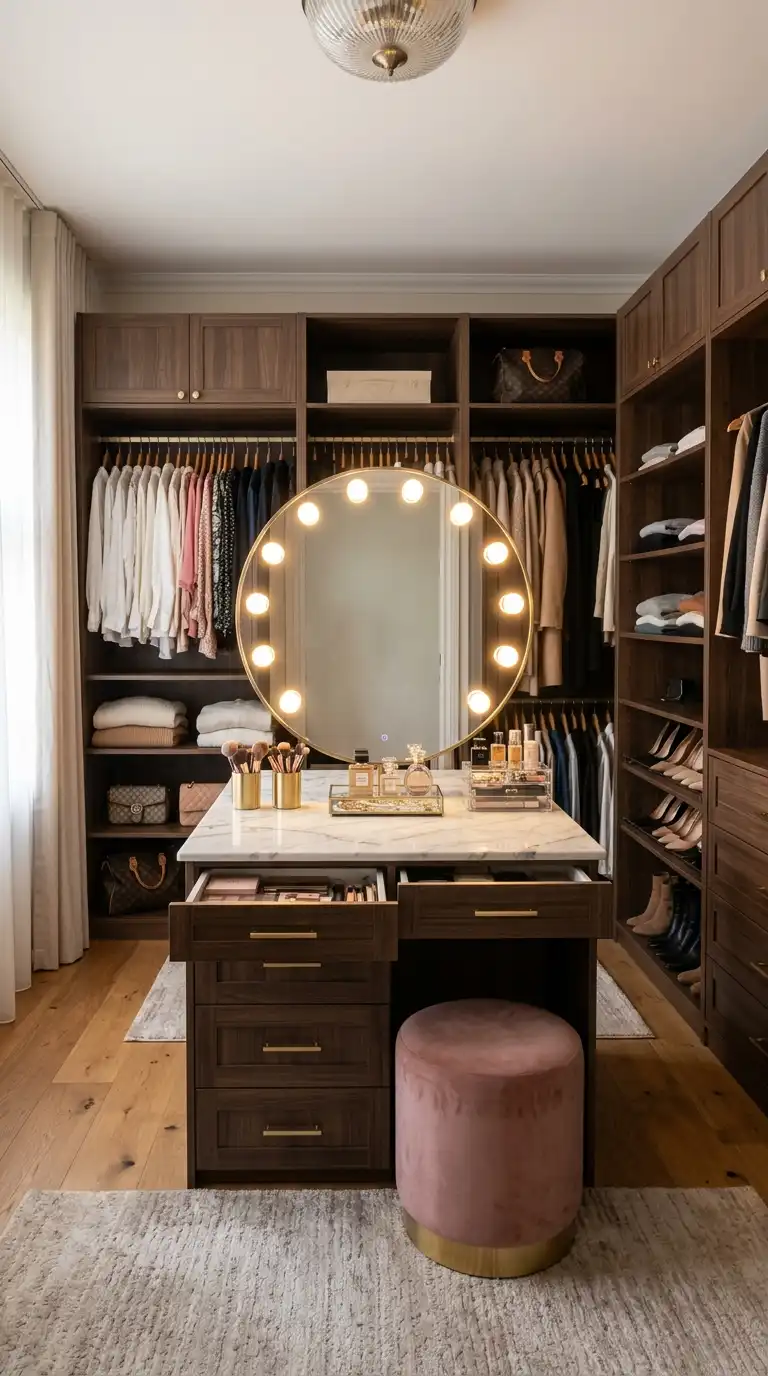
5. Walking Wardrobe with Integrated Dressing Table
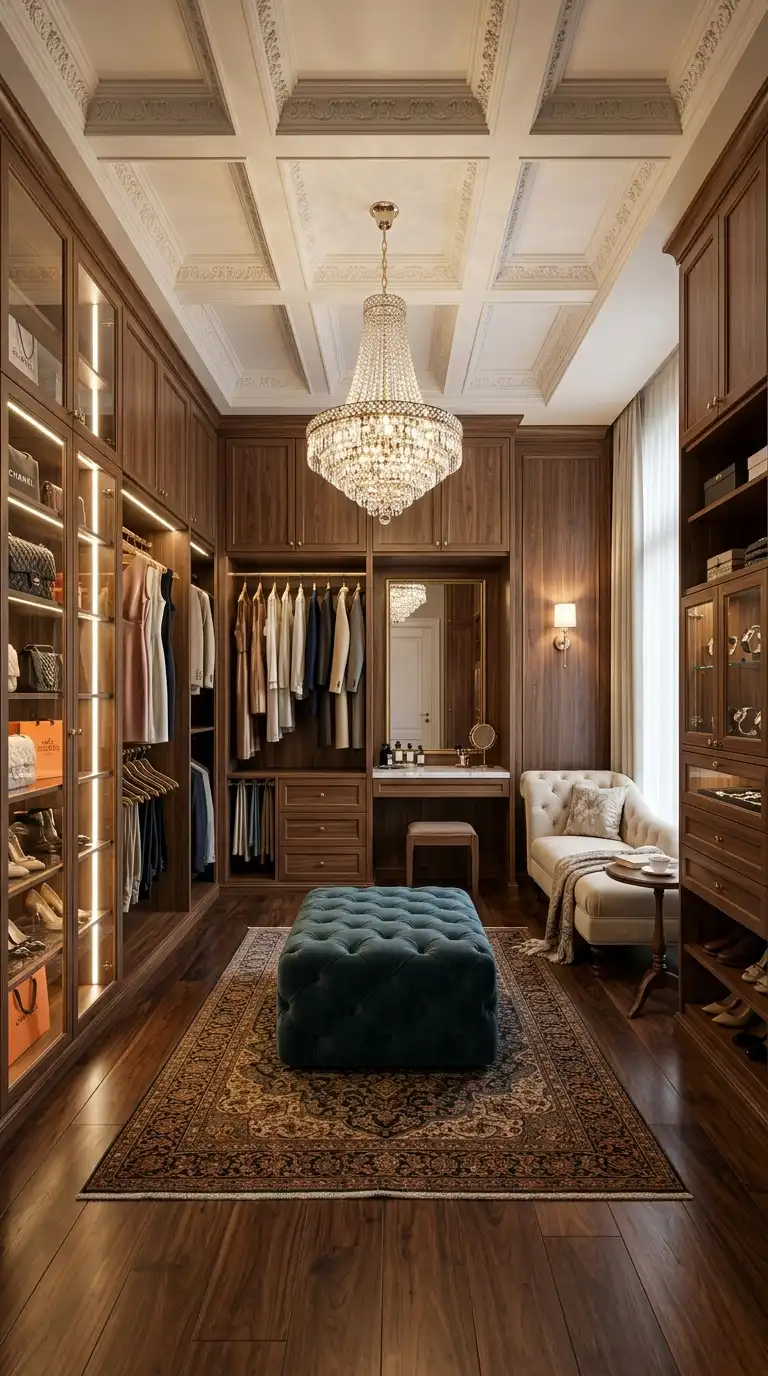
Incorporate a dressing table into your walking wardrobe for a complete grooming and dressing experience. Position the table near natural light if possible, or add a Hollywood-style mirror with built-in lighting. Include drawers for makeup, brushes, and accessories, and add a comfortable stool. This setup streamlines your routine, keeping all beauty and wardrobe essentials in one cohesive space. The dressing table can also serve as a jewelry station or a spot for laying out accessories.
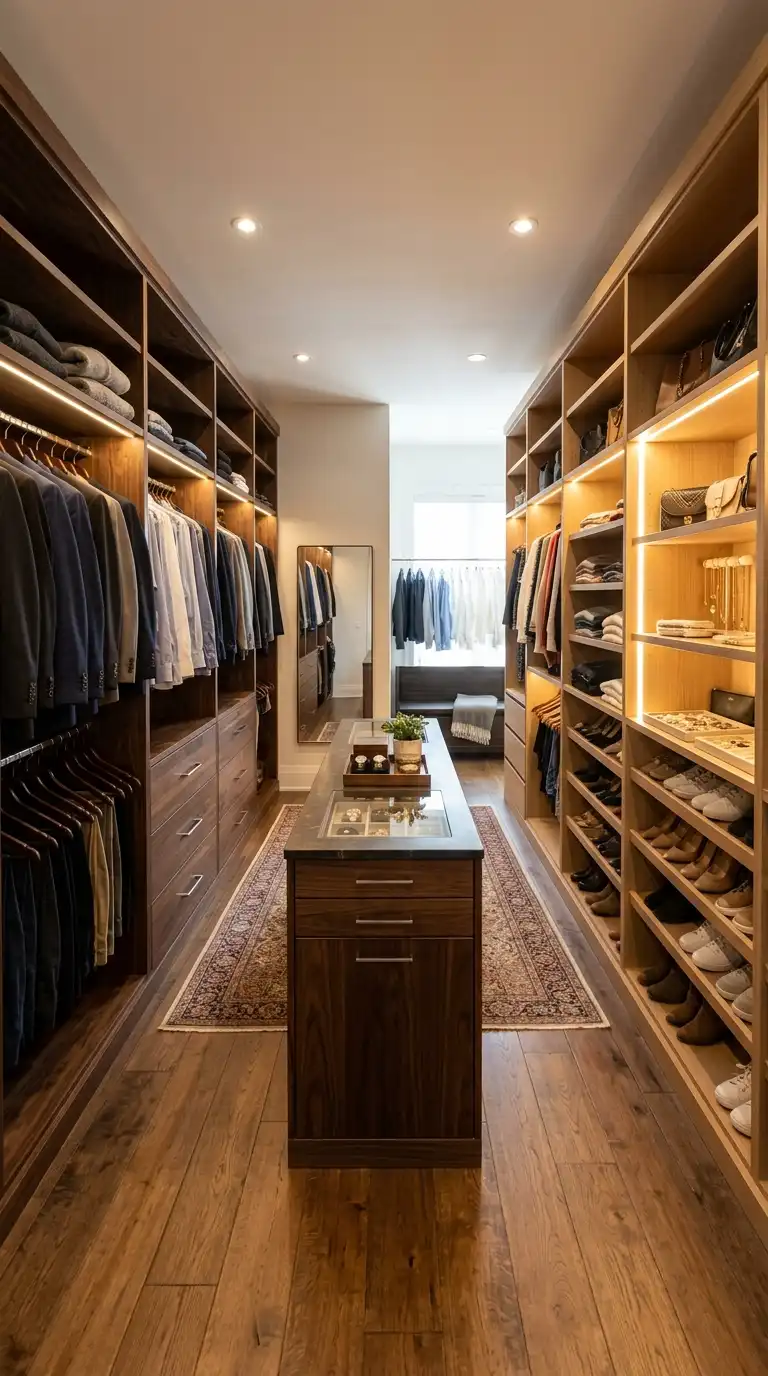
6. His and Hers Walking Wardrobe with Dual Zones
For shared bedrooms, a his-and-hers walking wardrobe offers personalized zones for each partner. Divide the space with a central island or a visual separation using different cabinetry finishes or lighting. Each side can be customized to individual storage needs—double hanging for shirts on one side, pull-out drawers for folded items on the other. This layout promotes organization and eliminates clutter by giving each person their own dedicated space. Consider adding a shared accessory section for items like belts, scarves, or travel bags.
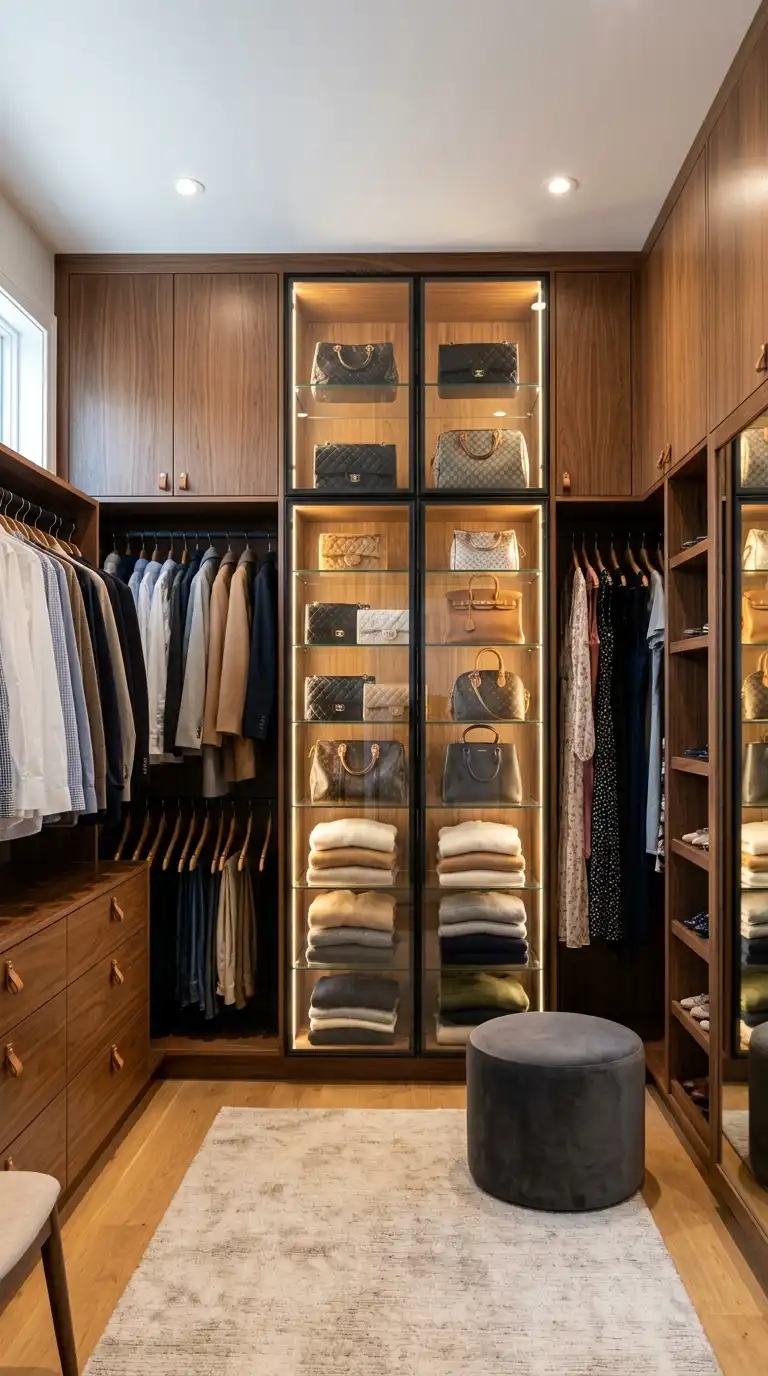
7. Walking Wardrobe with Glass-Front Cabinetry
Glass-front cabinetry adds elegance and allows you to display your favorite handbags, accessories, or folded clothing. Use frosted or tinted glass for a balance between display and privacy, or opt for clear glass with internal lighting for a boutique-inspired look. Glass-front sections break up solid cabinetry and add visual interest to the space. They also encourage organization, as the contents are visible and must be kept tidy. Use these sections to showcase your most prized pieces.
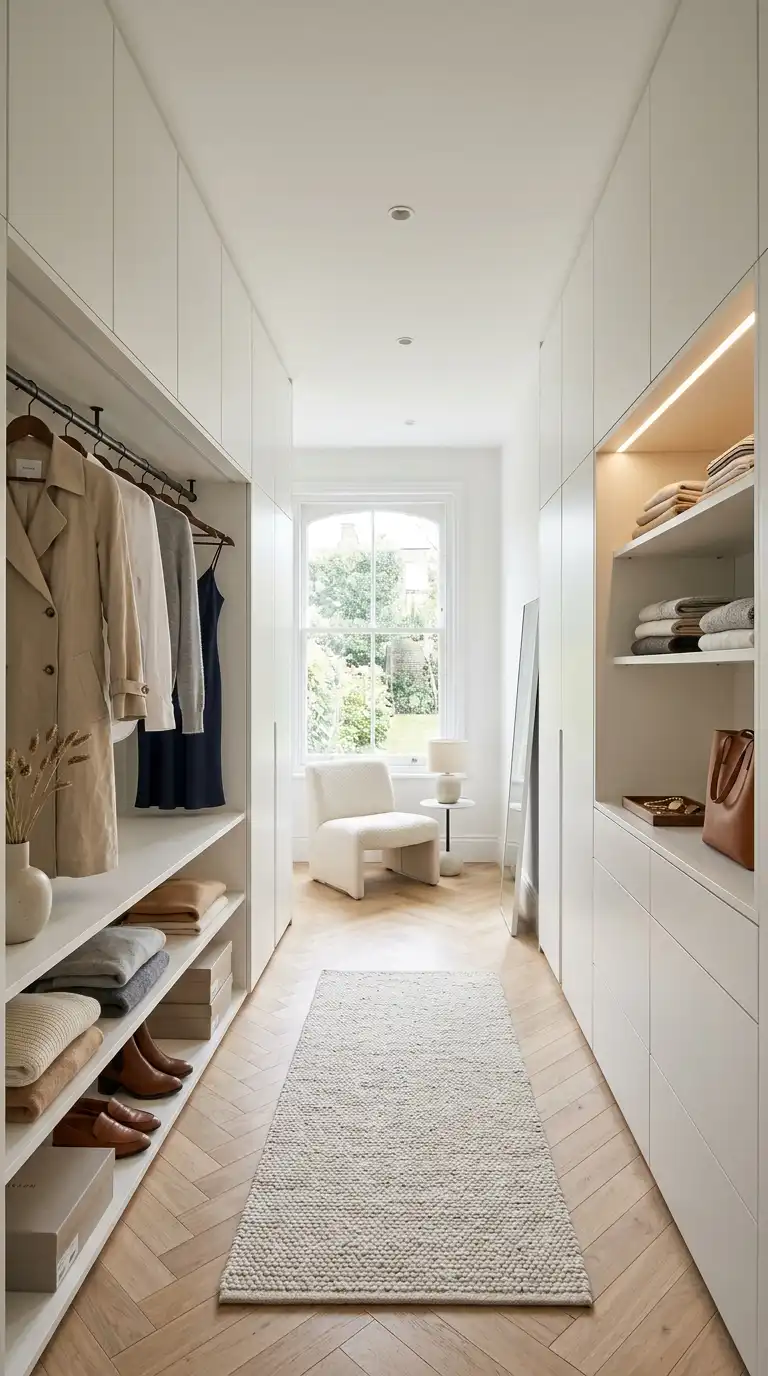
8. Minimalist Walking Wardrobe with Handleless Design
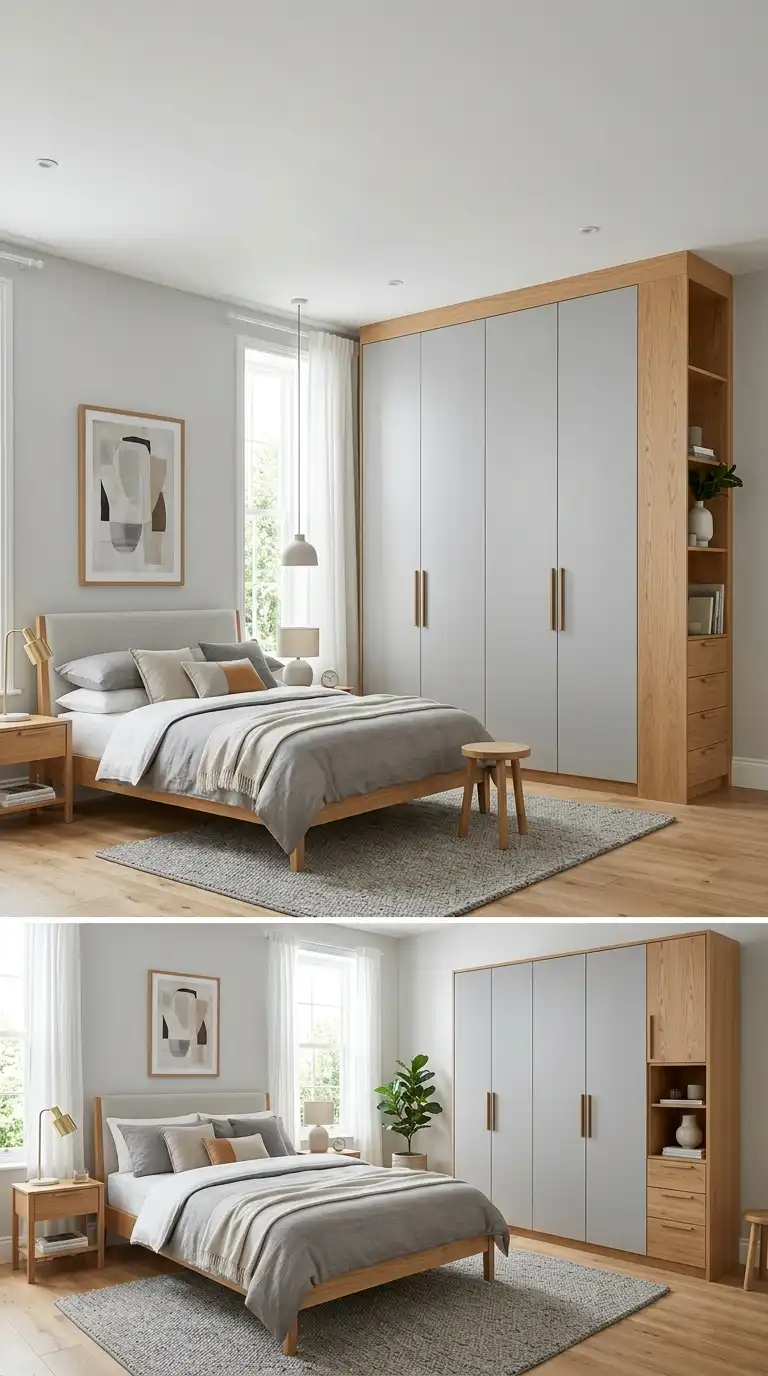
For a clean, uncluttered aesthetic, choose a minimalist walking wardrobe with handleless cabinetry. Use push-to-open mechanisms or integrated grooves for seamless door operation. Stick to a neutral color palette—white, gray, or light wood—to enhance the sense of calm and simplicity. Open shelving and carefully curated displays keep the space feeling light and uncluttered. This design emphasizes the architecture of the space rather than decorative details, creating a serene dressing environment.
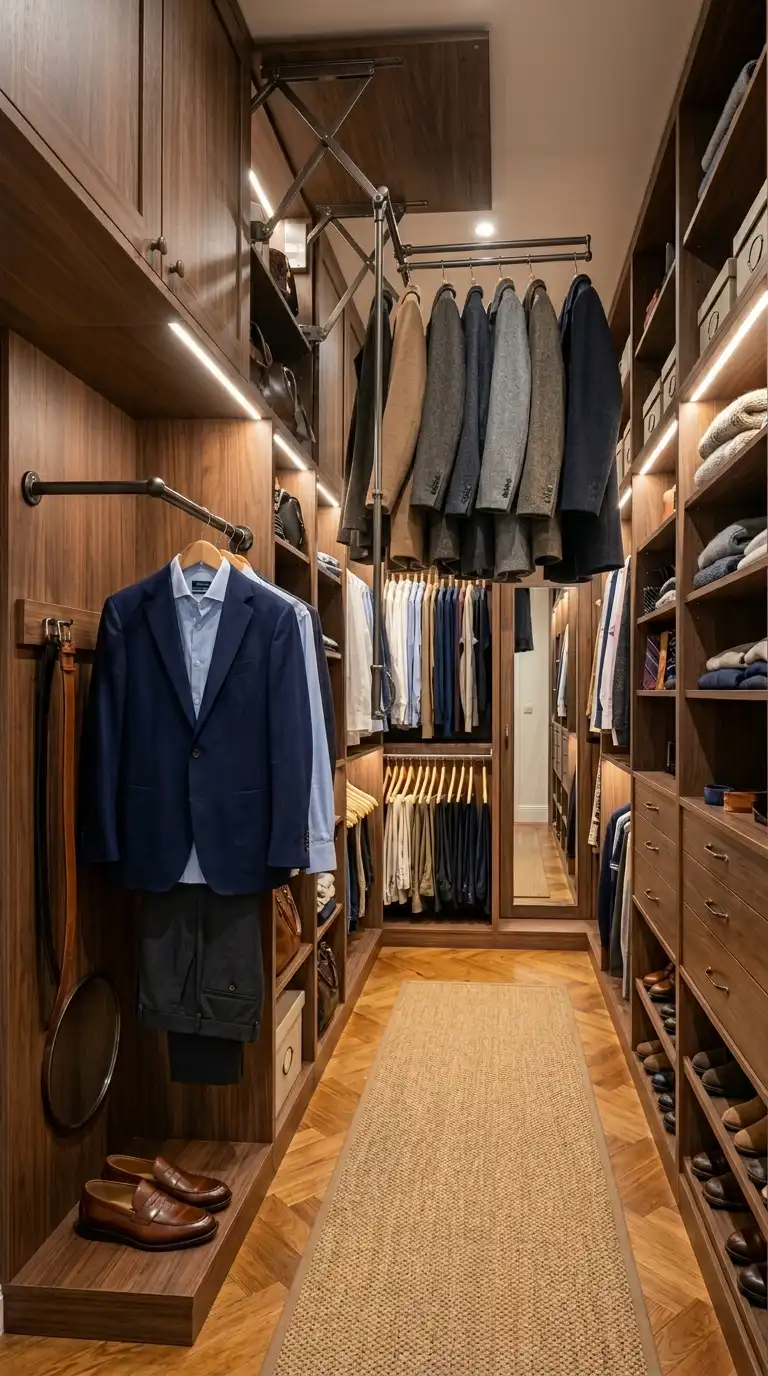
9. Walking Wardrobe with Valet Rod and Pull-Down Hanging
Incorporate practical features like a valet rod for planning outfits and pull-down hanging rods for easy access to high storage. A valet rod provides a temporary space to hang tomorrow’s outfit, while pull-down rods make upper shelves accessible without a step stool. These functional details add convenience to your daily routine and are especially useful in compact walk-ins where every inch counts. Consider adding a pull-out ironing board or steamer station for ultimate functionality.
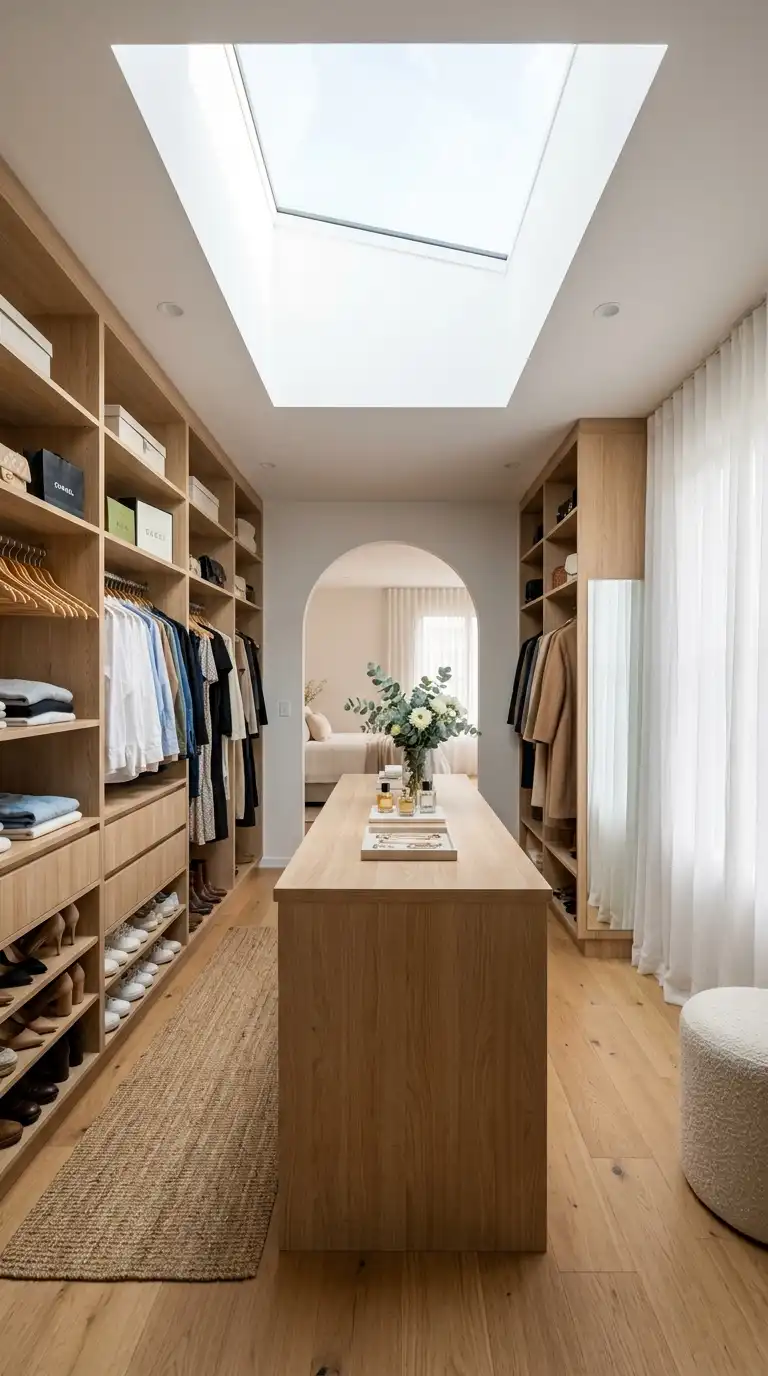
10. Walking Wardrobe with Natural Light and Skylight
If space allows, position your walking wardrobe to take advantage of natural light. A skylight or large window makes the space feel open, airy, and inviting. Natural light is also essential for accurate color matching when choosing outfits. Pair with sheer window treatments for privacy while maintaining brightness. Incorporate mirrors to reflect light and further enhance the sense of space. This design transforms the wardrobe from a purely functional area into a pleasant, light-filled room.
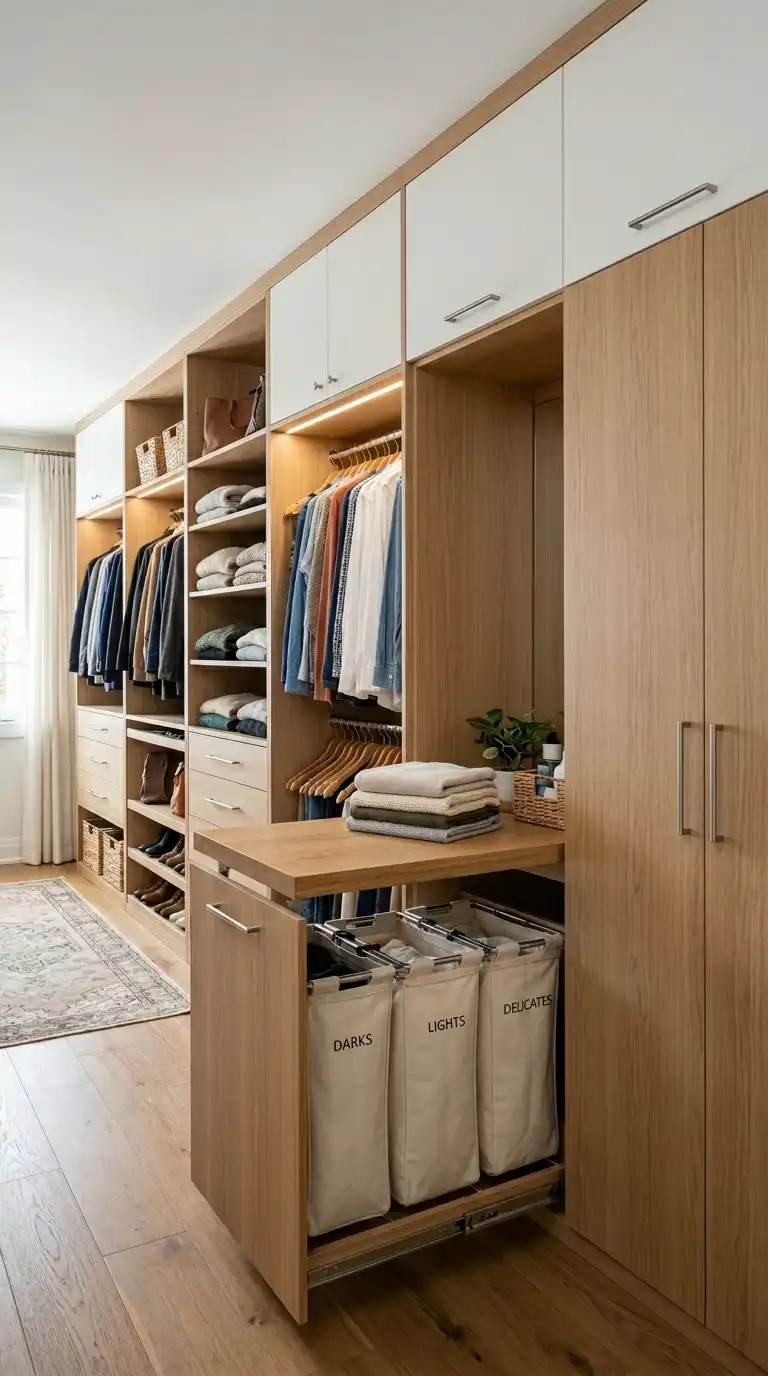
11. Walking Wardrobe with Laundry Station Integration
For ultimate convenience, integrate a laundry station into your walking wardrobe. A small washer and dryer, a pull-out hamper, and a folding surface streamline the process from washing to storing. This setup is especially practical for busy households and keeps laundry out of sight while making it easily accessible. Add a retractable clothesline or steamer for finishing touches. This design turns your wardrobe into a complete clothing care hub.
12. Luxury Walking Wardrobe with Chandelier and Seating
Create a truly indulgent dressing space by adding statement lighting and comfortable seating. A crystal chandelier or designer pendant light elevates the space, while a plush ottoman, chaise lounge, or velvet bench invites you to linger. This approach transforms a functional storage area into a private retreat where you can relax and prepare for the day in style. Add a small side table for coffee or tea, and consider a sound system for a truly luxurious experience.
Frequently Asked Questions
- What is the minimum size for a walking wardrobe?
A functional walking wardrobe typically requires at least 6 to 8 square metres of space to accommodate cabinetry and comfortable movement. However, smaller spaces can still work with clever design, such as floor-to-ceiling storage and sliding doors. The key is ensuring enough room to move and access your belongings comfortably. - How much does it cost to build a walking wardrobe?
Costs vary widely based on size, materials, cabinetry quality, and finishes. A basic walking wardrobe can start from a few thousand dollars, while luxury designs with custom cabinetry, high-end finishes, and integrated lighting can cost significantly more. Investing in quality materials and professional installation ensures longevity and functionality. - Should I hire a professional to design my walking wardrobe?
Professional designers can help maximize space, recommend optimal layouts, and ensure that your wardrobe meets your specific storage needs. They also have access to high-quality materials and installation services. For complex spaces or custom designs, professional expertise is highly recommended. - How do I organize a walking wardrobe?
Categorize clothing by type and frequency of use. Place everyday essentials at eye level, use double hanging rods for shirts and trousers, and incorporate pull-out drawers for folded items. Use uniform hangers for a cohesive look, and store accessories in clear boxes or on dedicated racks. Regular edits keep the space functional and clutter-free. - What lighting is best for a walking wardrobe?
Layered lighting works best. Use recessed or track lighting for overall illumination, LED strip lighting inside cabinets and along shelves for visibility, and statement lighting—like a chandelier or pendant—for ambiance. Warm white lighting (2700K–3000K) creates a soft, inviting atmosphere and accurately represents clothing colors.
A walking wardrobe is an investment in both your home and your daily life. Whether you create a compact, efficient space or a luxurious dressing room with a central island and chandelier, thoughtful design transforms storage into a personal sanctuary. Prioritize functionality with customized zones, enhance the experience with quality lighting and comfortable seating, and choose finishes that reflect your style. The result is a space that makes every day feel a little more special.