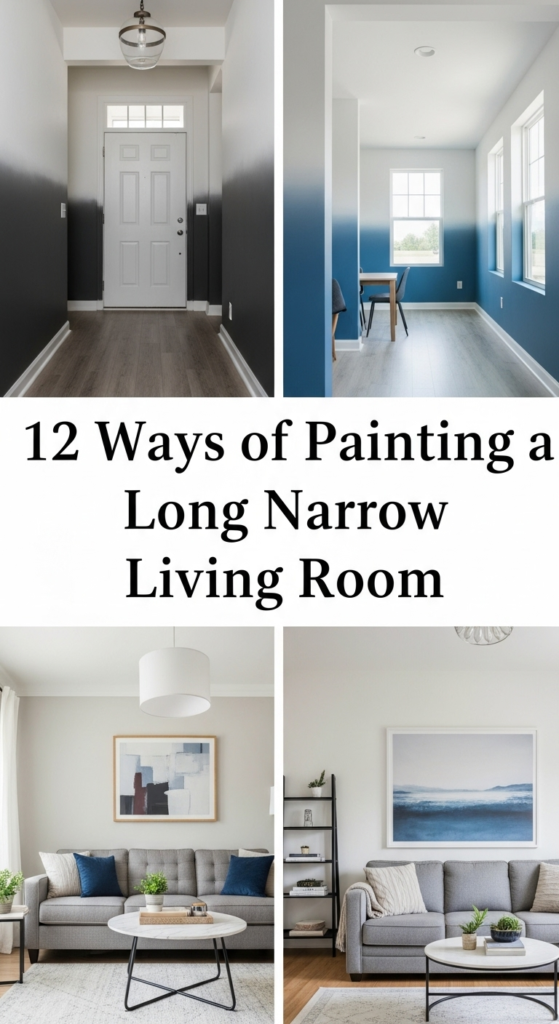
12 Ways of Painting a Long Narrow Living Room
Paint is one of the most powerful and affordable tools for transforming a long, narrow living room. The right color strategy can visually widen the space, create distinct zones, add architectural interest, or completely change the room’s atmosphere. Unlike furniture that requires significant investment, paint offers dramatic impact for minimal cost—making it the perfect starting point for redesigning your challenging space. These twelve painting techniques will help you overcome the tunnel effect and create a living room that feels balanced, intentional, and beautifully proportioned.
1. The Classic All-White Expansion
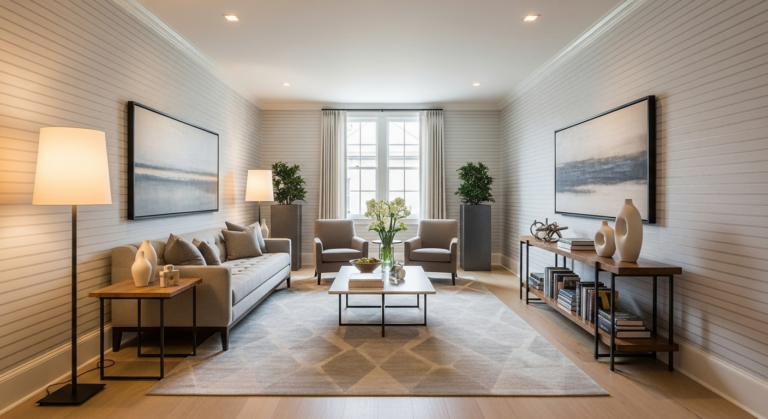
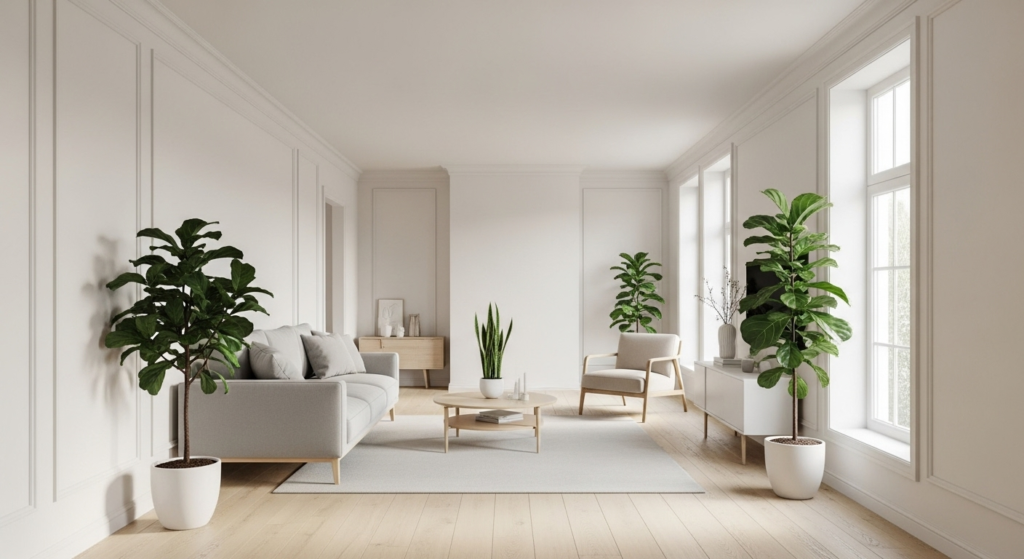
Painting all four walls, the ceiling, and trim in varying shades of white creates a seamless, expansive feel that maximizes light and makes your narrow room feel as large as possible. This monochromatic approach eliminates visual breaks that can make spaces feel chopped up and smaller.
Choose warm whites (with beige or yellow undertones) for a cozy feel, or cool whites (with blue or gray undertones) for a crisp, modern look. Use the same white on walls and ceiling, with trim in a slightly brighter white for subtle definition. The lack of color contrast creates a continuous flow that tricks the eye into perceiving more space.
This technique works particularly well in narrow rooms with limited natural light, as white surfaces reflect and amplify whatever light is available. Layer in color and personality through furniture, artwork, and textiles rather than on the walls themselves.
2. The Short Wall Accent Strategy
Paint the two short end walls in a deeper, richer color while keeping the long walls light and neutral. This strategic color placement visually shortens the room, making it feel less tunnel-like and more square in proportion.
Choose a color that complements your overall design scheme—deep navy, forest green, charcoal gray, or even a bold jewel tone like emerald or burgundy. The contrast between the dark end walls and light long walls creates visual endpoints that psychologically bring the walls closer together.
This is one of the most effective painting strategies for narrow rooms because it works with the room’s architecture rather than fighting against it. The dark end walls become natural focal points for artwork, mirrors, or your main furniture arrangement.
3. The Horizontal Stripe Widening Effect
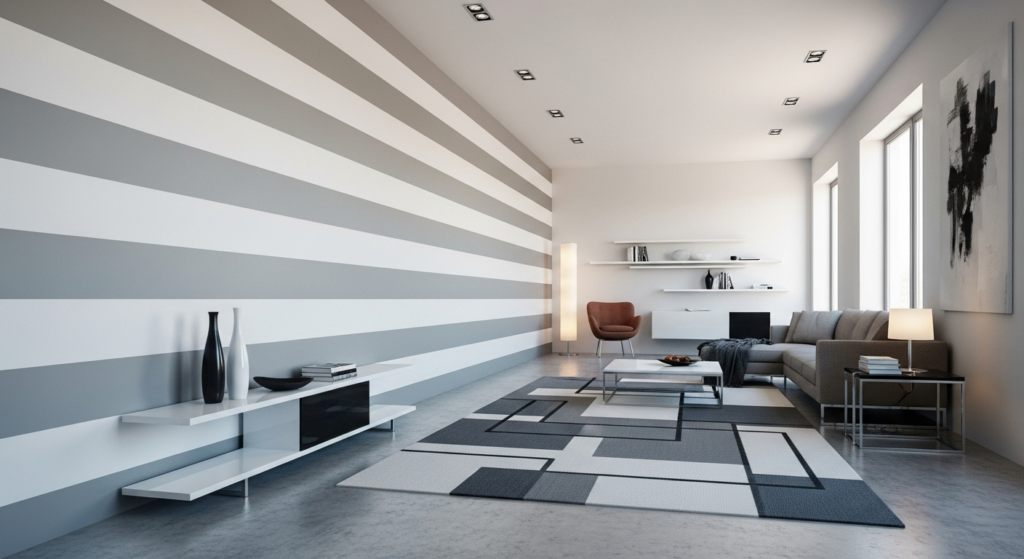
Paint horizontal stripes on one or more walls to create the optical illusion of width. Horizontal lines draw the eye across the space rather than down its length, making the room feel wider than it actually is.
Use two coordinating colors in similar values (lightness/darkness) for subtle stripes, or create bolder contrast with light and dark combinations. Stripes can be wide (12-18 inches) for a modern look or narrow (4-6 inches) for a more traditional feel. For maximum impact, paint stripes on the long walls where they’ll be most visible.
Use painter’s tape and a level to ensure perfectly straight lines. This project requires patience and precision, but the visual impact is well worth the effort. Consider alternating stripes of two shades of the same color for a sophisticated, tone-on-tone effect.
4. The Two-Tone Horizontal Division
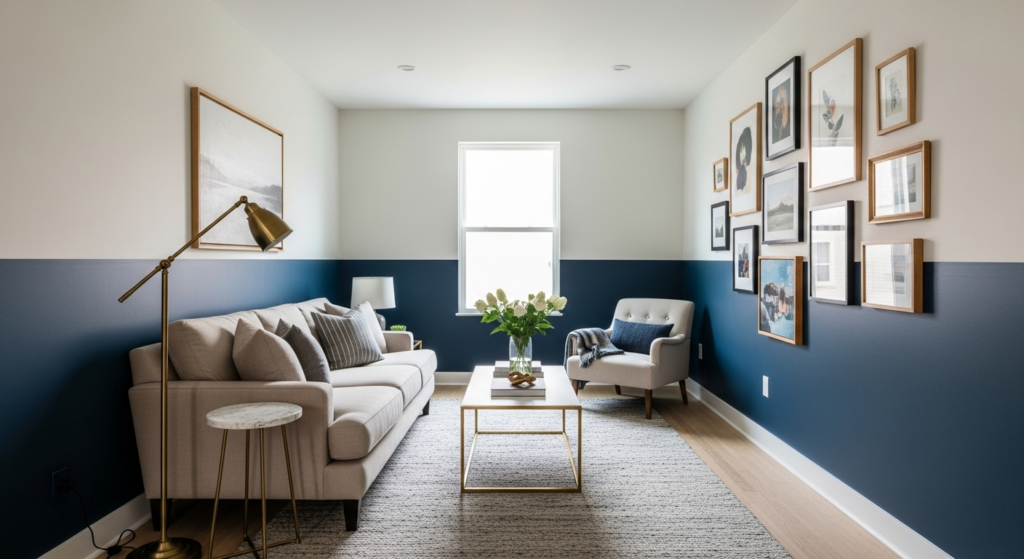
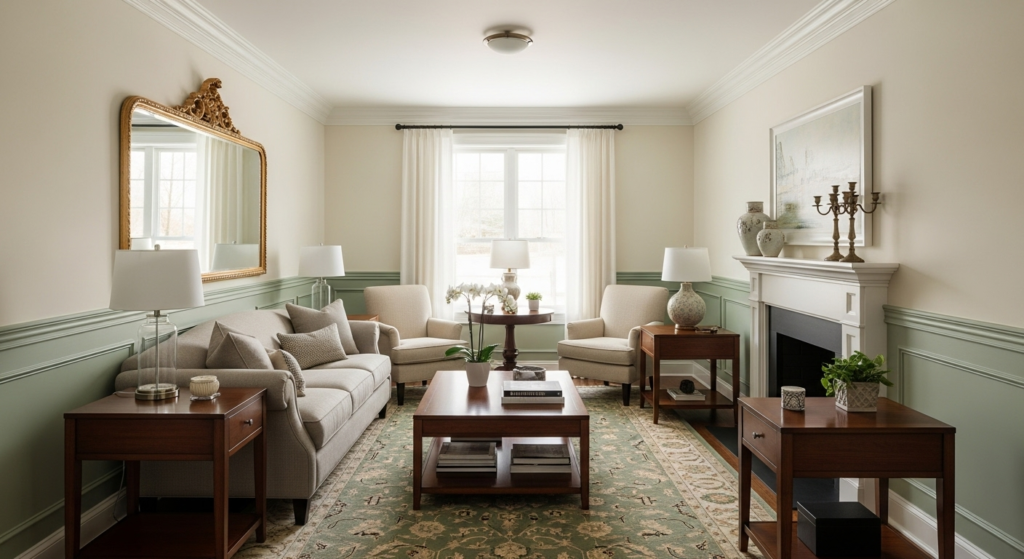
Divide your walls horizontally by painting the lower portion one color and the upper portion another, separated by a chair rail or simply a clean paint line. This technique adds architectural interest while drawing the eye around the room’s perimeter rather than down its length.
The classic approach uses a darker color below (often at chair rail height, approximately 32-36 inches from the floor) and lighter color above. This grounding effect makes ceilings feel higher and the room more balanced. Alternatively, reverse the convention with light below and darker above for a modern, unexpected look.
Install actual chair rail molding for a traditional look, or simply create a sharp paint line for contemporary simplicity. Add wainscoting or board-and-batten below the line for additional texture and visual interest.
5. The Ombre Gradient Flow
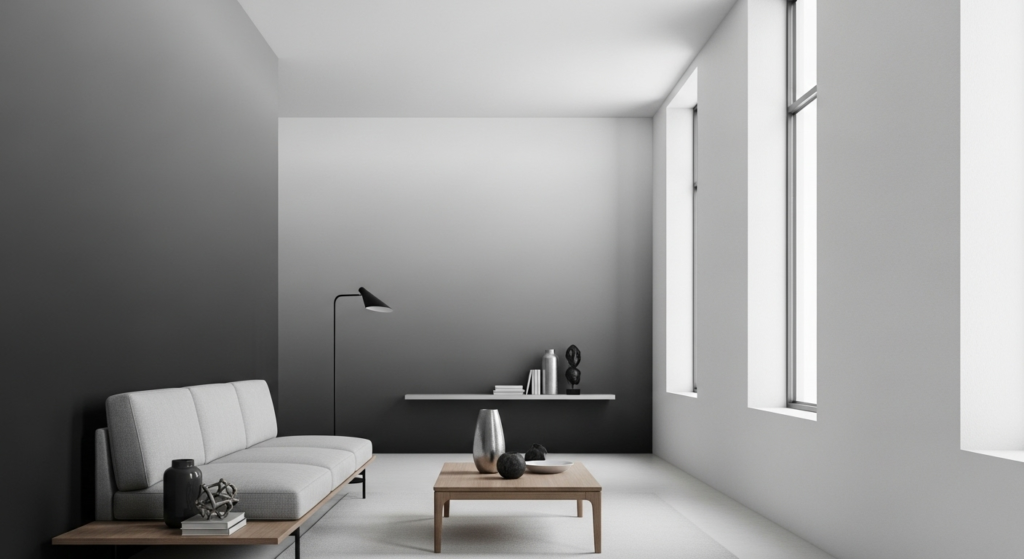
Create a stunning ombre effect by gradually transitioning from one color to another across the length of your narrow room. This artistic approach transforms the challenge of length into a design feature, creating movement and visual intrigue.
Start with the darkest shade on one short wall, gradually lighten through several tonal variations across the long walls, ending with the lightest shade on the opposite short wall. This requires careful blending where each color meets, but the effect is dramatic and unique.
Use shades of the same color family (various blues, grays, or warm neutrals) for a cohesive look. The gradient draws the eye through the space in a controlled way, creating interest without the harsh tunnel effect. This technique works beautifully in modern or artistic spaces.
6. The Ceiling as Fifth Wall
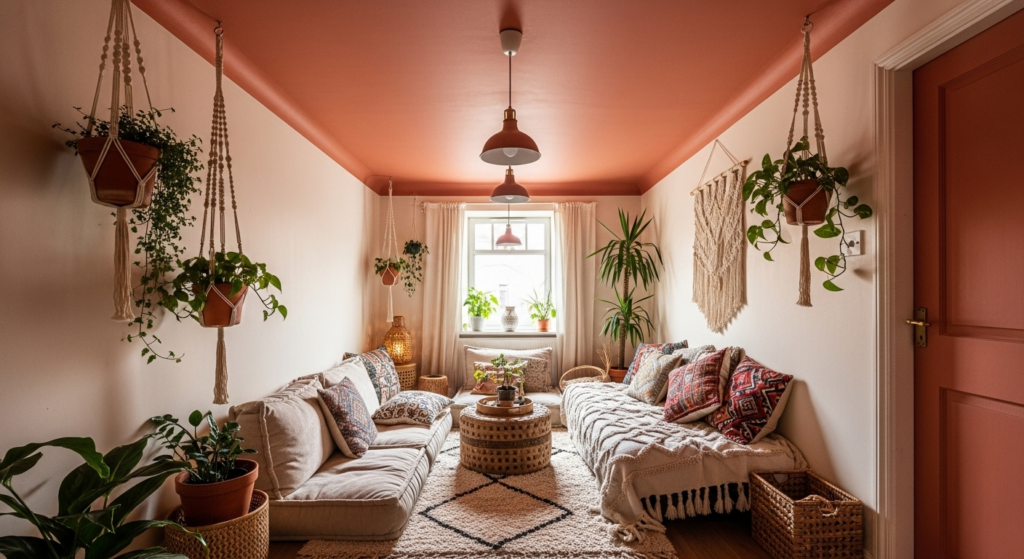
Paint the ceiling a color darker than the walls to add coziness and draw the eye upward, counteracting the narrow floor plan. This unexpected approach creates intimacy while emphasizing ceiling height.
Choose a color that coordinates with your wall color—perhaps a darker shade of the same hue, or a complementary color. Navy ceilings with white or gray walls create drama, while soft blue ceilings with cream walls evoke a sky-like serenity. Even painting the ceiling just two shades darker than the walls makes a significant impact.
This technique works best in narrow rooms with high ceilings (9 feet or higher) where you want to create a cozier atmosphere. In rooms with standard 8-foot ceilings, consider this approach only with lighter colors to avoid making the space feel too enclosed.
7. The Monochromatic Tonal Variation
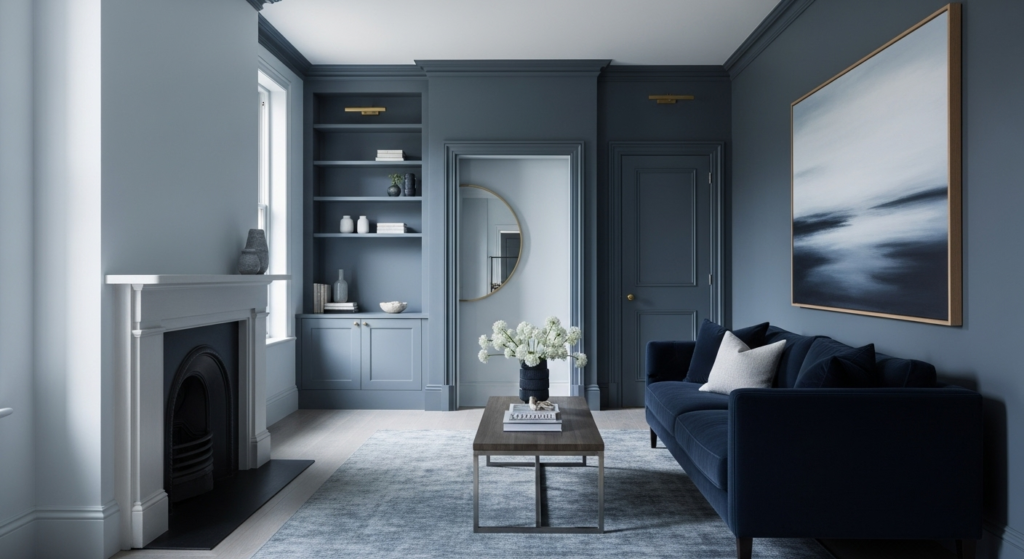
Paint all walls in different shades of the same color to create depth and dimension without the jarring effect of contrasting colors. This sophisticated approach adds visual interest while maintaining the cohesion necessary for small spaces.
Choose three to four shades from the same paint color family—perhaps the lightest shade on long walls, medium shades on one short wall, and the deepest shade on the other short wall. The subtle variations create the perception of layers and depth, making the narrow room feel more complex and interesting.
This technique is particularly effective with grays, blues, greens, or warm neutrals. The tonal variation provides just enough contrast to define different planes without fragmenting the space. It’s a designer trick that adds sophistication with minimal risk.
8. The Bold Dark Embrace
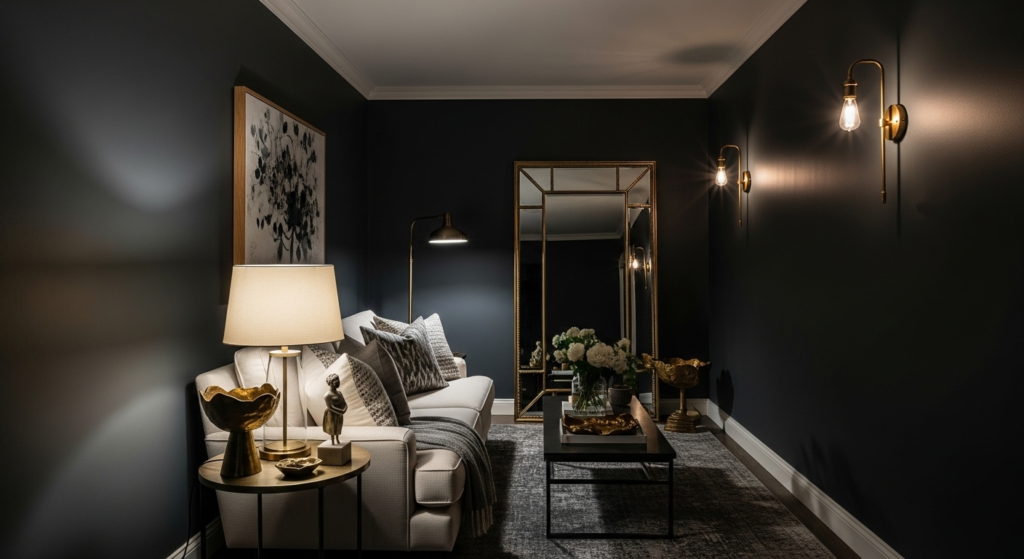
Defy conventional wisdom and paint your entire narrow living room in a rich, dark color. When executed properly with adequate lighting, dark paint can make a narrow room feel like an intentional cozy den rather than an awkward corridor.
Choose deep colors like charcoal, navy, forest green, chocolate brown, or even black. The key to making dark colors work in narrow spaces is excellent lighting—layer ambient, task, and accent lighting throughout. Use metallic accents, mirrors, and light-colored furniture to reflect light and prevent the space from feeling cave-like.
Dark walls recede visually, which can actually make the boundaries of the room feel less defined and more expansive. This approach works best when you embrace the narrow proportions and create a moody, intimate atmosphere rather than trying to fight the space’s natural character.
9. The Vertical Stripe Height Enhancement
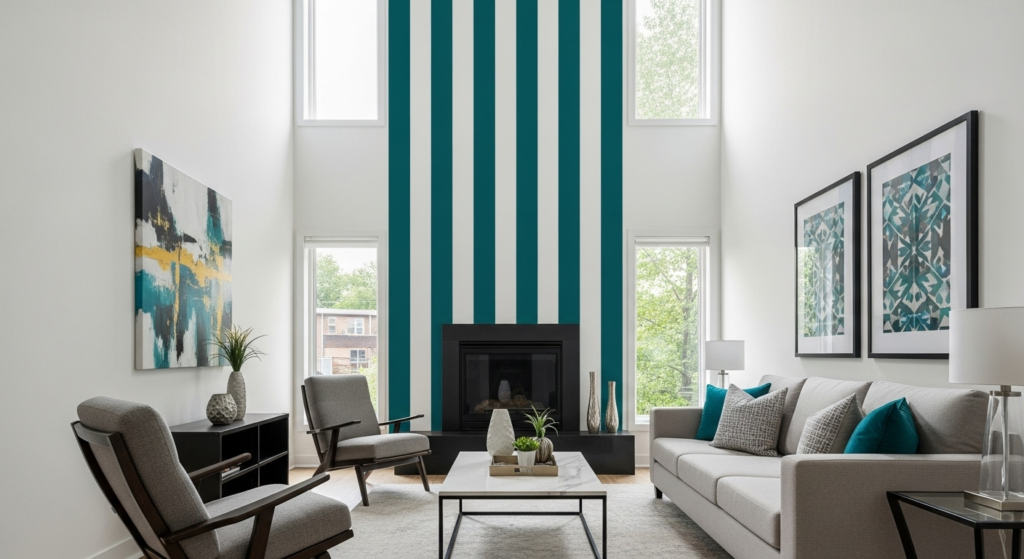
Paint vertical stripes on walls to draw the eye upward and emphasize ceiling height, which helps distract from the narrow width. While horizontal stripes widen, vertical stripes heighten—both valuable effects in narrow rooms.
Apply vertical stripes to the short end walls or even one long wall for dramatic impact. Use subtle tone-on-tone stripes for an understated effect, or bold contrasting colors for a statement wall. Vary stripe widths for a more dynamic, less uniform appearance.
Vertical stripes are particularly effective in narrow rooms with low ceilings, as they create the illusion of additional height. This upward draw helps counterbalance the horizontal stretch of the narrow floor plan. Paint stripes from baseboard to ceiling for maximum impact.
10. The Geometric Accent Wall
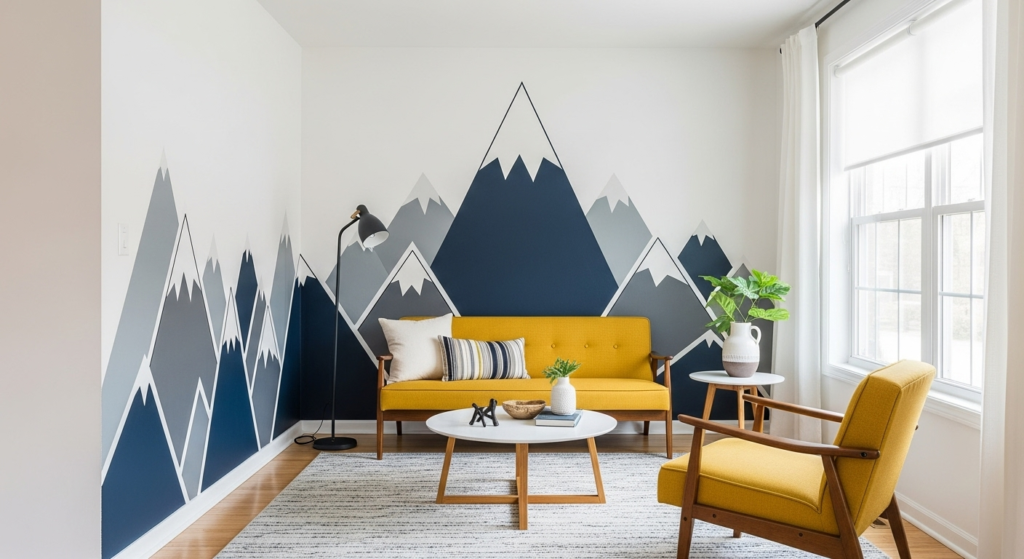
Transform one wall into a geometric masterpiece using painter’s tape and multiple paint colors. Triangles, hexagons, chevrons, or abstract shapes add contemporary flair while creating a focal point that distracts from awkward proportions.
Plan your geometric design carefully on paper first, then transfer it to the wall using painter’s tape. This project requires precision and patience but creates a truly custom look. Choose a color palette of 2-4 coordinating colors that complement your overall design scheme.
Apply the geometric treatment to one short end wall to create a focal point, or to one long wall to add visual interest along the room’s length. The geometric pattern provides enough visual complexity that the eye focuses on the design rather than the room’s narrow dimensions.
11. The Color-Blocked Sections
Divide your narrow room into distinct color-blocked sections to create the impression of separate zones within the single space. Paint different areas in different colors to visually break up the length and define functional areas.
For example, paint the living/seating area in one color and a reading nook or workspace area at the other end in a complementary color. Use coordinating shades that work together—perhaps warm gray in one zone and soft blue-gray in another, or cream transitioning to warm beige.
The color change creates a psychological boundary that defines distinct purposes for each area. This technique works particularly well in narrow rooms that must serve multiple functions. Use furniture arrangement and area rugs to reinforce the color-defined zones.
Image Prompt: Multi-functional narrow living room with color-blocked sections, main seating area painted in soft sage green with gray sofa and coffee table, transitioning to home office area at far end painted in warm cream with wooden desk and chair, distinct color zones creating separate functional areas, cohesive overall palette, modern apartment living
12. The Accent Ceiling Beam Effect
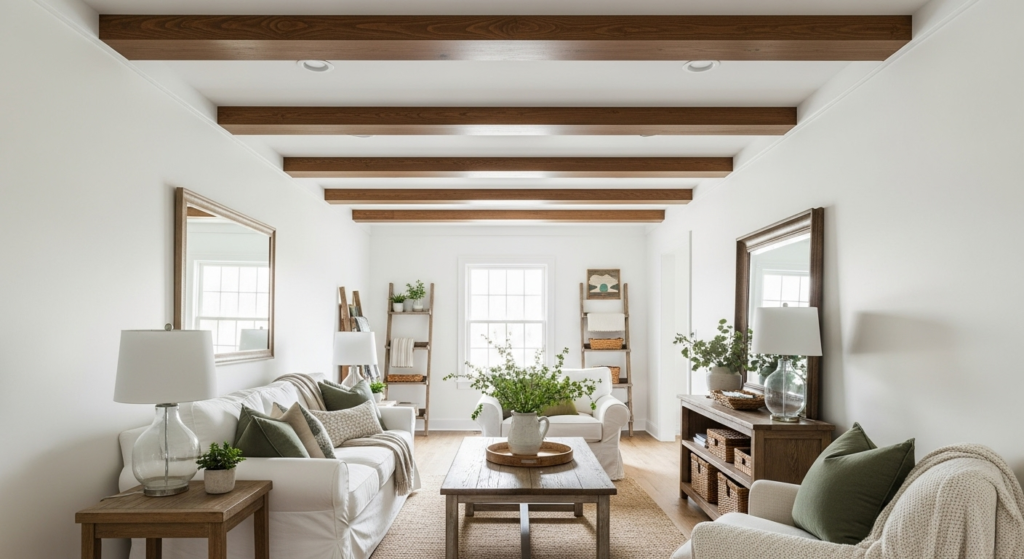
Create the illusion of architectural ceiling beams using paint. This technique adds visual interest overhead, drawing the eye upward and away from the narrow floor plan while adding character and dimension.
Use painter’s tape to mark out “beam” locations running perpendicular to the length of the room—this width-wise orientation helps counteract the narrow proportions. Paint these sections a contrasting color (darker than the ceiling) to create the shadow effect of real beams. For extra dimension, paint the sides of the “beams” as well.
This faux beam technique works beautifully in rooms with plain ceilings that lack architectural interest. It adds a cottage, farmhouse, or Mediterranean feel depending on your color choices and overall decor. The perpendicular beam orientation is particularly effective at making narrow rooms feel wider.
Essential Painting Tips for Narrow Living Rooms
Test Colors Extensively: Paint large poster boards (at least 2×2 feet) with your chosen colors and move them around the room, observing them at different times of day and in various lighting conditions. Colors change dramatically depending on natural and artificial light.
Consider Sheen Carefully: Flat or matte finishes hide wall imperfections but don’t reflect light. Eggshell or satin finishes have subtle sheen that bounces light around narrow rooms, making them feel more spacious. Reserve high-gloss finishes for trim and accents.
Prep Properly: Clean walls, fill holes, sand rough spots, and prime properly. In narrow rooms where every surface is visible, poor prep work shows. Quality preparation ensures professional-looking results.
Use Quality Paint: Invest in good paint with excellent coverage. Cheap paint requires multiple coats and often looks streaky or uneven—particularly problematic in narrow spaces where walls are highly visible.
Light Colors Aren’t Mandatory: While light colors do make spaces feel larger, don’t feel obligated to choose white or beige if you prefer richer colors. Proper lighting and strategic color placement make almost any color work.
Account for Natural Light: North-facing rooms with limited natural light benefit from warm paint colors (beige, warm gray, cream) that compensate for cool light. South-facing rooms with abundant light can handle cooler colors (blue-grays, true whites) without feeling cold.
Coordinate With Flooring: Consider your floor color when choosing wall paint. Dark floors pair well with light walls for high contrast, while medium floors work with almost any wall color. Light floors give you the most flexibility.
Don’t Forget Trim and Molding: Painting trim, baseboards, and crown molding in crisp white makes them pop and adds architectural definition. This detail work elevates the entire paint job.
Plan for Furniture: Neutral wall colors provide a blank canvas for colorful furniture and accessories. Bold wall colors require more careful furniture coordination. Consider your existing furniture before committing to dramatic wall colors.
Embrace Imperfection: Hand-painted geometric designs, ombre effects, and artistic techniques don’t need to be perfect. Slight variations add handmade charm and character that can’t be achieved with wallpaper or decals.
Before You Start Painting
Calculate Paint Quantity: Measure wall square footage (length × width of each wall, added together) and divide by the coverage rate on your paint can (usually 350-400 square feet per gallon). Buy extra for touch-ups.
Gather Proper Supplies: Quality paintbrushes, rollers, painter’s tape, drop cloths, paint trays, stir sticks, and a sturdy ladder make the job easier and results better.
Clear and Prep the Room: Remove furniture or push it to the center and cover with drop cloths. Remove outlet covers and switch plates. Tape off trim, ceiling, and any areas you don’t want painted.
Prime When Necessary: Use primer when painting over dark colors, covering stains, or painting bare drywall. Primer ensures even color coverage and better adhesion.
Work in Good Ventilation: Open windows and use fans to circulate air. Paint fumes in a narrow, enclosed space can be overwhelming.
Allow Proper Drying Time: Wait the recommended time between coats (usually 2-4 hours for latex paint). Rushing leads to uneven coverage and potential peeling.
Final Thoughts
Paint has the power to completely transform your long, narrow living room, and the best part is that if you don’t love the results, you can simply paint over it and try again. This flexibility makes paint the perfect medium for experimentation. Don’t be afraid to try bold approaches—the worst that can happen is you’ll repaint, and you’ll have learned what doesn’t work in your specific space.
The right paint strategy turns your narrow living room’s biggest challenge—its proportions—into an opportunity for creative expression. Whether you choose the safe elegance of all-white, the drama of deep dark walls, or the artistic flair of geometric designs, paint gives you the power to reshape how your space looks and feels. Pick up those brushes and transform your narrow living room into a space you absolutely love.