13 Small Walk-In Wardrobe Designs
A small walk-in wardrobe can be just as functional and stylish as a large dressing room with thoughtful design. The key is maximizing every inch—using vertical space, choosing efficient storage solutions, and maintaining a sense of openness. From floor-to-ceiling storage and sliding doors to clever corner solutions and integrated lighting, here are thirteen small walk-in wardrobe designs to help you make the most of your space.
1. Floor-to-Ceiling Storage
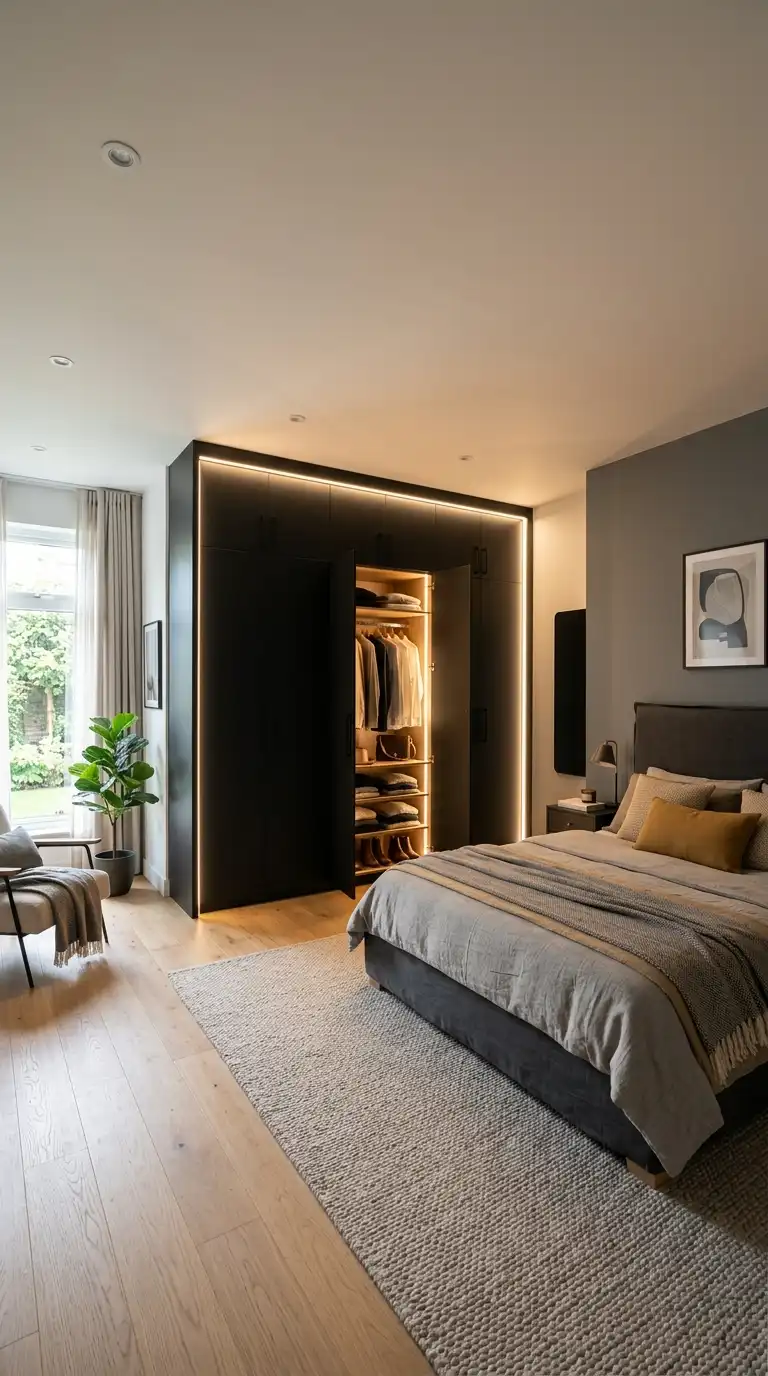
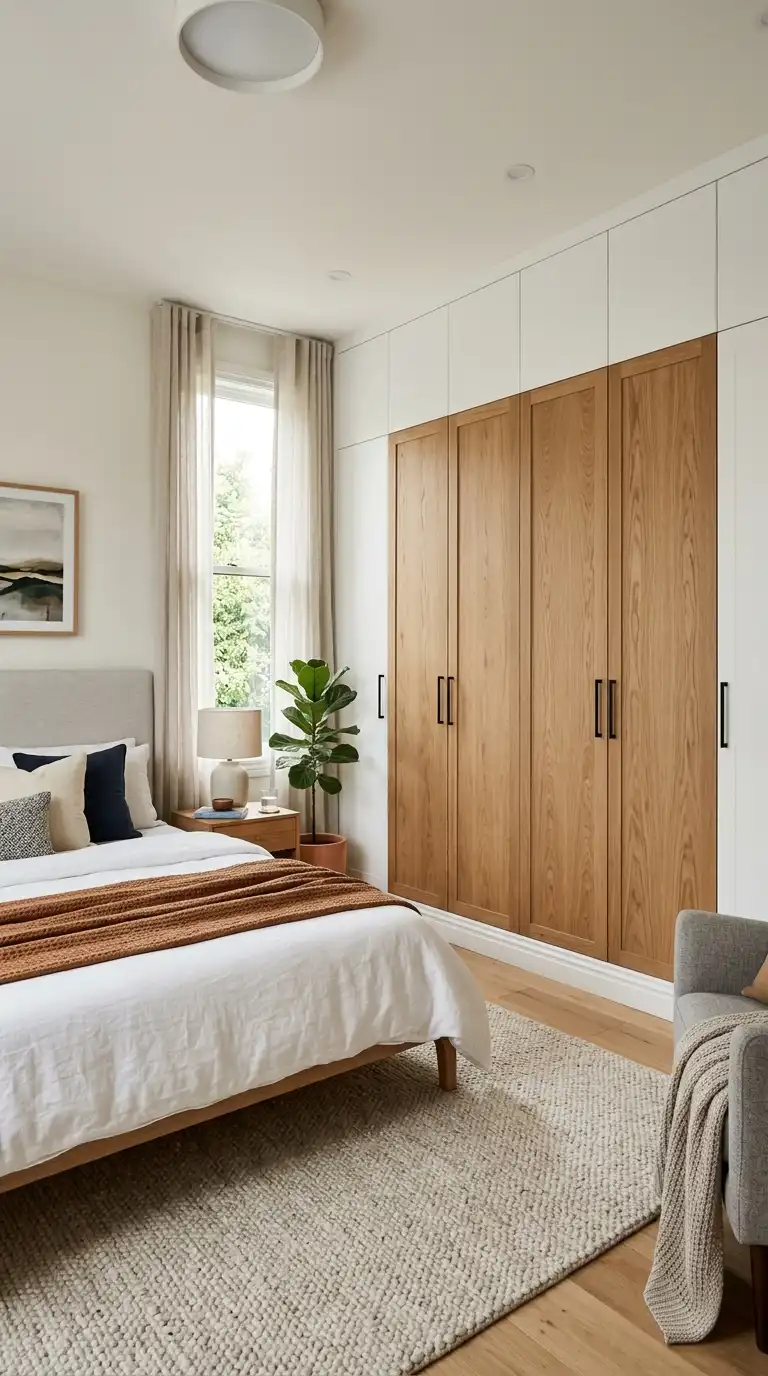
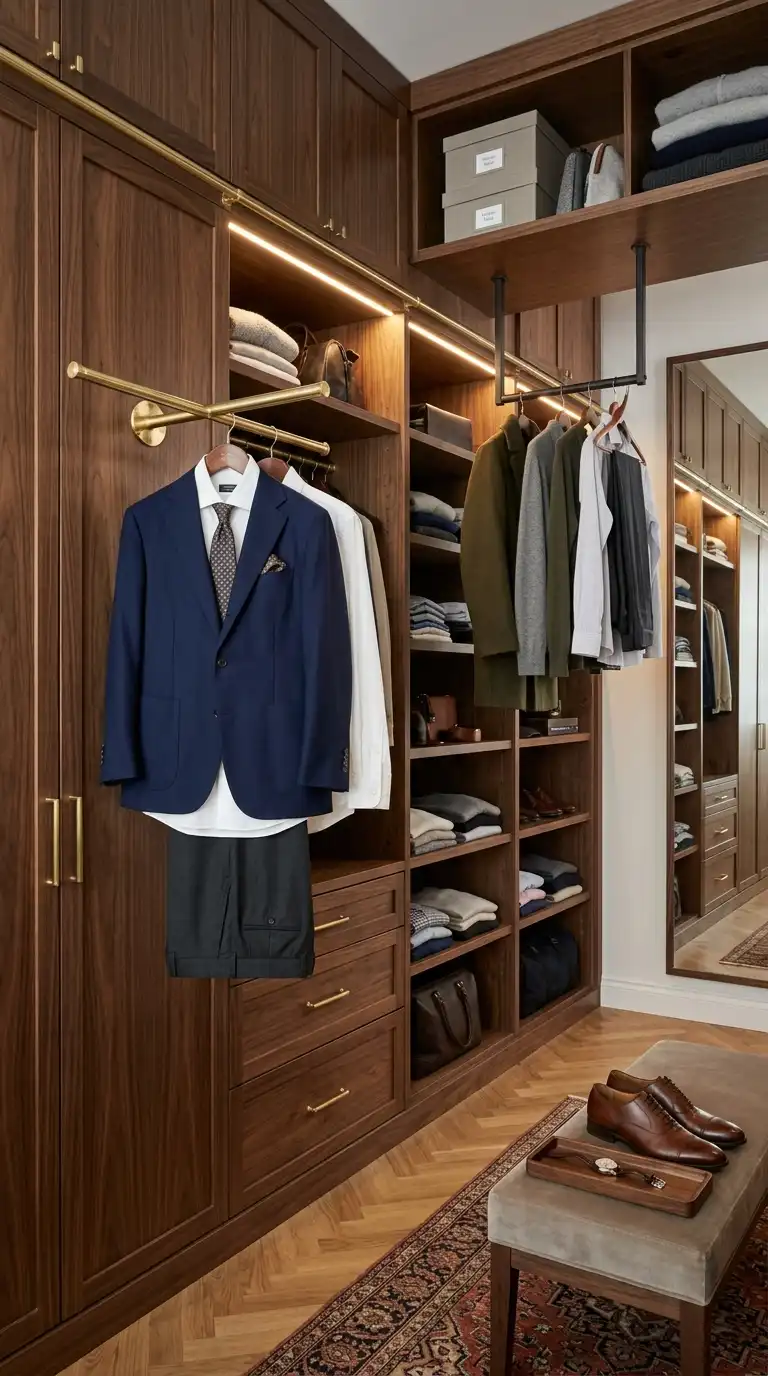
In a small walk-in, vertical space is your greatest asset. Install floor-to-ceiling cabinetry to maximize storage without increasing the footprint. Use high shelves for out-of-season items, luggage, or accessories, and keep everyday essentials at eye level. Light colors and mirrored panels help maintain a sense of openness, preventing the tall units from feeling overwhelming.
2. Sliding or Pocket Doors
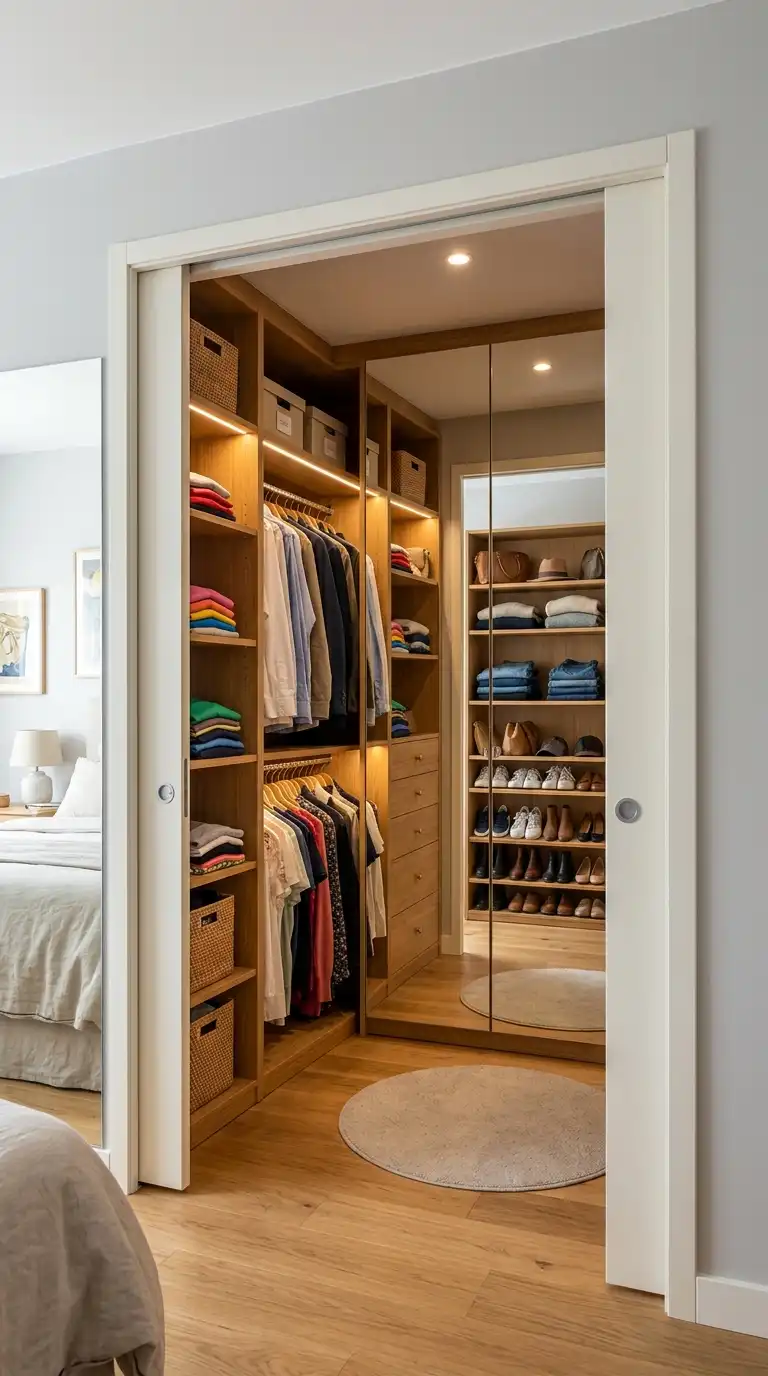
In a compact walk-in, swinging doors take up valuable floor space. Replace them with sliding doors or pocket doors that disappear into the wall. Sliding doors glide on a track, while pocket doors recess into the wall cavity, both providing full access without encroaching on the room. Choose mirrored doors to enhance the sense of space.
3. L-Shape Configuration
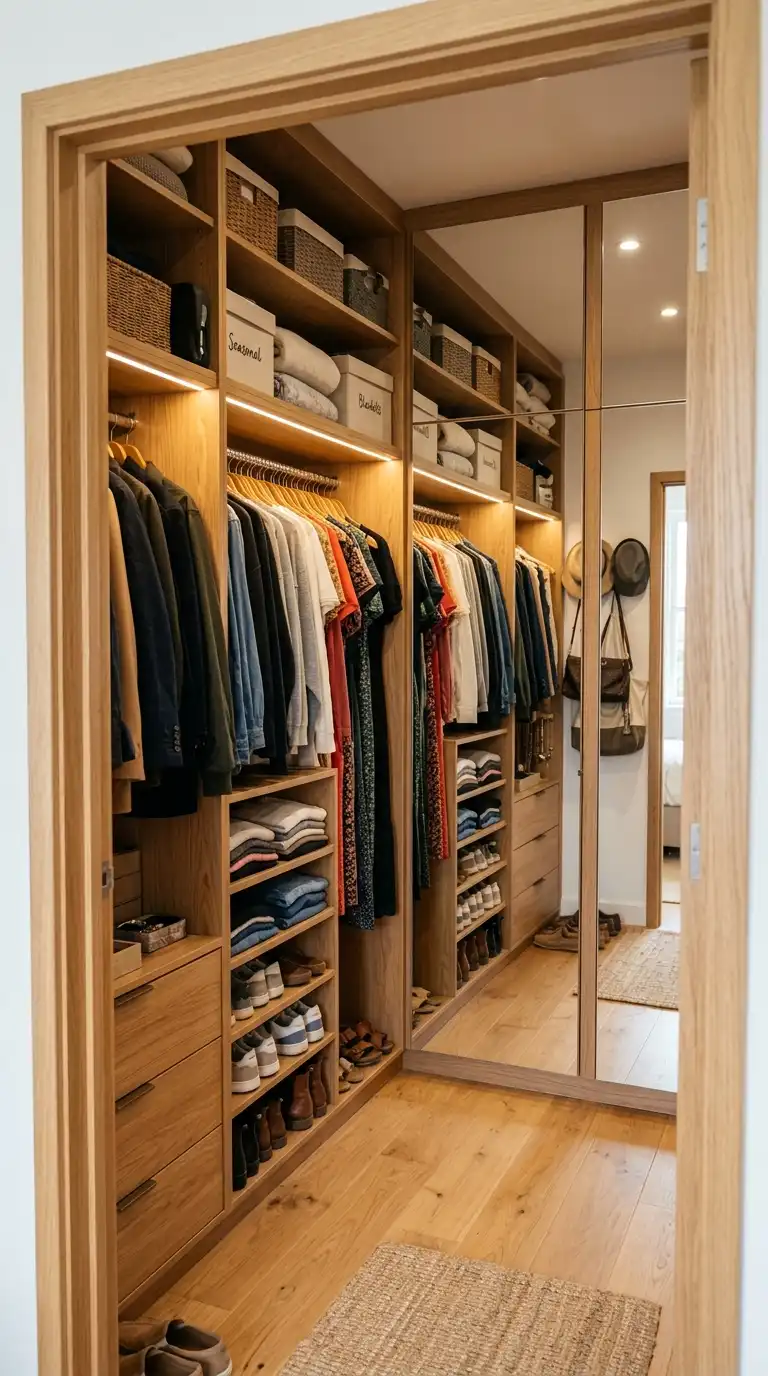
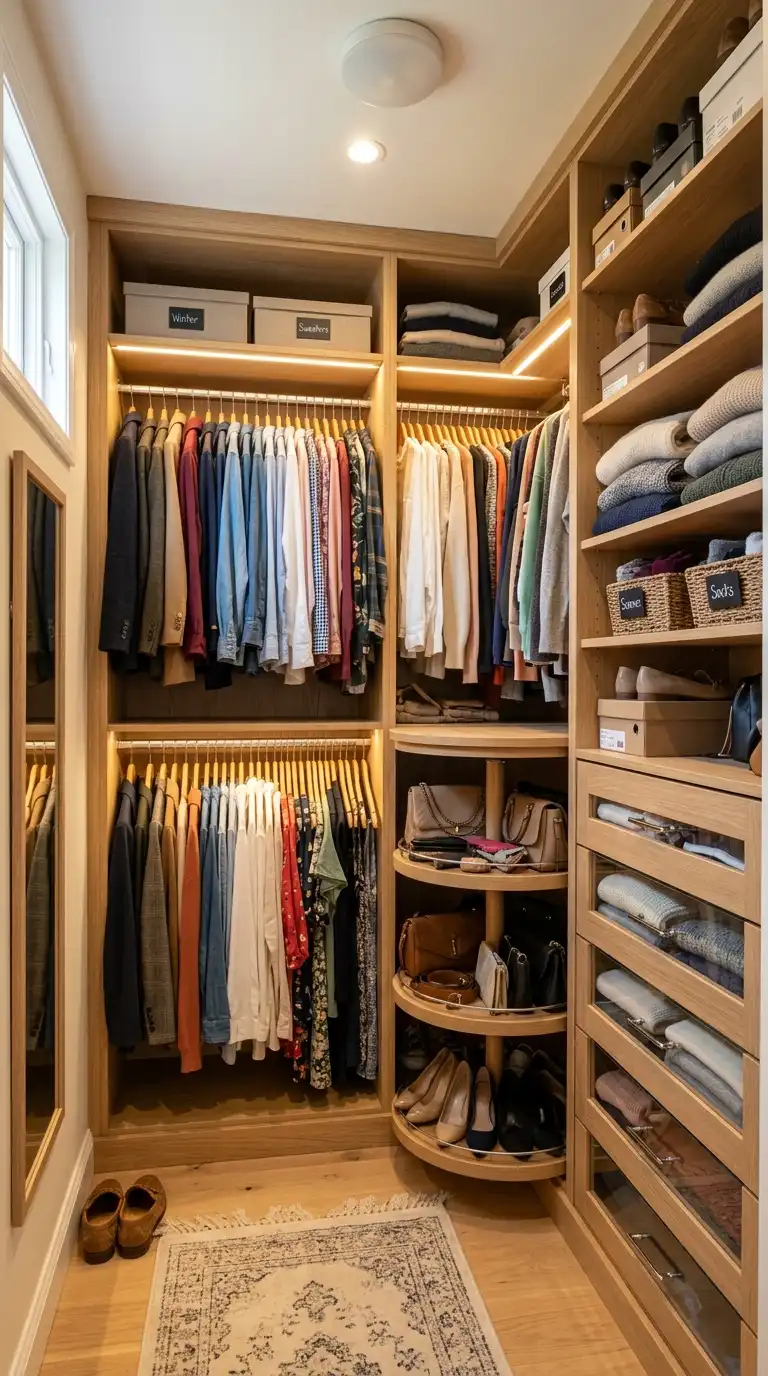
An L-shape configuration makes efficient use of corner space in a small walk-in. Use one wall for hanging clothes and the other for shelving and drawers. The corner can be fitted with a rotating carousel or angled shelves to maximize accessibility. This layout creates a natural division within the space without adding bulk.
4. Single-Sided Layout
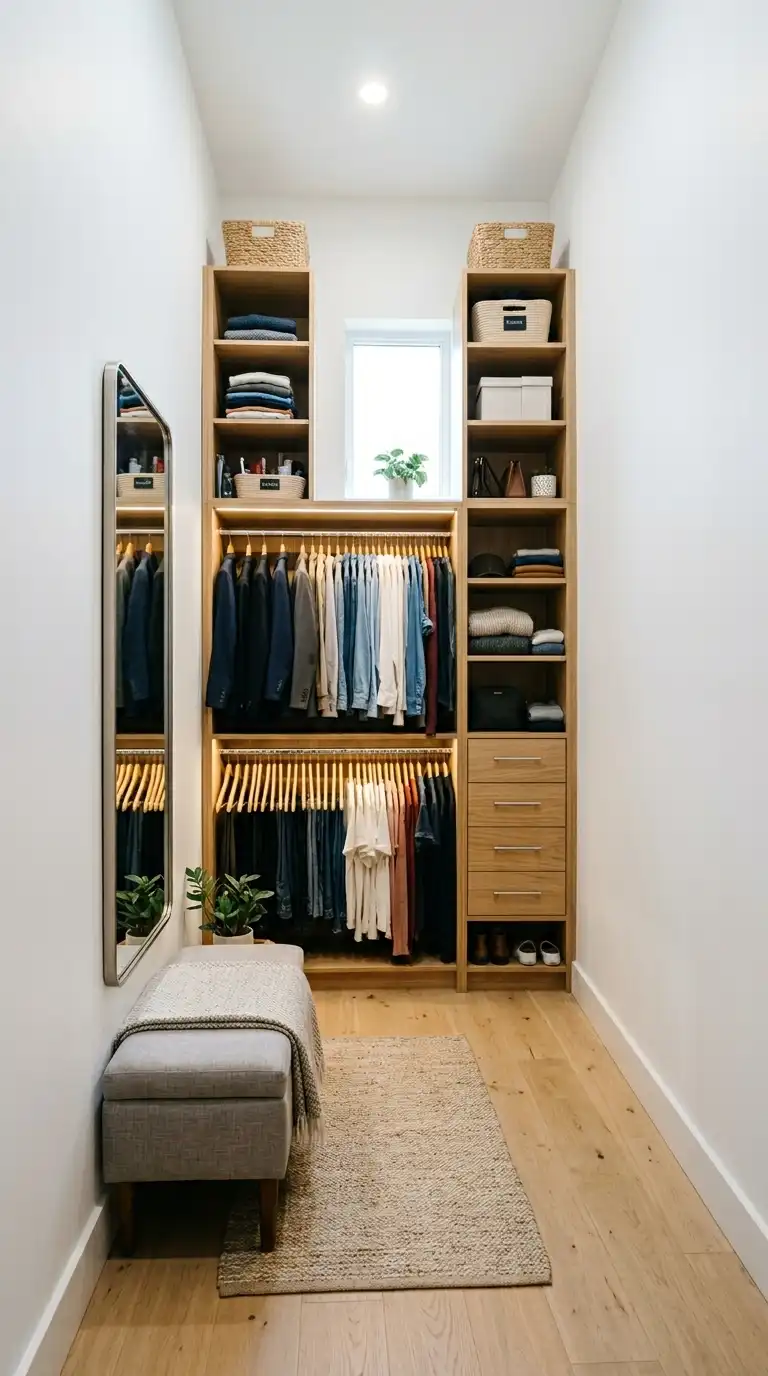
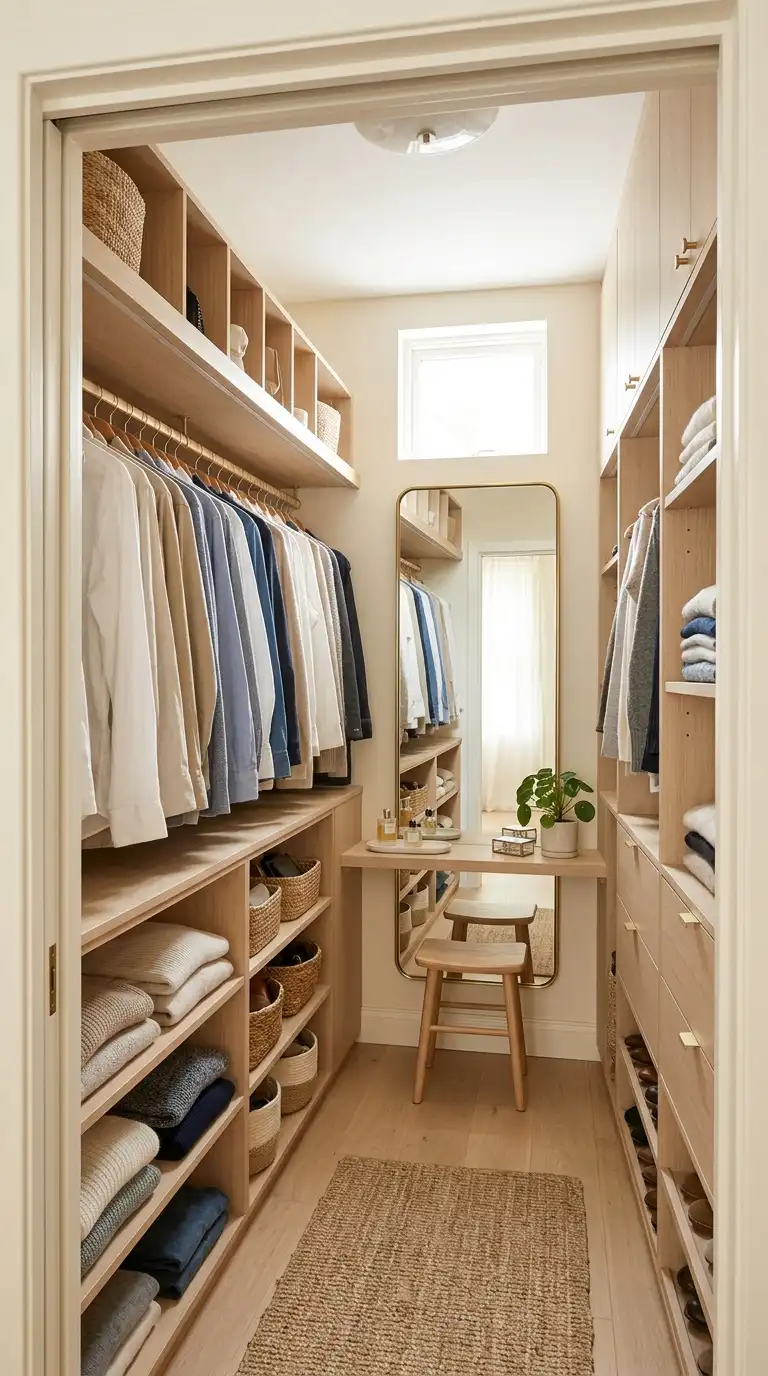
For narrow spaces, a single-sided layout with storage along one wall is often the most practical. Use floor-to-ceiling cabinetry with a mix of hanging, shelving, and drawers. A narrow bench or stool can be added without impeding movement. Keep finishes light and incorporate mirrors to create the illusion of depth.
5. Open Shelving System
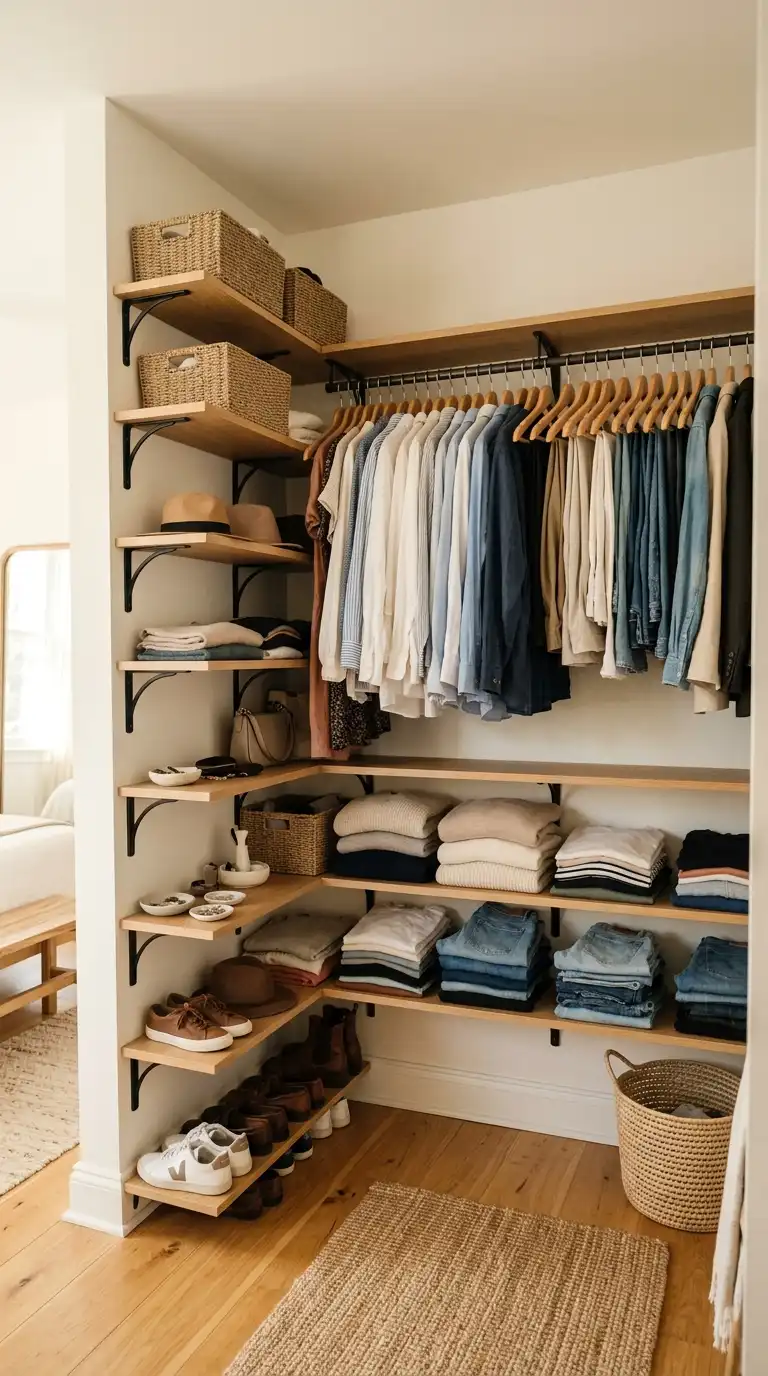
Remove cabinet doors to create an open shelving system that feels more spacious and accessible. Open shelving allows you to see everything at a glance and encourages organization. Use uniform hangers and matching storage boxes to maintain a polished look. This approach works especially well in small walk-ins where doors would feel bulky.
6. Mirrored Walls
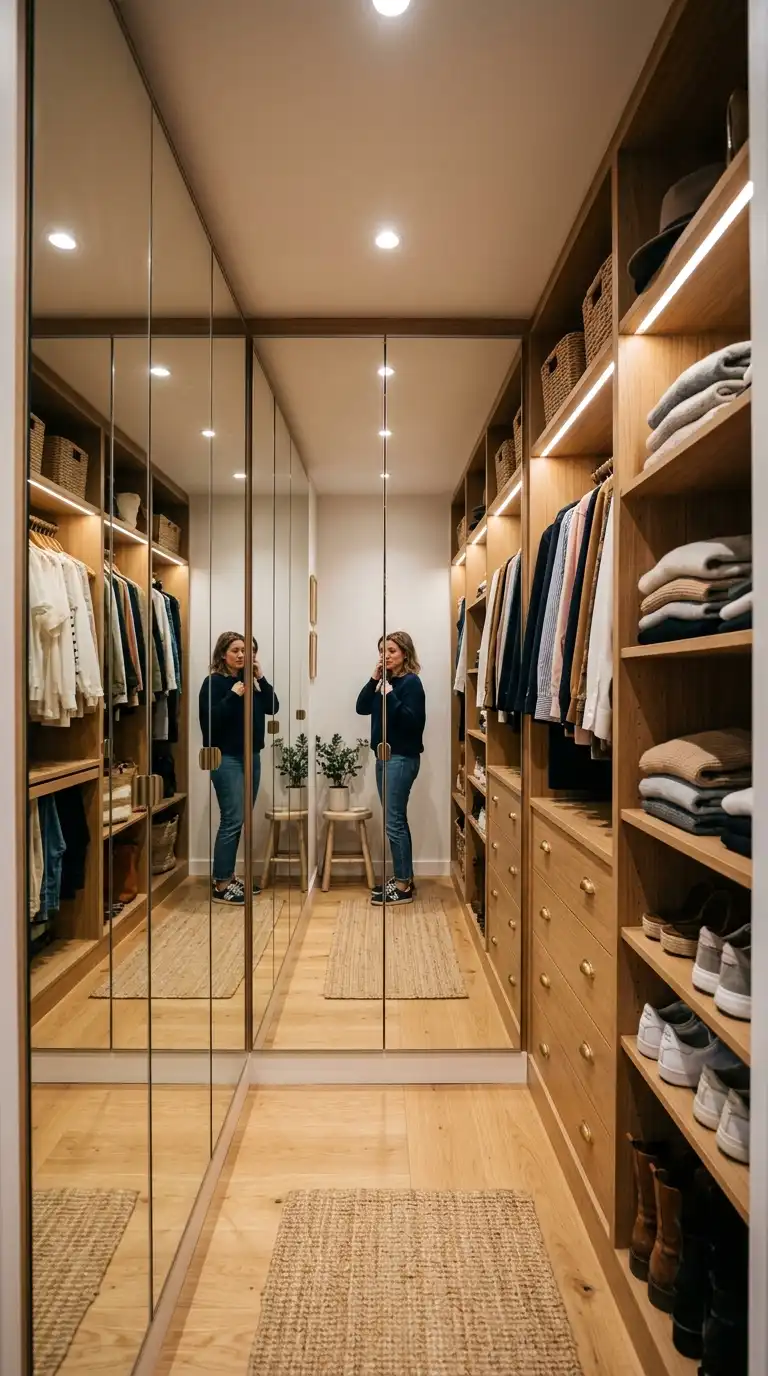
Cover one or more walls with mirrors to visually double the space in a small walk-in. Full-length mirrors are practical for outfit checks and reflect light, making the room feel larger and brighter. Use frameless mirrors for a seamless look, or incorporate mirrored panels into cabinetry doors.
7. Pull-Out and Fold-Down Features
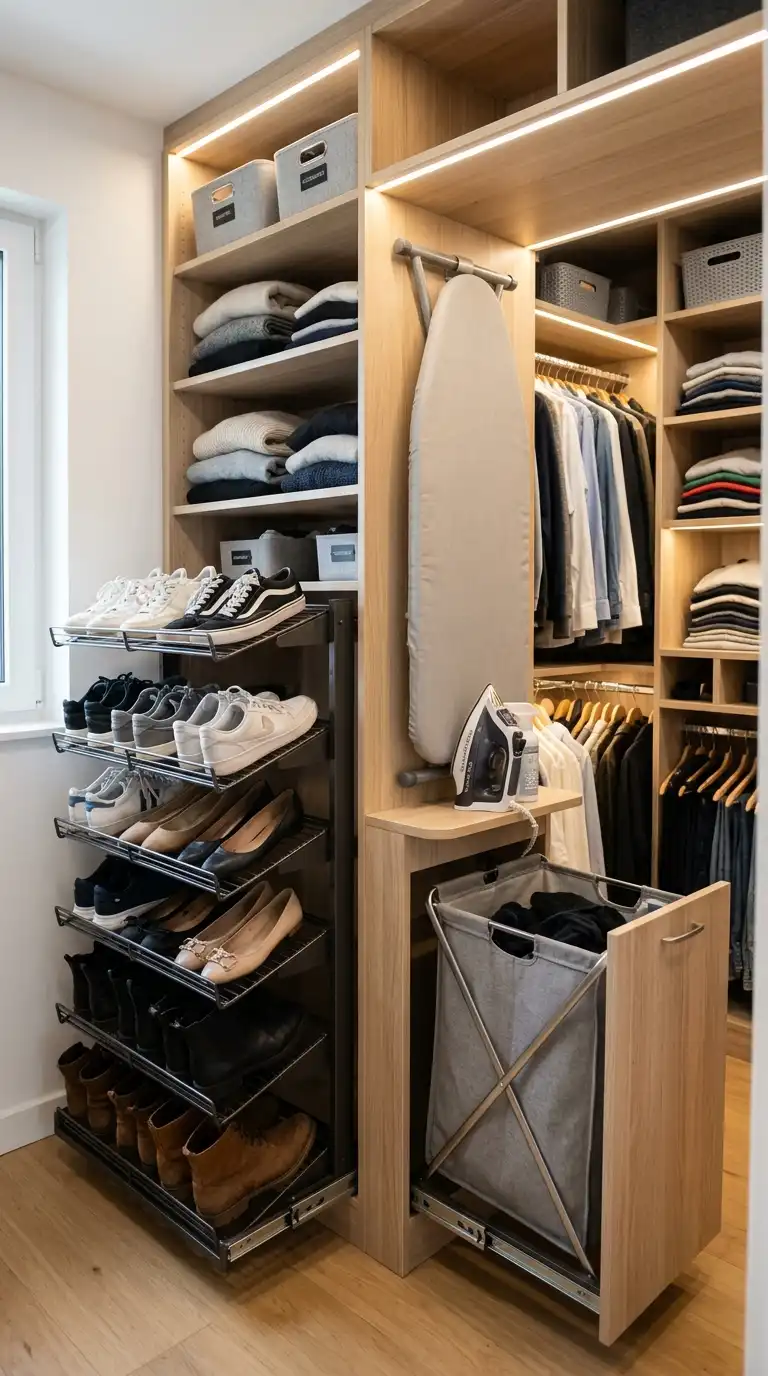
In a small space, every inch counts. Incorporate pull-out racks for shoes, fold-down ironing boards, and pull-out hampers to maximize functionality. These features allow you to store more in a compact footprint while keeping the wardrobe organized and accessible.
8. Glass-Front Cabinetry
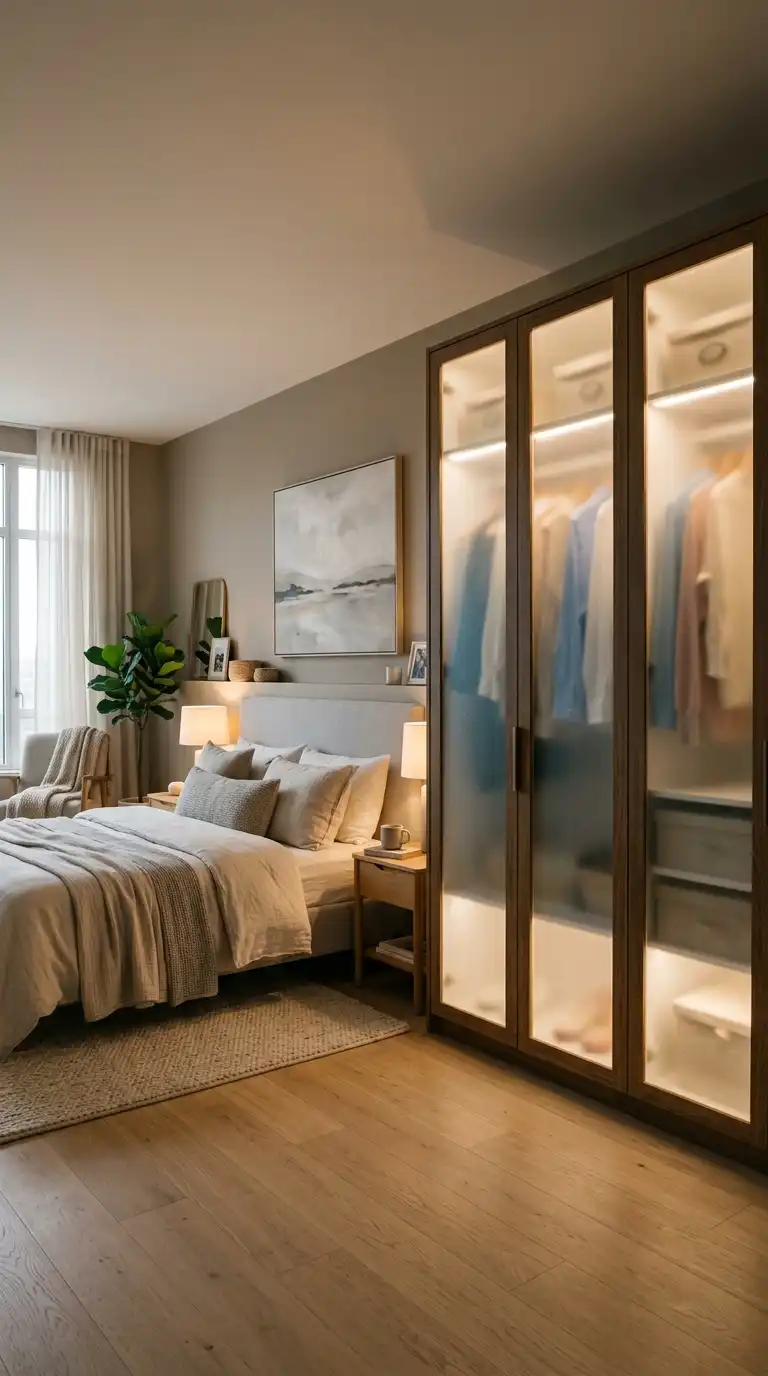
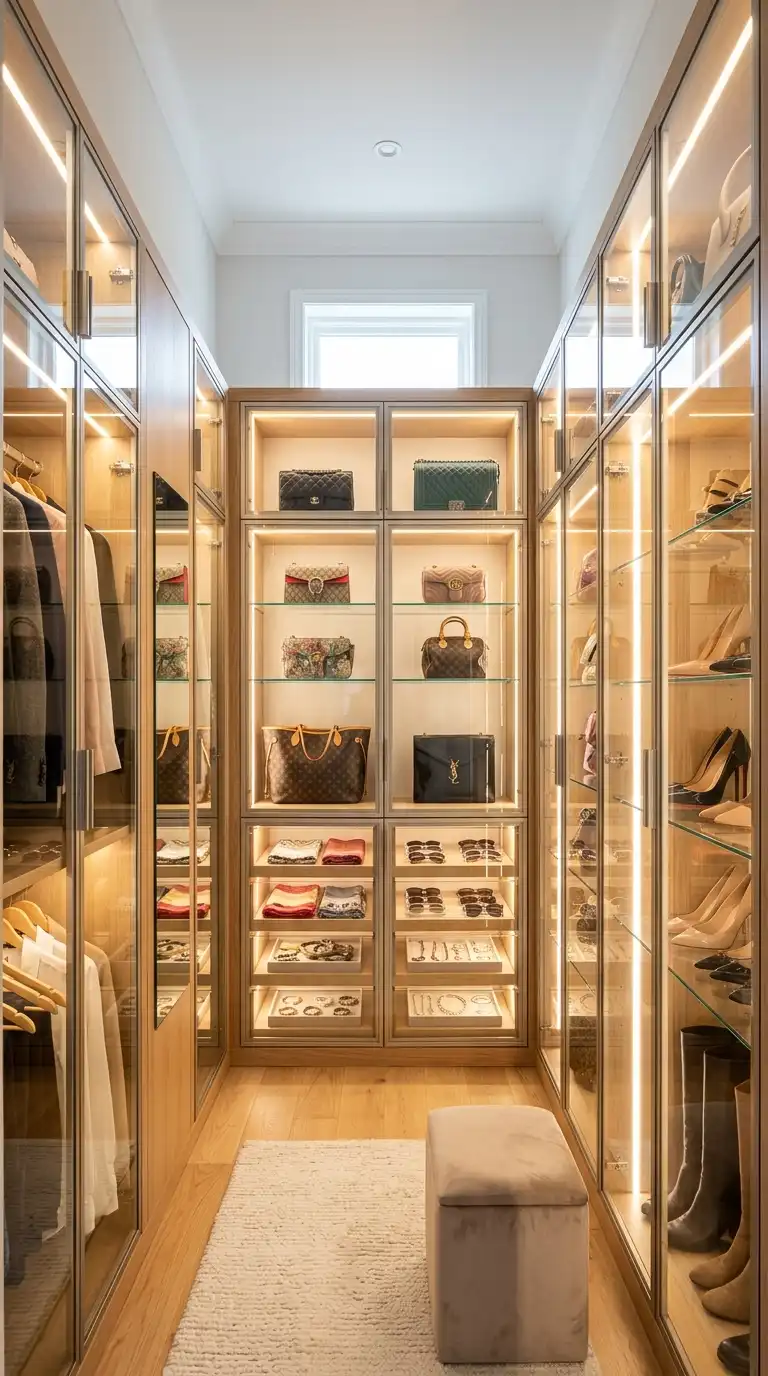
Glass-front cabinets add a sense of openness to a small walk-in wardrobe. The transparency prevents the cabinetry from feeling too heavy and allows light to pass through. Use frosted glass for privacy or clear glass with internal lighting for a boutique-inspired look. Glass-front sections are ideal for displaying accessories or folded items.
9. Corner Carousel
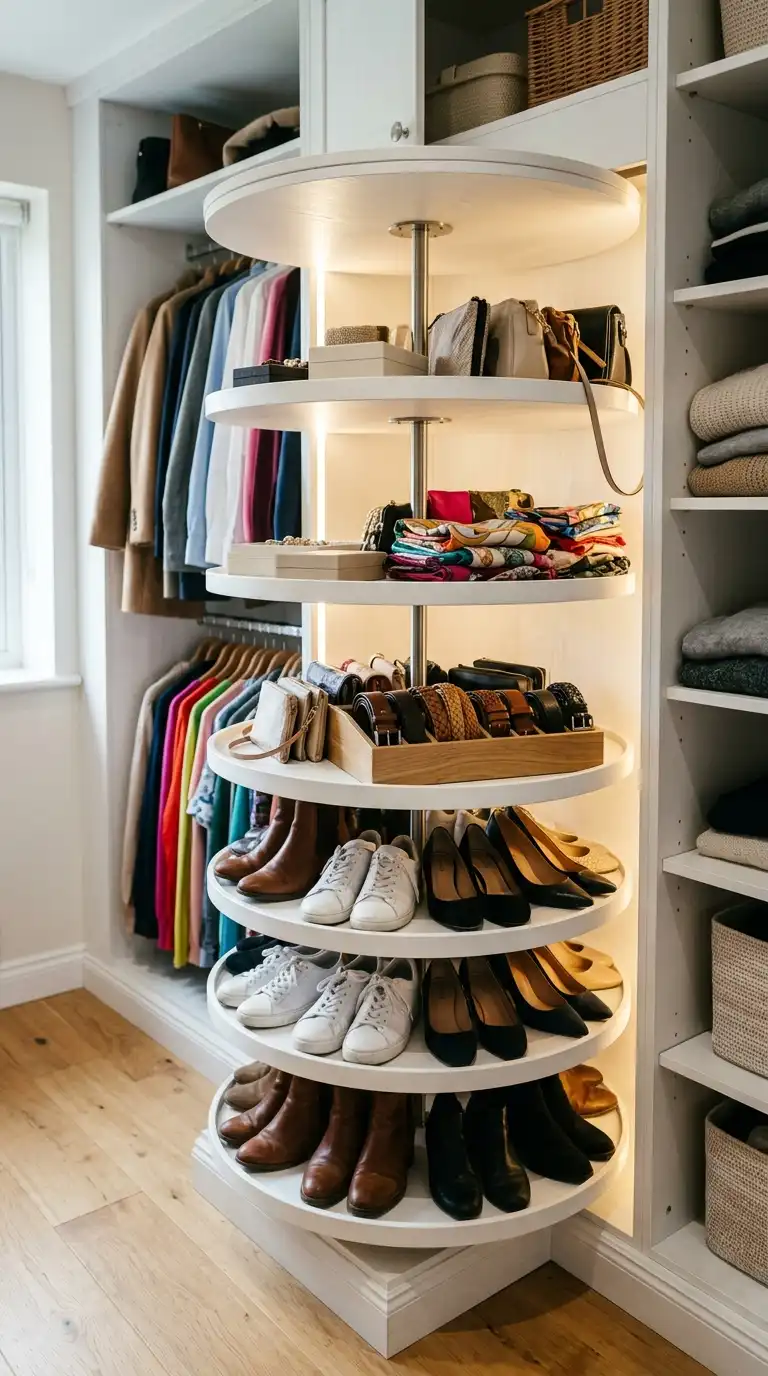
Maximize a tight corner with a rotating carousel or lazy Susan. These circular shelves make deep corner storage accessible, bringing items stored at the back to the front with a gentle turn. Carousels are ideal for shoes, folded clothing, or accessories. Install them in corner units to eliminate wasted space.
10. Slim Hanging Rods
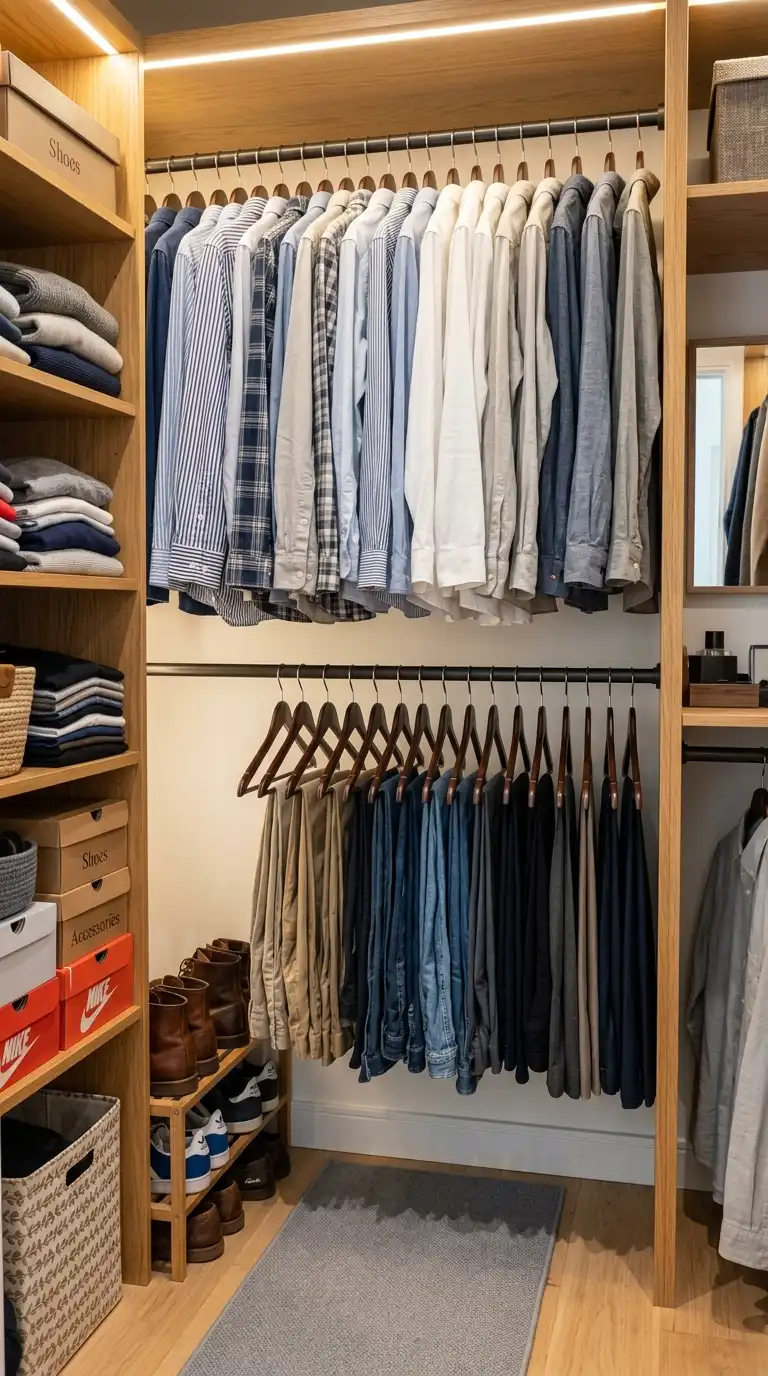
Use slim, space-saving hanging rods to maximize the number of garments you can store. Double hanging rods allow you to use vertical space efficiently—hang shirts and blouses on the top rod, and trousers or skirts below. Slim rods also help maintain a clean, organized appearance.
11. Light Color Palette
Light colors make small spaces feel larger. Choose white, cream, light gray, or pale wood finishes for cabinetry and walls. High-gloss finishes add reflectivity, while matte finishes offer a soft, understated look. Keep the color palette consistent to create a seamless, expansive feel.
12. Integrated LED Lighting
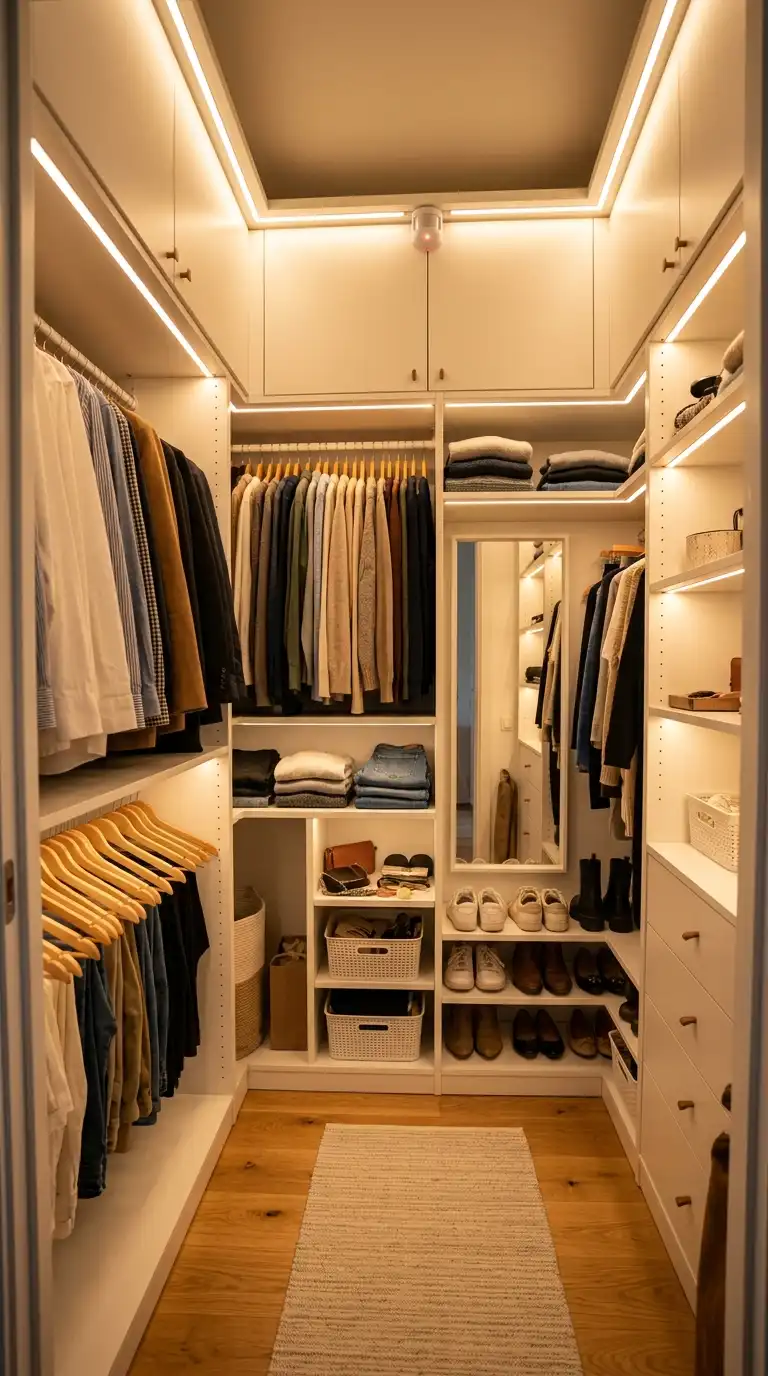
Good lighting is essential in a small walk-in wardrobe. Install LED strip lights along the top of cabinets, inside shelves, and under hanging rods to illuminate every corner. Motion sensors activate lights when you enter, adding convenience and a touch of luxury. Proper lighting also makes the space feel more open.
13. Multifunctional Furniture
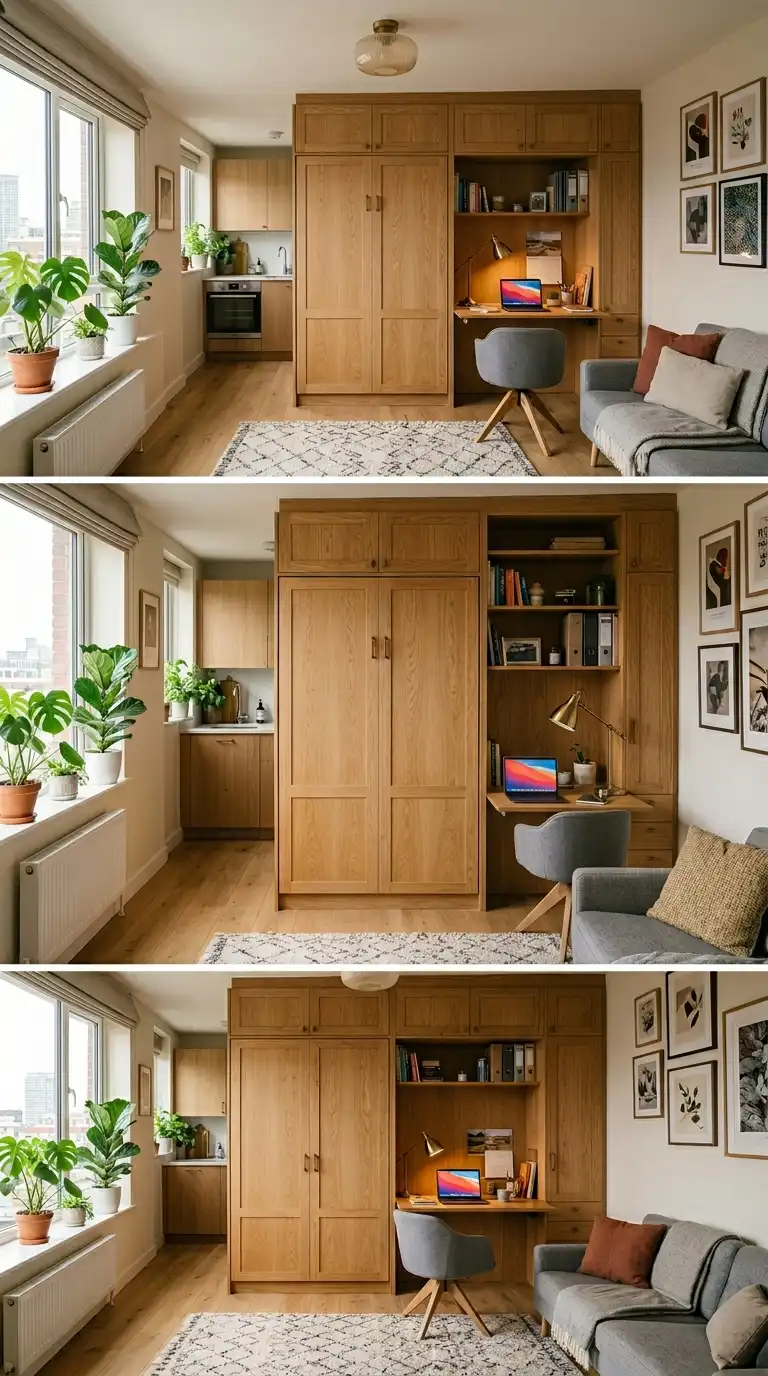
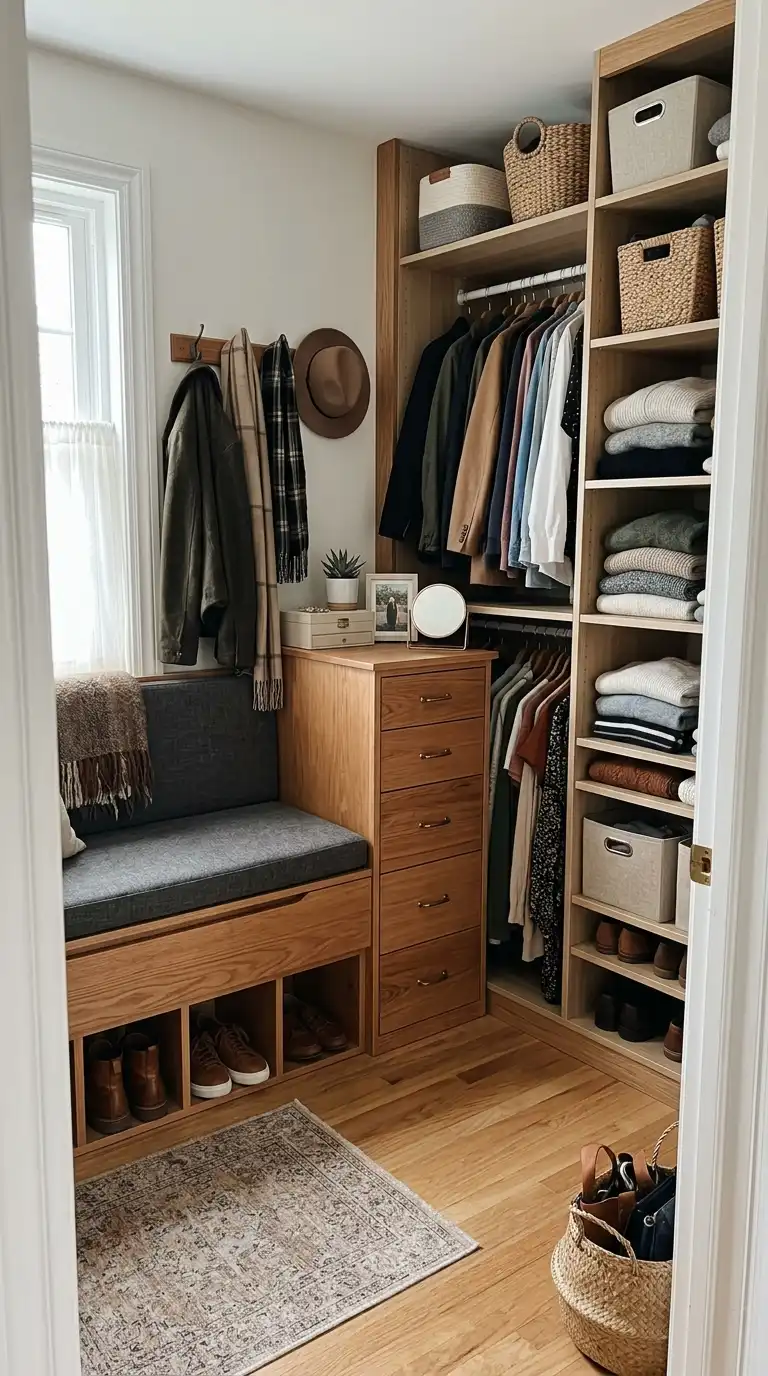
Choose furniture that serves multiple purposes in a small walk-in. A bench with hidden storage provides seating and a place for shoes. A narrow dresser can serve as both a surface for folding and storage for accessories. Look for pieces that maximize function without taking up extra space.
Frequently Asked Questions
- What is the minimum size for a walk-in wardrobe?
A functional walk-in wardrobe typically requires at least 6 to 8 square metres of space to accommodate cabinetry and comfortable movement. However, smaller spaces can still work with clever design, such as floor-to-ceiling storage and sliding doors. - How do I make a small walk-in feel larger?
Use light colors, mirrored surfaces, and glass-front cabinetry. Install floor-to-ceiling storage to draw the eye upward. Ensure adequate lighting, and keep the space organized and uncluttered. Open shelving can also create a sense of openness. - What is the best layout for a narrow walk-in?
A single-sided layout along one wall is often most practical for narrow spaces. Use floor-to-ceiling storage to maximize vertical space. Add a full-length mirror on the opposite wall to create depth. - How do I organize a small walk-in wardrobe?
Categorize clothing by type and frequency of use. Place everyday essentials at eye level. Use double hanging rods to maximize vertical space. Store out-of-season items on high shelves. Use pull-out racks and drawers for shoes and accessories. - Can I have a walk-in wardrobe in a small bedroom?
Yes. A small walk-in can be created by partitioning a corner of a bedroom or converting an adjacent space. Use sliding or pocket doors to save floor space. Prioritize efficient storage solutions and light finishes.