13 Wardrobe Dimensions
Proper wardrobe dimensions are essential for creating a functional, comfortable, and efficient storage space. Whether you are designing a custom built-in, selecting a freestanding unit, or planning a walk-in closet, understanding standard measurements ensures that your wardrobe meets your needs and fits your space perfectly. Here are thirteen key wardrobe dimensions to consider for your next project.
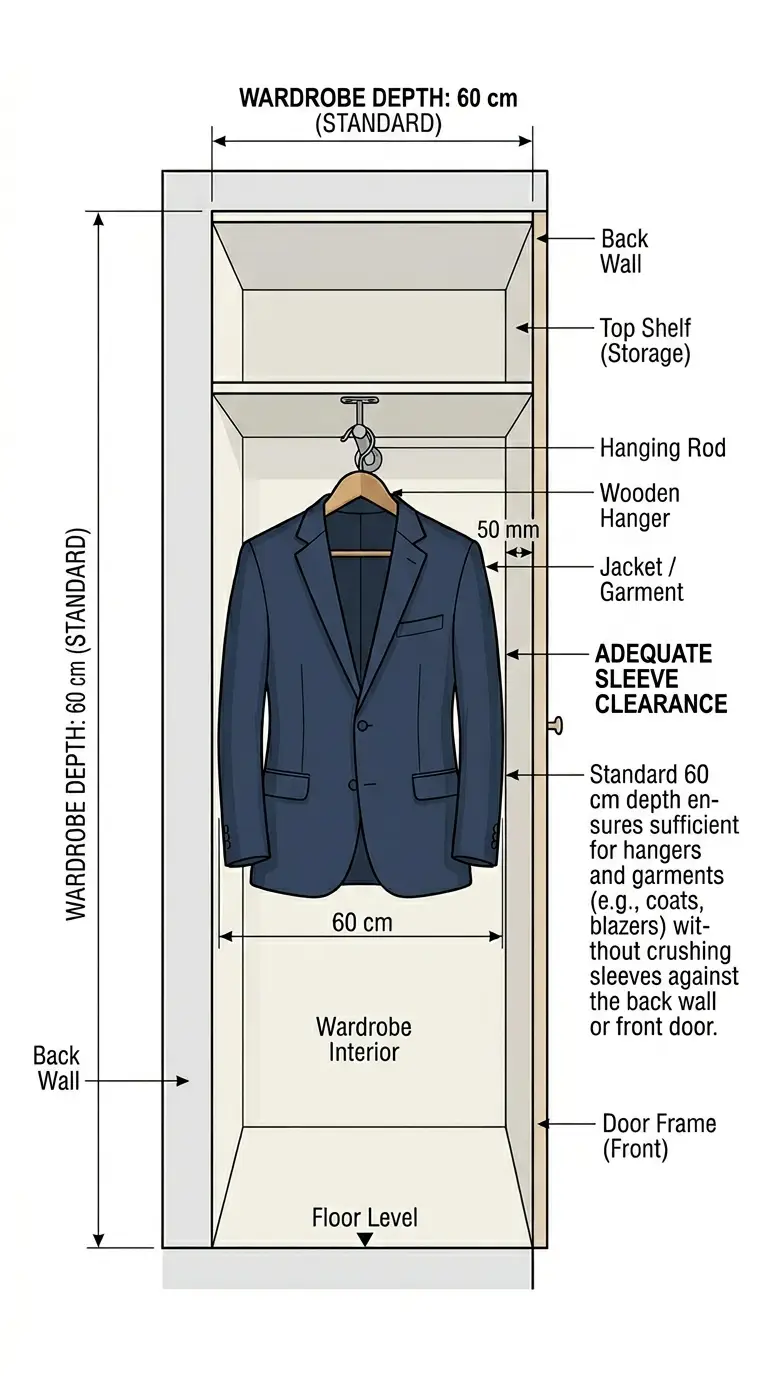
1. Standard Depth
The standard depth for a wardrobe is 60 centimeters (24 inches). This depth accommodates hanging clothes on standard hangers without crushing sleeves or protruding from the door. For shallow spaces, a depth of 50 centimeters (20 inches) can work with slim hangers and careful organization. For walk-in closets, depths of 60–70 centimeters are common to allow for hanging rods and shelving on both sides.
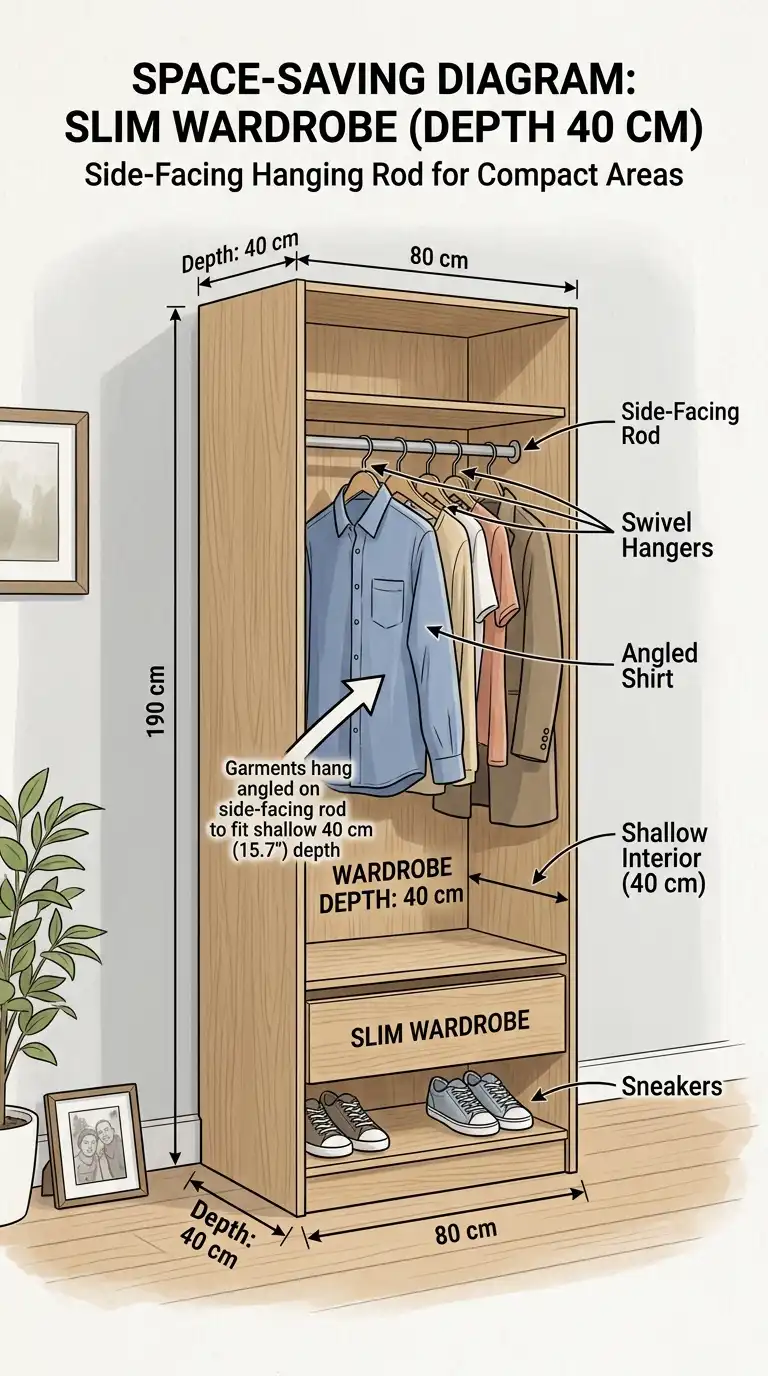
2. Minimum Depth for Slim Wardrobes
For tight spaces, slim-depth wardrobes of 40–50 centimeters (16–20 inches) can be functional for folded items, accessories, and some hanging clothes. Use side-facing hanging rods or slim hangers to maximize the limited depth. Slim wardrobes are ideal for hallways, narrow bedrooms, and compact spaces where a full-depth unit would be impractical.
3. Standard Height
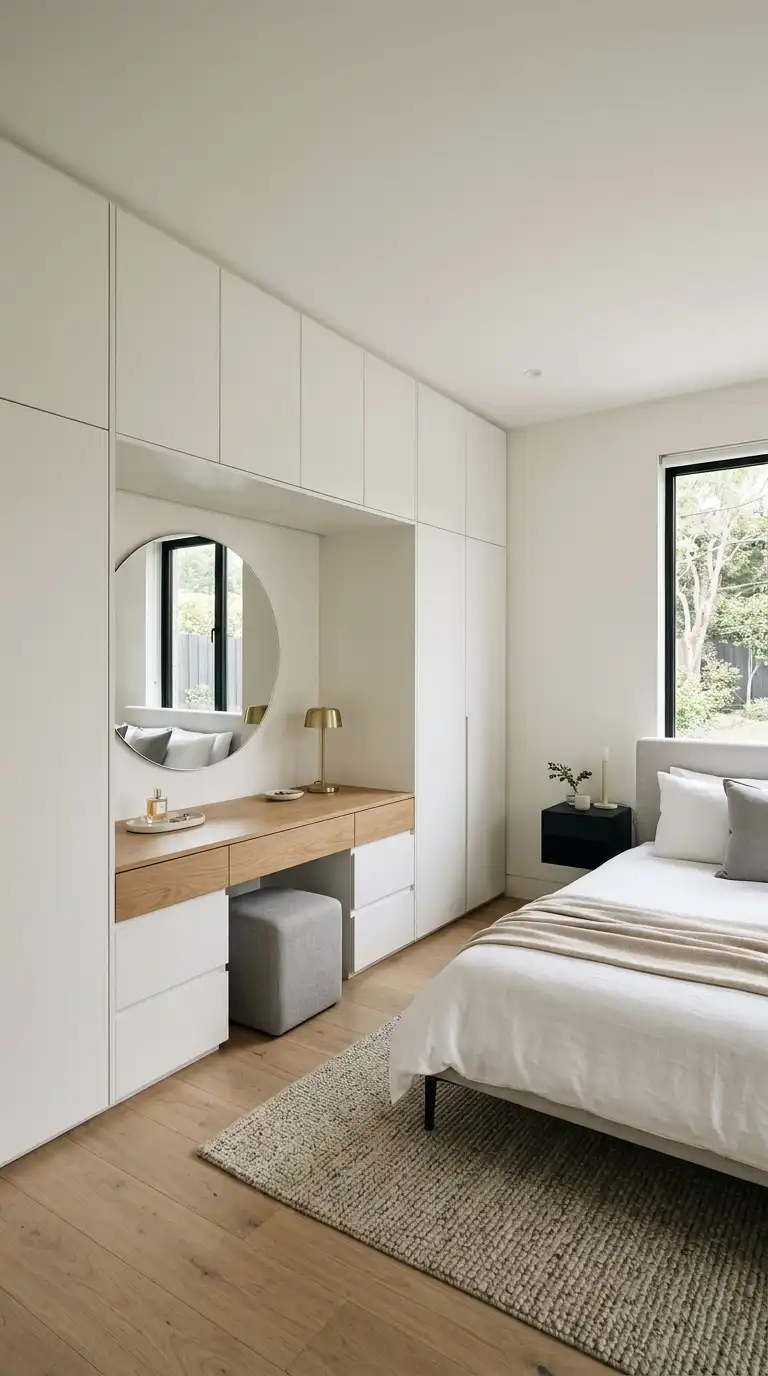
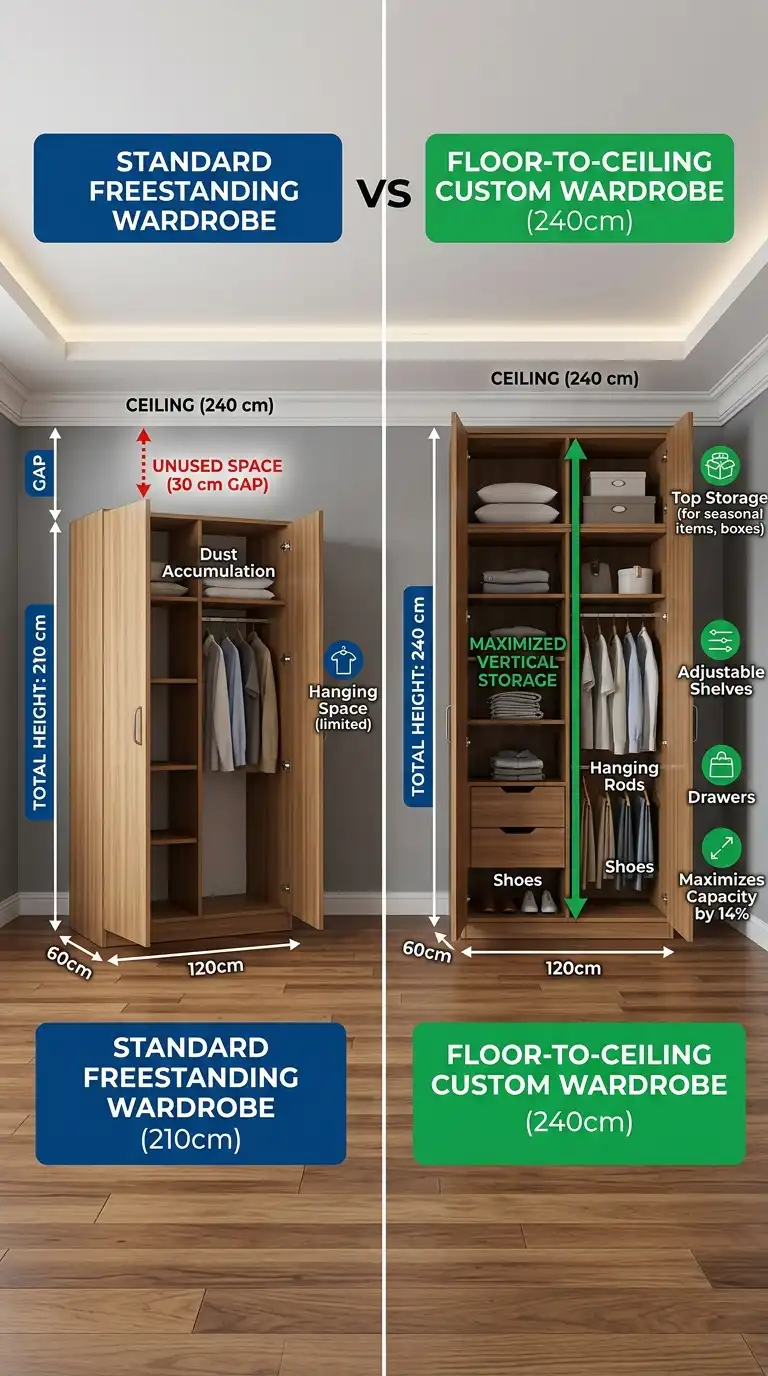
Wardrobe heights typically range from 210 to 240 centimeters (7 to 8 feet). Standard freestanding wardrobes are often 210 centimeters tall, leaving space above for molding or decor. Custom built-ins can extend to the ceiling (typically 240–270 centimeters) to maximize vertical storage. Floor-to-ceiling designs eliminate the gap above, creating a seamless, built-in appearance.
4. Hanging Rod Height for Shirts and Blouses
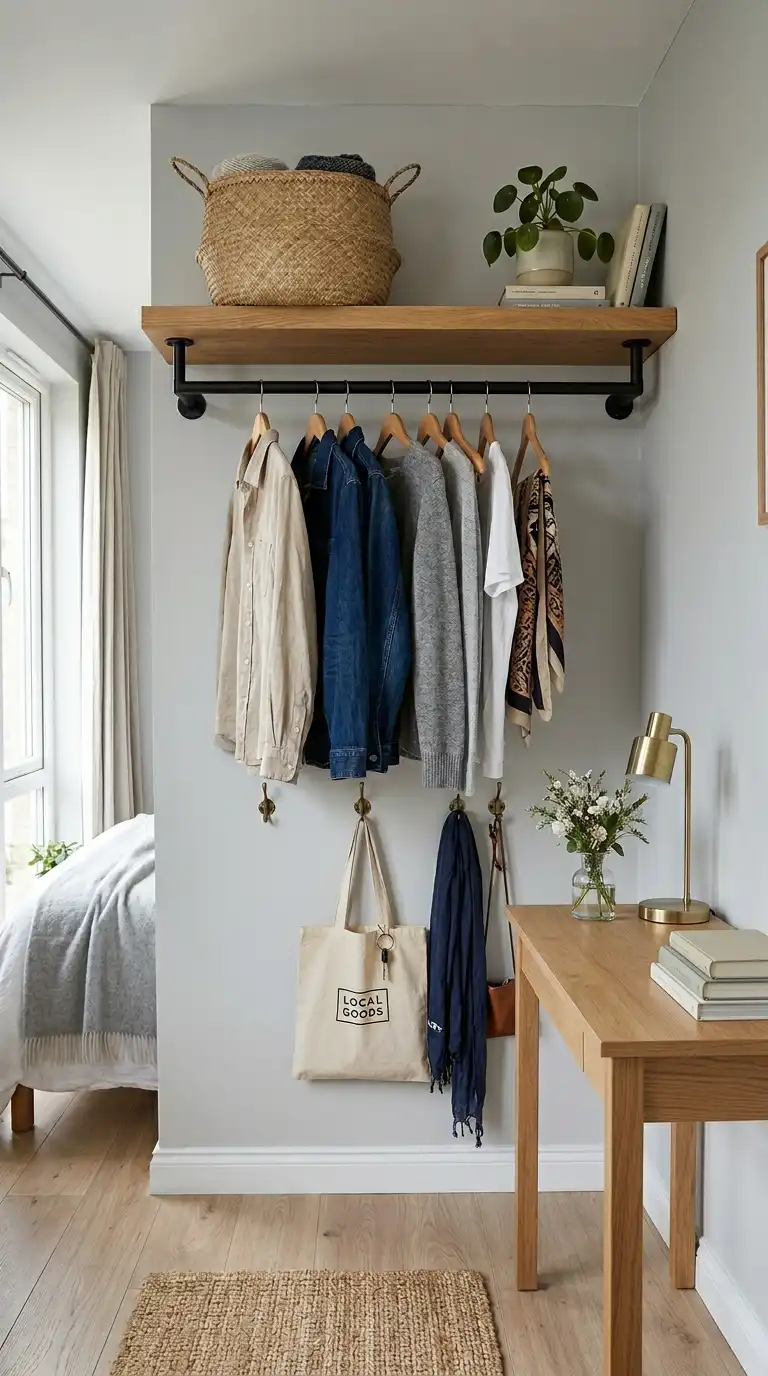
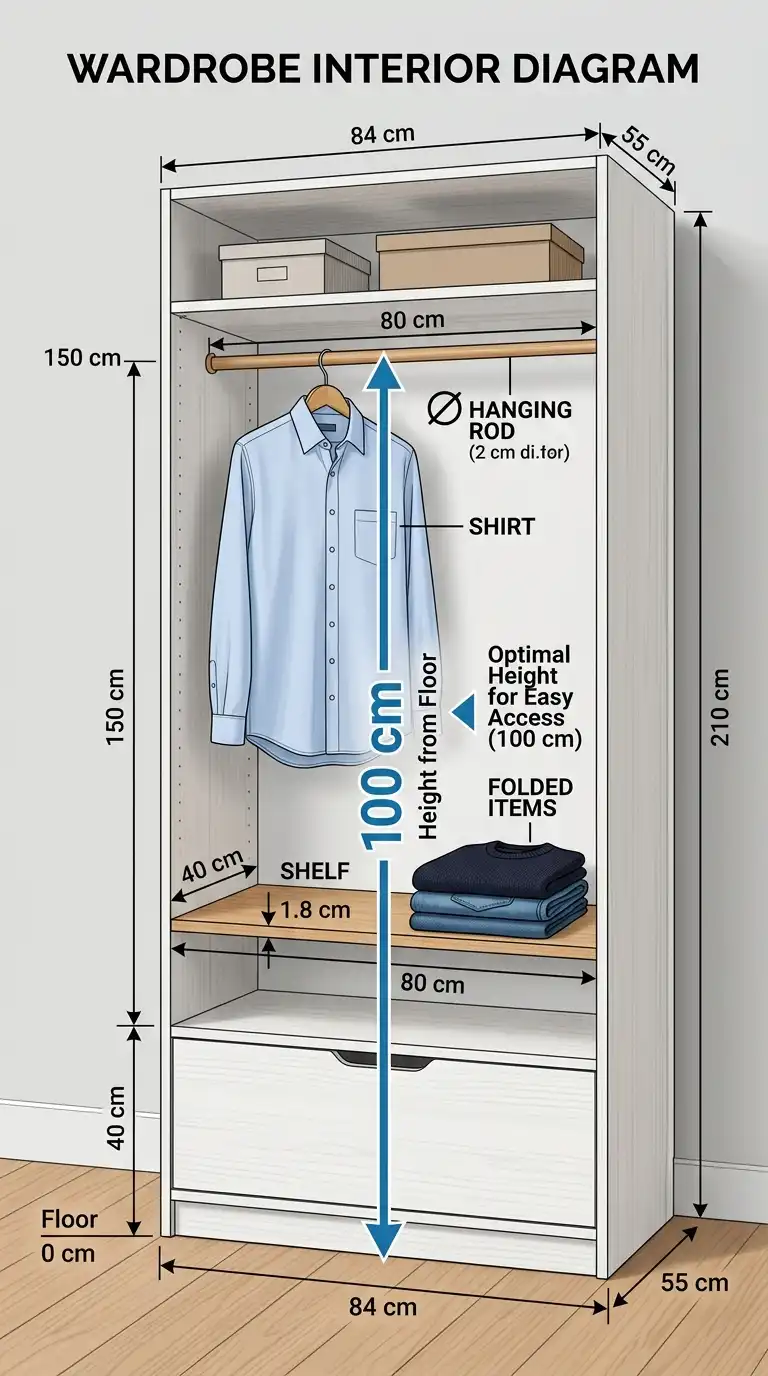
The ideal height for a hanging rod for shirts, blouses, and jackets is 90–110 centimeters (35–43 inches) from the floor. This height allows the garments to hang freely without touching the shelf below or dragging on the floor. Double hanging rods can be installed at 90 centimeters and 180 centimeters to maximize vertical space.
5. Hanging Rod Height for Dresses and Coats
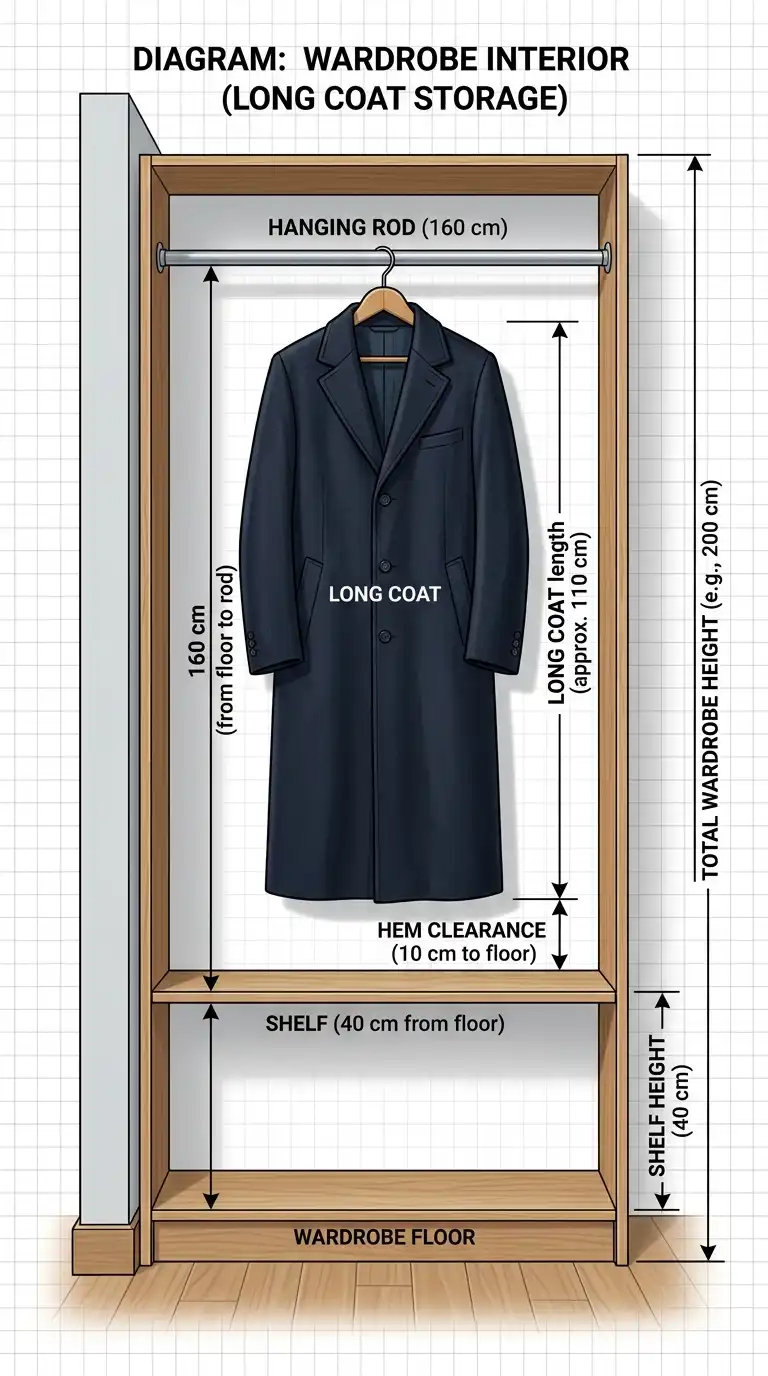
For longer garments like dresses, coats, and trousers, a hanging rod height of 150–170 centimeters (59–67 inches) is recommended. This allows the hem of a floor-length dress or coat to clear the floor by a few centimeters. Measure your longest garments to determine the exact height needed.
6. Double Hanging Configuration
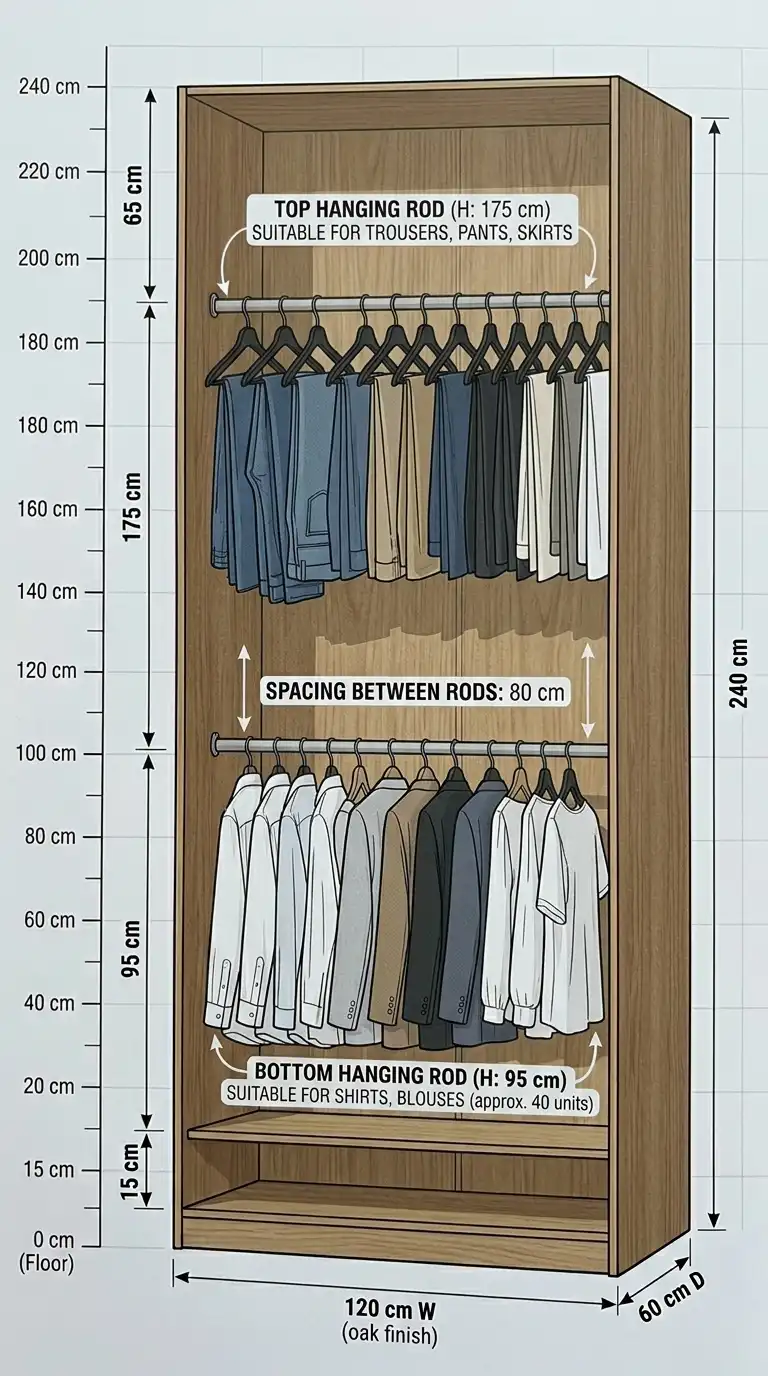
Double hanging rods are an efficient way to maximize vertical space. Install the top rod at 90–100 centimeters and the bottom rod at 170–180 centimeters, leaving clearance for garments on both levels. This configuration is ideal for shirts, blouses, trousers, and skirts, effectively doubling hanging capacity.
7. Shelf Depth
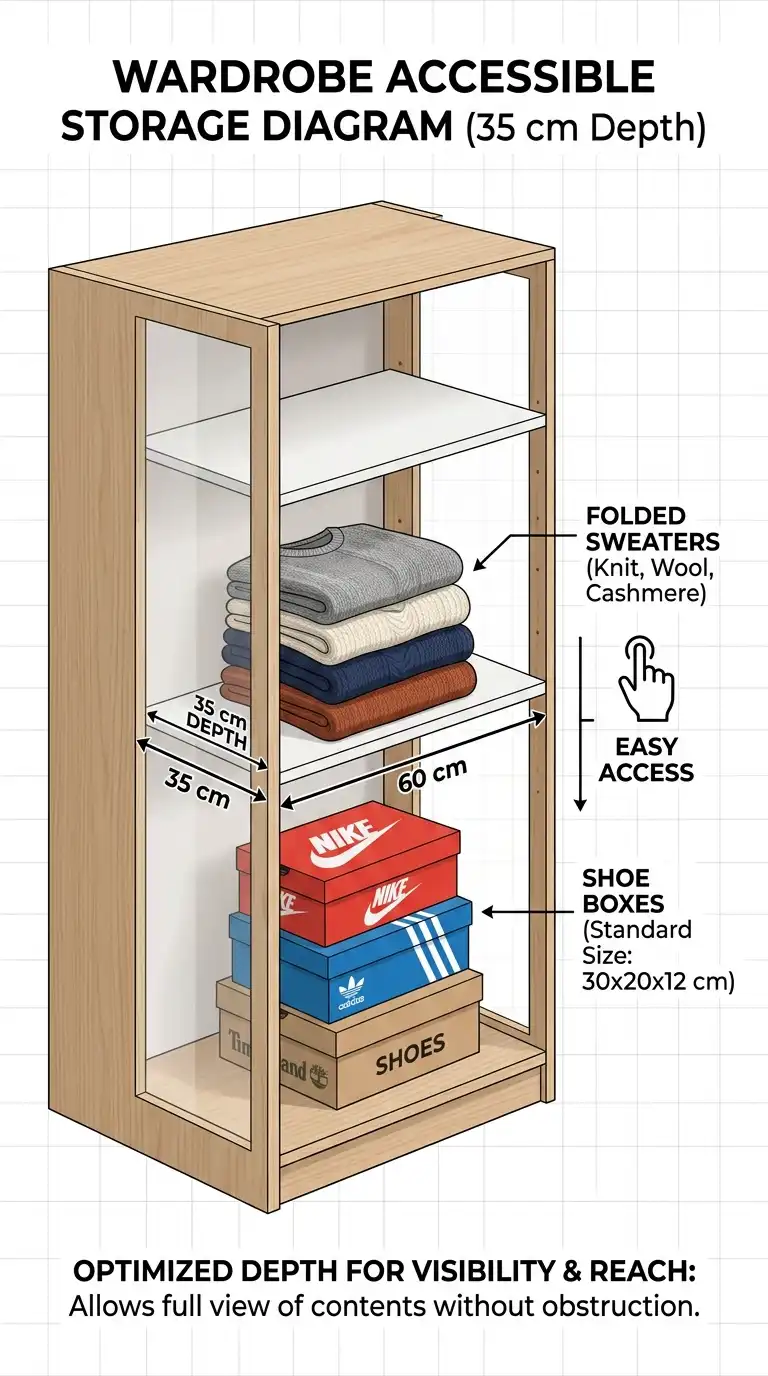
Shelves are typically 30–40 centimeters (12–16 inches) deep. This depth accommodates folded clothing, shoe boxes, and accessories without excessive overhang. For deep wardrobes (60 centimeters), consider pull-out shelves or baskets to make use of the full depth while maintaining accessibility.
8. Shelf Height for Folded Items
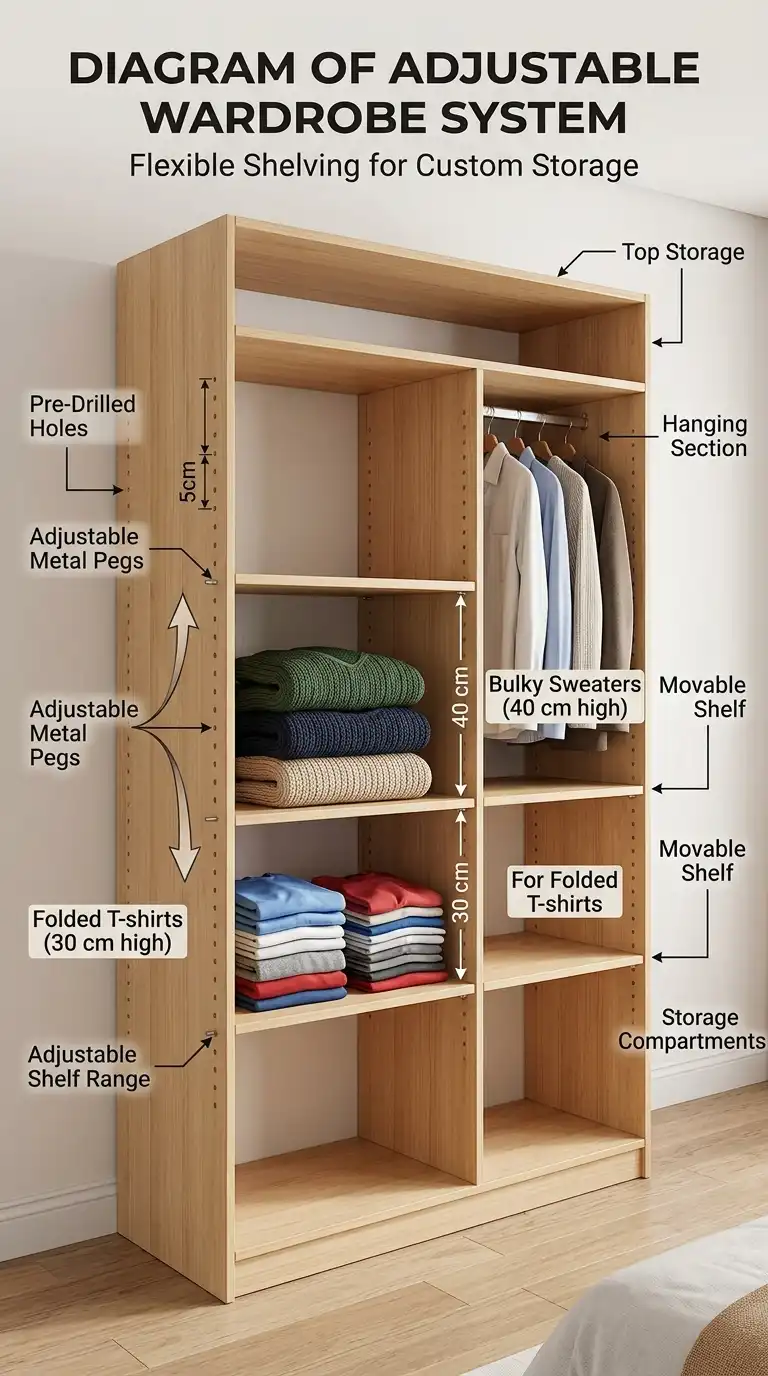
Shelves for folded items should have a height of 30–35 centimeters (12–14 inches) to accommodate stacks of sweaters, jeans, and t-shirts. For bulkier items like towels or sweaters, consider adjustable shelving that can be increased to 40–45 centimeters. Adjustable shelves offer flexibility as storage needs change.
9. Drawer Height
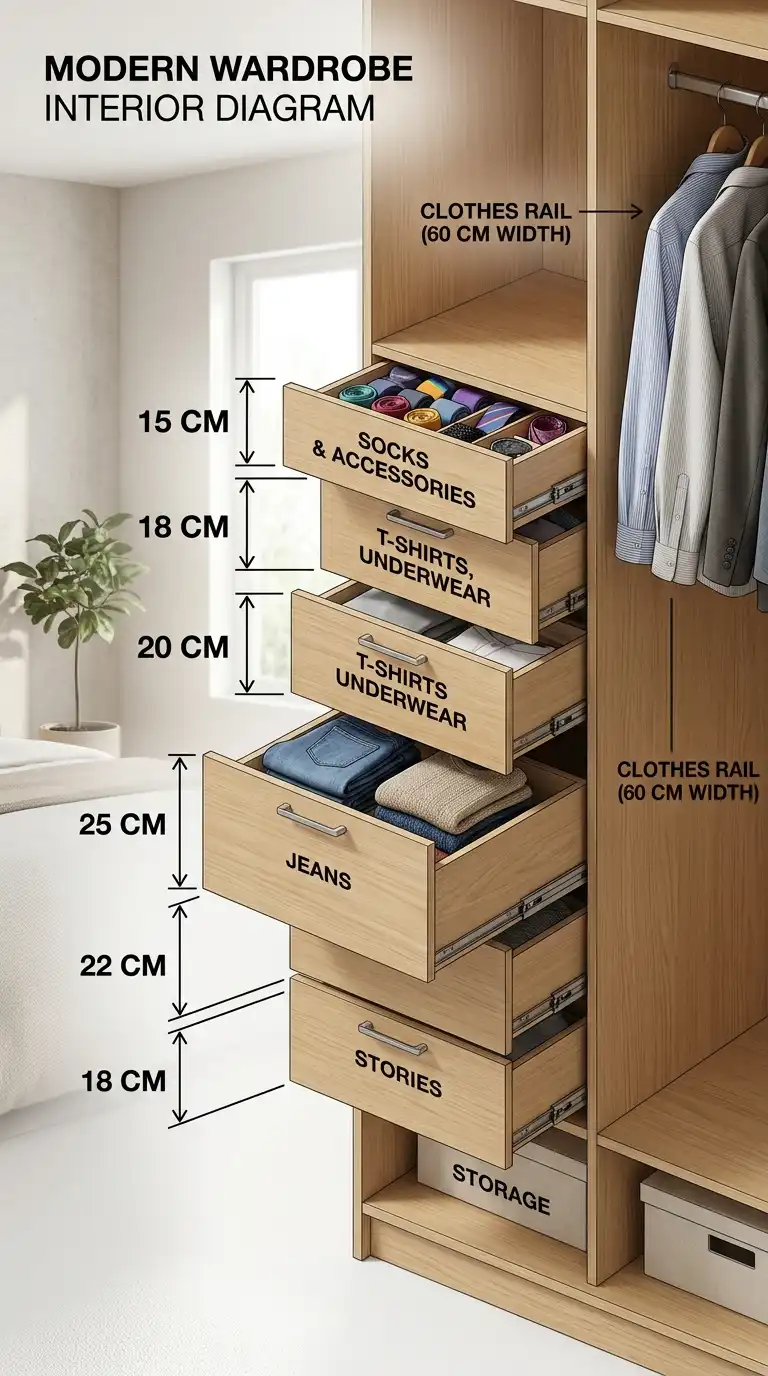
Drawers for clothing typically range from 15 to 30 centimeters (6–12 inches) in height. Shallow drawers (15–20 centimeters) are ideal for undergarments, socks, and accessories. Deeper drawers (25–30 centimeters) accommodate sweaters, jeans, and bulkier items. Use shallow drawers at eye level for frequently used items, and deeper drawers lower for heavier items.
10. Shoe Shelf Dimensions
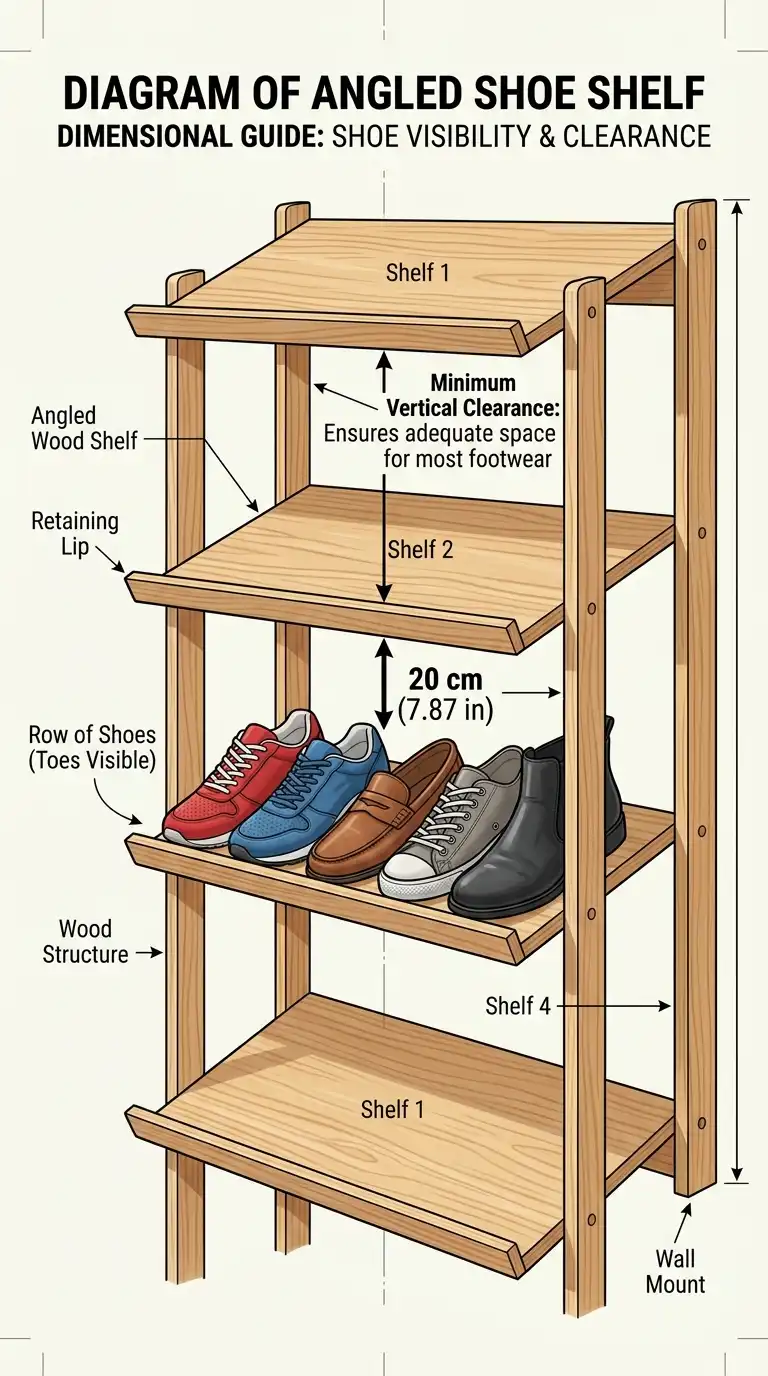
Shoe shelves are typically 15–20 centimeters (6–8 inches) high to accommodate most footwear. Angled shelves allow shoes to be displayed with the toe visible, while flat shelves are suitable for stacked boxes or casual shoes. Adjustable shoe racks can accommodate varying heights for boots or high heels.
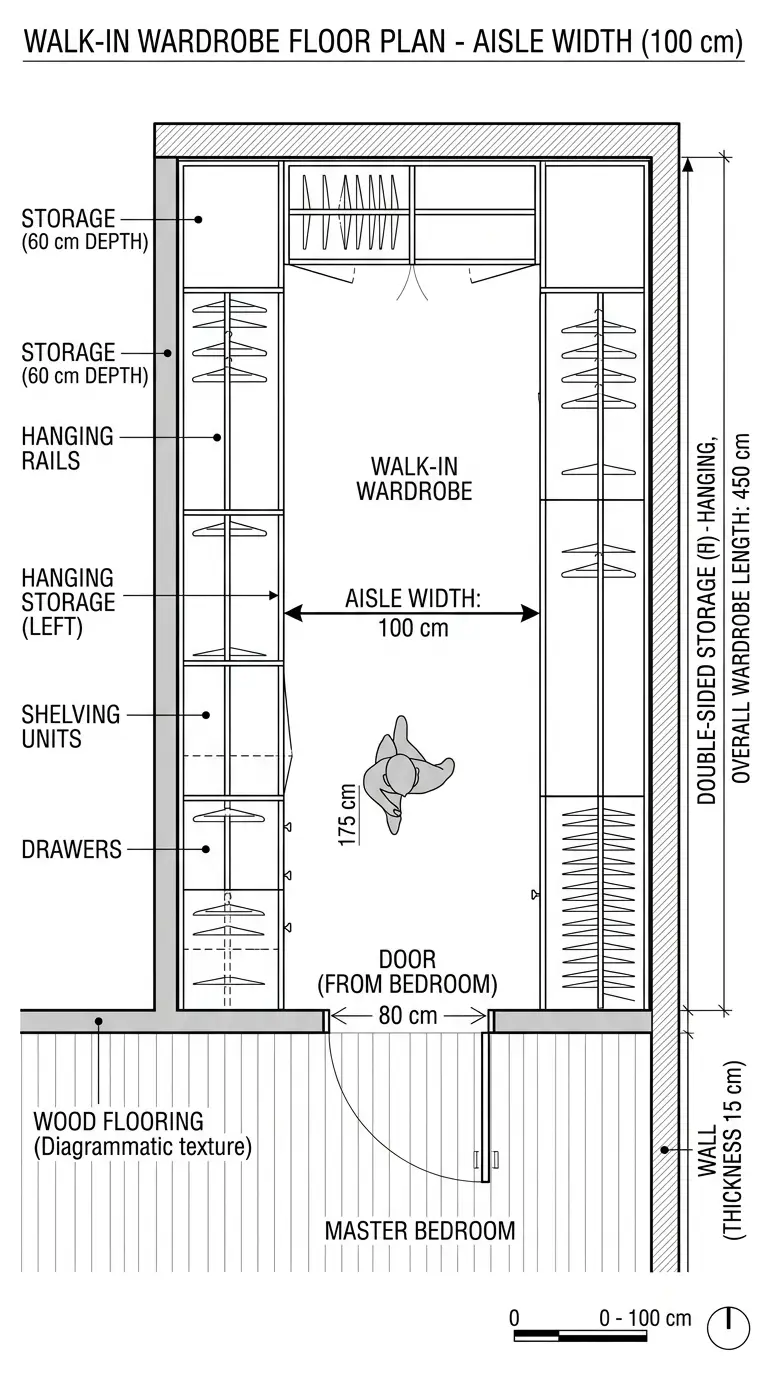
11. Walk-In Wardrobe Aisle Width
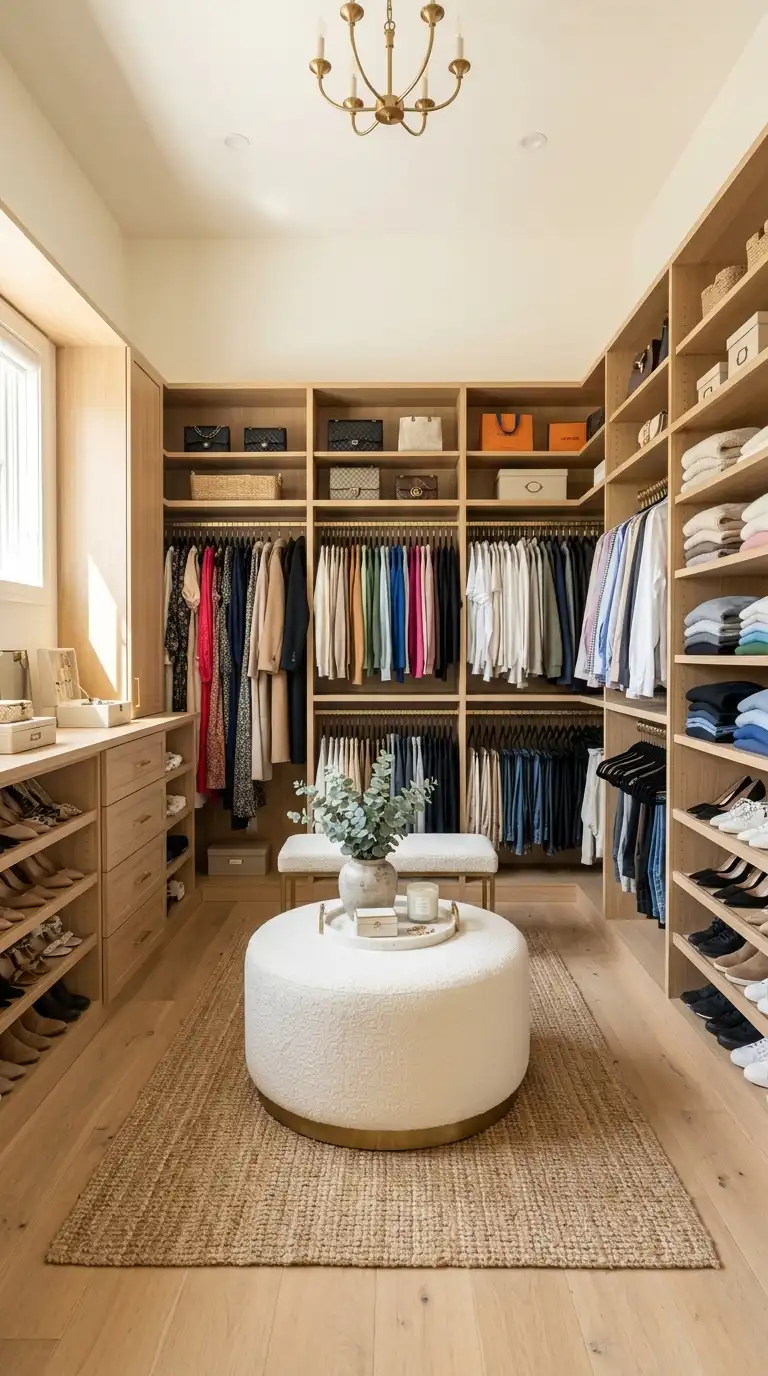
For a walk-in wardrobe, the aisle between storage should be at least 90–120 centimeters (36–48 inches) to allow comfortable movement. For a single-sided configuration, 90 centimeters is adequate. For double-sided storage, 120 centimeters allows two people to pass or one person to kneel and access lower shelves comfortably.
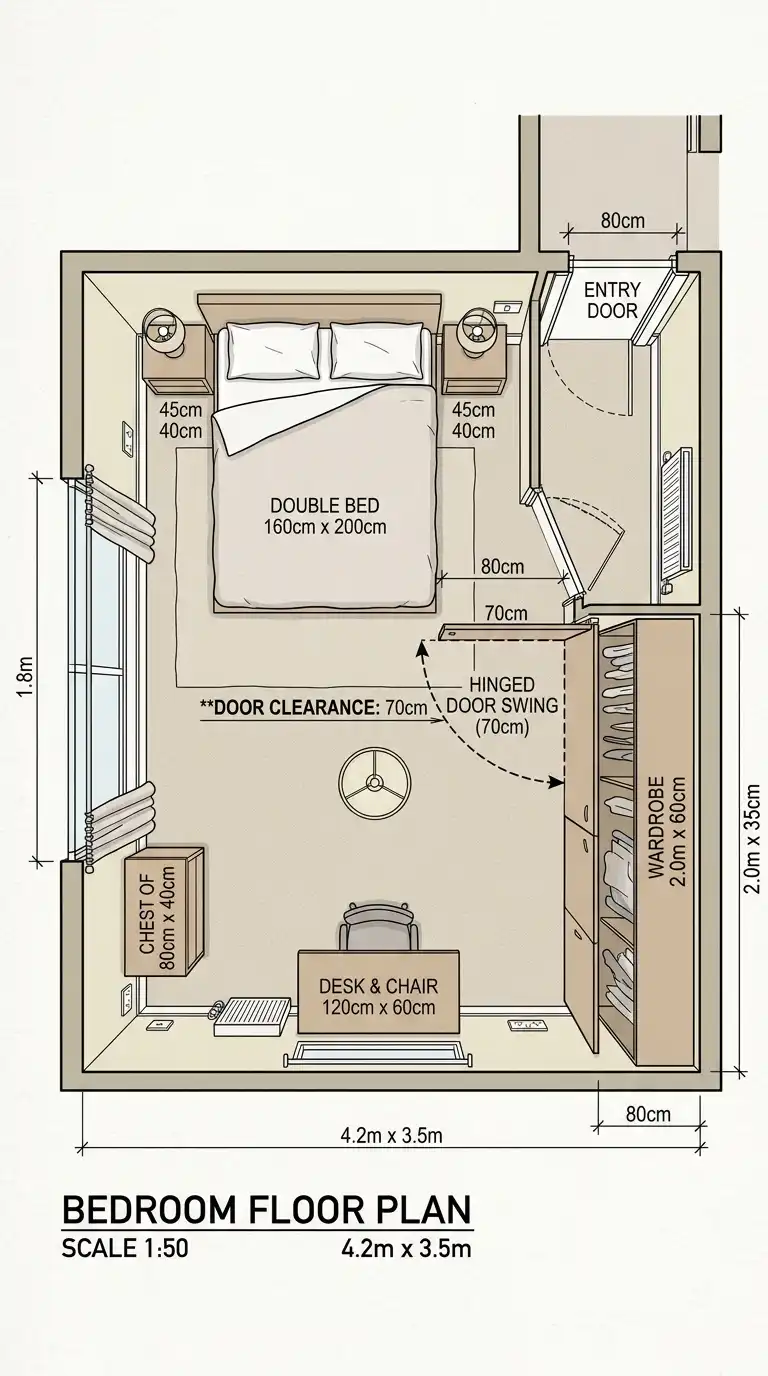
12. Door Swing Clearance
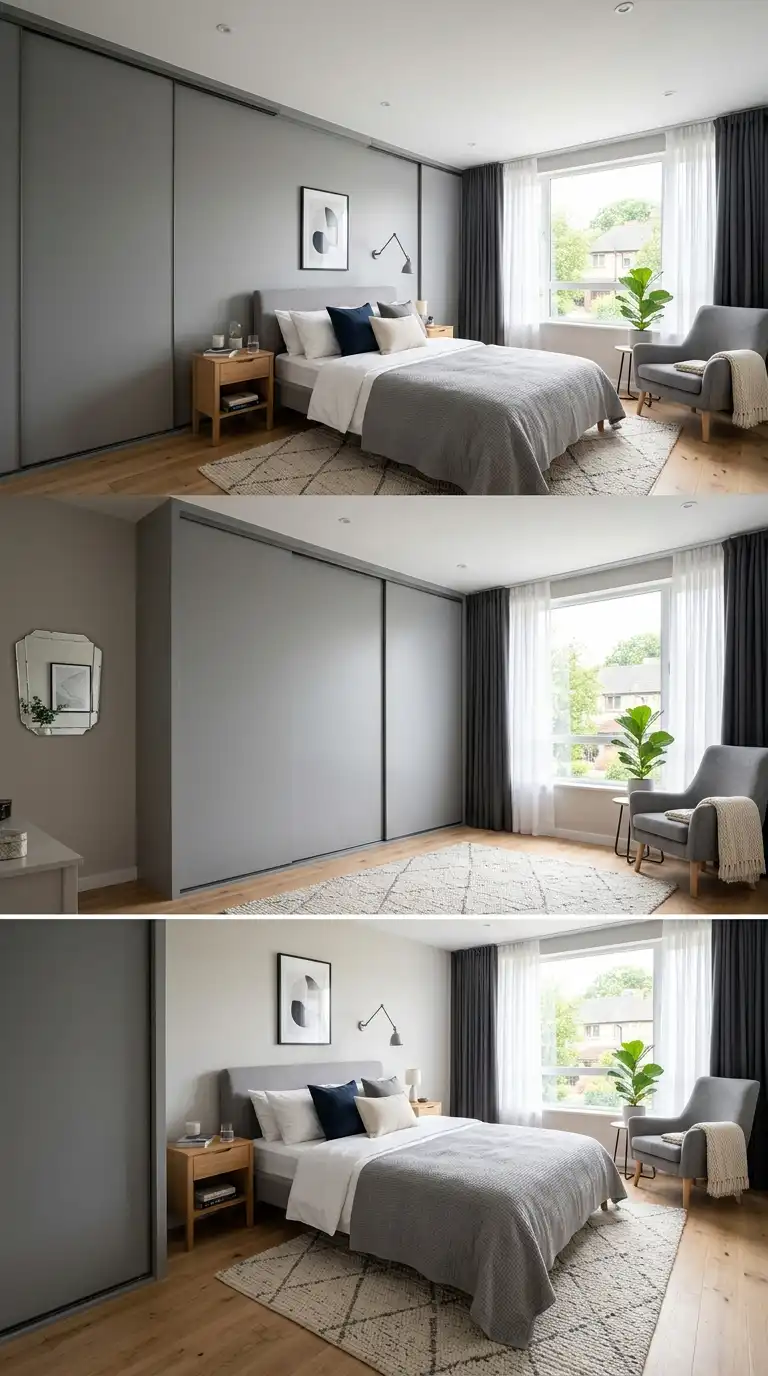
For hinged wardrobe doors, allow at least 60–80 centimeters (24–32 inches) of clearance in front of the doors for full opening. Consider the placement of furniture—beds, nightstands, and chairs—when determining door swing. Sliding doors eliminate the need for swing space, making them ideal for compact bedrooms.
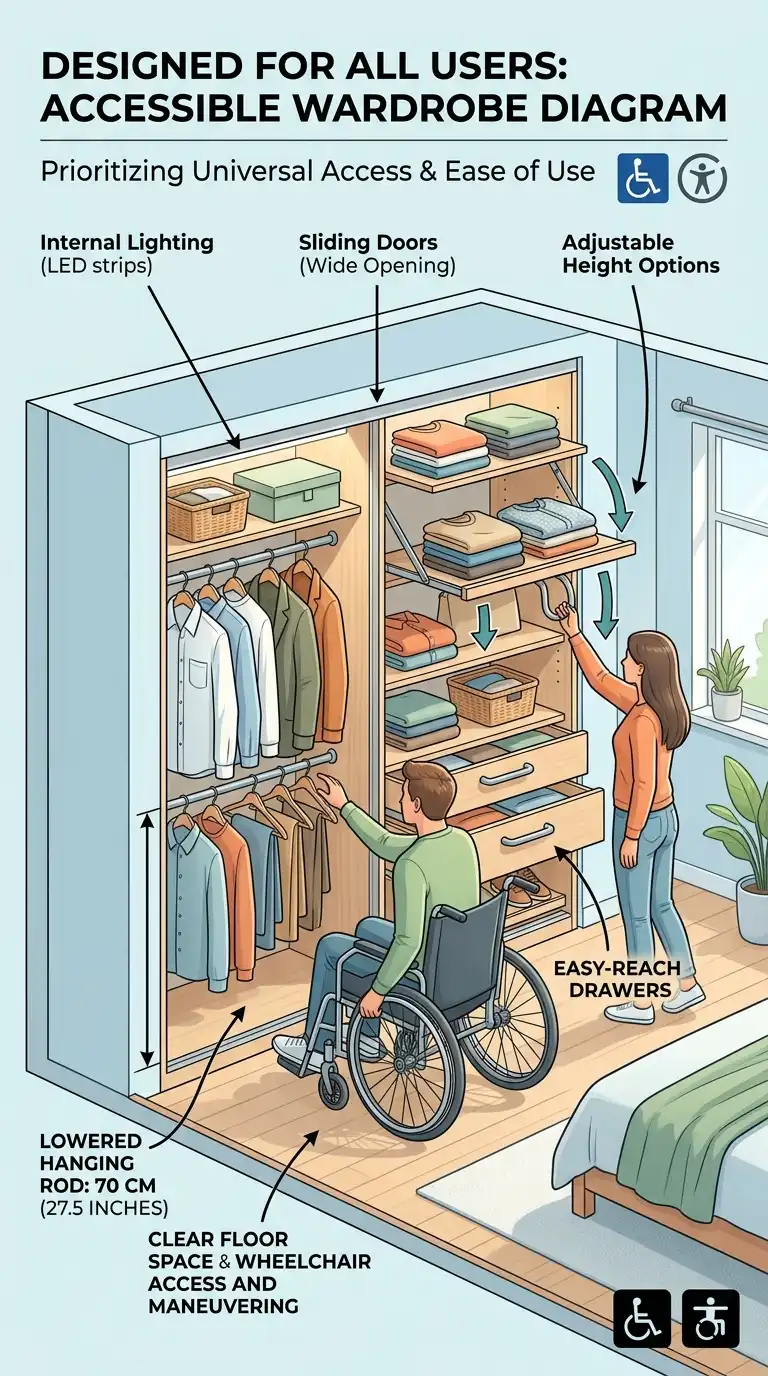
13. Customizing Dimensions for Accessibility
For accessible design, consider lower hanging rods (60–80 centimeters) and pull-down mechanisms for upper shelves. Allow clear floor space for wheelchair access, and position frequently used items at accessible heights. Custom dimensions can be tailored to meet specific mobility needs.
Frequently Asked Questions
- What is the most common wardrobe depth?
The most common depth is 60 centimeters (24 inches), which accommodates standard hangers and hanging clothes without crushing sleeves. This depth works for both freestanding and built-in wardrobes. - How high should a hanging rod be?
For shirts and blouses, 90–110 centimeters (35–43 inches) is ideal. For dresses and coats, 150–170 centimeters (59–67 inches) is recommended. Measure your longest garment to ensure adequate clearance. - Can I customize wardrobe dimensions?
Yes. Custom built-in wardrobes can be designed to any dimension to fit your space and storage needs. Consider your clothing types, accessibility requirements, and room layout when determining dimensions. - What is the best width for double doors?
For hinged double doors, each door is typically 45–60 centimeters wide, depending on the overall wardrobe width. For sliding doors, panels are often 90–120 centimeters wide for ease of operation. - How do I measure for a wardrobe?
Measure the width, height, and depth of the available space. Account for baseboards, crown molding, and any irregularities in walls. For built-ins, consider floor-to-ceiling measurements. For freestanding units, ensure there is clearance for door swing and movement around the piece.