14 Japandi Wardrobe Designs
Japandi is a design aesthetic that fuses Japanese minimalism with Scandinavian functionality, creating spaces that are serene, balanced, and deeply connected to nature. Japandi wardrobes emphasize clean lines, natural materials, muted colors, and thoughtful craftsmanship. The result is storage that feels calm, intentional, and beautifully integrated with the room. Here are fourteen Japandi wardrobe designs to inspire your next project.
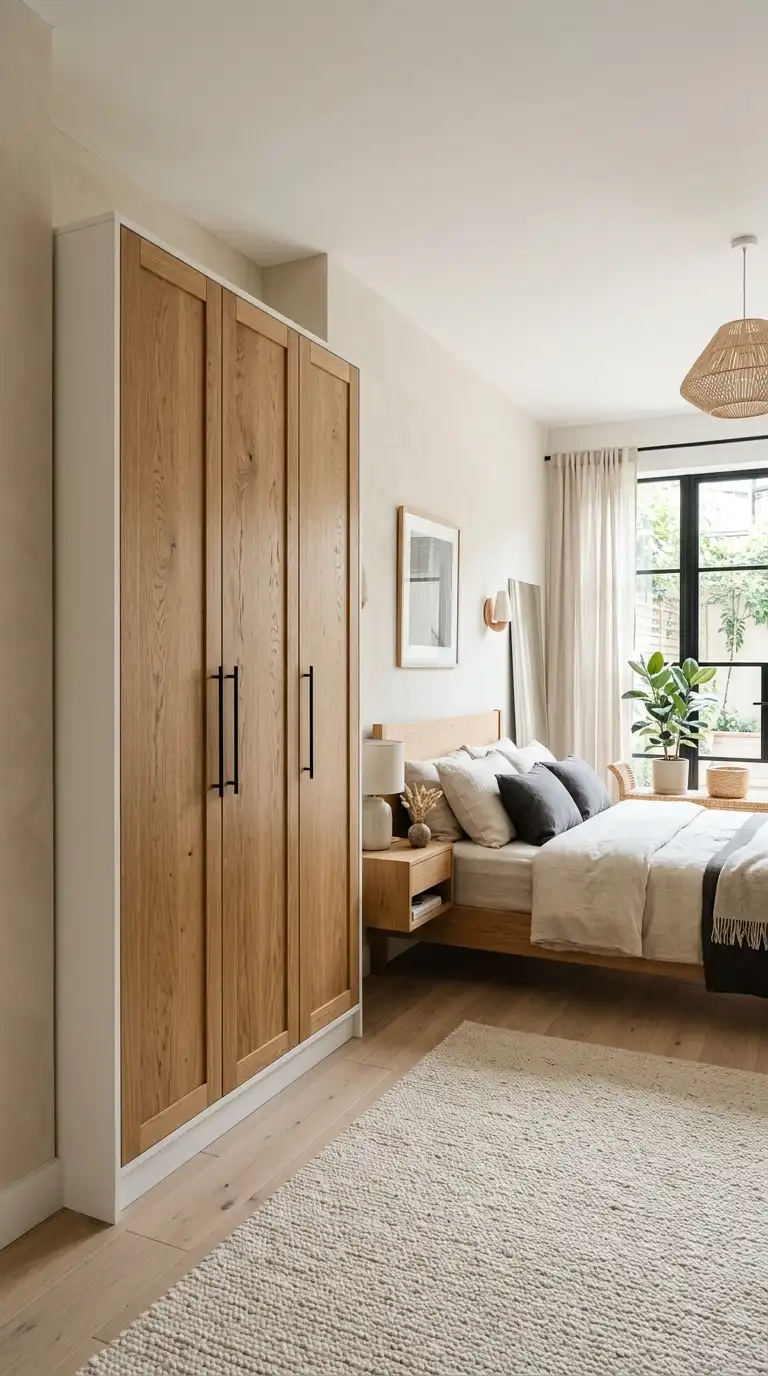
1. Natural Oak and Matte White Combination
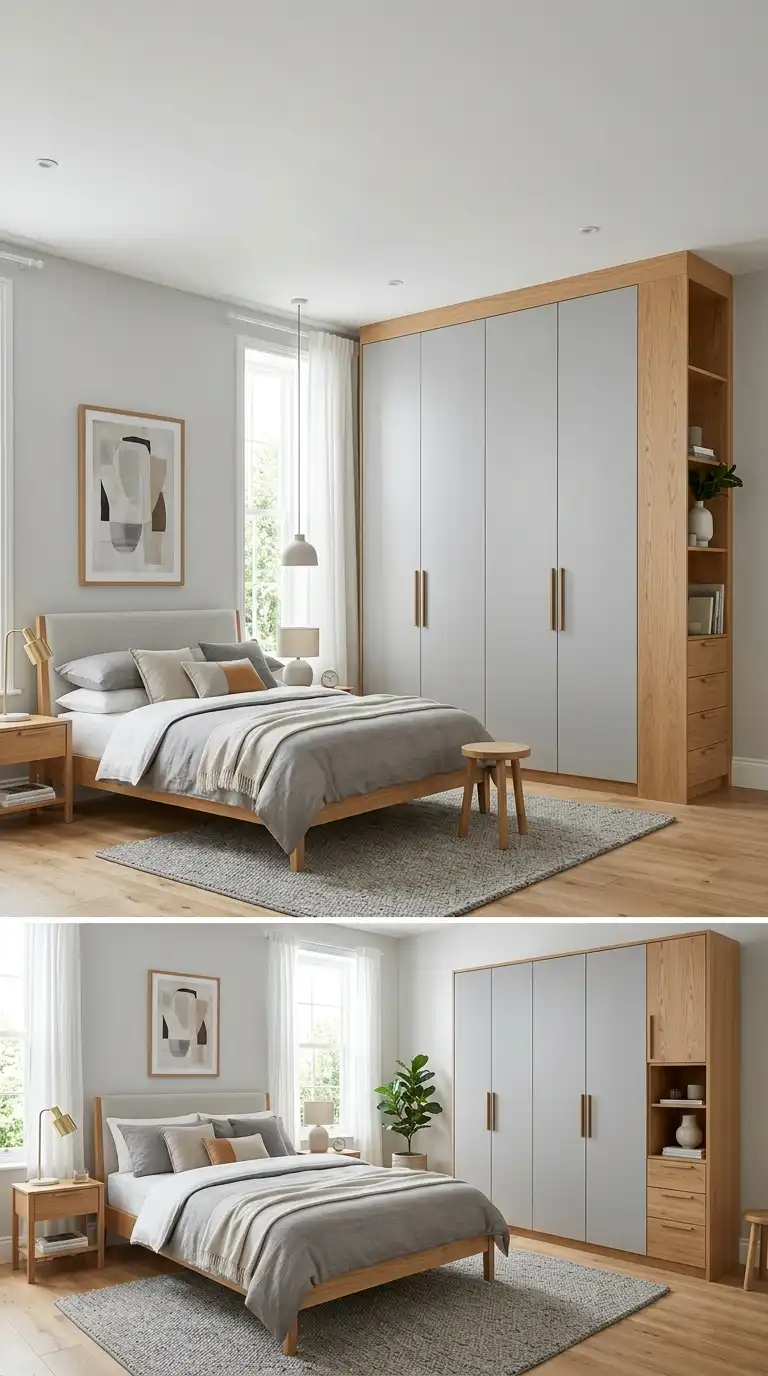
Combine natural oak with matte white for a classic Japandi palette. Use oak for door panels, handles, or accents, and matte white for the main structure. The warm wood tones add organic texture, while the white keeps the space light and airy. This combination embodies the balance of warmth and simplicity central to Japandi design.
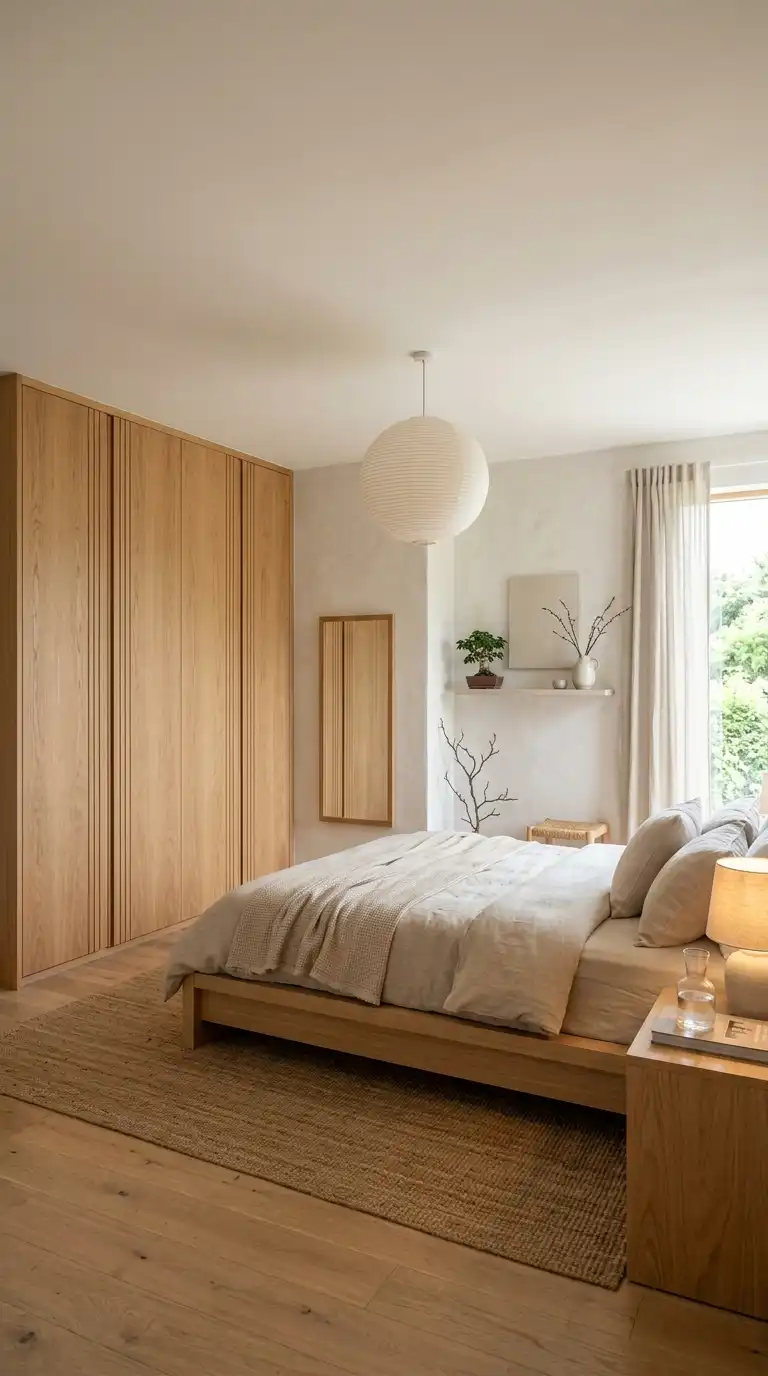
2. Handleless Wardrobe with Integrated Grooves
Handleless wardrobes with integrated grooves for opening embody the minimalist spirit of Japandi. The seamless surface emphasizes simplicity and craftsmanship. Choose a light wood finish or soft gray matte to maintain the serene aesthetic. The grooves become a subtle design detail that adds interest without clutter.
3. Shoji Screen-Inspired Sliding Doors
Inspired by traditional Japanese shoji screens, use translucent sliding doors with a grid pattern. The doors diffuse light, creating a soft, serene glow. Choose a light wood frame with frosted or rice paper panels. This design brings authentic Japanese elements into the wardrobe while maintaining functionality.
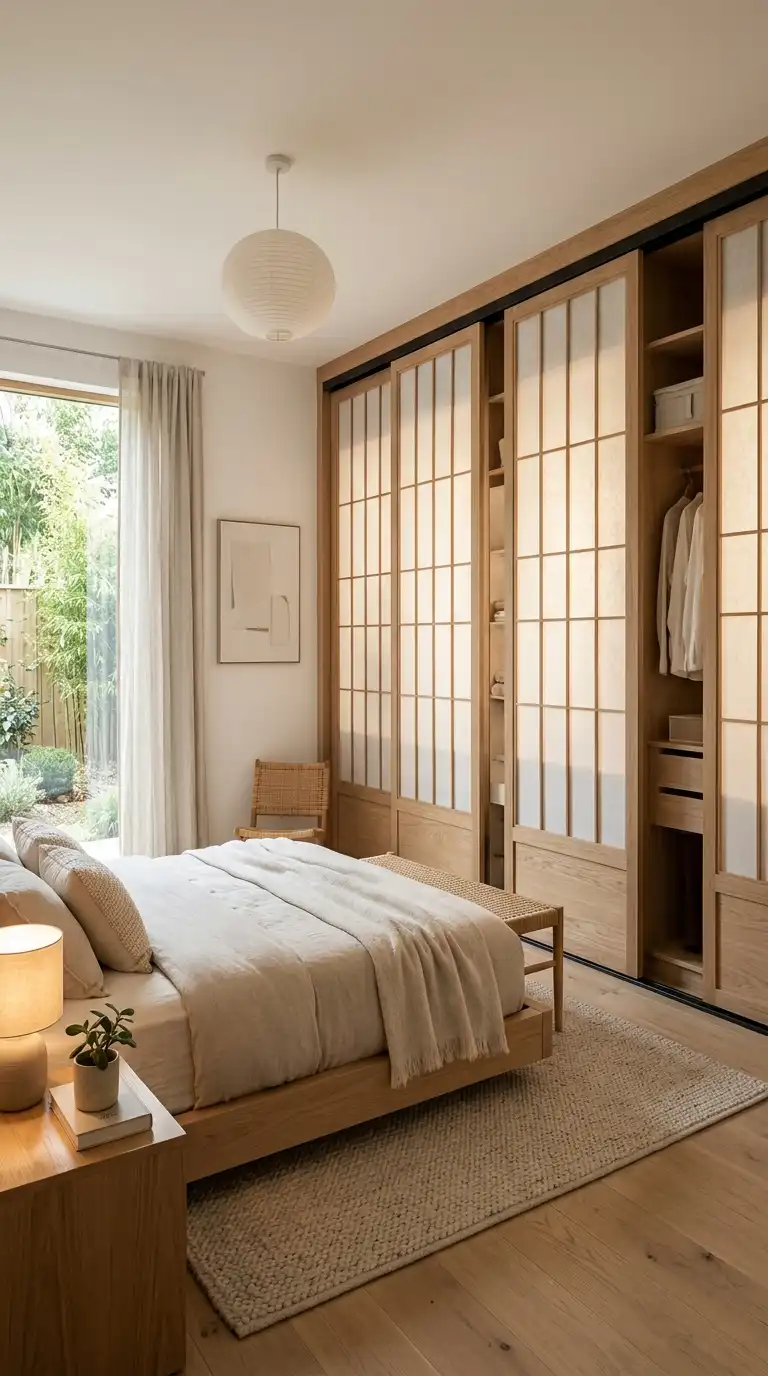
4. Wardrobe with Exposed Wood Grain
Let the natural beauty of wood take center stage by choosing a wardrobe with exposed wood grain. Select a species like oak, ash, or walnut with a clear matte finish that highlights the grain. The organic texture adds warmth and connects the space to nature, a key principle of Japandi design.
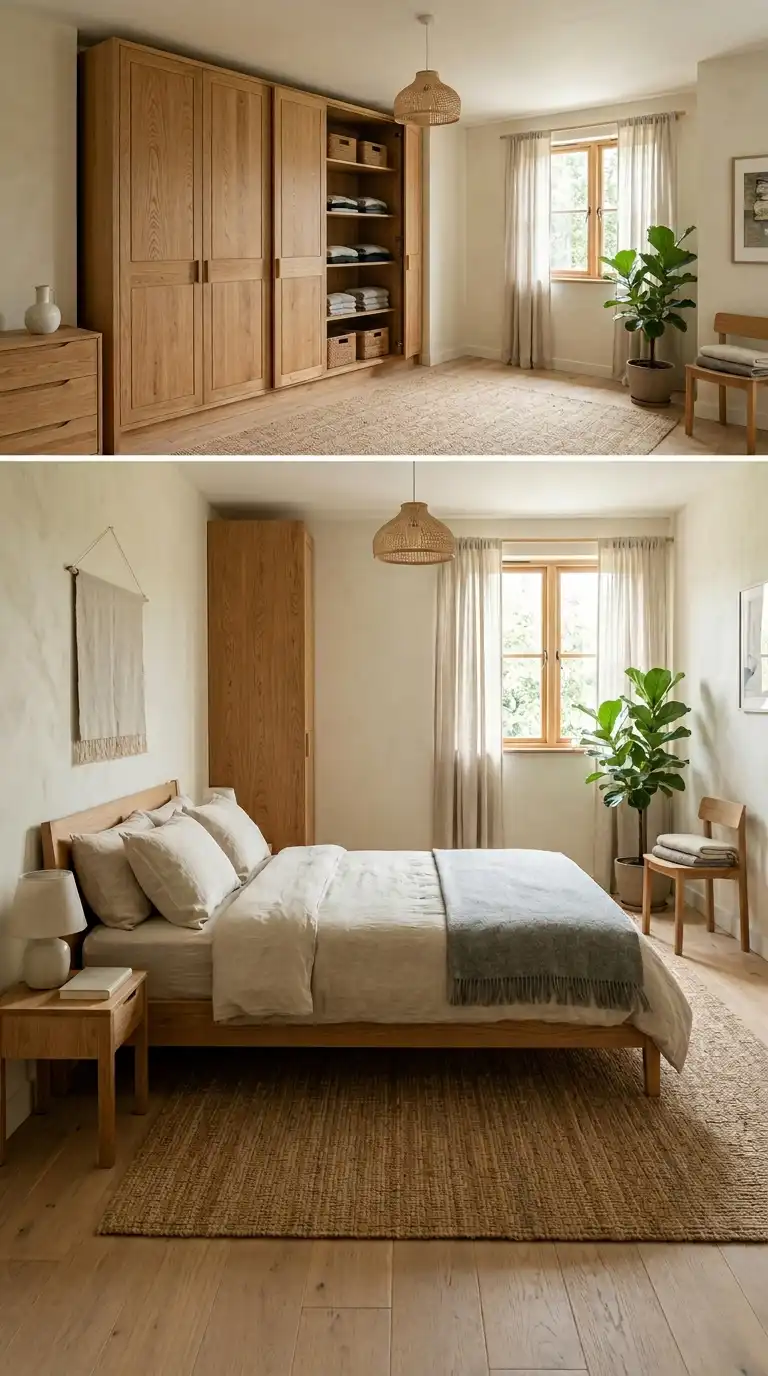
5. Wardrobe with Minimalist Black Hardware
Add subtle contrast to a light wood wardrobe with minimalist black hardware. Choose slim bar pulls, recessed handles, or black edge pulls that provide function without visual clutter. The black accents ground the design and add a touch of modern simplicity.
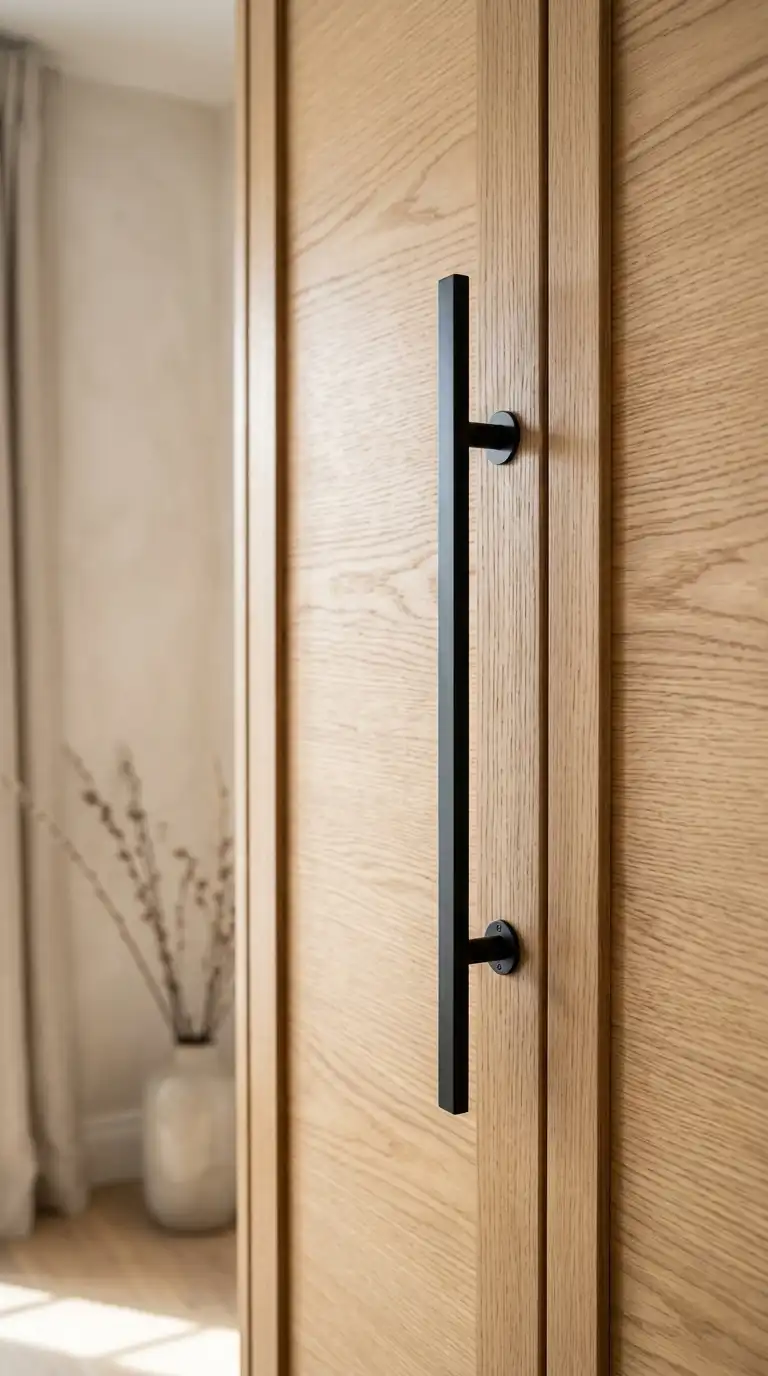
6. Floor-to-Ceiling Wardrobe with Crown Molding
Extend your Japandi wardrobe to the ceiling and add simple crown molding for a seamless, built-in look. The continuous vertical lines draw the eye upward, making the room feel taller. Choose a consistent finish—light wood or soft white—to maintain the serene aesthetic.
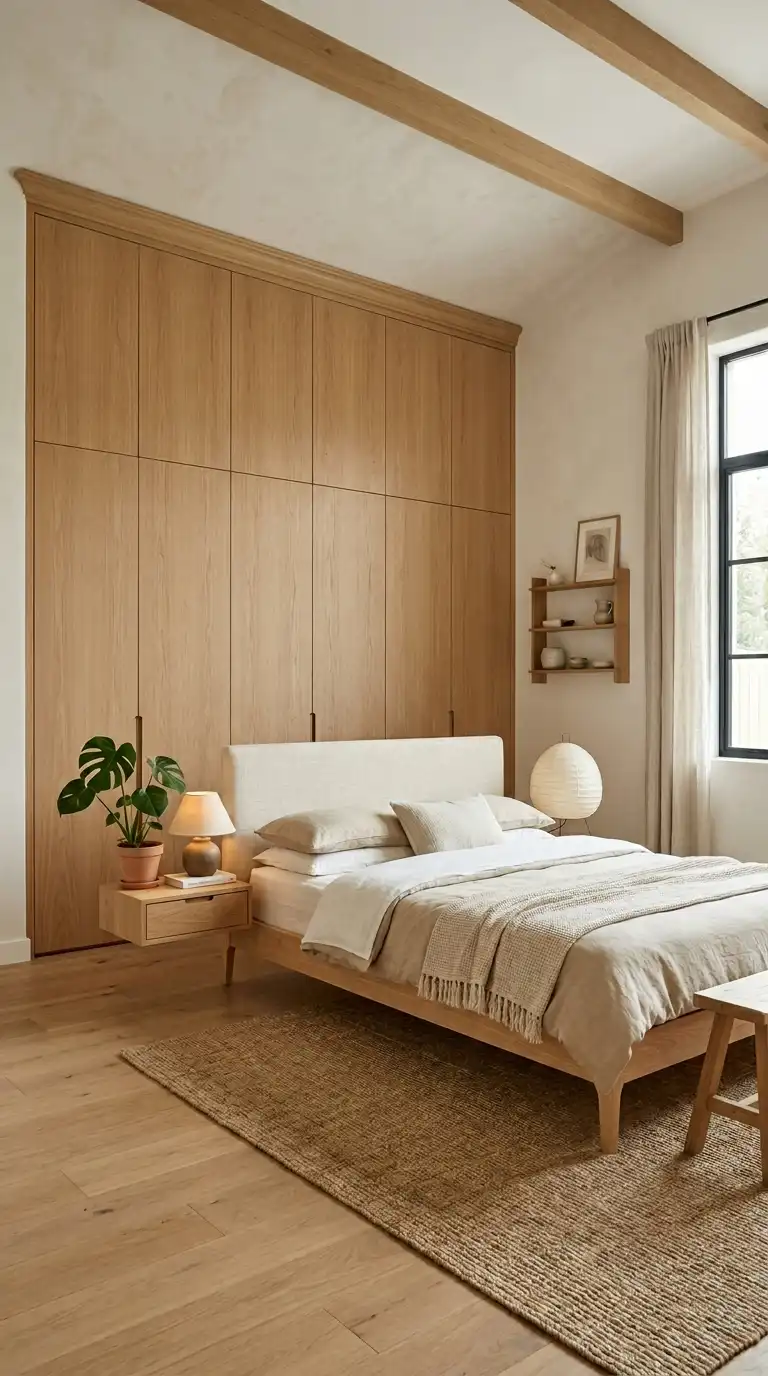
7. Wardrobe with Woven or Cane Accents
Incorporate natural textures like woven cane or rattan into your Japandi wardrobe. Use cane webbing as door inserts or as accents within solid panels. The organic texture adds warmth and connects the design to traditional Japanese craftsmanship.
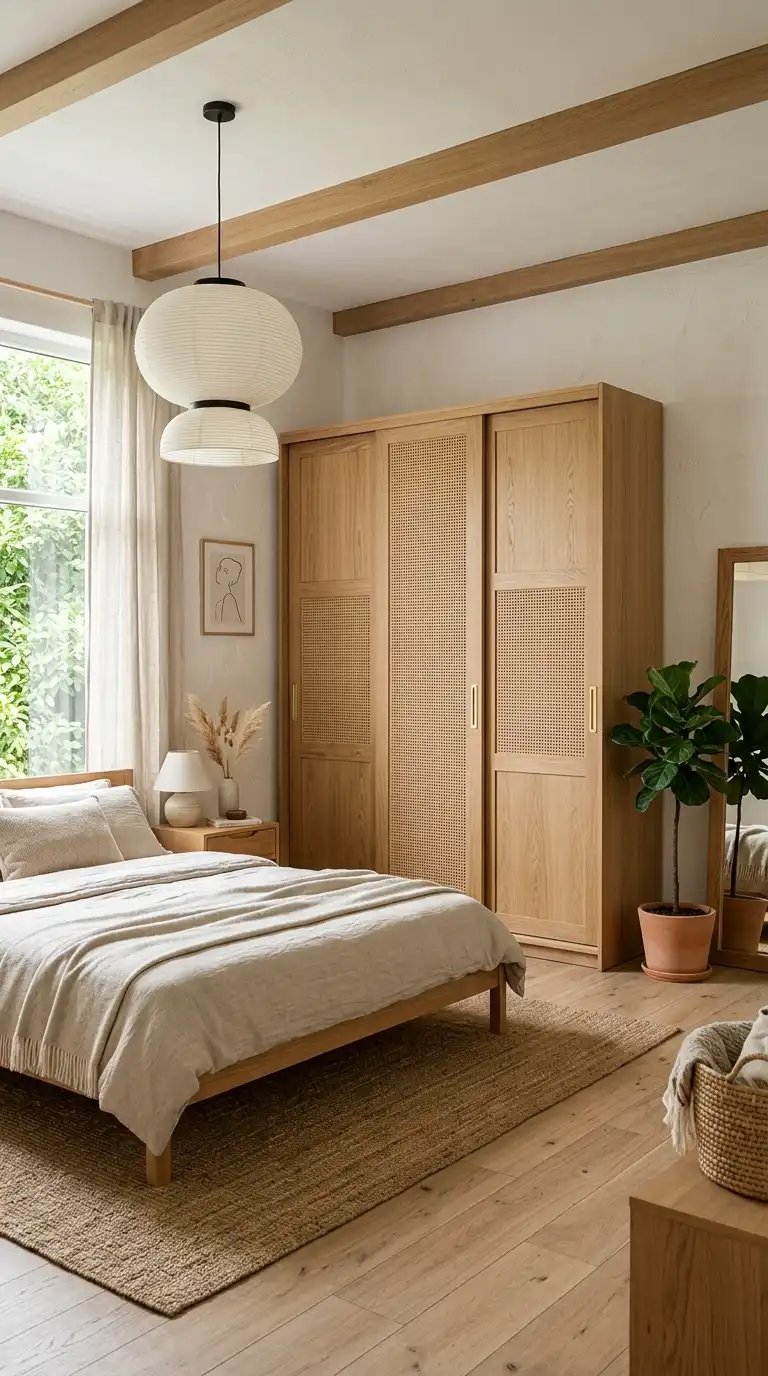
8. Wardrobe with Integrated Bench
Incorporate a built-in bench into your Japandi wardrobe for a functional, serene dressing area. The bench can be upholstered in a neutral fabric like linen or wool, with storage underneath. The integrated seating adds a sense of calm and invites moments of pause.
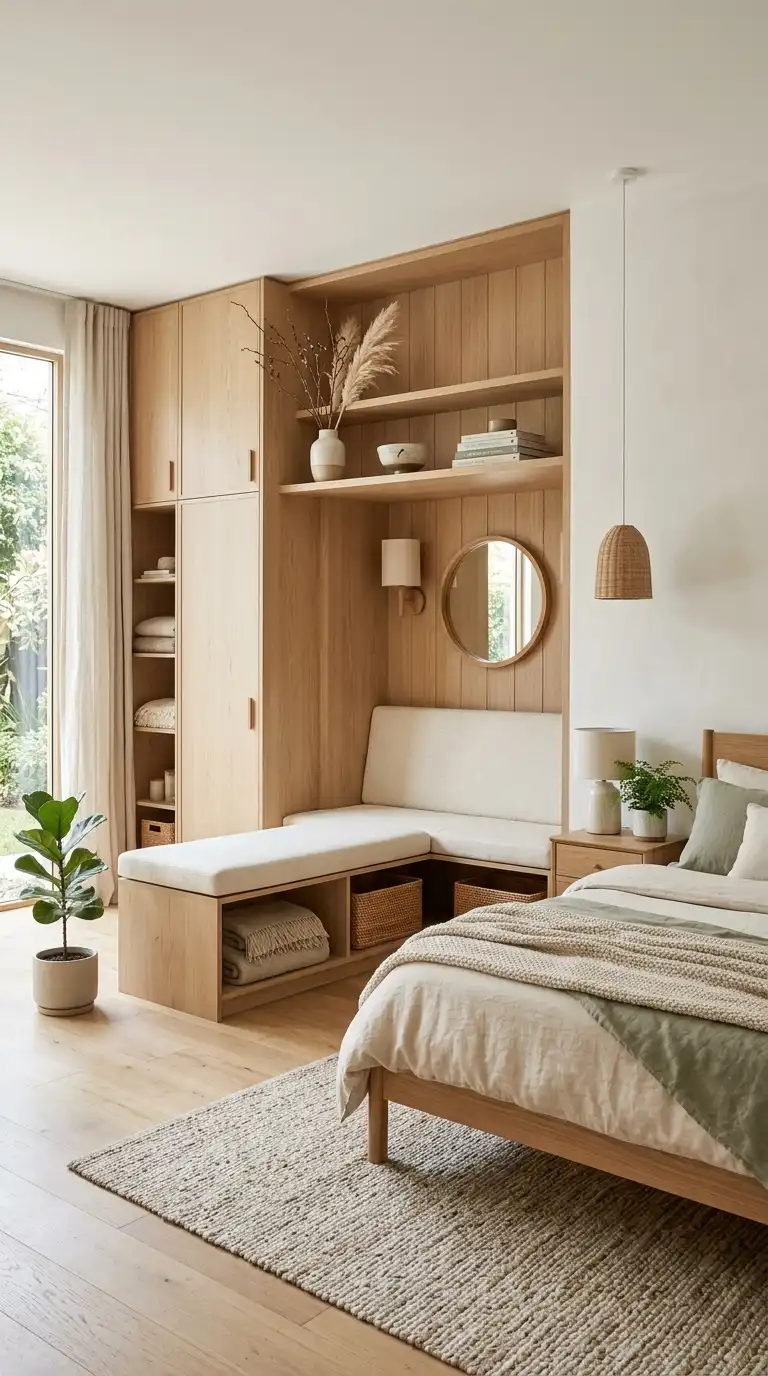
9. Wardrobe with Open and Closed Balance
Balance open shelving with closed cabinets to create visual harmony. Use open shelving to display a few carefully chosen objects—a ceramic vase, a stack of books—while closed cabinets hide everyday items. This approach embodies the Japandi principle of intentional simplicity.
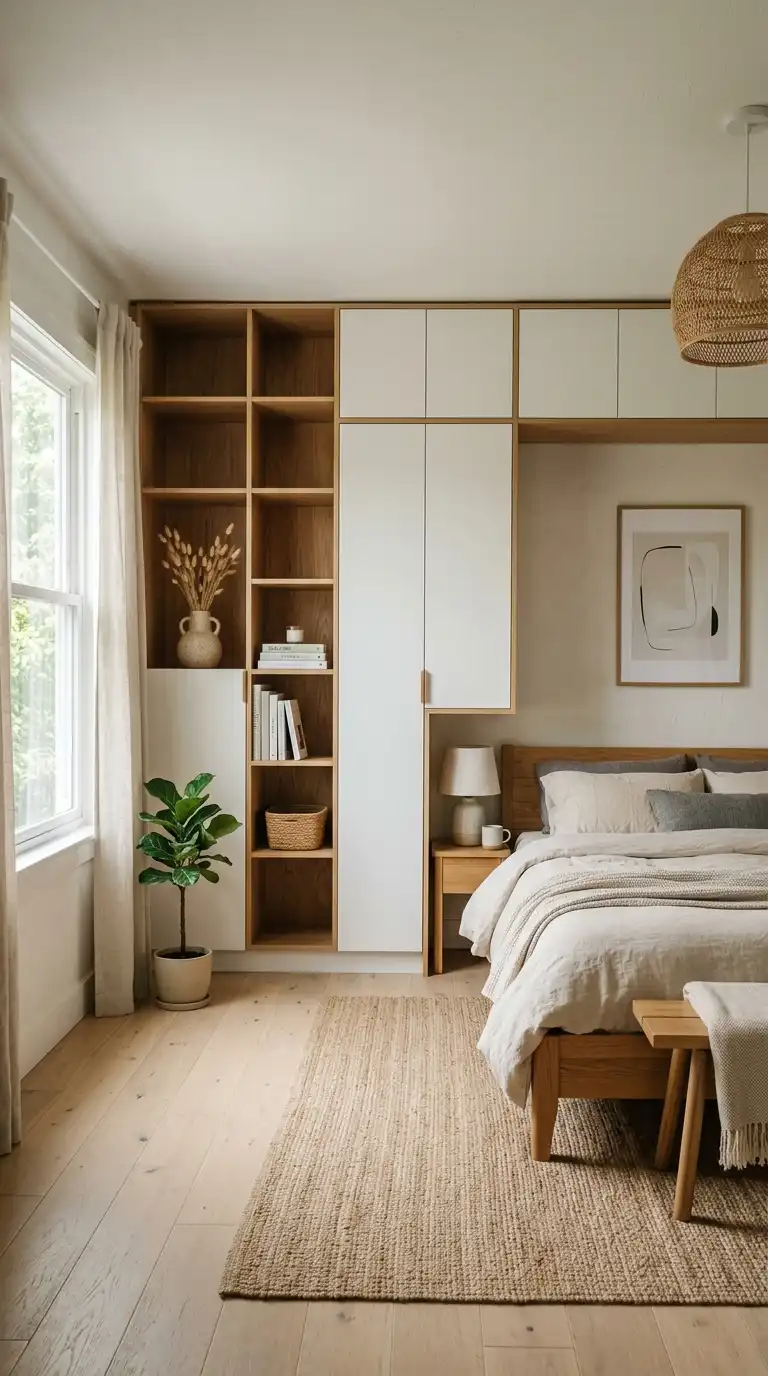
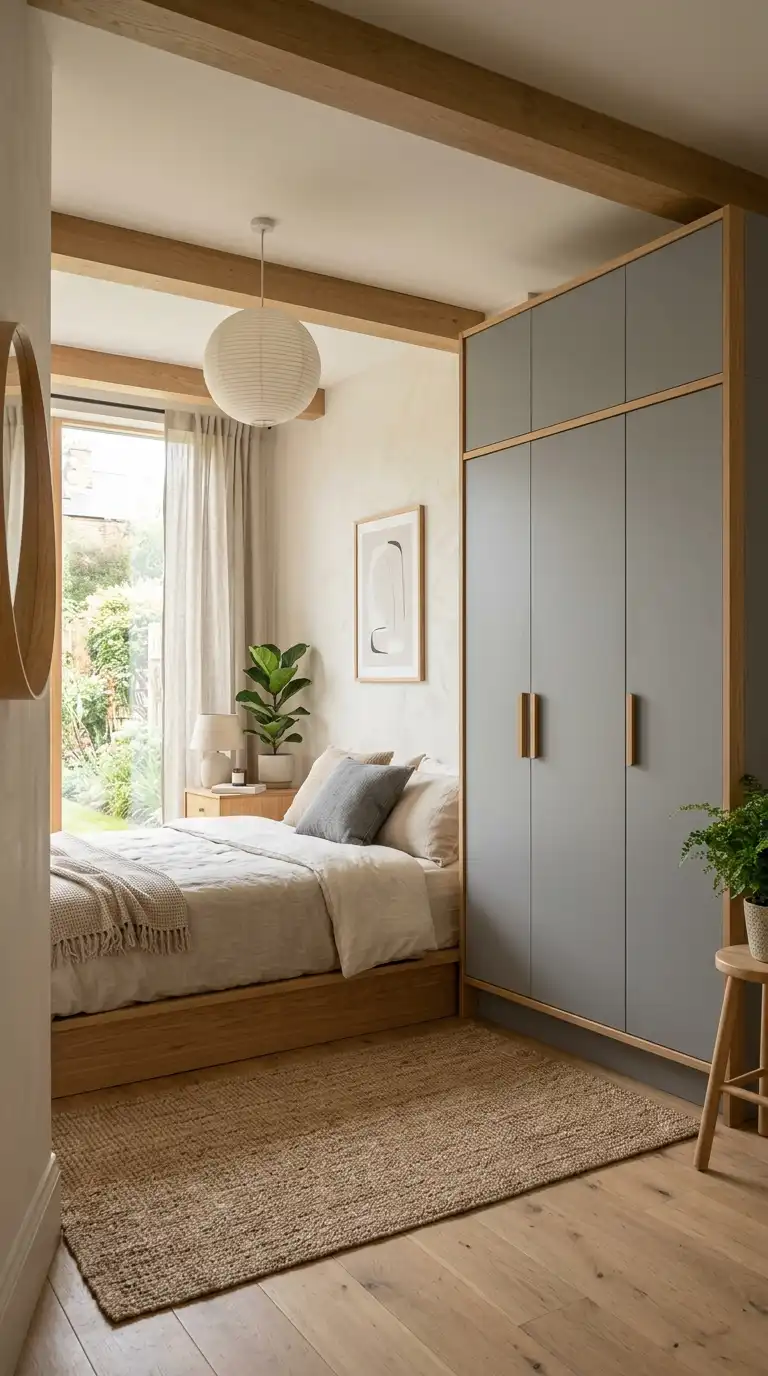
10. Wardrobe with Soft Gray Finish
Soft gray is a versatile neutral that works beautifully in Japandi interiors. Choose a matte gray finish for the wardrobe, paired with natural wood accents. The gray adds depth without warmth, creating a serene backdrop for the organic textures.
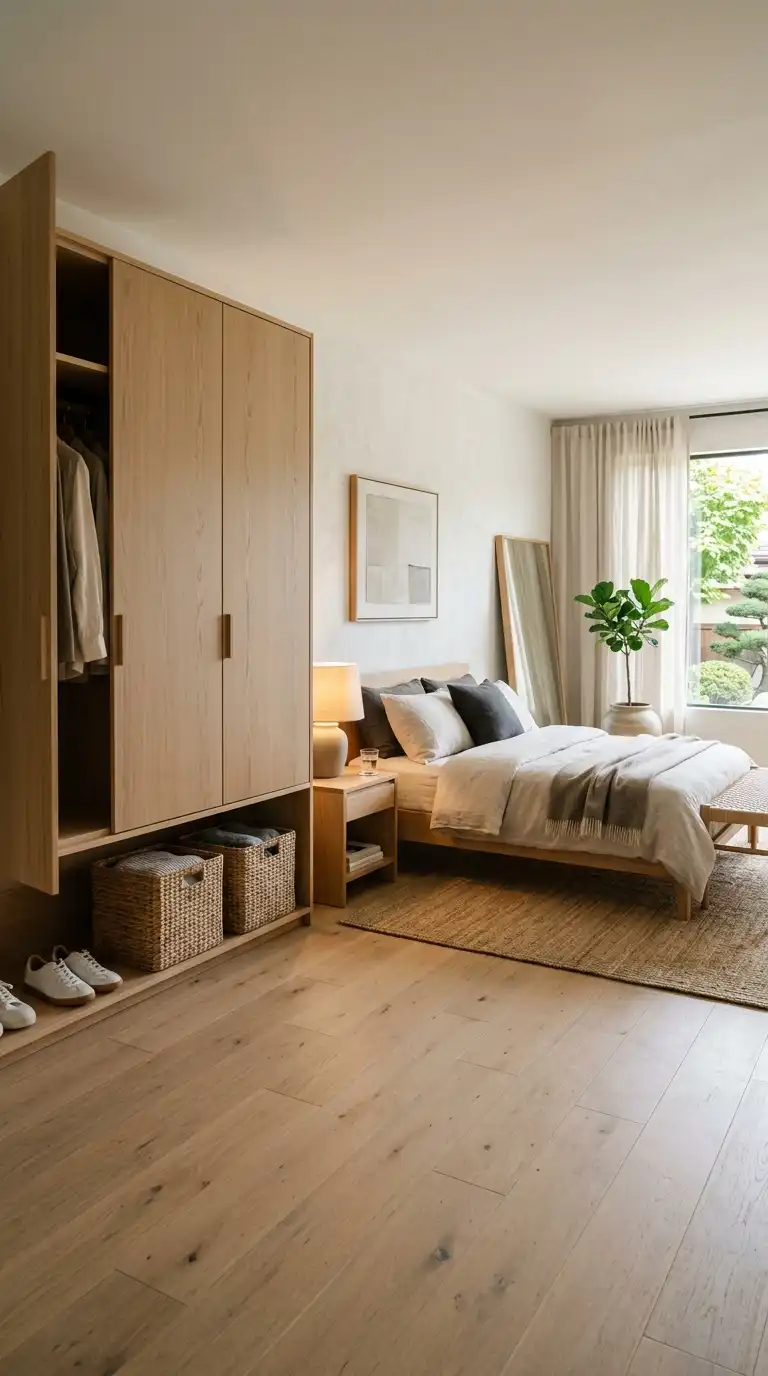
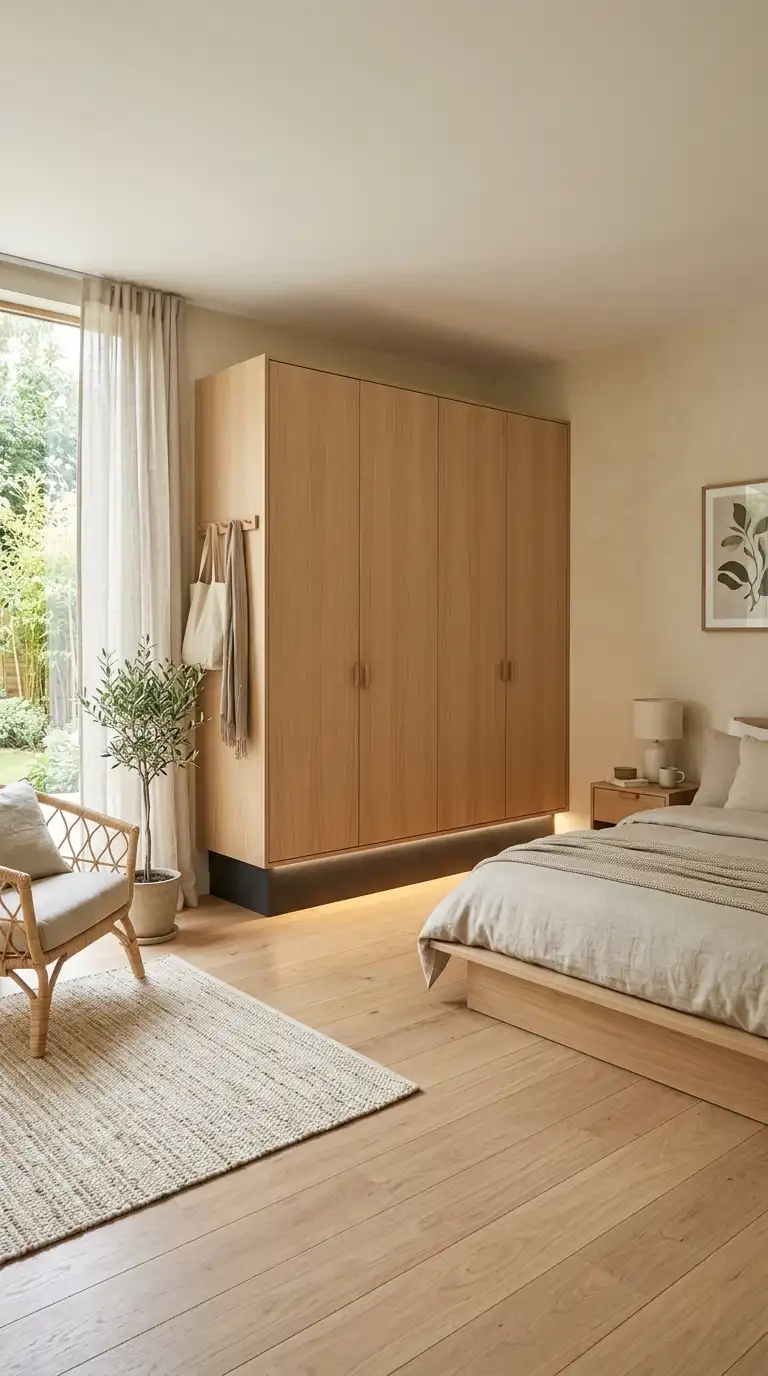
11. Wardrobe with Recessed Base
A recessed base creates a floating effect that adds lightness to a Japandi wardrobe. The gap beneath allows light to pass through and makes the unit feel less heavy. This detail aligns with the Japanese principle of creating visual lightness in furniture.
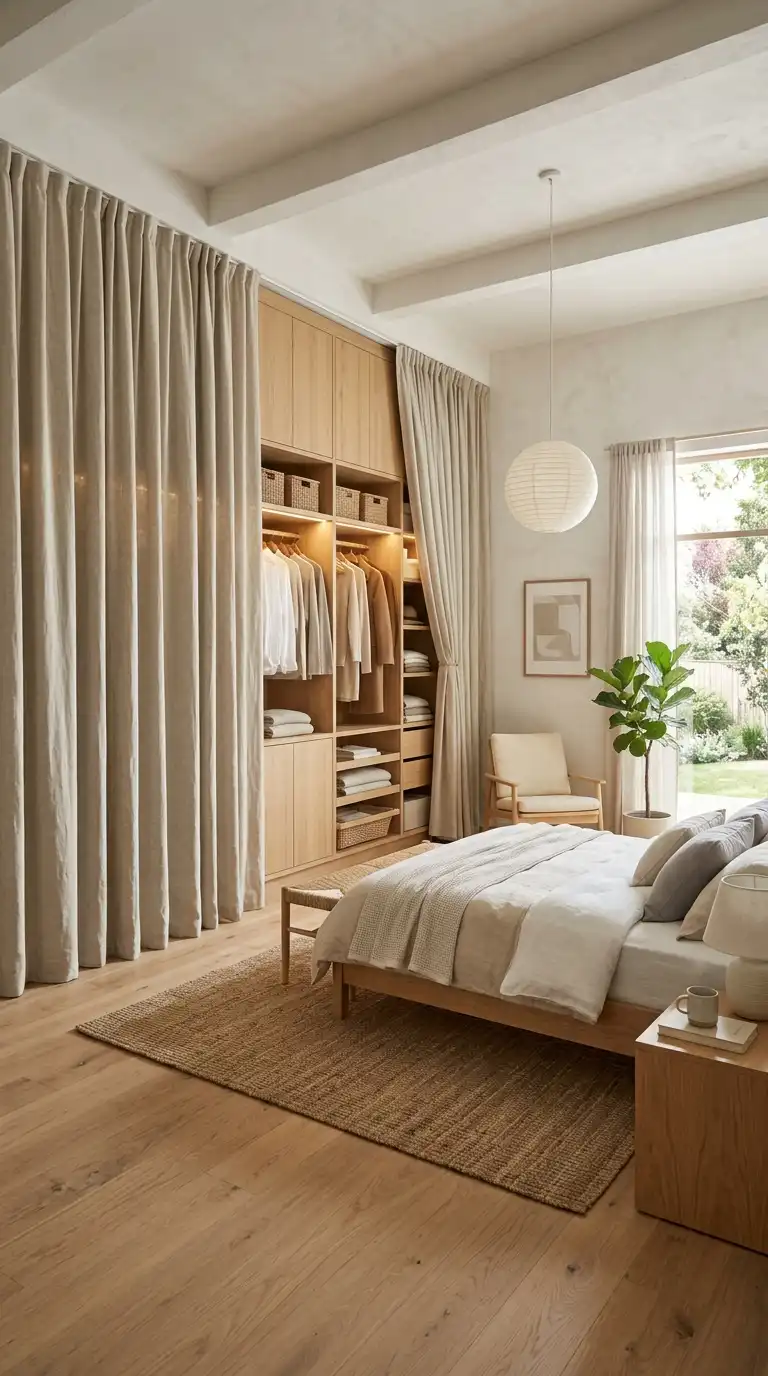
12. Wardrobe with Natural Linen Curtains
For a softer, flexible storage solution, use natural linen curtains to conceal the wardrobe. The fabric adds texture and warmth, and can be drawn open or closed as needed. This approach is ideal for renters or those who prefer a less permanent solution.
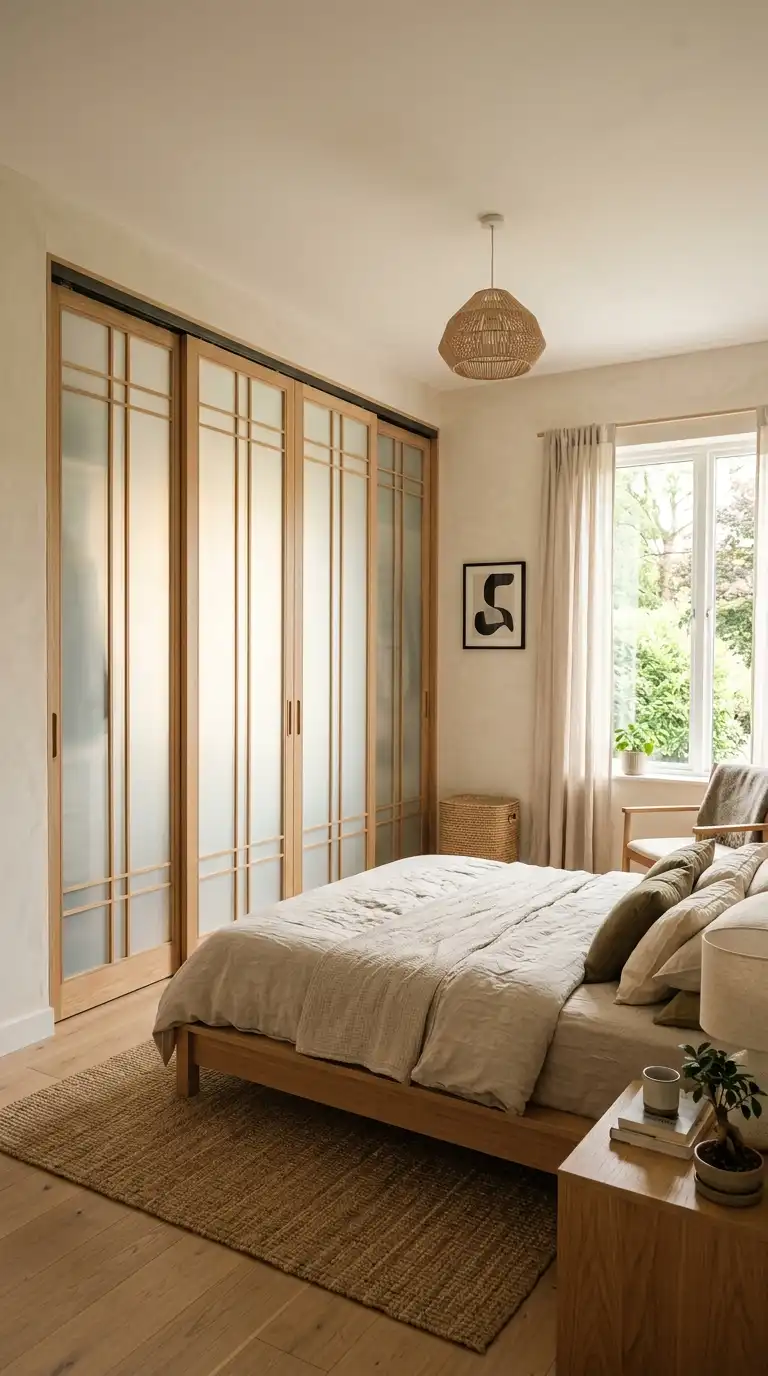
13. Wardrobe with Sliding Paper Screen Doors
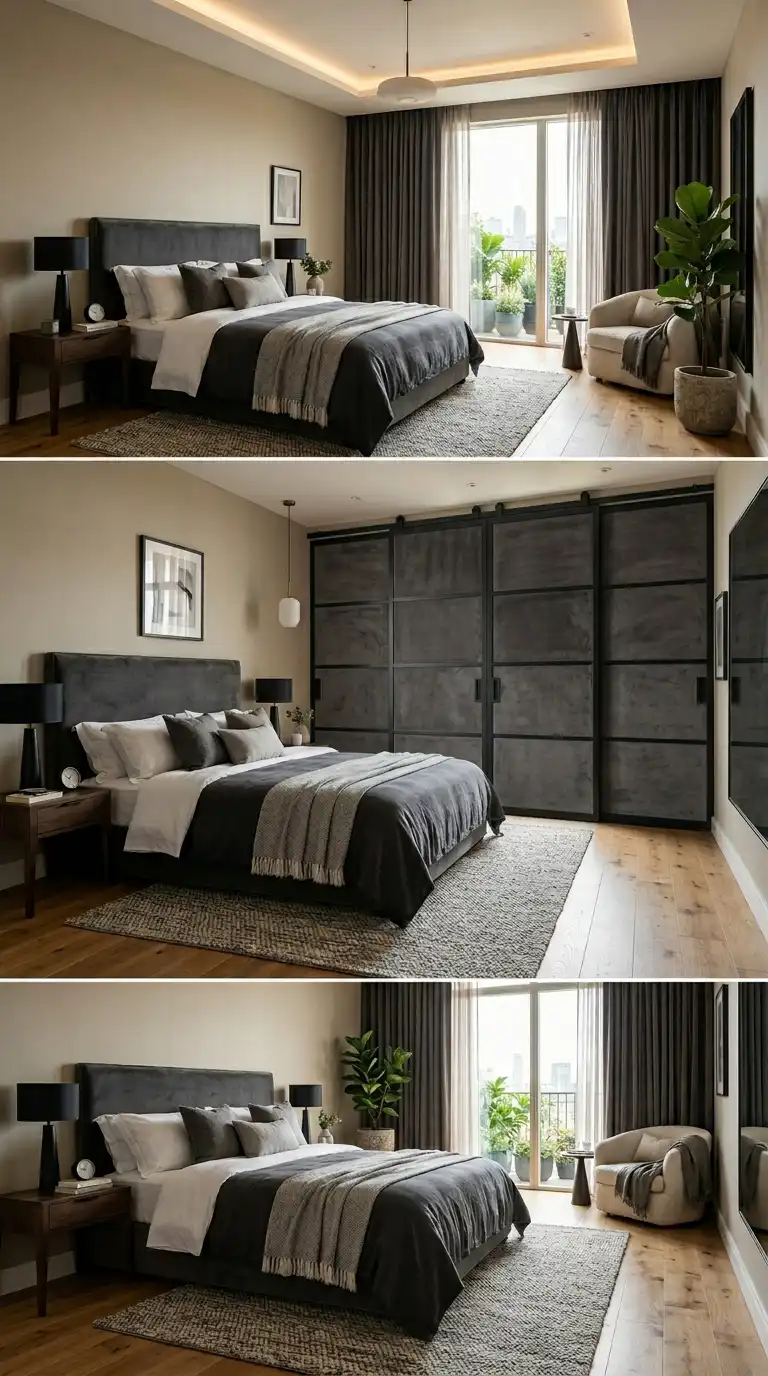
Incorporate sliding doors inspired by traditional Japanese paper screens (fusuma). Use lightweight wood frames with frosted or textured panels that diffuse light. The sliding mechanism saves space, and the translucent panels add a sense of tranquility.
14. Wardrobe with Integrated Low Shelving
Incorporate low, open shelving at the base of the wardrobe for displaying shoes, baskets, or decorative objects. The low profile aligns with Japanese design principles of keeping the floor clear and creating a sense of openness. Use natural wood for the shelving to complement the overall aesthetic.
Frequently Asked Questions
- What defines Japandi style?
Japandi is a fusion of Japanese minimalism and Scandinavian functionality. It emphasizes clean lines, natural materials, muted colors, craftsmanship, and a sense of calm. The aesthetic values simplicity, balance, and connection to nature. - What colors are used in Japandi wardrobes?
Japandi palettes include natural wood tones (oak, walnut, ash), soft neutrals (white, cream, beige, gray), and muted earth tones (olive, terracotta, charcoal). Colors are typically understated and harmonious. - What materials are common in Japandi wardrobes?
Natural materials are essential: wood (often with visible grain), bamboo, cane, linen, wool, and stone. Finishes are matte rather than glossy, emphasizing texture and authenticity. - How do I incorporate Japandi style into an existing wardrobe?
Add natural wood elements, replace hardware with minimalist black or brass pulls, and introduce woven textures through baskets or cane inserts. Keep the color palette muted and the design uncluttered. - Is Japandi suitable for small bedrooms?
Yes. Japandi’s emphasis on simplicity, light colors, and clean lines makes it ideal for small spaces. Floor-to-ceiling storage, sliding doors, and open shelving maximize space while maintaining a serene aesthetic.