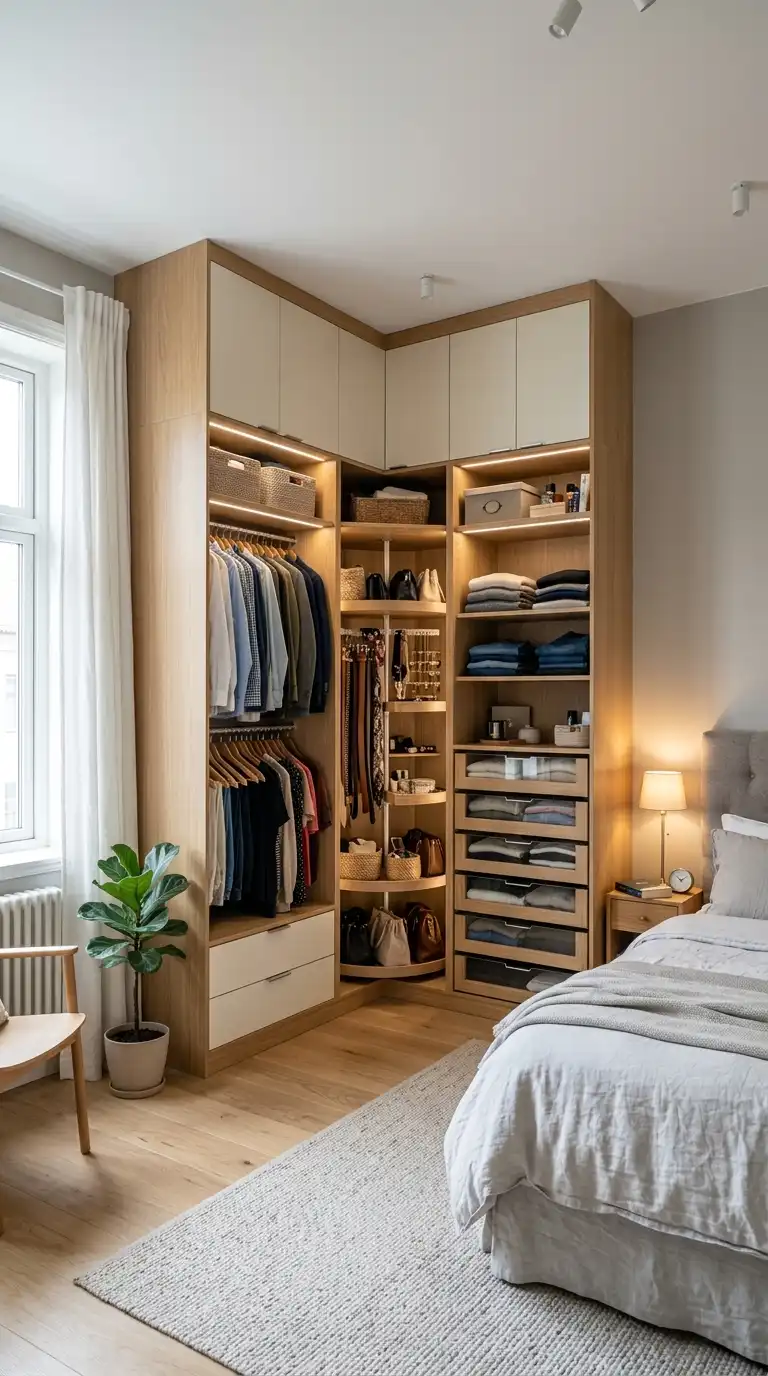
14 Wardrobe Layout Ideas
The layout of your wardrobe determines how efficiently you can store and access your belongings. A well-planned layout considers your storage needs, the types of items you own, and the available space. From single-sided layouts to walk-in configurations, here are fourteen wardrobe layout ideas to optimize your storage.
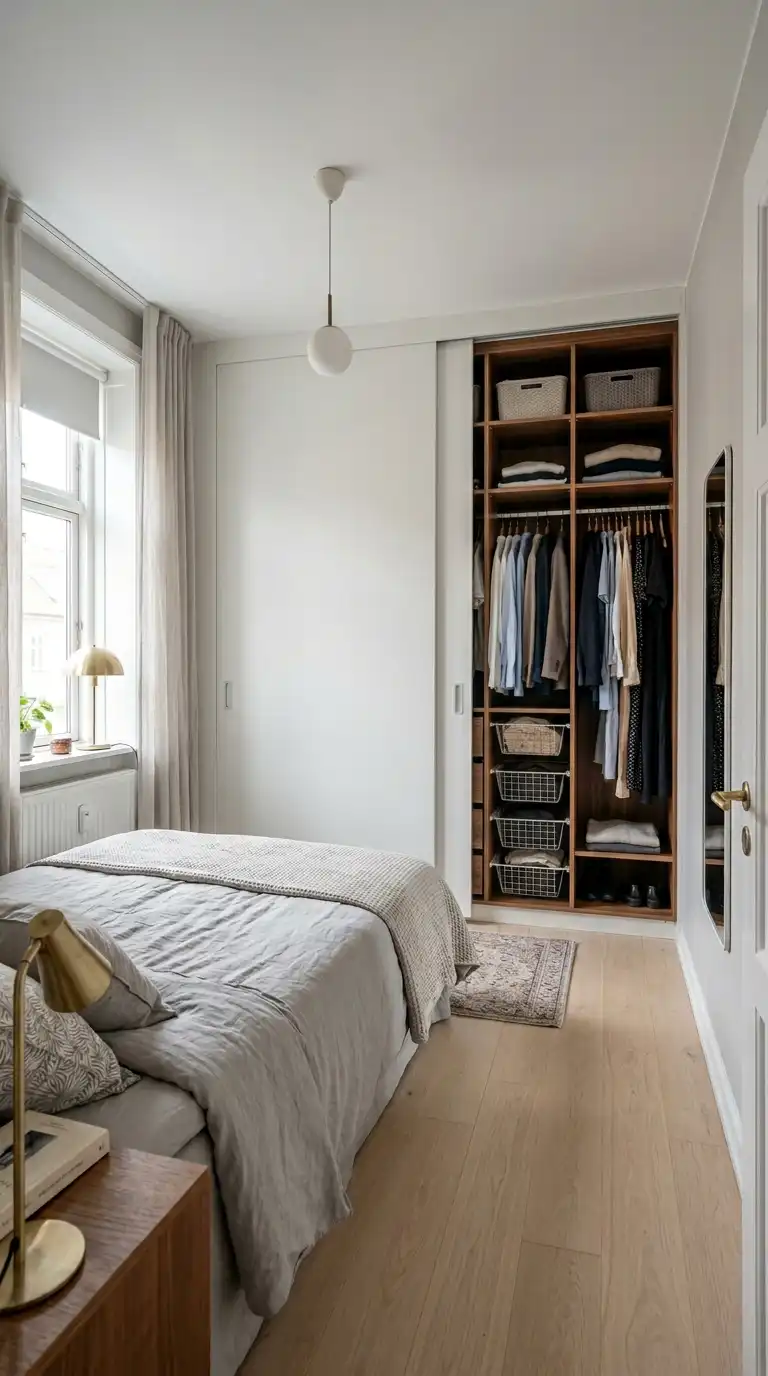
1. Single-Sided Layout
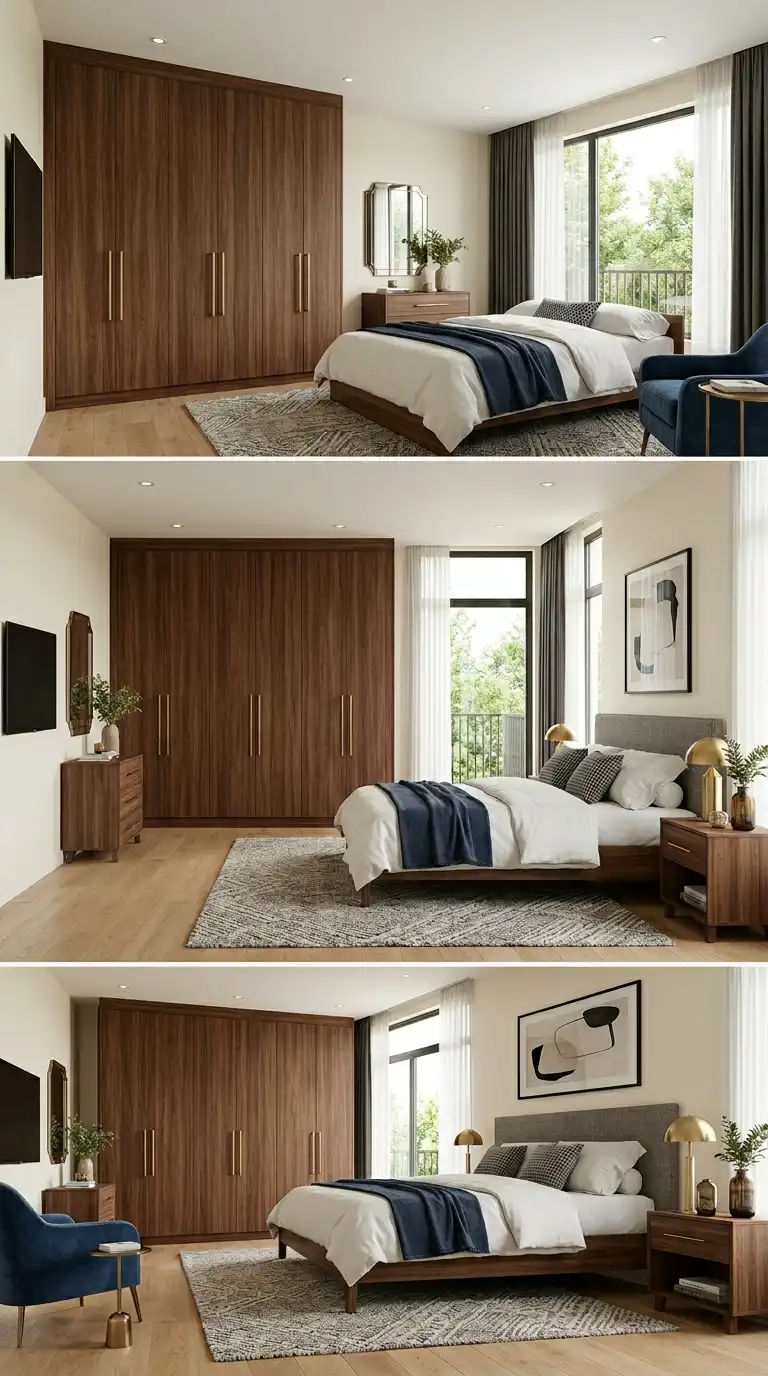
A single-sided layout features storage along one wall, making it ideal for narrow spaces or smaller bedrooms. Use floor-to-ceiling cabinetry with a mix of hanging rods, shelves, and drawers. This layout is simple, efficient, and works well in alcoves or against a single wall.
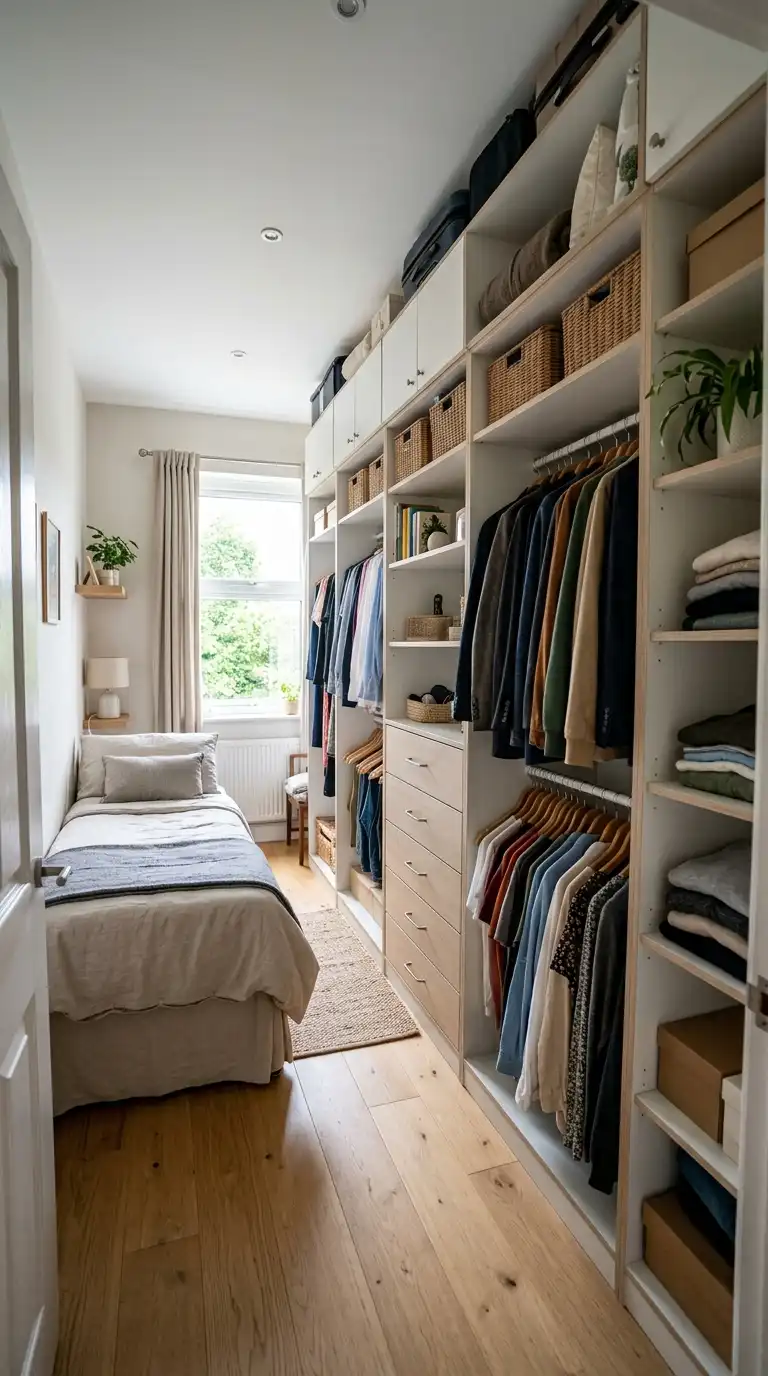
2. Double-Sided Layout
A double-sided layout features storage on two opposing walls, creating a walkway in between. This layout is ideal for walk-in closets or larger bedrooms where space allows. Use one side for hanging clothes and the other for drawers and shelving, or dedicate each side to different categories.
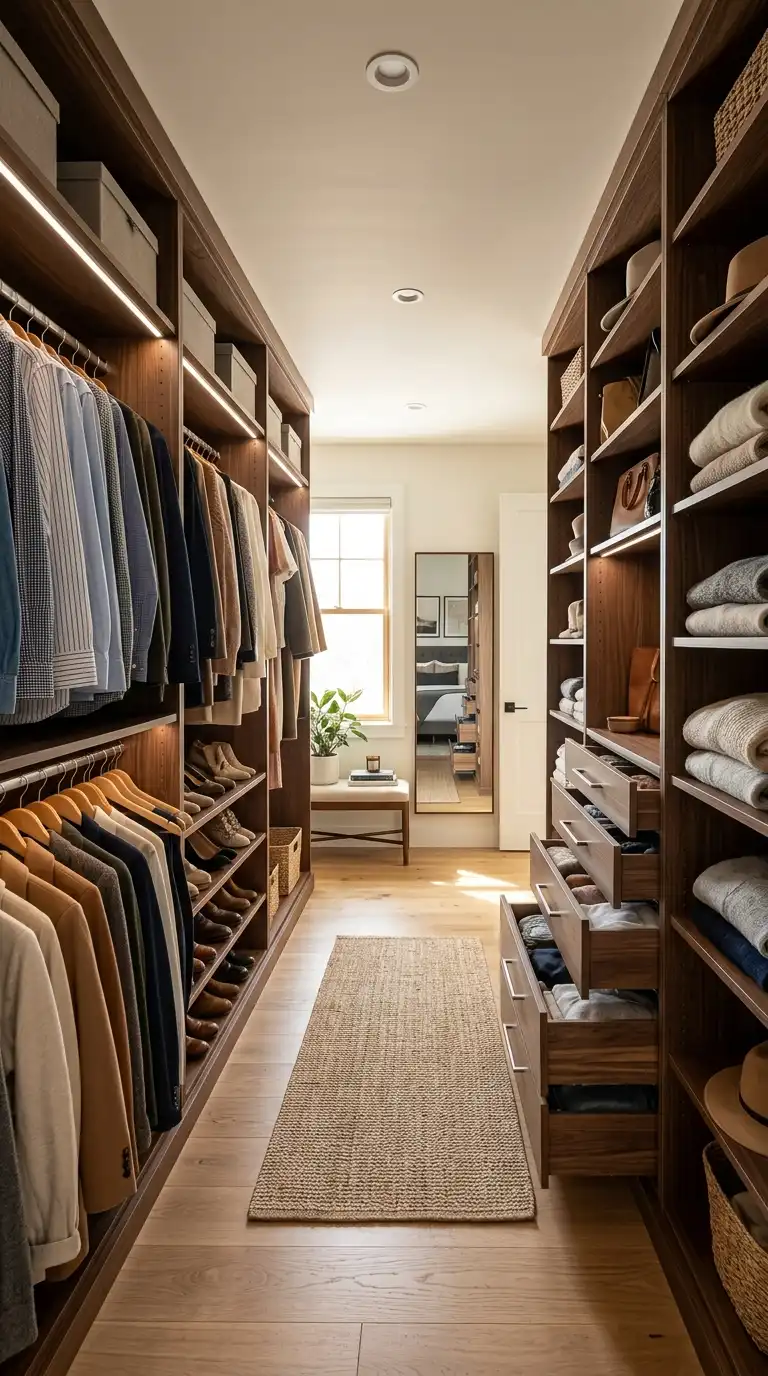
3. L-Shape Layout
An L-shape layout uses two adjacent walls, maximizing corner space. This configuration is ideal for bedrooms where a single wall would not provide enough storage. Use one wall for hanging and the other for drawers and shelving, with a rotating carousel or angled shelves in the corner.
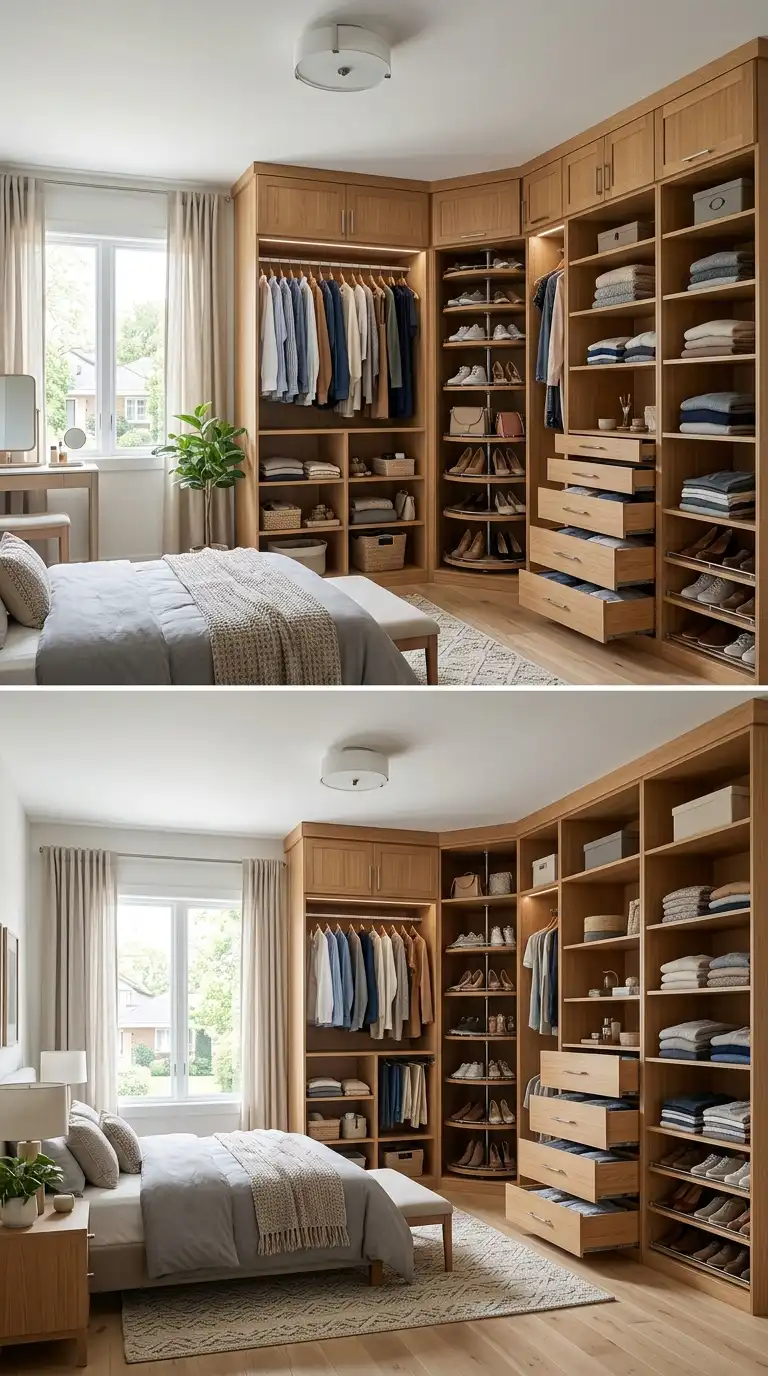
4. U-Shape Layout
A U-shape layout uses three walls, creating a highly efficient storage space. This layout is ideal for dedicated walk-in closets or dressing rooms. Use one wall for hanging, another for drawers and shelving, and the third for shoes, accessories, or a dressing table.
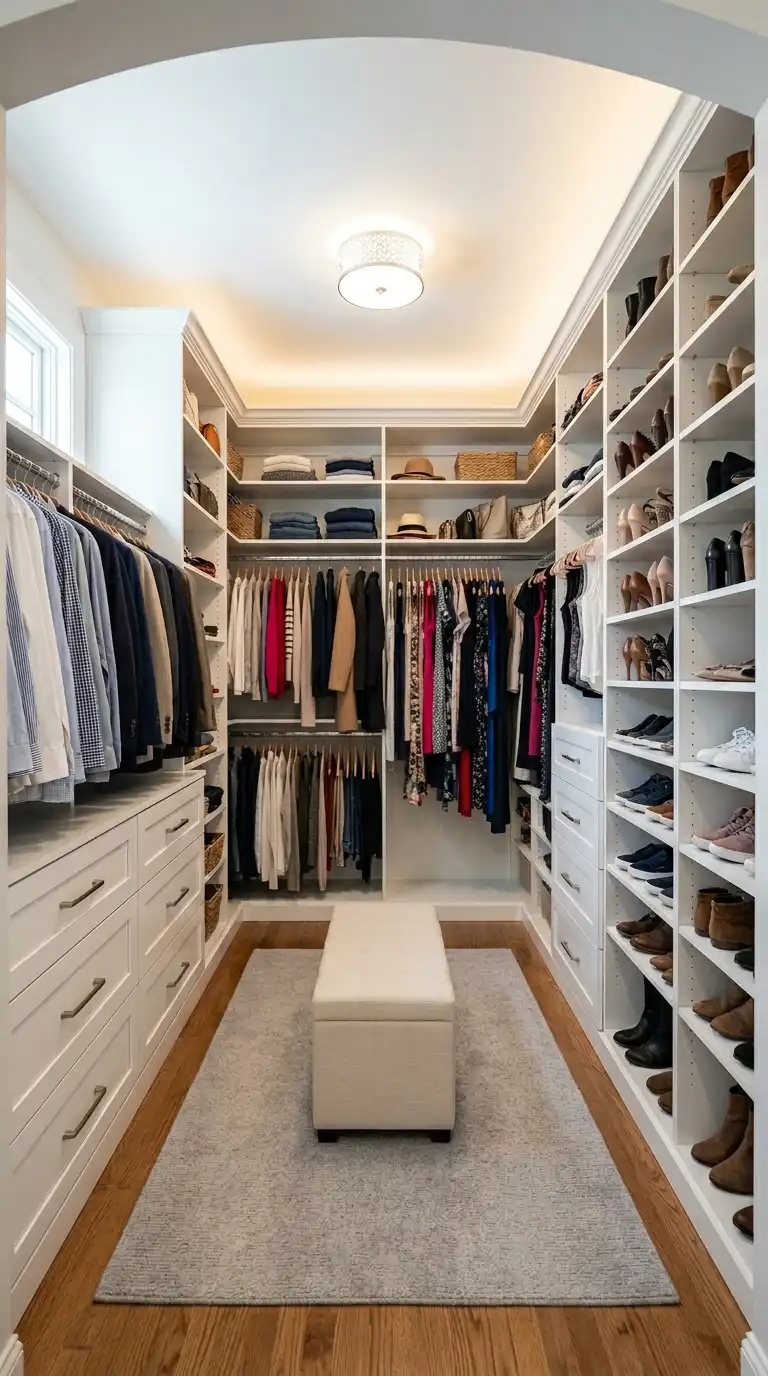
5. Galley Layout
A galley layout features two parallel walls of storage with a walkway between. This layout is ideal for narrow walk-in closets or hallway conversions. Use one side for hanging clothes and the other for drawers, shelves, and accessories.
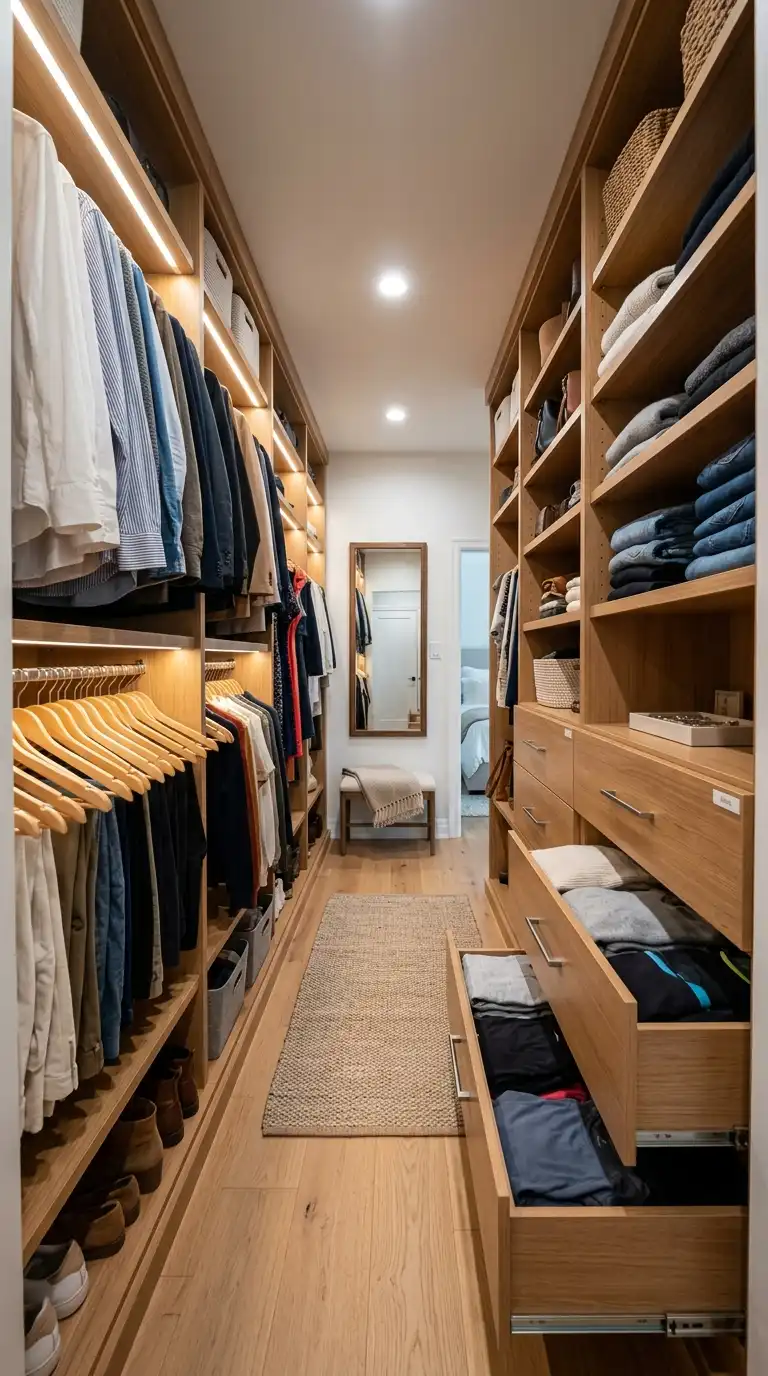
6. Floor-to-Ceiling Layout
A floor-to-ceiling layout maximizes vertical storage by using the full height of the room. Use high shelves for out-of-season items, luggage, or accessories, and keep everyday essentials at eye level. This layout works in any configuration—single-sided, L-shape, or walk-in.
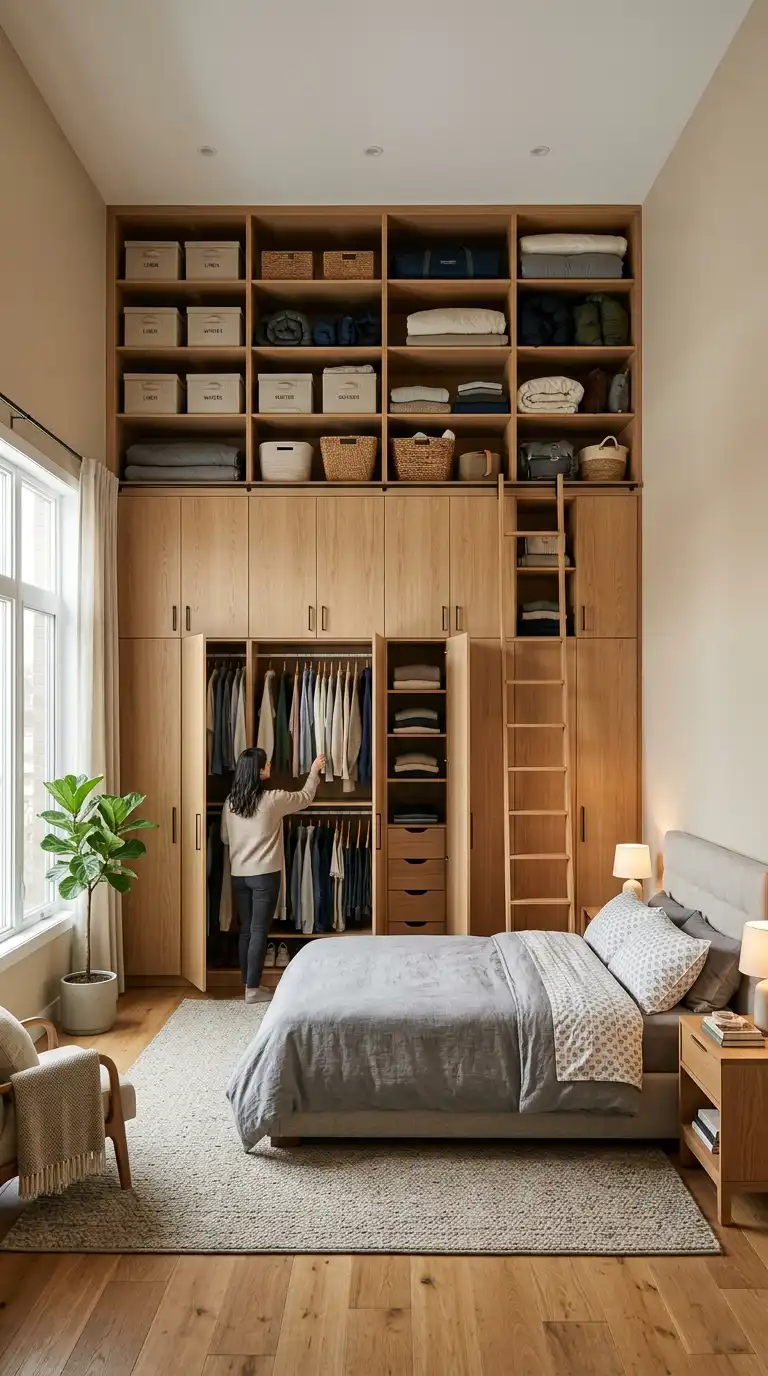
7. Open Concept Layout
An open concept layout features no doors, creating a curated, boutique-like display. Use uniform hangers and neatly folded items to maintain a polished appearance. This layout works well in dressing rooms and master suites where privacy is not a concern.
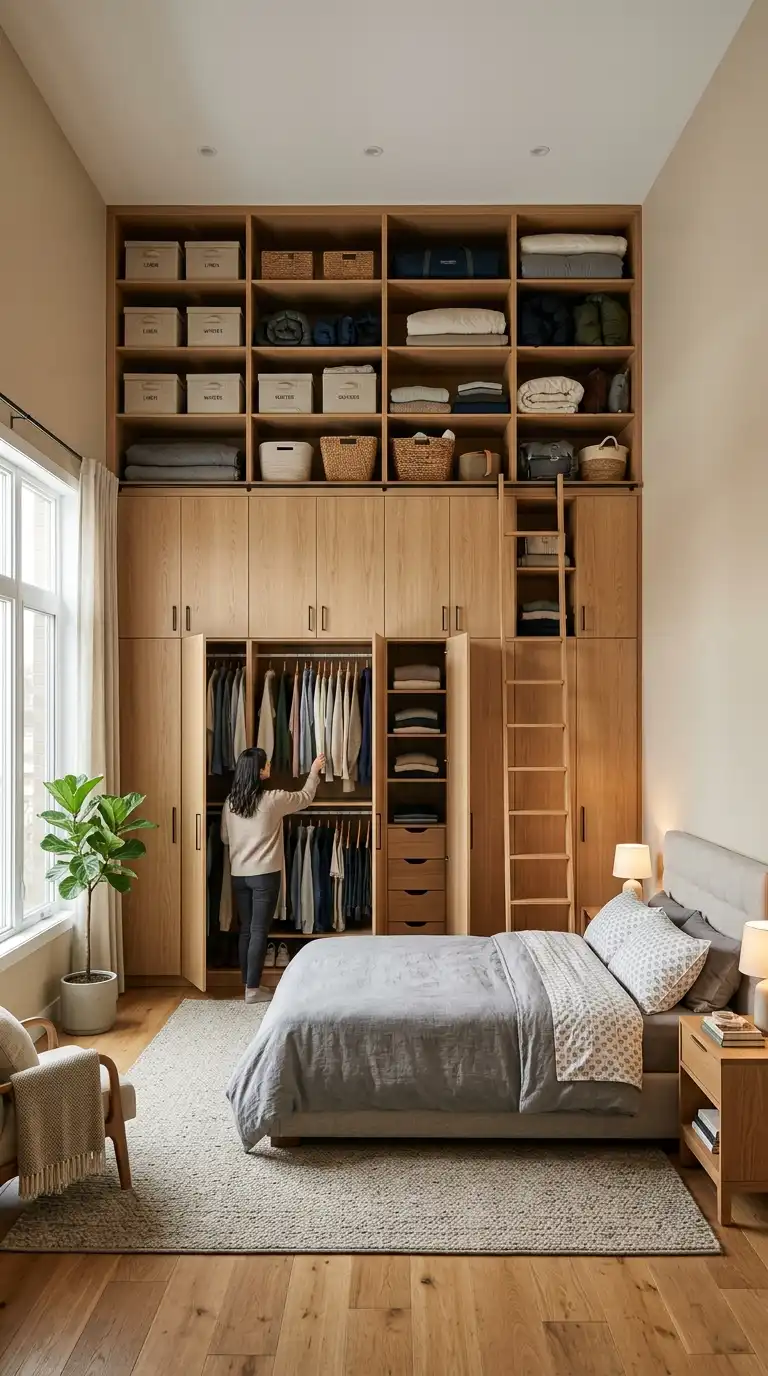
8. Zoned Layout
A zoned layout divides the wardrobe into dedicated zones for different categories of items. Create zones for hanging clothes, folded items, shoes, accessories, and out-of-season storage. This layout makes it easy to find what you need and maintain organization.
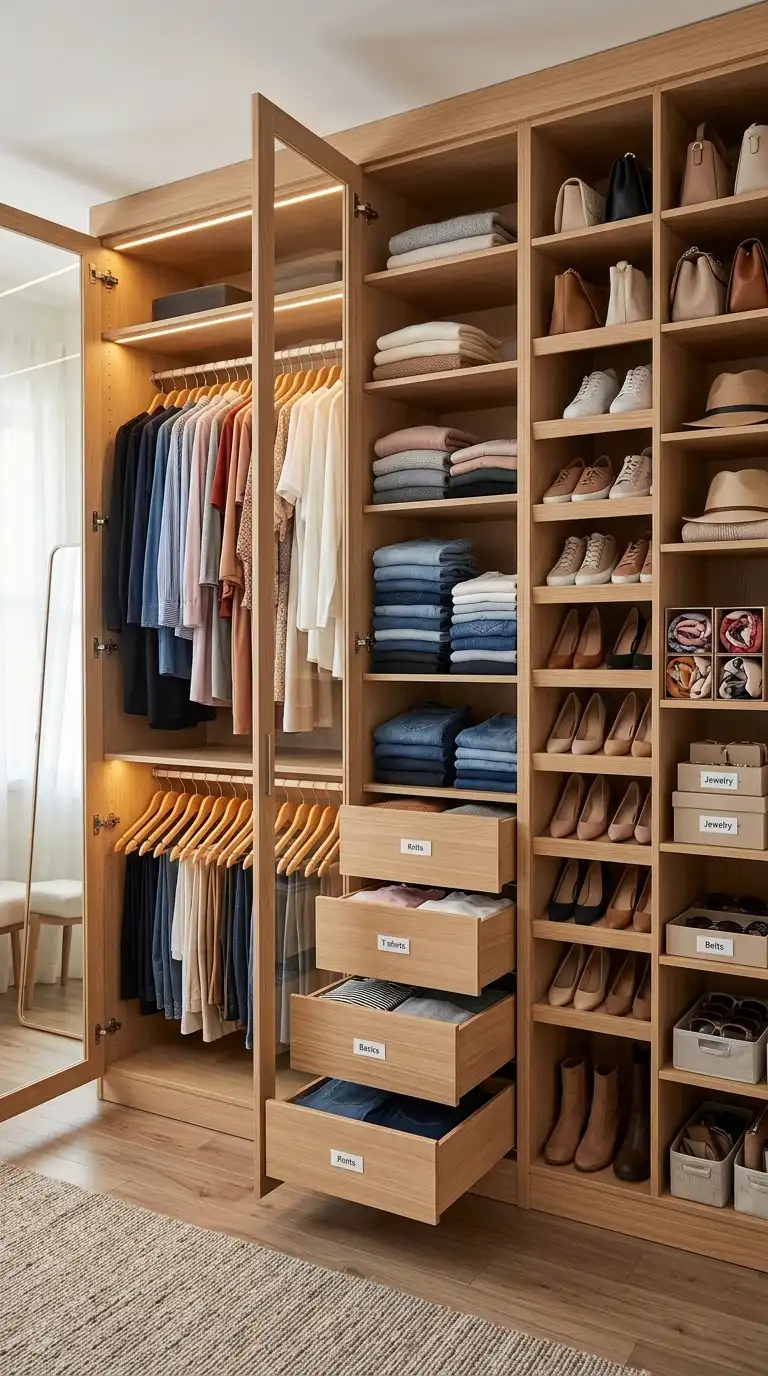
9. Corner Focus Layout
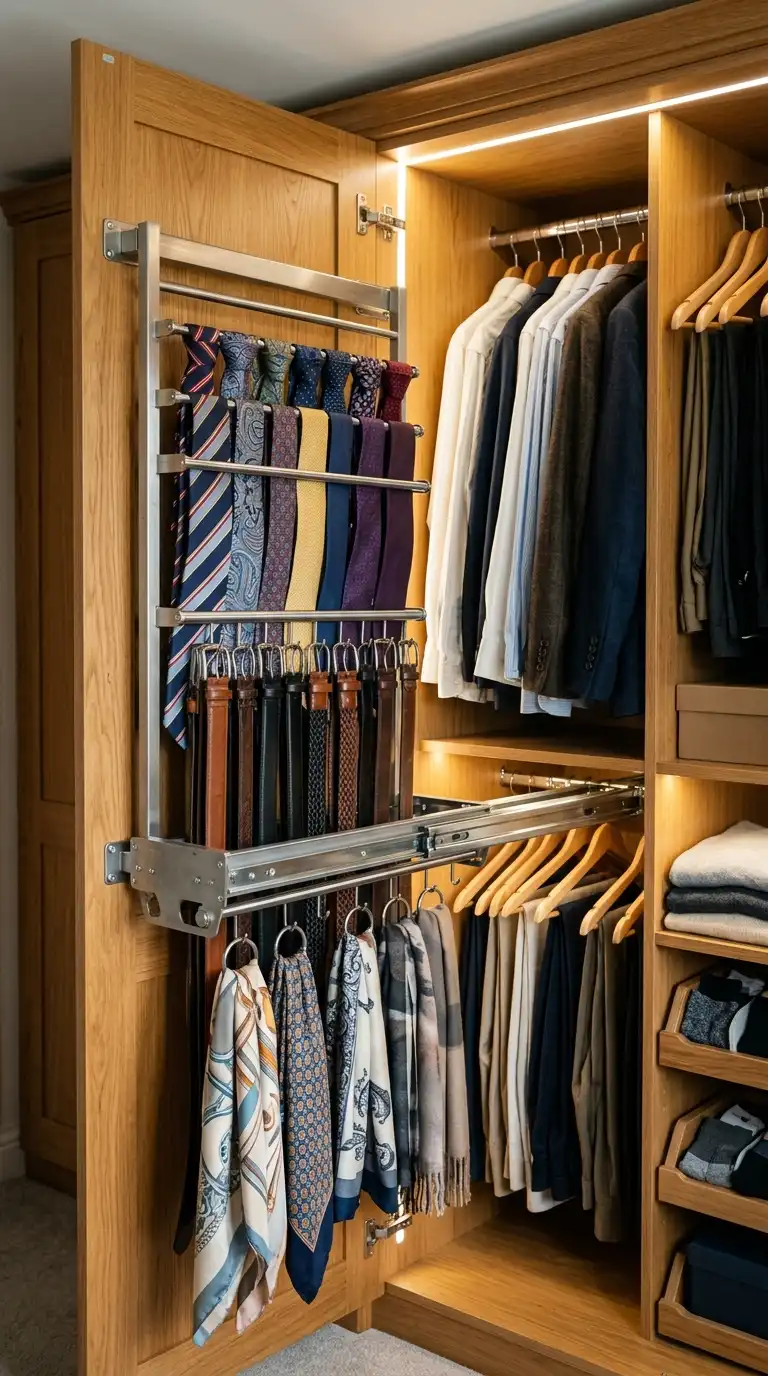
A corner focus layout centers the storage around a corner, making use of often-wasted space. Use angled cabinets, rotating carousels, or pull-out racks to maximize accessibility. This layout is ideal for bedrooms with limited wall space.
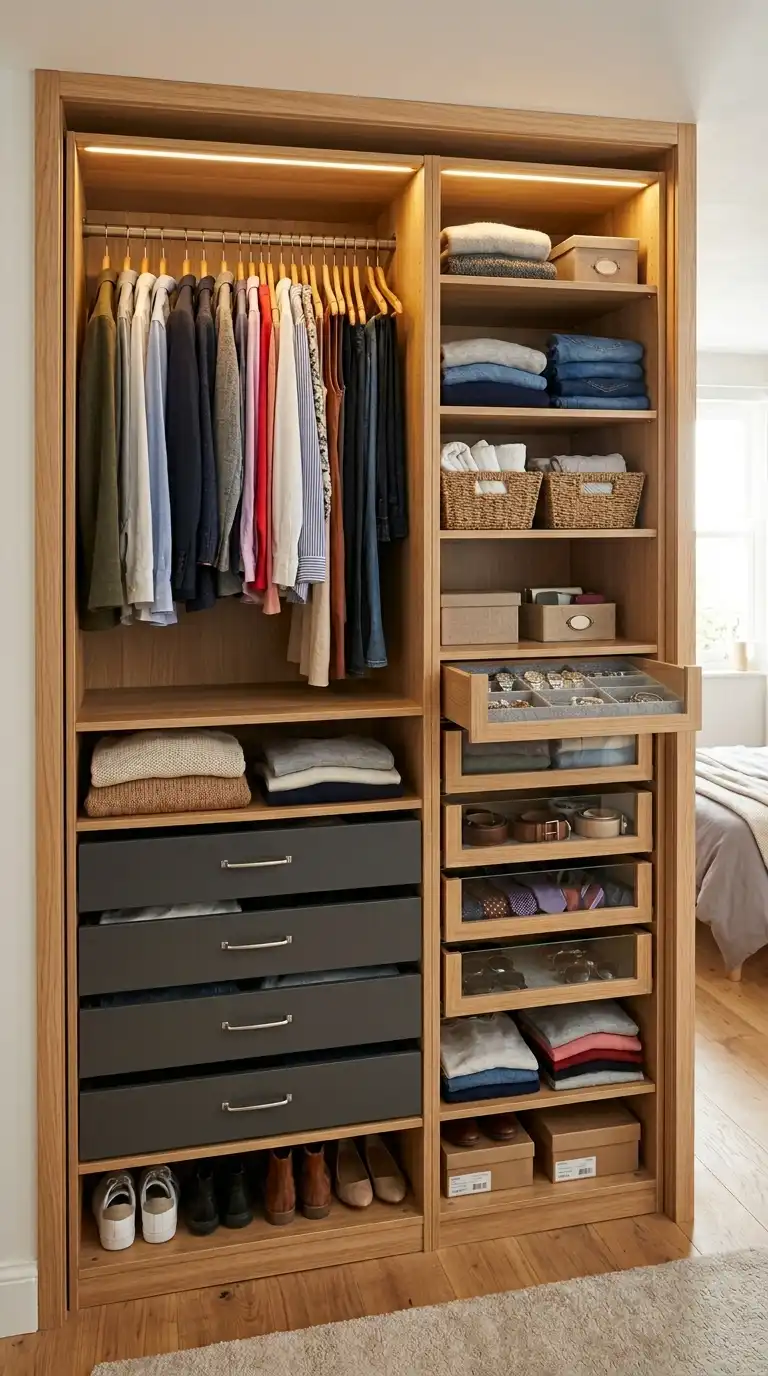
10. Island Layout
An island layout adds a central island to a walk-in wardrobe, providing additional storage and a surface for folding and organizing. The island can include drawers, display cases, and a countertop. This layout is ideal for larger walk-in closets and dressing rooms.
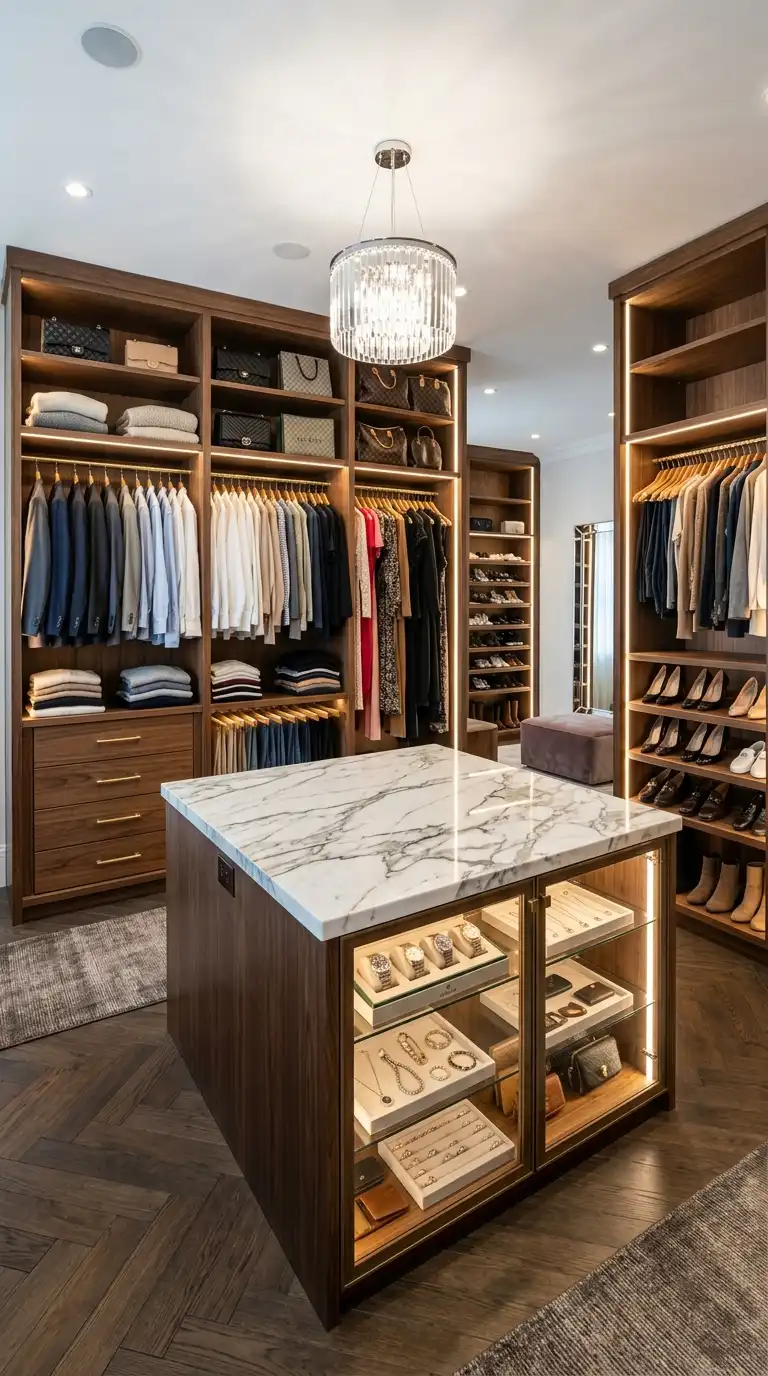
11. Modular Layout
A modular layout uses adjustable, interchangeable components that can be reconfigured as your needs change. This layout is ideal for those who value flexibility and adaptability. Use a system with movable shelves, repositionable hanging rods, and interchangeable drawers.
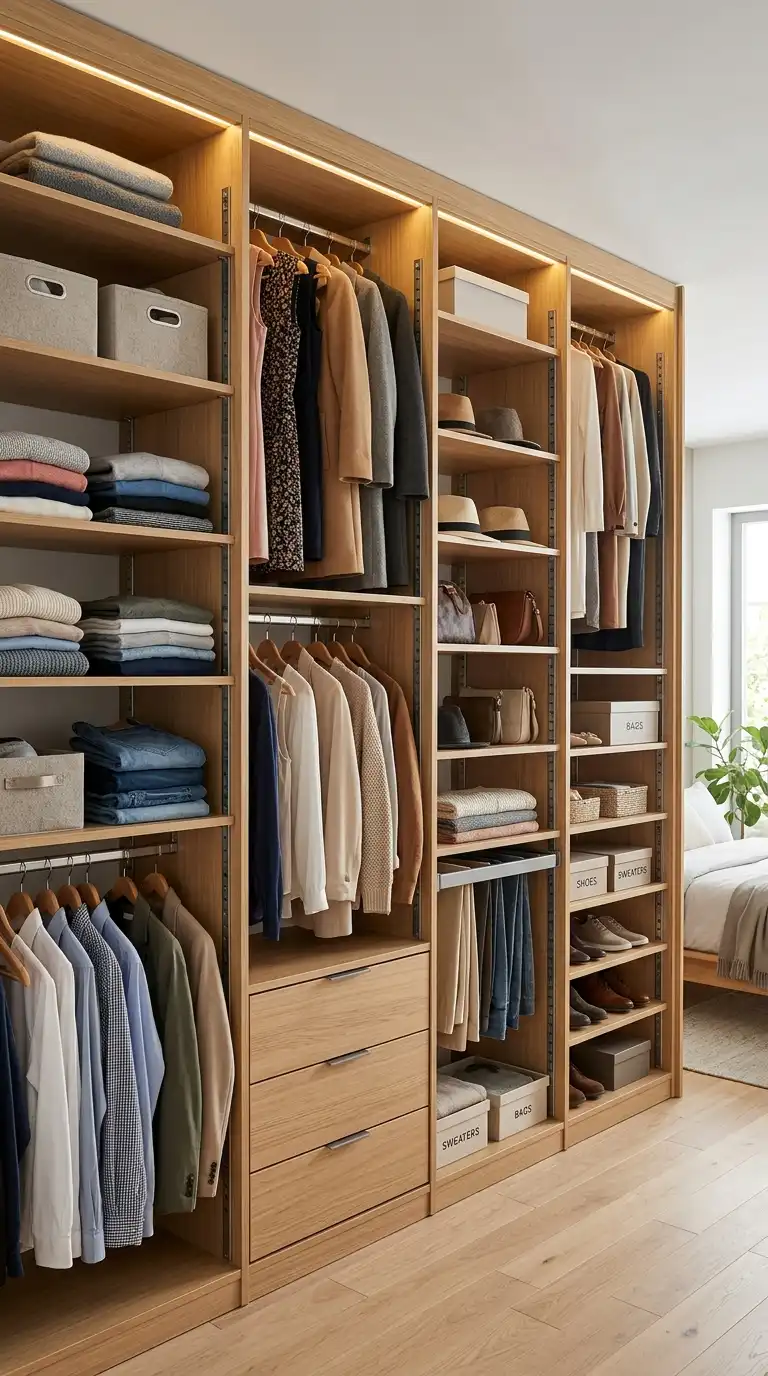
12. Pocket Door Layout
A pocket door layout saves space by having doors that slide into the wall cavity. This layout is ideal for small bedrooms where swinging or sliding doors would be impractical. Pocket doors create a clean, seamless appearance when closed.
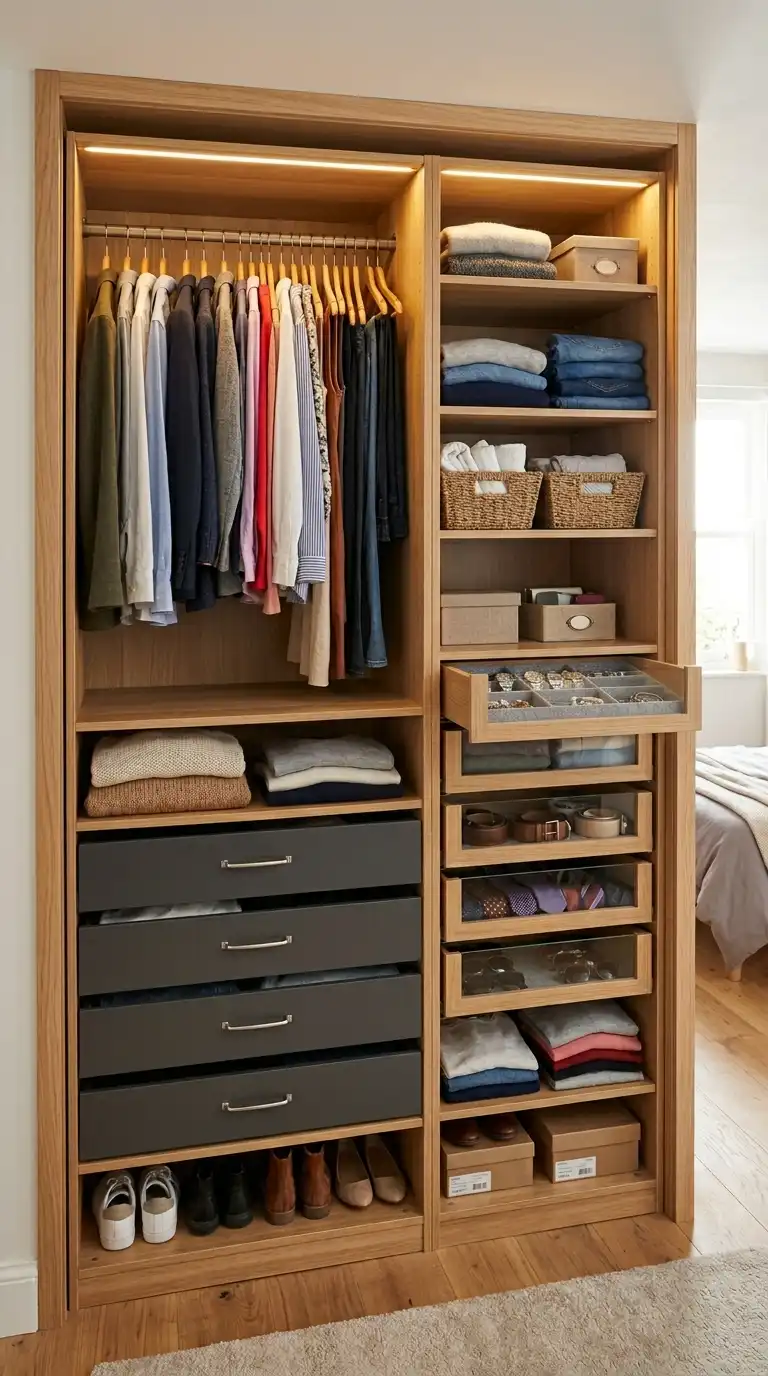
13. Mixed Depth Layout
A mixed depth layout uses varying depths to accommodate different types of storage. Use standard depth (60 centimeters) for hanging clothes, and shallower depths (30–40 centimeters) for folded items, shoes, and accessories. This layout maximizes efficiency in compact spaces.
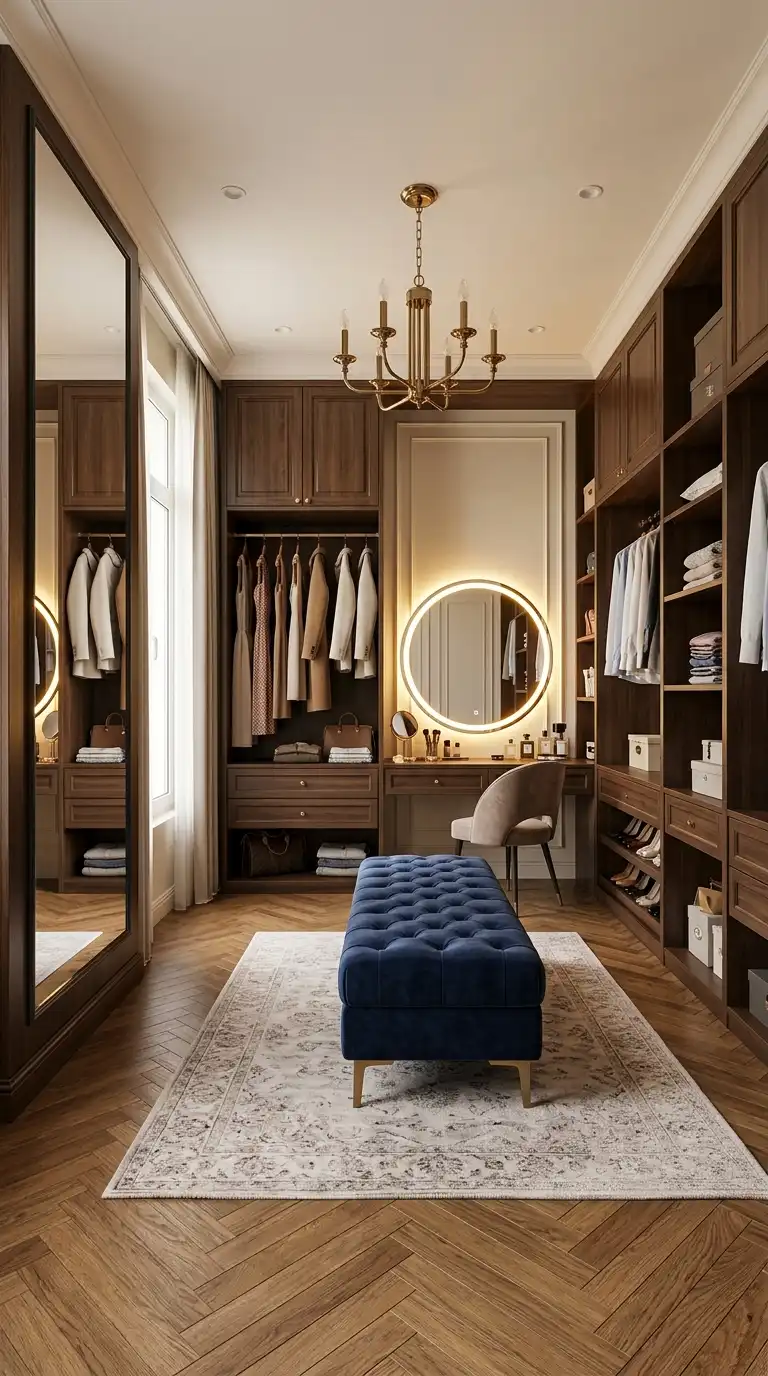
14. Dressing Room Layout
A dressing room layout combines storage with a dedicated dressing area. Include a full-length mirror, a bench or seating, and a dressing table within the wardrobe layout. This layout creates a complete dressing experience, ideal for master suites.
Conclusion
The layout of your wardrobe determines how efficiently you can store and access your belongings. Whether you choose a single-sided layout for a narrow space, a U-shape for a dedicated walk-in, or a modular layout for flexibility, thoughtful planning ensures that every inch of space is utilized. Consider your storage needs, room dimensions, and personal style when designing your wardrobe layout.