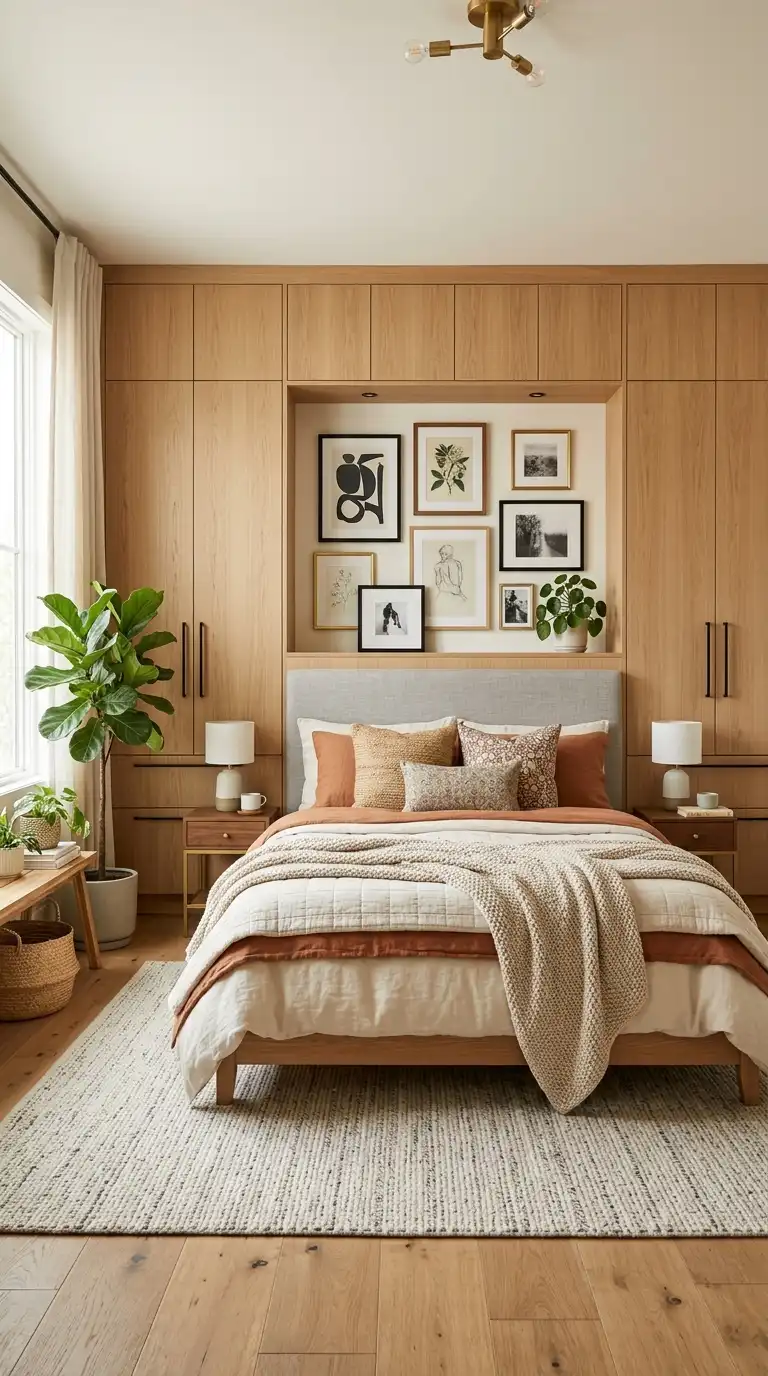
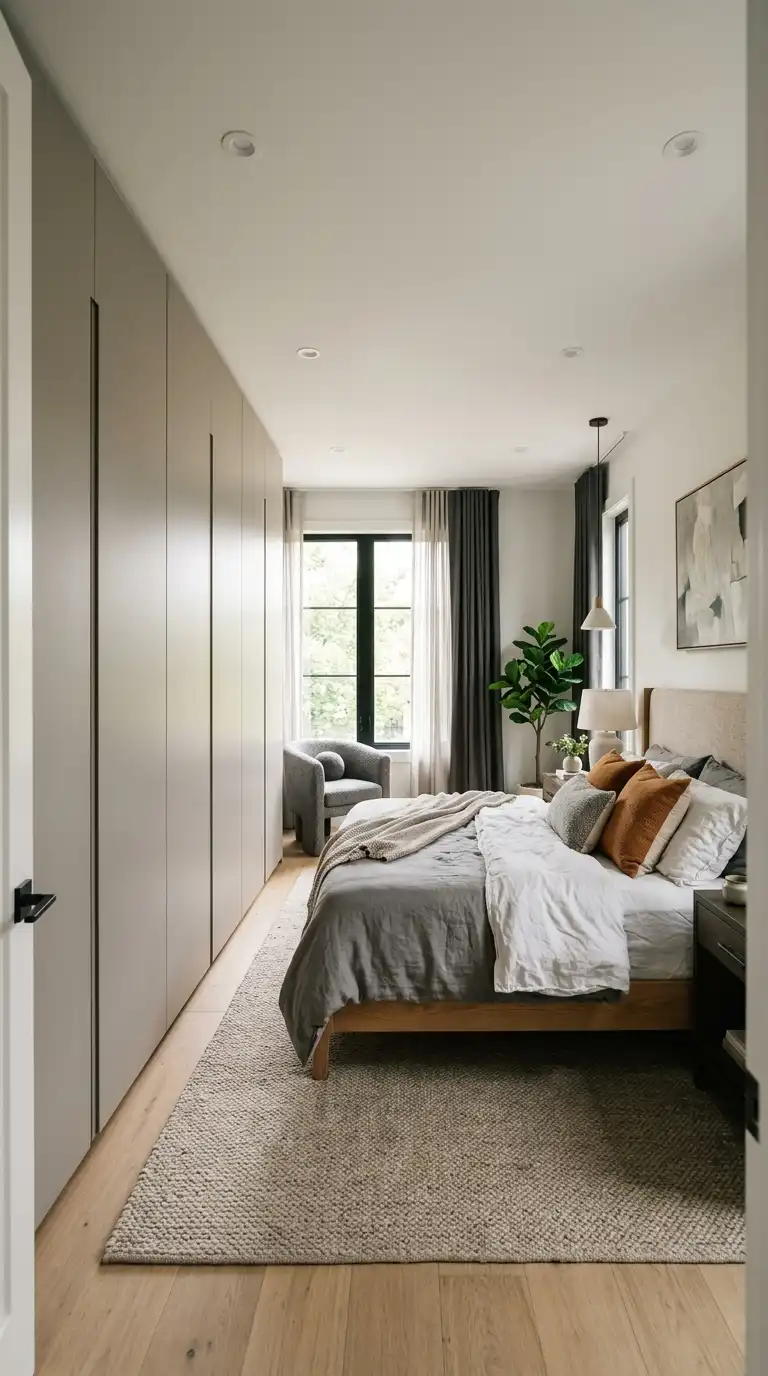
14 Wardrobe with Study Table Designs
Combining a wardrobe with a study table is a brilliant space-saving solution for bedrooms that need to accommodate both storage and a workspace. Whether for a child’s room, a home office, or a guest bedroom, integrating a desk into the wardrobe design creates a cohesive, functional area that maximizes every inch. Here are fourteen wardrobe with study table designs to inspire your next project.
1. Central Desk with Flanking Wardrobes
Create a dedicated study zone by positioning a desk at the center of a wall, flanked by wardrobes on either side. The desk becomes a focal point, with storage for books, supplies, and clothing surrounding it. This symmetrical layout works well in bedrooms with ample wall space and creates a balanced, custom look.
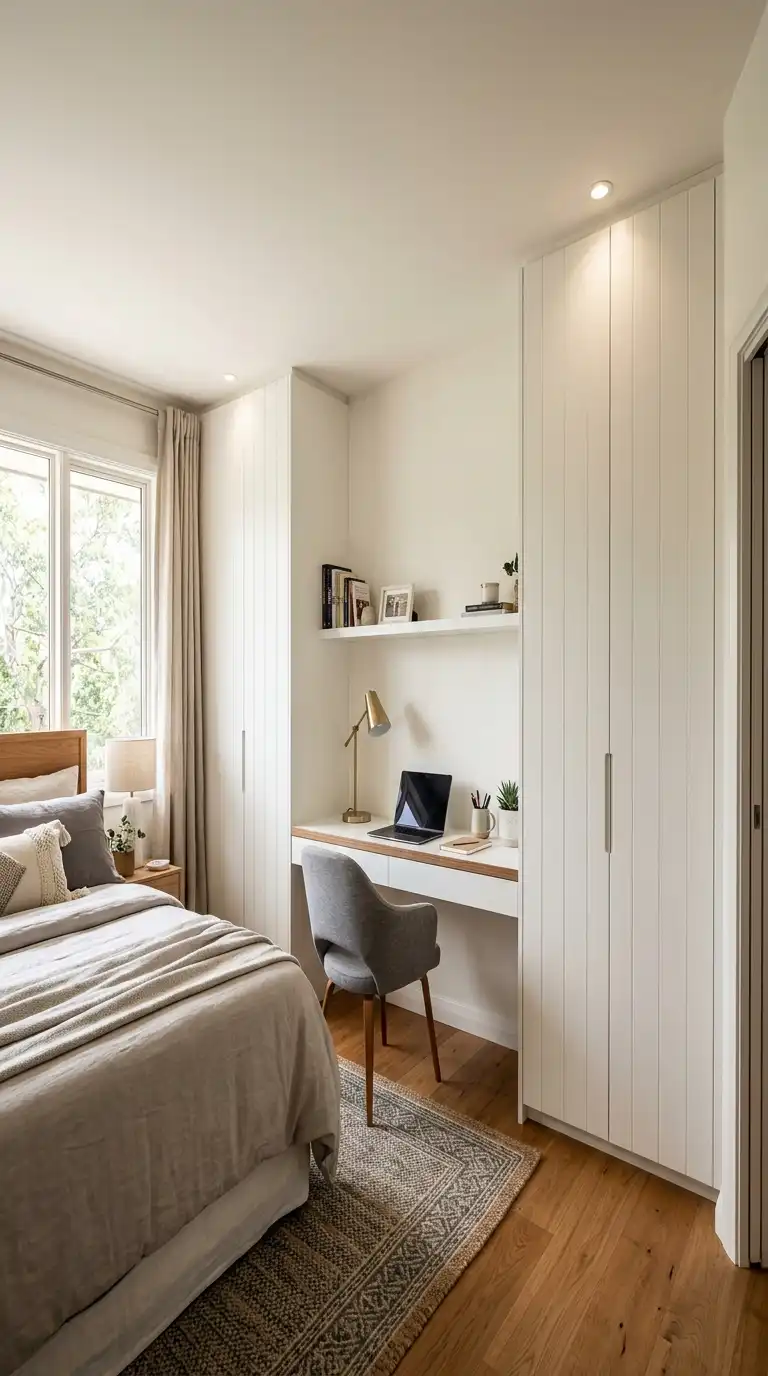
2. Desk Integrated into Wardrobe End
Position the study table at one end of a full-wall wardrobe. The desk shares the same cabinetry and finishes as the wardrobe, creating a cohesive, built-in appearance. Use the desk area for studying or working, and the adjacent storage for clothing and supplies. This layout is ideal for bedrooms where wall space is limited.
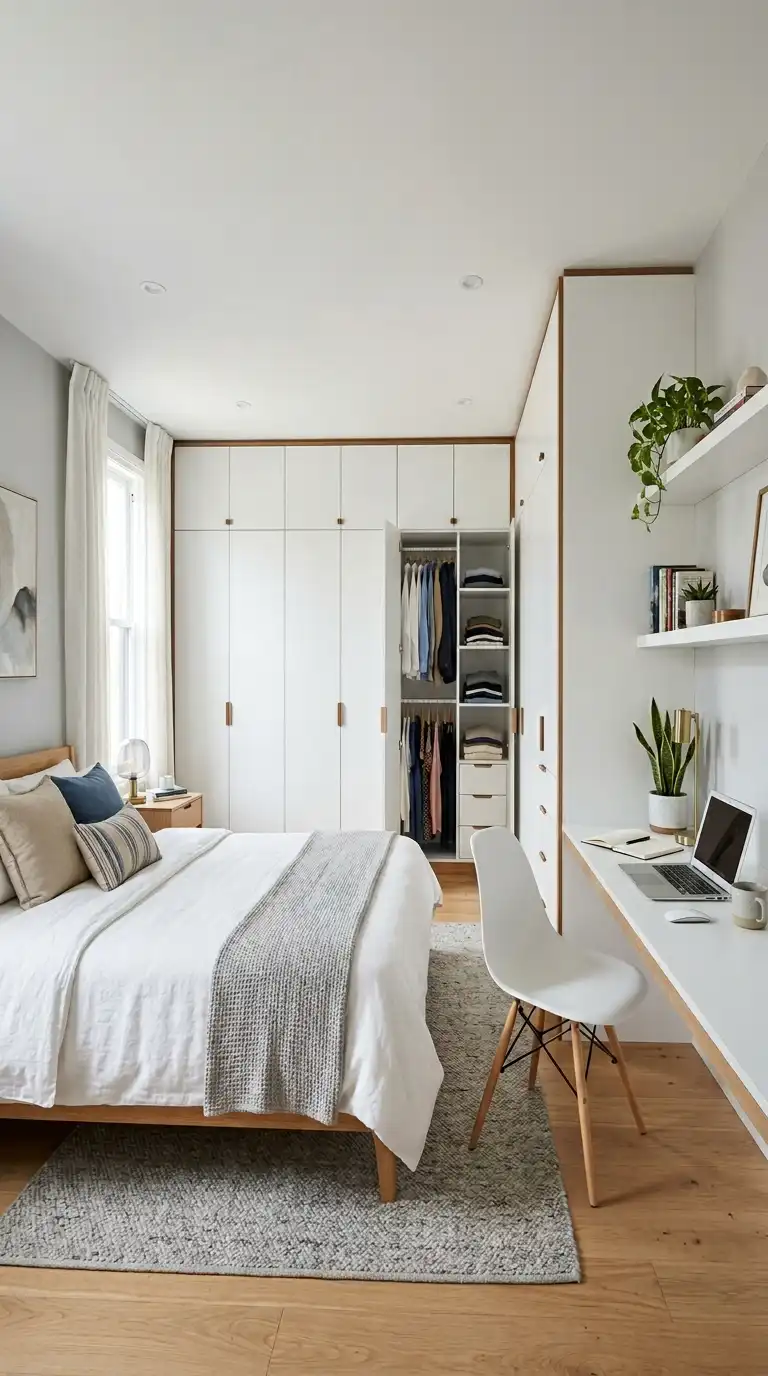
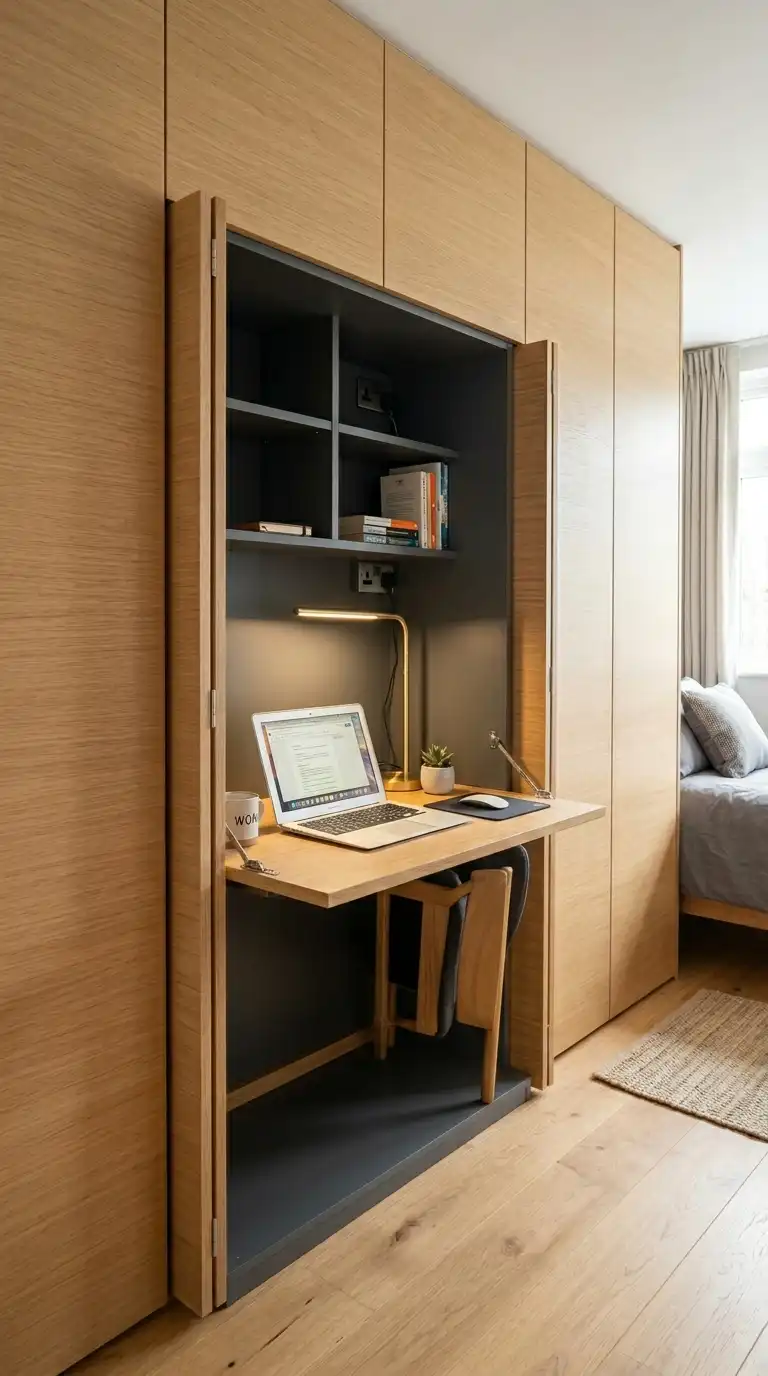
3. Fold-Down Desk Hidden Behind Doors
For a space-saving solution, design a fold-down desk that can be concealed behind wardrobe doors when not in use. The desk surface folds up against the wall, and the doors close to hide the workspace completely. This is ideal for small bedrooms where a permanent desk would take up valuable floor space.
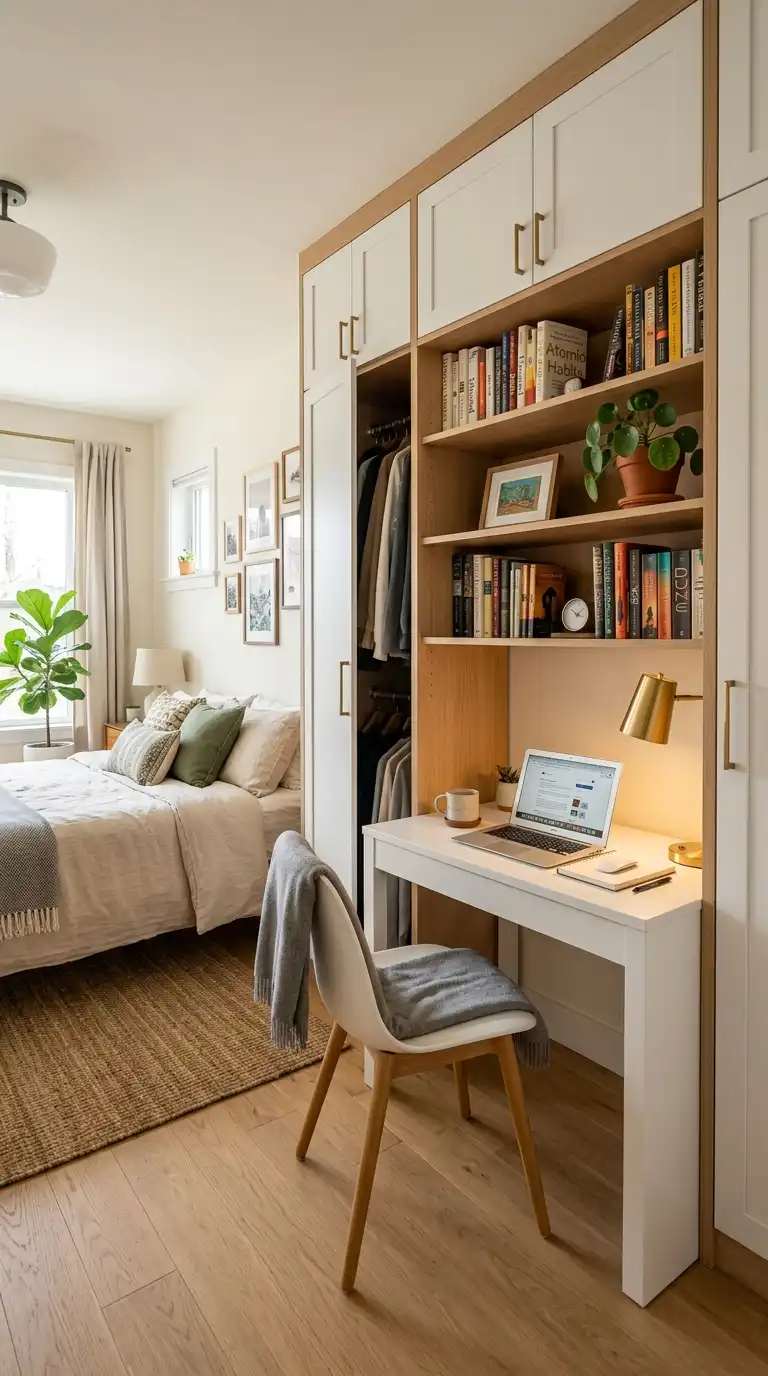
4. Desk with Open Shelving Above
Combine a desk with open shelving above for a functional study zone within the wardrobe design. Use the open shelves for books, supplies, and decorative objects. The desk surface can be used for studying, working, or as a vanity. This layout keeps everything within reach and adds visual interest.
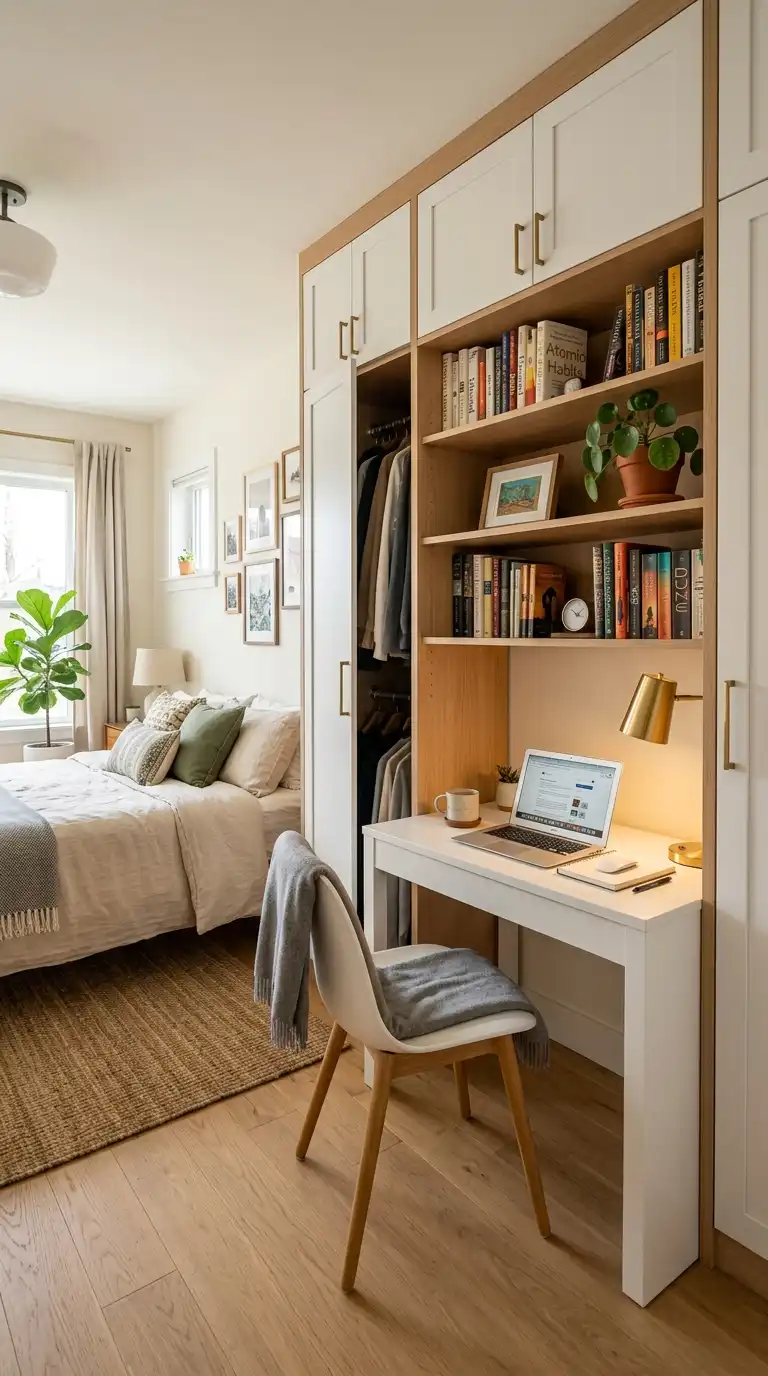
5. Corner Desk with Wraparound Wardrobes
Utilize a corner of the room for a desk, with wraparound wardrobes on either side. The corner desk creates a defined workspace without disrupting the flow of the room. Use the surrounding wardrobes for clothing and storage, and the desk area for studying or working.
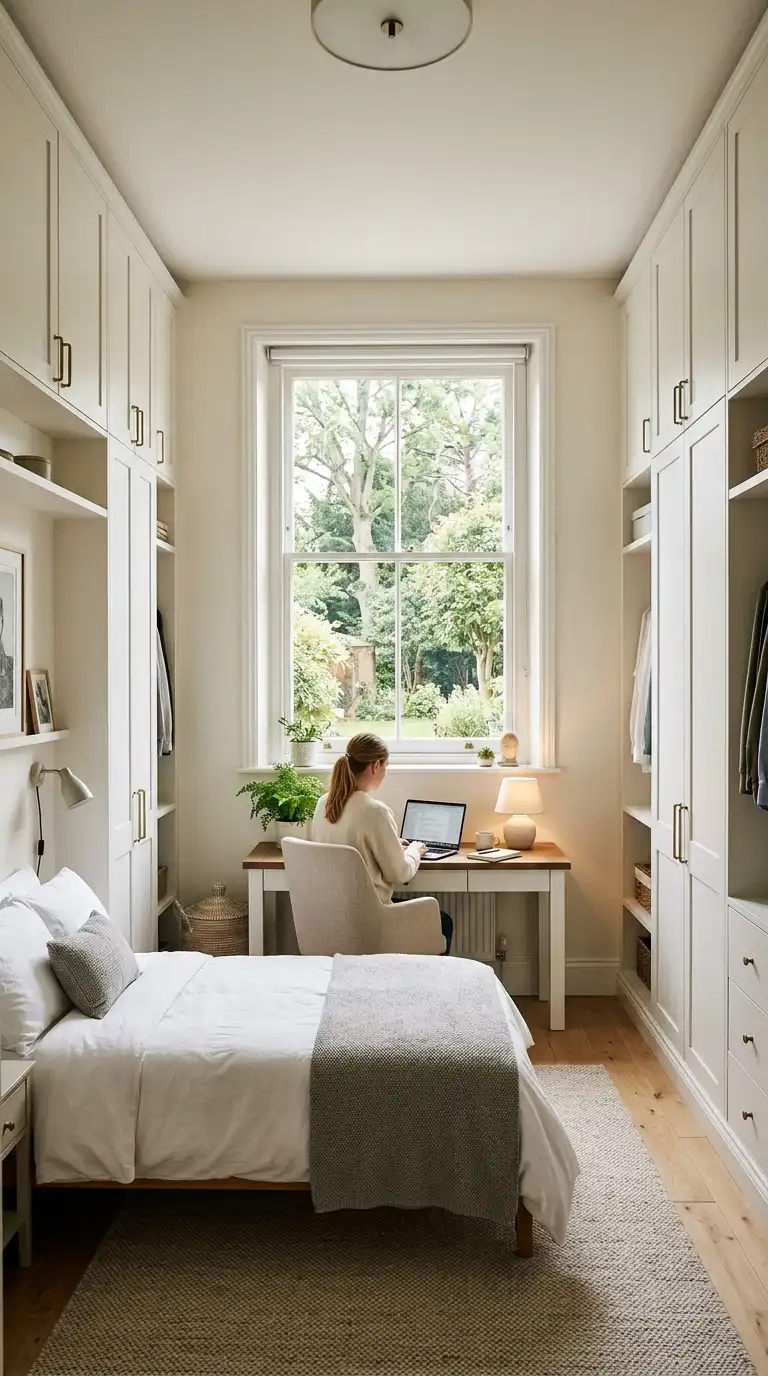
6. Desk Below a Window with Side Wardrobes
Position the desk below a window to take advantage of natural light, with wardrobes on either side. This layout creates a bright, inviting workspace while keeping storage close at hand. The natural light is ideal for studying and working, and the side wardrobes provide balanced symmetry.
7. Desk with Pull-Out Keyboard Tray
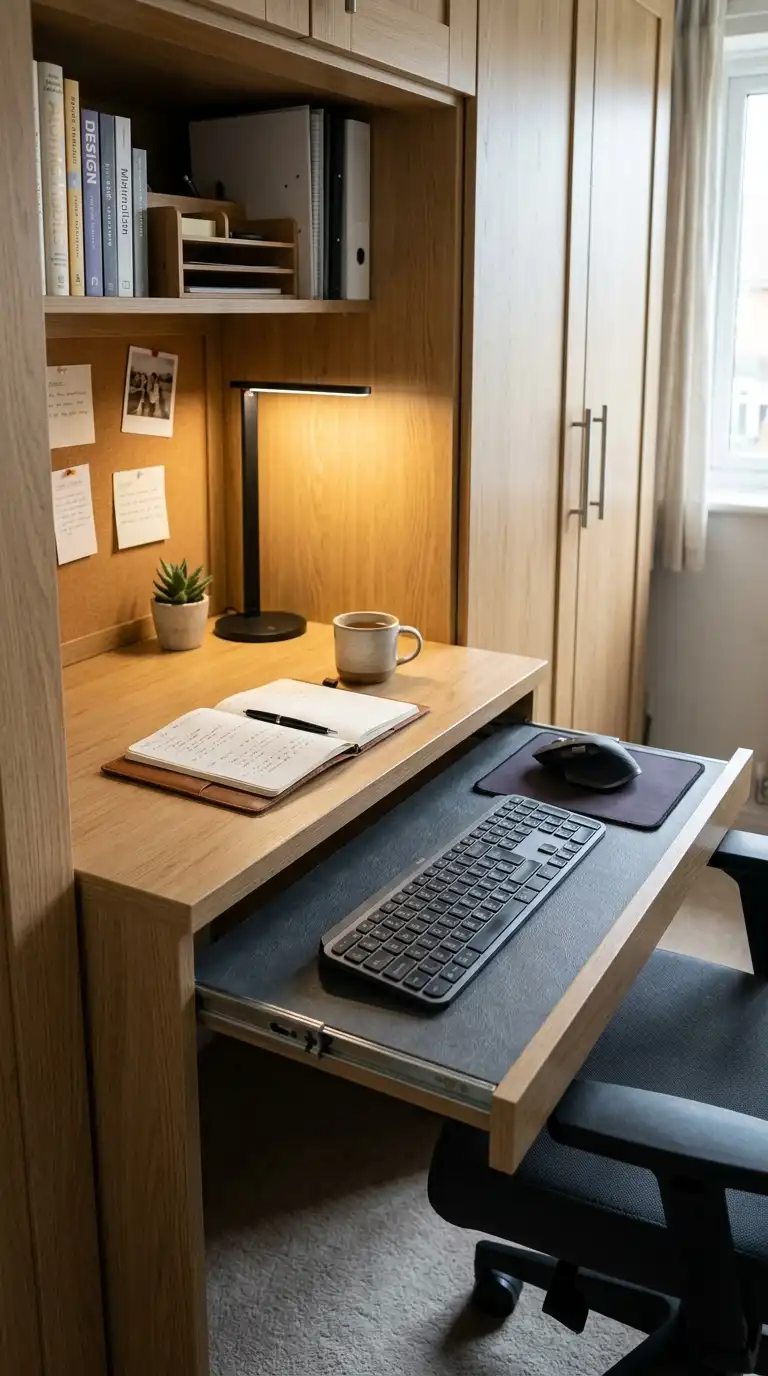
Incorporate a pull-out keyboard tray into your desk design for a streamlined workspace. The tray slides out when needed and tucks away when not in use, keeping the desk surface clear. This feature is especially useful for small desks or for those who use a computer frequently.
8. Desk with Built-In Cable Management
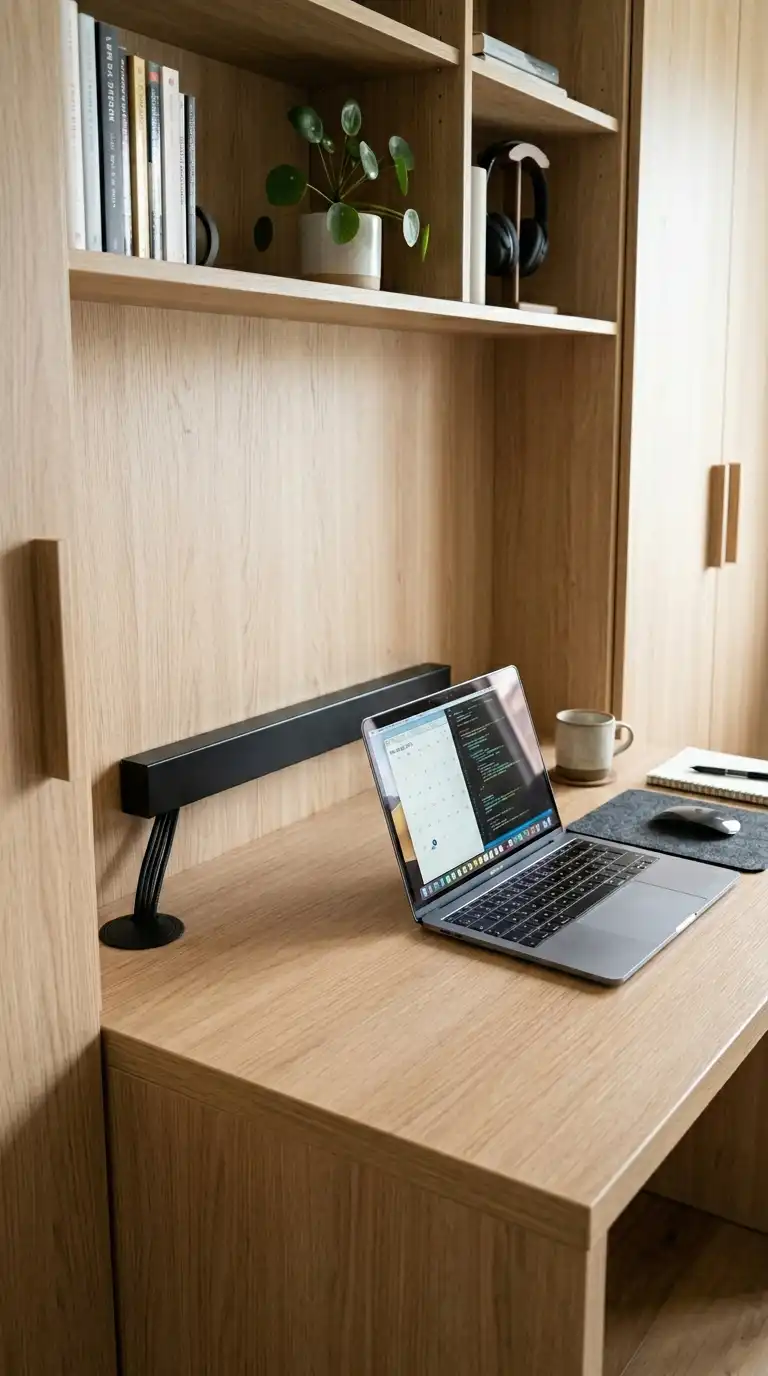
Keep cords and cables organized with built-in cable management features. Incorporate grommets, cord channels, or a dedicated compartment for power strips and chargers. This keeps the desk surface tidy and prevents tangles, creating a professional, clutter-free workspace.
9. Desk with Floating Surface
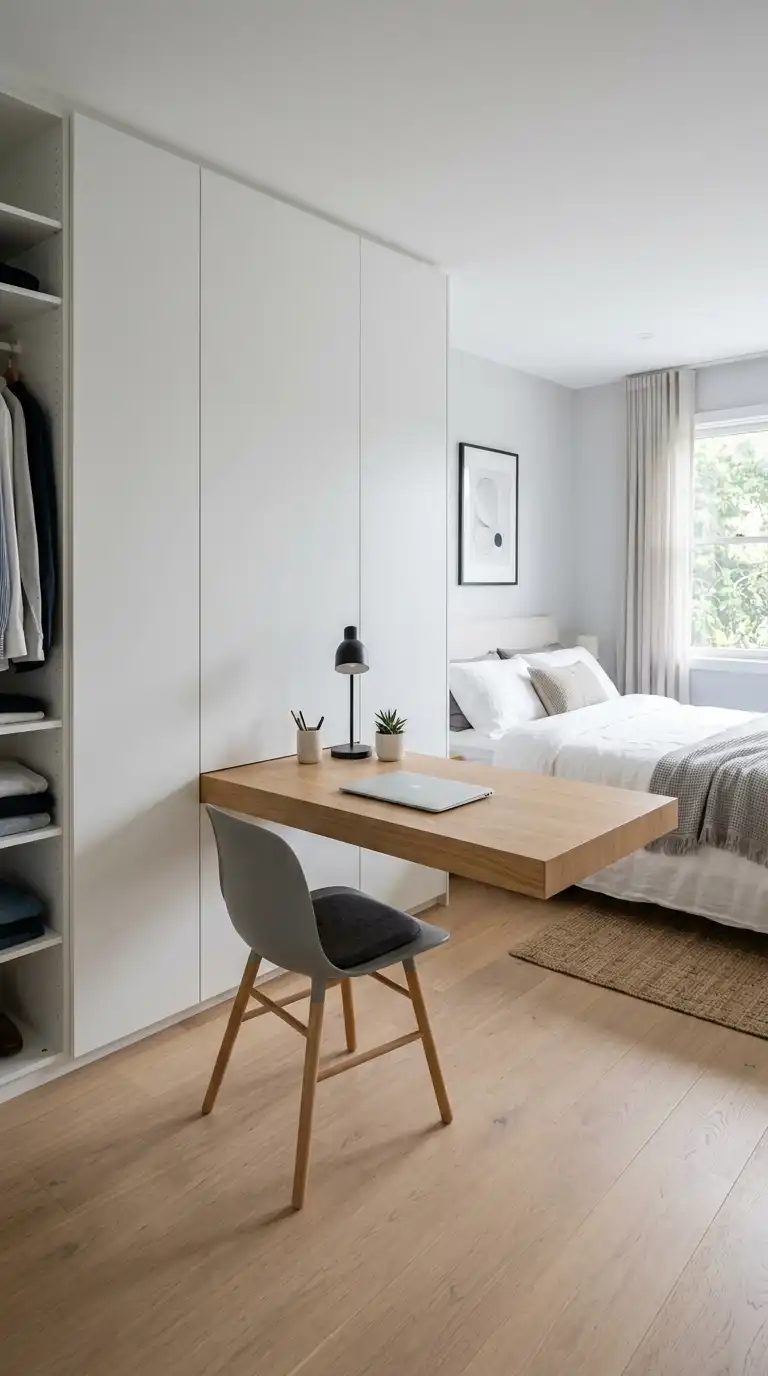
Create a modern, minimalist look with a floating desk surface that appears to have no visible supports. The desk extends from the wardrobe cabinetry, with brackets concealed beneath. This design adds a sense of lightness and is ideal for contemporary and Scandinavian interiors.
10. Desk with Drawers and Storage
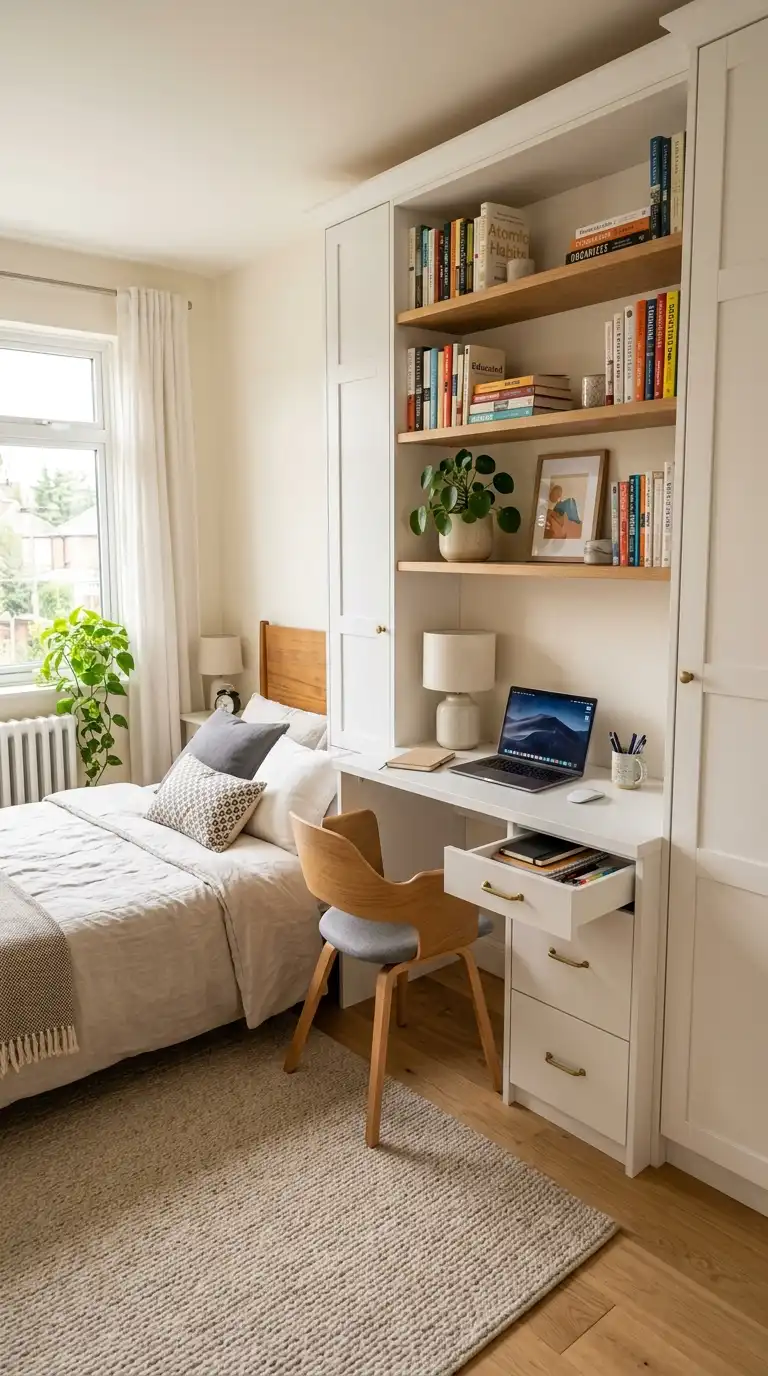
Incorporate drawers and storage into the desk area for supplies, documents, and accessories. Use the desk drawers for stationery, and the overhead cabinets or shelves for books and files. This keeps the workspace organized and reduces clutter on the desk surface.
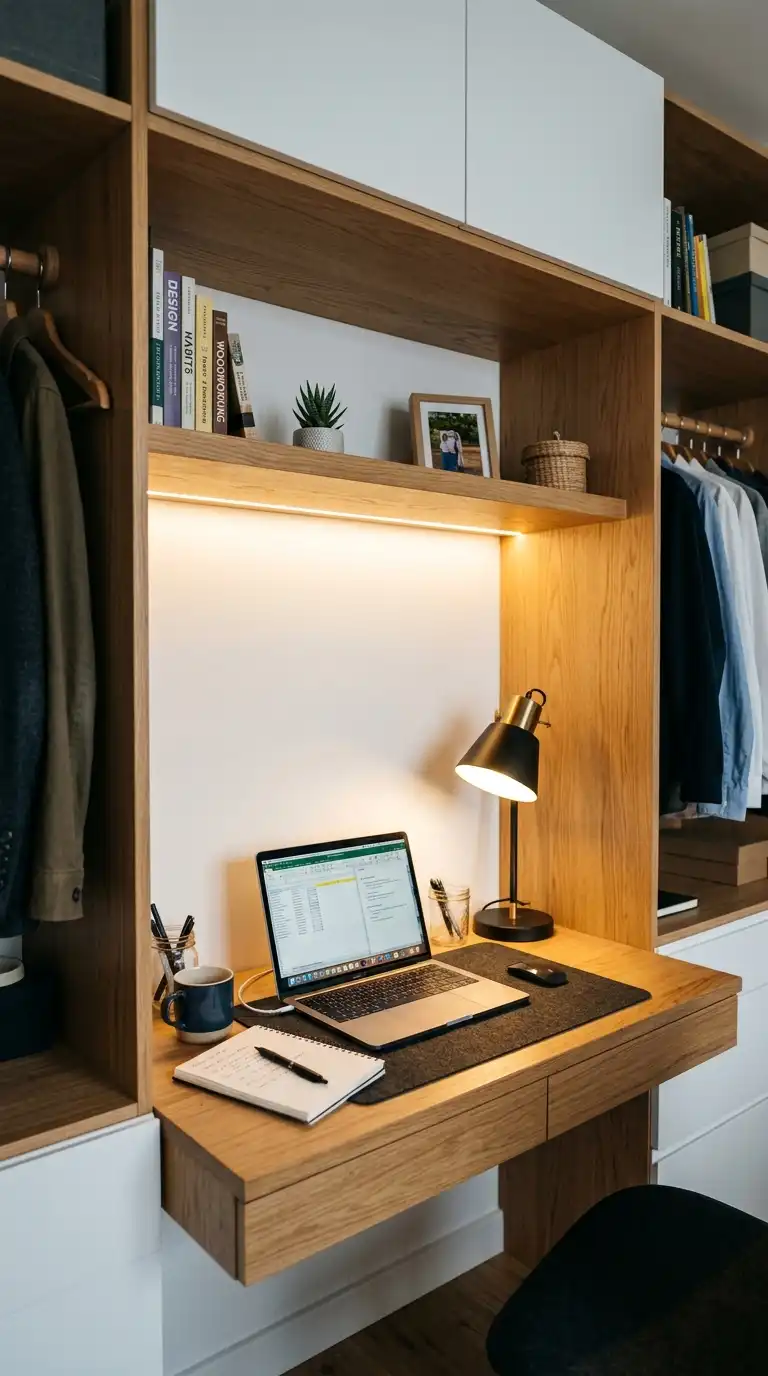
11. Desk with Built-In Lighting
Add built-in lighting to the desk area for task illumination. Under-cabinet lights, desk lamps integrated into the shelving, or LED strips above the desk provide focused light for studying and working. This feature is especially valuable in rooms with limited natural light.
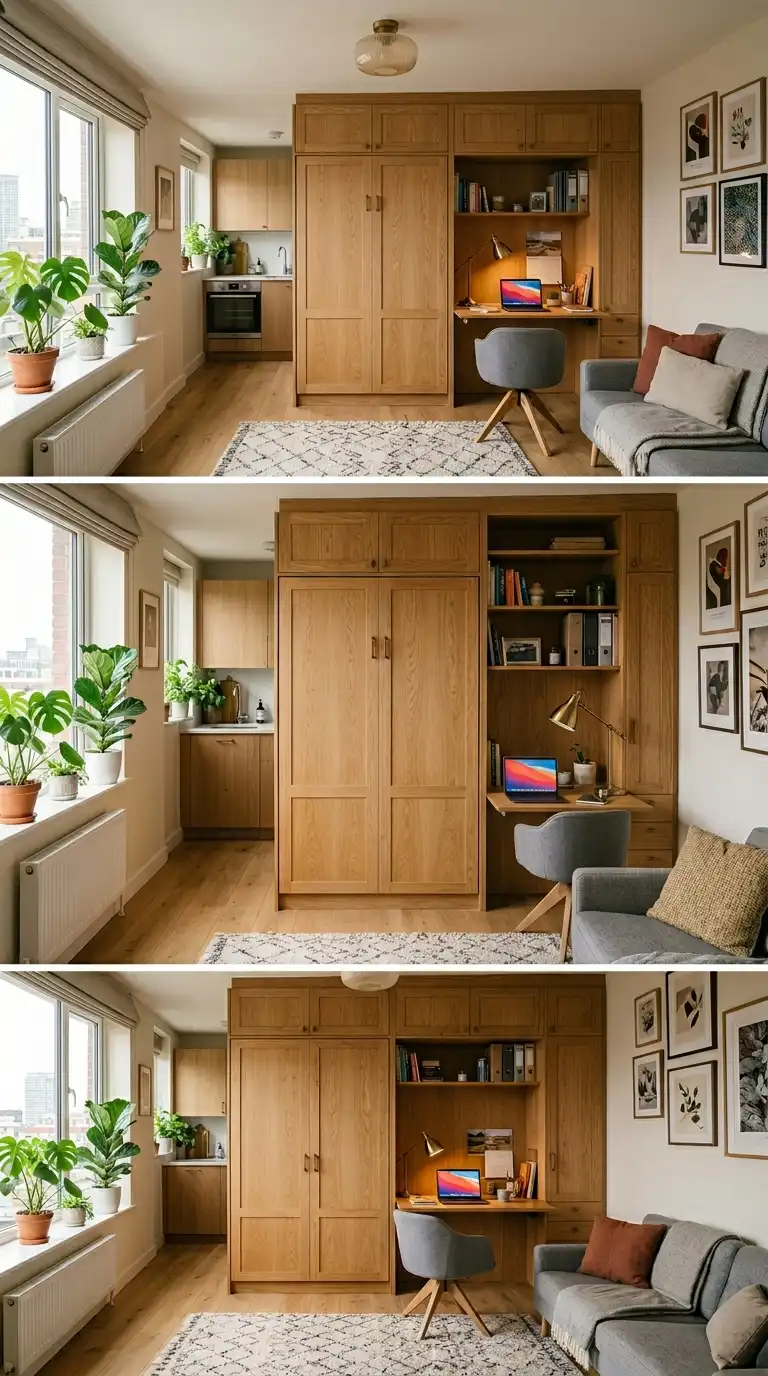
12. Desk with Murphy Bed Integration
For multifunctional spaces, integrate a desk into a wardrobe system that also includes a Murphy bed. The desk can be used during the day, and the bed folds down from the wardrobe for sleeping. This is an ideal solution for guest rooms, studios, and small apartments.
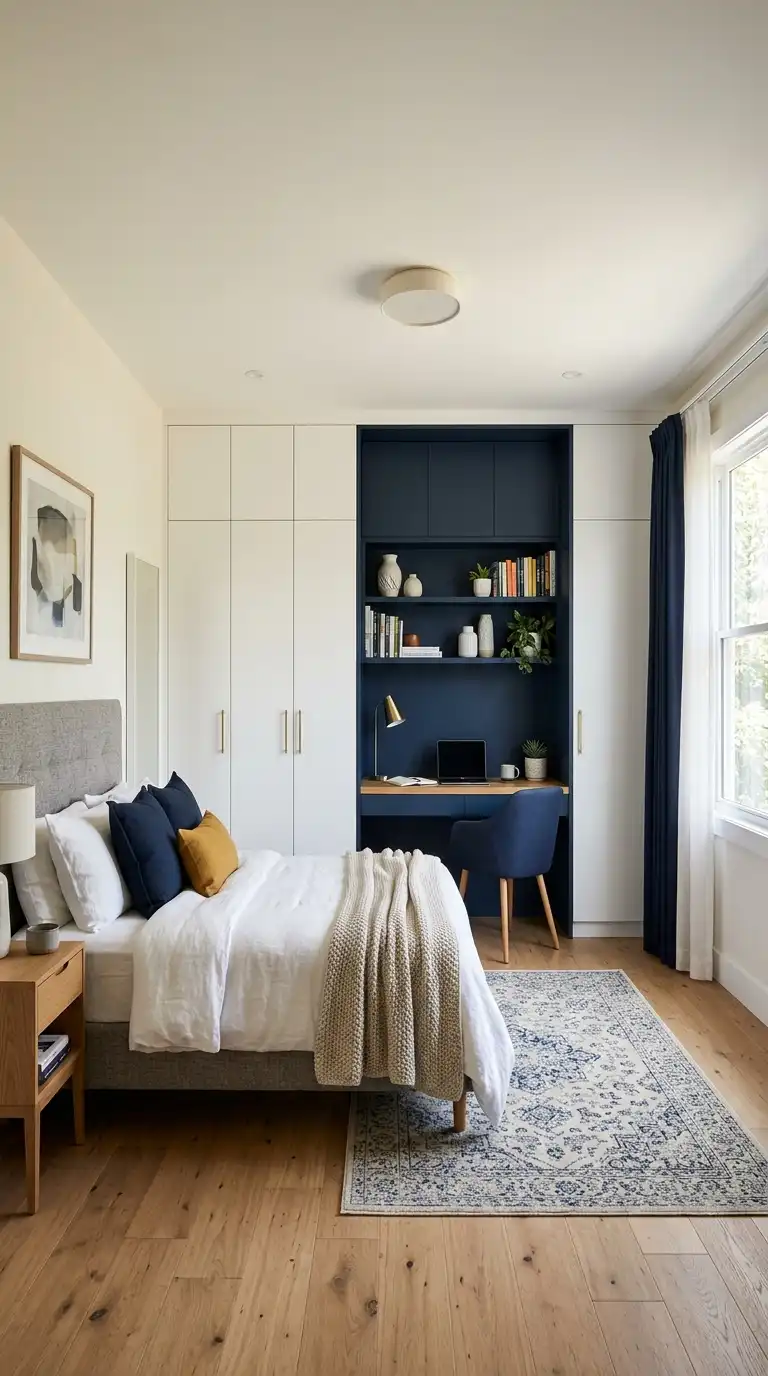
13. Desk with Color-Blocked Accent
Make the desk area stand out by using a contrasting color or finish. Paint the desk surface or the niche a different color than the surrounding cabinetry to create a focal point. This design adds visual interest and defines the workspace within the overall wardrobe system.
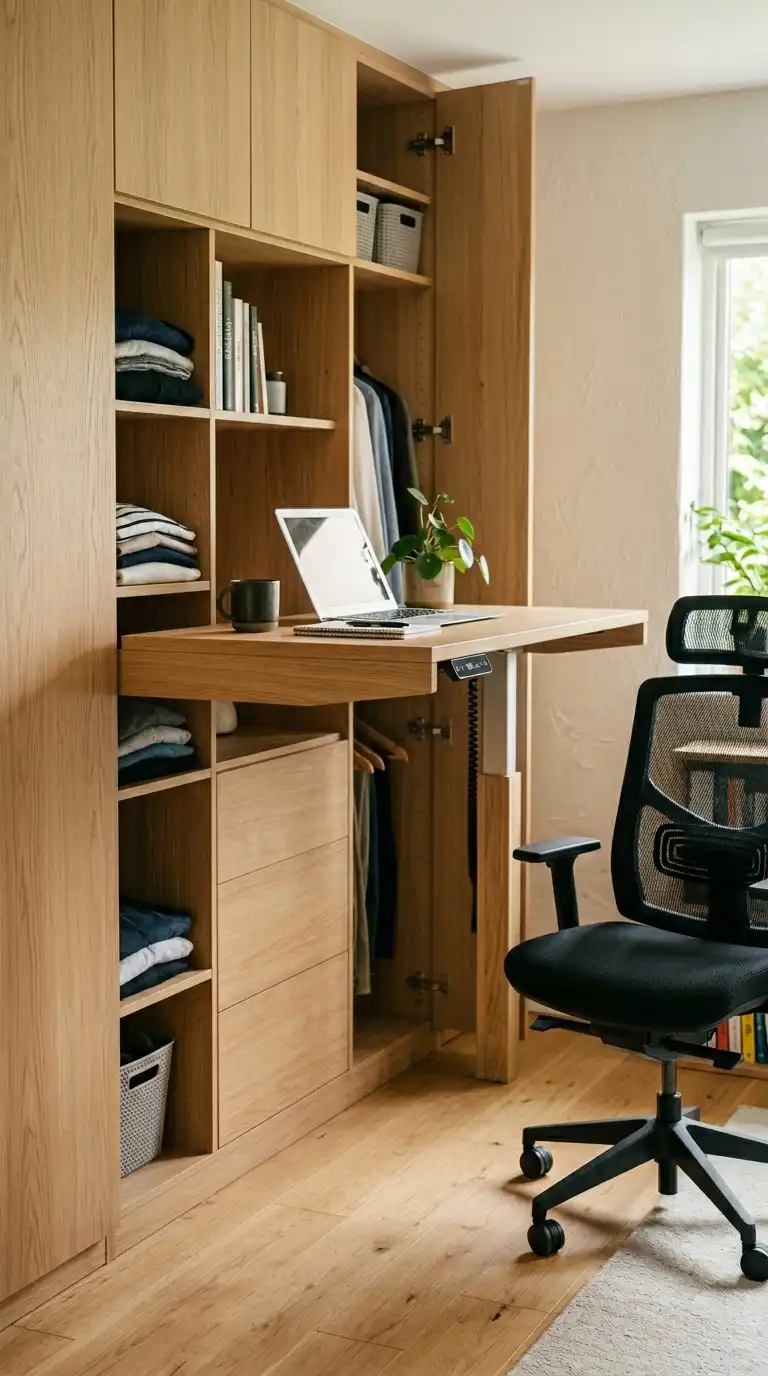
14. Desk with Adjustable Height
For ultimate flexibility, incorporate an adjustable height desk into your wardrobe design. The desk can be raised for standing work or lowered for seated tasks, accommodating different needs and preferences. This feature is especially useful for shared spaces where multiple people use the desk.
Frequently Asked Questions
- What is the ideal height for a study table?
The standard desk height is 70–75 centimeters. For children’s rooms, consider adjustable desks that can be raised as they grow. Ergonomic design ensures comfort during extended use. - How much space do I need for a desk within a wardrobe?
A compact desk requires at least 90–120 centimeters of width and 50–60 centimeters of depth for comfortable use. Allow space for a chair and movement around the desk area. - Can I add a desk to an existing wardrobe?
Yes. A desk can be added to an existing wardrobe by removing a section of doors, adding a work surface, and incorporating lighting and storage. This is a common DIY project or can be done by a professional. - What materials are best for a desk surface?
Durable, easy-to-clean materials are ideal. Laminate offers affordability and a wide range of finishes. Solid wood adds warmth and character. Quartz or marble surfaces provide elegance but require more care. - How do I incorporate a desk into a small bedroom?
Choose a fold-down or pull-out desk that can be concealed when not in use. Position the desk in a corner or below a window to maximize space. Use the desk area for dual purposes, such as a vanity or nightstand.