15 Small Open Space Living Room and Kitchen Concepts
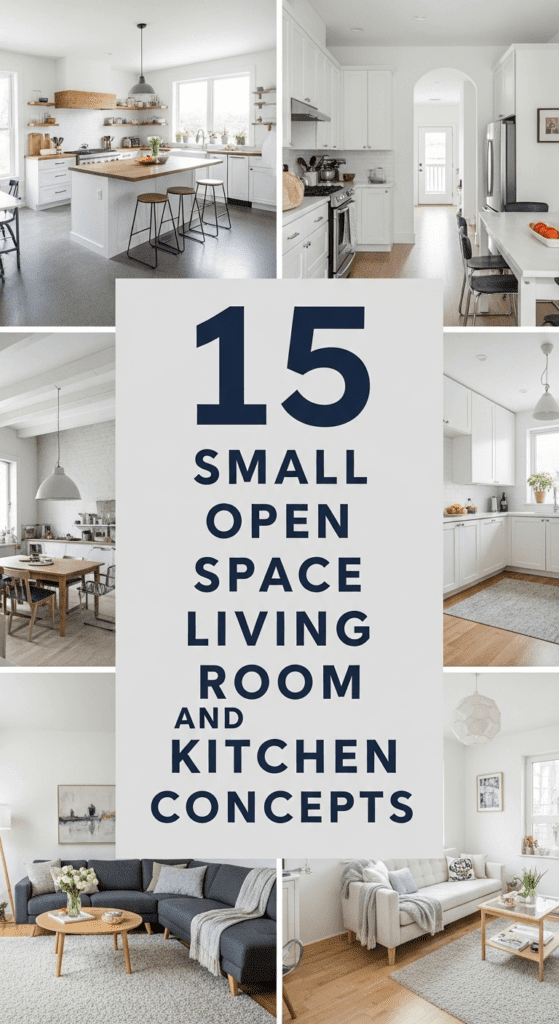
Small open space living room and kitchen concepts thrive on the “less is more” principle, utilizing clever zoning and visual continuity to make a single room feel like two distinct, high-functioning areas. In compact open-plan living, the goal is to eliminate visual clutter while maximizing every square inch of the shared footprint. By using furniture as dividers and maintaining a cohesive color story, you can create a hub that feels both spacious and intimate. Here are 15 concepts to master the open-space flow.
See also: 10 Simple Bedroom Ideas for Small Rooms
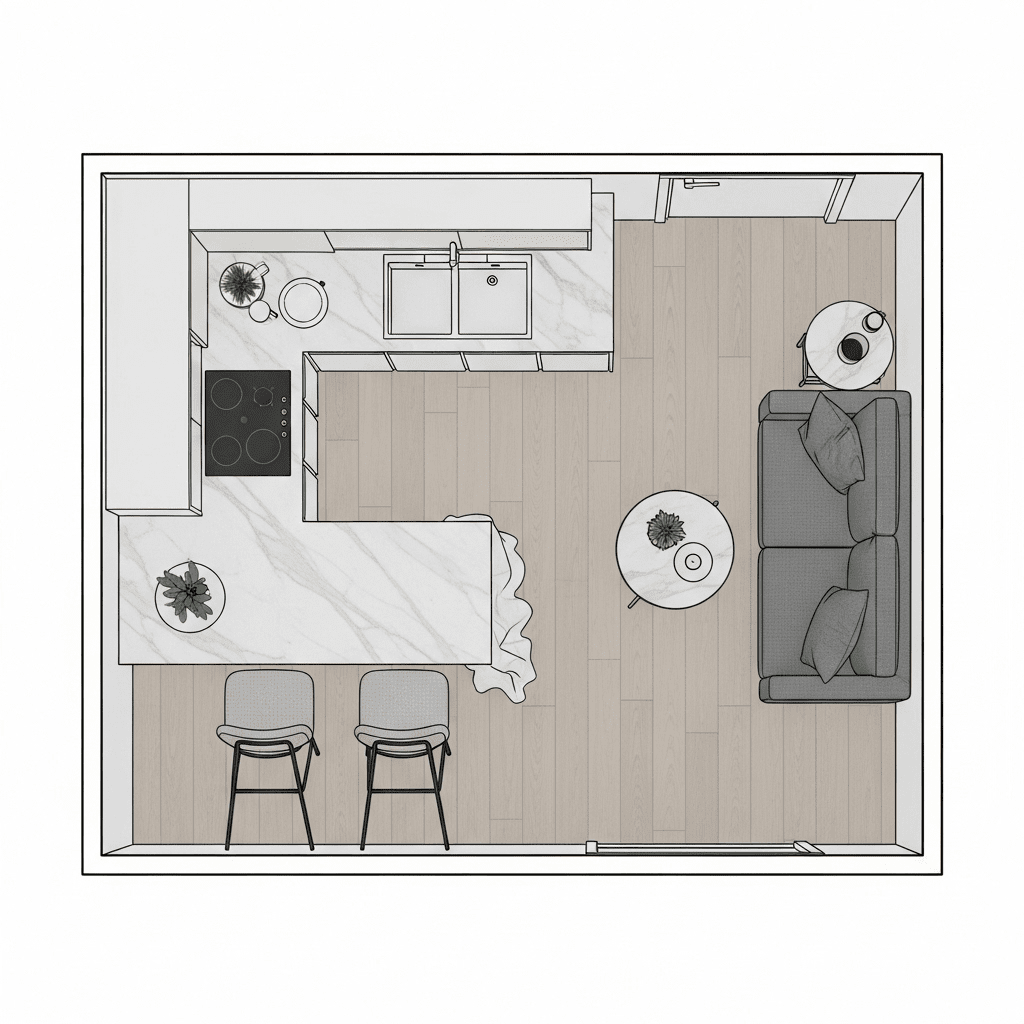
1. The Floating Peninsula Divider
A kitchen peninsula provides essential counter space while acting as a physical but low-profile barrier between the cooking and lounging areas. It keeps the room open while clearly defining where the kitchen ends.
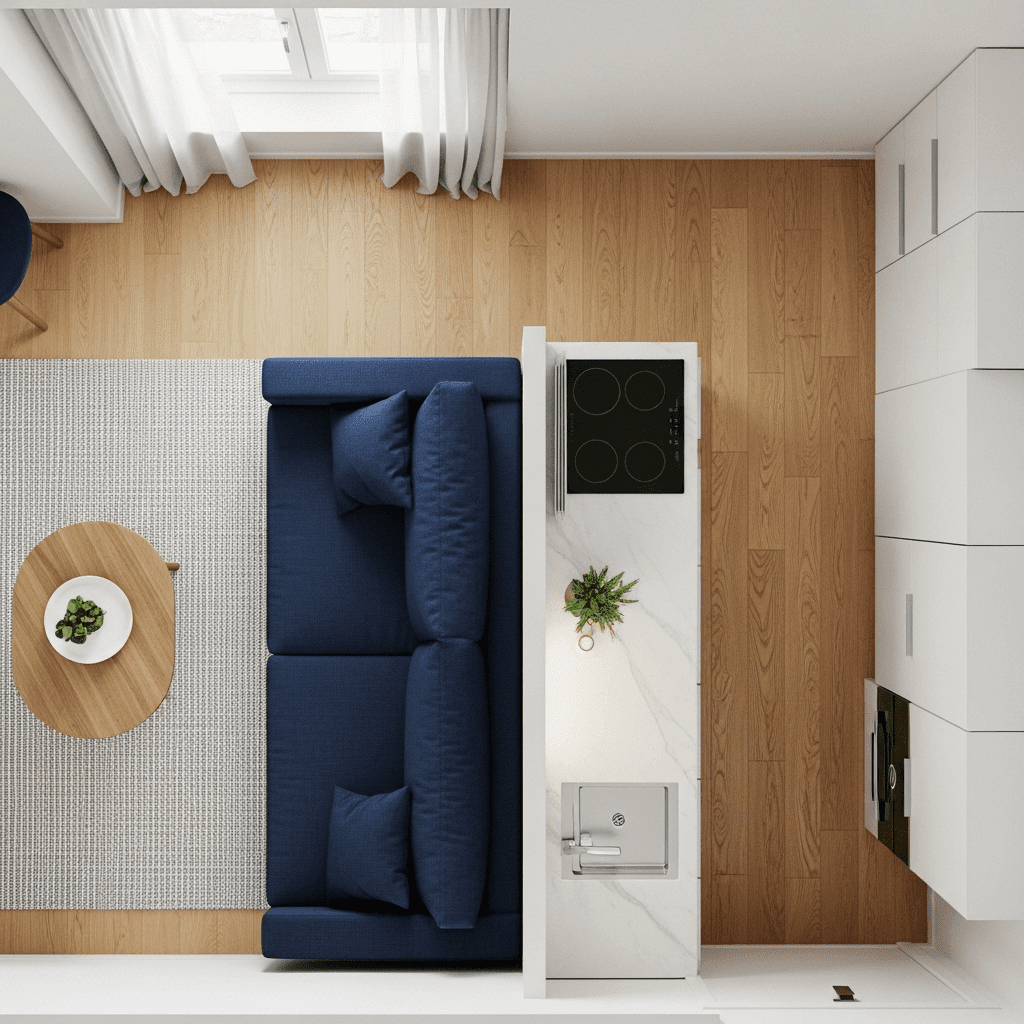
2. The Back-to-Back Sofa Transition
Place the back of your sofa directly against the edge of the kitchen zone. This creates a psychological wall that separates the utility of the kitchen from the relaxation of the living room.
See also: 10 Cute Bedroom Ideas for Small Rooms Bloxburg
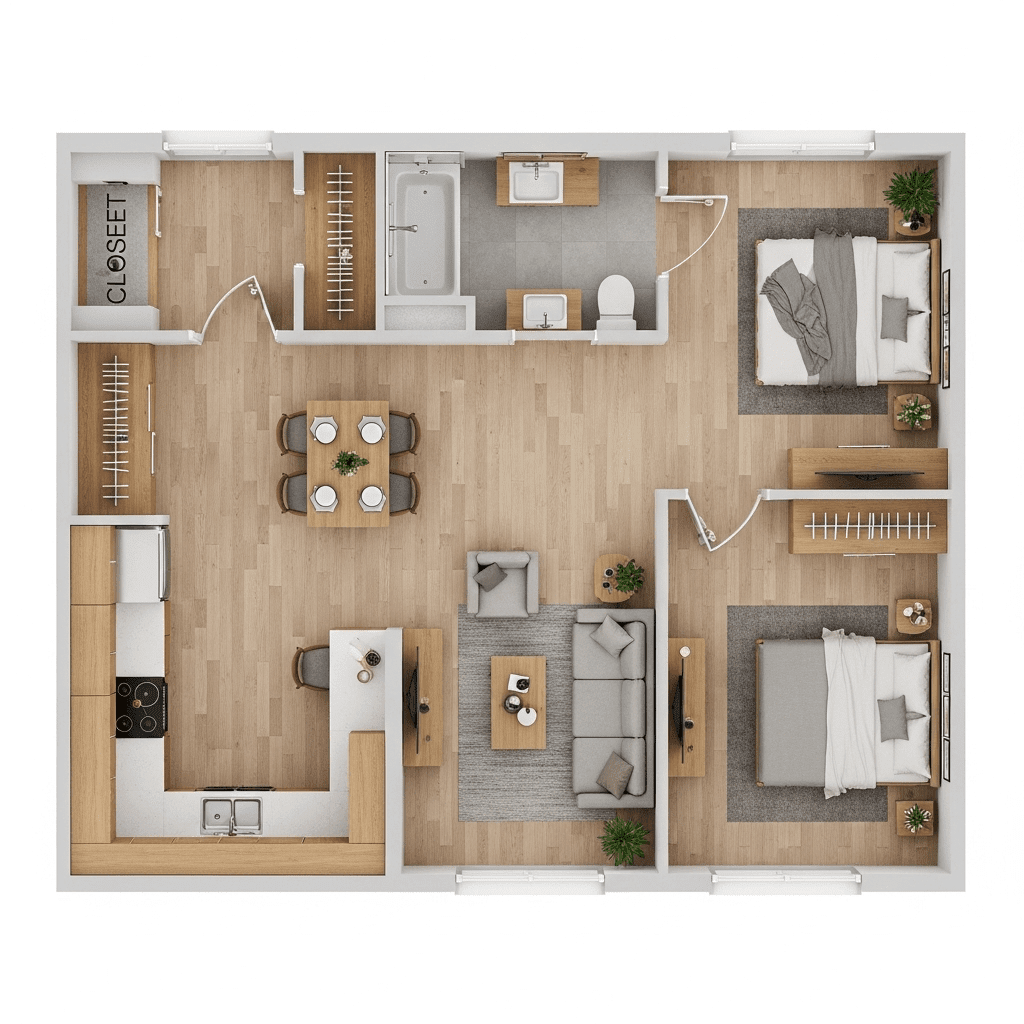
3. Unified Flooring Continuity
Using the same flooring material across the entire open space prevents the “choppy” look of different zones. This seamless transition tricks the eye into seeing one large, expansive room.
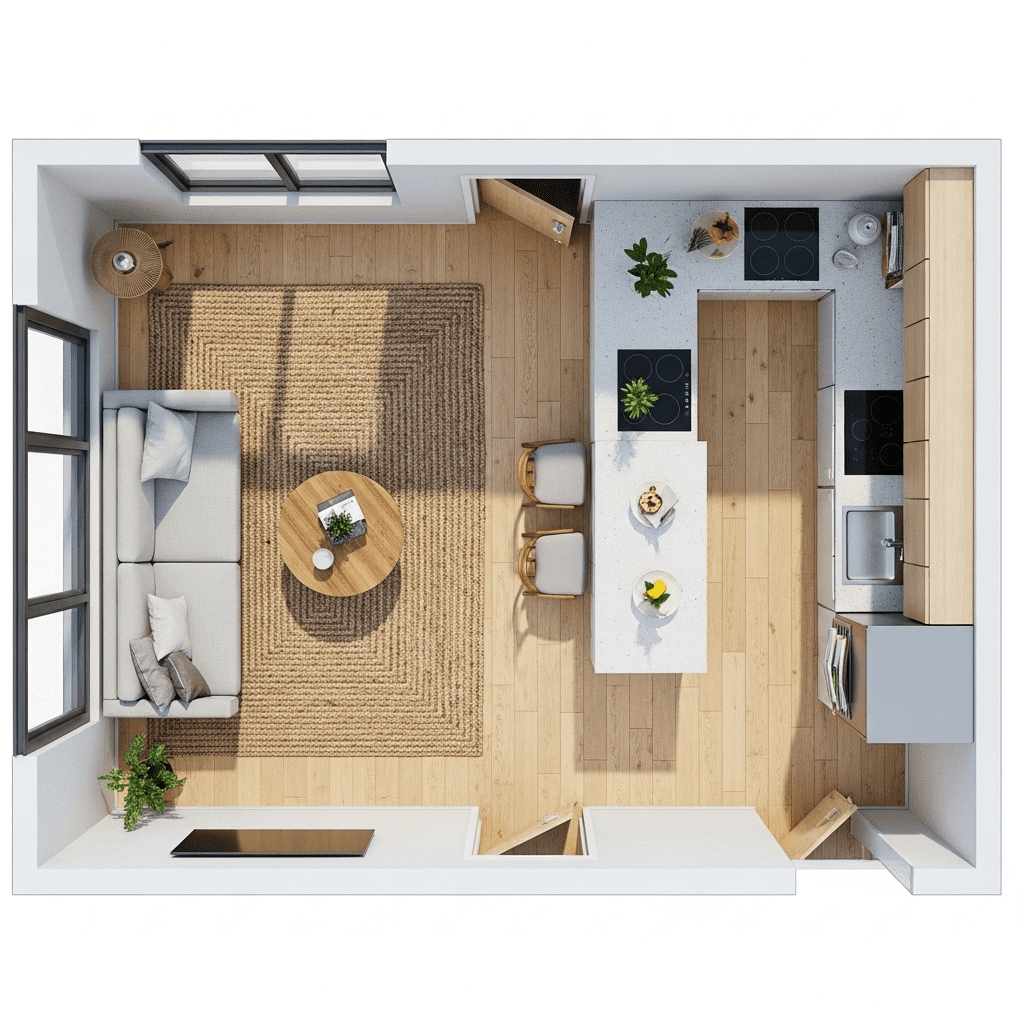
4. The Central Rug Anchor
Define the living room as its own “island” by placing a large, textured rug under the seating area. This visual anchor distinguishes the lounge from the hard-surface kitchen area.
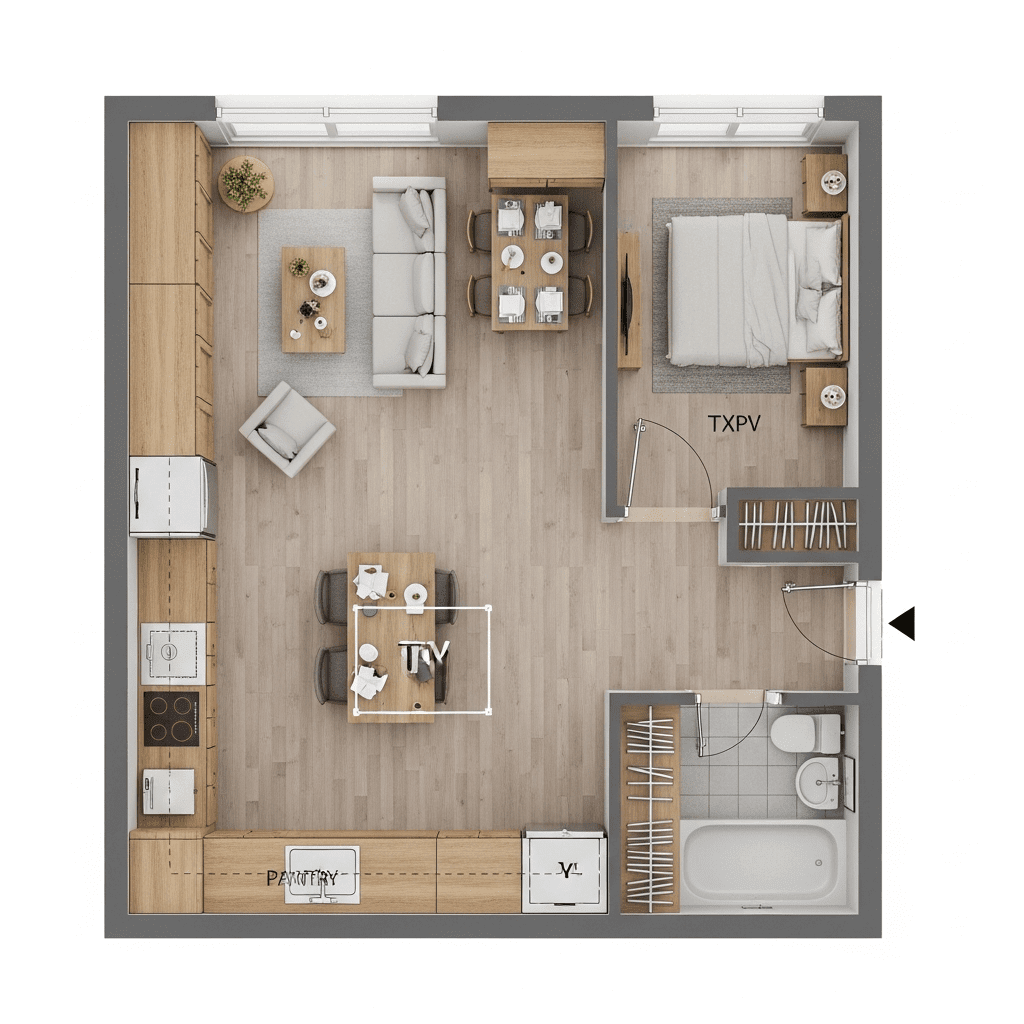
5. Hidden Pantry and Media Wall
Install a single wall of floor-to-ceiling cabinetry that serves both areas. One end houses kitchen appliances and a pantry, while the other functions as a media unit and bookshelf.
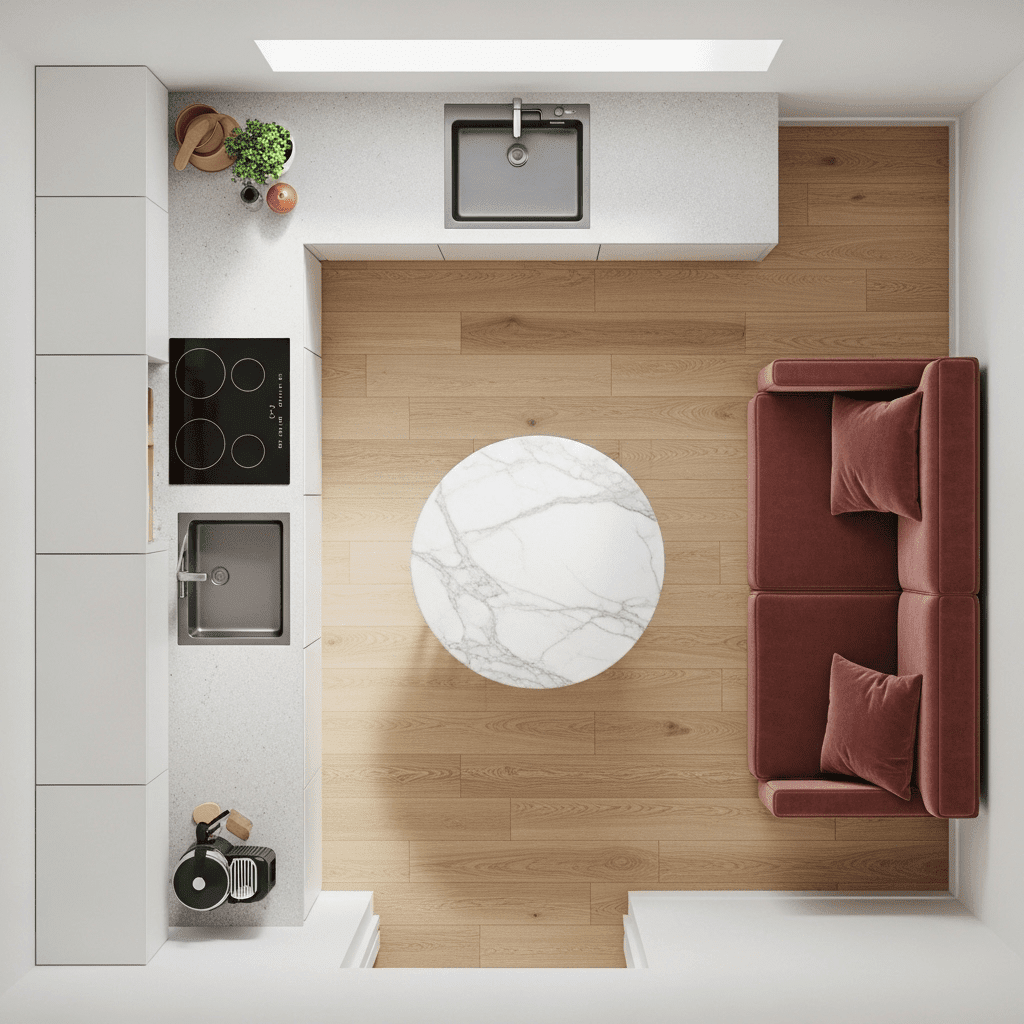
6. The Pedestal Dining Bridge
Use a small round pedestal table as a bridge between the kitchen and the living room. Its round shape makes it easier to walk around than a rectangular table in tight quarters.
7. Monochrome Camouflage
Paint the kitchen cabinets the exact same color as the living room walls. This makes the kitchen “disappear” into the architecture, reducing the visual weight of the cooking area.
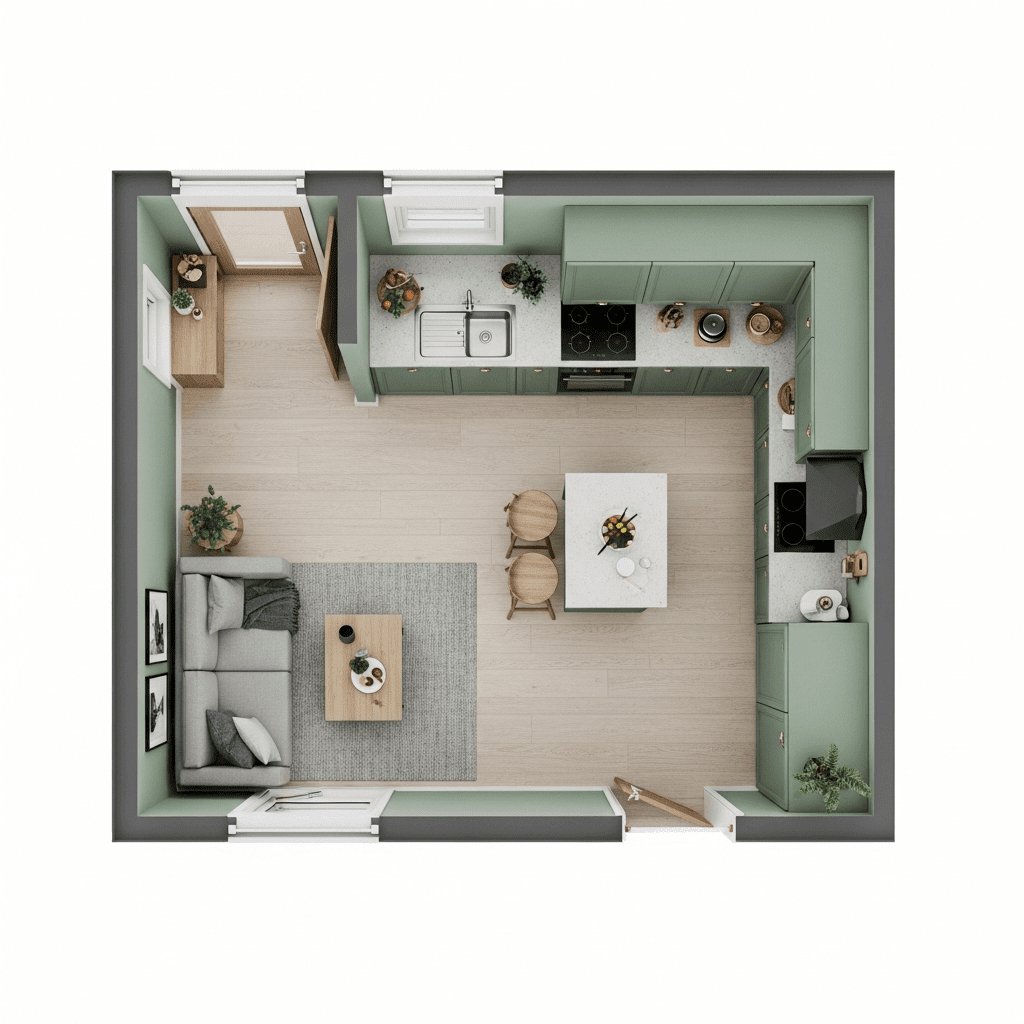
8. The Mobile Island Cart
If a permanent island is too bulky, use a mobile butcher-block cart. You can move it to the center for prep work and push it against a wall to open up the floor for the living area.
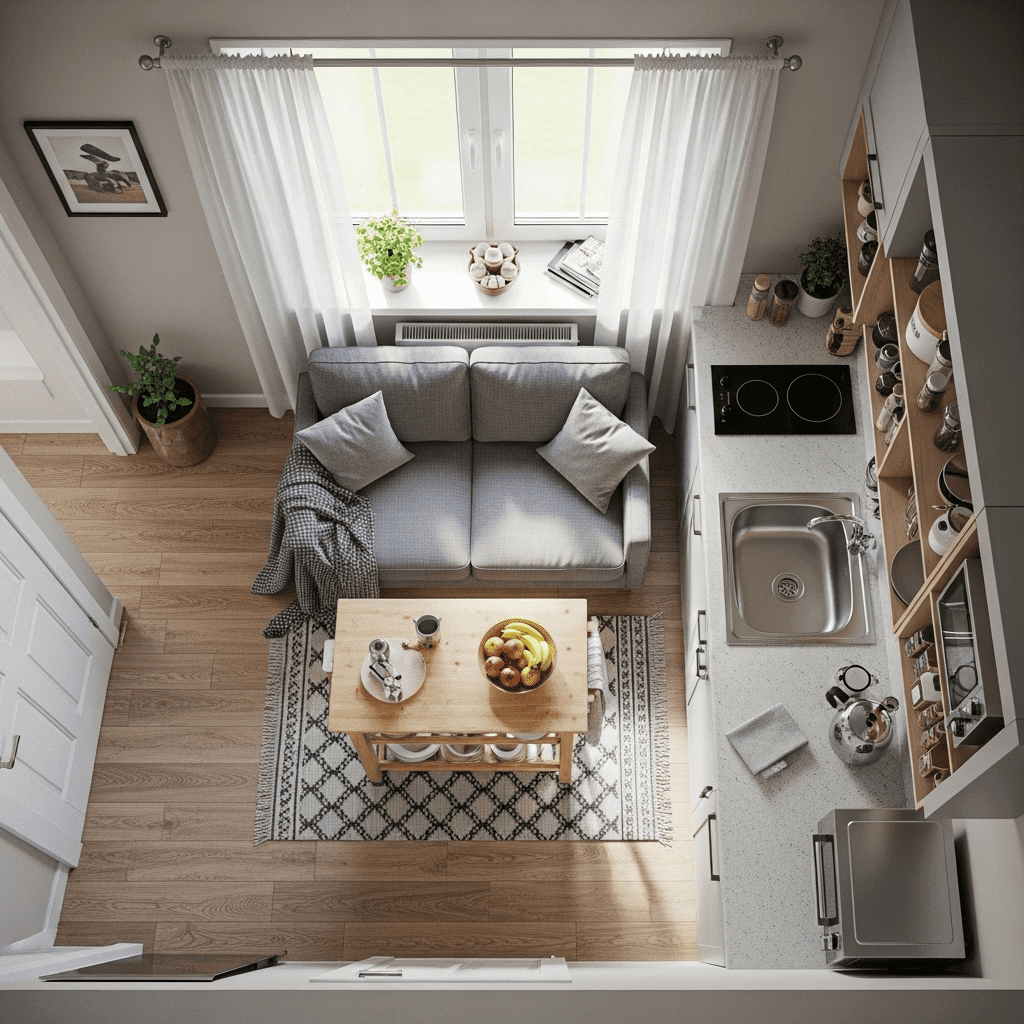
9. Vertical Shelf Connectivity
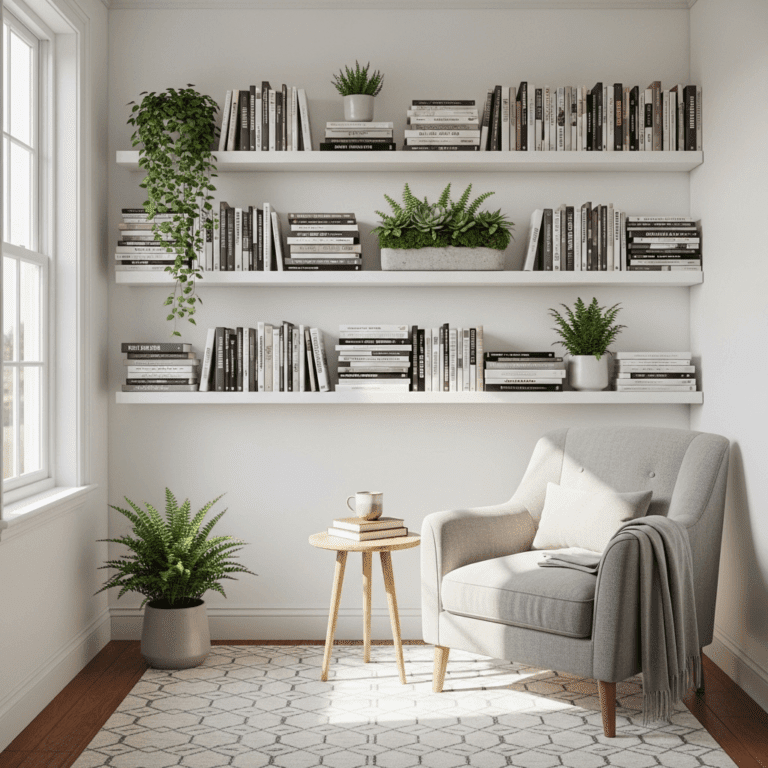
Run a series of floating shelves across the entire main wall of the room. This horizontal line ties the kitchen and living room together into one long, curated gallery.
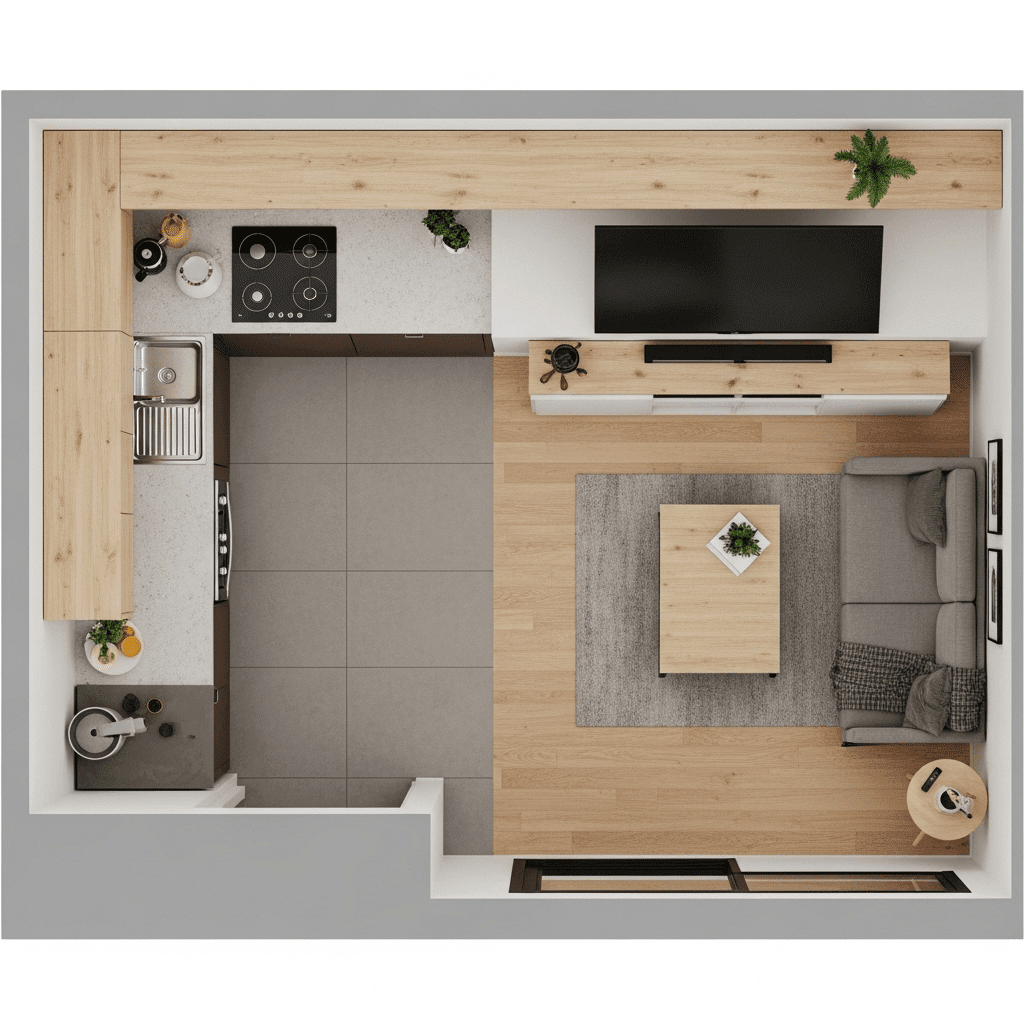
10. Zoning with Pendant Lighting
Hang dramatic pendant lights over the kitchen counter but use soft, low-profile lamps in the living room. Different light levels create “invisible rooms” without needing walls.
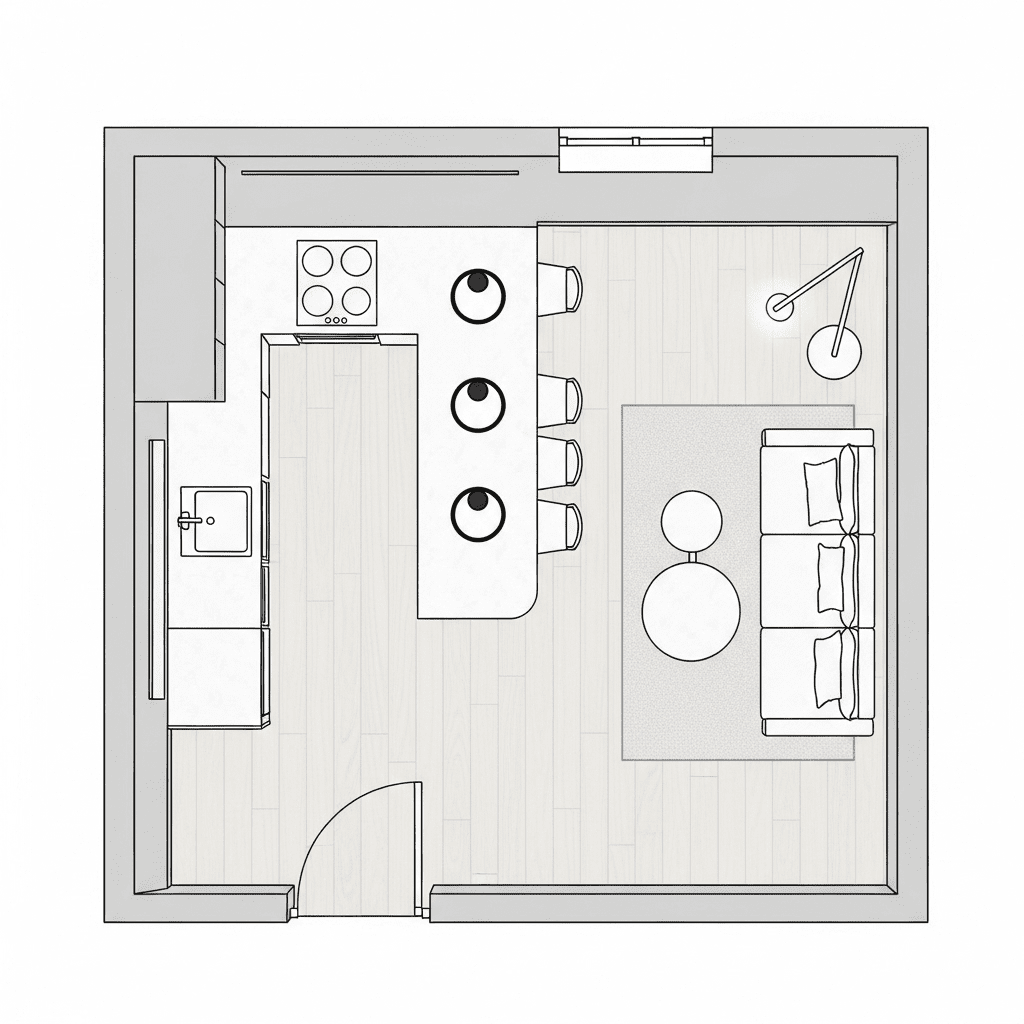
11. The Window Seat Dining Nook
Maximize a window by building a banquet seat underneath it. This provides a dining spot that takes up zero floor space, leaving the center of the room open for the sofa layout.
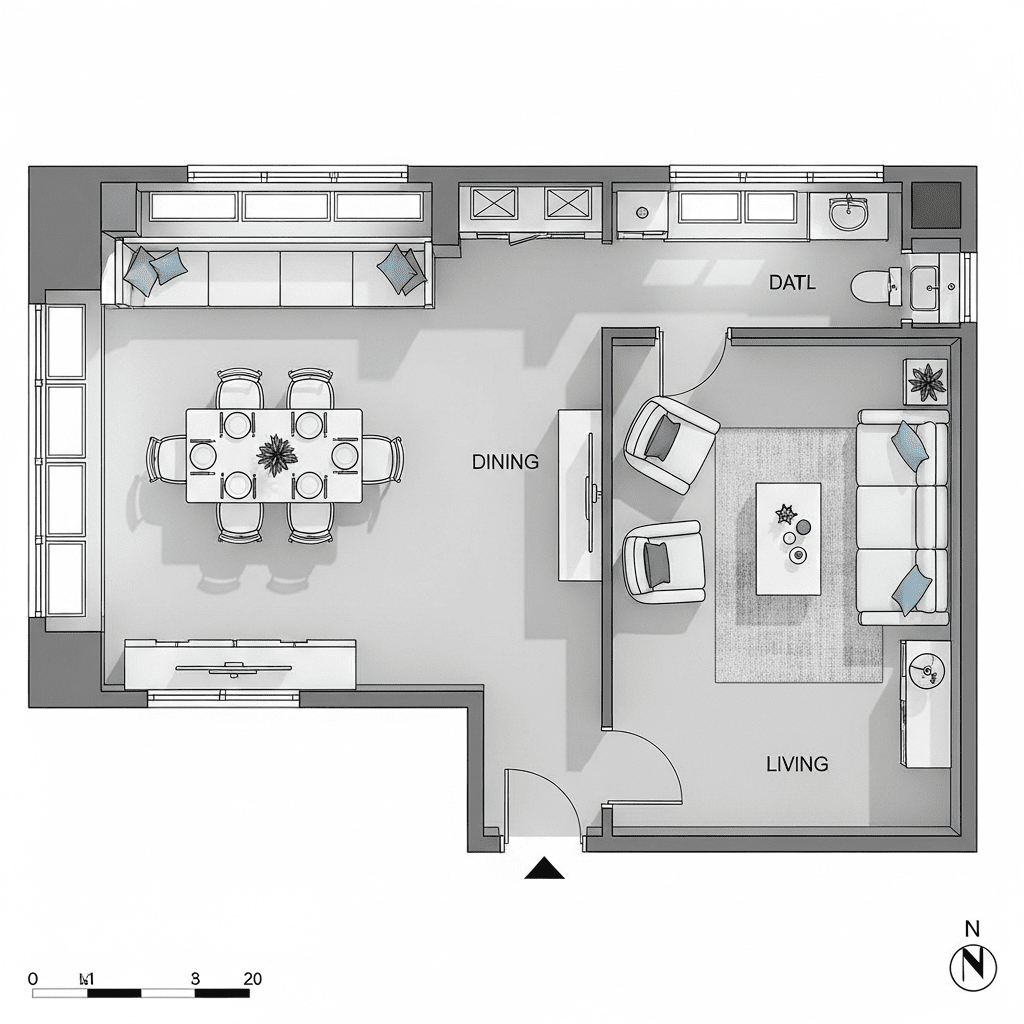
12. Mirrored Backsplash Expansion
Install a mirrored backsplash in the kitchen. It reflects the living area and the windows, making the kitchen side of the room feel twice as deep and much brighter.
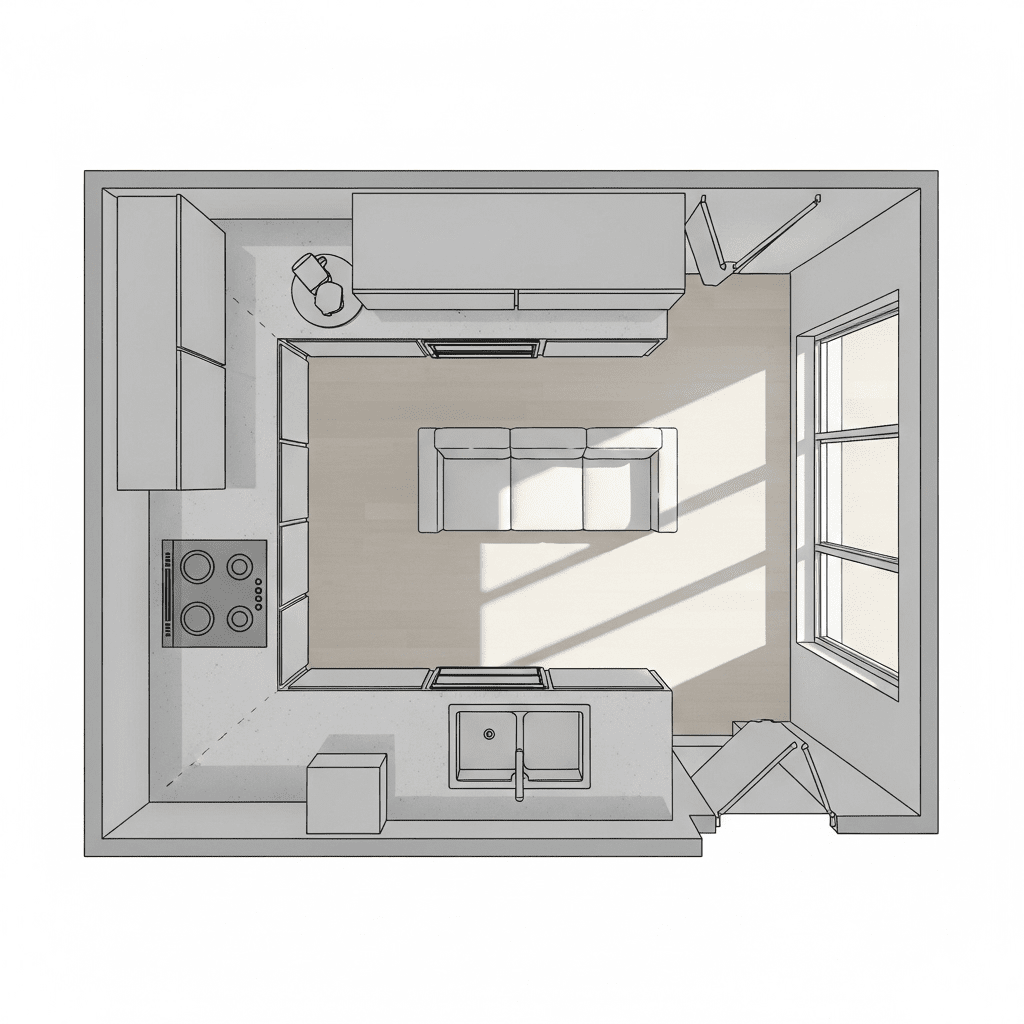
13. Armless Furniture for Flow
Choose armless chairs or a low-back sofa. This ensures that someone in the kitchen can see and interact with someone in the living room without any visual obstacles.
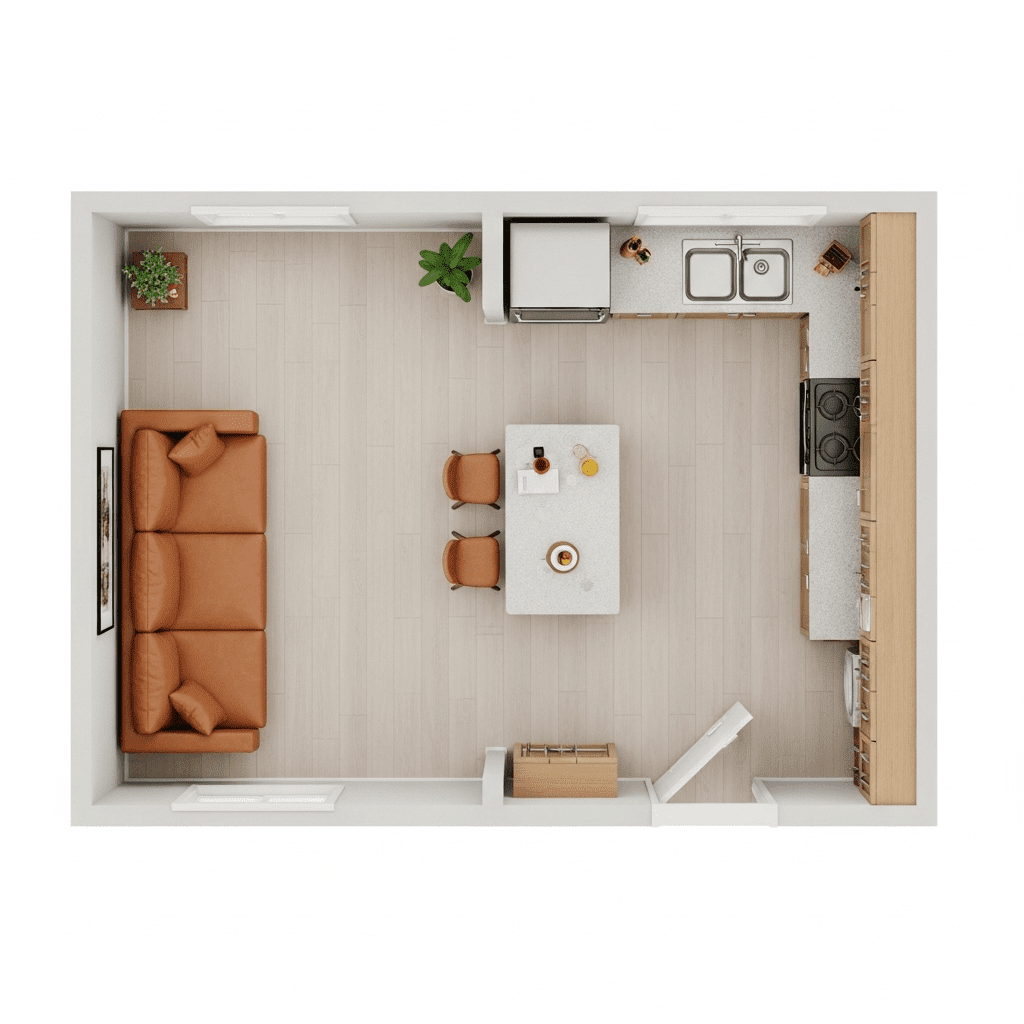
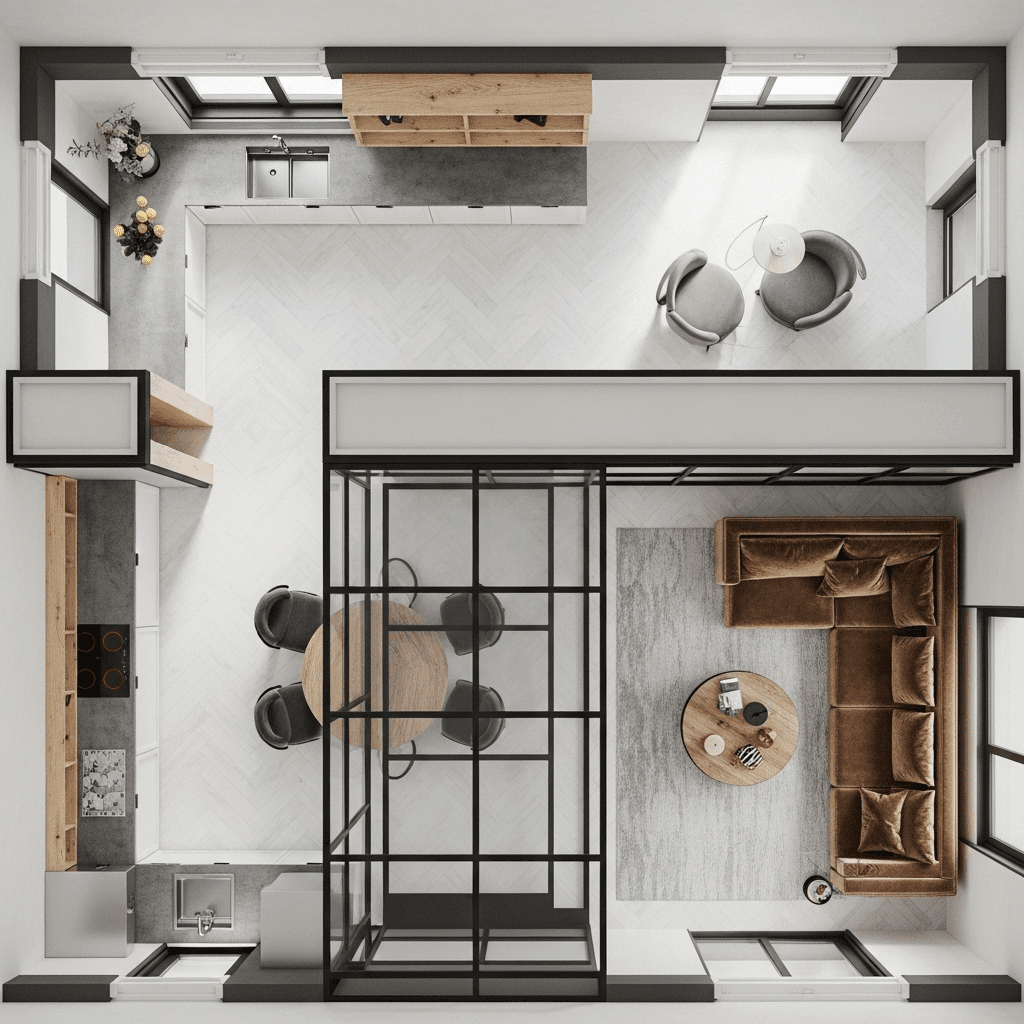
14. The Glass Partition Wall
If you need to block cooking smells or noise, use a slim black-framed glass partition. It provides an industrial-modern look that defines the rooms while keeping them visually connected.
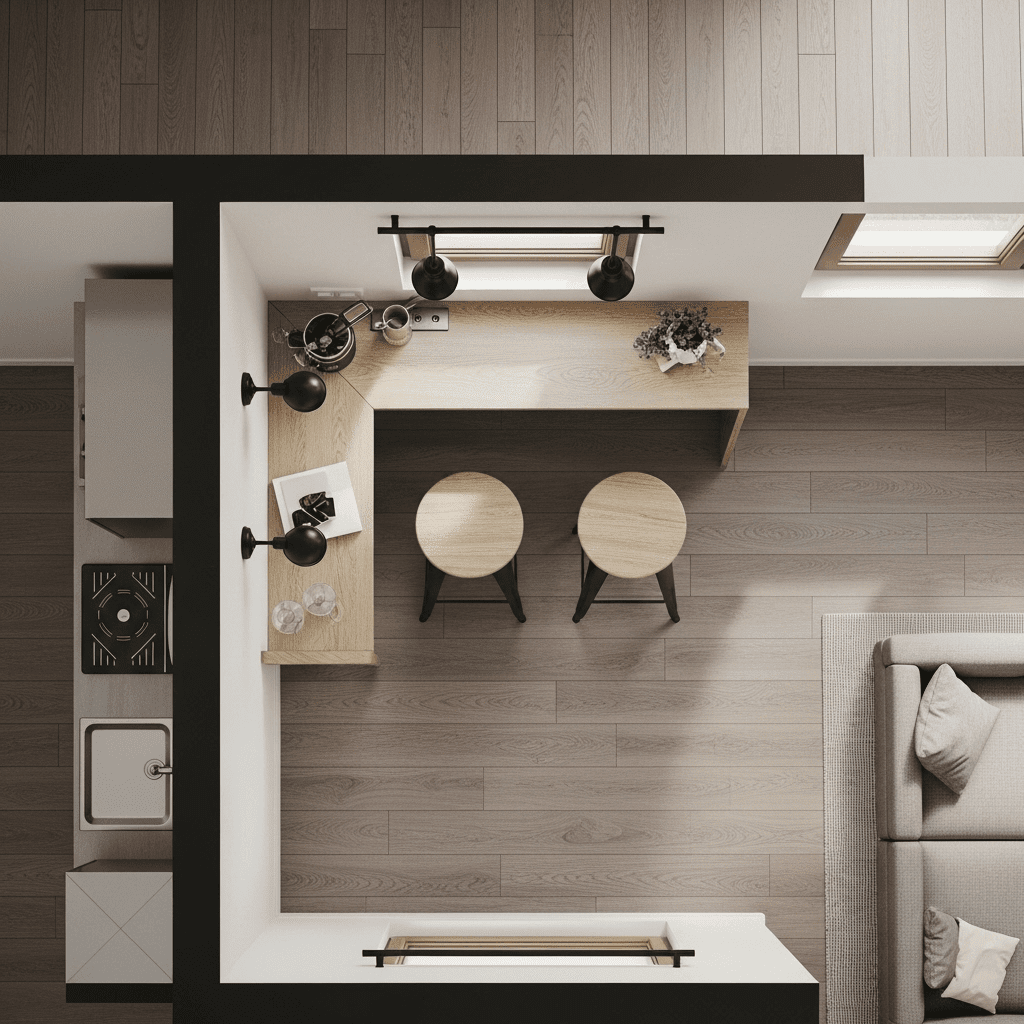
15. The Minimalist Bar Counter
Replace a dining table with a slim bar counter attached to the wall or the back of the kitchen cabinets. This “perch” style seating keeps the floor plan completely open.
Conclusion
Creating a successful open-concept living and kitchen area is about the balance of utility and aesthetics. By focusing on consistent materials and “floating” elements like shelves and mobile carts, you ensure the space remains functional without becoming cluttered. Keep your walkways clear and prioritize hidden storage to maintain a sense of calm in your multi-functional home.