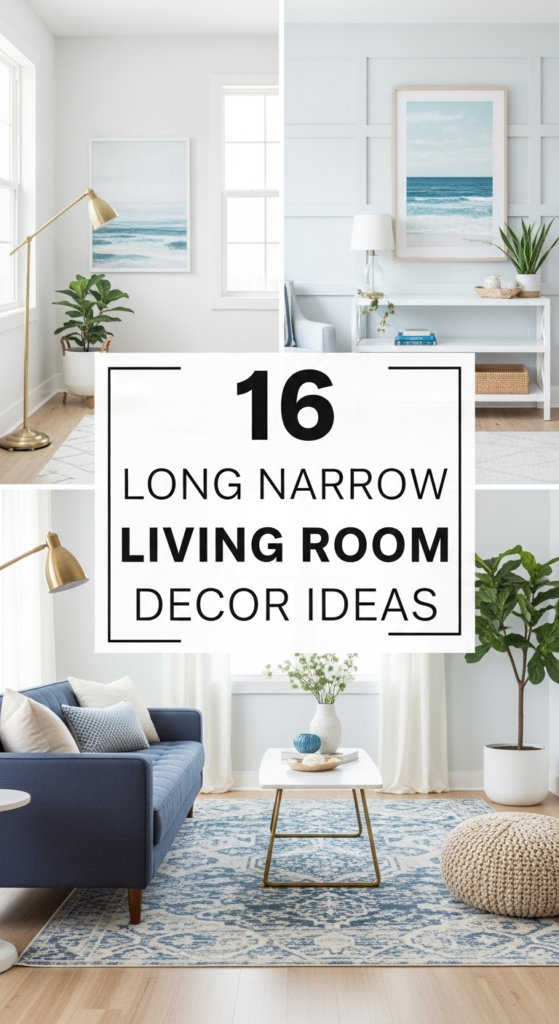
16 Long Narrow Living Room Decor Ideas: Style Solutions for Challenging Spaces
Decorating a long narrow living room requires more than just good furniture placement—the right decor choices can completely transform how the space looks and feels. While layout solves the functional challenges, decor addresses the visual ones. Strategic use of color, pattern, artwork, lighting, and accessories can make a narrow room feel wider, a long room feel balanced, and an awkward space feel intentional and beautiful.
The key is understanding that decor in narrow rooms serves a dual purpose: it needs to look good AND work hard to solve proportion problems. Every decorative choice—from wall color to rug pattern to mirror placement—either helps or hurts your narrow room’s proportions. These sixteen decor ideas focus specifically on making long narrow living rooms feel more balanced, spacious, and well-designed through smart decorative choices that enhance both beauty and function.
See also: Modern Farmhouse Living Room Ideas 15 Ways to Blend Rustic Warmth With Clean Lines
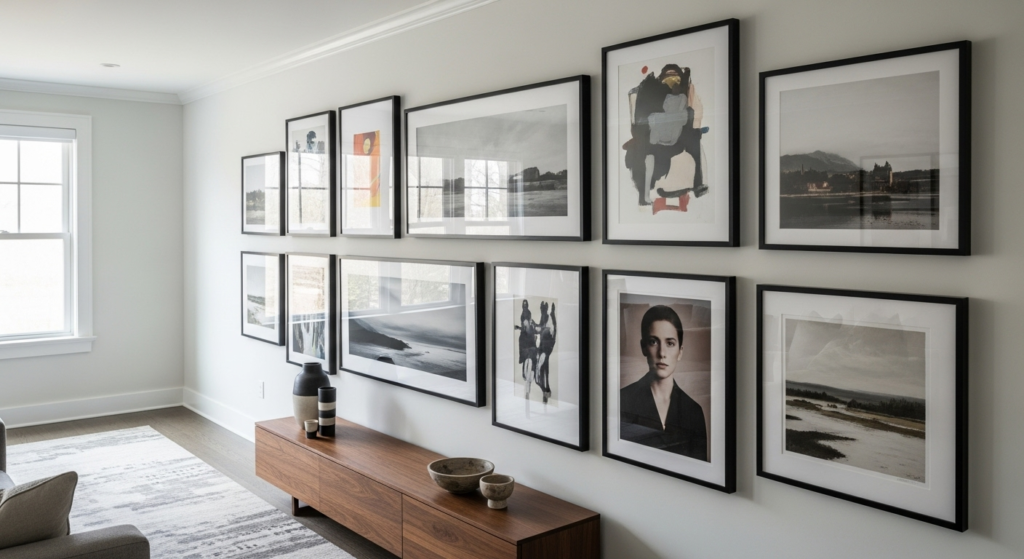
1. The Horizontal Gallery Wall
Create visual width with a horizontal arrangement of artwork.
Key Elements:
- Gallery wall extending horizontally along one long wall
- Multiple artworks arranged in horizontal rows
- Frames in coordinating colors and styles
- Artwork spanning significant wall length (8-12 feet)
- Low horizontal arrangement (not stacked vertically)
- Draws eye across width rather than length
- Mix of frame sizes in horizontal pattern
- Cohesive color scheme throughout pieces
- Artwork at eye level or slightly below
- Creates strong horizontal visual line
- Balances long vertical walls
- Adds personality and interest
- Makes room feel wider visually
- Professional spacing between pieces (2-4 inches)
- Unifies decor throughout length
See also: Modern Living Room Decor Ideas 16 Ways to Curate a Sleek Stylish Space
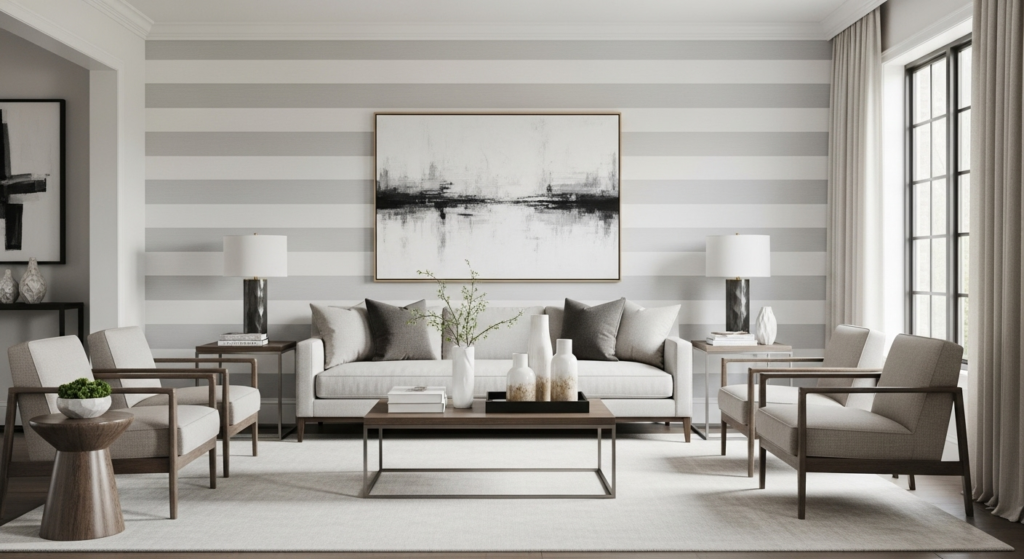
2. The Striped Accent Wall
Use horizontal stripes to visually widen the space.
Key Elements:
- Horizontal striped wallpaper or paint on one long wall
- Subtle, sophisticated stripe pattern
- Two-tone color scheme (not bold contrast)
- Light colors maintaining openness
- Creates optical illusion of width
- Draws eye horizontally across room
- Soft grey and white, beige and cream, or tone-on-tone
- Can be wallpaper, paint, or wood paneling
- Coordinates with overall color scheme
- Modern or traditional stripe options
- Enhances feeling of spaciousness
- Accent wall rather than all walls
- Complements furniture arrangement
- Professional installation for straight lines
- Works with contemporary or classic decor
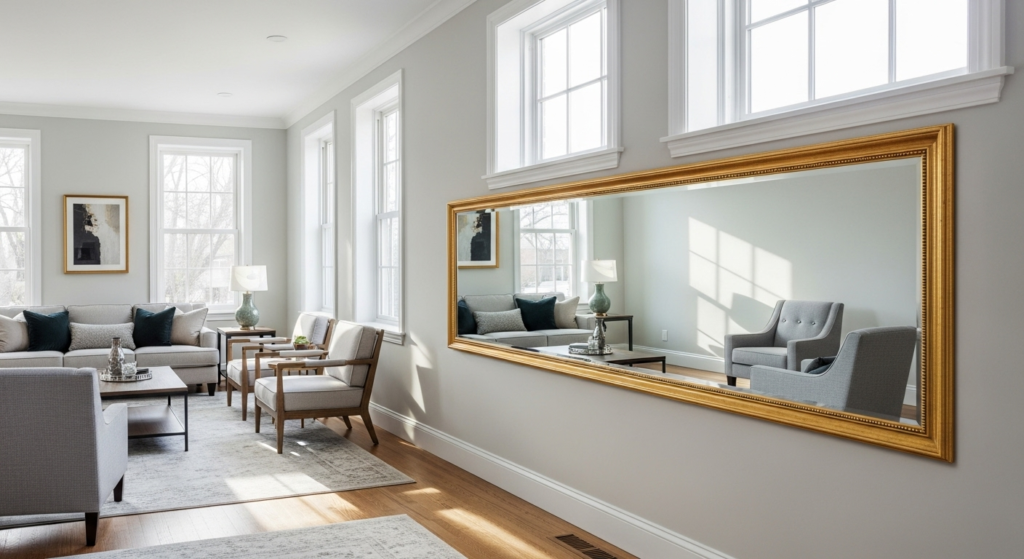
3. The Strategic Mirror Placement
Multiply space and light with carefully positioned mirrors.
Key Elements:
- Large mirror on one long wall opposite windows
- Reflects natural light throughout room
- Creates illusion of doubled width
- Floor-to-ceiling mirror or large horizontal mirror
- Decorative frame coordinating with decor style
- Mirror reflects beautiful view or opposite wall
- Can use multiple mirrors in horizontal arrangement
- Leaning mirror against wall or mounted
- Adds sparkle and dimension
- Makes narrow space feel more open
- Strategic placement crucial (avoid reflecting clutter)
- Enhances overall brightness
- Modern frameless or traditional framed options
- Positioned to maximize light reflection
- Decorative and functional element
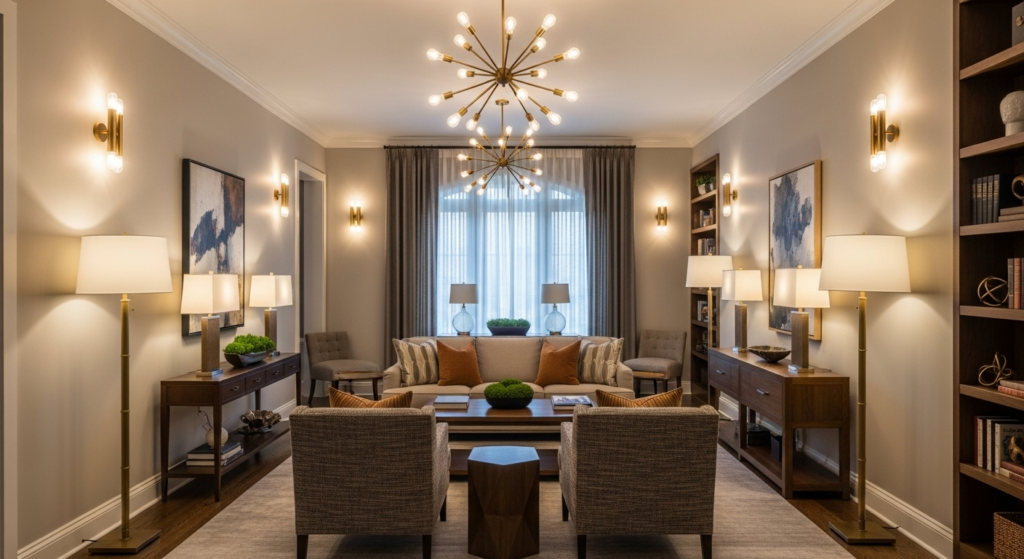
4. The Layered Lighting Scheme
Add depth and dimension with multiple light sources at varying heights.
Key Elements:
- Overhead lighting (chandelier, pendant, or recessed)
- Floor lamps in multiple locations along length
- Table lamps on consoles and side tables
- Wall sconces along long walls
- Lighting at three different heights minimum
- Creates visual interest and depth
- Prevents flat, one-dimensional appearance
- Warm bulbs (2700-3000K) for coziness
- Dimmer switches for ambiance control
- Decorative light fixtures as design elements
- Highlights different zones or areas
- Reduces tunnel-like appearance
- Mix of ambient, task, and accent lighting
- Coordinating fixture finishes (brass, black, chrome)
- Layered illumination throughout length
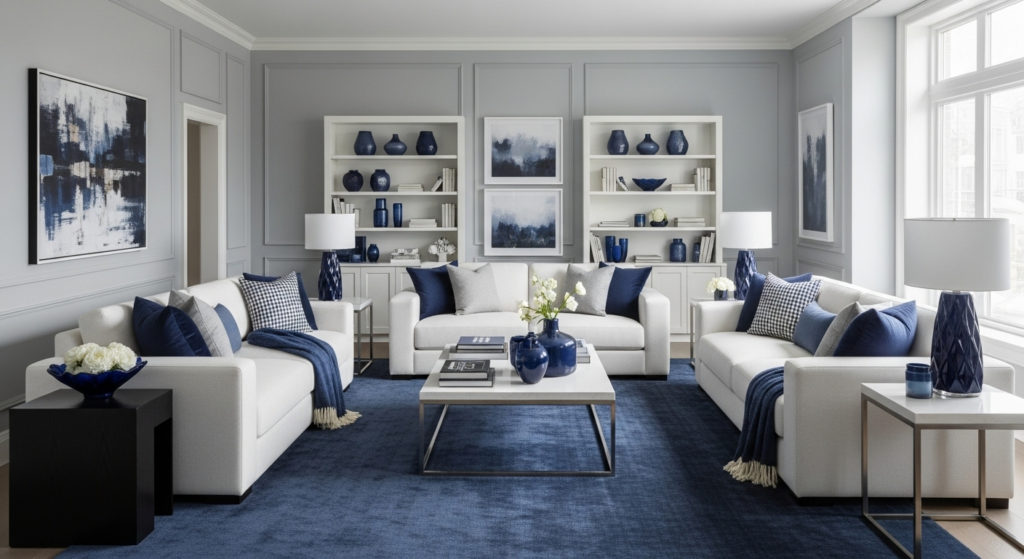
5. The Continuous Color Flow
Unify the space with a cohesive color palette throughout.
Key Elements:
- Single wall color throughout entire length
- Coordinating furniture in same color family
- Monochromatic or analogous color scheme
- Light neutral base (white, cream, soft grey, beige)
- Accent colors repeated in multiple zones
- Creates seamless visual flow
- Avoids chopping space with color changes
- Soft neutrals keep space feeling open
- Pops of color in accessories and textiles
- Coordinated throughout all decor elements
- Calm, cohesive atmosphere
- Makes space feel larger and unified
- Professional, intentional design
- Three-color maximum rule
- Ties disparate areas together visually
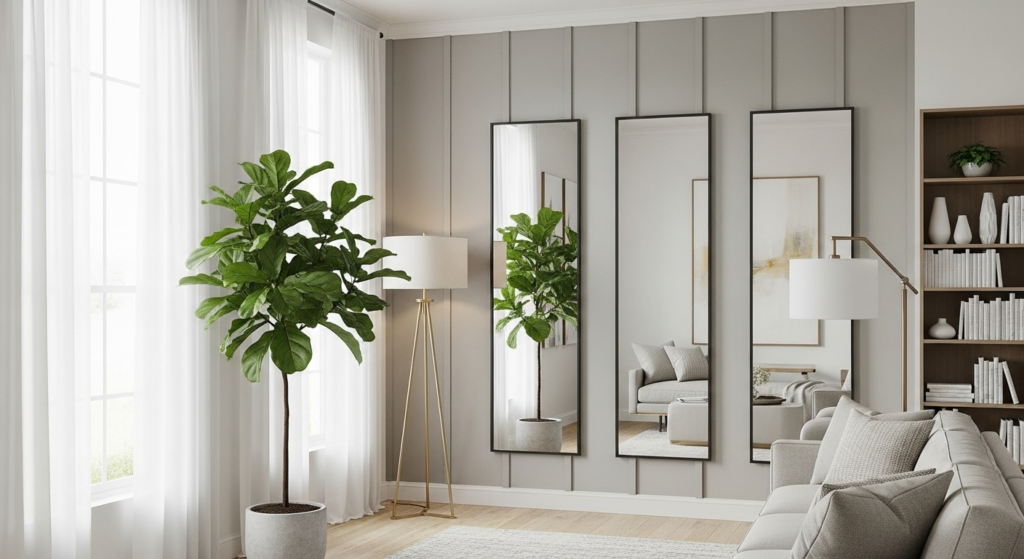
6. The Vertical Emphasis Decor
Balance horizontal length with strong vertical decorative elements.
Key Elements:
- Floor-to-ceiling curtains on all windows
- Tall bookcases or shelving units
- Vertical artwork or tall narrow mirrors
- High-mounted curtain rods (ceiling height)
- Tall potted plants (fiddle leaf fig, snake plant, palms)
- Vertical board and batten or paneling
- Draws eye upward rather than along length
- Creates better visual proportions
- Makes ceiling appear higher
- Balances long horizontal space
- Tall table lamps with elongated bases
- Vertical striped pillows or accessories
- Architectural vertical details
- Reduces focus on narrow width
- Creates upward visual movement
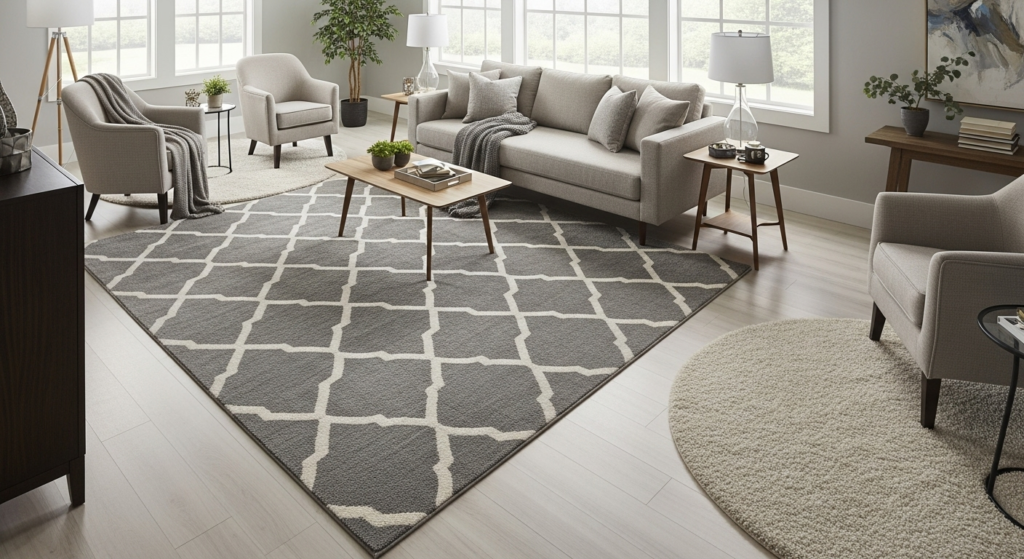
7. The Statement Rug Strategy
Use area rugs to define zones and guide visual perception.
Key Elements:
- Large area rug in main seating area
- Rug placed horizontally across width (not lengthwise)
- Additional rugs in other zones if applicable
- All furniture front legs on rug minimum
- Proper sizing (8×10, 9×12 for seating areas)
- Pattern that doesn’t emphasize length
- Geometric, abstract, or subtle patterns
- Light colors or medium tones
- Grounds furniture arrangements
- Creates visual breaks along length
- Defines separate functional areas
- Adds warmth, color, and texture
- Helps absorb sound in narrow space
- Coordinates with overall color scheme
- Quality pad underneath for comfort
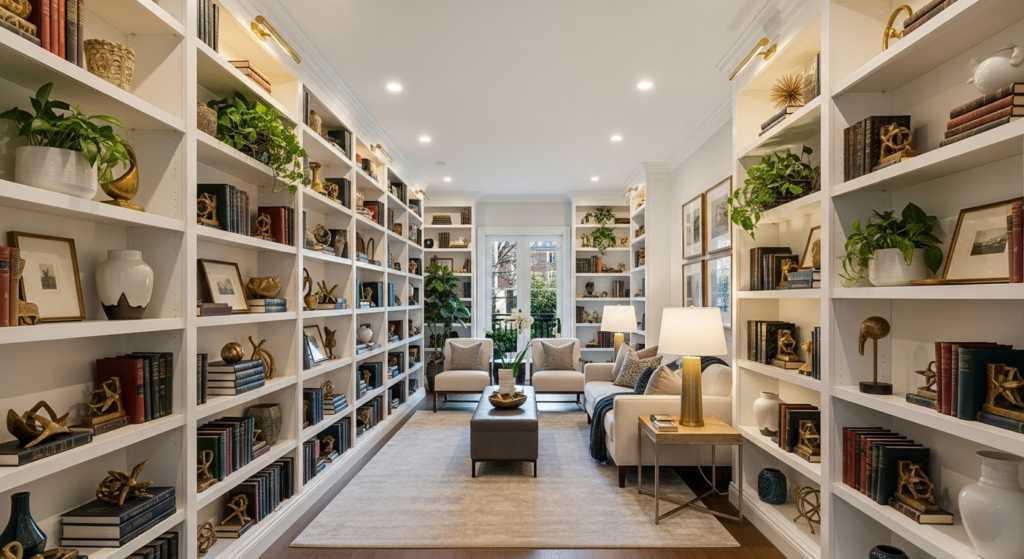
8. The Built-In Styling
Decorate built-in shelving to add interest without cluttering floor space.
Key Elements:
- Built-in bookshelves along one or both long walls
- Styled with books, objects, and decorative items
- Follows rule of thirds in styling
- Mix of horizontal and vertical book stacks
- Decorative objects interspersed with books
- Plants on shelves at varying heights
- Artwork leaning against back of shelves
- Coordinated color scheme in displayed items
- Negative space left for visual breathing room
- Creates library-like sophisticated atmosphere
- Adds architectural interest
- Keeps floor clear and open
- Makes narrow proportions feel intentional
- Personalized with meaningful objects
- Professional styling techniques applied
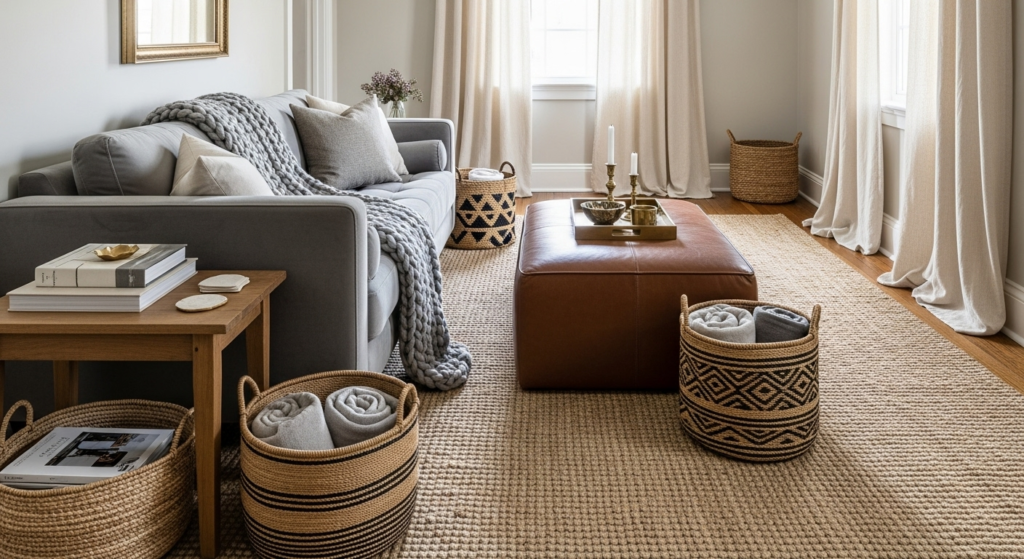
9. The Texture Layering Approach
Add visual interest through varied textures rather than busy patterns.
Key Elements:
- Multiple textures in fabrics and materials
- Velvet sofa or chairs
- Linen or cotton curtains
- Wool or jute area rug
- Smooth leather ottoman
- Chunky knit throw blankets
- Woven baskets for storage
- Natural wood furniture
- Metallic accessories (brass, copper)
- Ceramic or pottery decorative objects
- Mix of smooth, rough, soft, and hard textures
- Creates depth without overwhelming patterns
- Sophisticated layered look
- Works especially well in neutral color schemes
- Tactile, inviting atmosphere
- Prevents flat, boring appearance
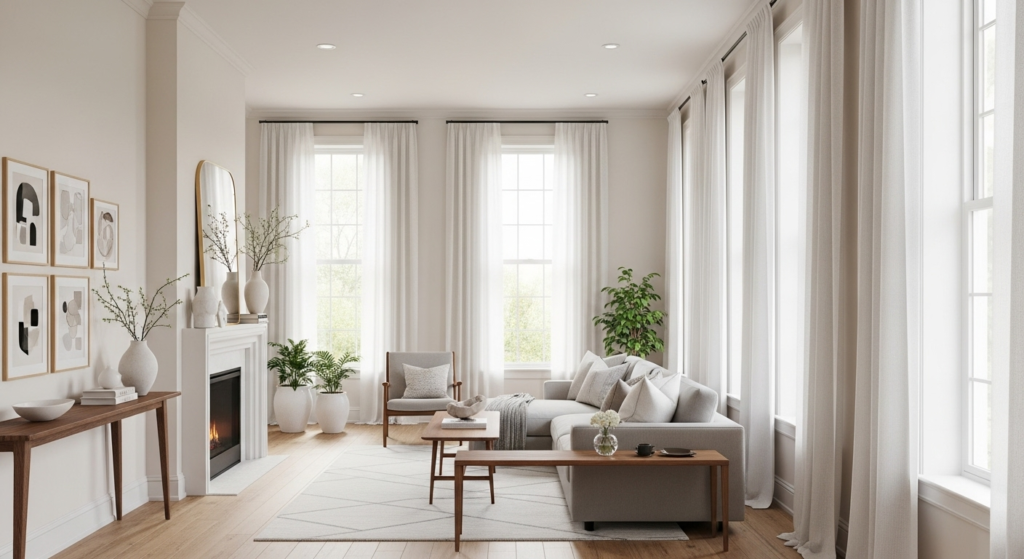
10. The Window Treatment Enhancement
Maximize natural light and architectural interest with strategic window decor.
Key Elements:
- Floor-to-ceiling curtains on all windows
- Light, flowing fabrics (linen, cotton, sheer)
- Curtain rods mounted at ceiling height
- Extends beyond window frame on both sides
- Makes windows appear larger and more impressive
- White or light neutral curtains
- Sheer layers for privacy with light
- Hardware in coordinating finish (brass, black, nickel)
- Puddle slightly on floor for elegance
- Creates vertical emphasis at windows
- Maximizes natural light flow
- Adds softness to hard architectural lines
- Can use pattern subtly in curtains
- Professional installation for proper hang
- Frames views beautifully
11. The Monochromatic Decor Scheme
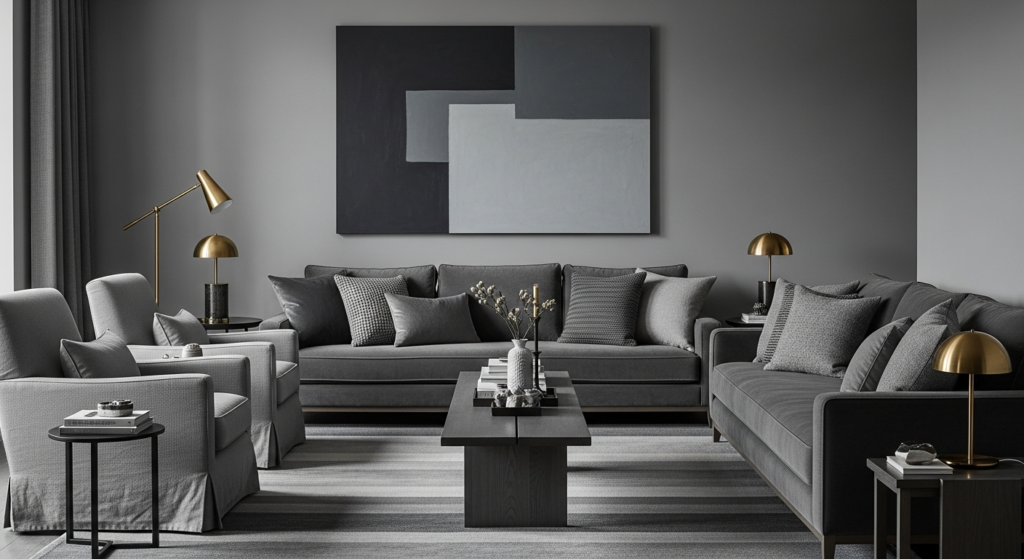
Create sophistication with variations of a single color.
Key Elements:
- Entire room decorated in shades of one color
- Multiple tones from light to dark (example: all greys)
- Variety of textures essential for interest
- Different finishes (matte, glossy, metallic)
- Tonal artwork in same color family
- Layered textiles in coordinating shades
- Creates cohesive, sophisticated look
- One metallic accent color (gold, silver, brass)
- Prevents visual fragmentation
- Makes narrow space feel unified
- Calming, serene atmosphere
- High-end, designer appearance
- Works with any base color choice
- Ombre or gradient effects possible
- Refined, intentional aesthetic
12. The Minimal Clutter Approach
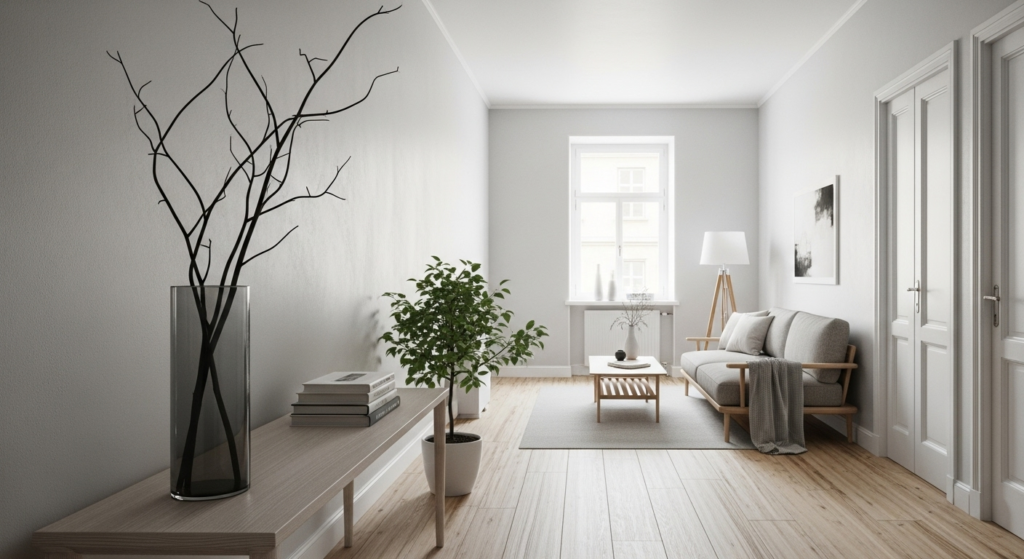
Keep decor intentional and surfaces mostly clear.
Key Elements:
- Minimal decorative objects on surfaces
- Each item carefully chosen and placed
- Surfaces 70-80% clear
- Quality over quantity in decor choices
- Hidden storage for everyday items
- Only meaningful or beautiful objects displayed
- Clean lines throughout
- Prevents overwhelming narrow space
- Creates breathing room visually
- Modern, sophisticated aesthetic
- Easy to maintain and clean
- Reduces visual chaos
- Makes space feel larger and calmer
- Intentional negative space
- Everything serves purpose or brings joy
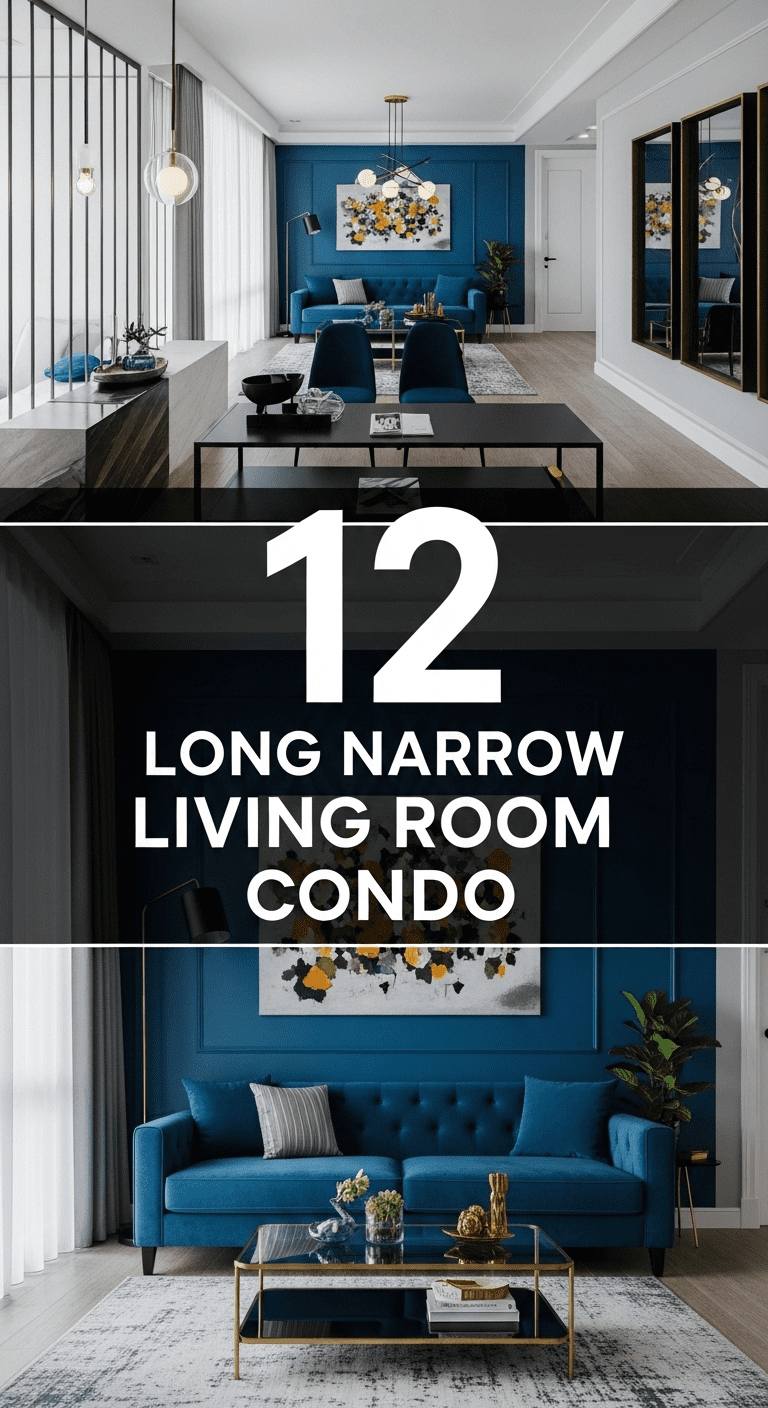
13. The Bold Accent Wall
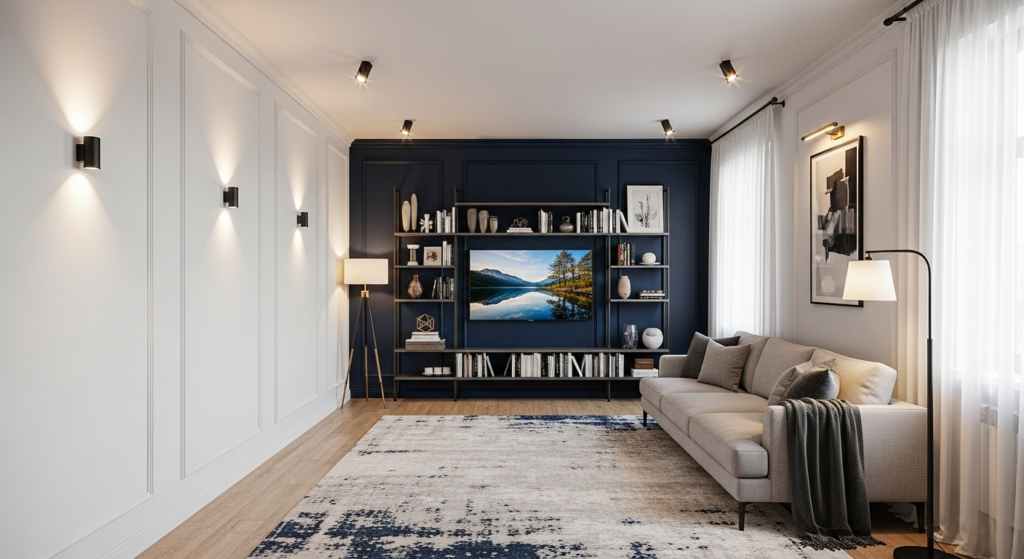
Create a focal point that distracts from awkward proportions.
Key Elements:
- One dramatic accent wall (color, wallpaper, or material)
- Located on end wall or one long wall
- Bold color, dramatic wallpaper, or wood paneling
- Becomes instant focal point
- Draws attention away from proportions
- Can be dark color in otherwise light room
- Patterned wallpaper with horizontal emphasis
- Wood slat wall or other textural treatment
- Coordinates with overall decor scheme
- Creates visual interest and personality
- Makes design statement
- Doesn’t require painting all walls
- Easy way to add drama
- Updated periodically for room refresh
- Complements furniture arrangement
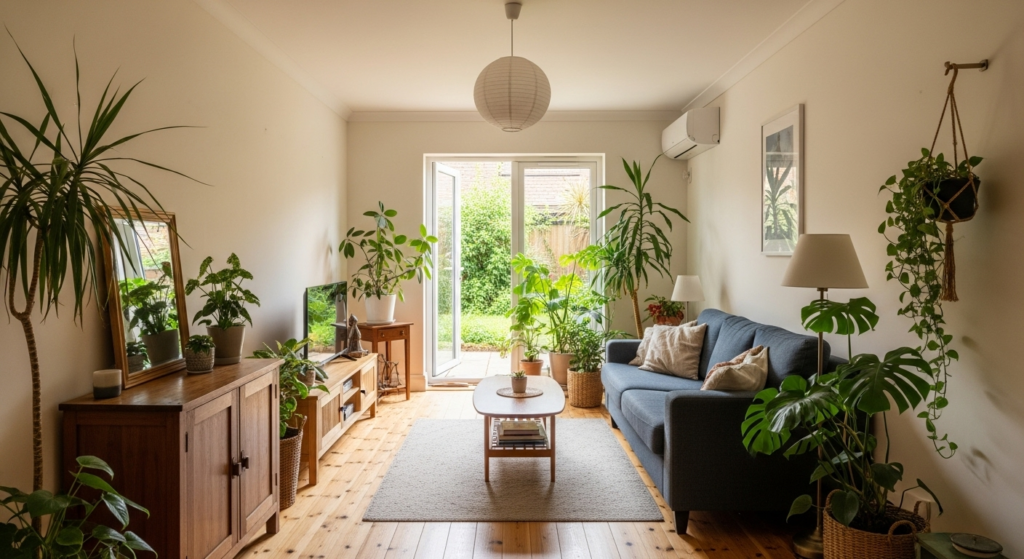
14. The Natural Element Integration
Bring outdoors in with plants and organic decorative elements.
Key Elements:
- Multiple plants throughout length of room
- Mix of floor plants, tabletop plants, hanging plants
- Large statement plants (fiddle leaf fig, monstera, bird of paradise)
- Natural wood furniture and accessories
- Woven baskets in natural materials
- Stone or ceramic planters
- Botanical artwork or prints
- Natural fiber textiles (jute, linen, cotton)
- Organic shapes in decor items
- Brings life and freshness to space
- Improves air quality
- Adds vertical interest with tall plants
- Creates connection to nature
- Softens hard architectural lines
- Fresh, inviting atmosphere
15. The Metallic Accent Strategy
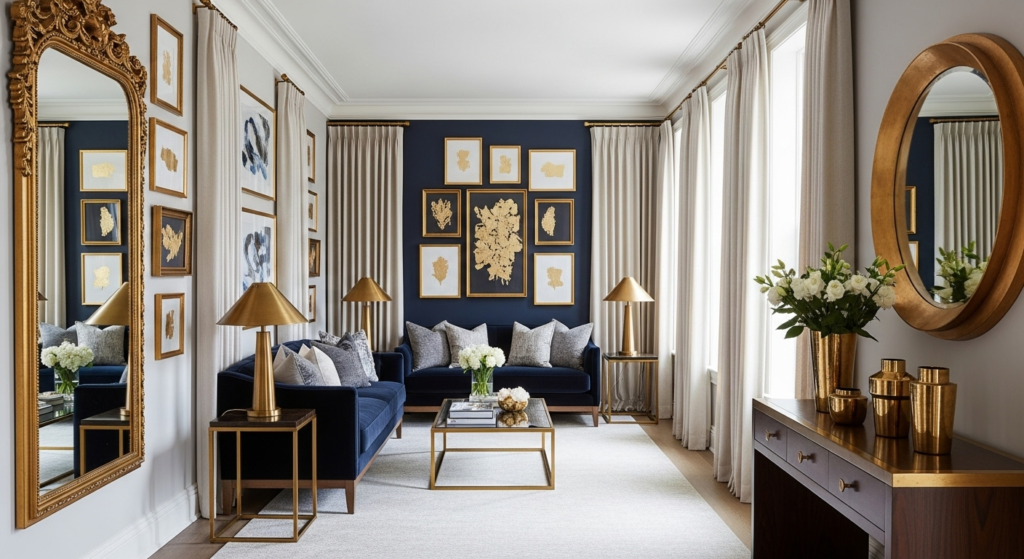
Add glamour and light reflection with metallic decorative elements.
Key Elements:
- Metallic accessories throughout room
- Coordinated metal finish (all brass, or all chrome, etc.)
- Metallic picture frames
- Brass or gold table lamps
- Chrome or nickel curtain rods
- Metallic decorative objects (vases, sculptures)
- Mirror with metallic frame
- Metal side tables or coffee table
- Light fixtures in same metal finish
- Adds sparkle and reflects light
- Creates cohesive sophisticated look
- Elevates overall design
- Works in modern or traditional decor
- Warm metals (brass, gold, copper) or cool (chrome, silver)
- Prevents flat appearance
16. The Zoned Decor Approach
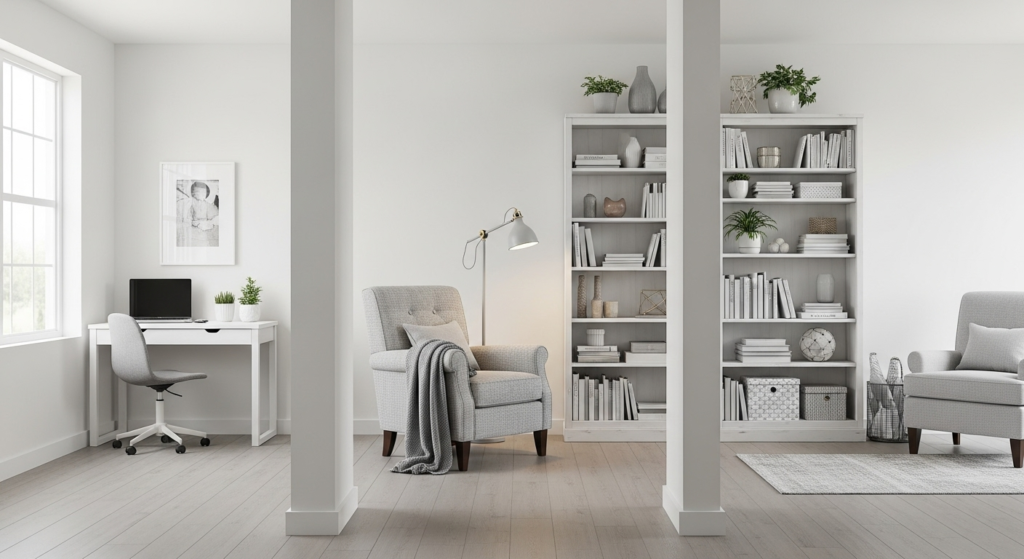
Decorate each zone slightly differently while maintaining cohesion.
Key Elements:
- Multiple zones decorated with unique character
- Cohesive color scheme throughout all zones
- Each area has defining decor element
- Living zone with art and accessories
- Dining zone with different lighting fixture
- Reading zone with unique bookshelf styling
- Unified by repeated colors or materials
- Prevents monotony along length
- Creates visual interest throughout
- Each zone feels purposeful
- Overall harmony maintained
- Different functions emphasized through decor
- Variety without chaos
- Intentional design choices per zone
- Makes long room feel like curated journey
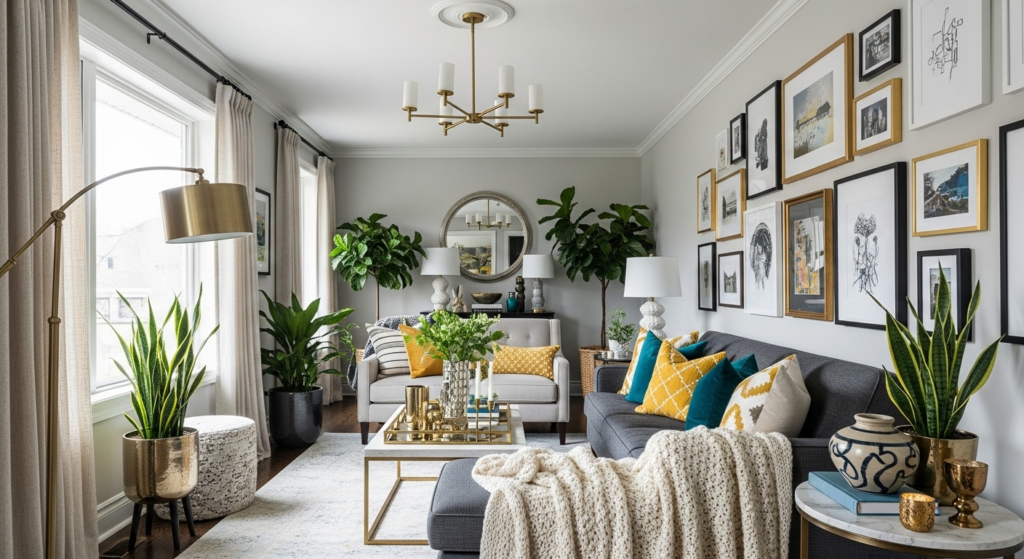
Essential Decor Elements for Long Narrow Living Rooms
Include these decorative components in your narrow room:
Wall Decor:
- Artwork scaled appropriately for walls
- Horizontal gallery arrangements preferred
- Large-scale art on end walls
- Mirrors for light and space multiplication
- Accent wall treatment (paint, wallpaper, paneling)
- Wall sconces for lighting and decoration
- Floating shelves styled with objects
- Decorative molding or trim details
- Wallpaper with horizontal patterns
- Balanced distribution along length
Window Treatments:
- Floor-to-ceiling curtains for vertical emphasis
- Light fabrics allowing natural light
- Mounted at ceiling height
- Extended beyond window frames
- Coordinating hardware finish
- Sheer layers for privacy and light
- Simple styles avoiding fussiness
- Proper length (floor-touching or slight puddle)
- Neutral colors or subtle patterns
- Professional installation for perfect hang
Lighting Fixtures:
- Statement chandelier or pendant
- Coordinating table lamps (pairs or sets)
- Floor lamps for corners and zones
- Wall sconces saving floor space
- Decorative fixtures as art pieces
- Consistent finish throughout (brass, black, etc.)
- Appropriate scale for room size
- Dimmer switches for ambiance
- Mix of ambient and task lighting
- Warm bulbs for inviting atmosphere
Textile Decor:
- Throw pillows in coordinating colors
- Throw blankets draped on seating
- Area rugs defining zones
- Curtains or drapes
- Upholstery fabrics
- Layered textures
- Washable materials preferred
- Patterns used strategically
- Color coordination throughout
- Quality fabrics that last
Accessories and Objects:
- Decorative vases (varying heights)
- Books styled on tables and shelves
- Candles or candle holders
- Sculptures or art objects
- Bowls or trays for corralling items
- Picture frames (coordinated finishes)
- Decorative boxes for storage
- Seasonal decor rotation
- Personal meaningful items
- Quality over quantity approach
Plants and Natural Elements:
- Multiple plants at varying heights
- Mix of floor, tabletop, and hanging
- Easy-care varieties preferred
- Coordinated planters (same color/material)
- Fresh flowers occasionally
- Natural wood elements
- Stone or organic materials
- Woven baskets
- Natural fiber textiles
- Connection to nature
Color and Pattern:
- Cohesive color palette (3-4 colors max)
- Light base colors
- Accent colors repeated throughout
- Patterns used sparingly in narrow spaces
- Horizontal patterns preferred
- Coordinated not matched
- Neutral foundation
- Pops of color strategically placed
- Seasonal color updates possible
- Timeless base with trendy accents
Functional Decor:
- Stylish storage baskets and boxes
- Decorative trays organizing surfaces
- Beautiful clock as functional art
- Attractive charging station
- Decorative ladder for blankets
- Stylish bookends
- Pretty containers for remotes
- Functional items that look good
- Hidden storage solutions
- Everything serves dual purpose
Seasonal Updates:
- Swap throw pillow covers seasonally
- Rotate artwork or photos
- Change out throw blankets
- Update plant arrangements
- Seasonal flowers or branches
- Holiday decor integrated tastefully
- Refresh color accents
- Update candles or scents
- Keeps room feeling fresh
- Easy, budget-friendly changes
Personal Touches:
- Family photos in beautiful frames
- Travel souvenirs displayed
- Collections shown intentionally
- Books reflecting interests
- Artwork with personal meaning
- Handmade items
- Inherited pieces
- Hobby-related objects
- Makes space uniquely yours
- Tells your story
Tips for Decorating Long Narrow Living Rooms
Create beautiful narrow living room decor with these strategies:
Color Selection:
- Start with light neutral base
- Add 2-3 accent colors maximum
- Repeat accent colors in multiple spots
- Use 60-30-10 color rule (60% dominant, 30% secondary, 10% accent)
- Test paint samples in different lighting
- Consider color psychology (blue=calm, yellow=happy)
- Light colors on long walls
- Can use darker color on end wall
- Maintain consistency throughout length
- Avoid chopping space with color blocks
Pattern Usage:
- Use patterns sparingly in narrow spaces
- Horizontal patterns preferred over vertical
- Mix pattern scales (large, medium, small)
- Coordinate patterns in same color family
- Avoid busy all-over patterns
- Geometric patterns work well
- Subtle patterns better than bold
- One patterned element per zone maximum
- Solid colors as foundation
- Pattern in accessories easily changed
Scale and Proportion:
- Choose appropriately sized decor items
- Avoid oversized accessories
- Group small items together
- Large art on end walls
- Medium art on long walls
- Vary heights in vignettes (odd numbers)
- Balance visual weight throughout
- Proper scale artwork to furniture
- Don’t overcrowd with decor
- Negative space is important
Wall Decor Strategies:
- Horizontal gallery walls emphasize width
- Large single pieces on end walls
- Avoid vertical columns of art
- Use horizontal mirrors
- Keep artwork at eye level (57-60 inches center)
- Proper spacing between pieces (2-4 inches)
- Coordinate frames throughout
- Mix frame sizes for interest
- Lean large art for casual look
- Less is more on long walls
Lighting as Decor:
- Choose decorative light fixtures
- Coordinate finishes throughout
- Use lighting to highlight zones
- Layer multiple light sources
- Fixtures appropriate scale
- Make lighting a design element
- Statement chandelier or pendant
- Matching table lamp pairs
- Decorative sconces as art
- Warm bulbs create ambiance
Accessory Placement:
- Follow rule of three (odd numbers)
- Vary heights in groupings
- Keep surfaces mostly clear (30% covered max)
- Create vignettes with purpose
- Use trays to corral small items
- Symmetrical or asymmetrical arrangements
- Leave breathing room
- Rotate accessories seasonally
- Quality over quantity always
- Each item should earn its place
Mirror Strategies:
- Position opposite windows for light
- Horizontal mirrors emphasize width
- Large mirrors create space illusion
- Don’t reflect clutter or unattractive views
- Decorative frames add style
- Multiple small mirrors create gallery
- Lean large mirrors casually
- Mirror behind lamps multiplies light
- Strategic placement crucial
- Clean mirrors regularly
Textile Layering:
- Mix textures for interest
- Coordinate colors throughout
- Use pillows to add pattern
- Throws add warmth and color
- Layer rugs if appropriate
- Quality fabrics worth investment
- Washable items practical
- Change seasonally for updates
- Comfortable and beautiful
- Tactile variety important
Plant Placement:
- Tall plants in corners
- Hanging plants save floor space
- Tabletop plants on surfaces
- Group plants in odd numbers
- Vary pot styles coordinated by color
- Real or quality faux
- Plants at different heights
- Use plants as art
- Easy-care varieties
- Adds life and freshness
Budget-Friendly Decor:
- Paint is inexpensive transformation
- DIY artwork in nice frames
- Thrift unique accessories
- Make your own throw pillow covers
- Print artwork affordably online
- Shop sales and clearance
- Repurpose items you own
- One statement piece, rest affordable
- Focus on impactful changes
- Update gradually over time
Common Decor Mistakes:
- Overcrowding with too much decor
- Ignoring scale and proportion
- Vertical emphasis in wrong places
- Dark colors closing in space
- Busy patterns overwhelming narrow space
- All decor at one end
- Mismatched metals throughout
- Wrong sized artwork
- Cluttered surfaces
- Ignoring lighting importance
Making Your Decor Work
The best decor for long narrow living rooms serves both aesthetic and functional purposes. Every decorative choice should either make the room more beautiful or solve a proportion problem—ideally both. When selecting decor, always ask: “Does this help my narrow room, hurt it, or neither?” If it hurts the proportions, don’t include it no matter how much you love it.
Remember that decorating is a process, not a one-time event. You don’t need to complete your room’s decor all at once. Start with the foundational elements—paint color, window treatments, lighting—then layer in accessories and personal touches over time. This approach prevents overwhelming the space and your budget while allowing your style to evolve naturally.
Pay attention to how decor makes your space feel. Does that gallery wall make the room feel wider? Does the dark accent wall make it feel cozier or more cramped? Does the clutter on the console make you anxious? Your emotional response to your decor matters as much as how it looks. Adjust until the space feels right.
Don’t be afraid to edit ruthlessly. If something doesn’t serve the space well, remove it. The goal isn’t filling every surface with decor—it’s creating a beautiful, functional room that works for your narrow proportions. Sometimes what you take away matters more than what you add.
Finally, make your decor personal. While these strategies help solve proportion challenges, your room should still reflect your personality and style. Include meaningful objects, favorite colors, and pieces that bring you joy. The best decorated rooms balance design principles with personal expression.
With these sixteen decor strategies and professional design guidance, you can transform your long narrow living room from a challenging space into a beautifully decorated area you love. The right decorative choices make all the difference between a room that fights its proportions and one that celebrates them with style.