7 Bright Long Narrow Living Room Ideas
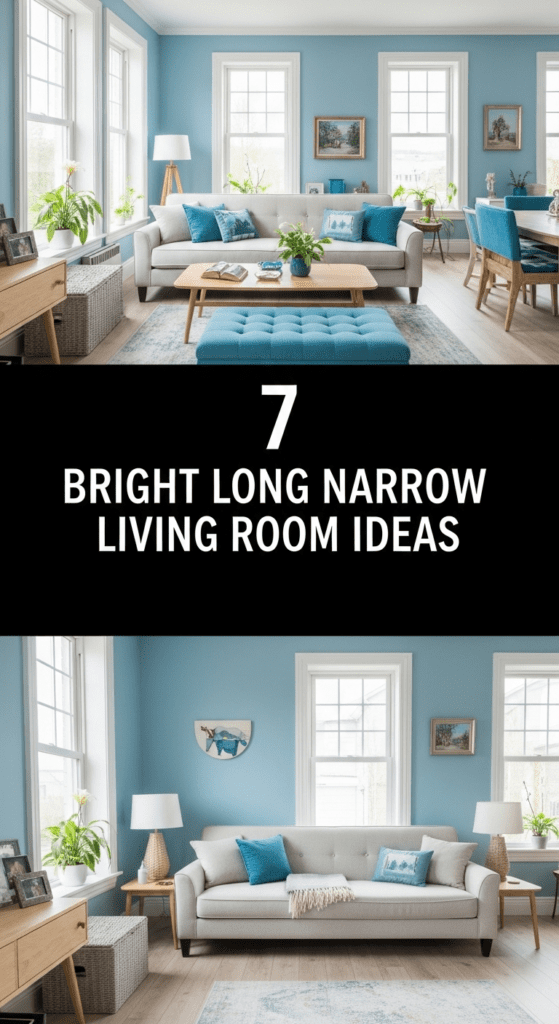
Bright long narrow living room ideas are essential for transforming a potentially challenging space into an inviting, airy sanctuary that feels spacious and welcoming. Brightness—whether from natural light, strategic color choices, or clever lighting design—has the power to visually expand your narrow room, making it feel wider, taller, and more open than its actual dimensions. The key to creating a bright narrow living room lies in maximizing every light source, choosing reflective surfaces and pale colors, and arranging furniture to enhance rather than block illumination. These seven ideas will help you flood your elongated space with light, creating a living room that defies its narrow proportions through the transformative power of brightness.
See also: Wallpaper Ideas for Guest Bedroom 14 Ways to Transform Your Spare Space
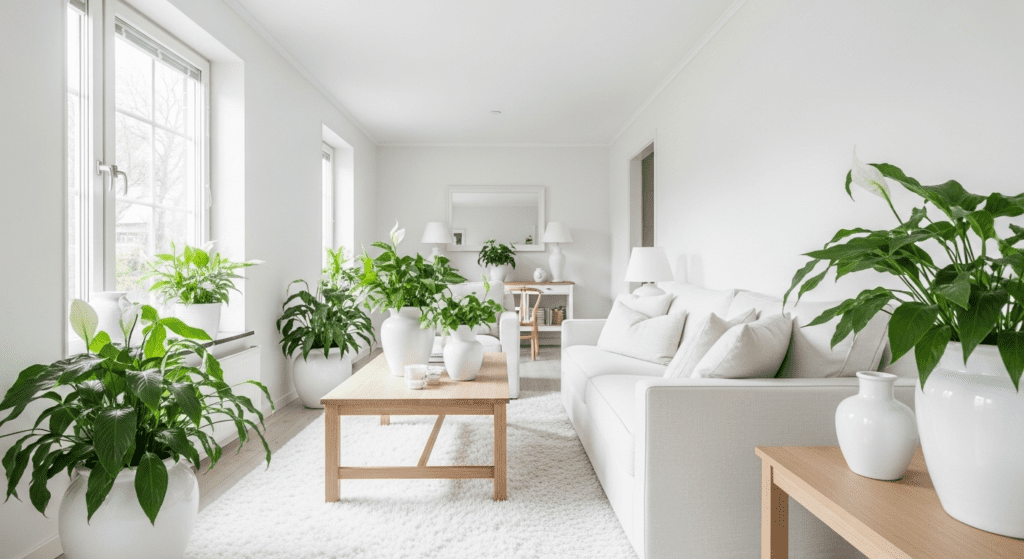
1. All-White Monochromatic Scheme
Create the ultimate bright space by designing an all-white monochromatic living room that reflects maximum light while making your narrow dimensions feel infinitely more spacious.
Paint walls, ceiling, and trim in coordinating shades of white—consider warm white (with cream or ivory undertones) for coziness or cool white (with gray or blue undertones) for crisp modernity. Choose white or cream upholstered furniture, white area rugs, and white or natural wood accessories. The continuous color eliminates visual breaks that can make narrow spaces feel choppy and confined.
Layer different textures to prevent the all-white scheme from feeling flat or sterile. Mix smooth painted walls with textured linen upholstery, chunky knit throws, natural fiber rugs, and glossy ceramic accessories. The varied textures create depth and interest while maintaining the bright, cohesive palette. Add warmth through natural wood elements like coffee tables, shelving, or flooring in light oak or ash tones.
Incorporate greenery as the primary color accent—potted plants, fresh flowers, or botanical prints provide the perfect pop of natural color against the white backdrop. The plants stand out dramatically while the white surfaces reflect and amplify any available natural light throughout the day.
This approach creates the brightest possible narrow living room, making even spaces with limited natural light feel airy and open. The all-white scheme is timeless, adaptable, and provides a blank canvas for seasonal styling through accessories and textiles.
See also: Guest Bedroom Closet Designs 10 Ways to Maximize Visitor Storage
2. Mirror-Multiplied Light Design
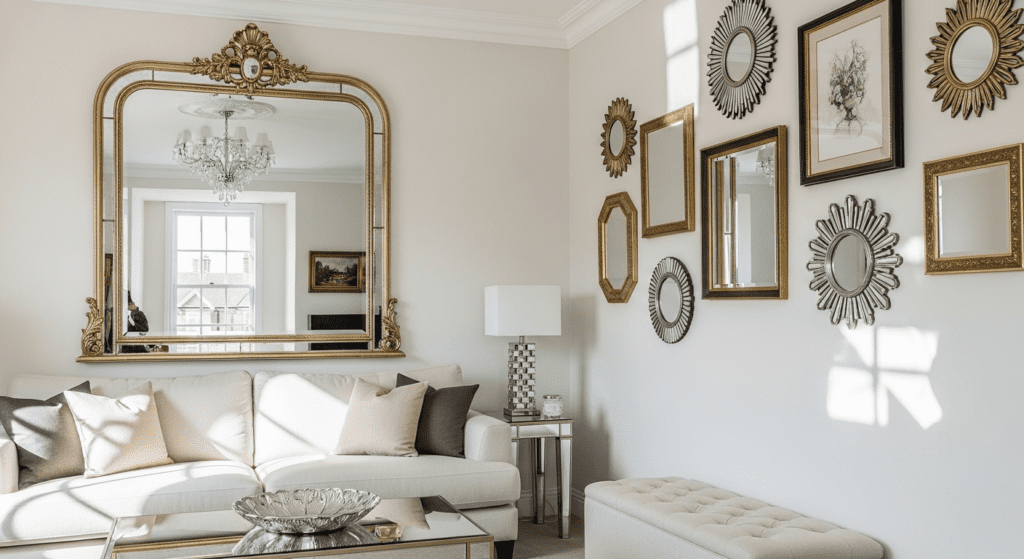
Strategically position mirrors throughout your narrow living room to multiply natural and artificial light sources while creating the illusion of expanded space and width.
Install a large statement mirror on one of the long walls, positioned to reflect windows from the opposite wall or end of the room. This doubles the perceived natural light and creates visual depth, making the narrow room feel wider. Add a mirrored coffee table, side tables with mirrored surfaces, or a mirrored media console to multiply light sources from multiple angles.
Create a gallery wall that incorporates mirrors among artwork and photographs—mix round, rectangular, and uniquely shaped mirrors in various frame styles for an eclectic, collected look. The multiple reflective surfaces bounce light around the room from different directions, creating sparkle and brightness throughout the day.
Position mirrors opposite or adjacent to light sources for maximum impact. A mirror placed across from a window captures and reflects natural light deep into the room, while mirrors near lamps amplify artificial light in the evening. Choose mirrors with metallic frames in brass, gold, or silver that add additional reflective qualities.
The mirror strategy works beautifully in narrow rooms because it creates visual complexity and depth that distracts from the linear proportions while simultaneously solving the brightness challenge. The reflected light makes the space feel twice as luminous without requiring additional light sources.
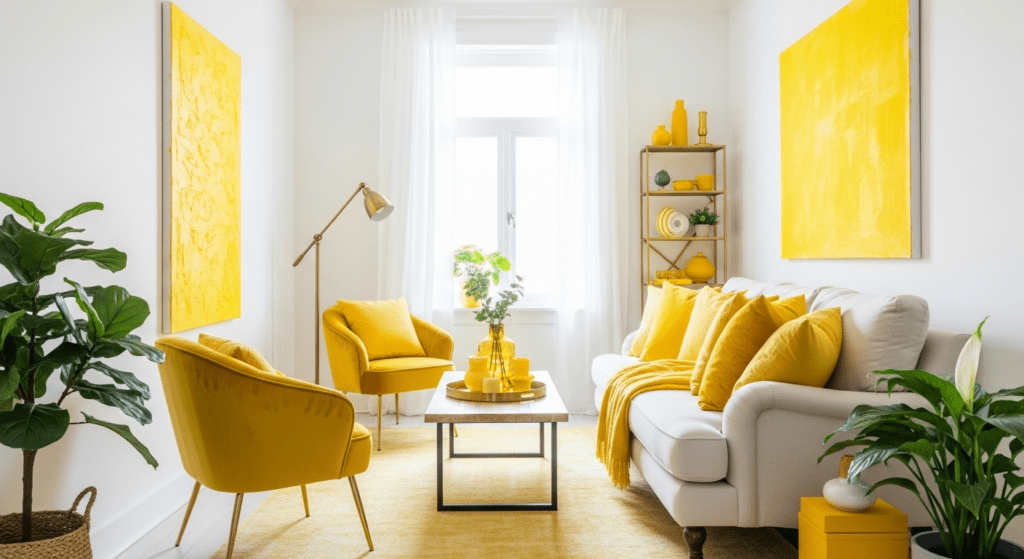
3. Sun-Yellow Accent Energizer
Infuse your narrow living room with the cheerful brightness of sunny yellow accents that create visual warmth and energy even on cloudy days.
Maintain walls in soft white or pale cream as a neutral base, then layer in sunny yellow through strategic accent pieces. Choose a yellow accent chair in velvet or linen, pile yellow throw pillows on a neutral sofa, add a yellow area rug, or incorporate yellow artwork and accessories. The warm yellow hue tricks the eye into perceiving the space as sun-filled even when natural light is limited.
Mix various shades of yellow—from pale butter to rich golden tones—to create depth and interest. Combine with whites, creams, and light grays to prevent the yellow from overwhelming the narrow space. Add natural wood elements and greenery that complement the warm yellow tones, creating a fresh, spring-like atmosphere year-round.
Yellow is psychologically associated with happiness, optimism, and energy, making your narrow living room feel uplifting and positive. The bright accent color draws the eye throughout the space, creating visual movement that prevents the room from feeling like a static corridor. Use yellow in varying intensities across the room’s length to create focal points that break up the narrow proportions.
This approach is particularly effective in narrow living rooms with limited natural light or north-facing windows that receive cool light. The warm yellow accents compensate for insufficient sunshine, creating artificial brightness through color psychology.
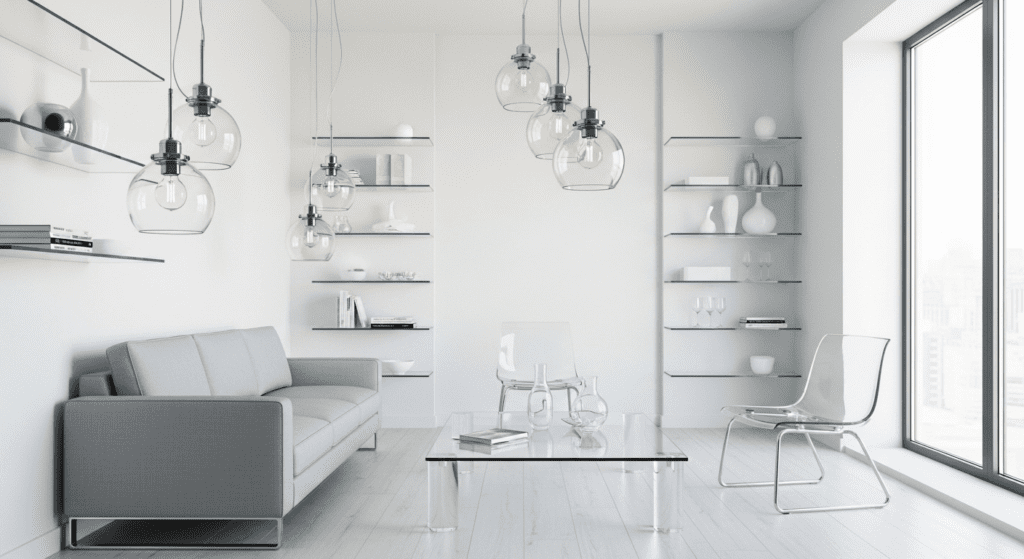
4. Glass and Lucite Transparency
Incorporate transparent and translucent furniture made from glass, lucite, or acrylic that maintains visual openness while providing functionality, allowing light to pass through unobstructed.
Choose a glass-topped coffee table with lucite legs, acrylic accent chairs, or a glass media console that appears to float. The transparent furniture reduces visual clutter and weight, making your narrow living room feel more spacious and bright. Light passes through rather than being blocked, maintaining the bright, airy feeling essential to narrow spaces.
Pair transparent furniture with light-colored upholstered pieces—a white or cream sofa, pale gray chairs—to maximize the effect. The combination of light colors and transparent materials creates a layered brightness where nothing feels heavy or oppressive. Add metallic accents in brass or chrome that reflect light for additional sparkle.
Use glass shelving instead of solid wood bookcases to display decorative items without creating visual barriers. Hang light fixtures with clear glass shades or exposed Edison bulbs that allow maximum light dispersion. The goal is eliminating any elements that block or absorb light, creating continuous brightness throughout the narrow space.
This modern, sophisticated approach works particularly well in contemporary or transitional design schemes. The transparent furniture maintains a sleek, uncluttered aesthetic while the practical benefit of visual lightness makes the narrow room feel substantially larger and brighter.
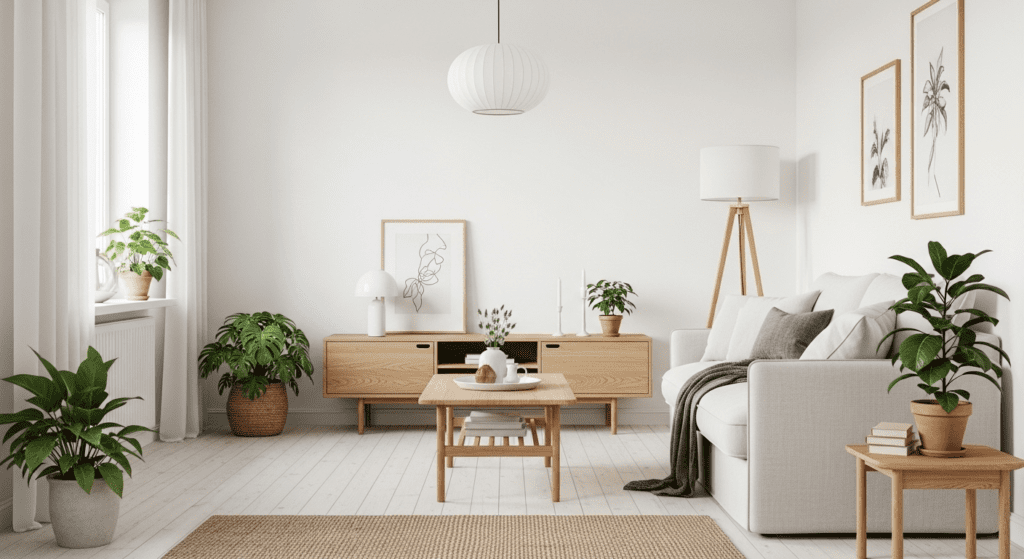
5. Light Wood Scandinavian Aesthetic
Embrace Scandinavian design principles with light wood furniture, minimal decor, and a neutral palette that creates brightness through simplicity and natural materials.
Choose furniture in light wood tones—blonde oak, ash, pine, or birch—that reflects light naturally while adding organic warmth. A light wood coffee table, media console, and shelving create a cohesive look that feels bright and natural. Pair with neutral upholstery in whites, creams, light grays, and soft beiges that complement the wood tones.
Keep accessories and decor minimal, following the Scandinavian principle of “lagom” (just the right amount). Display only items that serve a purpose or bring joy, maintaining generous negative space that allows light to circulate freely. Add textural interest through natural materials—linen curtains, wool throws, cotton pillows, and ceramic accessories—rather than through color or pattern.
Incorporate abundant plants in simple ceramic pots that bring life and freshness to the bright, neutral palette. Use simple lighting fixtures in white, wood, or brass that blend seamlessly with the overall aesthetic. The Scandinavian approach creates serene brightness through restraint and quality over quantity.
This design direction works beautifully in narrow living rooms because the light colors and minimal furniture prevent visual overwhelm while the natural materials add warmth that prevents the bright space from feeling cold or sterile. The result is a calm, bright sanctuary that celebrates simplicity.
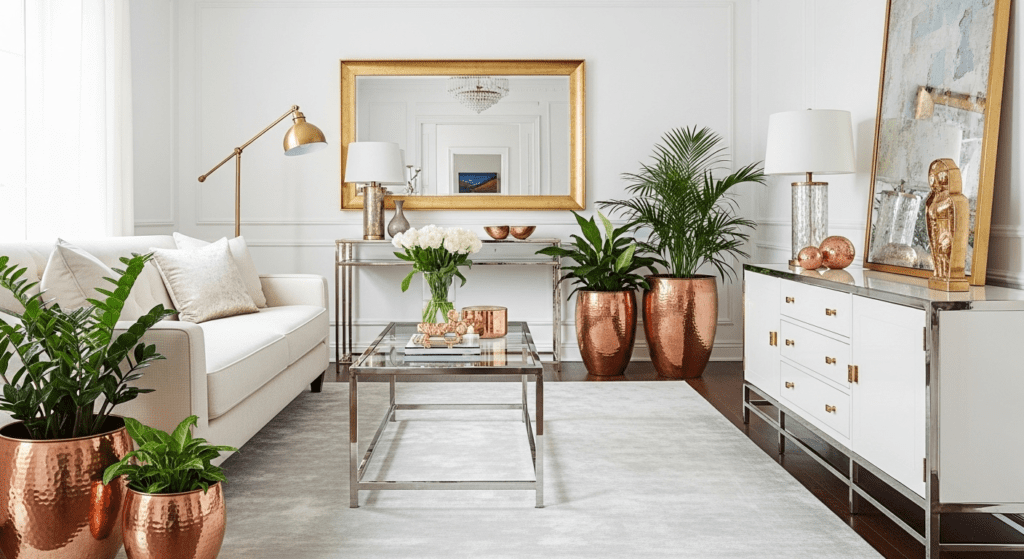
6. Reflective Metallic Accents
Layer metallic accents throughout your narrow living room to create points of light reflection that enhance brightness and add sophisticated glamour.
Incorporate brass, gold, chrome, or copper elements through light fixtures, coffee table legs, picture frames, mirrors, and decorative accessories. The metallic surfaces catch and reflect both natural and artificial light, creating sparkle and visual interest. Mix metals freely for an eclectic, collected look, or stick to one metal family for cohesive elegance.
Choose light fixtures that showcase metallic finishes—brass floor lamps, gold pendant lights, or chrome table lamps—that serve as both functional lighting and decorative focal points. Add metallic-framed mirrors, gold-leafed artwork, brass planters, and copper vases throughout the room. The cumulative effect of multiple reflective surfaces significantly increases perceived brightness.
Pair metallic accents with a neutral base palette—whites, creams, soft grays, and taupes—that allows the metals to shine without competition. Use metallic threads in throw pillows, curtains with subtle metallic prints, or furniture with brass hardware to weave the reflective elements throughout the space cohesively.
The metallic accent strategy works particularly well in narrow rooms because it adds visual interest and luxury without requiring space. The reflective surfaces enhance brightness while the glamorous touches elevate the overall design, making your narrow living room feel intentional and sophisticated rather than challenging.
7. Multi-Source Lighting Layers
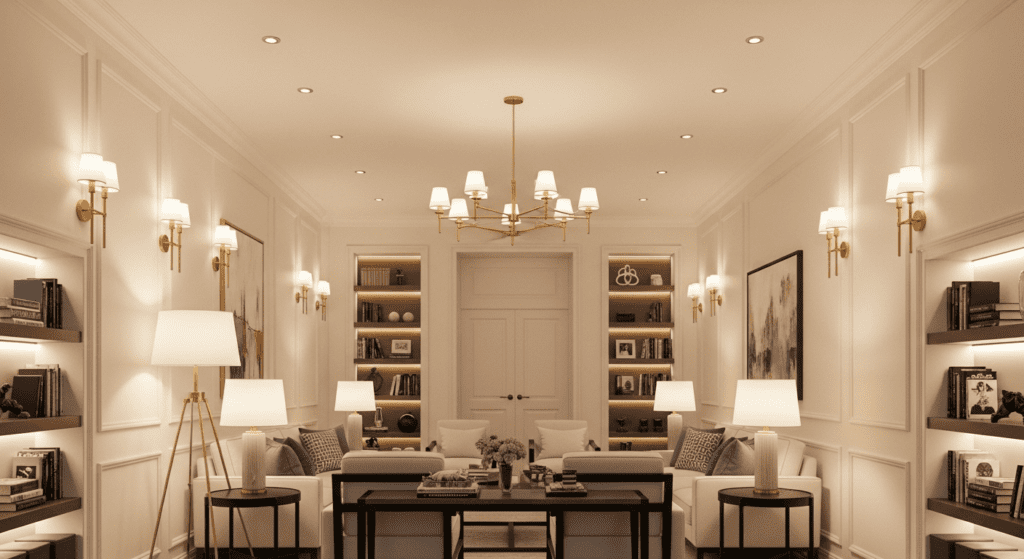
Create maximum brightness through strategic lighting design that layers ambient, task, and accent lighting at multiple heights and locations throughout your narrow living room.
Install recessed ceiling lights spaced evenly down the length of the room to provide consistent ambient lighting. Add a statement ceiling fixture—a modern chandelier or large pendant—over the main seating area as a focal point. Incorporate floor lamps in corners or beside seating for task lighting and vertical emphasis.
Place table lamps on side tables and consoles to create pools of light at mid-level height. Install wall sconces along the long walls to wash light across surfaces and create visual width. Add LED strip lighting under shelves, behind the TV, or along baseboards for subtle accent lighting that makes the room glow.
Use dimmer switches on all light sources to control the brightness for different times of day and activities. Choose warm white LED bulbs (2700-3000K) for cozy brightness, or daylight bulbs (5000K) for energizing brightness. The varied light sources at different heights create depth and dimension while ensuring every corner of your narrow room is well-lit.
The layered lighting approach ensures your living room remains bright from morning through evening, transitioning seamlessly from natural light during the day to artificial sources at night. The multiple fixtures provide flexibility to adjust brightness for different moods and purposes while the varied heights prevent the narrow room from feeling one-dimensional.
Additional Brightness-Enhancing Strategies
Maximize Window Treatments: Keep window treatments minimal and functional rather than decorative and bulky. Use sheer curtains that filter light while providing privacy, or top-down bottom-up shades that allow light from above while covering lower portions. Mount curtain rods close to the ceiling and extend them beyond window frames so curtains can be pulled completely away from windows during the day.
Choose Light Flooring: Light-colored flooring reflects light upward, contributing to overall brightness. Light oak, whitewashed wood, pale tile, or cream carpet all help bounce light around the room. If you have dark floors, use large light-colored area rugs to add brightness at the ground level.
Paint the Ceiling: Don’t neglect your fifth wall. Paint ceilings in white or a shade lighter than walls to reflect light downward. In narrow rooms, painting the ceiling the same color as walls can actually increase brightness by eliminating the visual break.
Edit Ruthlessly: Clutter absorbs light and creates visual darkness. Keep your narrow living room edited to essential pieces, storing excess items elsewhere. Open shelving should display items thoughtfully rather than being packed full. Less stuff means more light circulation and perceived brightness.
Clean Windows Regularly: This obvious tip is often overlooked. Dirty windows can reduce natural light by 25-40%. Clean windows inside and out regularly to maximize the light they allow in.
Strategic Paint Sheen: Use satin or eggshell paint finishes rather than flat matte. The subtle sheen reflects more light than matte finishes while still hiding minor wall imperfections. Reserve high-gloss for trim and accents where maximum reflection is desired.
Light-Colored Artwork: Choose artwork in light, bright color palettes rather than dark moody pieces. Large-scale art in whites, creams, soft pastels, or bright colors adds visual interest without absorbing light.
Gloss and Polish: Incorporate glossy finishes through lacquered furniture, polished stone, glazed ceramics, and shiny metals that reflect light. Mix with matte textures to prevent the space from feeling too slick, but use reflective finishes strategically for brightness.
Creating Your Bright Narrow Living Room
Bright long narrow living room ideas center on one fundamental principle: maximizing light through every design decision. Whether through color choices that reflect light, materials that bounce light, mirrors that multiply light, or layered lighting that ensures consistent brightness, every element should contribute to creating a luminous, airy space.
The beauty of focusing on brightness is that it solves multiple challenges simultaneously. Bright rooms feel larger, more open, and more inviting than dark ones. In narrow living rooms where spatial constraints are an issue, brightness becomes your most powerful tool for creating the illusion of spaciousness. A bright narrow room feels infinitely more comfortable than a dark narrow room, even if the physical dimensions are identical.
Start by assessing your current light sources—both natural and artificial. Maximize natural light by cleaning windows, using appropriate window treatments, and arranging furniture to avoid blocking light. Then layer in artificial lighting through multiple sources at various heights. Finally, use color, materials, and reflective surfaces to amplify the light you have.
Remember that brightness doesn’t have to mean stark or cold. Through warm whites, natural wood tones, soft textiles, and thoughtful layering, you can create a bright narrow living room that feels both spacious and cozy—a welcoming retreat that celebrates light while serving your everyday living needs. The key is intentional design that prioritizes brightness while maintaining warmth, comfort, and personal style.