8 Sloped Backyard Landscaping Designs
A sloped backyard is often viewed as a challenge, but with thoughtful design, it can become the most dramatic and functional part of your property. Instead of fighting the natural topography, the best designs work with the slope to create stunning visual interest, usable outdoor living spaces, and unique garden areas. From terraced gardens and cascading water features to multi-level decks and natural rock formations, here are eight sloped backyard landscaping designs to transform your challenging terrain into a breathtaking landscape.
1. Multi-Level Terrace Garden Design
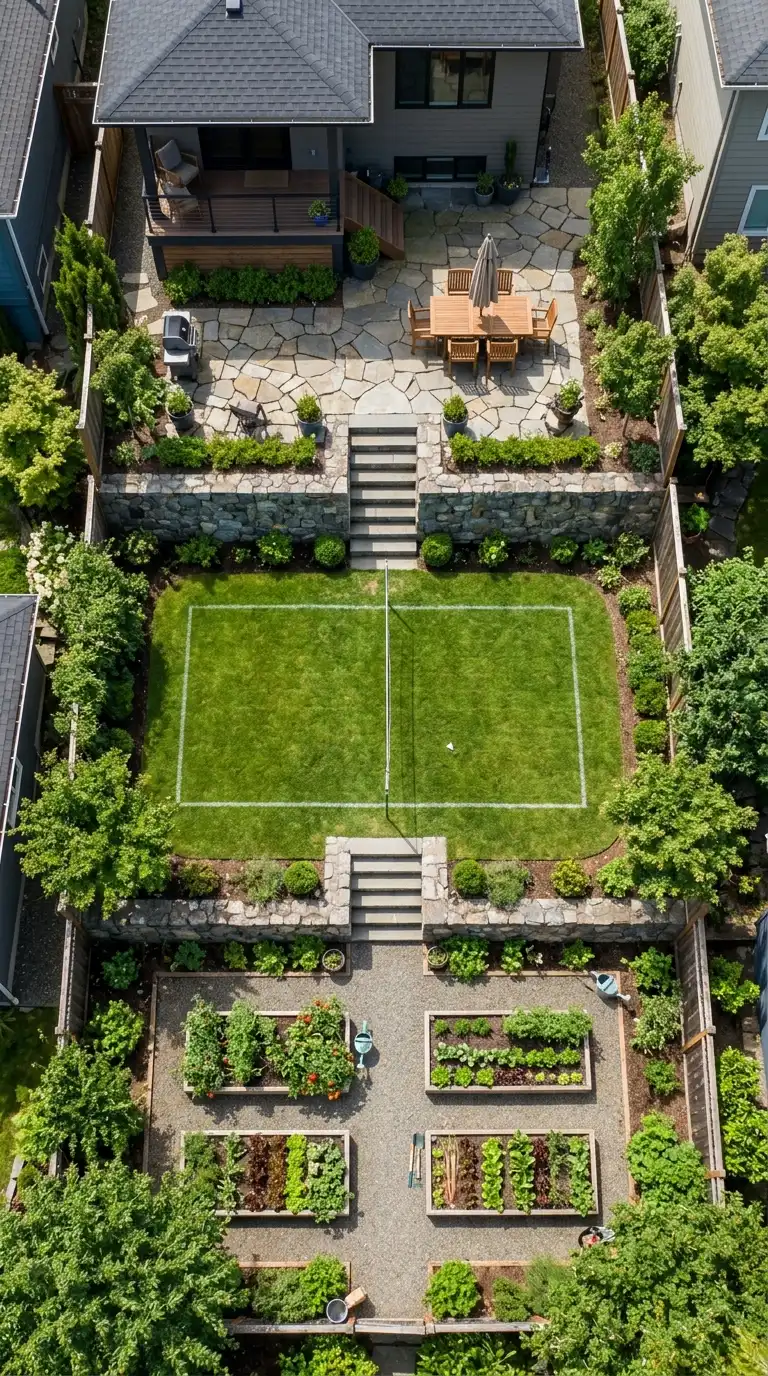
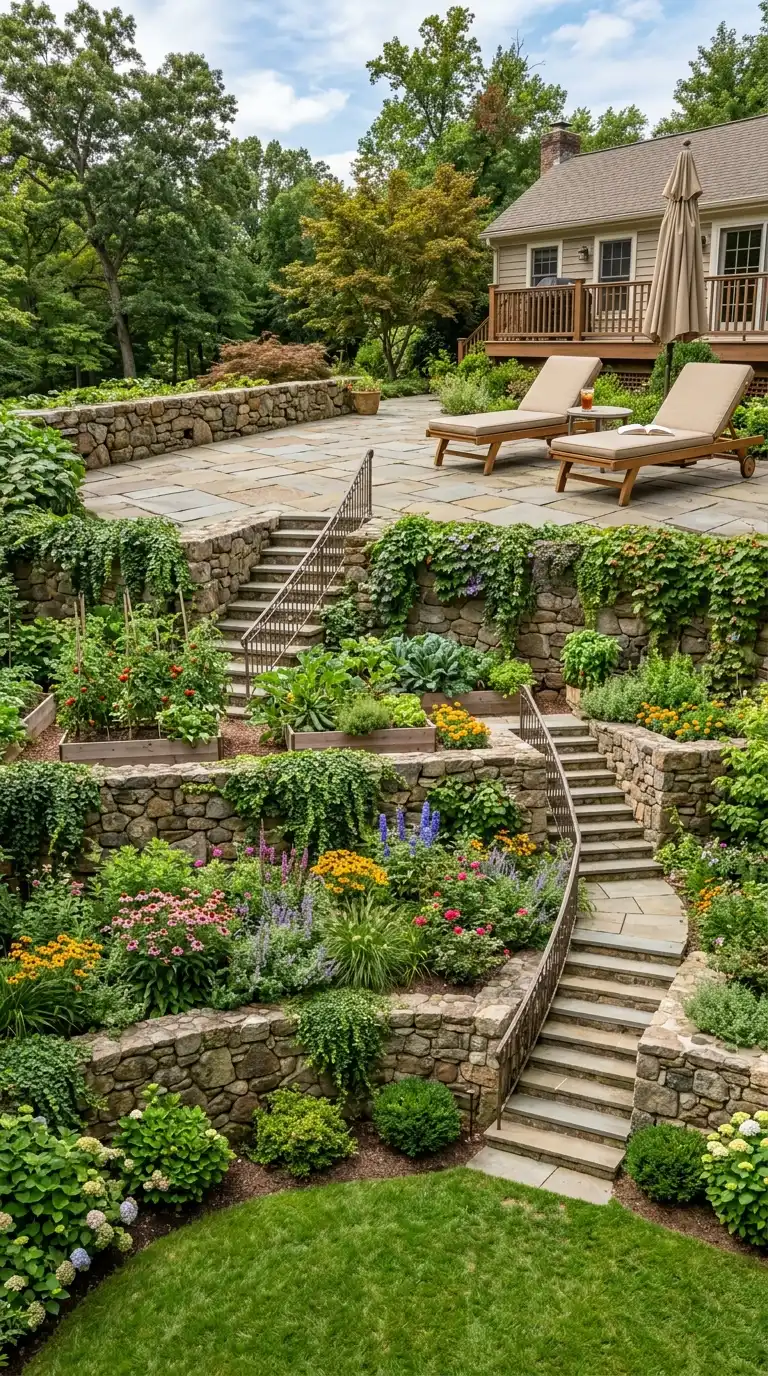
The multi-level terrace garden is a classic solution for steep slopes. Using retaining walls made of natural stone, timber, or concrete blocks, you create a series of flat, usable levels. Each terrace can serve a distinct purpose—a vegetable garden on one level, a flower garden on another, a patio with seating on a third, and a lawn area on the lowest level. The terraces create a dramatic, layered look that adds depth and dimension to your yard. Steps or winding pathways connect each level, and the retaining walls themselves can be planted with trailing vines or flowering perennials to soften the hardscape. This design prevents soil erosion, makes gardening easier, and transforms a difficult slope into a beautifully structured landscape.
2. Cascading Waterfall and Stream Design
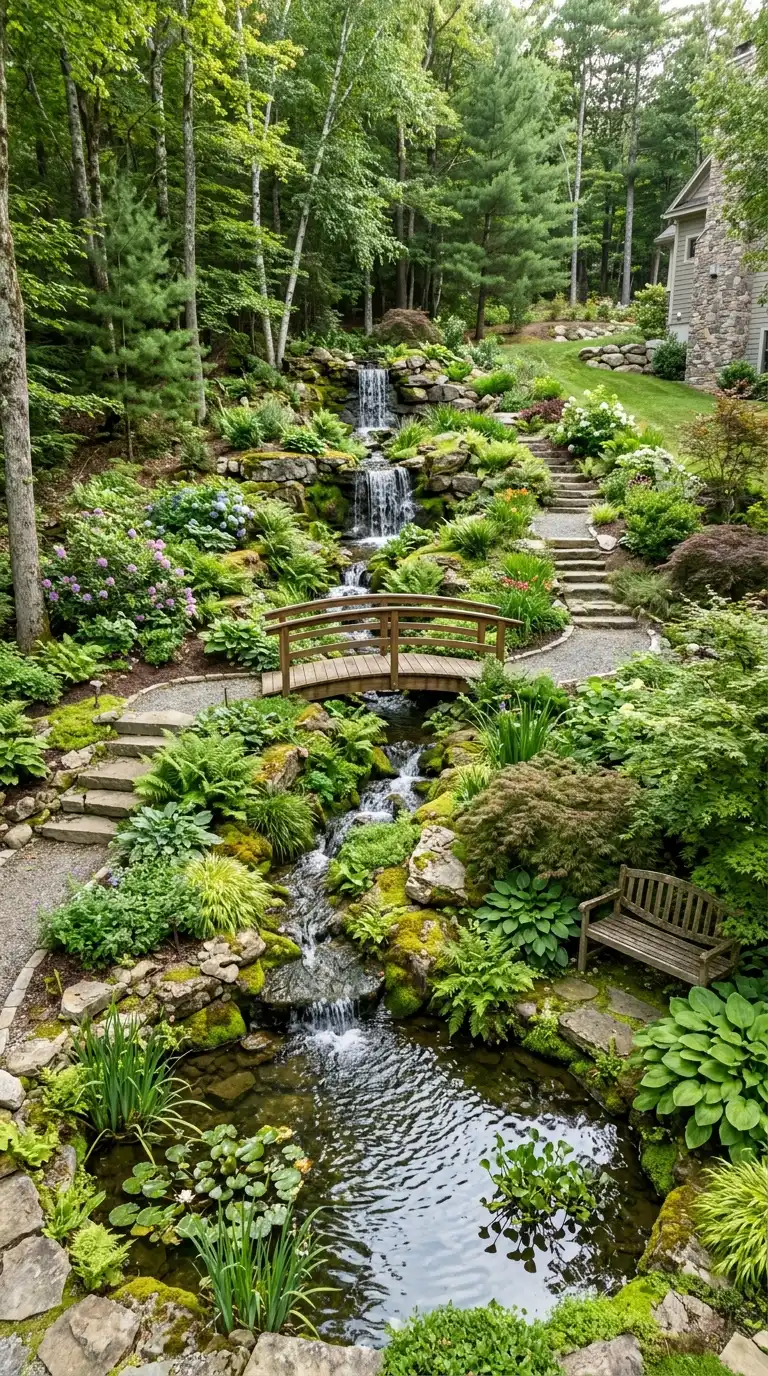
A sloped backyard is the perfect canvas for a cascading water feature. This design uses the natural gradient to create a series of small waterfalls and a meandering stream that flows from the top of the slope to a pond or basin at the bottom. Natural stone lines the watercourse, and moisture-loving plants like ferns, hostas, irises, and moss are planted along the edges. The sound of flowing water masks traffic noise and creates a tranquil, spa-like atmosphere. A wooden bridge can cross the stream, and a seating area near the pond offers a spot for quiet contemplation. This design turns a challenging slope into a serene natural retreat that becomes the focal point of your entire property.
3. Rock Garden with Boulders and Alpine Plants
For steep, rocky slopes where soil is thin, a rock garden design is both practical and beautiful. This design embraces the natural rockiness of the terrain by arranging boulders and rocks of varying sizes in a natural-looking formation. Between the rocks, plant drought-tolerant species like sedum, sempervivum, creeping thyme, ornamental grasses, and alpine plants. The rock garden requires minimal water and maintenance once established, and it provides habitat for beneficial insects. The result is a low-maintenance, textural landscape that blends seamlessly with the natural environment. This design is ideal for slopes that are too steep for mowing or terracing.
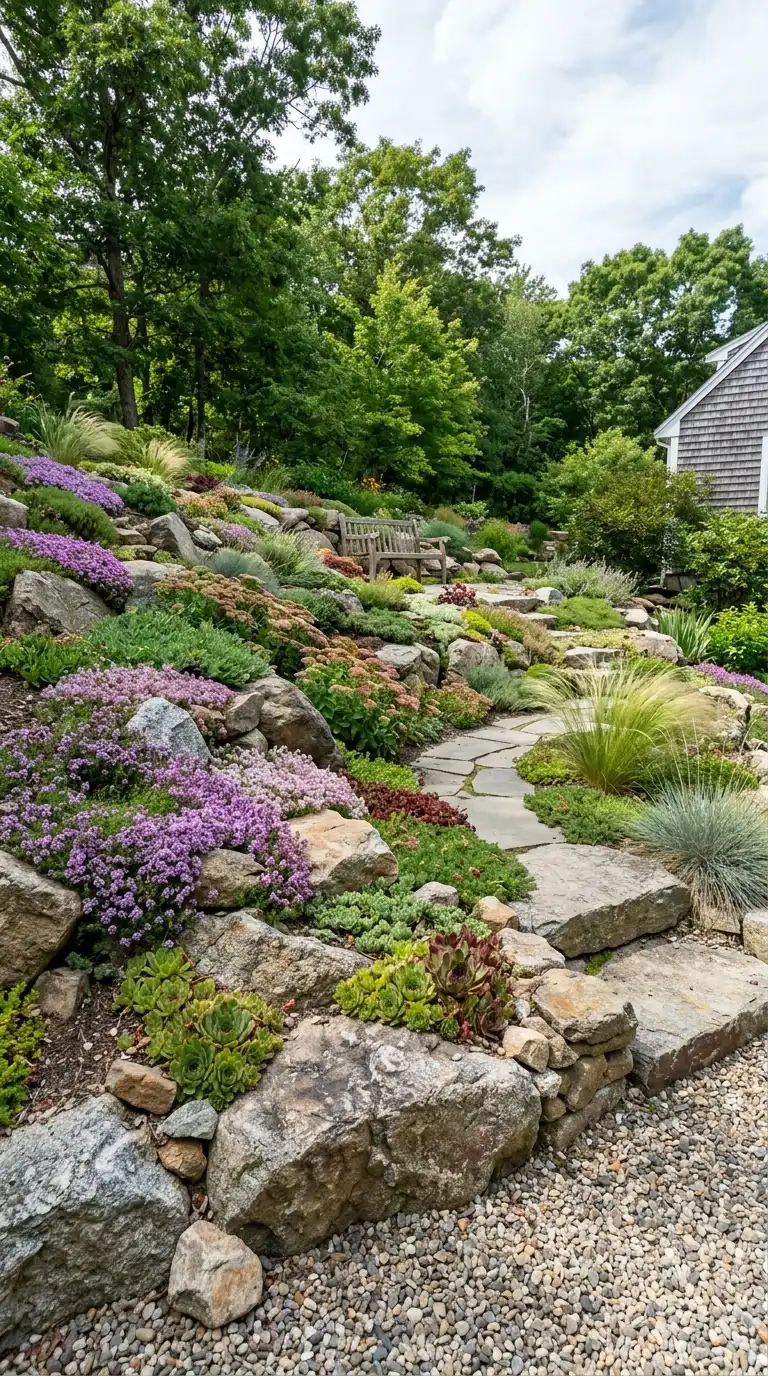
4. Winding Path and Staircase Design
This design focuses on creating access and movement through a steep slope using a combination of winding pathways and strategic staircases. A winding path of natural stone or gravel zigzags gently down the slope, with steps inserted where the incline becomes too steep for a path alone. The curves of the path soften the slope and create a sense of discovery as you move through the landscape. Plantings of ornamental grasses, flowering perennials, and low shrubs border the path, and low-voltage path lights illuminate the way for evening use. The winding path and staircase design transforms a difficult-to-navigate slope into an inviting journey that connects different zones of your yard.
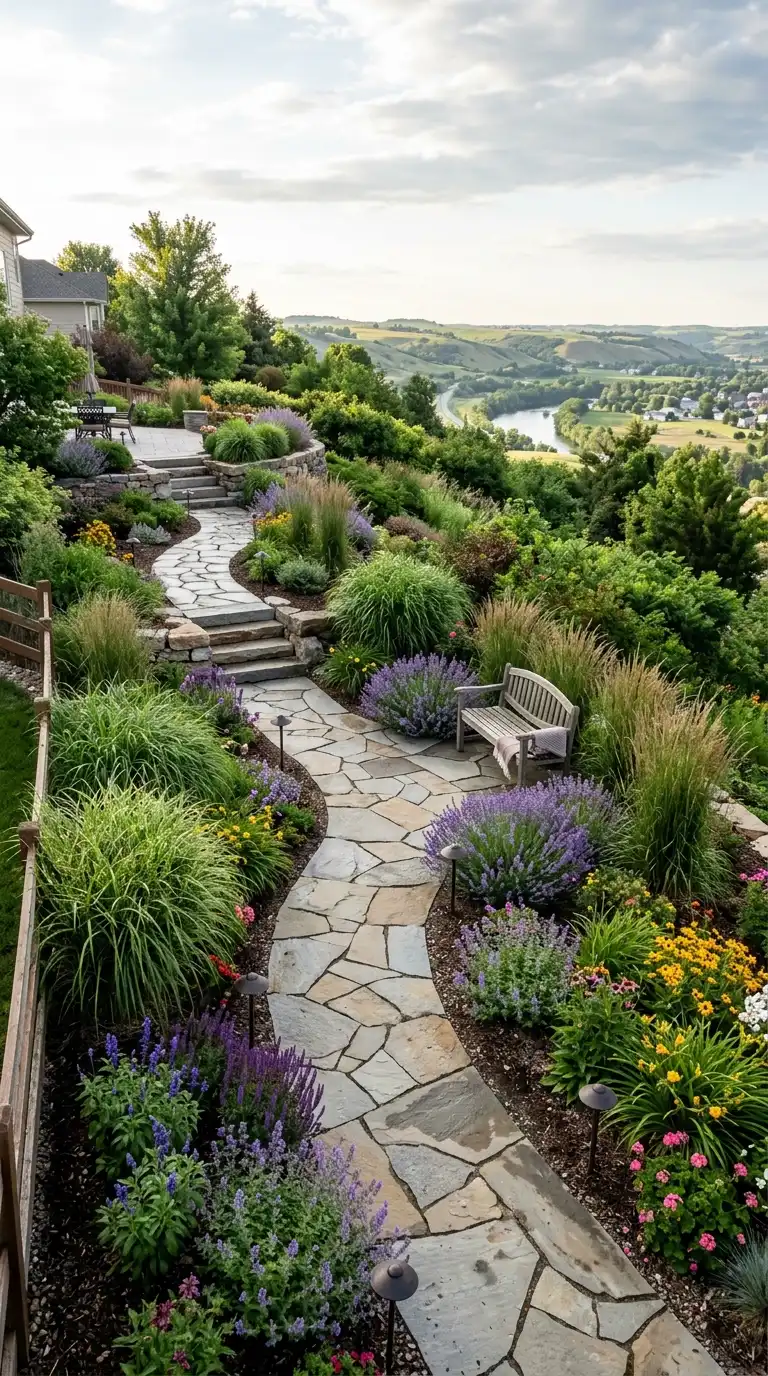
5. Natural Amphitheater Design
A sloped backyard is naturally suited for an amphitheater design. This design carves a semi-circular seating area into the slope, with rows of stone, timber, or concrete benches built into the hillside. At the bottom of the amphitheater, a flat stage area can serve as a performance space, a movie screen area, a fire pit gathering spot, or simply a focal point with a sculpture or water feature. The tiered seating provides excellent sightlines for events, and the design adds a dramatic, unique architectural feature to your landscape. String lights or torches can be added for evening ambiance. This design is perfect for homeowners who love to entertain outdoors.
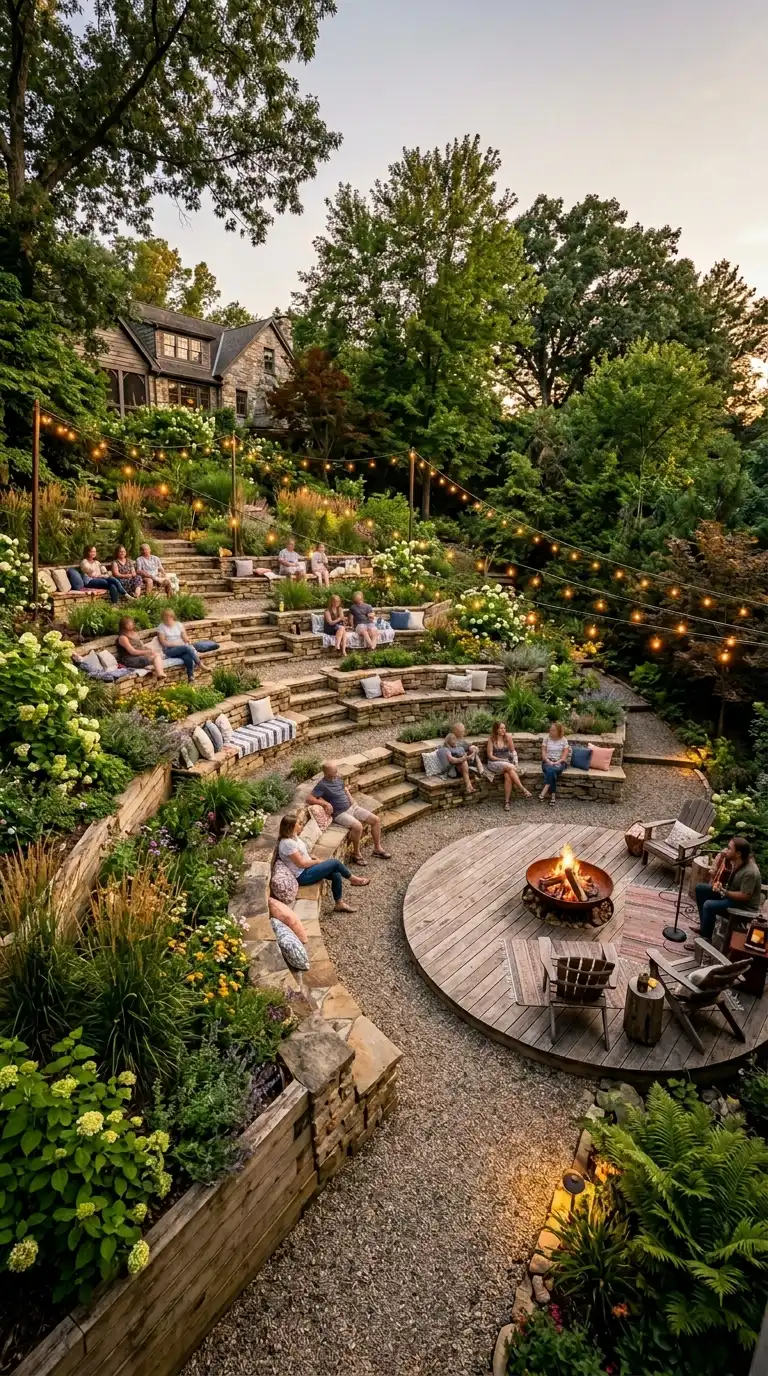
6. Tiered Vegetable Garden Design
Turn a sunny slope into a highly productive and visually appealing tiered vegetable garden. This design uses retaining walls to create level terraces, each dedicated to different crops. The south-facing slope provides excellent sun exposure for vegetables. Each terrace can have raised beds made of cedar, stone, or concrete blocks, with gravel pathways between them for easy access. A small shed or tool storage can be incorporated at the top or bottom. The tiered design makes planting, weeding, and harvesting easier on your back, and the structured look adds beauty to what might otherwise be a purely functional space. This design is ideal for homeowners who want to grow their own food while managing a sloped yard.
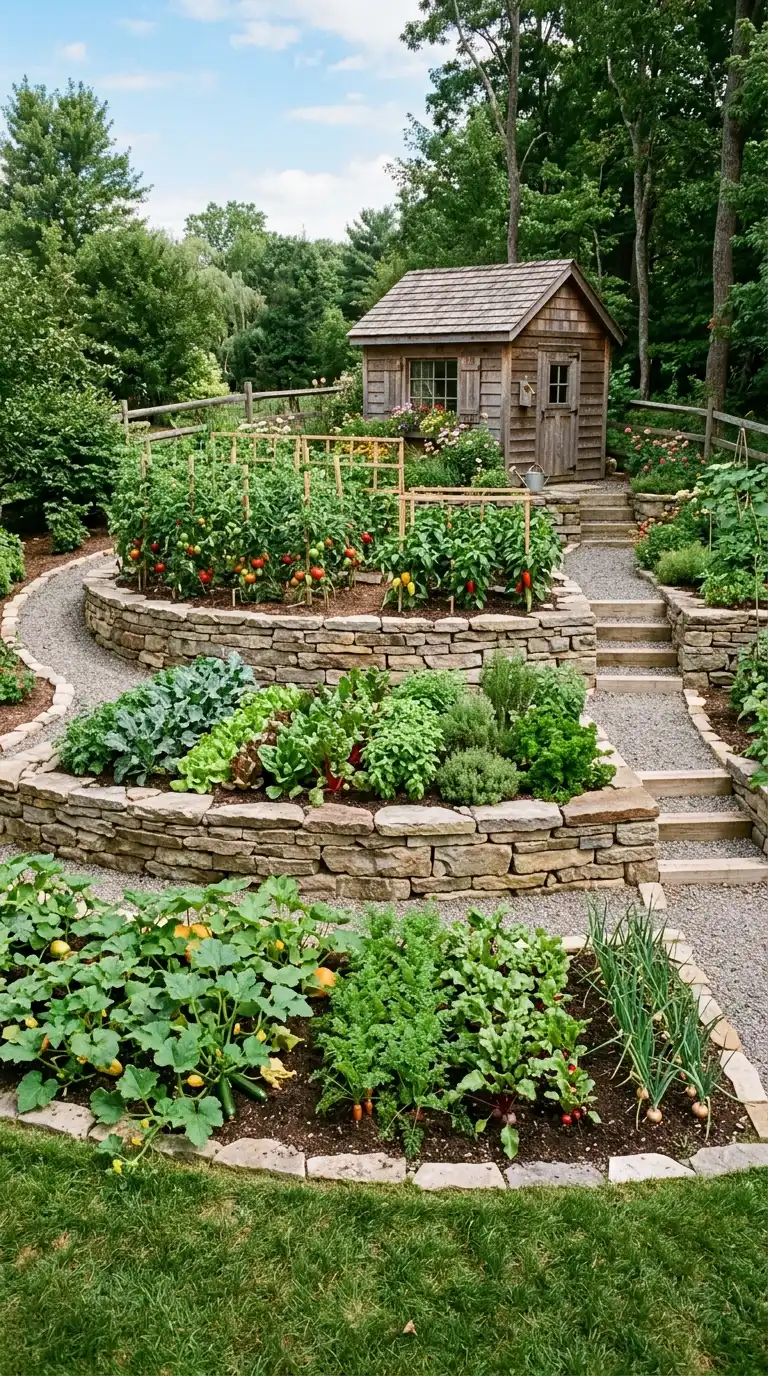
7. Multi-Level Deck and Patio Design
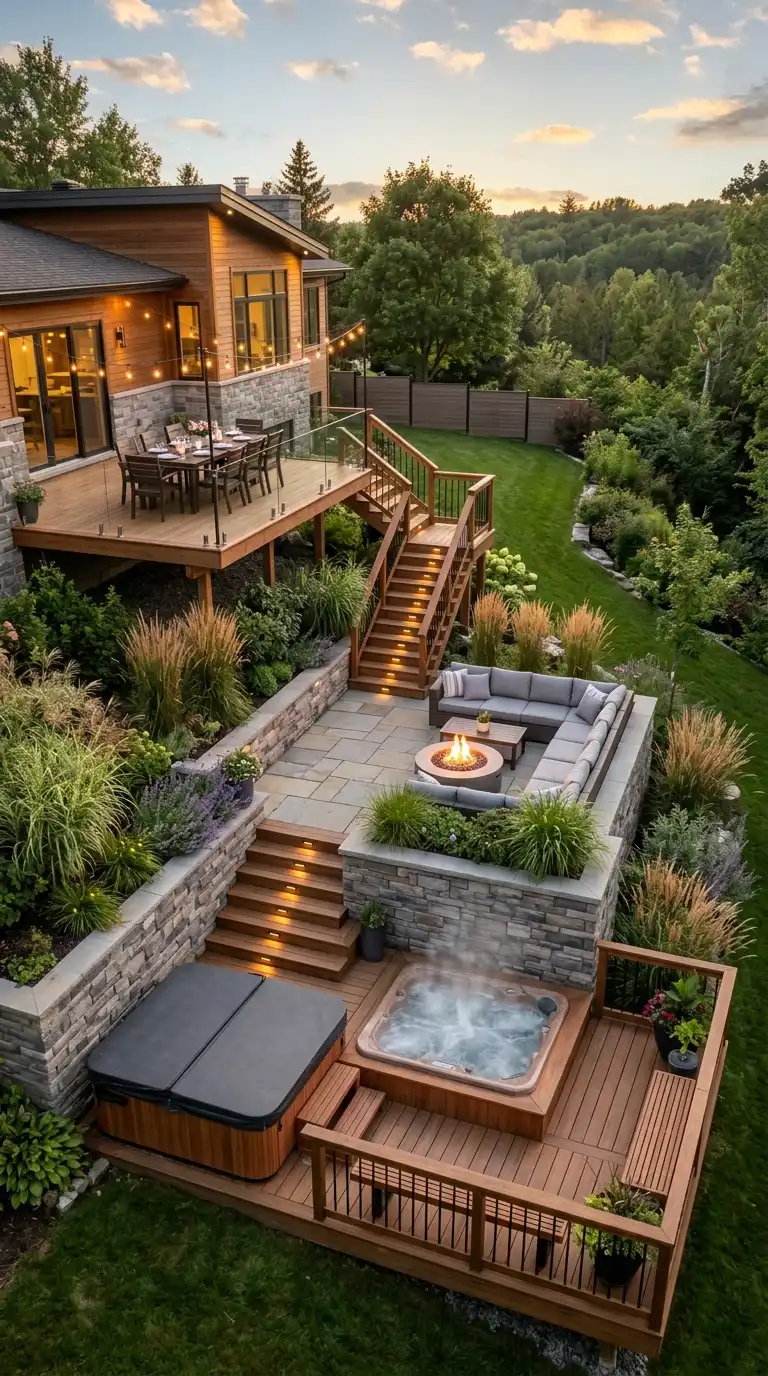
For homeowners who want usable outdoor living space on a slope, a multi-level deck or patio design is an excellent solution. This design builds a series of wooden decks or stone patios at different elevations, connected by stairs. The top level might hold a dining area with a table and chairs, the middle level a lounge area with comfortable seating and a fire pit, and the lowest level an outdoor kitchen or hot tub. Each level offers a different perspective of the yard, and the multi-level design creates a dramatic, architecturally interesting outdoor living space that feels like an extension of your home. Built-in planters can be incorporated into the deck or patio edges to add greenery.
8. Retaining Wall with Integrated Seating and Fire Pit
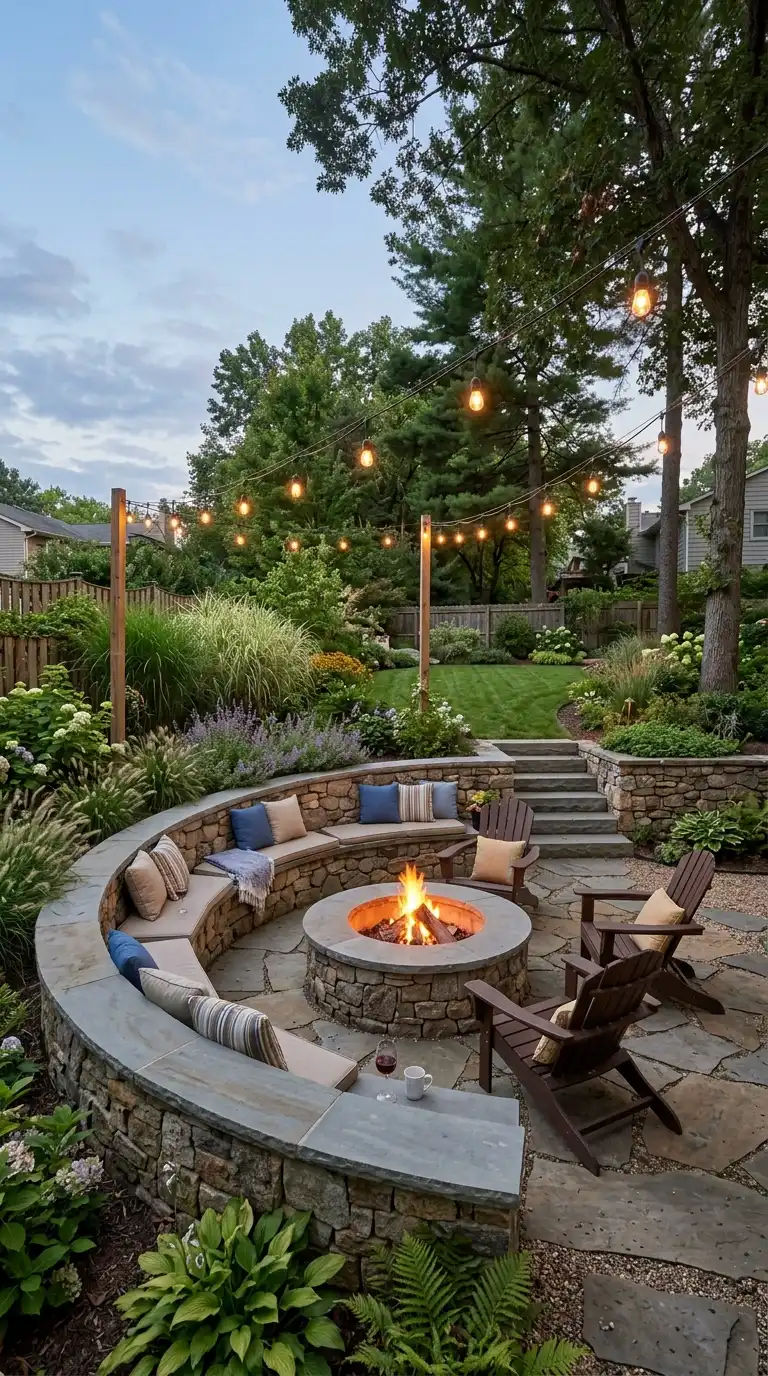
This design combines functionality with comfort by incorporating built-in seating and a fire pit into a series of retaining walls. The retaining walls terrace the slope, but the walls themselves are designed with wide caps that serve as benches. Cushions can be added for comfort. At the center of the terrace, a built-in fire pit serves as a focal point. The result is a cozy, intimate gathering space nestled into the hillside, perfect for cool evenings and conversation. The walls can be made of stone, concrete, or timber, and the surrounding plantings soften the edges. This design maximizes usable space on a slope while creating a warm, inviting atmosphere.
Conclusion
A sloped backyard is not a limitation but an opportunity for creative and dramatic landscaping. Whether you choose the structured elegance of a multi-level terrace garden, the tranquility of a cascading water feature, the low-maintenance beauty of a rock garden, or the family-friendly fun of a natural amphitheater, the key is to work with the natural topography rather than against it. By embracing the slope, you can create a landscape that is not only functional and accessible but also visually stunning and deeply connected to the natural contours of your land. With thoughtful design, your sloped backyard can become the most beautiful and memorable part of your property.