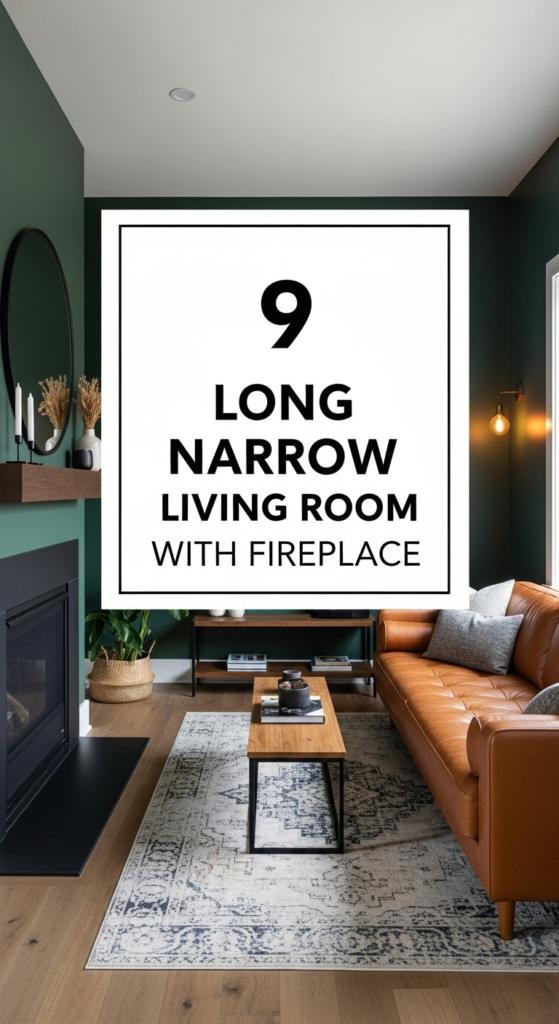
9 Long Narrow Living Room With Fireplace: Cozy Solutions for Challenging Spaces
A fireplace in a long narrow living room presents both a wonderful opportunity and a unique challenge. On one hand, the fireplace provides a natural focal point and architectural interest that can anchor your design. On the other hand, it dictates furniture placement in a space that’s already difficult to arrange. The fireplace location—whether on a short end wall, long side wall, or in a corner—dramatically affects how you can configure your entire room.
The key to success is treating the fireplace as your primary focal point and arranging furniture to take advantage of its warmth and visual appeal while still addressing the room’s awkward proportions. These nine proven layouts show you how to create comfortable, functional living rooms that celebrate the fireplace without letting narrow dimensions create a bowling alley effect. Each layout offers solutions for different fireplace positions and room configurations.
See also: Mid Century Modern Living Room Ideas 14 Ways to Master Retro Cool Style
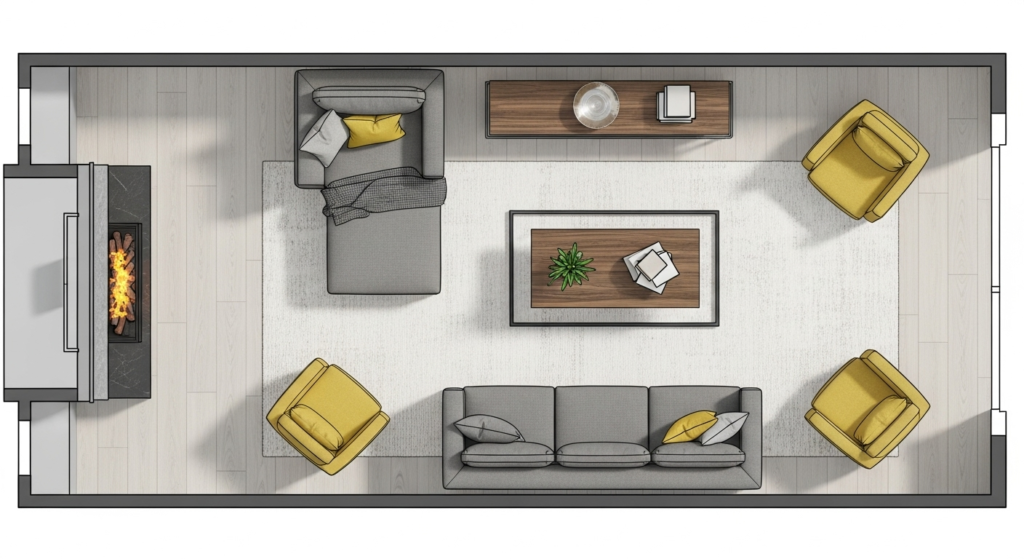
1. The Classic End Wall Fireplace Layout
Center your furniture arrangement around a fireplace on the short end wall.
Key Elements:
- Fireplace centered on short end wall
- Sofa facing fireplace, positioned in room center
- Sofa floated away from opposite wall
- Two accent chairs flanking fireplace or angled beside sofa
- Coffee table in front of sofa
- Mantel decorated as focal point
- Area rug anchoring seating arrangement
- All furniture oriented toward fireplace
- Console table behind sofa
- Clear walkways on sides of furniture grouping
- Symmetrical or asymmetrical chair placement
- TV above fireplace or on adjacent wall (optional)
- Intimate conversation area around fire
- Remaining space for additional zone
See also: Modern Living Room Designs and Ideas 24 Ways to Master Contemporary Style
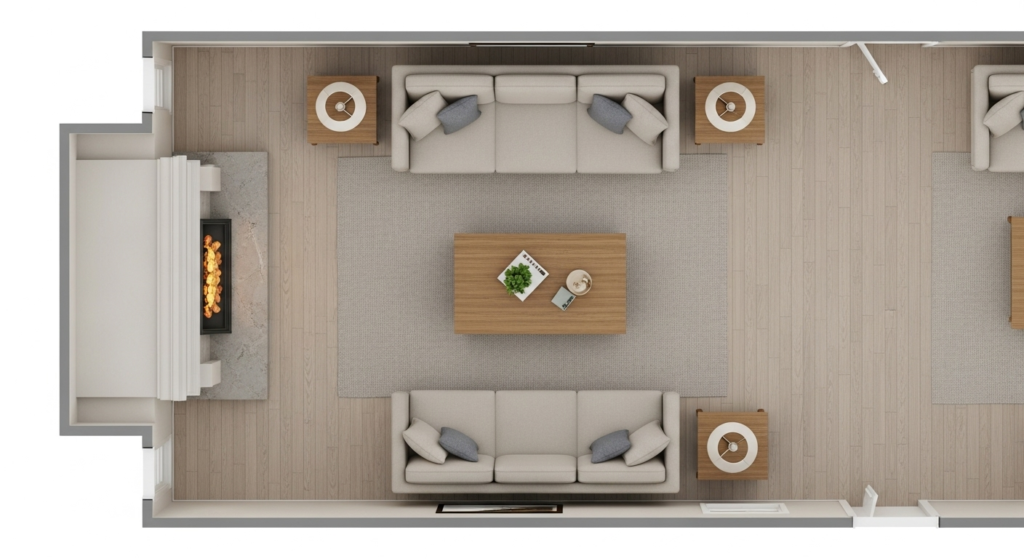
2. The Parallel Seating Fireplace Layout
Create formal symmetry with two sofas facing each other and fireplace.
Key Elements:
- Fireplace on short end wall
- Two identical sofas positioned parallel along length
- Sofas facing each other across room width
- Fireplace visible from both sofas
- Coffee table or ottoman between sofas
- Creates intimate conversation area
- All seating enjoys fireplace view
- End tables at sofa ends
- Matching table lamps
- Perfectly symmetrical arrangement
- Formal, traditional layout
- Fireplace as backdrop to seating area
- Additional seating at fireplace end optional
- Elegant, balanced design
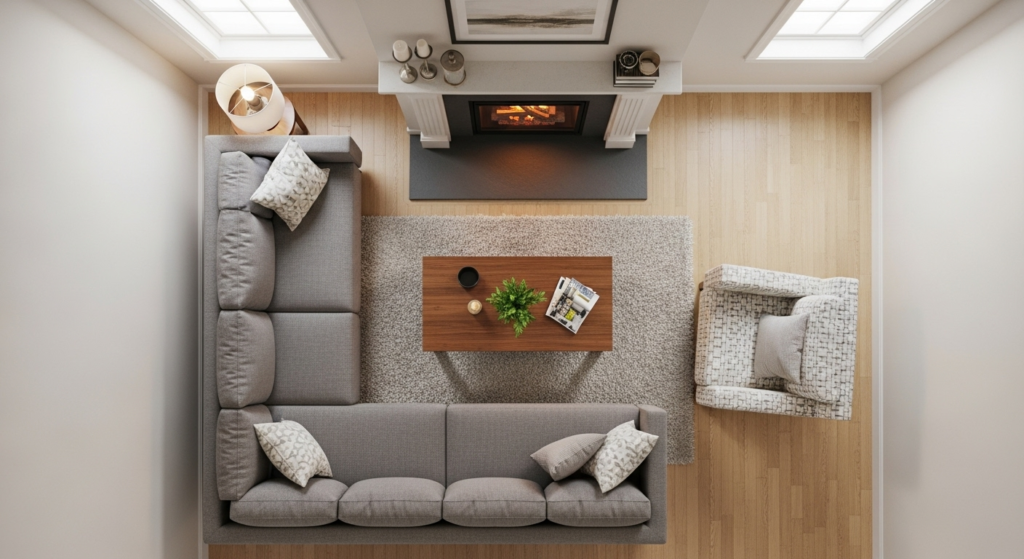
3. The L-Shaped Sectional Fireplace Layout
Maximize seating while maintaining fireplace focus.
Key Elements:
- Fireplace on end wall or long wall
- L-shaped sectional positioned to face fireplace
- Sectional along one wall and perpendicular wall
- All sectional seats have fireplace view
- Coffee table in front of sectional
- Efficient use of corner space
- Chaise portion considered in layout
- Additional chair opposite sectional if space allows
- Area rug under entire sectional
- Cozy, family-friendly arrangement
- Maximizes seating in narrow space
- Fireplace remains focal point
- TV placement on wall adjacent to fireplace (optional)
4. The Side Wall Fireplace Layout
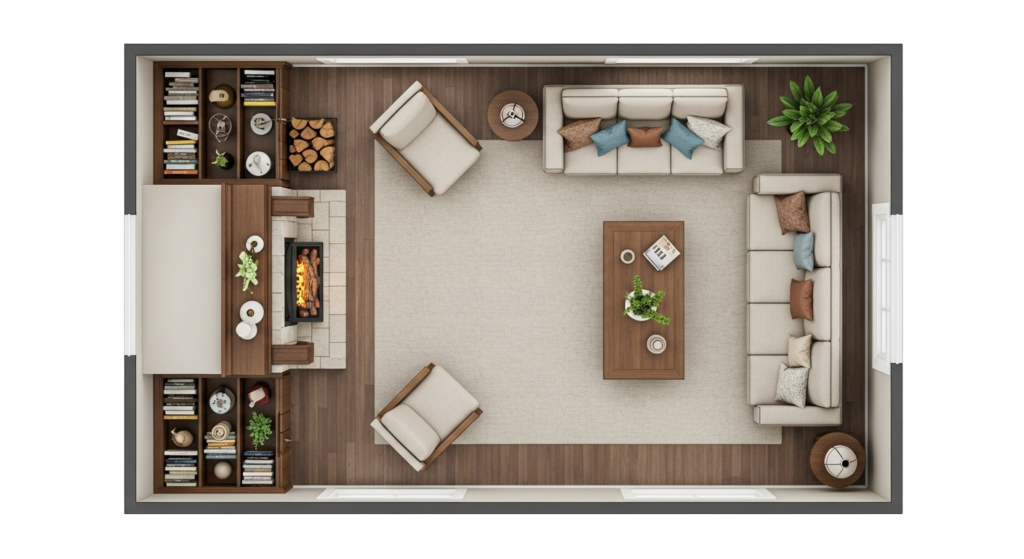
Arrange furniture around a fireplace on the long wall.
Key Elements:
- Fireplace centered on one long wall
- Sofa on opposite long wall facing fireplace
- Two chairs perpendicular to sofa
- Creates traditional conversation square
- Coffee table in center of arrangement
- Fireplace as focal point across width
- Symmetrical furniture placement
- Built-in shelving or cabinets flanking fireplace
- End walls available for other functions
- TV on opposite long wall or perpendicular wall
- Area rug defining seating zone
- Classic living room arrangement
- Works well in wider narrow rooms
- Balanced, traditional layout
5. The Corner Fireplace Angled Layout
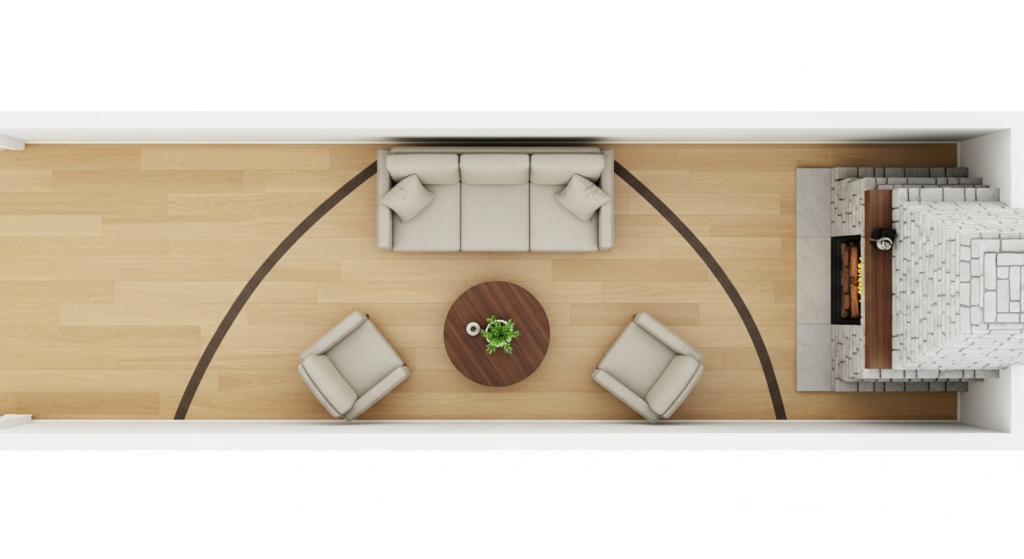
Create dynamic arrangement around corner fireplace.
Key Elements:
- Fireplace positioned in corner of room
- Furniture arranged in arc facing corner
- Sofa angled to face fireplace
- Chairs positioned for fireplace viewing
- Diagonal furniture arrangement
- Creates cozy, intimate seating area
- Unique solution for corner fireplaces
- Opens up wall space for other uses
- Coffee table accessible from all seats
- Area rug defining angled seating zone
- Less conventional but functional
- Fireplace becomes architectural focal point
- TV on adjacent wall if needed
- Creative use of awkward corner
6. The Dual-Zone Fireplace Layout
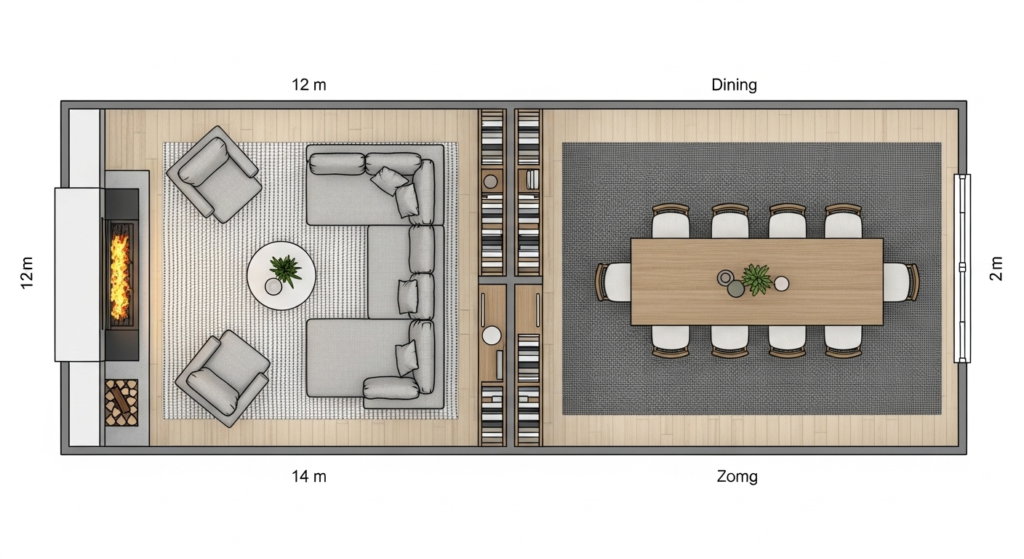
Separate fireplace seating from additional functional area.
Key Elements:
- Fireplace and primary seating in one zone
- Second functional area in other zone (dining, office, reading)
- Sofa and chairs facing fireplace in first zone
- Area rug defining fireplace zone
- Separate rug in second zone
- Low bookshelf or console as subtle divider between zones
- Fireplace zone cozy and intimate
- Clear pathway connecting both zones
- Each area has distinct purpose
- No wasted space at either end
- Complete furniture arrangement in fireplace area
- Additional function doesn’t interfere with fire enjoyment
- Efficient use of entire length
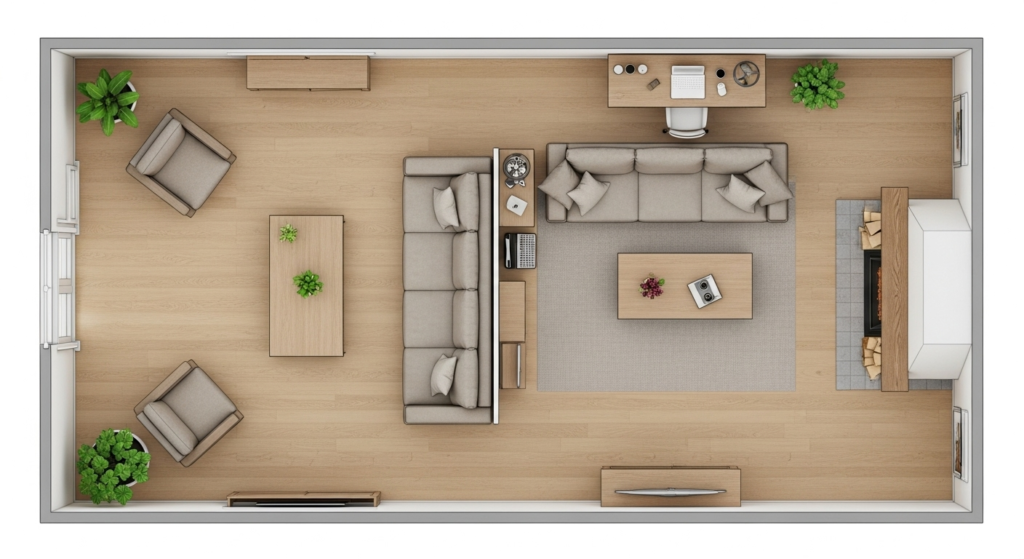
7. The Perpendicular Sofa Fireplace Layout
Break up length with sofa across width and fireplace focal point.
Key Elements:
- Sofa positioned perpendicular across narrow width
- Fireplace on end wall or long wall adjacent to sofa
- Sofa placement immediately breaks linear feel
- Fireplace viewing requires slight turn from sofa
- Chairs positioned for direct fireplace view
- Creates two distinct areas (front and back of sofa)
- Coffee table in front of sofa
- Secondary function behind sofa (desk, console)
- Area rug under front seating arrangement
- Walkway around sofa ends
- Works in wider narrow rooms (12+ feet)
- Unique solution for challenging proportions
- Fireplace remains accessible focal point
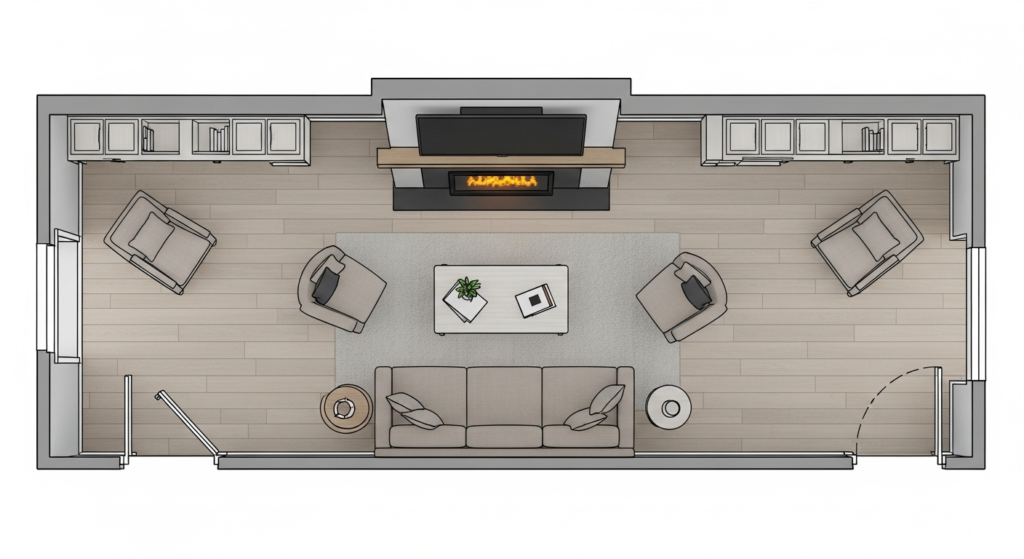
8. The TV and Fireplace Combination Layout
Integrate both TV and fireplace as dual focal points.
Key Elements:
- Fireplace on end wall with TV mounted above mantel
- Sofa centered facing both fireplace and TV
- Additional seating flanking fireplace wall
- All furniture oriented toward combined focal point
- Coffee table in seating area center
- Media components hidden in built-ins or mantel
- Cable management for clean appearance
- TV height appropriate for viewing (may be higher than ideal)
- Fireplace and TV enjoyed simultaneously
- Symmetrical arrangement around fireplace wall
- Area rug anchoring seating
- Most common modern fireplace layout
- Practical dual-purpose focal point
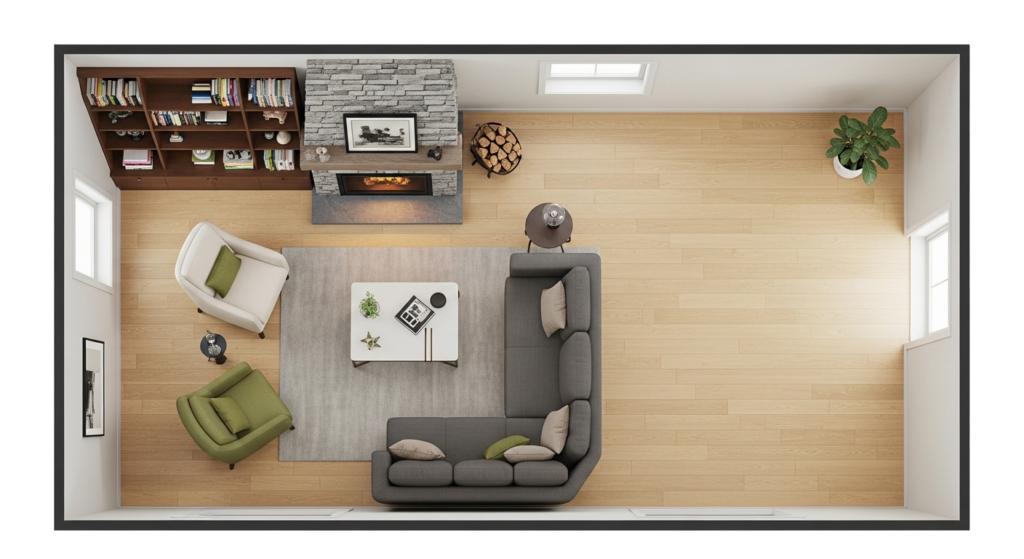
9. The Off-Center Fireplace Layout
Work with asymmetrically placed fireplace creatively.
Key Elements:
- Fireplace off-center on wall (not centered)
- Furniture arranged to embrace asymmetry
- Sofa angled toward fireplace
- Chairs positioned for fireplace viewing
- Creates intentional asymmetrical balance
- One side of fireplace has built-in or furniture
- Other side left more open
- Coffee table anchoring arrangement
- Works with architectural quirks
- Embraces rather than fights placement
- Creates interesting, dynamic layout
- Area rug defining seating zone
- Unique character from asymmetry
- Additional wall space utilized
Essential Fireplace Layout Considerations
Plan your narrow room fireplace layout with these critical factors:
Fireplace Positioning:
- End wall fireplace (most common in narrow rooms)
- Long wall fireplace (works in wider spaces)
- Corner fireplace (unique architectural feature)
- Off-center fireplace (requires creative arrangement)
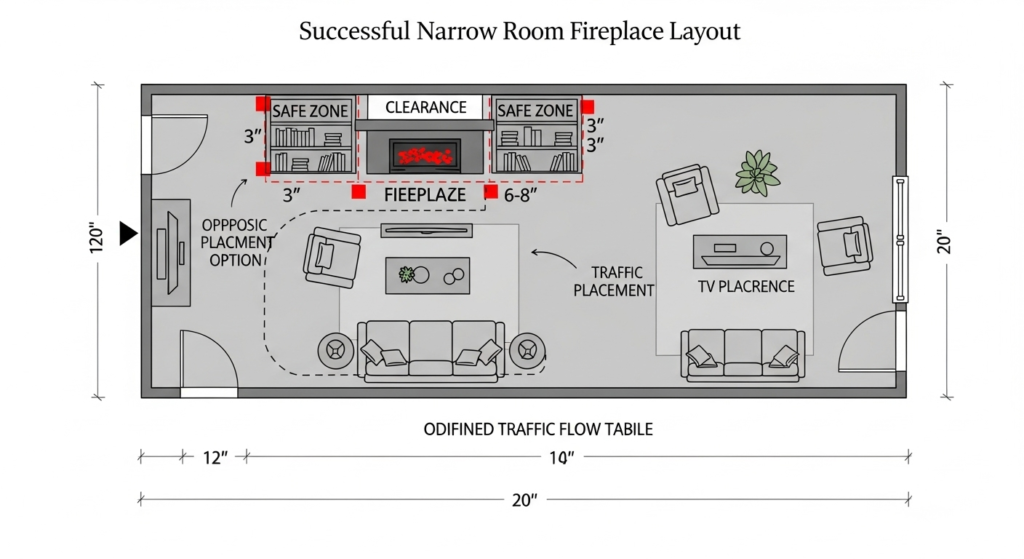
- Distance from fireplace to seating (6-8 feet ideal)
- Heat distribution considerations
- Clearance requirements for safety
- Building codes and regulations
- Original architectural intent
Furniture Placement Around Fireplace:
- Primary seating faces fireplace directly
- All seats should see fireplace comfortably
- Furniture at comfortable distance from heat
- Nothing blocking fireplace view
- Mantel visible from all seating
- Easy access to fireplace for tending
- Coffee table doesn’t obstruct fire view
- Symmetrical or asymmetrical arrangement
- Space for fireplace tools and accessories
Heat and Safety Considerations:
- Furniture positioned safe distance from flames
- Minimum 3 feet clearance for combustibles
- Heat-resistant materials near fireplace
- Rug placement considering sparks
- Screen or glass doors for safety
- Nothing flammable on mantel or too close
- Carbon monoxide detector installed
- Proper ventilation and chimney function
- Child safety gates if needed
- Fire extinguisher accessible
Mantel Styling:
- Mantel as decorative focal point
- Artwork or mirror above mantel
- Symmetrical or asymmetrical decor arrangement
- Seasonal mantel decorations
- Books, candles, or decorative objects
- Plants or greenery (non-flammable)
- Family photos in beautiful frames
- Scale appropriate to mantel size
- Leave some negative space
- Coordinate with room color scheme
TV Integration with Fireplace:
- TV above fireplace most common
- TV may be higher than ideal viewing height
- Tilting mount helps with high placement
- Alternative: TV on adjacent wall
- Cable management crucial
- Media components storage
- Heat from fireplace affects TV (check manufacturer specs)
- Viewing angle from seating
- Size of TV appropriate for distance
- Mantel depth considerations for mounting
Built-Ins and Shelving:
- Built-in cabinets flanking fireplace
- Symmetrical built-ins create balance
- Storage for media components, books, decor
- Display space for collections
- Custom or DIY built-ins
- Painted to match walls or contrast
- Open shelving vs. closed cabinets
- Lighting within built-ins
- Professional installation recommended
- Maximizes vertical space
Seating Arrangement Options:
- Sofa directly facing fireplace
- Two sofas parallel with fireplace at end
- Sectional forming L-shape
- Chairs flanking fireplace
- Conversation circle around fireplace
- Multiple seating zones including fireplace area
- Comfortable distance for heat and viewing
- All seats enjoy fireplace
Traffic Flow:
- Clear pathway around seating area
- Don’t walk between fireplace and seating
- Access to fireplace for tending
- Adequate clearance for furniture
- Room entry points considered
- Natural circulation pattern
- Minimum 2.5 feet walkways
- Easy movement throughout room
Rug Placement:
- Area rug defining fireplace seating zone
- All furniture front legs on rug minimum
- Rug extends in front of fireplace (with care)
- Heat-resistant rug materials
- Distance from hearth for safety
- Rug size appropriate for seating arrangement
- Coordinates with room decor
- Anchors furniture grouping
Lighting Around Fireplace:
- Fireplace provides ambient lighting when lit
- Additional lighting needed when fire not burning
- Wall sconces flanking fireplace
- Table lamps on end tables
- Floor lamps in corners
- Recessed lighting overhead
- Dimmer switches for ambiance
- Highlight artwork above mantel
- Layered lighting scheme
Tips for Perfect Fireplace Layouts in Narrow Rooms
Create the ideal fireplace-focused living room with these strategies:
Before Arranging Furniture:
- Measure room and fireplace dimensions
- Note fireplace location and orientation
- Determine clearance requirements
- Identify optimal furniture placement zones
- Consider heat distribution pattern
- Plan for TV integration if desired
- Measure furniture before purchasing
- Test arrangements with painter’s tape
- Consider seasonal use of fireplace
- Think about daily functionality
Choosing Fireplace Wall:
- End wall fireplace ideal for narrow rooms
- Creates natural focal point
- Allows proper furniture arrangement
- Long wall works if room wide enough
- Corner fireplaces require creative solutions
- Work with existing fireplace location
- Architectural features matter
- Original design intent
- Renovation possibilities if needed
Furniture Distance from Fireplace:
- Minimum 3 feet for safety
- Ideal 6-8 feet for comfort
- Too close = uncomfortably hot
- Too far = can’t enjoy fire
- Consider heat output level
- Radiant heat vs. forced air
- Furniture materials heat-resistance
- Seasonal furniture adjustment possible
- Test distance with fire burning
Symmetry vs. Asymmetry:
- Centered fireplaces = symmetrical layouts work well
- Off-center fireplaces = embrace asymmetry
- Matching chairs flanking fireplace (symmetrical)
- Varied furniture creating balance (asymmetrical)
- Both approaches can be beautiful
- Choose based on fireplace placement
- Personal style preference
- Room architecture
Managing Narrow Width:
- Don’t overcrowd fireplace area
- Choose appropriately scaled furniture
- Slim-profile pieces when needed
- Maintain walkway clearances
- Float furniture if width allows
- Loveseat instead of full sofa if tight
- Chairs instead of second sofa
- Quality over quantity in seating
TV Above Fireplace:
- Most common modern solution
- TV height may be higher than ideal (60-70″ to center)
- Tilting mount helps viewing angle
- Test viewing from seating before mounting
- Check TV manufacturer heat specifications
- Cable concealment in wall
- Mantel depth considerations
- Alternative: TV on different wall
- Stone or tile surround affects mounting
Seasonal Adjustments:
- Furniture may move slightly in summer
- Push back from heat in winter
- Lighter fabrics in warm months
- Cozy textures near fire in winter
- Mantel decor seasonal updates
- Window treatments adjusted seasonally
- Flexibility in arrangement
- Year-round functionality
Built-In Solutions:
- Custom built-ins maximize space
- Flanking cabinets create symmetry
- Storage for media and belongings
- Display space for decor
- Professional installation recommended
- Paint color coordinated with room
- Open and closed storage mix
- Lighting integrated into built-ins
Non-Working Fireplaces:
- Decorative fireplace still focal point
- Candles or decor in firebox
- Arranged as architectural feature
- Furniture placement same as working fireplace
- Seasonal displays in opening
- Faux fire inserts available
- Maintains visual importance
- Less heat consideration needed
Gas vs. Wood Fireplaces:
- Gas = easier operation, less clearance needed
- Wood = traditional, more heat output
- Gas allows TV above more safely
- Wood requires more maintenance access
- Both require proper ventilation
- Clearances similar but check specifications
- Heat output affects furniture placement
- Aesthetic differences in flames
Common Fireplace Layout Mistakes:
- Furniture too close to fireplace
- Blocking fireplace view with furniture
- Ignoring traffic flow to fireplace
- All furniture pushed against walls
- Wrong scale furniture for space
- TV too high above fireplace
- Overcrowding fireplace area
- Neglecting safety clearances
- Furniture blocking heat distribution
- No plan for fireplace tools/accessories
Making Your Fireplace Layout Work
A fireplace should be the heart of your living room—a gathering place that provides warmth, ambiance, and visual focus. In a long narrow room, the fireplace becomes even more important because it gives you a natural focal point to arrange furniture around, preventing the dreaded bowling alley effect.
Start by accepting your fireplace location. You can’t move it (well, you could, but that’s extremely expensive), so work with where it is. End wall fireplaces are easiest to arrange furniture around in narrow rooms. Long wall fireplaces require more width to work well. Corner fireplaces need creative angled arrangements. Whatever you have, there’s a layout solution that makes it work beautifully.
Consider how you actually use your fireplace. If you burn fires constantly in winter, furniture placement for optimal heat enjoyment matters greatly. If your fireplace is rarely lit and mostly decorative, you have more flexibility. If you’re considering adding a TV above the fireplace, think about whether that compromises either the fireplace or TV viewing experience—sometimes alternative TV placement works better.
Test your layout before committing to furniture purchases. Use painter’s tape to outline furniture on the floor. Sit in each position and evaluate the fireplace view. Is it comfortable? Can you see the fire from all seats? Does the arrangement feel balanced or lopsided? Make adjustments until it feels right.
Remember that fireplace layouts can be cozy and intimate rather than formal and spacious. Narrow rooms with fireplaces often create wonderfully snug, inviting spaces perfect for relaxing. Embrace the coziness rather than fighting it. Some of the most comfortable, well-loved living rooms are those with close, warm fireplace seating arrangements.
Don’t forget seasonal flexibility. You might push furniture slightly back from the fireplace in summer and pull it closer in winter when you’re using it regularly. Layouts can evolve with seasons and how you use the space. Build in this flexibility from the start.
Finally, style your mantel as the focal point it deserves to be. A beautifully decorated mantel elevates your entire room and draws the eye exactly where you want it—to the fireplace, not to the room’s awkward proportions. Change mantel decor seasonally to keep the space feeling fresh and intentional.
With these nine proven layouts and professional fireplace planning guidance, you can create a long narrow living room where the fireplace shines as the beautiful focal point it should be. Your challenging space can become the cozy, inviting room you’ve always wanted—proof that limitations often inspire the most creative and comfortable solutions
.