13 Boho Living Room Designs
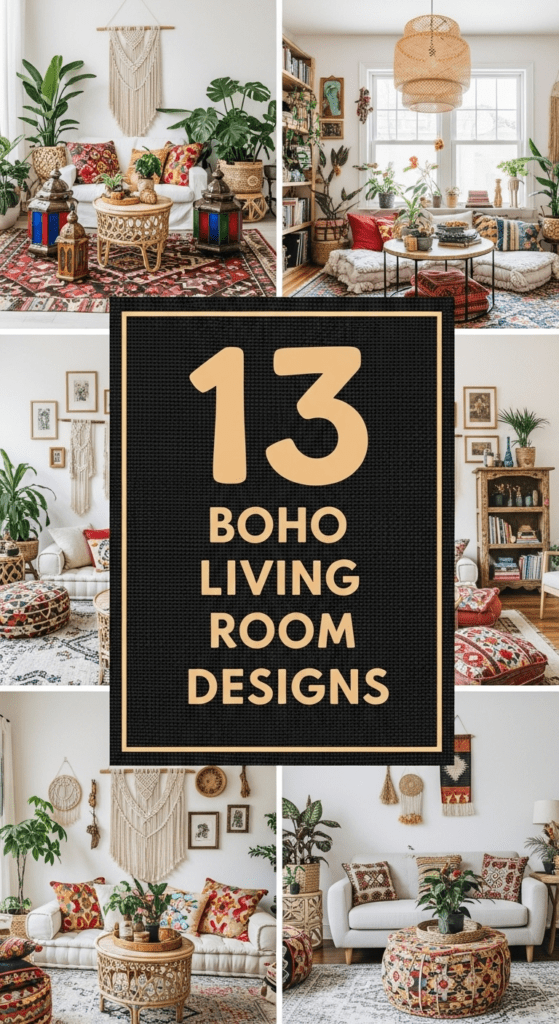
Boho living room designs celebrate free-spirited creativity, global influences, and eclectic layering that defies conventional decorating rules. Rooted in bohemian culture’s emphasis on artistic expression and cultural appreciation, these spaces blend vintage finds, handcrafted textiles, abundant plants, and vibrant patterns into environments that feel collected, personal, and wonderfully unconventional. The following thirteen designs showcase the remarkable diversity within bohemian aesthetics—from maximalist color explosions to subdued desert-inspired palettes—proving that boho style adapts beautifully to various tastes while maintaining its signature laid-back, artistic soul.
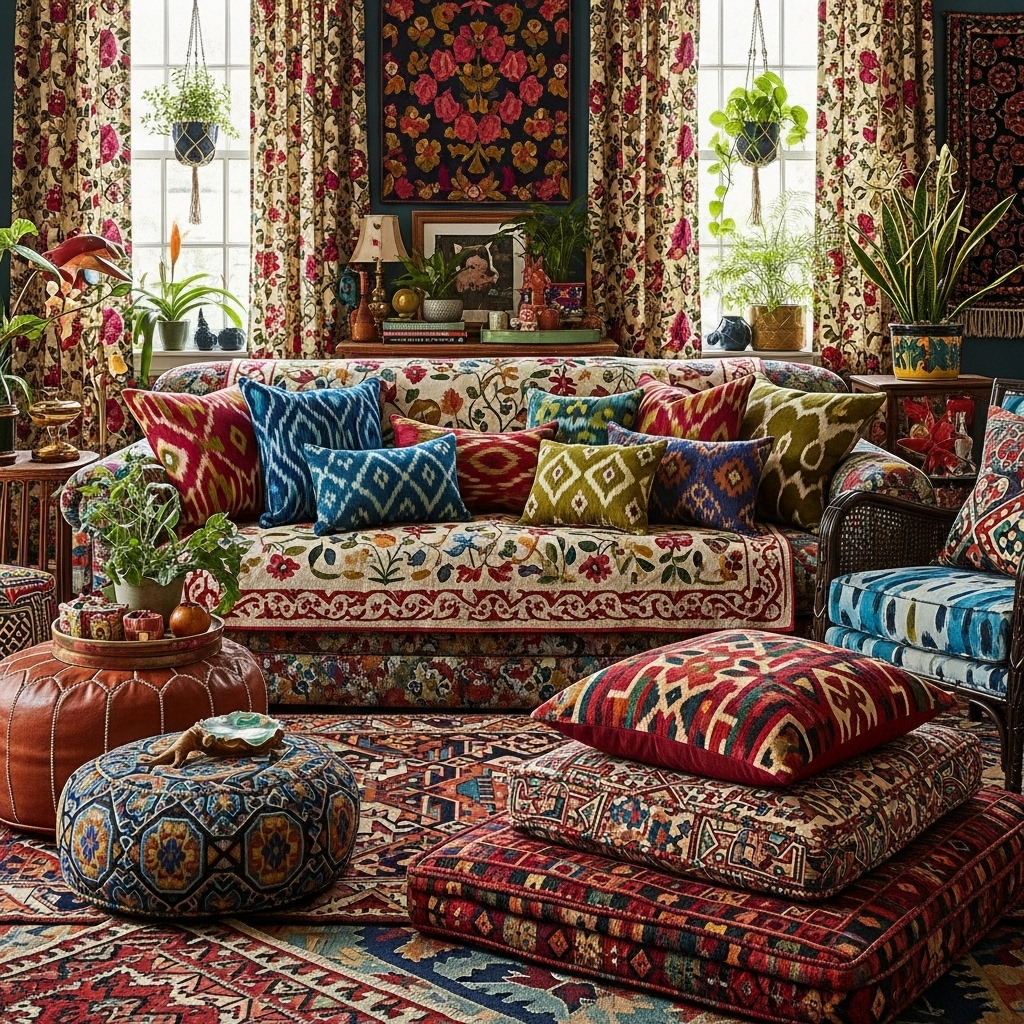
1. Maximalist Pattern Explosion
Layer multiple patterns fearlessly—ikat, suzani, tribal prints, florals—in complementary colors. The key is maintaining a cohesive color palette while mixing diverse pattern scales and origins.
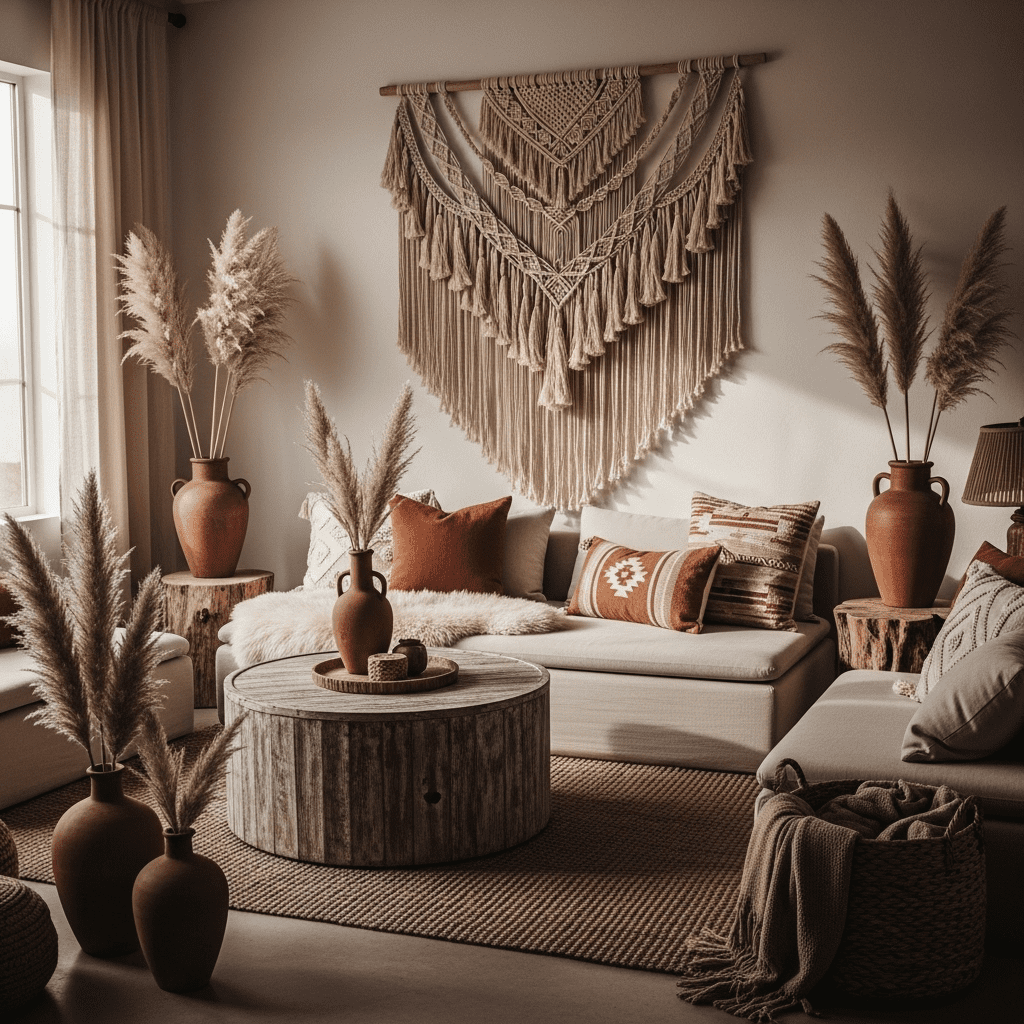
2. Desert Minimalist Boho
Embrace muted terracotta, sand, cream, and sage tones with minimal furnishings and natural materials. This pared-back bohemian approach feels serene while maintaining earthy, organic character.
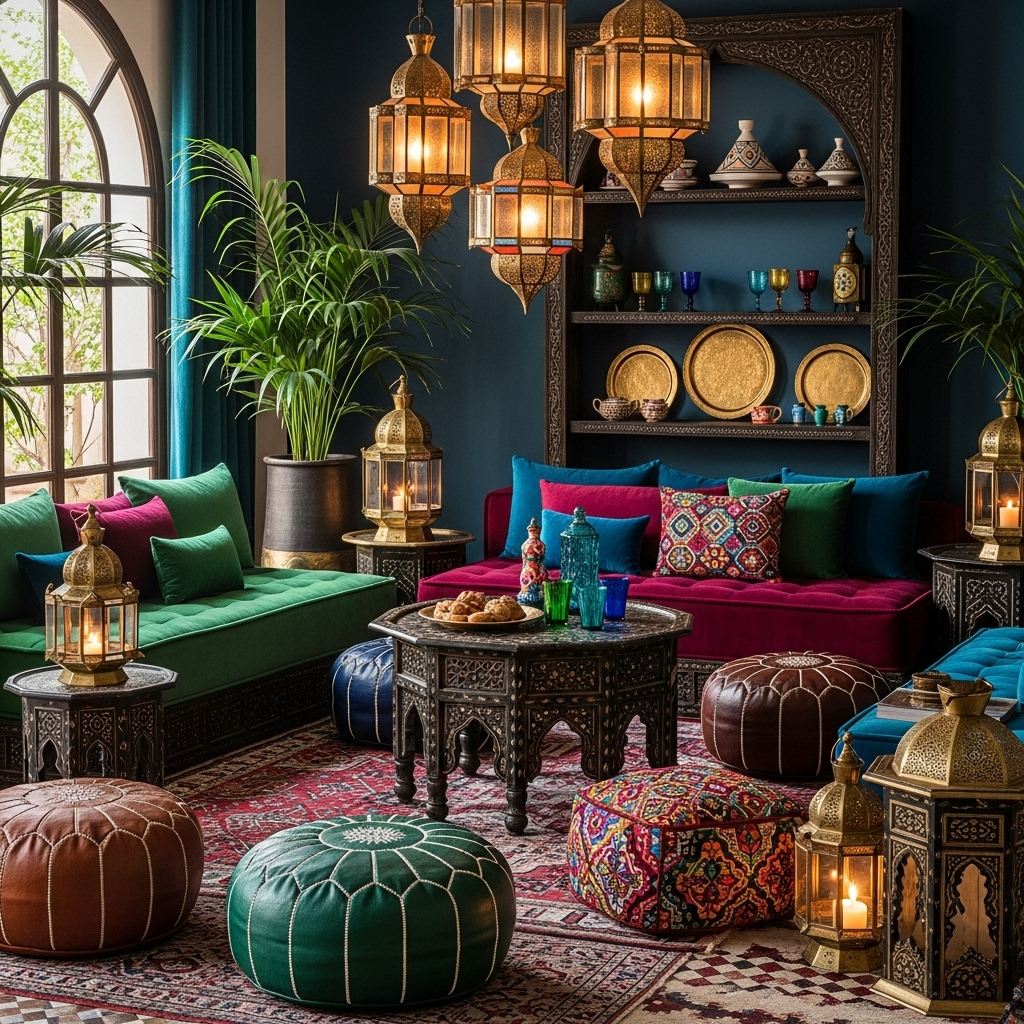
3. Vintage Moroccan Inspired
Rich jewel tones, ornate metalwork, poufs, low seating, and intricate tilework create Moroccan-influenced bohemian luxury. Layer textiles and incorporate traditional tea tables and lanterns.
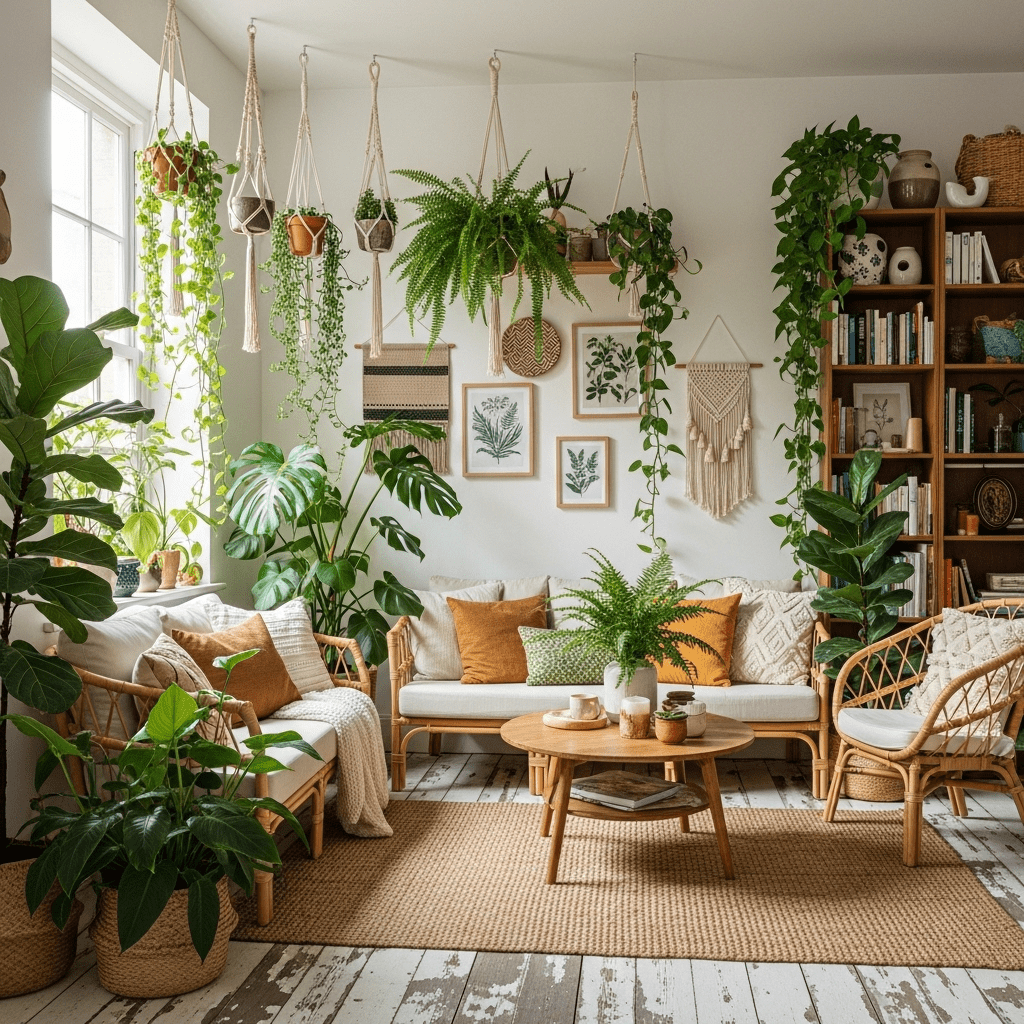
4. Plant Jungle Paradise
Transform living rooms into lush indoor jungles with abundant plants of varying sizes. Hanging planters, floor plants, and trailing vines create tropical bohemian sanctuaries.
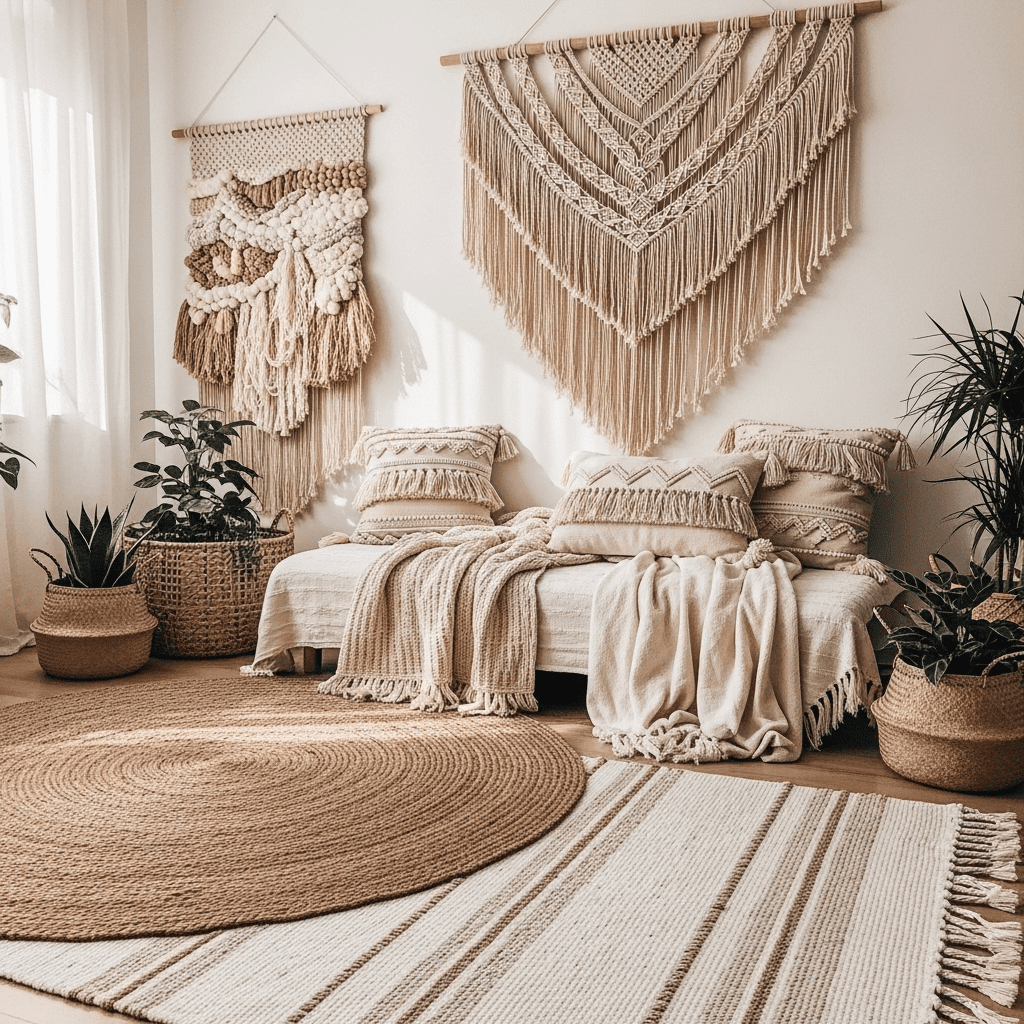
5. Macramé and Fiber Art Focus
Feature large-scale macramé wall hangings, woven tapestries, and fiber art as focal points. Natural fiber textures add bohemian softness and handcrafted authenticity.
6. Global Eclectic Mix
Collect textiles, furniture, and art from worldwide travels—Indian block prints, African mudcloth, Mexican textiles, Turkish rugs—creating authentic, well-traveled bohemian spaces.
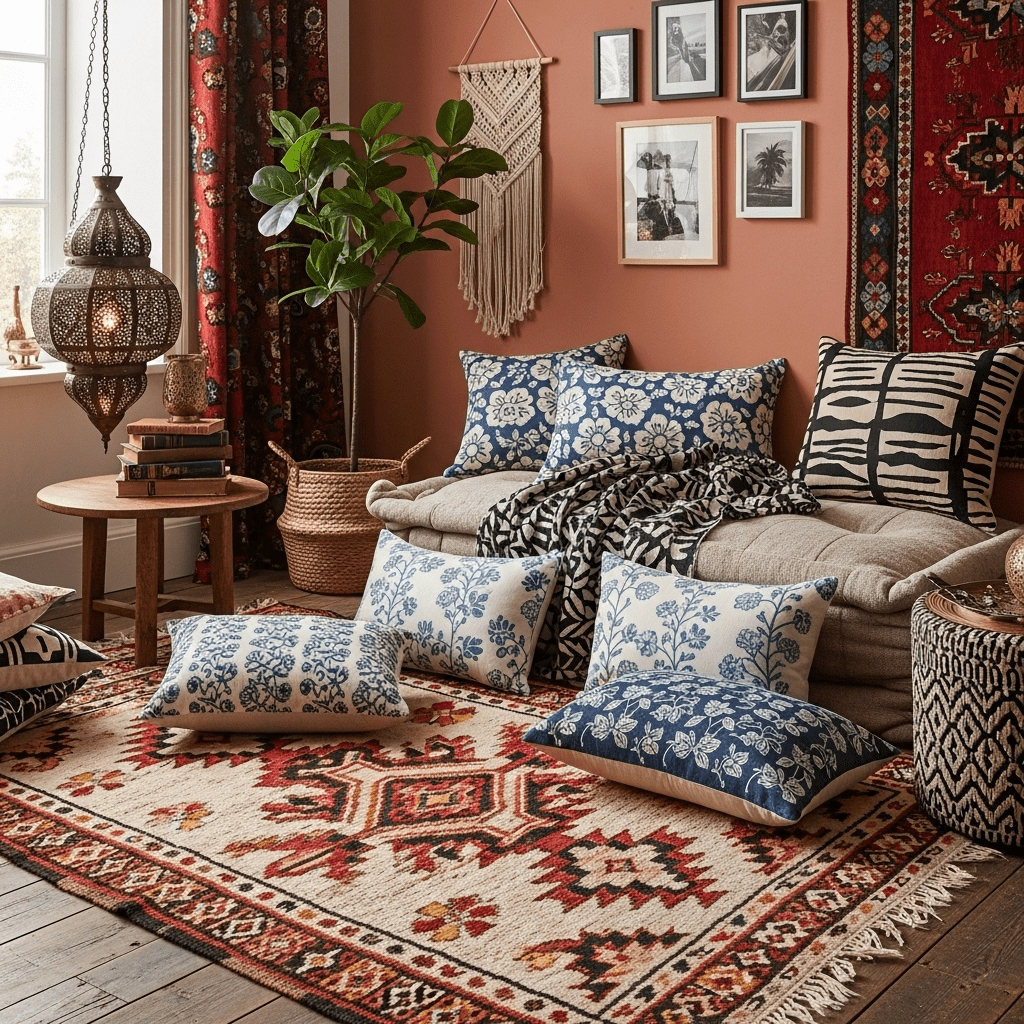
7. Vintage Boho with Antiques
Incorporate genuine vintage furniture—carved wood pieces, antique trunks, inherited items—mixed with bohemian textiles. This approach adds authentic character and sustainability.
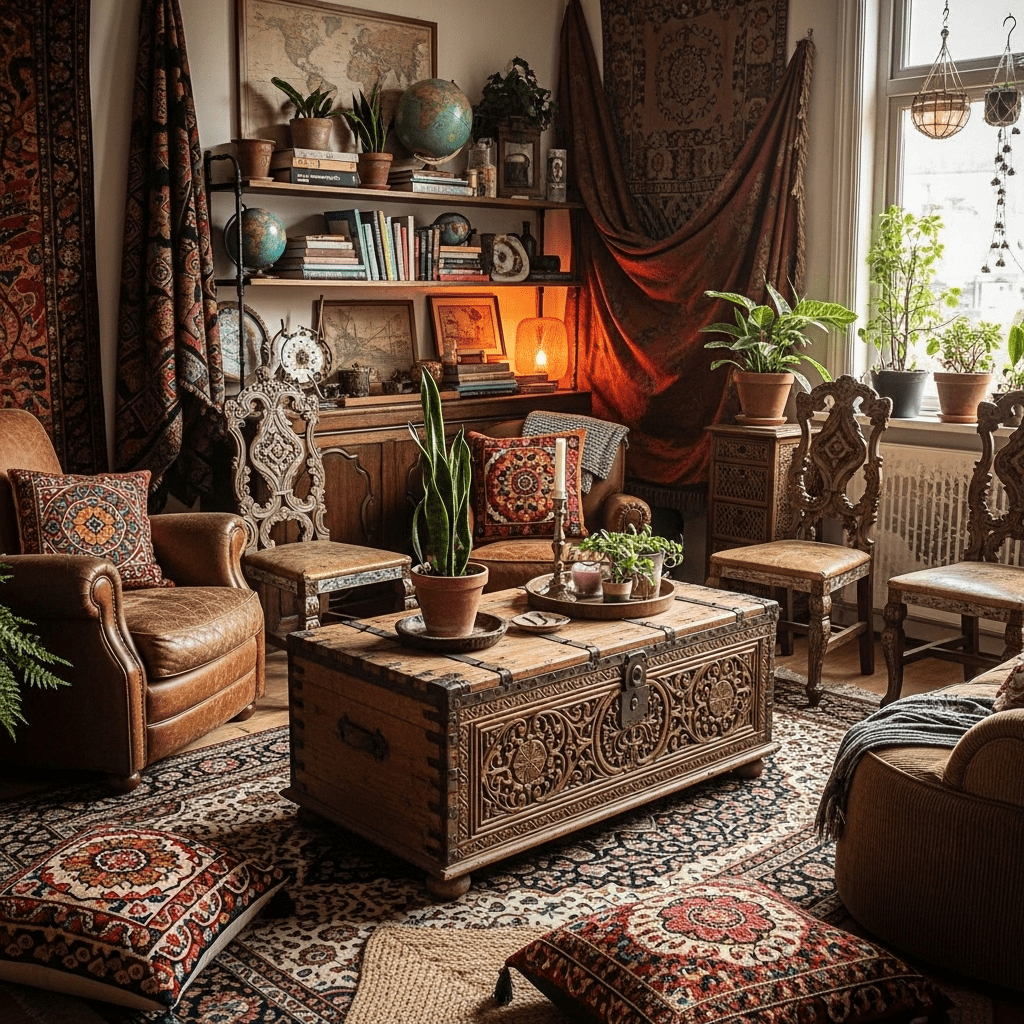
8. Colorful Gradient Rainbow
Arrange textiles and décor in rainbow progression—red through purple—creating joyful, artistic color flow. This bold approach requires confidence but delivers spectacular bohemian impact.
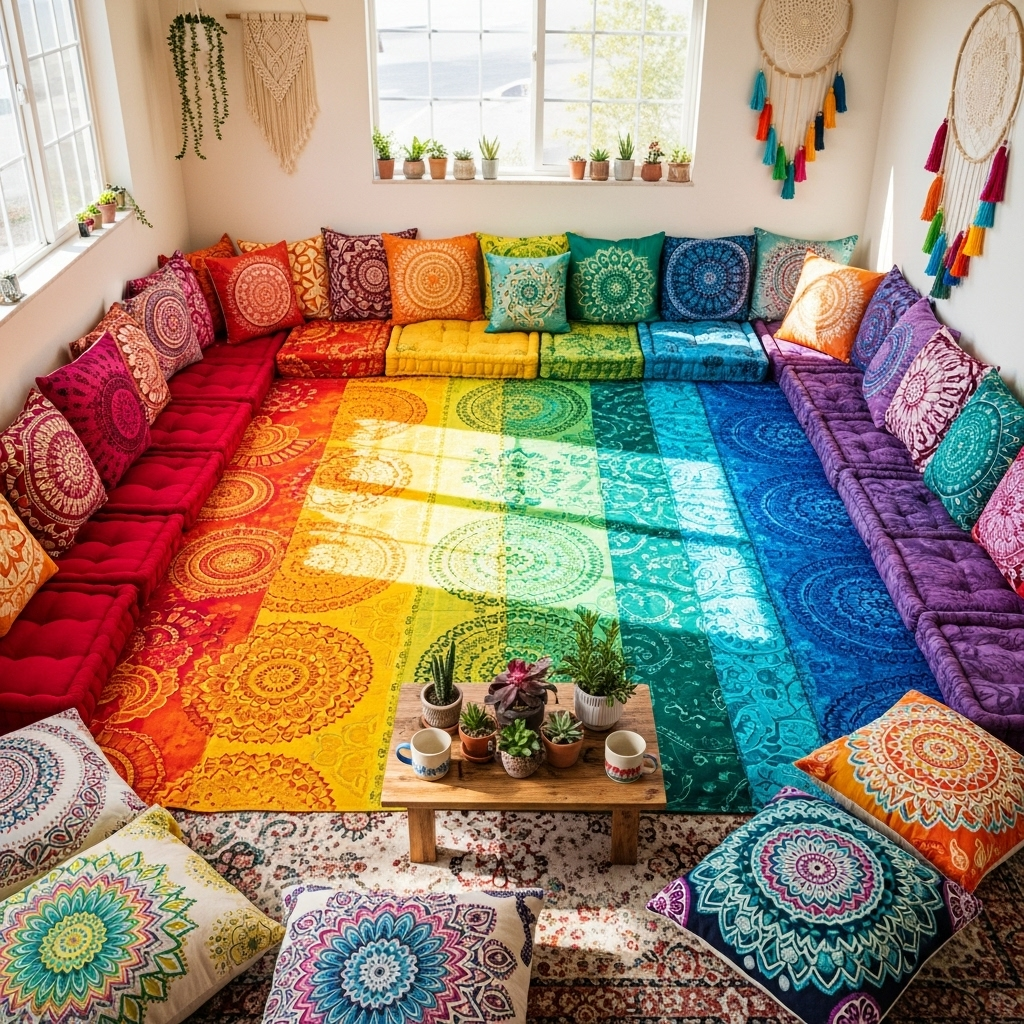
9. Neutral Boho Elegance
Cream, beige, tan, and white with natural materials create sophisticated bohemian style. This refined approach maintains boho’s relaxed aesthetic while feeling more elevated.
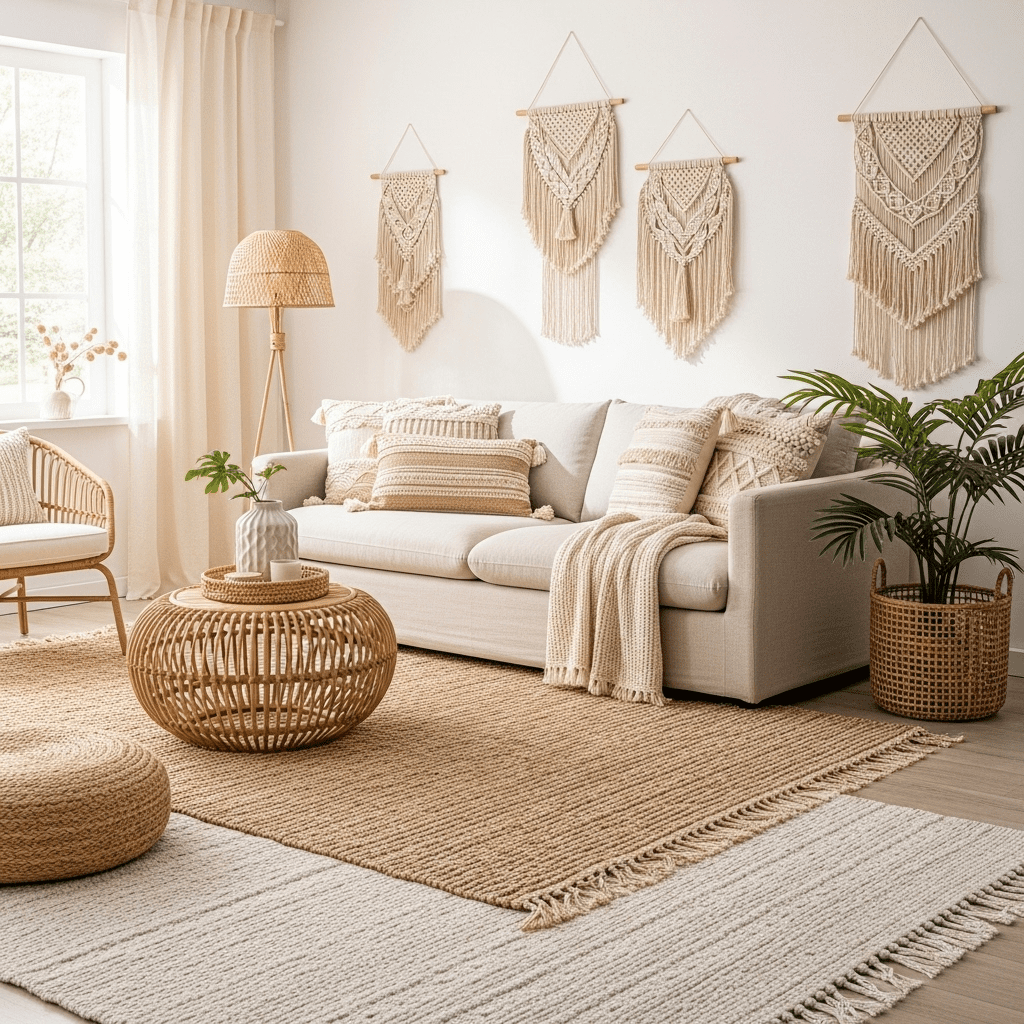
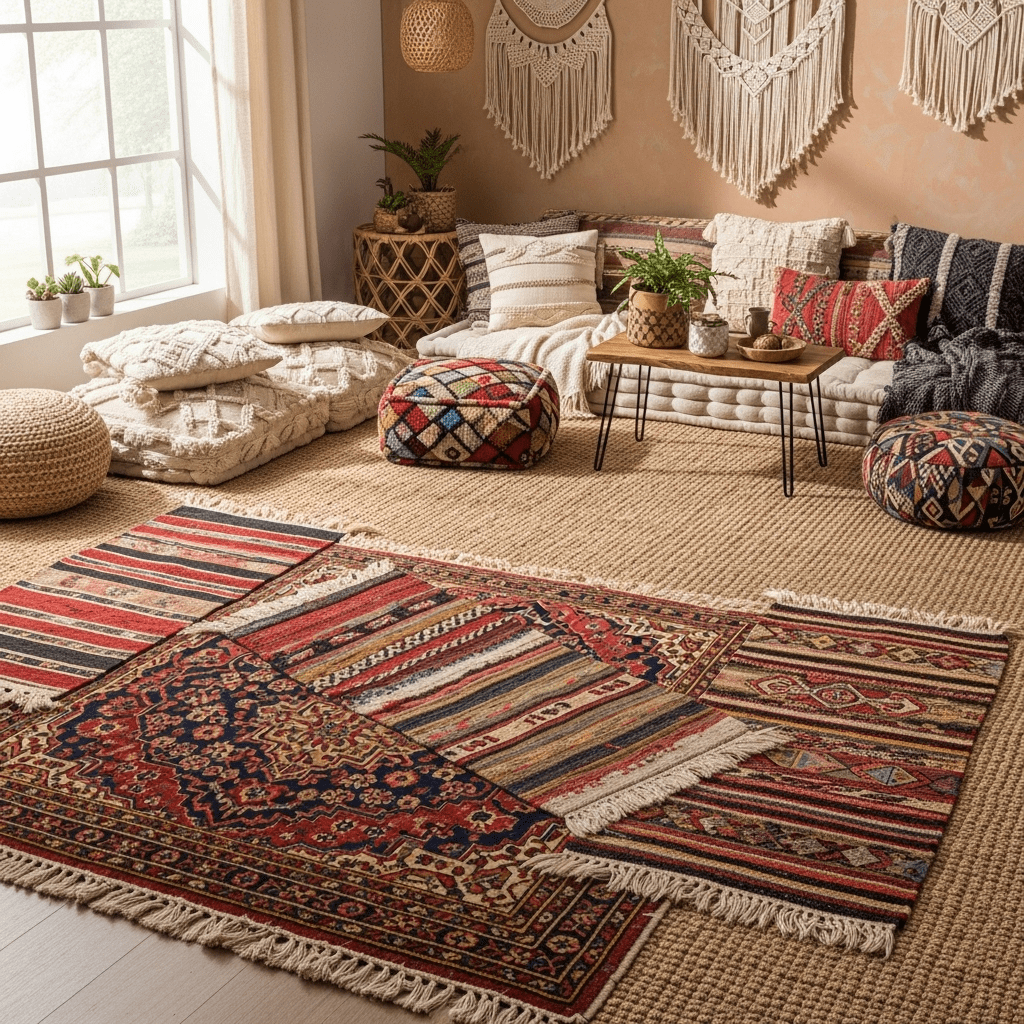
10. Layered Rug Foundation
Stack multiple rugs—vintage Persian over natural jute, or colorful kilim over neutral base—creating dimensional, collected-over-time bohemian floors.
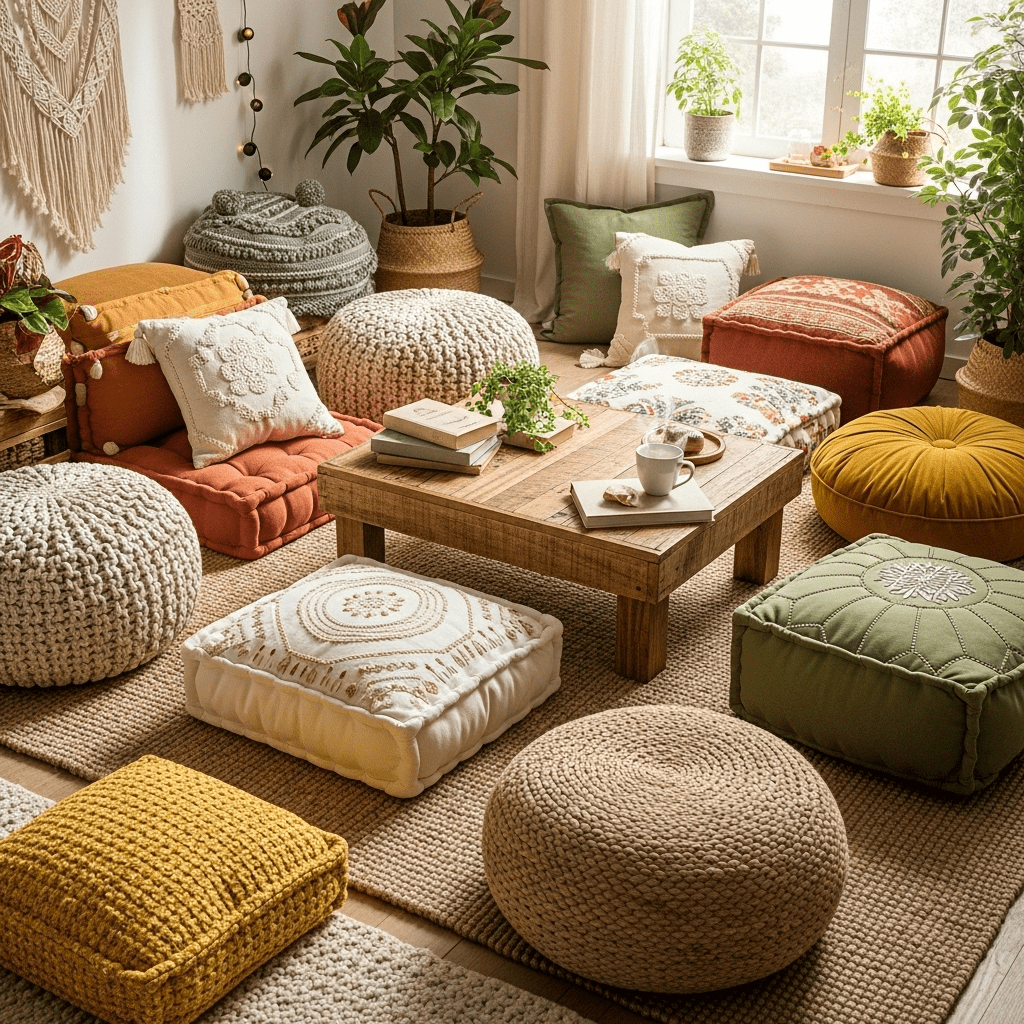
11. Floor Seating Lounge
Embrace floor cushions, poufs, and low seating arranged around low tables. This casual, relaxed approach epitomizes bohemian laid-back living.
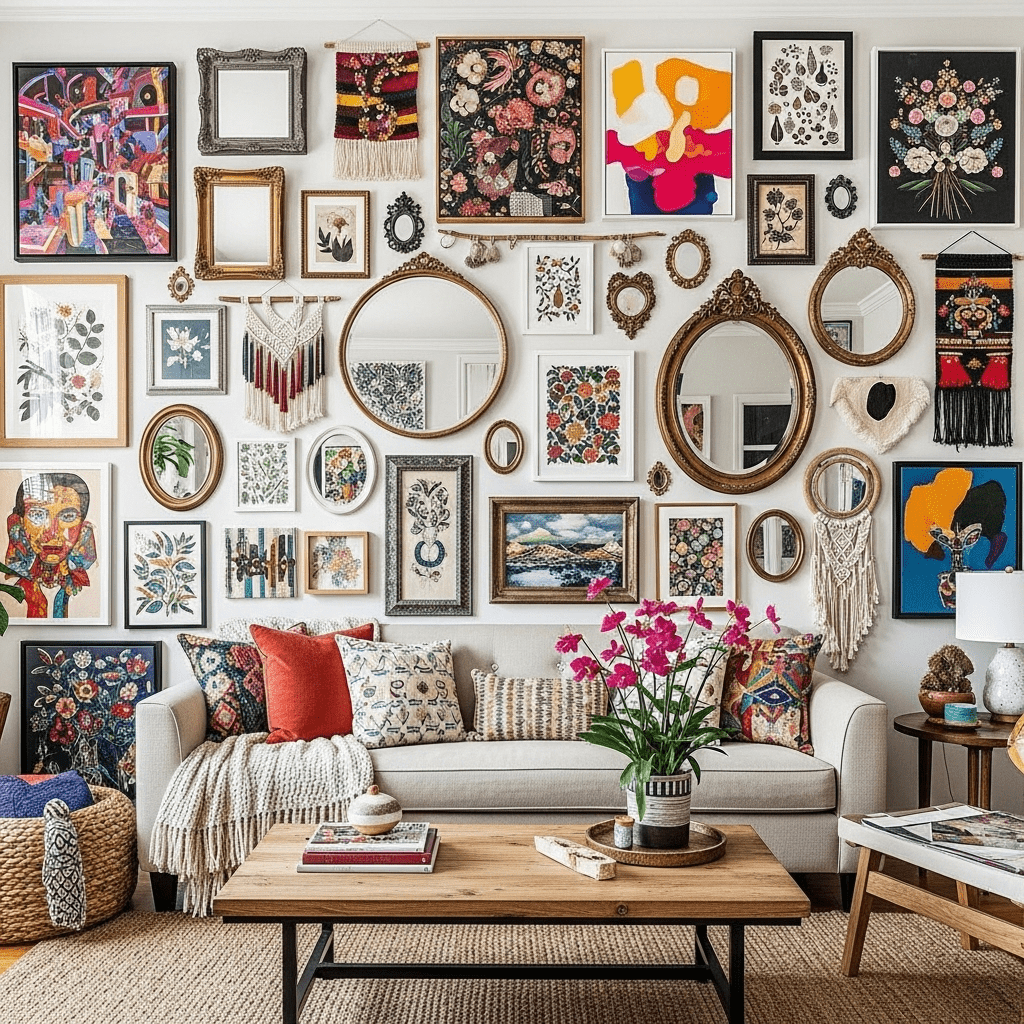
12. Wall Gallery of Eclectic Art
Cover walls with diverse artwork—original paintings, woven pieces, mirrors, photographs, plates—in mismatched frames. This maximalist gallery approach creates dynamic bohemian focal points.
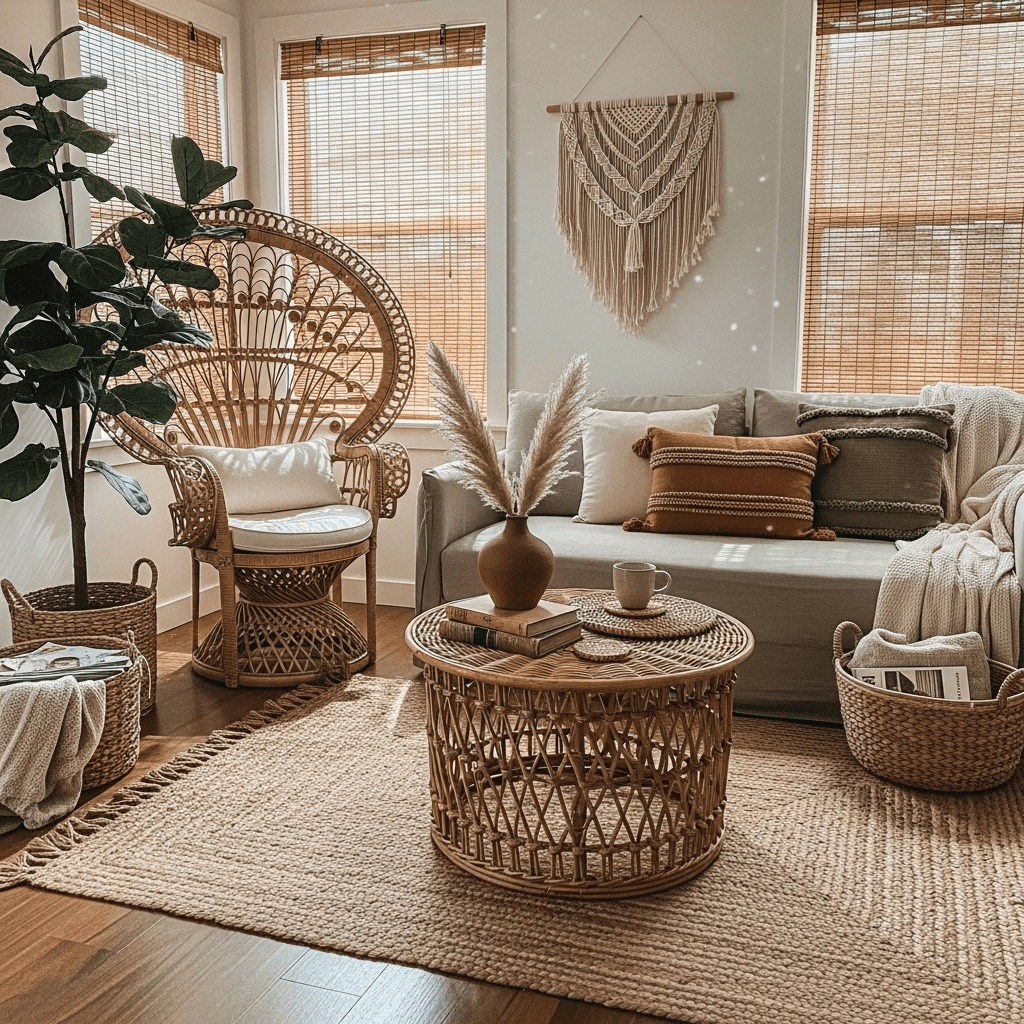
13. Rattan and Natural Materials
Feature rattan, wicker, bamboo, and natural fiber furniture throughout. These organic materials form bohemian foundations that feel tropical, earthy, and sustainably conscious.
Understanding Bohemian Style
Bohemian design emerged from 19th-century artistic communities valuing creativity over convention:
Anti-Establishment Roots: Boho rejects mainstream design rules, celebrating individual expression and artistic freedom.
Cultural Appreciation: Genuine bohemian style incorporates textiles and crafts from various cultures respectfully, valuing artisan traditions.
Collected Aesthetic: Boho looks accumulated over time through travels, flea markets, and inheritance rather than purchased in single shopping trips.
Handcrafted Value: Artisan-made items take precedence over mass production, supporting craftspeople and ensuring uniqueness.
Comfort Priority: Despite visual richness, boho spaces prioritize genuine comfort—plush seating, soft textiles, relaxed arrangements.
Environmental Consciousness: Vintage shopping, natural materials, and sustainability often align with bohemian values.
Color Palettes in Boho Design
Jewel Tone Richness: Emerald, sapphire, ruby, amethyst create luxurious, saturated bohemian environments.
Earthy Desert Tones: Terracotta, rust, sand, sage, and ochre ground spaces in natural, southwestern-influenced warmth.
Rainbow Maximalism: All colors layered together in joyful, confident combinations that celebrate rather than restrain color.
Neutral Foundation: Cream, beige, tan, and white provide sophisticated bases for colorful textile layering.
Warm Sunset Palette: Coral, peach, golden yellow, and burnt orange create warm, optimistic bohemian spaces.
Cool Coastal Boho: Turquoise, aqua, and sandy tones create beach-inspired, relaxed bohemian environments.
Essential Boho Elements
Textiles Abundance: Multiple throw pillows, layered blankets, decorative textiles—never minimal with fabrics.
Plants Everywhere: Living greenery is non-negotiable—the more, the better in authentic bohemian spaces.
Global Textiles: Kilim rugs, suzani fabrics, ikat patterns, block prints, tribal textiles from various cultures.
Macramé and Woven Art: Wall hangings, plant hangers, decorative knots adding handcrafted texture.
Vintage and Antique Furniture: Authentic aged pieces or distressed finishes creating collected character.
Natural Materials: Rattan, wicker, jute, wood, stone, and other organic materials throughout.
Personal Collections: Displayed objects from travels, flea markets, or family history telling personal stories.
Layered Lighting: Multiple sources including lanterns, string lights, and candles creating warm ambiance.
Furniture Selection for Boho Spaces
Low and Relaxed: Floor seating, low sofas, poufs creating casual, laid-back atmospheres.
Rattan and Wicker: Peacock chairs, rattan sofas, wicker side tables bringing tropical, natural elements.
Vintage Wood Pieces: Carved furniture, distressed finishes, unique patinas adding authentic character.
Comfortable Upholstery: Deep, plush seating prioritizing comfort over formality or sleek lines.
Multi-Cultural Mix: Moroccan poufs with Indian carved tables, Turkish kilims with Mexican equipal chairs.
Repurposed Items: Trunks as coffee tables, ladders as plant stands, crates as shelving demonstrating creativity.
Textile Layering Strategies
Pillow Abundance: 8-12 pillows on average sofas in varied sizes, patterns, and textures.
Throw Blankets Everywhere: Multiple throws draped casually over furniture inviting cozy lounging.
Layered Rugs: Stack 2-3 rugs creating dimensional, collected floors.
Curtain Drama: Heavy, textured curtains or beaded curtains adding softness and visual interest.
Wall Textiles: Tapestries, macramé, woven pieces, or textile art softening walls.
Table Textiles: Embroidered table runners, printed tablecloths adding pattern to surfaces.
Pattern Mixing Principles
Cohesive Color Palette: Mix patterns freely but maintain consistent color themes preventing chaos.
Scale Variation: Combine large-scale prints with medium and small patterns avoiding same-size monotony.
Pattern Types: Mix geometric with organic, stripes with florals, tribal with abstract for dimensional interest.
Neutral Grounding: Include solid neutrals or natural textures balancing busy patterns.
Cultural Harmony: Ensure patterns from various cultures complement rather than clash through thoughtful selection.
Creating Plant-Filled Boho Spaces
Variety of Sizes: Combine large floor plants (fiddle leaf fig, monstera) with medium and small varieties.
Hanging Plants: Trailing pothos, string of pearls, or ferns in macramé hangers maximizing vertical space.
Plant Stands: Vintage stands, modern tripods, or repurposed items elevating plants dimensionally.
Clustering: Group plants together creating lush, jungle-like areas rather than spacing individually.
Natural Planters: Terracotta, woven baskets, ceramic pots in earthy tones rather than plastic.
Plant Care: Boho style requires commitment to actual plant care—dying plants don’t enhance aesthetics.
Lighting for Bohemian Ambiance
Layered Sources: Combine floor lamps, table lamps, string lights, candles, and lanterns.
Moroccan Lanterns: Perforated metal lanterns creating patterned light and exotic atmosphere.
String Lights: Fairy lights adding magical, festival-like ambiance year-round.
Natural Light: Maximize windows with sheer or beaded curtains allowing abundant daylight.
Warm Bulbs: Use warm color temperatures (2700K) creating cozy, golden glows.
Candle Abundance: Real or LED candles throughout adding romantic, intimate lighting.
Shopping for Boho Décor
Thrift and Vintage Stores: Primary sources for authentic, affordable bohemian furniture and décor.
Flea Markets: Weekend markets offering unique finds, textiles, and global treasures.
Etsy and Artisan Markets: Support makers creating handcrafted macramé, textiles, and boho items.
International Markets: If traveling, collect textiles, crafts, and furniture from origin countries.
Estate Sales: Source quality vintage furniture and inherited pieces with authentic character.
Fair Trade Shops: Ensure textiles and crafts support artisan communities appropriately.
Budget-Friendly Boho
Bohemian style naturally aligns with budget consciousness:
Thrifted Furniture: Vintage shopping provides unique pieces affordably compared to new furniture.
DIY Macramé: Learn basic knots creating wall hangings and plant hangers personally.
Textile Remnants: Purchase fabric remnants creating cushion covers affordably.
Plant Propagation: Grow plants from cuttings rather than purchasing mature specimens.
Repurposed Items: Transform existing objects into bohemian décor creatively.
Paint and Fabric: Update thrifted furniture with paint and recovered cushions affordably.
Boho Mistakes to Avoid
Cultural Appropriation: Research cultural significance; avoid sacred symbols or inappropriate use of cultural items.
Too Cluttered: Even maximalist boho needs editing—not every surface requires coverage.
Matching Everything: Coordinated sets contradict bohemian collected-over-time aesthetic.
Plastic Plants: Real plants or nothing—fake plants undermine authentic bohemian connection to nature.
Forced Boho: If the style doesn’t resonate genuinely, don’t force it—authenticity matters more than trends.
Neglecting Comfort: Visual richness should never sacrifice actual functional comfort.
Boho Sub-Styles
Desert Boho: Muted earth tones, southwestern influences, cactus plants, minimal furnishings.
Tropical Boho: Bright colors, abundant plants, rattan furniture, beach influences.
Moroccan Boho: Rich jewel tones, ornate metalwork, low seating, exotic luxury.
Scandinavian Boho (Scandi-Boho): Neutral base with boho textiles, plants, minimalist-bohemian hybrid.
Modern Boho: Cleaner lines, more restraint, contemporary furniture with bohemian layering.
Vintage Boho: Heavy emphasis on genuine antiques and authentic vintage pieces.
Seasonal Boho Adjustments
Summer: Lighter textiles, brighter colors, maximum plants, open windows, breezy feel.
Fall: Warmer colors, heavier throws, dried botanicals, deeper jewel tones.
Winter: Layered warmth, maximum textiles, cozy lighting, hibernation-ready comfort.
Spring: Fresh colors, new plant growth, lighter fabrics, refreshed energy.
Maintaining Boho Spaces
Regular Editing: Prevent accumulation from becoming clutter—edit collections periodically.
Plant Care: Commit to watering, fertilizing, and maintaining living elements properly.
Textile Cleaning: Wash throws and cushion covers regularly; vacuum rugs frequently.
Dusting: Abundant objects require regular dusting maintenance.
Reorganizing: Periodically rearrange collections preventing stagnation and refreshing spaces.
Boho for Different Personalities
Maximalists: Embrace full-color, full-pattern, abundant-textile bohemian expressions freely.
Minimalists: Choose desert boho or neutral bohemian with selective, meaningful layering.
Plant Lovers: Prioritize botanical elements, creating jungle-like green bohemian sanctuaries.
Collectors: Display collections prominently—vintage cameras, global textiles, found objects.
Color Enthusiasts: Celebrate rainbow boho with fearless color mixing and vibrant patterns.
Comfort Seekers: Emphasize plush seating, abundant cushions, and cozy textile layering.
Boho Living Room Activities
Lounging and Relaxation: Low seating, floor cushions, and cozy textiles encourage relaxed hanging out.
Creative Pursuits: Boho spaces often double as creative studios—art, crafts, music.
Social Gathering: Casual, comfortable environments perfect for intimate gatherings and conversations.
Meditation and Yoga: Floor space and peaceful aesthetics suit mindfulness practices.
Reading and Reflection: Comfortable seating, good lighting, and calm atmospheres encourage reading.
Cultural Sensitivity in Boho Design
Research Origins: Understand cultural significance of textiles and objects before incorporating.
Support Artisans: Purchase from makers and cooperatives ensuring fair compensation.
Avoid Sacred Symbols: Don’t use religious or ceremonial items decoratively without understanding.
Appreciate, Don’t Appropriate: Honor cultural traditions rather than trivializing or misusing them.
Diverse Representation: If collecting globally, ensure breadth rather than stereotyping single cultures.
The Evolution of Boho Style
Historical Roots: Originated with 19th-century Parisian artists rejecting bourgeois conventionality.
1960s-70s Revival: Hippie movement embraced bohemian aesthetics reflecting counterculture values.
Contemporary Interpretation: Modern boho balances maximalism with livability, global with local.
Instagram Influence: Social media popularized specific boho aesthetics, both helping and homogenizing style.
Sustainable Alignment: Current environmental consciousness aligns naturally with vintage-loving, artisan-supporting boho values.
Making Boho Your Own
Personal History: Incorporate items meaningful to your story—travel souvenirs, inherited pieces, handmade gifts.
Color Preferences: Adapt bohemian color schemes to personally resonant palettes.
Comfort Standards: Adjust textile abundance and seating styles to personal comfort preferences.
Pattern Tolerance: Scale pattern mixing to your visual comfort—some love maximum, others prefer restraint.
Cultural Connections: Emphasize cultural elements personally meaningful through heritage or genuine appreciation.
Evolution Permission: Allow spaces to evolve as you collect, travel, and discover new elements.
Boho living room designs celebrate individuality, artistic expression, and the beauty of collected, meaningful spaces that reject cookie-cutter perfection. Whether you embrace maximalist pattern explosions, serene desert minimalism, or plant-filled jungle retreats, bohemian style offers liberating freedom to create spaces that authentically reflect your travels, values, and personality. The most successful boho living rooms feel genuinely personal—spaces that couldn’t belong to anyone else because they tell your unique story through carefully collected textiles, treasured objects, and creative layering that makes every visit feel like coming home to a space that truly understands and welcomes you.