Pooja Unit Designs in Living Room
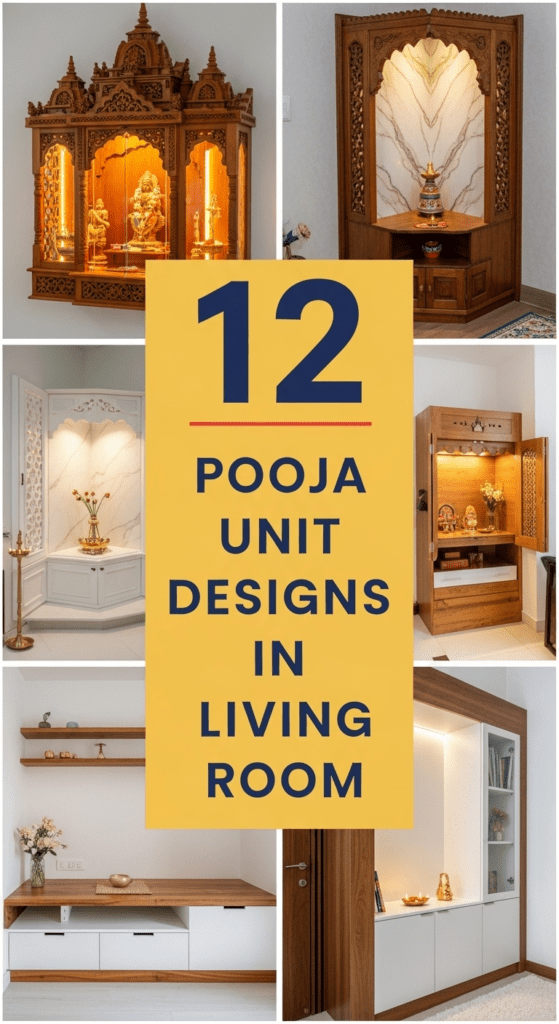
Pooja unit designs in living room represent the beautiful intersection of spiritual practice and contemporary interior design, creating sacred spaces that honor religious devotion while maintaining aesthetic harmony with modern living areas. For many Indian households, integrating a pooja unit into the living room offers the perfect balance—accessibility for daily worship, inclusion in the home’s central gathering space, and the opportunity to showcase beautiful craftsmanship that celebrates both faith and design. These twelve designs demonstrate how to create meaningful, beautiful pooja areas that enhance rather than compromise living room aesthetics.
1. Traditional Carved Wooden Mandir
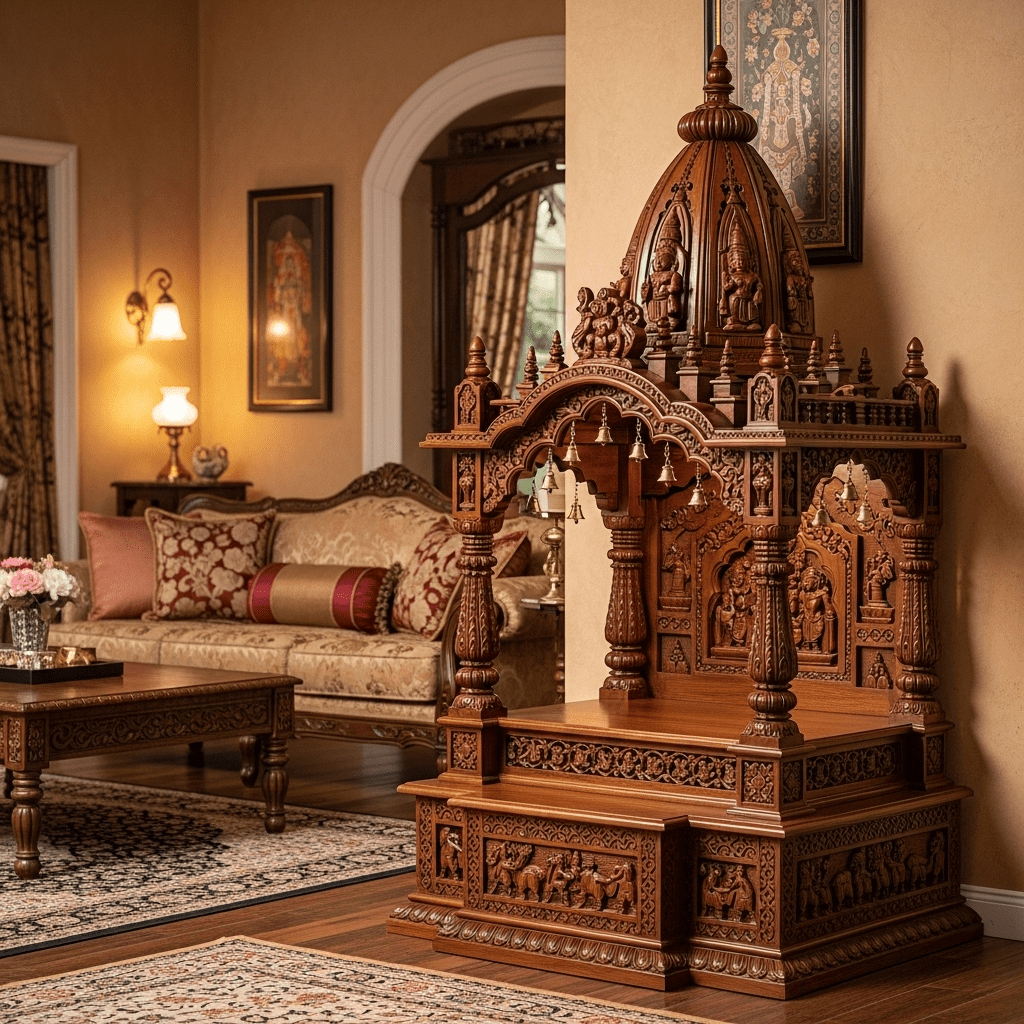
The classic wooden mandir with intricate carvings, domed shikhara, and traditional brass bells creates an authentic temple-inspired pooja unit. Rich teak or sheesham wood with detailed traditional motifs honors heritage while serving as a stunning architectural focal point.
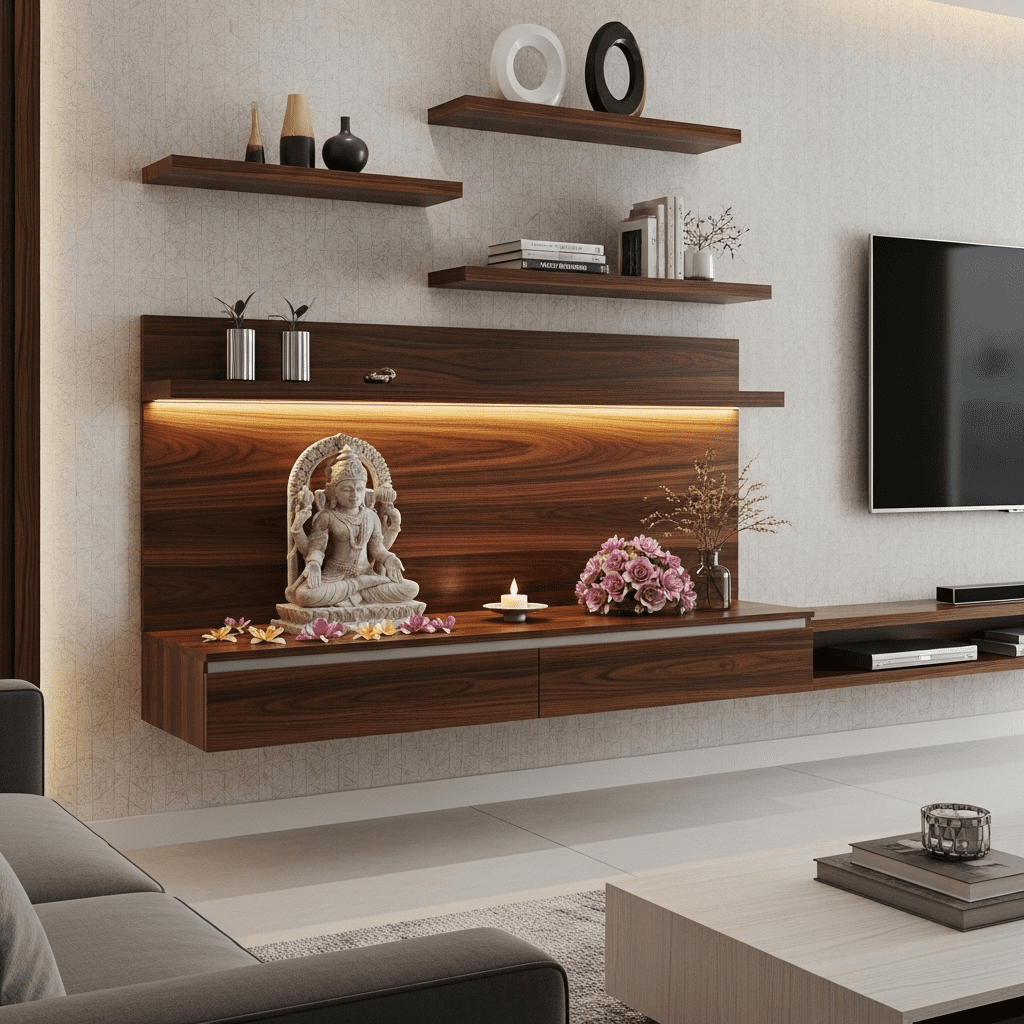
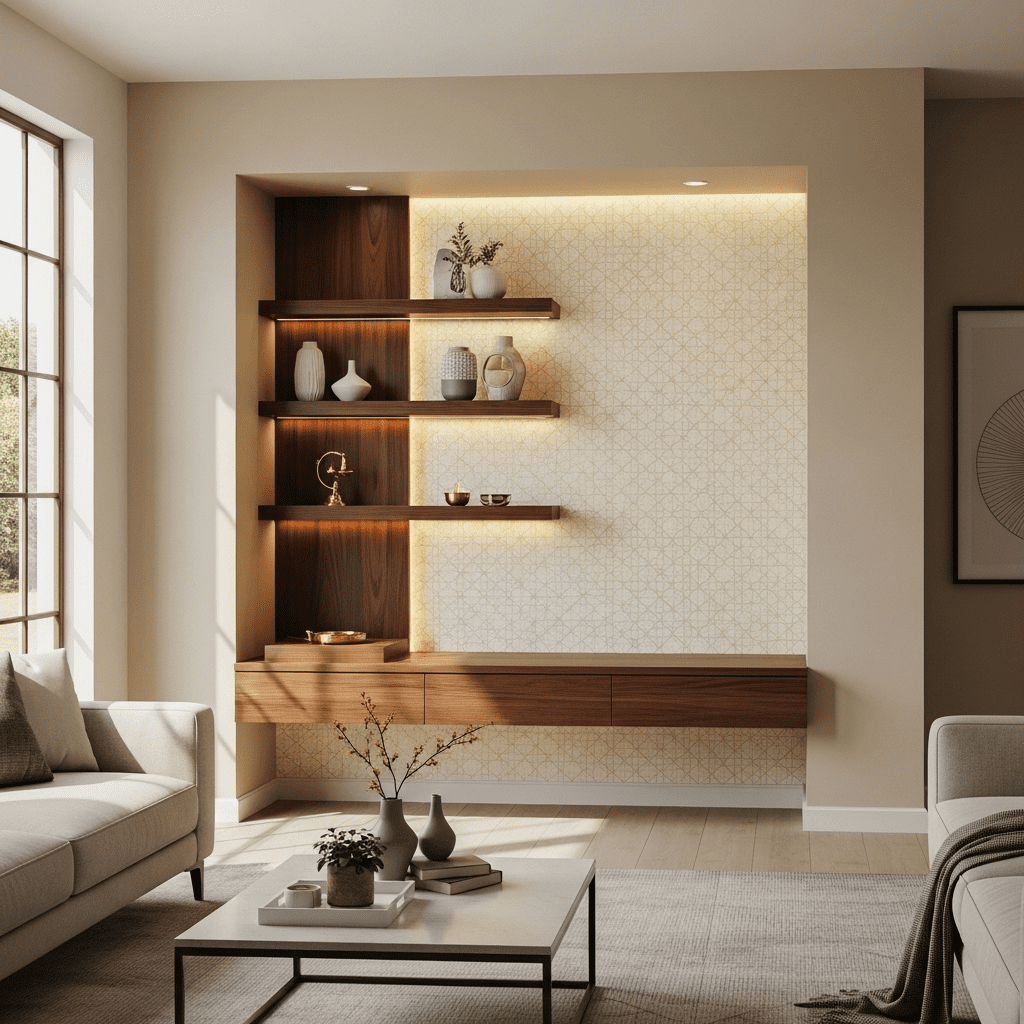
2. Wall-Mounted Compact Unit
Space-efficient wall-mounted pooja units suit modern apartments beautifully. Floating wooden shelves with a backdrop, storage for pooja essentials, and integrated lighting create complete worship spaces without consuming floor area.
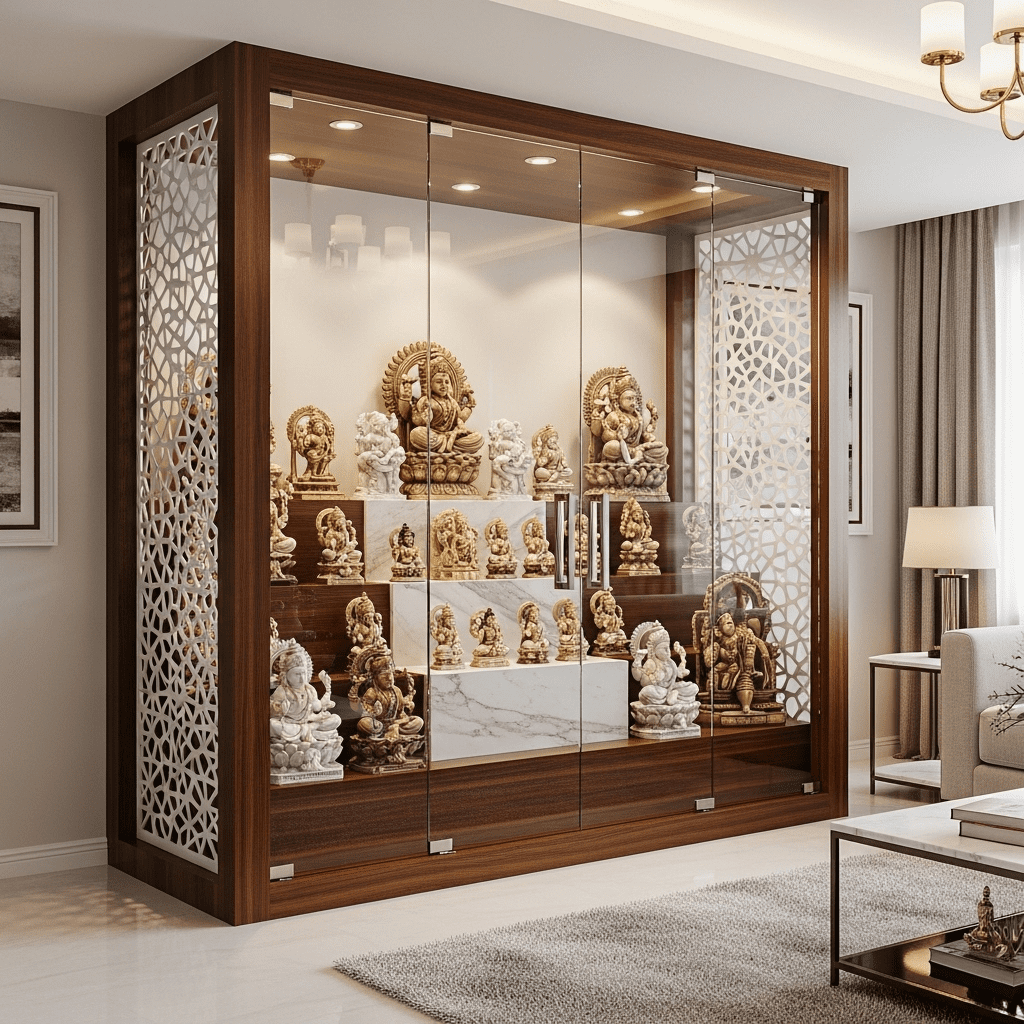
3. Glass-Enclosed Display Mandir
Transparent glass doors protect sacred items while maintaining visual access and light flow. This contemporary approach suits open-plan living rooms where the pooja unit remains visible yet protected, combining modern materials with traditional purpose.
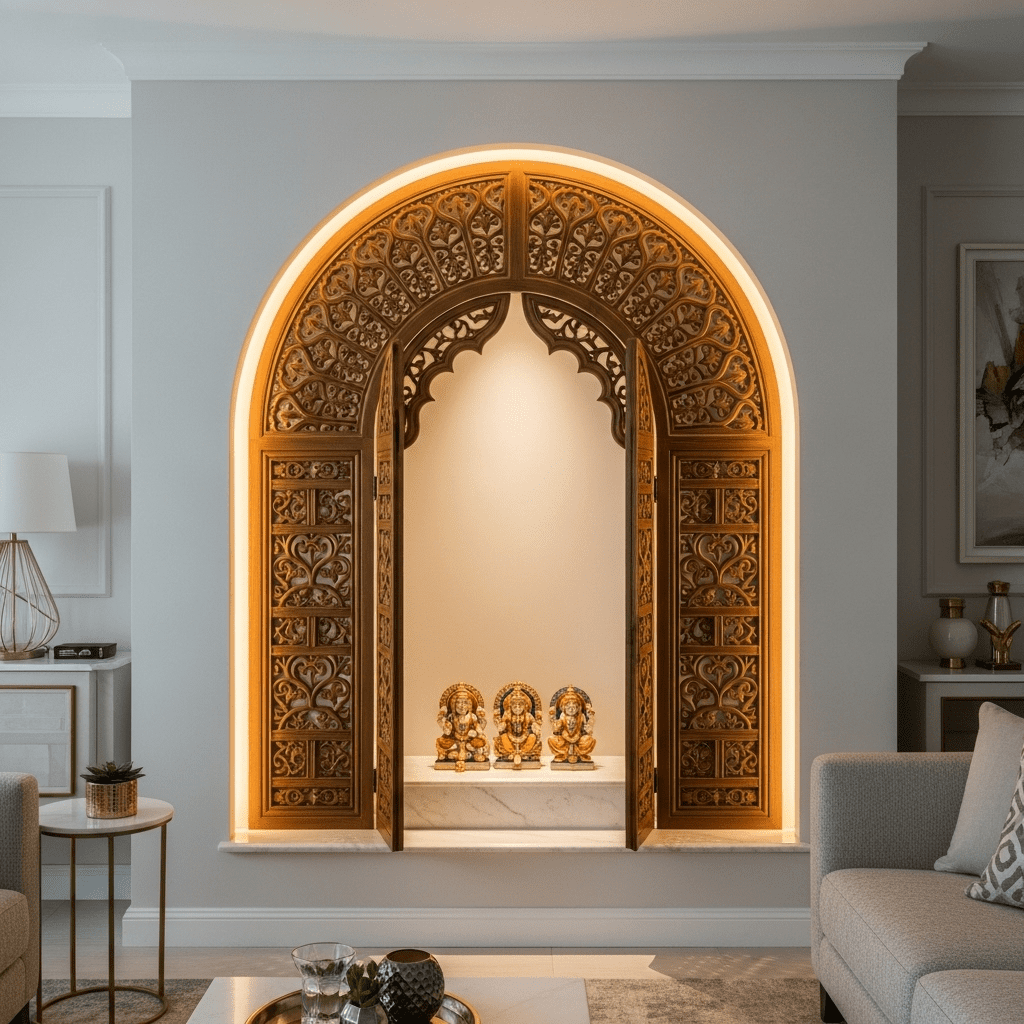
4. Built-In Alcove Design
Custom-built alcoves carved into living room walls create permanent, architecturally integrated pooja spaces. Arched niches with decorative jaali screens, integrated lighting, and marble or tile bases deliver seamless integration with room architecture.
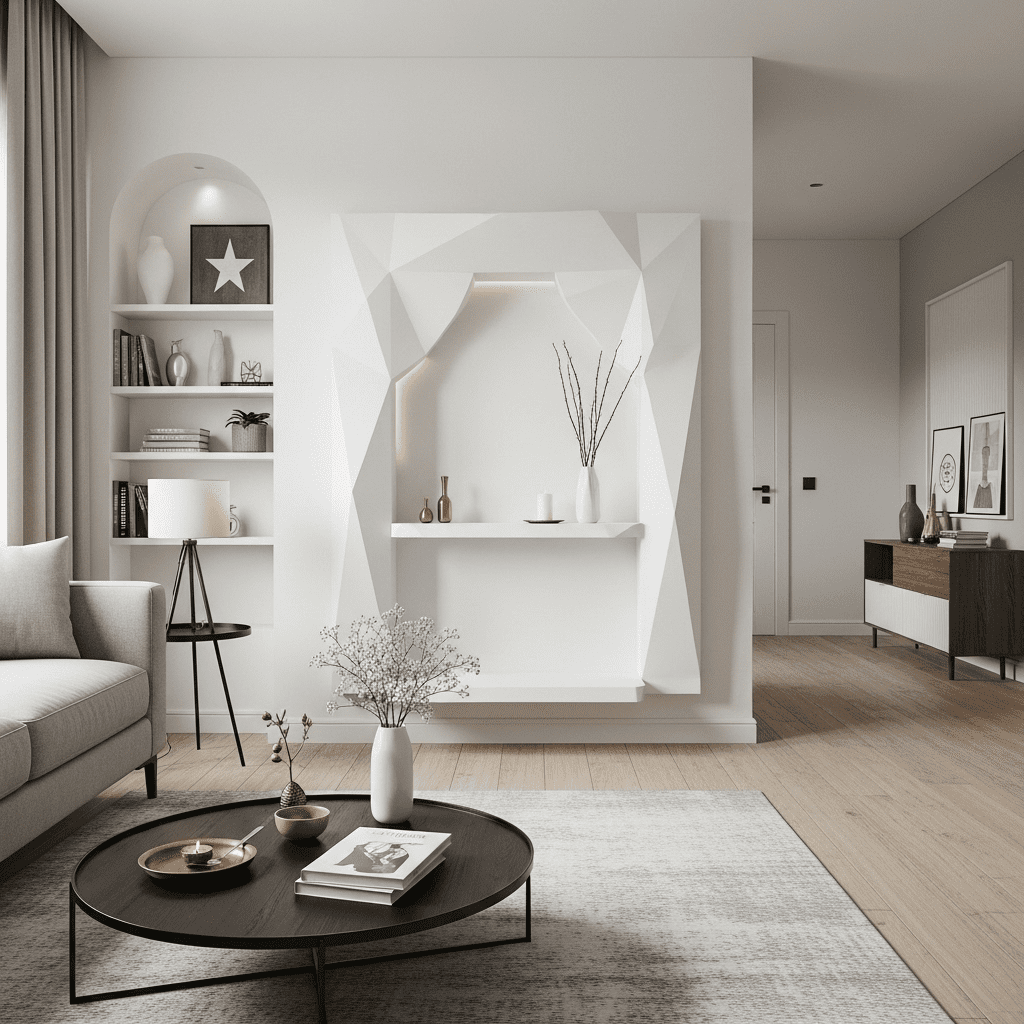
5. Minimalist Contemporary Shelf
Clean-lined wooden or white shelves with simple geometric forms create minimalist pooja units suited to contemporary aesthetics. The restrained design maintains sanctity while complementing modern, minimal living room interiors beautifully.
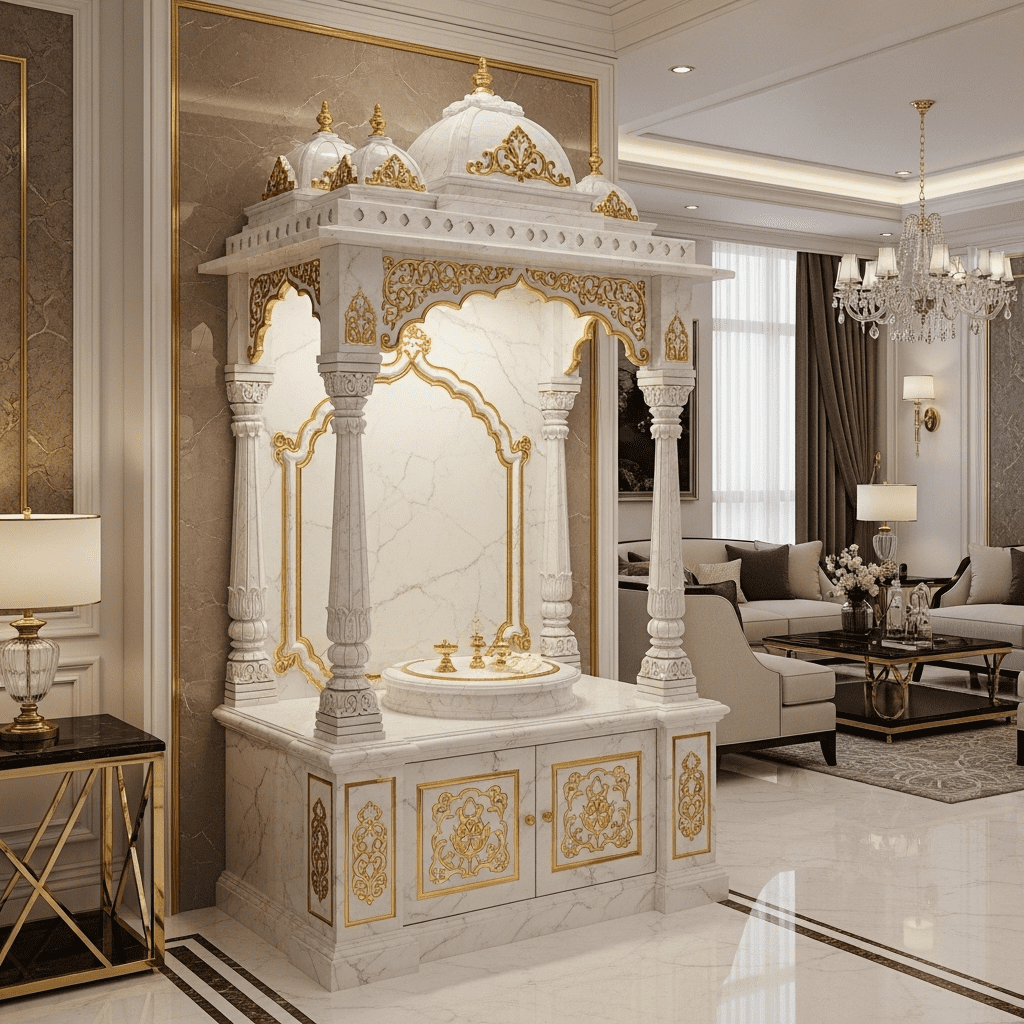
6. Marble and Gold Luxury Unit
Premium white or beige marble combined with gold accents creates luxurious pooja units reflecting temple grandeur. Polished marble platforms, gold-finished jaali work, and ornate detailing deliver opulent sacred spaces.
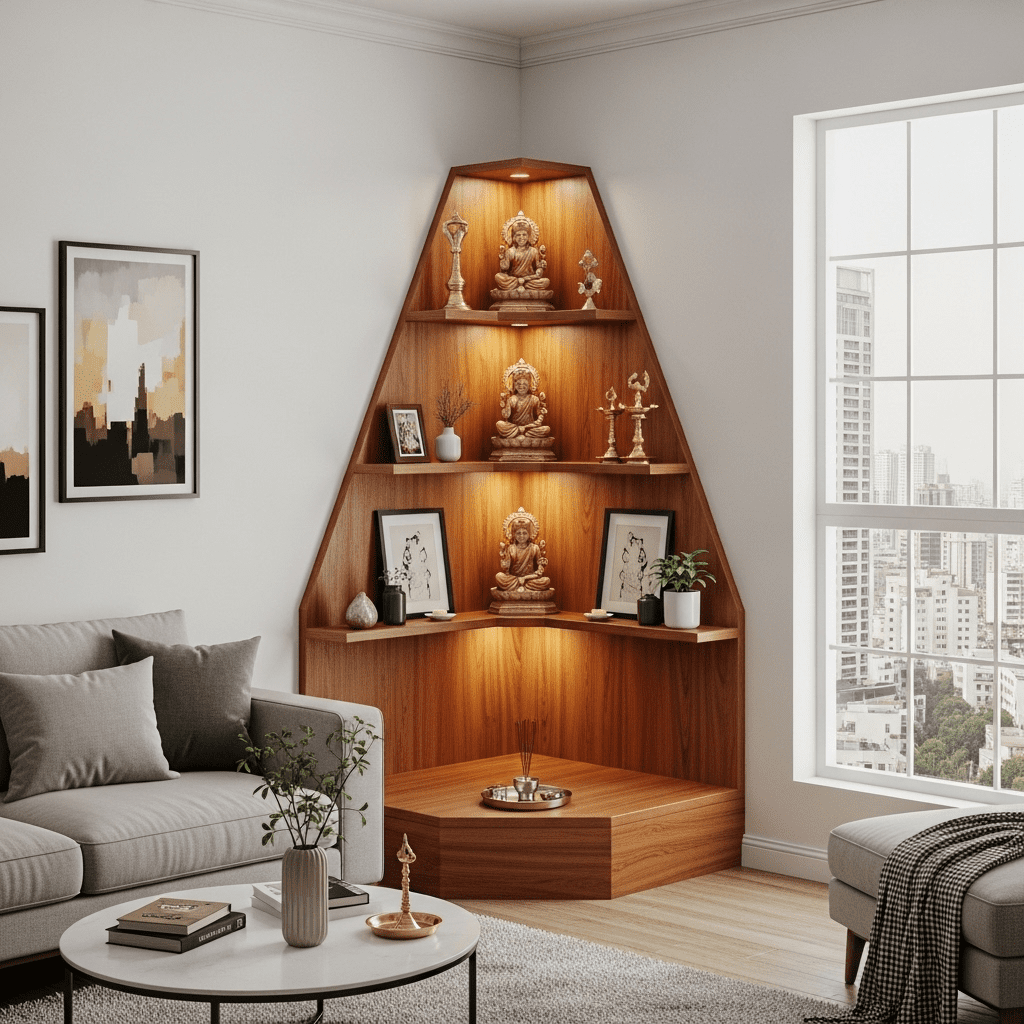
7. Corner Triangular Design
Specially designed corner pooja units maximize otherwise wasted angular space. Triangular configurations with tiered shelving, corner-fitted doors, and integrated lighting transform unused corners into functional sacred areas.
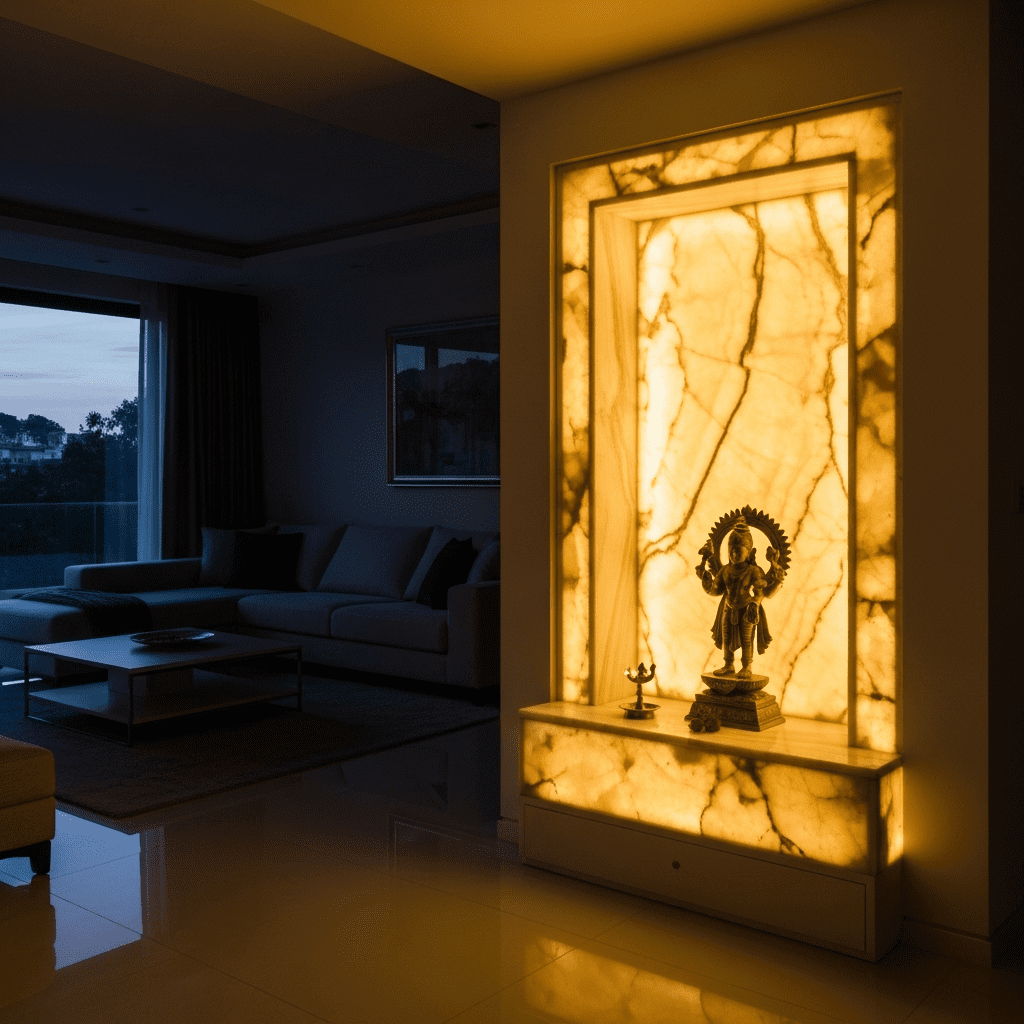
8. Backlit Panel Feature
Translucent onyx, acrylic, or frosted glass panels backlit with warm LED lighting create ethereal, glowing pooja units. The divine illumination adds spiritual ambiance while creating stunning visual focal points in living rooms.
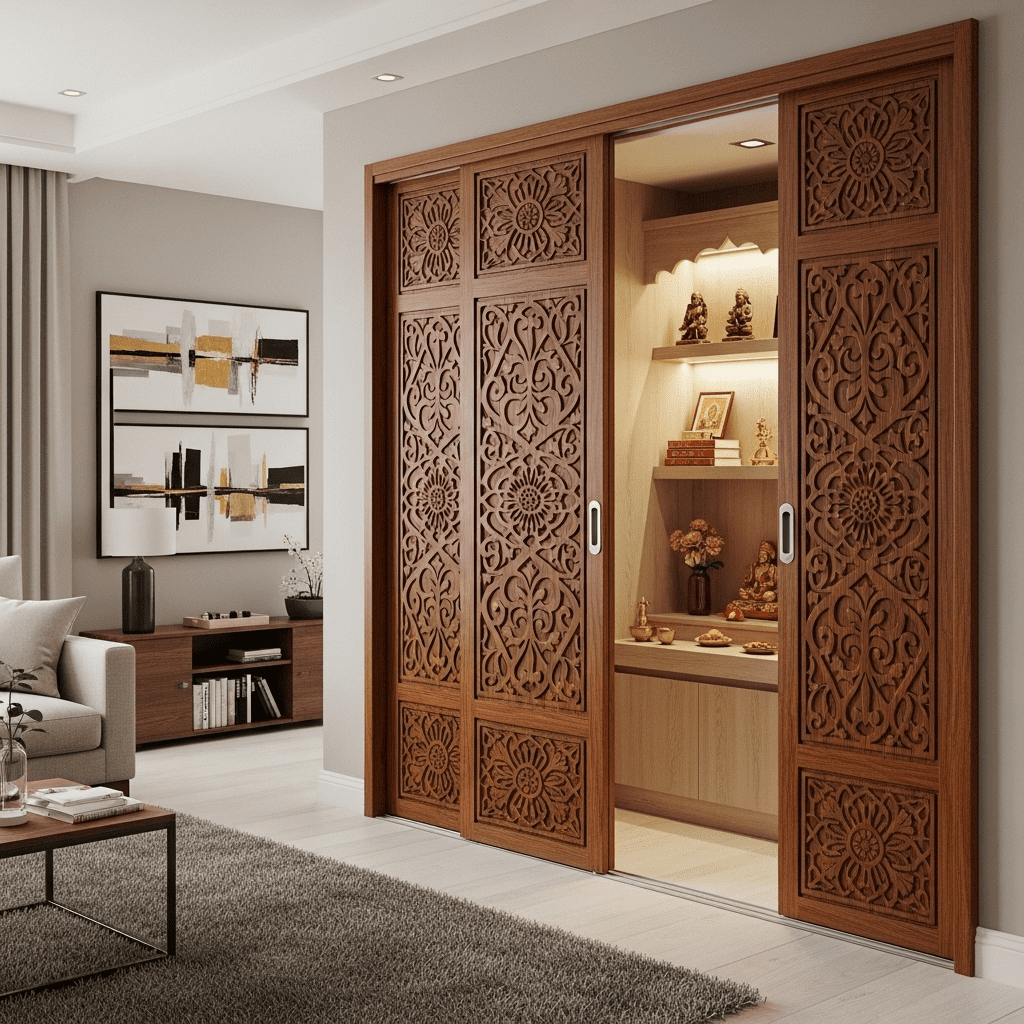
9. Sliding Door Concealment
Elegant sliding doors allow pooja units to remain concealed when desired, maintaining clean living room aesthetics during non-worship times. Decorative panels slide smoothly, revealing sacred spaces only when needed.
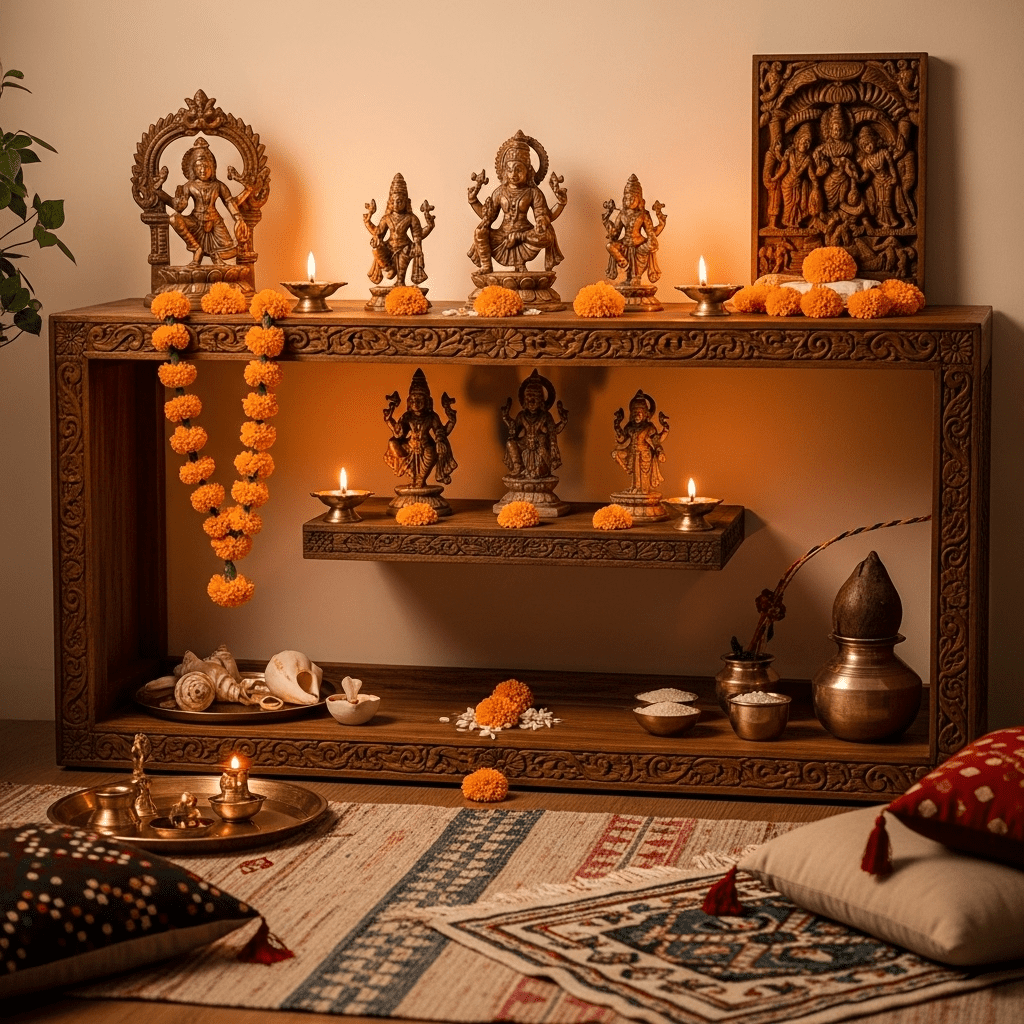
10. Open Shelf Ethnic Display
Open wooden shelves in ethnic designs display deity idols, incense holders, and sacred objects as part of living room décor. This approach celebrates spirituality openly, integrating worship items into everyday visual experience.
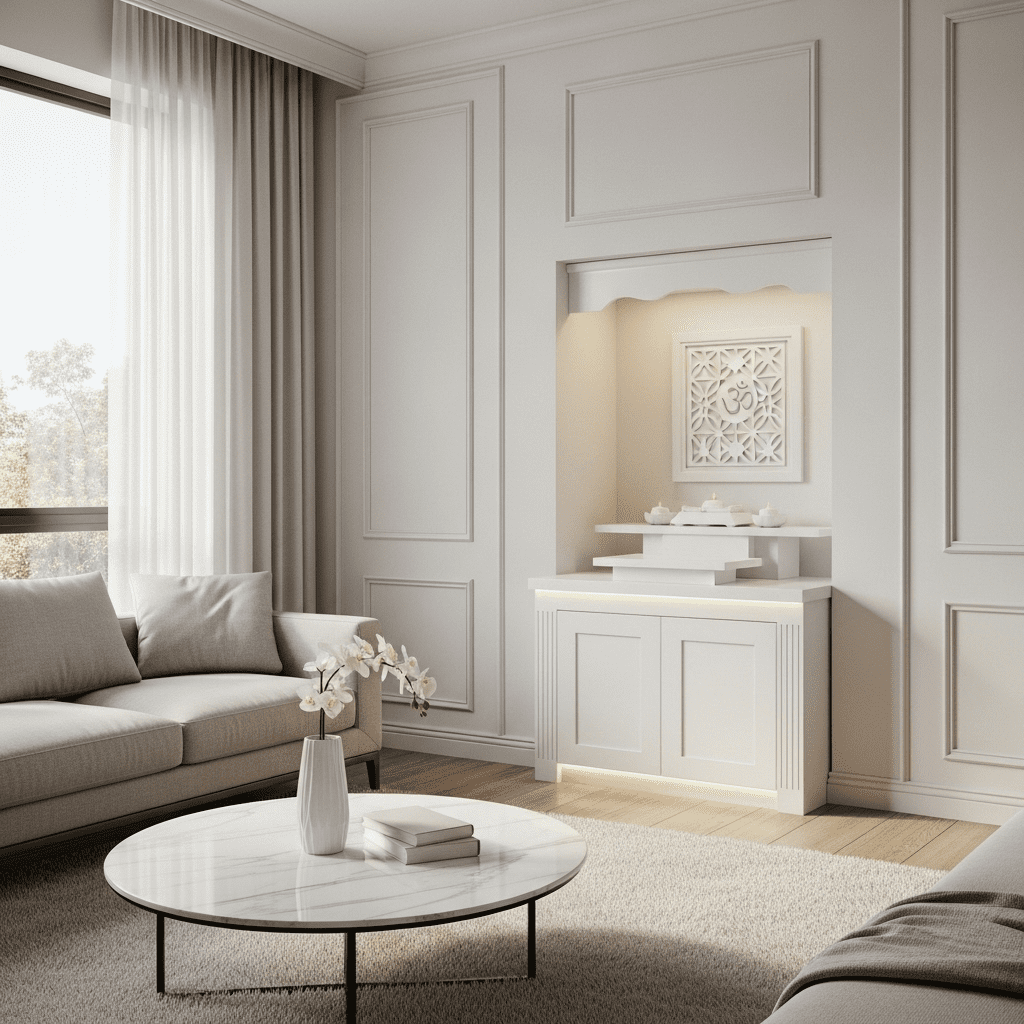
11. White Contemporary Temple
All-white pooja units in contemporary designs create serene, modern sacred spaces. White lacquered wood or painted finishes combined with clean lines suit minimalist and Scandinavian-inspired living rooms perfectly.
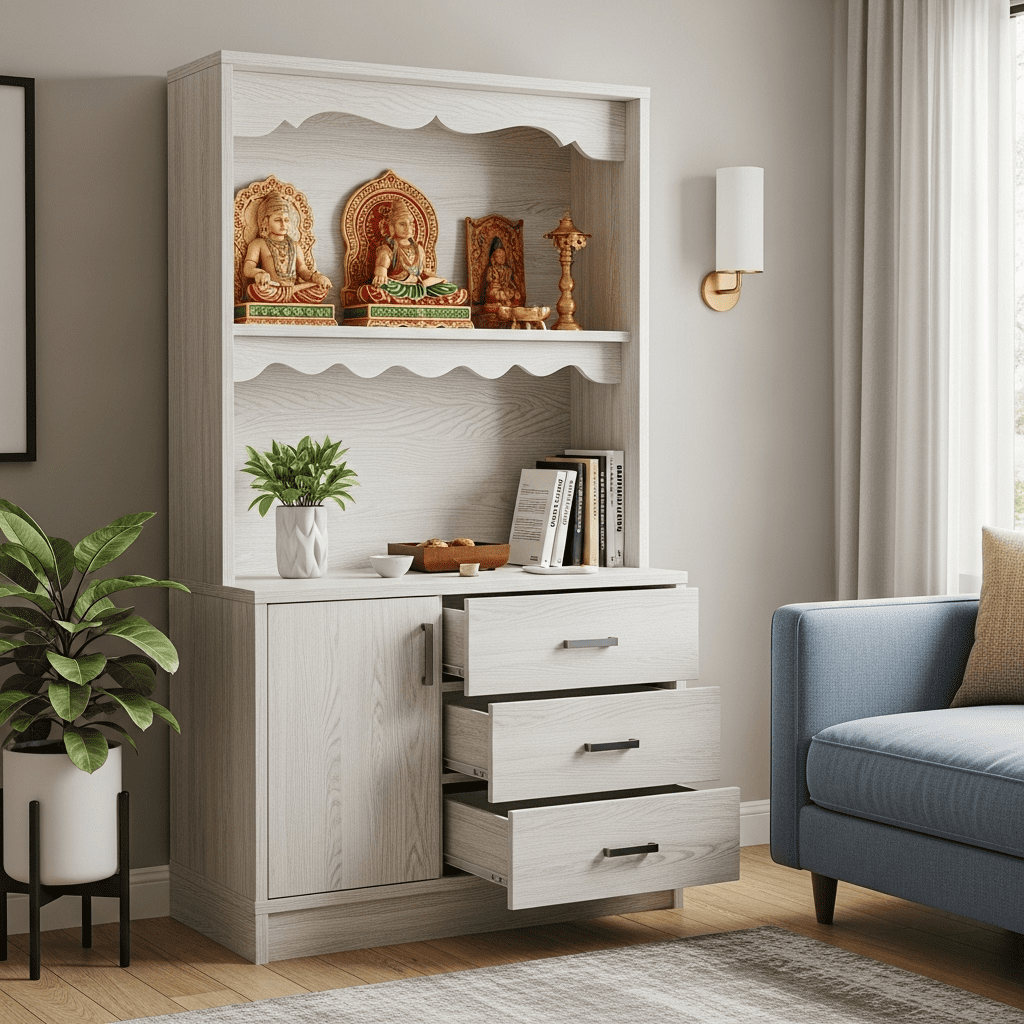
12. Dual-Purpose Storage Cabinet
Cleverly designed cabinets serve as both living room storage and pooja units. Upper sections house deities with pooja essentials while lower sections provide everyday storage, maximizing functionality in compact spaces.
Designing Pooja Units for Living Rooms
Integrating sacred pooja spaces into living rooms requires balancing spiritual requirements with practical design considerations and aesthetic harmony.
Direction and Placement: Traditional Vastu principles recommend northeast corners for pooja units, though east-facing positions also prove auspicious. When architectural constraints prevent ideal placement, consult with family elders or spiritual advisors regarding acceptable alternatives.
Height Considerations: Position deity idols at eye level or slightly higher when seated for worship. The pooja unit base should sit comfortably above floor level, maintaining the respect and elevation sacred spaces deserve.
Lighting Requirements: Adequate lighting proves essential for both worship activities and aesthetic presentation. Combine ambient lighting illuminating the entire unit with focused accent lights highlighting deities specifically. Warm white LED strips (2700-3000K) create appropriate sacred ambiance.
Ventilation and Safety: Incense and oil lamps require proper ventilation preventing smoke accumulation. Ensure adequate air circulation and maintain fire safety through appropriate spacing from combustible materials and accessible fire extinguishing equipment nearby.
Storage Integration: Pooja units require storage for incense, camphor, oils, flowers, and worship accessories. Incorporate drawers, closed cabinets, or decorative boxes maintaining organization while preserving visual cleanliness.
Material Selection: Choose materials honoring both tradition and practical maintenance. Solid woods (teak, sheesham, rosewood) age beautifully and suit traditional aesthetics. Marble, granite, or engineered stone provide durable, easily cleaned surfaces. Contemporary units might incorporate glass, metal, or high-quality laminates appropriately.
Size and Scale Considerations
Compact Apartments: Wall-mounted units, corner designs, or compact mandirs measuring 24-36 inches wide suit smaller living rooms without overwhelming limited space.
Medium Living Rooms: Built-in alcoves or freestanding units measuring 36-48 inches wide provide adequate worship space while maintaining proportion with room dimensions.
Large Living Rooms: Elaborate carved mandirs, extensive built-in units, or room-divider pooja walls measuring 48+ inches create impressive sacred focal points proportional to generous spaces.
Aesthetic Integration Strategies
Material Coordination: Match or complement pooja unit materials with existing living room furniture. Walnut pooja units harmonize with walnut furniture; white contemporary units suit modern neutral palettes.
Style Consistency: Traditional carved mandirs suit ethnically decorated living rooms; minimalist pooja shelves complement contemporary interiors. Maintain visual language consistency preventing jarring aesthetic conflicts.
Color Harmony: Coordinate pooja unit colors with living room palettes. Natural wood tones suit most schemes; painted units should reference wall colors, furniture finishes, or decorative accent colors present elsewhere.
Lighting Coordination: Ensure pooja unit lighting integrates with overall living room lighting schemes. Matched fixture styles, consistent color temperatures, and coordinated brightness levels create cohesive illumination.
Decorating and Maintaining Pooja Units
Deity Arrangement: Central positions for primary deities with supporting gods arranged respectfully according to tradition. Maintain appropriate heights, ensuring no deity sits uncomfortably low.
Fresh Flowers and Offerings: Regular fresh flowers, incense, and appropriate offerings maintain sacred vitality. Remove wilted flowers daily, clean surfaces regularly, preventing neglect that dishonors sacred spaces.
Festive Decoration: During festivals like Diwali or Navratri, enhance pooja units with additional flowers, lights, rangoli, or traditional decorations celebrating occasions appropriately.
Regular Cleaning: Dust deity idols weekly using soft cloths, clean surfaces with appropriate materials (specific cleaners for marble, wood polish for wooden units), and maintain overall pristine appearance reflecting spiritual reverence.
Respectful Display: Avoid placing everyday objects on pooja units, maintain cleanliness around sacred areas, and ensure family members understand appropriate interaction with worship spaces.
Modern Adaptations of Traditional Designs
Contemporary pooja units successfully adapt traditional forms for modern living through several innovative approaches:
Simplified Carving: Retaining traditional carved motifs but reducing density creates cleaner, more contemporary appearances while honoring heritage.
Updated Materials: Combining traditional woods with modern glass, metal, or stone creates fusion designs bridging classic and contemporary aesthetics.
Space Efficiency: Traditional temple forms condensed into wall-mounted or compact configurations maintain spiritual authenticity while accommodating apartment constraints.
Lighting Innovation: LED technology, remote controls, and smart home integration bring modern convenience to traditional sacred spaces without compromising reverence.
Cultural Sensitivity and Personal Meaning
Pooja units represent deeply personal spiritual expressions varying significantly across families, regions, and traditions. What proves appropriate for one household may not suit another based on specific beliefs, family customs, or regional practices.
Consult family elders, religious advisors, or community leaders when uncertain about placement, design choices, or worship practices. Respect for tradition, personal faith, and cultural heritage should guide every decision regarding pooja unit design and integration.
The most successful pooja units in living rooms achieve beautiful balance—they honor spiritual devotion authentically while integrating aesthetically with modern interiors, they maintain sacred reverence while remaining practically accessible, and they celebrate cultural heritage while adapting appropriately to contemporary living. When designed thoughtfully with both spiritual requirements and design aesthetics equally respected, pooja units become not merely functional worship spaces but rather meaningful focal points that enrich living rooms spiritually, culturally, and visually—daily reminders of faith, tradition, and the beautiful integration of sacred practice into everyday modern life.