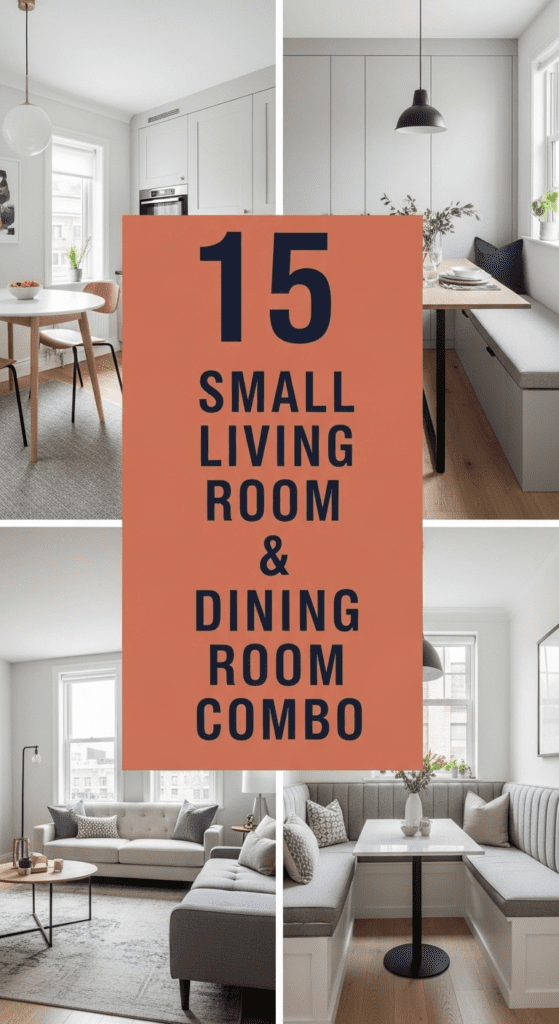
15 Small Living Room Dining Room Combo
Small living room dining room combo spaces challenge designers to create dual-function environments that serve both relaxation and dining beautifully within severely limited square footage. These combined spaces demand strategic furniture placement, clever visual separation techniques, and cohesive design elements that unify rather than fragment already compact rooms. These fifteen designs showcase proven layouts and strategies for maximizing every inch while creating environments that transition seamlessly from casual lounging to dinner parties without missing a beat.
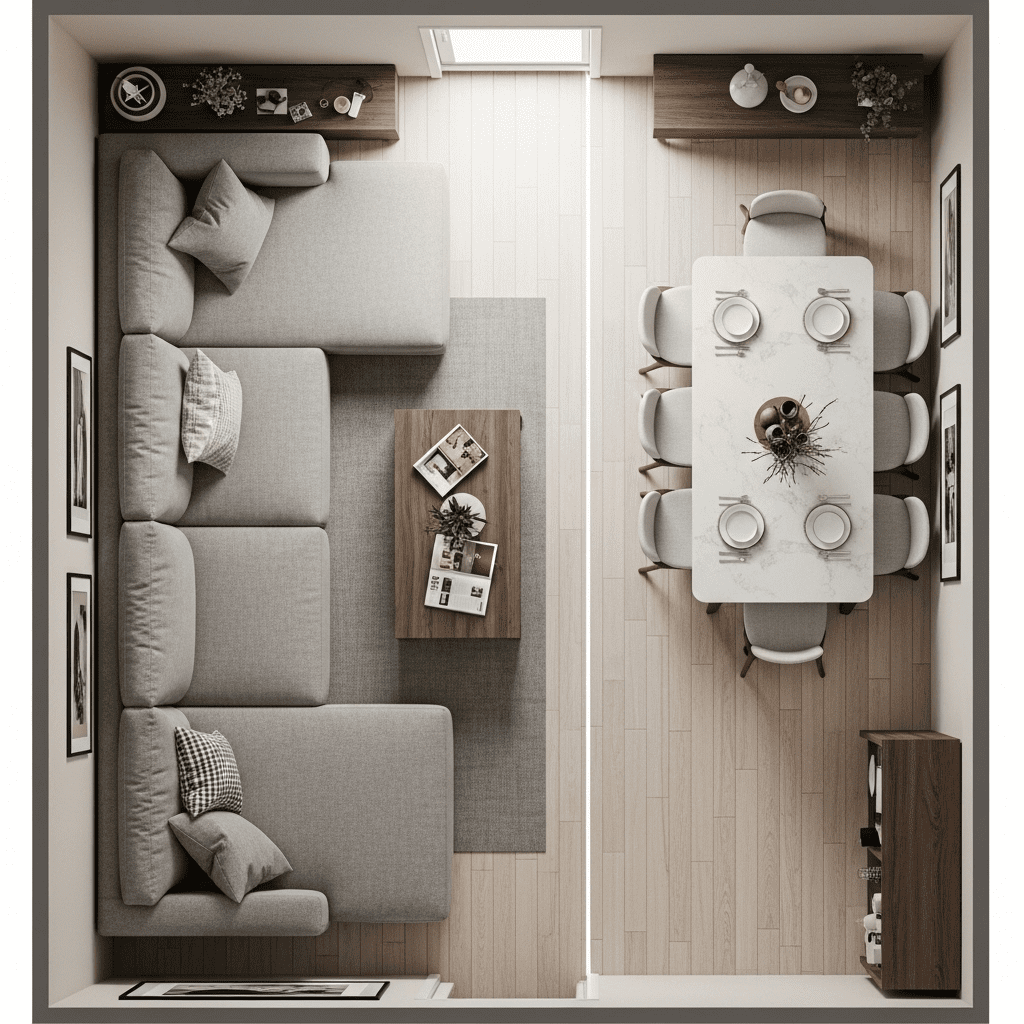
1. Linear Wall Division Layout
Sofa against one long wall with dining table against opposite wall creates clear functional separation in narrow rectangular combo rooms.
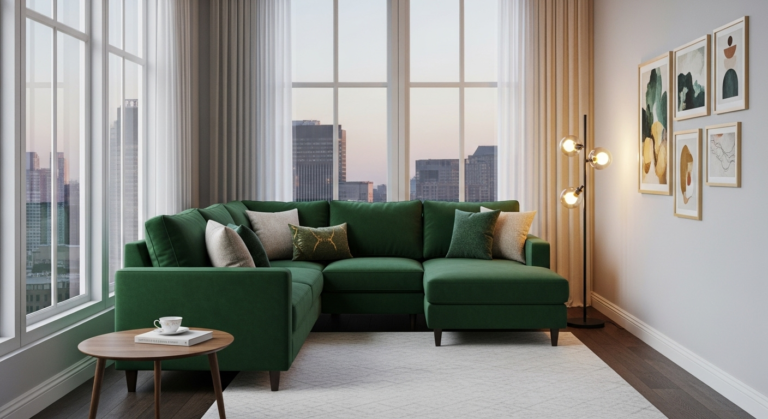
2. L-Shaped Corner Sectional
L-shaped sectional in one corner maximizes living room seating while leaving opposite area completely open for dining table placement.
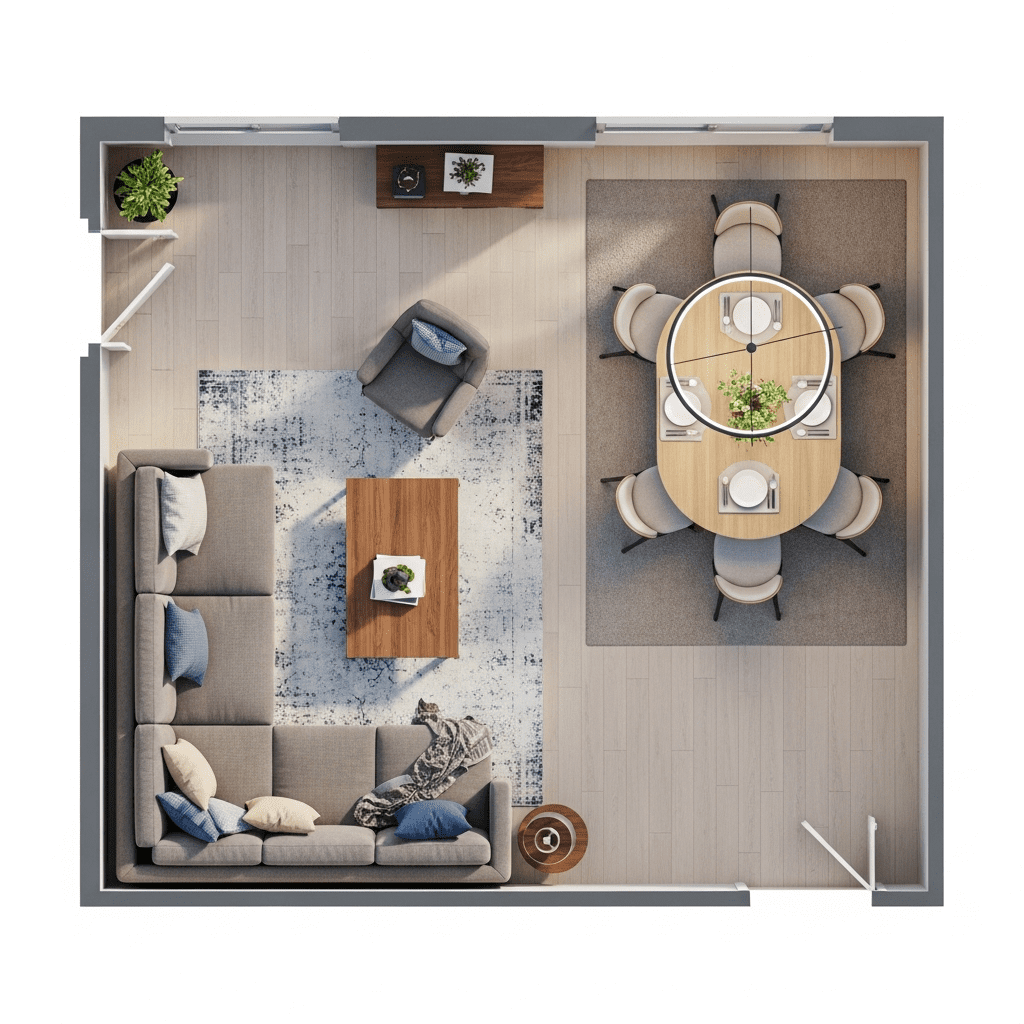
3. Floating Sofa Room Divider
Sofa positioned perpendicular to walls divides space creating distinct living and dining zones without physical barriers blocking flow.
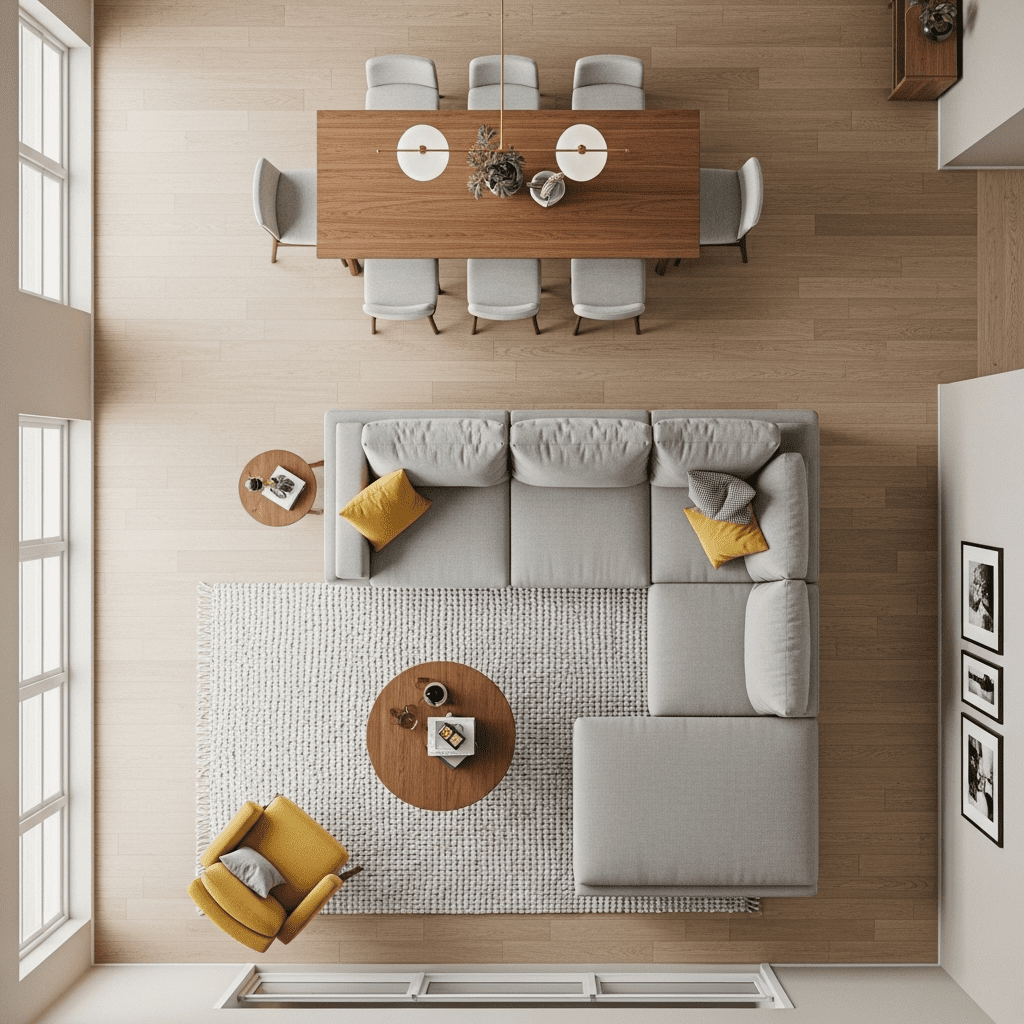
4. Rug-Defined Zones
Different area rugs under living and dining furniture visually separate zones while maintaining unified color palette throughout.
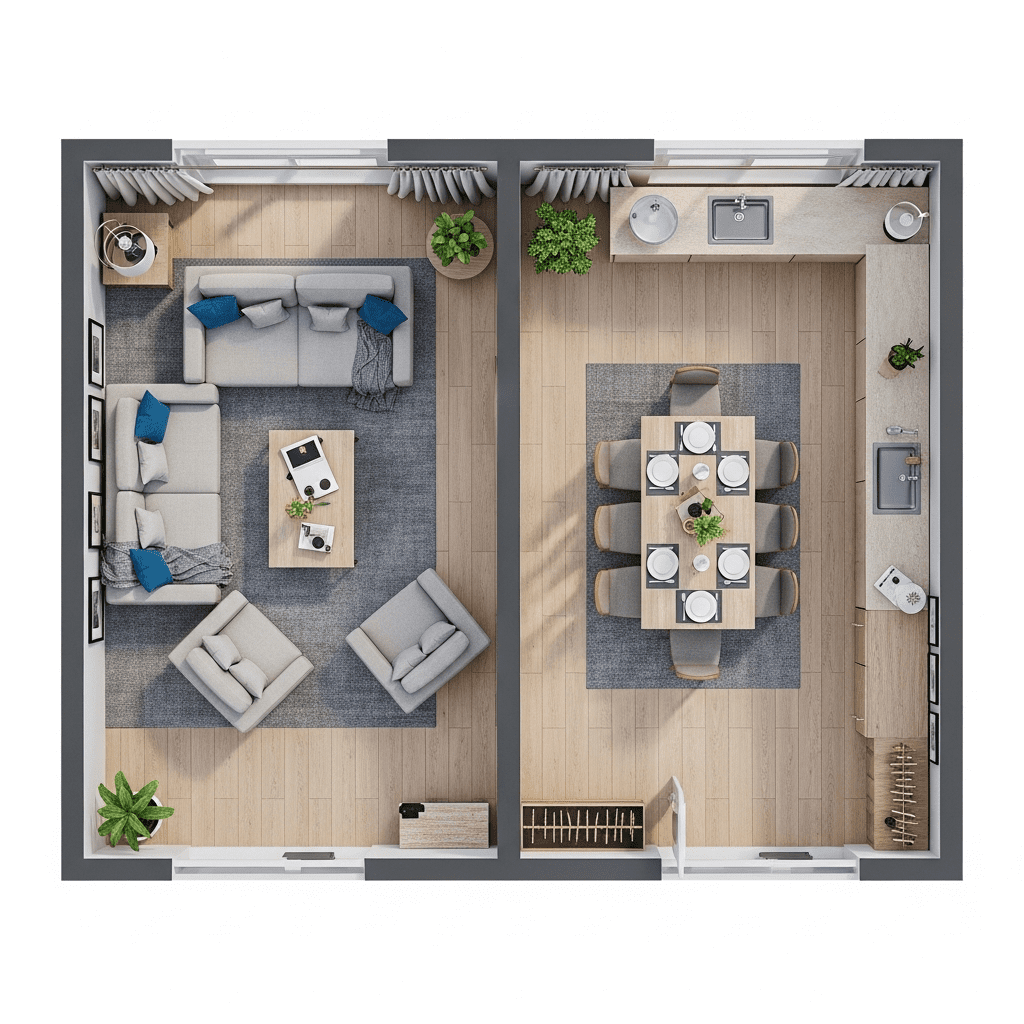
5. Bench Seating Dual Purpose
Dining bench against wall serves as extra living room seating when needed, maximizing furniture versatility in compact combo spaces.
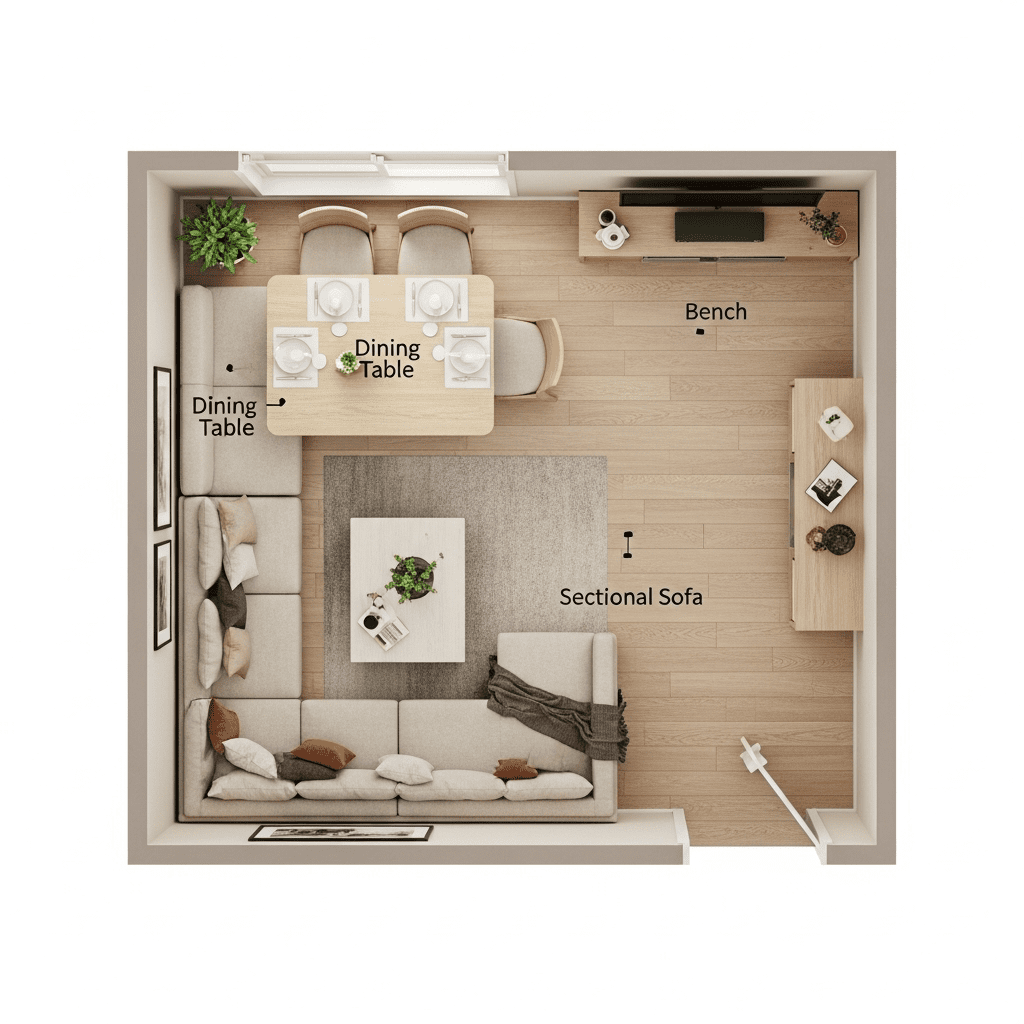
6. Round Table Space Saving
Round dining table in corner maximizes seating capacity while consuming less floor space than rectangular alternatives in tight combos.
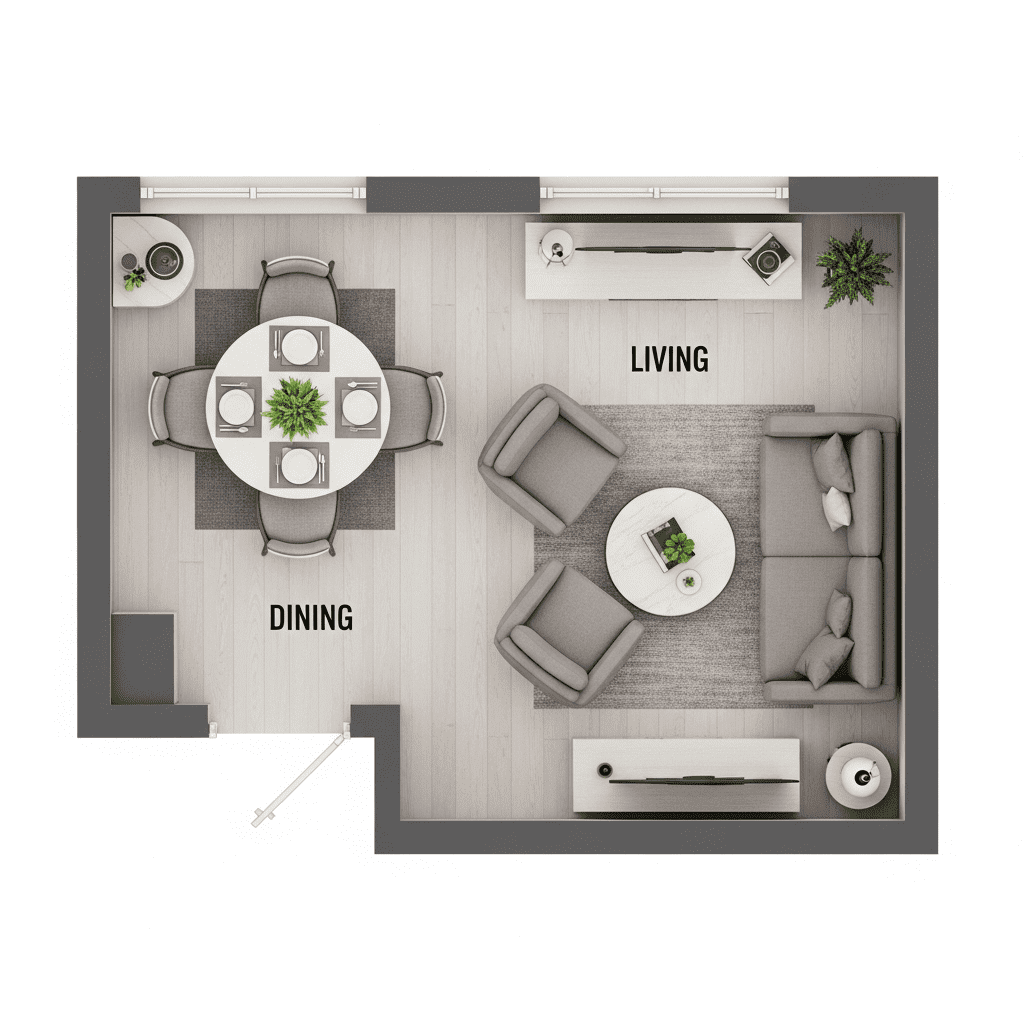
7. Console Table Transition
Narrow console table positioned between living and dining areas creates subtle separation while providing display and storage.
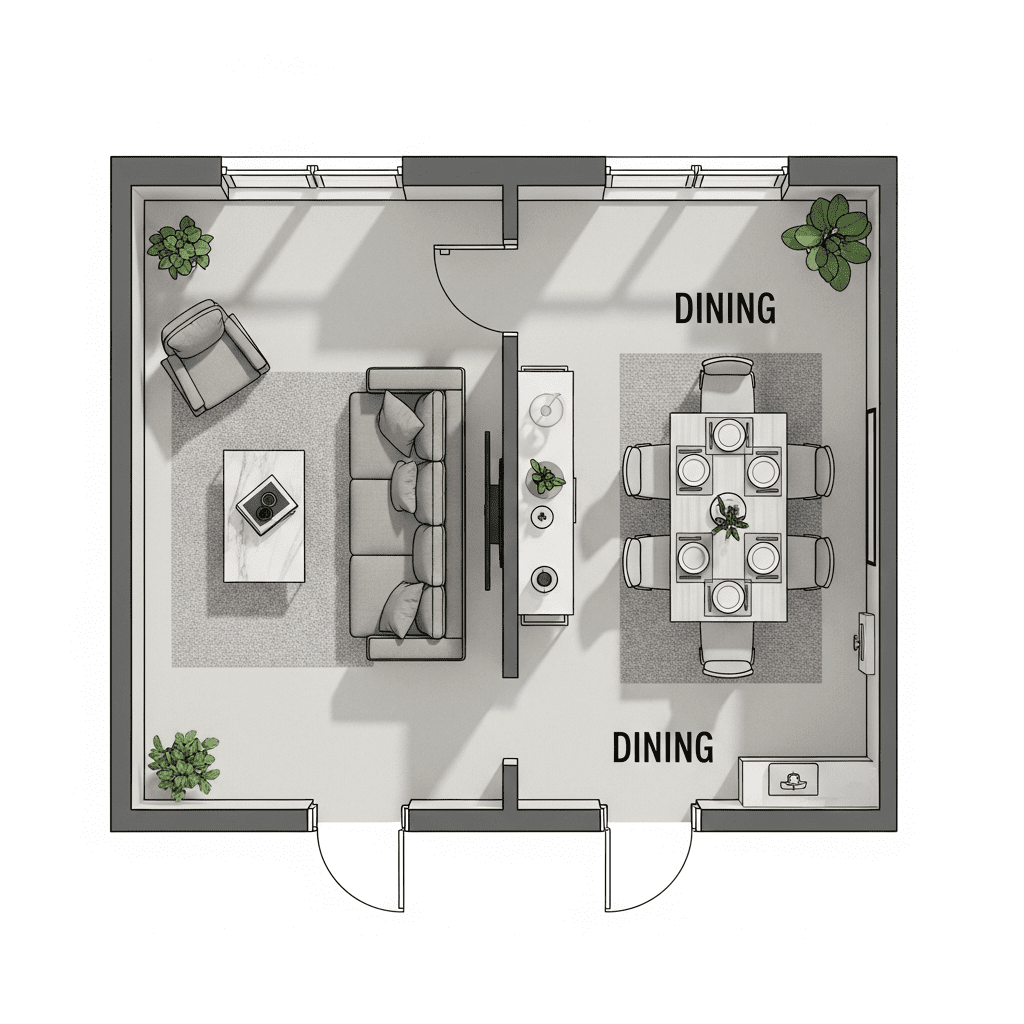
8. Window-Focused Arrangement
Dining table positioned near window captures natural light while sofa arrangement faces away creating distinct atmospheric zones.
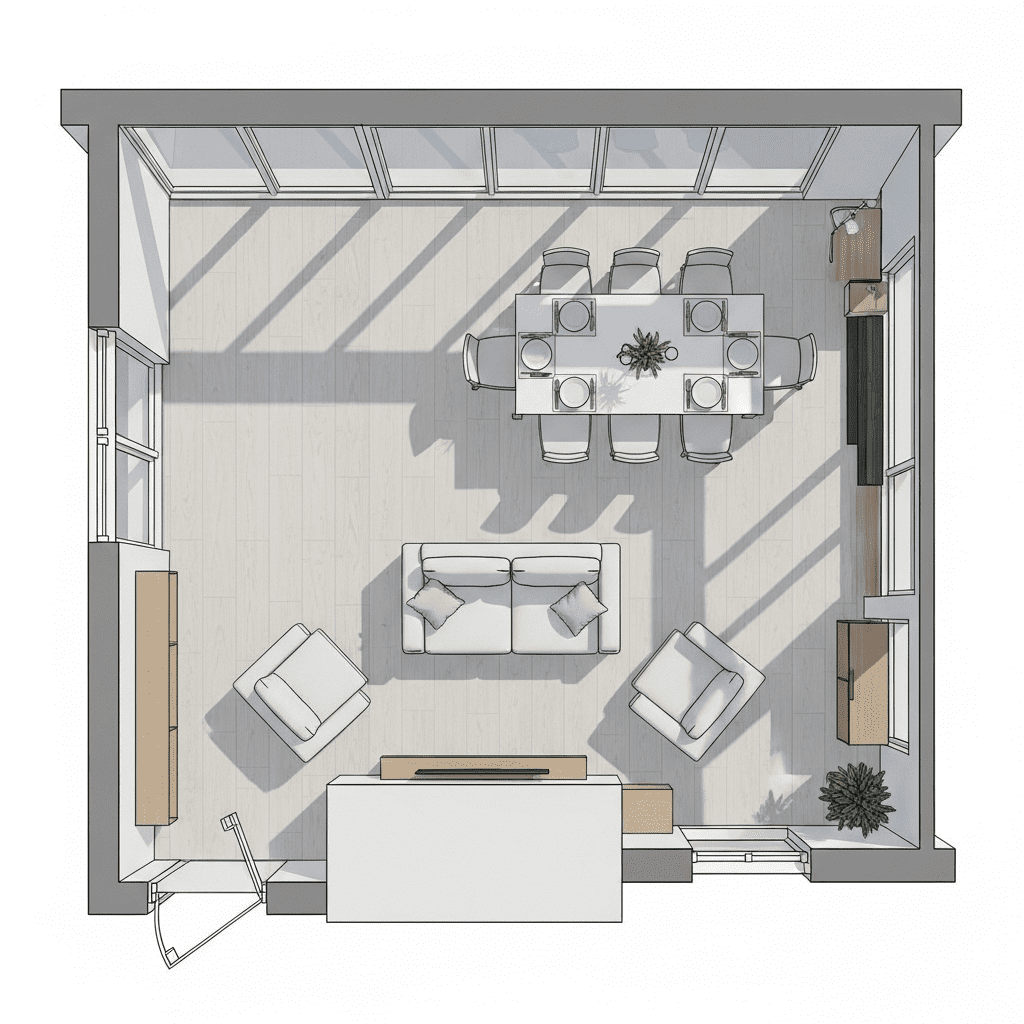
9. Diagonal Table Placement
Dining table positioned diagonally in corner creates dynamic visual interest while maximizing usable floor space efficiently.
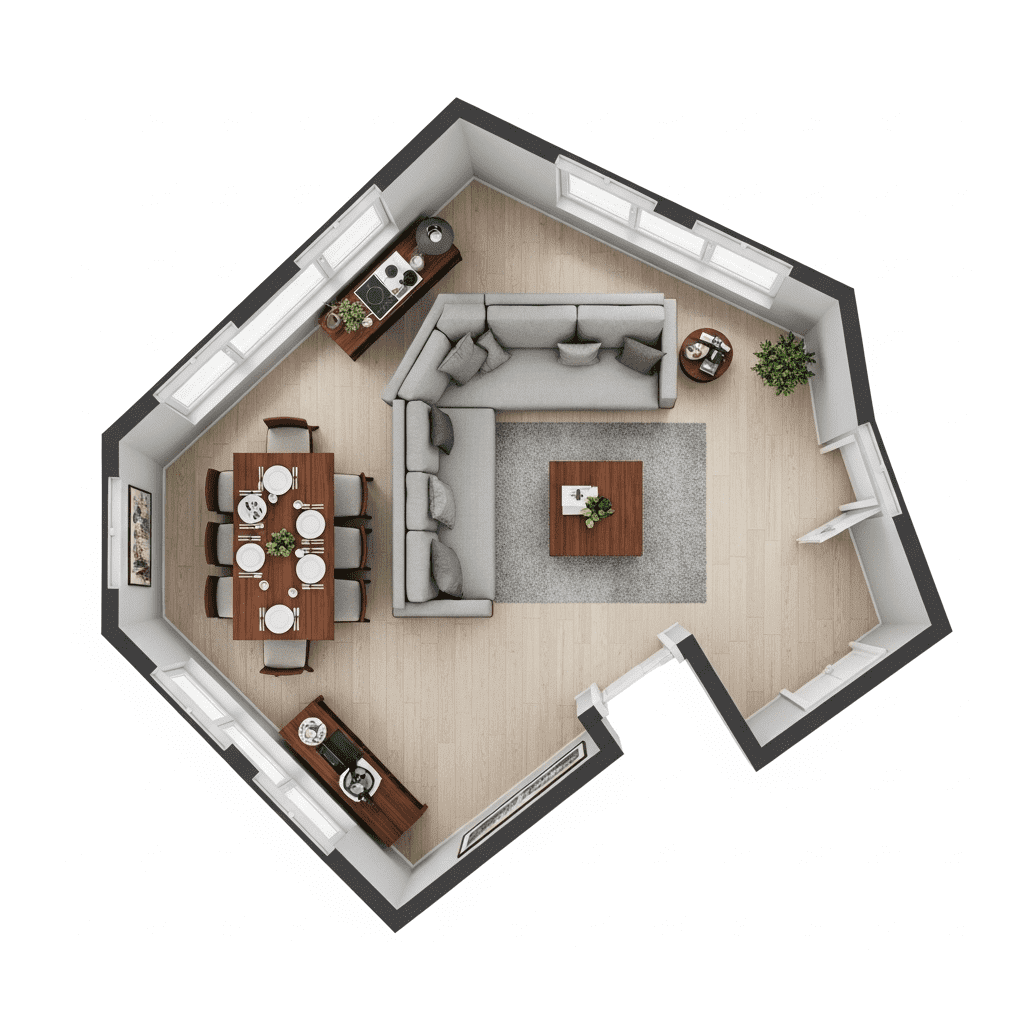
10. Built-In Banquette Seating
Fixed banquette seating for dining area saves space while providing storage underneath, freeing floor space for living furniture.
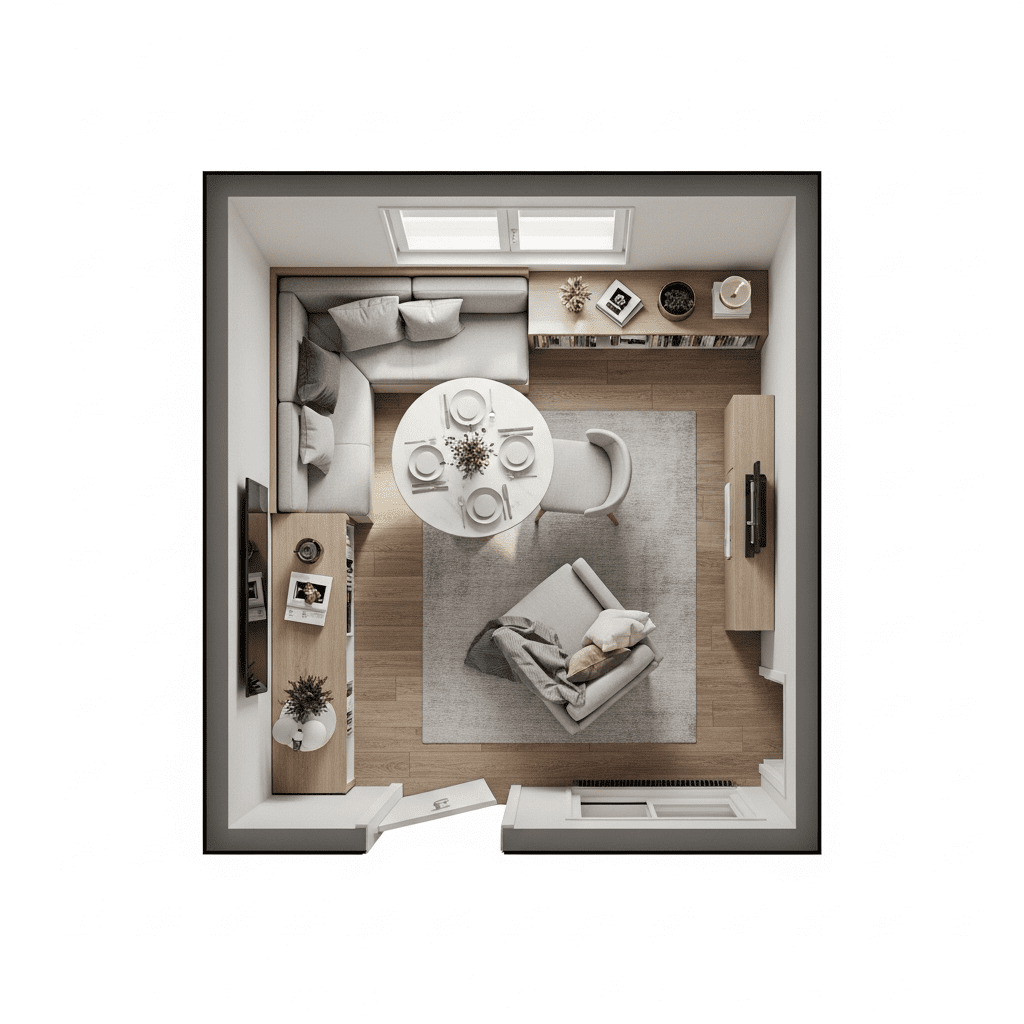
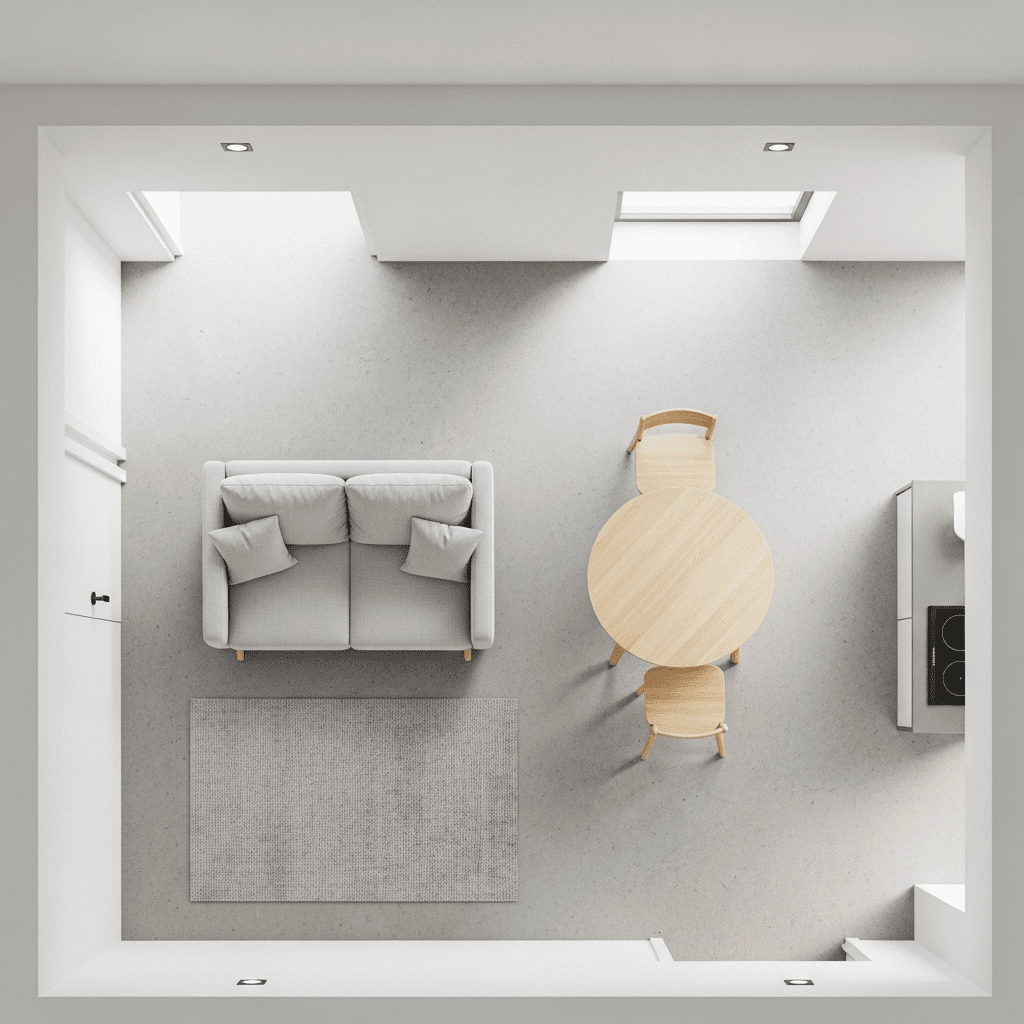
11. Minimal Furniture Maximum Space
Intentionally sparse furniture—small loveseat, compact dining table—prioritizes open floor space over maximum seating capacity.
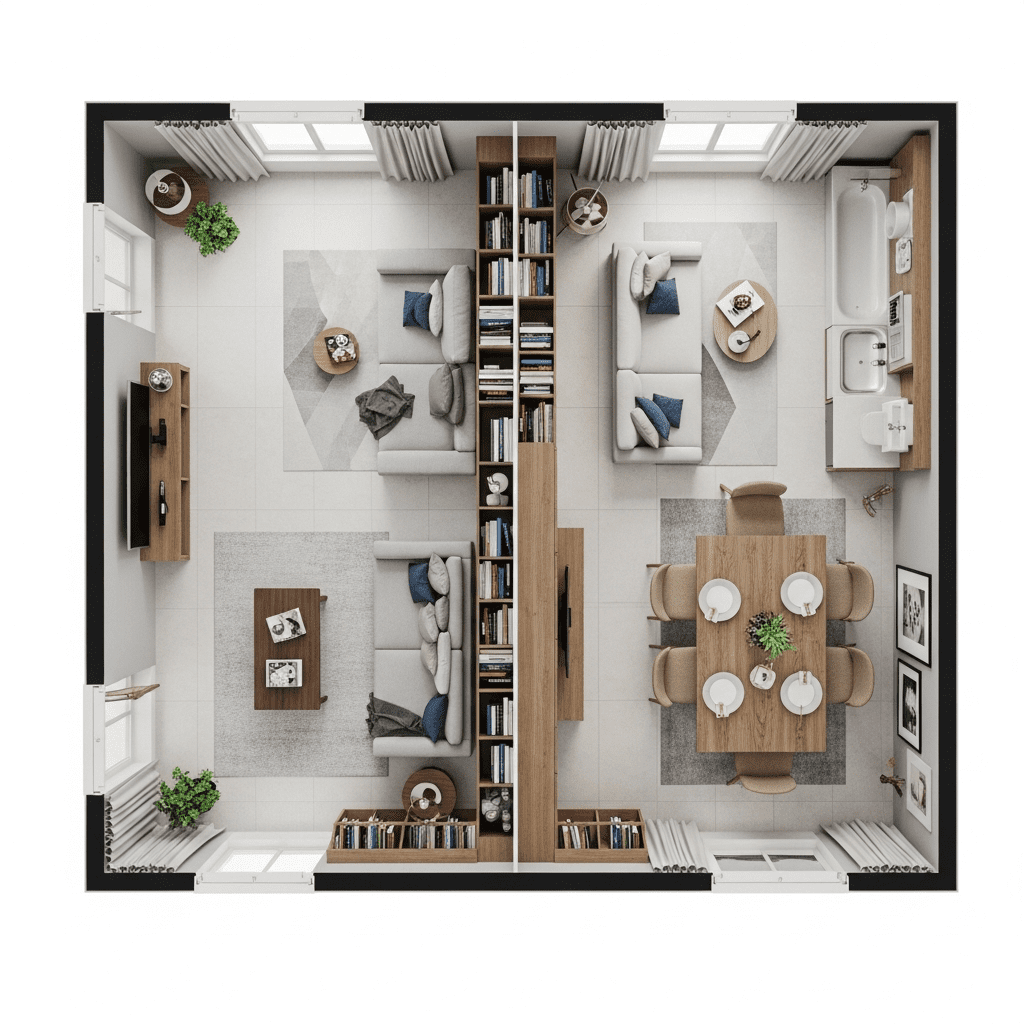
12. Bookshelf Room Division
Tall bookshelf positioned between living and dining areas provides storage while creating gentle visual separation without blocking light.
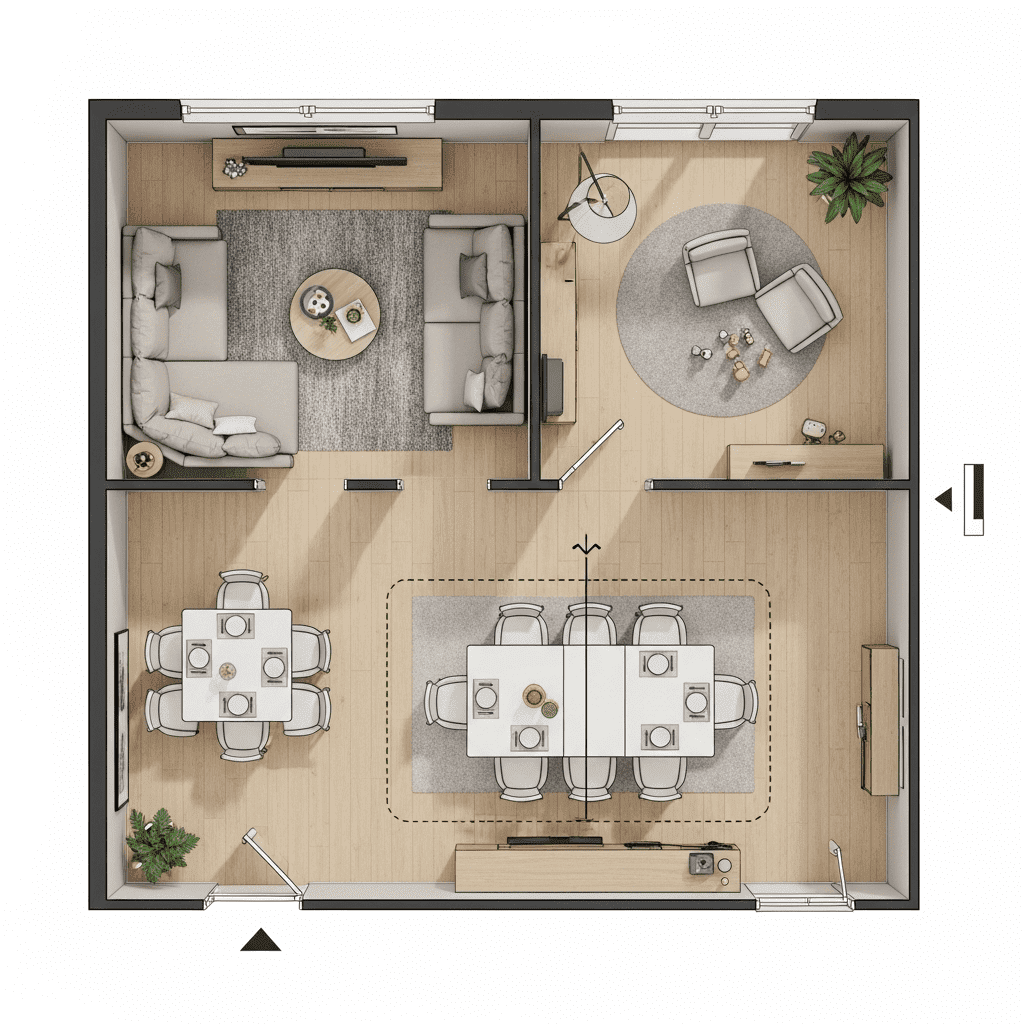
13. Expandable Table Flexibility
Compact dining table that extends for entertaining then contracts for daily use maximizes flexibility in limited combo spaces.
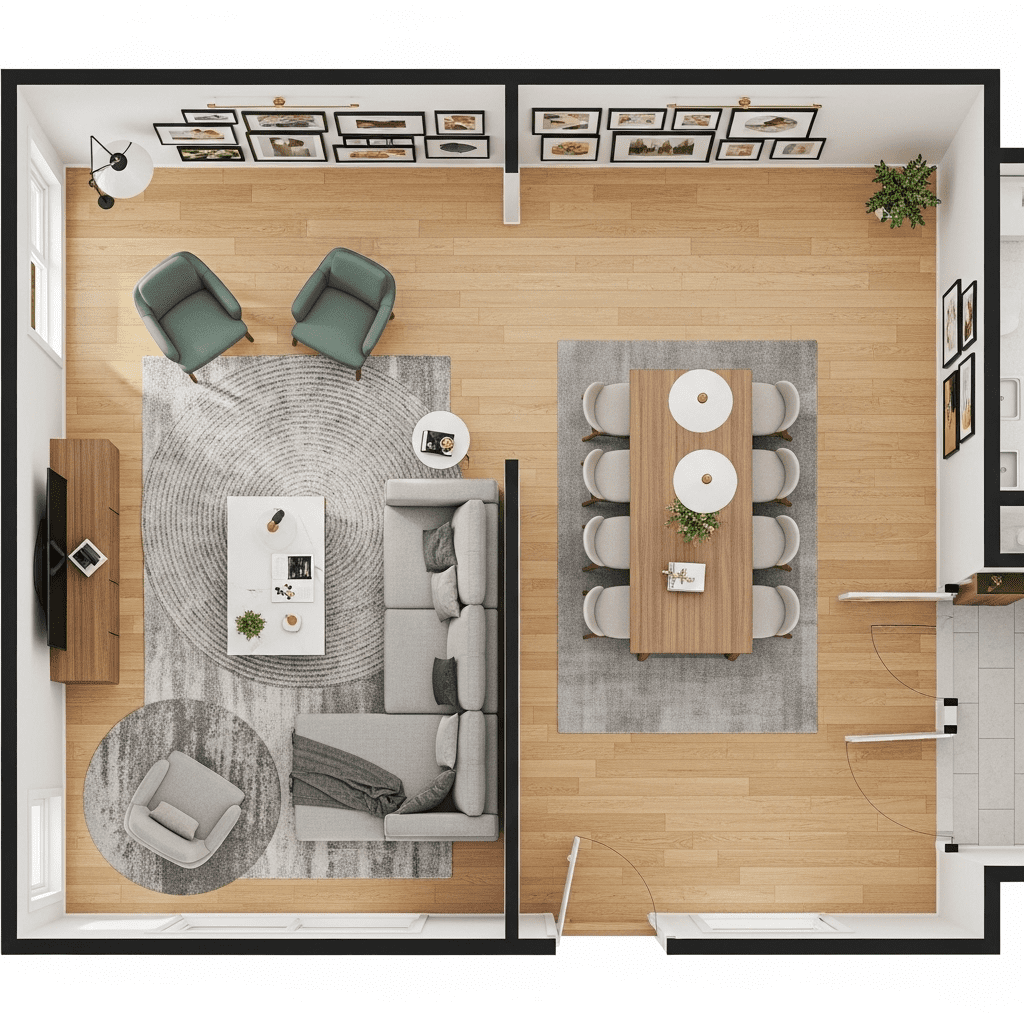
14. Gallery Wall Unification
Continuous gallery wall spanning both living and dining zones creates visual unity tying separate functional areas together cohesively.
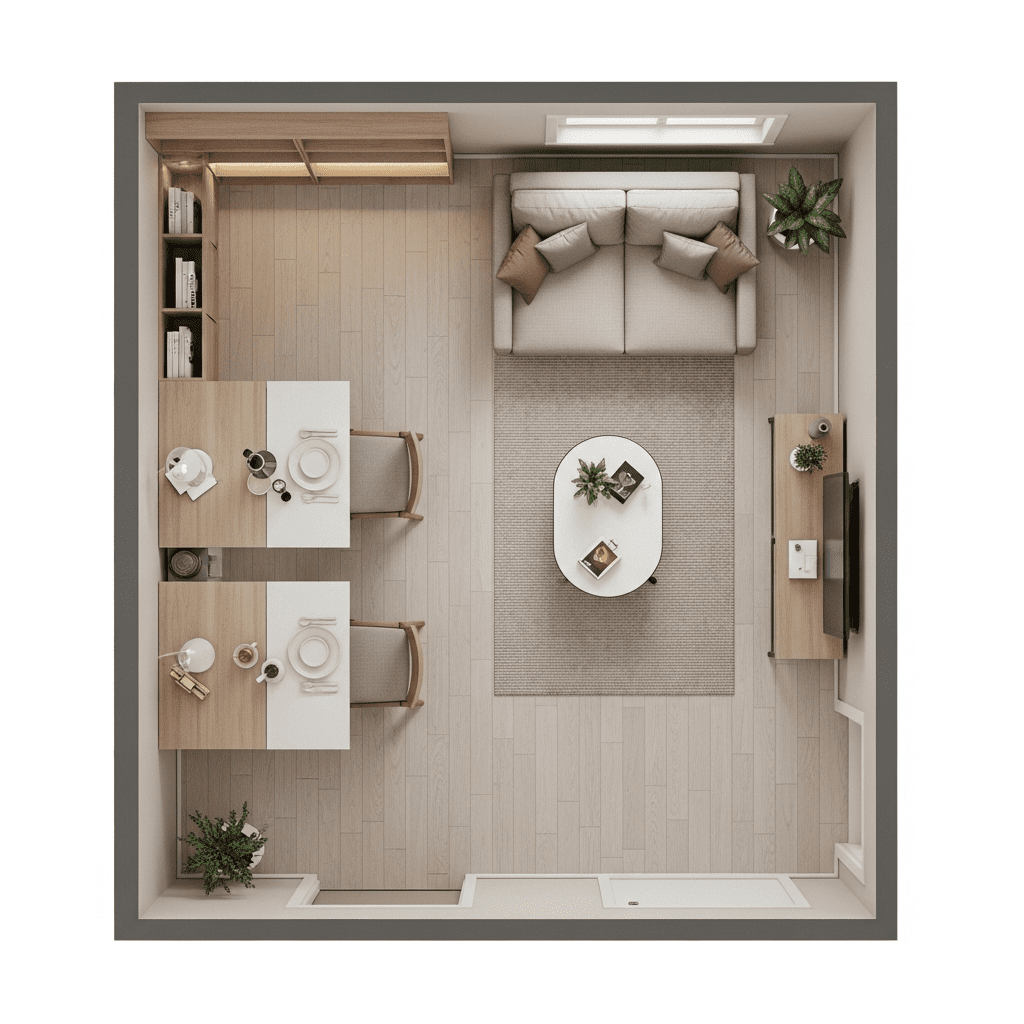
15. Drop-Leaf Space Saver
Drop-leaf dining table against wall folds completely flat when not in use, freeing maximum floor space for living area daily.
Design Principles for Combo Spaces
Successfully combining living and dining functions in small spaces requires understanding fundamental principles that prevent common failures.
Unified Color Palette: Consistent colors throughout both zones create cohesive, spacious feelings. Disparate color schemes fragment already limited space making it feel smaller.
Scaled Furniture: Both living and dining furniture must scale appropriately to room size. Oversized pieces overwhelm; undersized appear temporary and uncomfortable.
Clear Circulation: Maintain minimum 36-inch pathways between and around furniture ensuring comfortable movement between zones.
Visual Connection: Elements tying both areas together—matching wood tones, coordinated accessories, unified artwork—create intentional, professionally designed appearances.
Flexible Thinking: Furniture serving multiple purposes or easily rearranged adapts to changing needs without permanent space commitment.
Furniture Selection Strategies
Living Room Pieces: Choose apartment-scale sofas (72-78 inches) rather than standard residential sizes. Consider armless or low-arm styles reducing visual bulk.
Dining Tables: Round or square tables often fit combo spaces better than rectangular, accommodating 4-6 people without overwhelming limited floor area.
Dual-Purpose Items: Ottoman coffee tables serving as extra dining seating, console tables functioning as desks, benches working in both zones.
Leggy Furniture: Pieces with visible legs create airiness allowing light underneath versus heavy skirted furniture sitting flush with floors.
Layout Planning Process
Measure Accurately: Know exact room dimensions, doorway locations, window positions, and architectural features before planning furniture placement.
Create Floor Plans: Draw scaled layouts on graph paper or use digital room planning tools testing arrangements before purchasing furniture.
Tape Floor Templates: Use painter’s tape outlining furniture footprints on actual floors visualizing spatial impact before commitment.
Prioritize Functions: Determine which function matters most—if dining weekly, prioritize table size; if relaxing daily, emphasize sofa comfort.
Test Traffic Flow: Walk planned pathways ensuring comfortable circulation. Cramped movement makes small spaces feel smaller regardless of aesthetics.
Color and Material Coordination
Flooring Consistency: Single flooring material throughout creates uninterrupted visual flow expanding perceived space significantly.
Wall Color Unity: Same wall color in both zones prevents fragmentation. Save accent colors for accessories and textiles.
Wood Tone Matching: Dining table, coffee table, and shelving in matching or complementary wood tones create cohesive, intentional appearances.
Textile Coordination: Dining chair upholstery coordinating with living room pillows, or table runner echoing sofa color, creates visual threads throughout.
Lighting Design for Dual Functions
Dining Pendant: Statement pendant light over dining table defines zone while providing task lighting for meals.
Living Ambient: Floor and table lamps in living area create layered, warm lighting for relaxation separate from dining task lighting.
Dimmer Controls: Adjustable lighting allows bright illumination for cleaning and dining, softer ambiance for evening relaxation.
Natural Light: Maximize windows with minimal treatments allowing maximum daylight benefiting both zones simultaneously.
Storage Solutions
Dual-Zone Storage: Credenzas or cabinets serving both areas—dishes one side, living room items other—maximize efficiency.
Vertical Storage: Tall bookcases and wall-mounted shelving utilize height rather than consuming precious floor width.
Hidden Storage: Ottoman interiors, lift-top coffee tables, and dining benches with storage conceal clutter maintaining visual calm.
Regular Decluttering: Limited space demands ruthless editing keeping only essential, frequently used items.
Visual Separation Techniques
Area Rugs: Different rugs under living versus dining furniture create clear visual zones without physical barriers.
Furniture Arrangement: Sofa backs toward dining area provides gentle psychological separation while maintaining openness.
Lighting Variation: Different fixture styles—pendant over dining, floor lamp for living—subtly defines separate zones.
Ceiling Details: Varied ceiling treatments—coffered section over dining, smooth over living—architecturally defines zones overhead.
Common Mistakes to Avoid
Mismatched Scales: Huge dining table with tiny loveseat, or massive sectional with bistro table, creates visual imbalance.
Blocking Pathways: Furniture placement obstructing natural flow between zones frustrates despite otherwise functional design.
Over-Separation: Attempting too much division fragments small spaces making them feel smaller and disjointed.
Clashing Styles: Modern dining set with traditional sofa creates confused, unintentional appearances lacking cohesive vision.
Insufficient Lighting: Single overhead fixture inadequately serves both zones’ distinct lighting needs.
Too Much Furniture: Cramming maximum pieces into minimum space creates cluttered chaos rather than functional comfort.
Making Combos Work Successfully
Embrace Openness: Rather than fighting the combined nature attempting false separation, celebrate the open, flowing environment it creates.
Maintain Discipline: Combo spaces demand tidiness since dining disorder remains visible from living area and vice versa.
Choose Quality: Fewer, better pieces create sophisticated appearances superior to numerous mediocre items filling space.
Flexible Arrangements: Design allowing seasonal or occasional rearrangement adapts to evolving needs without renovation.
Personal Style: Infuse personality through artwork, textiles, and accessories while maintaining cohesive color and style discipline.
Small living room dining room combo spaces ultimately succeed by treating both functions as equal partners sharing one unified environment. When furniture scales appropriately, colors coordinate thoughtfully, and layouts respect both circulation and function, these compact dual-purpose rooms feel surprisingly generous and impressively cohesive—proving that smart design transforms limitation into opportunity, creating homes perfectly suited to modern living where cooking, dining, and relaxing flow together naturally and beautifully.