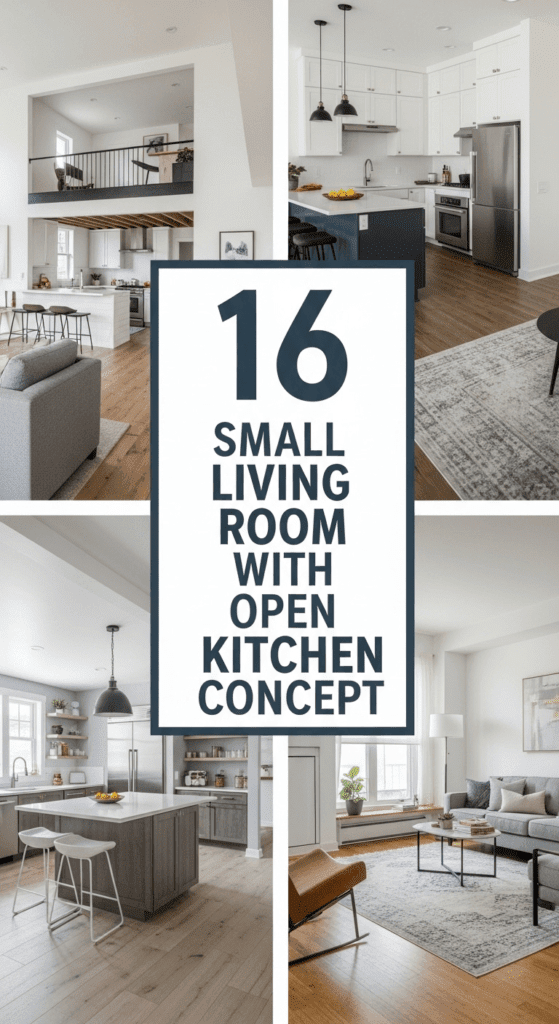
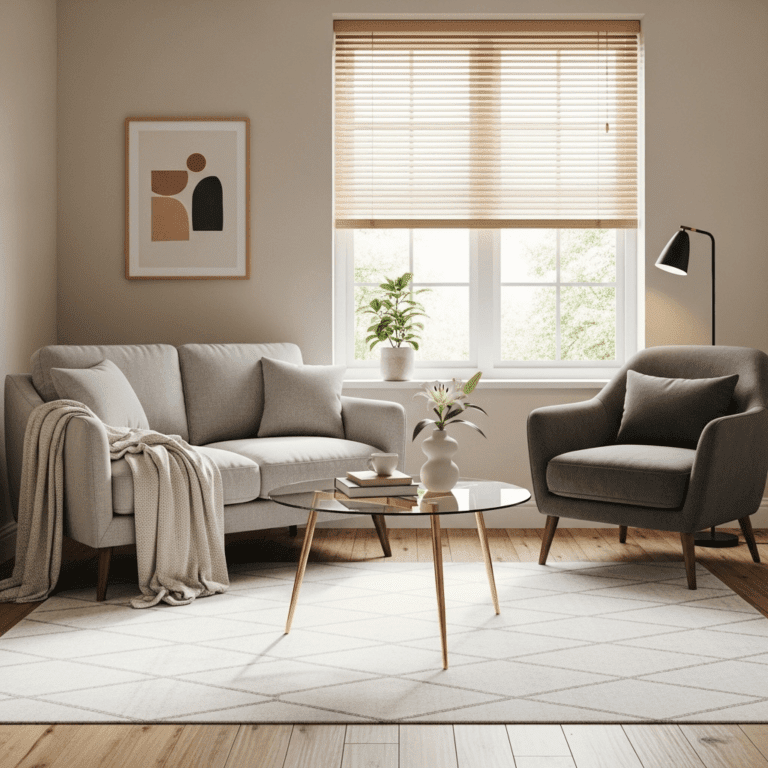
16 Small Living Room with Open Kitchen Concept: Mastering the Multi-Functional Hub
Small living room with open kitchen concept ideas focus on creating a “seamless transition” between culinary and relaxation zones. In a compact home, the goal is to make the entire floor plan feel like one cohesive “great room” rather than two cramped boxes. By using shared materials, strategic furniture placement, and visual anchors, you can ensure the space remains airy, organized, and stylish. Here are 16 ideas to elevate your open-concept living.
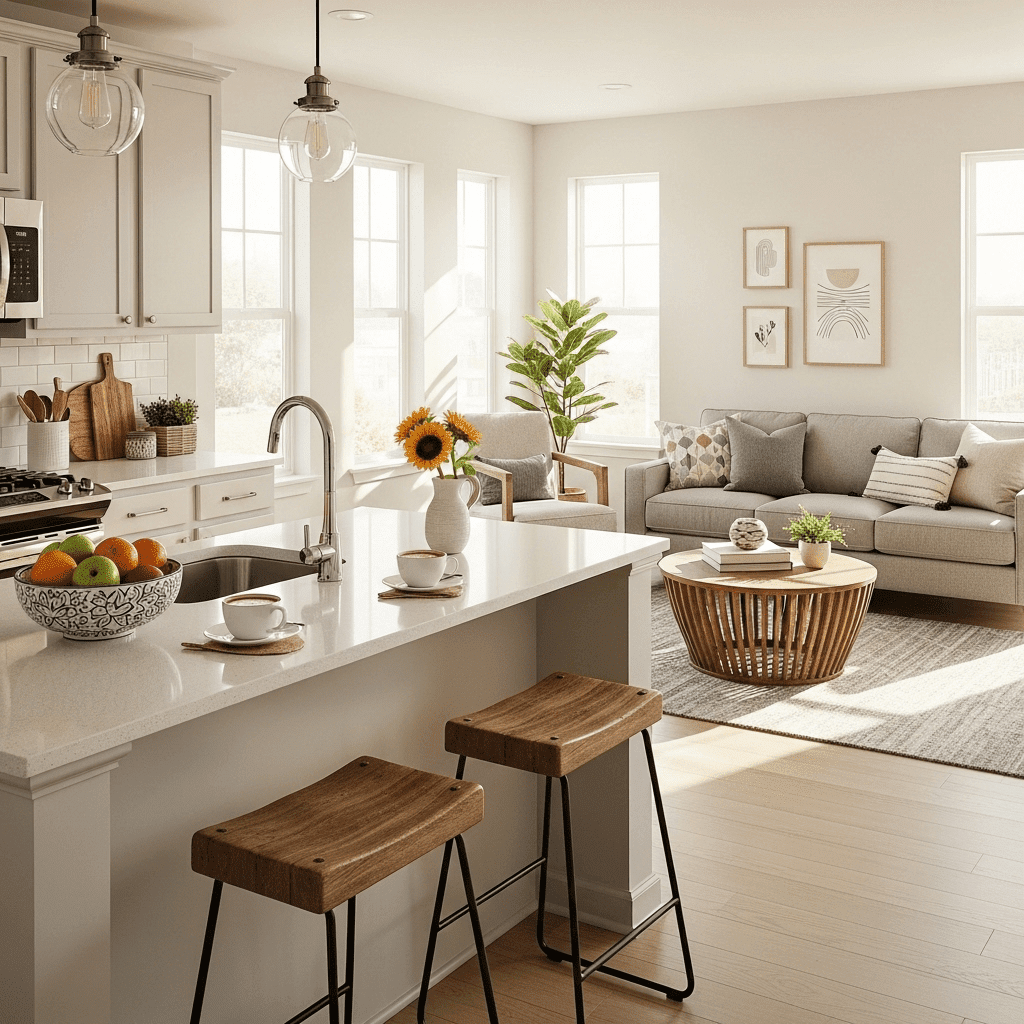
1. The Multi-Tasking Breakfast Bar
Extend your kitchen countertop to create a bar height ledge. This eliminates the need for a separate dining table, keeping the floor plan open and providing a perfect “perch” for guests to chat with the cook.
2. The Sofa-Back Room Divider
Position your sofa with its back toward the kitchen. This creates a psychological “wall” that defines the living zone while keeping the physical space unobstructed and social.
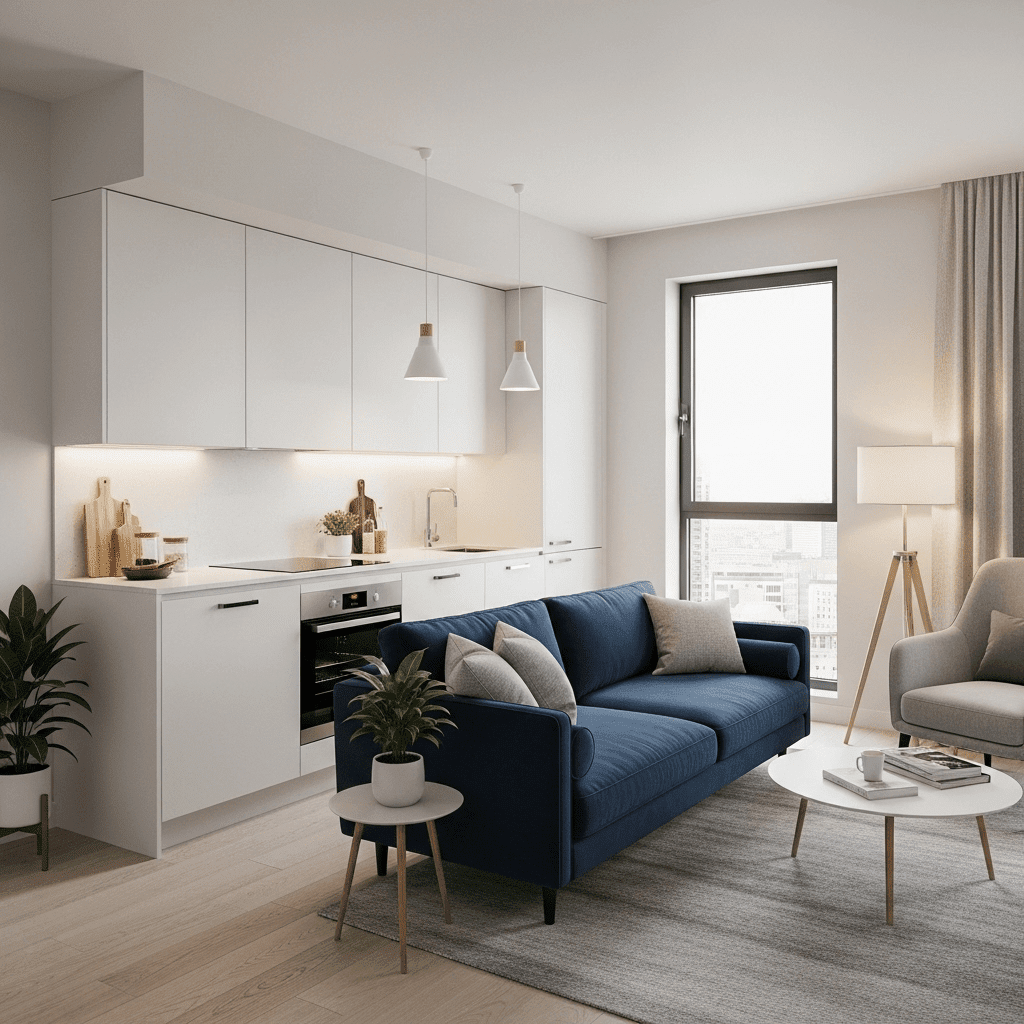
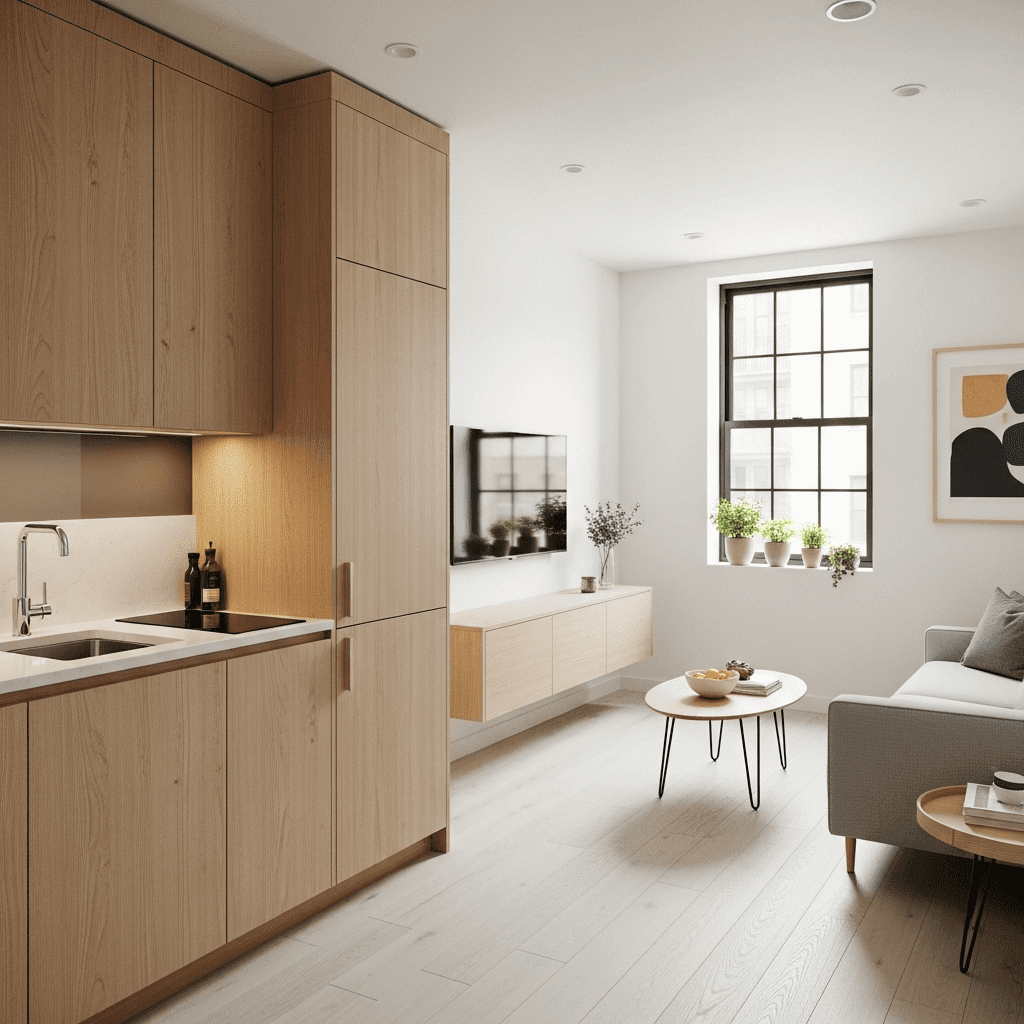
3. Integrated Cabinetry “Camouflage”
Use the same wood or color for your kitchen cabinets and your living room built-ins. This design continuity tricks the eye into seeing the two spaces as a single, harmonious environment.
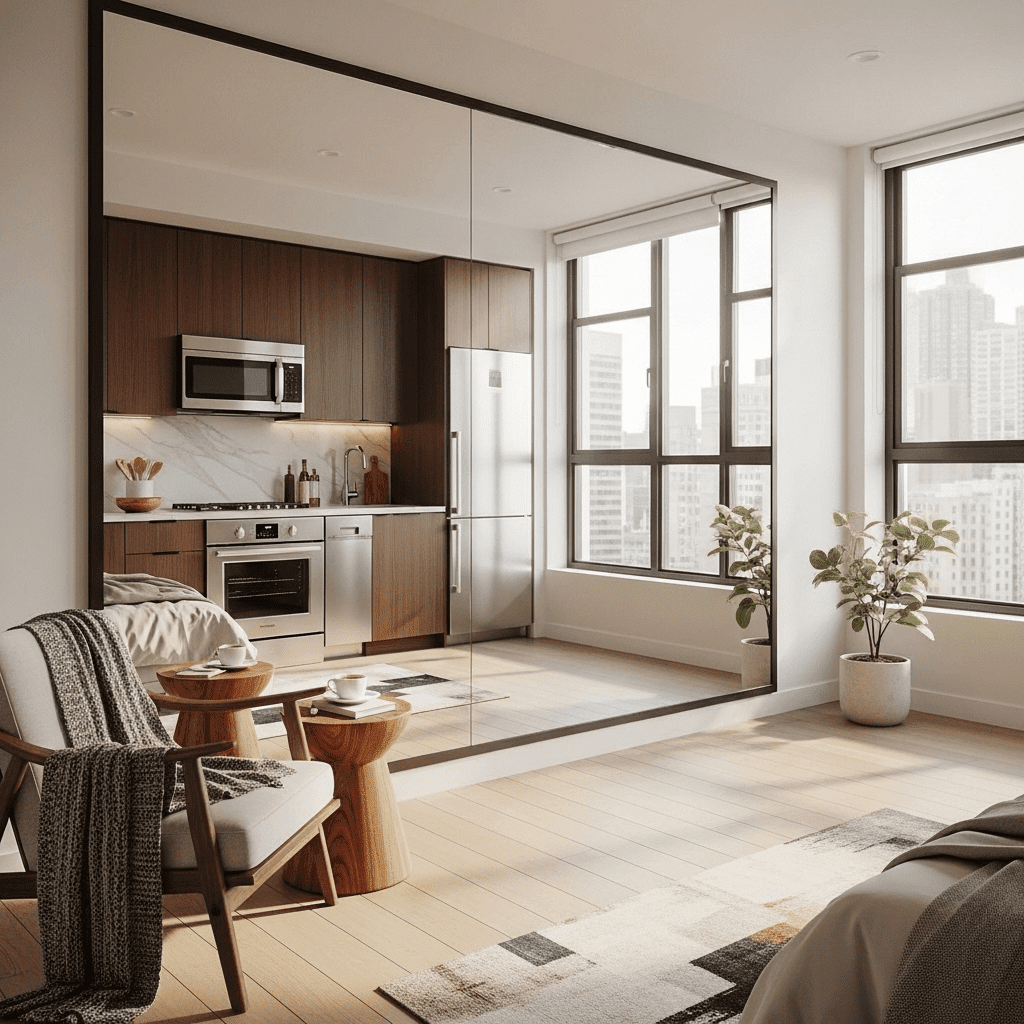
4. Large-Scale Mirror Reflection
Install a large mirror on the living room wall opposite the kitchen. It will reflect the kitchen’s light and depth, effectively doubling the visual square footage of the entire open area.
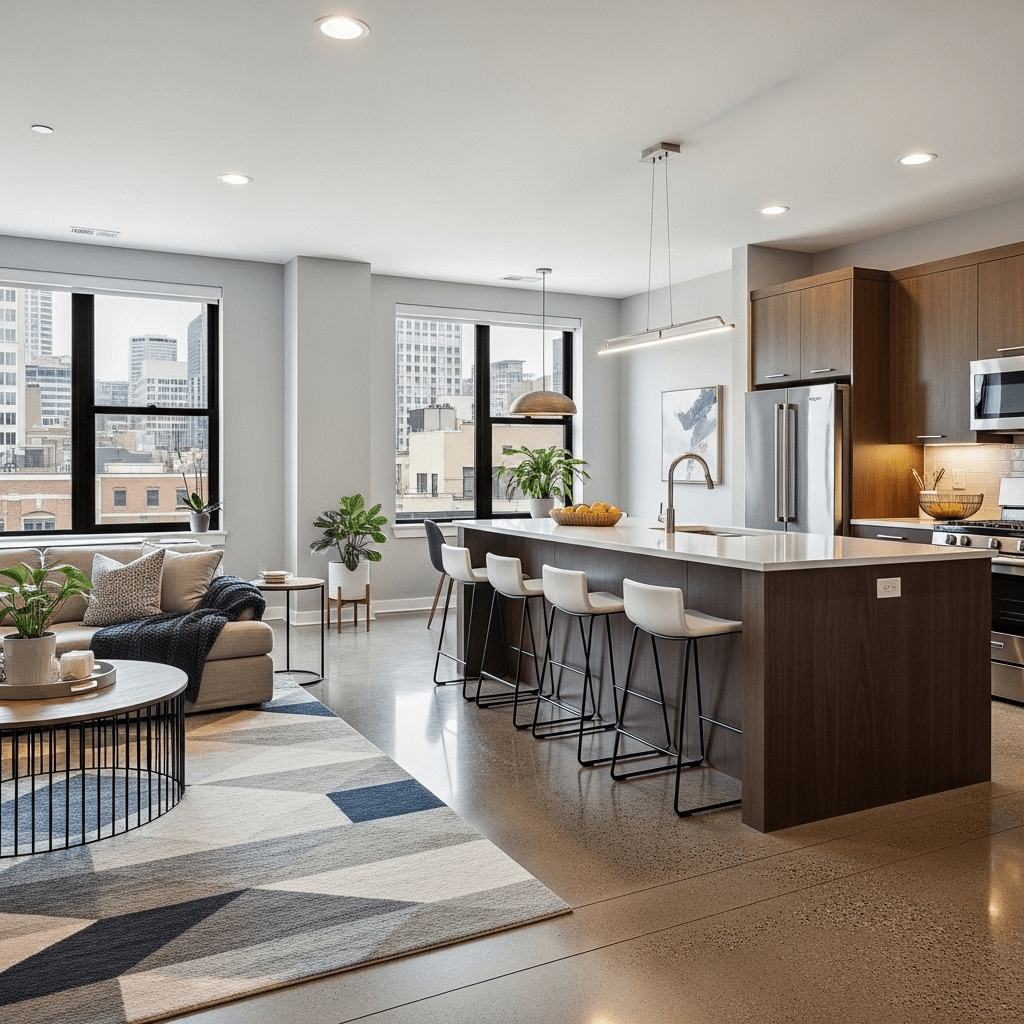
5. Rug-Based Zoning
Place a large, high-contrast rug in the living area while leaving the kitchen floor bare. The texture change creates a “soft zone” that feels distinct from the “utility zone” of the kitchen.
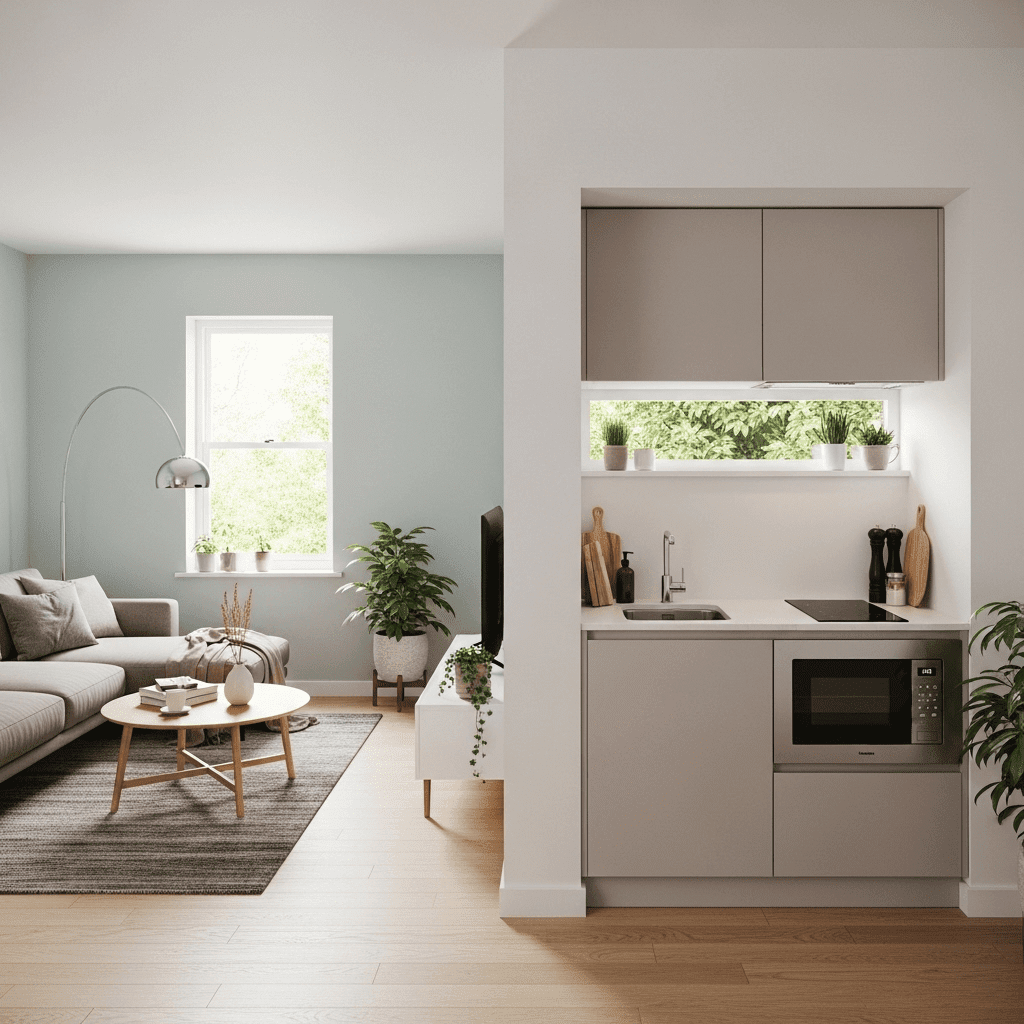
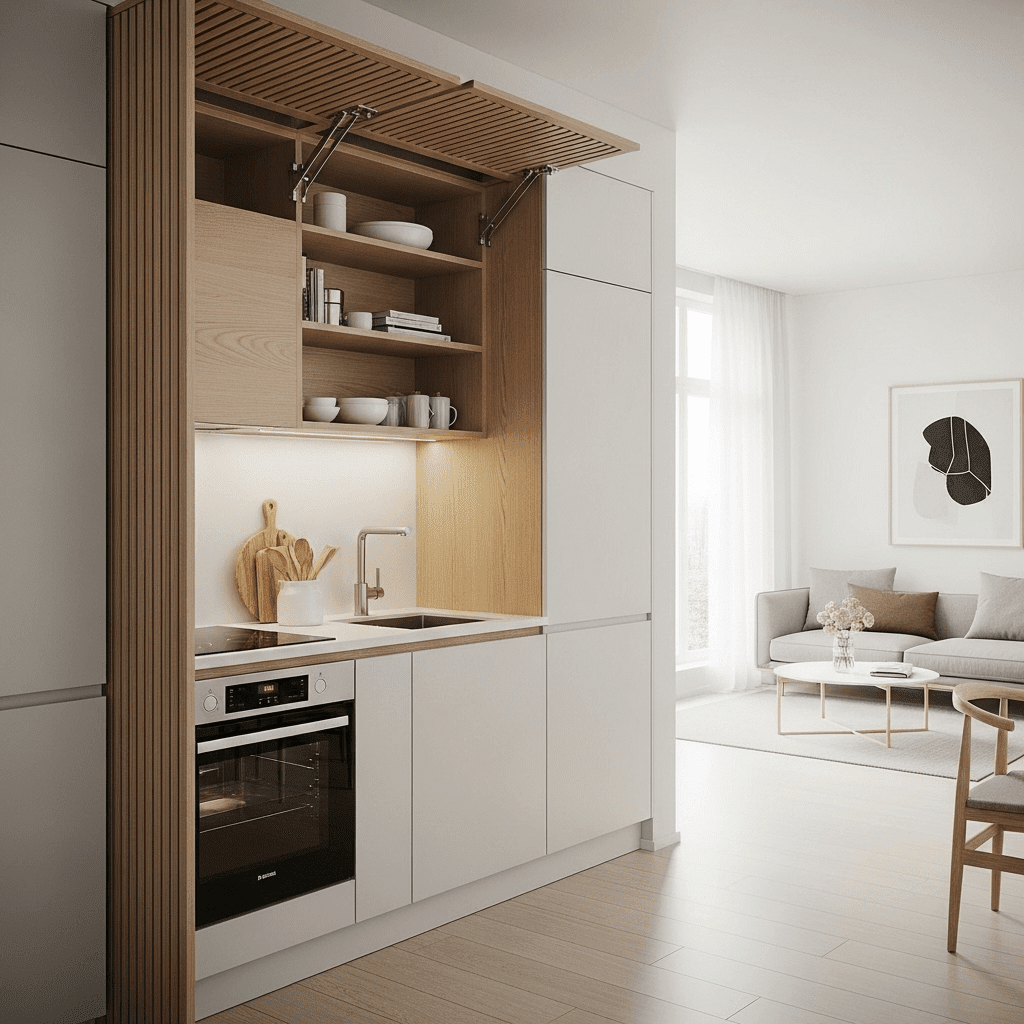
6. The “Hidden” Kitchen Niche
If possible, tuck the kitchen into a shallow alcove. This “recessed” look keeps the heavy appliances out of the living room’s direct line of sight while maintaining the open connection.
7. Consistent Floor Flow
Use the same flooring material—like wide-plank oak or light tiles—across the entire space. Removing the “transition strip” between the kitchen and lounge makes the room feel much larger.
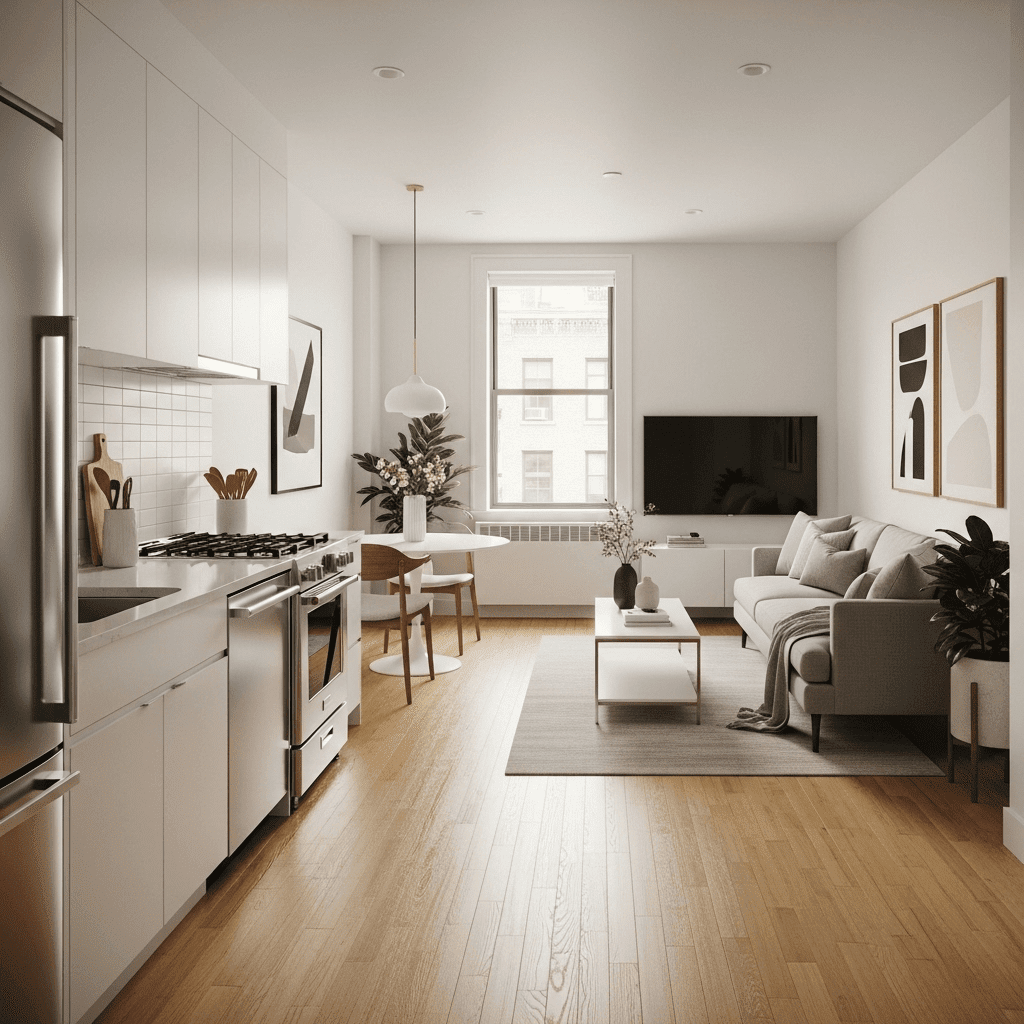
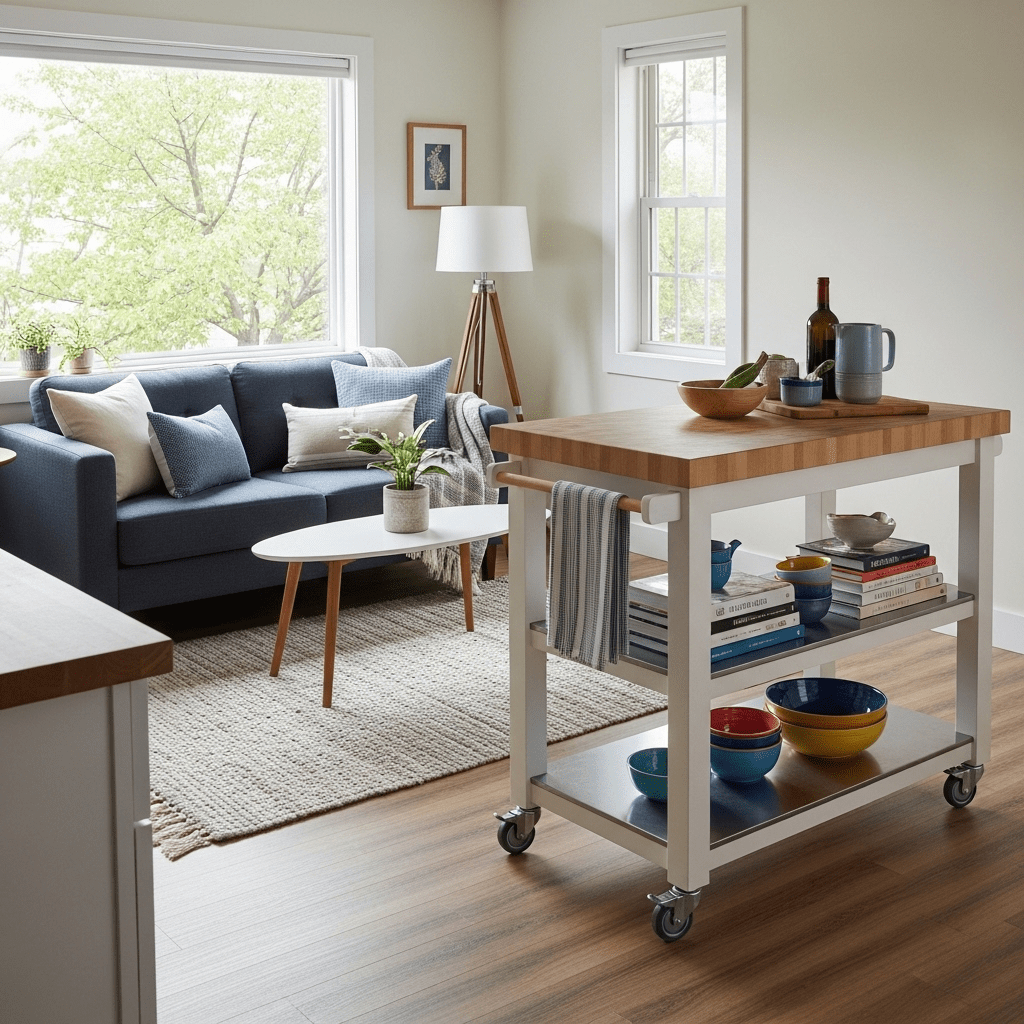
8. The Floating Island Cart
In very small spaces, use a kitchen island on lockable wheels. You can center it for meal prep or roll it to the side to create more “party space” in the living area.
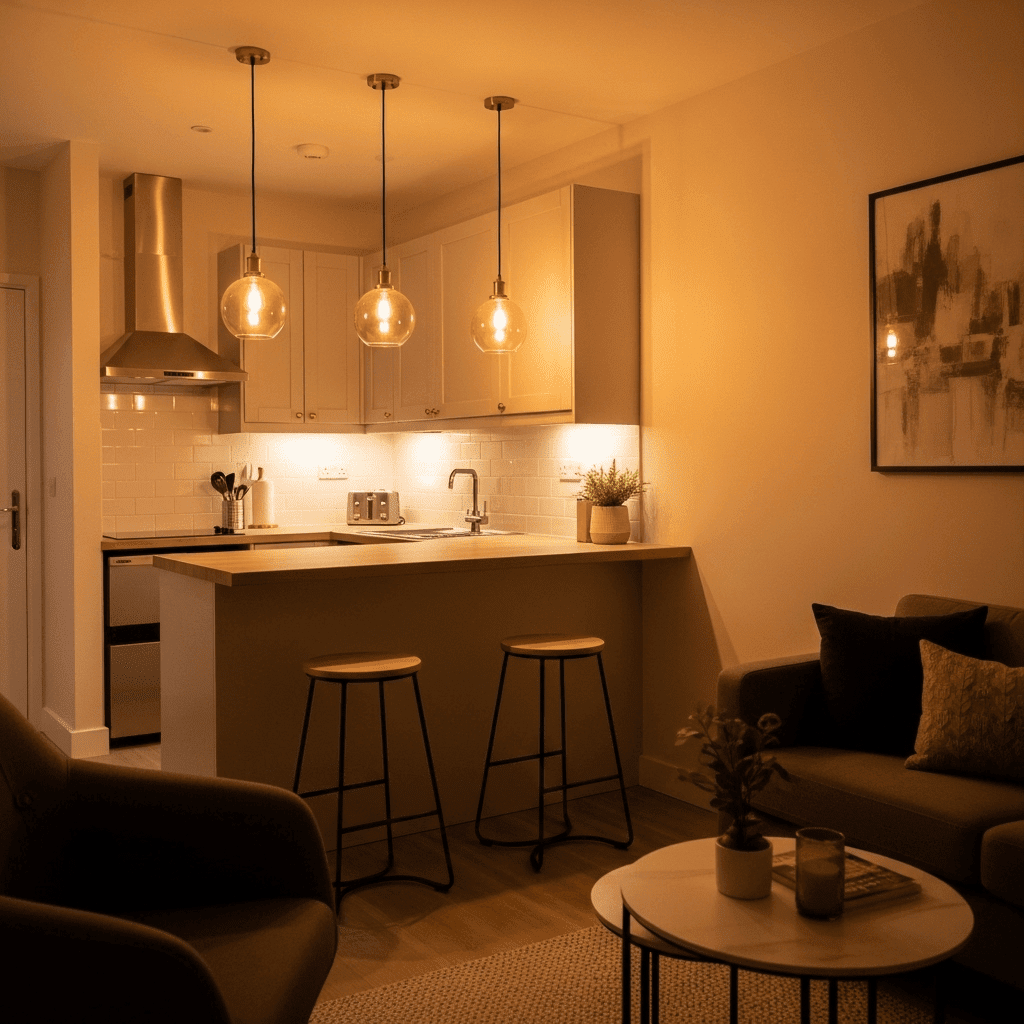
9. Pendant vs. Recessed Lighting
Hang statement pendant lights over the kitchen counter but use subtle recessed or track lighting in the living area. The change in “light levels” defines the rooms without physical barriers.
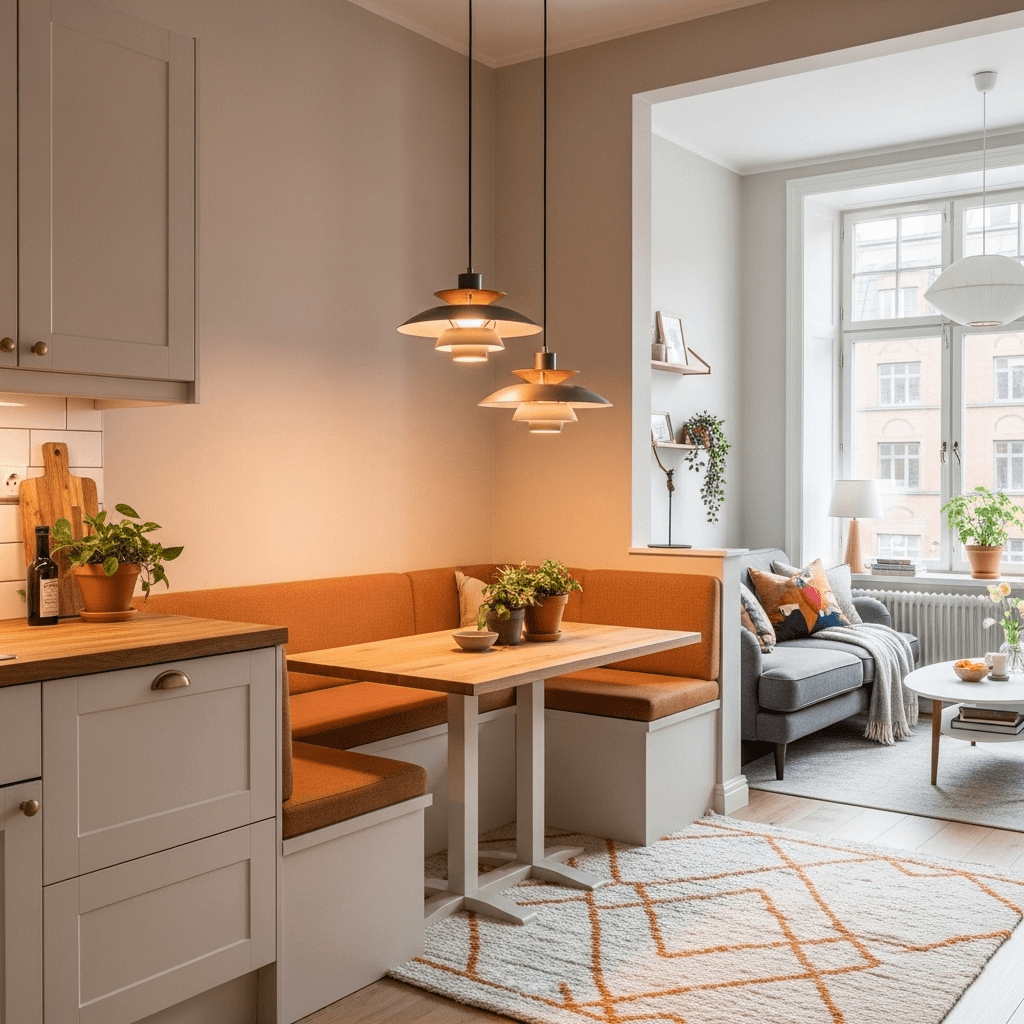
10. The Corner Banquet Nook
Build a corner bench at the end of the kitchen line. This “cafe-style” seating uses a corner that might otherwise be wasted, bridging the gap between cooking and relaxing.
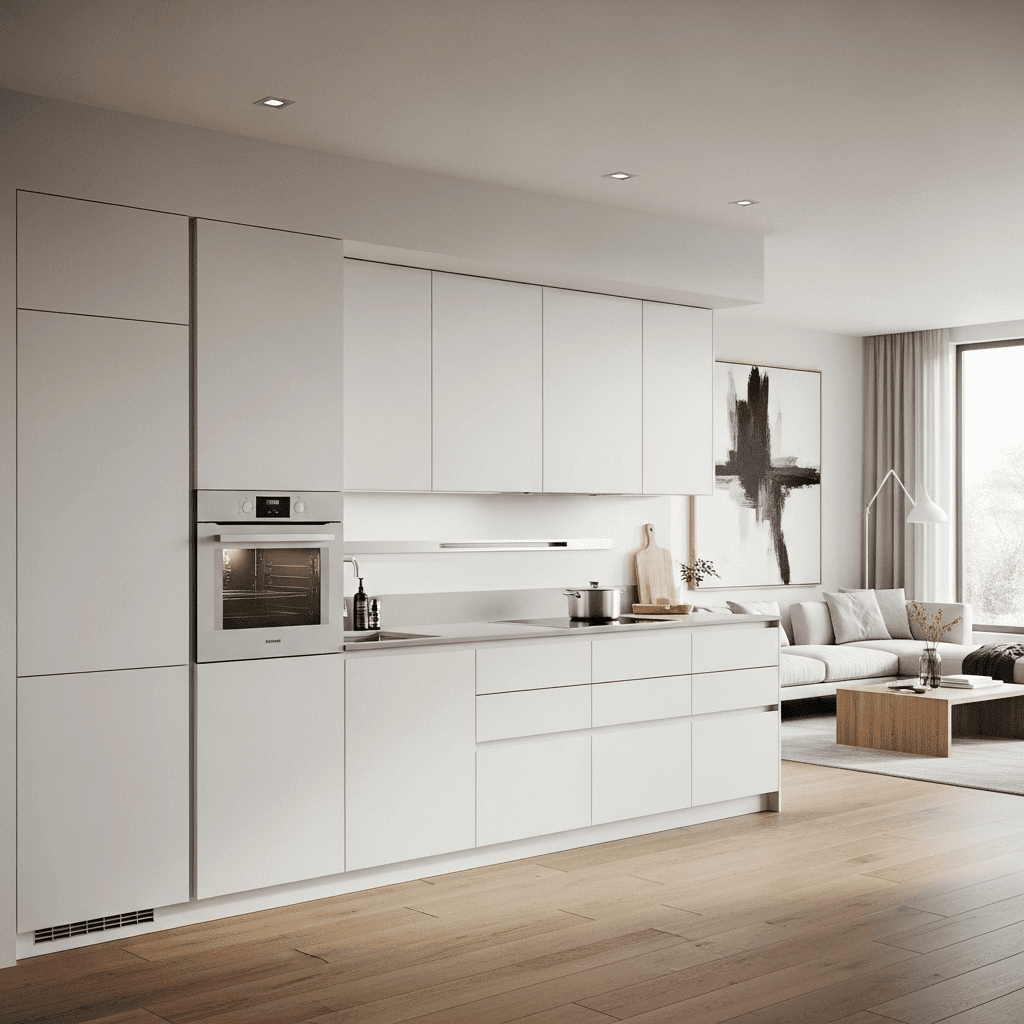
11. Minimalist “Handle-less” Design
Opt for kitchen cabinets without handles (push-to-open). This reduces “visual noise” and makes the kitchen look more like a piece of living room furniture than a utility space.
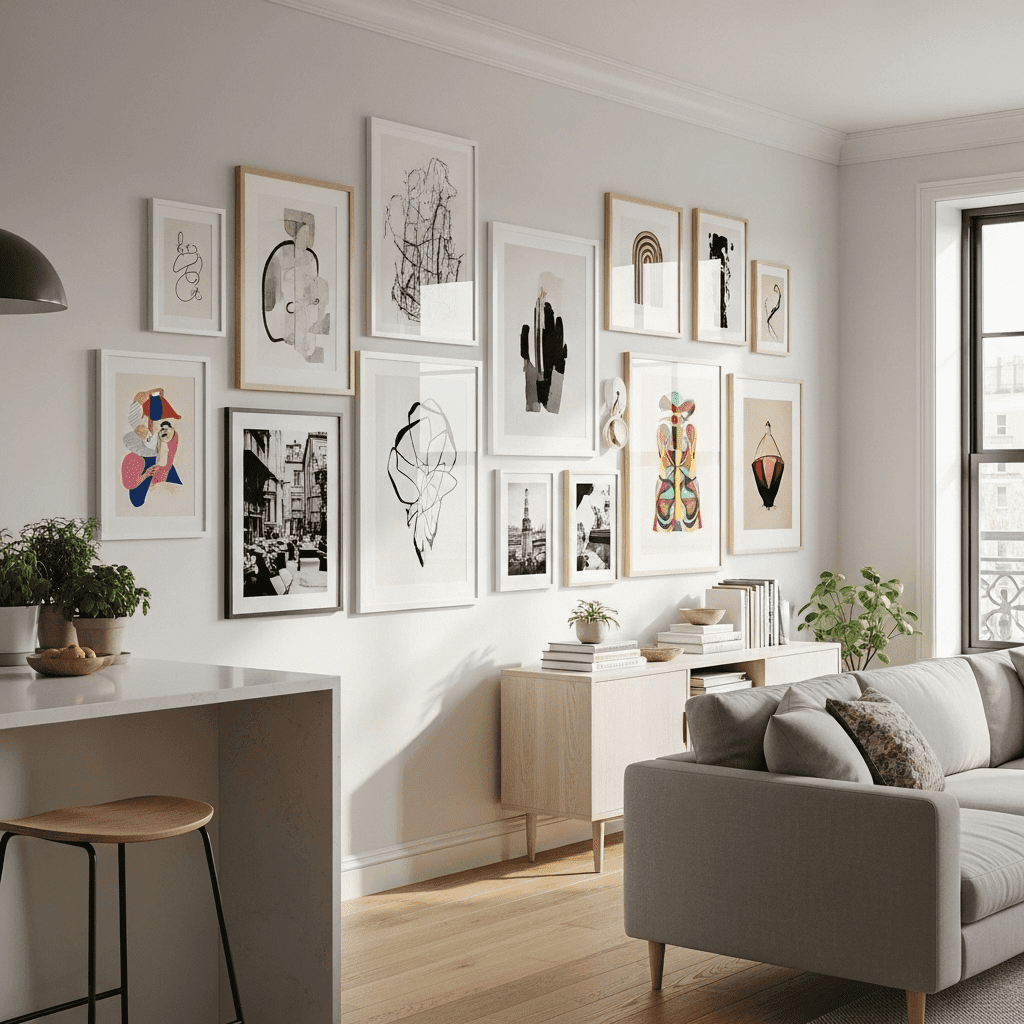
12. Vertical Gallery Connection
Run a gallery wall of art that spans both the kitchen and living room walls. This horizontal visual link ties the two areas together as a single curated gallery space.
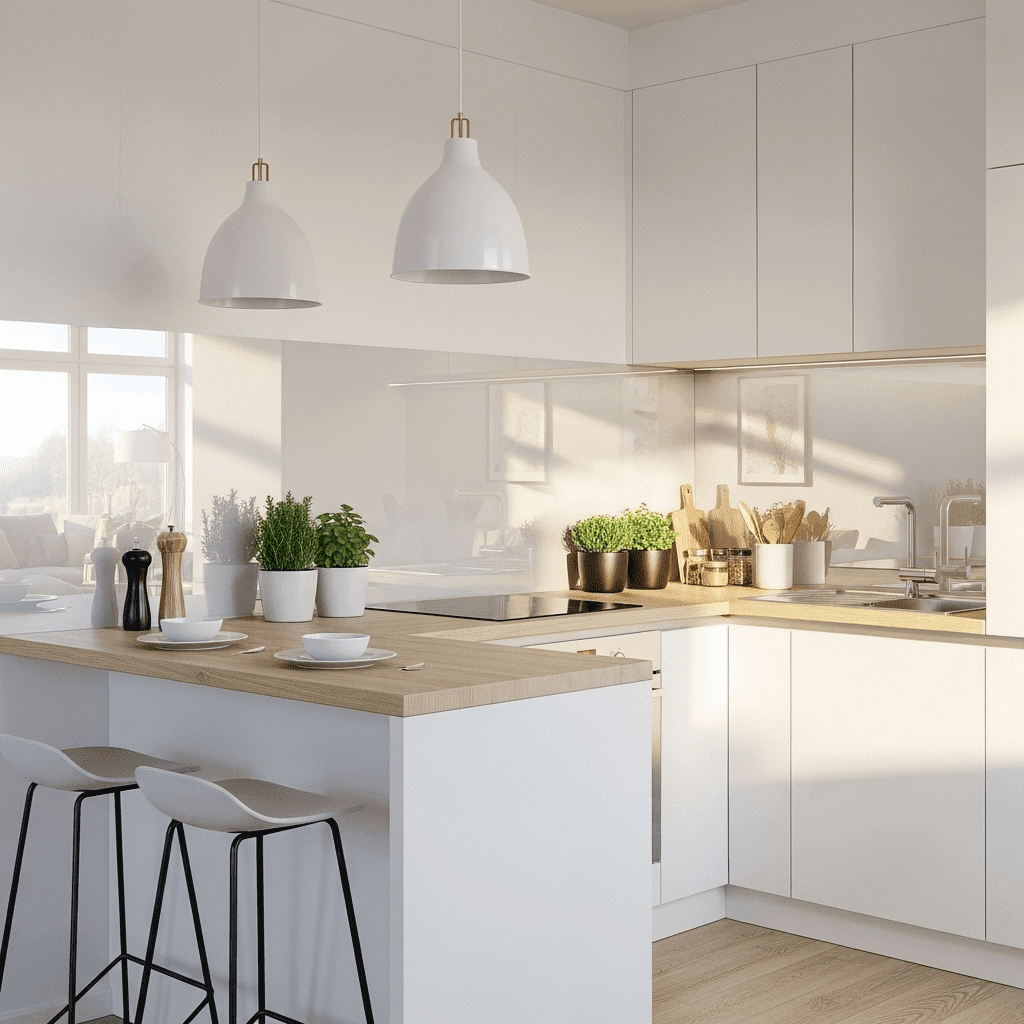
13. The Clear Glass Backsplash
Use a glass backsplash in the kitchen. The reflective quality bounces living room light back into the kitchen, making the darkest part of the open plan feel brighter.
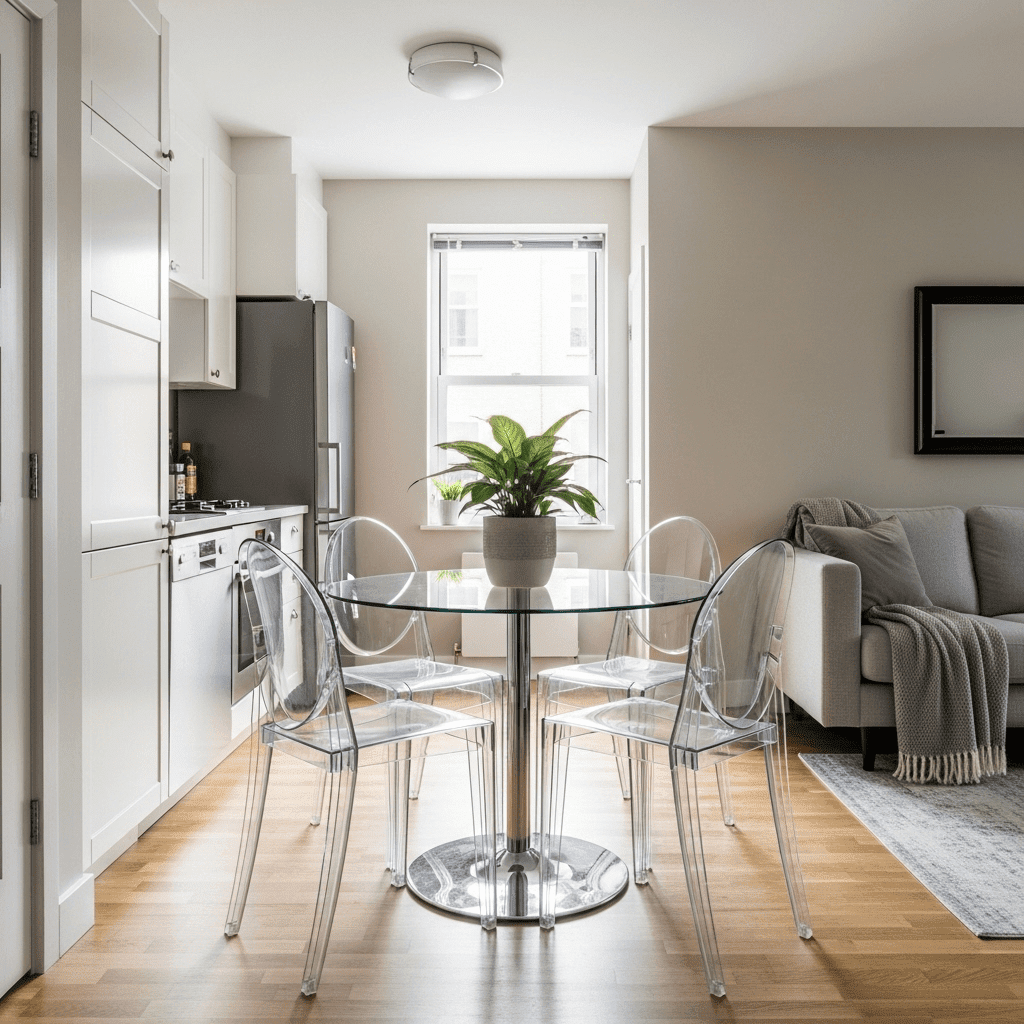
14. Transparent “Ghost” Dining
If you need a dining table between the kitchen and sofa, use a glass table with clear acrylic chairs. They provide utility without creating a visual block in the center of the room.
15. The “Appliance Garage” Strategy
Keep countertops completely clear by using a dedicated cabinet for the toaster, kettle, and blender. A clean kitchen makes the adjacent living room feel twice as relaxing.
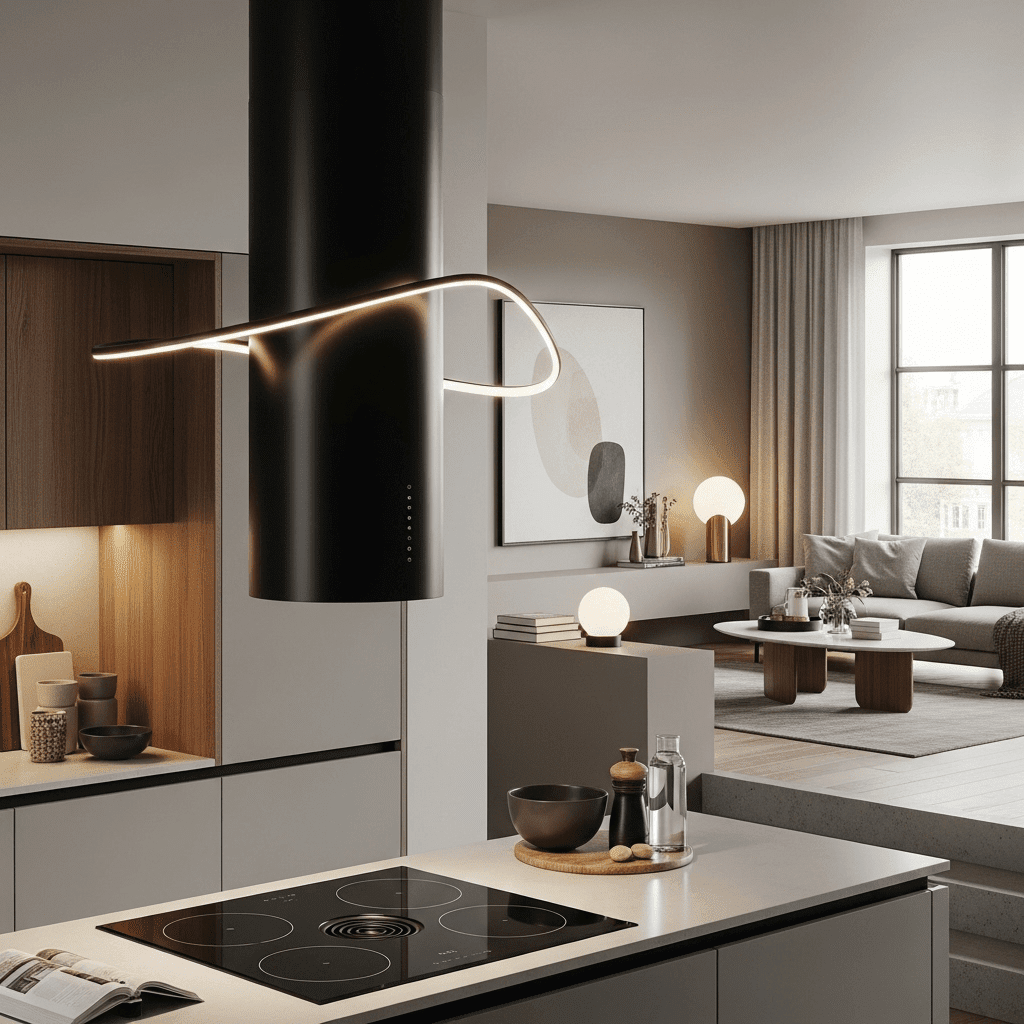
16. Sculptural Range Hood
Choose a range hood that looks like a piece of art or a pendant light. This prevents the “industrial” look of a kitchen from clashing with the “soft” look of the living room.
Conclusion
The secret to a successful open kitchen and living room is “visual breathing room.” By keeping the floor plan clear of heavy dividers and using a unified color palette, you create a space that feels intentional and spacious. Focus on high-quality finishes and hidden storage to ensure that the functional side of the kitchen never disrupts the peace of your living area.