12 Small open plan kitchen living room layout ideas
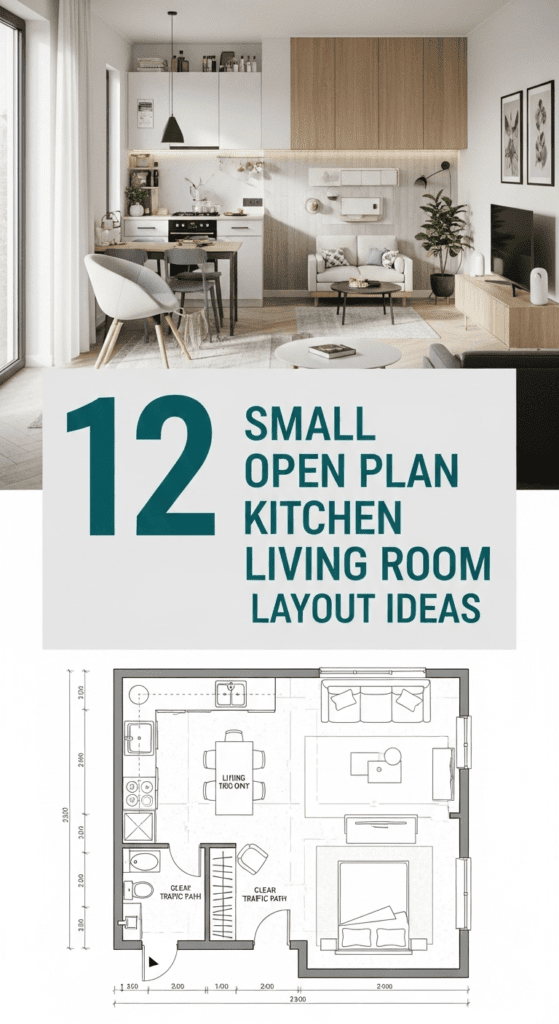
Small open plan kitchen living room layout ideas thrive on the principle of “visual continuity,” where every furniture placement is designed to facilitate movement while clearly defining functional zones. In a compact open-concept space, the goal is to prevent the kitchen from “bleeding” into the lounge in a way that feels disorganized. By using strategic rug placement, multifunctional islands, and the backs of sofas as subtle dividers, you can create a sophisticated “great room” that feels spacious and cohesive. Here are 12 layout ideas to optimize your open-concept living.
1. The Sofa-Back Room Divider
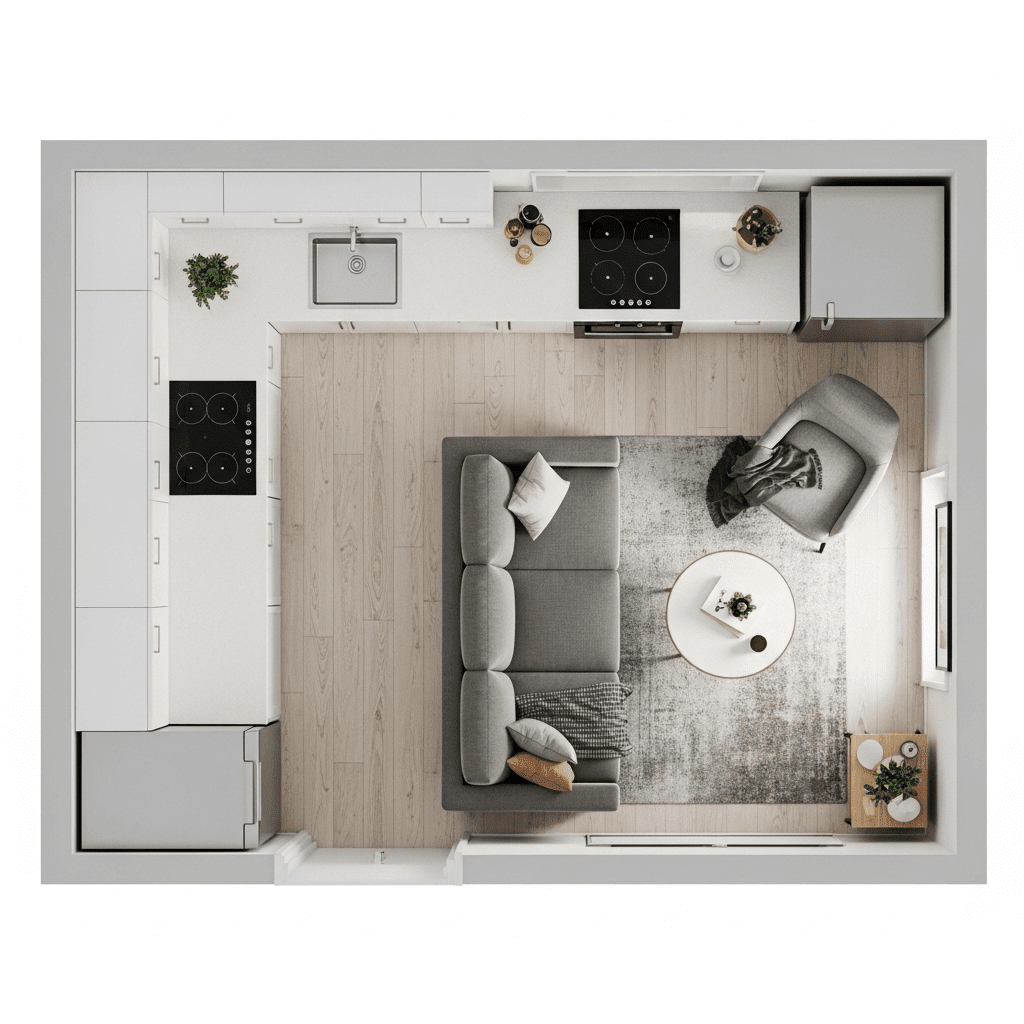
Position the back of your sofa to face the kitchen. This creates a solid “invisible wall” that separates the relaxation zone from the cooking area without blocking any natural light or sightlines.
2. The Multi-Use Peninsula Hub
Utilize a kitchen peninsula with bar stools as the primary dining surface. This layout eliminates the need for a separate dining table, freeing up significant floor space for a larger, more comfortable sofa.
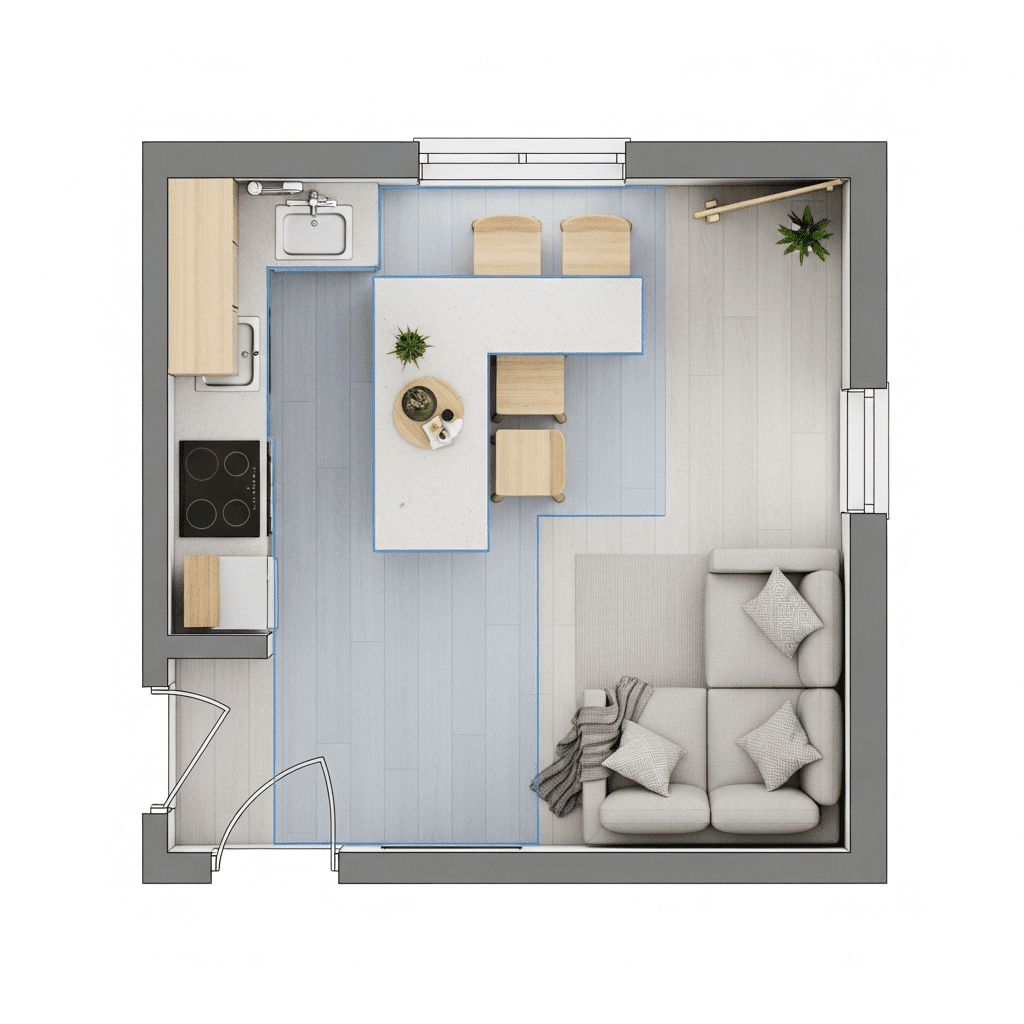
3. The L-Shaped Corner Tuck
Arrange your kitchen cabinets and your sectional sofa in opposite “L” shapes. This mirrors the geometry of the room, leaving the center of the floor open and making the space feel significantly wider.
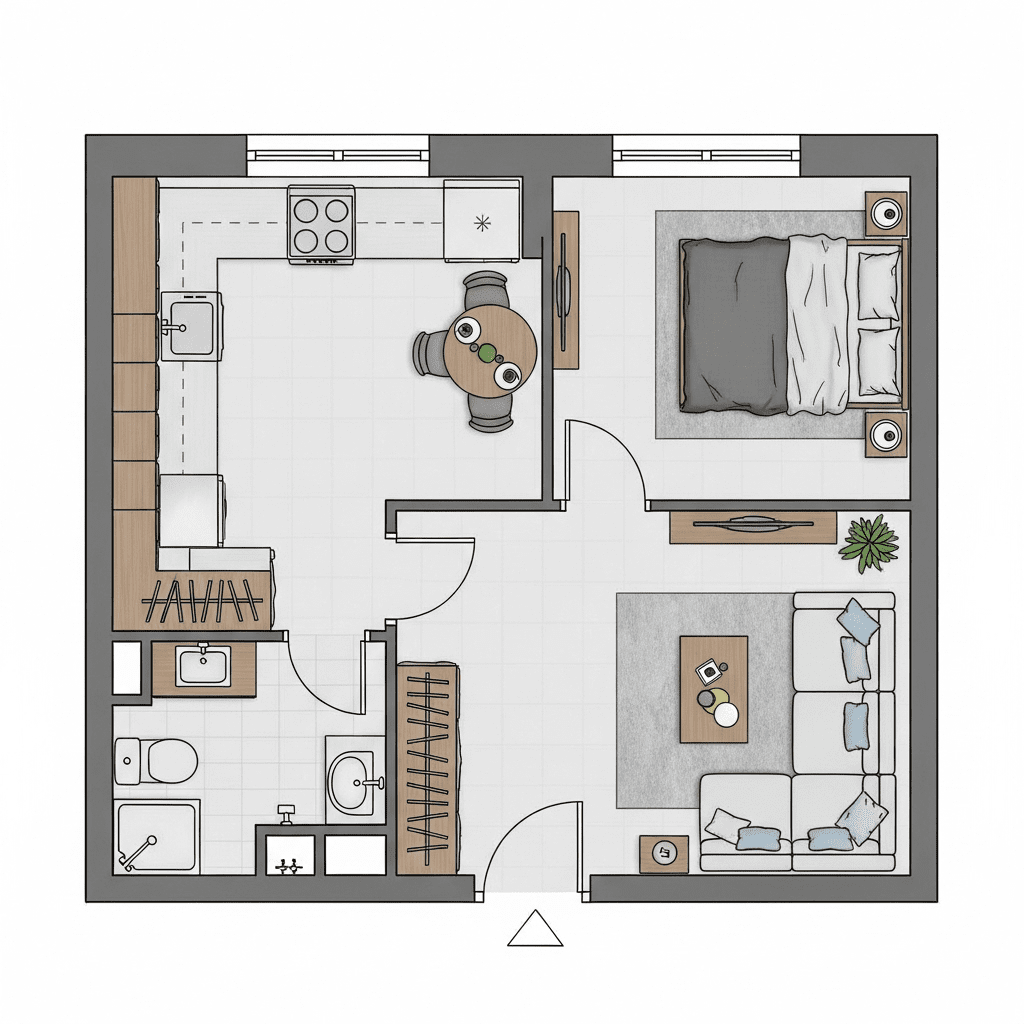
4. The Linear “Galley” Flow
Place the kitchen units and the living room furniture along one long wall. This keeps all the major pieces in a single line, creating a wide, unobstructed “hallway” on the other side of the room.
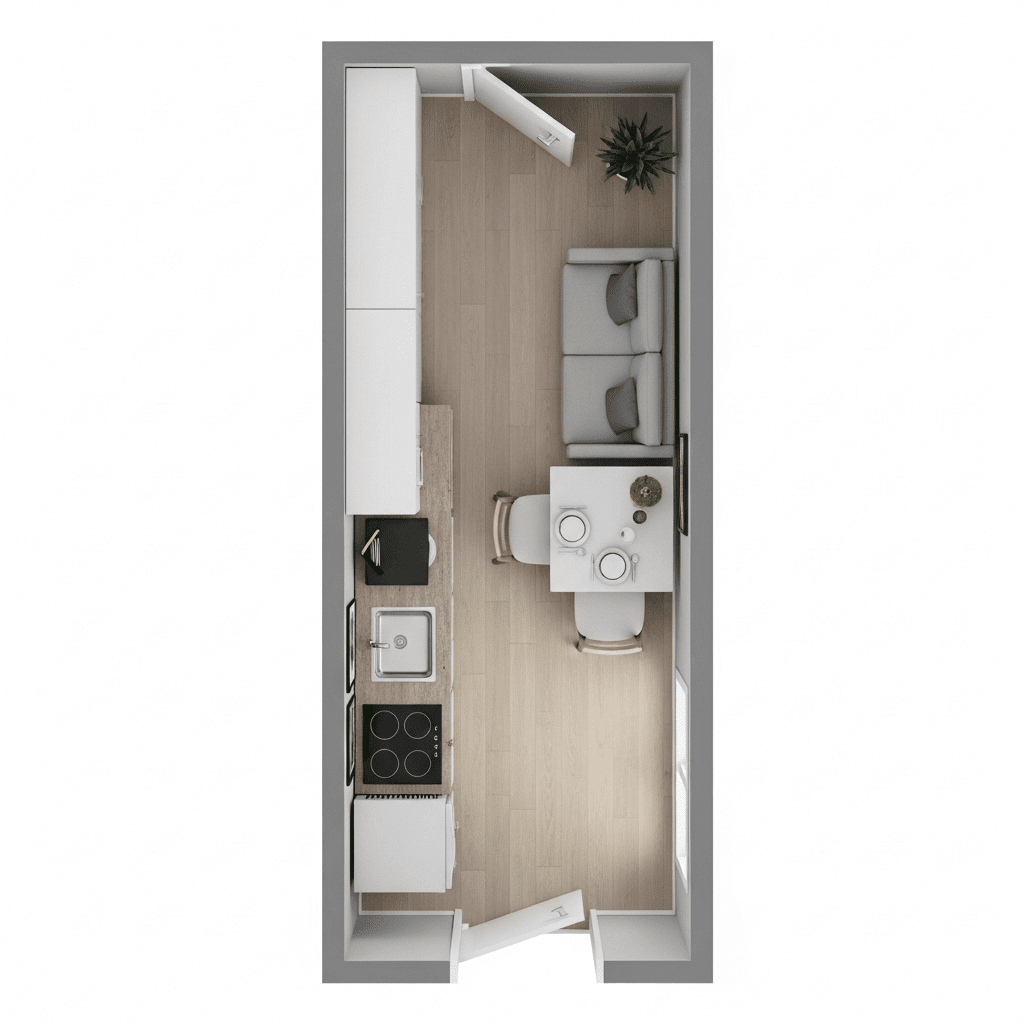
5. Rug-Defined Zoning
Anchor the living room area with a large, high-texture rug while keeping the kitchen floor bare. This visual contrast in flooring defines exactly where the “lounge” begins without the need for physical barriers.
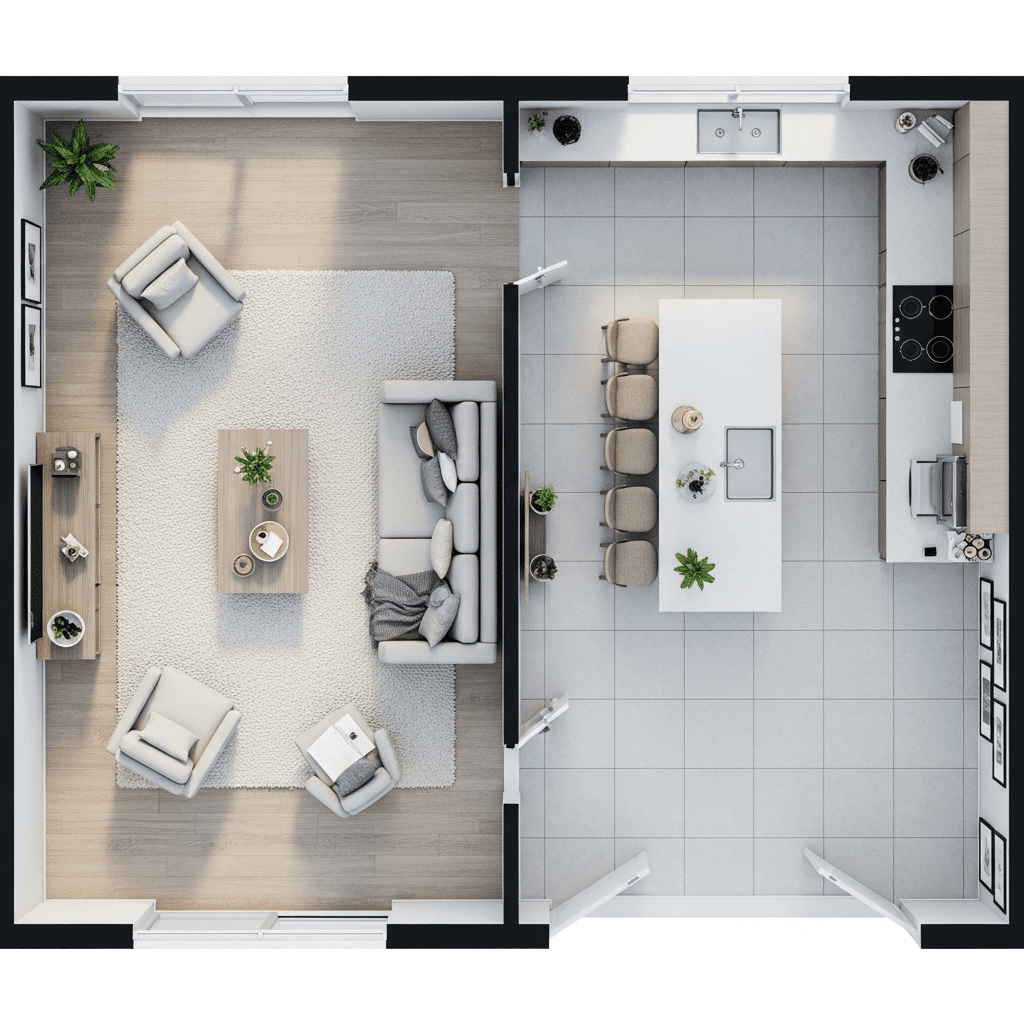
6. The Parallel “Facing” Layout
Align the sofa so it sits parallel to the kitchen island or counter. This creates a traditional, face-to-face social environment that allows the cook to interact with guests in the living room easily.
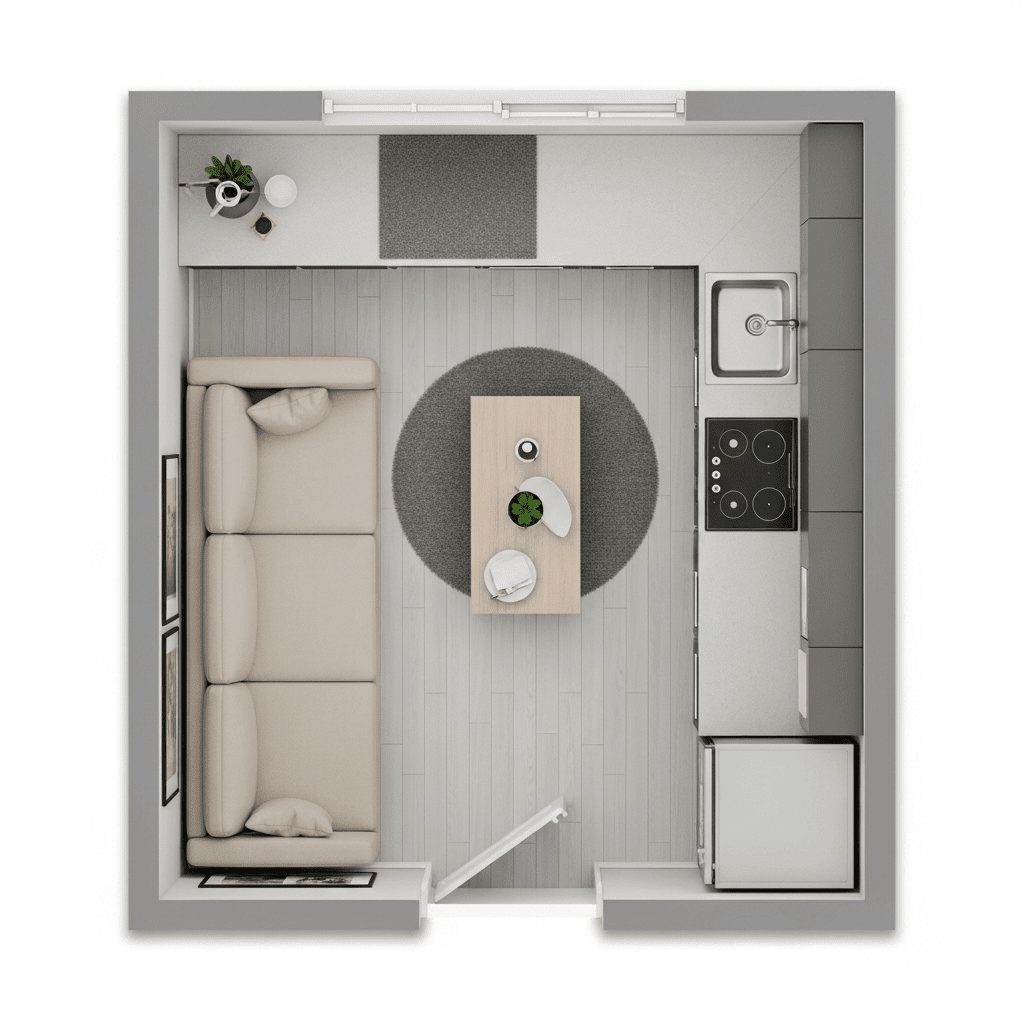
7. The Floating Island Connector
Use a mobile kitchen island on wheels as a bridge between the two spaces. It can be used for meal prep during the day and pushed toward the living room to serve as a bar or buffet at night.
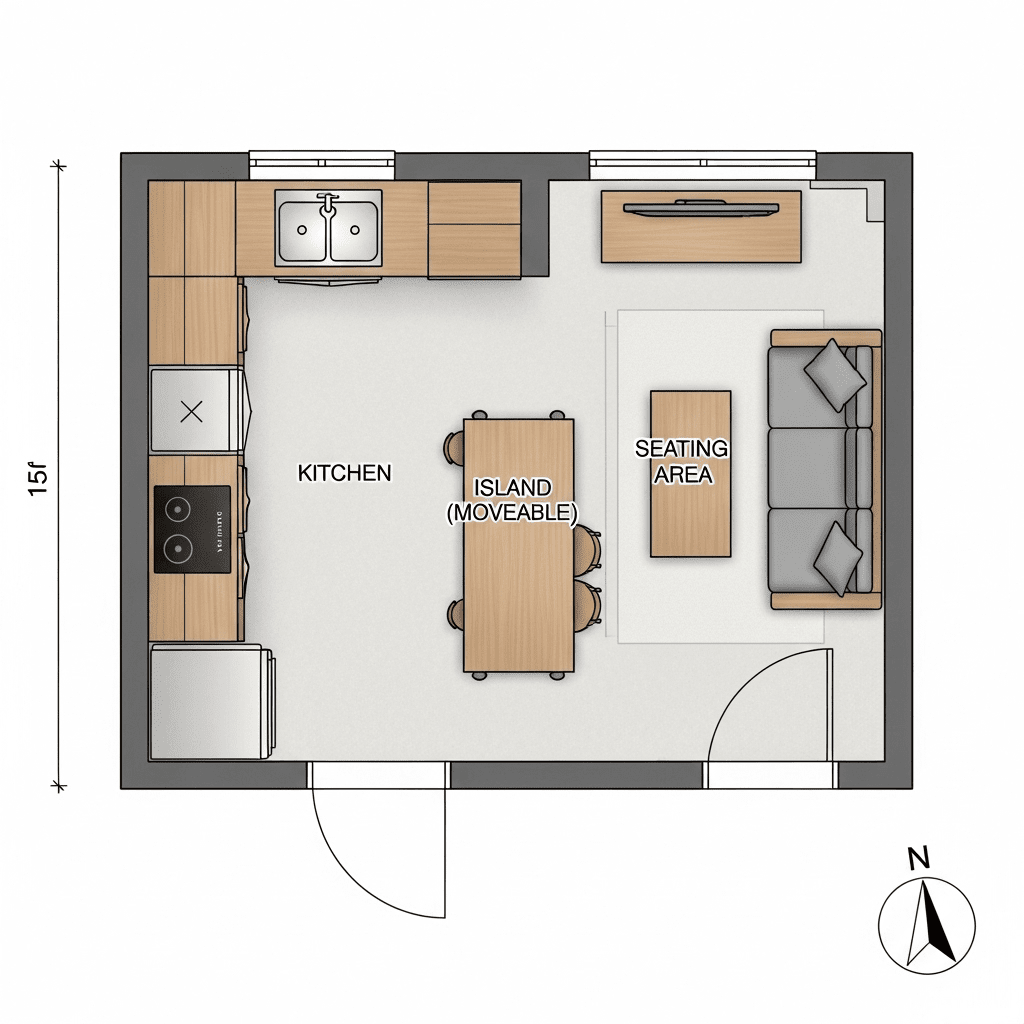
8. The Corner Banquet Transition
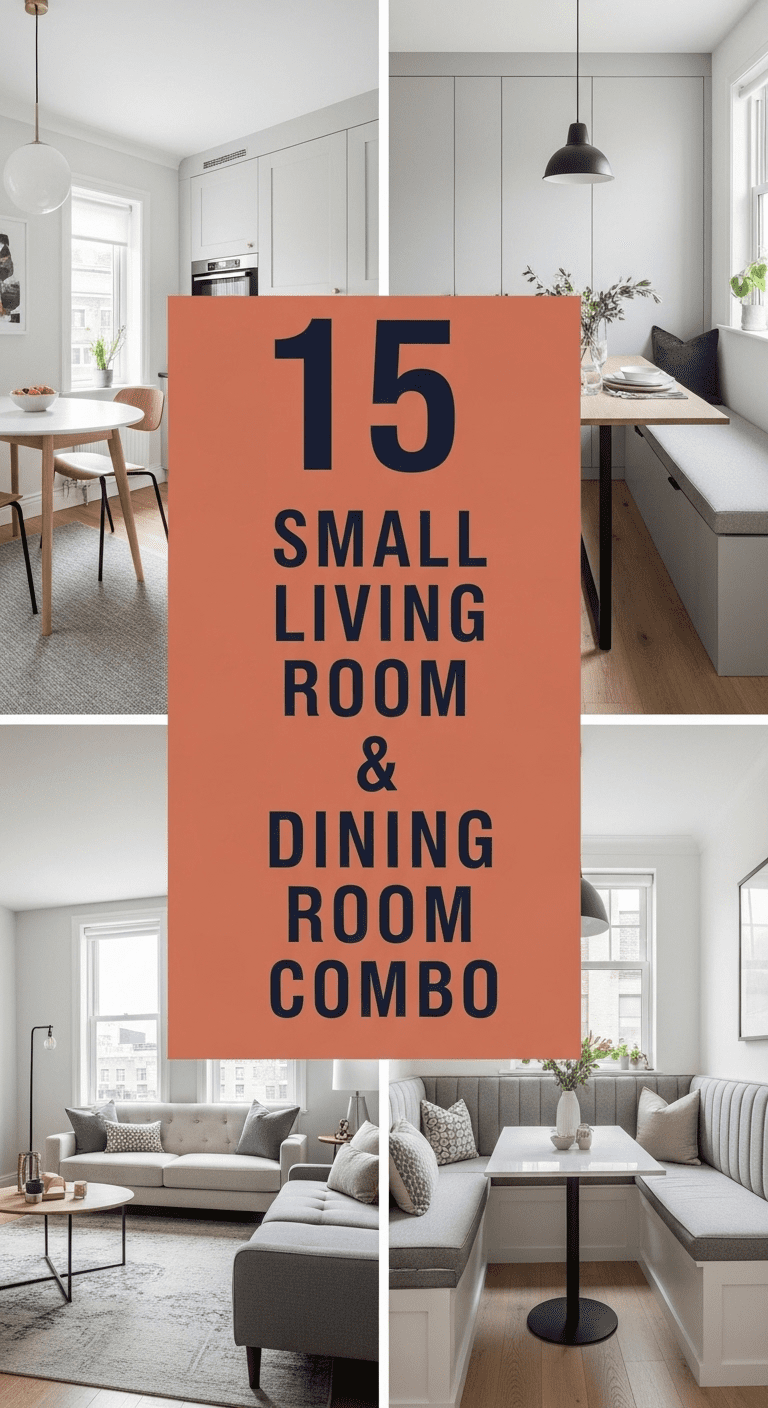
Incorporate a built-in banquet or bench in the corner between the kitchen and the sofa. This “nook” serves as a dining area that uses zero extra floor space and provides a soft transition between zones.
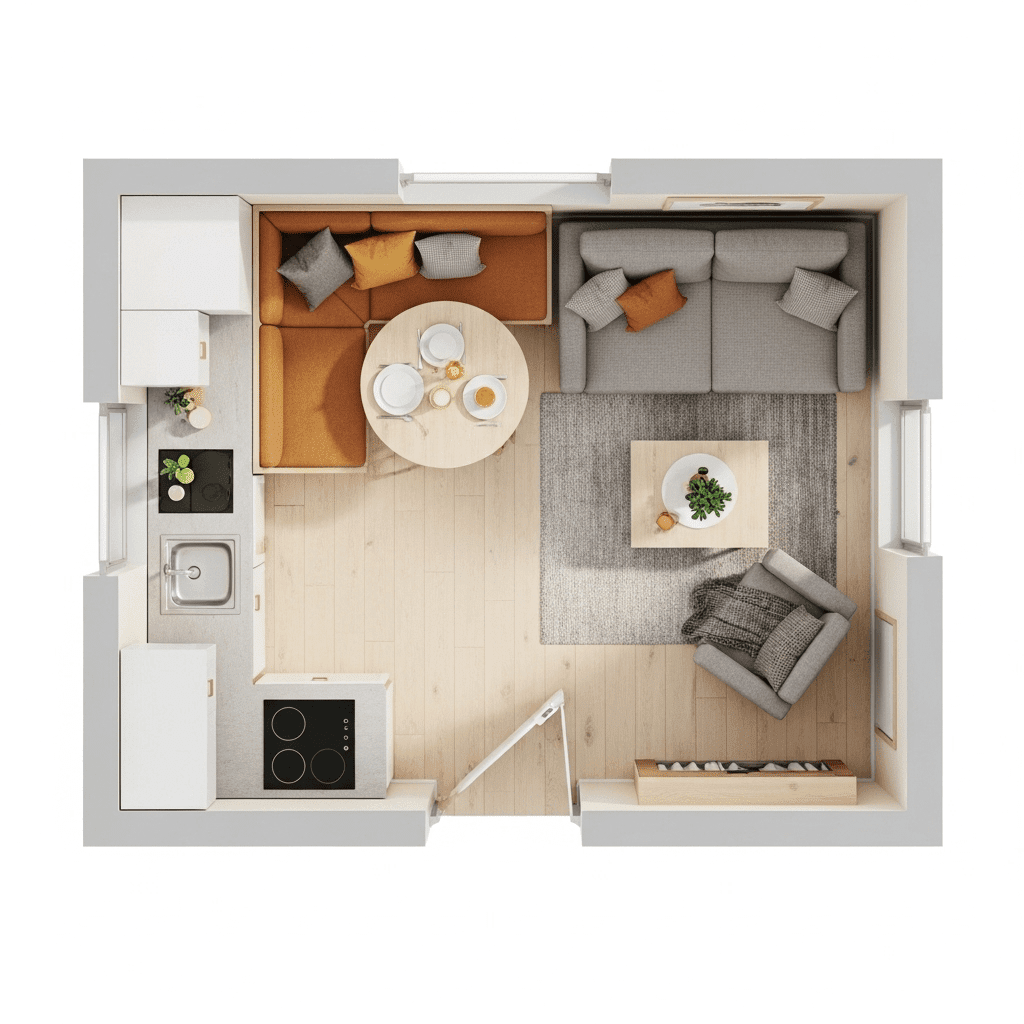
9. The Mirror-Reflected Depth
Install a mirrored backsplash or a large mirror on the living room wall. Reflecting the open kitchen back into the lounge area creates an illusion of a much deeper, more complex floor plan.
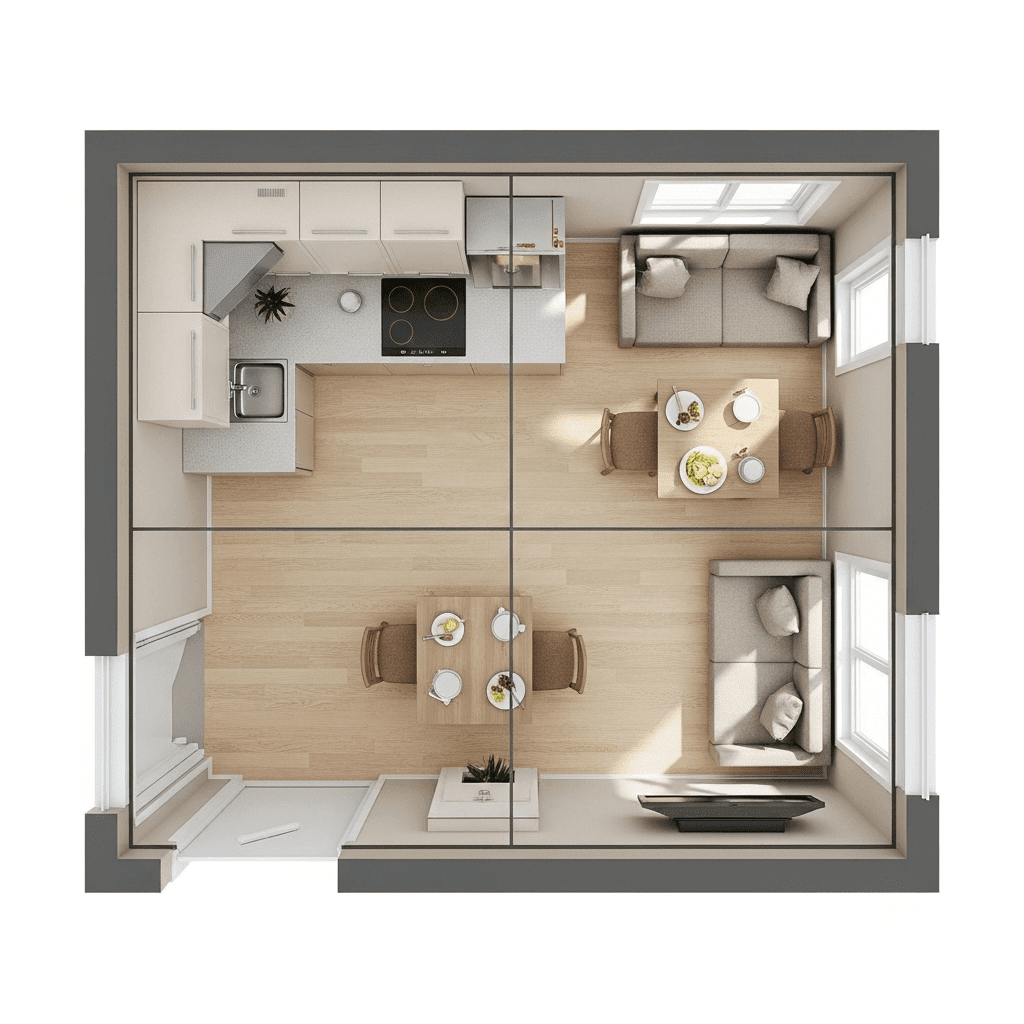
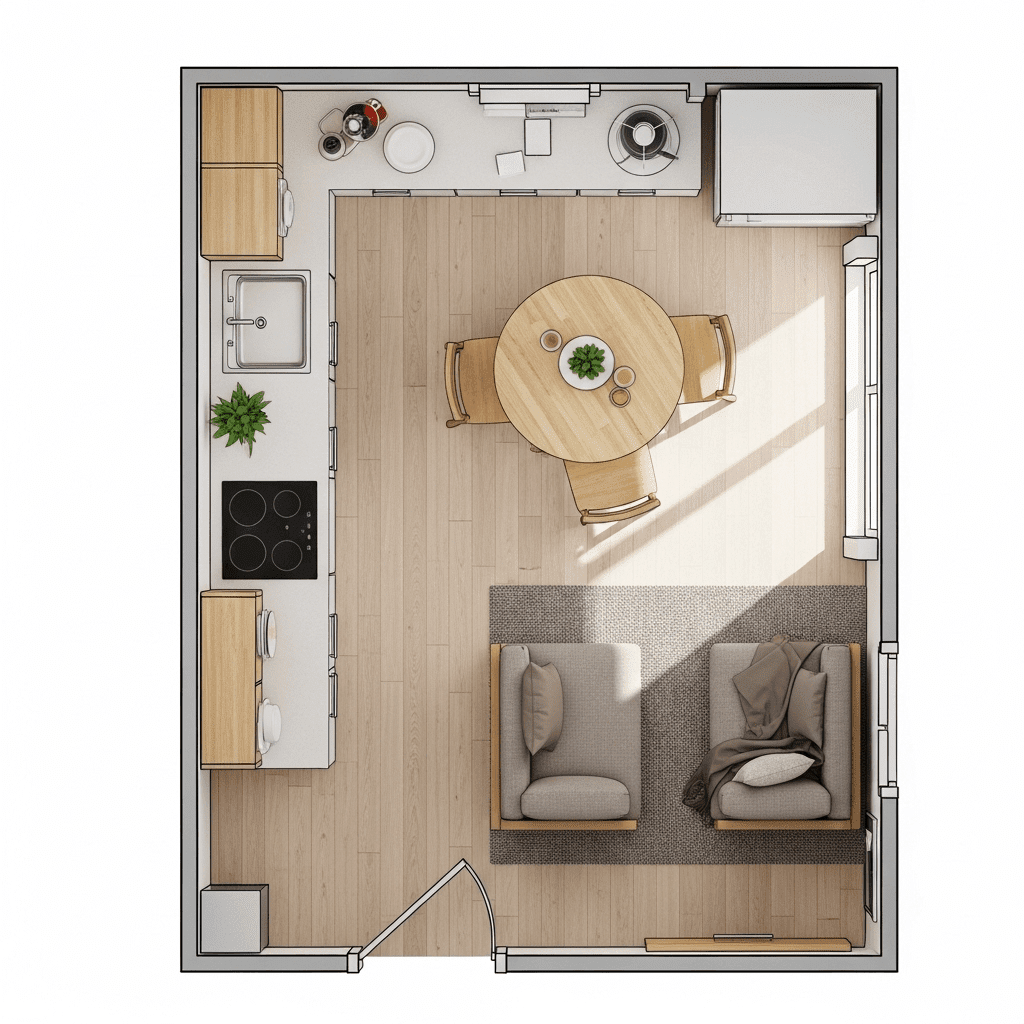
10. The Window-Centric Dining Path
Place a small bistro table directly in front of the window between the kitchen and the living room. This creates a natural “stopping point” that divides the room based on light and function.
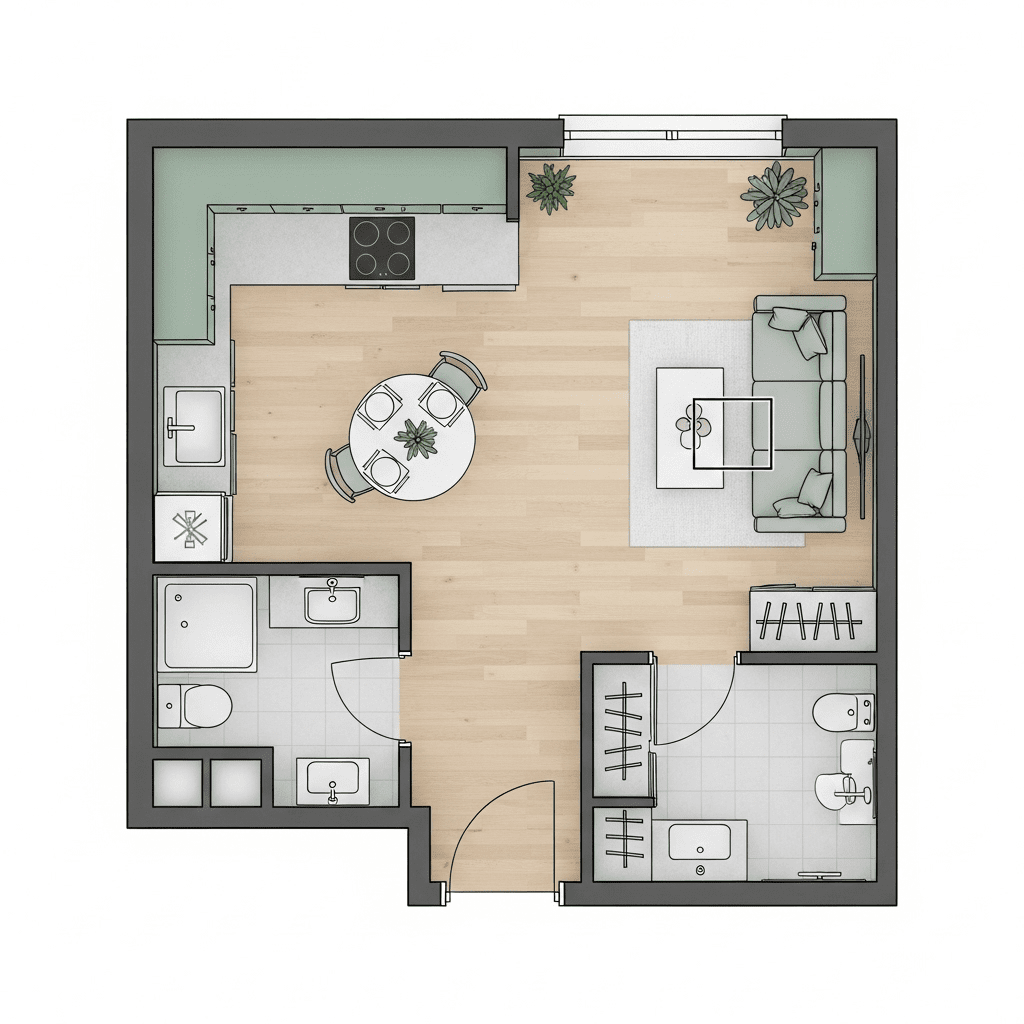
11. Consistent Color Continuity
Paint the kitchen cabinets the exact same color as the living room walls. This “monochrome” approach makes the kitchen blend into the background, making the entire open space feel like one large, unified room.
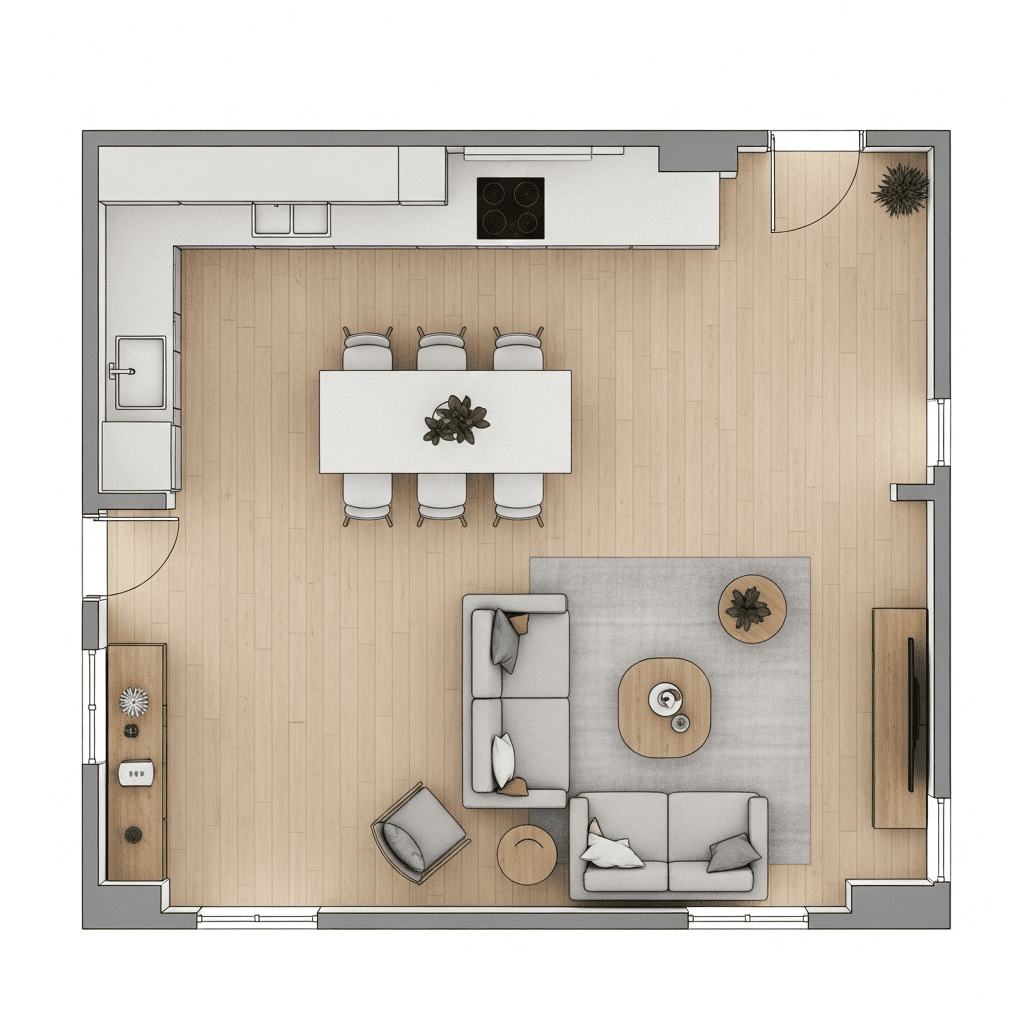
12. The Low-Profile “Airy” Set-up
Use low-slung furniture for both the dining and living areas. Keeping the furniture height consistent and below eye level ensures that the entire volume of the room is visible, preventing a “cramped” feeling.
Conclusion
Mastering a small open-plan layout is all about creating distinct “islands” of function within a single sea of space. By using rugs to ground the living area and multifunctional furniture like peninsulas or mobile islands, you can enjoy a home that feels both organized and high-end. Focus on keeping the central pathways clear to ensure that moving from the stove to the sofa feels effortless and natural.