
Master bedroom bed back wall designs: 12 ways to define your suite’s focal point
Master bedroom bed back wall designs serve as the visual anchor of the entire suite, transforming the space behind the headboard into a high-impact architectural statement. When designing the back wall of a master bedroom, the goal is to create depth and interest that complements the bed without overwhelming the room’s tranquility. Whether you prefer the organic warmth of wood slats, the tactile luxury of floor-to-ceiling upholstery, or the clean lines of recessed masonry, the back wall is where you set the stylistic tone for the rest of the home. These twelve ideas explore the most sophisticated ways to use texture, lighting, and materials to elevate your bedroom’s primary focal point.
See also: 14 Long Narrow Living Room Boho Ideas
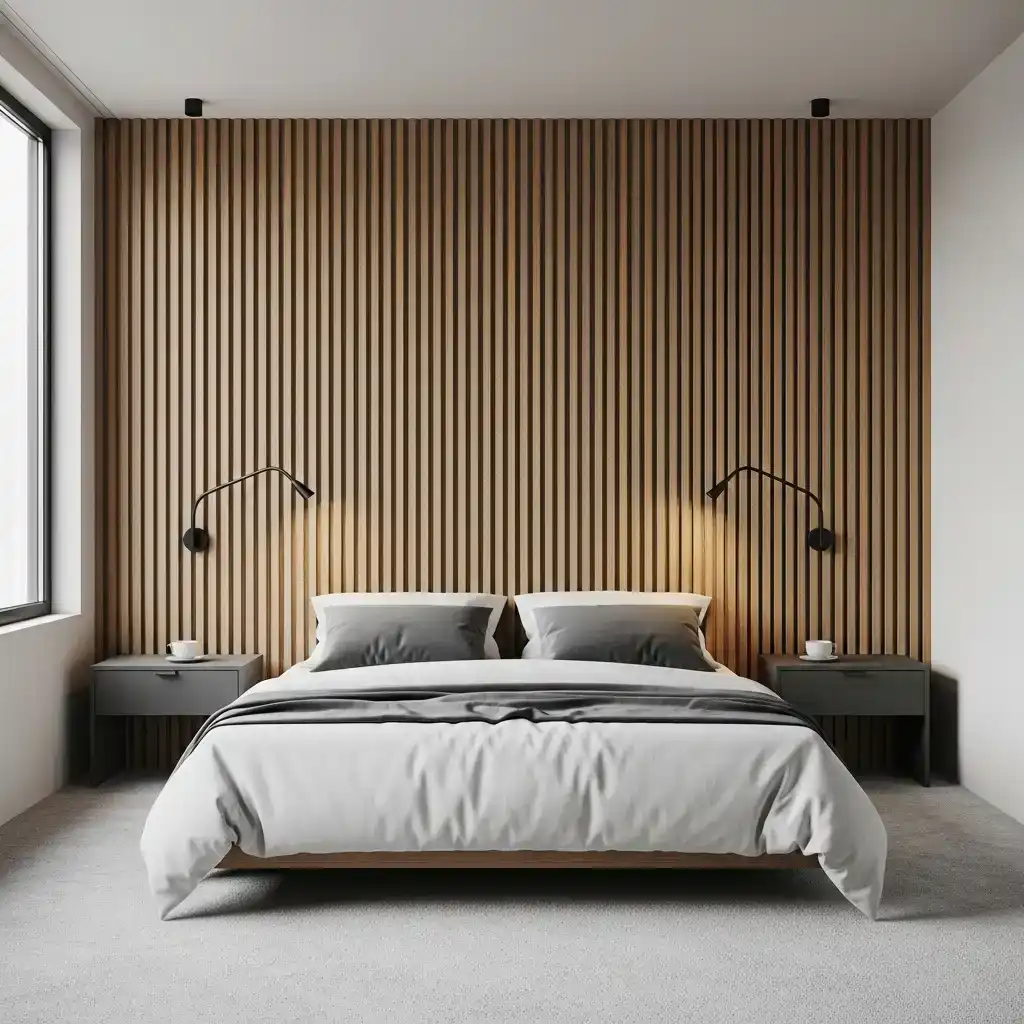
1. The Vertical Wood Slat Accent
Install thin, vertical wood slats—often in oak or walnut—across the entire width of the wall. This design adds height to the room and provides a contemporary, rhythmic texture that feels both organic and high-end.
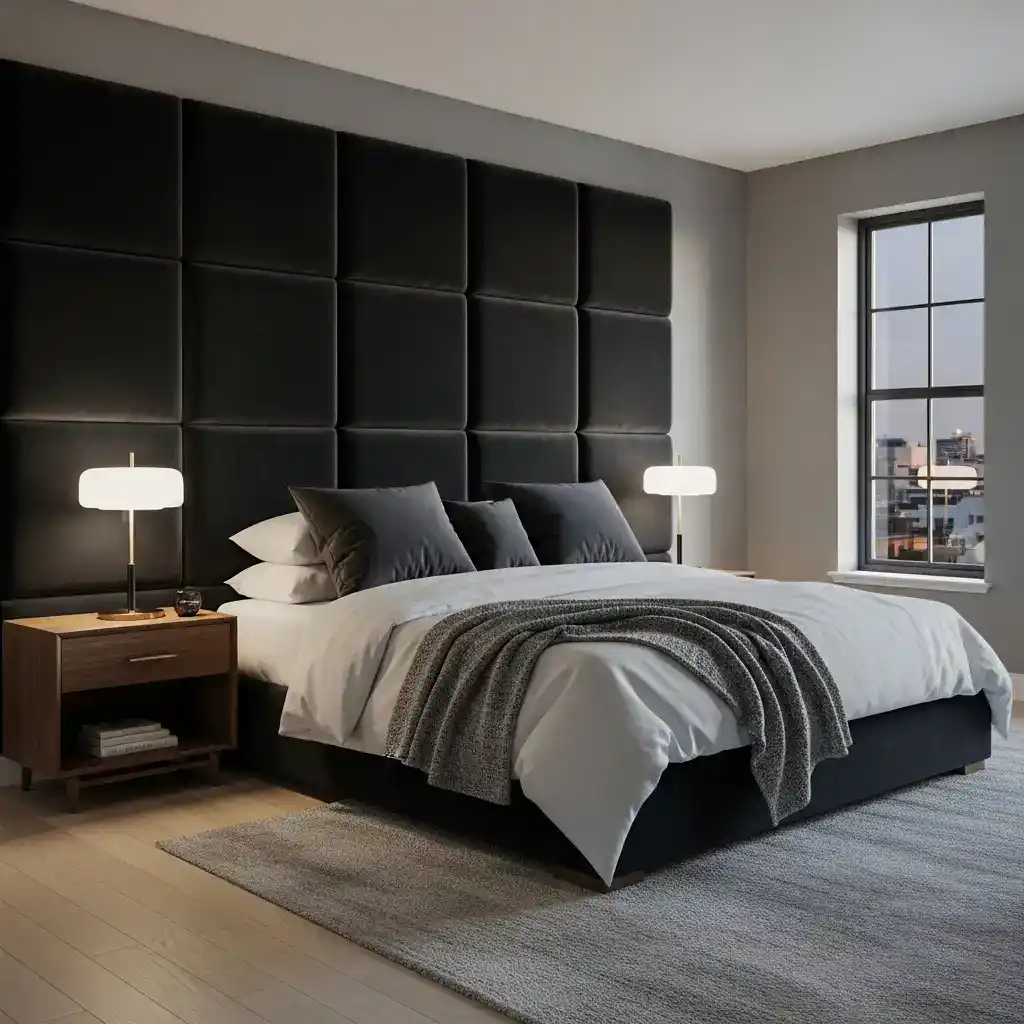
2. Floor-to-Ceiling Upholstered Panels
Replace a traditional headboard with oversized fabric panels that reach the ceiling. Using materials like velvet, suede, or linen creates a plush, acoustic-dampening “soft wall” that exudes boutique hotel luxury.
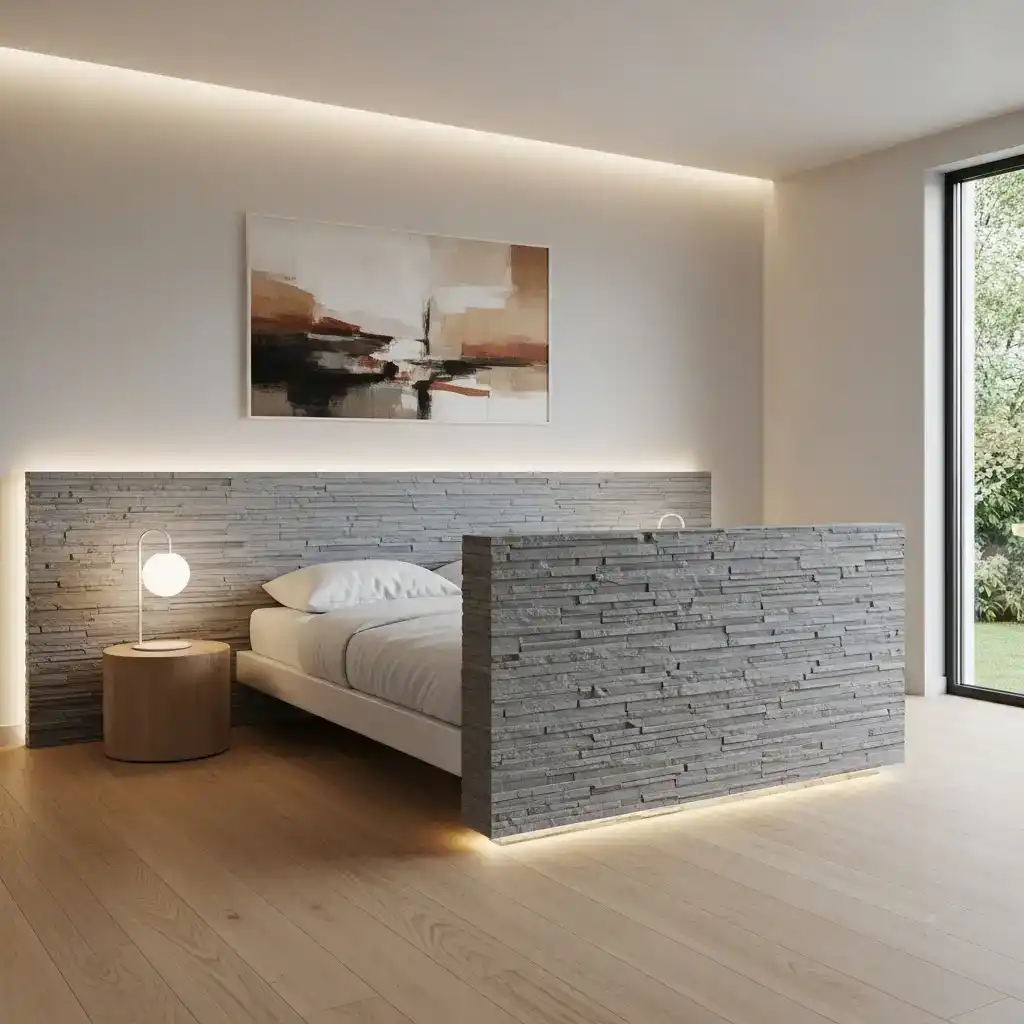
3. Backlit Floating Masonry
Create a “floating” wall using thin stone veneer or textured plaster that sits a few inches away from the main wall. Recessed LED strips along the edges cast a soft “halo” of light, highlighting the stone’s natural textures.
See also: 8 Long Narrow Living Room Basement Ideas
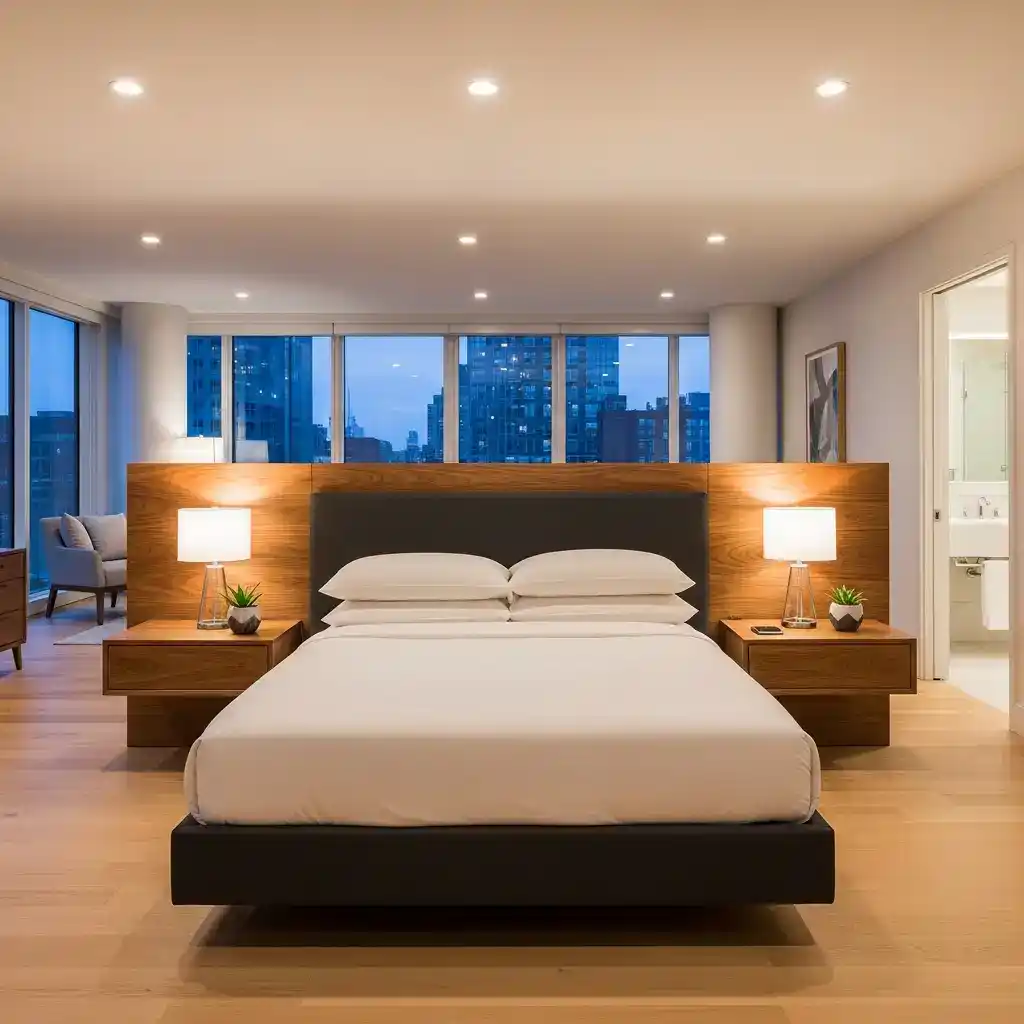
4. Double-Sided “Island” Partition
If the suite is large, position the bed against a mid-height “island” wall in the center of the room. This wall acts as a headboard on one side while concealing a dressing area or desk on the reverse.
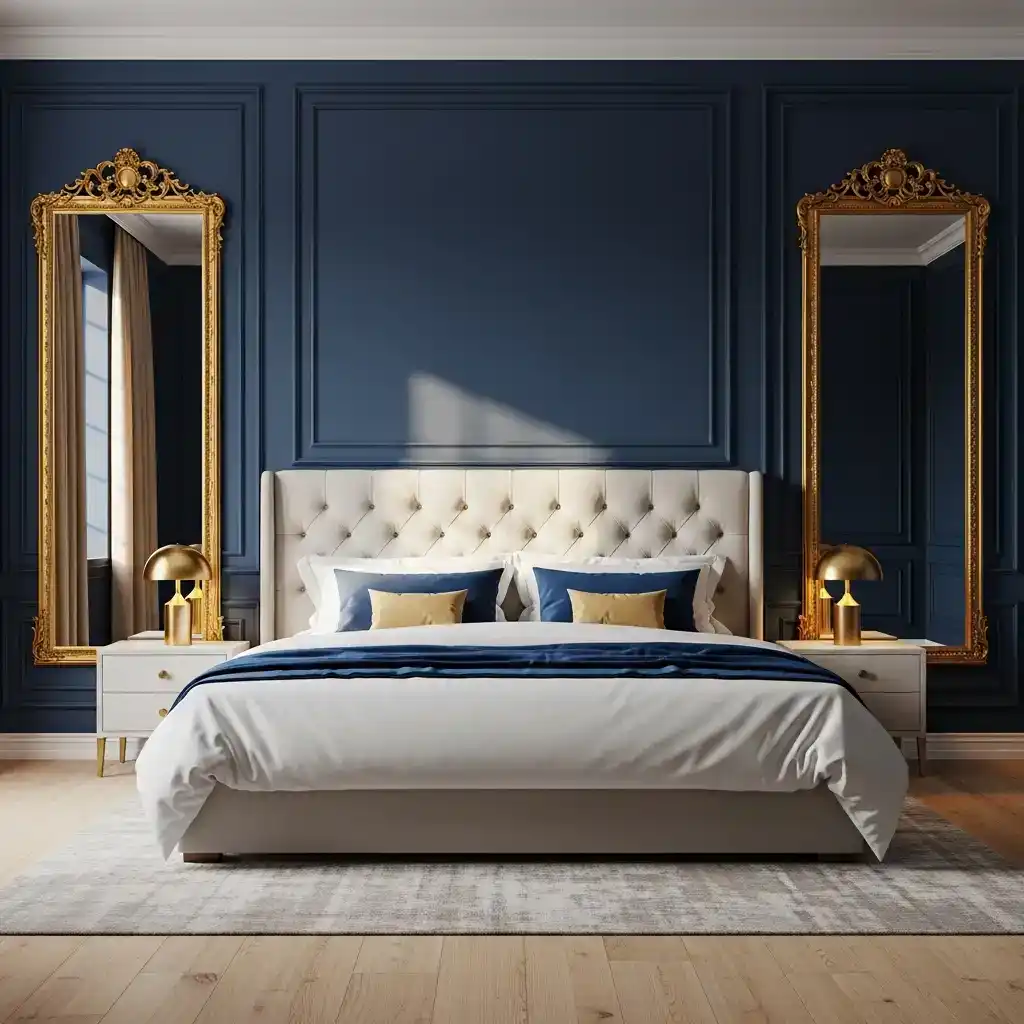
5. Architectural Picture Frame Molding
For a classic or “transitional” look, use decorative molding to create large “frames” on the wall. This adds traditional architectural depth that looks incredibly sophisticated when painted in a single, moody color.
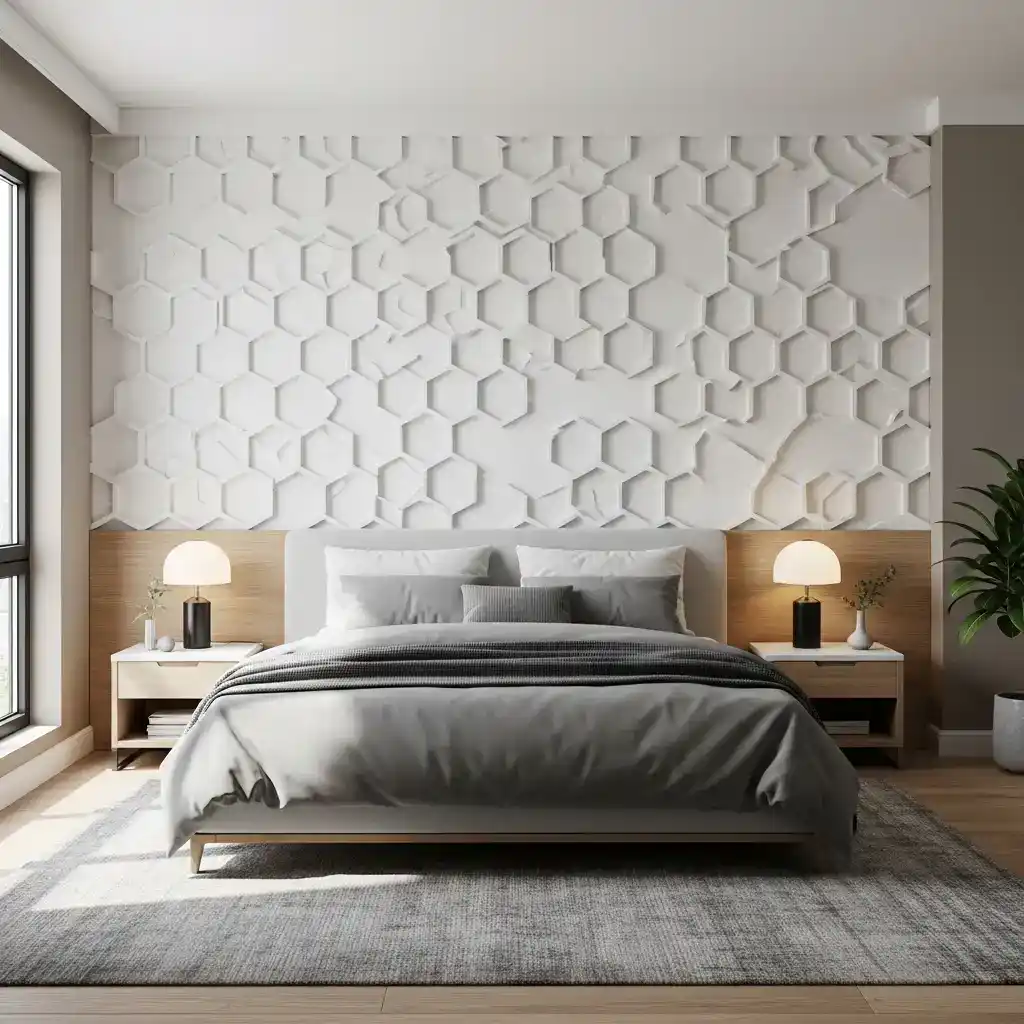
6. The 3D Geometric Gypsum Wall
Utilize 3D wall panels made of gypsum to create a sculptural, geometric pattern. When lit from above by spotlights, the shadows emphasize the facets of the design, making the wall feel like a modern art installation.
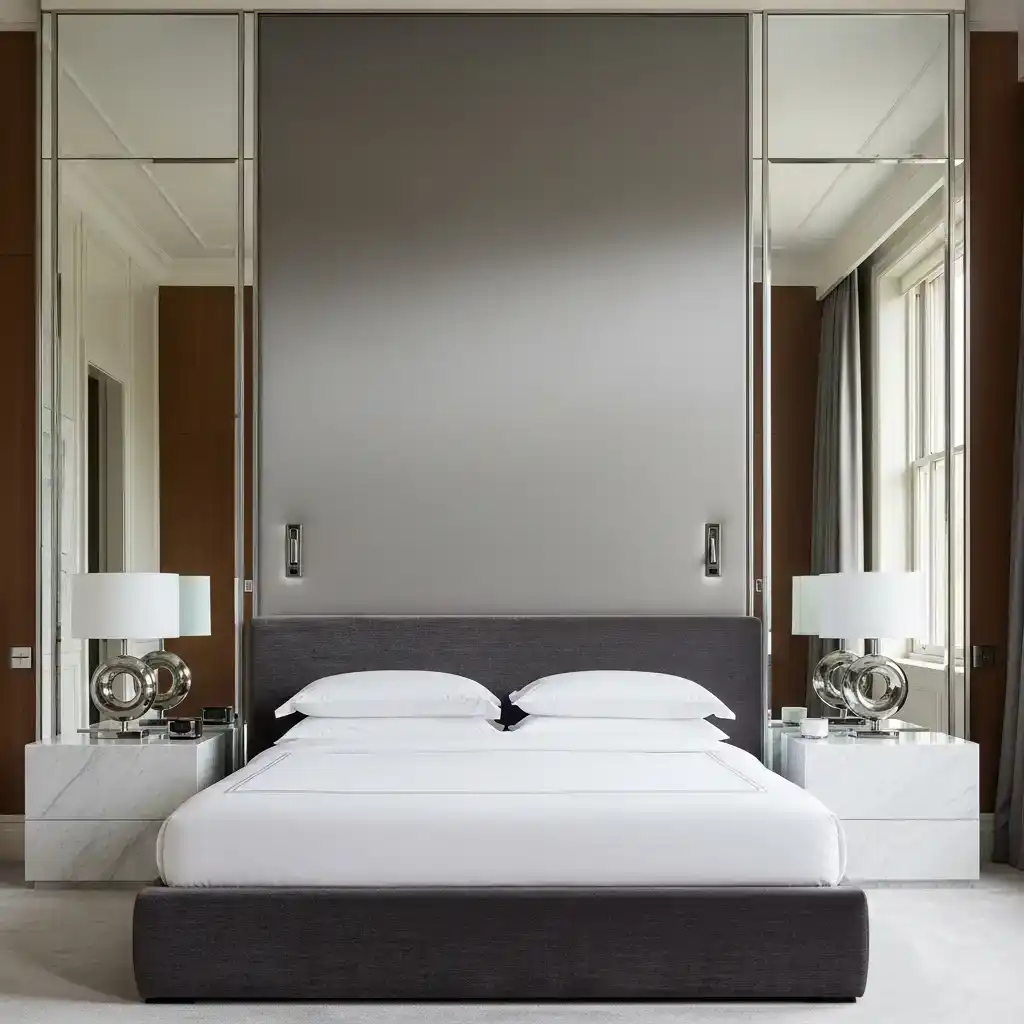
7. Mirrored Side-Panels with Center Texture
Flank a central textured section (like wallpaper or fabric) with floor-to-ceiling mirrors behind the nightstands. This “sandwich” design expands the perceived size of the room while adding a touch of high-gloss glamour.
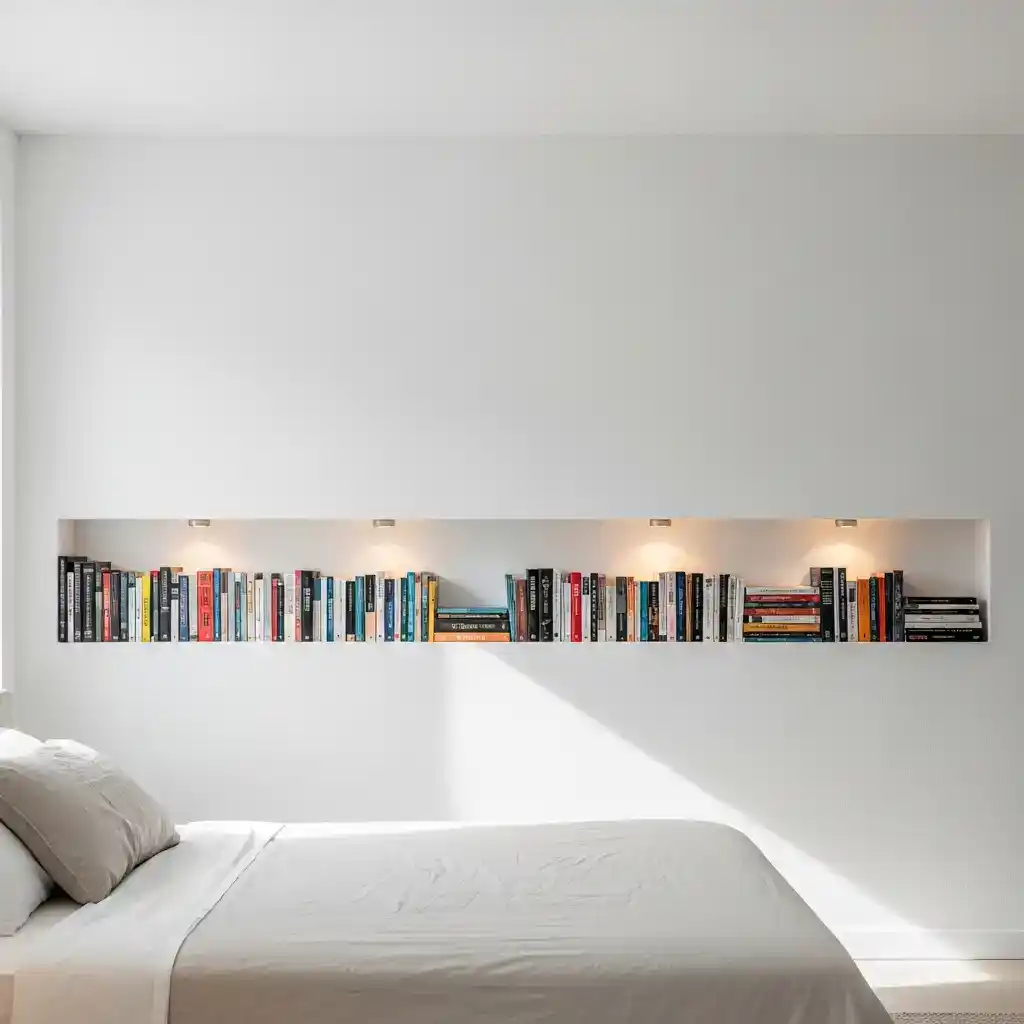
8. Integrated Shelving and Niche Design
Carve out a deep, horizontal niche directly into the wall above the bed. This provides a built-in “shelf” for art and books, while integrated downlights provide a soft, focused glow for evening reading.
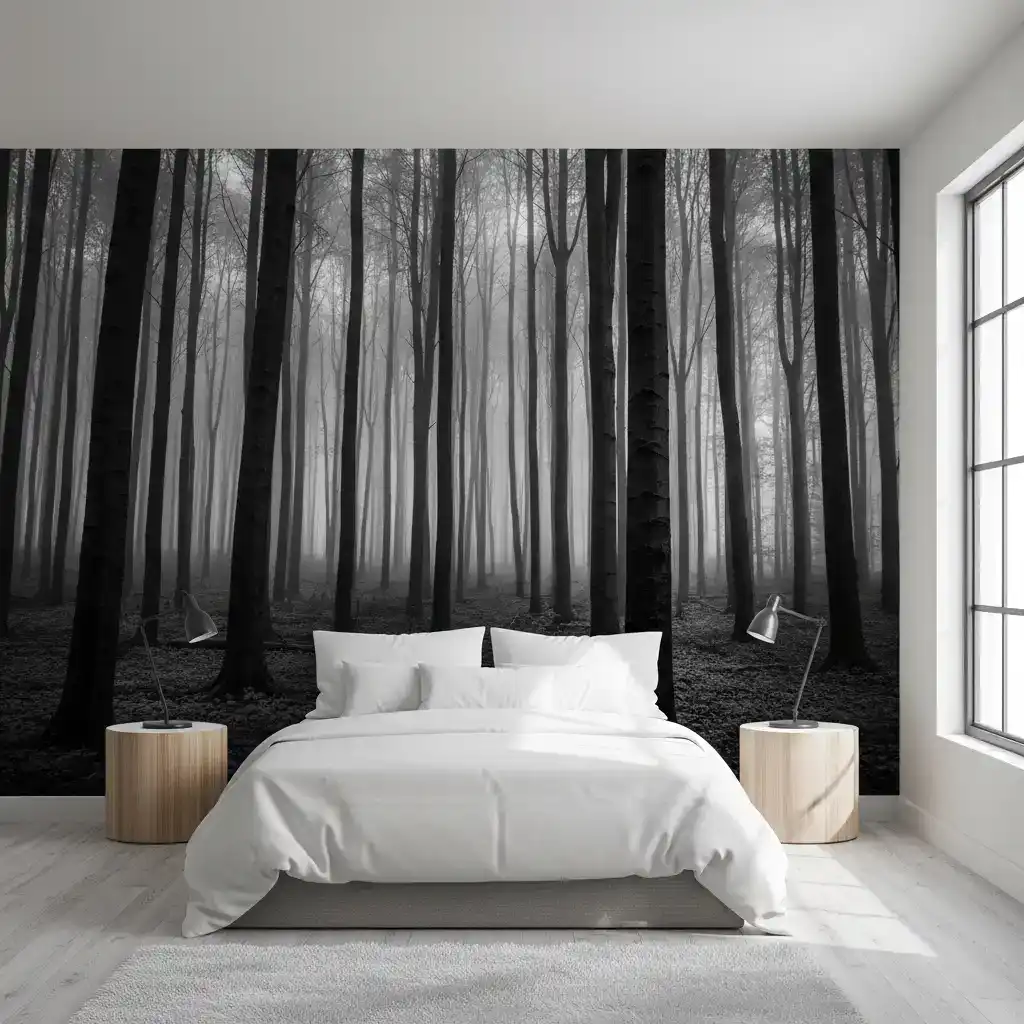
9. Oversized Botanical or Abstract Mural
Treat the back wall as a canvas by applying a large-scale mural. Whether it’s a misty forest or a bold abstract ink-wash, a mural provides a high-energy focal point that requires no additional decor.
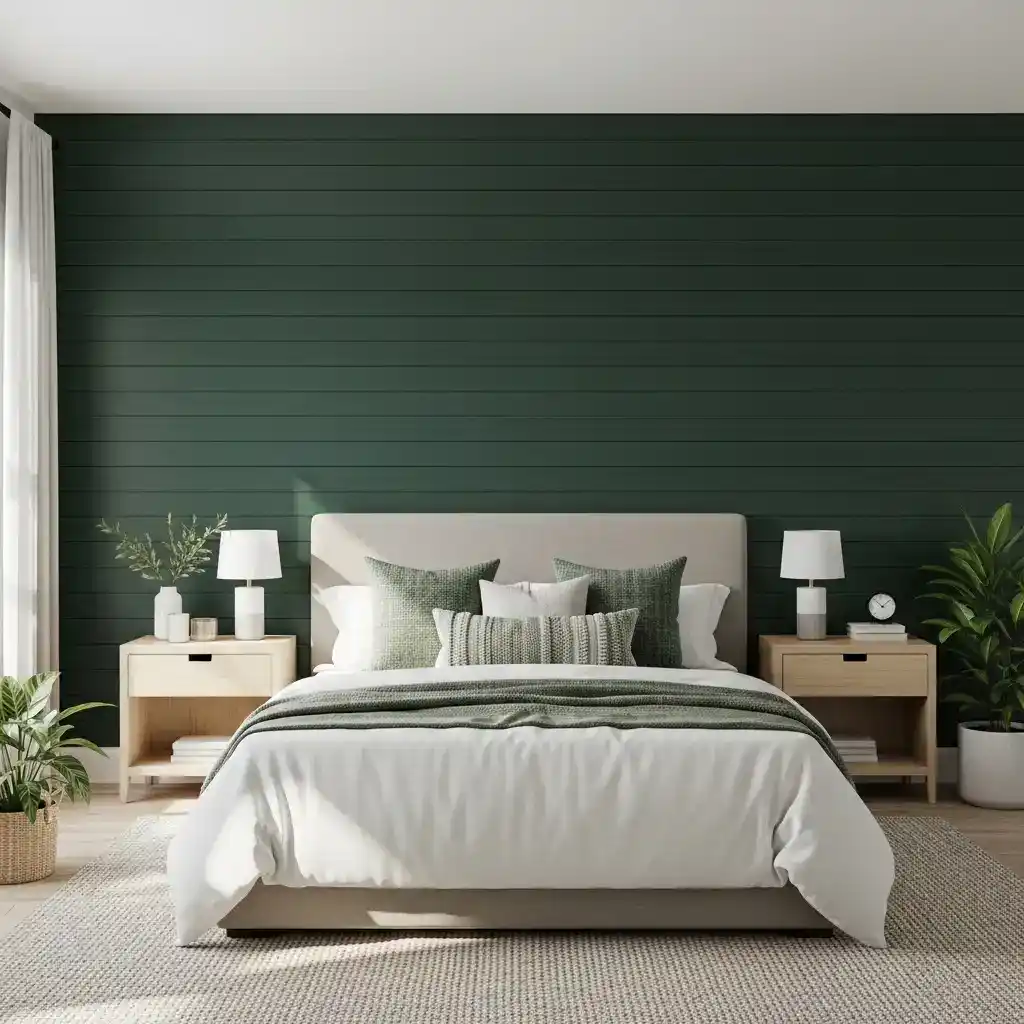
10. Horizontal Shiplap with a Modern Twist
Install horizontal shiplap but paint it in a sophisticated dark tone like forest green or iron ore. This updates the “farmhouse” look, making it feel more like a tailored, executive retreat.
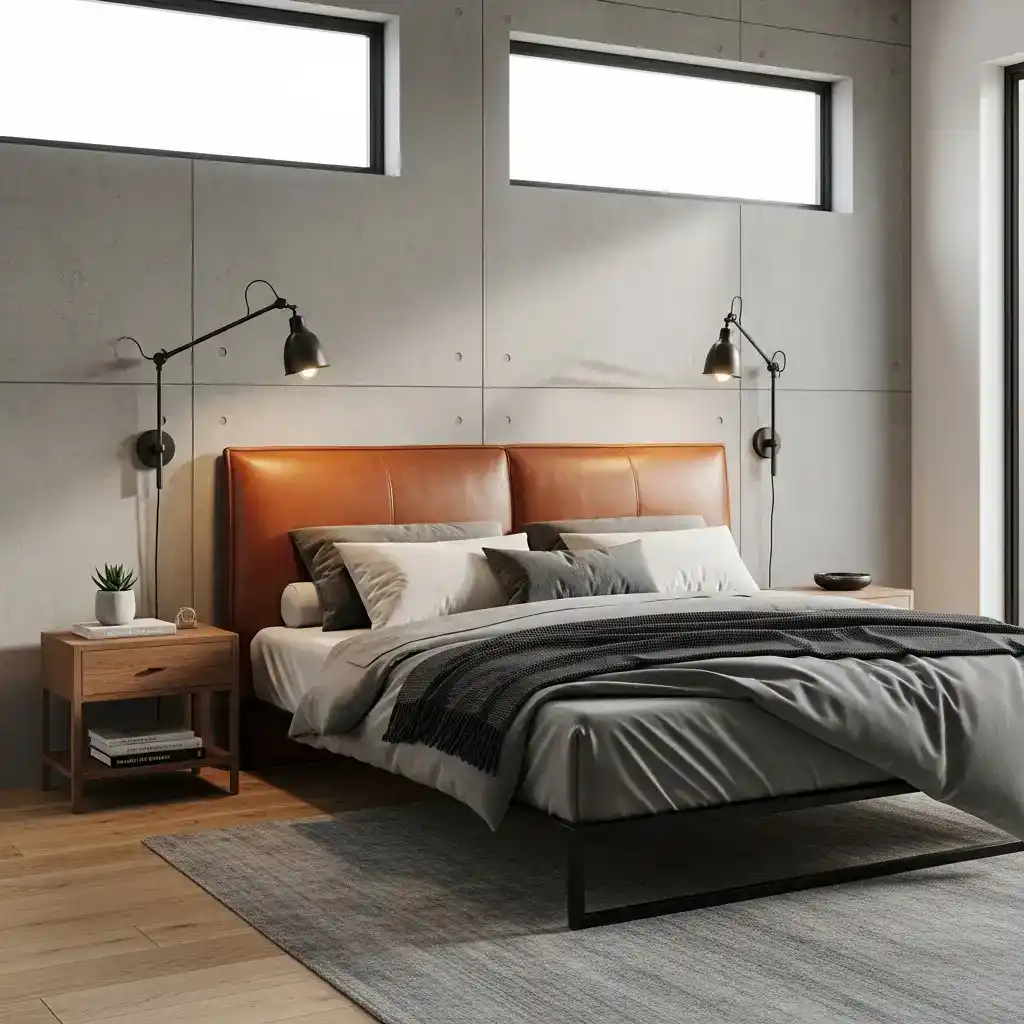
11. Concrete-Effect Industrial Plaster
Apply a hand-troweled concrete-effect plaster for a raw, industrial-luxe aesthetic. The subtle variations in the grey finish provide a moody, architectural backdrop that pairs perfectly with leather and metal accents.
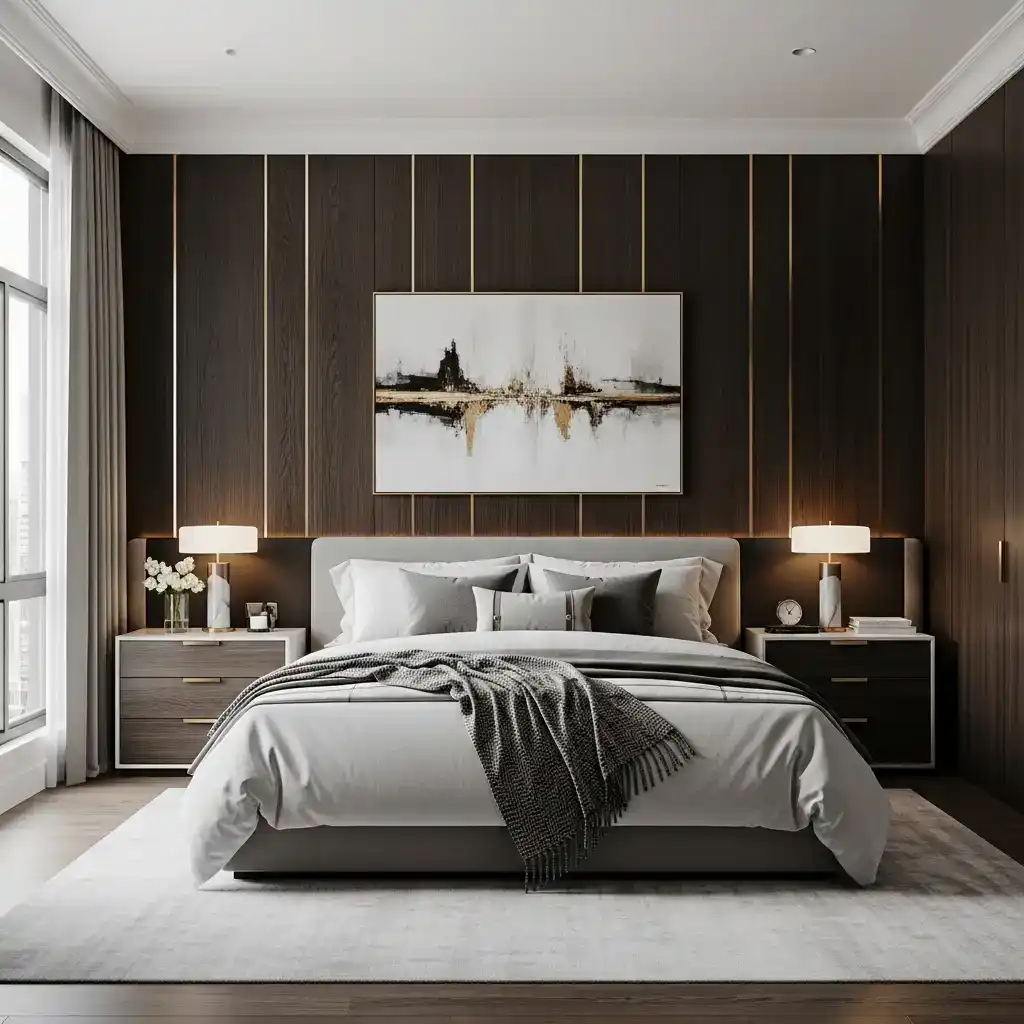
12. The Brass Inlay Wood Panel
Elevate a standard wood-paneled wall by incorporating thin, vertical brass or gold metal inlays between the planks. This “linear jewelry” adds a refined metallic shimmer that catches the light beautifully.
Conclusion
Executing one of these 12 master bedroom bed back wall designs ensures your suite has a clear and compelling visual anchor. By moving beyond simple paint and exploring the interplay of light, shadow, and texture, you transform the most important wall in the room into a masterpiece of interior architecture. A well-designed back wall is the secret to a master suite that feels both intentionally designed and profoundly restful.


