
12 Pale Blue Living Room Ideas
Pale blue is a color that brings a sense of calm, freshness, and understated elegance to any living room. Its light, airy quality makes spaces feel larger and brighter, while its softness provides a versatile foundation for a wide range of design styles. Unlike bolder blues that demand attention, pale blue whispers—creating an atmosphere of tranquility and relaxation that is perfect for unwinding after a long day. Whether used on walls, furniture, or accents, pale blue transforms living rooms into serene sanctuaries that feel both timeless and inviting. Here are twelve pale blue living room ideas to inspire your next design project.
See also: 12 Deep Blue Living Room Ideas
1. Pale Blue Walls with White Trim and Natural Wood
Pale blue walls paired with crisp white trim create a classic, timeless look that feels fresh and airy. The soft blue provides a serene backdrop while the white trim—on crown molding, baseboards, and window frames—adds definition and contrast. Natural wood accents in flooring, coffee tables, and shelving bring warmth and organic texture, preventing the palette from feeling too cool. White sheer curtains allow natural light to flood the space, enhancing the bright, open atmosphere. This combination is perfect for Scandinavian, coastal, and traditional interiors where simplicity and elegance are key.

2. Pale Blue Velvet Sofa with Blush Pink Accents
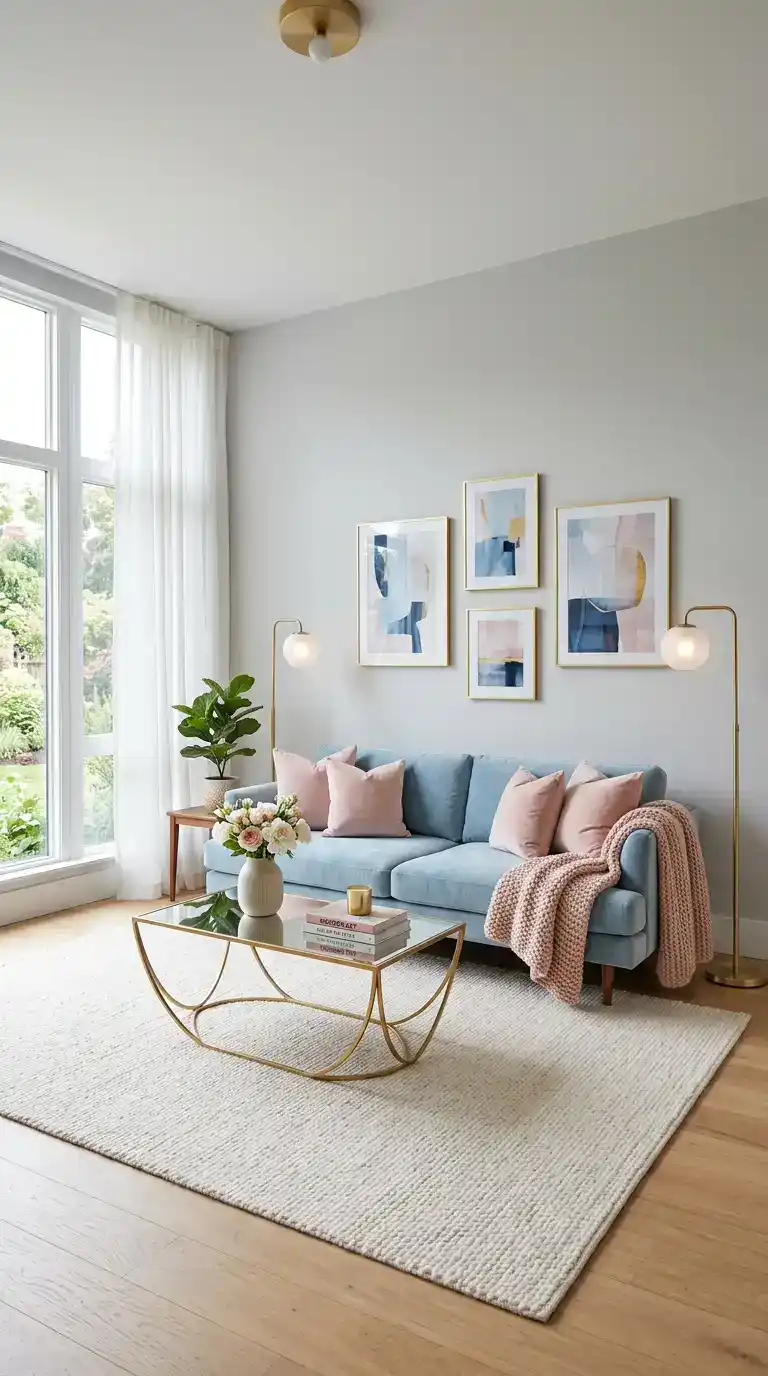
A pale blue velvet sofa brings together softness and luxury in one stunning piece. The muted blue hue feels fresh and approachable, while the velvet texture adds depth and richness. Pair it with blush pink accents—throw pillows, a cozy blanket, or a velvet armchair—for a soft, romantic palette that feels both modern and timeless. Gold or brass accents in lighting and coffee tables add warmth and elegance, while a cream rug keeps the space feeling light and balanced. This combination works beautifully in contemporary, eclectic, and glam interiors.
3. Pale Blue and White Striped Curtains
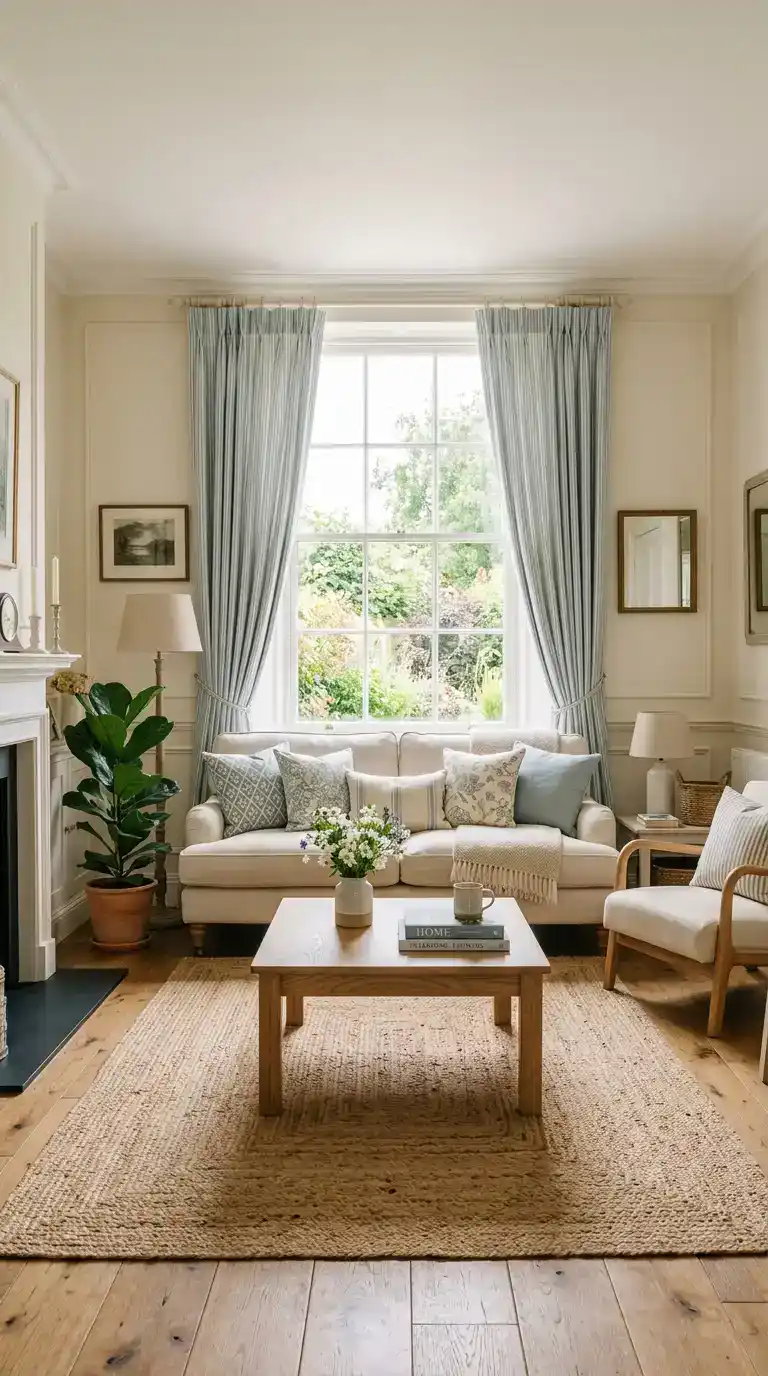
Pale blue and white striped curtains add classic, graphic appeal to a living room. The vertical stripes draw the eye upward, making ceilings appear higher, while the soft blue and crisp white combination feels fresh and timeless. Pair them with neutral walls in cream or light gray, and incorporate blue accents in pillows and accessories to tie the palette together. Natural wood furniture and a jute rug enhance the relaxed, coastal-inspired feel, while brass curtain rods add a touch of warmth and elegance.
4. Pale Blue Accent Wall with Neutral Furnishings
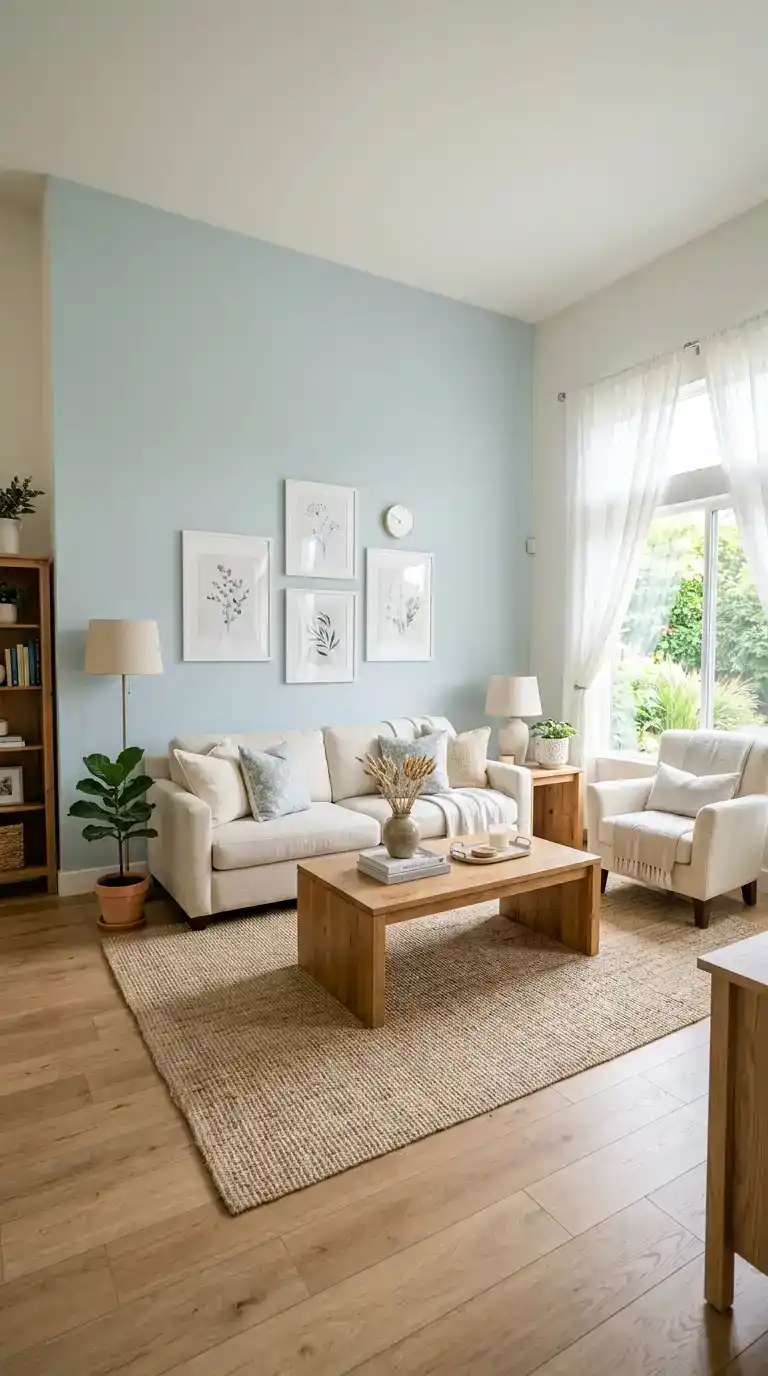
A pale blue accent wall adds a soft pop of color without overwhelming the room. It serves as a gentle backdrop for neutral furnishings—cream sofas, light wood coffee tables, and beige area rugs—creating a balanced, serene look. This approach allows you to introduce the color in a controlled way, making it ideal for those who prefer a subtle touch of blue. Add white trim and natural textures to enhance the fresh, inviting atmosphere, and incorporate artwork with blue tones to tie the wall into the rest of the space.
5. Pale Blue and Terracotta Earthy Palette
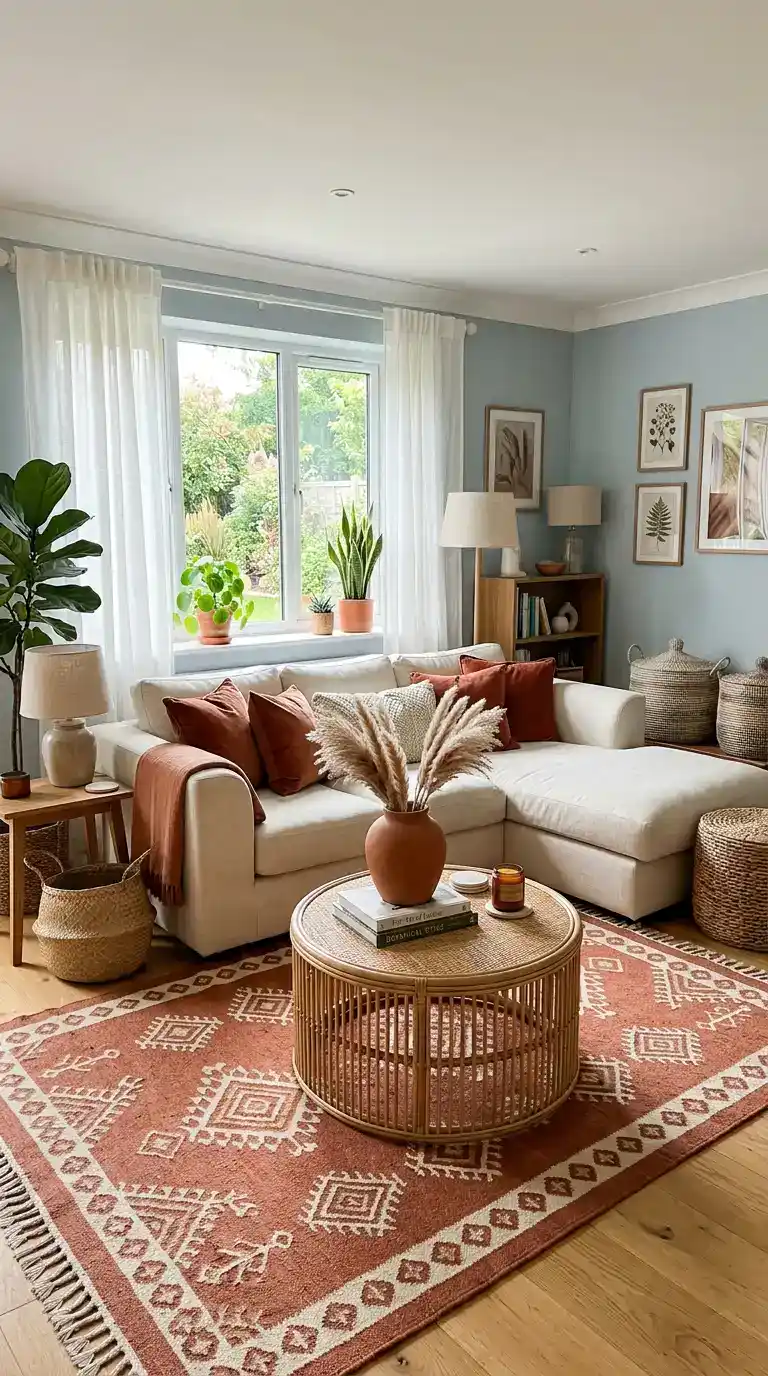
Pale blue and terracotta create a warm, earthy palette that feels grounded and inviting. The cool, muted blue balances the warm, rustic terracotta, resulting in a space that is both serene and full of character. Introduce terracotta through clay pots, rust-colored pillows, a terracotta area rug, or a statement armchair. Natural textures like rattan, jute, and wood enhance the organic feel, while dried botanicals and greenery add life and texture. This combination works beautifully in bohemian, Mediterranean, and modern farmhouse interiors.
6. Pale Blue Painted Built-Ins or Cabinetry
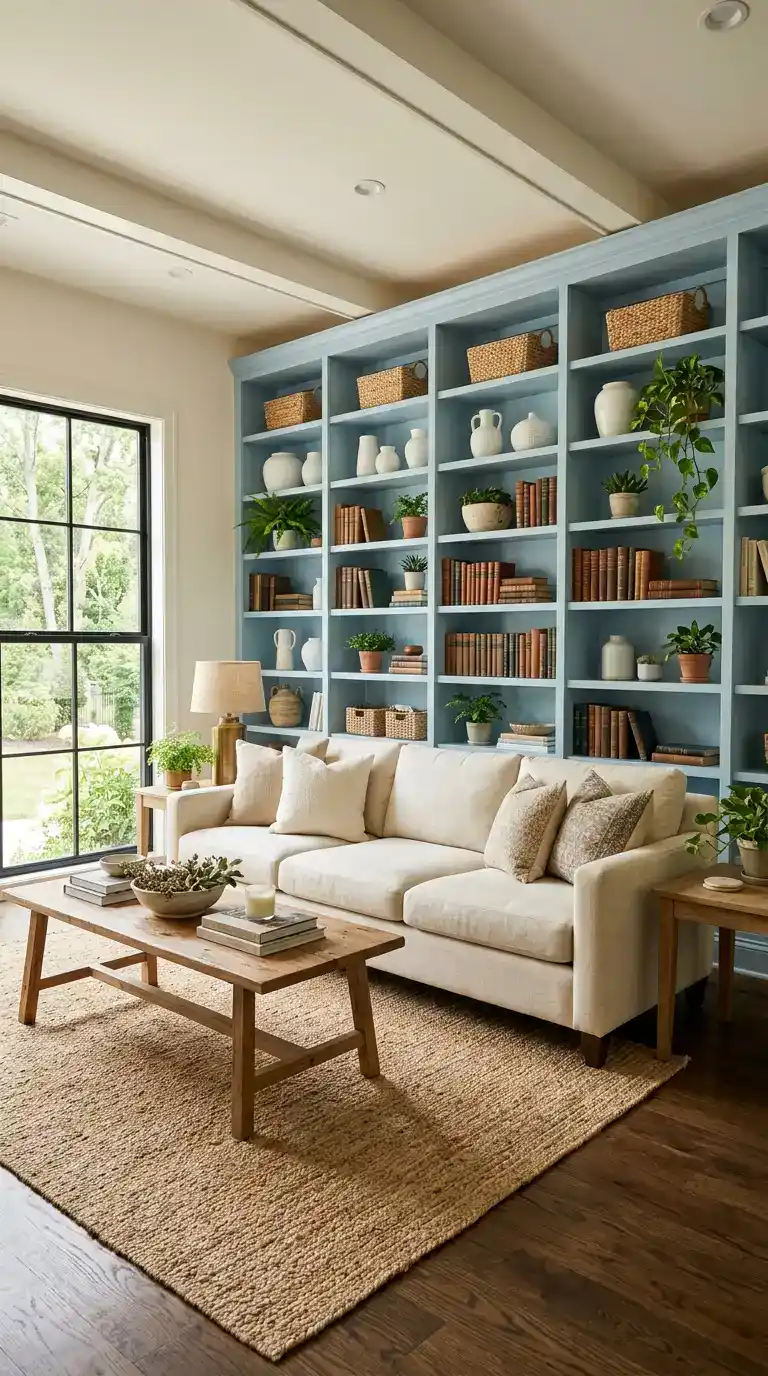
Built-in shelving or cabinetry painted in pale blue adds architectural interest and a soft pop of color to a living room. The muted blue hue feels fresh and timeless, making it a perfect choice for traditional, farmhouse, and coastal interiors. Style the shelves with white ceramics, natural wood accents, woven baskets, and a mix of books and greenery to create contrast and visual appeal. The pale blue cabinetry becomes a focal point without overwhelming the space, providing a serene backdrop for displaying cherished objects and personal treasures.
7. Pale Blue Coastal Style
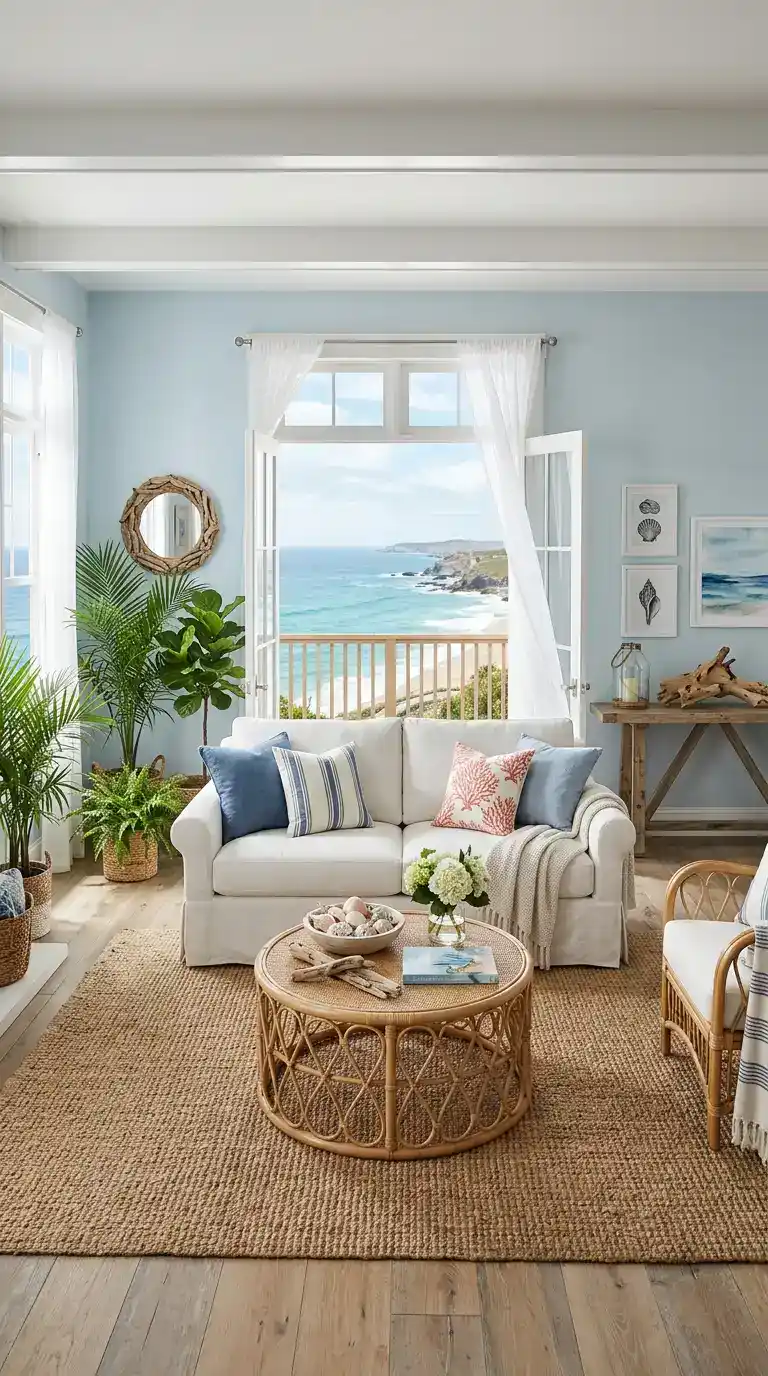
Pale blue is a natural fit for coastal-inspired interiors. Its soft, weathered quality evokes the colors of the sky and sea, creating a relaxed, breezy atmosphere. Pair pale blue walls or a pale blue sofa with white slipcovered furniture, rattan accents, and natural textures like jute, linen, and weathered wood. Add woven baskets, driftwood accents, and a collection of seashells to complete the beachy aesthetic. White sheer curtains allow natural light to fill the room, enhancing the light, airy feel. This combination is perfect for coastal homes or any space seeking a touch of seaside serenity.
8. Pale Blue and Gray Cool Palette
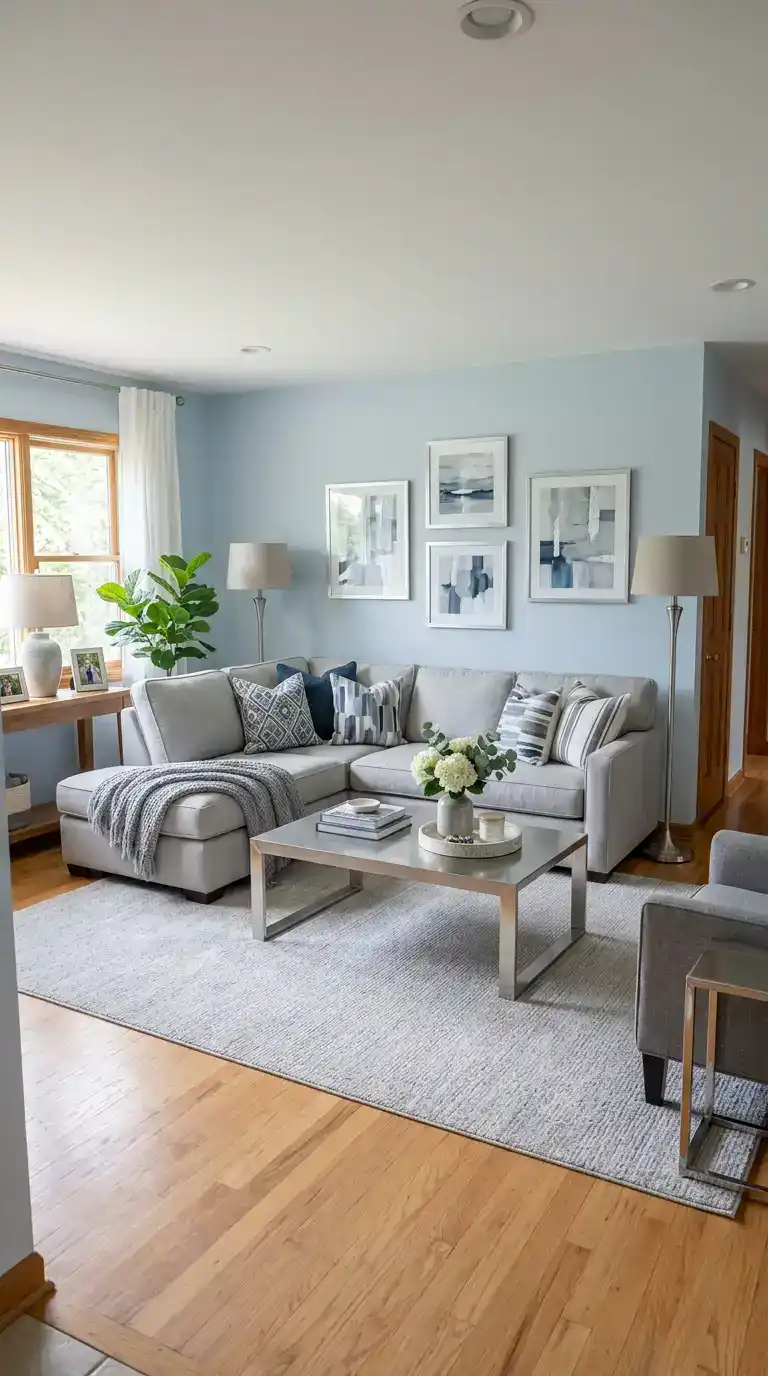
Pale blue and gray create a cool, contemporary palette that feels sleek and sophisticated. The soft blue and neutral gray work harmoniously together, providing a serene foundation that allows textures and accents to shine. Use pale blue on walls or a sofa, and pair with a light gray sectional or gray accent chairs. Silver or chrome accents in lighting, coffee table bases, and decorative accessories enhance the modern edge. A light gray area rug and sheer white curtains keep the space feeling open and bright. This combination is perfect for modern, minimalist, and contemporary interiors.
9. Pale Blue and Mustard Yellow Contrast
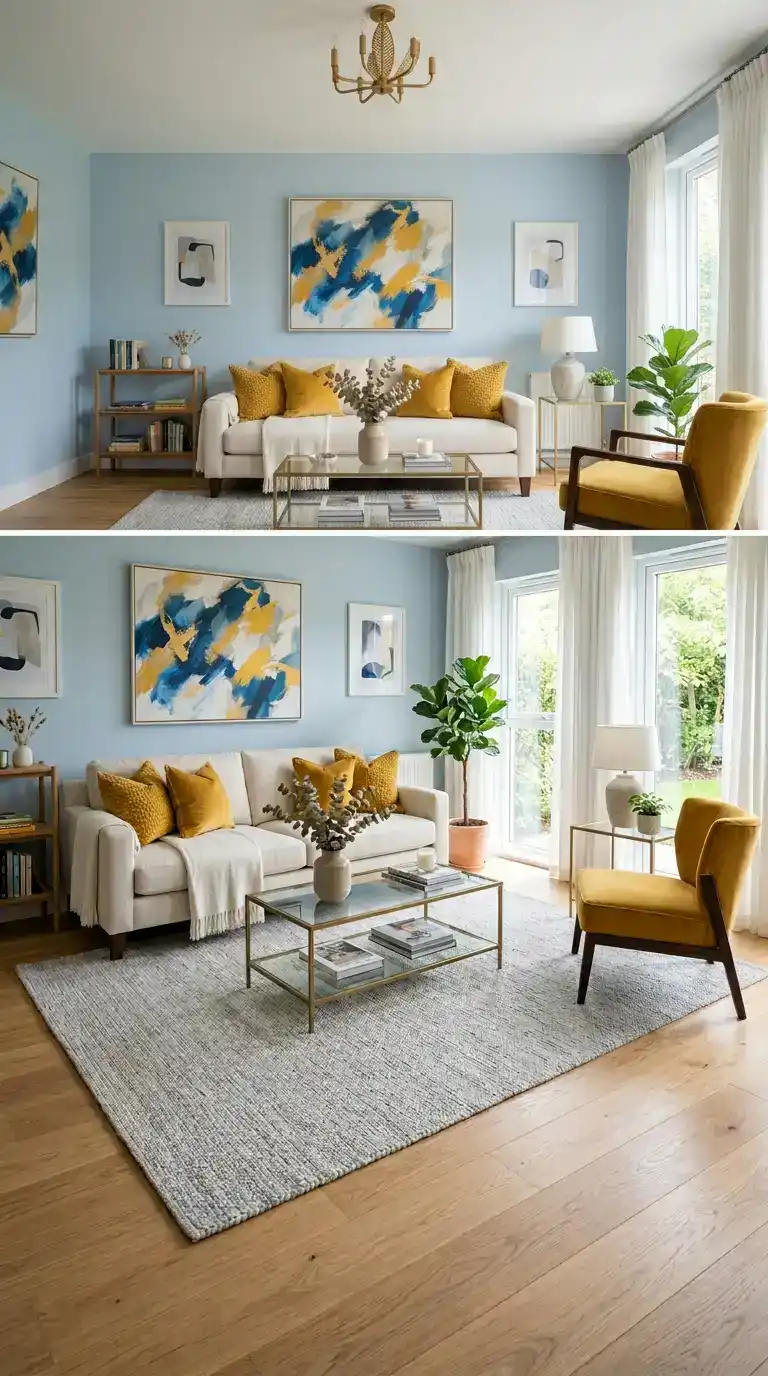
Pale blue and mustard yellow create a cheerful, energetic contrast that feels fresh and modern. The cool blue provides a calm foundation while mustard yellow adds warmth and optimism. Introduce mustard through throw pillows, a statement armchair, or artwork, and keep the rest of the room neutral to let the colors shine. Brass or gold accents enhance the warmth of the yellow while complementing the cool blue. A natural wood coffee table and jute rug add organic texture, while sheer white curtains keep the space feeling light and bright.
10. Pale Blue and Brass Elegance
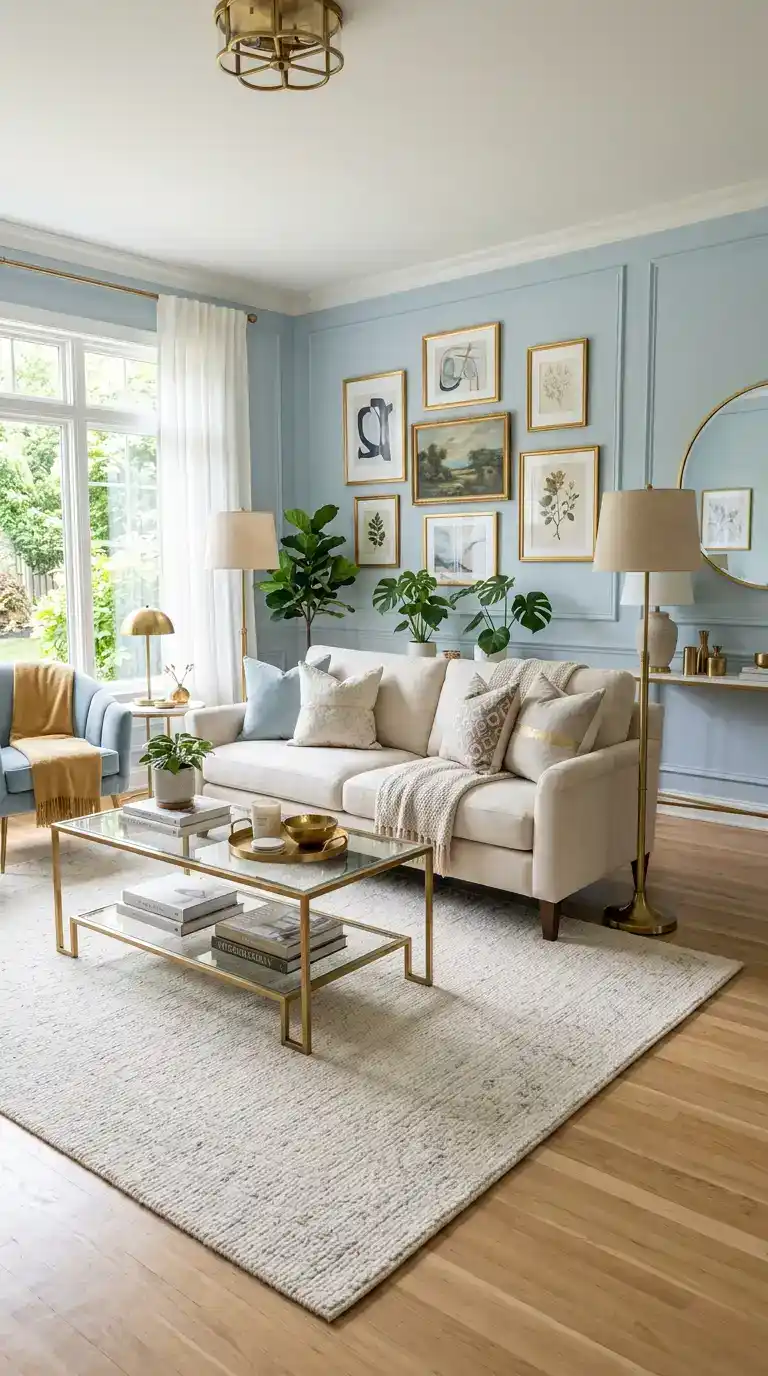
Pale blue pairs beautifully with brass accents. The warm metallic adds elegance and reflects light against the soft blue, creating a sophisticated, polished look. Use brass in light fixtures, coffee table bases, picture frames, and decorative accessories to introduce warmth and shine. This combination works well in traditional, modern, and eclectic interiors where a touch of glamour is desired. Pair with cream or beige furniture to keep the space feeling light and balanced, and add a wool or jute rug for organic texture underfoot.
11. Pale Blue with Layered Textiles
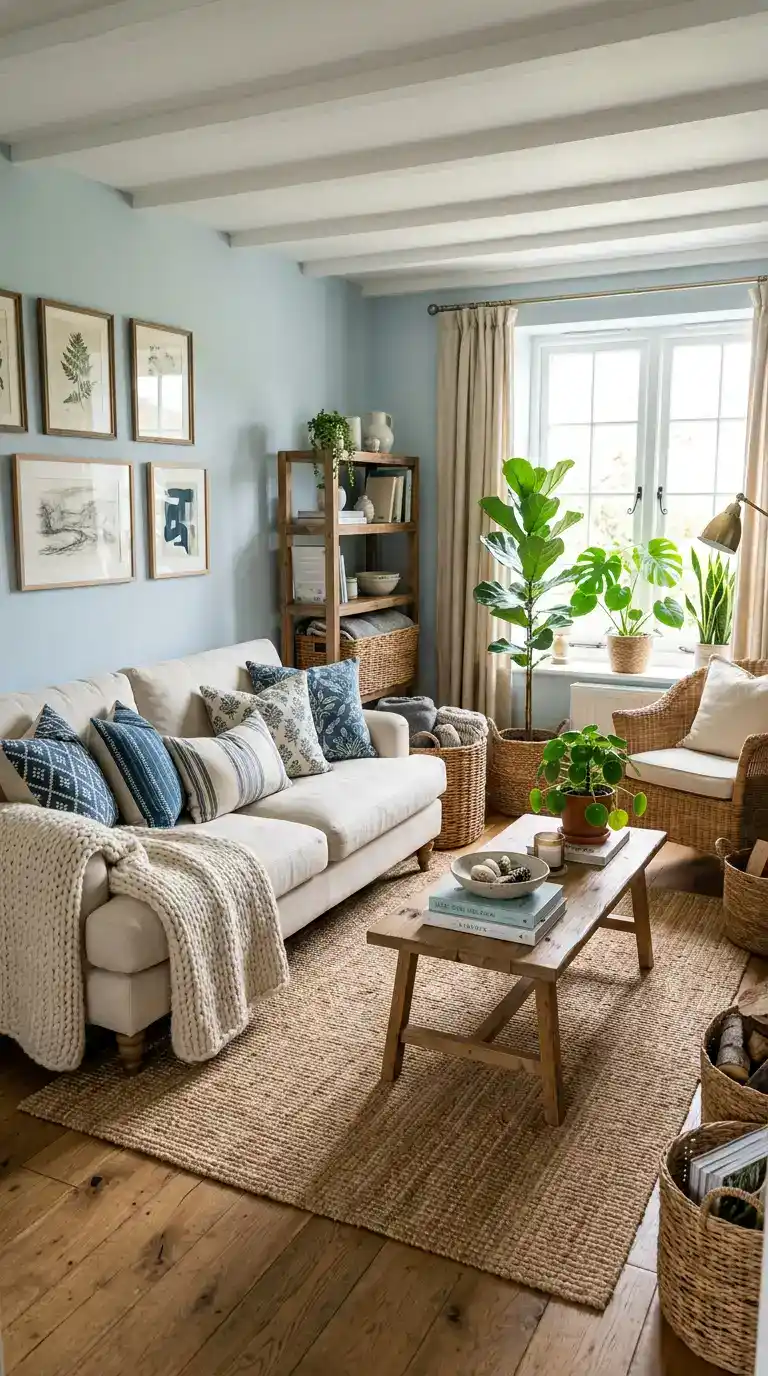
Layer textiles in pale blue, cream, and natural tones for depth and visual interest. Use a pale blue sofa as the foundation, and add cream textured pillows, a chunky knit throw, and a blue and cream patterned area rug. The combination of textures—linen, wool, cotton—adds richness and prevents the palette from feeling flat. Incorporate natural wood accents, woven baskets, and potted plants to soften the contrast and add organic warmth. This approach creates a cozy, inviting atmosphere that feels both serene and thoughtfully curated.
12. Pale Blue with Dark Wood and Leather
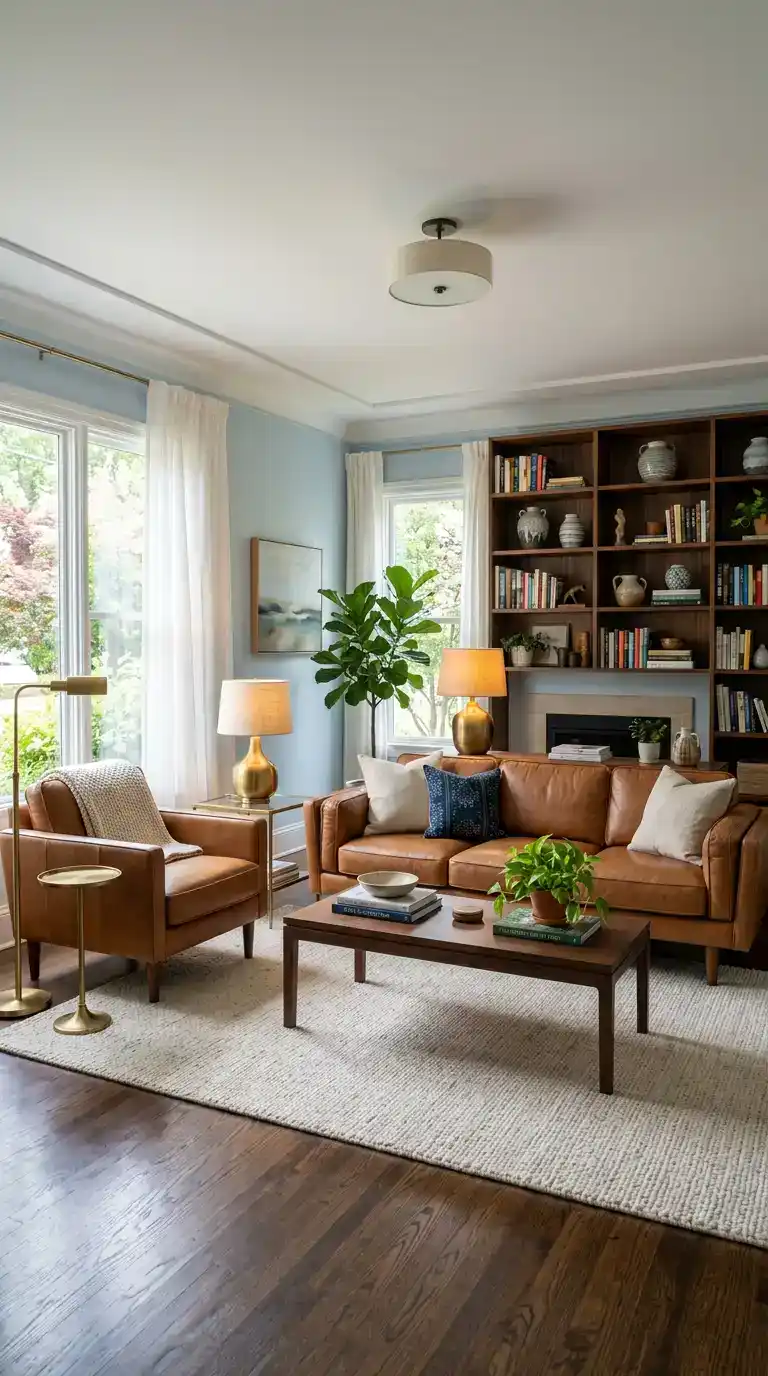
Pale blue walls provide a soft, airy backdrop that allows dark wood furniture and leather accents to stand out with warmth and richness. Use a walnut coffee table, dark wood shelving, or a cognac leather armchair to add depth and contrast. The combination feels grounded, sophisticated, and inviting—perfect for traditional, transitional, and rustic interiors. Brass or gold accents add warmth and elegance, while a light rug keeps the space feeling balanced. This approach creates a living room that feels both serene and substantial.
Frequently Asked Questions
- What colors go well with pale blue?
Pale blue pairs beautifully with white and cream for a fresh look, blush pink for soft romance, terracotta for warm earthy contrast, gray for cool sophistication, mustard yellow for cheerful energy, and natural wood for organic warmth. Brass and gold accents add elegance. - Is pale blue suitable for small living rooms?
Yes. Pale blue is a light, reflective color that makes small spaces feel larger and more open. Pair with white trim, sheer curtains, and mirrors to maximize brightness and create an airy atmosphere. Its soft quality prevents the space from feeling cramped or closed in. - What type of curtains work best with pale blue walls?
Sheer white or cream curtains enhance the airy quality of pale blue. Linen curtains in natural tones add texture while maintaining a light, relaxed feel. Navy or patterned curtains that incorporate pale blue create bold contrast and visual interest. Pale blue curtains create a seamless, monochromatic look. - Can pale blue work in a modern living room?
Yes. Pale blue can feel fresh and contemporary when paired with clean lines, gray accents, and metallic finishes. Use pale blue on an accent wall, a sleek sofa, or through minimalist accessories for a modern take on this soft hue. Its versatility allows it to adapt to a wide range of styles. - How can I incorporate pale blue without committing to paint or large furniture?
Start with accessories—pale blue throw pillows, blankets, area rugs, and ceramic vases. Pale blue curtains are another impactful option that can be easily changed. Accent chairs or ottomans in pale blue also add color without overwhelming the existing palette.
Pale blue is a color that brings softness, serenity, and gentle beauty into any living room. Its light, airy quality makes spaces feel larger and more peaceful, while its versatility allows it to adapt to a wide range of design styles—from coastal and Scandinavian to modern and traditional. Whether you embrace it on walls, through a velvet sofa, or in carefully chosen accessories, pale blue transforms living rooms into havens of calm that feel both timeless and deeply personal.


