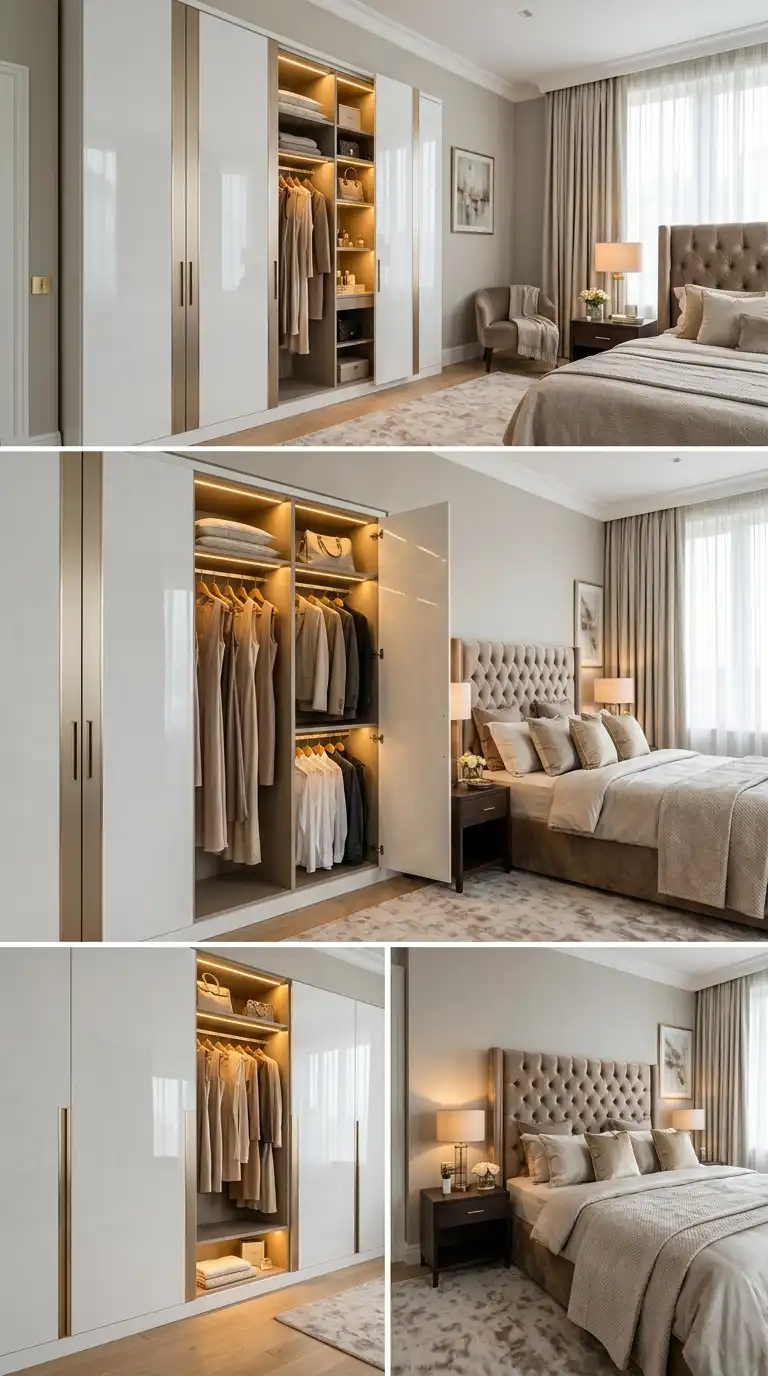
15 Wardrobe Organisation Tips
A well-organised wardrobe is the foundation of a calm, functional bedroom. When your clothes, accessories, and shoes are neatly arranged and easy to find, your morning routine becomes smoother, and your space feels more peaceful. Whether you have a spacious walk-in closet or a compact built-in wardrobe, thoughtful organisation can double your storage capacity and extend the life of your garments. Here are fifteen wardrobe organisation tips to help you create a system that works for your lifestyle and keeps your belongings in pristine condition.
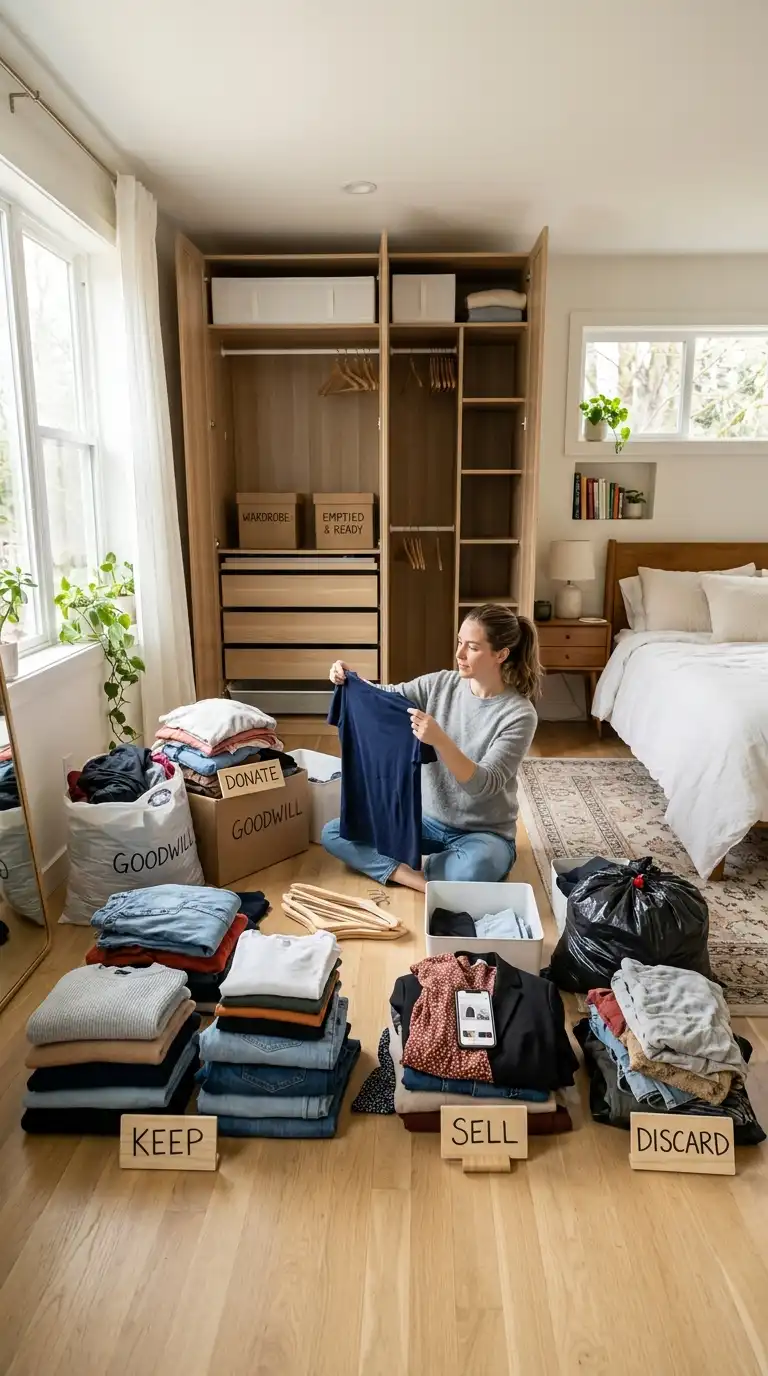
1. Start with a Complete Declutter
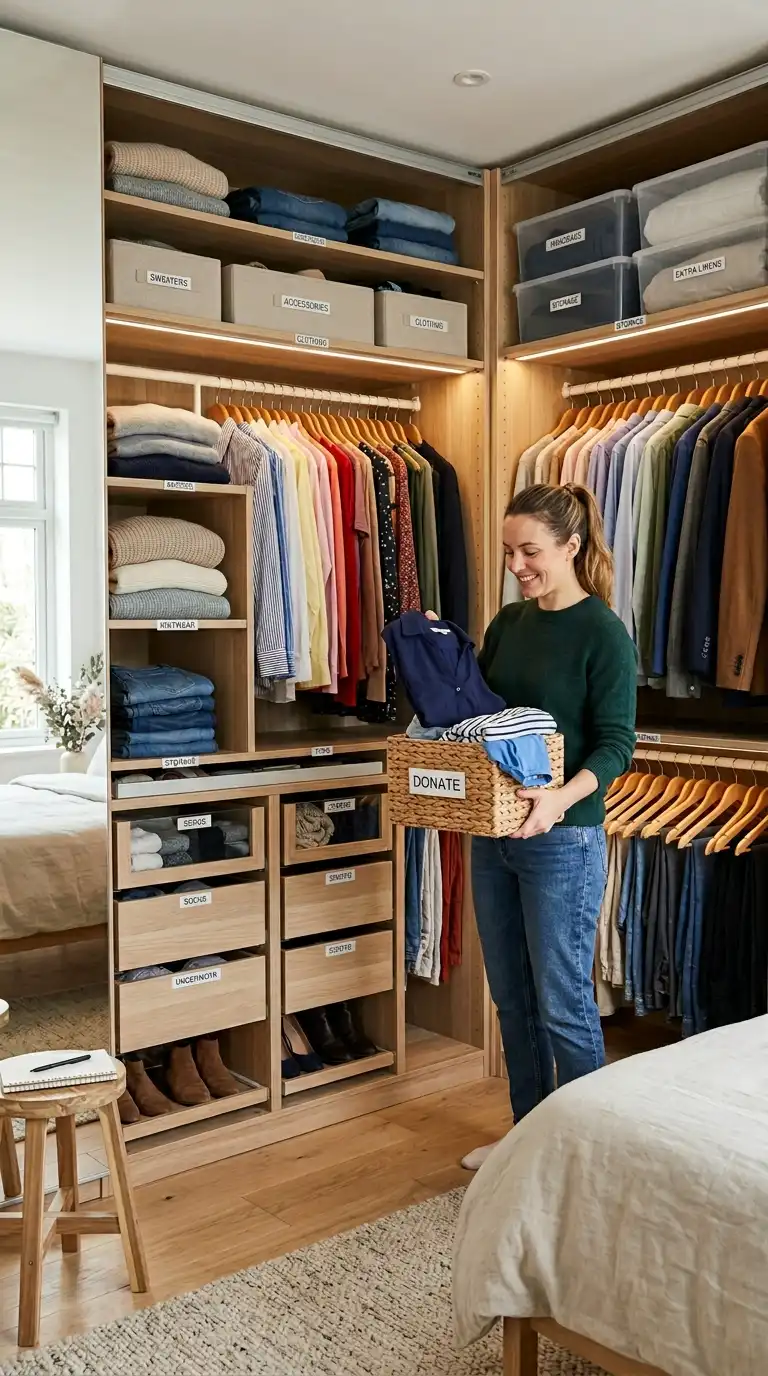
Before you can organise, you need to edit. Empty your entire wardrobe and sort every item into four categories: keep, donate, sell, and discard. Be honest with yourself about what you actually wear. If you haven’t worn an item in over a year, it is unlikely you will wear it again. Decluttering creates space for the pieces you truly love and use, making the organisation process far more effective.
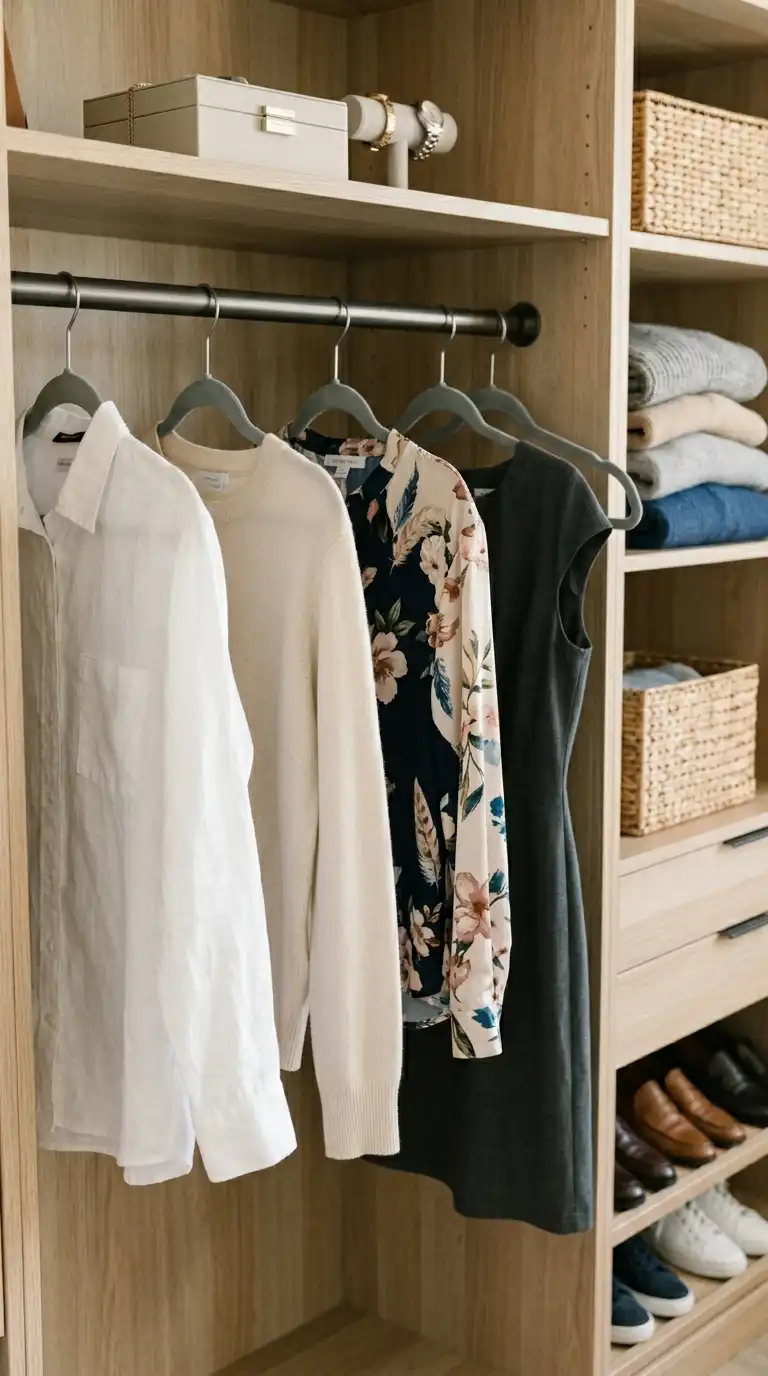
2. Use Uniform Hangers for a Cohesive Look
Swap mismatched plastic, wire, and wooden hangers for a single style of uniform hanger. Velvet hangers are excellent because they are slim, non-slip, and prevent clothes from sliding off. Uniform hangers create visual cohesion, maximise hanging space, and make your wardrobe look instantly more organised and boutique-like. Choose hangers that suit your clothing—padded hangers for delicate items, sturdy wooden hangers for suits, and clip hangers for skirts and trousers.
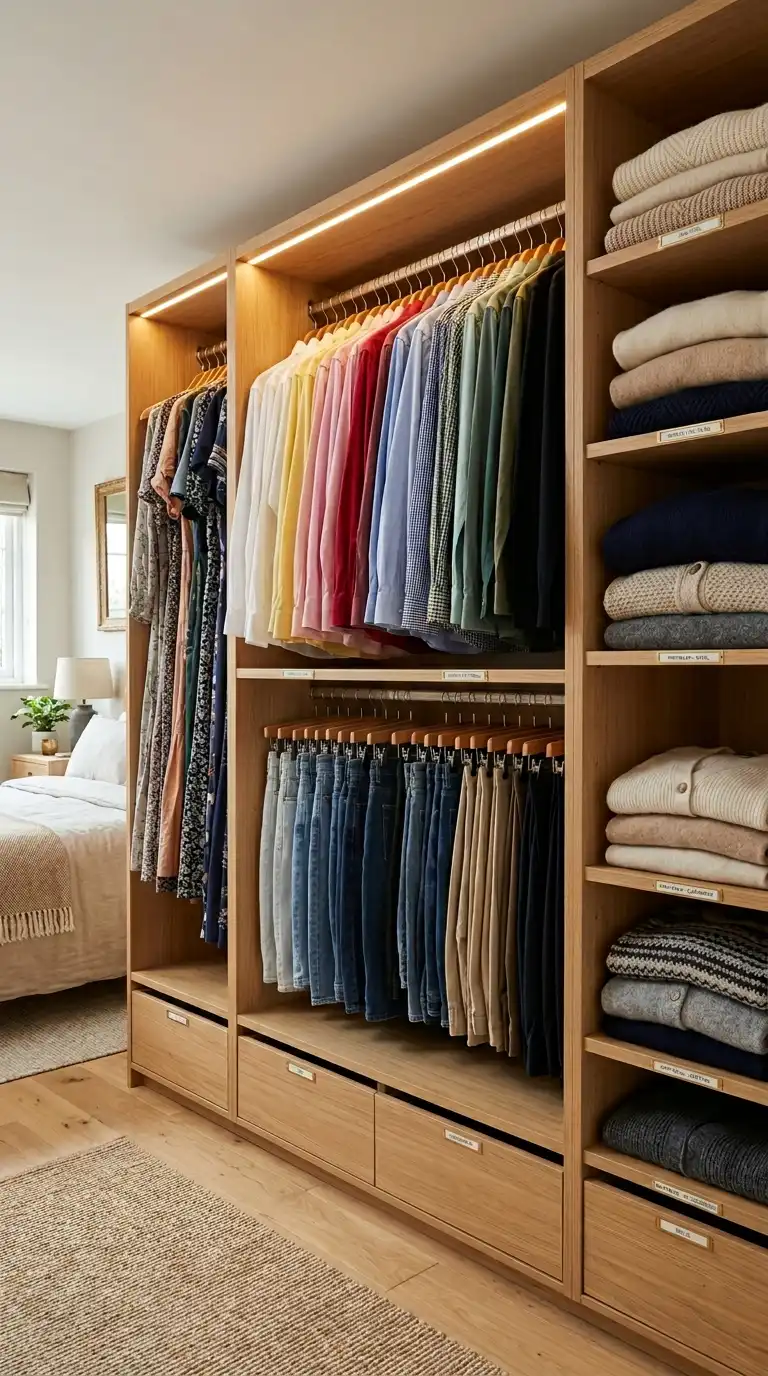
3. Categorise and Zone Your Wardrobe
Group similar items together to make finding what you need quick and intuitive. Create zones within your wardrobe: hang all dresses together, all shirts together, all trousers together. Within each category, organise by colour or by season. This zoning system reduces time spent searching and helps you see what you own at a glance. Consider arranging items by frequency of use—everyday essentials at eye level, seasonal or occasional items on higher or lower shelves.
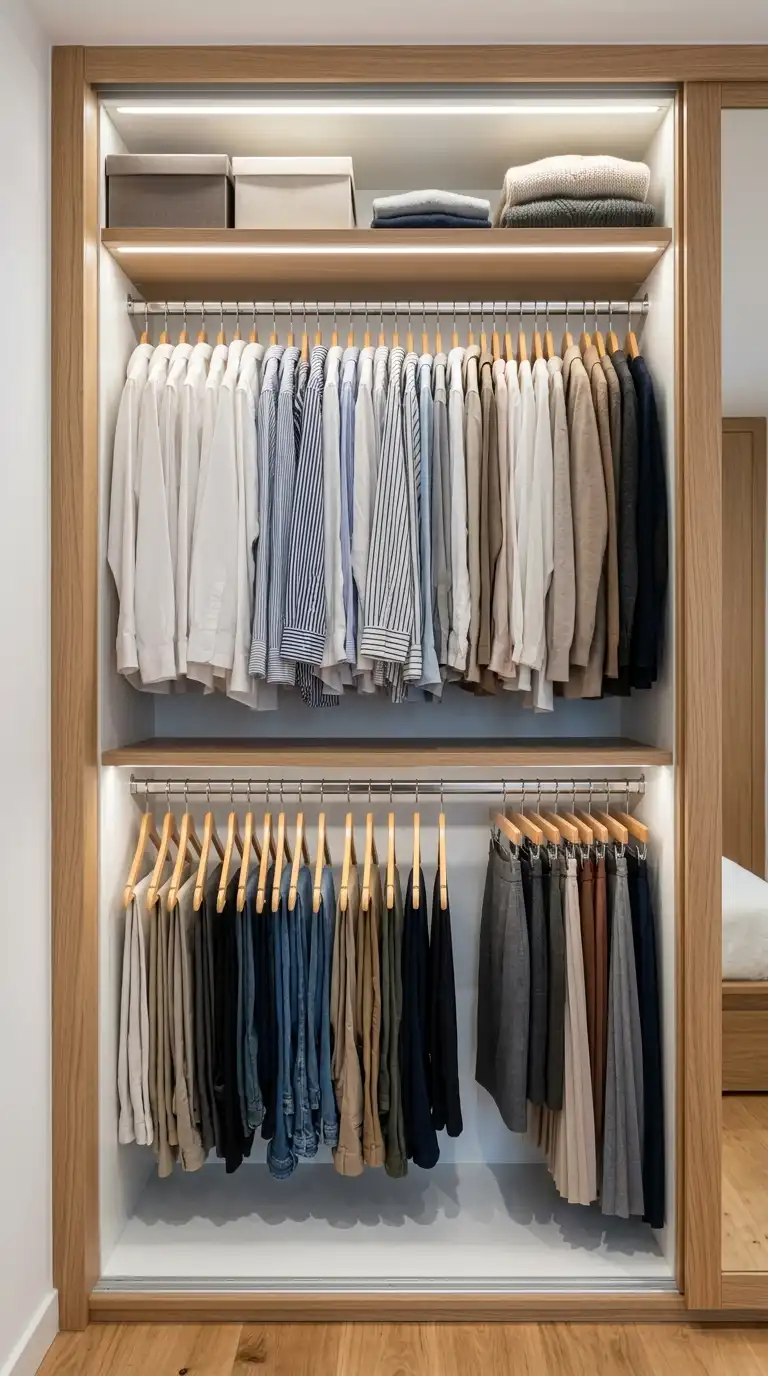
4. Maximise Vertical Space with Double Hanging Rods
If your wardrobe has high ceilings, install a second hanging rod below the primary rod to double your hanging space. Use the upper rod for shorter items like shirts, blouses, and jackets, and the lower rod for trousers, skirts, or folded items. This simple addition can dramatically increase capacity, especially in compact wardrobes where floor space is limited. For even more storage, consider adjustable rods that can be repositioned as your needs change.
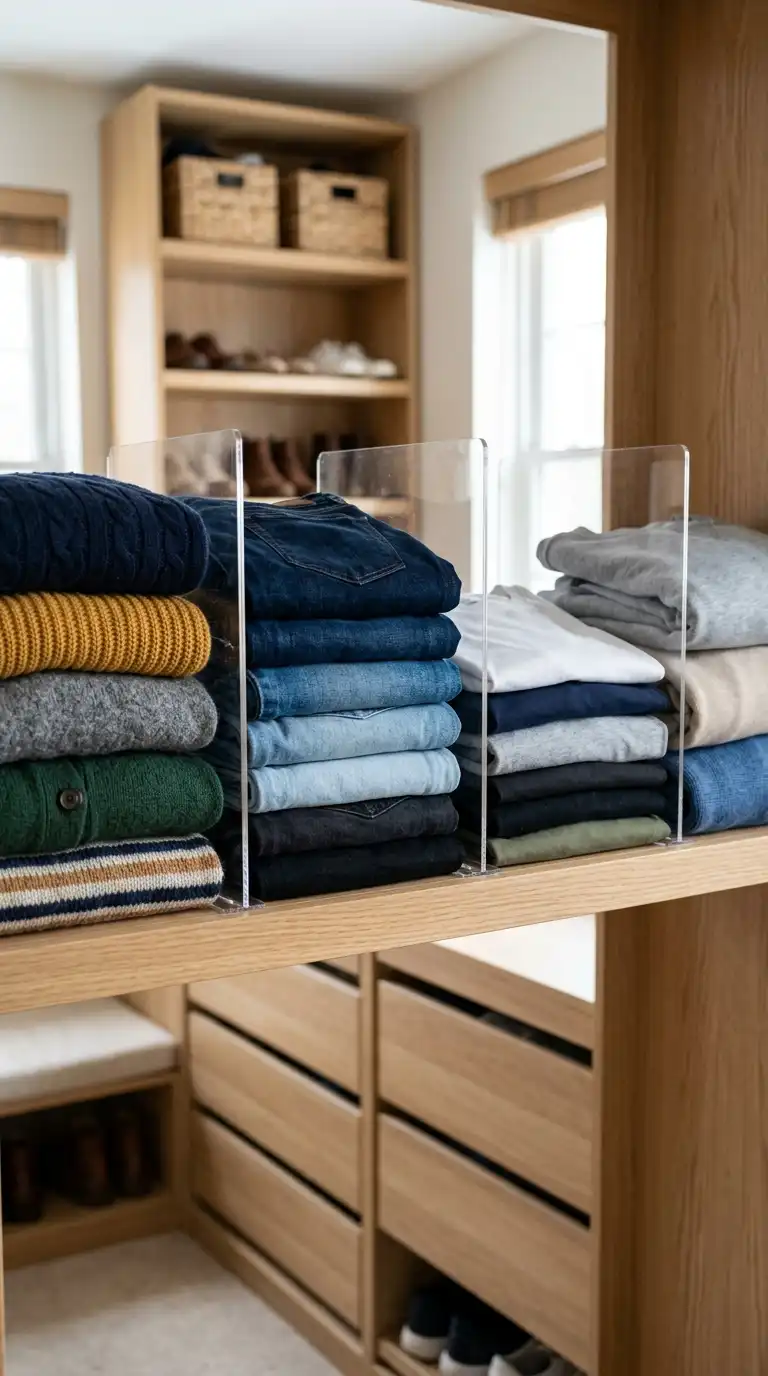
5. Invest in Shelf Dividers for Folded Items
Shelf dividers keep stacks of folded clothing neat, upright, and accessible. Use them for knitwear, jeans, t-shirts, and sweaters to prevent towering stacks from toppling over. Dividers allow you to create distinct categories on a single shelf, making it easy to grab what you need without disturbing the entire pile. Look for adjustable dividers that can be repositioned as your storage needs evolve.
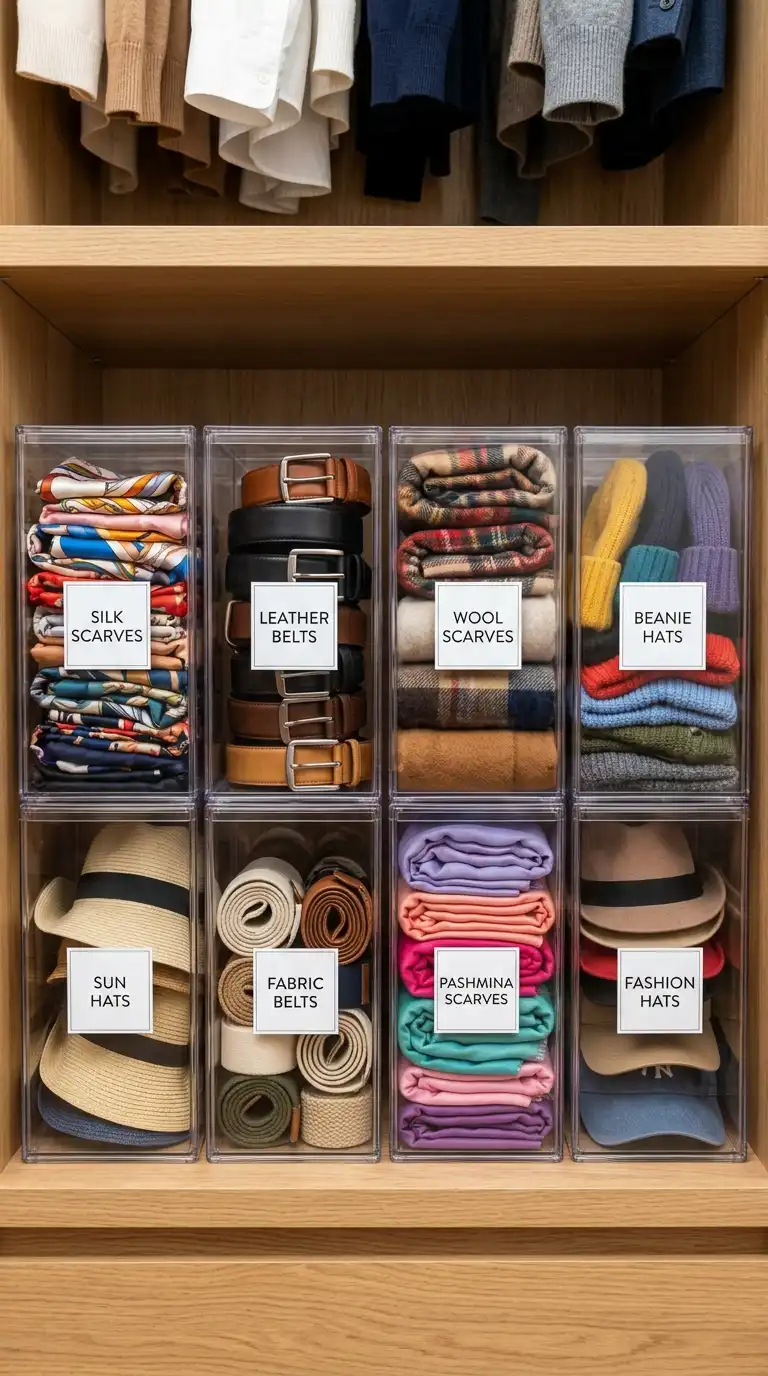
6. Use Clear Storage Boxes for Accessories
Clear storage boxes are essential for keeping accessories organised and visible. Use them for scarves, belts, hats, and seasonal items. Transparent containers allow you to see contents at a glance without opening every box. Label each box for even quicker identification. Stackable boxes maximise vertical space, and smaller divided boxes are perfect for jewellery, ties, and small accessories.
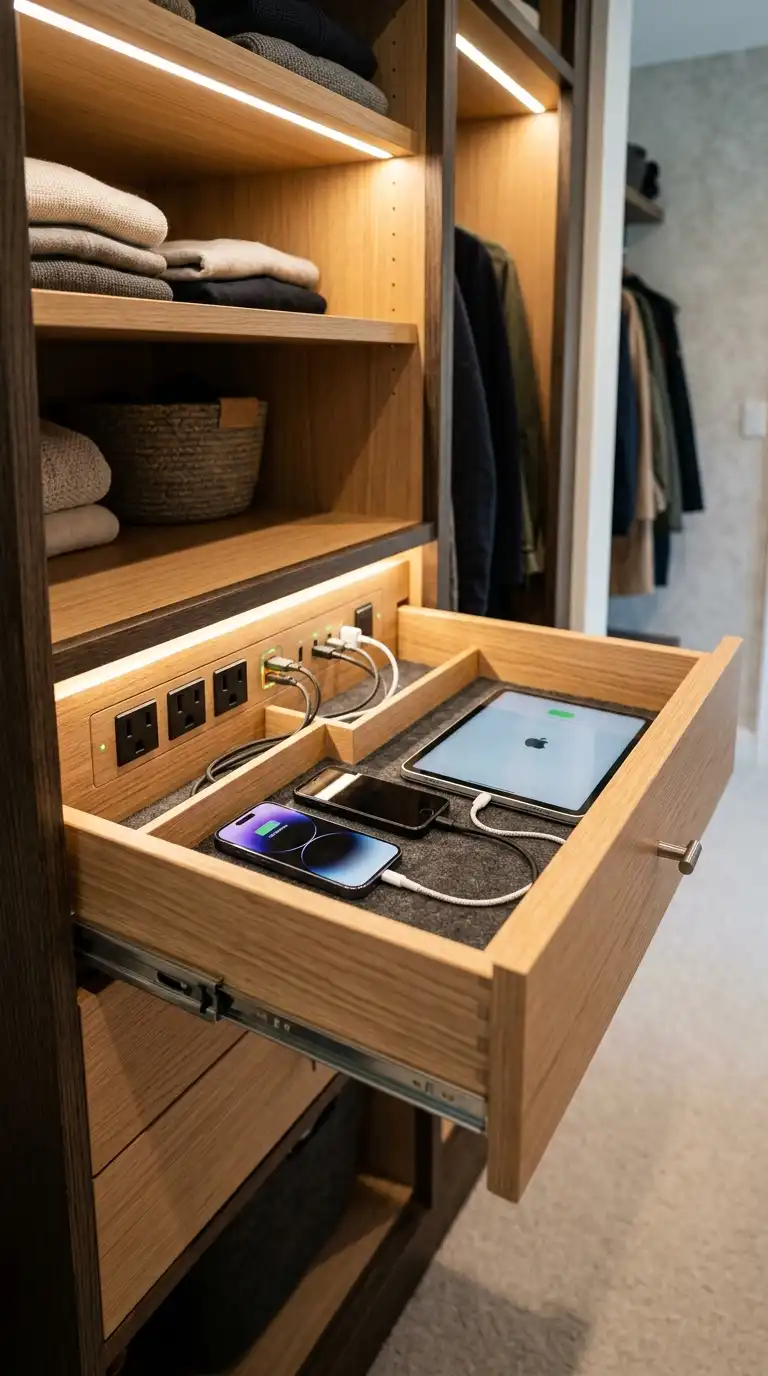
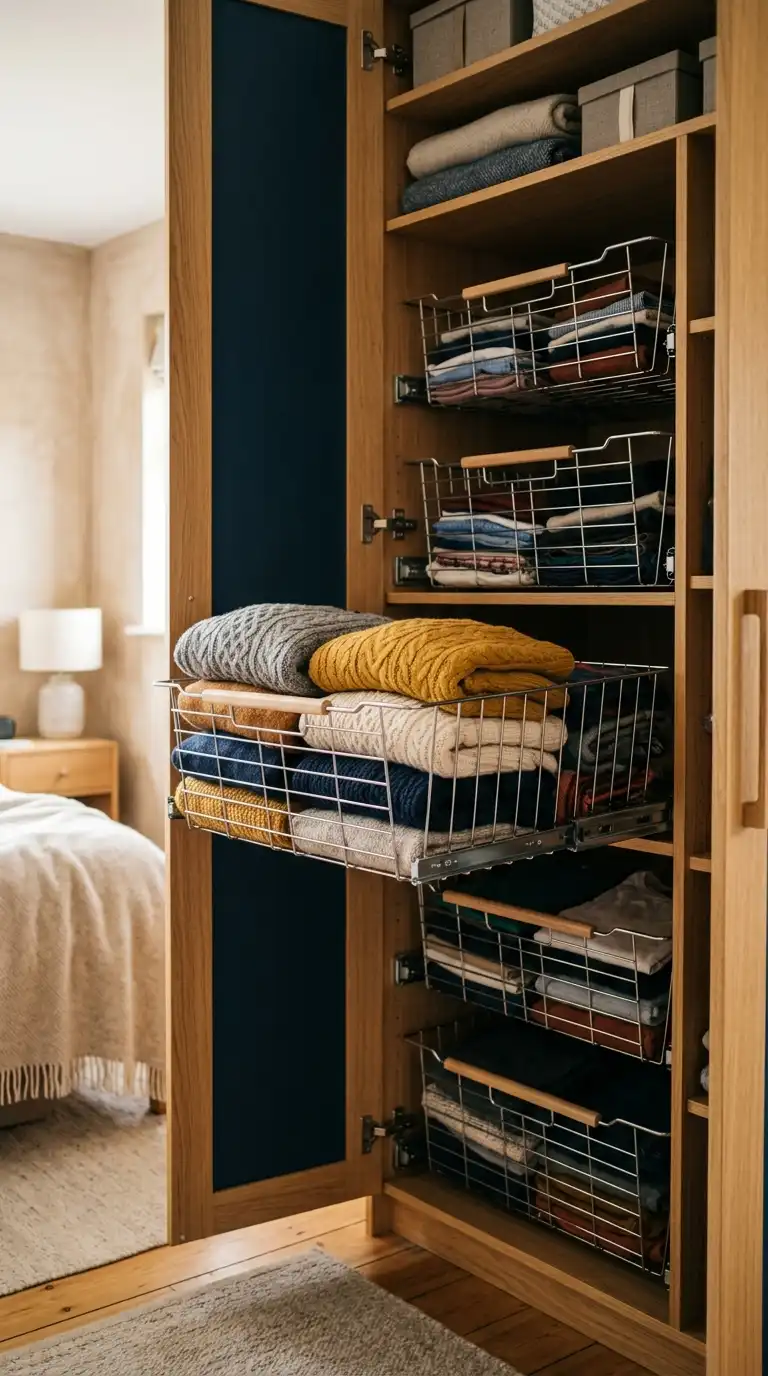
7. Install Pull-Out Drawers for Deep Shelves
Deep shelves can become black holes where items get lost. Retrofit them with pull-out drawers or sliding baskets to make everything accessible. Pull-out systems allow you to see and reach items at the back of the shelf without rummaging. Use them for folded clothing, shoes, or bulkier items like bags and linens. Custom-fit pull-out units maximise every inch of storage space.
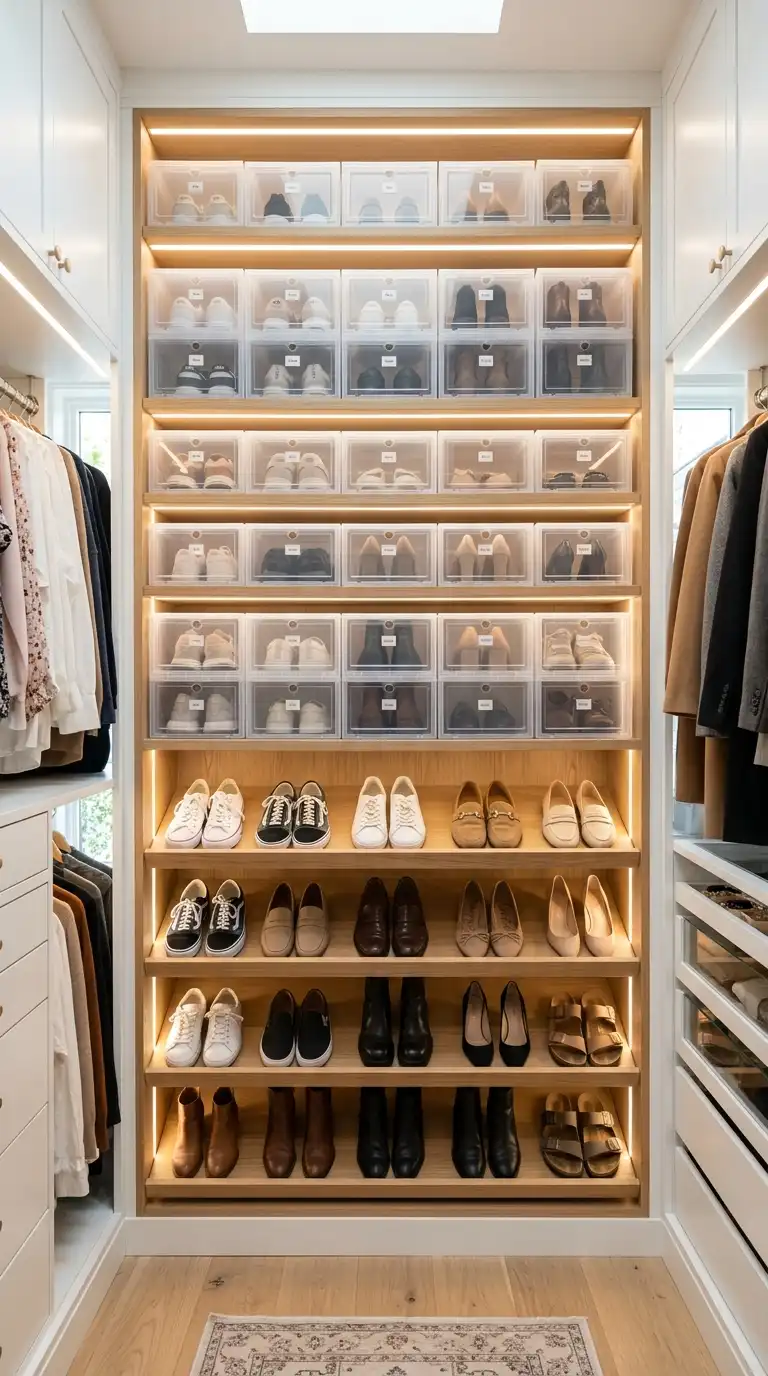
8. Store Shoes in Clear Boxes or on Angled Shelves
Keep shoes organised and visible by storing them in clear shoe boxes or on angled shelves. Clear boxes protect shoes from dust while allowing you to see what you have. Stackable shoe boxes maximise vertical space. Alternatively, angled shelves display shoes attractively and make selection easy. For frequently worn shoes, consider a dedicated shoe rack or pull-out shoe drawer.
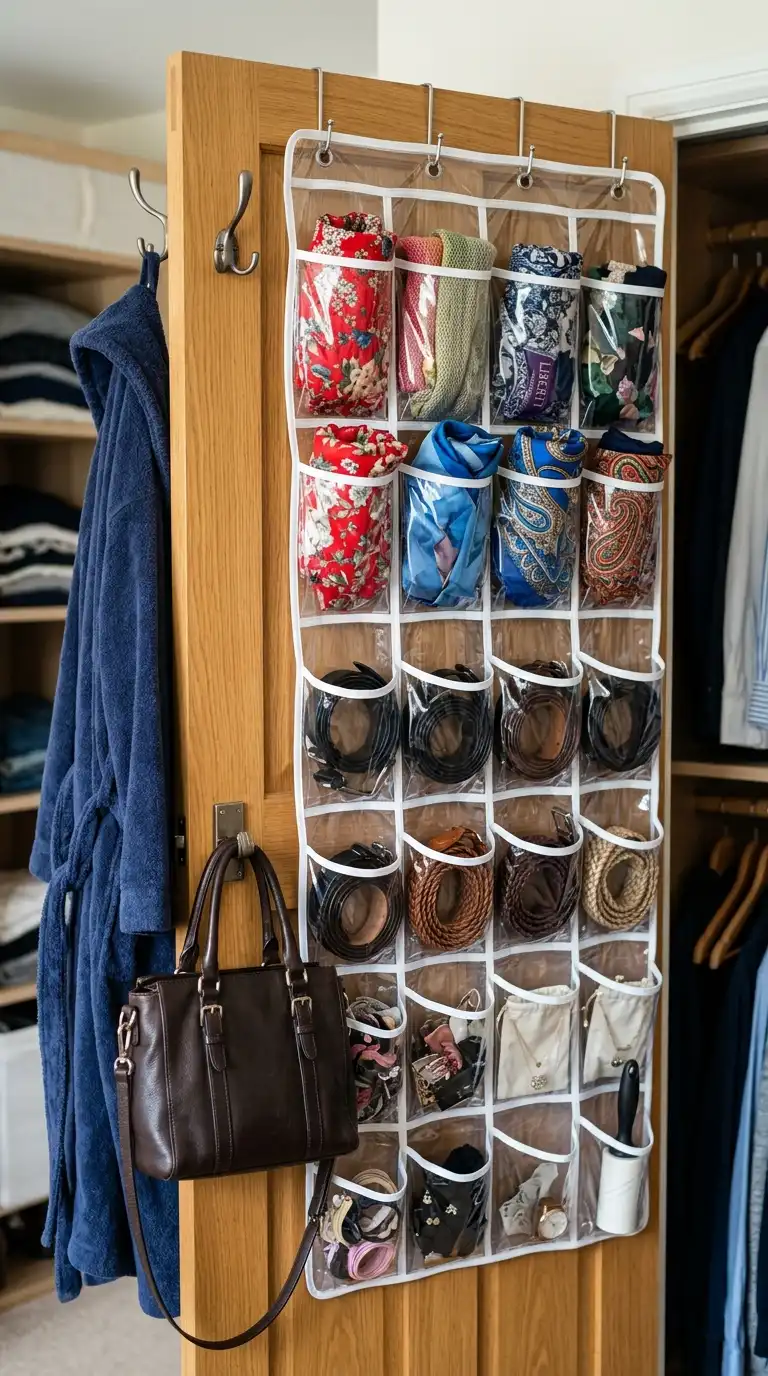
9. Utilise Door Space with Over-the-Door Organisers
The inside of wardrobe doors offers valuable storage space often overlooked. Install over-the-door organisers with pockets for accessories, shoes, or cleaning supplies. Use hooks for robes, bags, or frequently worn items. Door-mounted racks are ideal for smaller items that would otherwise clutter shelves or drawers. Choose organisers that match your wardrobe’s aesthetic for a cohesive look.
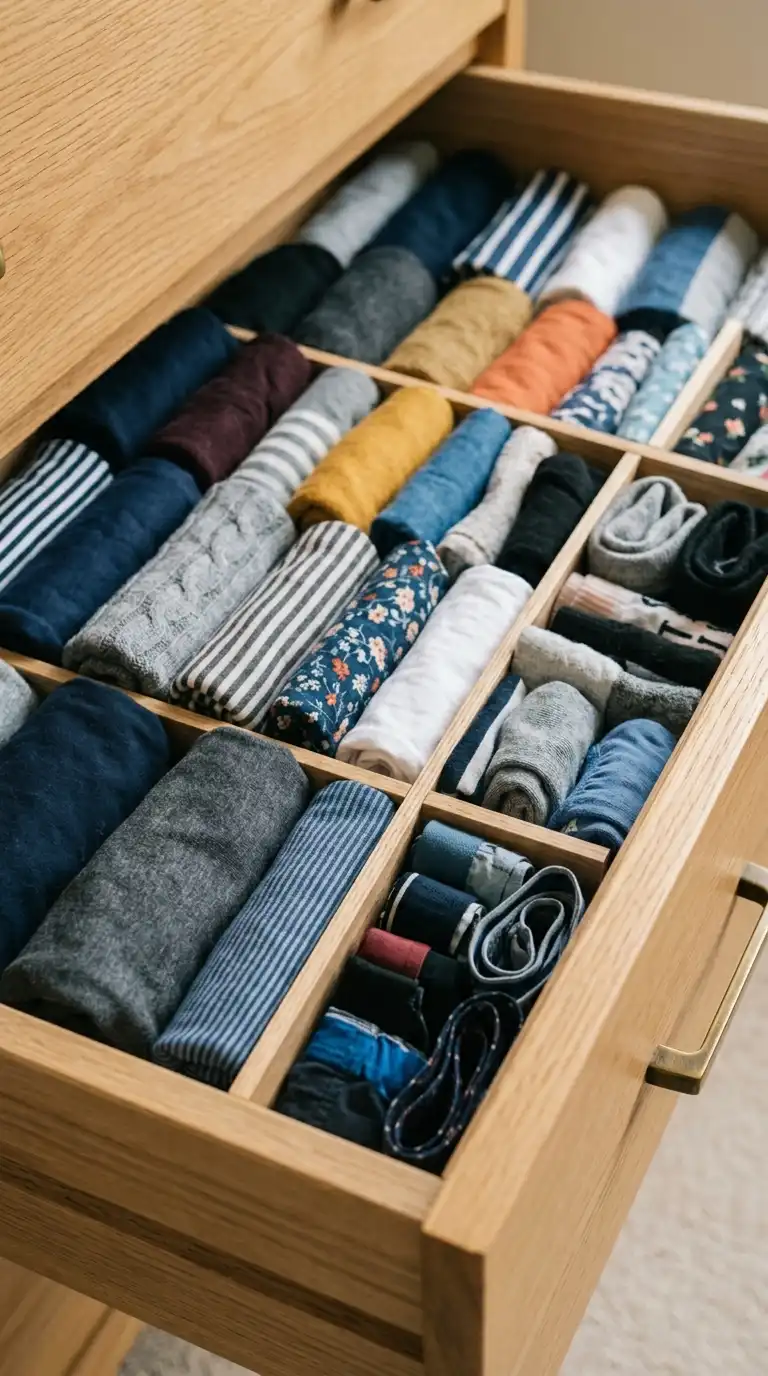
10. Fold Clothes Using the KonMari Method
The KonMari folding method transforms how you store folded clothing. Instead of stacking items horizontally, fold them into compact rectangles that stand upright in drawers or on shelves. This technique allows you to see every item at a glance, prevents stacks from toppling, and maximises drawer space. Master this method for t-shirts, knitwear, jeans, and undergarments.
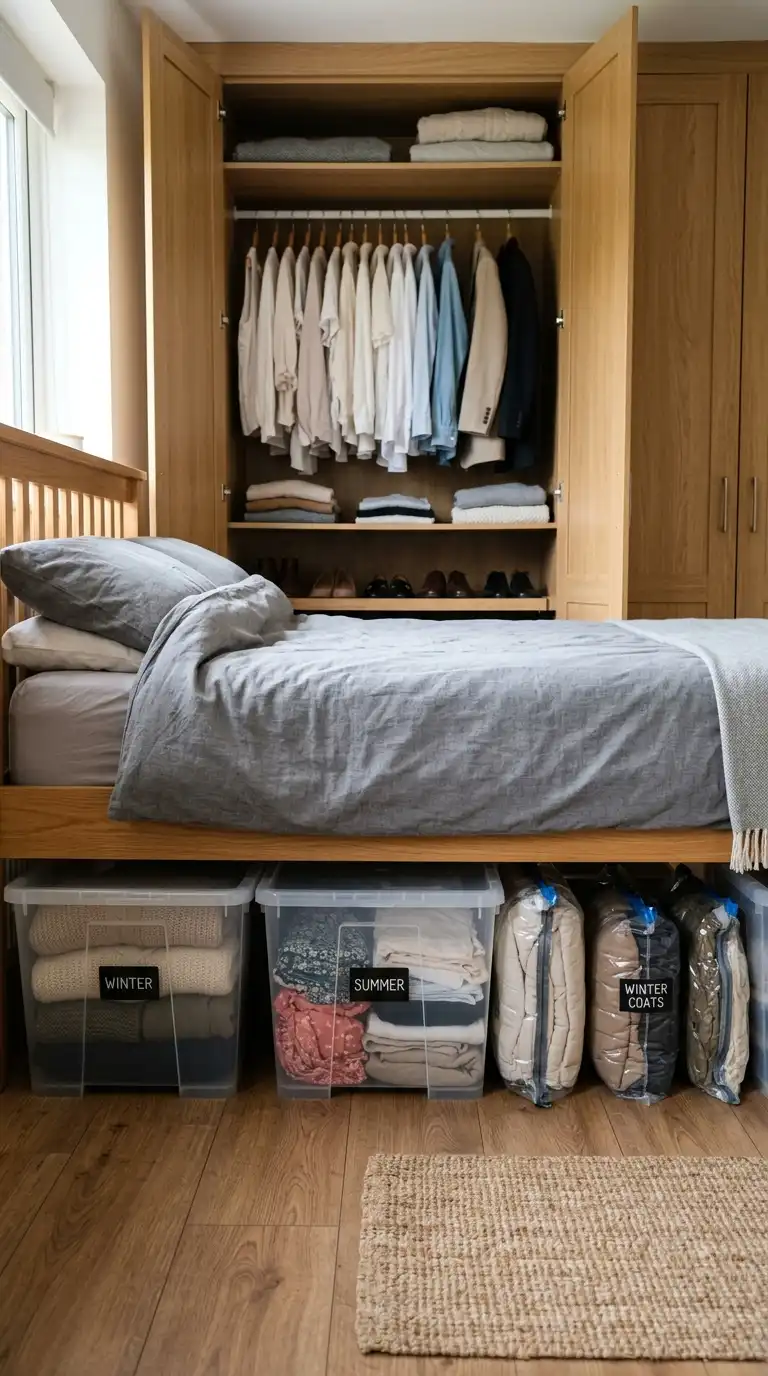
11. Rotate Seasonal Clothing
Keep your wardrobe manageable by rotating clothing seasonally. Store off-season items in vacuum-sealed bags or clear storage bins placed on high shelves or under the bed. When seasons change, swap the contents to keep only current weather-appropriate items in your main wardrobe. This practice reduces clutter, simplifies daily choices, and protects delicate fabrics from damage.
12. Add Drawer Dividers for Small Items
Drawer dividers are essential for keeping small items like underwear, socks, accessories, and jewellery organised. Adjustable dividers allow you to customise compartment sizes to suit your needs. Separate items by category to make morning routines faster and more efficient. Divided drawers prevent small items from becoming tangled or lost in a jumbled mess.
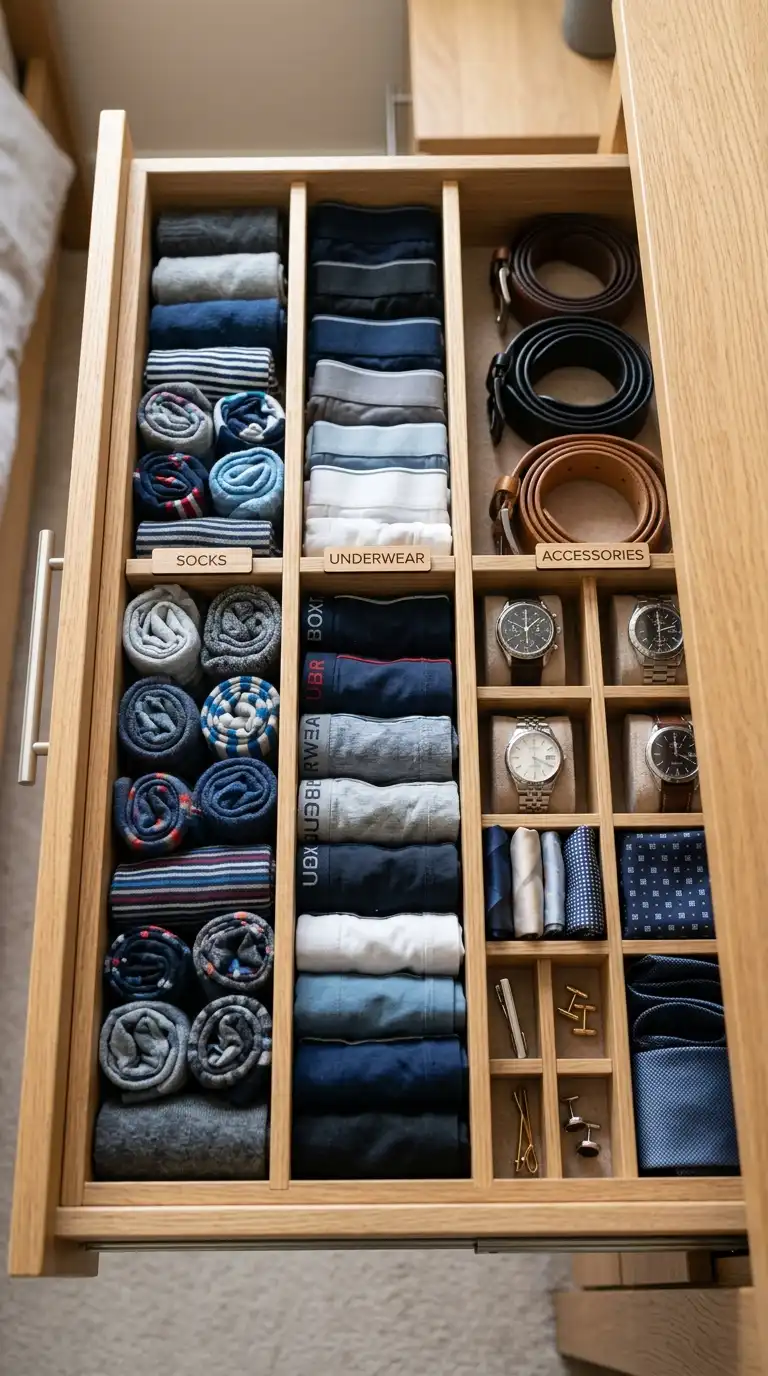
13. Label Everything for Easy Identification
Labels add a layer of organisation that makes maintaining your system effortless. Use a label maker or handwritten tags to identify shelf sections, drawer contents, and storage boxes. Labels are especially helpful for family members sharing a wardrobe or for seasonal storage boxes. Clear labelling ensures everything has a designated place and makes tidying up quick and intuitive.
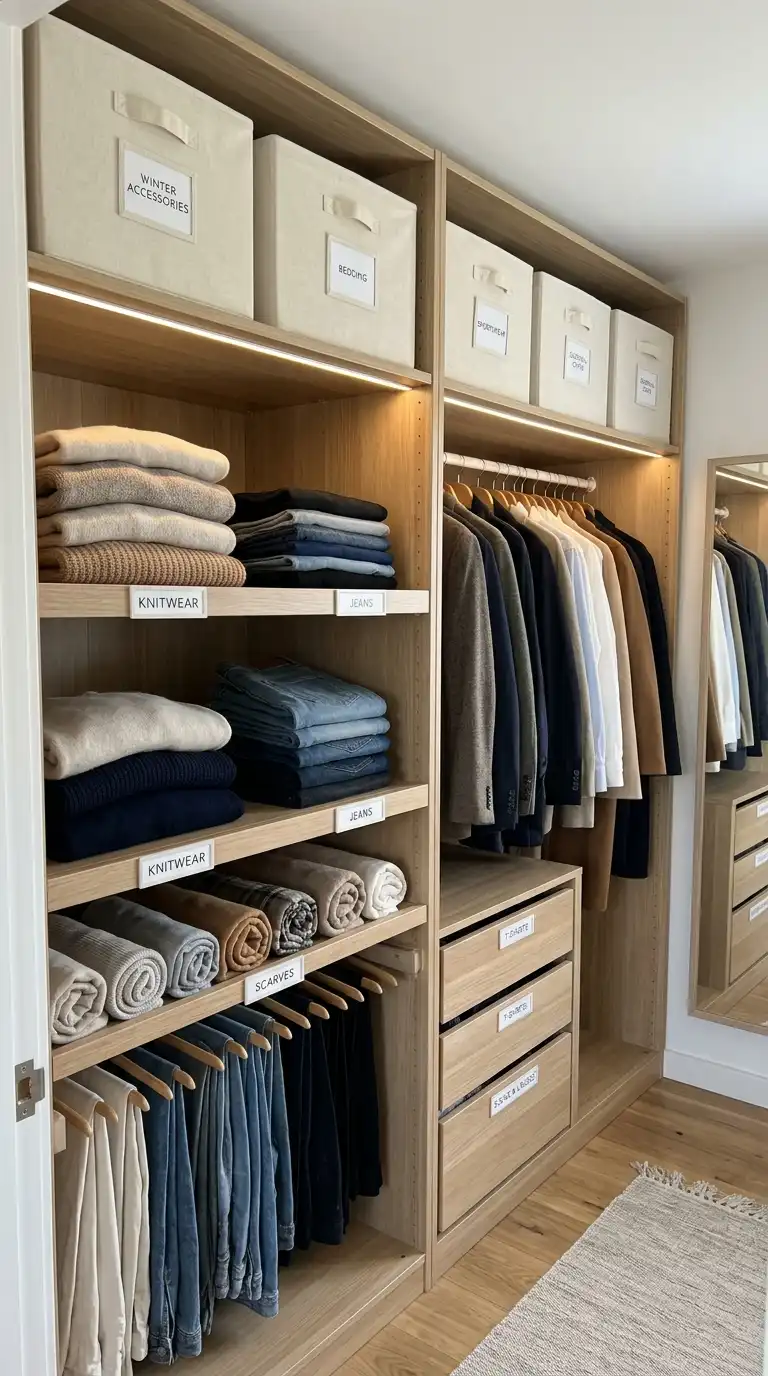
14. Create a Capsule Wardrobe Section
Designate a section of your wardrobe for a capsule wardrobe—a curated collection of versatile, high-quality pieces that you wear most frequently. This section might include neutral tops, tailored trousers, classic jackets, and essential accessories. Having a capsule section simplifies daily dressing and ensures your most-loved items are always easy to find. Refresh the capsule seasonally to reflect changing needs.
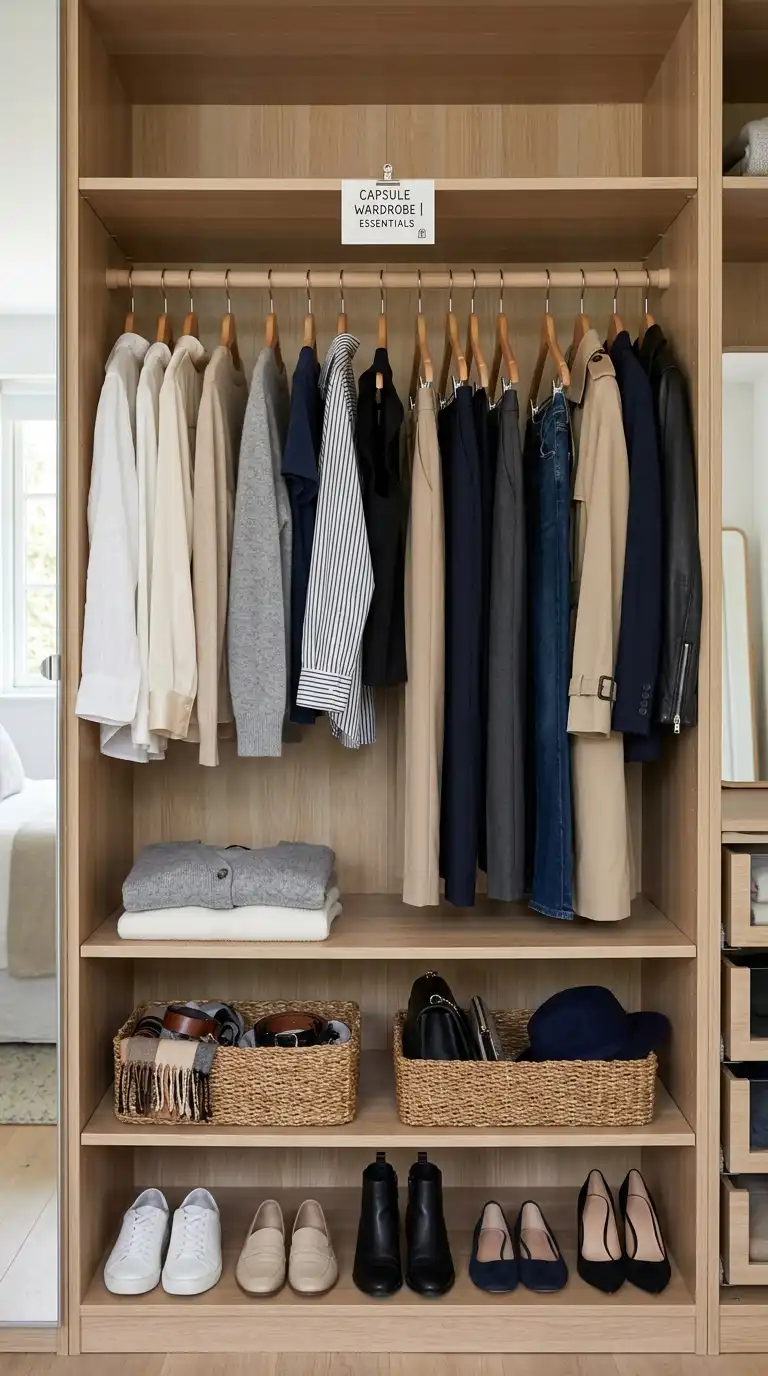
15. Maintain Your System with Regular Edits
Organisation is not a one-time event—it requires maintenance. Set aside time every season to review your wardrobe, reassess what you are wearing, and remove items that no longer serve you. A quick monthly tidy to return items to their designated places keeps the system functioning smoothly. Regular edits prevent clutter from accumulating and ensure your wardrobe remains a space of calm and efficiency.
Frequently Asked Questions
- How often should I declutter my wardrobe?
Aim to declutter at least twice a year—typically at the change of seasons. This allows you to rotate seasonal items and reassess what you actually wear. Quick monthly edits can also help maintain the system and prevent clutter from building up. - What is the best way to store handbags?
Stuff handbags with tissue paper to help them maintain their shape. Store them upright on a shelf or in clear dust bags to protect from dust. For smaller spaces, use shelf dividers or hang handbags on hooks inside the wardrobe door. Avoid hanging heavy bags by their straps, as this can cause stretching and damage. - How do I organise a small wardrobe with limited space?
Maximise vertical space with double hanging rods. Use slim velvet hangers to save space. Utilise door space with over-the-door organisers. Store off-season items elsewhere—under the bed or in vacuum-sealed bags. Choose multi-functional furniture like a bed with built-in storage to supplement your wardrobe. - What should I do with items that don’t fit my current organisation system?
Consider whether those items are worth keeping. If they are, find a dedicated home for them within your system. If they do not fit neatly, they may be contributing to clutter. Reassess whether they truly belong in your wardrobe or if they could be stored elsewhere. - How can I encourage myself to maintain my organised wardrobe?
Make it a habit to return items to their designated places immediately after use. Set a reminder for seasonal edits. Celebrate the ease and calm that an organised wardrobe brings—the time saved each morning is often motivation enough to maintain the system.
A well-organised wardrobe is an investment in your daily well-being. By implementing these fifteen tips—from decluttering and categorising to using uniform hangers and pull-out storage—you can transform your wardrobe into a space that is functional, beautiful, and a pleasure to use. The time and effort you invest in creating an organised system will pay dividends in saved time, reduced stress, and a bedroom that feels like a true sanctuary.