12 Hall Wardrobe Ideas
A hall wardrobe—often the first storage space seen by guests—needs to balance style with functionality. Located in entryways, hallways, or transitional spaces, these wardrobes serve as a landing zone for coats, shoes, bags, and everyday essentials. A well-designed hall wardrobe keeps clutter at bay while making a welcoming first impression. Here are twelve hall wardrobe ideas to inspire your next project.
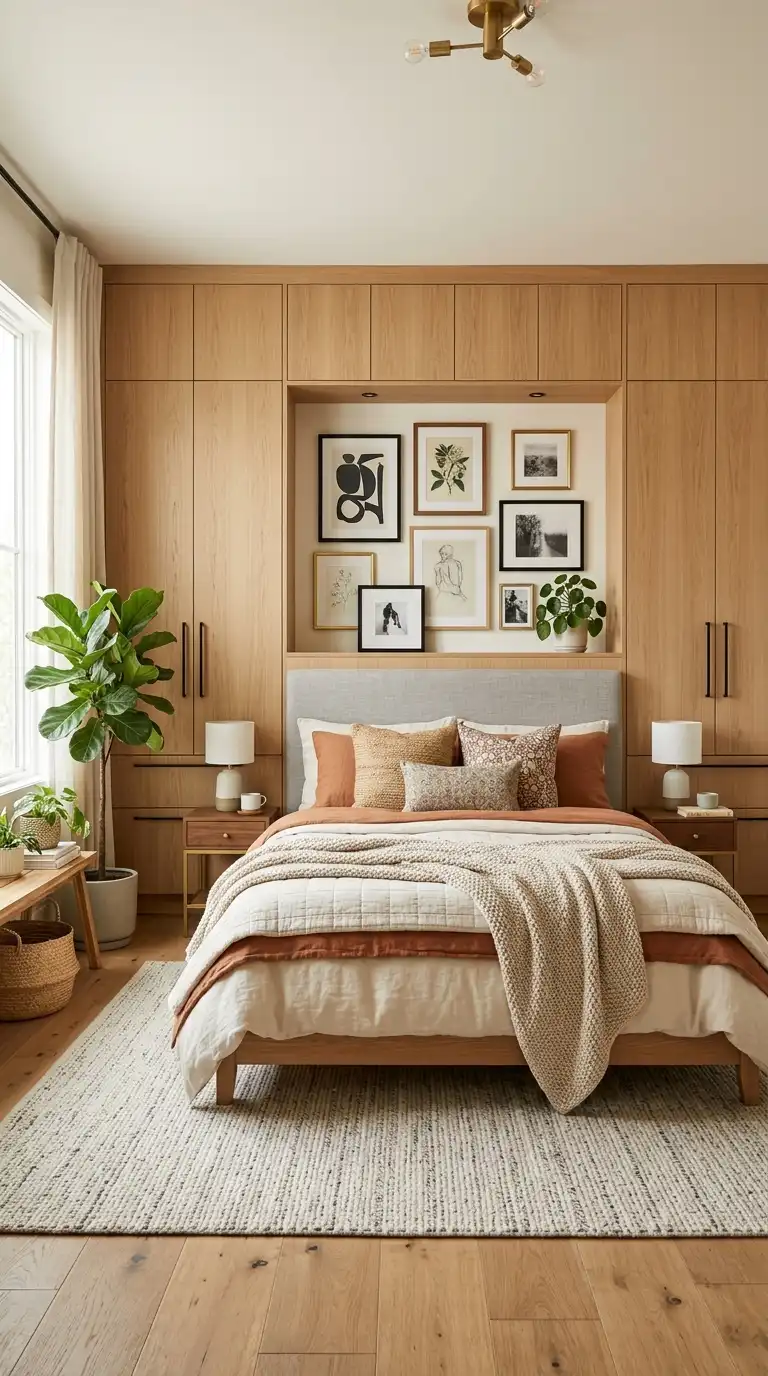
1. Floor-to-Ceiling Hall Wardrobe
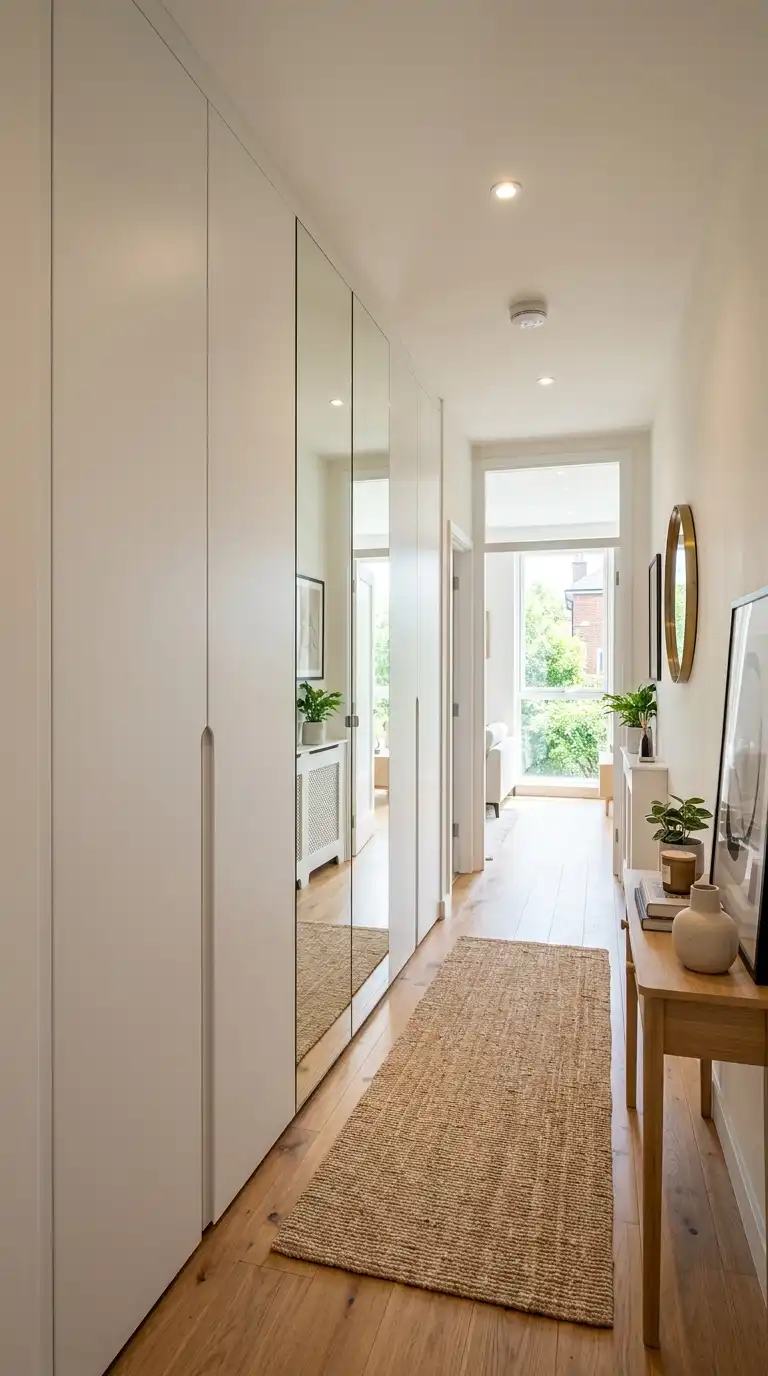
A floor-to-ceiling hall wardrobe maximizes vertical storage in often-narrow entry spaces. The continuous surface draws the eye upward, making the hallway feel taller and more spacious. Use mirrored panels to reflect light and visually expand the area. Handleless doors maintain a clean, uncluttered look.
2. Hall Wardrobe with Bench and Hooks
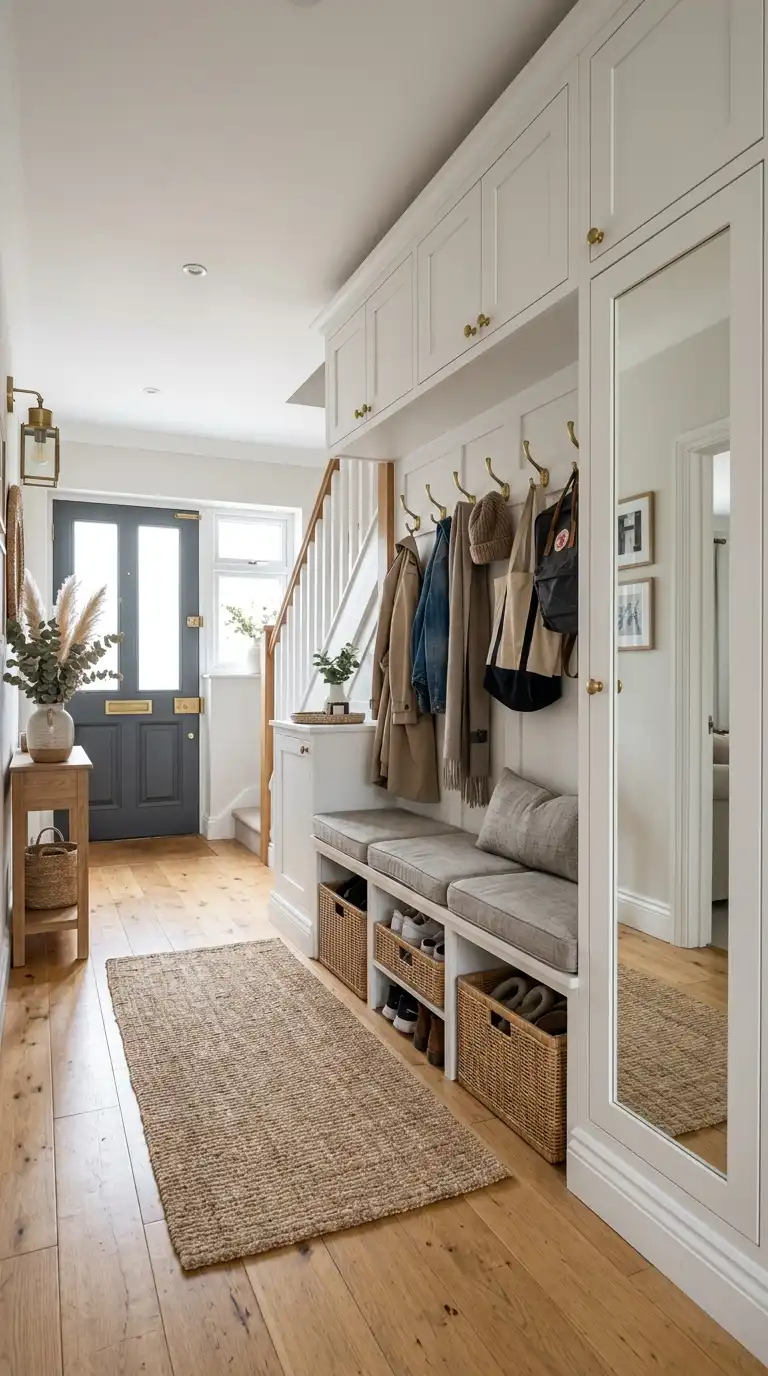
Combine storage with a drop zone by incorporating a built-in bench with hooks above. The bench provides a spot for putting on shoes, while hooks hold coats, bags, and scarves. Use the bench base for shoe storage or pull-out baskets. This design is both functional and welcoming.
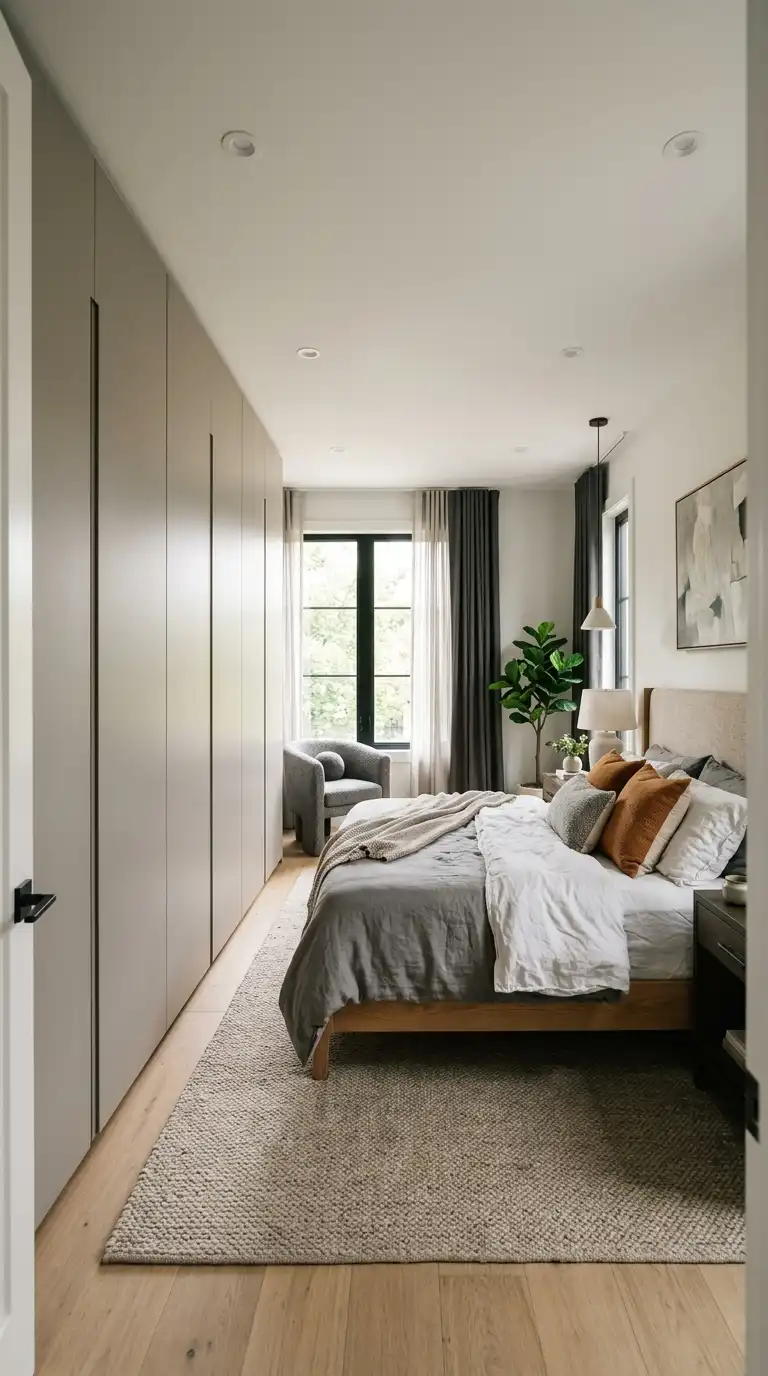
3. Slim Hall Wardrobe for Narrow Spaces
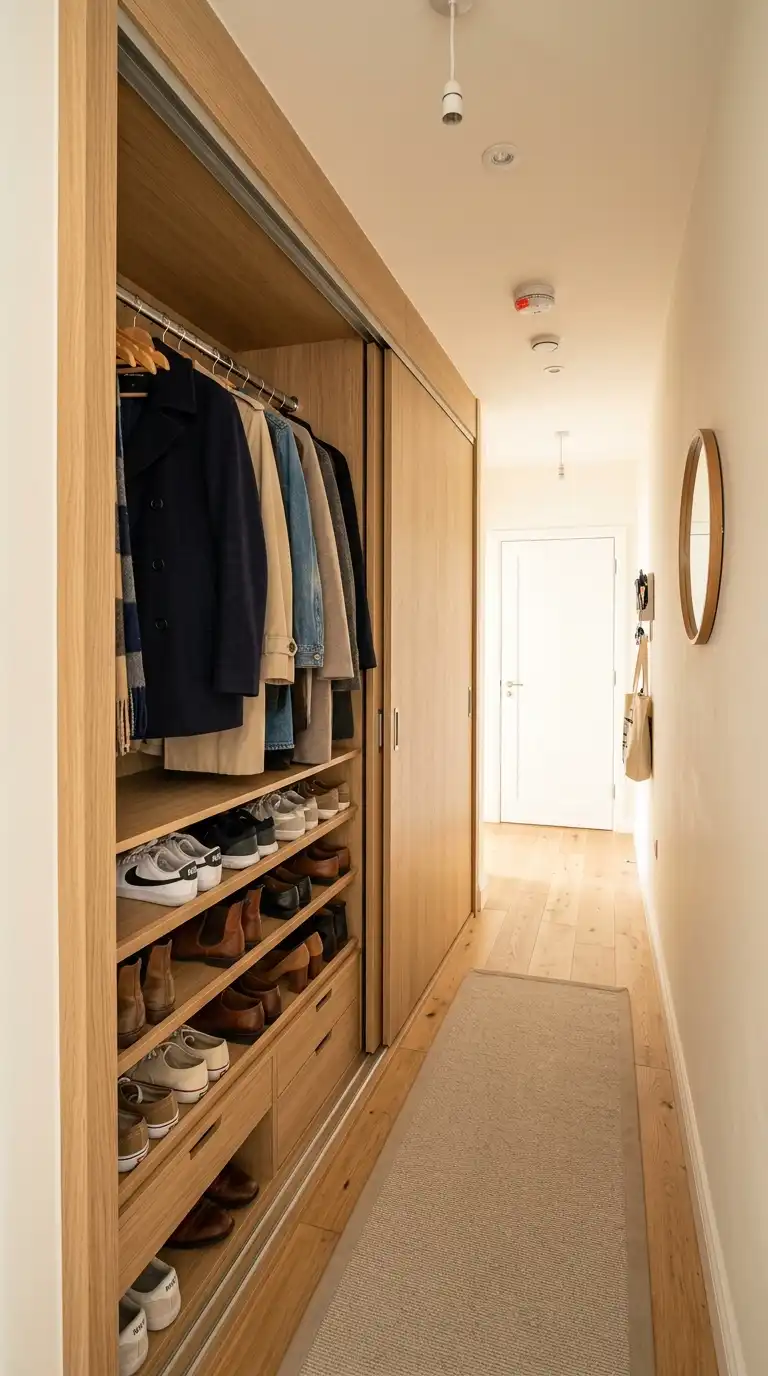
For narrow hallways, a slim-depth wardrobe (35–40 centimeters) provides essential storage without encroaching on walkways. Use the depth for hanging coats, storing shoes on angled shelves, or organizing accessories. Sliding doors save additional space.
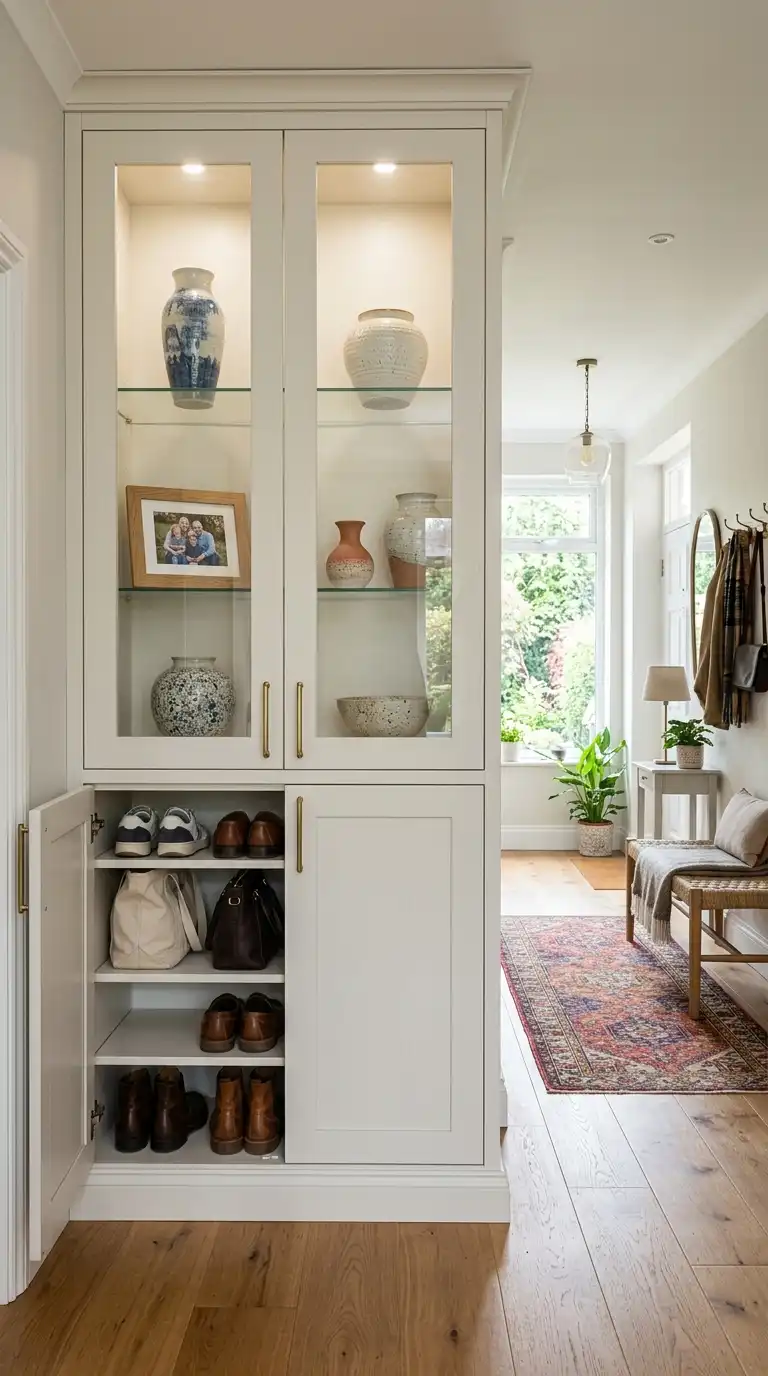
4. Hall Wardrobe with Glass-Front Display
In a hall wardrobe, glass-front sections can display decorative objects while providing concealed storage below. Use the glass section at eye level for vases, art, or seasonal decor. This approach balances functionality with style, making the wardrobe a design feature.
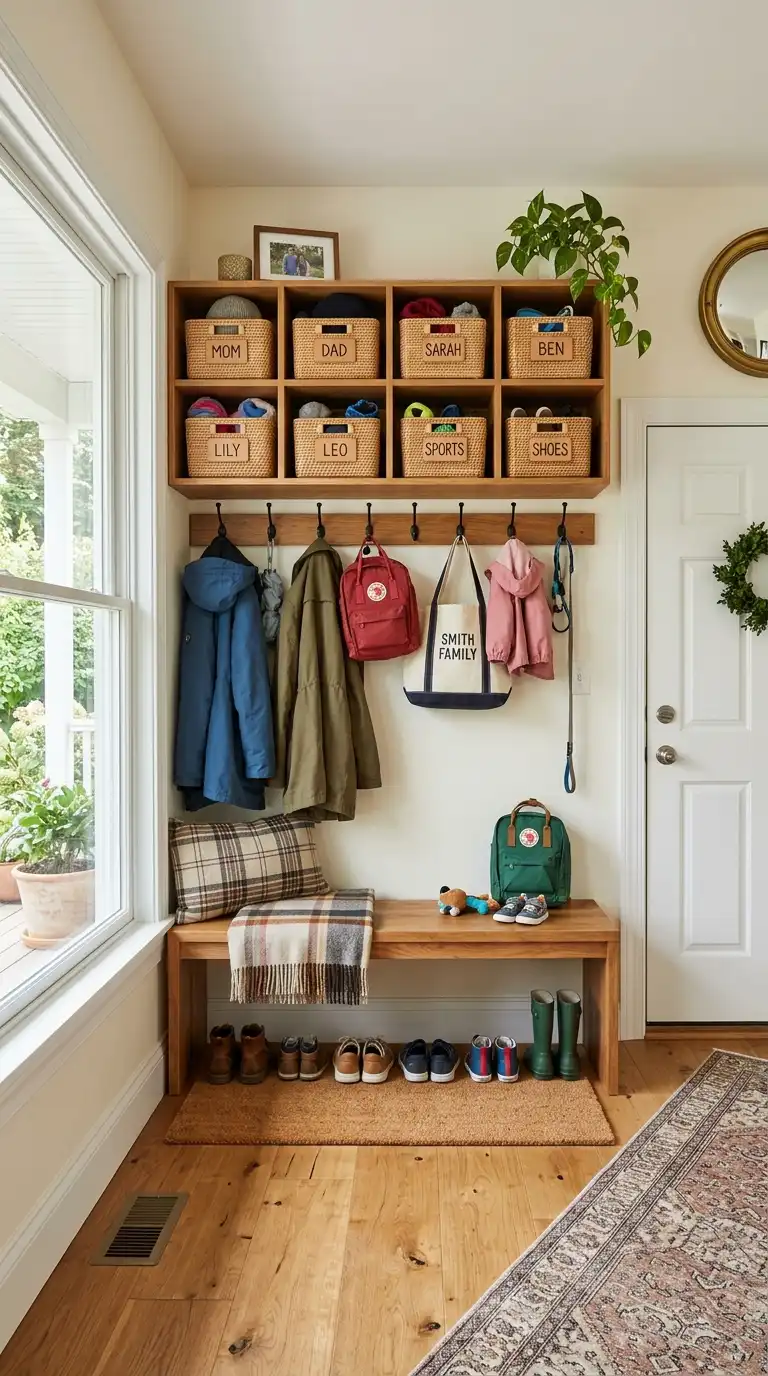
5. Hall Wardrobe with Open Shelving
Open shelving in a hall wardrobe keeps frequently used items accessible and visible. Use shelves for baskets labeled with family names, or display hats, gloves, and everyday bags. Keep the arrangement tidy, as open storage is always on view.
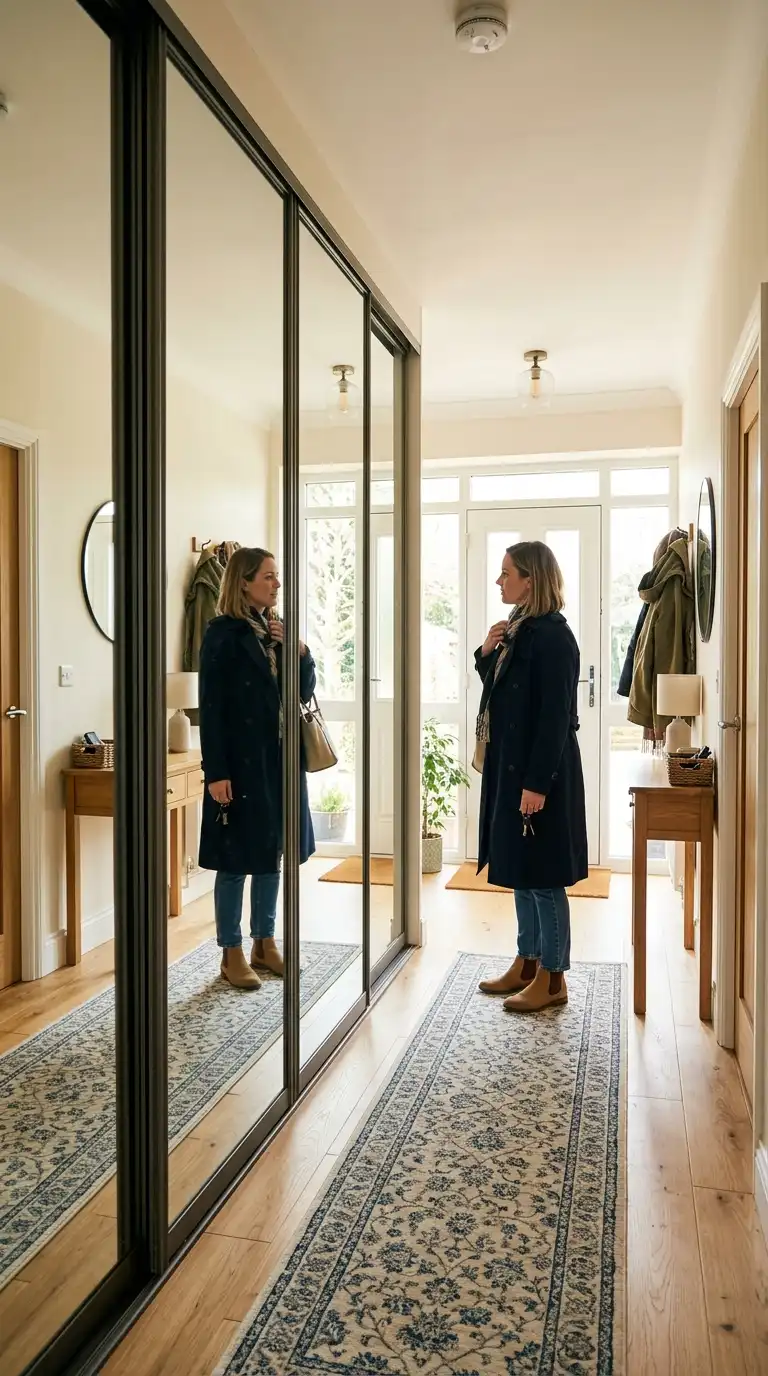
6. Hall Wardrobe with Mirror Doors
Mirrored doors are a practical choice for hall wardrobes, offering a last-minute outfit check before leaving the house. The reflective surface also brightens the hallway and creates the illusion of more space. Full-height mirrors are especially effective.
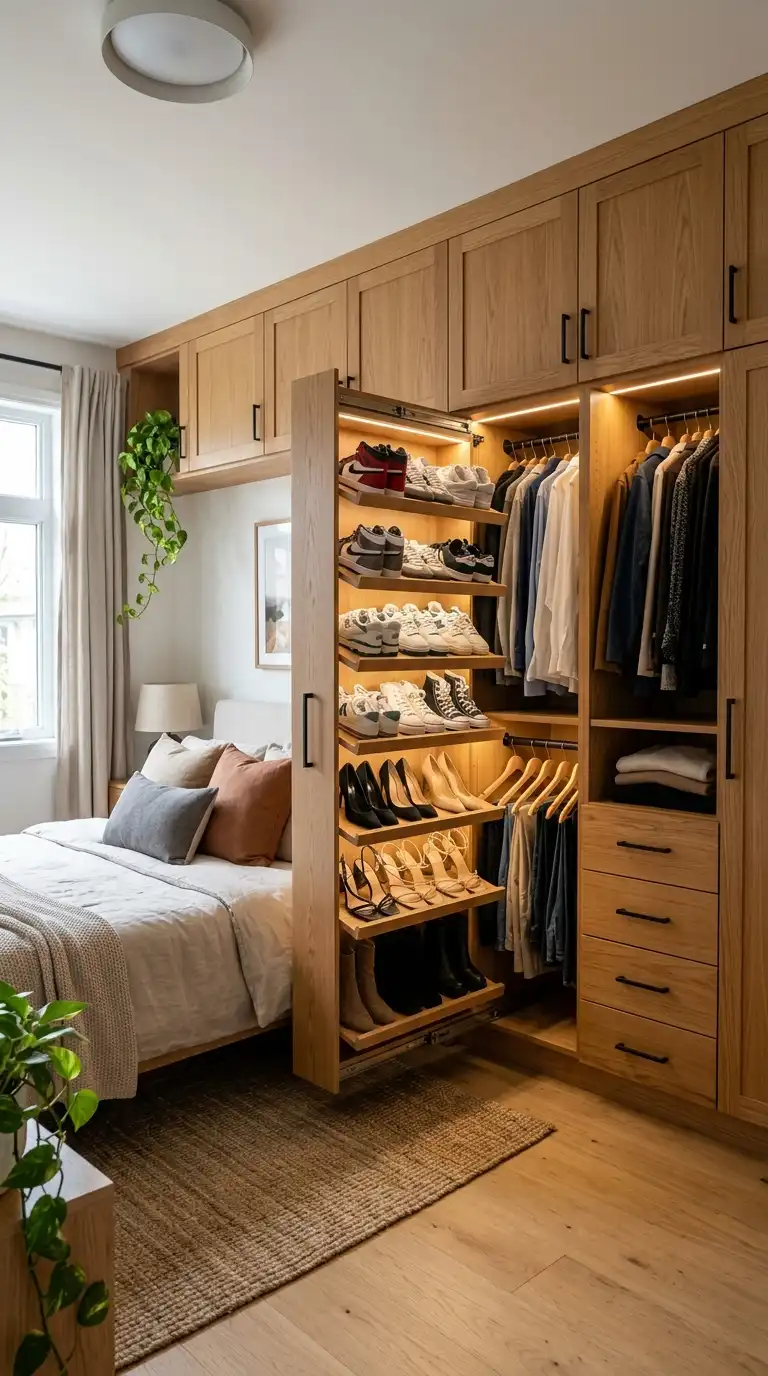
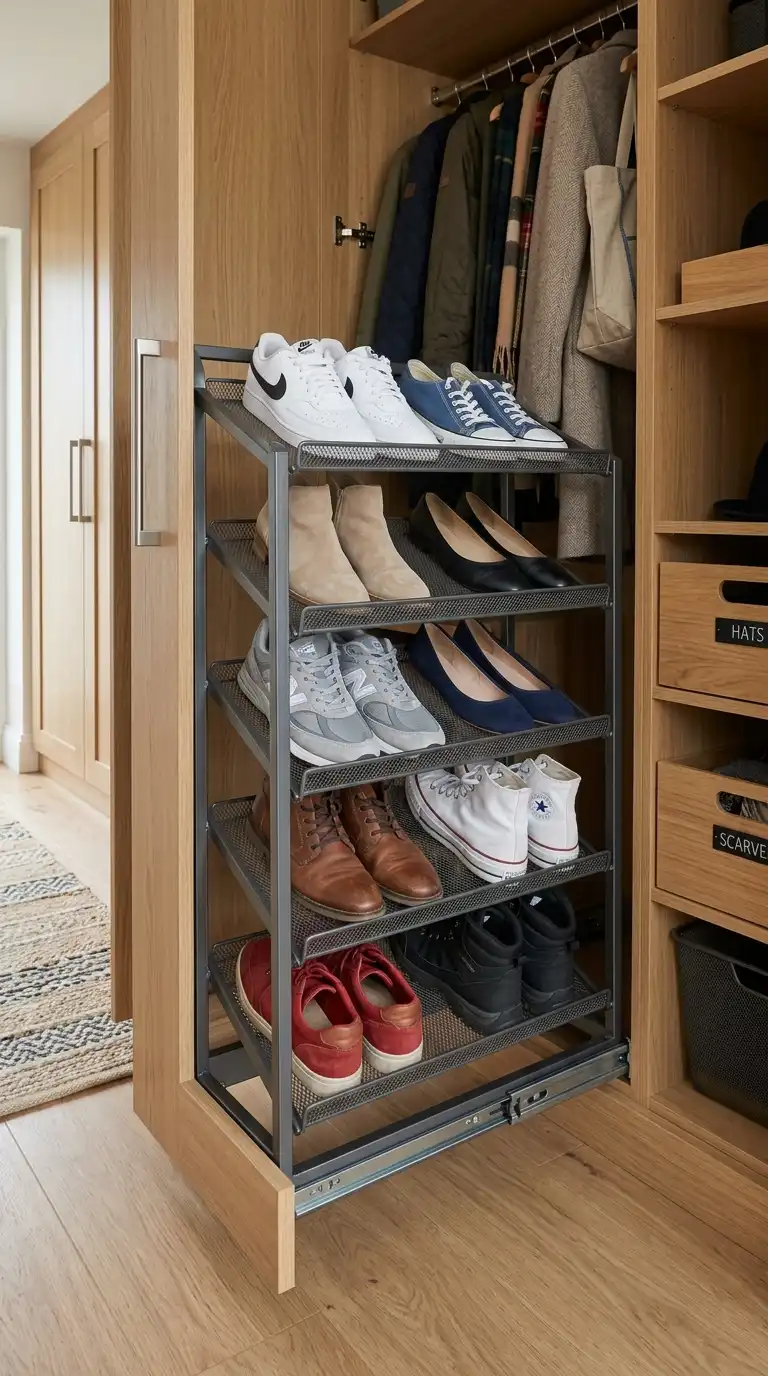
7. Hall Wardrobe with Integrated Shoe Storage
Dedicated shoe storage is essential in a hall wardrobe. Use pull-out shoe racks, angled shelves, or cubbies to keep footwear organized and off the floor. A combination of open and closed shoe storage accommodates both everyday and seasonal footwear.
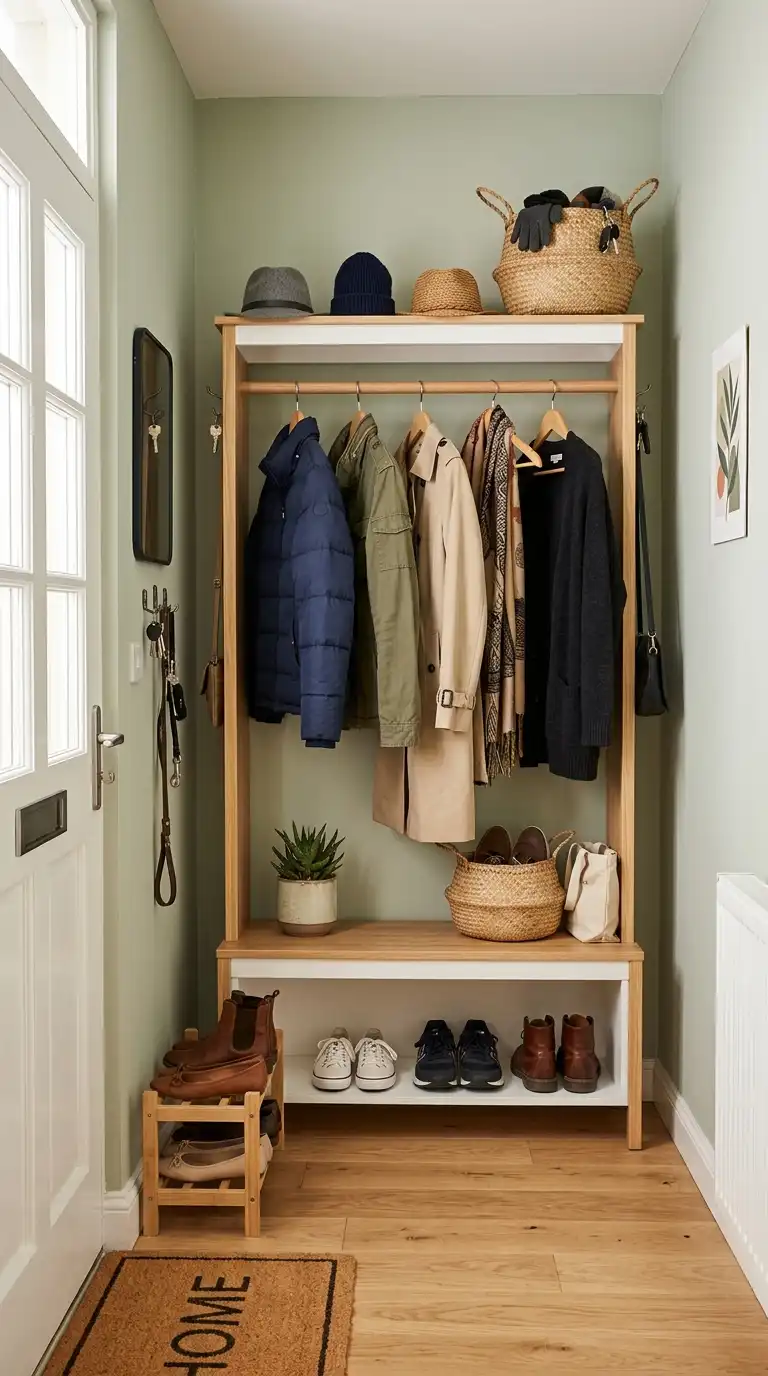
8. Hall Wardrobe with Coat Rod and Hat Shelf
A simple hall wardrobe with a coat rod and hat shelf provides essential storage without complexity. Use the rod for hanging coats and jackets, and the shelf above for hats, bags, or baskets. This design is ideal for smaller entryways where space is limited.
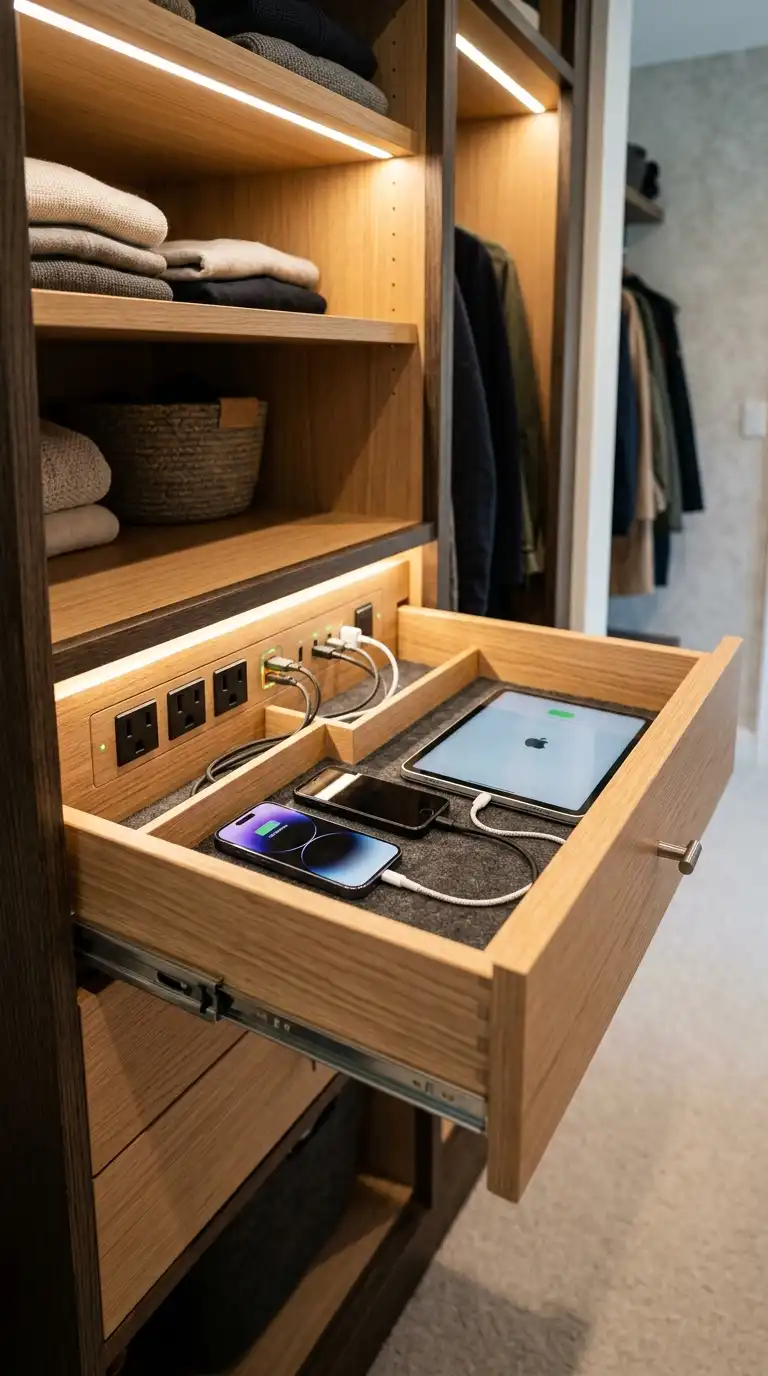
9. Hall Wardrobe with Charging Station
Incorporate a charging station into your hall wardrobe for devices that need to be powered as you come and go. A pull-out drawer with built-in USB ports and outlets keeps phones and tablets organized and out of sight while charging.
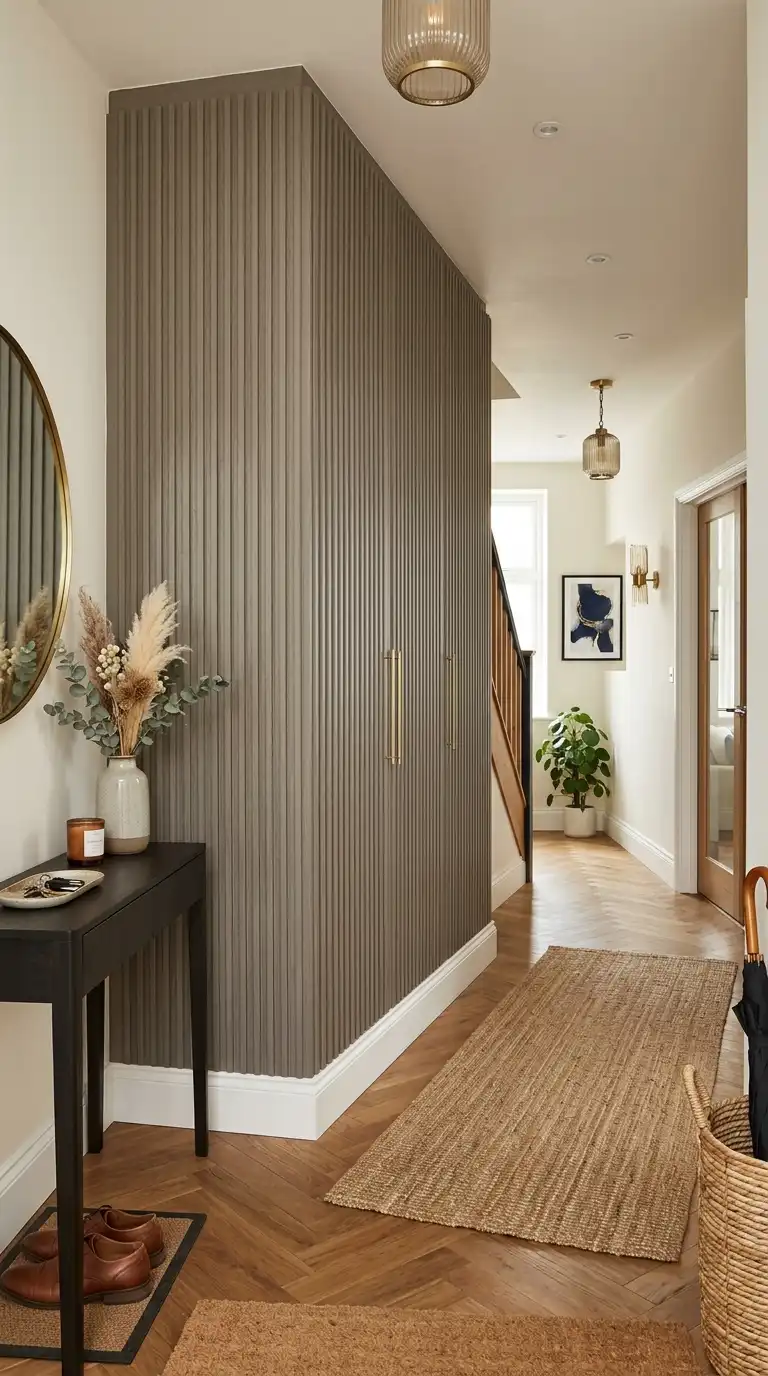
10. Hall Wardrobe with Patterned or Textured Doors
Make your hall wardrobe a design statement with patterned or textured doors. Fluted panels, geometric patterns, or woven cane inserts add visual interest and elevate the entryway. Keep the surrounding walls neutral to let the doors stand out.
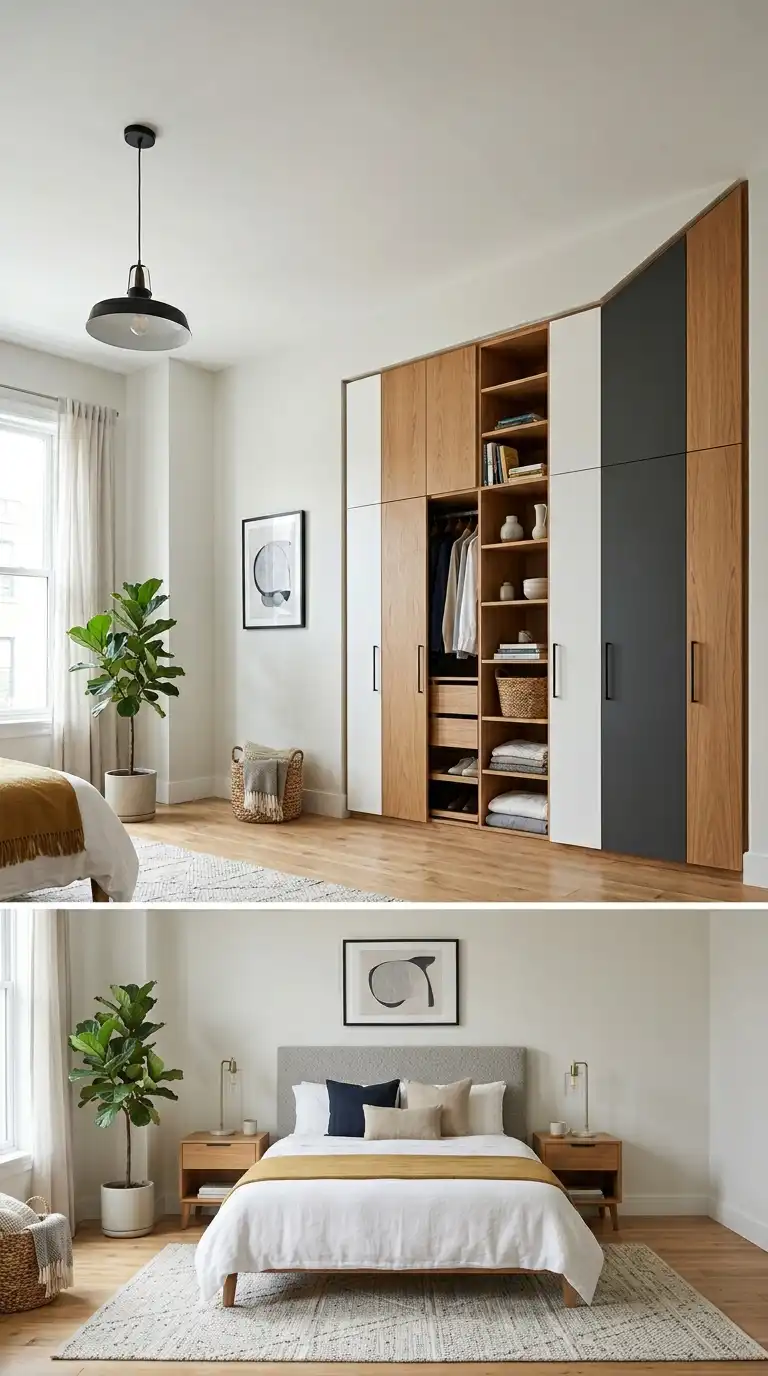
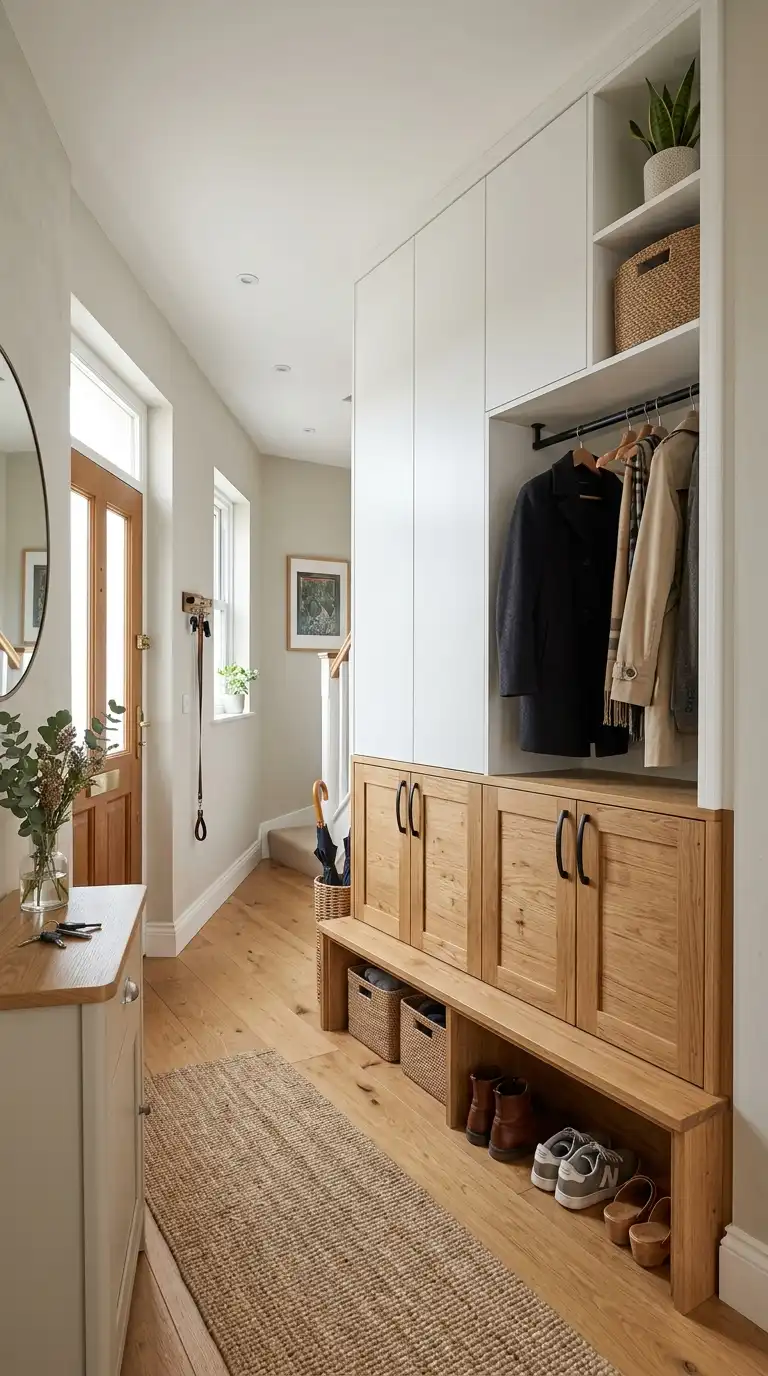
11. Hall Wardrobe with Two-Tone Design
A two-tone hall wardrobe adds visual interest and can help define different zones within the storage. Use one color for the main structure and another for door panels, or create a horizontal division between coat storage and shoe storage.
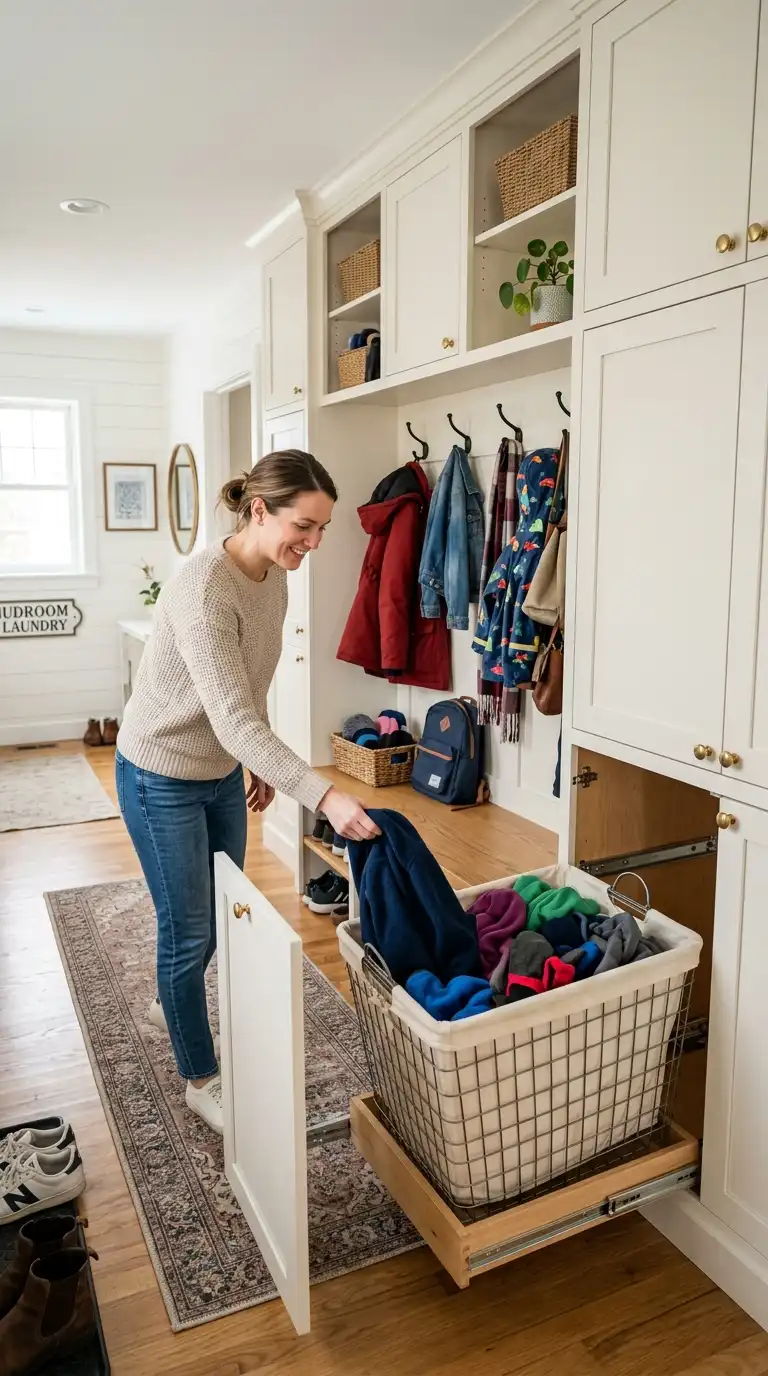
12. Hall Wardrobe with Pull-Out Hamper
For families, a pull-out hamper in the hall wardrobe provides a convenient drop spot for outerwear that needs washing. The hamper can be discreetly hidden behind a cabinet door, maintaining the clean exterior while adding functionality.
Frequently Asked Questions
- What should I store in a hall wardrobe?
A hall wardrobe is ideal for coats, jackets, hats, scarves, gloves, bags, umbrellas, and shoes. It can also serve as a drop zone for keys, mail, and everyday essentials. Consider the needs of your household when planning storage. - How deep should a hall wardrobe be?
For hanging coats, a depth of 50–60 centimeters is ideal. For narrow spaces, slim-depth wardrobes of 35–40 centimeters can accommodate shoes, folded items, and accessories. Sliding doors help maximize space in tight hallways. - How do I make a hall wardrobe look inviting?
Keep the exterior clean and uncluttered. Add a bench or stool for seating, incorporate a mirror for functionality, and display a few decorative objects on open shelving. Good lighting also enhances the welcoming feel. - What materials are best for a hall wardrobe?
Durable, easy-to-clean materials are essential for high-traffic areas. Laminates, painted MDF, and solid wood are good choices. Consider finishes that resist fingerprints and are easy to wipe clean. - Can I add a hall wardrobe to a narrow hallway?
Yes. Slim-depth wardrobes are designed for narrow spaces. Sliding doors save swing space, and floor-to-ceiling designs maximize vertical storage. Light colors and mirrored panels help the wardrobe recede visually.