13 Bedroom Built-in Wardrobe Designs
Built-in wardrobes are custom-designed to fit your space perfectly, making use of every inch from floor to ceiling and wall to wall. They blend seamlessly with the room’s architecture, creating a clean, uncluttered look while maximizing storage capacity. Unlike freestanding units, built-ins can be tailored to your exact needs—accommodating hanging space, drawers, shelving, and even integrated dressing areas. Here are thirteen bedroom built-in wardrobe designs to inspire your next project.
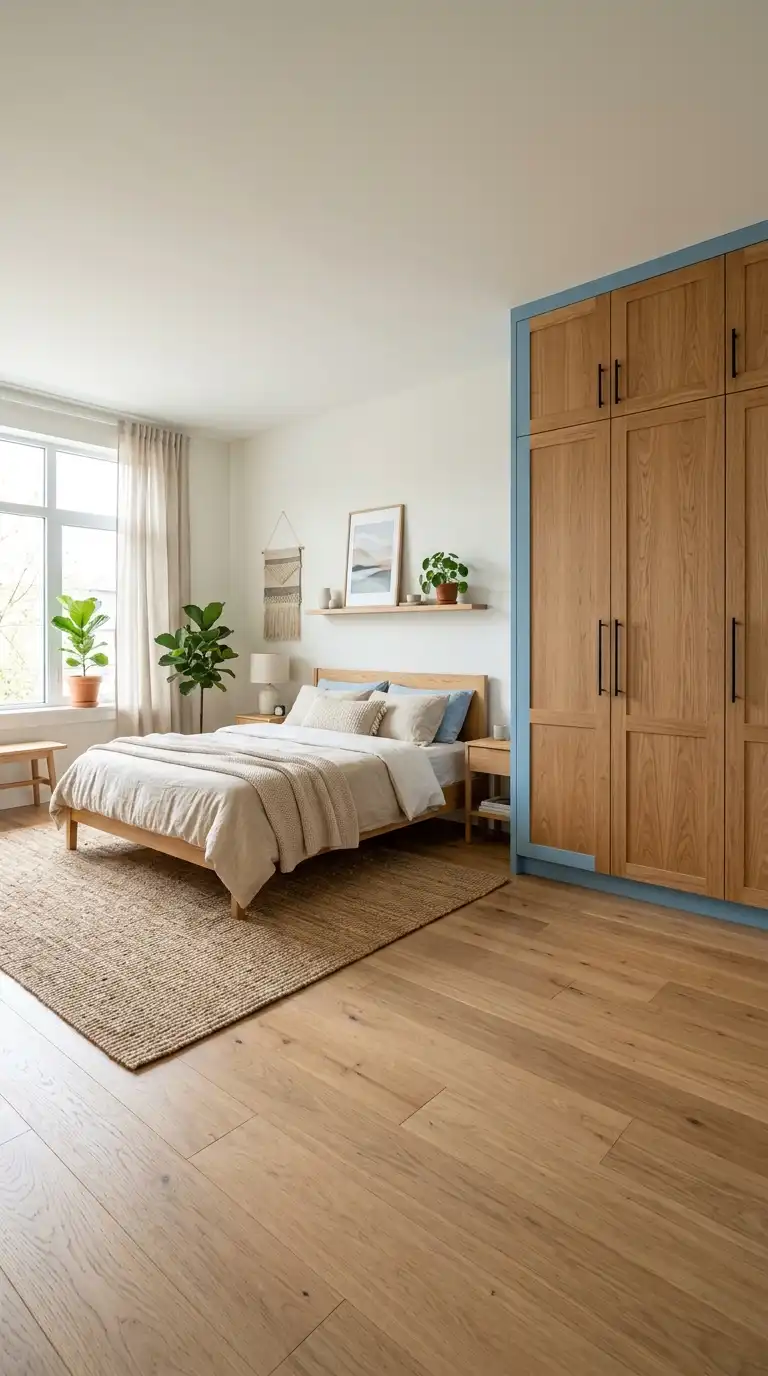
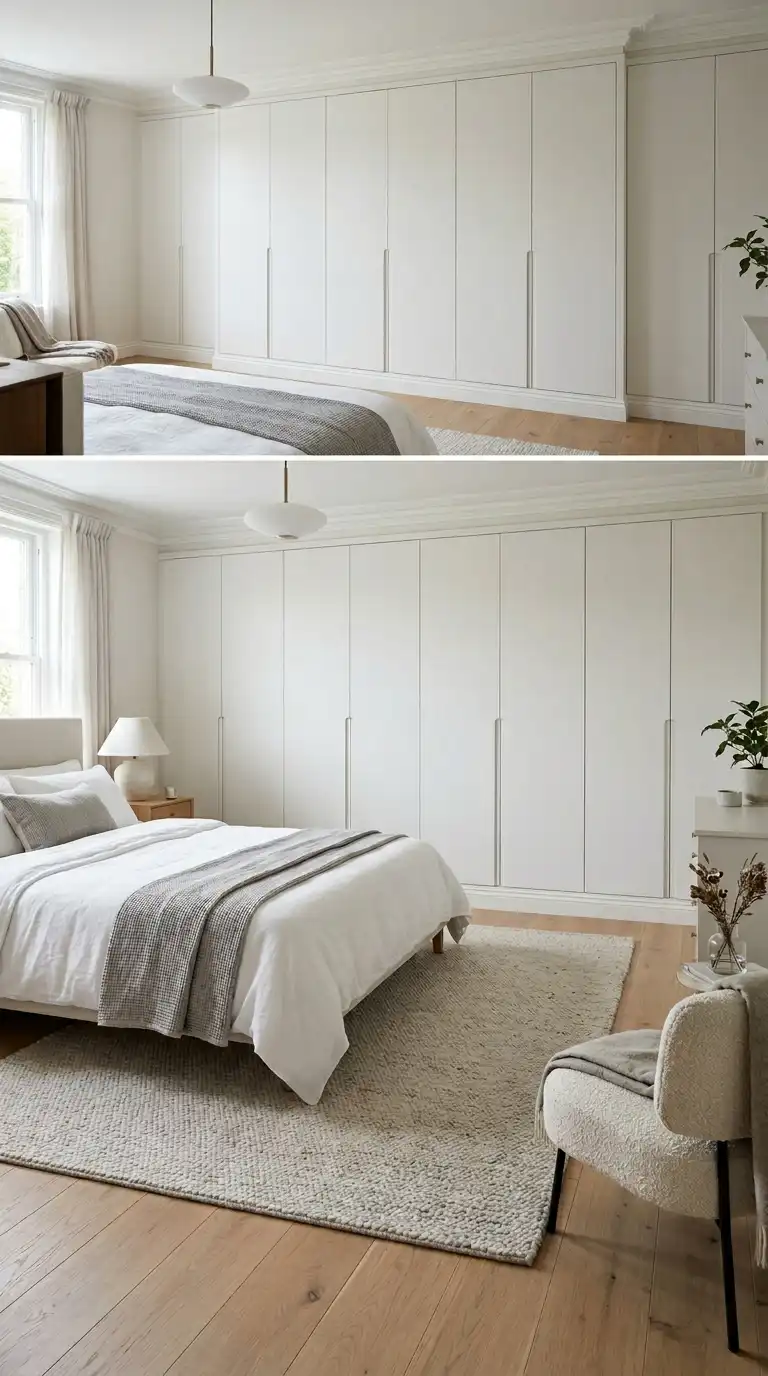
1. Floor-to-Ceiling Built-in Wardrobe
A floor-to-ceiling built-in wardrobe maximizes vertical storage while creating a seamless, architectural look. The continuous surface draws the eye upward, making the room feel taller and more spacious. Use handleless doors with push-to-open mechanisms for a clean, minimalist aesthetic, or add paneled detailing for a traditional touch. Crown molding integrates the wardrobe with the ceiling, while baseboards ground it to the floor.
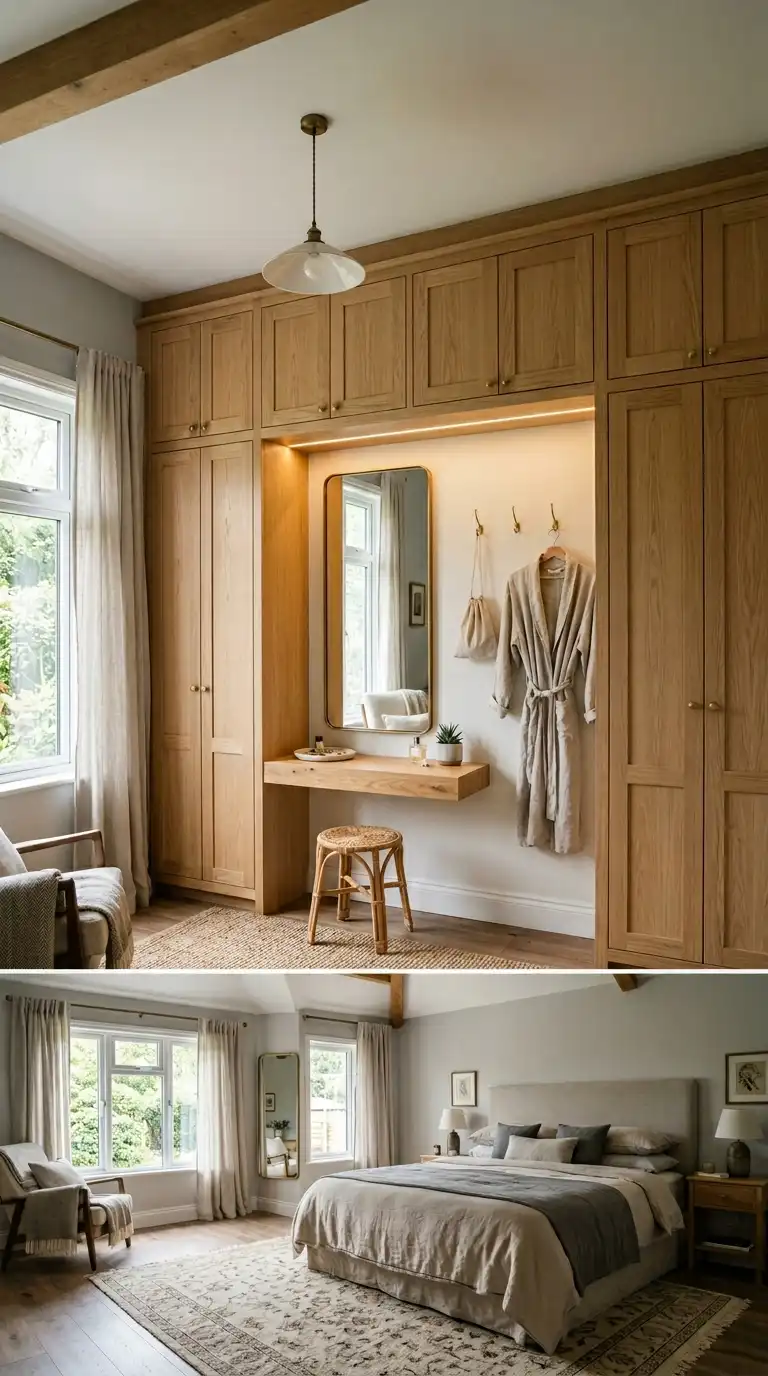
2. Built-in Wardrobe with Central Dressing Niche
Create a dedicated dressing niche at the center of your built-in wardrobe by leaving a recessed section flanked by storage on both sides. This alcove can house a full-length mirror, a small floating shelf, and discreet hooks for robes or accessories. The niche breaks up the expanse of cabinetry while providing a functional spot for outfit checks and daily grooming.
3. Two-Tone Built-in Wardrobe
A two-tone built-in wardrobe adds visual interest by combining two complementary finishes within a single design. Popular combinations include light wood with matte white, dark wood with high-gloss gray, or matte black with natural oak. Use one finish for the main structure and another for door panels, or create a horizontal division that defines different storage zones. This approach creates a custom, designer look.
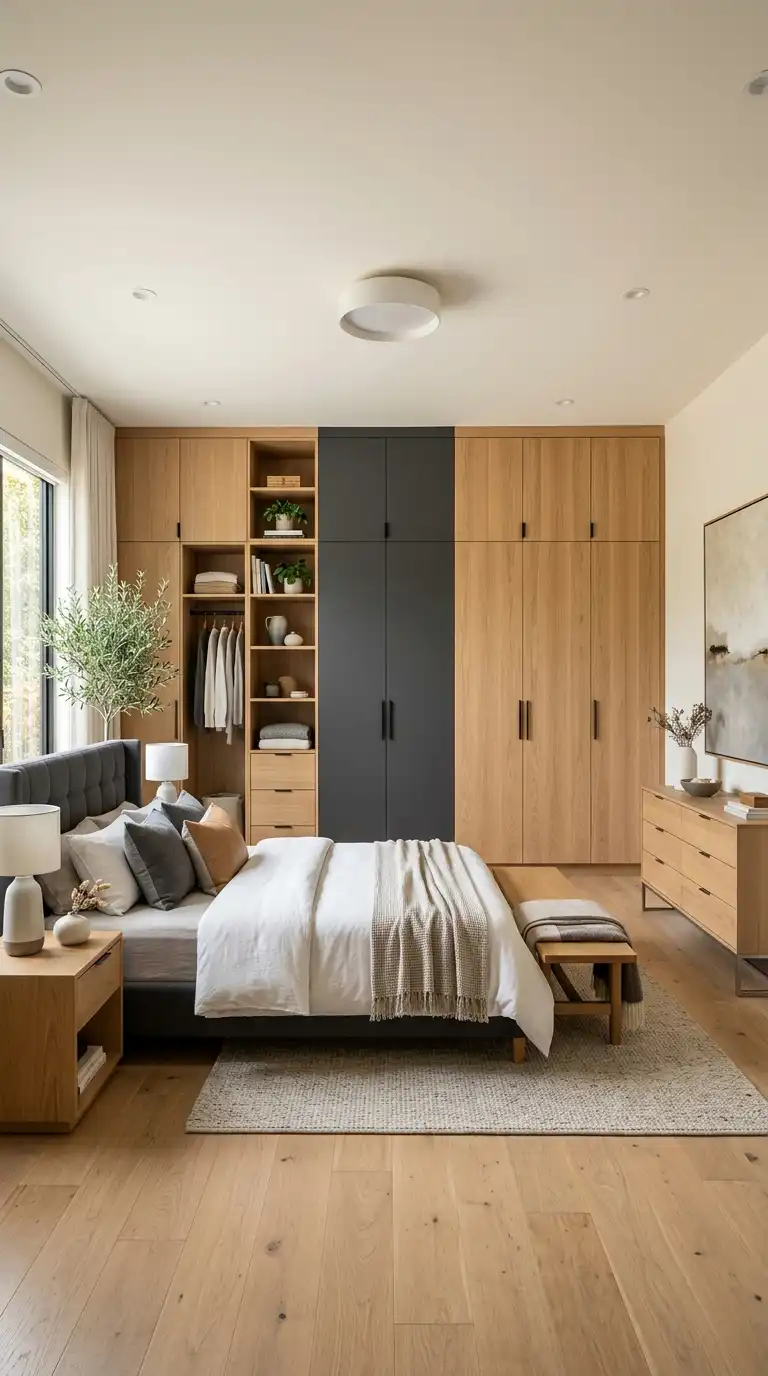
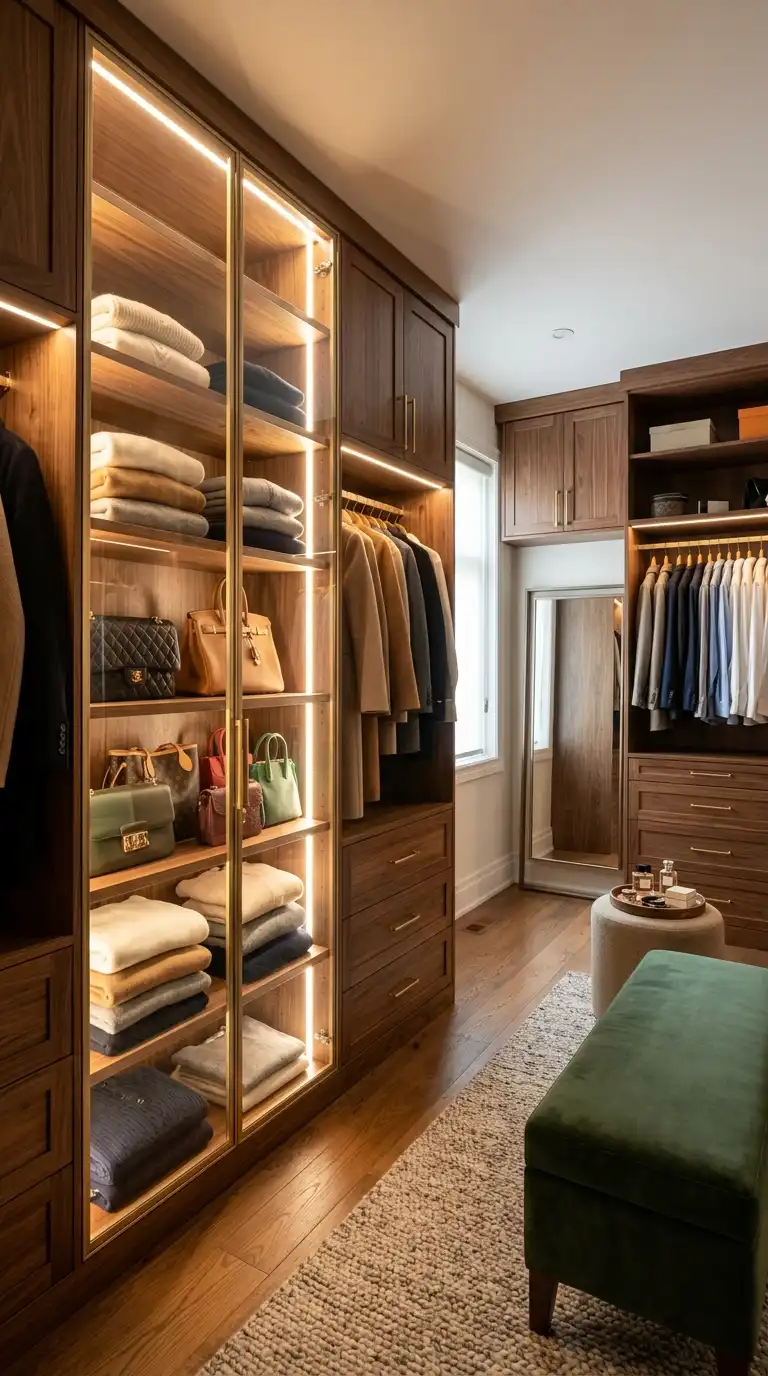
4. Built-in Wardrobe with Glass-Front Sections
Incorporate glass-front sections into your built-in wardrobe to break up solid cabinetry and showcase favorite items. Use frosted glass for privacy or clear glass with internal lighting for a boutique-inspired look. Glass sections are perfect for displaying handbags, shoes, folded knitwear, or accessory collections. This design adds elegance and lightness to the overall composition.
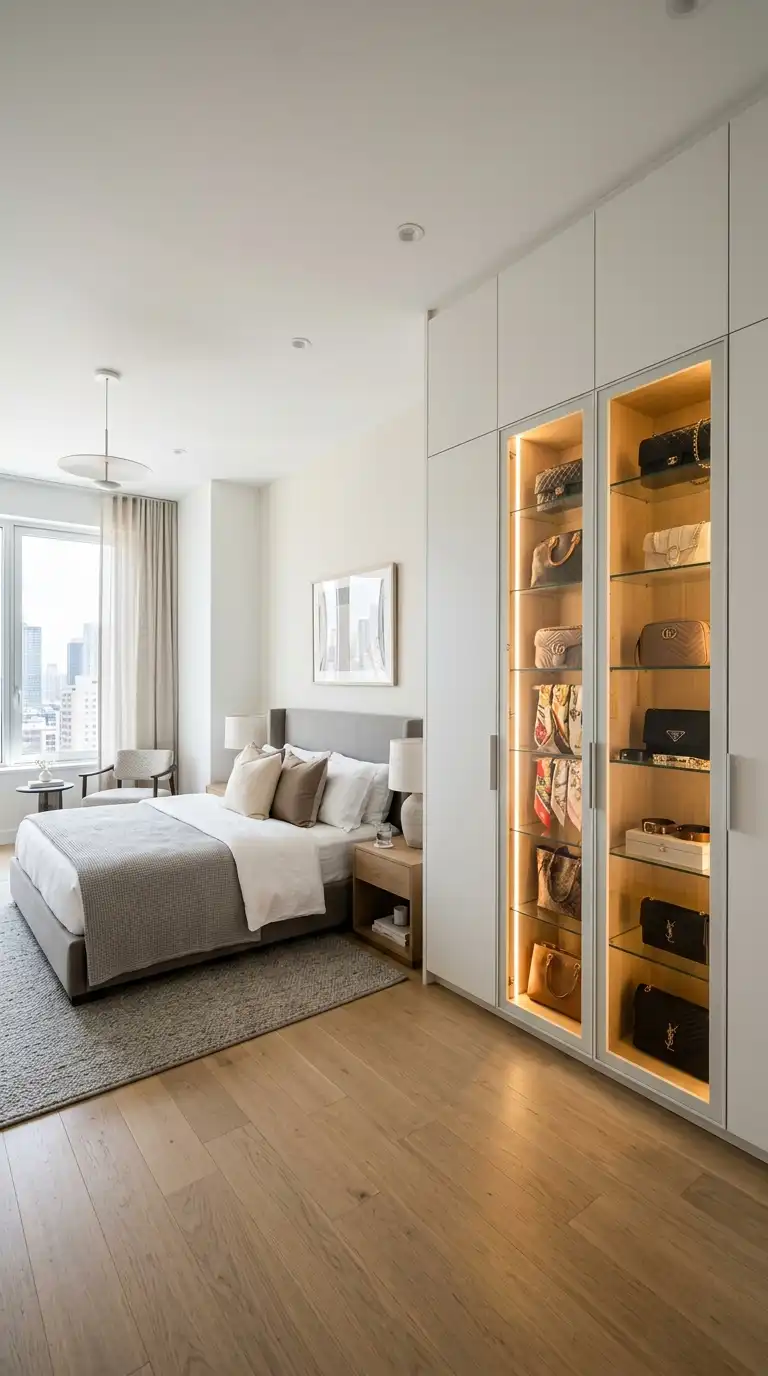
5. Handleless Built-in Wardrobe
A handleless built-in wardrobe offers a sleek, minimalist aesthetic that suits modern and Scandinavian bedrooms. Push-to-open mechanisms or integrated grooves allow doors to open without visible hardware, creating a seamless, uncluttered surface. The absence of handles emphasizes the simplicity of the design and allows the focus to remain on the materials and proportions.
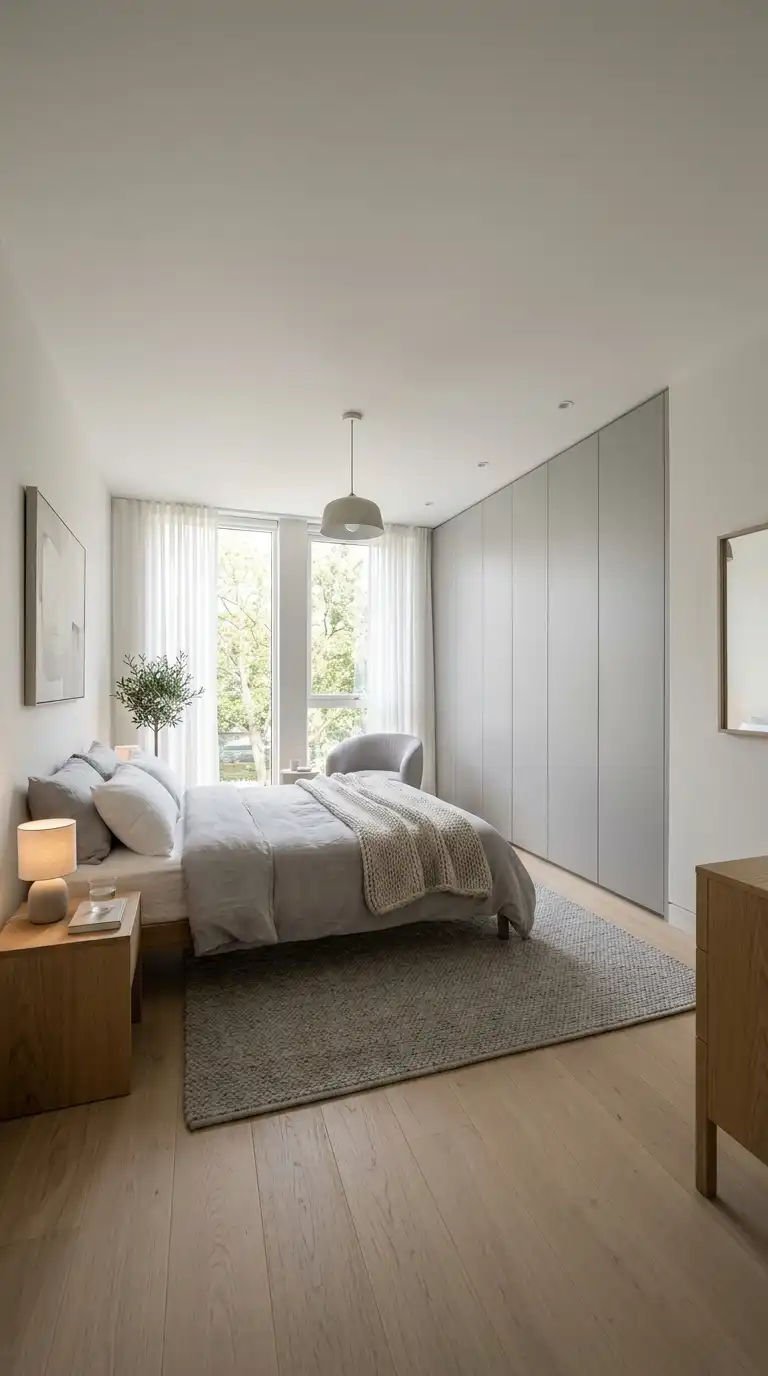
6. Built-in Wardrobe with Integrated Dressing Table
Combine storage and grooming by integrating a dressing table into your built-in wardrobe design. Position the dressing table at the center or one end of the wardrobe unit, with a mirror, stool, and dedicated storage for makeup and accessories. This setup streamlines your routine, keeping all beauty and wardrobe essentials in one cohesive space. For a modern look, choose a floating table surface with no visible supports.
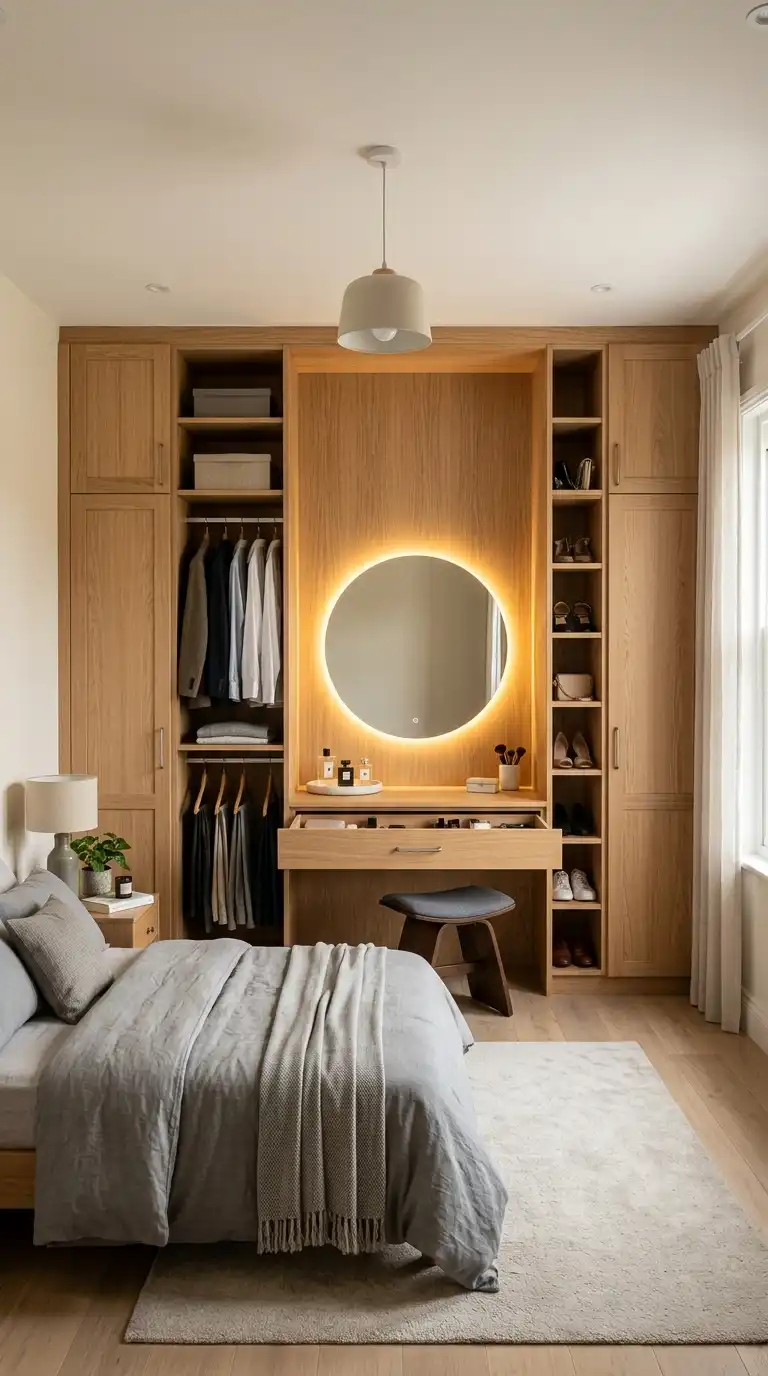
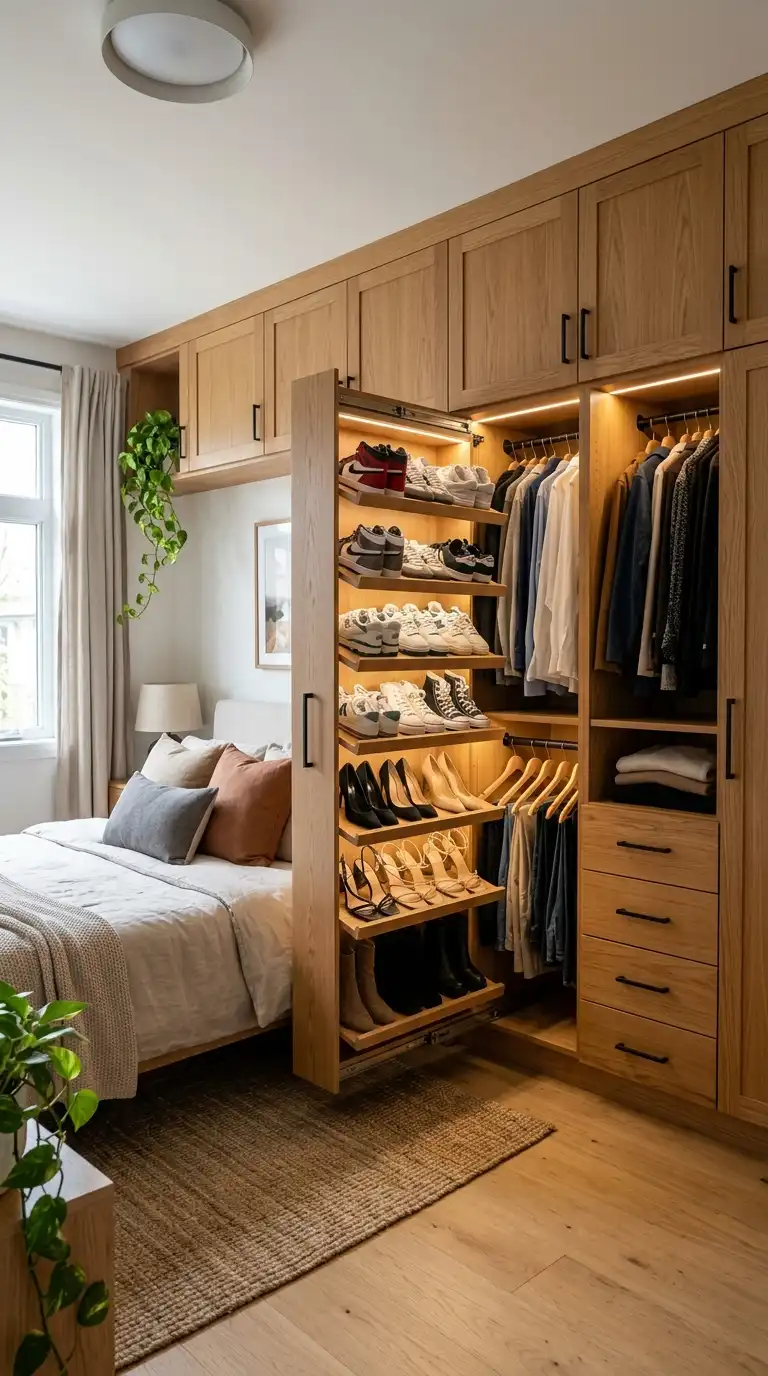
7. Built-in Wardrobe with Open Shelving
Combine closed cabinets with open shelving for a balanced mix of display and concealment. Use open sections to showcase accessories, books, or folded knitwear, while closed sections hide everyday clothing and less visually appealing items. This approach creates visual interest and prevents the wardrobe from feeling too monolithic. Position open sections at eye level for easy access and display.
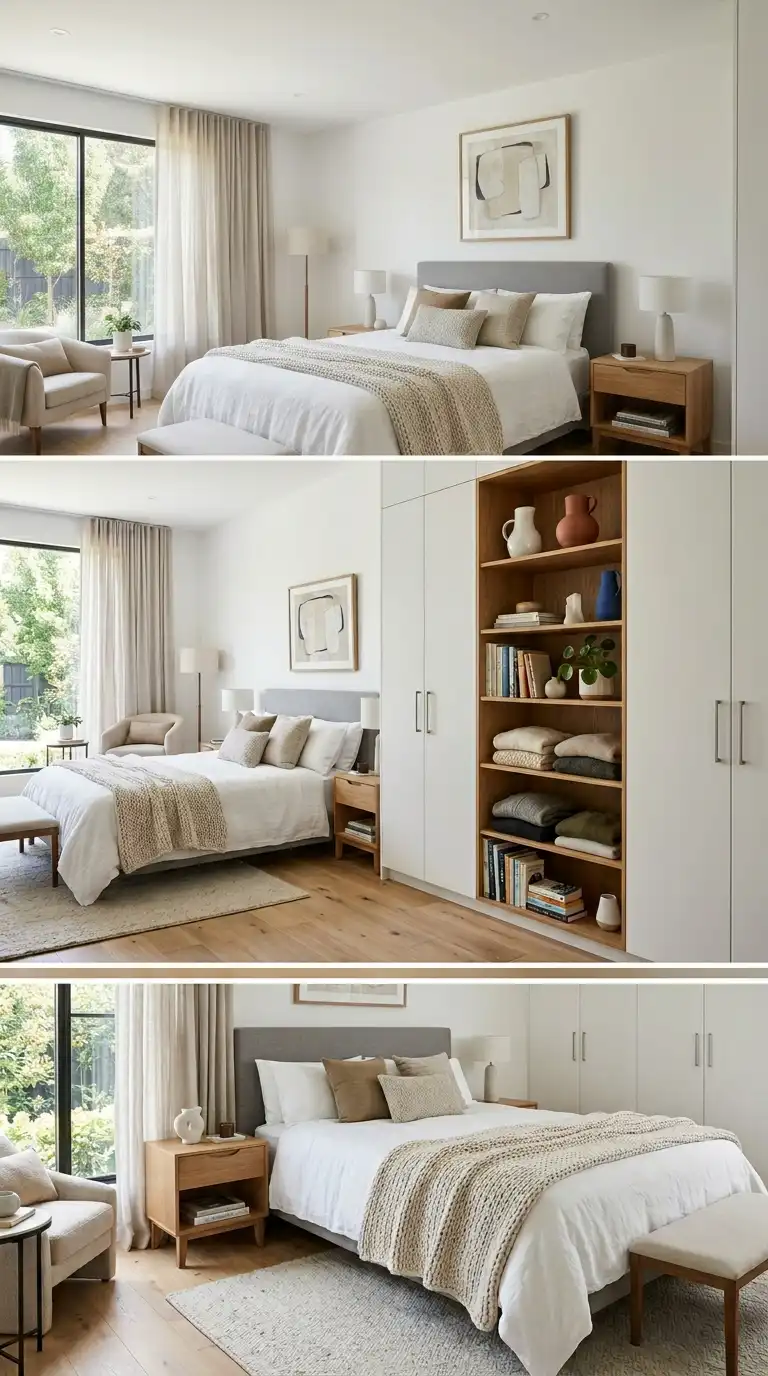
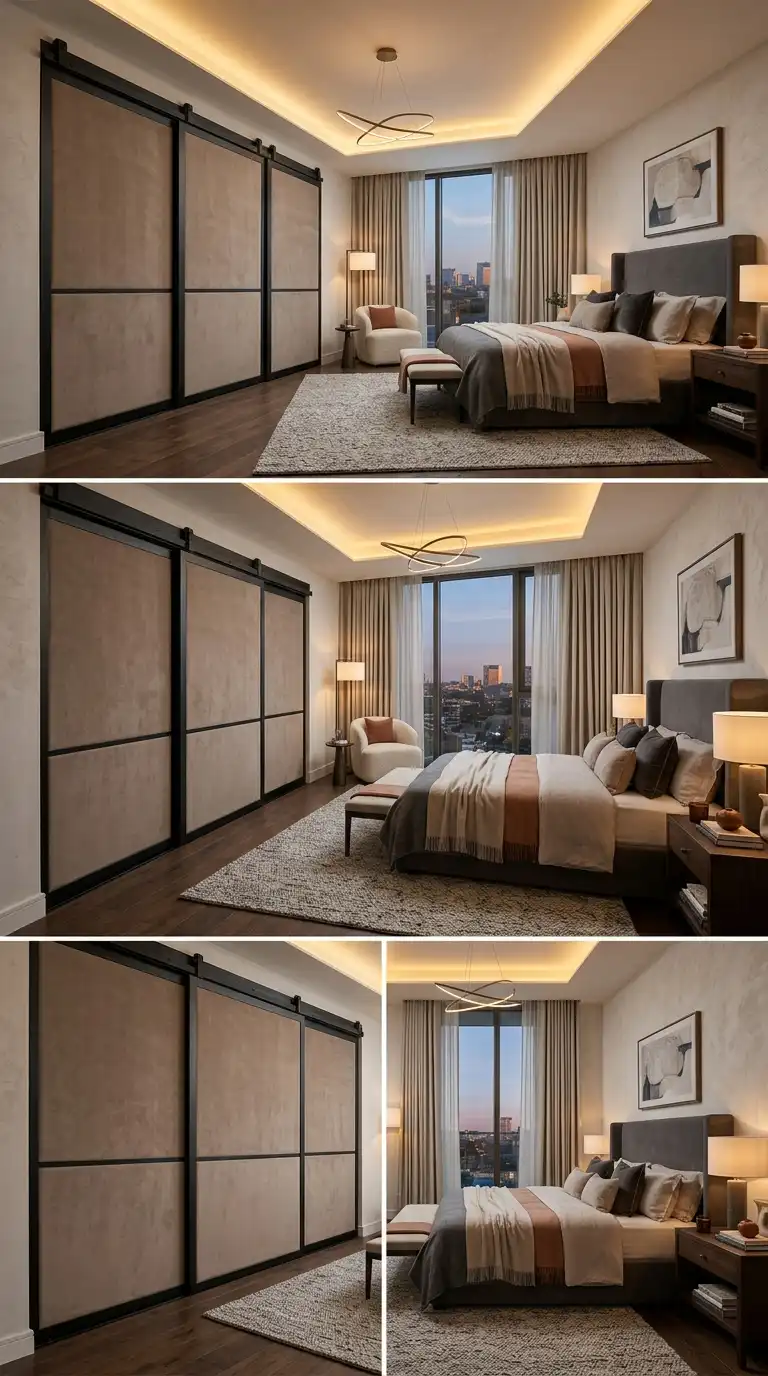
8. Built-in Wardrobe with Sliding Doors
Sliding doors are an excellent choice for built-in wardrobes, particularly in smaller bedrooms where hinged doors would require swing space. Choose mirrored panels to visually expand the space, or opt for matte finishes for a sleek, modern look. Sliding doors can span the entire wall, creating a continuous, uninterrupted surface that maximizes storage.
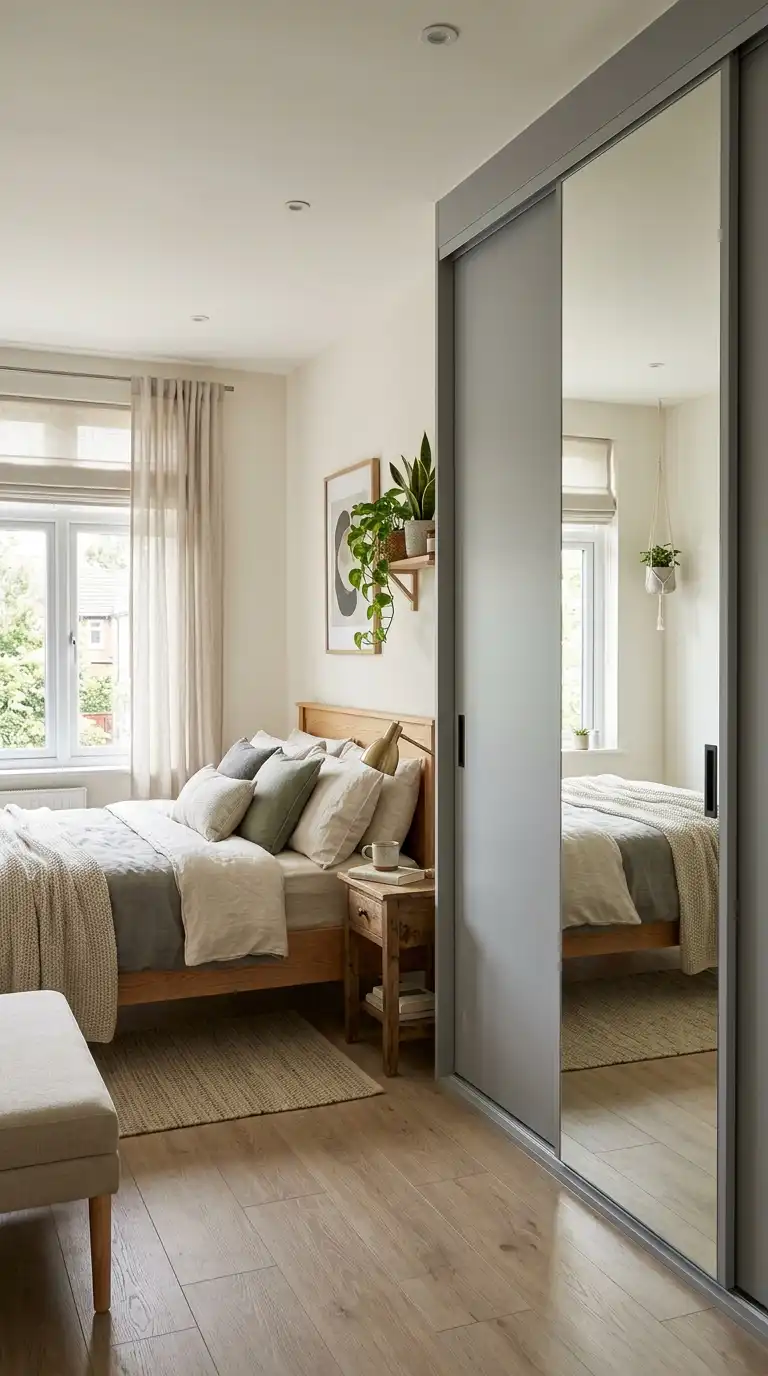
9. Built-in Wardrobe with Fluted or Ribbed Panels
Fluted or ribbed panels add texture and architectural interest to built-in wardrobe doors. The vertical grooves create rhythm and depth, catching light and casting subtle shadows that change throughout the day. This detailing transforms a simple wardrobe into a design feature, adding visual richness without overwhelming the space. Choose a matte finish to emphasize the texture.
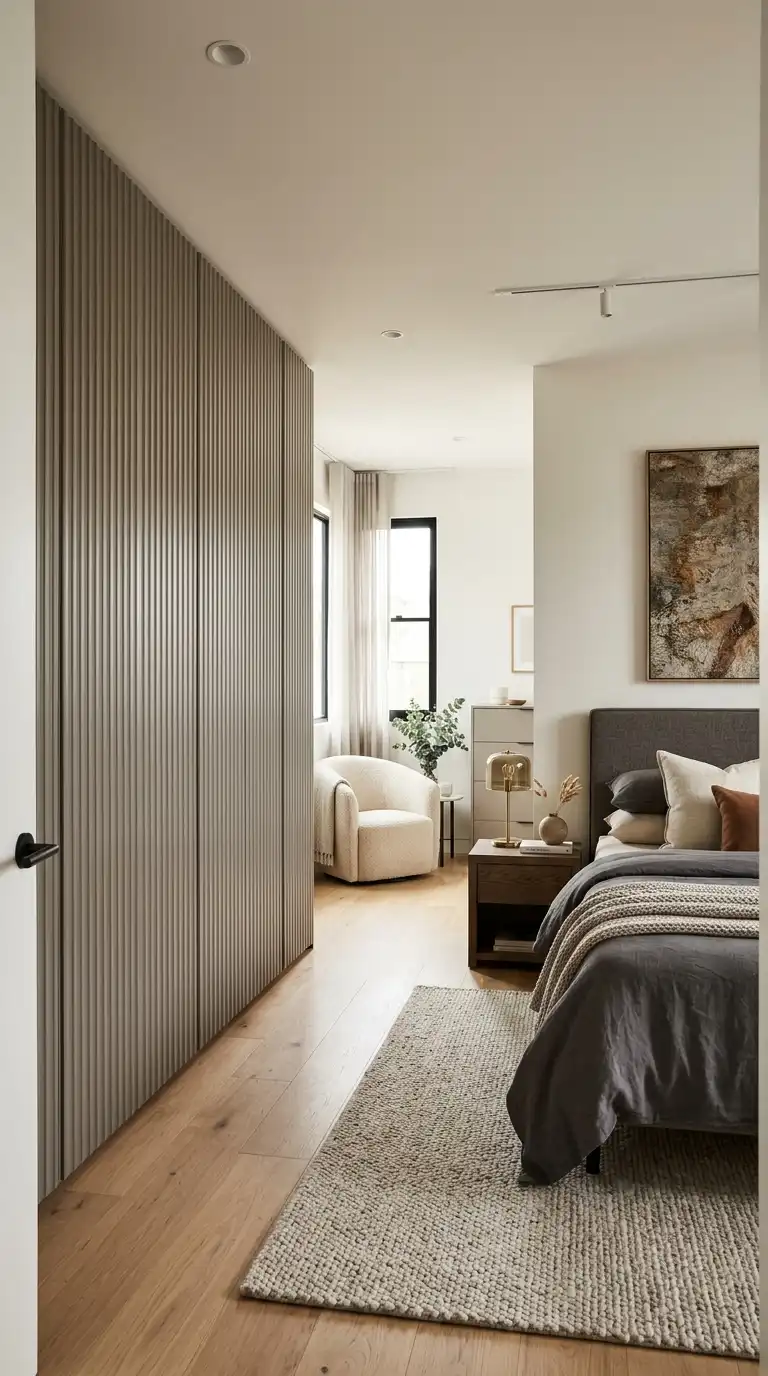
10. Built-in Wardrobe with Integrated Lighting
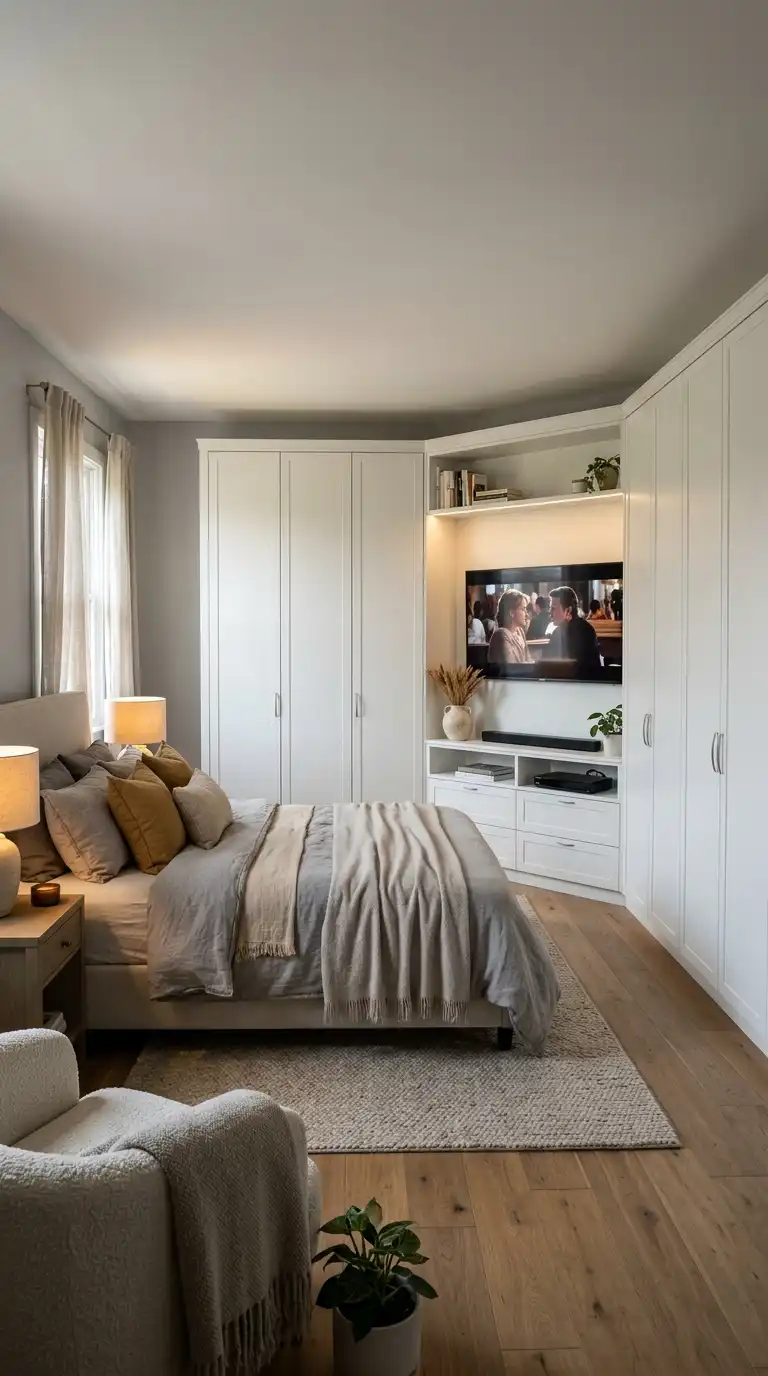
Integrated LED lighting transforms a built-in wardrobe from utilitarian to luxurious. Install warm white LED strips along the top, bottom, or sides of the wardrobe to create a soft, ambient glow that highlights the door finish and adds drama to the bedroom. Motion sensors can activate the lights when doors are opened, adding convenience.
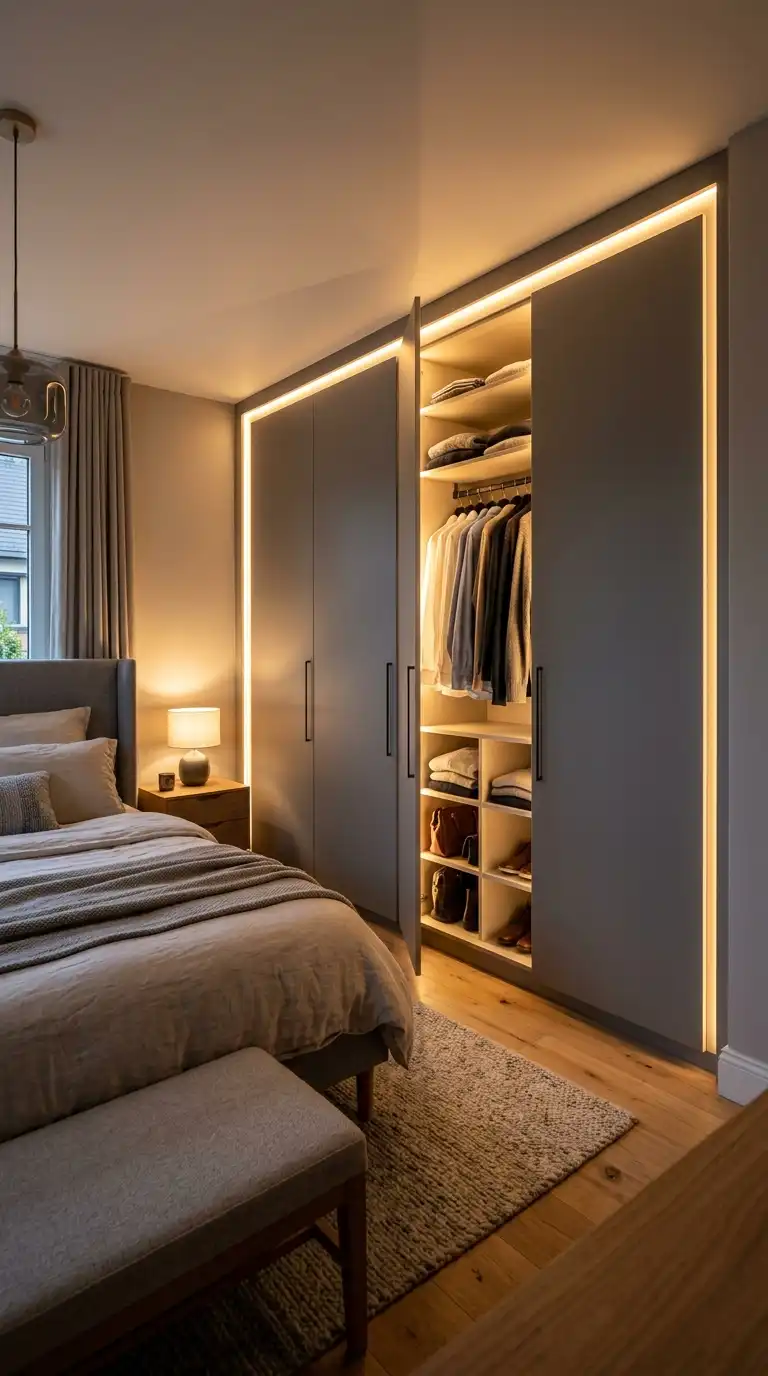
11. Built-in Wardrobe with Corner Storage
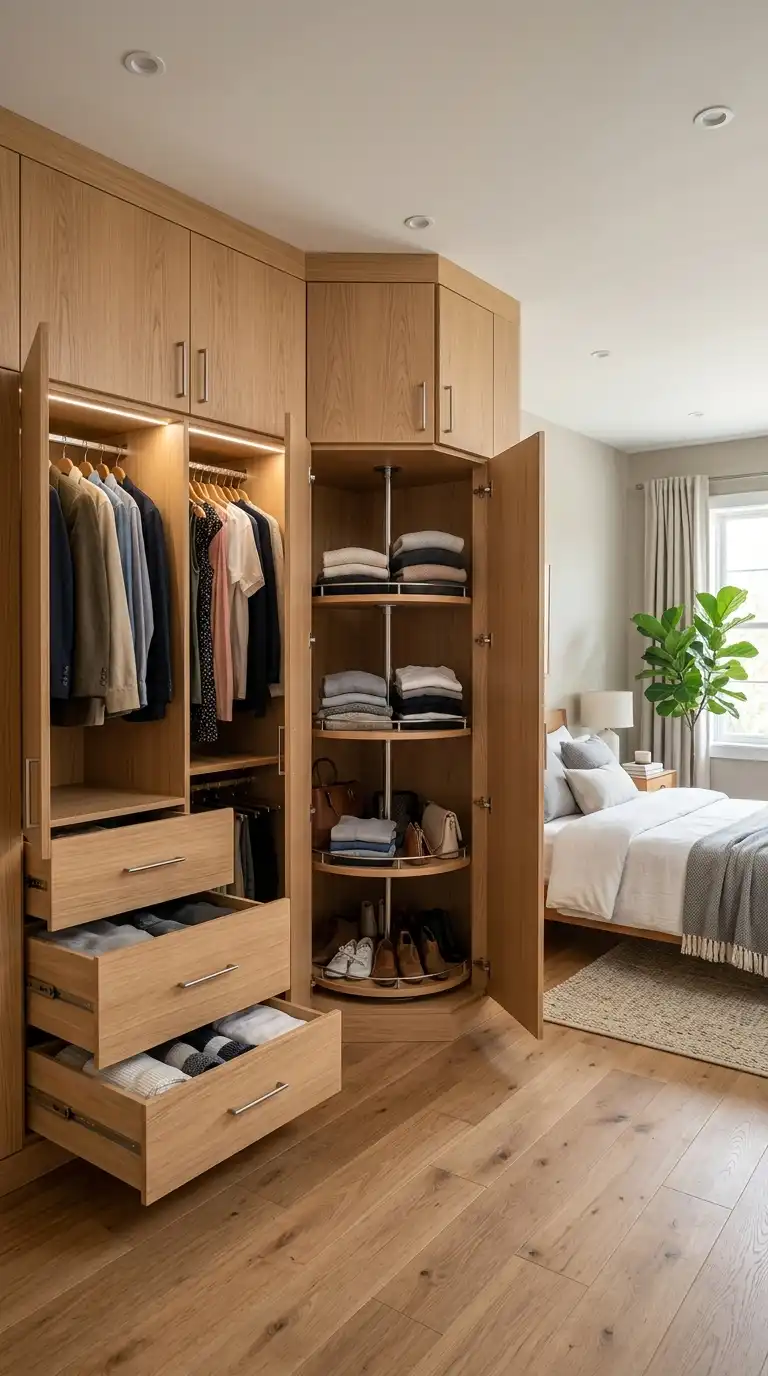
Maximize every inch of your built-in wardrobe by incorporating corner storage solutions. Use carousel units, pull-out corner racks, or angled shelving to make corner spaces accessible. This design is ideal for L-shaped built-in wardrobes that wrap around a corner, ensuring that no space is wasted. Corner storage can be used for bulkier items like luggage or out-of-season clothing.
12. Built-in Wardrobe with Valet Rod
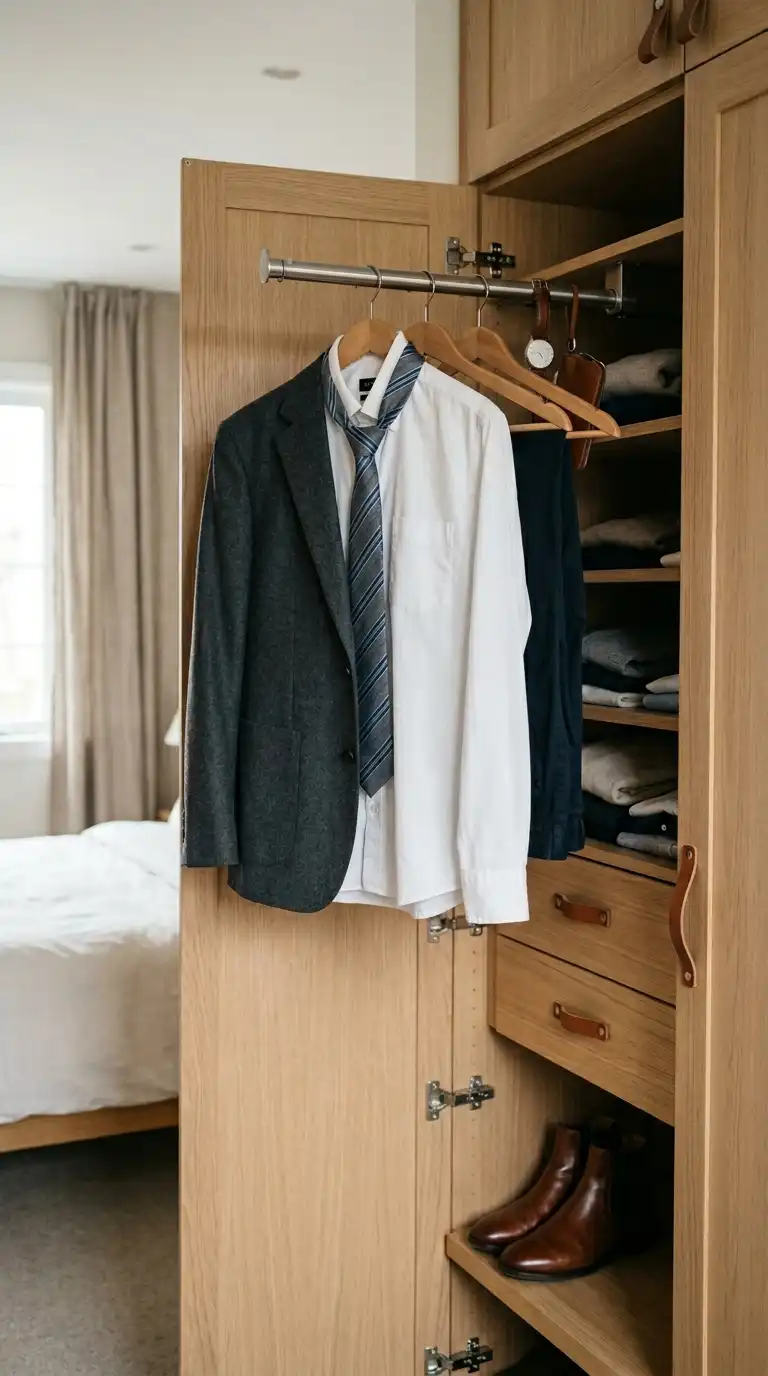
Incorporate a valet rod into your built-in wardrobe for planning outfits or hanging items waiting to be steamed or ironed. This pull-out or fixed rod adds convenience without sacrificing aesthetics. A valet rod provides a temporary space to hang tomorrow’s outfit, keeping it wrinkle-free and ready. It is a small detail that adds significant functionality to your daily routine.
13. Built-in Wardrobe with Crown Molding
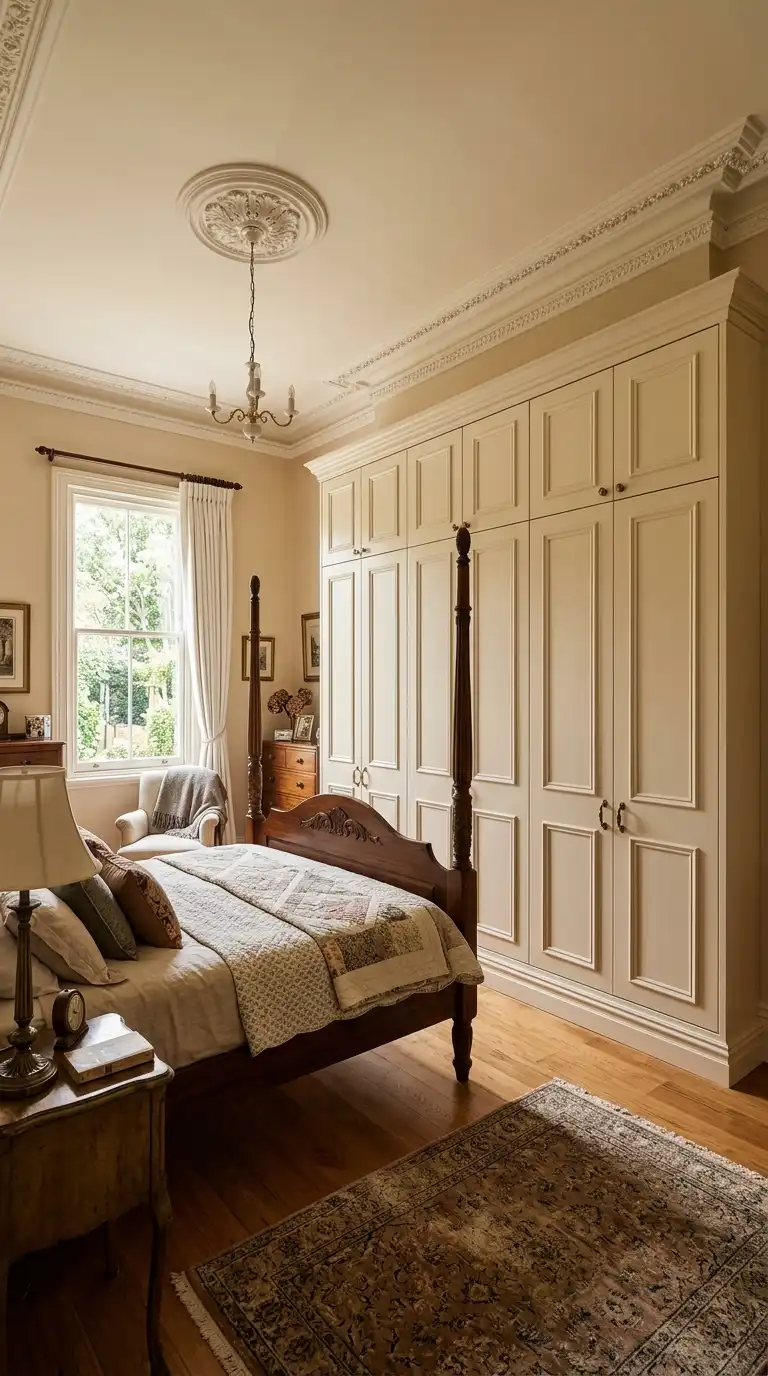
For a truly custom, built-in look, extend your wardrobe to the ceiling and add crown molding that matches the room’s existing trim. This detail integrates the wardrobe seamlessly with the architecture, creating a polished, high-end appearance. Crown molding bridges the gap between the wardrobe and the ceiling, making the unit look like an original part of the home rather than an added feature.
Frequently Asked Questions
- What is the difference between built-in and freestanding wardrobes?
Built-in wardrobes are custom-designed to fit a specific space, often spanning an entire wall or fitting into an alcove. They are permanently installed and create a seamless, integrated look. Freestanding wardrobes are movable and not custom-fitted. - How much do built-in wardrobes cost?
Costs vary based on size, materials, and complexity. Basic built-in wardrobes can start from a few thousand dollars, while custom designs with high-end finishes can cost significantly more. Professional installation is recommended for a seamless finish. - Can built-in wardrobes be added to an existing bedroom?
Yes. Built-in wardrobes can be designed and installed in existing bedrooms. A professional will assess the space, take measurements, and create a custom design that fits your room’s dimensions and layout. The installation process typically takes a few days. - What materials are best for built-in wardrobes?
Plywood and MDF with durable laminate, veneer, or painted finishes offer excellent durability. Solid wood provides timeless beauty. Glass and metal accents add a modern touch. Choose materials that suit your style, budget, and maintenance preferences. - How do I maintain built-in wardrobes?
Regular dusting with a soft cloth prevents buildup. For painted or laminate finishes, use a mild soap and water solution. For wood, use appropriate wood cleaners or polishes. Keep tracks for sliding doors clean for smooth operation. Regular editing ensures the interior remains organized.