
15 Large Backyard Layout Ideas
A large backyard is a gift—but size alone doesn’t create a great space. Without a smart layout, acres of grass can feel empty, awkward, or unusable. The key is dividing your yard into distinct zones: lounge areas, play spaces, gardens, and pathways that connect everything. These 15 layout ideas turn sprawling lawns into purposeful, beautiful landscapes.
1. The Zoned Room Layout
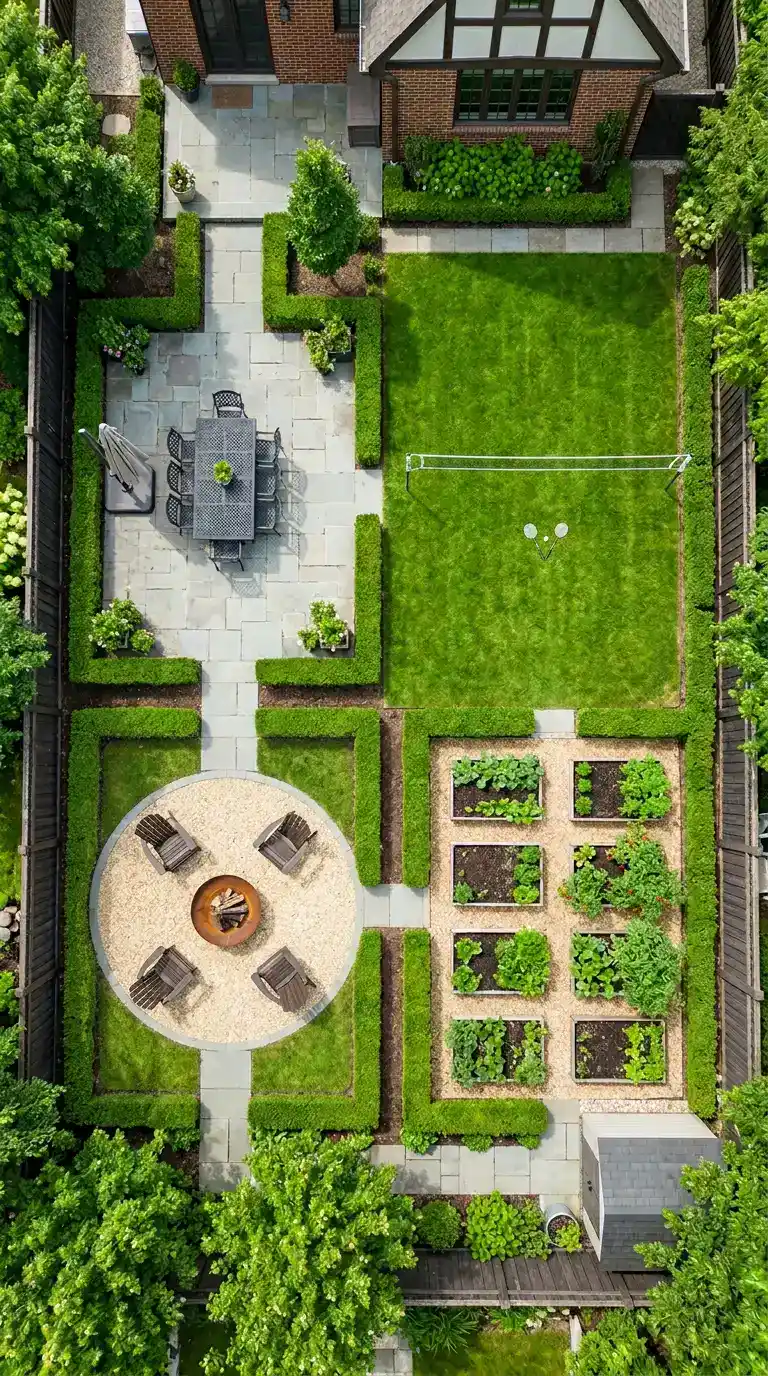
Treat your yard like a house with outdoor “rooms.” Define each zone with a different surface: a stone patio for dining, a lawn for play, a gravel circle for a fire pit, and a mulched path leading to a vegetable garden. Use low hedges or changes in elevation to separate rooms visually.
2. The Central Lawn with Perimeter Path Layout
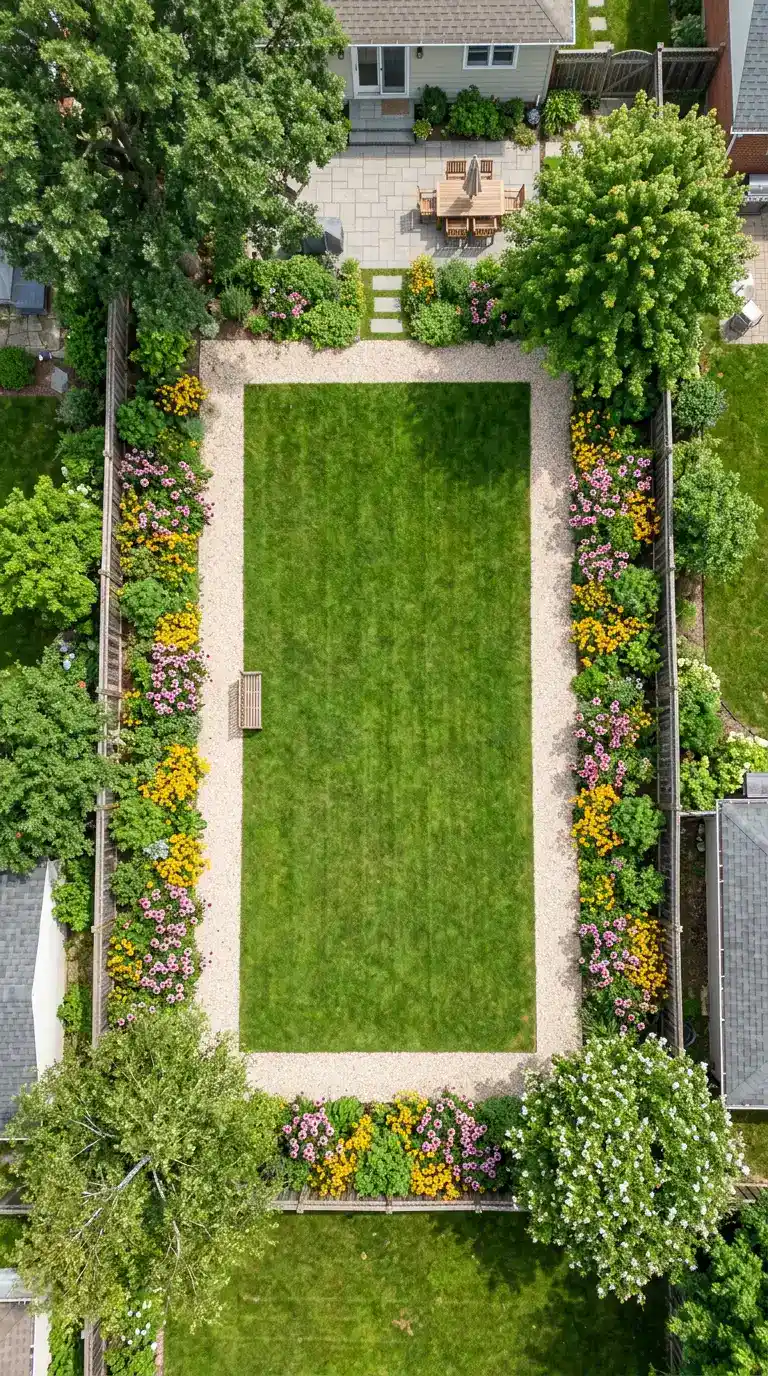
Keep the center of your yard open for running, games, and sun. Then run a continuous perimeter path around the entire lawn edge. Plant flower beds, shrubs, or small trees along the outer side of the path. The path invites walking and defines the boundary without a fence.
3. The L-Shaped Patio and Lawn Layout
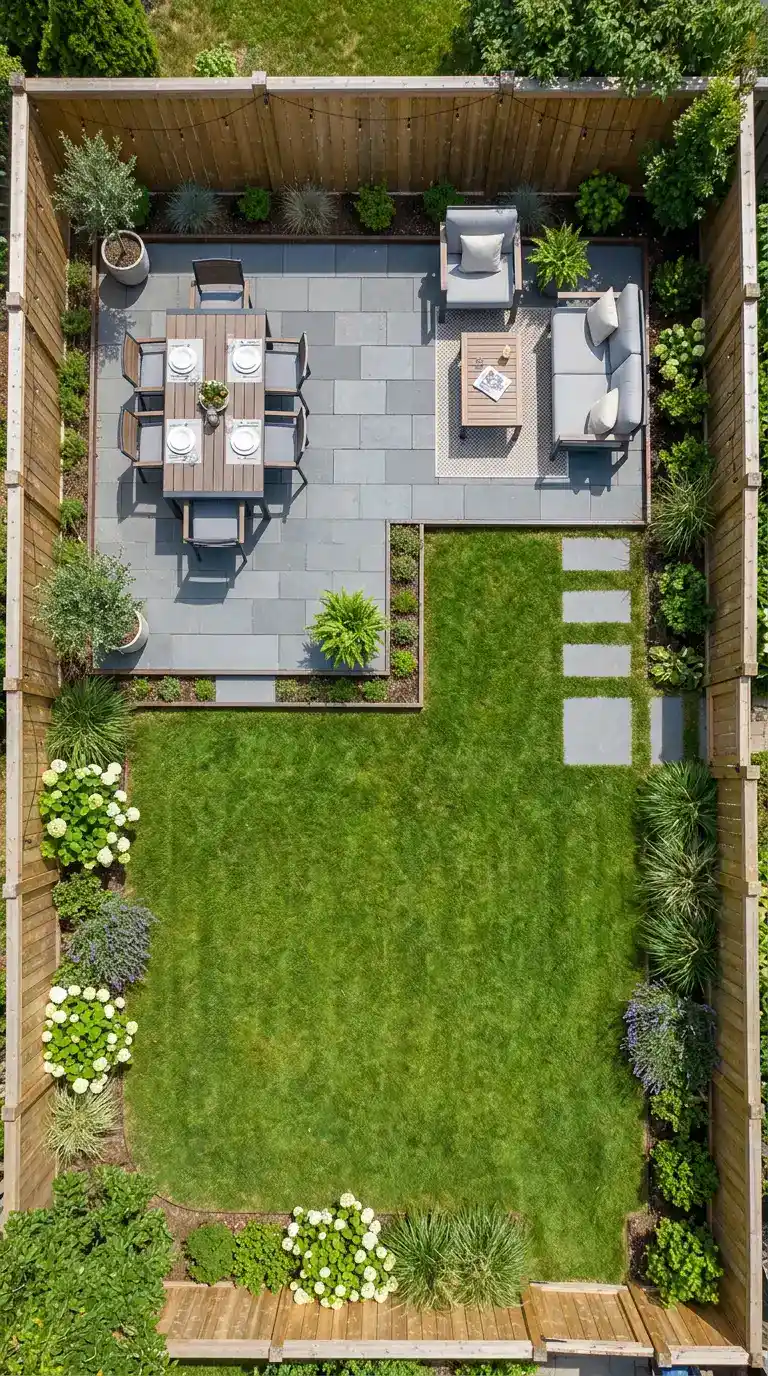
Place a large L-shaped patio in one corner of the yard, extending along two sides. The remaining space becomes a simple open lawn. The patio gives you both a dining area (on one leg) and a lounge area (on the other leg). The lawn stays uncluttered for kids or pets.
4. The Circular Hub-and-Spoke Layout
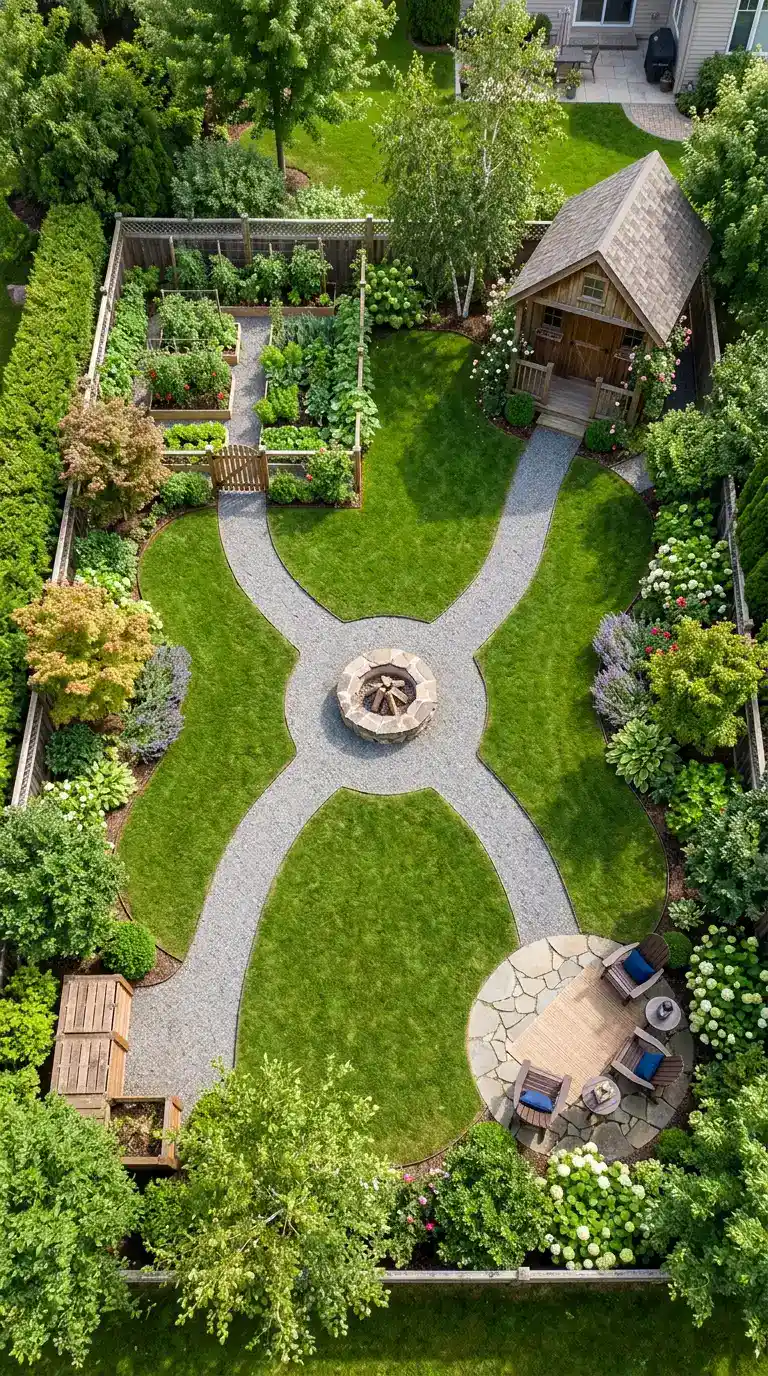
Place a circular feature (fire pit, fountain, or round garden bed) at the center of your yard. Then create curved paths that radiate outward like spokes to different destinations: a vegetable garden, a shed, a seating area, and a compost zone. This layout feels intentional and slightly formal.
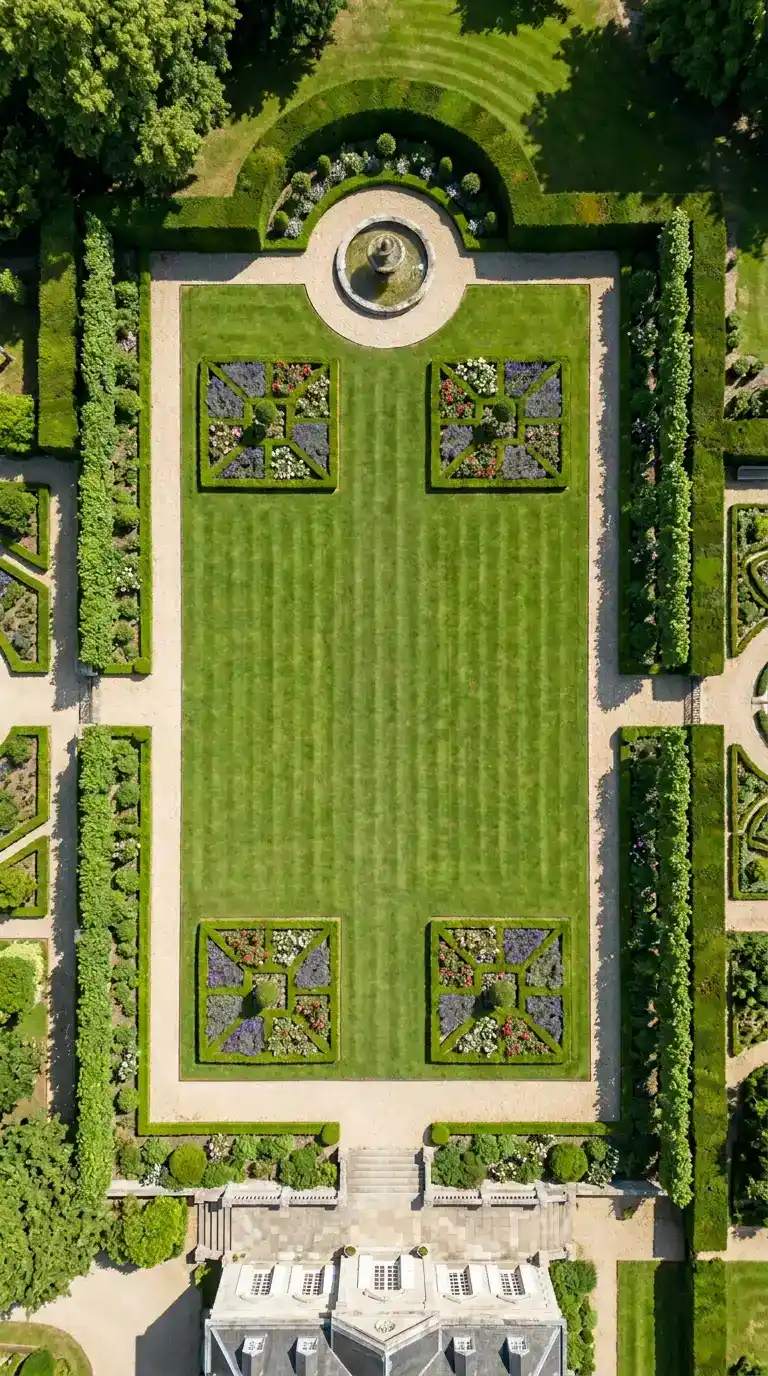
5. The Formal French Parterre Layout
For a grand, formal look, create symmetrical geometric beds and paths. A central lawn rectangle surrounded by gravel walks. Hedged planting beds at each corner. A focal point (statue, birdbath, or small fountain) at the far end. This layout requires regular maintenance but looks spectacular.
6. The Multi-Level Terrace Layout
If your large yard slopes, don’t fight it. Carve it into 2–4 flat terraces held by low retaining walls. Upper terrace: dining and lounge. Middle terrace: lawn or play area. Lower terrace: vegetable garden or fire pit. Each level has its own purpose and view.

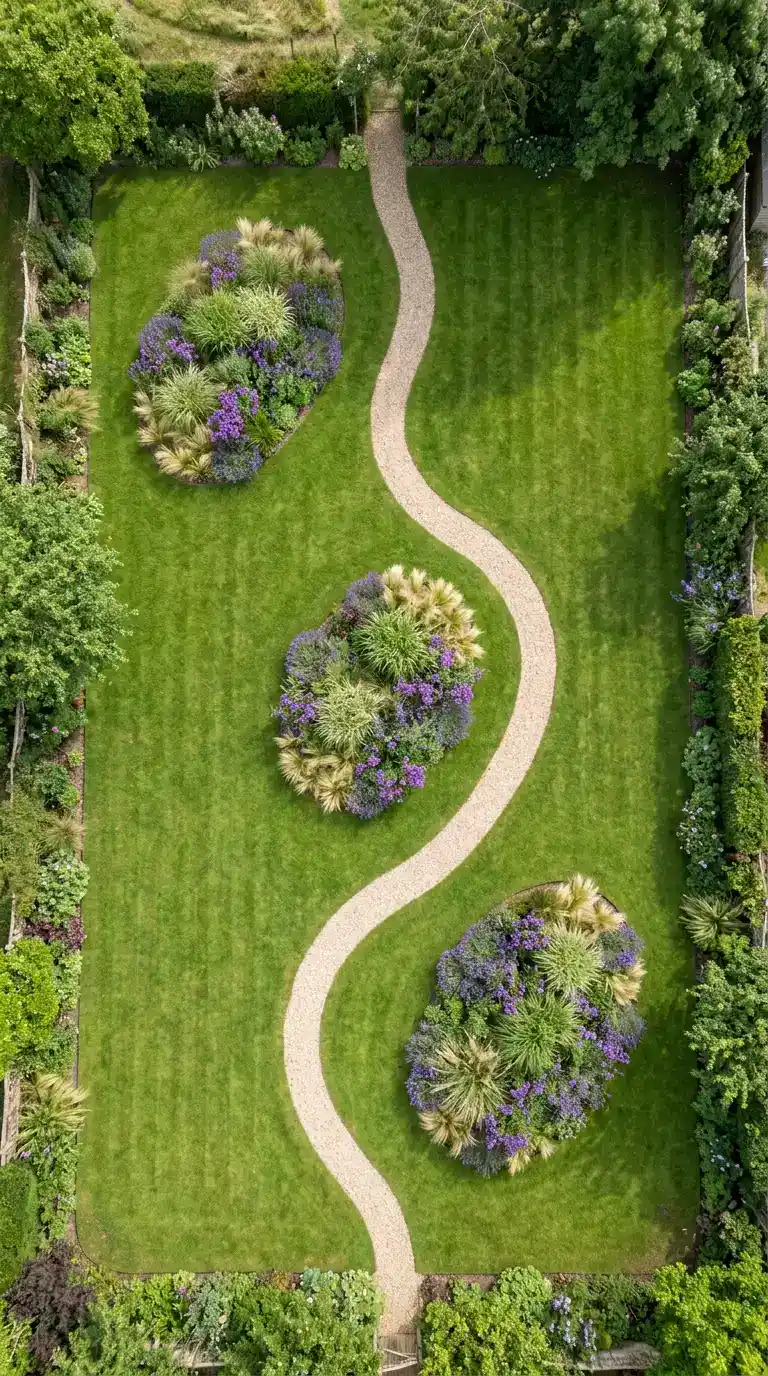
7. The Curved Path and Island Bed Layout
Break up a large rectangular lawn by carving out sweeping, curved flower beds that float like islands. Connect them with a gently curving path that meanders from the house to the back fence. The curves soften the space and create hidden views around each bend.
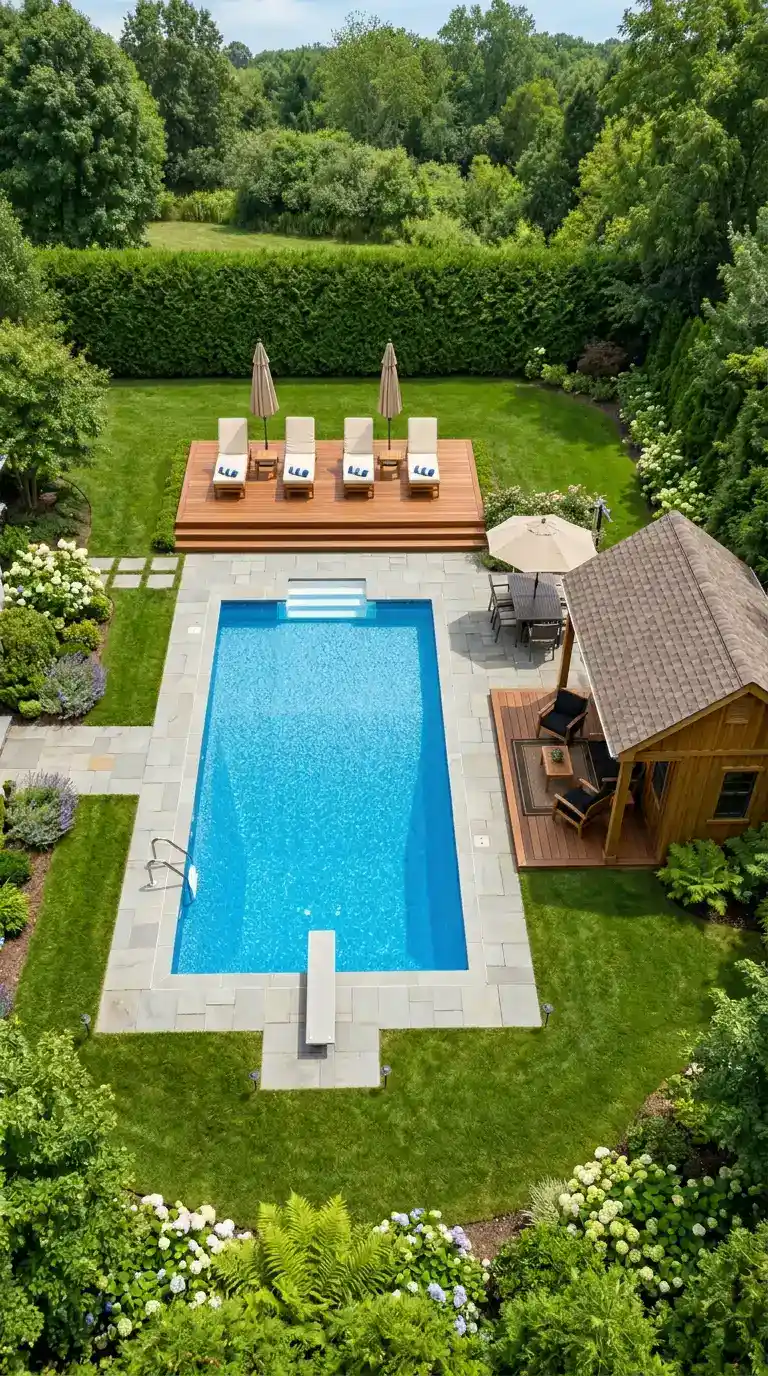
8. The Pool-and-Pool House Compound Layout
Place a rectangular pool off-center, not dead center. Leave room on one side for a pool house or cabana (even a small shed works). On the other side, create a sunbathing deck. Behind the pool, plant a privacy hedge. The layout feels like a resort, not a hole in the ground.
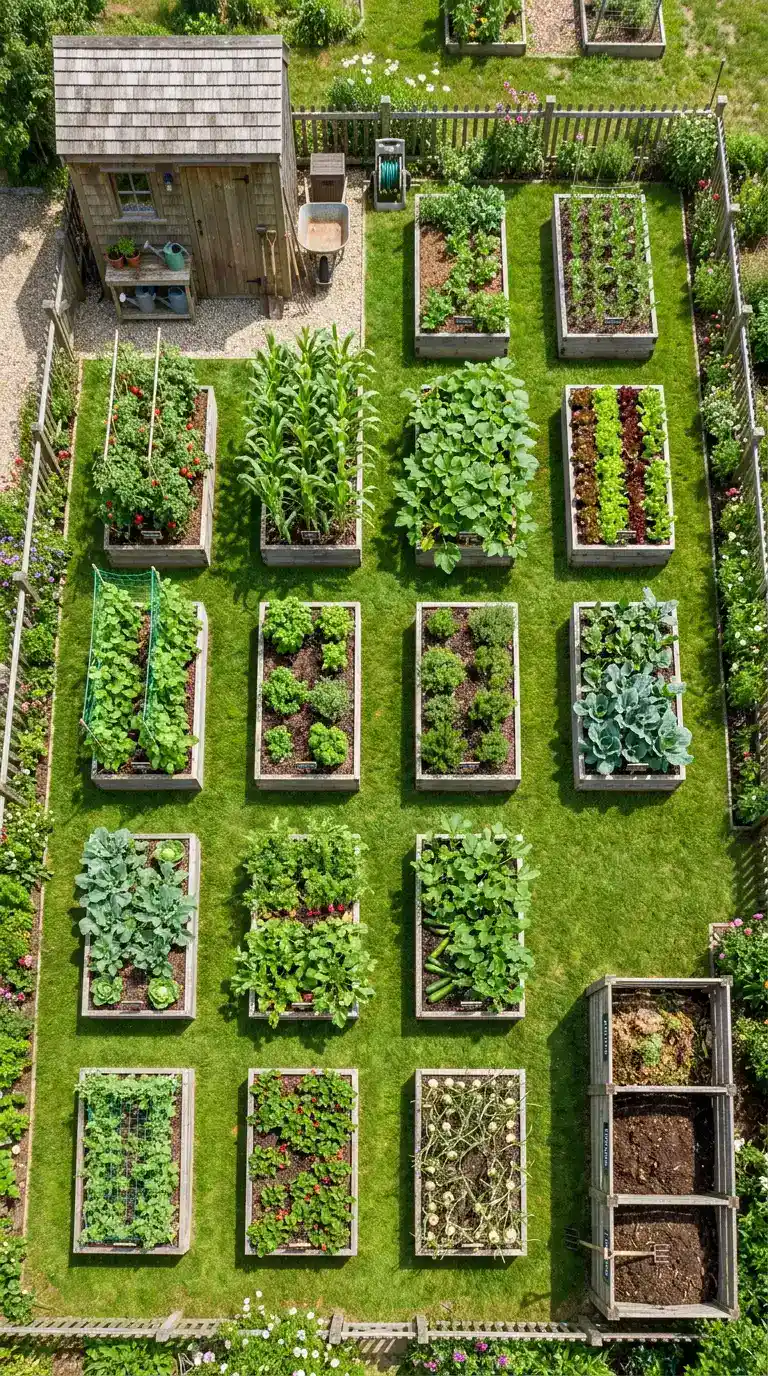
9. The Edible Garden Grid Layout
Devote a large section of your yard to food production using a formal grid. Arrange 8–12 raised beds in a 3×4 grid, each 4×8 feet. Leave 3-foot grass or gravel paths between every bed. Add a small tool shed and a composting corner. This layout produces serious harvests.
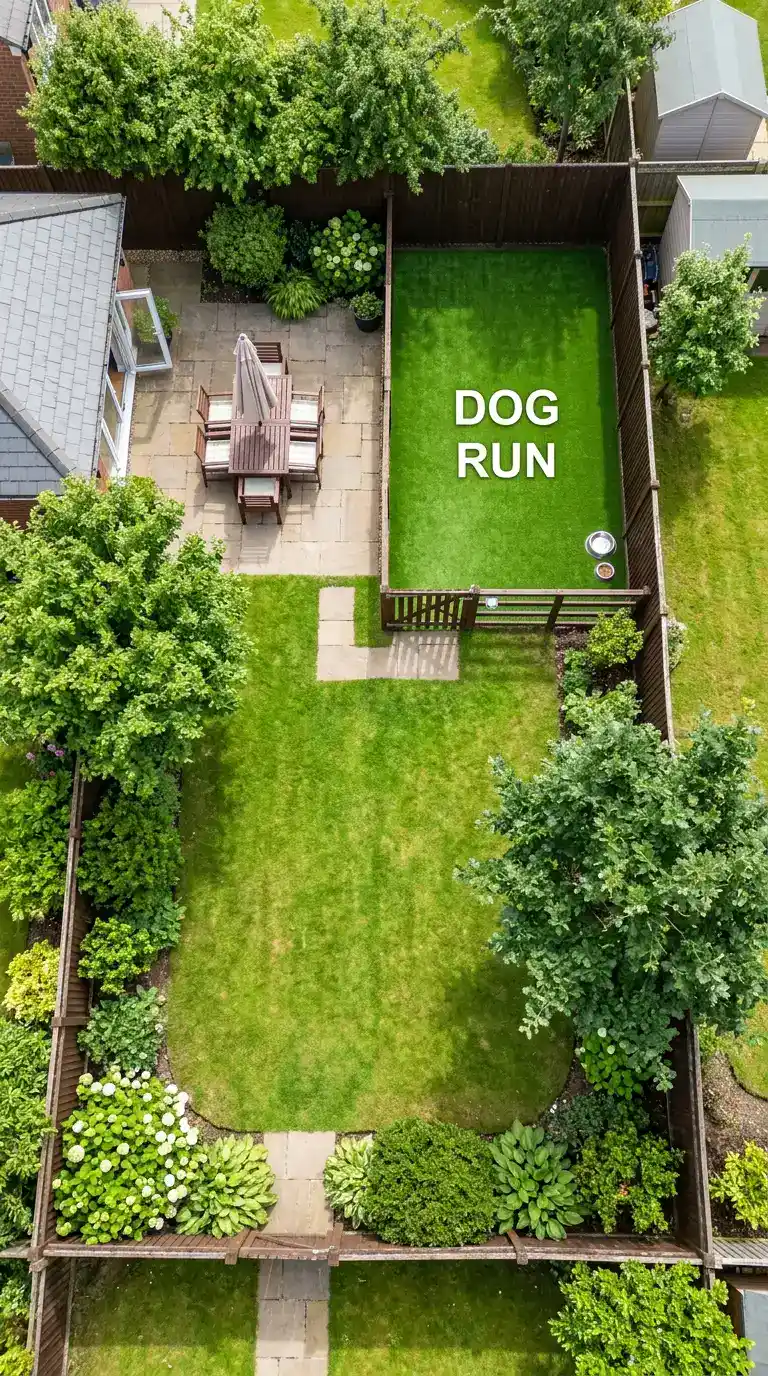
10. The Dog Run and Lawn Separation Layout
If you have dogs, keep them contained without sacrificing your main lawn. Dedicate a long, narrow side yard or back corner as an artificial turf dog run. Fence it separately. The main lawn stays clean, green, and mud-free for humans. Add a gate for easy access.
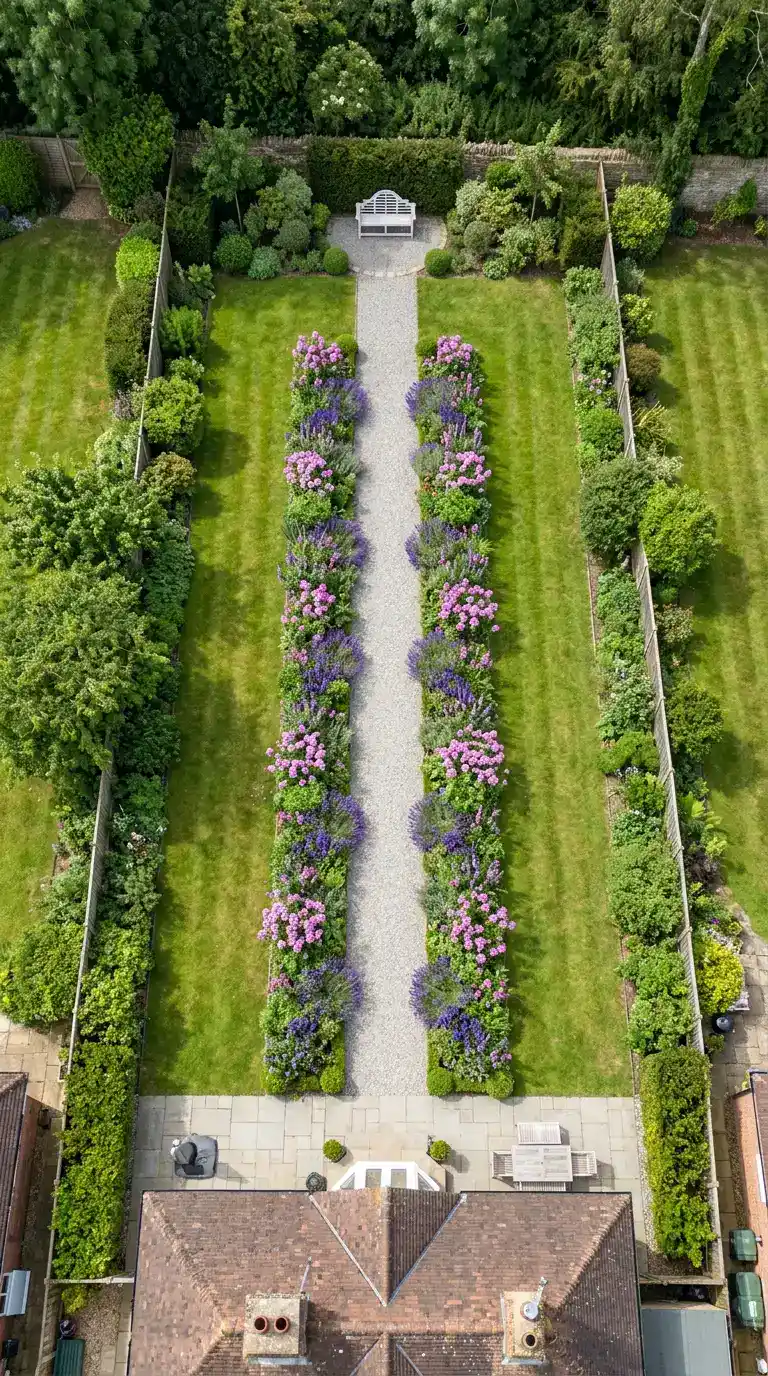
11. The Long Axial Vista Layout
If your yard is narrow but deep, create a strong central axis. Lay a straight path or lawn runner from the house all the way to a focal point at the far end (a bench, statue, or large tree). Plant symmetrical borders on both sides. The long view makes the space feel even larger.
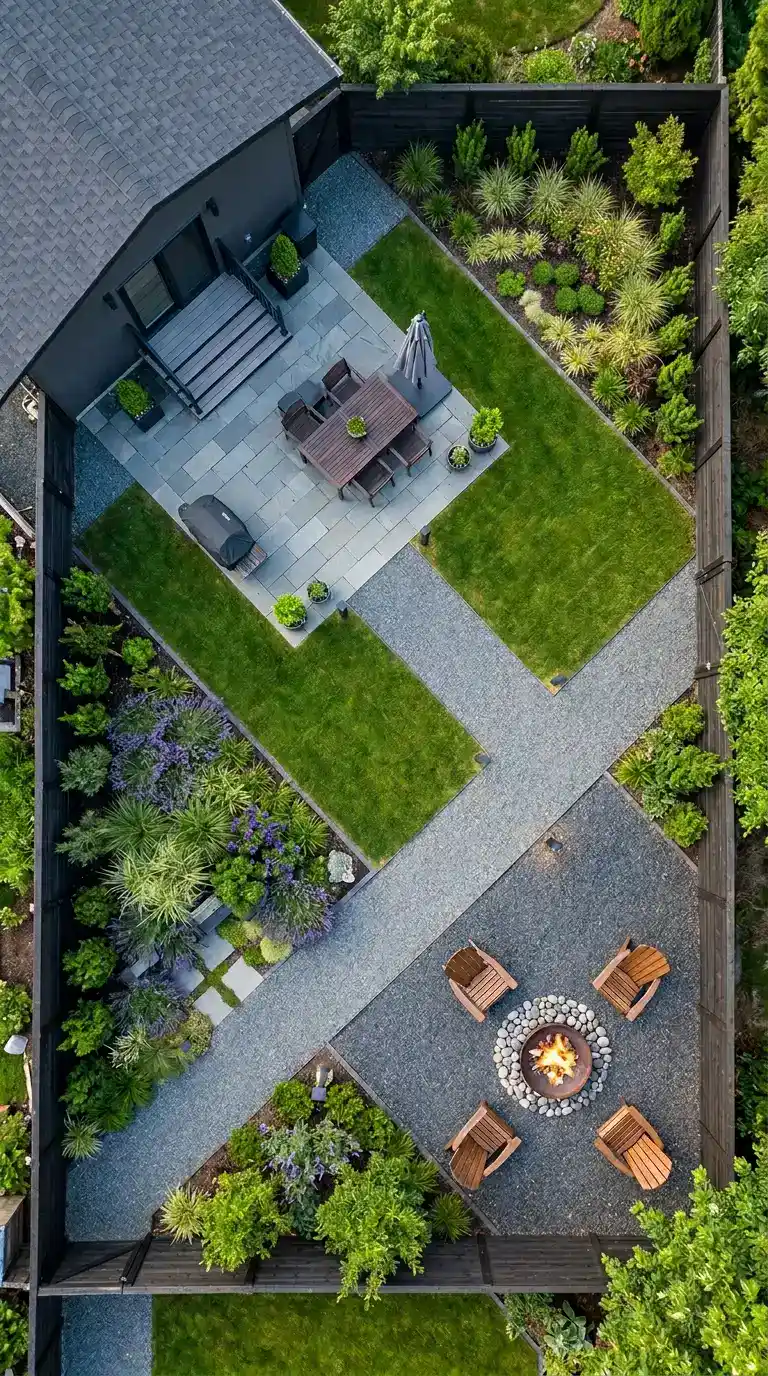
12. The Mixed-Use Diagonal Layout
Break the habit of right angles. Place your patio, fire pit, and garden beds at diagonal angles to the house and fence lines. This trick makes a square yard feel more dynamic and less predictable. Use triangular planting beds to fill odd corners.
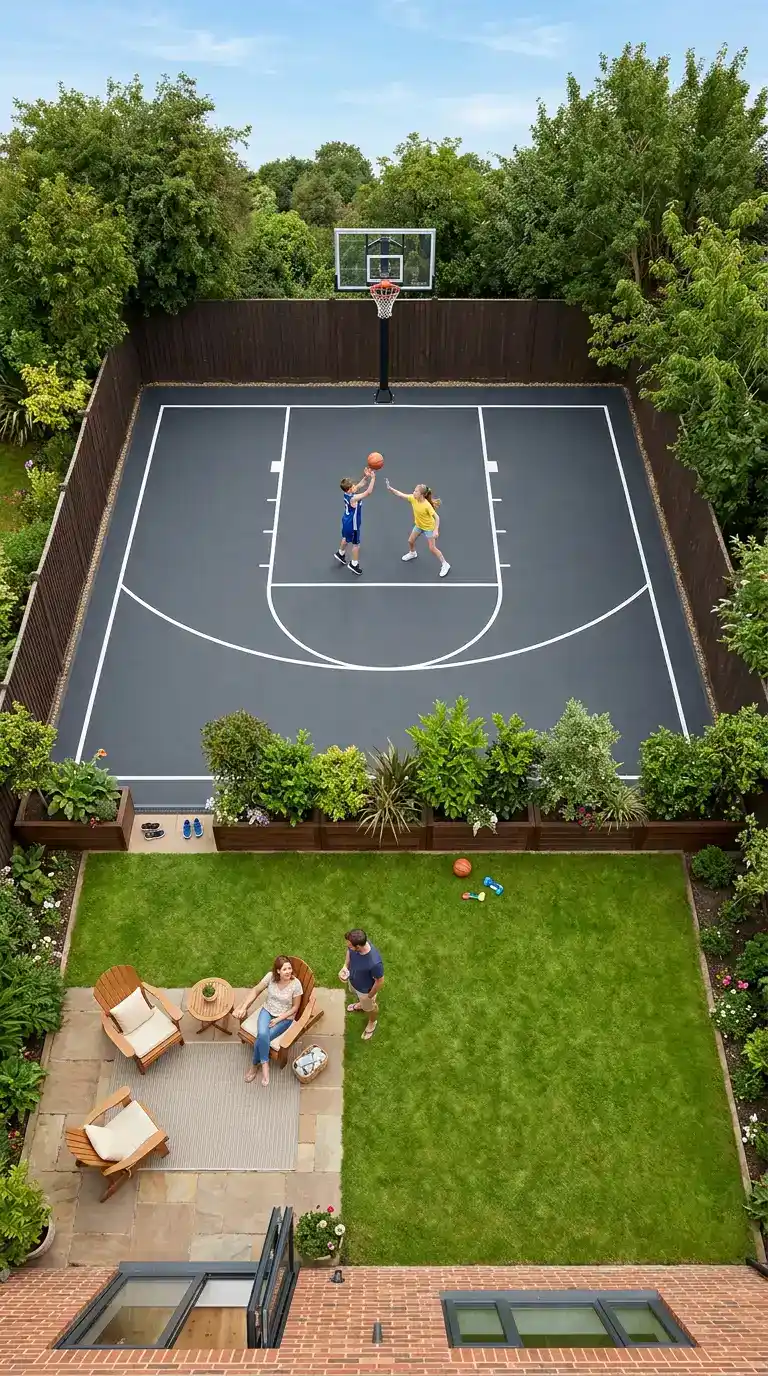
13. The Sports Court and Lawn Combo Layout
Dedicate one large section (roughly 30×60 feet) to a multi-sport court: basketball, pickleball, or hockey. Leave the remaining yard as lawn for casual play. Place the court at the far end so it doesn’t dominate the view from the house. Add a small shaded seating area nearby.
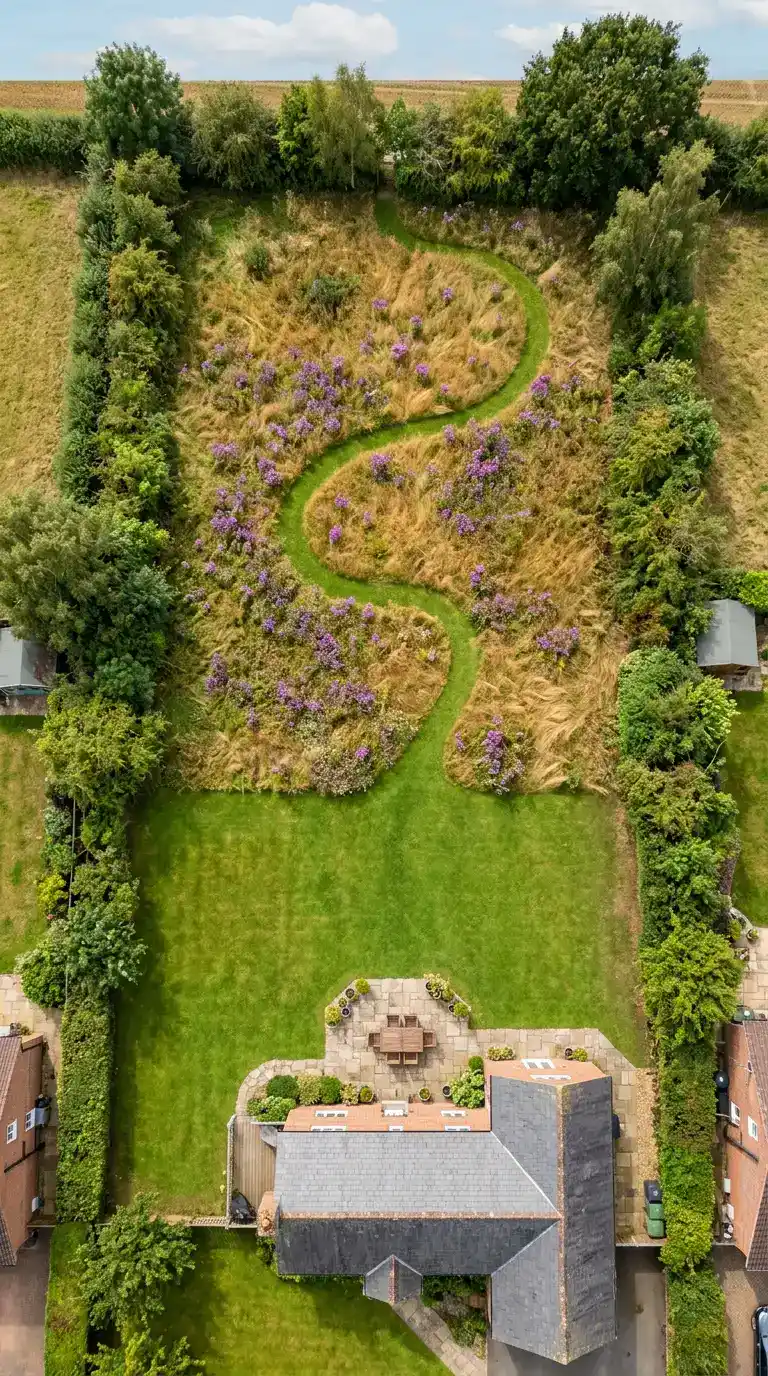
14. The Native Meadow and Path Layout
Stop mowing half your yard. Let a large section (the back half or a side strip) grow into a native wildflower meadow. Mow a winding path through the meadow so you can walk inside it. The rest of the yard stays as short lawn. This layout is low-maintenance and pollinator-friendly.
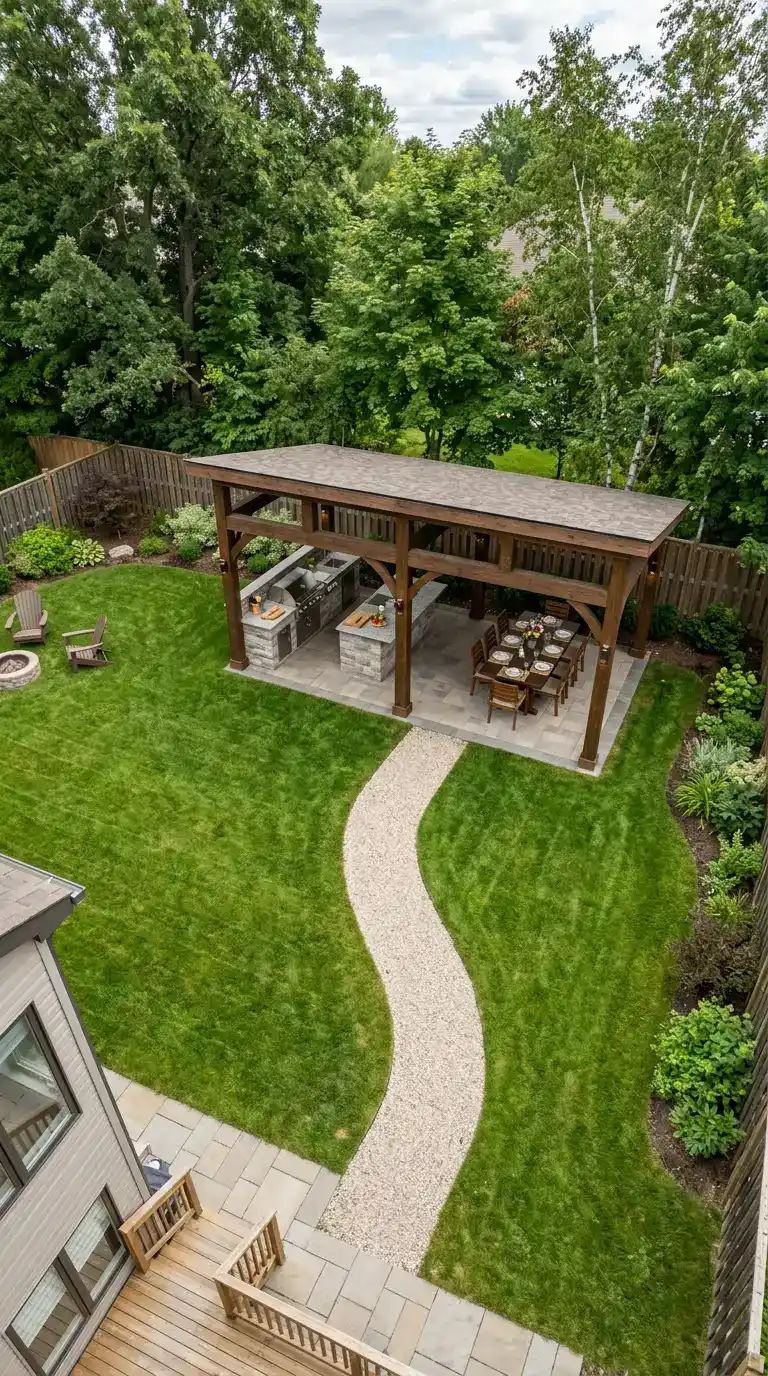
15. The Outdoor Kitchen and Dining Pavilion Layout
Dedicate a significant footprint to cooking and eating. Build a covered pavilion (or large pergola) at one end of the yard. Inside, place a built-in grill, a counter, a sink, and a dining table for 8–10. Outside the pavilion, leave open lawn. This layout makes entertaining effortless.
Conclusion
A large backyard is only as good as its layout. Start by deciding how you actually want to use the space: dining, playing, gardening, relaxing, or all of the above. Then divide your yard into zones using paths, changes in surface, and low plantings. The best layouts balance open space for running with tucked-away corners for quiet. Draw your plan on paper first, then walk the yard with stakes and string. Move things until it feels right. Then build slowly, one zone at a time.


