
14 Backyard Stream Designs
The sound of moving water changes everything. A backyard stream turns a static landscape into a living, breathing space—one that gurgles, sparkles, and attracts birds, butterflies, and calm. Whether you have a steep slope or a flat yard, these 14 stream designs range from tiny babbling brooks to multi-level cascades.
1. The Gentle Slope Rill
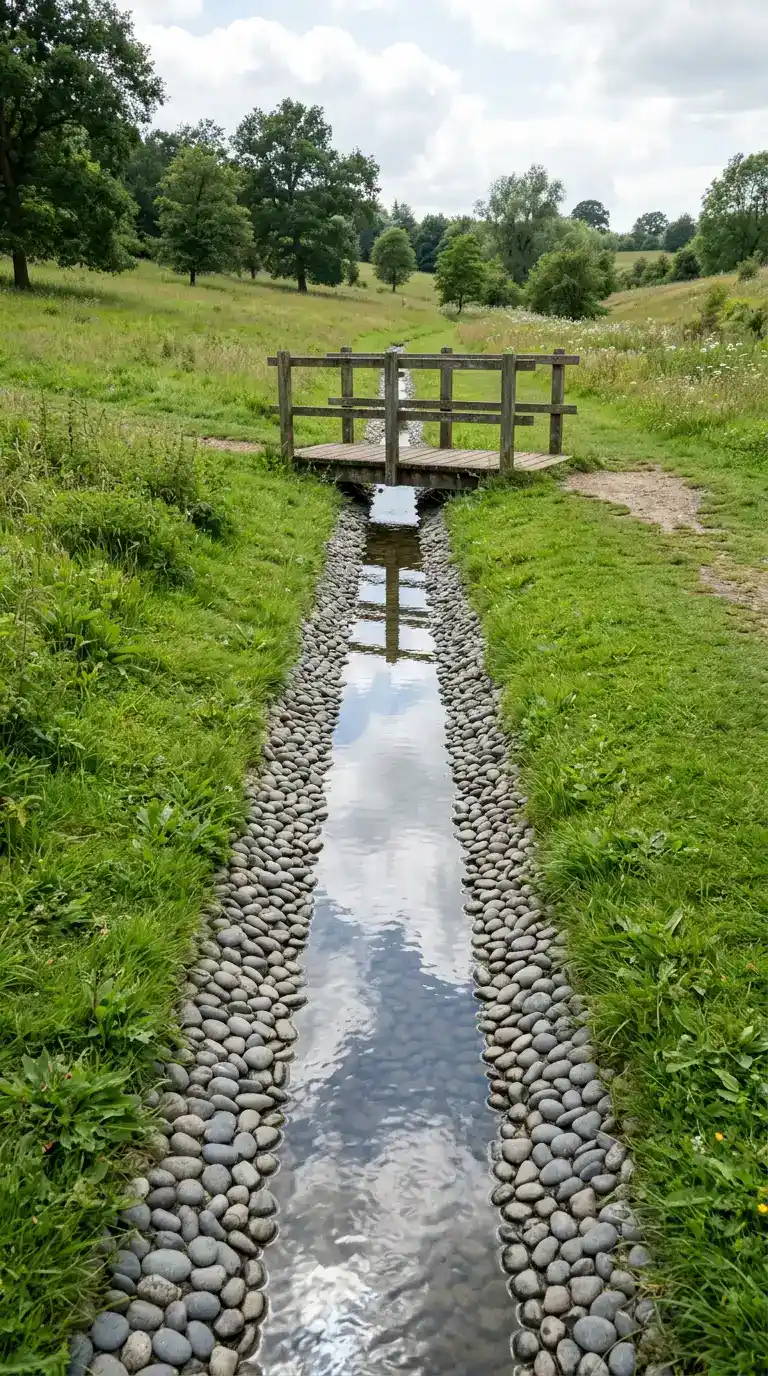
A rill is a narrow, shallow, linear channel—almost like a water-filled trench. Perfect for a gentle slope of just a few inches of drop. Line it with smooth pebbles or dark river stones. The water moves slowly, reflecting the sky. This design is formal, minimalist, and surprisingly easy to build.
2. The Multi-Tiered Cascading Stream
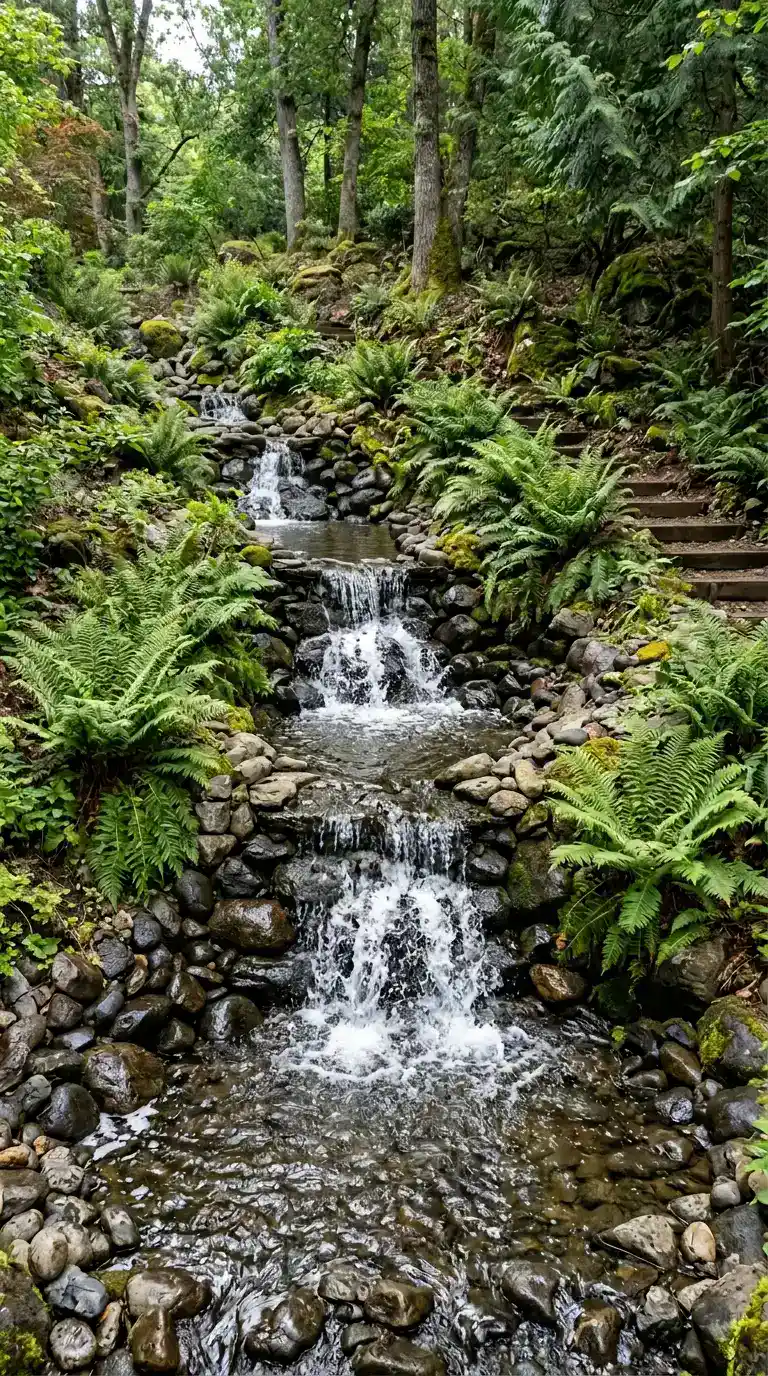
For a steeper slope, build a series of small drops or “steps.” Each drop is a few inches high, creating a staircase of waterfalls. The water speeds up at each drop, then pools briefly before falling again. The sound builds from a whisper at the top to a cheerful chatter at the bottom.
3. The Winding Woodland Stream
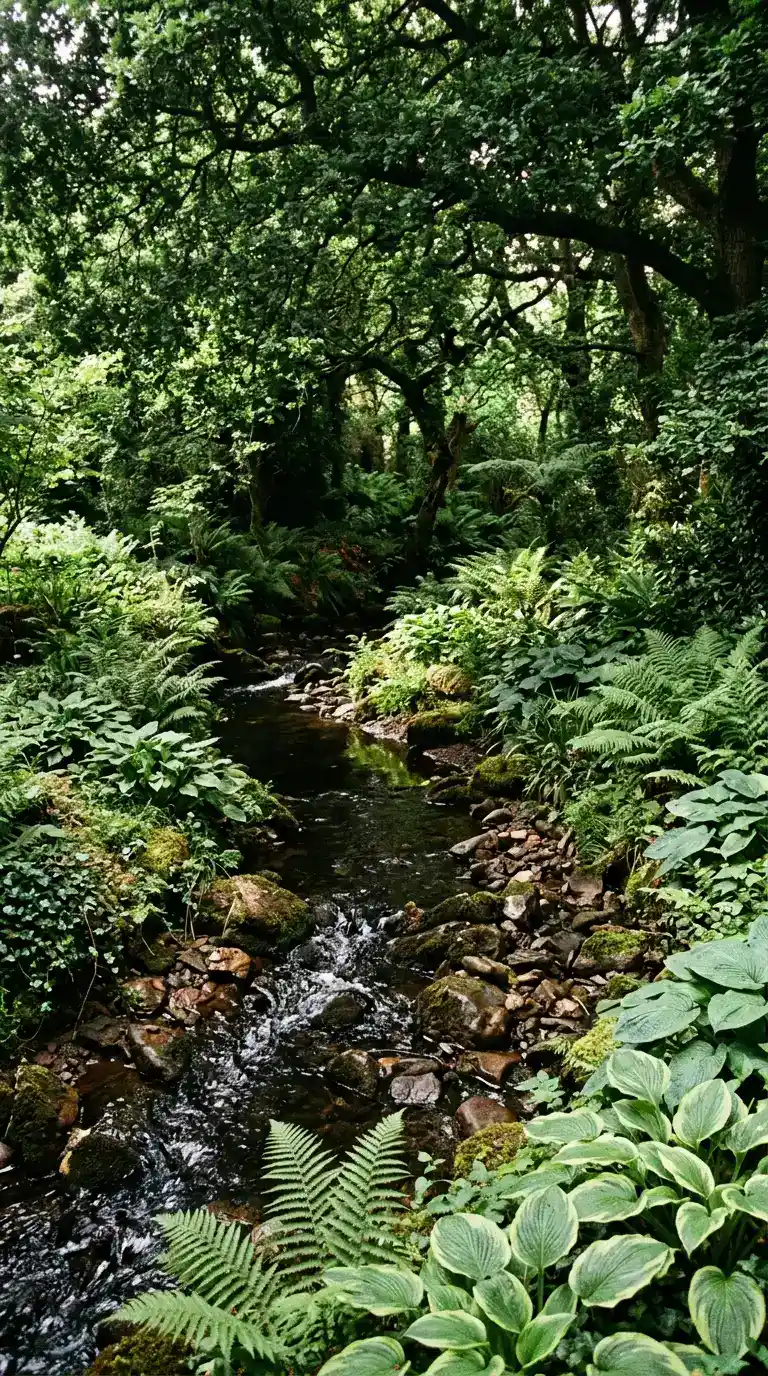
Copy nature by letting your stream curve gently from side to side. Avoid straight lines. Use a flexible rubber liner and shape the banks irregularly. Plant native ferns, hostas, and astilbes right to the water’s edge. The goal is to make it look like it has always been there.
4. The Dry Creek Bed (That Comes Alive in Rain)
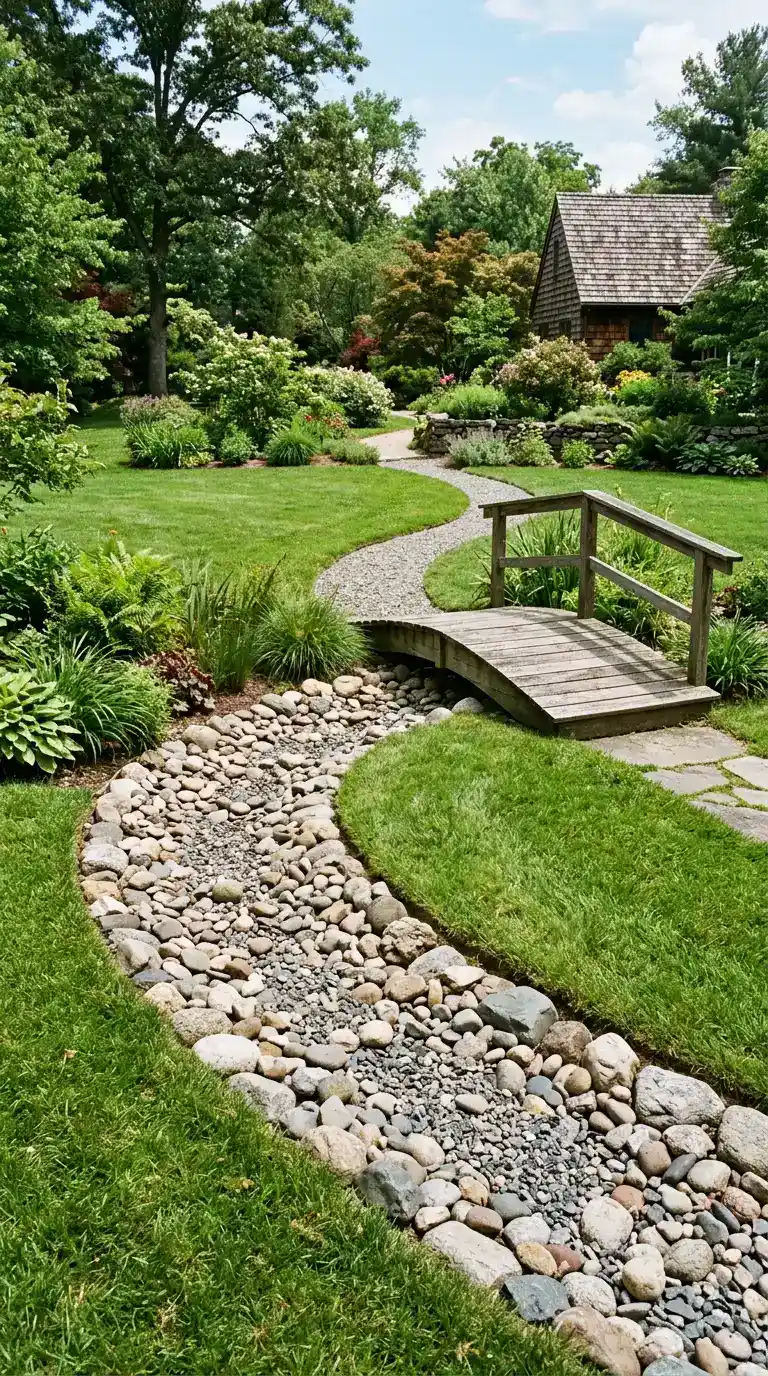
No pump, no electricity, no maintenance. A dry creek bed is a shallow trench lined with stones and gravel, designed to look like a seasonal stream. Most of the year it stays dry. But when it rains, water flows through it dramatically. Perfect for drainage and beauty combined.
5. The Pond-to-Pond Connecting Stream
If you have two ponds (or room for two), connect them with a stream. Place the upper pond slightly higher than the lower pond. A pump in the lower pond pushes water up to the upper pond, which then flows back down the stream. The water circulates continuously, and you get both still water and moving water.

6. The Babbling Brook (Shallow and Wide)
Instead of a deep, narrow channel, go shallow and wide. A brook is typically 3–4 feet wide but only 2–3 inches deep. Water flows quickly over a bed of small pebbles, creating a continuous “babbling” sound. This design is excellent for masking traffic noise.
7. The Mossy Bank Stream
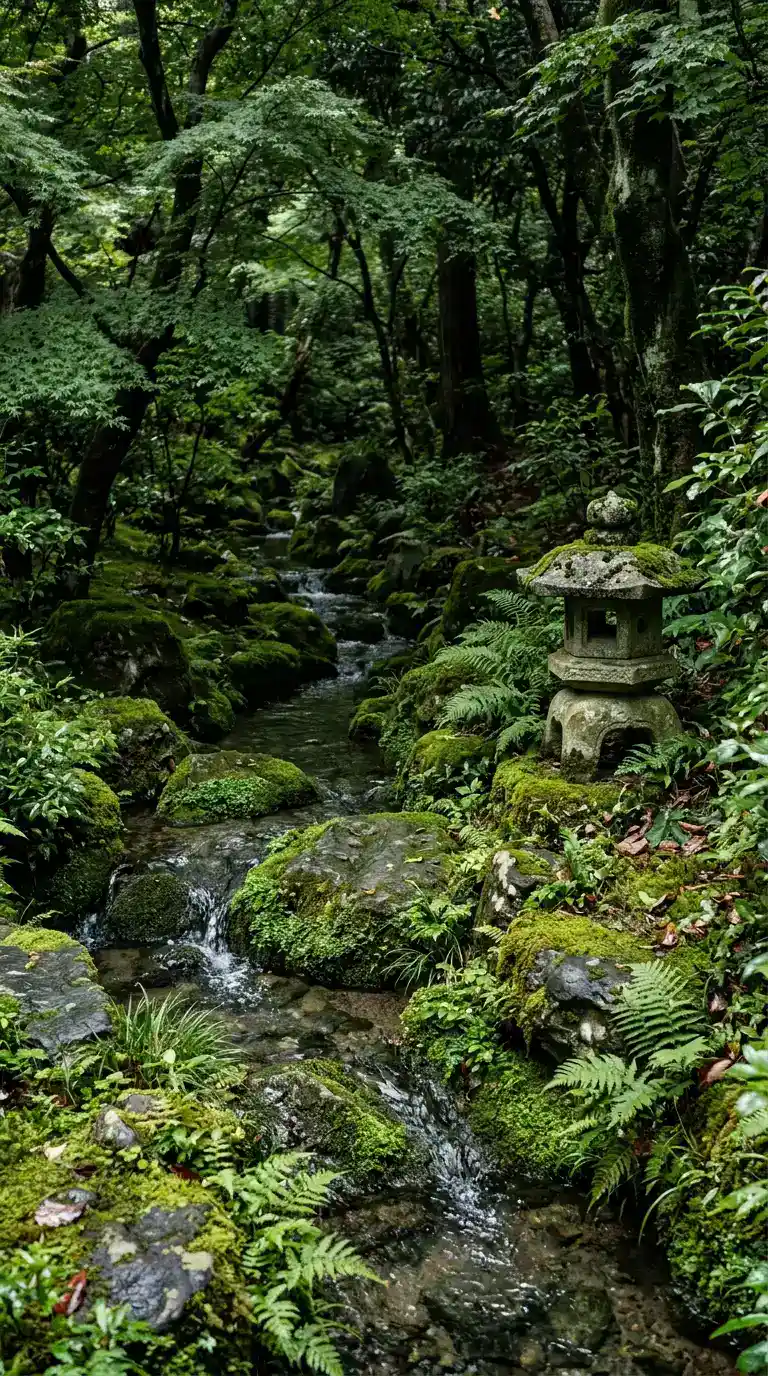
Build your stream with rough, irregular stones and let moss grow naturally over time. Keep the stream in shade to encourage moss. The combination of dark green moss, grey stone, and clear water feels ancient and Japanese. Mist the rocks daily for the first few months to establish moss.
8. The Stepping Stone Stream
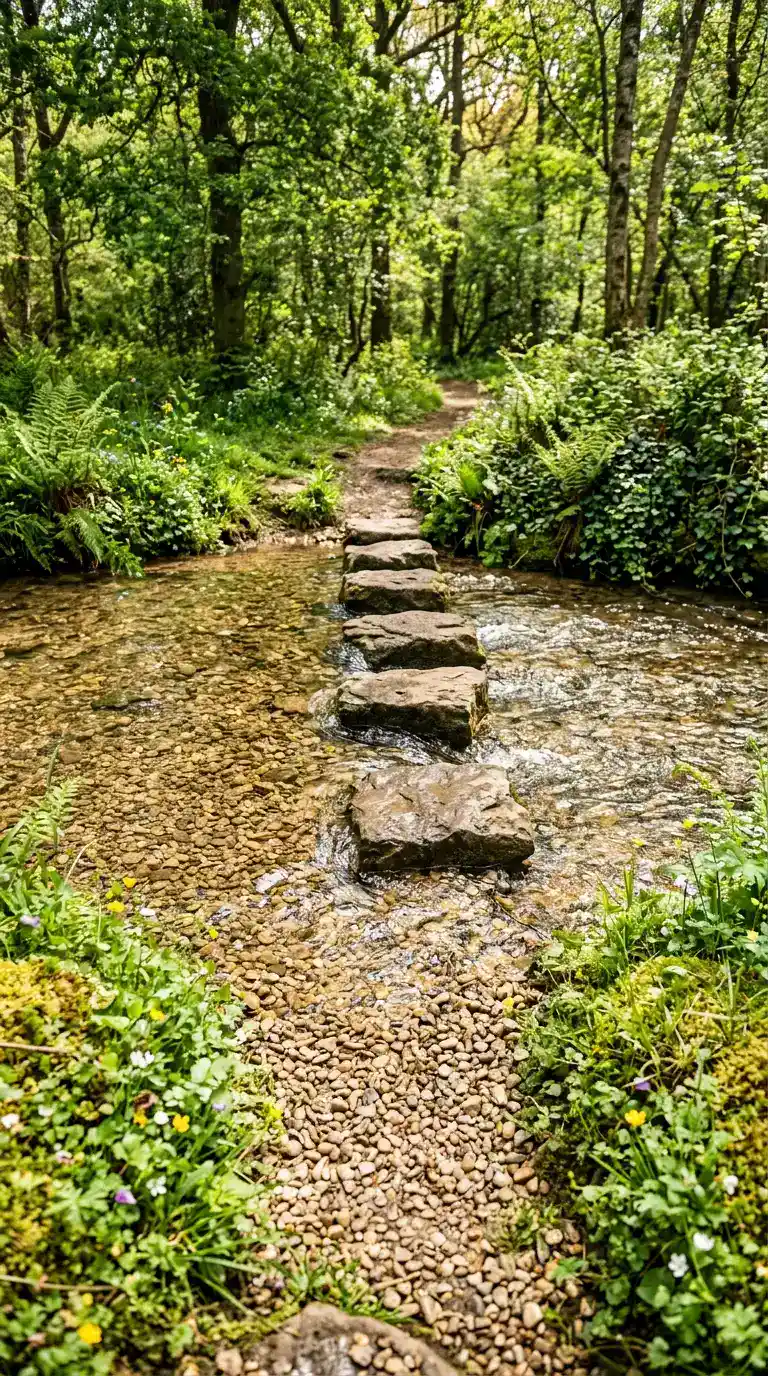
Embed flat stepping stones directly into the streambed. Place them so water flows over or around them, but the tops stay mostly dry. Guests can walk across the stream without getting wet feet. The combination of moving water and functional path is both beautiful and practical.

9. The Modern Linear Rill (Concrete or Steel)
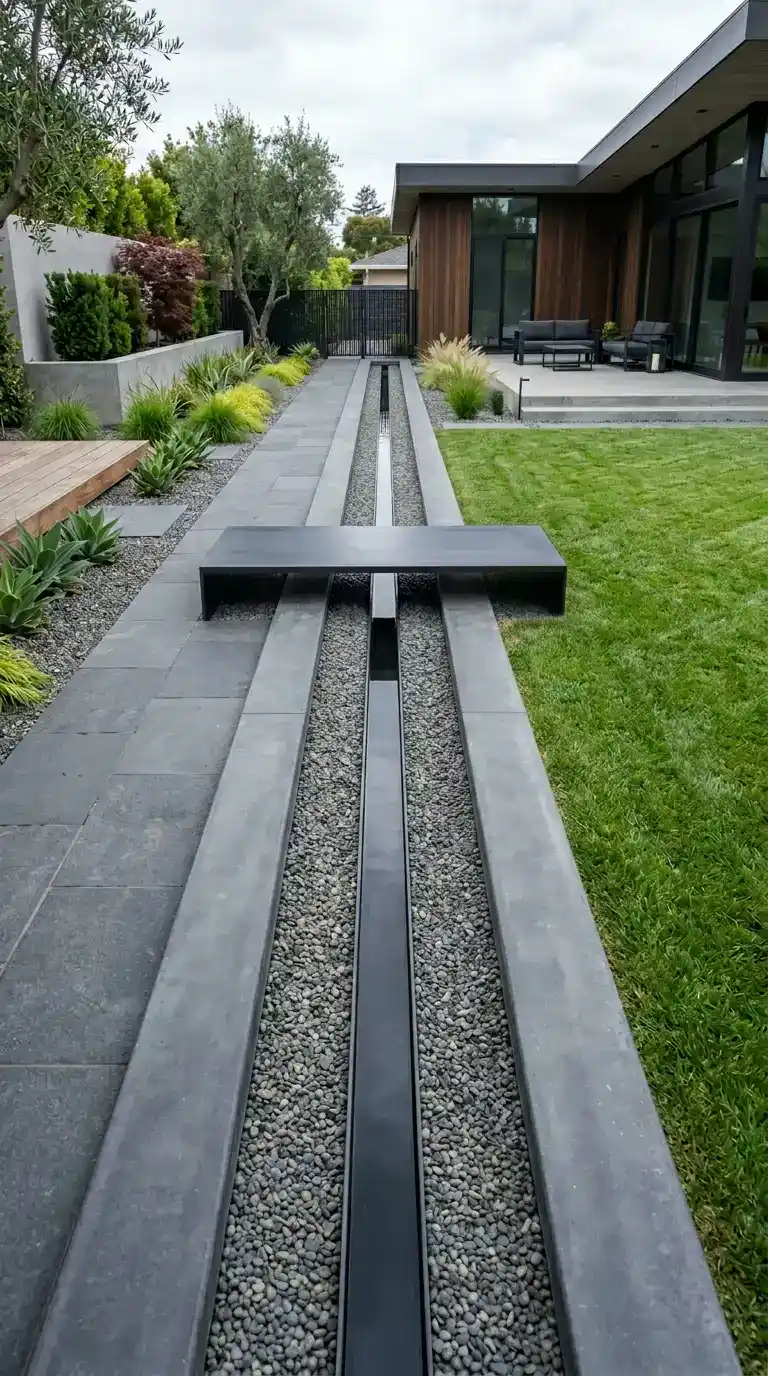
For a contemporary home, skip the natural look entirely. Build a straight, narrow rill with crisp edges using poured concrete or corten steel. Keep the channel perfectly straight and only 6–8 inches wide. Use a single sheet of water flowing over a dark bottom. No rocks, no plants, no curves.
10. The Rain Chain Stream (From Downspout)
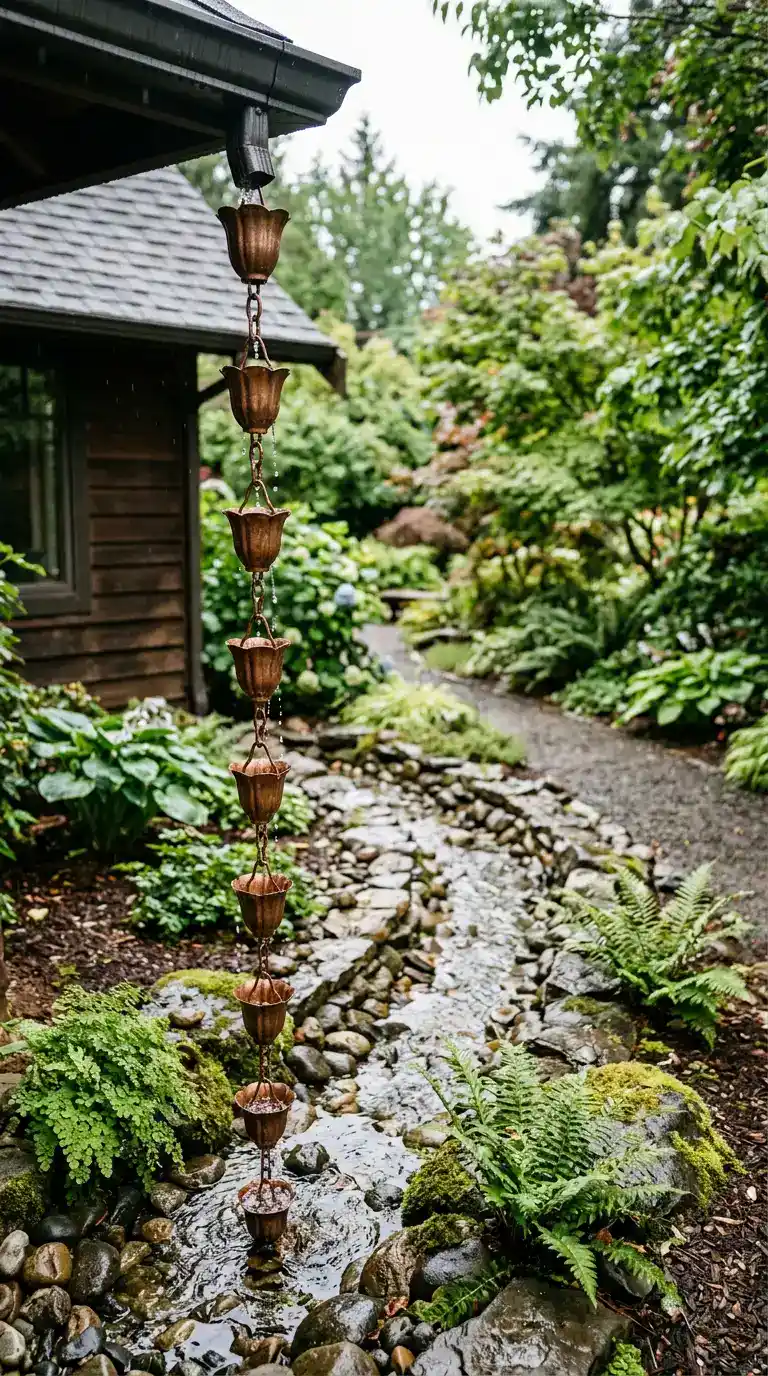
Redirect your gutter downspout into a backyard stream. Attach a rain chain (a series of small cups or rings) to the downspout so water falls musically into a shallow stone-lined channel. During rain, the stream becomes active. During dry weather, it’s a dry creek bed. Free water and free sound.
11. The Bog Stream (Slow and Plant-Filled)
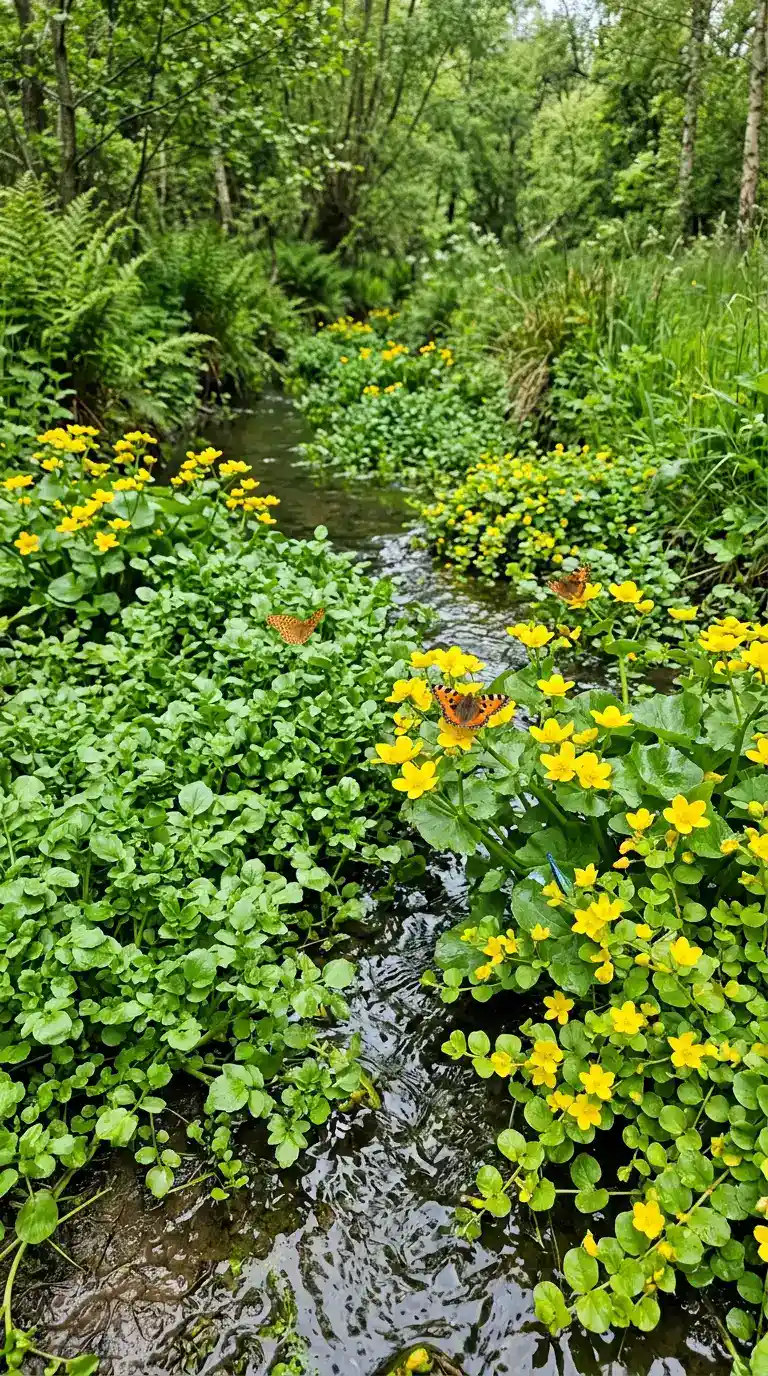
Slow the water way down. Create a very gentle slope (1 inch drop per 10 feet) and fill the streambed with water-loving plants: watercress, creeping jenny, marsh marigold, and dwarf papyrus. The water barely moves, but the plants thrive. This is less a stream and more a wet meadow in a line.
12. The Elevated Berm Stream
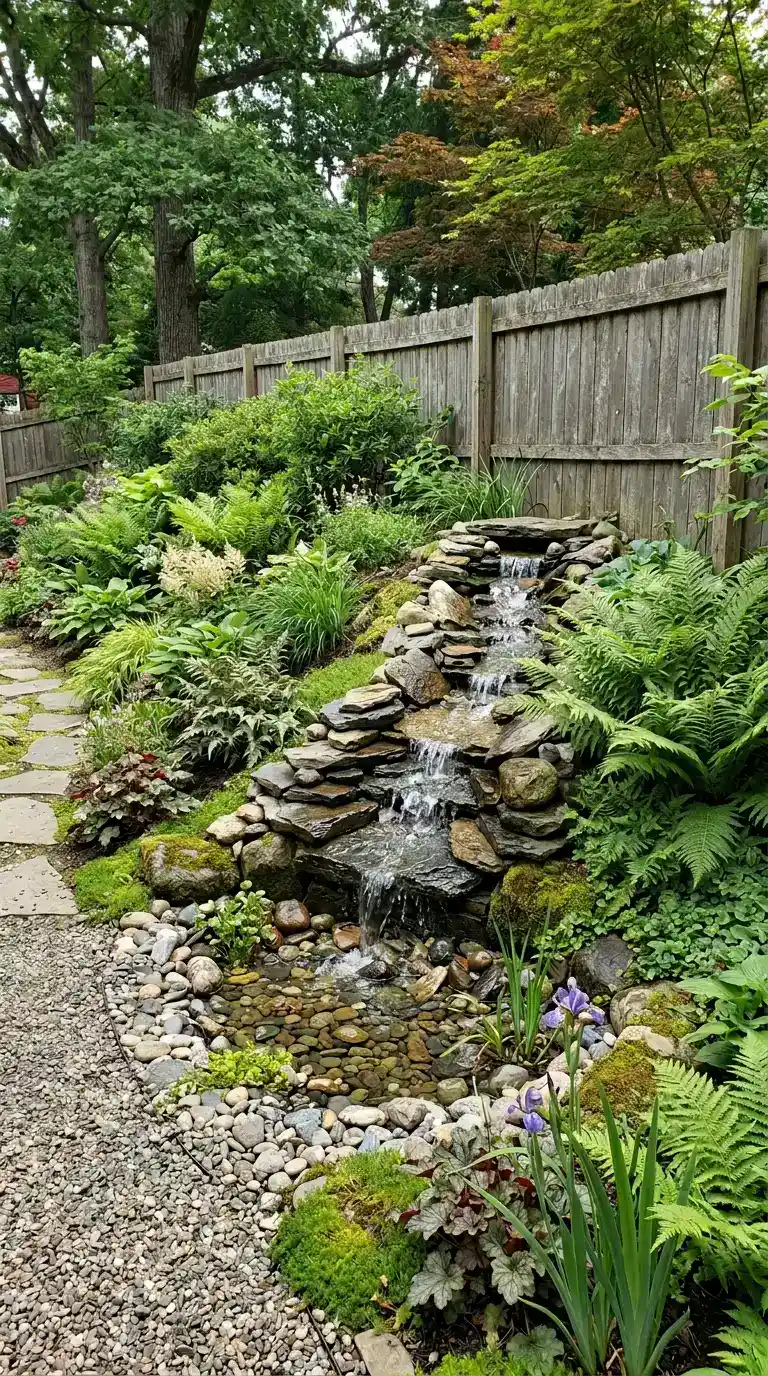
No natural slope? Create one. Build a raised earthen berm (a long mound of soil) along one edge of your yard. Run your stream down the side of the berm. The pump sits at the bottom, hidden by plants. Water flows up through a hidden pipe to the top of the berm, then cascades down. You create your own topography.
13. The Split Stream (Two Channels)
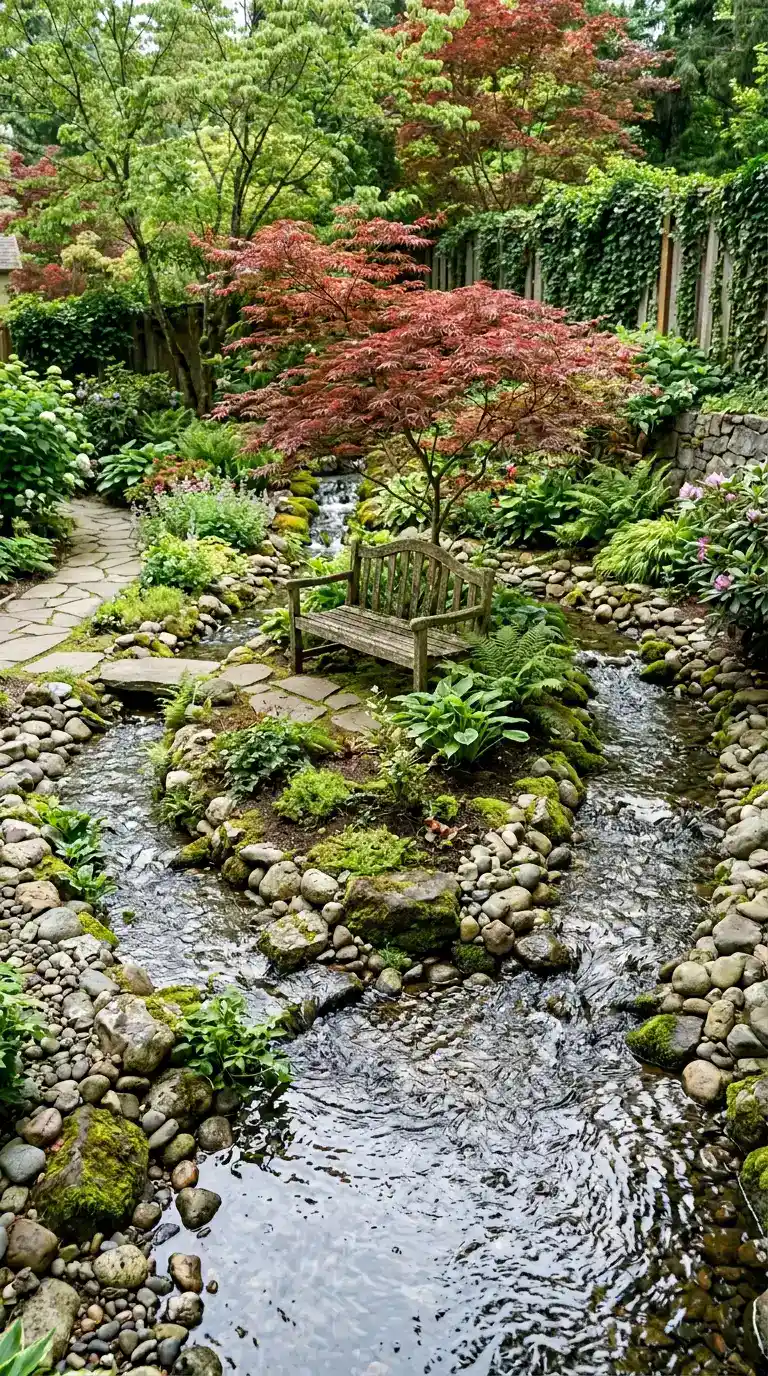
From a single source at the top, split your stream into two separate channels that flow around a central island. The island can hold a bench, a small tree, or a birdbath. The two channels rejoin at the bottom into a single pool. The sound comes from two directions at once.
14. The Night-Illuminated Stream (Underwater LEDs)
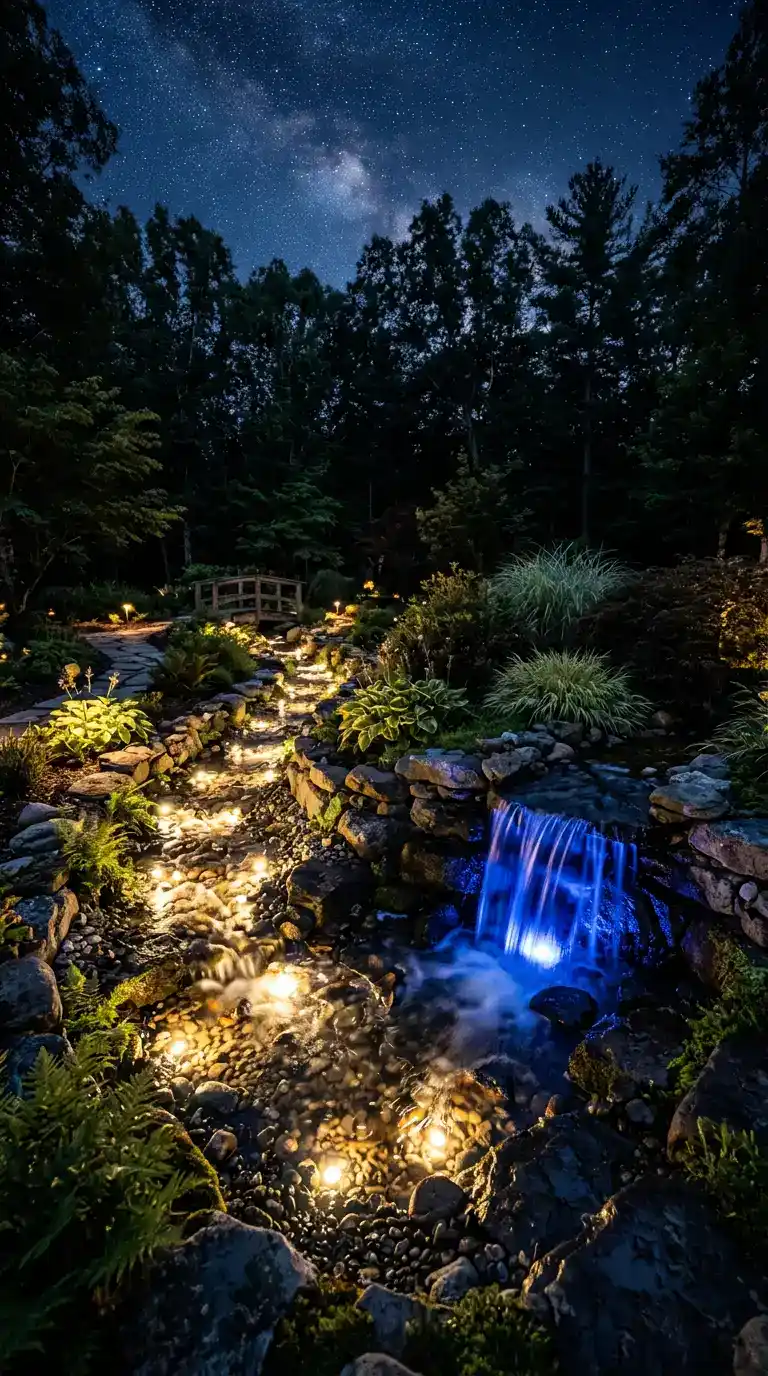
Your stream shouldn’t disappear after dark. Install small waterproof LED lights along the streambed, pointing upward or downstream. Use warm white for a natural glow or blue for a dramatic effect. The moving water catches the light and shimmers. Add a few lights under the waterfall drops for maximum drama.
Conclusion
A backyard stream is a commitment—but a joyful one. Start with a gentle slope, a flexible liner, and a reliable pump. Build your stream in sections, testing water flow as you go. Add stones, then plants, then lights. The first time you hear water running outside your window, you’ll understand why people have been building streams for centuries. They don’t just add beauty. They add peace.


