
15 Fruit Trees Backyard Design
A backyard with fruit trees is a backyard that feeds you. But planting a few random trees in the grass isn’t a design—it’s a starting point. The right layout considers sun exposure, harvest access, tree height, and what grows well together. These 15 fruit tree designs turn your yard into a productive, beautiful orchard, whether you have room for one tree or twenty.
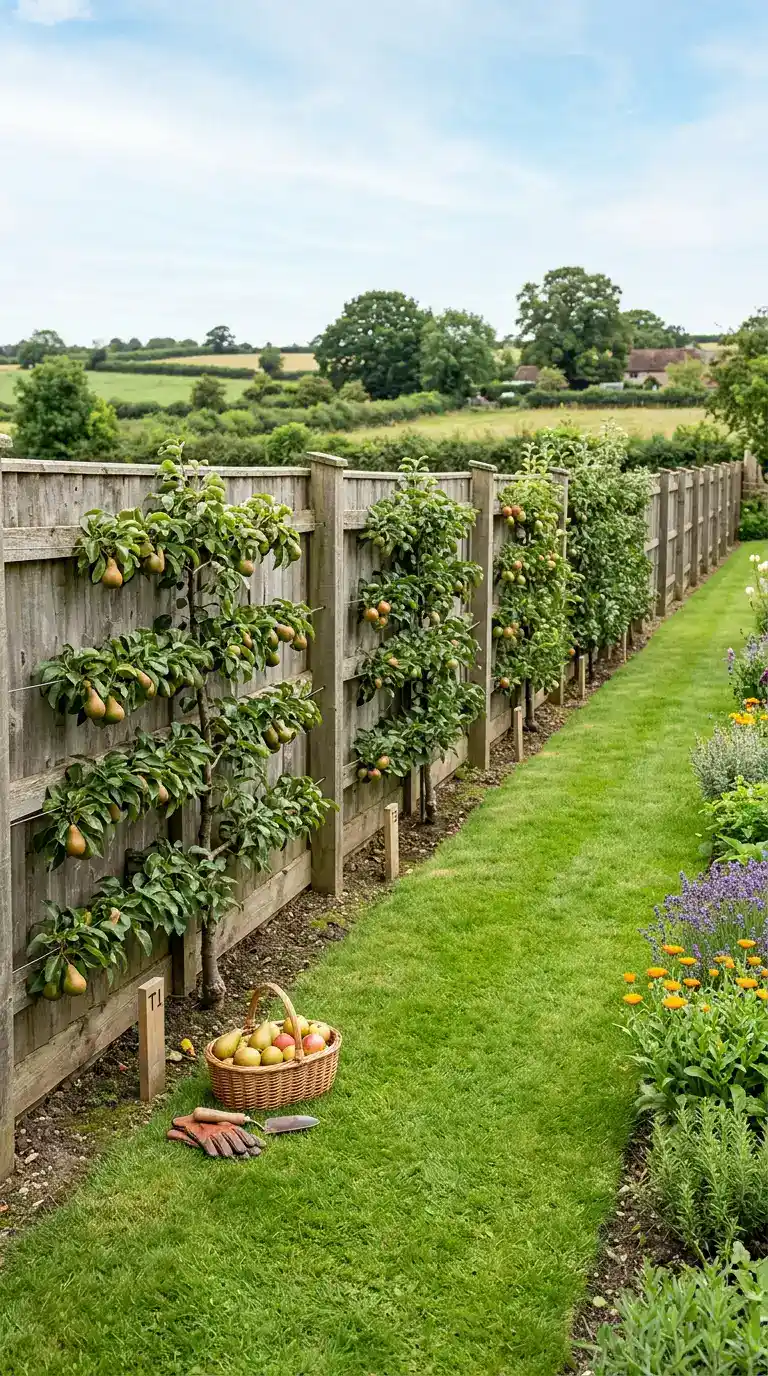
1. The Espaliered Orchard Along a Fence
Espalier is the art of training fruit trees to grow flat against a wall or fence. Plant apple, pear, or fig trees 8–10 feet apart along a sunny south-facing fence. Prune branches horizontally each winter. You get a living fence, easy harvesting, and maximum fruit in minimum space.
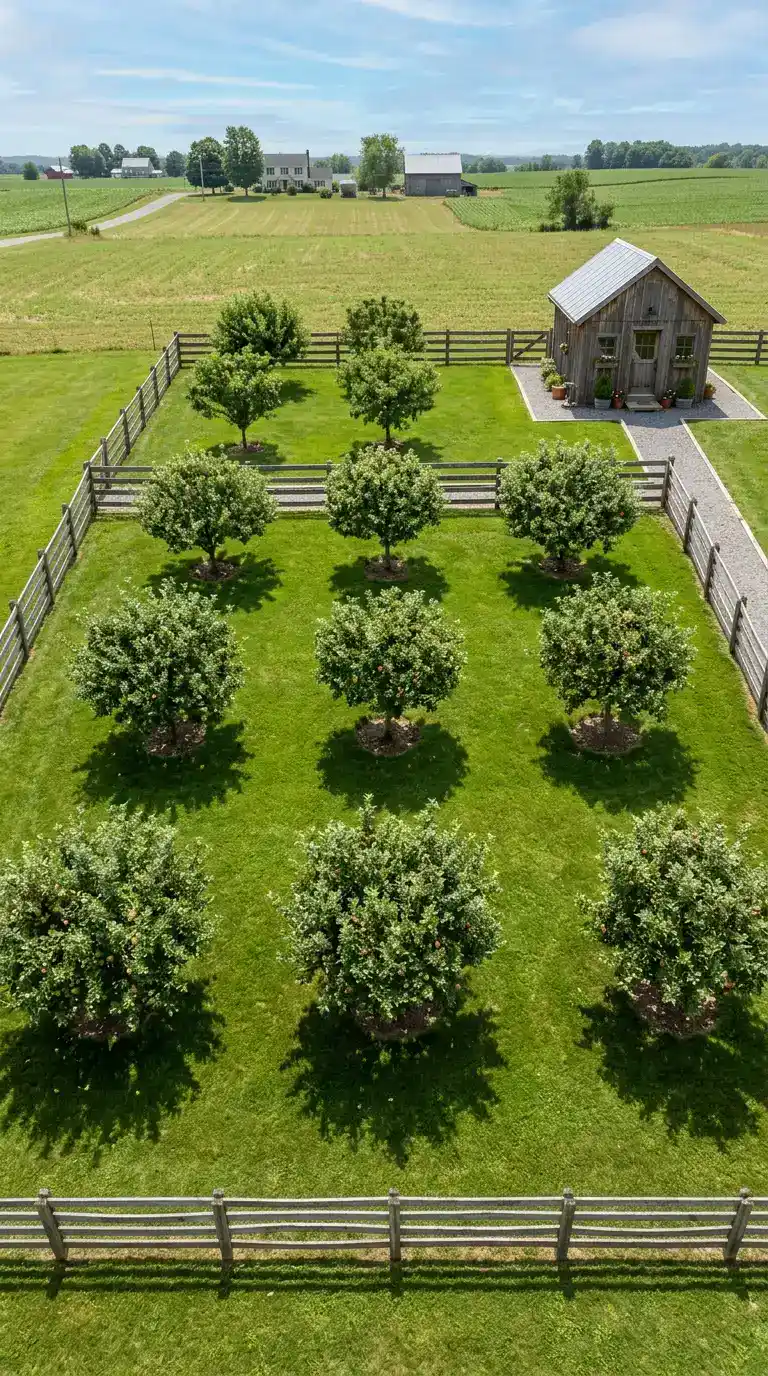
2. The Backyard Orchard Grid (Square Spacing)
For larger yards, plant trees in a simple grid pattern. Space standard trees 20–25 feet apart, dwarf trees 8–10 feet apart. Mow grass or plant clover between rows. The grid allows sunlight to reach every tree and makes harvesting and pruning straightforward.
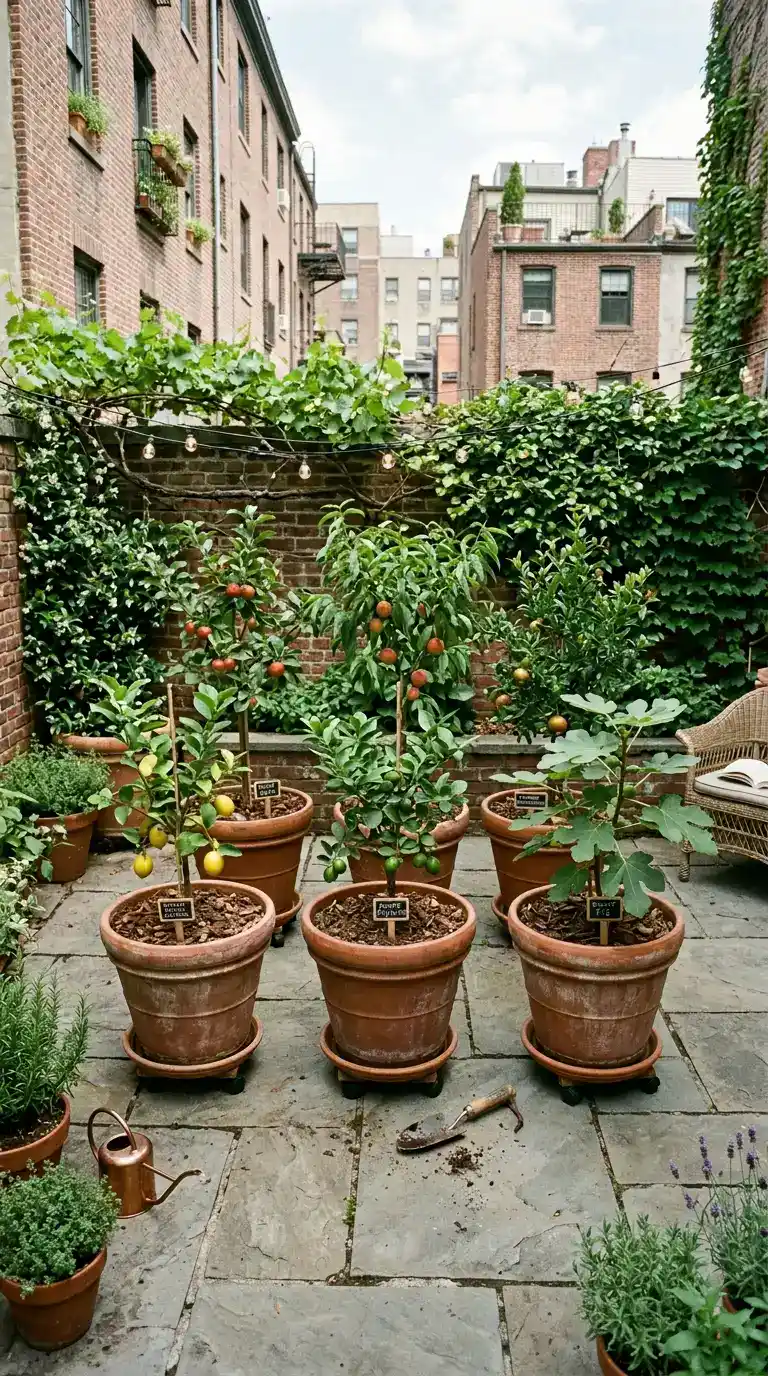
3. The Dwarf Tree Container Courtyard
No yard? No problem. Plant dwarf fruit trees (citrus, fig, or apple) in large pots or half-barrels. Arrange them in a sunny corner of a patio, deck, or driveway. Keep them pruned to 4–6 feet tall. In cold winters, roll them into a garage. In warm weather, you have a movable orchard.
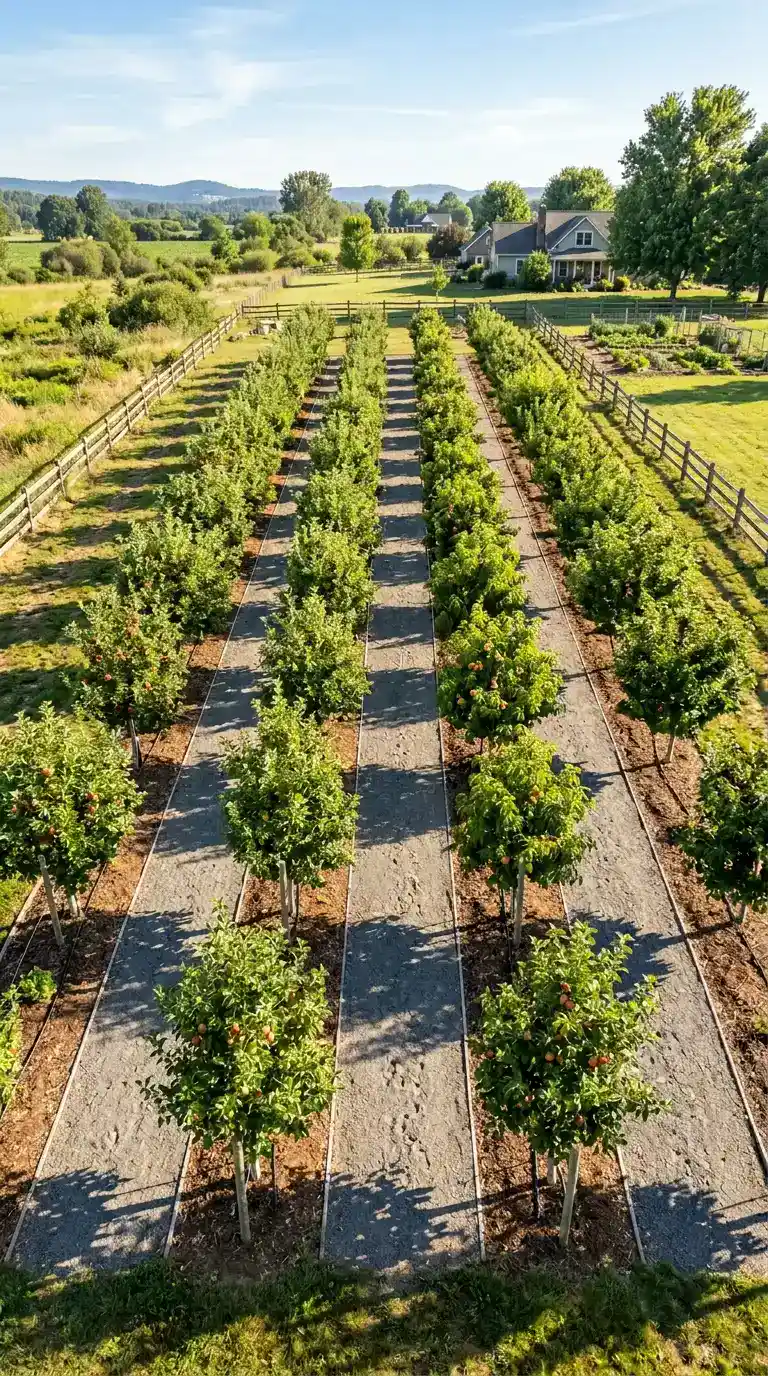
4. The North-South Row Layout for Sun
Orient your fruit tree rows running north to south. This ensures the morning and afternoon sun hits both sides of every tree equally. Standard spacing: rows 20 feet apart, trees 15 feet apart within rows. This layout is essential for commercial orchards and works beautifully at home.
5. The Fruit Tree Guild (Companion Planting Circle)
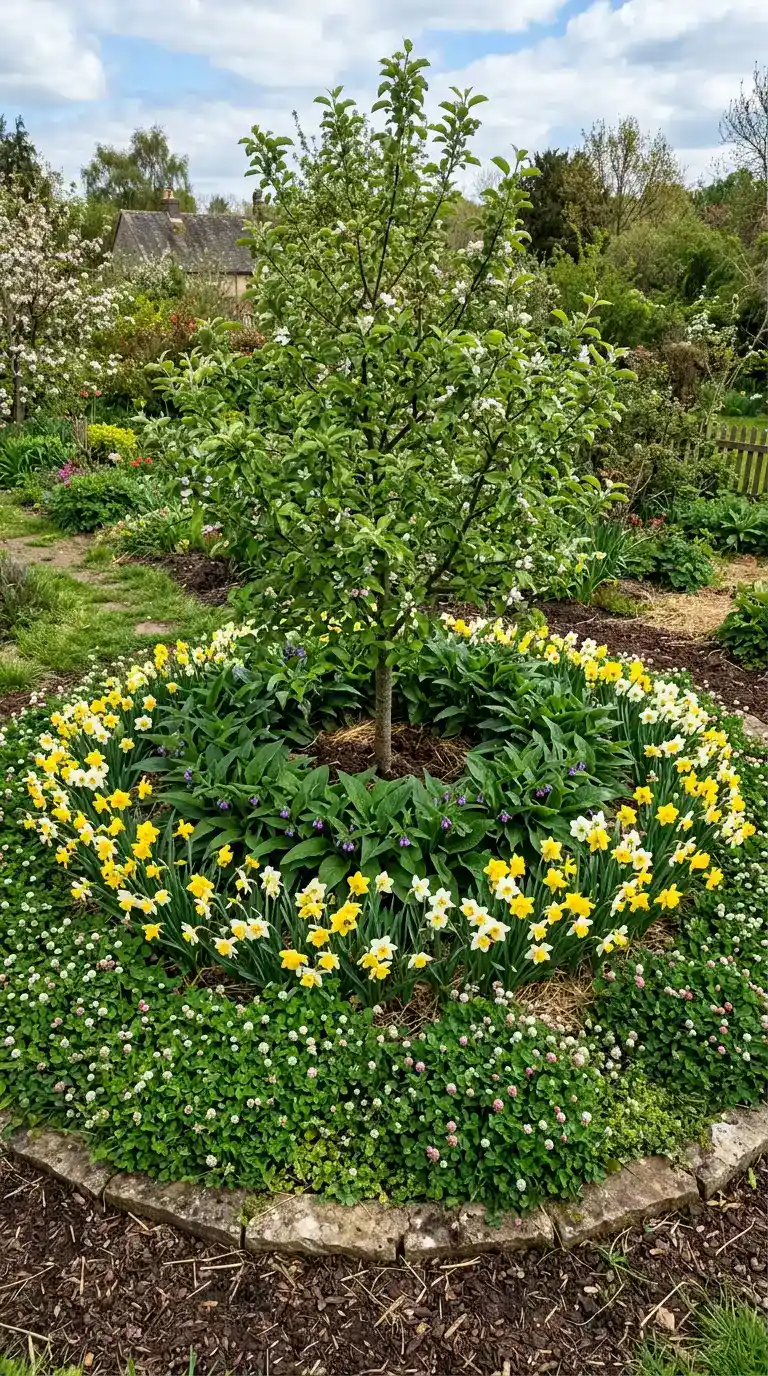
Plant a single fruit tree (apple or pear) as the center of a circular “guild.” Around it, plant companion plants: comfrey (nutrient accumulator), daffodils (pest deterrent), clover (nitrogen fixer), and borage (pollinator attractor). The guild supports the tree naturally, reducing fertilizer and spray needs.
6. The High-Density Hedge Row
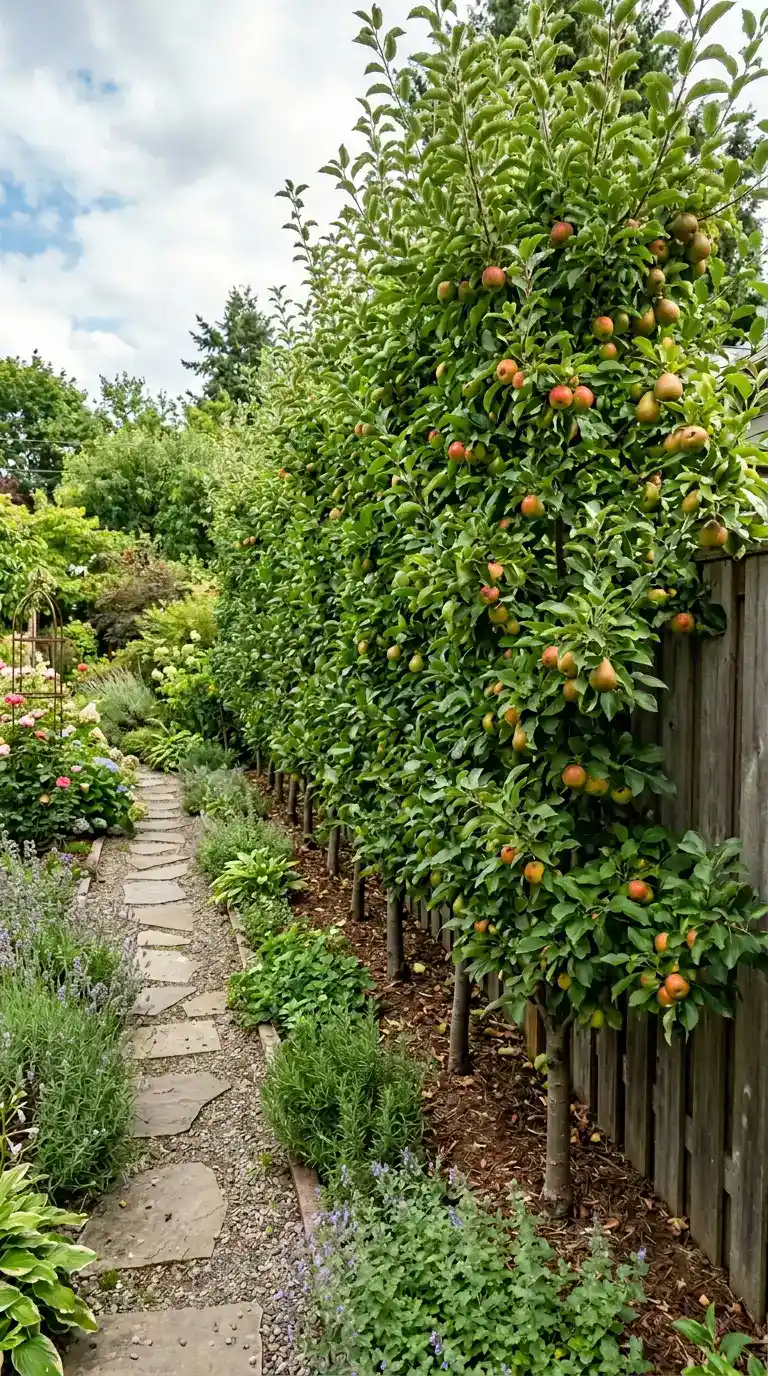
Plant fruit trees closer than recommended (6–8 feet apart for dwarfs) and prune them into a living hedge. This works brilliantly for sour cherries, plums, or small apples. The hedge produces heavily, acts as a privacy screen, and takes up far less space than individual specimen trees.
7. The Quadruple-Budded “Fruit Cocktail” Tree
Plant a single tree that has been grafted with four different fruits on one trunk: plums, peaches, nectarines, and apricots (all prunus family). Or a multi-graft apple tree with early, mid, and late varieties. One hole, one tree, months of sequential harvest. Perfect for tiny yards.

8. The Orchard Underplanted with Strawberries
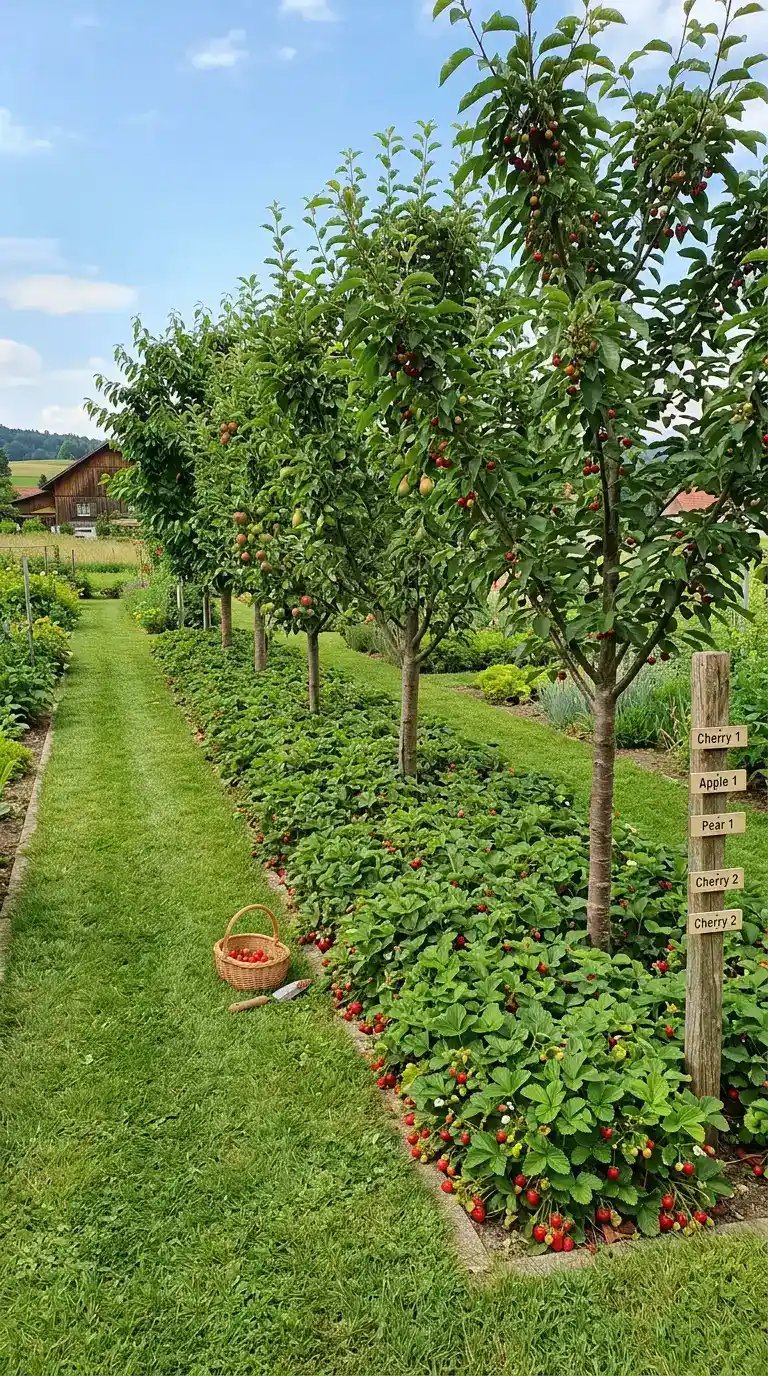
Use the ground beneath your fruit trees. Plant day-neutral strawberries as a living mulch under every tree. The strawberries suppress weeds, retain moisture, and produce fruit from spring to fall. The trees provide dappled shade that strawberries love. Two crops, one footprint.
9. The Pollinator Ring (Two Compatible Varieties)
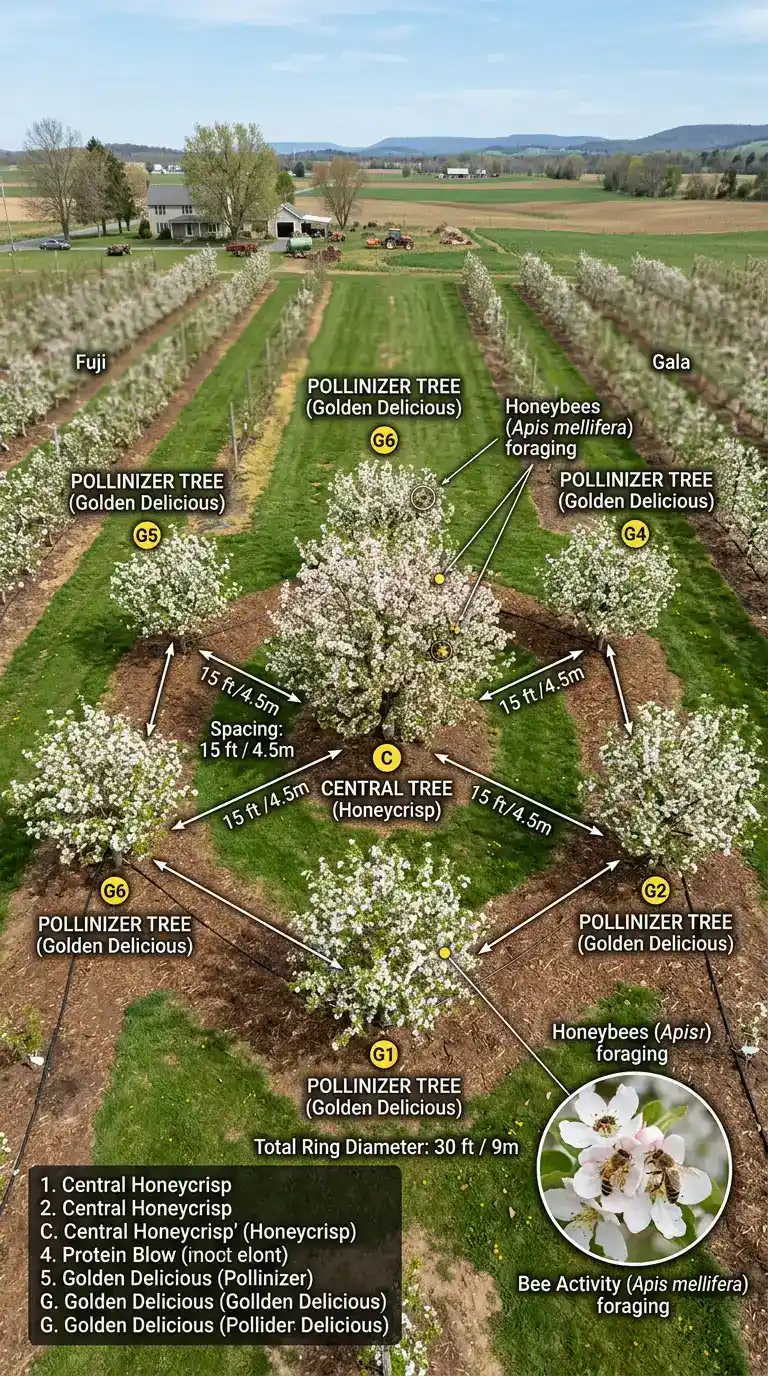
Most fruit trees need a second variety for cross-pollination. Instead of planting two random trees, plant them in a double ring: a central circle of one variety surrounded by a ring of a compatible pollinator. Or plant alternating varieties in a checkerboard. No more “why won’t my tree fruit?”
10. The Sloped Terrace Orchard
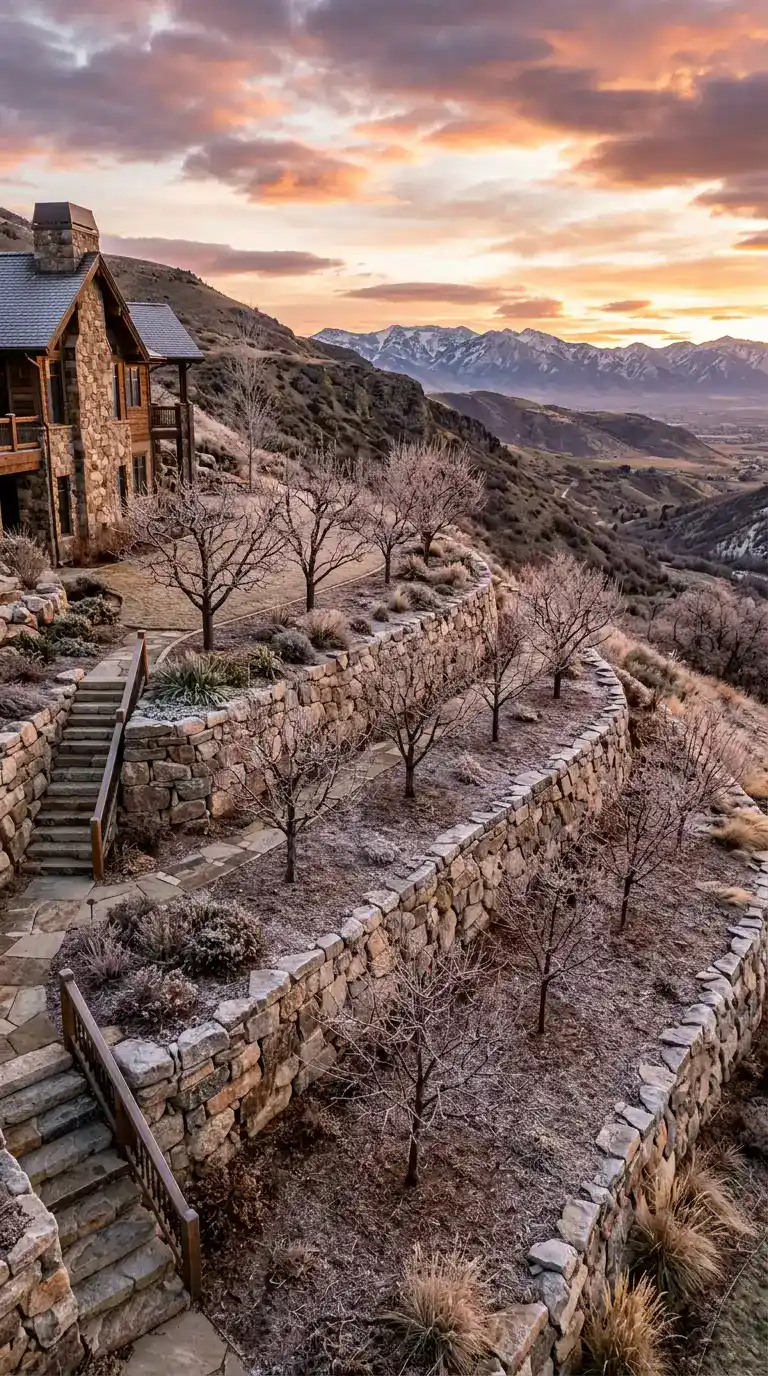
Plant fruit trees on a south-facing slope. If the slope is steep, terrace it with low stone retaining walls. Each terrace holds a single row of trees. The slope provides better air drainage (fewer frosts) and more sun exposure. Plus, harvesting downhill is easier on your back.
11. The Backyard Citrus Grove (Container Cluster)
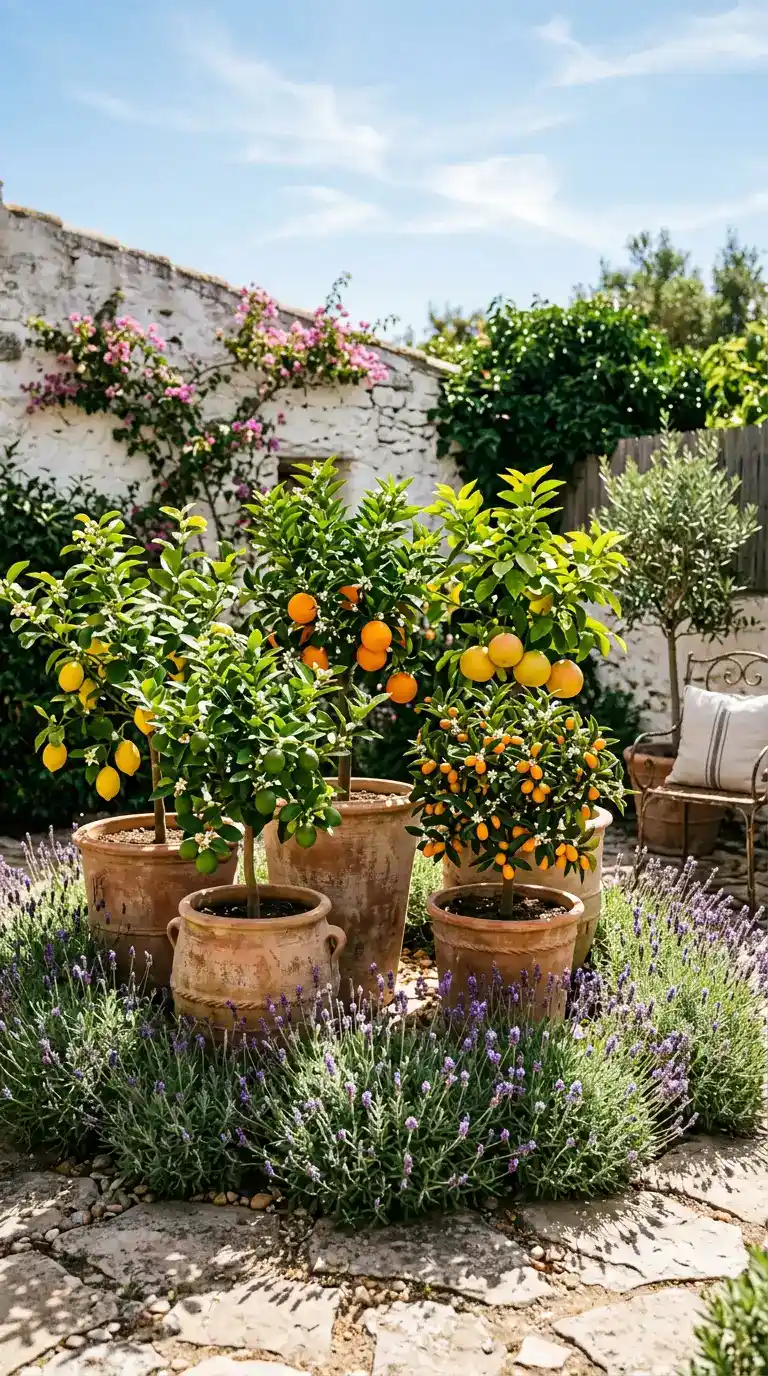
For warm climates (or winter indoor move), cluster citrus trees in a sunny corner. Place lemons, limes, and oranges in a triangular arrangement with 6–8 feet between pots. Surround them with a low hedge of rosemary or lavender. The fragrance alone is worth it.
12. The Espalier Tunnel (Arbor or Pergola)
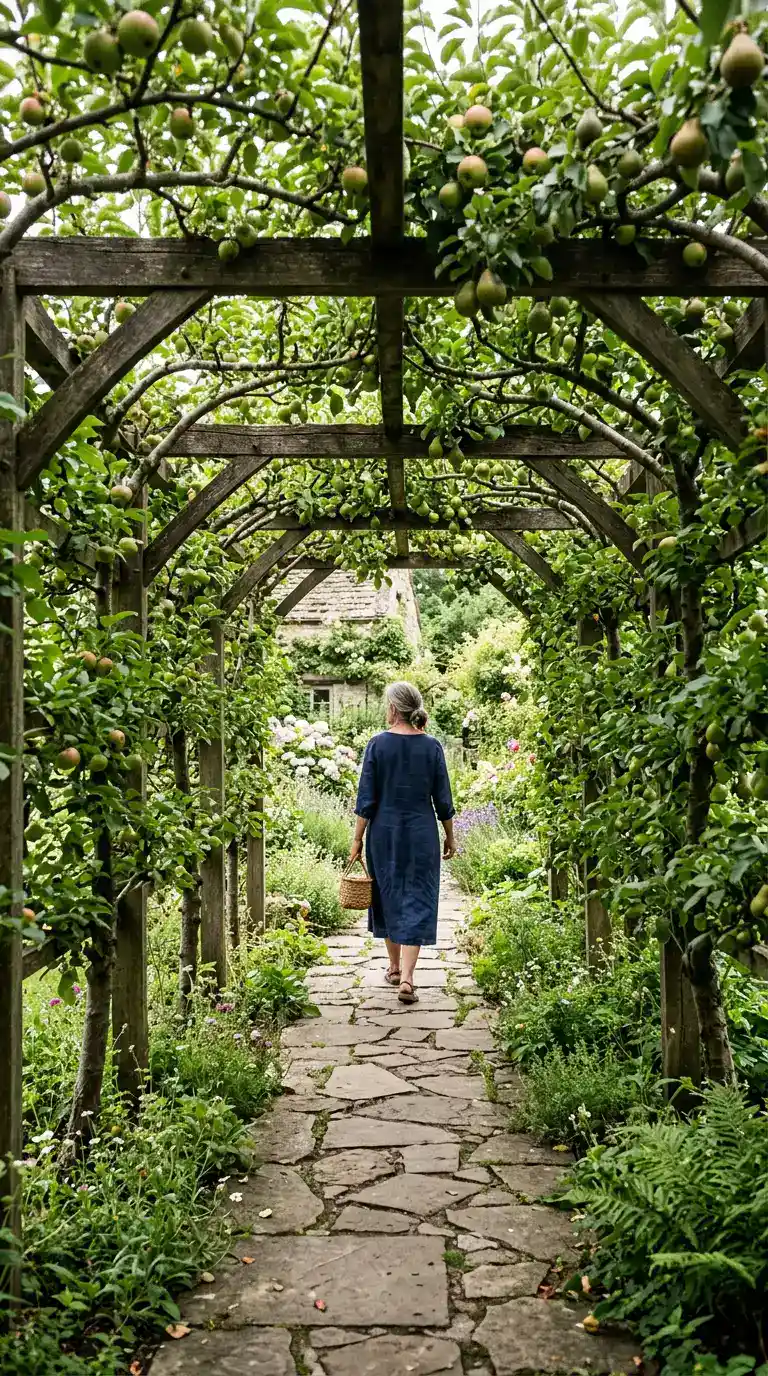
Train apple or pear trees over a wooden arbor or pergola. Plant two trees on opposite sides and train their branches to meet at the top. The result is a fruit-bearing tunnel or shaded walkway. Walk through, reach up, and pick an apple. It takes 3–5 years but is worth every season.
13. The Fruiting Hedge Property Line
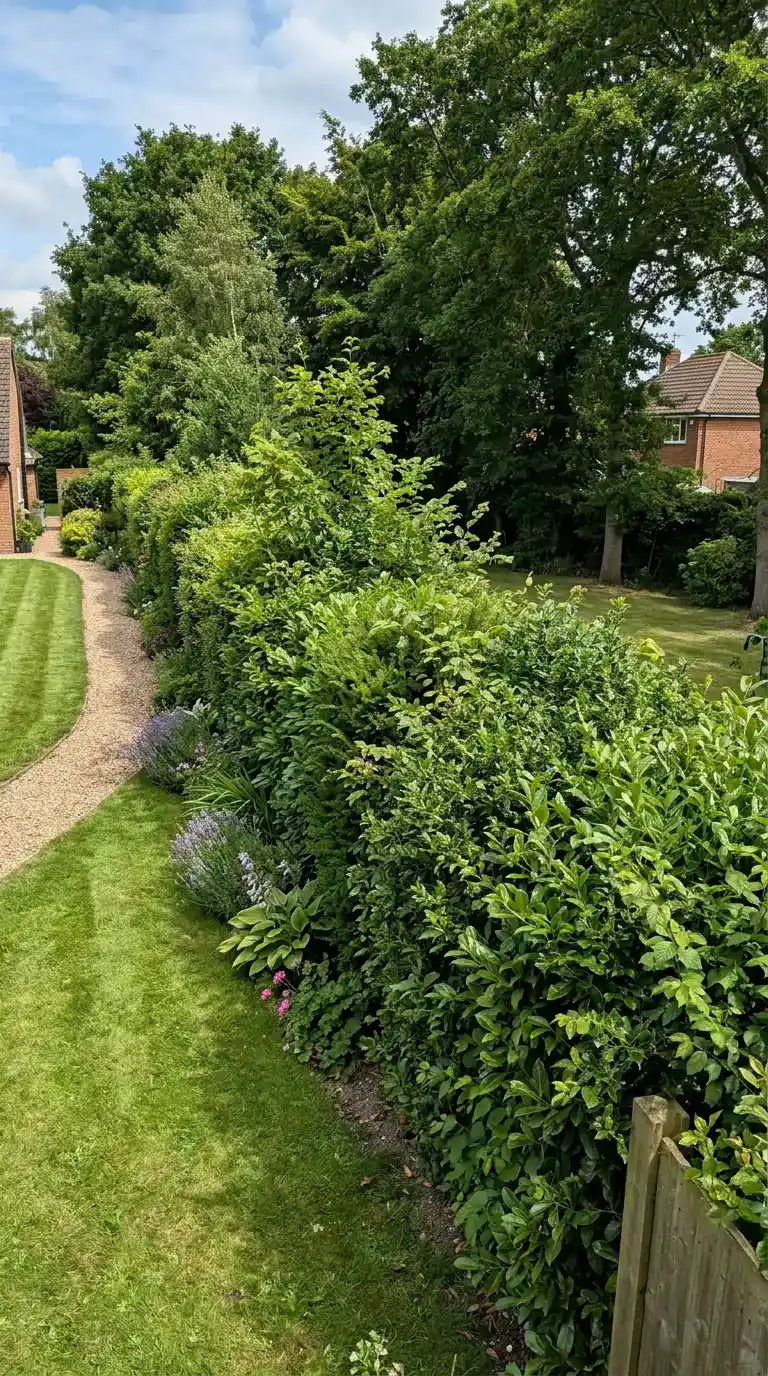
Plant a mixed hedge of fruiting shrubs and small trees along your property line: serviceberry, elderberry, hazelnut, and dwarf sour cherry. Space them 4–6 feet apart. Prune into a dense hedge. You get privacy, wildlife habitat, and buckets of berries and nuts.
14. The Schoolyard-Style Single Variety Row
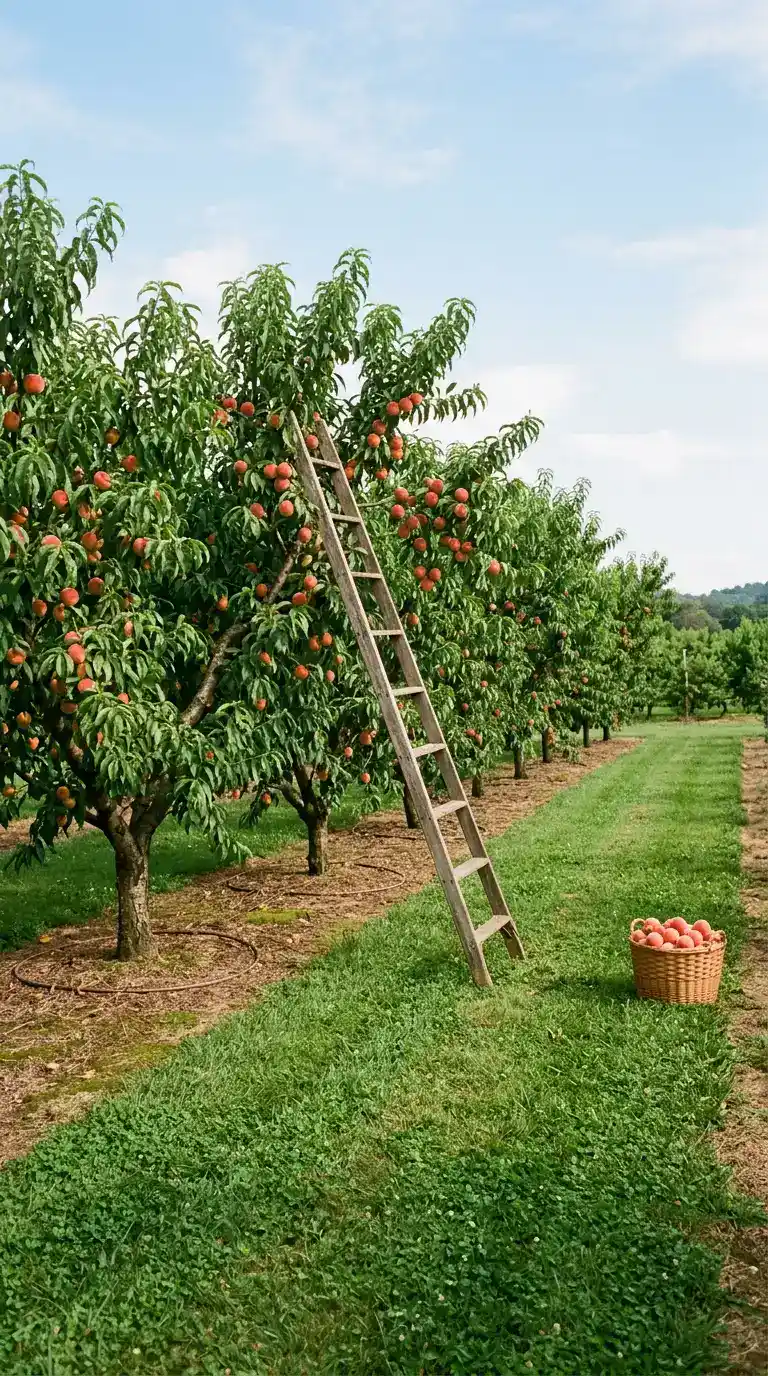
Pick one fruit you love (peaches, plums, or pears) and plant a single straight row of 4–6 trees of the same variety. Keep the grass mowed short between them. This is the simplest orchard design—no complex spacing, no companion plants, just a line of trees that looks clean and produces heavily.
15. The Keyhole Orchard (Accessible from All Sides)
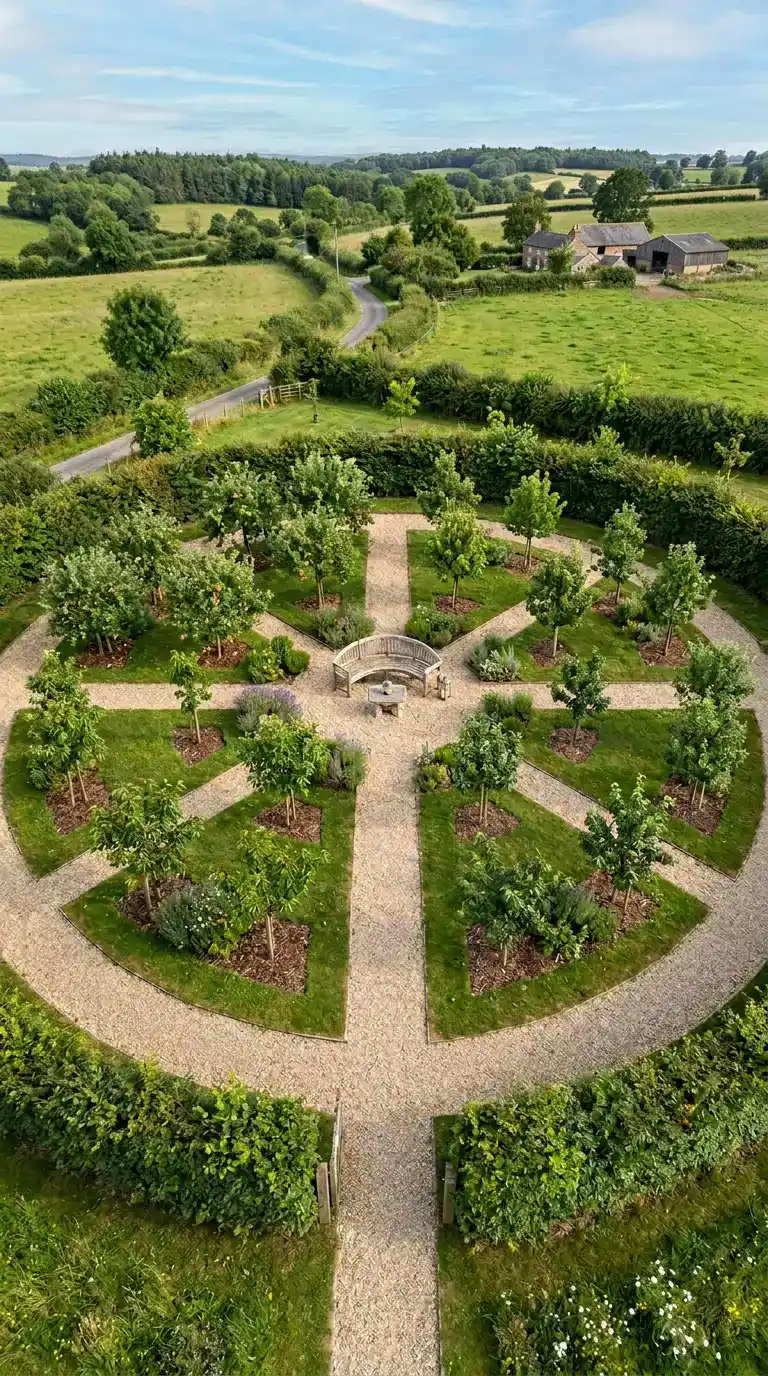
For a large, circular orchard, create a keyhole path: a central hub (a bench or birdbath) with wedge-shaped planting beds around it and a single access path cutting in from the edge. Every tree is reachable without walking through other trees. No ladders needed for small trees.
Conclusion
Fruit trees are a long-term investment. The first few years are about training and patience. But by year five, you’ll have shade, blossoms, and bushels of fruit. Start with the layout that fits your space: a single container tree, an espaliered fence line, or a full backyard grid. Plant in fall or early spring. Water deeply for the first two years. Then wait. The first ripe peach you pick from your own tree will taste like nothing you’ve ever bought.


