How to play G flat on the flute: finger placement and trill chart for low and high octaves
In music theory, G flat (Gb) is a musical note that is a half step lower than G natural and a half step higher than F natural. It is also known as F sharp (F#) enharmonically, which means that although they are different notations, they represent the same pitch.
G flat flute finger placement chart
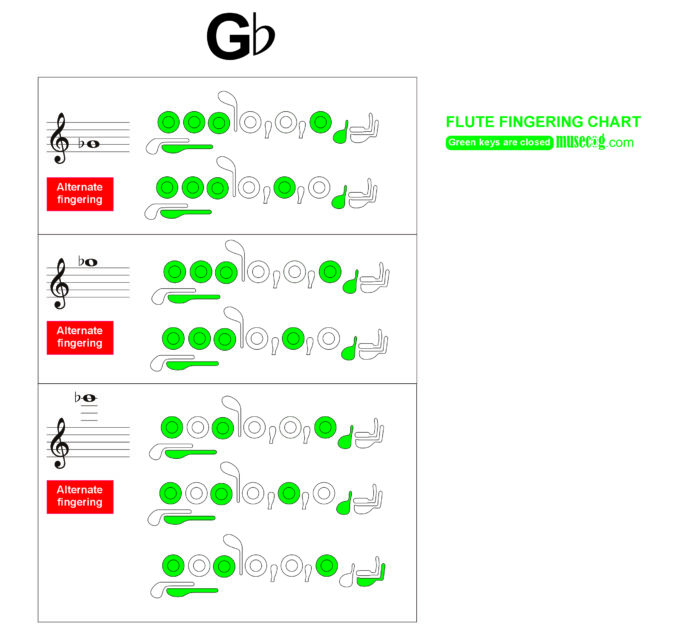
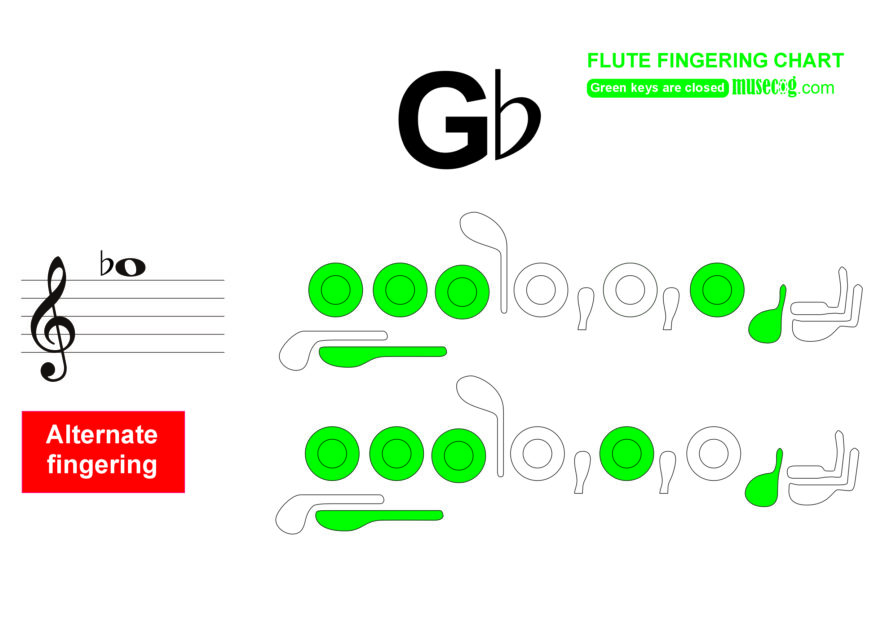
Below is a G flat flute finger chart for low G flat, middle, and high G flat;
What is G flat on the flute?
On the flute, G flat is a note that is a half-step higher than G natural in pitch. G flat shares the same flute finger placement with F sharp on the flute, this means that G flat is enharmonic to F sharp. There are three G flats you can play on the flute at three different octaves or ranges: the low G flat, the middle G flat, and the high G flat.
How to play G flat on the flute: finger placement and placement
As said before, there are three different G flats that can be played on the C flute and they include the low G flat, middle G flat, and high G flat. Below are finger placement charts and finger placements on the various ranges of G flats you can play on the C flute.
Low G flat flute finger placement chart (Second line of the treble staff)
Below is a guide on how to play low G flat on the flute:
- close every key that is meant to be closed with your right fingers except for the G sharp lever that is closed with the left little finger.
- press the B key with your left thumb.
- press only the key that the right ring finger is supposed to close leaving the right middle finger and right index finger open.
- then press the D sharp lever key on your right little finger.
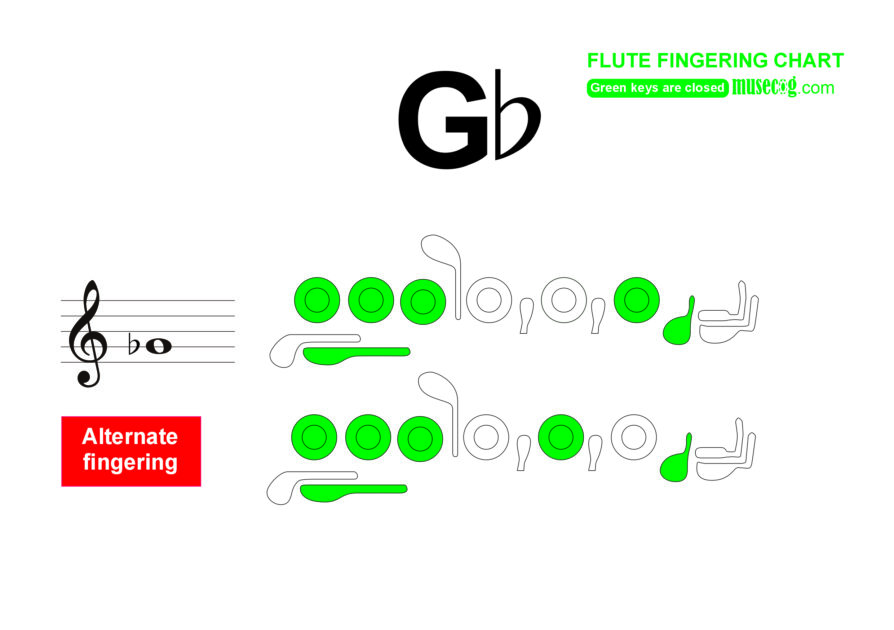
Middle G flat flute finger placement chart (First ledger space of the treble staff)
To play the middle G flat on the flute, you need to;
- close every key that is meant to be closed with your right fingers except for the G sharp lever that is closed with the left little finger.
- press the B key with your left thumb.
- press only the key that the right ring finger is supposed to close leaving the right middle finger and right index finger open.
- then press the D sharp lever key on your right little finger.
High G flat flute finger placement chart (Fourth ledger line above the treble staff)
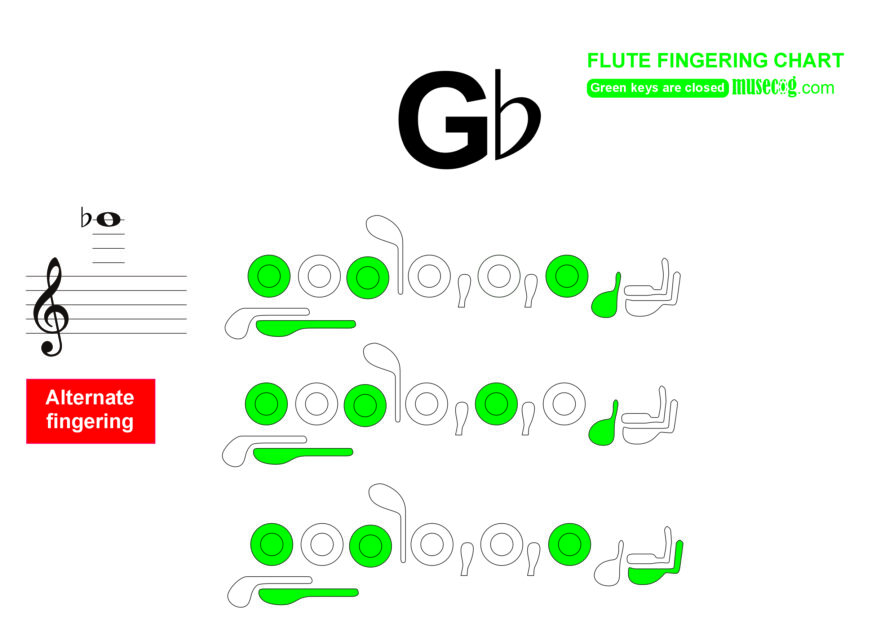
If you want to know how to play high G flat on the flute, you need to;
- close every key that is meant to be closed with your right fingers except the key meant for the left middle finger and the G sharp lever that is closed with the left little finger.
- press the B key with your left thumb.
- press only the key that the right ring finger while leaving the right middle finger and right index finger open.
- then press the D sharp lever key on your right little finger.
G flat flute trilling
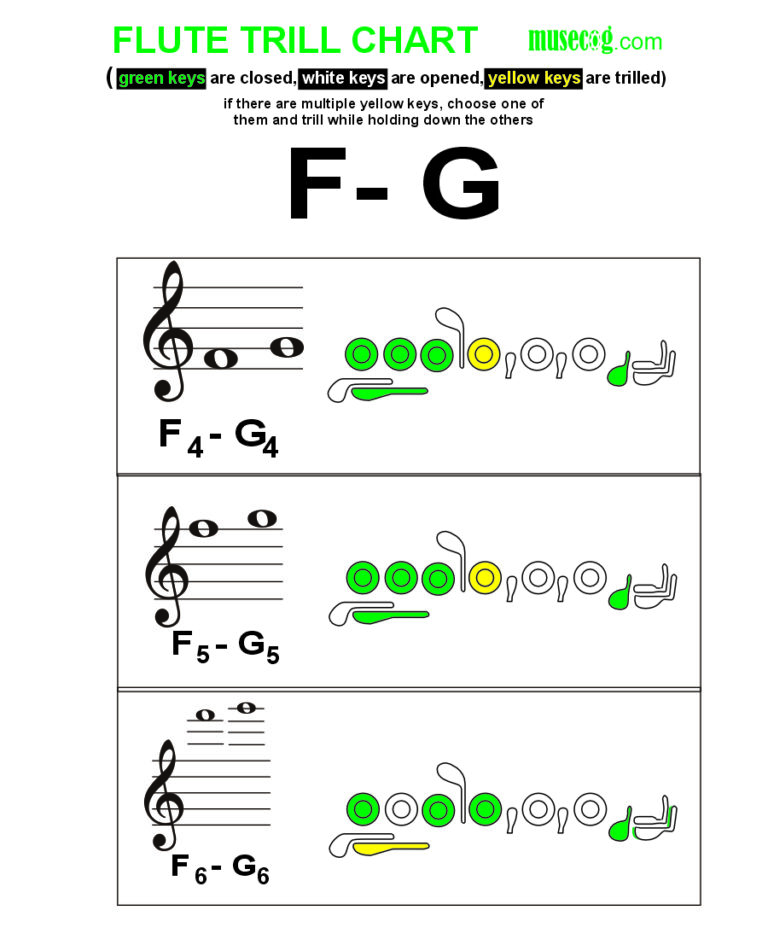
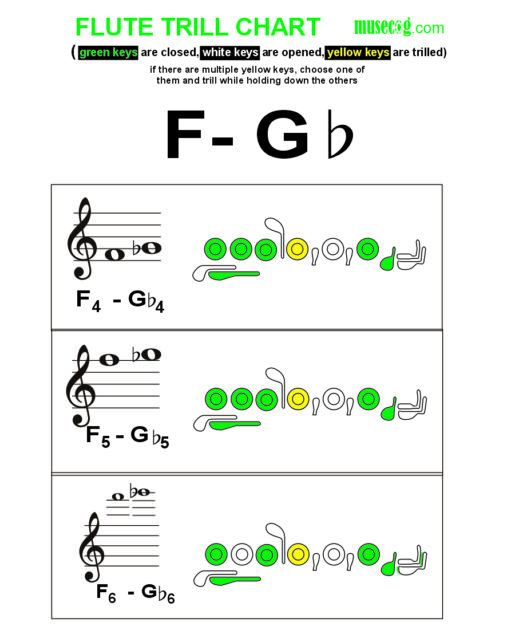
F natural to G flat trill on flute
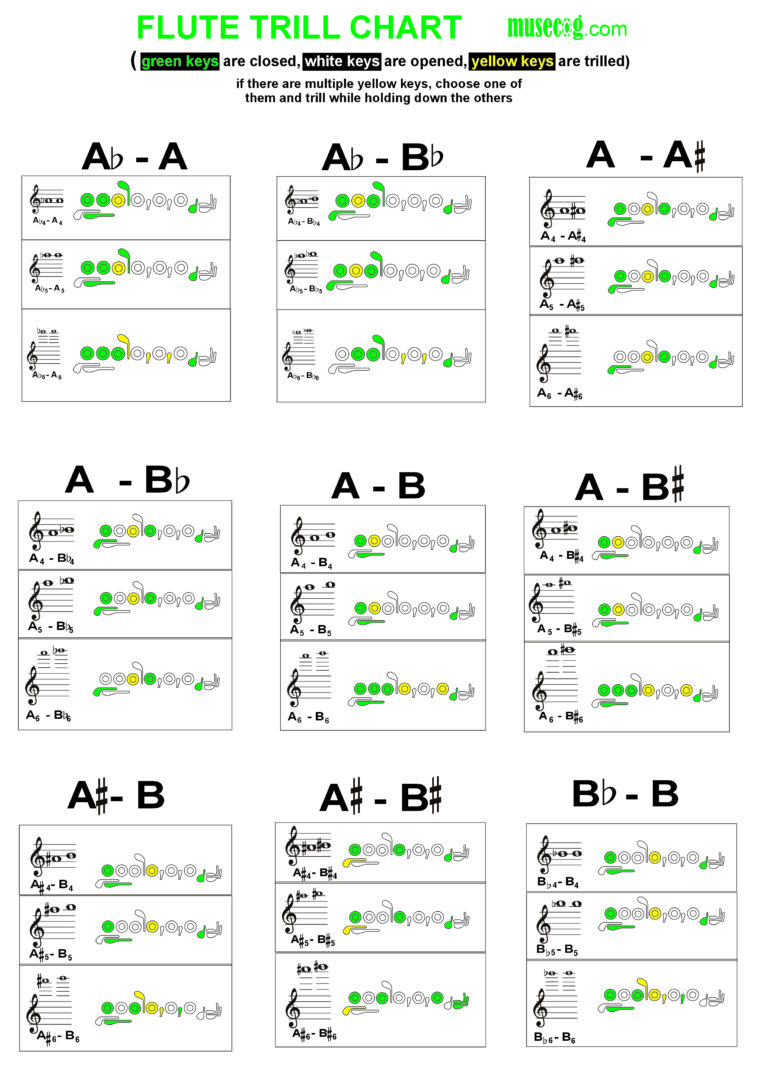
Below is a trill chart for F natural to G flat trill on the flute;
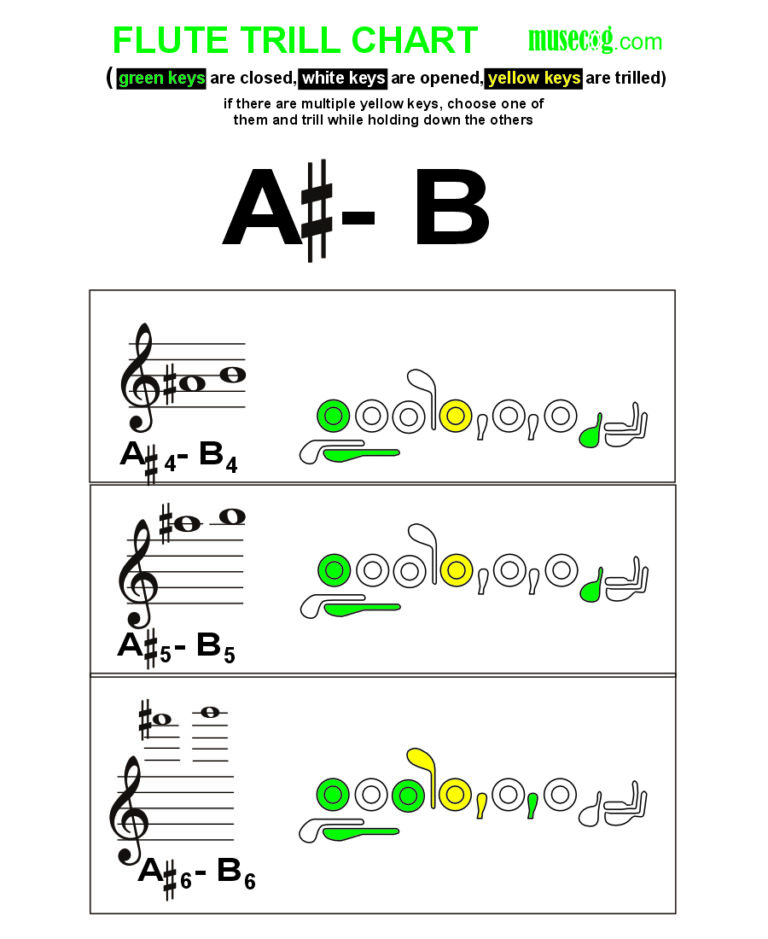
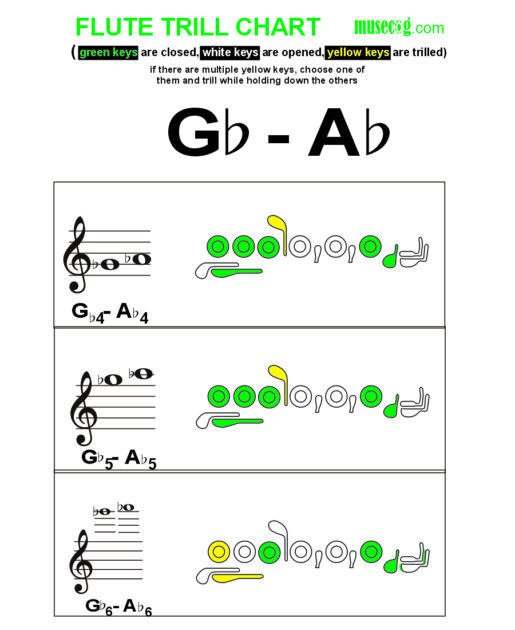
G flat to A flat trill on flute
Below is a trill chart for G flat to A flat on the flute;
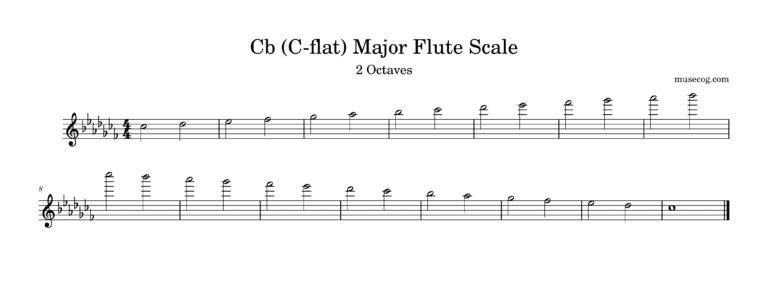
G flat scale for flute
G flat major scale for flute
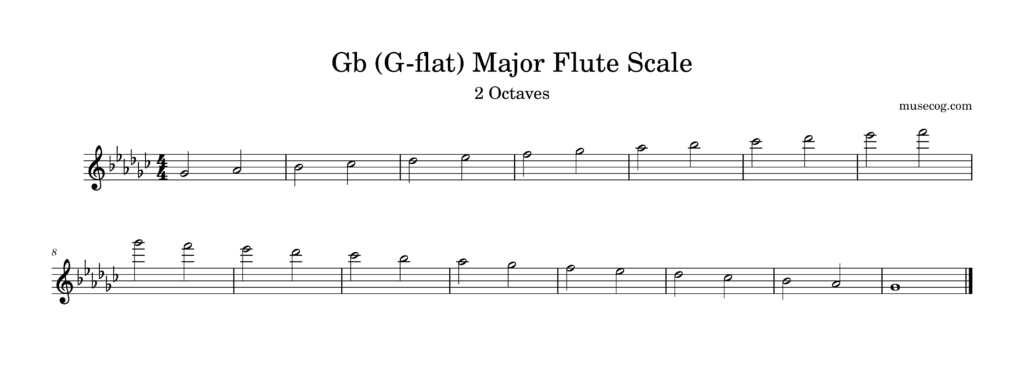
The scale above is a G flat major two-octave scale for flute. The G flat major scale is a musical scale that consists of the notes G flat, A flat, B flat, C flat, D flat, E flat, and F. It is a seven-note scale, with a pattern of whole steps (W) and half steps (H) between the notes:
Gb – W – Ab – W – Bb – H – Cb – W – Db – W – Eb – W – F
The scale has six flats in its key signature, which are Bb, Eb, Ab, Db, Gb, and Cb. The G flat major scale is not commonly used in music, but it is sometimes used in jazz and other styles of music for its unique sound.
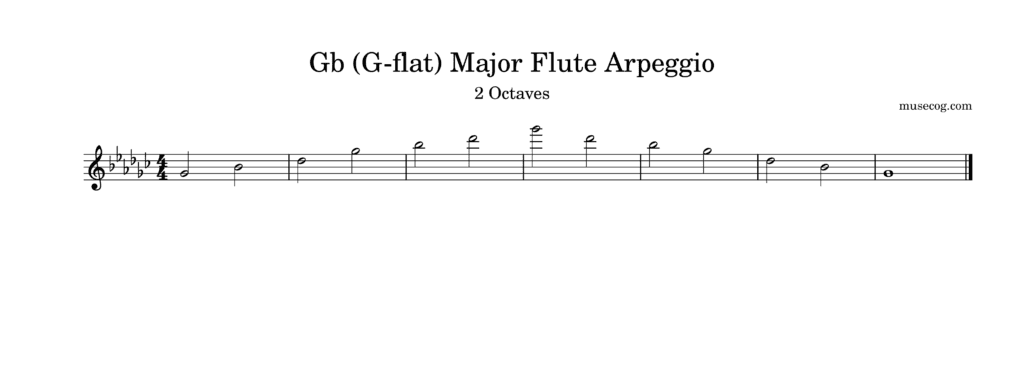
G flat major Arpeggio for flute
G flat minor scale for flute

The G flat minor scale is a musical scale that consists of the notes G flat, A flat, Bbb (or A), C flat, D flat, Ebb (or D), and Fb (or E). It is a seven-note scale, with a pattern of whole steps (W) and half steps (H) between the notes:
Gb – W – Ab – H – Bbb (A) – W – Cb – H – Db – W – Ebb (D) – H – Fb (E)
The scale has six flats and two double flats in its key signature. The G flat minor scale is not commonly used in music, but it is sometimes used in jazz and other styles of music for its unique sound.