10 Yoga Poses for Beginners: Your Complete Guide to Starting Your Practice
Starting a yoga journey can feel intimidating, especially when you see advanced practitioners effortlessly flowing through complex poses. The good news? Every yoga expert was once a beginner, and yoga is truly accessible to everyone regardless of age, flexibility, or fitness level. This comprehensive guide introduces essential yoga poses for beginners, helping you build a strong foundation for a lifelong practice that enhances physical strength, flexibility, mental clarity, and overall well-being.
Why Yoga is Perfect for Beginners
Yoga offers unique benefits that make it ideal for those new to fitness or mindfulness practices. Unlike high-impact exercises, yoga works with your body’s natural capabilities, gradually building strength and flexibility without forcing results. The practice combines physical postures (asanas), breathing techniques (pranayama), and meditation, creating a holistic approach to wellness. For beginners, yoga provides stress relief, improved posture, better sleep quality, increased body awareness, and a gentle introduction to mindful movement.
Essential Beginner Yoga Poses
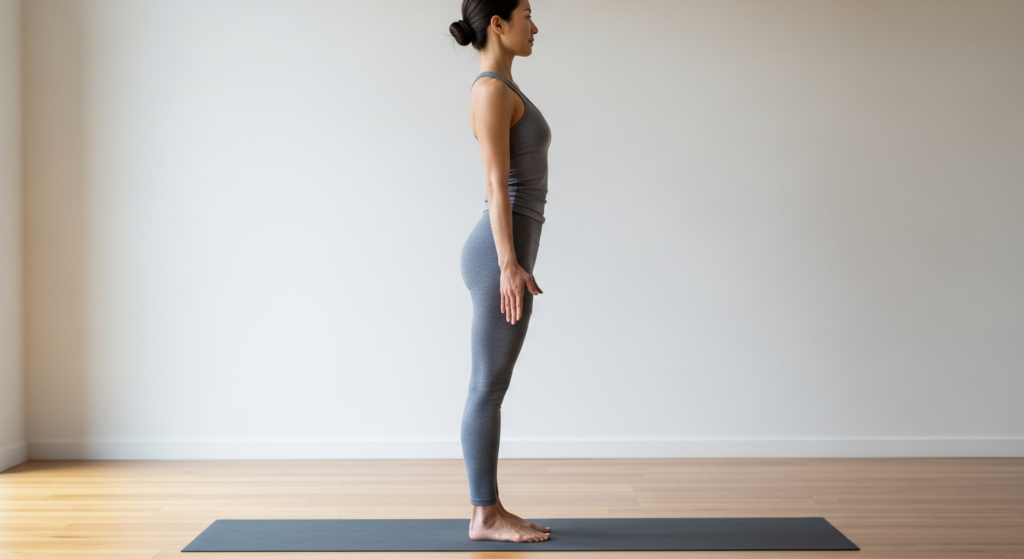
Mountain Pose (Tadasana)
Mountain Pose forms the foundation for all standing yoga poses and teaches proper alignment. Stand with feet hip-width apart, distribute weight evenly across both feet, engage your thighs, lengthen your spine, and relax your shoulders away from your ears. Arms rest naturally at your sides with palms facing forward. This seemingly simple pose builds awareness of posture and body alignment while strengthening legs and improving balance. Mountain Pose teaches you to stand tall with confidence, making it the perfect starting point for beginners learning foundational alignment principles.
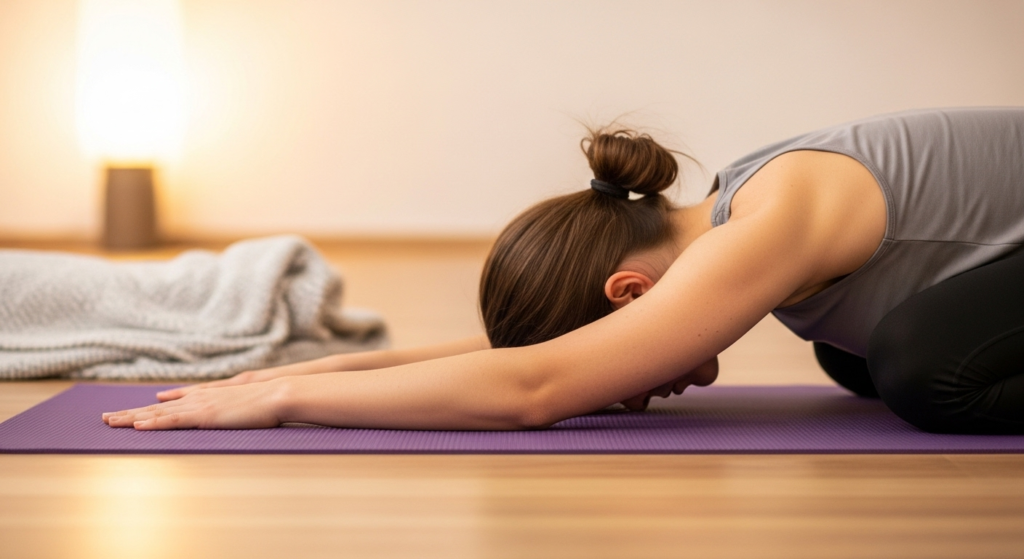
Child’s Pose (Balasana)
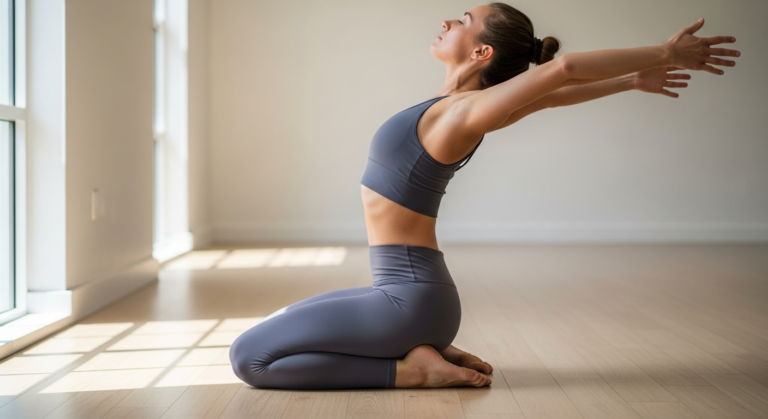
Child’s Pose offers a gentle resting position that stretches the back, hips, and thighs while calming the mind. Kneel on your mat, sit back on your heels, then fold forward extending arms overhead or resting them alongside your body. Your forehead touches the mat, creating a peaceful cocoon. This restorative pose provides a safe space to rest between more challenging poses, reduces stress and fatigue, gently stretches the spine, and releases tension in shoulders and neck. Beginners should embrace Child’s Pose whenever they need a break during practice.
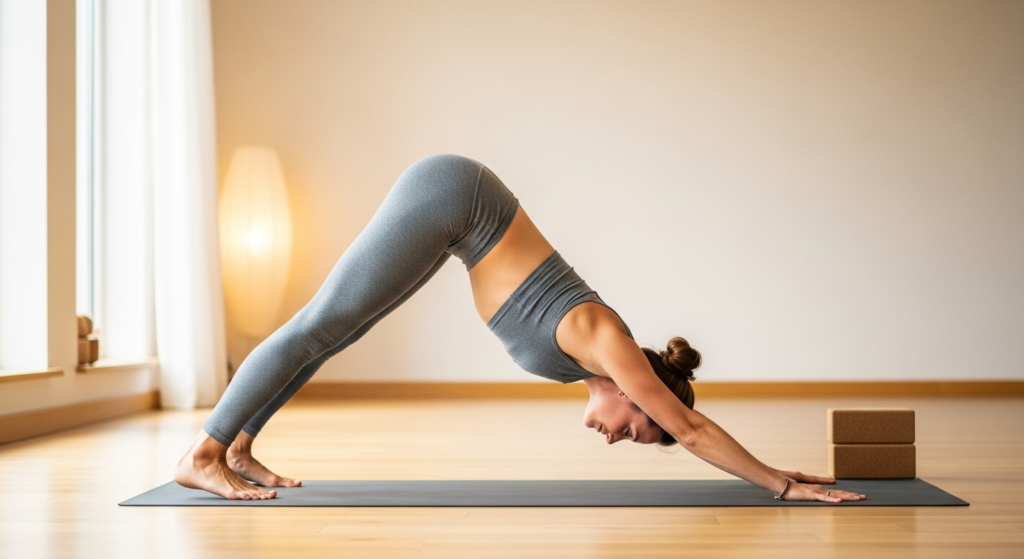
Downward-Facing Dog (Adho Mukha Svanasana)
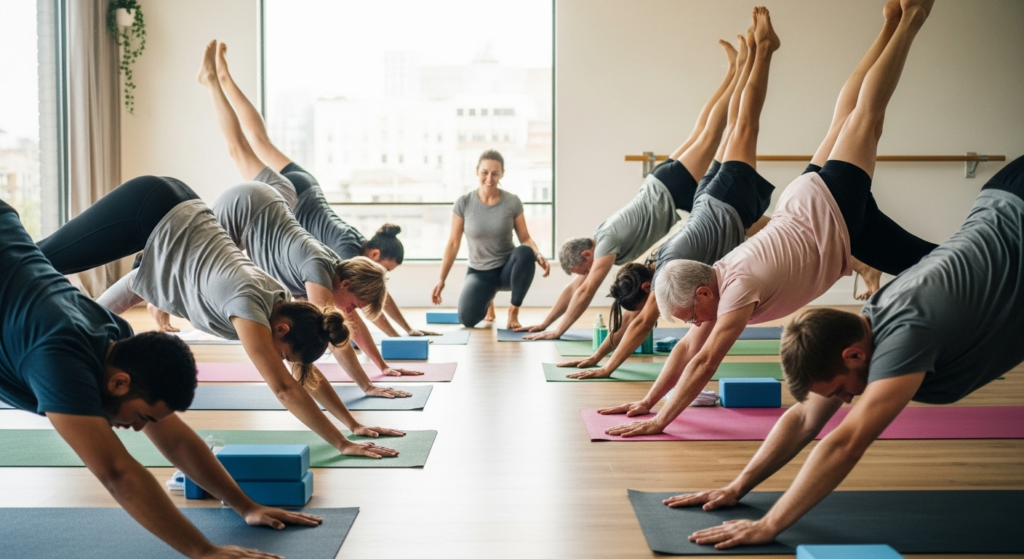
Downward-Facing Dog is one of yoga’s most recognizable poses, offering full-body benefits. Start on hands and knees, then lift hips toward the ceiling, straightening legs and creating an inverted V-shape. Press palms firmly into the mat, engage your core, and work toward getting heels toward the floor (bent knees are perfectly acceptable for beginners). This pose strengthens arms and shoulders, stretches hamstrings and calves, energizes the entire body, and improves circulation. Begin with shorter holds and gradually increase duration as strength builds.
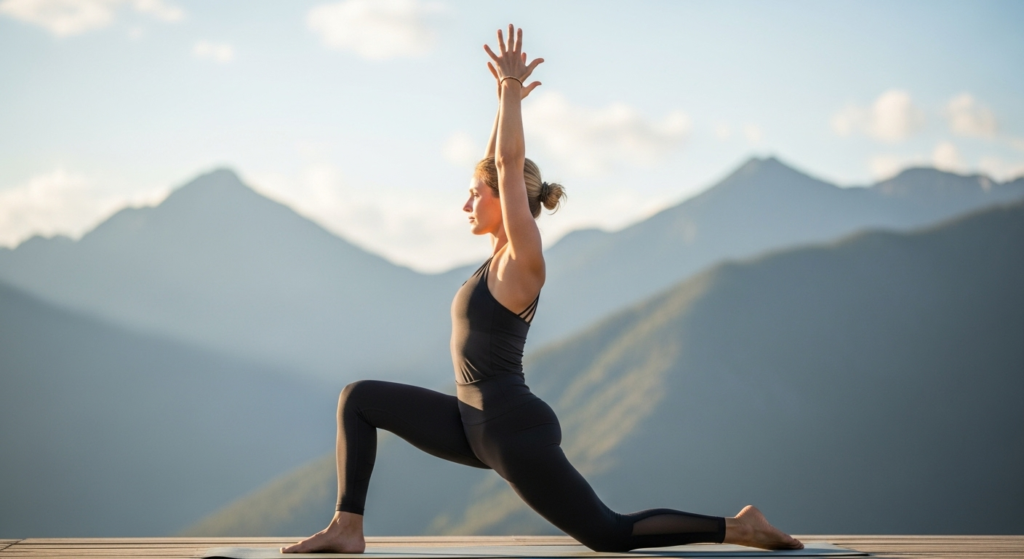
Warrior I (Virabhadrasana I)
Warrior I builds strength, stability, and confidence. Step one foot forward into a lunge with the front knee bent at 90 degrees, back foot turned slightly inward. Square your hips forward, lift your torso upright, and raise arms overhead with palms facing each other. This powerful pose strengthens legs and ankles, opens hips and chest, improves balance and concentration, and builds mental focus. Warriors poses connect physical strength with inner warrior spirit, empowering beginners to discover their capabilities.
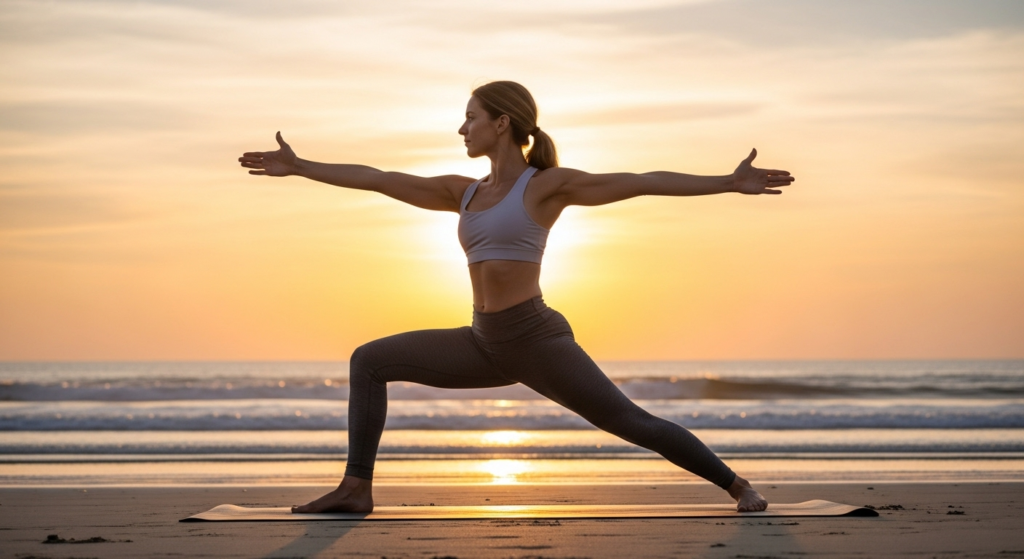
Warrior II (Virabhadrasana II)
Warrior II opens the body laterally while building endurance. From Warrior I, open hips and shoulders to the side, extend arms parallel to the floor with palms down, and gaze over the front hand. The front knee stays bent while the back leg remains straight and strong. This pose increases stamina and concentration, strengthens legs and ankles, stretches groins and chest, and improves balance. Warrior II teaches beginners to hold challenging positions while maintaining steady breathing and mental calm.
Triangle Pose (Trikonasana)
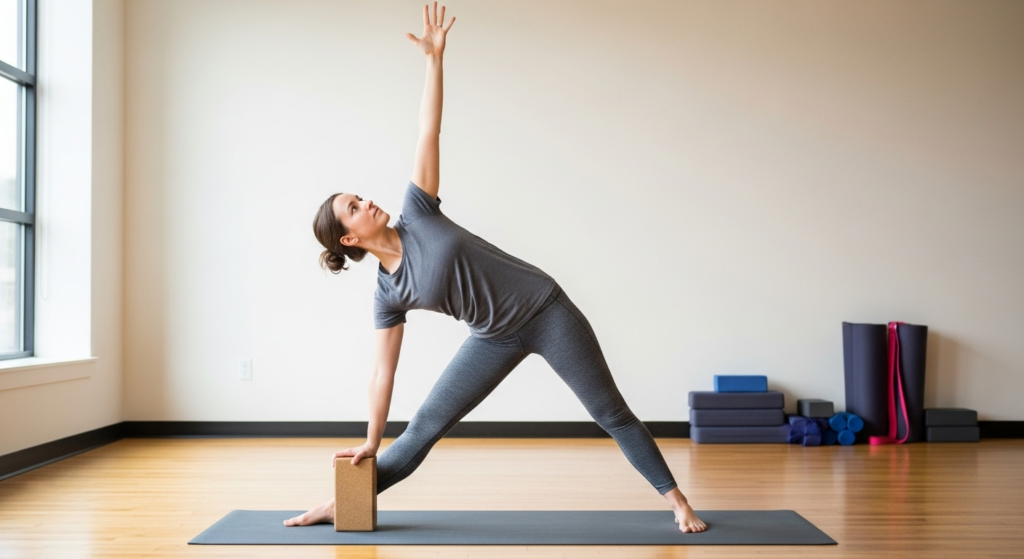
Triangle Pose creates beautiful lines while stretching and strengthening the entire body. Stand with legs wide, turn one foot out, extend arms parallel to the floor, then reach toward the front leg, lowering your hand to shin, ankle, or a block. The top arm extends toward the ceiling with gaze following. This pose stretches hamstrings and hips, opens chest and shoulders, strengthens legs and core, and improves balance. Beginners should use blocks for support and focus on length rather than depth.
Cat-Cow Pose (Marjaryasana-Bitilasana)
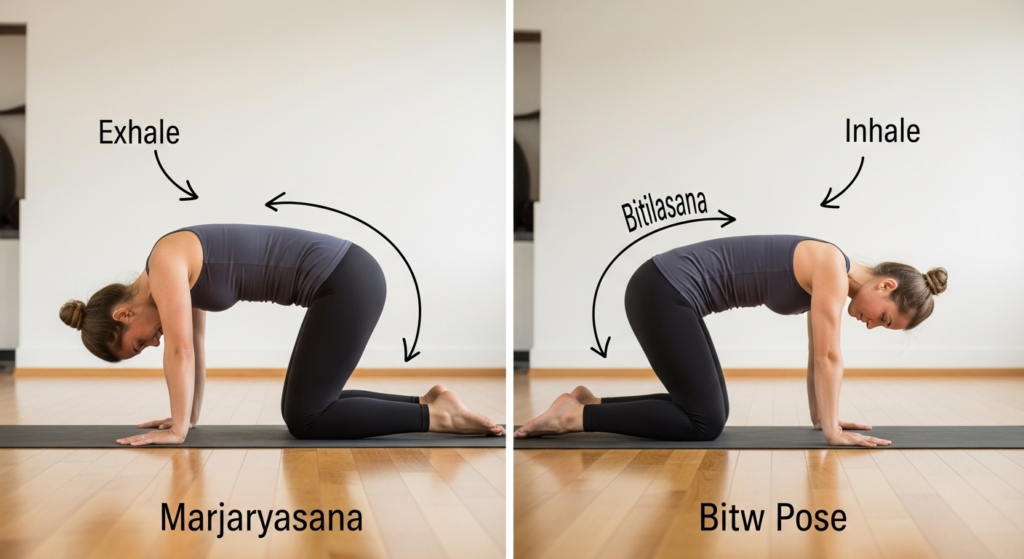
Cat-Cow combines two poses in a gentle flowing movement that warms the spine. Start on hands and knees in tabletop position. Inhale, arch your back, lift your chest and tailbone (Cow Pose), then exhale, round your spine, tuck your chin and tailbone (Cat Pose). Flow between these positions with breath. This dynamic sequence increases spinal flexibility, massages internal organs, relieves back tension, and teaches breath-movement coordination. Cat-Cow makes an excellent warm-up for any yoga practice.
Bridge Pose (Setu Bandha Sarvangasana)
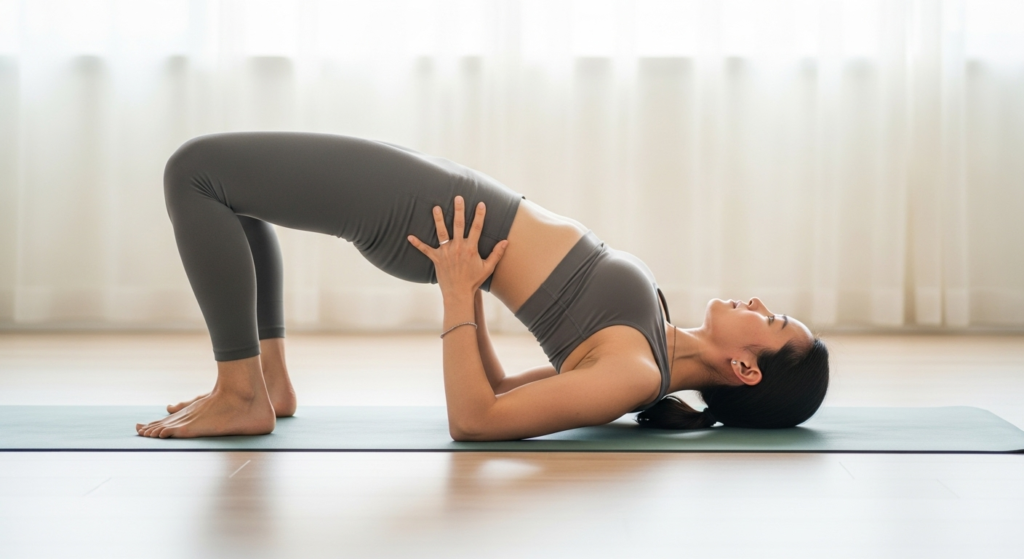
Bridge Pose gently opens the chest while strengthening the back body. Lie on your back with knees bent and feet hip-width apart. Press into your feet and lift hips toward the ceiling, interlacing fingers beneath your back. This accessible backbend strengthens glutes and hamstrings, opens chest and shoulders, stretches spine, and calms the mind. Beginners can hold for several breaths or practice lifting and lowering hips dynamically.
Seated Forward Fold (Paschimottanasana)
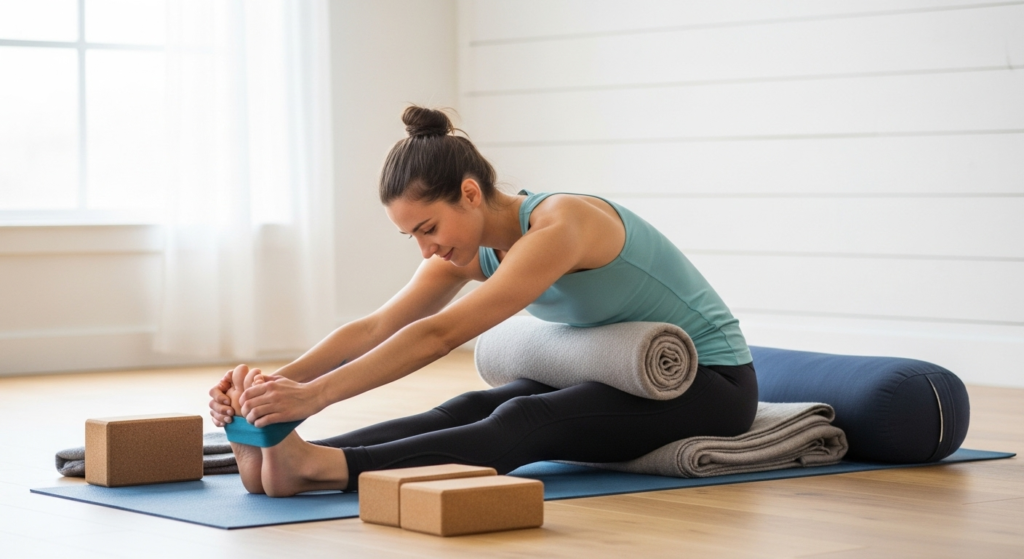
Seated Forward Fold offers deep hamstring and lower back stretching. Sit with legs extended forward, flex your feet, inhale to lengthen your spine, then exhale and fold forward from the hips, reaching toward your feet. Keep your back straight rather than rounding to touch your toes. This calming pose stretches the entire back body, relieves stress and mild depression, improves digestion, and encourages introspection. Beginners should use straps if needed and never force the stretch.
Corpse Pose (Savasana)
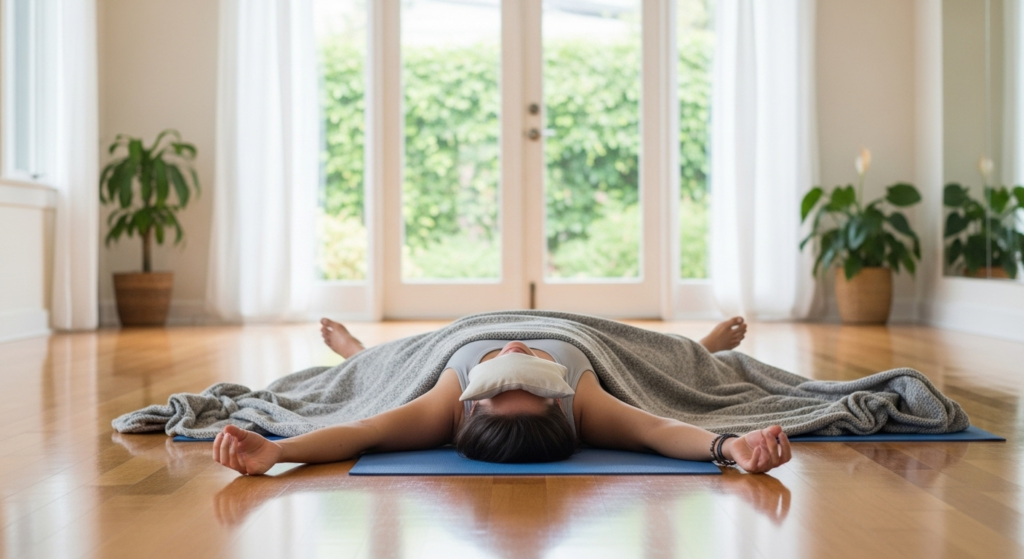
Corpse Pose concludes every yoga practice with deep relaxation. Lie flat on your back, legs extended and slightly apart, arms at sides with palms up, and close your eyes. Release all muscular effort and allow your body to completely relax. Though it appears simple, Savasana is considered one of the most important and challenging poses, teaching complete surrender and integration of practice benefits. Beginners should rest in Savasana for at least five minutes, allowing the body and mind to absorb the practice.
Tips for Beginning Your Yoga Practice
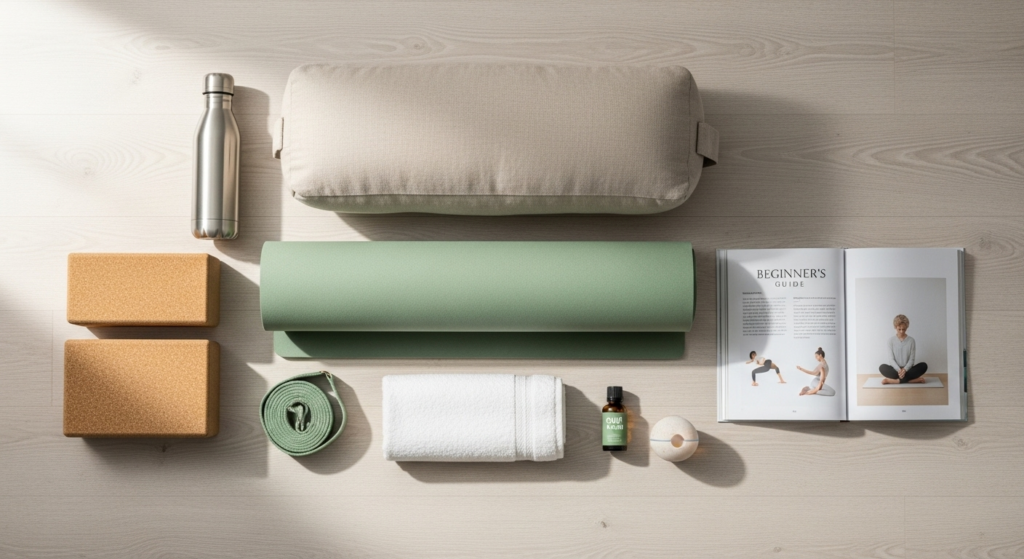
Start slowly with 2-3 practice sessions weekly, allowing your body time to adapt. Listen to your body and never push into pain—discomfort is acceptable, but sharp pain signals you should back off. Use props like blocks, straps, and bolsters without hesitation; they’re tools, not shortcuts. Focus on breath, maintaining steady inhales and exhales throughout your practice. Consider attending beginner classes or following online tutorials designed specifically for newcomers. Remember that yoga is not competitive—your practice is personal, and comparison serves no purpose.
Building a Sustainable Practice
Consistency matters more than duration. Even 15 minutes daily provides more benefits than occasional lengthy sessions. Create a dedicated space at home for practice, even if it’s just a mat-sized area. Set realistic goals and celebrate small victories like touching your toes for the first time or holding a pose longer. Track your progress through photos or journaling. Most importantly, approach yoga with patience and self-compassion, understanding that flexibility and strength develop gradually over time.
Conclusion
Beginning a yoga practice offers transformative benefits for body, mind, and spirit. These fundamental poses provide a strong foundation for your yoga journey, building strength, flexibility, and inner peace. Remember that every expert was once a beginner, and your practice is uniquely yours. Start where you are, use what you have, and do what you can. With consistent practice and patience, you’ll discover yoga’s profound gifts while developing a sustainable wellness practice that serves you for life.