18 Long Narrow Living Room Ideas: Make the Most of Challenging Spaces
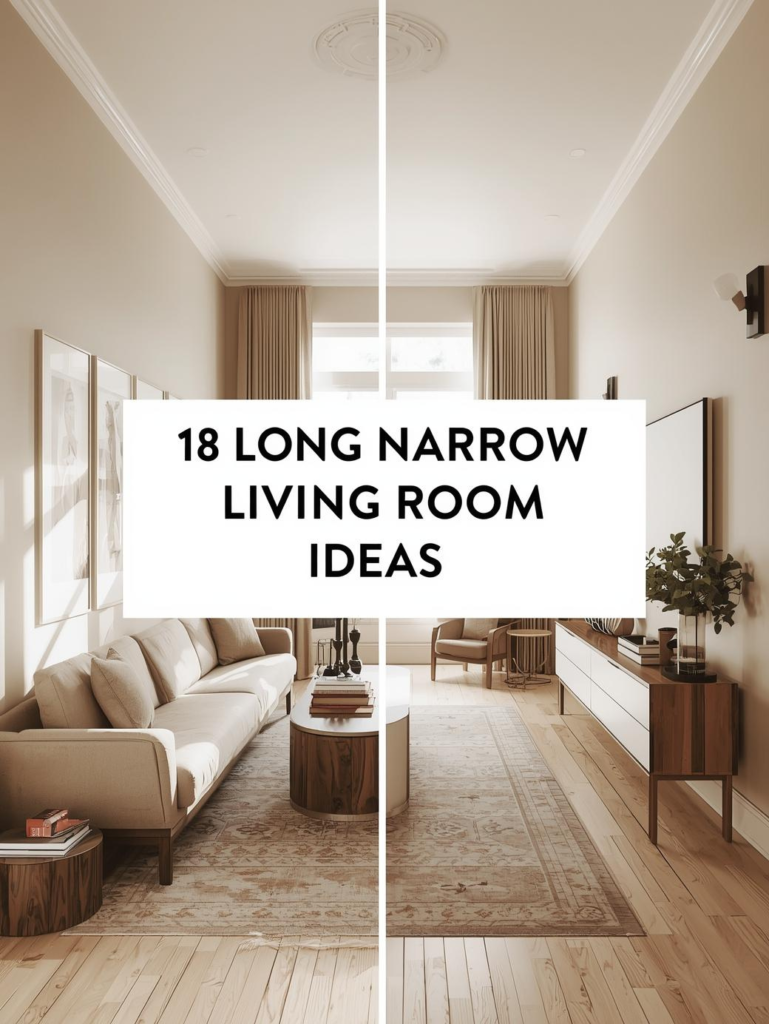
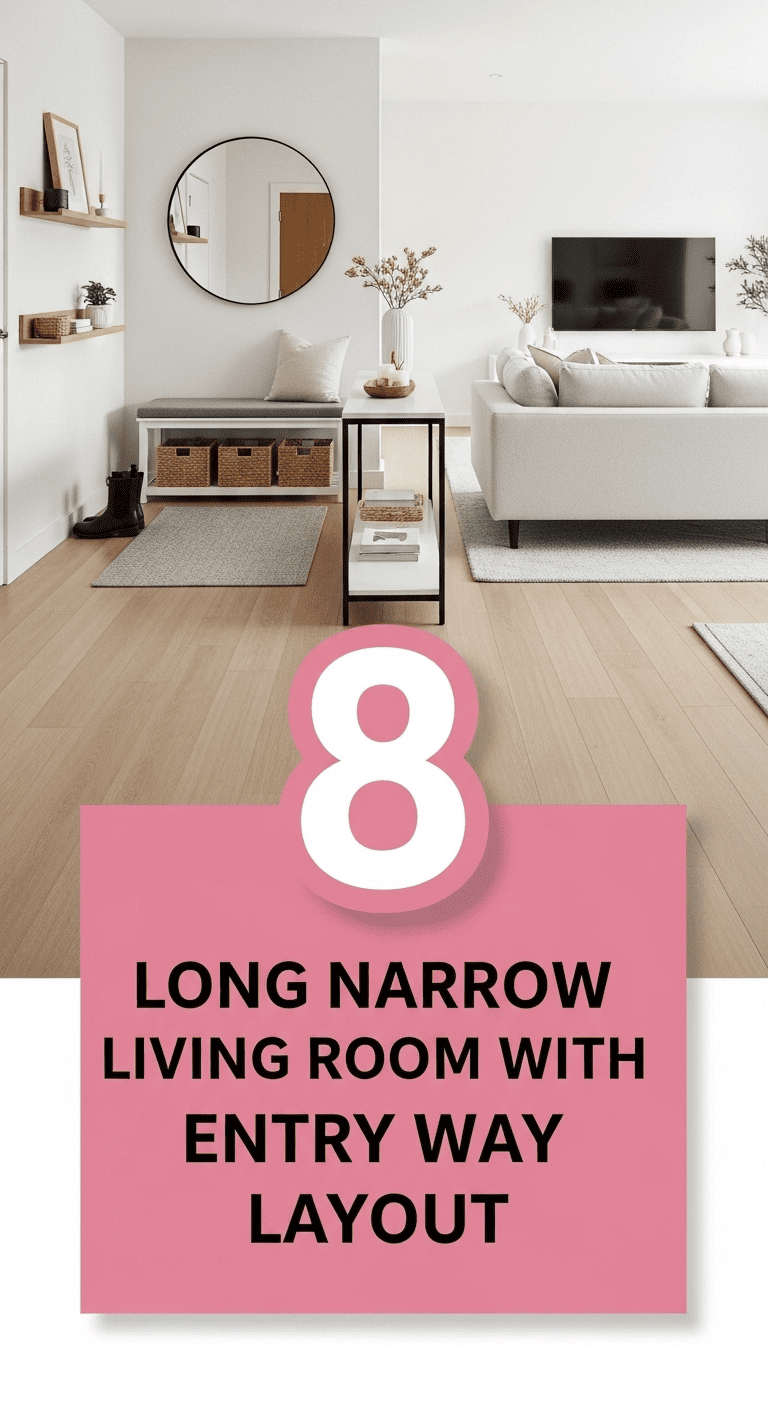
Long narrow living rooms present a unique design challenge that many homeowners face. Often called “bowling alley” rooms, these spaces can feel awkward and difficult to arrange. The proportions seem wrong—too much length, not enough width—and traditional furniture layouts simply don’t work. You might struggle with where to place the sofa, how to create conversation areas, or how to avoid that corridor-like feeling that makes the room feel even narrower than it actually is.
But here’s the good news: long narrow living rooms aren’t design disasters waiting to happen. With smart furniture placement, clever visual tricks, and creative zoning strategies, these challenging spaces can become some of the most interesting and functional rooms in your home. The key is working with the proportions rather than fighting against them. These eighteen ideas will show you how to transform your long narrow living room from a frustrating problem into a beautifully designed solution.
1. The Floating Furniture Layout
Break the bowling alley effect by pulling furniture away from walls.
Key Elements:
- Sofa floated in middle of room (not against wall)
- Create conversation area in center
- Define seating zone with area rug
- Console table behind sofa for additional surface
- Chairs angled slightly for visual interest
- Clear walkway along one or both sides
- Grounded furniture arrangement
- Negative space along walls
- Breaks up linear flow
- Creates intentional gathering space
- Additional seating perpendicular to sofa
- Focal point (fireplace or TV) at one end
- Anchored with properly sized rug
2. Multiple Zone Strategy
Divide the long space into two or three distinct functional areas.
Key Elements:
- Seating area in one zone
- Dining area or workspace in another zone
- Reading nook or additional zone if space allows
- Area rugs defining each zone separately
- Different lighting for each zone
- Furniture arranged to create visual divisions
- Bookshelf or console as subtle divider
- Each zone serves different purpose
- Unified color scheme throughout
- Clear circulation path between zones
- Purposeful use of entire length
- Avoids wasted space at one end
- Creates multiple functional areas
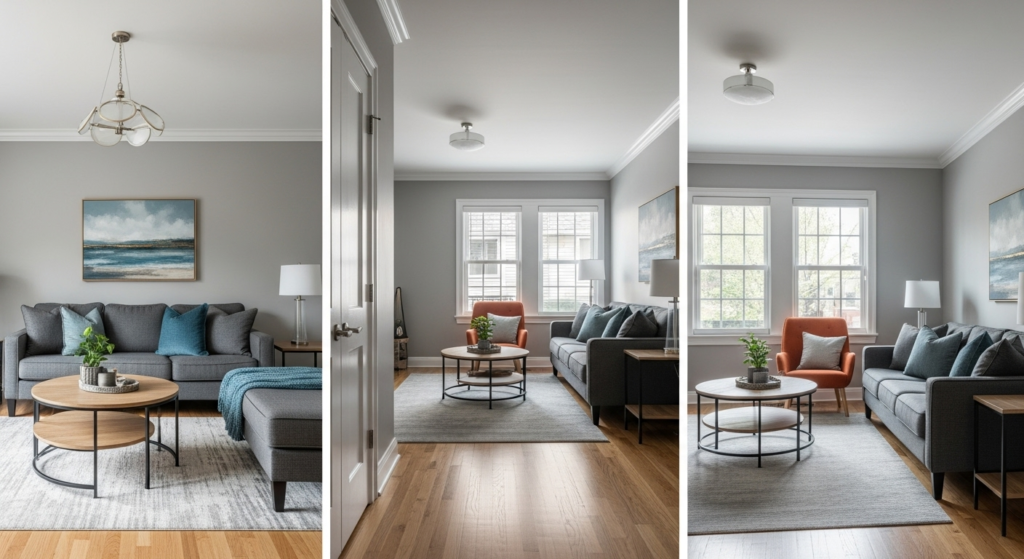
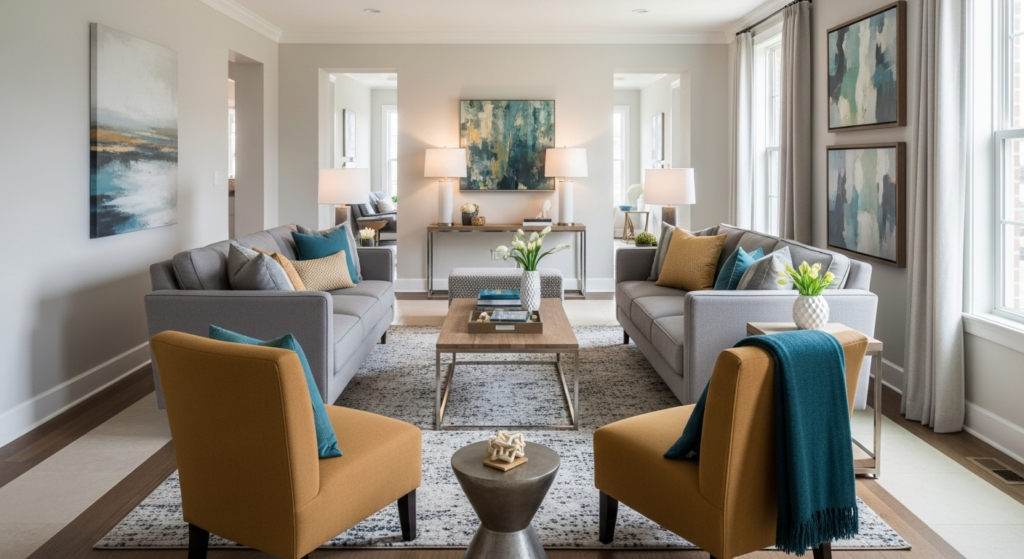
3. The Parallel Seating Arrangement
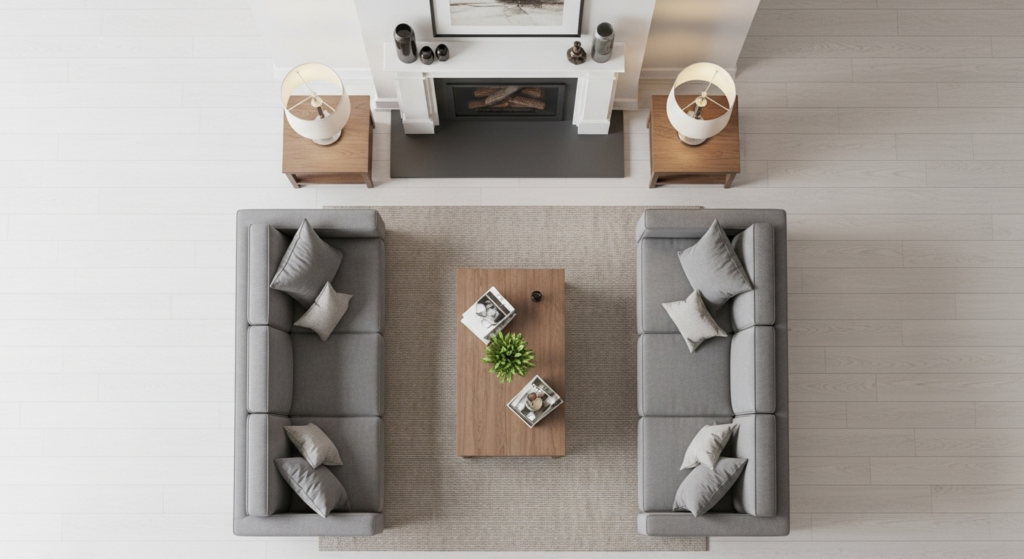
Position two sofas or seating pieces facing each other.
Key Elements:
- Two sofas facing each other along length
- Coffee table or ottoman between them
- Creates intimate conversation space
- Narrow walkway at one or both ends
- Symmetrical, balanced arrangement
- Works well with fireplace at end
- Additional seating at end if needed
- Emphasizes length intentionally
- Formal, sophisticated layout
- Good traffic flow past seating
- Cozy gathering area in center
- Uses width efficiently
- Statement lighting above seating area
4. The Perpendicular Furniture Fix
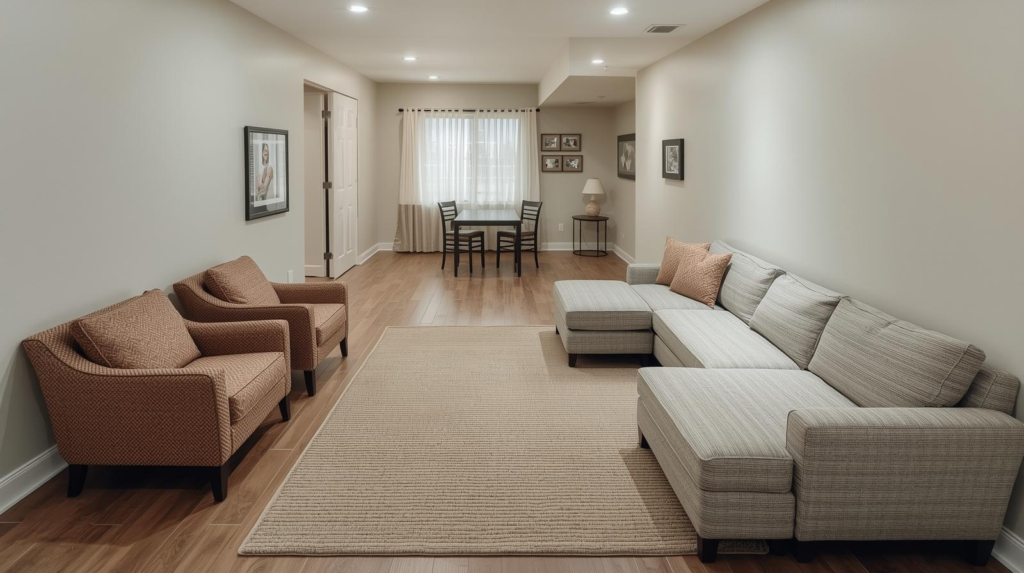
Arrange furniture perpendicular to the long walls.
Key Elements:
- Sofa positioned across width (perpendicular)
- Immediately breaks up linear feel
- Creates natural division of space
- Chairs or loveseat facing sofa
- Walkway behind sofa to other area
- Rug placed horizontally across width
- Widens visual perception of room
- Makes room feel less narrow
- Additional zone behind sofa arrangement
- Bookshelf or media unit on long wall
- Emphasizes width over length
- Creates cozy seating pocket
- Smart use of proportions
5. The Angled Furniture Approach
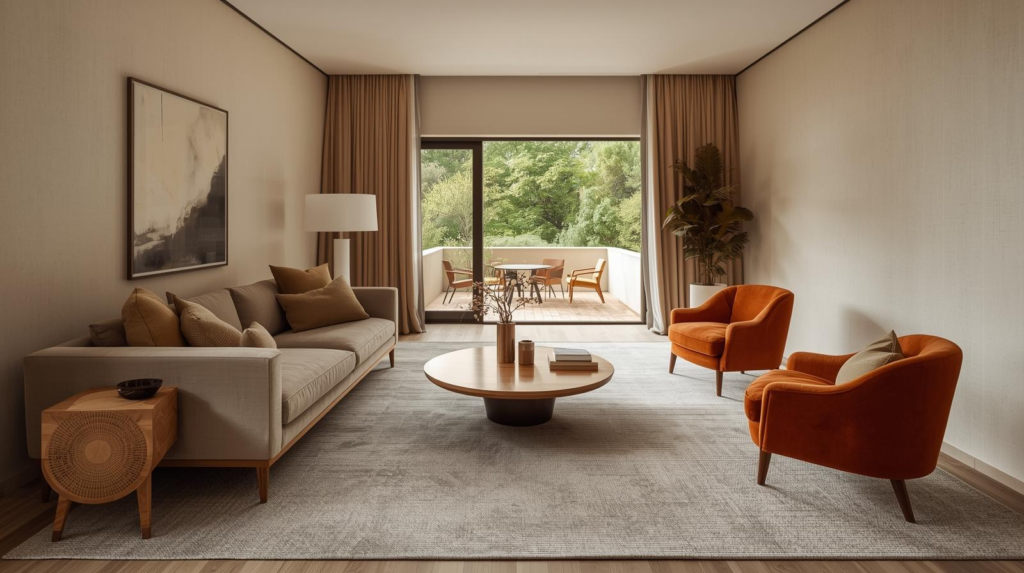
Place furniture on angles to create visual interest and break rigidity.
Key Elements:
- Sofa or chairs positioned at 45-degree angles
- Breaks up boxy, linear feeling
- Creates dynamic, interesting flow
- Softens harsh rectangular proportions
- Conversation area feels more intimate
- Unexpected furniture placement
- Requires adequate space for angles
- Round or oval coffee table works well
- Avoid blocking natural pathways
- Creates visual movement
- Less formal arrangement
- Interesting architectural element
- Makes space feel less predictable
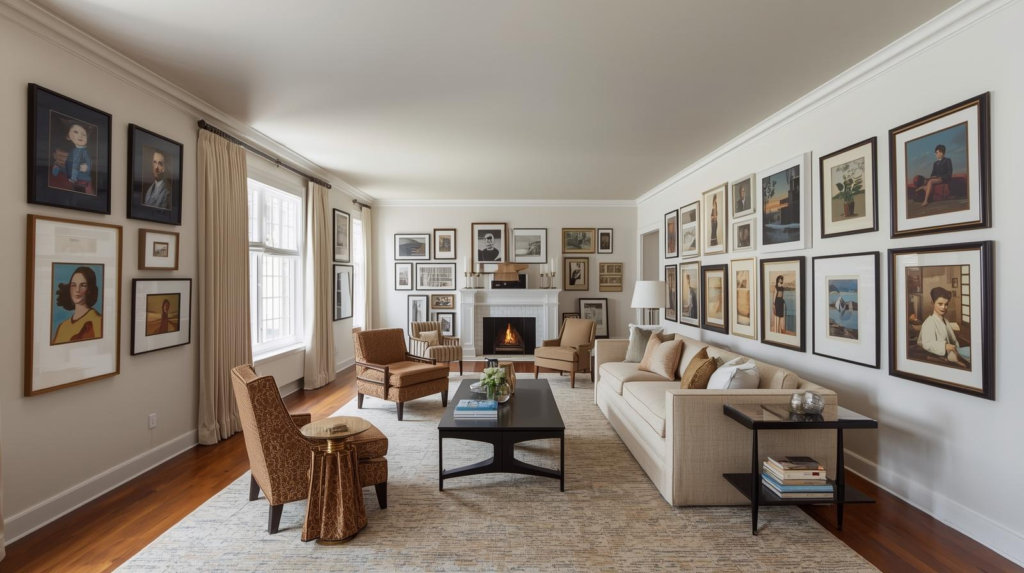
6. The Gallery Wall Focal Point
Use one long wall as dramatic gallery wall to draw eye horizontally.
Key Elements:
- Large gallery wall on one long wall
- Multiple artworks in coordinating frames
- Horizontal arrangement emphasizing width
- Furniture arranged to view gallery wall
- Creates strong visual focal point
- Distracts from narrow proportions
- Mix of frame sizes and art types
- Cohesive color scheme in artwork
- Proper spacing between pieces
- Extends eye across width
- Adds personality and interest
- Statement wall treatment
- Balances room proportions visually
7. The Built-In Solution
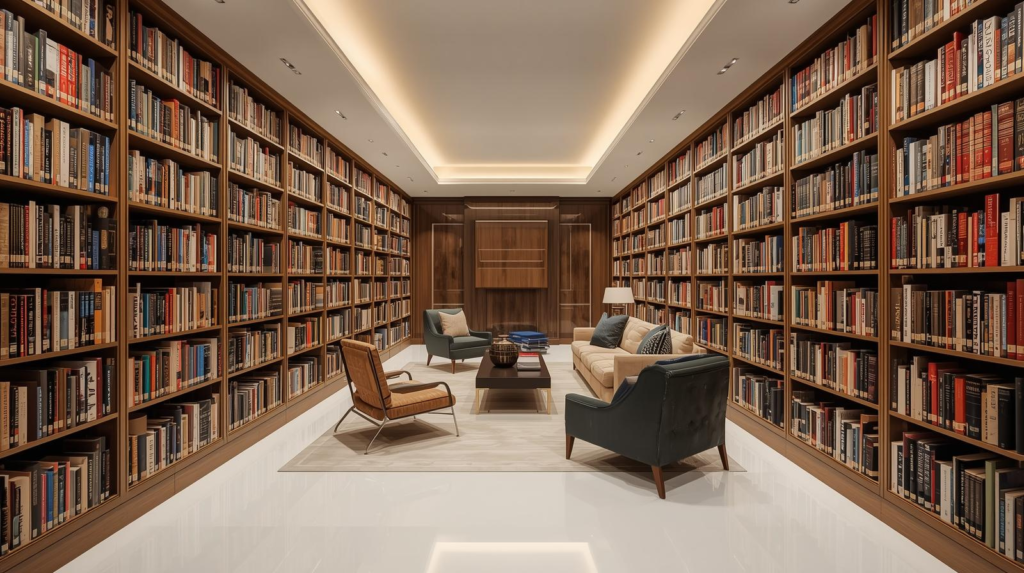
Install built-in shelving or storage along one or both long walls.
Key Elements:
- Floor-to-ceiling built-in shelving
- Can be on one or both long walls
- Creates architectural interest
- Provides abundant storage
- Books and objects displayed
- Makes narrow feel intentional
- Eliminates need for furniture along walls
- Keeps floor space open
- Adds depth with shelving recession
- Creates library-like atmosphere
- Visually shortens room
- Functional and beautiful
- Custom or DIY built-ins
8. The Layered Lighting Strategy
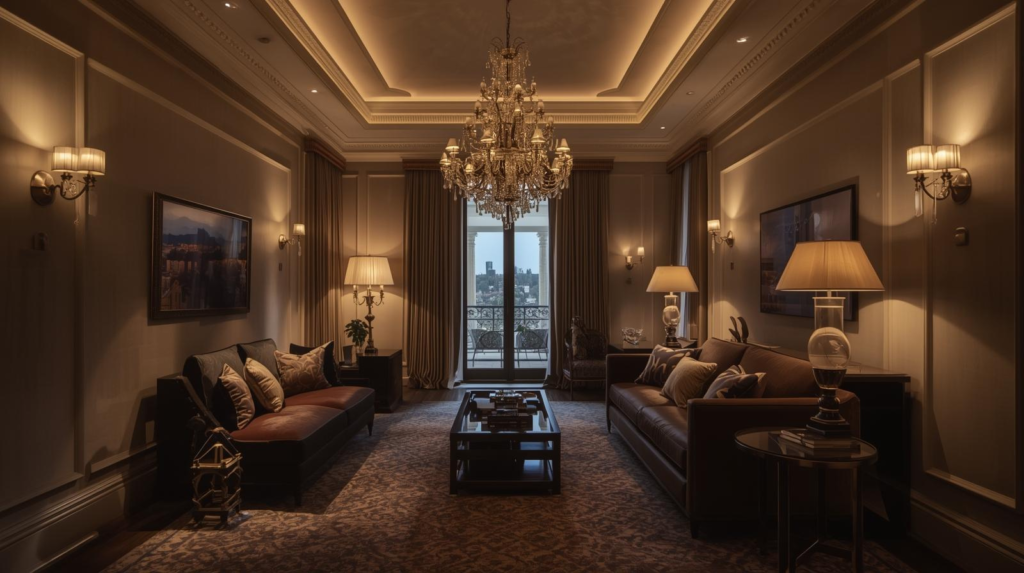
Use multiple light sources at different heights to add dimension.
Key Elements:
- Overhead lighting (chandelier or pendants)
- Floor lamps in multiple locations
- Table lamps on surfaces
- Wall sconces along long walls
- Lighting at different heights creates depth
- Avoids flat, one-dimensional feel
- Creates pools of light throughout length
- Dimmer switches for ambiance control
- Highlights different zones
- Reduces tunnel-like appearance
- Warm bulbs for coziness
- Strategic placement breaks up space
- Layered illumination adds interest
9. The Horizontal Stripe Treatment
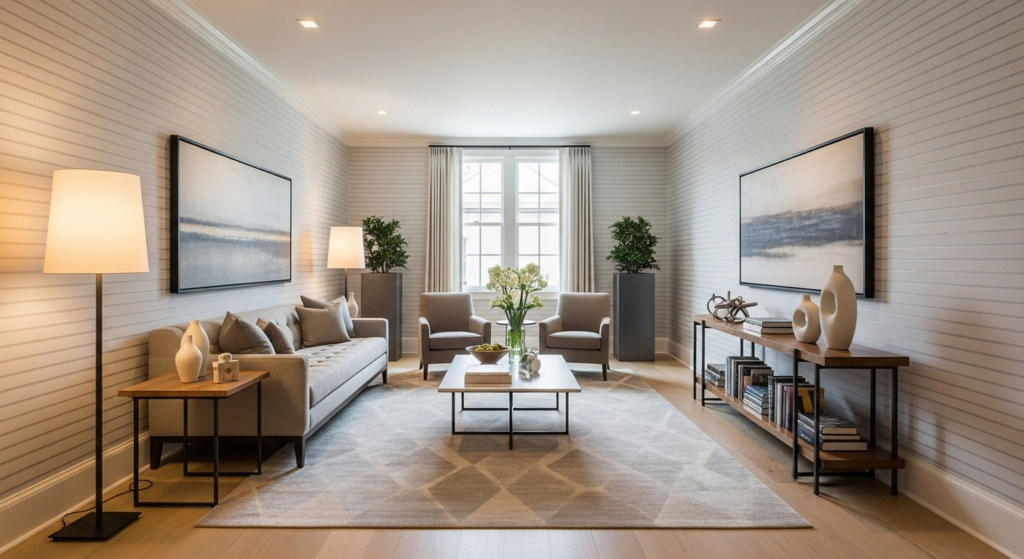
Paint or wallpaper with horizontal stripes to widen visual perception.
Key Elements:
- Horizontal stripes on one or more walls
- Makes room appear wider
- Choose subtle, sophisticated stripes
- Can be paint, wallpaper, or wood planks
- Avoid overly bold stripes in small space
- Light colors keep space feeling open
- Draws eye across width not length
- Creates optical illusion of width
- Works on accent wall or all walls
- Coordinates with furniture arrangement
- Visual trick that actually works
- Modern or traditional stripe options
- Enhances furniture layout strategy
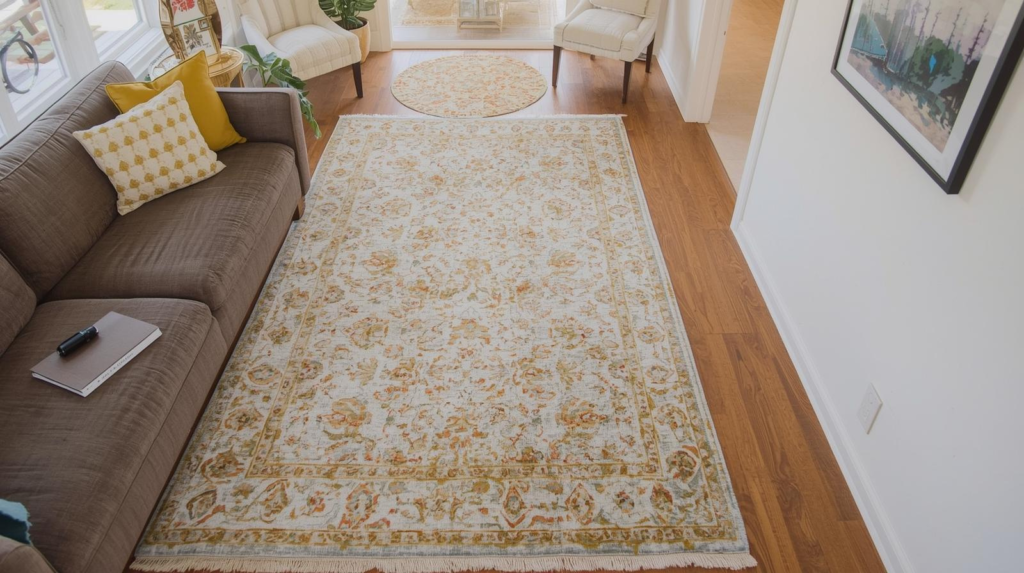
10. The Statement Area Rug Placement
Use rugs strategically to define zones and guide proportion perception.
Key Elements:
- Large area rug in main seating area
- Rug placed horizontally (across width)
- Additional smaller rug in second zone
- Rugs define separate functional areas
- Proper rug sizing (furniture on rug)
- Creates visual breaks along length
- Different rug patterns or colors for zones
- Grounds furniture arrangements
- Adds warmth and texture
- Helps absorb sound in long space
- Prevents echo in narrow room
- Layering rugs possible for interest
- Unifies furniture groupings
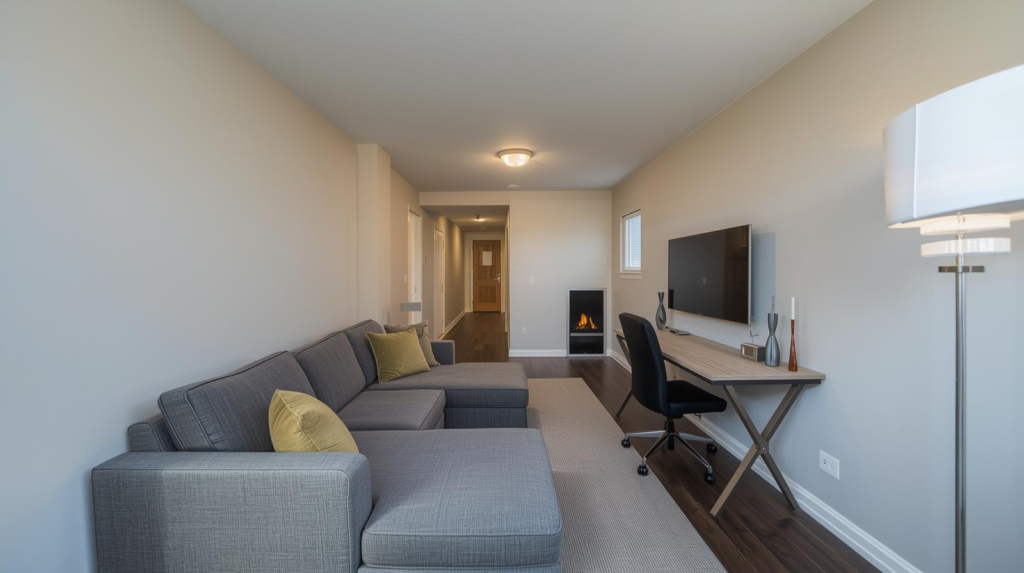
11. The Sectional Solution
Use a sectional sofa to maximize seating in narrow space.
Key Elements:
- L-shaped sectional sofa
- Positions along one end and side
- Creates cozy conversation area
- Maximizes seating without multiple pieces
- Chaise portion extends into room
- Defines seating zone clearly
- Works with fireplace or TV focal point
- Leaves rest of space open
- Efficient use of corner
- Creates intimacy in one zone
- Additional area remains flexible
- Accommodates more people
- Cohesive seating arrangement
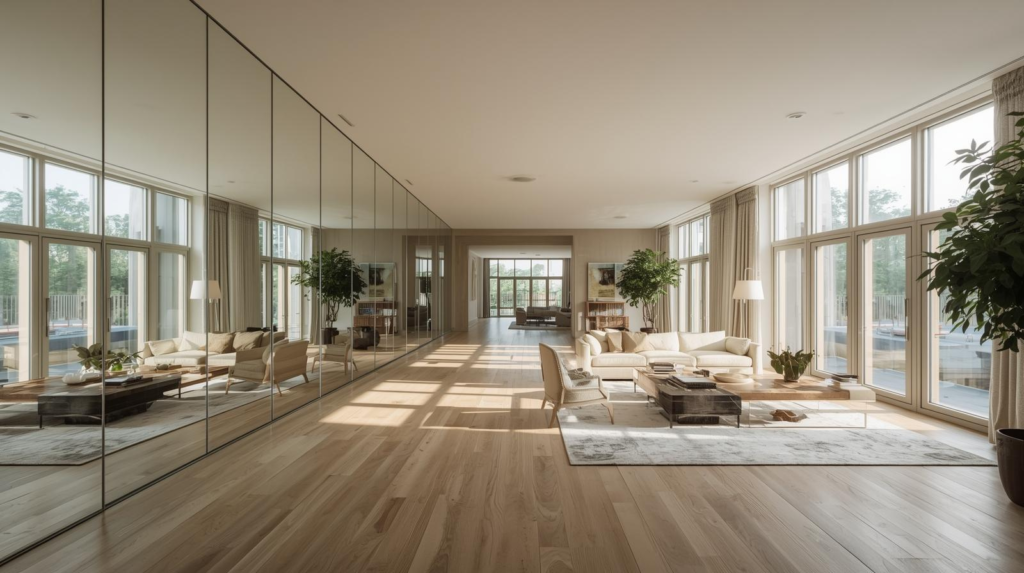
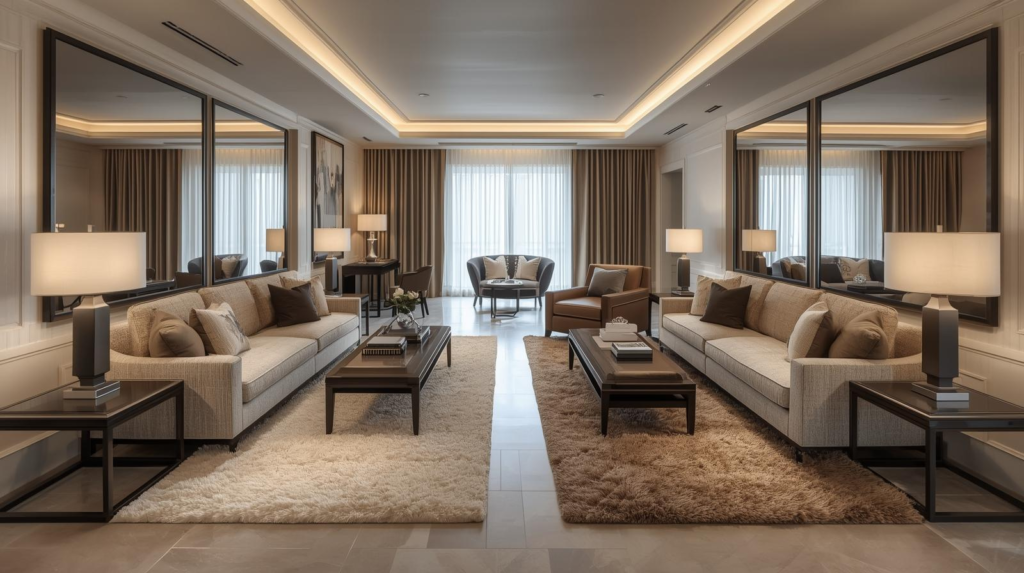
12. The Mirror Multiplication Trick
Use mirrors strategically to visually double space and add light.
Key Elements:
- Large mirror on one long wall
- Reflects opposite side creating width illusion
- Multiple smaller mirrors grouped together
- Mirrors reflect natural light throughout
- Creates sense of openness
- Makes narrow space feel wider
- Position opposite windows when possible
- Decorative framed mirrors as art
- Mirror tiles or panels for modern look
- Reflects beautiful elements of room
- Adds sparkle and light
- Strategic placement crucial
- Enhances overall brightness
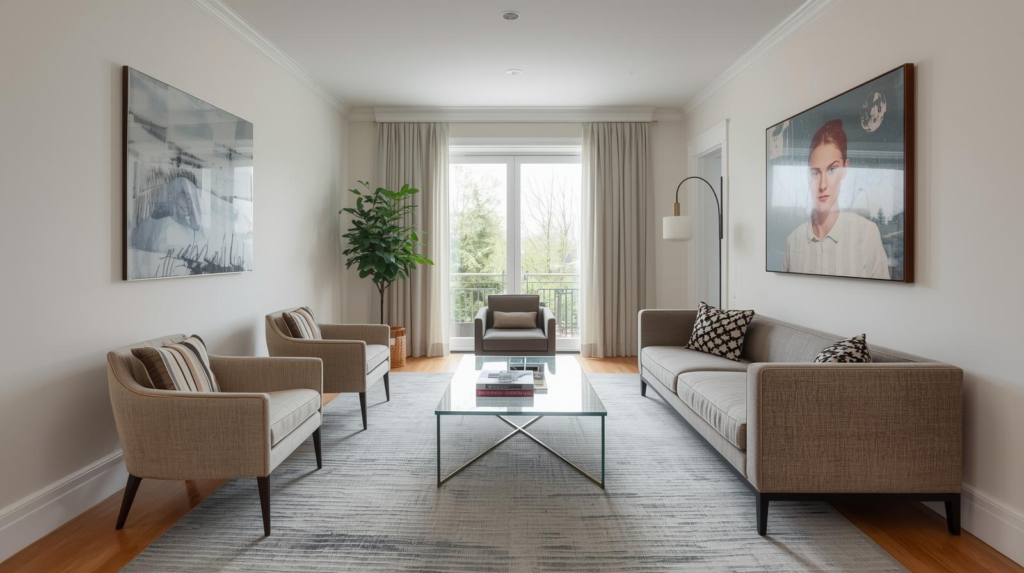
13. The Furniture Scale Strategy
Choose appropriately scaled furniture for narrow proportions.
Key Elements:
- Avoid oversized bulky furniture
- Choose streamlined pieces
- Low-profile sofa and chairs
- Furniture with visible legs (not skirted)
- Glass or acrylic pieces where possible
- Armless chairs to save width
- Slim console tables instead of bulky
- Appropriately sized coffee table
- Multi-functional furniture pieces
- Proper proportions for space
- Creates breathing room
- Avoids overwhelming narrow width
- Lighter visual weight furniture
14. The Continuous Color Flow
Use consistent color palette throughout length to unify space.
Key Elements:
- Same wall color throughout entire length
- Coordinating furniture in cohesive palette
- Avoids chopping space into sections
- Light colors keep space feeling open
- Monochromatic or analogous color scheme
- Creates seamless visual flow
- Accent colors repeated throughout
- Unifies multiple zones
- Makes space feel larger and cohesive
- Soft neutrals work particularly well
- Avoids visual barriers from color changes
- Creates calm, flowing atmosphere
- Ties disparate areas together
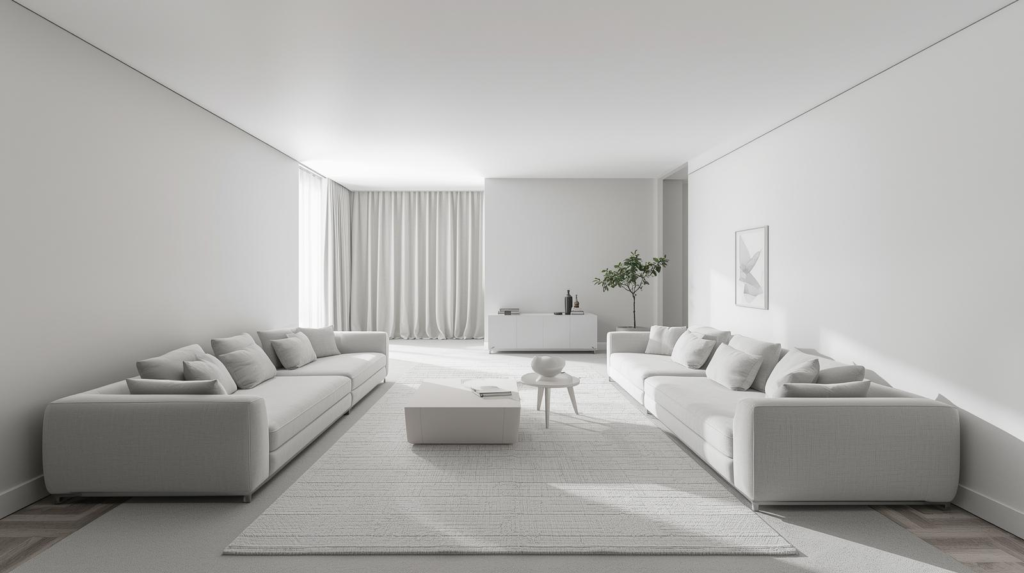
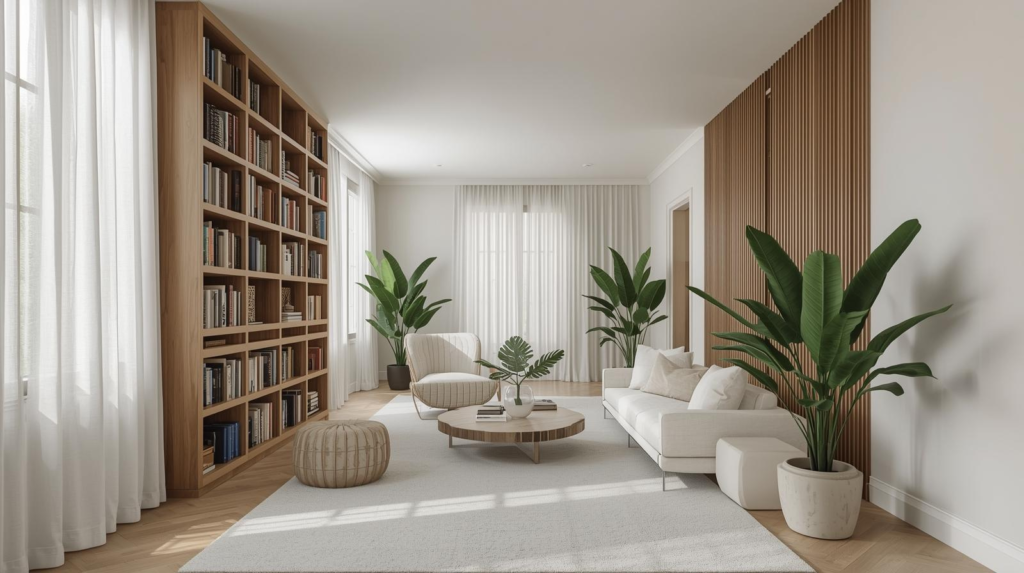
15. The Vertical Emphasis Solution
Draw eye upward with vertical elements to balance horizontal length.
Key Elements:
- Floor-to-ceiling curtains
- Tall bookshelves or storage units
- Vertical artwork or tall mirrors
- High-mounted curtain rods
- Tall plants (fiddle leaf fig, snake plant)
- Vertical paneling or board and batten
- Creates upward visual movement
- Balances long horizontal space
- Makes ceiling feel higher
- Reduces focus on narrow width
- Architectural vertical elements
- Tall table lamps or floor lamps
- Creates better proportions visually
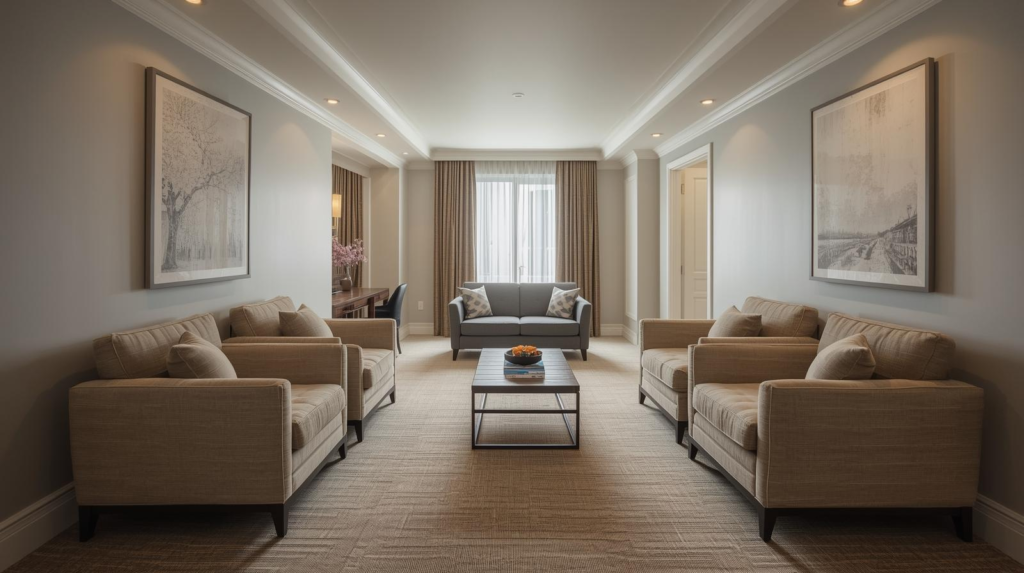
16. The L-Shaped Layout
Create an L-shaped furniture arrangement using room’s natural shape.
Key Elements:
- Sofa along one wall
- Perpendicular seating at end
- Forms natural L-shape
- Creates conversation area
- Uses end wall as backdrop
- Coffee table in center of L
- Additional seating along opposite wall
- Intimate gathering space
- Works well with TV or fireplace at end
- Natural traffic flow around furniture
- Efficient use of both dimensions
- Cozy defined seating area
- Makes most of narrow proportions
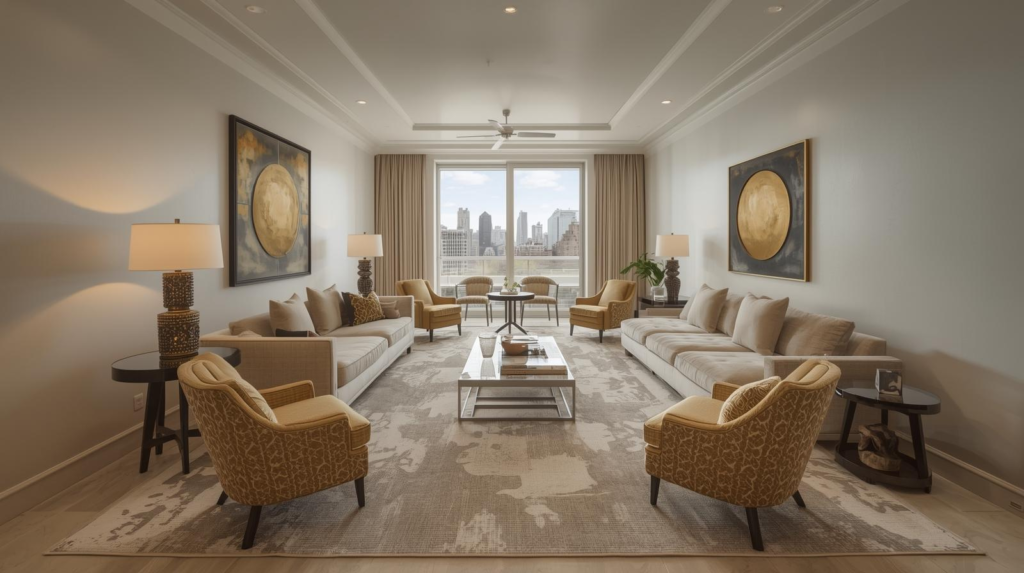
17. The Diagonal Pathway Strategy
Create diagonal sight lines and pathways through furniture placement.
Key Elements:
- Furniture arranged to create diagonal views
- Pathway cuts diagonally through space
- Prevents straight corridor feeling
- Angled conversation area
- Furniture positioned off-center
- Creates interesting traffic pattern
- More dynamic than straight walkway
- Adds visual interest and movement
- Makes space feel less predictable
- Works in wider narrow rooms
- Softens rigid rectangular feel
- Creative use of floor plan
- Unexpected but functional layout
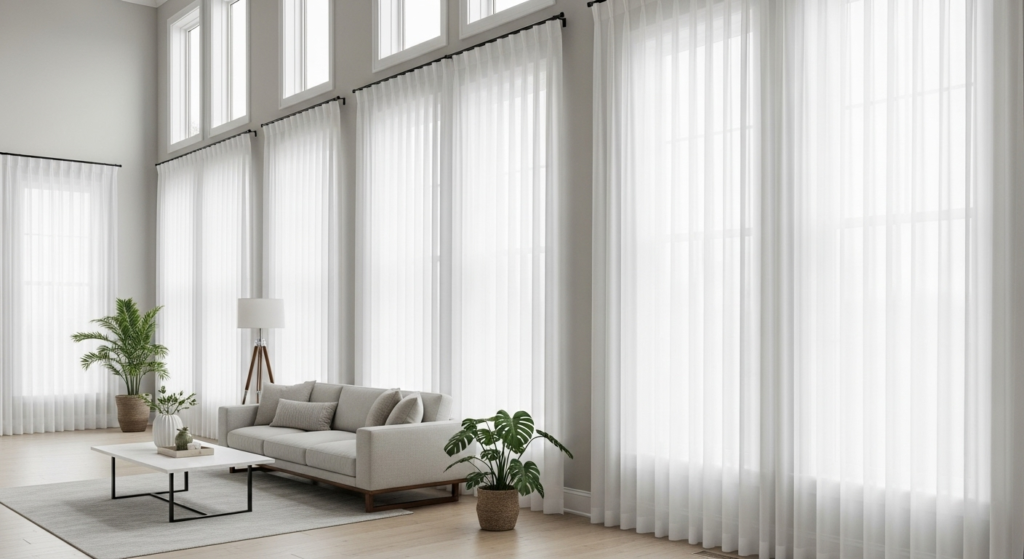
18. The Window Wall Treatment
Maximize natural light and views with strategic window treatments.
Key Elements:
- Floor-to-ceiling curtains on all windows
- Light, sheer fabrics to maintain brightness
- Mount curtain rods high and wide
- Makes windows appear larger
- Maximizes natural light flow
- Light colors reflect brightness
- Avoid heavy dark curtains
- Creates vertical emphasis at windows
- Soft flowing fabrics add movement
- Makes narrow space feel airier
- Frames views beautifully
- Adds softness to hard lines
- Enhances overall light and openness
Essential Elements for Long Narrow Living Rooms
Include these elements to maximize your challenging space:
Layout Fundamentals:
- Clear primary pathway through room (minimum 3 feet wide)
- Furniture pulled away from walls when possible
- Defined zones for different functions
- Proper furniture scale for proportions
- Strategic placement avoiding corridor effect
- Focal point at one or both ends
- Balanced furniture distribution along length
Furniture Selection:
- Appropriately scaled pieces (not oversized)
- Furniture with visible legs (creates airiness)
- Low-profile seating options
- Glass or acrylic accent pieces
- Multi-functional furniture
- Armless chairs to save width
- Round or oval tables (softer than rectangular)
- Slim console tables
- Sectional or loveseat instead of large sofa
Visual Tricks:
- Mirrors to create width illusion
- Horizontal stripes or patterns
- Light color palette throughout
- Continuous flooring without breaks
- Strategic rug placement across width
- Gallery wall emphasizing horizontal
- Appropriate artwork scale and placement
Lighting Strategy:
- Multiple light sources at different heights
- Floor lamps in various locations
- Table lamps on consoles or side tables
- Wall sconces along long walls
- Overhead lighting in each zone
- Dimmer switches for ambiance
- Natural light maximized
- Layered lighting prevents flatness
Color and Pattern:
- Light, neutral base colors
- Cohesive palette throughout length
- Accent colors repeated in multiple zones
- Avoid dark colors that close in space
- Subtle patterns that don’t overwhelm
- Horizontal patterns when using stripes
- Monochromatic schemes work well
- Pops of color for interest
Storage Solutions:
- Built-in shelving along walls
- Vertical storage to save floor space
- Multi-functional furniture with storage
- Wall-mounted shelves
- Floating cabinets or consoles
- Baskets and bins for organization
- Hidden storage options
- Minimal floor clutter
Traffic Flow:
- Clear walkways (minimum 2.5-3 feet)
- Diagonal or curved pathways when possible
- Avoid blocking natural flow
- Multiple access points to seating
- Functional circulation through zones
- Doors and windows remain accessible
- Natural movement patterns considered
Architectural Elements:
- Vertical elements (tall curtains, plants)
- Horizontal elements (shelving, gallery walls)
- Balanced proportion emphasis
- Architectural details draw eye appropriately
- Built-ins that work with proportions
- Trim and molding considerations
- Ceiling treatments if applicable
Zone Definition:
- Area rugs defining separate spaces
- Furniture arrangement creating zones
- Lighting differentiating areas
- Subtle dividers (bookcases, consoles)
- Different functions in each zone
- Cohesive design tying zones together
- Clear purpose for each area
Decor and Accessories:
- Appropriately scaled artwork
- Mirrors strategically placed
- Plants adding life and verticality
- Accessories in moderation
- Decorative objects creating interest
- Personal touches throughout
- Cohesive style maintaining flow
Tips for Successful Long Narrow Living Room Design
Transform your challenging space with these proven strategies:
Before You Start:
- Measure room dimensions accurately
- Note window and door locations
- Identify electrical outlet positions
- Determine focal points (fireplace, view, TV)
- Consider natural traffic patterns
- Assess natural light sources
- Take photos from multiple angles
- Create floor plan on paper or app
Furniture Placement Rules:
- Float larger pieces away from walls
- Create conversation areas (6-8 feet apart)
- Angle furniture to break rigidity
- Use furniture to define zones
- Ensure all seats can see each other
- Leave adequate walkway space
- Position furniture perpendicular when possible
- Avoid pushing everything against walls
Scale and Proportion:
- Measure furniture before purchasing
- Choose pieces appropriate for width
- Avoid oversized sectionals unless specifically planned
- Select low-profile furniture
- Consider furniture with exposed legs
- Round tables work better than rectangular
- Slim arms on sofas and chairs
- Appropriate coffee table size (2/3 sofa length)
Color Strategy:
- Use light colors as base
- Maintain consistency throughout length
- Add darker accents sparingly
- Use color to define zones subtly
- Avoid color blocking that chops space
- Warm or cool tones, but consistent
- White or light ceilings
- Consider paint on longest walls lighter
Pattern and Texture:
- Use horizontal patterns cautiously
- Avoid busy patterns in small narrow spaces
- Add texture for visual interest
- Mix textures (smooth, rough, soft)
- Subtle patterns work better than bold
- Coordinate patterns throughout
- Textured rugs add warmth
- Varied fabric textures on furniture
Lighting Solutions:
- Install dimmer switches everywhere
- Use table lamps for pools of light
- Add floor lamps in corners
- Consider wall sconces to save space
- Overhead lighting in each zone
- Warm bulbs (2700-3000K)
- Highlight artwork with picture lights
- Use lighting to emphasize zones
Storage Maximization:
- Built-ins along long walls
- Vertical storage solutions
- Ottomans with hidden storage
- Wall-mounted shelves
- Console tables with drawers
- Media units with closed storage
- Minimize visible clutter
- Organize with baskets and bins
Window Treatment Tips:
- Hang curtains high and wide
- Use light fabrics for airiness
- Avoid heavy dark curtains
- Floor-length for elegance
- Simple styles over elaborate
- Maximize natural light
- Consider sheer layers
- Mount rods close to ceiling
Rug Selection and Placement:
- Choose rugs large enough (furniture on rug)
- Place rugs across width not length
- Use multiple rugs for different zones
- Avoid long narrow runners (emphasizes length)
- Light colored rugs open space
- Consider layering rugs
- Proper pad underneath
- Rectangular or round shapes work best
Common Mistakes to Avoid:
- Pushing all furniture against walls
- Using oversized furniture
- Creating one long corridor
- Ignoring proper traffic flow
- Too much dark color
- Inadequate lighting
- Wrong sized area rugs
- Cluttering with too much furniture
- Blocking windows or doors
- Ignoring vertical space
- No defined zones or purpose
Budget-Friendly Solutions:
- Paint walls light color
- Rearrange existing furniture creatively
- DIY gallery wall
- Add mirrors (thrift and paint frames)
- Use what you have differently
- Make slipcovers for furniture
- Paint existing furniture lighter
- Add inexpensive floor lamps
- Shop secondhand for accent pieces
- Focus on one impact area first
Making Your Long Narrow Living Room Work
Long narrow living rooms require creative thinking, but they’re far from impossible to design successfully. The key is accepting and working with your room’s proportions rather than fighting against them. Every challenging space has potential—it just needs the right approach.
Start by identifying your room’s best features. Do you have great natural light? Beautiful architectural details? A stunning view? Build your design around these positives while addressing the proportion challenges with smart furniture placement and visual tricks.
Don’t try to make your narrow room something it’s not. Instead of fighting the length, embrace it by creating multiple functional zones. Instead of wishing for more width, use furniture and color strategies to create the illusion of width. Work with your space, not against it.
Remember that many successful living rooms have quirky proportions. Some of the most interesting spaces are those that work creatively within limitations. Your narrow room forces you to be more thoughtful about furniture placement, which often results in better, more intentional design.
Test different furniture arrangements before committing. Most people try one layout, decide it doesn’t work, and give up. Try floating furniture, try perpendicular arrangements, try angled pieces. Sometimes the solution isn’t obvious until you experiment.
Finally, don’t overcrowd your narrow space trying to fit in every piece of furniture you own. Negative space is your friend in narrow rooms. Sometimes what you leave out matters more than what you include. Less furniture, thoughtfully placed, almost always works better than too much furniture squeezed in.
With these eighteen strategies and creative thinking, your long narrow living room can become a well-designed, functional space that you actually enjoy. The “bowling alley” can transform into a purposeful, beautiful room that works perfectly for your life. Your challenging proportions might just become your favorite design opportunity.