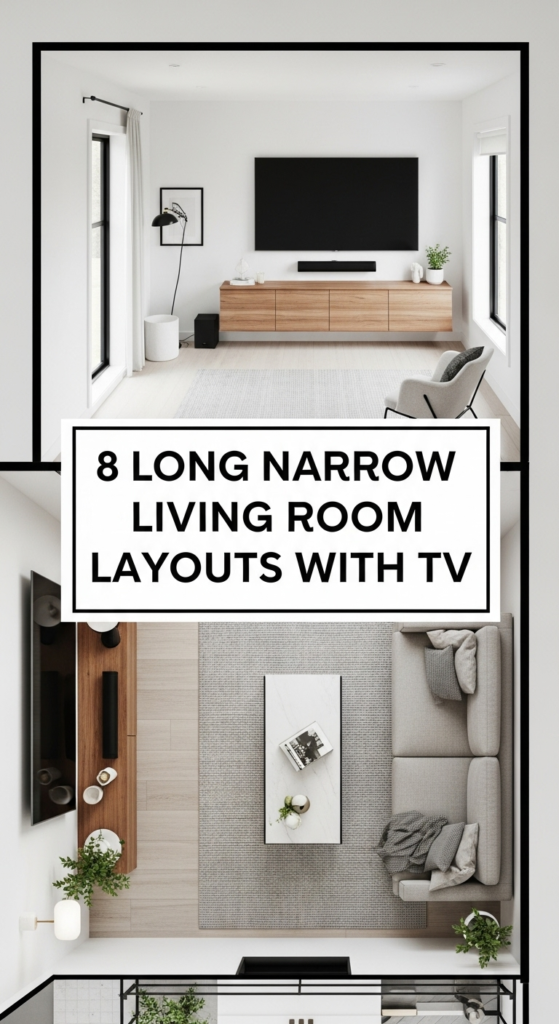
8 Long Narrow Living Room Layouts With TV: Perfect Viewing Solutions
Adding a TV to a long narrow living room creates an additional layer of complexity to an already challenging space. Not only do you need to arrange furniture to work with awkward proportions, but you also need to consider viewing angles, viewing distance, screen glare, and how to integrate technology without it dominating the room. The TV becomes a major focal point that affects every other furniture placement decision you make.
The good news is that thoughtful planning can create comfortable TV viewing in even the narrowest spaces. The key is positioning the television where it can be viewed from primary seating at the correct distance and angle, while still maintaining good traffic flow and avoiding the dreaded “bowling alley” effect. These eight proven layouts solve the TV placement puzzle in long narrow living rooms, offering different solutions for various room configurations, sizes, and viewing preferences.
1. The End Wall TV with Floating Sofa
Position TV on the short end wall with sofa floated in the center facing it.
Key Elements:
- TV mounted on end wall or on media console
- Sofa positioned in center of room facing TV
- Sofa perpendicular to long walls
- Console table behind sofa
- Two accent chairs flanking TV wall or beside sofa
- Coffee table in front of sofa
- Optimal viewing distance maintained (1.5-2.5x screen diagonal)
- Clear walkway on one or both sides of furniture
- Area rug under entire seating arrangement
- All furniture legs on rug
- Remaining space behind sofa for additional function
- Breaks up linear room flow
- Comfortable viewing from all seats
- Professional TV mounting height (eye level when seated)
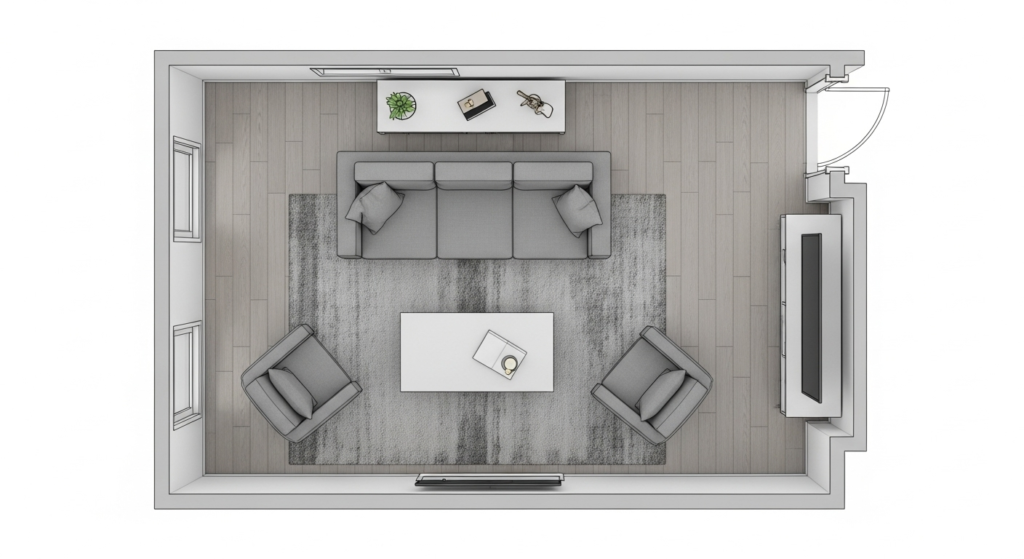
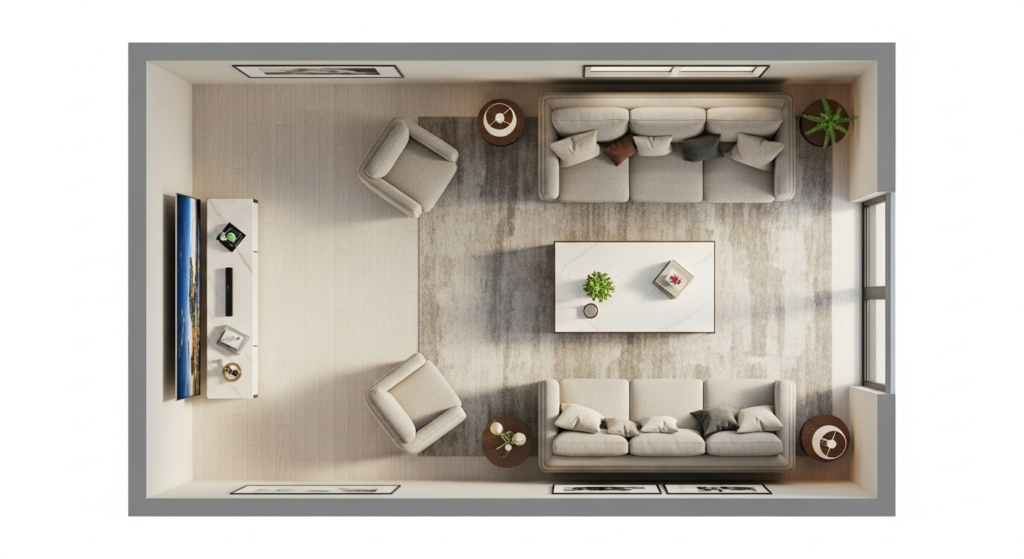
2. The Long Wall TV with Parallel Seating
Mount TV on long wall with seating arranged parallel.
Key Elements:
- TV mounted on one long wall
- Sofa on opposite long wall facing TV
- Media console under TV
- Two accent chairs perpendicular to sofa
- Coffee table completing conversation square
- Creates traditional living room feel
- Adequate viewing distance from sofa to TV (7-12 feet typical)
- All seating has good TV viewing angle
- Narrow walkway at ends of room
- Area rug defining seating zone
- Additional storage or shelving flanking TV
- Built-in shelving around TV optional
- Symmetrical arrangement
- End wall space available for other functions
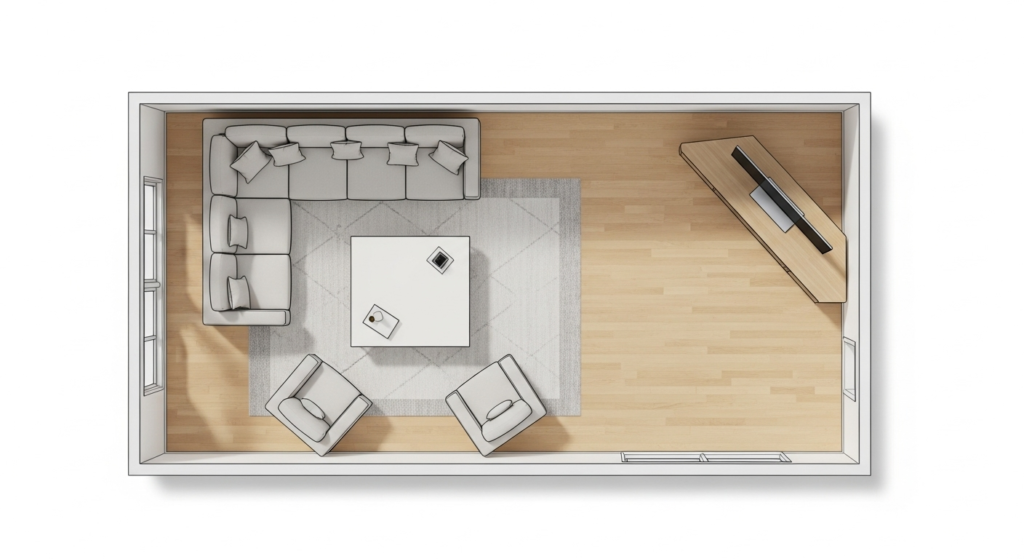
3. The Corner TV Angled Layout
Position TV in corner with furniture angled for viewing.
Key Elements:
- TV on corner stand or wall-mounted in corner
- Corner TV placement saves wall space
- Sofa angled to face corner TV
- Chairs positioned for TV viewing
- Creates diagonal sight lines
- Furniture arranged in arc facing corner
- Unique solution for narrow rooms
- Opens up wall space for other uses
- Coffee table accessible from all seats
- Viewing angles optimized for corner placement
- Works in rooms 12+ feet wide
- Creative use of corner space
- Less conventional but functional
- Rug defining angled seating area
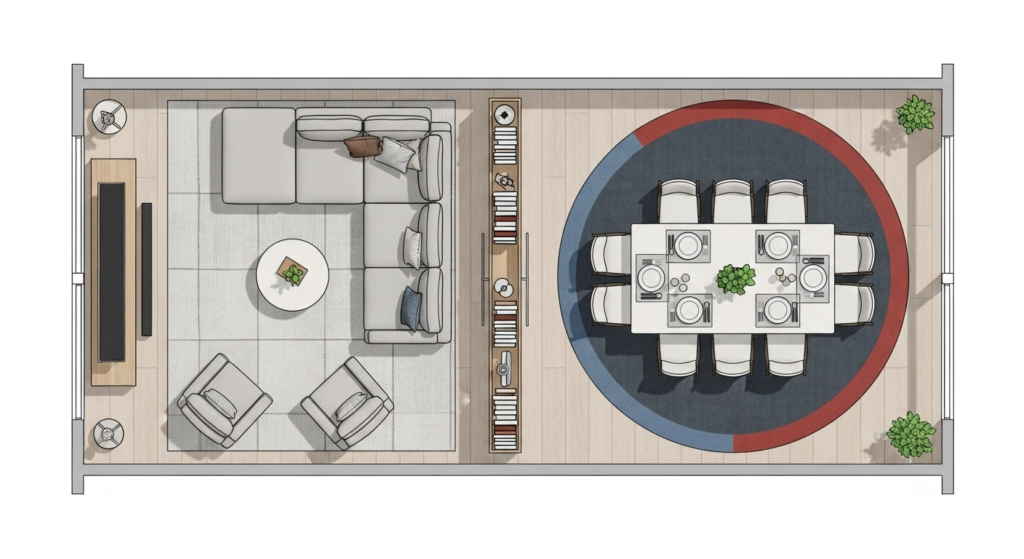
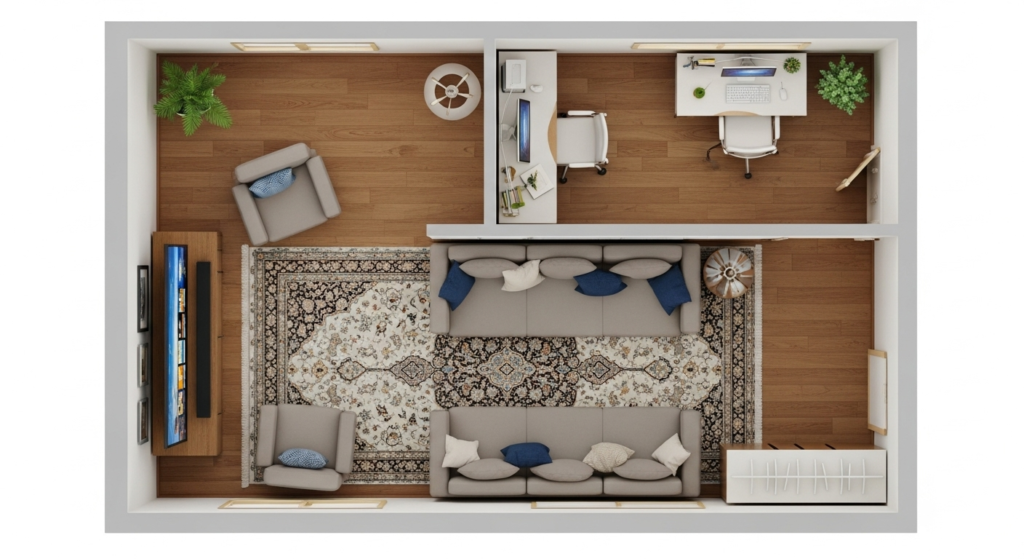
4. The Dual-Zone Layout with TV
Separate TV viewing area from other functional zone.
Key Elements:
- TV at one end of room with dedicated seating
- Sofa and chairs facing TV in first zone
- Second functional area in other end (dining, office, reading)
- Area rug defining TV viewing zone
- Separate rug for second zone
- Bookshelf or console acting as subtle divider
- Each zone has distinct purpose
- TV viewers don’t disrupt other activities
- Clear pathway between zones
- Optimal viewing distance in TV zone
- Complete furniture arrangement in TV area
- Remaining length used productively
- No wasted space
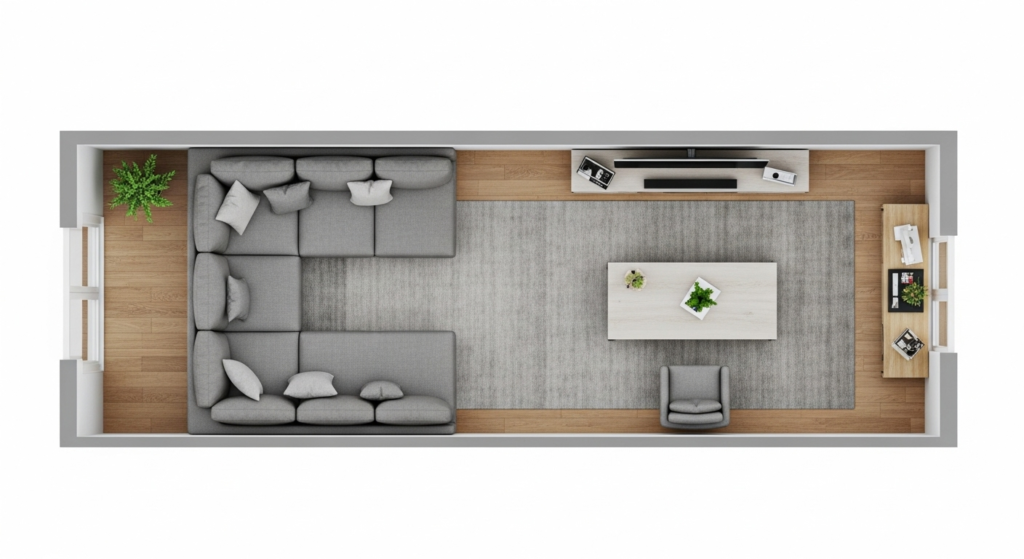
5. The Sectional Sofa TV Layout
Use L-shaped sectional for maximum TV viewing seating.
Key Elements:
- L-shaped sectional in corner or along walls
- TV positioned for optimal sectional viewing
- TV on end wall or long wall depending on sectional placement
- Sectional maximizes seating in narrow space
- Coffee table in front of sectional
- All sectional seats have good TV viewing angle
- Chaise portion of sectional considered in layout
- Remaining floor space left open
- Rug under entire sectional
- Media console or floating shelf under TV
- Additional chair or ottoman if space allows
- Family-friendly layout with ample seating
- Cozy TV viewing setup
6. The Perpendicular Sofa with Side TV
Place sofa across width with TV on adjacent long wall.
Key Elements:
- Sofa positioned perpendicular across narrow width
- TV on long wall adjacent to sofa
- Sofa placement breaks up linear room
- TV viewing requires slight turn from sofa
- Chairs positioned for straight-on TV viewing
- Creates two distinct areas (front and back of sofa)
- Coffee table in front of sofa
- Desk or additional seating behind sofa
- Works in wider narrow rooms (12+ feet)
- Walkway around sofa ends
- Area rug under front seating area
- Creative solution for challenging proportions
- Multi-functional space creation
7. The Symmetrical TV Wall Layout
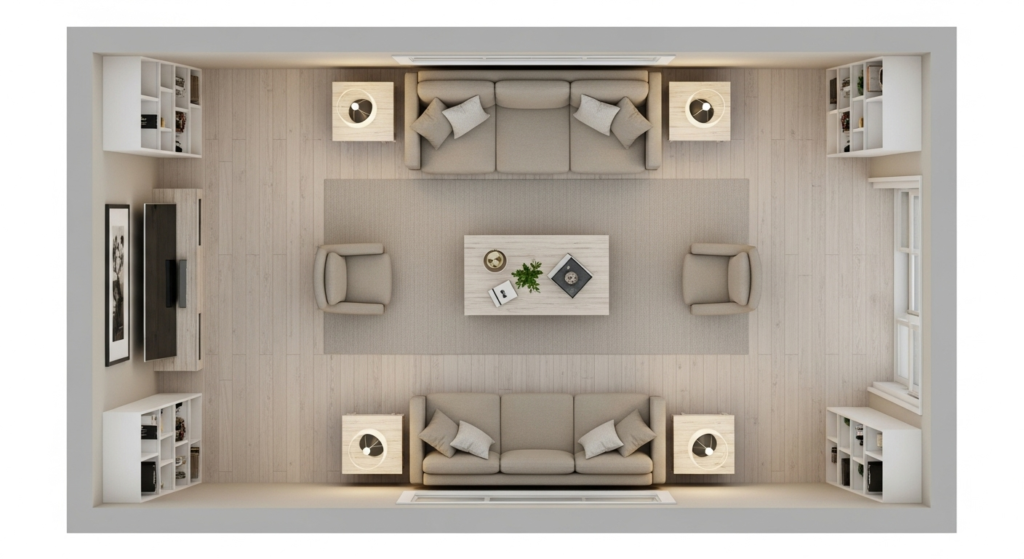
Create balanced built-in look around TV on end wall.
Key Elements:
- TV centered on short end wall
- Built-in shelving or cabinets flanking TV
- Sofa centered facing TV wall
- Matching chairs or loveseats on sides
- Coffee table centered in arrangement
- Perfect symmetry throughout
- Traditional, formal layout
- TV integrated into wall design
- Storage for media equipment in built-ins
- Decorative objects displayed on shelves
- All seating at optimal viewing distance
- End tables beside sofa
- Matching lamps creating symmetry
- Professional, polished appearance
8. The Swivel Chair Solution
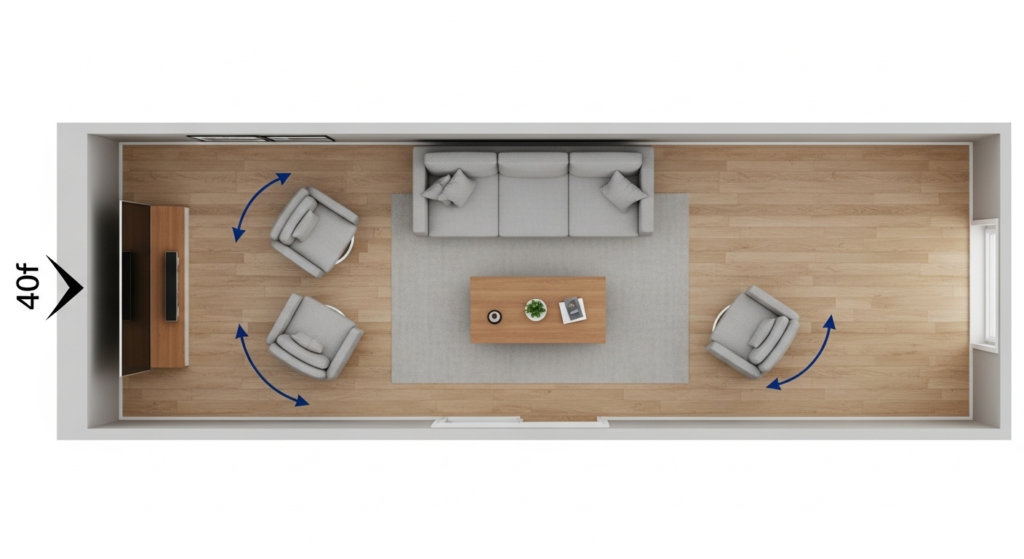
Use swivel chairs for flexible TV viewing in multi-zone layout.
Key Elements:
- TV positioned on long wall or end wall
- Primary sofa may not face TV directly
- Swivel accent chairs provide TV viewing flexibility
- Chairs can rotate toward TV or toward sofa for conversation
- Creates versatile multi-functional space
- Furniture serves both TV viewing and conversation
- Coffee table accessible from all positions
- Additional seating zone in other area
- Accommodates both TV watching and socializing
- Swivel chairs in modern or traditional styles
- Area rug defining primary seating
- Flexible arrangement for different activities
- Smart solution for conflicting functions
Essential TV Layout Considerations
Plan your narrow room TV layout with these critical factors:
TV Sizing and Placement:
- Proper TV size for viewing distance (55-65″ for 8-10 feet)
- Viewing distance formula: screen diagonal x 1.5 to 2.5
- TV height: center of screen at eye level when seated (42-48″ typically)
- Wall-mounted vs. media console considerations
- Cable management and outlet locations
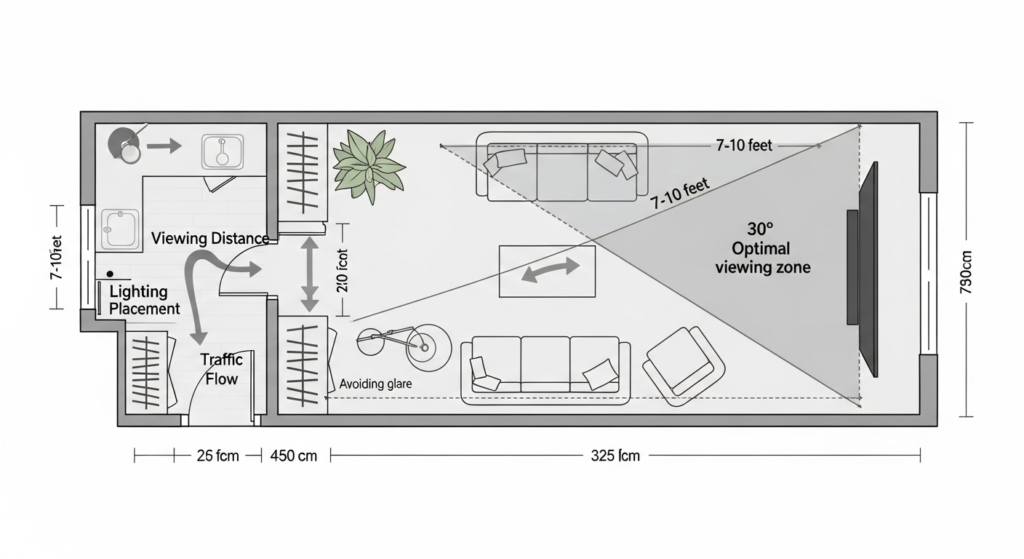
- Avoid placing TV opposite windows (glare issues)
- Consider screen glare from all light sources
- Room for soundbar or speakers
- Adequate ventilation around TV
Viewing Angles:
- Primary seating should face TV directly (within 30 degrees)
- Secondary seating can be up to 40 degrees off-center
- Avoid extreme side viewing angles (over 40 degrees)
- All regular viewers should see screen comfortably
- Consider neck strain from poor angles
- Swivel chairs solve angle problems
- Test viewing from all seating positions
- Account for TV screen technology (OLED better angles than LCD)
Seating Distance:
- Minimum distance: 1.5x screen diagonal
- Maximum distance: 2.5x screen diagonal
- 55″ TV: optimal viewing 6.8-11.5 feet
- 65″ TV: optimal viewing 8-13.5 feet
- 75″ TV: optimal viewing 9.3-15.6 feet
- Closer for 4K TVs acceptable
- Measure from TV screen to seating position
- Account for coffee table depth
- Ensure all primary seats within range
Furniture Arrangement Around TV:
- Sofa perpendicular or parallel to TV wall
- Chairs angled for comfortable viewing
- Coffee table doesn’t block TV view
- All seating has unobstructed sight lines
- Storage for remotes and devices
- Media console or shelving for components
- Sound system placement considerations
- Comfortable seating for extended viewing
Traffic Flow with TV:
- Don’t walk between TV and primary seating
- Create pathways around viewing area
- Minimum 2.5 feet for main walkways
- Consider where people enter room
- Avoid blocking TV with traffic patterns
- Clear path to TV for adjustments
- Access to media components
- Room to move around furniture safely
Lighting Considerations:
- Avoid TV opposite bright windows
- Install blackout curtains if needed
- Dimmable overhead lighting
- Table lamps not creating screen glare
- Wall sconces positioned carefully
- Ability to control light levels
- Task lighting for non-TV activities
- Ambient lighting for comfortable viewing
Media Storage:
- Media console with storage for components
- Cable box, streaming devices, game consoles
- DVD/Blu-ray storage if applicable
- Remote control storage
- Gaming controller organization
- Cable management solutions
- Closed storage preferred for clean look
- Adequate ventilation for electronics
Multi-Functional Spaces:
- TV viewing as primary function
- Other activities in separate zones
- Flexible seating arrangements
- TV can be ignored when not in use
- Conversation areas independent of TV
- Work or dining zones separate
- Room serves multiple purposes
- TV doesn’t dominate entire space
Technology Integration:
- Outlet placement for TV and components
- Cable routing and management
- WiFi router location
- Smart home integration
- Charging stations for devices
- Speaker wire concealment
- Power strips and surge protection
- Clean, organized tech setup
Acoustic Considerations:
- Sound distribution in narrow room
- Speaker placement for best audio
- Sound bar position under or above TV
- Surround sound speaker locations
- Acoustic panels if needed
- Minimize echo in narrow space
- Rug helps absorb sound
- Furniture placement affects acoustics
Tips for Perfect TV Layouts in Narrow Rooms
Create the ideal TV viewing space with these strategies:
Before Mounting TV:
- Measure room dimensions precisely
- Determine optimal viewing distance
- Calculate appropriate TV size
- Identify best wall for TV placement
- Locate studs for mounting
- Plan cable routing
- Consider all seating positions
- Test viewing angles before mounting
- Mark TV height on wall
- Plan for future upgrades
Choosing TV Wall:
- End wall often best for narrow rooms
- Creates focal point
- Allows proper viewing distance
- Long wall works for parallel seating
- Avoid wall opposite bright windows
- Consider room entry points
- Where do most viewers sit?
- Existing electrical outlets
- Architectural features (fireplace)
- Best for furniture arrangement
Mounting Height:
- Center of screen at seated eye level
- Typically 42-48 inches from floor to center
- Measure from sofa seat height
- Lower for low-profile furniture
- Higher for bar-height seating
- Eye level more important than standard measurement
- Test with painter’s tape before mounting
- Account for tilting mount if higher
- Comfortable extended viewing crucial
Furniture Distance:
- Never too close (causes eye strain)
- Use viewing distance formula
- Account for coffee table depth
- Consider sofa depth in measurement
- Measure from screen to seat back
- Test distance before committing
- Closer acceptable for 4K
- Farther needed for lower resolution
- Goldilocks zone: not too close, not too far
Managing Narrow Width:
- Don’t force oversized furniture
- Choose appropriately scaled sofa
- Consider loveseat instead of full sofa
- Slim-profile furniture when needed
- Maintain walkway clearances
- Float furniture if width allows
- Use space-saving furniture
- Prioritize viewing comfort over extra seating
- Less furniture often works better
Dealing with Windows:
- Blackout curtains for bright windows
- Position TV perpendicular to windows when possible
- Anti-glare screen protector
- Adjust TV brightness settings
- Watch during different times of day
- Sheer curtains to diffuse light
- External shades for problem windows
- Rearrange if glare unsolvable
Cable Management:
- In-wall cable concealment best
- External cable covers if can’t go in-wall
- Paintable cable raceways
- Run cables along baseboards
- Hide cables behind furniture
- Power outlets near TV
- Cable box placement planned
- Organized, professional appearance
- Easy access for changes
Sound System Setup:
- Soundbar simplest solution
- Mount soundbar below TV
- Wireless speakers for surrounds
- Proper speaker placement in narrow room
- Avoid echo in long narrow space
- Rugs help absorb sound
- Test acoustics at normal volume
- Adjust for room shape
Gaming Setup Considerations:
- Lower input lag for gaming
- Comfortable controller storage
- Gaming chair vs. sofa distance
- Console placement with ventilation
- Multiple HDMI inputs needed
- Cable organization for consoles
- Charging station location
- TV game mode enabled
Making Layout Flexible:
- Lightweight furniture for rearranging
- Swivel chairs add flexibility
- Modular furniture can be reconfigured
- Don’t permanently mount everything
- Leave room for changes
- Test layouts before committing
- Seasonal arrangement changes possible
- Accommodate different activities
Common TV Layout Mistakes:
- TV too high (common error)
- TV too large for distance
- Extreme viewing angles
- Walking path through viewing area
- TV opposite bright uncovered windows
- Poor cable management
- Uncomfortable seating distance
- Ignoring room proportions
- Blocking TV with furniture
- All furniture pushed against walls
Making Your TV Layout Work
The perfect TV layout for your long narrow living room balances optimal viewing with good room proportions. Don’t sacrifice comfortable TV watching just to make furniture arrangement look better on paper—if you watch TV regularly, viewing comfort should be a top priority. But also don’t let the TV completely dominate the space if you use your living room for other activities too.
Start by determining your ideal viewing distance based on your TV size (or choose TV size based on available distance). This measurement is non-negotiable—too close causes eye strain, too far makes details hard to see. Once you know this distance, you can work backward to arrange furniture appropriately.
Consider how often you actually watch TV versus other activities. If TV viewing is your primary living room activity, optimize the layout for that. If you entertain frequently and rarely watch TV, don’t let the television dictate your entire furniture arrangement. Multi-zone layouts work well when TV is just one of several room functions.
Test your layout before mounting the TV or buying furniture. Use painter’s tape to mark TV location and furniture outlines on the floor. Sit in each position and imagine watching TV from that spot. Is the angle comfortable? Is the distance right? Can you see without straining? Physical testing prevents expensive mistakes.
Remember that narrow rooms limit some traditional TV layouts. You might not be able to achieve the “perfect” setup you see in magazines designed for square rooms. That’s okay. Focus on what works for your specific space—comfortable viewing angles, appropriate distance, good traffic flow, and proportions that don’t emphasize the bowling alley effect.
Finally, don’t forget that technology keeps changing. Wall-mount your TV on a full-motion mount that allows adjustments. Choose furniture arrangements that could accommodate a different TV size or position in the future. Build in flexibility so your layout can evolve with your needs and technology.
With these eight proven layouts and professional planning guidance, you can create a long narrow living room with perfect TV viewing that also looks great and functions well for daily life. Your challenging space can become the comfortable, stylish TV room you’ve been dreaming of.