9 Long Narrow Living Room and Kitchen Combo Ideas
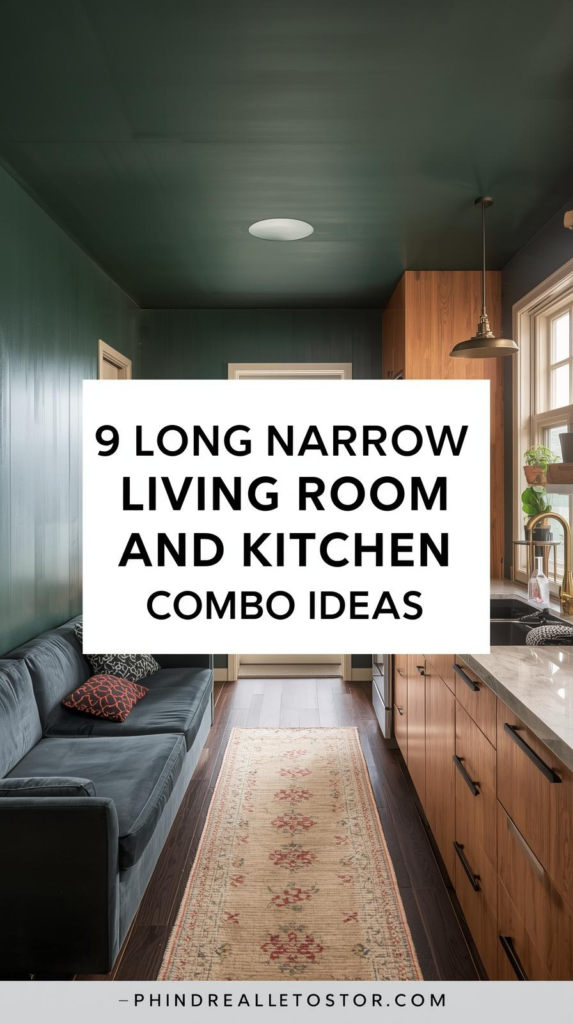
Open-plan living room and kitchen combinations are increasingly popular, but when your space is long and narrow, creating a functional yet stylish layout requires strategic planning. The challenge lies in defining separate zones for cooking, dining, and relaxing while maintaining an open, cohesive feel. These nine design ideas will help you maximize your elongated space and create a harmonious flow between kitchen and living areas.
1. The Galley Kitchen with Living Extension
Position a streamlined galley kitchen along one long wall, keeping counters and appliances on a single side or both sides with a narrow passage between. This leaves the remainder of the narrow space open for your living area. The galley layout is naturally suited to narrow spaces and creates an efficient work triangle.
2. The Peninsula Divider Solution
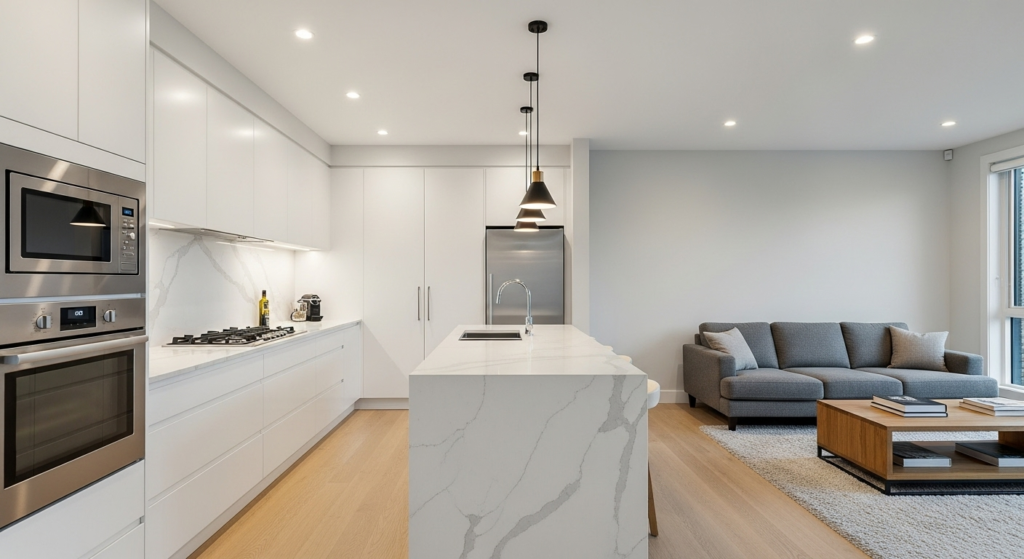
Install a kitchen peninsula that extends perpendicular to your main counter run, creating a natural barrier between cooking and living zones. The peninsula provides extra counter space, storage, and casual seating while defining boundaries without closing off the space entirely. This is one of the most effective ways to separate functions in a narrow layout.
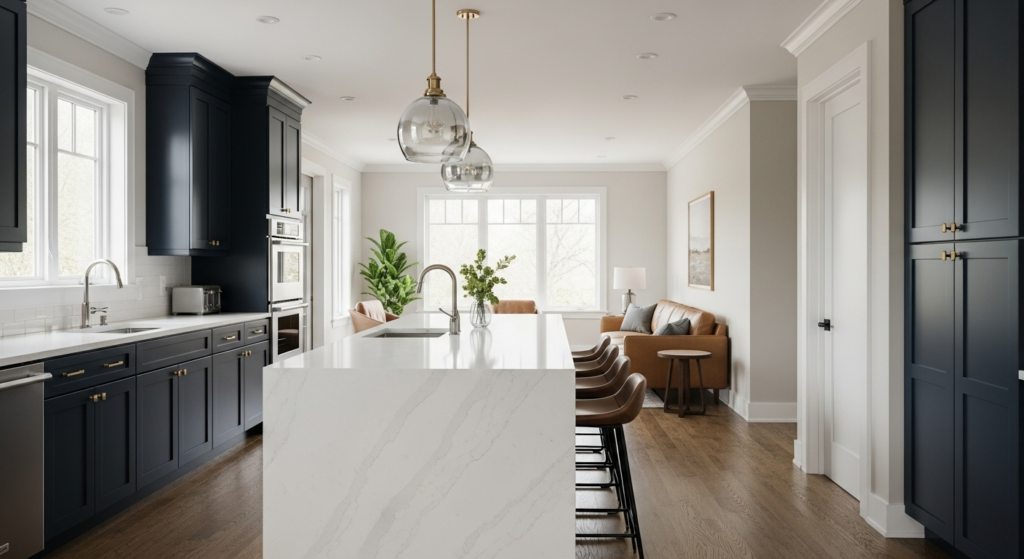
3. The Island Anchor Strategy
If your narrow space has sufficient width (at least 13-14 feet), incorporate a slim kitchen island positioned lengthwise down the room. The island serves as a functional divider, providing prep space, storage, and informal dining while allowing traffic to flow around both sides. Keep the island narrow (24-30 inches) to maintain adequate clearance.
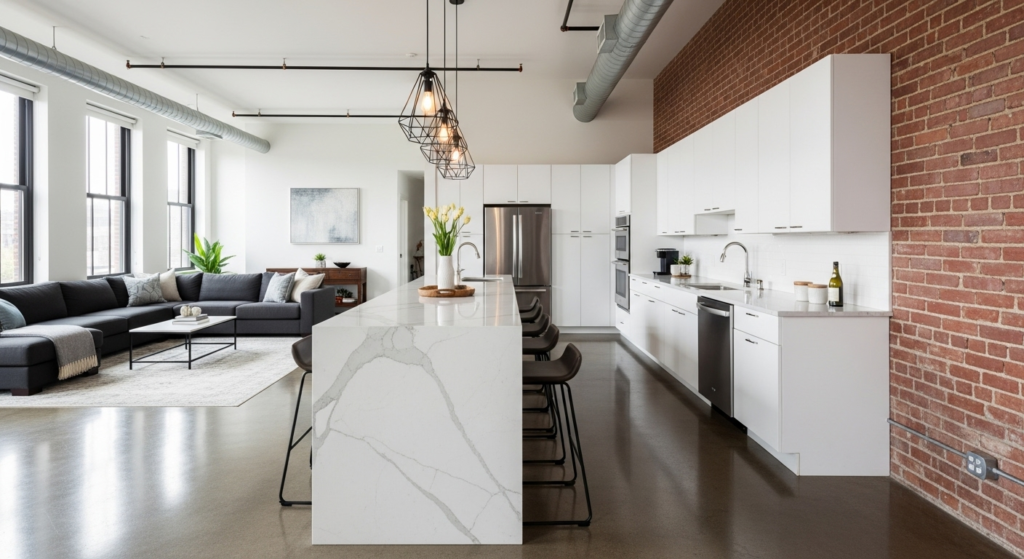
4. The L-Shaped Kitchen Corner Configuration
Tuck your kitchen into an L-shaped configuration at one end of the narrow space, utilizing the corner efficiently. This layout maximizes counter space while leaving the majority of the long room open for living purposes. The corner placement creates a natural transition point between the two functional areas.
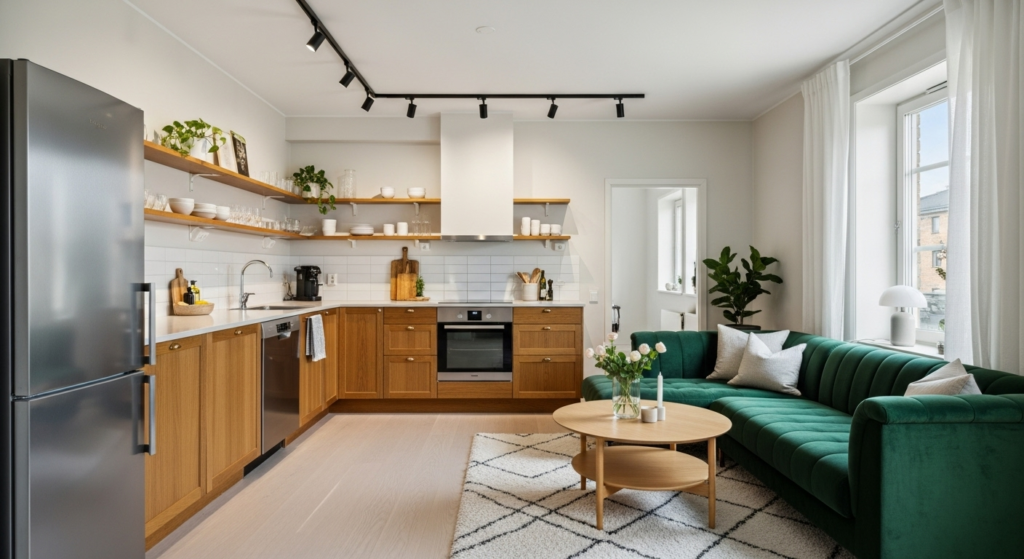
5. The One-Wall Kitchen with Maximum Living Space
Consolidate your entire kitchen along a single wall, creating an ultra-efficient one-wall layout. This approach leaves maximum floor space for your living area and works particularly well in narrow spaces where every foot counts. Use tall cabinets to maximize vertical storage and keep the kitchen compact but highly functional.
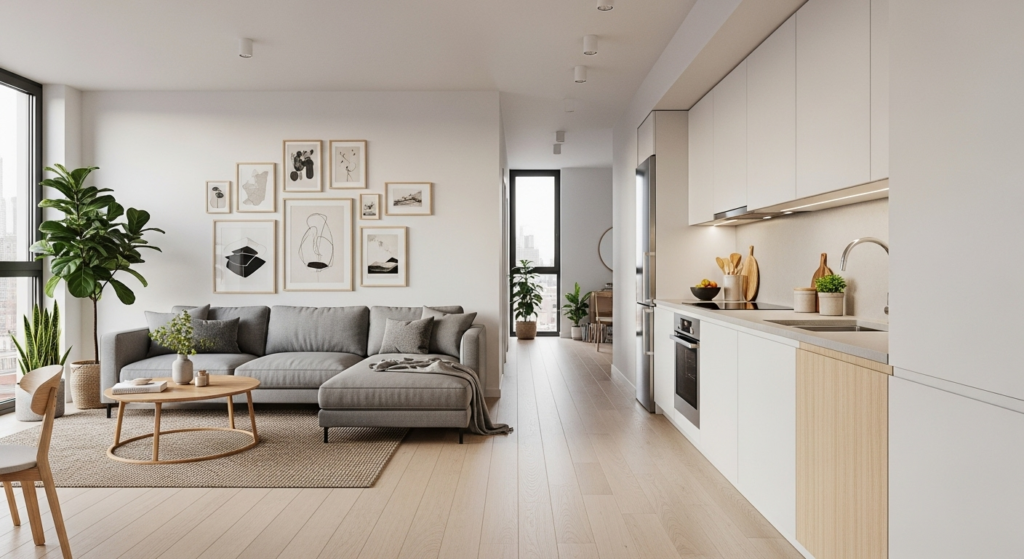
6. The Back-to-Back Bar and Sofa Setup
Create a social layout by positioning a kitchen bar or counter parallel to the back of your living room sofa. This arrangement encourages interaction between spaces while clearly defining zones. Add bar stools on the kitchen side and style the sofa back with a console table to maximize the transitional area.
7. The Two-Tone Flooring Transition
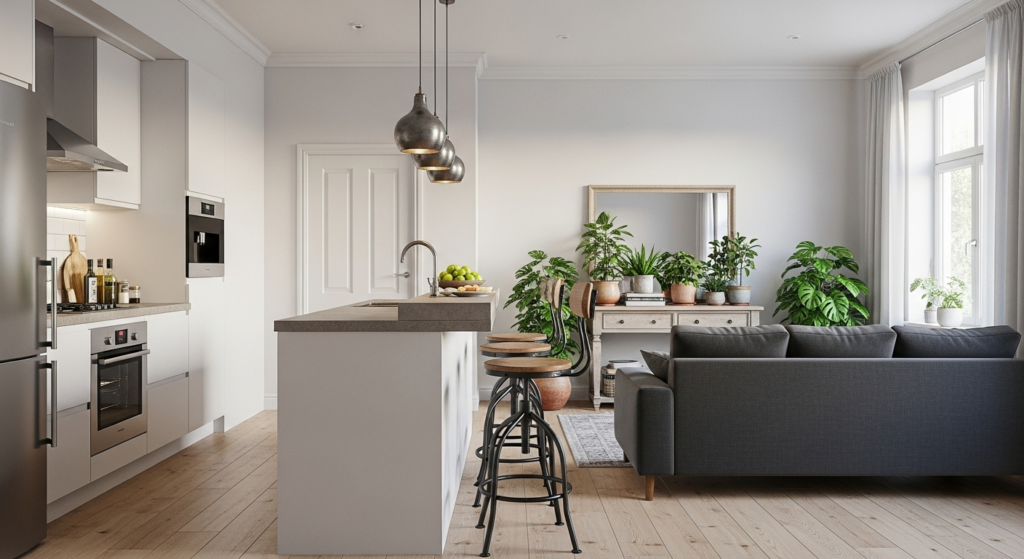
Use different flooring materials to visually separate your kitchen from the living area while maintaining the open plan. Tile or luxury vinyl in the kitchen zone transitions to hardwood or carpet in the living space, providing a clear demarcation without walls. Choose complementary materials that coordinate your overall design.
8. The Elevated Kitchen Platform
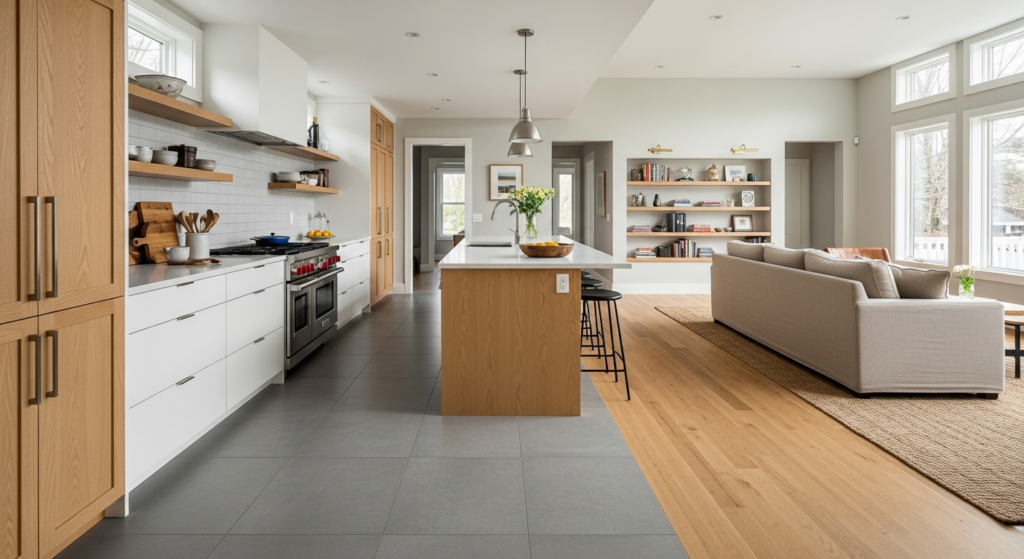
If renovating, consider raising the kitchen area on a slightly elevated platform (one or two steps up). This architectural feature creates a distinct zone while maintaining visual connection and openness. The level change naturally defines the space and can also help conceal plumbing or electrical runs.
9. The Open Shelving Transparency Trick
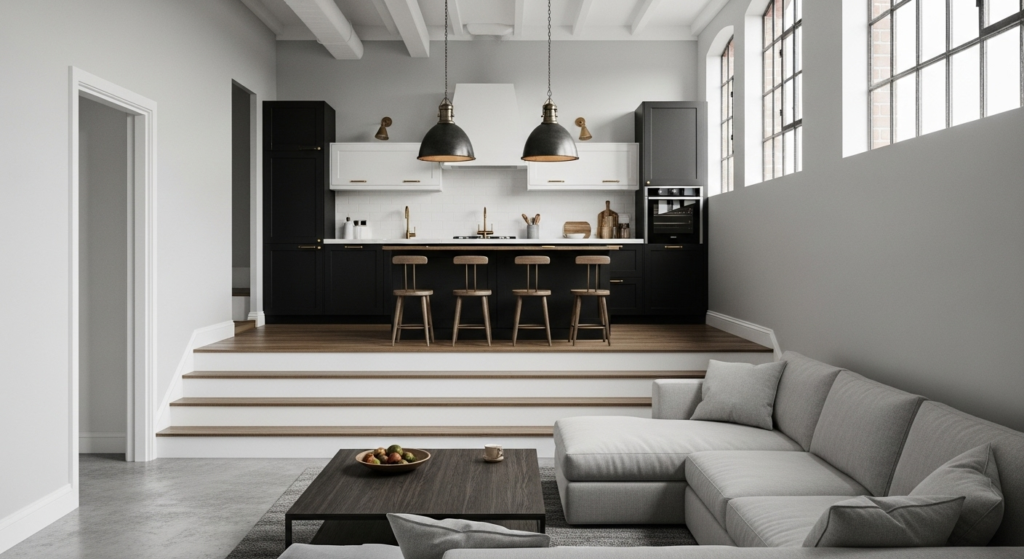
Replace upper kitchen cabinets with open shelving to maintain visual flow and prevent the kitchen from feeling heavy or enclosed. This approach keeps sightlines open through the narrow space and creates an airy, modern aesthetic. Display coordinated dishware and decorative items that complement your living room style.
Design Principles for Long Narrow Kitchen-Living Combos
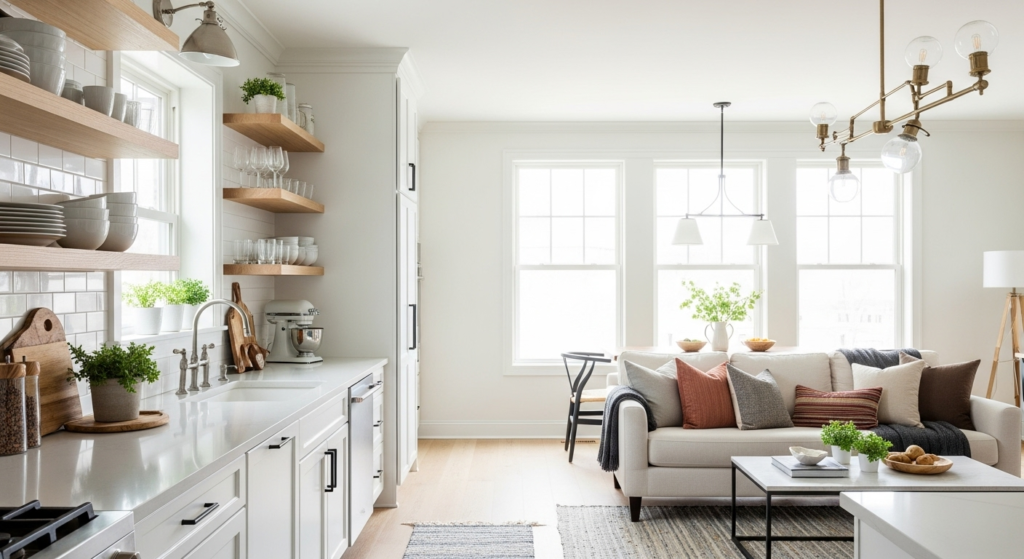
Unified Color Palette: Maintain a cohesive color scheme throughout both zones to create visual harmony. Carry accent colors from the kitchen into the living area through accessories, textiles, or artwork.
Strategic Lighting Layers: Use different lighting types to define zones—task lighting for the kitchen, ambient lighting for the living area, and accent lighting to highlight features. Consistent fixture styles create cohesion.
Sight Line Management: Arrange furniture and kitchen elements to create interesting views through the space rather than a straight corridor effect. Angled placement or staggered elements add visual interest.
Ventilation Matters: Install a powerful range hood to prevent cooking odors from permeating your living area. Good ventilation is essential in open-plan spaces.
Scale Appropriately: Choose appropriately sized appliances and furniture. A 24-inch range might serve you better than a 30-inch model, and a loveseat might work better than a full sofa.
Create Visual Breaks: Use area rugs, different paint colors, or decorative screens to create subtle separations without sacrificing the open feel.
Maximize Vertical Space: In narrow layouts, utilize wall height for storage in both kitchen and living areas. Tall cabinets, floating shelves, and vertical displays draw the eye upward.
Maintain Clear Pathways: Ensure at least 36-42 inches of clearance for main walkways and 42-48 inches between kitchen counters and islands for comfortable movement.
With thoughtful design and smart space planning, your long narrow kitchen and living room can become a functional, beautiful open-concept space that enhances your daily life and entertaining possibilities.