8 Long Narrow Living Room Arrangements
Finding the perfect furniture arrangement for a long, narrow living room can feel like solving a puzzle. The right layout makes all the difference between a cramped, awkward space and a functional, inviting room that flows beautifully. These eight proven arrangements will help you optimize your narrow living room, creating distinct zones, maintaining traffic flow, and maximizing both style and comfort.
1. The Perpendicular Sofa Arrangement
Position your main sofa perpendicular to the longest walls, essentially cutting across the narrow width of the room. This breaks up the linear tunnel effect and creates a more balanced feel. Place the sofa facing the short wall where you can mount a TV or create a focal point with art or a fireplace.
2. The Two-Zone Split Arrangement
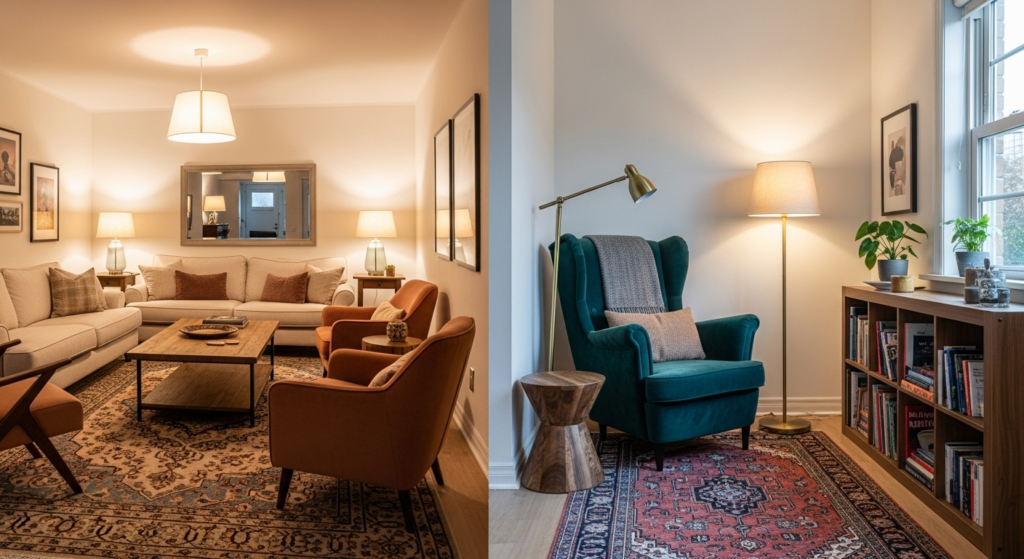
Divide your narrow living room into two distinct functional areas. Create a main seating zone with a sofa and chairs at one end, then establish a secondary zone at the other end—perhaps a reading nook with a chair and floor lamp, or a small workspace with a desk. Use an area rug to anchor each zone separately.
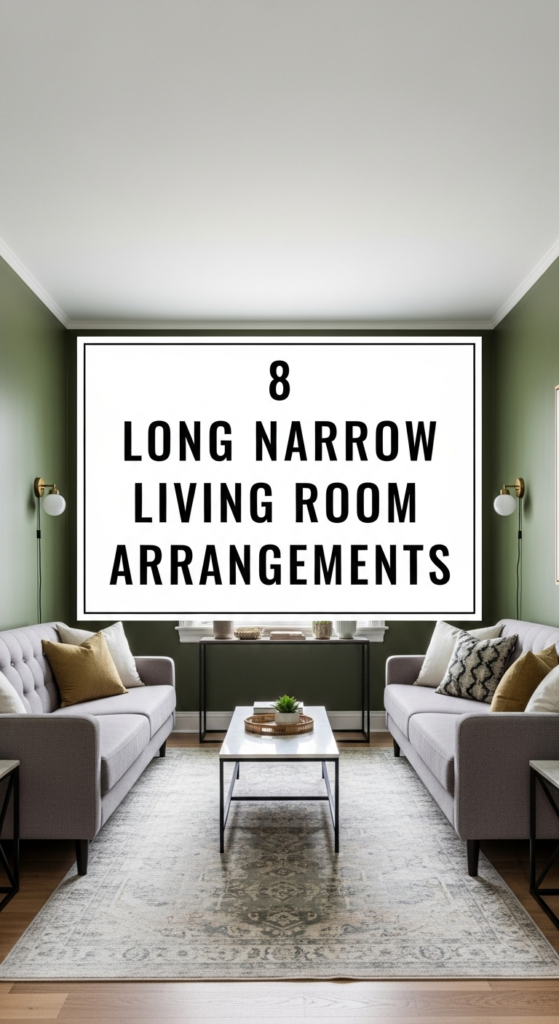
3. The Symmetrical Facing Arrangement
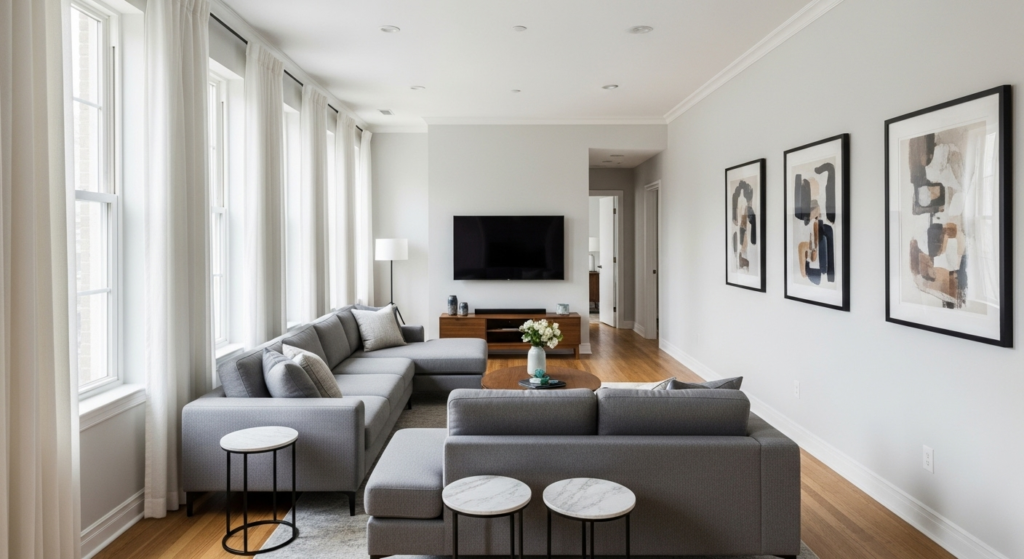
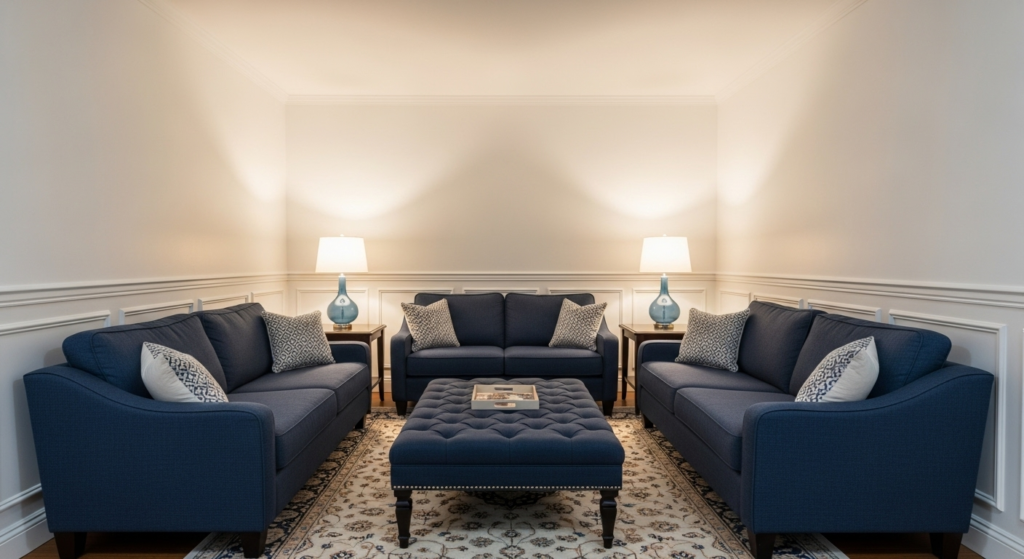
Create a formal, balanced look by placing two identical sofas or loveseats facing each other along the long walls. Position a coffee table or ottoman between them to anchor the arrangement. This classic setup works well for conversation-focused living rooms and creates elegant symmetry.
4. The L-Shaped Corner Arrangement
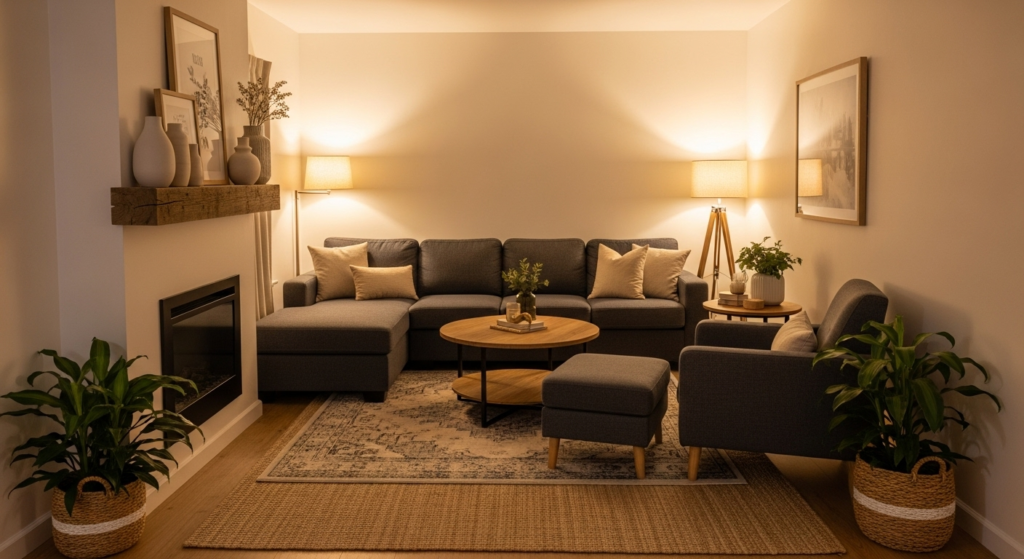
Anchor a sectional or L-shaped sofa configuration in one corner of your narrow room, with the long side running parallel to the wall and the short side extending into the room. This maximizes seating while keeping the center pathway open. Add a coffee table in front and accent chairs across from the sectional.
5. The Floating Conversation Arrangement
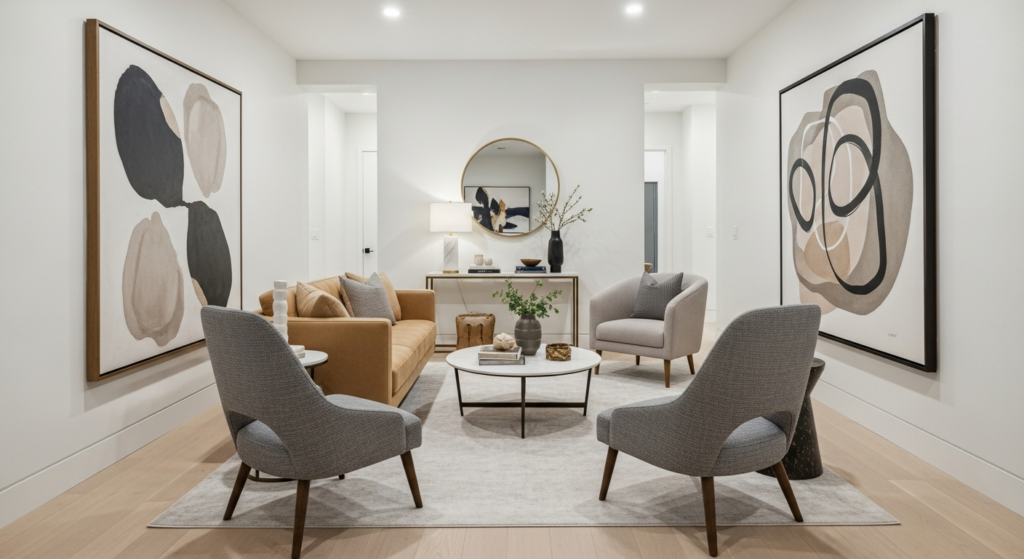
Pull your furniture completely away from the walls to create an intimate floating conversation area in the center of the narrow room. Position a sofa and two chairs around a coffee table, leaving walkways on both sides. This creates a defined living zone while making the room feel more spacious and less constrained.
6. The Entertainment-Centered Arrangement
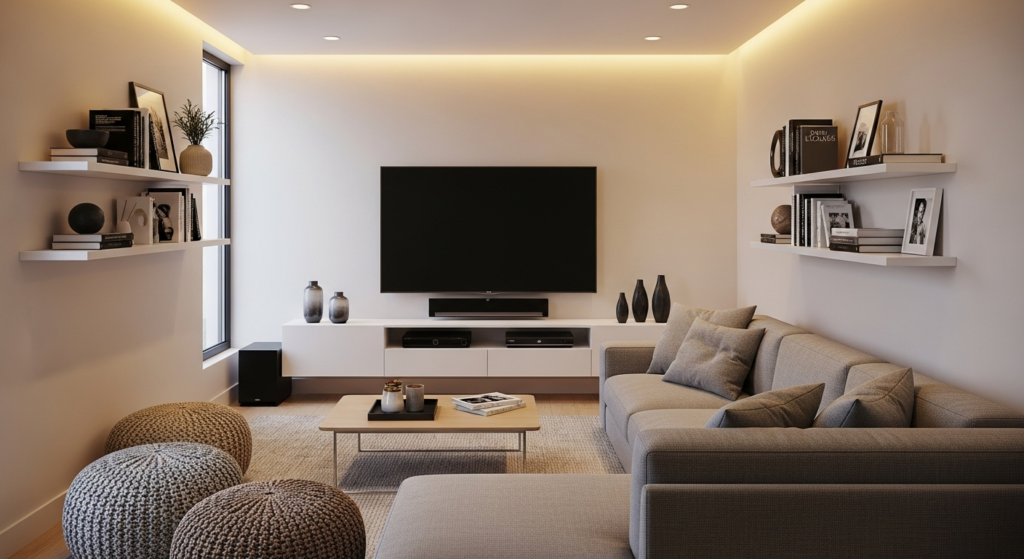
Organize your entire arrangement around a media center or fireplace on one of the short walls. Position the sofa directly facing this focal point with additional seating angled on the sides. This classic TV room arrangement ensures everyone has a good view while maintaining comfortable traffic flow.
7. The Angled Dynamic Arrangement
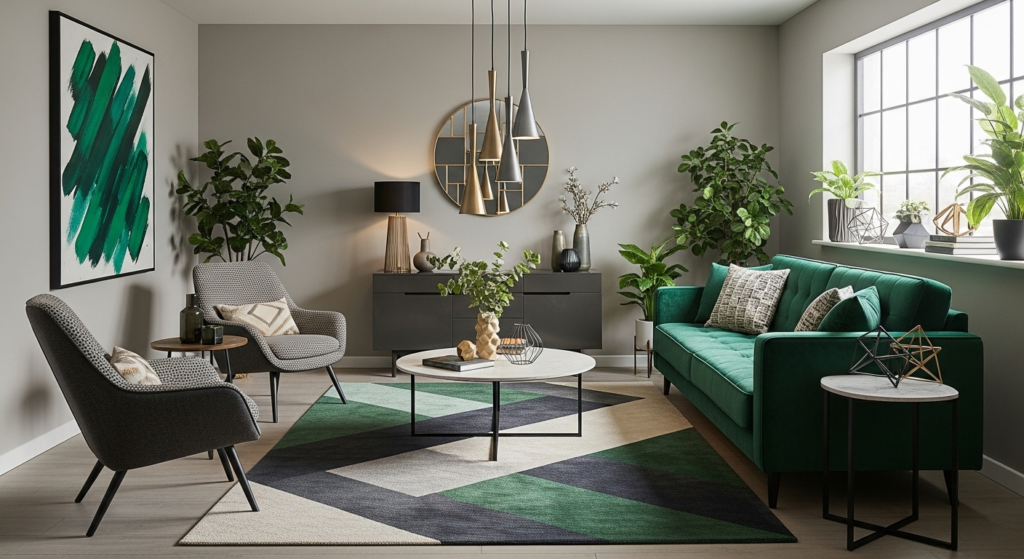
Break the predictable linear feel by positioning furniture at angles rather than parallel to the walls. Place your sofa at a 45-degree angle in a corner, with chairs and tables following the diagonal lines. This unexpected arrangement adds visual interest and makes the narrow proportions less obvious.
8. The Open-End Flow Arrangement
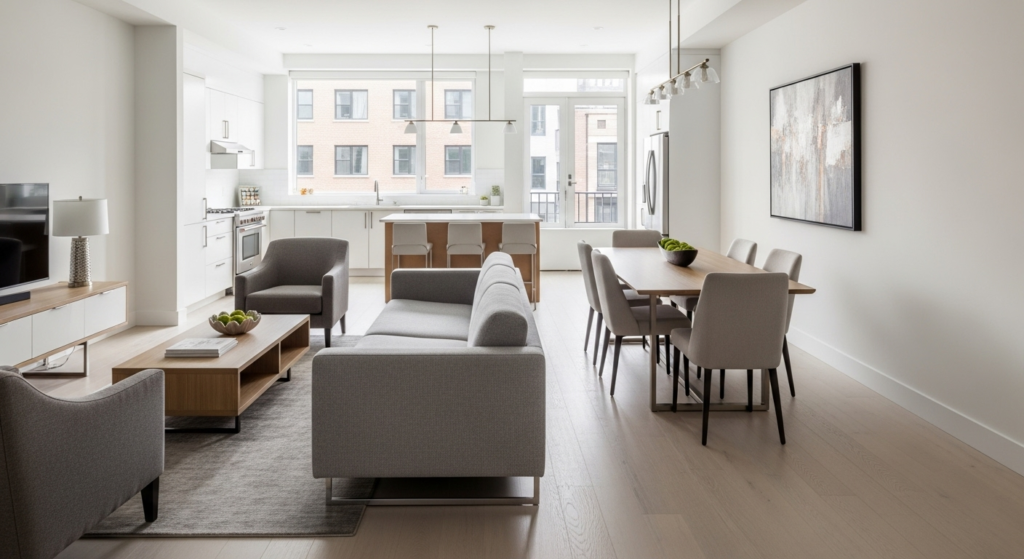
If your narrow living room opens into another space (like a dining room or kitchen), arrange furniture to embrace the open flow rather than fight it. Position the sofa with its back toward the opening, creating a natural division while maintaining visual connection. Keep furniture low-profile to preserve sightlines.
Key Principles for Arranging Narrow Living Rooms
Traffic Flow First: Before placing any furniture, map out your primary traffic paths. Maintain at least 30-36 inches of clearance for comfortable walking, and ensure furniture placement doesn’t create awkward bottlenecks.
Create Conversation Zones: Arrange seating so people can comfortably converse without shouting across the room. Ideal conversation distance is 4-8 feet between seating pieces. In narrow rooms, this often means perpendicular or angled arrangements work better than parallel.
Anchor With Area Rugs: Use rugs to define your arrangement and anchor furniture groupings. In narrow rooms, one large rug often works better than multiple small ones. Ensure at least the front legs of your sofa and chairs sit on the rug.
Scale Furniture to Space: Choose appropriately sized furniture for your narrow room. A 96-inch sofa might technically fit, but an 84-inch or 72-inch option could provide better flow and proportion. Measure carefully and prioritize scale.
Balance Visual Weight: Distribute visual weight evenly throughout the room. If you have a heavy sofa on one side, balance it with a substantial bookshelf, large artwork, or pair of chairs on the other side.
Consider Multiple Focal Points: Don’t feel limited to one focal point. You can have a media wall on one end and a beautiful window view on the other, arranging furniture to appreciate both.
Leave Breathing Room: Resist the urge to fill every inch. Negative space is valuable in narrow rooms—it creates visual rest and makes the space feel larger. Less is often more.
Think Vertically: When floor space is limited, use vertical space for storage and display. Tall bookshelves, wall-mounted cabinets, and floating shelves keep the floor clear while providing functionality.
Test Before Committing: Use painter’s tape on the floor to map out furniture footprints before moving heavy pieces. This lets you experiment with arrangements without the physical strain.
Flexibility Matters: Consider furniture with casters, modular pieces, or lightweight items that can be easily rearranged for different occasions—game night, movie watching, or entertaining guests.
The perfect arrangement for your narrow living room balances aesthetics with function, creates comfortable zones for different activities, and most importantly, makes you happy every time you use the space. Don’t be afraid to experiment until you find the layout that works best for your lifestyle.