7 Long Narrow Living Room Bar Area Ideas
Adding a bar area to your long narrow living room creates a sophisticated entertaining space while maximizing functionality in an often-challenging floor plan. Whether you’re a cocktail enthusiast, wine lover, or simply want a designated spot for beverages and glassware, a well-designed bar area transforms your narrow living room into a social hub. These seven creative bar area ideas make the most of your elongated space while adding style, storage, and entertainment value.
1. The Slim Console Bar
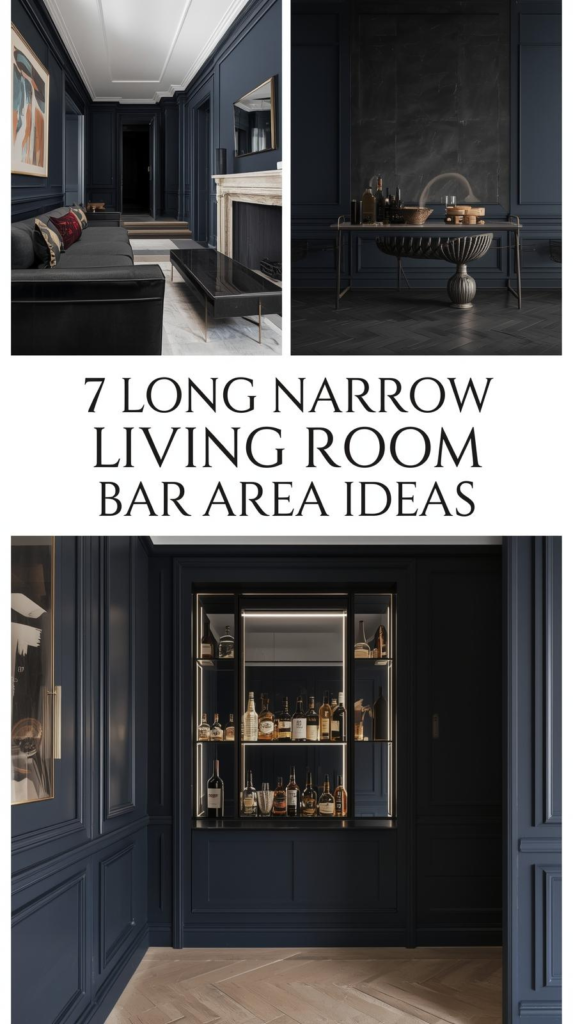
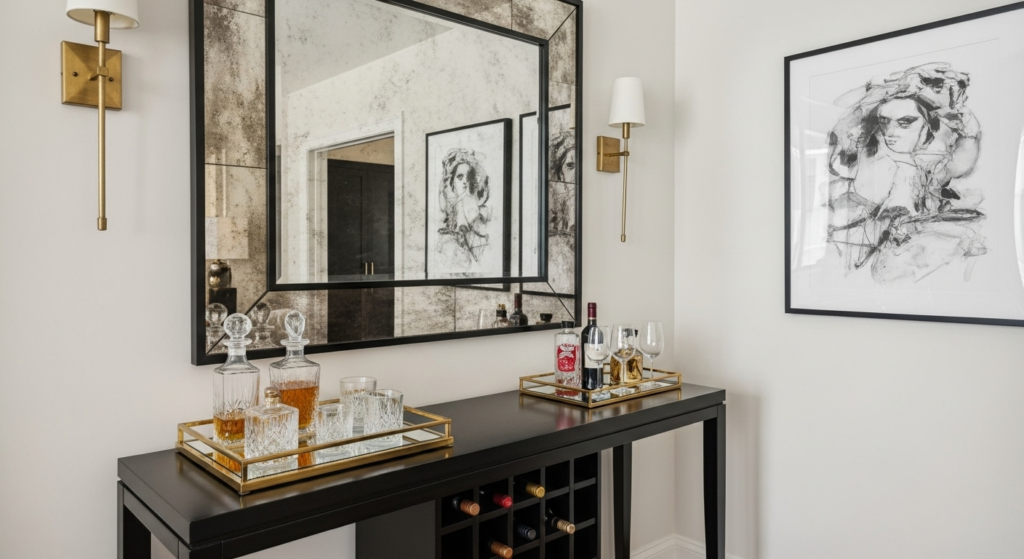
Transform a narrow console table into an elegant bar area along one of the long walls. This space-efficient solution provides bar functionality without sacrificing precious floor space in your narrow room.
Choose a console table that’s 10-14 inches deep and position it against a long wall in an underutilized area. Style the surface with a tray containing spirits, a cocktail shaker, and bar tools. Use the space underneath for wine storage with a small wine rack or decorative baskets holding bar accessories. Hang glassware from a mounted rack above or display it on floating shelves flanking the console.
This approach works beautifully because console tables are specifically designed for tight spaces. Add a mirror above the console to reflect light and create the illusion of a professional bar backdrop. Incorporate task lighting with a table lamp or wall sconces to illuminate the bar area during evening entertaining.
The slim console bar is perfect for renters or those who want bar functionality without committing to built-in solutions. It’s easily rearranged or removed when needed, offering maximum flexibility.
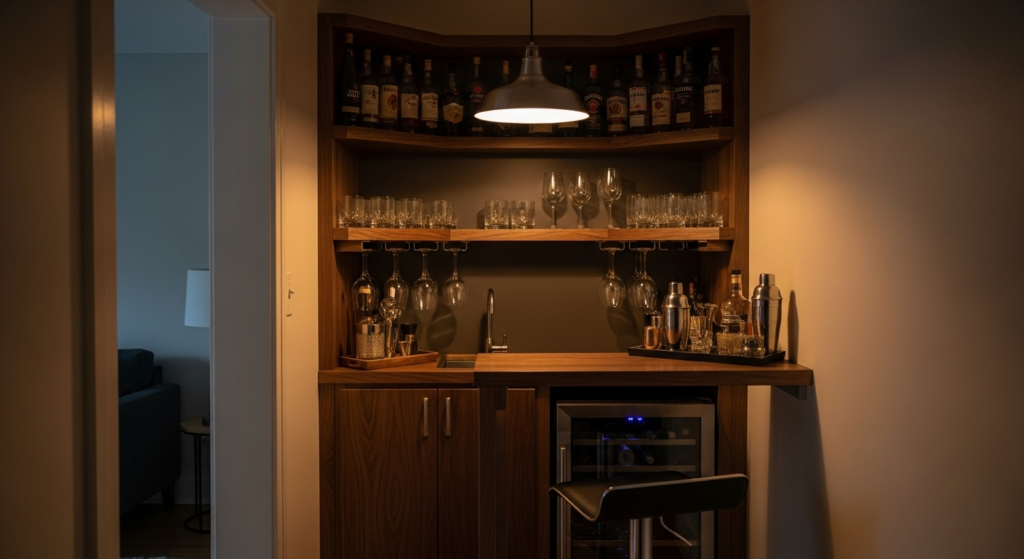
2. The Corner Bar Nook
Utilize an often-wasted corner of your narrow living room to create a dedicated bar nook. Corner spaces are perfect for bars because they feel separate from the main seating area while remaining accessible for entertaining.
Install corner shelving or a small corner cabinet to hold bottles, glassware, and bar accessories. Add a small countertop surface at bar height (42 inches) for mixing drinks. Mount a wine rack on the adjacent wall or install floating shelves above the corner setup for additional storage and display.
Enhance the nook with dedicated lighting—a small pendant light or LED strip lighting under shelves creates ambiance and highlights your bar collection. Consider adding a small bar stool tucked into the corner for a spot to sit and enjoy a drink.
The corner bar maximizes vertical space through stacked storage while keeping the floor area open. This solution works particularly well at the far end of a narrow living room where it becomes a destination point rather than an obstruction to traffic flow.
3. The Bar Cart Station
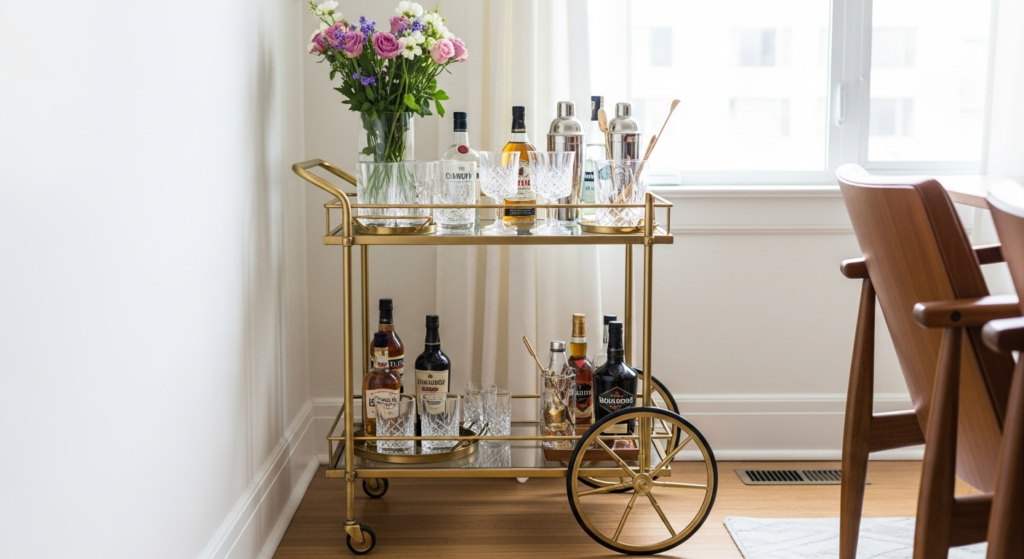
Incorporate a mobile bar cart that can be positioned and repositioned as needed in your narrow living room. This flexible solution adapts to different entertaining scenarios while maintaining the open flow essential in narrow spaces.
Choose a bar cart with a small footprint (typically 20-30 inches wide) and multiple tiers for storage. Style the top tier with frequently used spirits and bar tools, the middle tier with glassware, and the bottom tier with mixers, napkins, and accessories. Position the cart against a wall when not in use, then roll it out into the room or near seating areas when entertaining.
The beauty of the bar cart approach is its adaptability. In a narrow room where permanent furniture placement can feel restrictive, a mobile bar cart provides functionality without commitment. Choose a cart with locking wheels for stability when mixing drinks.
Select a bar cart that complements your design aesthetic—brass and glass for glamorous looks, wood and metal for industrial vibes, or painted wood for farmhouse charm. The cart itself becomes a decorative element even when not actively in use.
4. The Behind-Sofa Bar
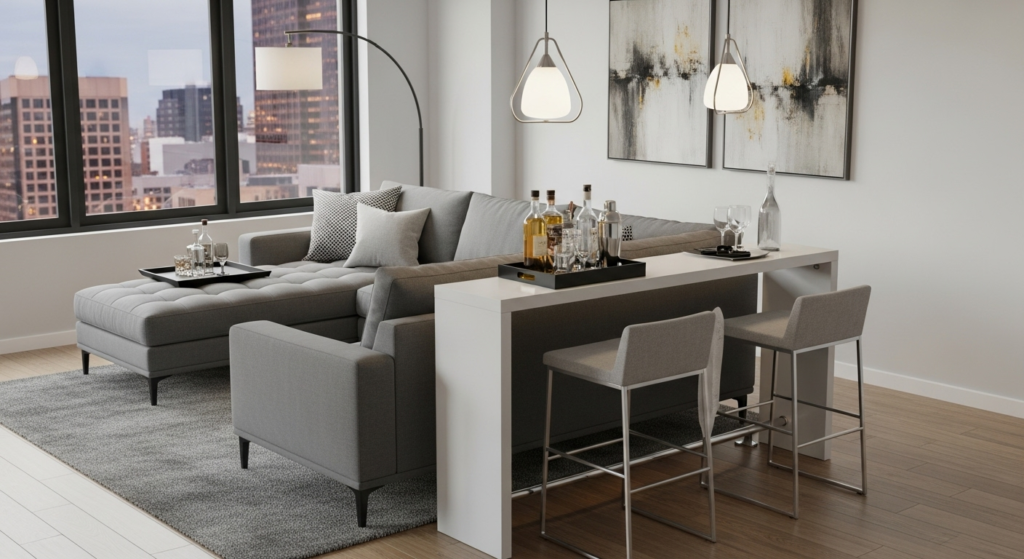
Use the space directly behind your sofa to create a bar area that doubles as a room divider. This clever solution works particularly well when your sofa is positioned floating in the room rather than against a wall.
Place a bar-height console table or credenza behind the sofa, ensuring it’s the same length or slightly shorter than the sofa for visual balance. The raised height (around 36-42 inches) makes it functional as a bar while the sofa provides a natural barrier preventing traffic through the bar area.
Style the surface with your bar essentials organized on trays, and use the interior storage (if the console has cabinets) for additional bottles, glassware, and bar accessories. This position makes the bar easily accessible from the main seating area—perfect for entertaining when guests are seated on the sofa.
Add lighting above the console (pendant lights or wall-mounted fixtures if near a wall) to define the bar area. This creates a layered, intentional look while providing practical task lighting for mixing drinks.
5. The Built-In Bar Cabinet
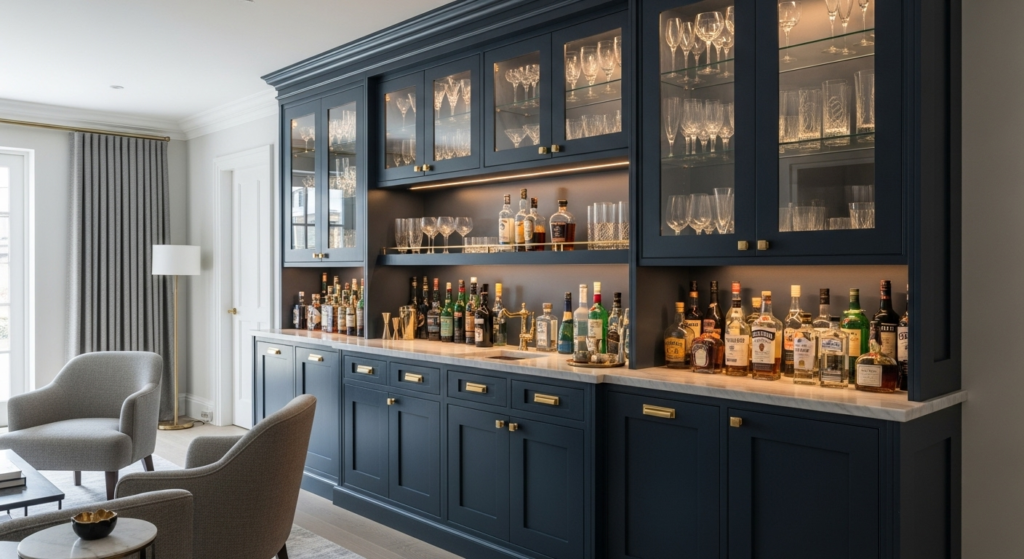
If you’re willing to invest in a more permanent solution, install a built-in bar cabinet along one of the long walls. This custom approach maximizes storage while creating a streamlined, high-end look perfect for narrow spaces.
Work with a carpenter or use modular cabinet systems to create a built-in unit that extends from floor to ceiling. Include closed lower cabinets for bottle storage, open middle shelving for glassware display, and upper cabinets for less-used items. Incorporate a small countertop workspace for drink preparation and a sink if plumbing allows.
The built-in approach is ideal for serious entertainers who want a dedicated bar that doesn’t protrude into the narrow room. By building into the wall, you maximize vertical storage without sacrificing floor space. Consider adding interior cabinet lighting, mirrored backs, or glass-front doors to showcase your collection.
This solution particularly suits homeowners planning to stay long-term, as the investment and installation make it a semi-permanent feature. The built-in bar becomes an architectural element that adds value to your home.
6. The Multi-Functional Bookshelf Bar
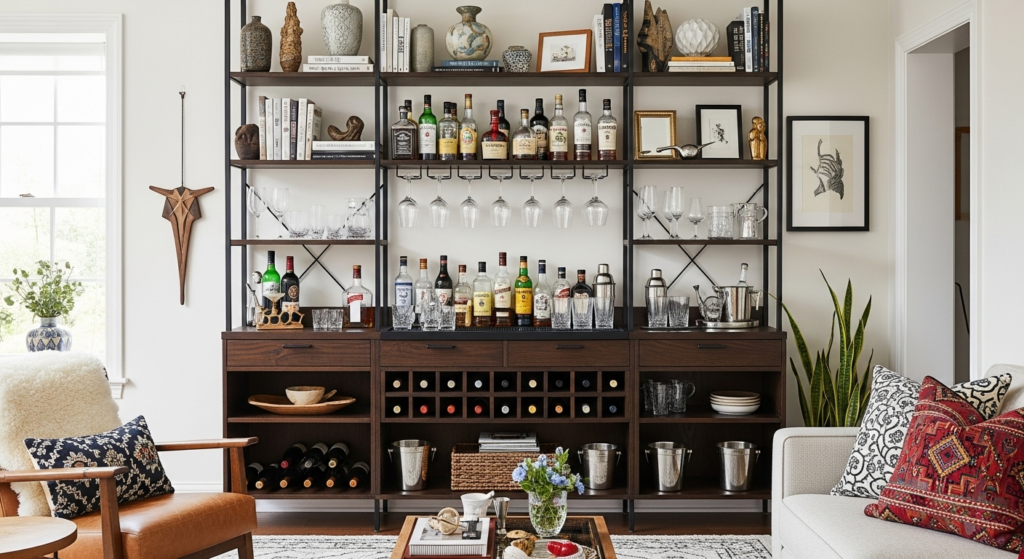
Repurpose a bookshelf or étagère to serve double duty as both display storage and bar area. This approach is perfect for those who want their bar to blend seamlessly with their living room rather than stand out as a separate zone.
Choose a tall bookshelf (at least 5-6 feet high) with multiple shelves and position it along a long wall or in a corner. Dedicate the middle shelves (at easy reach height) to bar essentials—bottles, glassware, cocktail shaker, and tools. Use upper shelves for books, decorative objects, or additional glassware, and lower shelves for wine storage, bar accessories in baskets, or a small wine fridge.
The mixed-use approach makes the bar feel integrated rather than added on. By surrounding bar items with books and decor, you create a collected, curated look rather than an obvious bar setup. This works wonderfully in narrow living rooms where you need furniture to serve multiple purposes.
Choose an open bookshelf rather than a closed cabinet to maintain the visual openness necessary in narrow spaces. Metal and glass étagères work beautifully for modern aesthetics, while wood bookshelves suit traditional or transitional styles.
7. The Window Bar Vignette
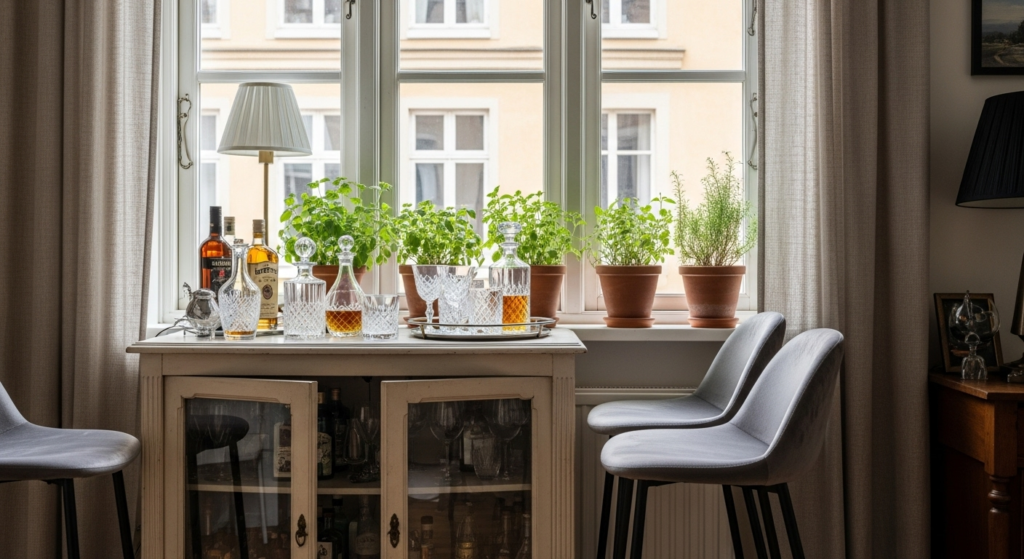
Transform the area beneath or beside a window into an intimate bar vignette that takes advantage of natural light and views. This unexpected placement creates a destination within your narrow living room.
Position a small bar cabinet, credenza, or table beneath or adjacent to a window. The natural light beautifully illuminates bottles and glassware during the day, creating an appealing display. Add a pair of bar stools if space allows, creating a spot for casual drinks with a view.
Style the bar with attention to aesthetics since it’s positioned in a high-visibility, naturally lit location. Use attractive decanters, coordinating glassware, and decorative accessories like fresh flowers or a small plant. The window location turns your bar into a focal point rather than a hidden functional element.
Consider window treatments that complement the bar area—café curtains that allow light while providing privacy, roman shades that can be raised during the day, or simple sheer panels. The goal is to enhance the connection between your bar area and the outside while maintaining the intimate atmosphere needed for evening entertaining.
Essential Considerations for Bar Areas in Narrow Living Rooms
Scale Appropriately: In narrow spaces, every inch matters. Measure carefully and choose bar furniture that provides storage without overwhelming the room. Pieces 30 inches wide or less work best for true bar functionality without blocking traffic.
Maintain Traffic Flow: Ensure your bar area doesn’t create bottlenecks or block natural pathways through the room. Position bars along walls or in corners rather than in the center of circulation paths. Leave at least 36 inches of clearance for comfortable movement.
Lighting is Essential: Dedicated bar lighting creates ambiance and makes the area functional for evening entertaining. Table lamps, wall sconces, pendant lights, or LED strip lighting all work depending on your setup. Aim for warm, inviting light rather than harsh overhead illumination.
Organization Prevents Clutter: In narrow rooms where everything is visible, an organized bar is crucial. Use trays, baskets, and containers to corral small items. Group similar items together and maintain a curated collection rather than displaying every bottle you own.
Consider Proximity to Seating: The best bar locations are within easy reach of your main seating area but not so close that they interfere with conversation or TV viewing. Think about the flow when guests are over—can people access the bar without disrupting seated guests?
Include Bar Essentials: A functional home bar needs: basic spirits, cocktail shaker, jigger, bar spoon, strainer, cutting board and knife for garnishes, ice bucket, and appropriate glassware. Choose multi-purpose tools to minimize what you need to store.
Display What You Love: Your bar area should reflect your personal taste and drinking preferences. If you primarily drink wine, focus on wine storage and wine glasses rather than a full liquor collection. Make it personal and practical.
Add Personality Through Styling: Incorporate elements beyond alcohol and glassware—vintage cocktail books, art prints, small plants, decorative coasters, or interesting bottle openers. These details make your bar area feel designed rather than purely functional.
Think About Maintenance: Choose surfaces and materials that are easy to clean and resistant to water rings and spills. Glass, marble, and sealed wood work well. Avoid materials that stain easily or require constant upkeep.
Start Simple and Build: You don’t need a fully stocked bar on day one. Start with basics and add bottles and accessories over time as you discover what you actually use. This prevents overcrowding and wasted money on spirits you’ll never drink.
Making Your Bar Area a Success
A well-designed bar area in your narrow living room isn’t just about having a place to store alcohol—it’s about creating an entertaining focal point that enhances your lifestyle and makes your space feel more sophisticated and adult. The key is choosing a solution that fits your room’s specific dimensions, your personal entertaining style, and your budget.
Whether you opt for a simple bar cart that costs under $200 or invest in custom built-ins, the right bar area makes your narrow living room feel more functional and intentional. It gives you a reason to invite people over, creates a conversation starter, and most importantly, turns a challenging space into an asset.
Consider your drinking habits, entertaining frequency, and available space, then choose the bar solution that works best for your lifestyle. With thoughtful placement and styling, even the smallest bar area can make a big impact in your long, narrow living room.