8 Long Narrow Living Room Basement Ideas
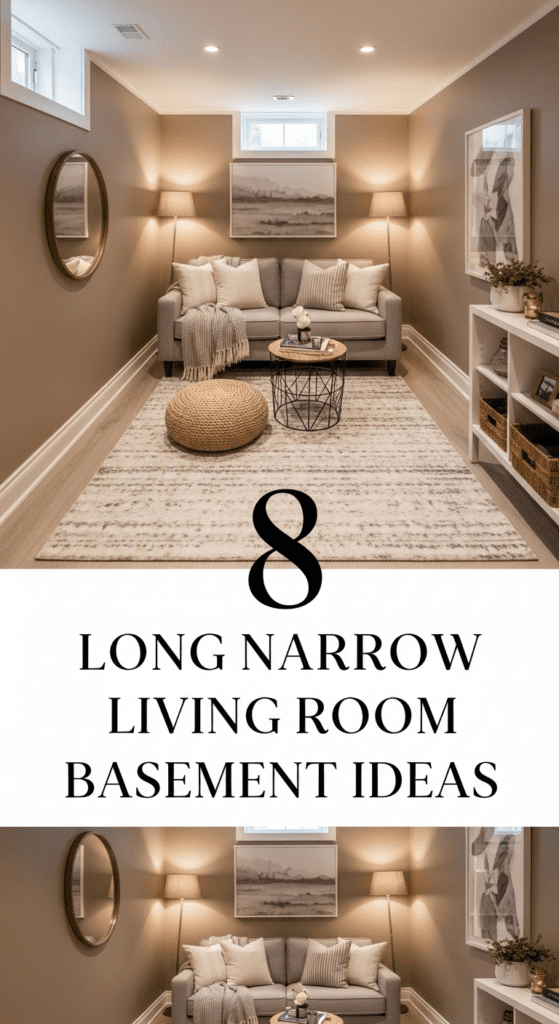
Long narrow living room basements present unique challenges—limited natural light, low ceilings, and often long, narrow proportions that can feel cave-like if not designed thoughtfully. However, with strategic planning and creative design solutions, your narrow basement living room can become a cozy, inviting retreat that feels just as comfortable as any above-ground space. These eight ideas specifically address the combination of basement constraints and narrow dimensions, helping you create a functional, beautiful living area that maximizes your below-grade square footage.
See also: Blue Guest Bedroom Ideas 13 Ways to Master the Color of Tranquility
1. Maximize Light with Strategic Paint and Mirrors
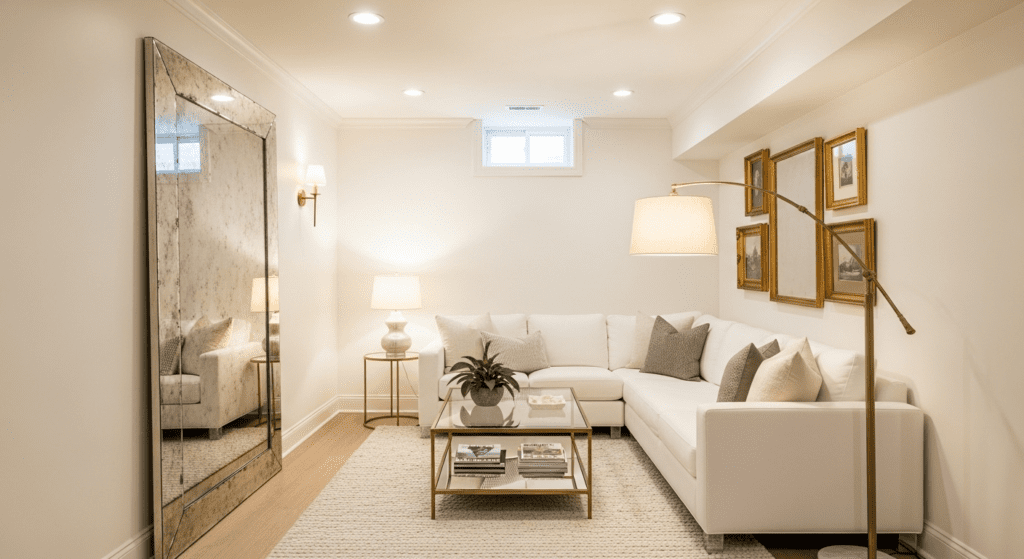
Combat the darkness and narrow feel of your basement living room by using light colors and reflective surfaces to bounce available light around the space.
Paint all walls, ceiling, and trim in light, warm whites or soft creams to create a cohesive, bright envelope. Avoid stark cool whites that can feel clinical in windowless basements—warm whites with beige or yellow undertones add coziness while reflecting light. Consider painting the ceiling the same color as walls to eliminate visual breaks that can make low ceilings feel even lower.
Install large mirrors strategically to multiply light sources. Place a substantial mirror opposite any windows or next to light sources like floor lamps and sconces. In narrow basements, position mirrors on long walls to create the illusion of width and depth. Mirrored furniture pieces—coffee tables with mirrored tops, side tables with mirrored surfaces—add glamour while enhancing light distribution.
Add metallic accents through brass lamps, gold-framed artwork, and chrome hardware that catch and reflect light. These small reflective elements cumulatively make a significant impact in dark basement spaces. Layer your artificial lighting with multiple sources at different heights—overhead recessed lights, floor lamps, table lamps, and wall sconces create depth and warmth.
See also: Luxury Master Bedroom Concepts 14 Ways to Define High End Living
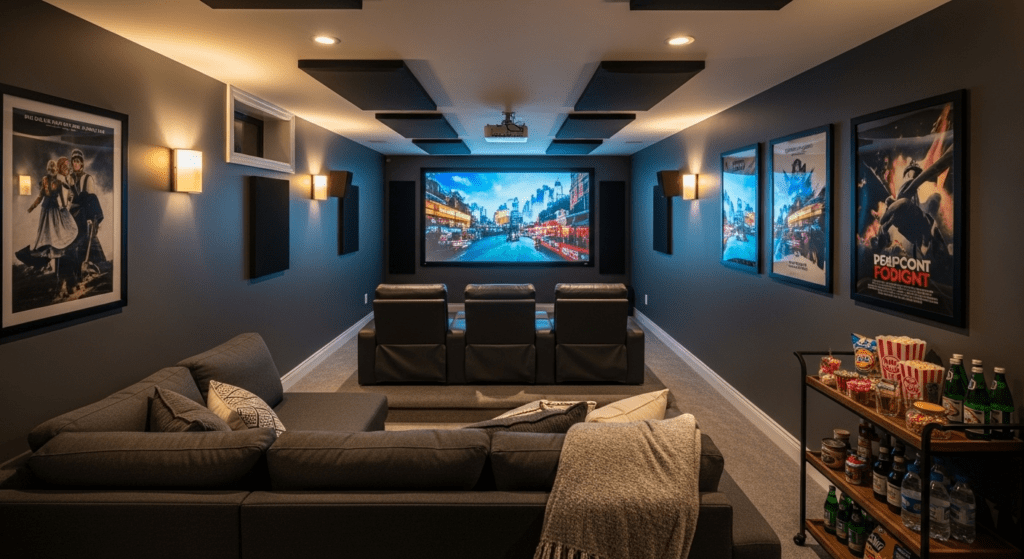
2. Create a Home Theater Entertainment Zone
Embrace the naturally dark, enclosed feeling of your narrow basement by transforming it into a dedicated home theater space where low light is actually an asset.
Mount a large TV or projection screen on one of the short end walls, positioning your seating to face it theater-style. Choose a sectional sofa or arrange recliners in rows to maximize seating without requiring side-by-side furniture that would emphasize the narrow width. Install blackout curtains on any small basement windows to control light completely.
Add theater-inspired elements like wall sconces with dimmers, a popcorn machine in the corner, movie poster frames on walls, and a small bar area for refreshments. Paint one accent wall in deep charcoal or navy to enhance the theater ambiance while keeping other walls lighter to prevent the narrow space from feeling oppressive.
Invest in quality sound with a soundbar or surround sound system—basements naturally contain sound well, making them ideal for home theaters. Add thick area rugs and soft furnishings to improve acoustics while adding comfort. This purposeful approach transforms basement limitations into entertainment assets.
3. Multi-Zone Layout with Distinct Areas
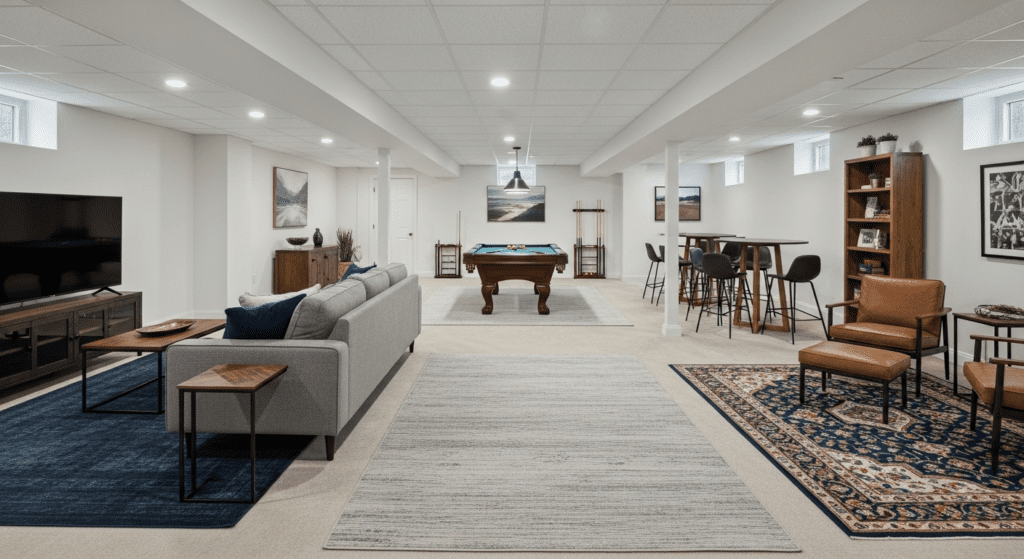
Divide your long narrow basement into multiple functional zones that serve different purposes, maximizing the usable space and making the length an asset rather than a problem.
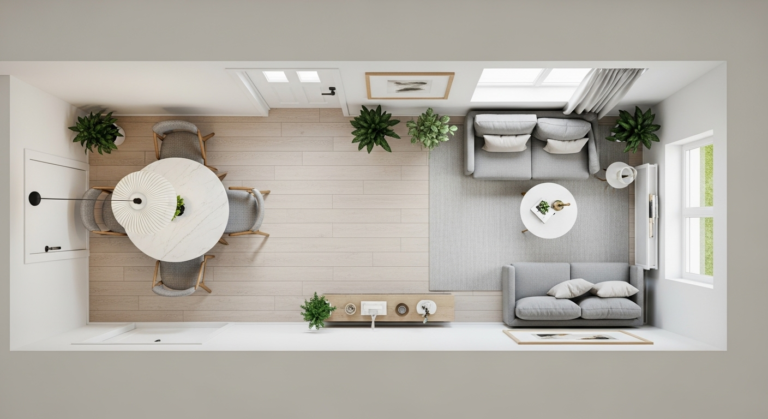
Create a main living/TV area at one end with a sofa and entertainment center. In the middle section, establish a game area with a small pool table, foosball table, or arcade games. At the far end, set up a reading nook with a comfortable chair, floor lamp, and bookshelf, or create a home office space with a desk and storage.
Use area rugs to define each zone visually, with distinct rugs under each functional area. Paint different sections in coordinating but distinct colors, or use the same wall color but different accent colors in furnishings to differentiate zones. Position furniture to create natural boundaries—the back of the sofa can separate the living area from the game zone.
This multi-zone approach gives family members different spaces for simultaneous activities and makes the narrow basement feel like multiple rooms rather than one long corridor. The varied purposes create visual and functional interest throughout the length of the space.
4. Built-In Storage and Seating
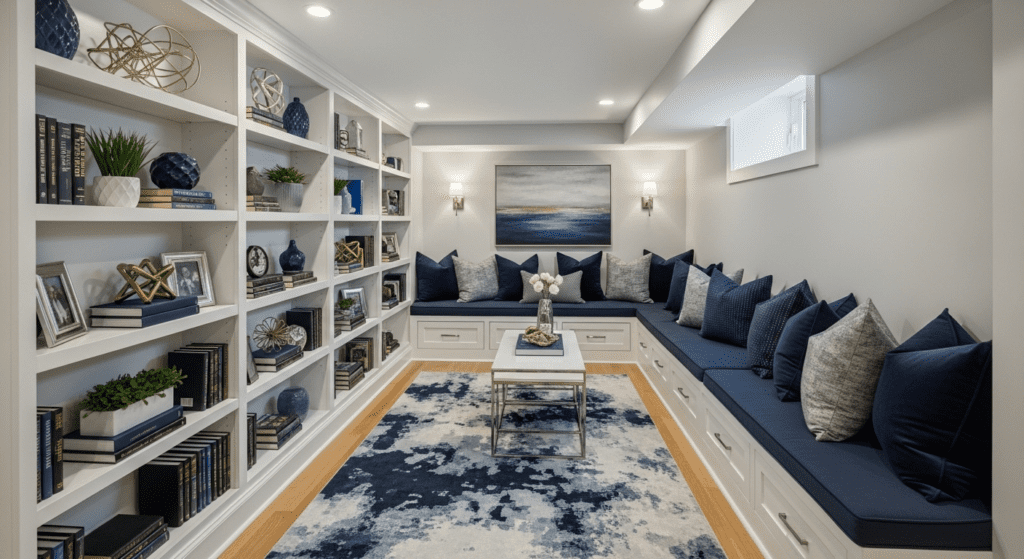
Maximize your narrow basement’s functionality by installing built-in storage and seating along one or both long walls, creating a streamlined look while providing abundant storage.
Design built-in benches with lift-top storage underneath along one long wall, adding cushions and throw pillows for comfortable seating. Install floor-to-ceiling built-in shelving and cabinets on the opposite wall for books, games, media equipment, and display items. The built-ins utilize wall space without protruding far into the room, maintaining floor space for traffic flow.
Choose painted built-ins in light colors that blend with walls, or go with warm wood tones for contrast and coziness. Include a combination of open shelving for display and closed cabinets to hide clutter—essential in basement spaces that often double as storage areas.
Built-ins add architectural interest to typically plain basement walls while solving storage challenges. The custom millwork makes the basement feel finished and intentional rather than like an afterthought space. In narrow basements, this approach is particularly valuable because it maximizes vertical space without creating a cluttered feel.
5. Industrial Modern Design with Exposed Elements
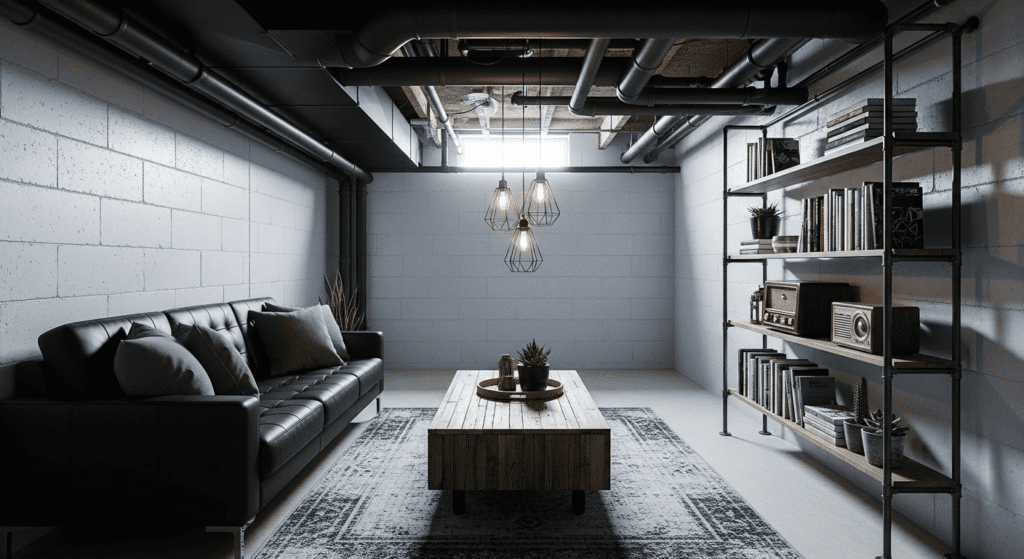
Embrace your basement’s structural elements by creating an industrial-modern aesthetic that celebrates exposed ductwork, pipes, and concrete—turning potential negatives into design assets.
Leave ceiling elements exposed and paint them matte black or dark gray for a cohesive industrial look. Paint concrete walls in light colors or apply concrete sealant to enhance the raw texture. Use metal and wood furniture—steel-frame sofa, reclaimed wood coffee table, industrial pipe shelving—that complements the exposed structural elements.
Add Edison bulb fixtures, metal pendant lights, and track lighting that highlights the industrial aesthetic while providing necessary illumination. Incorporate vintage industrial accessories like metal storage lockers, factory carts as side tables, and old factory signage as wall art.
The industrial approach works beautifully in narrow basements because it emphasizes the space’s authentic character rather than trying to disguise it. The dark ceiling elements help low ceilings recede visually, while the overall aesthetic feels intentional and stylish. This design direction is also budget-friendly since you’re working with rather than covering structural elements.
6. Cozy Den with Warm Colors and Textures
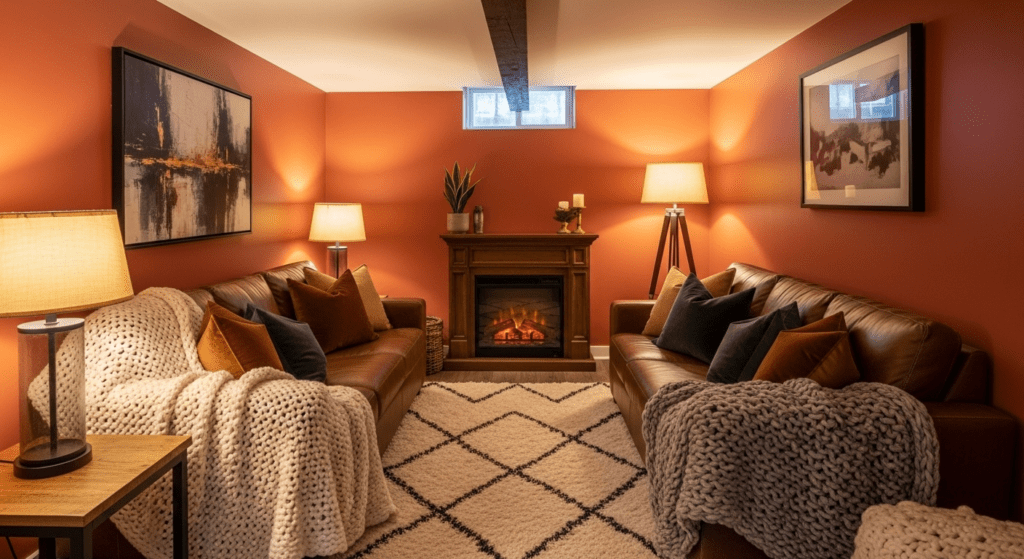
Create an intimate, cozy den atmosphere by embracing warm colors, rich textures, and abundant soft furnishings that make the basement’s enclosed feeling welcoming rather than claustrophobic.
Paint walls in warm, enveloping colors—deep rust, warm charcoal, forest green, or burgundy—that create a cocoon-like atmosphere. Layer the space with plush textures through velvet upholstery, chunky knit throws, faux fur pillows, and thick wool rugs. Install warm-toned wood paneling on one accent wall for additional texture and warmth.
Focus on creating multiple cozy seating options—a deep sectional perfect for movie marathons, a reading chair with ottoman, and floor cushions for casual lounging. Add a faux or electric fireplace as a focal point, providing both ambiance and the psychological warmth of a hearth.
Install amber-toned LED bulbs in all fixtures and use table lamps with warm shades to create soft, golden lighting. Add candles (real or LED) throughout for additional atmosphere. The goal is creating a space so comfortable that family members actively choose to spend time there rather than viewing it as a relegated basement space.
7. Light and Bright Scandinavian Basement
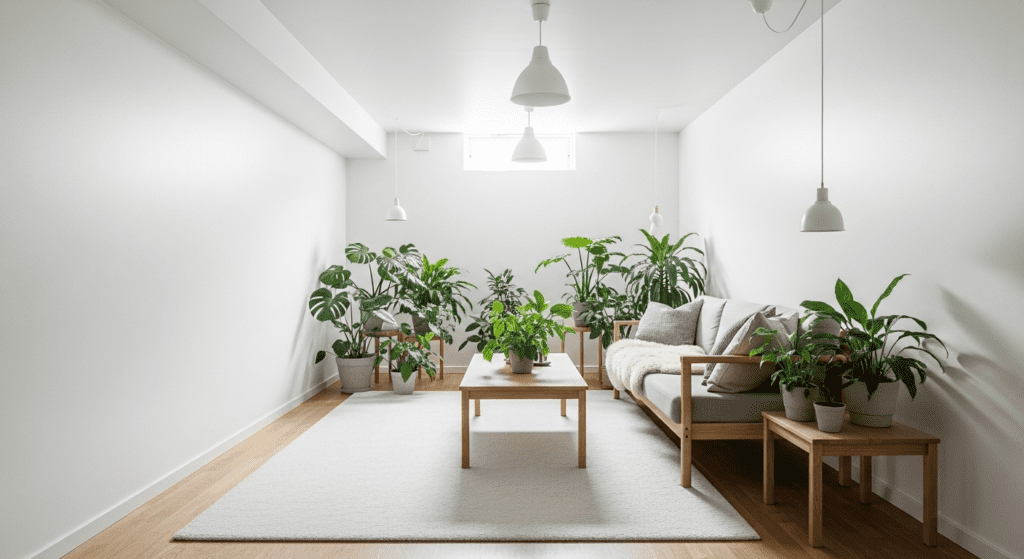
Counter basement darkness with a Scandinavian-inspired design that prioritizes light colors, natural materials, and minimalist furnishings to create an airy, spacious feel despite narrow dimensions.
Paint everything—walls, ceiling, trim, and any structural elements—in shades of white to create maximum brightness and visual continuity. Choose furniture in light wood tones like blonde oak or ash, with clean-lined Scandinavian silhouettes that don’t overwhelm the narrow space. Keep furniture minimal—just a sofa, coffee table, and one accent chair rather than trying to fill every inch.
Add warmth through natural textiles in neutral tones—linen curtains, wool throws, sheepskin rugs, and cotton cushions. Incorporate abundant greenery with potted plants throughout to bring life and freshness to the windowless space. Use simple lighting fixtures in white or light wood that blend with the overall palette.
The Scandinavian approach creates a serene, uncluttered basement that feels larger than its dimensions through the magic of light colors and negative space. This works particularly well for narrow basements where visual simplicity prevents the space from feeling cramped or chaotic.
8. Game Room and Bar Combination
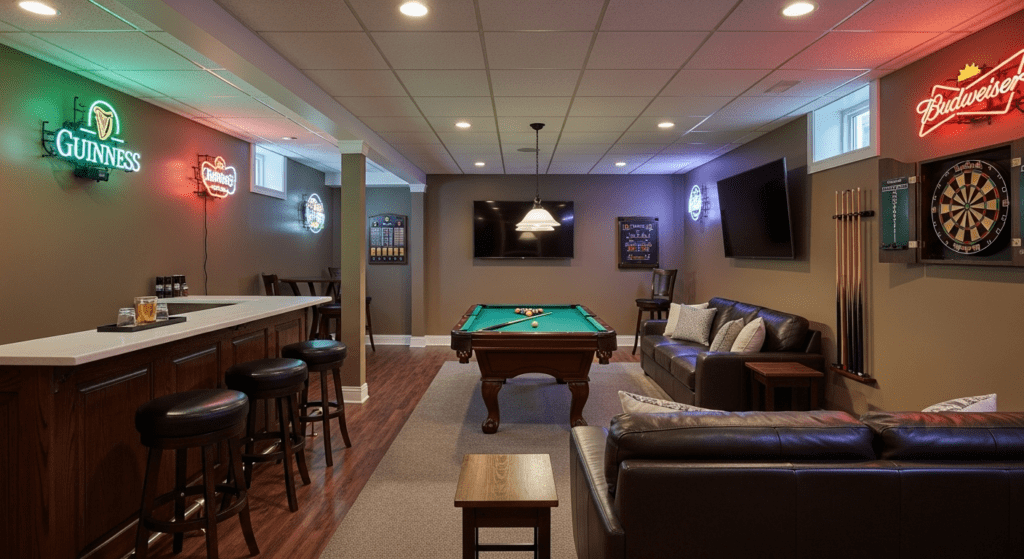
Transform your narrow basement into an adult entertainment space combining a game area with a home bar for socializing and recreation.
Install a bar along one short end wall with bar stools, creating a focal point for entertaining. Include a small beverage fridge, wine storage, and shelving for glassware and bottles. In the main narrow area, position a pool table, dart board, or gaming setup that takes advantage of the length. Add comfortable seating along one long wall for spectators and conversation.
Design the bar area with task lighting—pendant lights above the bar counter, LED strip lighting under upper shelves. Use darker, moodier colors suitable for an entertainment space—navy, forest green, or charcoal—that embrace the basement vibe. Add neon signs, sports memorabilia, or beer signs for personality.
Include a sound system for music and a TV mounted where it’s visible from both the bar and seating areas. This multi-functional entertainment basement becomes the go-to space for hosting friends, watching games, or family game nights. The narrow dimensions work well because activities like pool and darts naturally require length rather than width.
Essential Considerations for Basement Living Rooms
Address Moisture Issues: Before designing your narrow basement living room, ensure proper moisture control through dehumidifiers, vapor barriers, and proper drainage. Moisture problems will undermine any design efforts and damage furnishings. Consider moisture-resistant materials like vinyl plank flooring instead of carpet.
Maximize Ceiling Height: If possible, use recessed lighting to avoid hanging fixtures that reduce headroom. Paint ceilings the same light color as walls to eliminate the visual boundary that makes ceilings feel lower. Hang curtains or artwork near the ceiling line to draw eyes upward.
Improve Air Quality: Basements can feel stuffy. Install proper ventilation, use air purifiers, and incorporate plants that naturally clean air (like snake plants and pothos). Good air quality makes basement spaces more comfortable for extended periods.
Meet Code Requirements: Ensure your basement living room meets local building codes, especially regarding egress windows for safety. Check ceiling height requirements, electrical codes, and fire safety regulations before significant renovations.
Insulate for Comfort: Properly insulate walls and ceiling to control temperature. Basements are naturally cool, which is pleasant in summer but can be chilly in winter. Consider radiant floor heating or supplemental heating sources for comfort.
Choose Appropriate Flooring: Avoid materials that absorb moisture or show water damage easily. Luxury vinyl plank, sealed concrete, or tile work well in basements. If using area rugs, ensure they’re mildew-resistant and use rug pads that allow air circulation underneath.
Create Adequate Lighting: Basements need 2-3 times more artificial lighting than above-ground rooms. Layer ambient, task, and accent lighting liberally. Use LED bulbs to minimize heat while providing bright, energy-efficient illumination.
Plan for Low Furniture: With lower ceilings typical in basements, choose furniture with low profiles. Lower sofas and chairs maintain better proportions in the space and don’t make ceiling height feel cramped.
Consider Acoustics: Basements can echo or absorb sound strangely. Add soft furnishings, rugs, and curtains to improve acoustics. If creating a home theater, consider acoustic panels for optimal sound quality.
Make It Accessible: If your basement requires navigating stairs, ensure safe, well-lit stairways. Consider handrails and good lighting for safety, especially if elderly family members will use the space.
Embracing Your Basement Living Room
The combination of basement limitations and narrow proportions might initially seem like a design challenge too great to overcome, but with thoughtful planning, your below-grade narrow living room can become one of your home’s most beloved spaces. The key is working with your space’s characteristics rather than fighting against them.
Basements naturally feel cozy and enclosed—lean into this for intimate entertainment spaces, home theaters, or dens. The lack of windows means you control the lighting entirely—use this to your advantage for mood and ambiance. The narrow dimensions provide opportunities for creative zoning and purposeful design rather than trying to make the space something it’s not.
Whether you create a bright Scandinavian retreat, an industrial entertainment zone, or a cozy rustic den, your narrow basement living room can serve your family’s needs beautifully while adding valuable living space to your home. With proper moisture control, abundant lighting, and thoughtful design, your basement becomes a true extension of your home rather than forgotten square footage.
Start with addressing any structural or environmental issues, then choose a design direction that excites you and serves your lifestyle. Your narrow basement living room has the potential to become the favorite gathering spot in your entire home.