12 Long Narrow Living Room Bay Window Ideas
A bay window in a long narrow living room is both a blessing and a design challenge. This architectural feature floods your space with natural light and creates visual interest, but it also interrupts wall space and requires thoughtful furniture arrangement. The key is treating your bay window as a focal point that enhances rather than complicates your narrow room’s layout. These twelve ideas will help you maximize the beauty and functionality of your bay window while creating a balanced, inviting living room that celebrates this charming architectural detail.
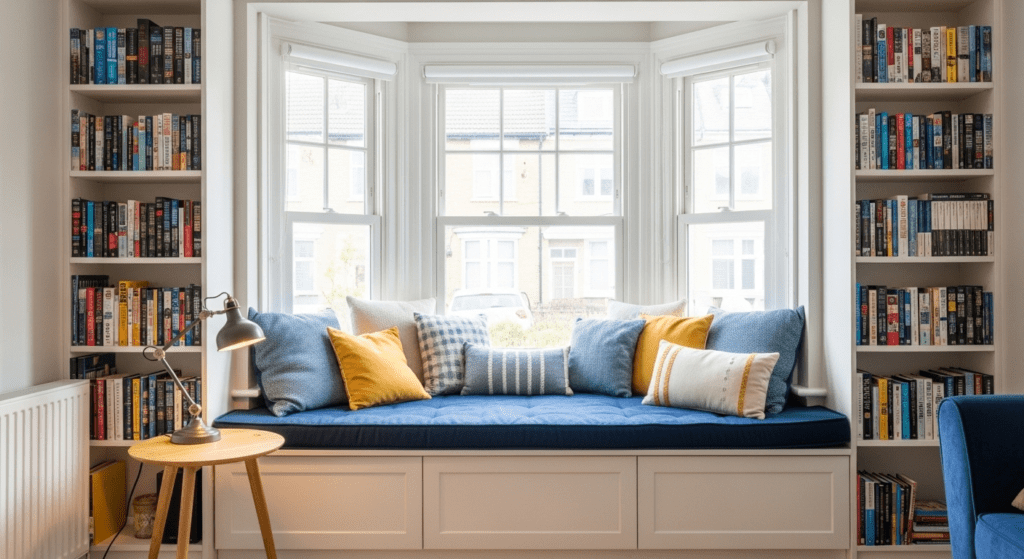
1. Bay Window Reading Nook
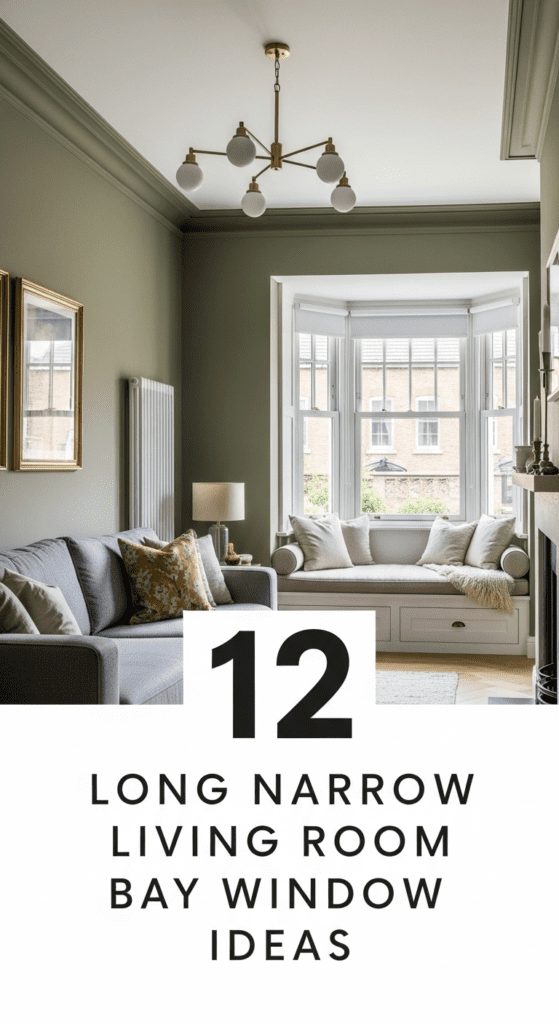
Transform your bay window into a cozy reading nook that takes advantage of natural light while creating a destination within your narrow living room.
Install a custom window seat that follows the bay’s angles, with lift-top storage underneath for blankets, books, or seasonal items. Add a thick cushion in a durable fabric and pile on throw pillows in coordinating colors and patterns. Flank the window seat with small built-in bookcases or floating shelves to keep reading material within reach.
This arrangement works beautifully in narrow rooms because it utilizes the bay window alcove without taking up valuable floor space in the main room. The reading nook becomes a separate zone that doesn’t interfere with your primary seating area. Add a small side table for tea or coffee and a reading lamp for evening use.
The bay window’s natural light makes it the perfect spot for reading during the day, while the enclosed feeling created by the bay’s angles provides a sense of privacy and coziness. This solution is particularly effective when the bay window is positioned at one end of your narrow living room, creating a clear beginning or ending point to the space.
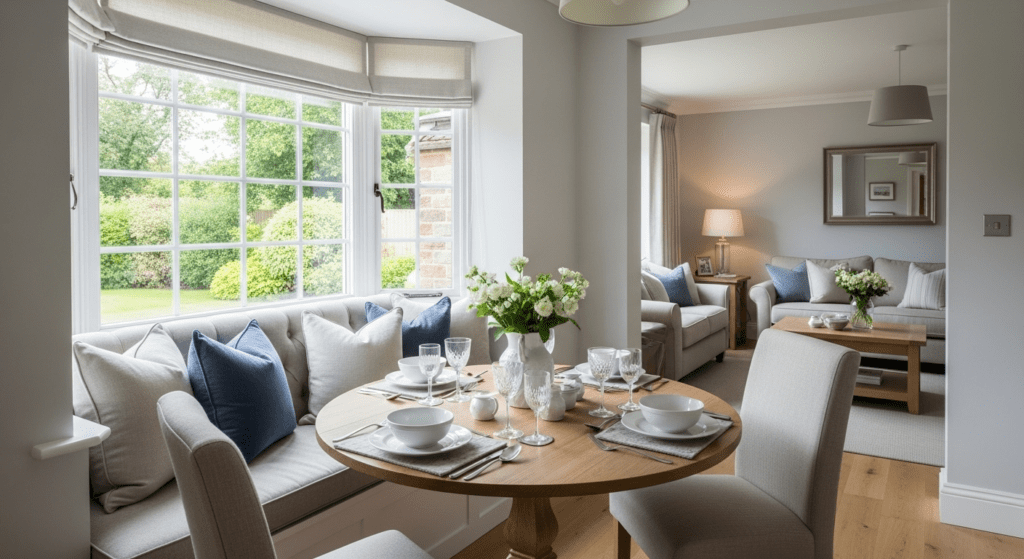
2. Bay Window Dining Area
If your narrow living room is part of an open floor plan, use the bay window area to create a small dining zone that maximizes the natural light and views.
Position a round or oval table in the bay window space with chairs that fit comfortably within the angles of the bay. Round tables work particularly well because they have no corners to navigate and create better flow in tight spaces. Choose chairs with a smaller footprint—armless or with low backs—to prevent the area from feeling cramped.
Hang a chandelier or pendant light centered in the bay to define the dining zone and provide task lighting for evening meals. Add window treatments that can be raised during the day to maximize light and lowered for privacy during dinner. This arrangement separates dining from living functions while keeping the space open and connected.
The bay window dining area works especially well when positioned at one end of your narrow living room, with the main seating area occupying the rest of the space. The natural light makes meals more pleasant while the architectural interest of the bay window creates a more formal, intentional dining experience.
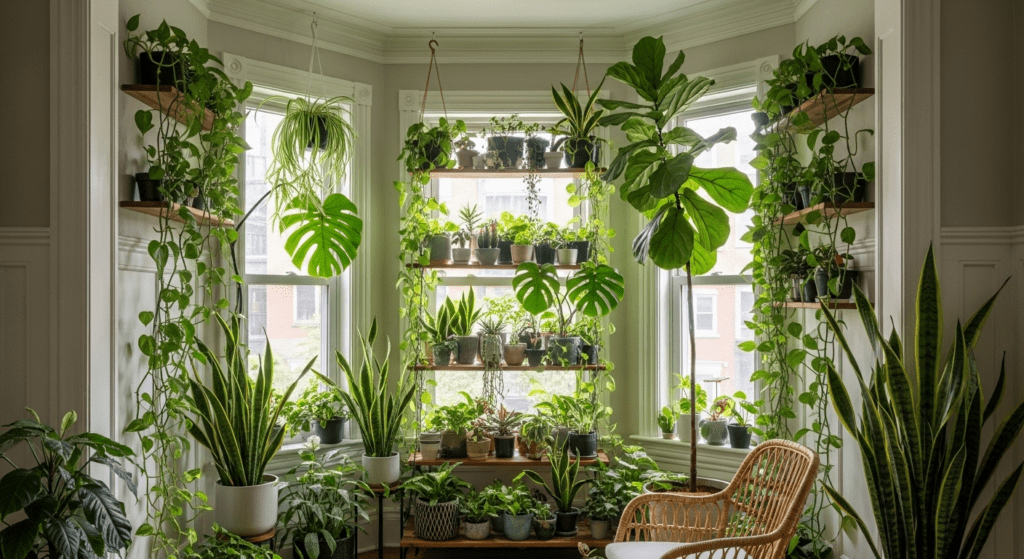
3. Bay Window Plant Conservatory
Capitalize on the abundant natural light by transforming your bay window into an indoor plant conservatory that brings nature into your narrow living room.
Install tiered plant stands or floating shelves at varying heights within the bay window to display a collection of plants—from small succulents to large fiddle leaf figs. Mix plant sizes, textures, and colors to create a lush, layered look. Use the window seat or bench as additional plant display space, with trailing plants like pothos cascading down.
This living wall of greenery becomes a stunning focal point that draws the eye and adds life to your narrow space. The plants benefit from the bay window’s generous natural light while softening the hard architectural lines and adding organic shapes that contrast with the room’s linear proportions.
Include a small watering can and plant care supplies stored discreetly in baskets underneath the window seat. Add a comfortable chair nearby where you can sit and enjoy your indoor garden. The plant-filled bay window creates a biophilic connection to nature that makes your narrow living room feel more spacious and alive.
4. Bay Window Home Office Nook
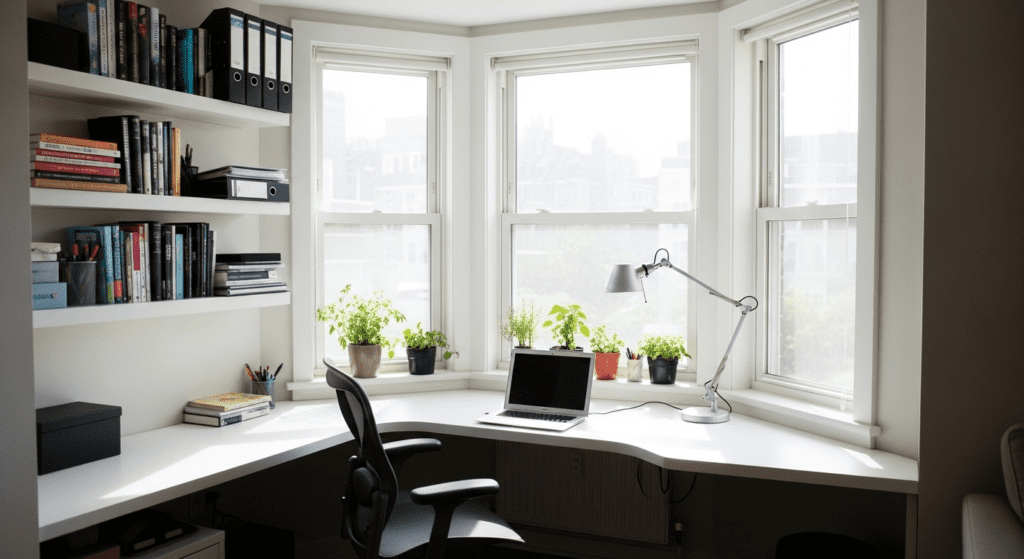
Utilize the natural light and defined space of your bay window to create a small home office area that doesn’t intrude on your living room’s main function.
Install a custom desk that follows the bay window’s shape, creating a curved or angled workspace with views outside. Mount floating shelves above for books and office supplies, and add a comfortable desk chair that can be tucked under the desk when not in use. The bay window’s natural light reduces eye strain and creates an pleasant work environment.
This solution works well in narrow living rooms where dedicating an entire room to a home office isn’t possible, but you need a designated workspace. The bay window area feels separate enough to mentally transition into work mode while remaining part of the living room. Add a curtain or folding screen that can close off the office area when you want to separate work from relaxation.
Include adequate task lighting for evening work hours and ensure electrical outlets are accessible for computers and devices. The bay window office maximizes an architectural feature while solving the modern need for work-from-home spaces.
5. Bay Window TV and Media Center
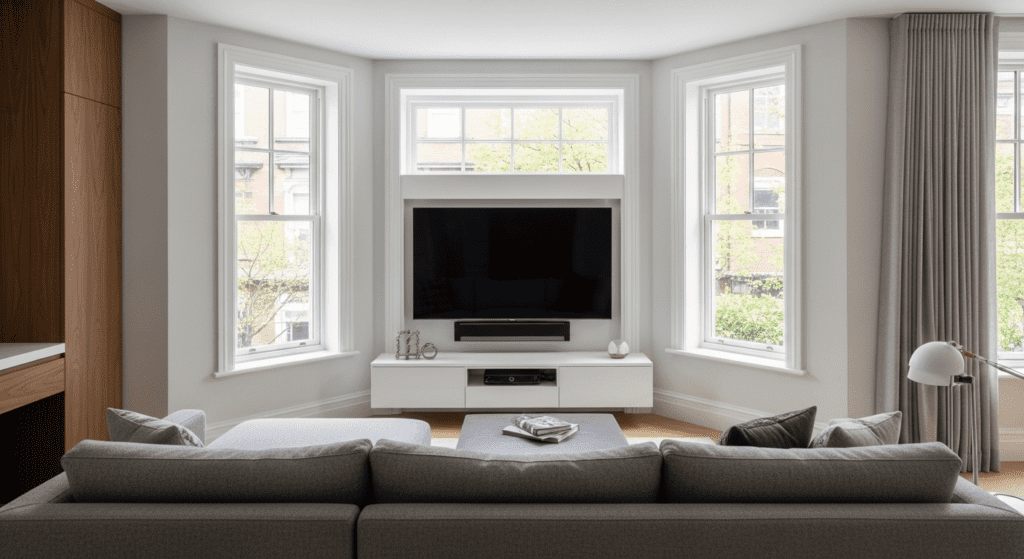
Position your television and media components within or adjacent to the bay window area, creating an unconventional but highly functional entertainment zone.
Mount the TV on the wall between the bay window sections or on a low media console positioned in front of the bay if the windows are high enough. The natural light from the bay helps prevent the TV area from dominating the room visually during daylight hours. Arrange seating perpendicular to the bay window to face the TV while maintaining traffic flow through the narrow room.
This arrangement works best with bay windows that have some solid wall space between the window panels, or when the windows are set high enough that a media console below doesn’t block the view or light. Add blackout shades or curtains that can be drawn for glare-free viewing when watching TV.
The bay window placement creates natural symmetry with windows flanking the entertainment center, adding architectural interest to what’s typically a utilitarian zone. The angles of the bay also help with sound distribution for speakers or soundbars.
6. Bay Window Built-In Seating
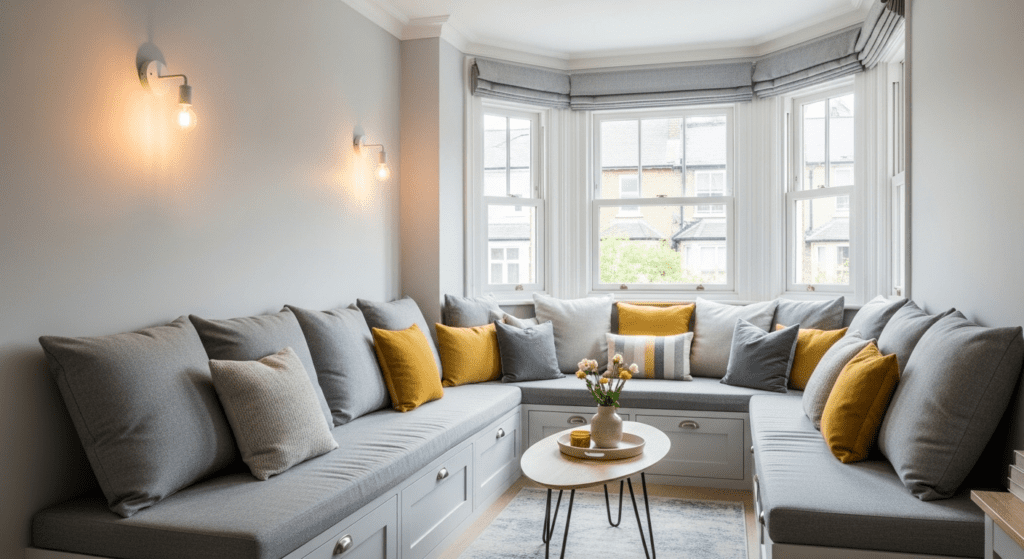
Create custom built-in seating that wraps around the entire bay window, maximizing seating capacity while maintaining the narrow room’s flow.
Design an L-shaped or U-shaped built-in bench that follows the bay window’s angles, with storage drawers underneath the seats. Top with thick cushions and back pillows for comfort. This built-in solution provides abundant seating without free-standing furniture that would protrude into the narrow room and block traffic.
Add a central coffee table that can be easily moved or removed when needed. The built-in seating creates a defined conversation area within the bay while keeping the rest of the narrow room open for other functions. Install sconces or reading lights above the seating for evening use.
This approach is particularly effective in narrow living rooms where every inch of floor space matters. The built-in seating utilizes the bay window area completely while the storage underneath provides practical benefits. Upholster in durable fabrics that can withstand daily use and sun exposure.
7. Bay Window Art Gallery Display
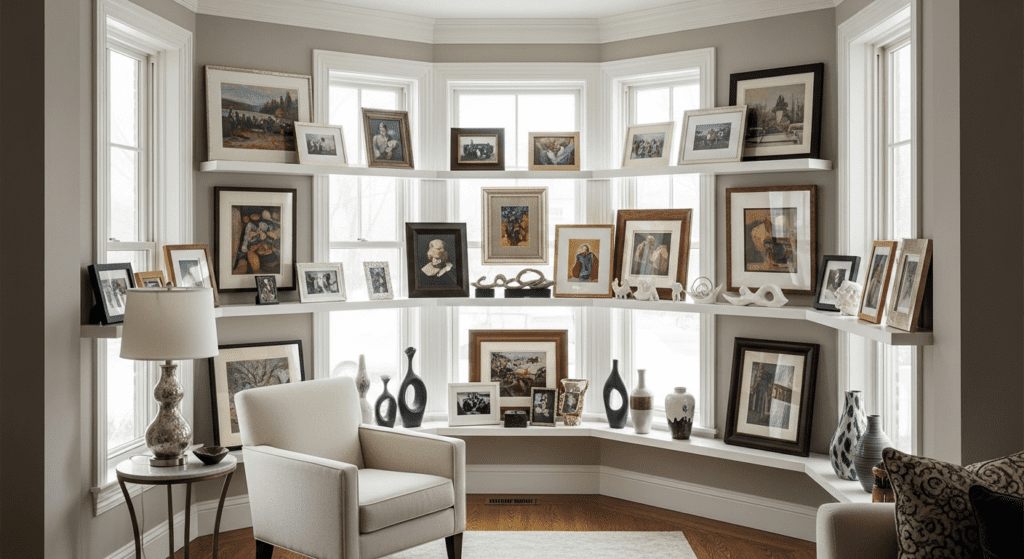
Use the bay window area as a unique gallery space for displaying artwork, sculptures, or collections that benefit from natural light.
Install picture ledges or floating shelves at various heights within the bay window alcove. Display framed artwork, photography, or prints that you can easily rotate. The natural light illuminates the art beautifully during the day, creating a museum-like quality. Add small sculptures, decorative objects, or collectibles on lower shelves.
Position a comfortable chair or small sofa adjacent to the bay window gallery so you can sit and enjoy the art. This approach transforms the bay window into a focal point that adds personality and culture to your narrow living room. The rotating gallery keeps the space feeling fresh and allows you to showcase different pieces seasonally.
Install picture lights or LED strip lighting under shelves for evening illumination. This solution works particularly well for art lovers or collectors who want to properly display their pieces. The bay window’s architecture frames the gallery beautifully, creating a destination within the narrow room.
8. Bay Window Breakfast Spot
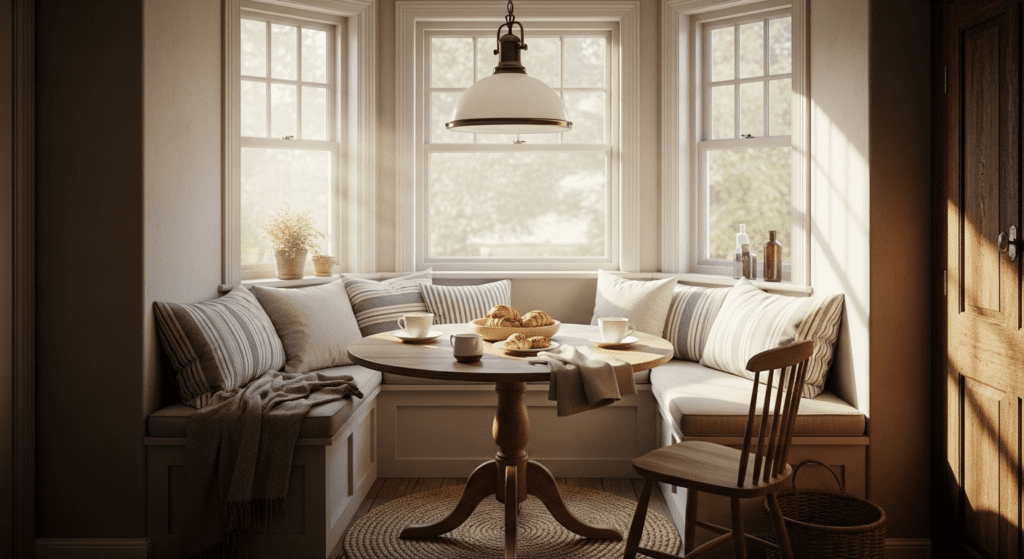
Create an intimate breakfast nook in your bay window area with a small table and built-in banquette seating—perfect for morning coffee and casual meals.
Install built-in bench seating along the bay window’s back wall with cushions and pillows for comfort. Position a small rectangular or round table in front that can accommodate 2-4 people. The morning light streaming through the bay window makes this an ideal spot for breakfast and coffee, while the cozy enclosed feeling creates intimacy.
Add storage underneath the banquette for table linens, placemats, or kitchen overflow. Hang a simple pendant light above the table to define the space and provide task lighting. Use washable fabrics for cushions since this is a dining area, and consider wipeable or sealed table surfaces.
This solution works beautifully when the bay window is near your kitchen in an open floor plan, creating a natural dining spot that doesn’t require a separate formal dining room. The built-in seating maximizes the limited space while the bay window’s architecture makes the casual dining area feel special and intentional.
9. Bay Window Statement Furniture Piece
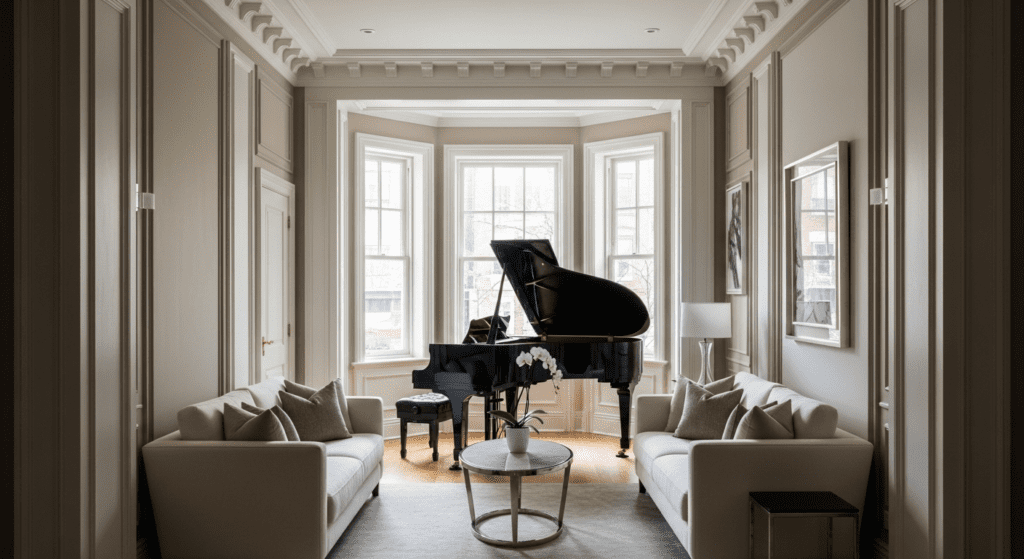
Showcase a single statement furniture piece in your bay window area—like a grand piano, a beautiful desk, or an antique cabinet—that becomes the focal point of your narrow living room.
Position the statement piece centrally within the bay window, taking advantage of the natural light and architectural framing the bay provides. A baby grand piano looks stunning silhouetted against bay windows, while an ornate writing desk or vintage secretary cabinet becomes a dramatic focal point. The bay window acts as a natural frame that highlights the piece’s beauty.
This approach works well when you have a special furniture piece that deserves prominent display and when the bay window is large enough to accommodate it without feeling crowded. The rest of your narrow living room can be arranged to complement this focal point, with seating oriented to enjoy the view of both the statement piece and the windows.
Ensure adequate floor support for heavy pieces like pianos, and protect furniture from direct sunlight with UV-filtering window treatments that can be drawn when needed. This solution creates drama and personality while solving the question of what to do with a bay window in an elegant, unexpected way.
10. Bay Window Two-Seater Conversation Area
Create an intimate conversation area for two within the bay window space, perfect for morning coffee or evening cocktails with a friend or partner.
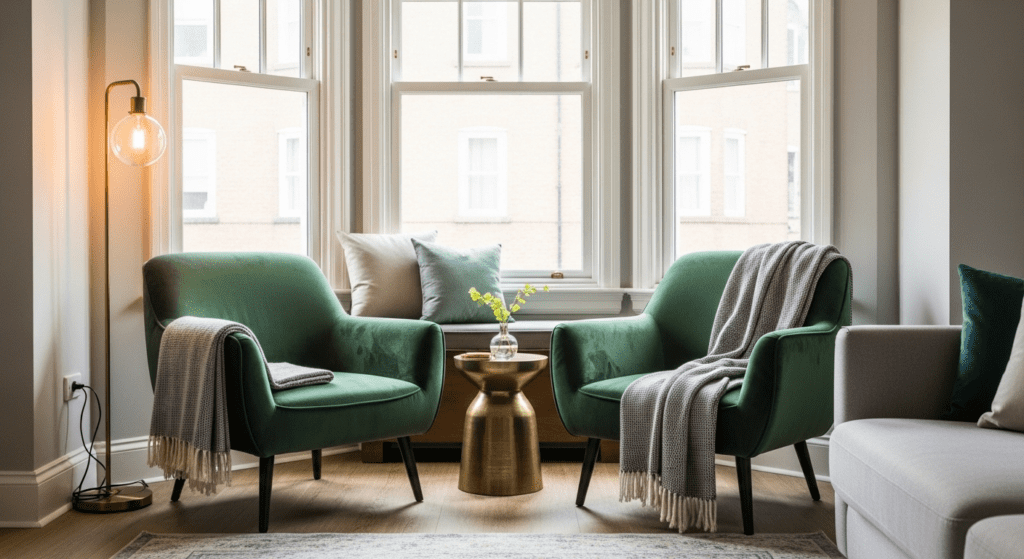
Position two comfortable armchairs angled toward each other within the bay window alcove, with a small side table between them for drinks or books. The bay window’s angles naturally create a semi-enclosed space that feels separate from the main living area while remaining visually connected. Add ottoman or footstool for additional comfort.
This arrangement works beautifully in narrow living rooms where you have a separate main seating area but want an additional intimate zone. The bay window conversation spot becomes a special place for catching up with guests, having morning coffee while enjoying the view, or simply sitting and reading side-by-side.
Choose chairs with personality—velvet armchairs, leather wingbacks, or mid-century modern accent chairs—that make the area feel designed and intentional. Layer with throws and pillows for comfort, and add a floor lamp for evening use. The bay window’s natural light makes this conversation area feel special during the day, while the enclosed feeling creates intimacy in the evening.
11. Bay Window Storage and Display
Maximize the functionality of your bay window area by creating a combination of storage and display that serves practical needs while looking beautiful.
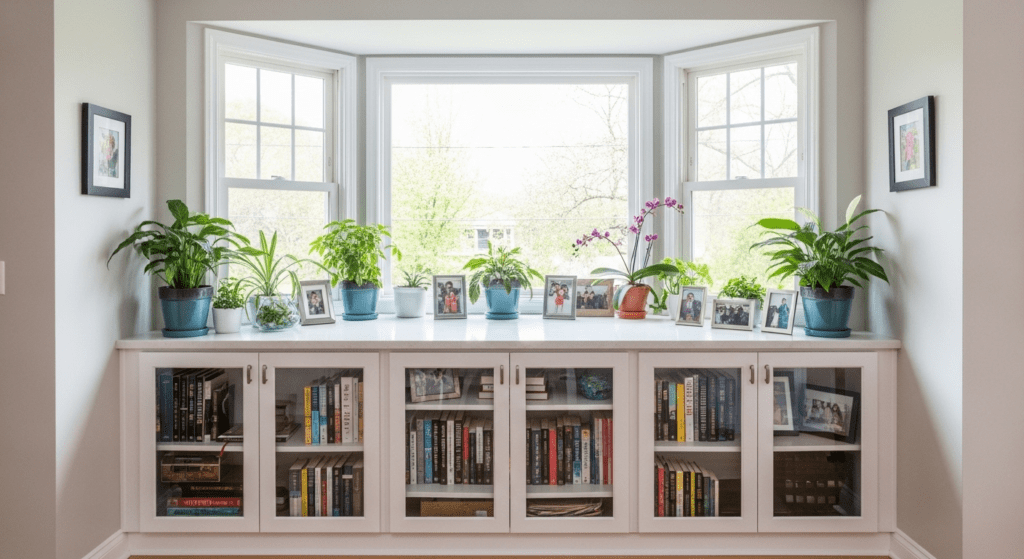
Install built-in cabinets with glass doors along the lower portion of the bay window, providing storage for books, board games, serving pieces, or media items. Top the cabinets with a continuous countertop that serves as a display surface for plants, decorative objects, or family photos. The upper portion remains open to windows for natural light.
This approach provides substantial storage in a narrow living room where wall space is limited, while the glass-front cabinets keep the area feeling open rather than heavy. The display surface at counter height is perfect for styling vignettes that change seasonally. Add interior cabinet lighting to illuminate the contents and create ambiance in the evening.
The storage/display solution works particularly well in narrow living rooms that lack closets or built-in storage. The bay window area becomes a functional furniture piece that also enhances the room’s architecture. Choose cabinet styles that complement your overall design—traditional with moldings, modern with clean lines, or transitional for universal appeal.
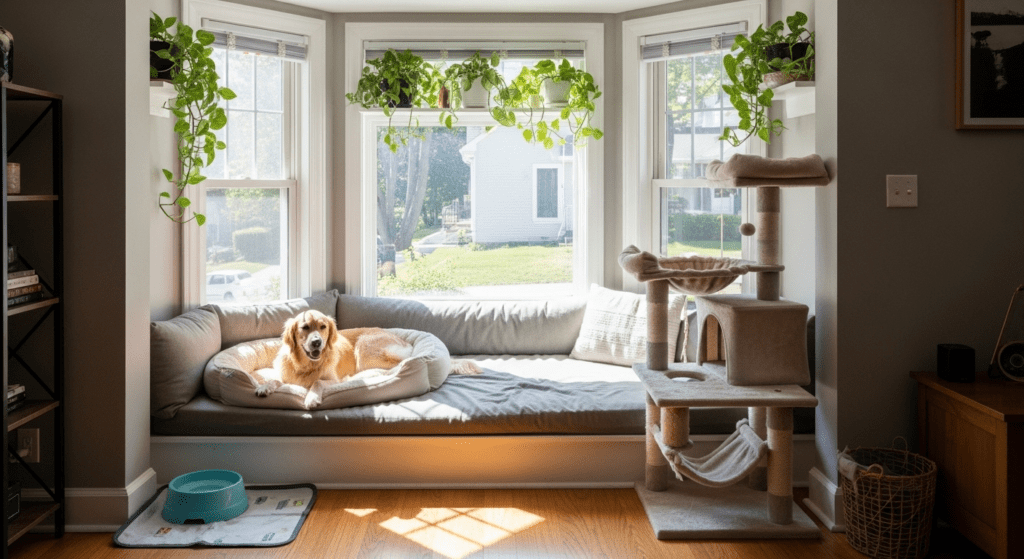
12. Bay Window Pet Paradise
If you’re a pet owner, transform your bay window into a dedicated space for your cats or dogs to enjoy sunlight and views—a beloved spot that also keeps pet beds from cluttering your main living area.
Install a low platform or wide window seat with a comfortable pet bed positioned to catch the sun. The bay window’s multiple angles provide various sunny spots throughout the day as the sun moves. Add pet-friendly plants (non-toxic varieties) on higher shelves and a small basket for toys. Consider installing a cat tree or climbing shelves if you have cats.
This designated pet area keeps animal beds and accessories contained in one attractive zone rather than scattered throughout your narrow living room. Pets naturally gravitate toward sunny window spots, so acknowledging this with dedicated space makes both pets and humans happy. Choose washable, durable fabrics for any cushions or beds.
Add hooks for leashes, a small drawer for pet supplies, and a water bowl on an easy-to-clean surface. The bay window pet paradise becomes a functional, loved spot that also happens to look charming. Guests will appreciate the thoughtful design that accommodates your furry family members while maintaining a cohesive living room aesthetic.
Styling Your Bay Window
Window Treatments: Bay windows require special consideration for window treatments. Options include:
- Individual curtains or shades for each window section
- Continuous curtain rod that follows the bay’s angles
- Roman shades that stack neatly when raised
- Plantation shutters for a classic, architectural look
- Sheer panels for privacy while maintaining light
Furniture Scale: Choose furniture appropriately scaled to your bay window’s size. Measure the depth of the bay alcove carefully—typically 2-4 feet—and select pieces that fit comfortably without protruding awkwardly into the main room.
Color Coordination: Tie your bay window area into the overall room design through coordinating colors. Pull accent colors from the bay window furnishings into the main seating area through pillows, throws, or accessories.
Lighting Layers: While bay windows provide abundant natural light during the day, plan for evening lighting. Table lamps, floor lamps, sconces, or pendant lights ensure the area remains functional after dark.
Seasonal Updates: Bay windows are perfect for seasonal styling. Change cushions, pillows, and decorative elements with the seasons to keep your narrow living room feeling fresh and current.
Protect from Sun Damage: Direct sunlight can fade fabrics and damage furniture. Use UV-filtering window treatments, choose fade-resistant fabrics, and rotate displayed items periodically to prevent uneven sun exposure.
Making the Most of Your Bay Window
A bay window in a long narrow living room is an architectural gift that adds character, light, and versatility to your space. Rather than seeing it as a complication to work around, embrace it as a focal point that can solve multiple design challenges—providing seating, storage, workspace, or simply a beautiful view.
The key is choosing a use for your bay window that serves your lifestyle while enhancing your narrow room’s layout. Whether you create a cozy reading nook, a sunny dining spot, or a functional home office, your bay window can become the most beloved feature of your living room.
Consider how you actually use your living room, what functions you need it to serve, and what’s currently lacking in your home. Your bay window might be the perfect solution to provide that missing element while celebrating one of your home’s most charming architectural features.