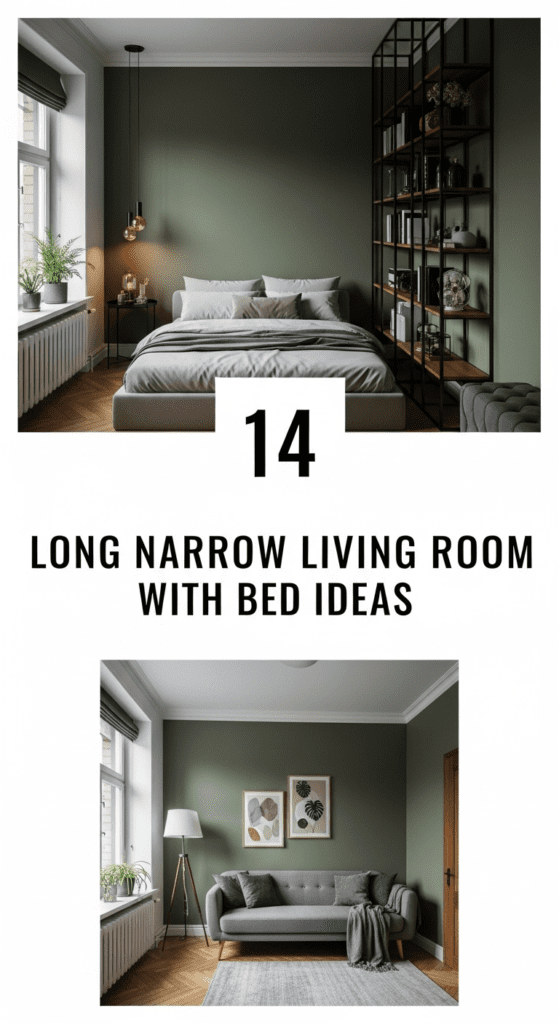
14 Long Narrow Living Room with Bed Ideas
Long narrow living room with bed ideas are essential for studio apartment dwellers, one-bedroom apartment residents who need a guest room, or anyone creating a multi-functional space that serves both living and sleeping purposes. Combining these two functions in a narrow room presents unique challenges—how do you maintain privacy, create distinct zones, and ensure the space doesn’t feel like you’re living in your bedroom? The key lies in strategic furniture placement, clever room dividers, and thoughtful design that clearly delineates sleeping areas from living spaces. These fourteen ideas will help you create a functional, stylish room that seamlessly transitions between daytime living and nighttime sleeping while maximizing your narrow floor plan.
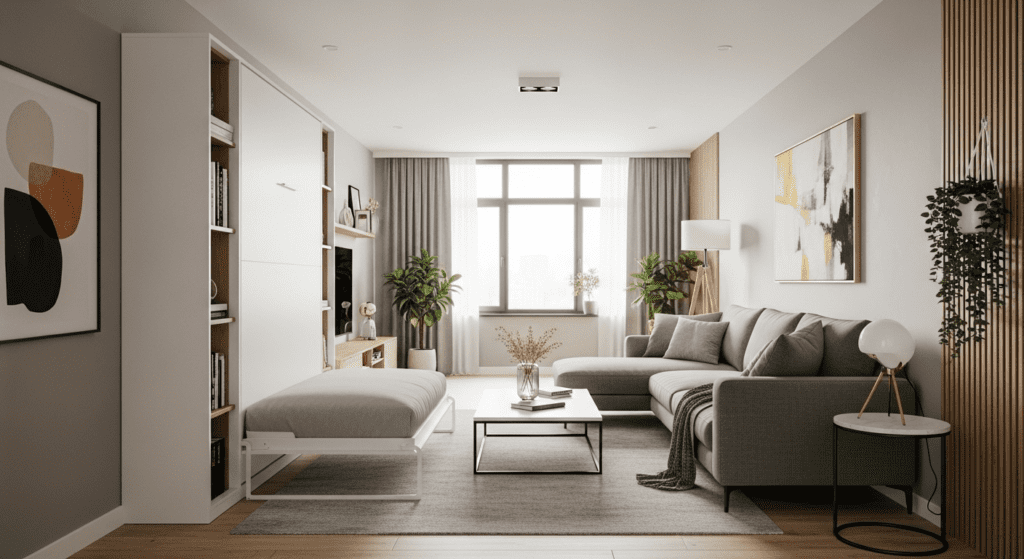
1. Murphy Bed Living Room Combo
Install a Murphy bed (wall bed) that folds up completely into the wall or a cabinet, transforming your sleeping area into open living space during the day.
Position a sleek Murphy bed cabinet along one of the short walls in your narrow living room. During the day, the bed folds up vertically, revealing a sofa, desk, or shelving unit on the cabinet’s exterior. The living area remains fully functional with a sofa, coffee table, and chairs arranged in the open space. At night, simply fold down the bed, moving the coffee table aside if necessary.
Modern Murphy beds have come far from their clunky predecessors—today’s options include built-in lighting, USB charging ports, and sophisticated mechanisms that make raising and lowering effortless. Some designs incorporate sofas that automatically retract when the bed lowers, maximizing automation and ease of use.
This solution is ideal for narrow spaces because it completely eliminates the visual and physical presence of a bed during waking hours. Your living room functions as a true living space rather than a bedroom with a sofa in it. The Murphy bed represents the ultimate space-saving solution for long narrow rooms with bed requirements.
2. Daybed as Sofa Solution
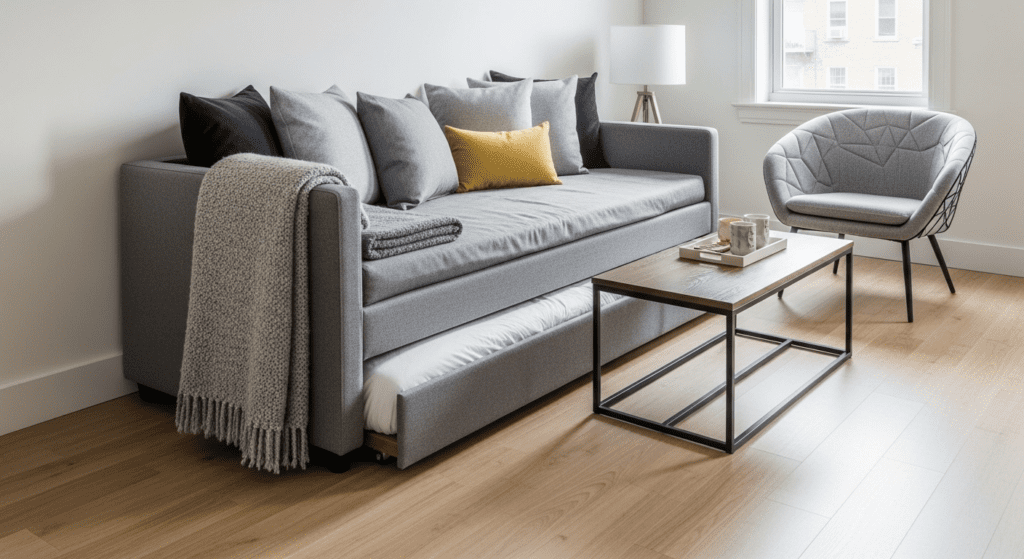
Use a stylish daybed positioned against one of the long walls that functions as seating during the day and sleeping space at night.
Choose a daybed with a contemporary design—upholstered in fabric or leather with clean lines and plenty of throw pillows that make it read as a sofa during the day. Position it lengthwise along one long wall, styled with decorative pillows arranged against the wall and a couple of throw blankets folded at the ends. Add a coffee table in front and additional seating to create a proper living room arrangement.
The daybed serves double duty without requiring any transformation—guests can sit on it comfortably during the day, and at night, you simply remove the decorative pillows and unfold blankets for sleeping. This approach works particularly well for guest room scenarios where the bed isn’t used nightly.
Select a daybed with a trundle underneath for additional sleeping capacity when hosting multiple guests. Choose one with storage drawers below if extra storage is needed. The daybed maintains the living room aesthetic while providing sleeping functionality without complicated mechanisms or major furniture rearrangement.
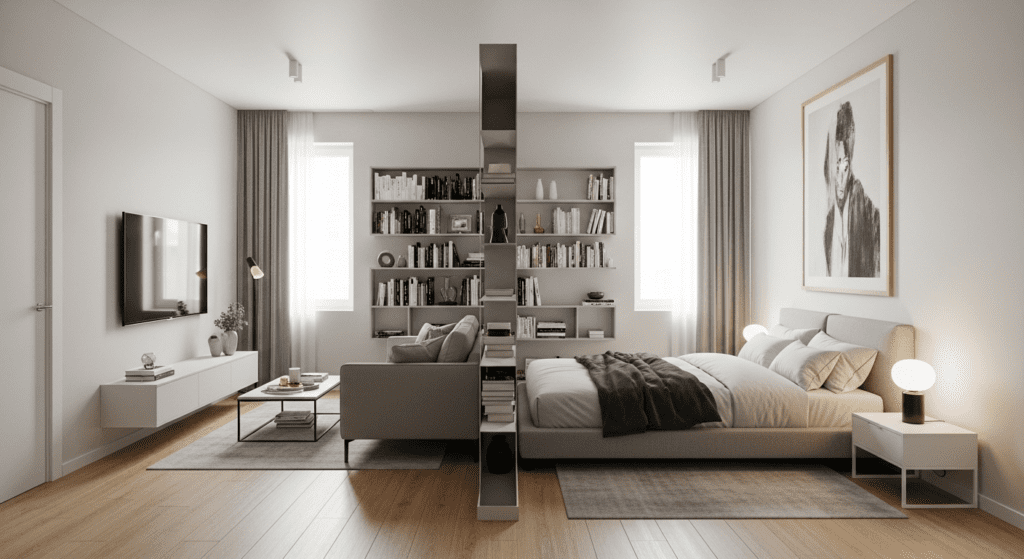
3. Platform Bed Room Divider
Position a low platform bed perpendicular to the long walls in the middle of your narrow room, using it as a room divider that creates distinct living and sleeping zones.
Place the platform bed about two-thirds down the room’s length with the headboard serving as a visual barrier between spaces. The living area occupies the front portion with sofa and TV facing away from the bed, while the back portion becomes the bedroom zone with nightstands and perhaps a dresser or wardrobe. The bed’s positioning creates psychological separation even without solid walls.
Choose a low-profile platform bed that doesn’t obstruct sightlines completely—you want to maintain visual flow while creating functional separation. Add a bookshelf or low credenza behind the headboard on the living room side to reinforce the division and provide storage. Use different area rugs to further define each zone.
This arrangement works well in studio apartments or long narrow spaces where you want clear separation between living and sleeping. The perpendicular bed position breaks up the length of the room, preventing the bowling alley effect while creating distinct zones for different functions.
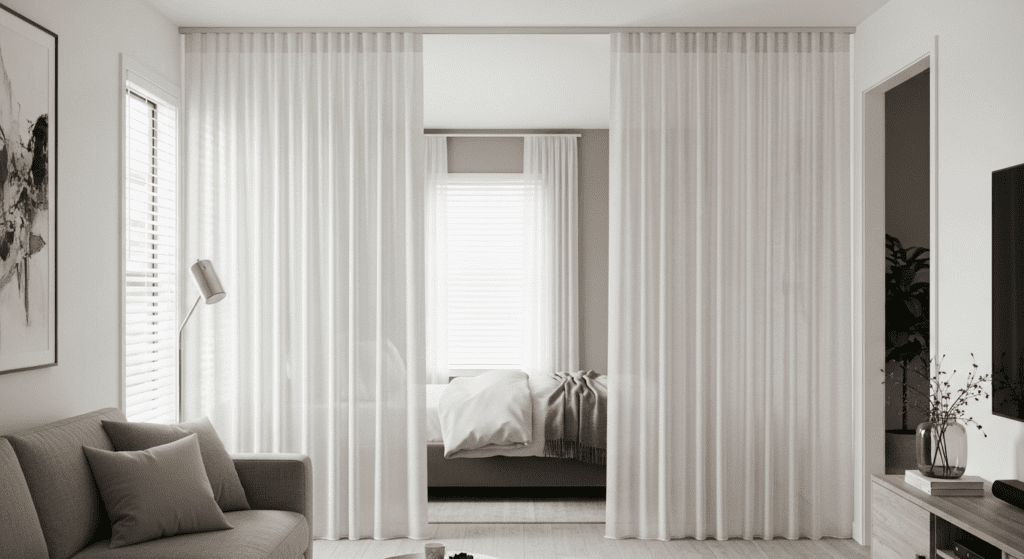
4. Curtain-Divided Sleeping Alcove
Create a sleeping alcove at one end of your narrow living room by installing ceiling-mounted curtain tracks that can close off the bed area for privacy.
Position the bed at one end of your narrow room—either lengthwise along a wall or perpendicular across the width. Install curtain track systems from the ceiling that allow floor-to-ceiling curtains to enclose the entire sleeping area when desired. During the day, tie back or slide open the curtains to integrate the spaces. At night, close the curtains to create a private bedroom.
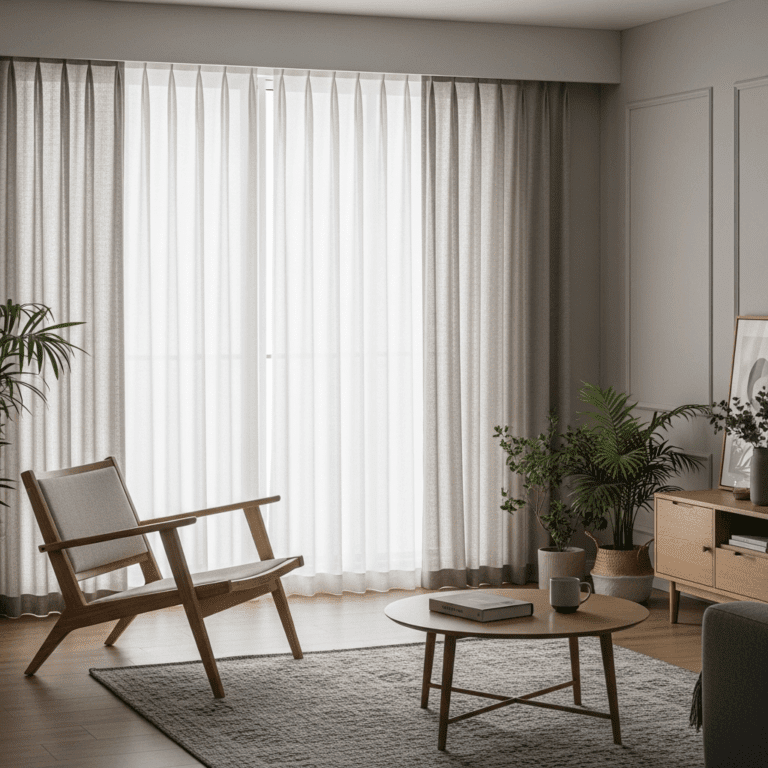
Choose curtains that complement your living room design—linen panels for casual elegance, velvet for luxury, or sheer fabrics for light filtering while maintaining some separation. The curtains provide visual and acoustic privacy without the permanence of walls, making this ideal for renters or those who want flexibility.
This solution maintains the open feel when curtains are open while providing genuine privacy when needed. The flowing fabric adds softness to the narrow space and can even help with acoustics. Use double curtain rods to layer sheers with heavier panels for light control and privacy options.
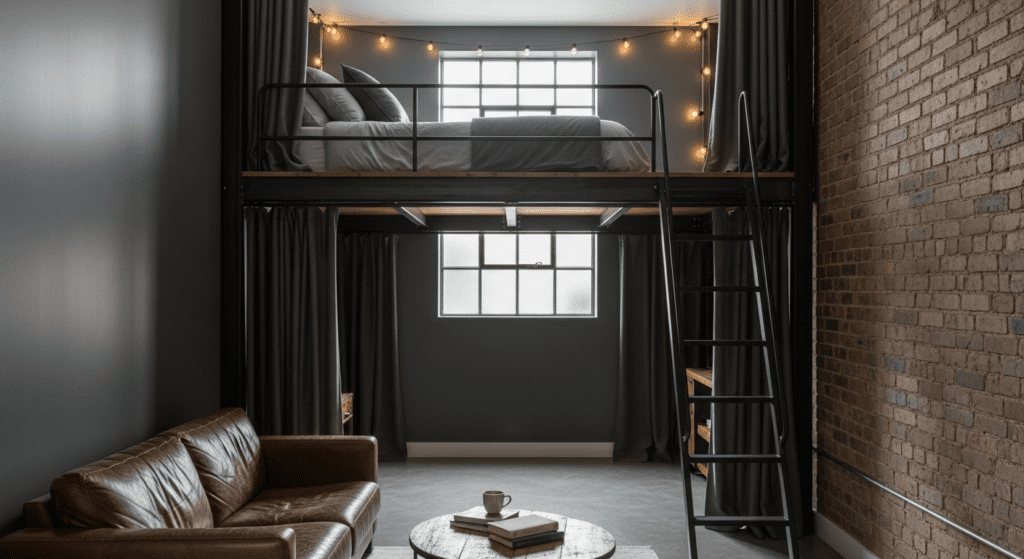
5. Loft Bed with Living Space Below
If your narrow room has sufficient ceiling height (at least 10 feet), install a loft bed that elevates sleeping space above, leaving the entire floor area for living functions.
Build or install a sturdy loft bed platform at one end of your narrow room, accessed by a ladder or stairs. The sleeping area sits approximately 6-7 feet above the floor, creating a cozy nest for sleep while the space underneath becomes your living room with sofa, TV, and seating. This vertical solution maximizes square footage in a narrow room where floor space is limited.
Add curtains around the loft bed platform for privacy and to contain the “bedroom” feeling above while the living space below remains open and bright. Install good lighting in the loft area with reading lights and ensure proper ventilation. Use the area under the stairs (if using stairs instead of a ladder) for additional storage.
This approach works particularly well in spaces with exposed brick, industrial elements, or modern loft aesthetics where the elevated bed platform becomes an architectural feature. The separation is complete—you’re literally living on a different level than where you sleep, creating psychological distinction between functions.
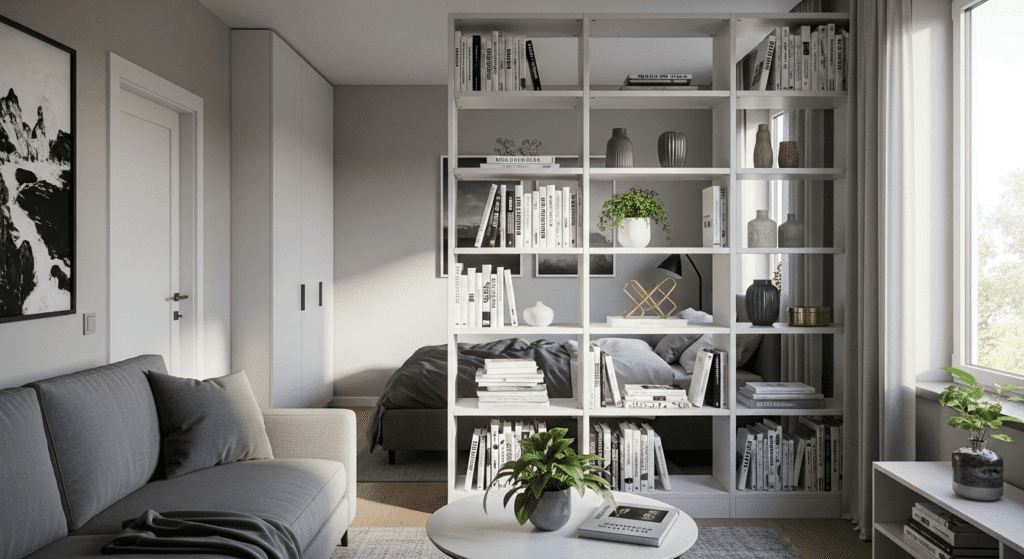
6. Bed Behind Bookshelf Divider
Use a tall bookshelf positioned perpendicular to the walls as a room divider that separates your bed from the living area while providing substantial storage.
Position a tall open bookshelf (at least 6-7 feet high) perpendicular to the long walls, creating a physical barrier between living and sleeping zones. Place the bed behind the bookshelf in the bedroom zone, with living room furniture in front. The bookshelf provides storage on both sides—display books and decorative objects on the living room side, and use the bedroom side for books, alarm clock, and personal items.
Choose an open bookshelf rather than a solid cabinet to maintain some visual connection and allow light to filter through. A bookshelf divider feels less permanent than a wall while providing similar functional separation. Anchor it securely to prevent tipping, especially important in earthquake-prone areas.
This solution creates two distinct rooms within one narrow space while adding significant storage—always valuable in small living situations. The bookshelf becomes both functional furniture and architectural element that defines the space organization.
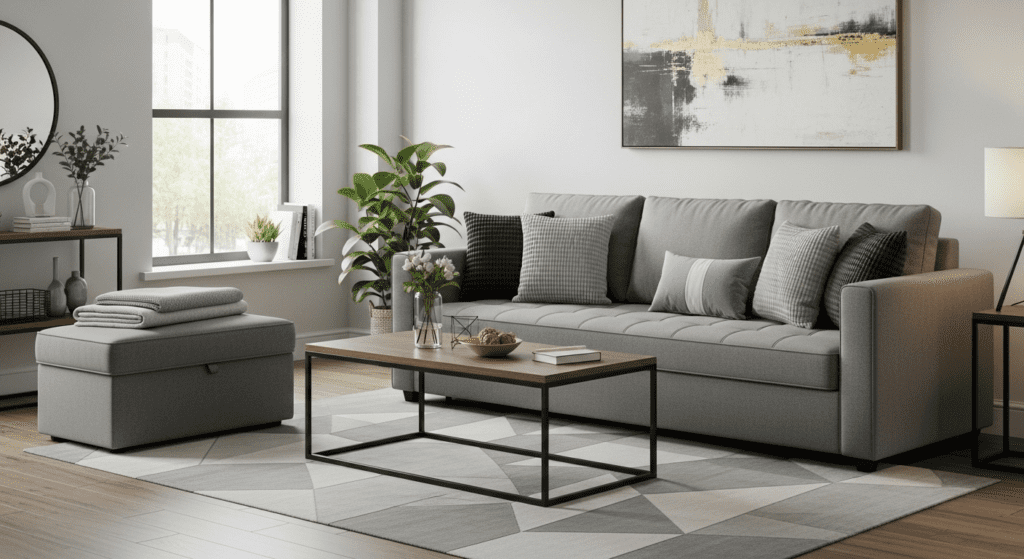
7. Sofa Bed Primary Seating
Use a high-quality sofa bed as your primary seating that converts to a comfortable bed when needed, eliminating the need for permanent bed furniture.
Invest in a quality sofa bed with a good mattress—modern options include memory foam mattresses that rival regular beds in comfort. Position the sofa bed as you would a regular sofa in your narrow living room, creating a standard living area with coffee table and additional seating. Keep bedding stored nearby in a ottoman with storage, cabinet, or closet for easy nighttime conversion.
Choose a sofa bed with a simple mechanism that’s easy to operate solo. Some contemporary designs slide out horizontally rather than folding, creating a smoother sleeping surface. Select one upholstered in durable fabric that will withstand daily sitting and nightly sleeping.
This approach maintains your living room as a living room without visible bed furniture. The transformation happens only when needed, and during the day, your space functions purely as a living area. This works well for regular use or for occasional guest accommodation.
8. Canopy Bed Room Statement
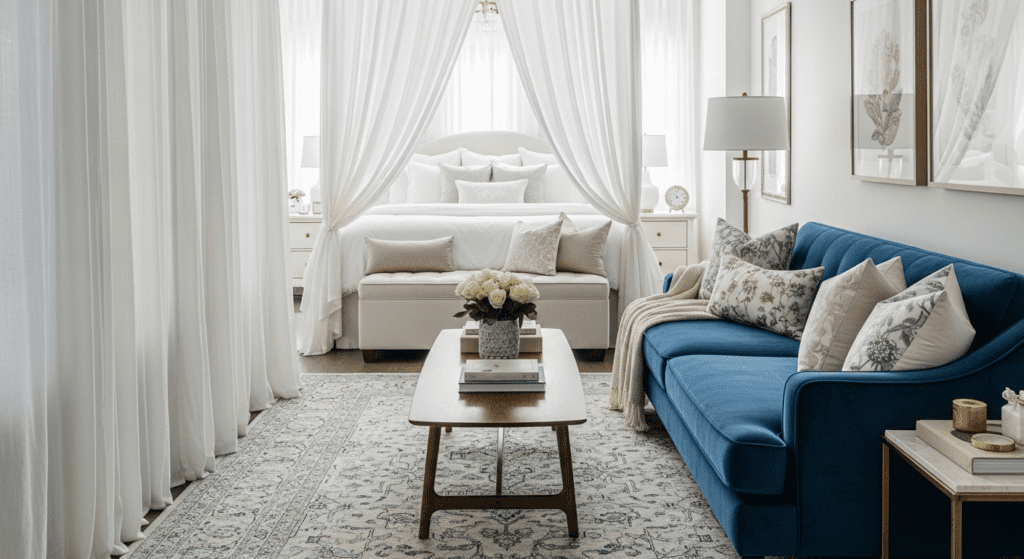
Embrace the bed as a design feature by positioning a beautiful canopy bed at one end of your narrow room, creating a luxurious sleeping sanctuary that reads as intentional rather than awkward.
Place a canopy bed at the far end of your narrow room, perpendicular to the long walls. Choose a design with four posts and flowing sheer curtains that can be drawn for privacy or left open for an airy feel. The canopy creates a room-within-a-room effect, psychologically separating the sleeping area from the living space without requiring solid dividers.
Position living room furniture at the opposite end or in the middle section of the narrow room—a sofa, chairs, and coffee table arranged to face away from the bed toward a TV or window. The canopy bed’s dramatic presence transforms it from “a bed in the living room” to “a beautiful architectural sleeping chamber in a multi-use space.”
This approach works best when you’re committed to the combined space and want to celebrate rather than hide the bedroom element. The canopy bed becomes a focal point that adds romance and luxury to the narrow room. Choose colors and fabrics that coordinate with your living area for cohesion.
9. Sliding Barn Door Separation
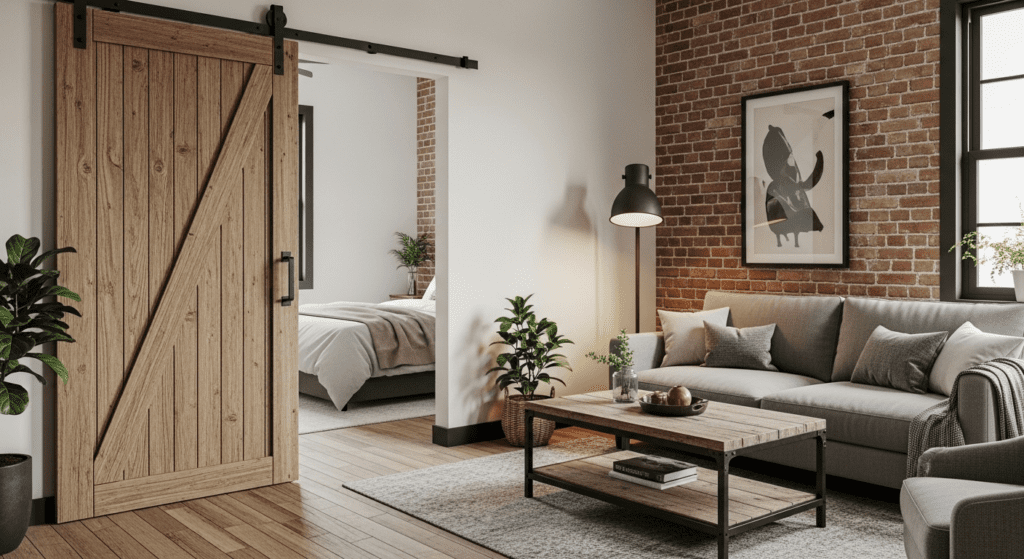
Install sliding barn doors on a ceiling track that can close off the sleeping area when needed, providing solid privacy and sound dampening.
Position your bed at one end of the narrow room and install one or two sliding barn doors on a track that can close off that end completely. During the day, slide the doors open and tuck them against the wall, integrating the spaces. At night or when hosting guests, slide the doors closed to create a separate bedroom. The barn doors become a design feature that adds industrial or farmhouse character.
Choose barn door styles that complement your aesthetic—reclaimed wood for rustic vibes, painted wood for farmhouse style, or sleek modern designs with metal frames. The doors slide on a track rather than swinging, making them perfect for narrow spaces where swinging doors would consume precious floor space.
This solution provides more substantial separation than curtains, with better sound dampening and complete visual privacy. The barn doors add architectural interest while solving the practical problem of creating distinct zones in a narrow combined space.
10. Built-In Bed Nook
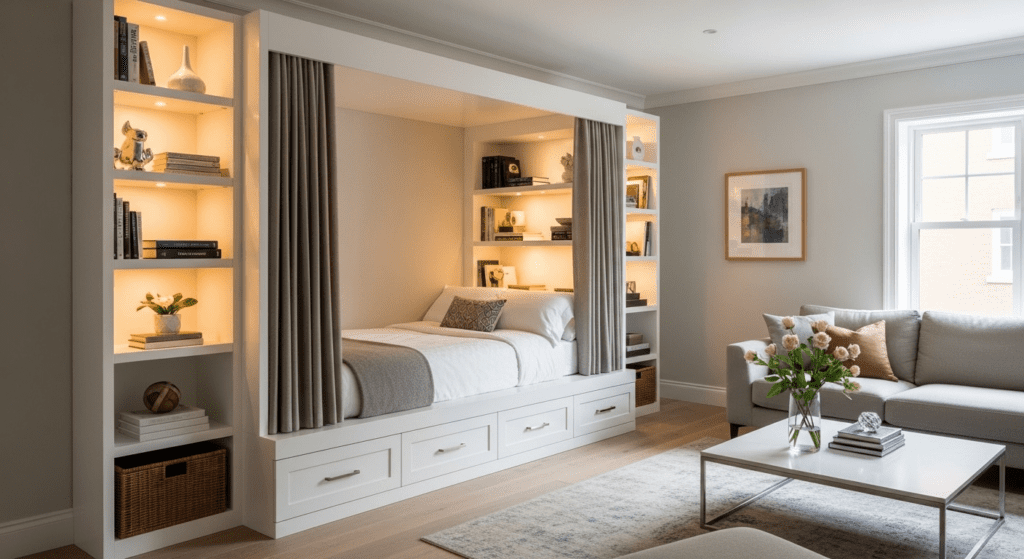
Create a built-in bed nook along one side of your narrow room that integrates sleeping space into the architecture without dominating the floor plan.
Build a platform bed into an alcove or recessed area along one long wall, with storage drawers underneath and built-in shelving or nightstands on either side. The built-in nature makes the bed feel like a permanent architectural feature rather than furniture placed in a living room. Add lighting, USB ports, and perhaps a reading nook at one end.
Use the rest of the narrow room for living functions—position a sofa perpendicular or at an angle to the bed nook, add a coffee table and chairs, creating a proper living area. The built-in bed nook reads as an intentional architectural feature like a window seat rather than a bedroom intruding on living space.
This solution works particularly well in spaces with existing alcoves or where you can create built-ins during renovation. The custom integration makes the dual-purpose space feel designed and intentional. Add curtains that can close off the nook for privacy while maintaining the built-in aesthetic.
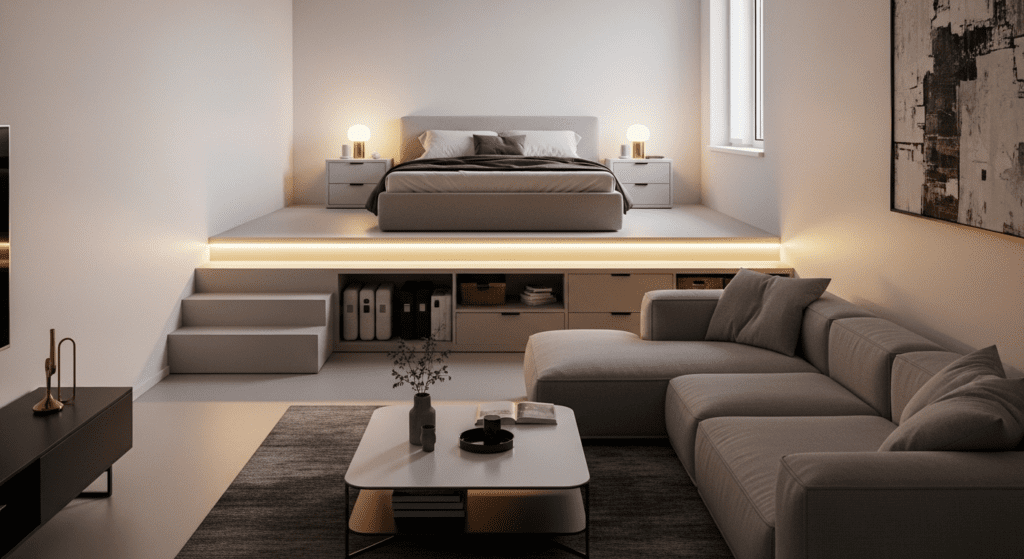
11. Elevated Platform Bed Zone
Create an elevated platform at one end of your narrow room that raises the sleeping area 12-18 inches above the main floor level, providing physical and psychological separation.
Build a platform that spans the width of your narrow room at one end, creating an elevated bedroom zone. The step up provides clear demarcation between living and sleeping areas without walls or dividers. Use the space underneath the platform for storage drawers or cabinets, maximizing functionality. Add area rugs on the platform to define the bedroom zone further.
The living area occupies the main floor level with standard furniture arrangement. The elevated platform makes the bedroom feel like a separate tier—you literally step up into bed. This architectural solution creates drama and interest while solving the dual-purpose challenge elegantly.
Consider the platform height carefully—high enough to provide storage and visual separation, but not so high that it requires significant steps or feels precarious. 12-18 inches is typically ideal. Add LED strip lighting along the platform edge for safety and ambiance.
12. Folding Screen Privacy
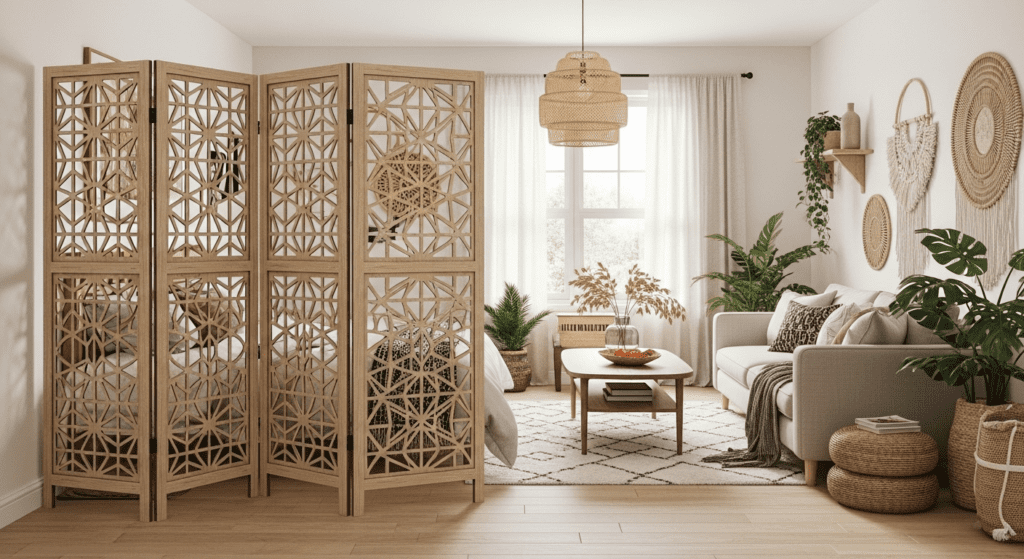
Use decorative folding screens that can be positioned to hide the bed during the day or create privacy at night, offering flexible separation in your narrow space.
Position your bed along one long wall or at one end of the narrow room. Place a decorative folding screen (typically 3-4 panels) that can be arranged to shield the bed from view. During the day when you want open flow, fold the screen and position it flat against the wall or in a corner. In the evening or when guests visit, unfold the screen to create privacy.
Choose screens that enhance your design aesthetic—Japanese shoji screens for Zen minimalism, carved wooden screens for bohemian style, or upholstered panels for contemporary elegance. The screen becomes a decorative element that serves a practical purpose. Look for screens that are stable and don’t require wall attachment.
This solution offers maximum flexibility since screens are easily moved, repositioned, or removed entirely. They work particularly well in rental situations where permanent modifications aren’t possible. Multiple screens can create different privacy configurations based on needs.
13. Headboard Wall Separation
Create a substantial headboard wall that extends beyond the bed’s width and height, providing a partial room divider that separates sleeping from living without complete enclosure.
Build or install a headboard wall that extends from floor to ceiling and several feet beyond the bed’s width on either side. This creates a partial wall that provides privacy and visual separation while maintaining some openness. The headboard wall can incorporate storage, shelving, or simply serve as an architectural element.
Paint or finish the headboard wall in a contrasting color or material from the main walls to emphasize the separation. Add sconces or integrated lighting. The substantial headboard creates a bedroom-within-a-room feeling while the open sides maintain the studio’s openness.
Position living room furniture on the other side of the headboard wall, oriented away from the sleeping area. The partial wall provides enough separation for psychological comfort while allowing light and air to circulate throughout the narrow space.
14. Daybed Window Seat Hybrid
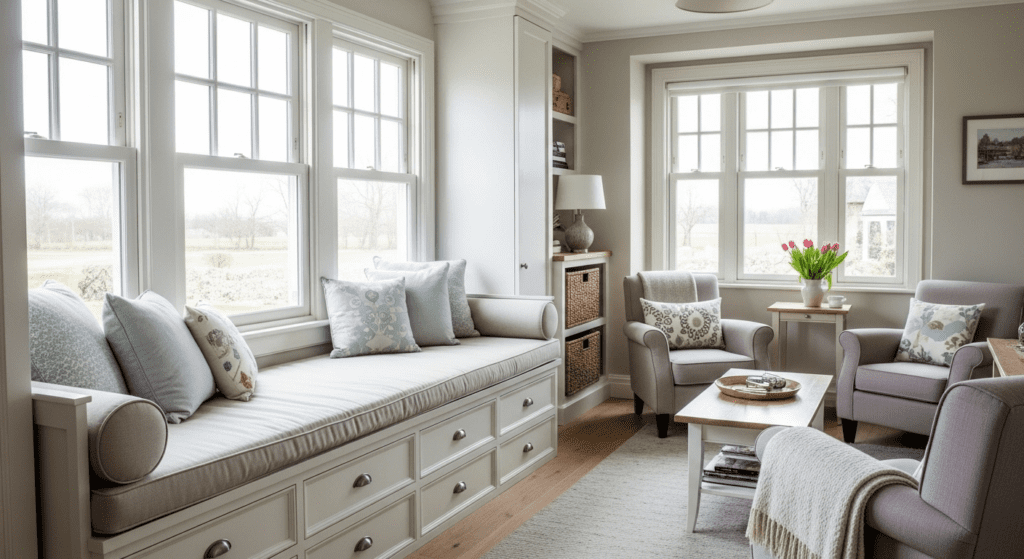
Transform a window area in your narrow living room into a daybed window seat that serves as both seating and sleeping, maximizing the architectural feature.
If you have windows along one long wall or at one end, build a window seat long and deep enough to function as a daybed. Add a thick cushion, throw pillows for daytime styling, and storage drawers underneath. During the day, it functions as a cozy window seat for reading or relaxing. At night, remove decorative pillows and use it as a sleeping surface.
This works particularly well for occasional guest accommodation rather than nightly use. The window seat daybed maintains the living room aesthetic while providing sleeping functionality when needed. The natural light and views make it a desirable sleeping spot.
Add curtains or roman shades to the windows for privacy when the window seat is used for sleeping. Install reading lights or sconces on either side. The window seat daybed celebrates the architectural feature while solving the dual-purpose challenge.
Essential Considerations for Living Rooms with Beds
Storage Solutions: Combined living and sleeping spaces require excellent storage to prevent clutter. Incorporate storage beds with drawers underneath, ottomans with interior storage, and wall-mounted shelving to keep belongings organized and out of sight.
Bedding Management: Keep everyday bedding minimal and attractive since it may be visible during waking hours. Choose beautiful throws and pillows that double as decor. Store extra bedding in closets or storage furniture rather than piling it on the bed.
Zoning with Rugs: Use different area rugs to define living and sleeping zones. A large rug under the sofa and coffee table, and a different rug under or beside the bed creates visual separation even without physical barriers.
Lighting Layers: Create distinct lighting for each zone. Living area lighting should be bright and functional, while bedroom lighting should be dimmable and conducive to sleep. Use separate switches or smart bulbs for control.
Visual Cohesion: Maintain a cohesive design throughout the space even when creating distinct zones. Use a consistent color palette, complementary styles, and coordinating materials so the room feels like one intentional space rather than two rooms forced together.
Scent and Freshness: Keep combined living-sleeping spaces fresh with good ventilation, air purifiers, and attention to laundry. The room must function as a clean, fresh living space, not smell like a bedroom.
Privacy for Guests: If the bed is for guests rather than your own use, ensure your privacy solution actually provides adequate coverage. Test sightlines from different angles and consider what guests would want in terms of privacy and comfort.
Multi-Functional Furniture: Invest in quality multi-functional pieces like storage ottomans, nesting tables, and furniture with dual purposes to maximize limited space.
Creating Successful Living-Bedroom Combinations
Long narrow living room with bed ideas require creative thinking and smart space planning, but the results can be both functional and beautiful. The key is creating clear psychological and visual separation between sleeping and living functions while maintaining the flow and openness necessary in narrow spaces.
Whether you choose a space-saving Murphy bed, elegant curtain dividers, architectural solutions like loft beds or platforms, or simply embrace a beautiful daybed as dual-purpose furniture, success lies in intentional design that acknowledges both functions without compromising either.
Consider your specific needs—is this for nightly use or occasional guests? Do you need complete privacy or just visual separation? How much are you willing to invest in custom built-ins or permanent modifications? Your answers will guide you toward the right solution for your unique narrow living room with bed requirements.
With thoughtful planning and strategic design, your narrow living room can successfully accommodate both living and sleeping while maintaining style, comfort, and functionality. The dual-purpose space becomes not a compromise, but a smart, sophisticated solution to modern living challenges.