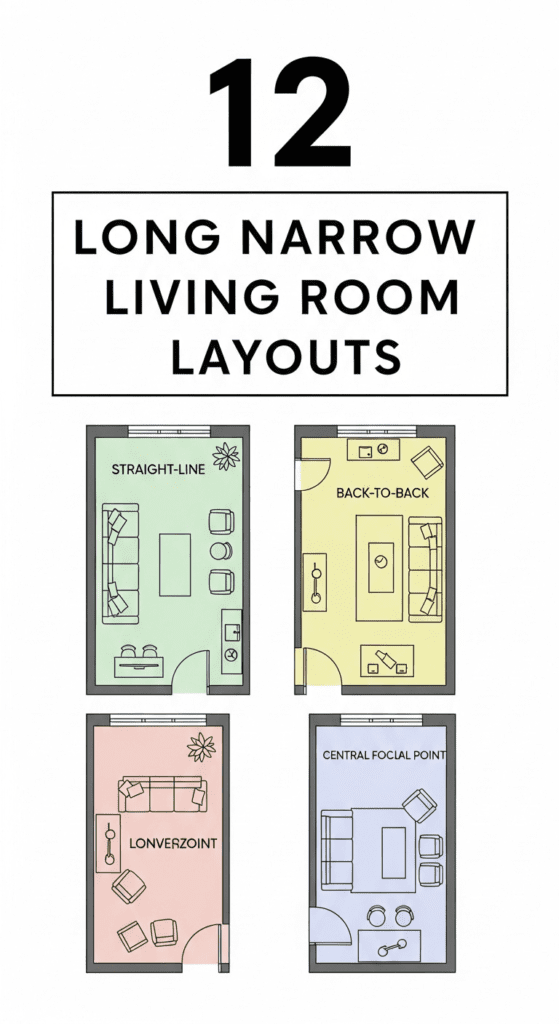
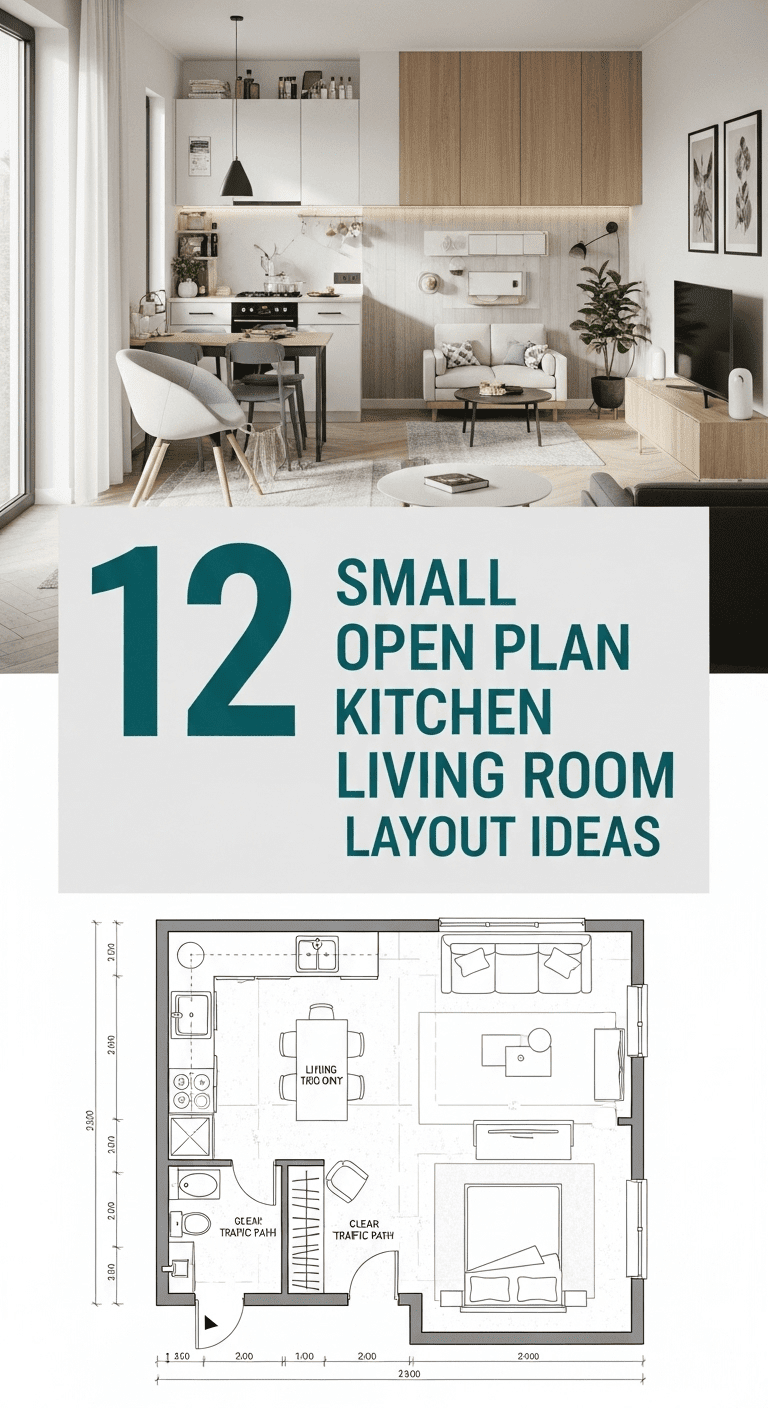
12 Long Narrow Living Room Designs Layout
Long narrow living room designs layout strategies determine how functional and attractive your space becomes. The right layout maximizes seating, maintains flow, and creates balance. Here are twelve proven layout designs for elongated living rooms.
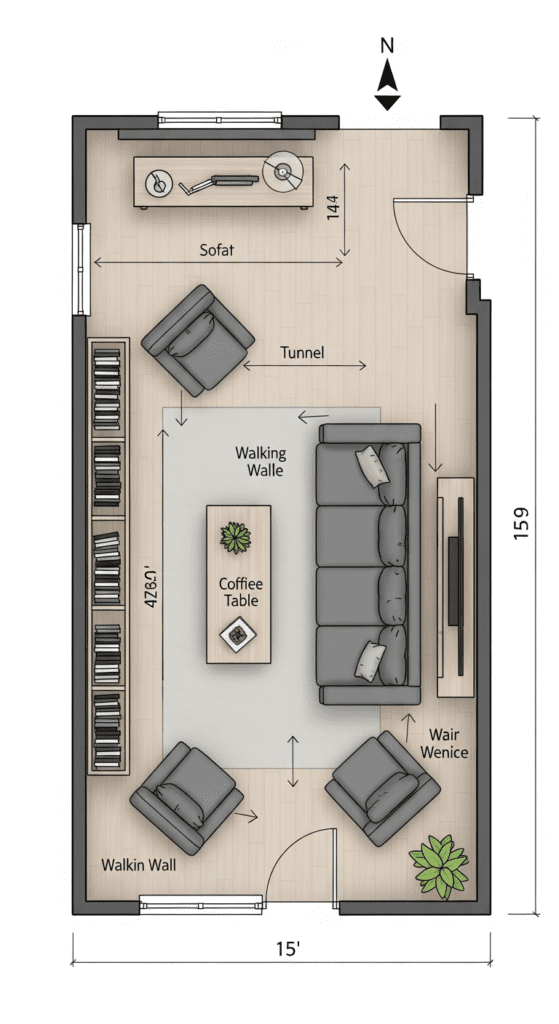
1. Perpendicular Sofa Layout
Position your sofa perpendicular to the long walls, running across the room’s width.
This classic arrangement breaks the tunnel effect immediately. Face the sofa toward a short wall with TV or fireplace. Add chairs on either side to complete the conversation area.
2. Floating Furniture Setup
Pull furniture away from walls, creating a floating conversation area in the center.
Position sofa floating with console table behind it. This creates pathways around the perimeter and makes the narrow room feel more spacious. Works best in longer narrow spaces.
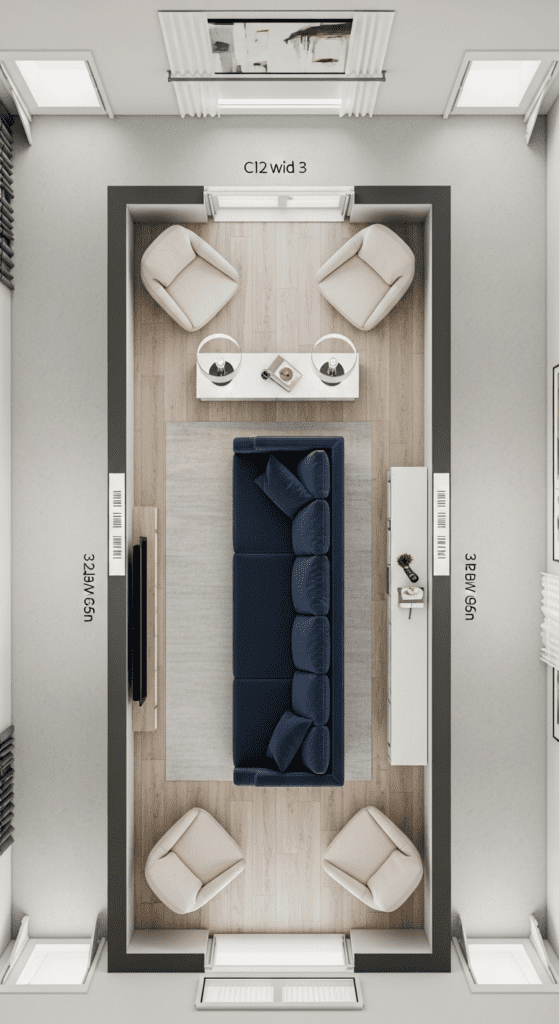
3. L-Shaped Corner Configuration
Anchor an L-shaped sectional in one corner to maximize seating without blocking space.
Place the longer section along one wall and shorter section extending into room. This uses corner space efficiently while leaving the center open for traffic flow.
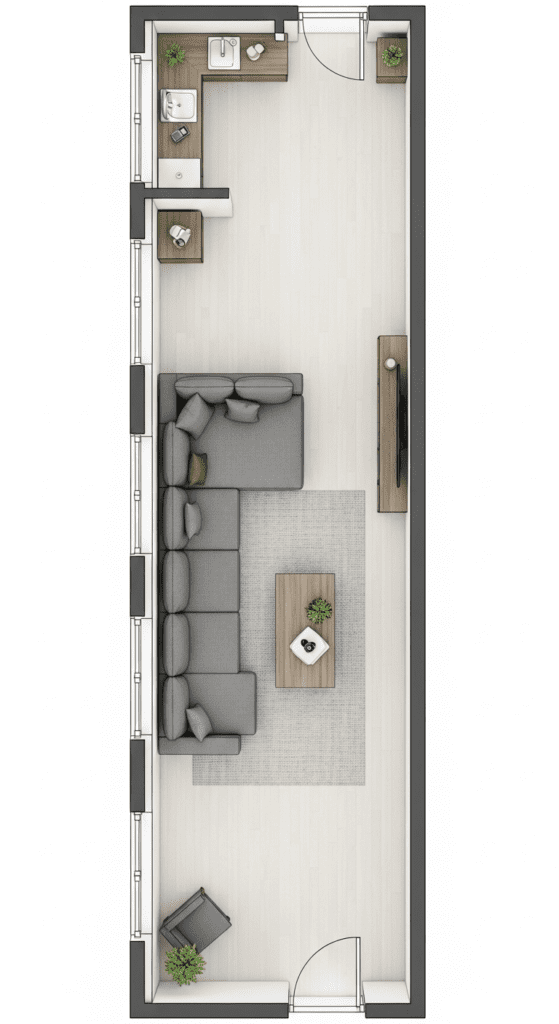
4. Dual-Zone Division
Create two distinct functional areas by dividing your narrow room into separate zones.
Use front area for living/TV and back area for reading, dining, or workspace. Separate with area rugs, low bookshelf, or simply furniture arrangement. This maximizes the room’s length purposefully.
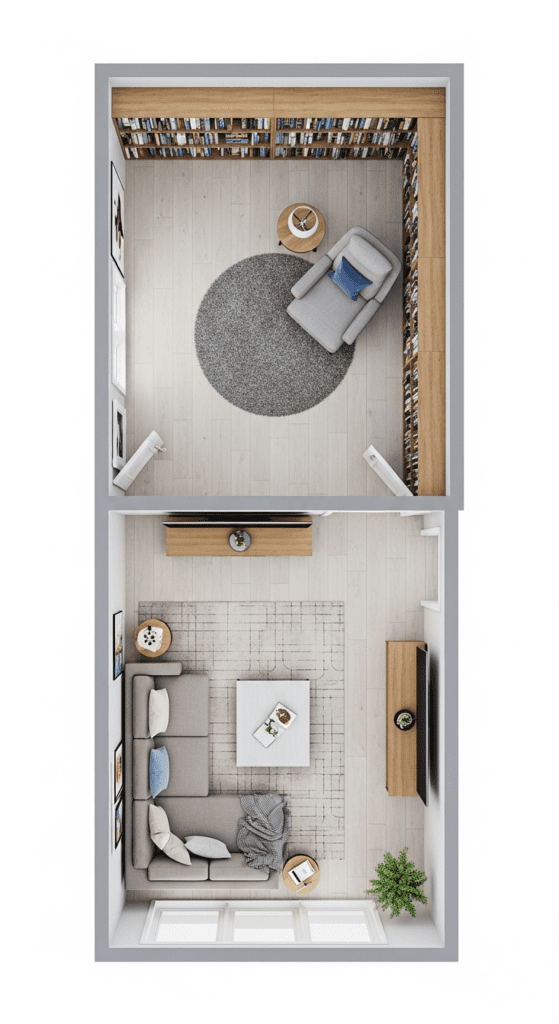
5. Symmetrical Parallel Layout
Arrange matching furniture pieces on opposite long walls facing each other.
Position two identical sofas or a sofa and loveseat on parallel walls. Place coffee table between them. This formal arrangement works in wider narrow rooms (11+ feet wide).
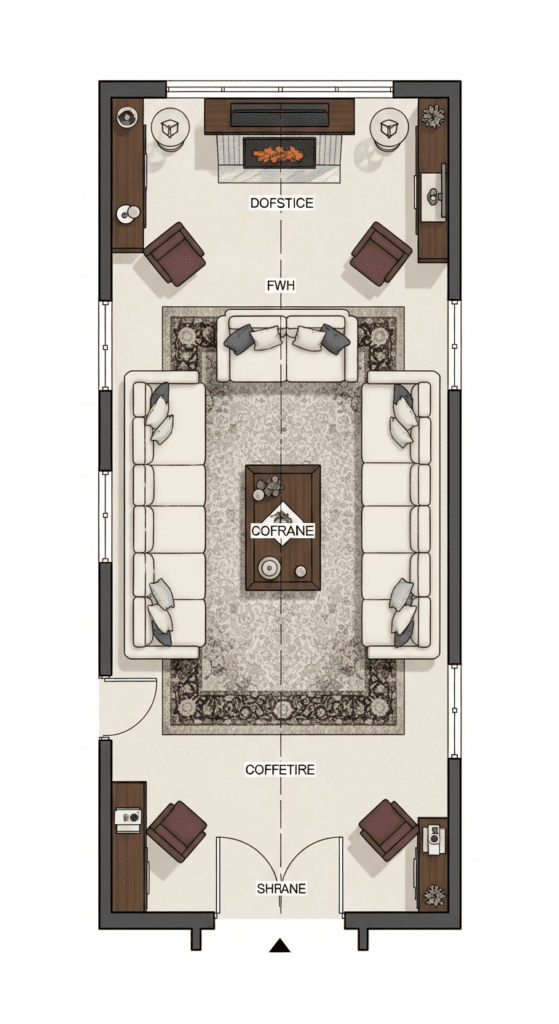
6. Angled Conversation Grouping
Position furniture at angles rather than parallel to walls for dynamic interest.
Place sofa at 45-degree angle with chairs angled to complement. The diagonal lines add visual interest while breaking up the rigid rectangular room. Creates unique negative spaces.
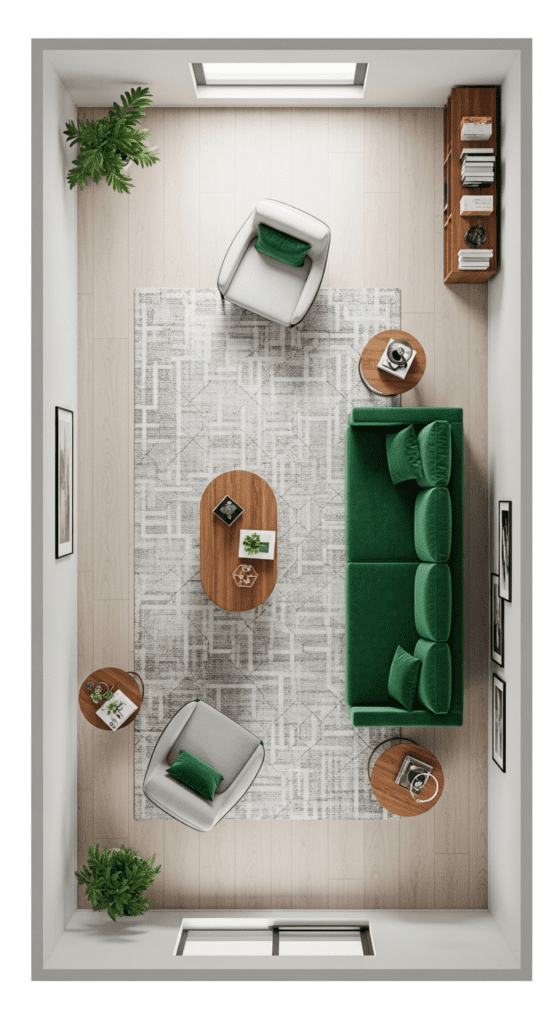
7. Single-Wall Linear Arrangement
Line furniture along one long wall keeping opposite wall completely clear.
Position sofa, side tables, and storage along one side. Leave other wall open for traffic and visual breathing room. This works in very narrow rooms (under 10 feet wide).
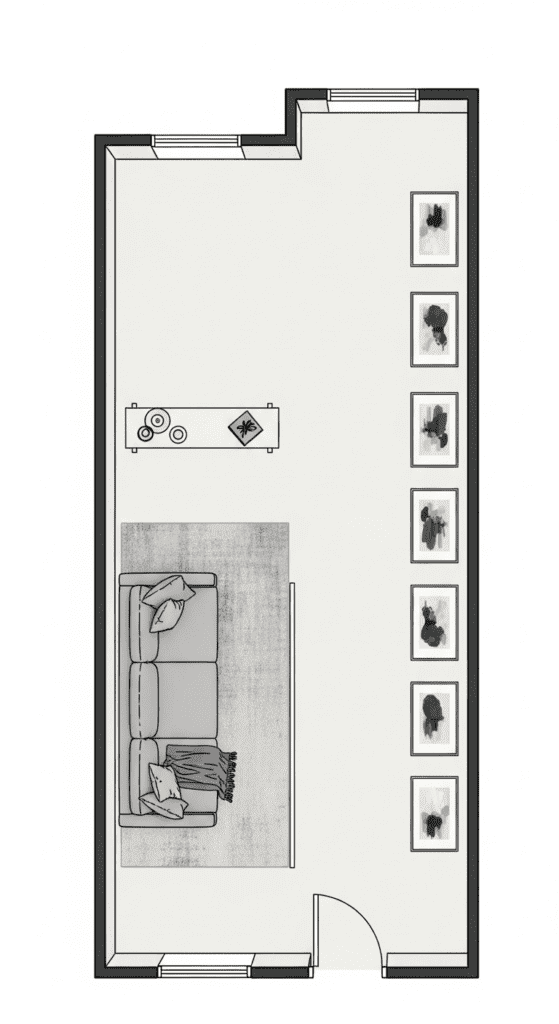
8. Entertainment-Focused Layout
Arrange everything facing a media wall for optimal TV viewing experience.
Mount TV on short end wall with seating oriented for viewing. Position sofa perpendicular, chairs angled slightly toward screen. Keep coffee table low to avoid blocking views.
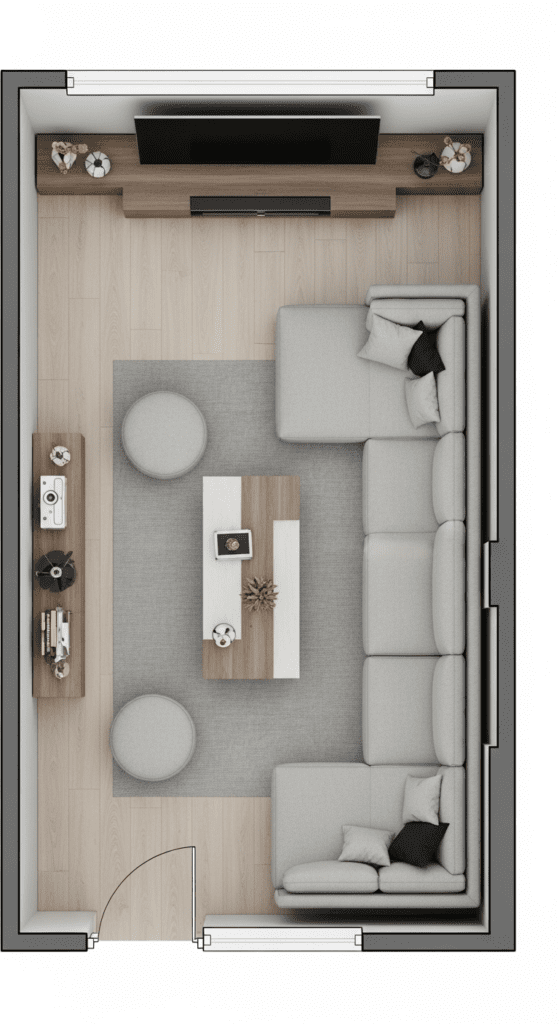
9. Conversation Circle Layout
Create a circular conversation grouping using curved or angled furniture placement.
Position sofa, two chairs, and ottoman in rough circle or oval around coffee table. This arrangement encourages interaction and creates intimacy despite narrow proportions.
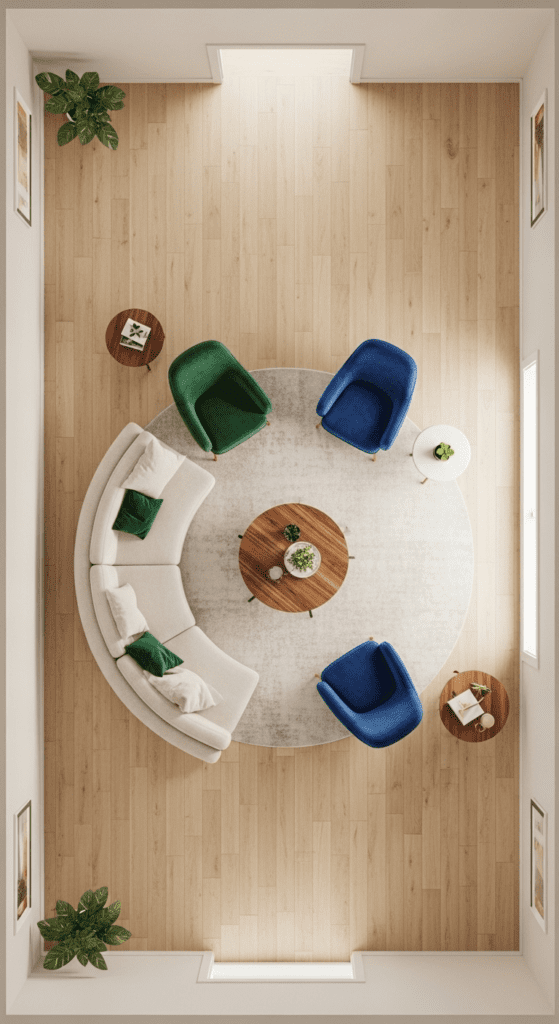
10. Back-to-Back Divider Layout
Use sofa back as room divider with functional space behind it.
Position sofa floating with console, desk, or dining table behind it. This creates two functional areas within the narrow space. The sofa back provides natural separation.
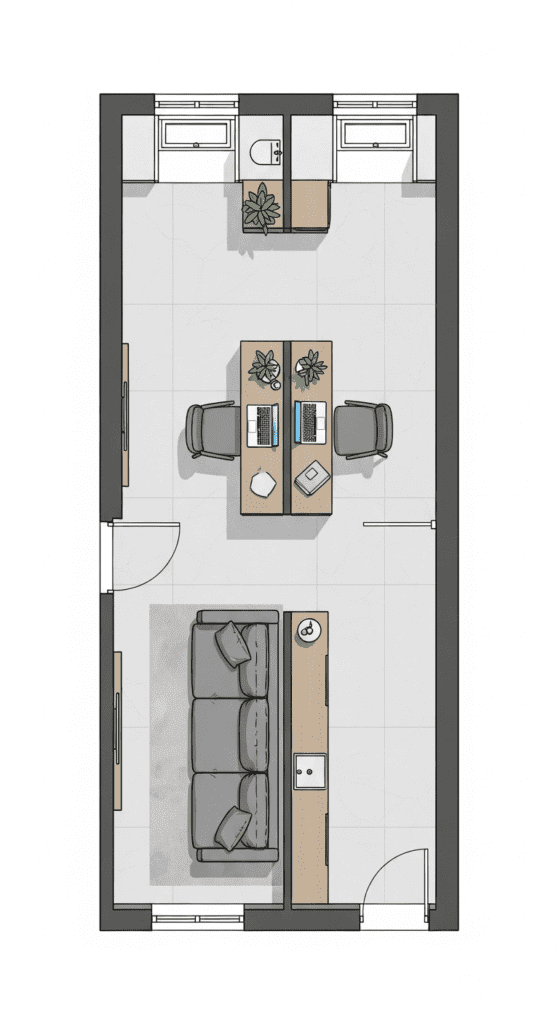
11. Window-Focused Orientation
Orient all seating to face windows at the end of your narrow room.
Position sofa perpendicular facing floor-to-ceiling windows or attractive view. This makes light and views the focal point. Chairs angle toward both sofa and windows.
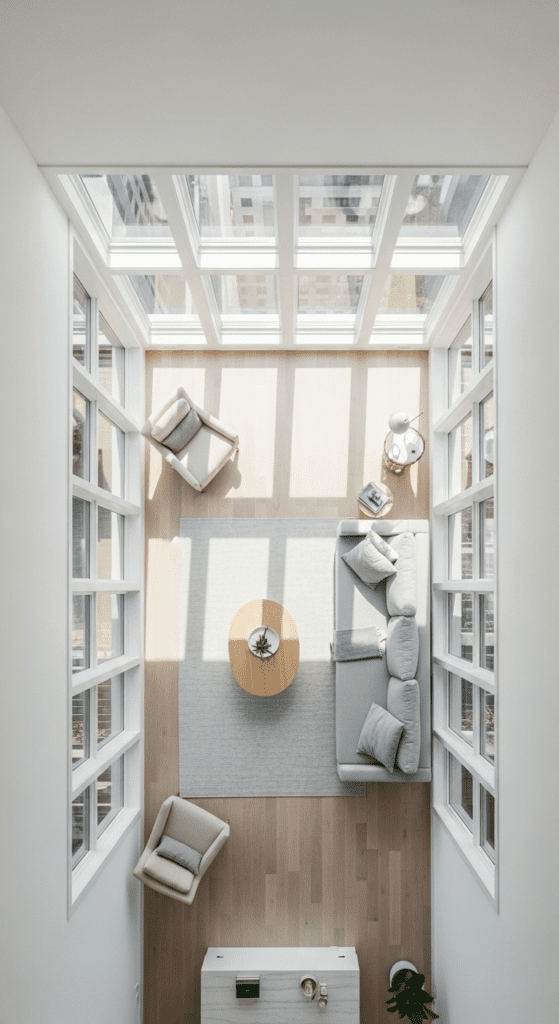
12. Minimalist Open-Flow Layout
Use minimal furniture with generous open floor space between pieces.
Choose only essential pieces—one sofa, one coffee table, maximum two chairs. Leave abundant negative space. This creates maximum openness in narrow rooms.
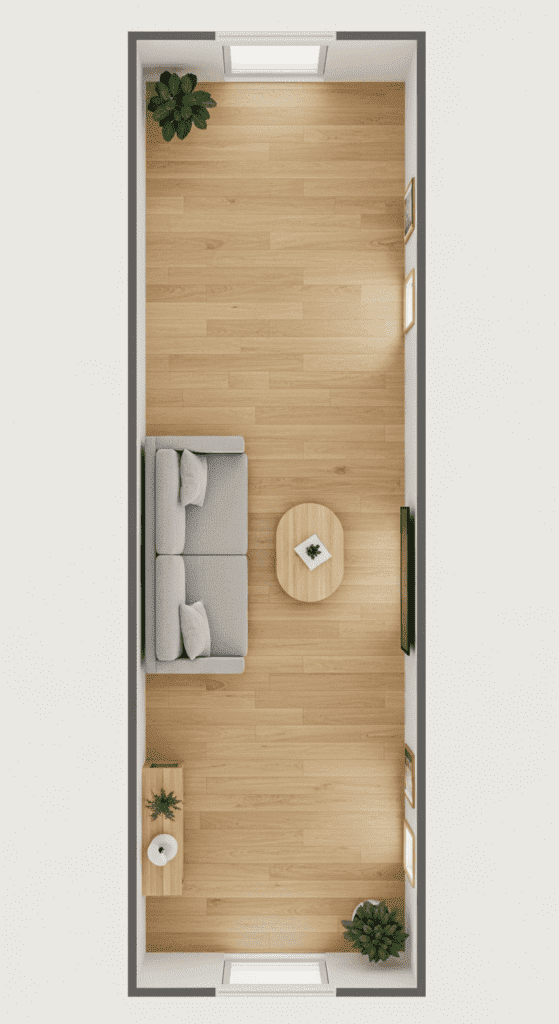
Layout Planning Quick Tips
Measure First: Know exact dimensions including doorways. Tape out furniture footprints on floor before buying.
Traffic Paths: Maintain 30-36 inches clearance for walkways. Don’t let furniture block natural flow through the room.
Furniture Scale: Choose appropriately sized pieces. A 96-inch sofa might fit technically but overwhelm visually.
Focal Point: Every layout needs a focal point—fireplace, TV, windows, or artwork that anchors the arrangement.
Balance Visual Weight: Distribute furniture evenly. Don’t cluster everything at one end leaving the other empty.
Test Different Options: Live with painter’s tape outlines for a few days before committing to expensive furniture purchases.
The right layout transforms your narrow living room from awkward space to functional, beautiful room you love spending time in!