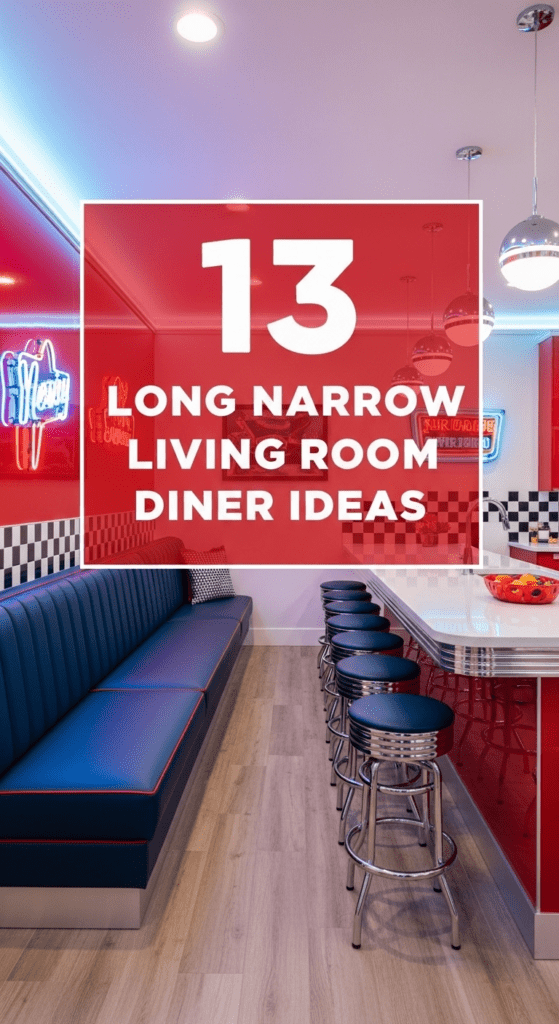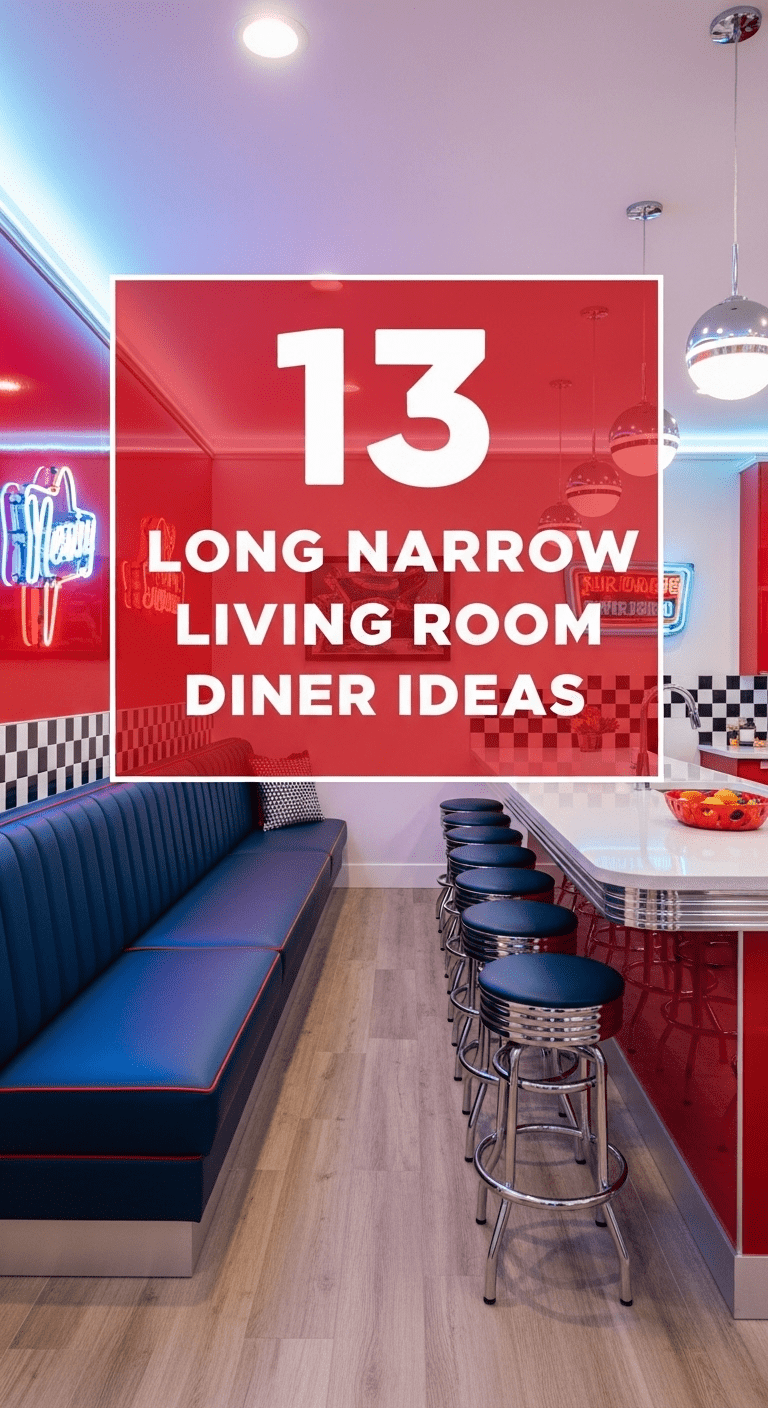
Long narrow living room diner ideas help you combine dining and living functions in one elongated space. These dual-purpose rooms require strategic planning to accommodate both activities comfortably. Here are thirteen smart ideas for creating functional living-dining combinations.
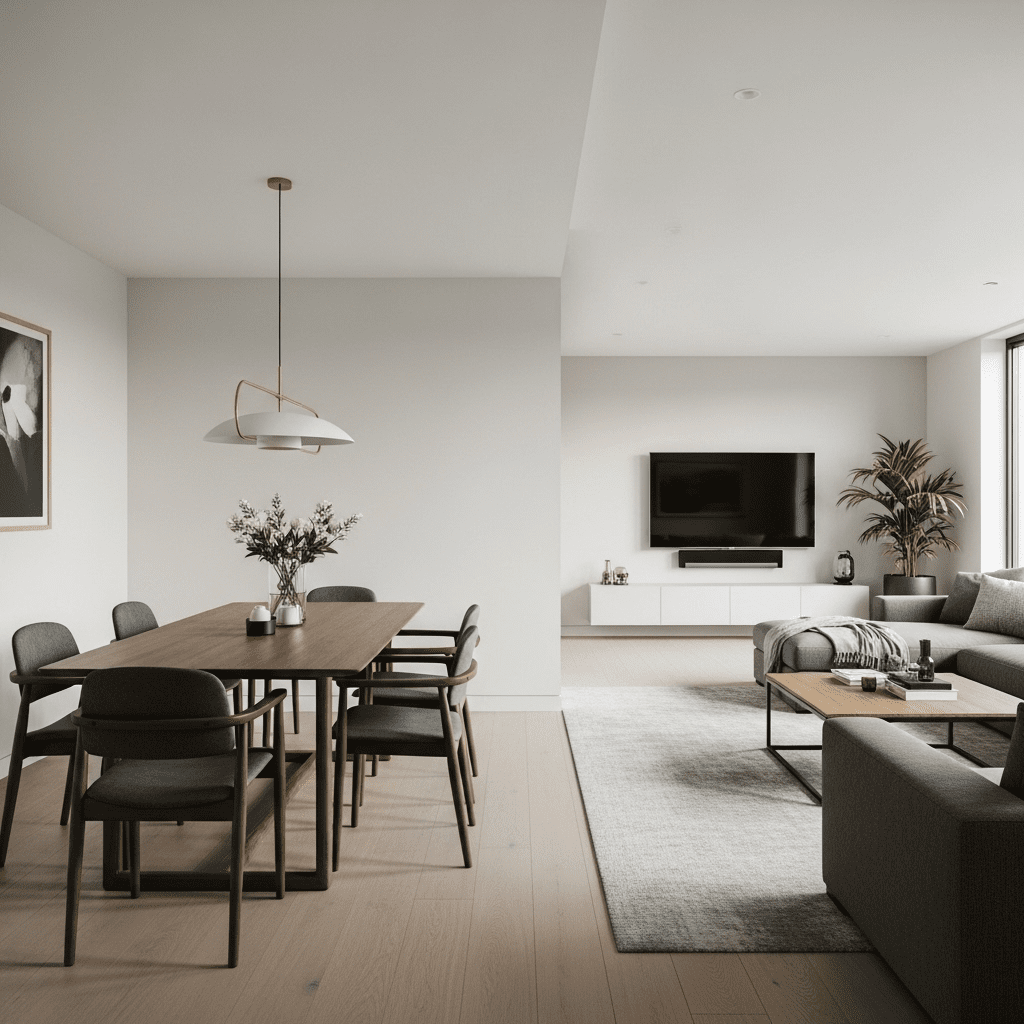
1. End-to-End Zoning
Place the dining area at one end and living area at the opposite end for clear separation.
Use the entrance end for dining with table and chairs, far end for living with sofa and TV. This linear arrangement creates distinct zones while maintaining open flow between them.
2. Back-to-Back Configuration
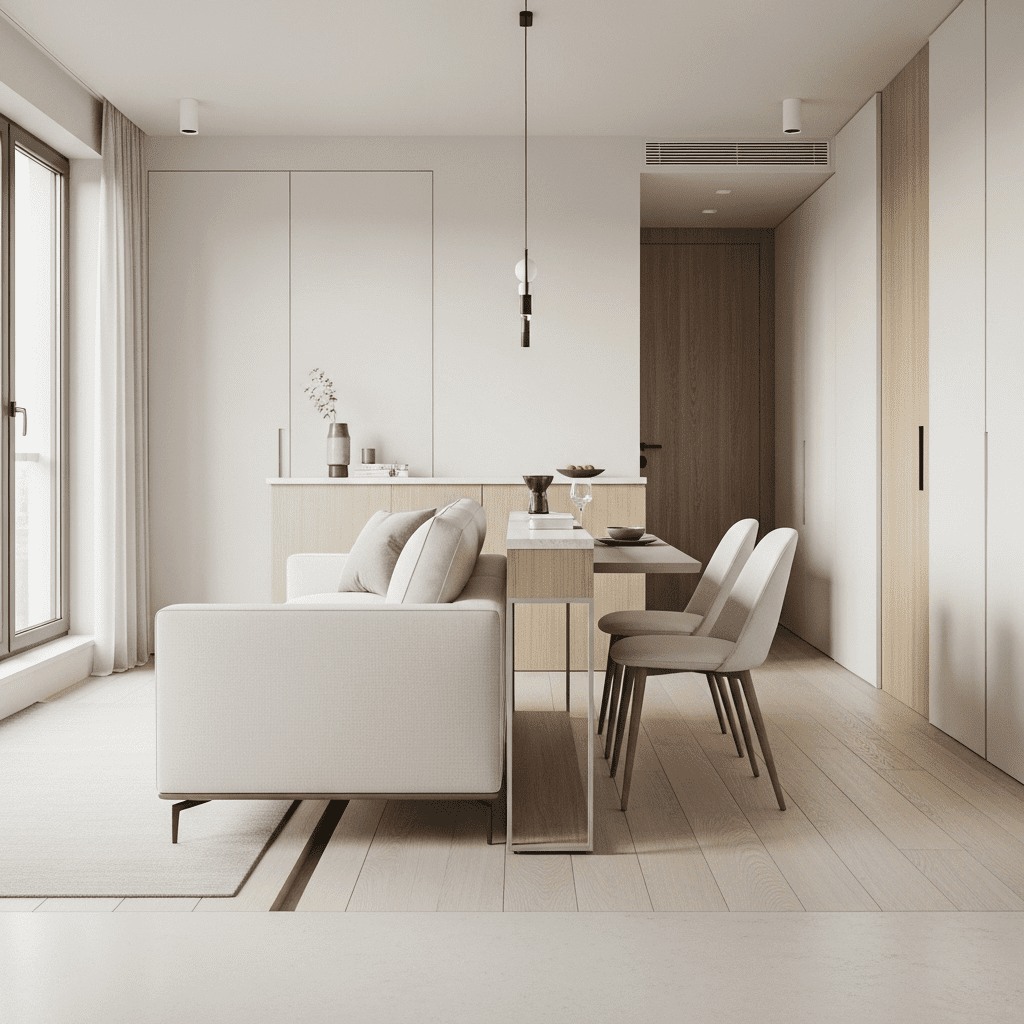
Position dining chairs back-to-back with the sofa for space-efficient division.
Float the sofa perpendicular with dining table positioned behind it. The furniture backs create natural separation without walls. Add a console table between for extra definition and storage.
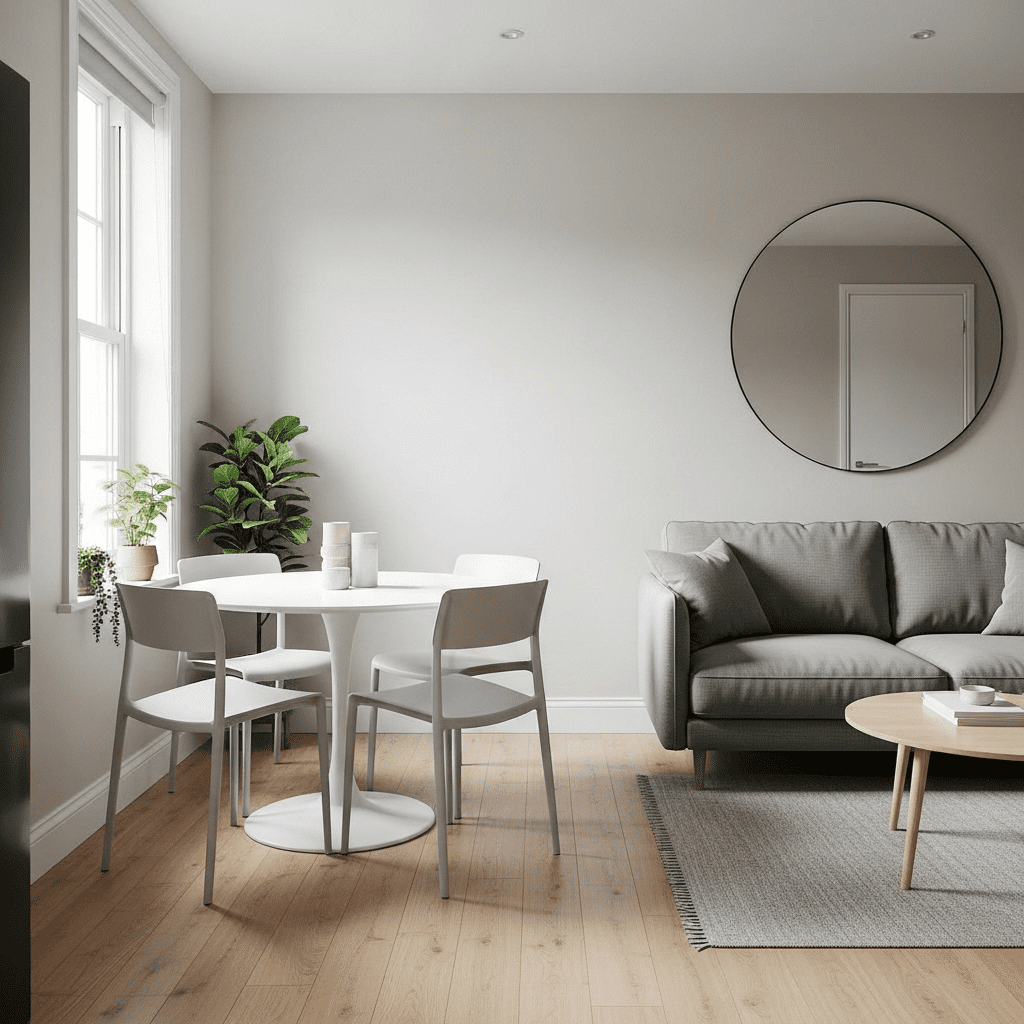
3. Round Table Solution
Use a round dining table to save space and improve traffic flow.
Round tables have no corners to navigate around and take up less visual space. Position at one end with living furniture at the other. The circular shape softens the linear room.
4. Banquette Built-In Dining
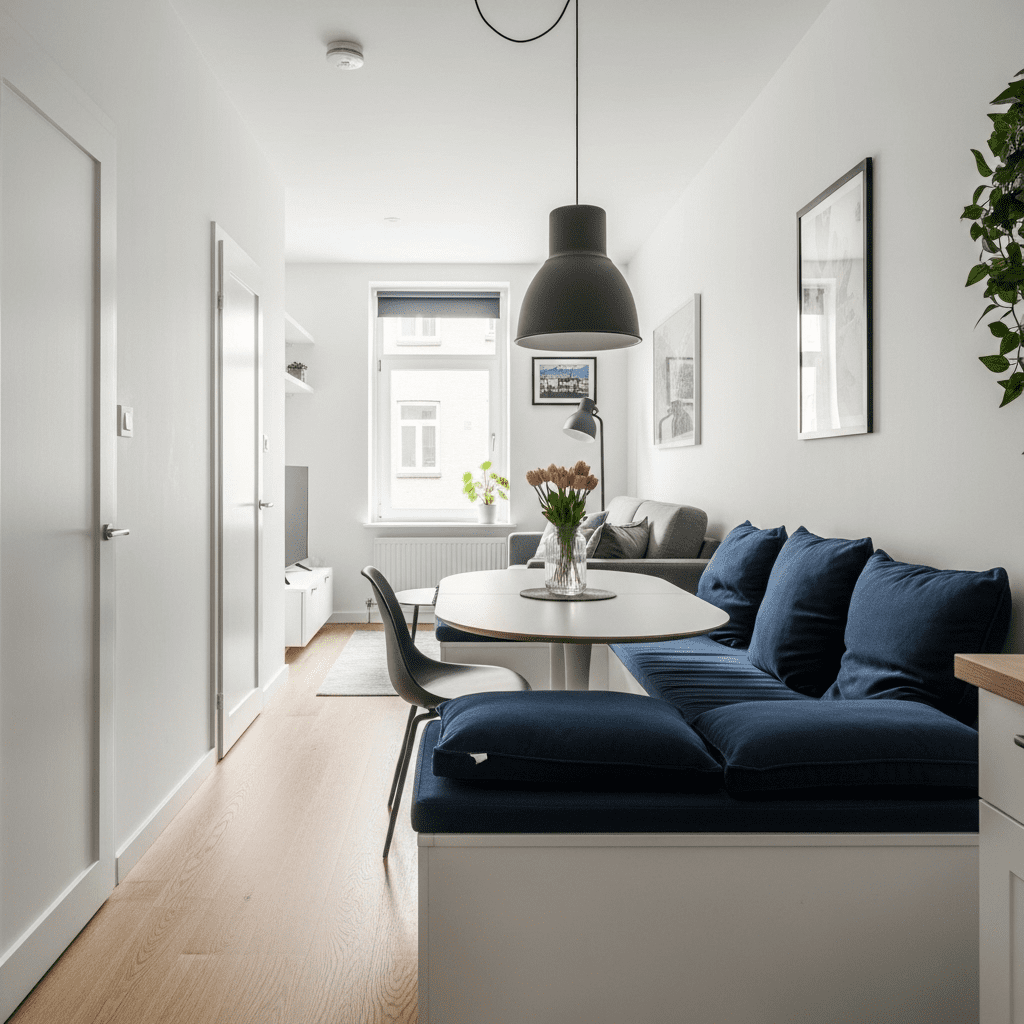
Install built-in banquette seating along one wall for the dining area.
Create L-shaped or straight banquette with storage underneath and dining table in front. This saves space compared to traditional dining chairs. Use remaining area for living room furniture.
5. Drop-Leaf Table Flexibility
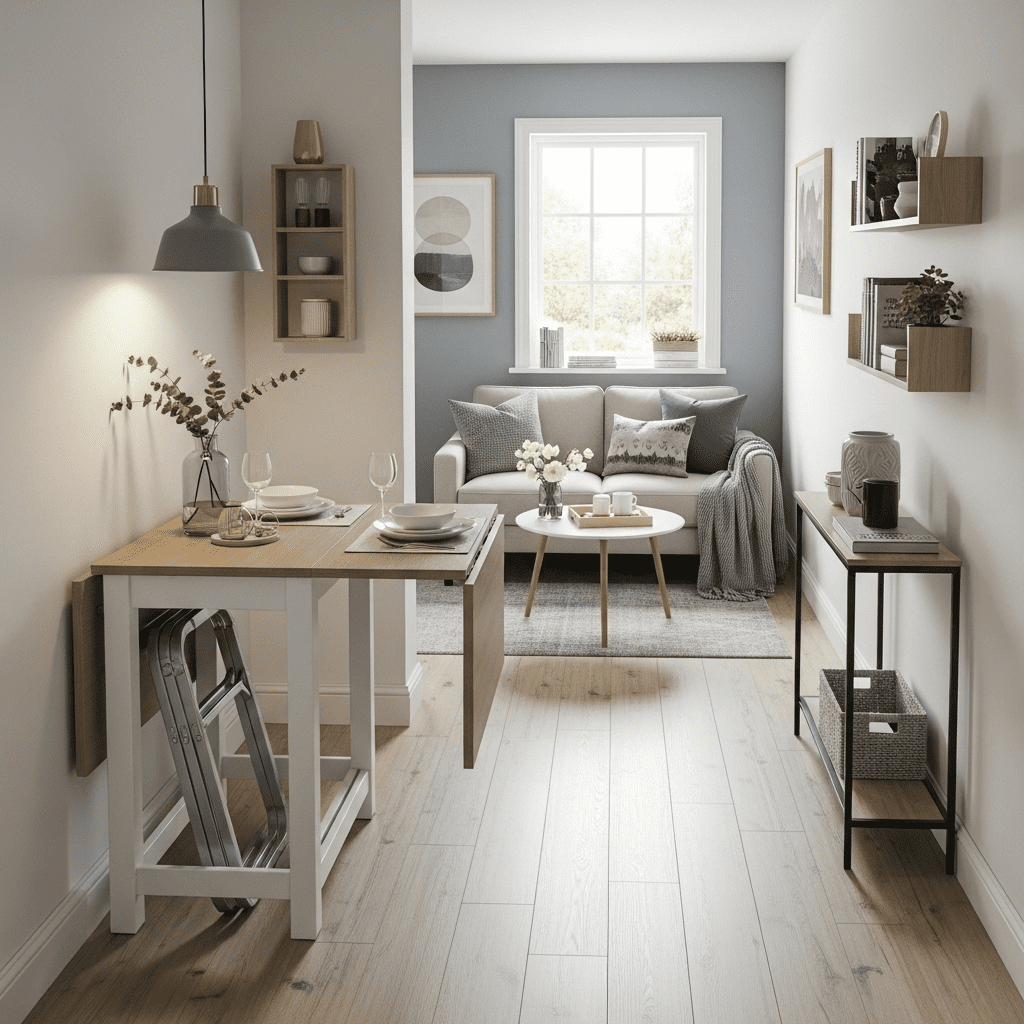
Use a drop-leaf or extendable dining table that adapts to different needs.
Keep table compact for daily use, extend when entertaining. This flexibility is perfect for narrow spaces where you can’t dedicate permanent square footage to large dining tables.
6. Rug-Defined Zones
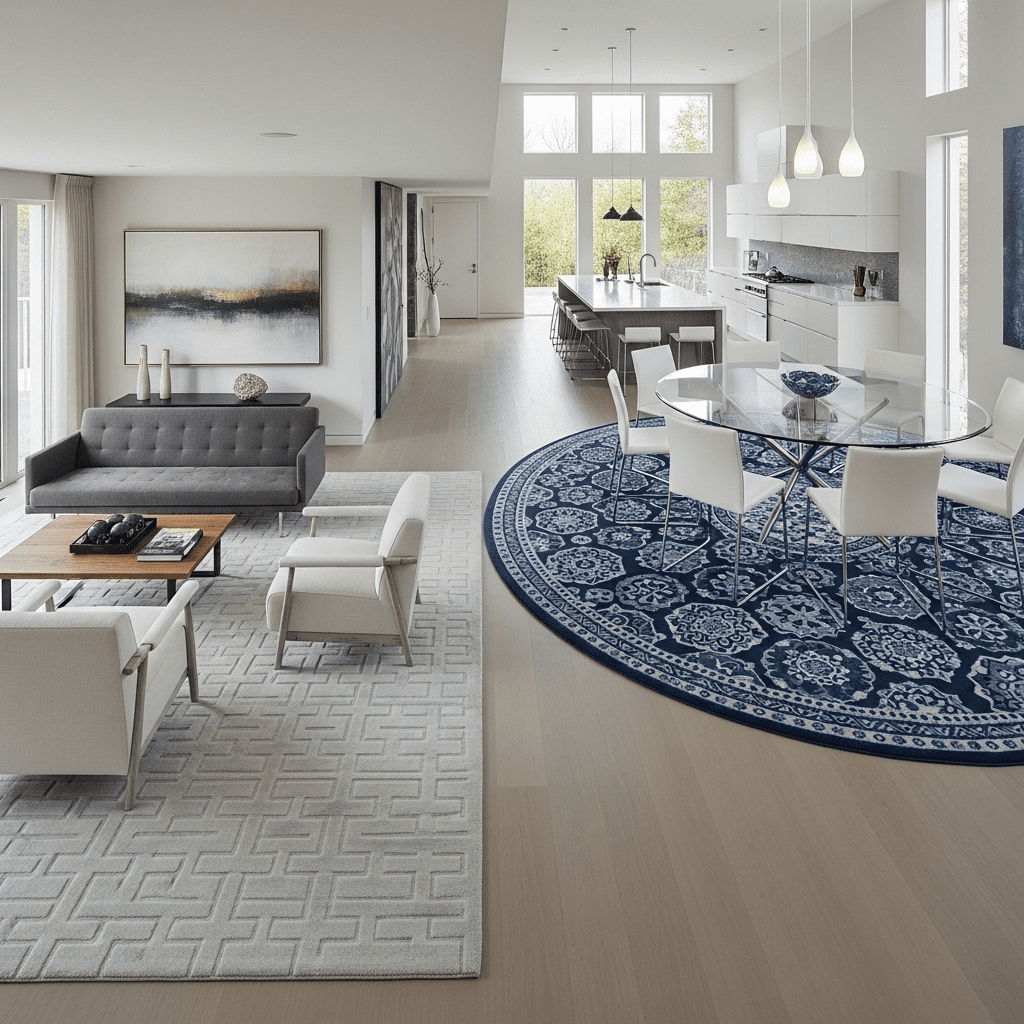
Use two distinct area rugs to visually separate living from dining functions.
Place one rug under living furniture, different coordinating rug under dining table. The rugs create psychological boundaries while maintaining openness. Choose complementary patterns and colors.
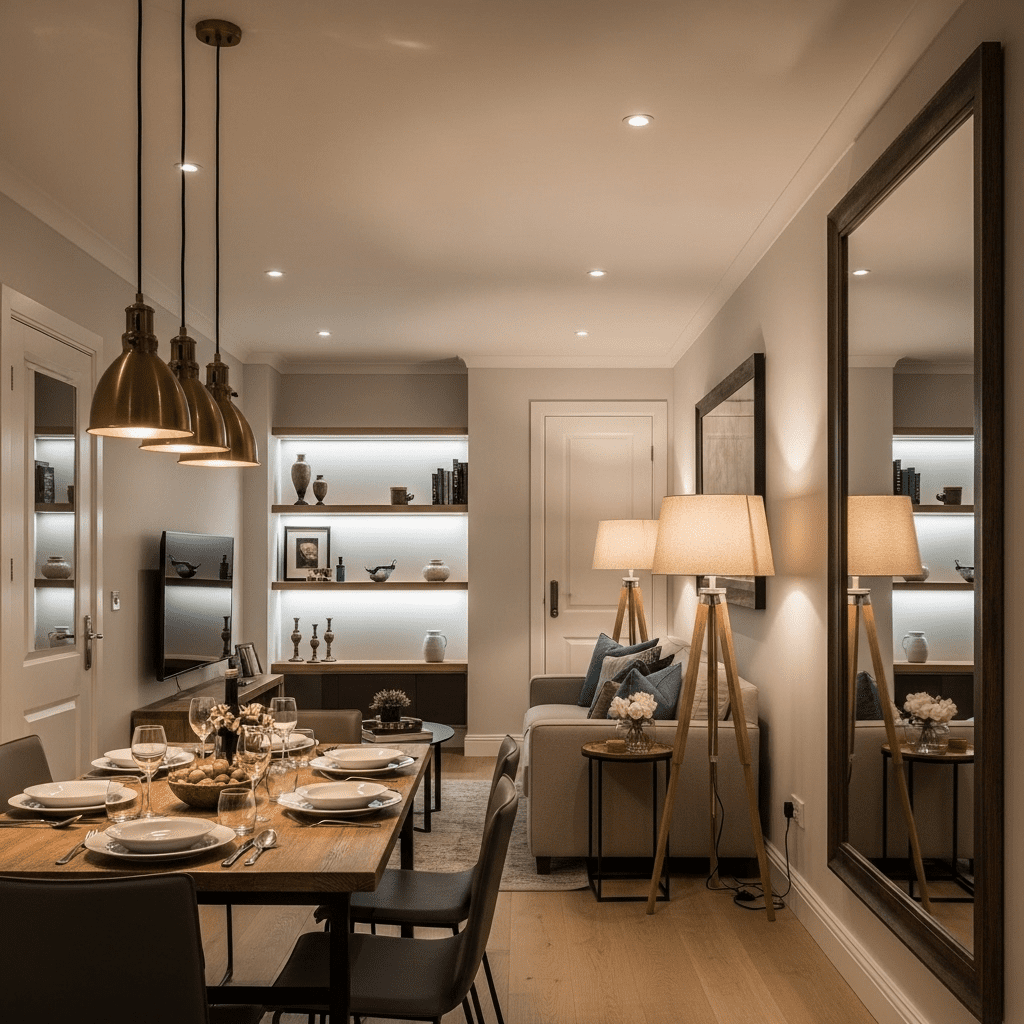
7. Pendant Lighting Division
Use different lighting styles to define living and dining areas clearly.
Hang statement pendant lights or chandelier over dining table, use floor and table lamps in living area. The varied lighting creates zone definition while providing function.
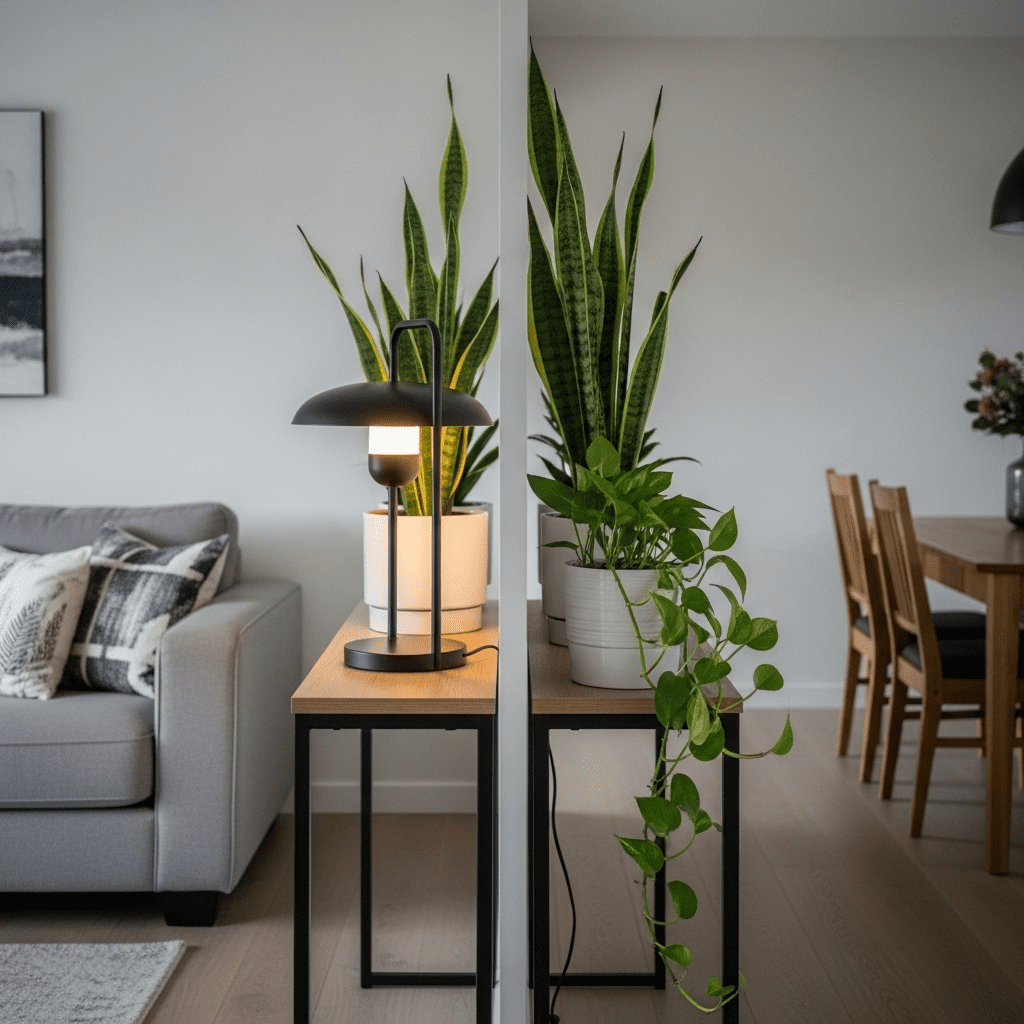
8. Console Table Buffer
Place a console table between living and dining areas as a subtle divider.
Position narrow console perpendicular between zones, styled with lamps and decor. This creates visual separation while maintaining openness. Provides display and storage space.
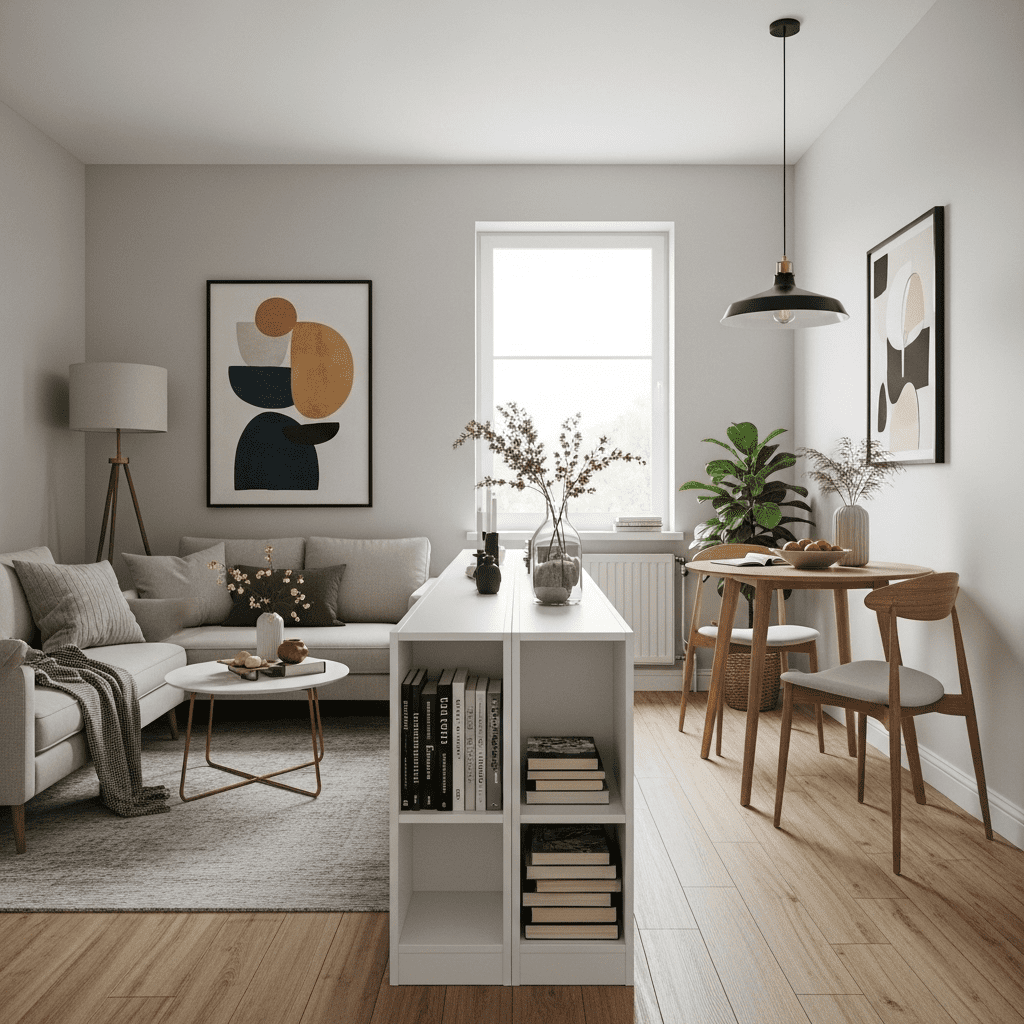
9. Low Bookshelf Partition
Use a low open bookshelf as a partial divider between living and dining zones.
Install or position 3-4 foot tall bookshelf perpendicular between areas. This provides separation and storage while maintaining visual connection. Display books, plants, and decorative objects.
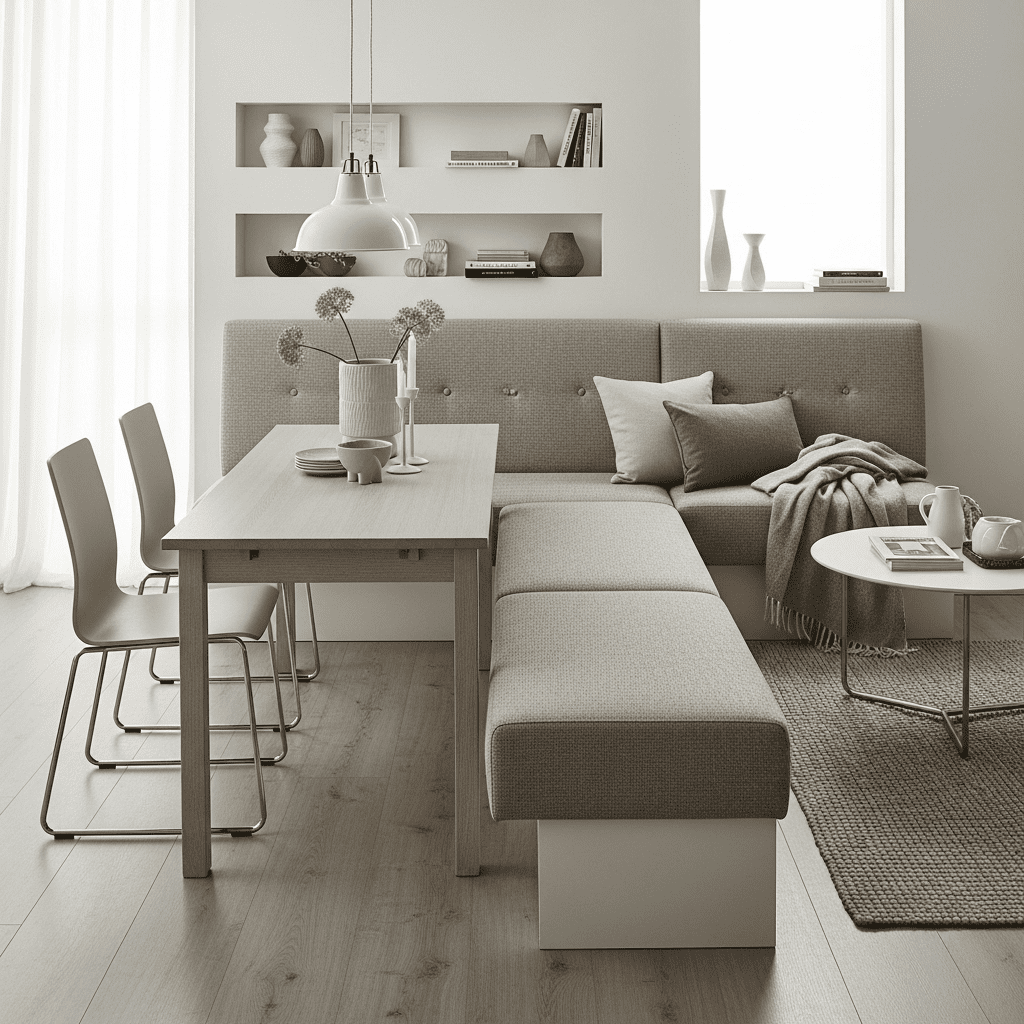
10. Bench Seating Dual-Purpose
Use a bench with cushions that serves both living and dining functions.
Position a long bench that can be pulled to dining table when needed or used as extra living room seating. The dual-purpose furniture maximizes flexibility in narrow spaces.
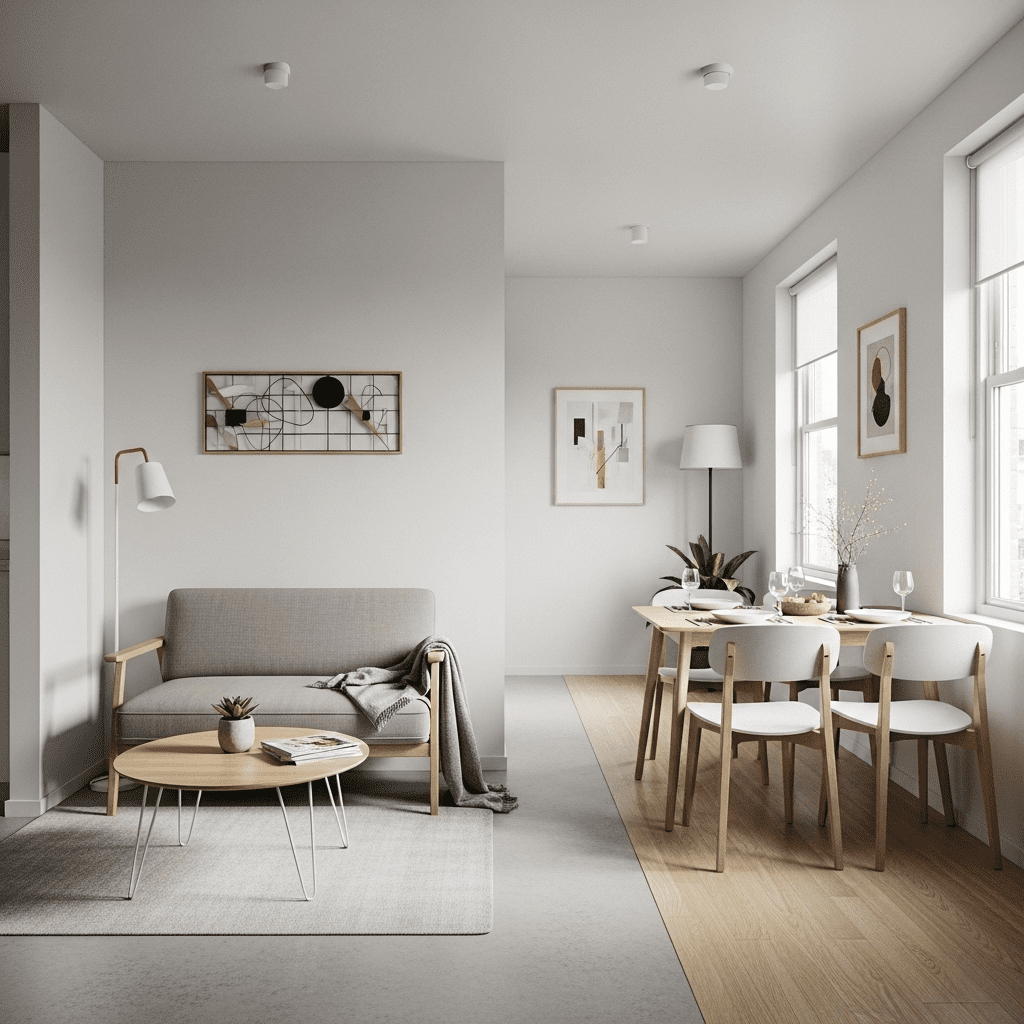
11. Minimalist Open Plan
Keep furniture minimal in both zones to maintain spaciousness.
Use compact loveseat instead of full sofa, small dining table for four. Leave generous open floor space between zones. The restrained approach prevents cramping in narrow footprint.
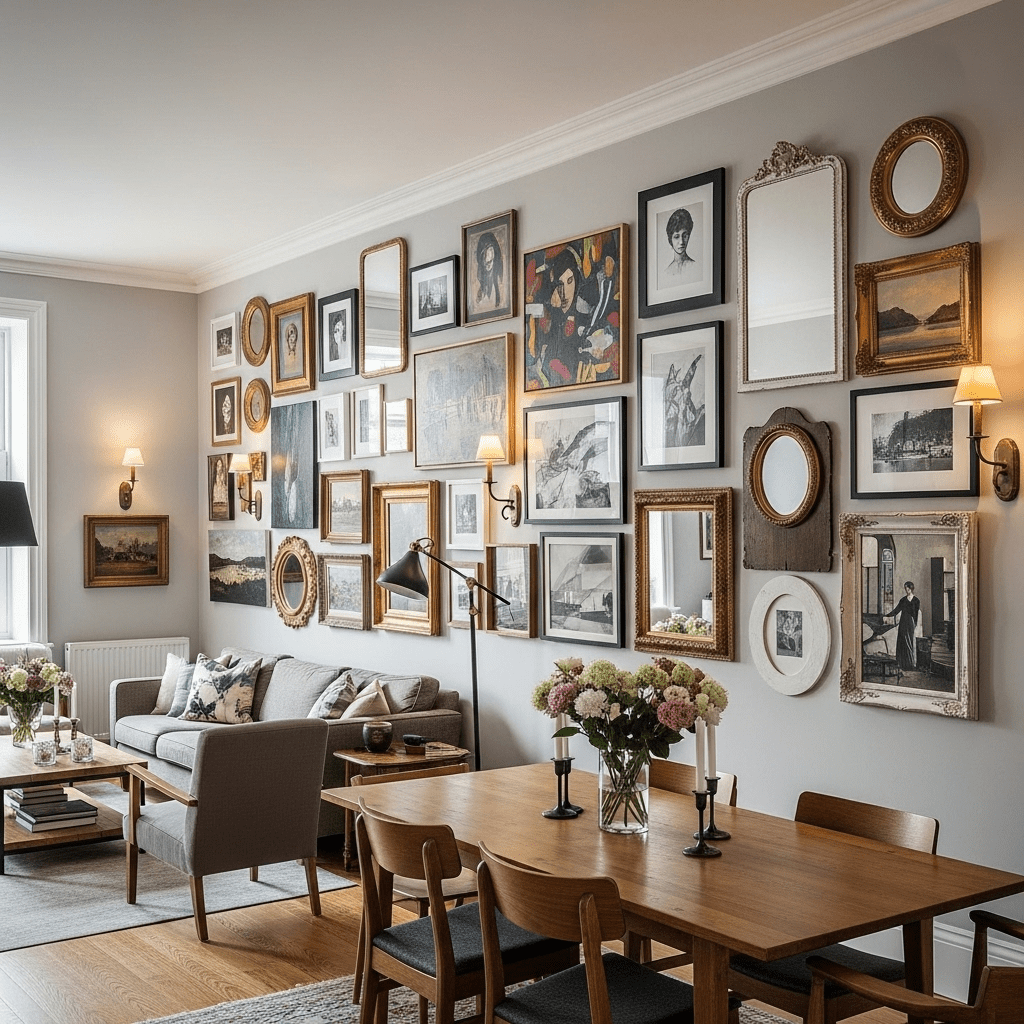
12. Gallery Wall Connection
Create a continuous gallery wall spanning both living and dining areas.
Hang coordinated artwork along one long wall covering both zones. This creates visual unity while the furniture arrangement defines separate functions. The gallery ties the space together.
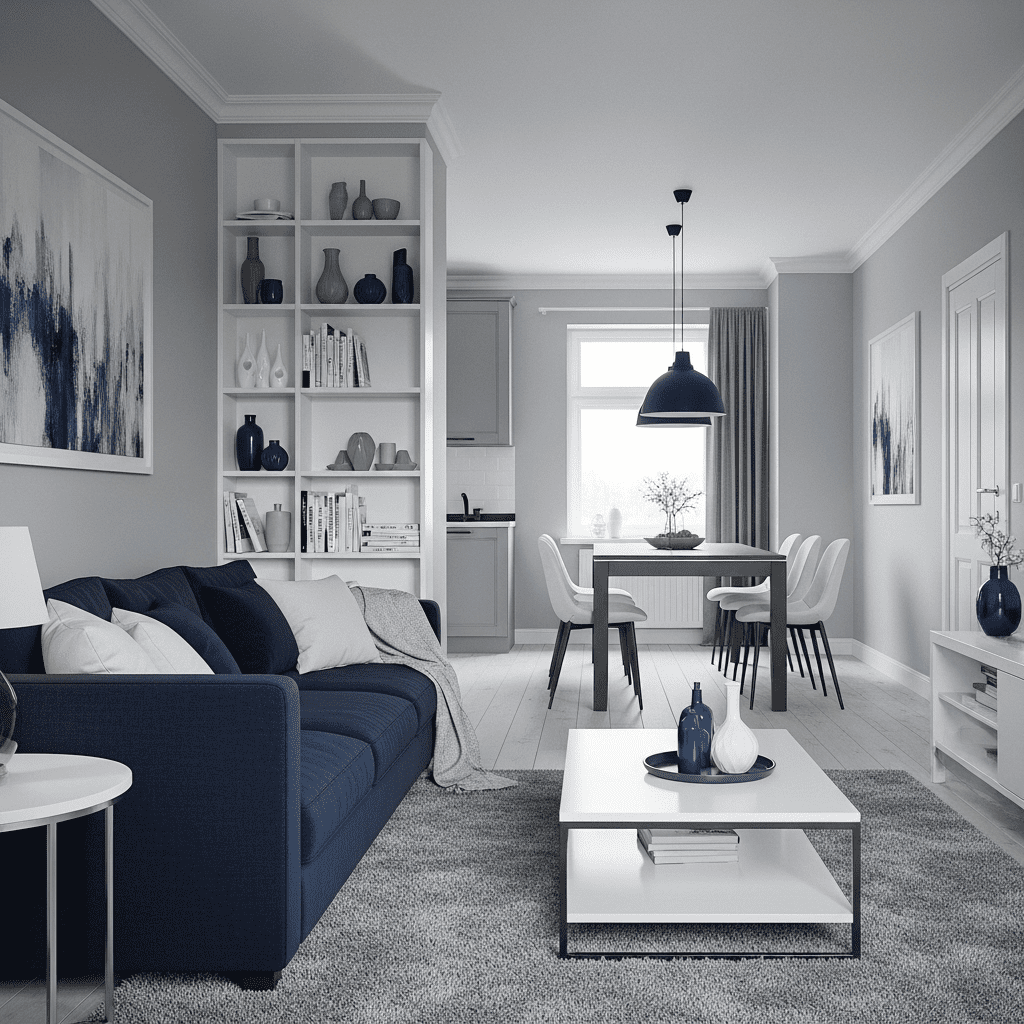
13. Color-Coordinated Unity
Use consistent color palette throughout living and dining areas for cohesion.
Choose 3-4 colors and repeat them in both zones through furniture, rugs, and accessories. The coordinated palette makes the combined space feel intentional rather than cramped.
Living-Diner Quick Tips
Traffic Flow: Maintain 36 inches clearance around dining table for chair pull-out and 30 inches minimum for walkways.
Scale Appropriately: Choose smaller-scale furniture—loveseat instead of sectional, table for 4-6 instead of 8-10.
Multipurpose Furniture: Invest in extendable tables, storage ottomans, and benches that serve multiple functions.
Visual Cohesion: Keep style consistent throughout. The spaces should feel like one room with two functions, not two rooms forced together.
Lighting Layers: Use ambient, task, and accent lighting in both zones for proper illumination and atmosphere.
Flexible Arrangements: Consider furniture on casters or lightweight pieces that can be rearranged for different occasions.
Combined living-diner spaces maximize narrow rooms, creating flexible multi-functional areas perfect for modern apartment living!