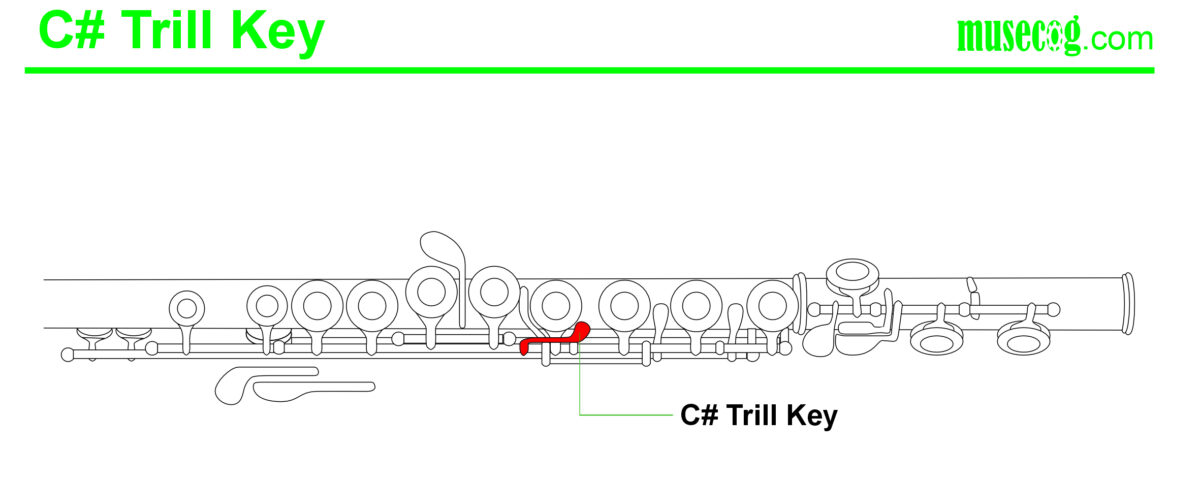
C# Trill Key: Mastering the C Sharp Trill Key on Flute
C sharp trill key flute

Playing the flute can be both exhilarating and challenging, requiring precision, commitment, and a mastery of techniques. One key that can be particularly difficult to master is the C Sharp Trill Key. However, with the right techniques and a solid instrument, you can elevate your flute playing to the next level. In this guide, we … Read more
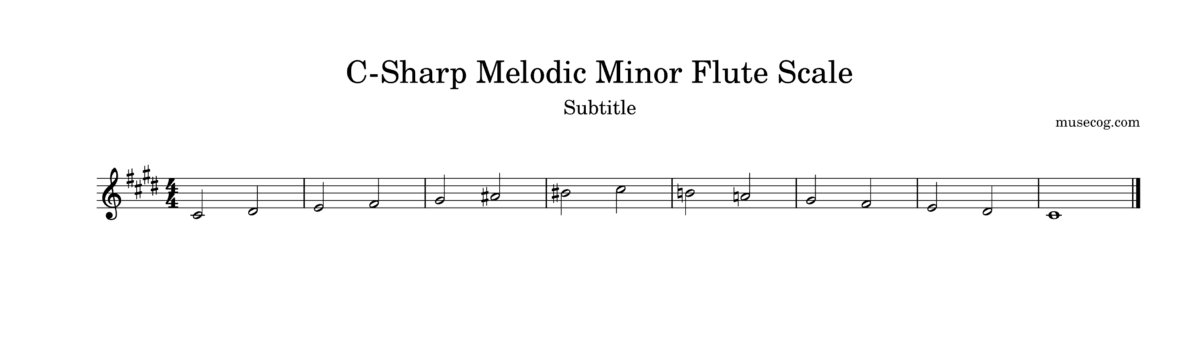
C-Sharp (C#) minor scale on flute: natural, melodic, and harmonic scales with arpeggios notes

C-sharp melodic minor scale for flute-1

The C-sharp (C#) minor scale on flute has its tonic on C-sharp. It also has the pitches C-sharp, D-sharp, E, F-sharp, G-sharp, A, and B. The key signature of this scale has four sharps. The C-sharp minor scale is relative to E major scale, parallel to the C-sharp major scale, dominant to the G-sharp minor … Read more

The Amazing Health Benefits of Playing Flute

The health benefits of playing the flute are extensive and far-reaching, impacting not only physical health but also mental and emotional well-being. From improving respiratory health to boosting cognitive function and reducing stress and anxiety, playing the flute can be a powerful tool for enhancing overall health and quality of life. Improving Respiratory Health Playing … Read more

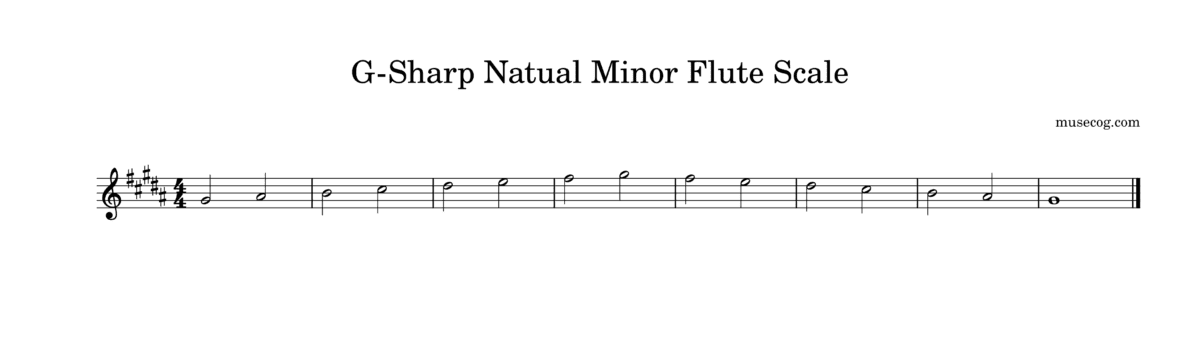
G-Sharp (G#) minor scale on flute: natural, melodic, and harmonic scales with arpeggios notes

G-Sharp NatuRal Minor Flute Scale

The G-sharp (G#) minor scale on flute has its tonic on the G-sharp. It also has the pitches G#, A#, B, C#, D#, E, and F#. The key signature of this scale has five sharps. The G-sharp minor scale is relative to B major scale, parallel to the G-sharp major scale which is enharmonic to … Read more

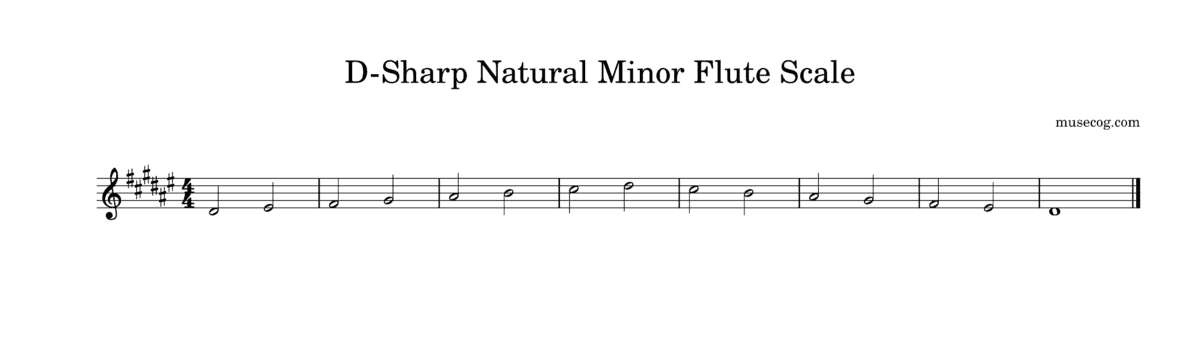
D-Sharp (D#) minor scale on flute: natural, melodic, and harmonic scales with arpeggios notes

D-Sharp Natural Minor Flute Scale

The D-sharp (D#) minor scale on flute has its tonic on D-sharp. It also has the pitches D-sharp, E-sharp, F-sharp, G-sharp, A-sharp, B, and C-sharp. The key signature of this scale has six sharps. The D-sharp minor scale is relative to F-sharp major scale, parallel to the D-sharp major scale which is enharmonic to E-flat … Read more

Flute or Clarinet for Child: A Guide to Choosing the Right Woodwind Instrument For Your Child

Music is a great way to develop children’s cognitive and social skills, and a wind instrument can be a fantastic introduction to the world of music. But with so many options to choose from, it can be a challenging decision to make. In this article, we’ll explore the differences between flute and clarinet and help … Read more

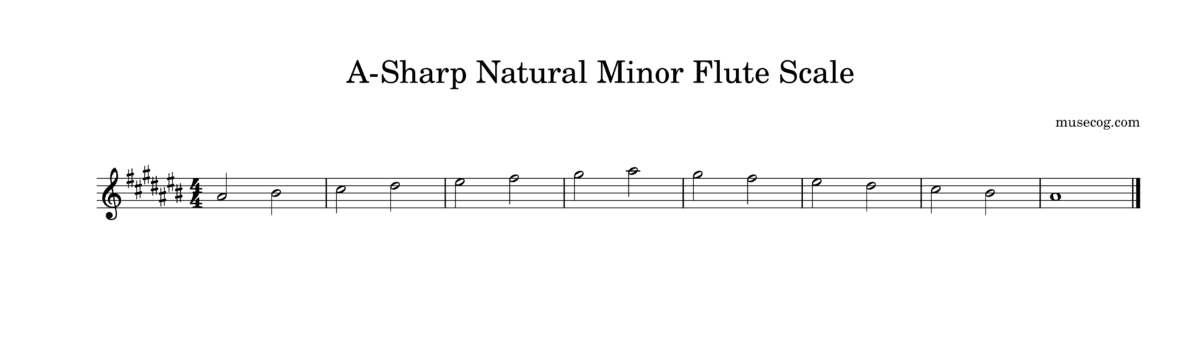
A-Sharp (A#) minor scale on flute: natural, melodic, and harmonic scales with arpeggios notes

A-sharp (A#) minor scale on the flute

The A-sharp (A#) minor scale on flute has its tonic on A-sharp. It also has the pitches A-sharp, B-sharp, C-sharp, D-sharp, E-sharp, F-sharp, and G-sharp. The key signature of this scale has seven sharps. The A-sharp minor scale is relative to C-sharp major scale, parallel to the A-sharp major scale which is enharmonic to B-flat … Read more

Clarinet or Flute for Beginner: Which Instrument is Right for You?

If you’re trying to decide between clarinet or flute for beginner looking to start playing a woodwind instrument, you might face some challenges in making the right decision. However, there are other wind instruments that can also be great options for beginners, such as the bansuri and soprano recorder. In this article, we’ll help you … Read more

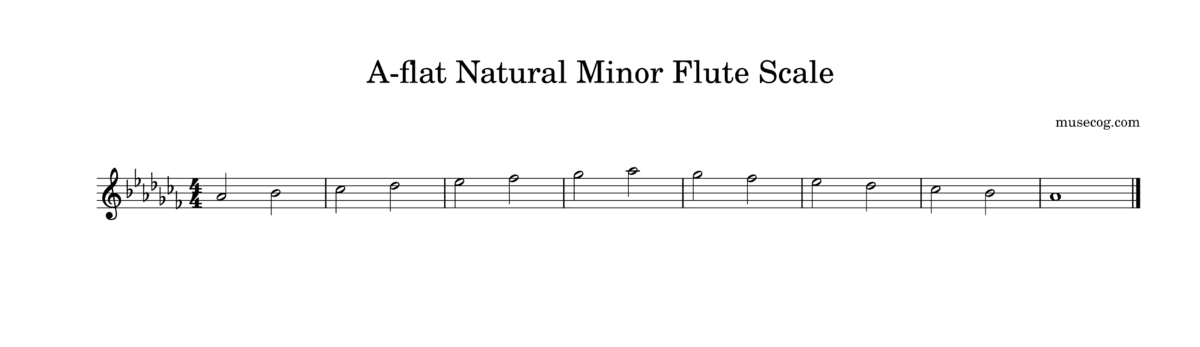
A-flat (Ab) minor scale on flute: natural, melodic, and harmonic scales with arpeggios notes

A-flat Natural Minor Flute Scale

A-flat (Ab) minor scale on flute has its tonic on A-flat natural. It also has the pitches A-flat, B-flat, C-flat, D-flat, E-flat, F-flat, and G-flat. The key signature of this scale has seven flats. The A-flat minor scale is relative to C-flat major scale, parallel to the A-flat major scale, dominant to the E-flat minor … Read more