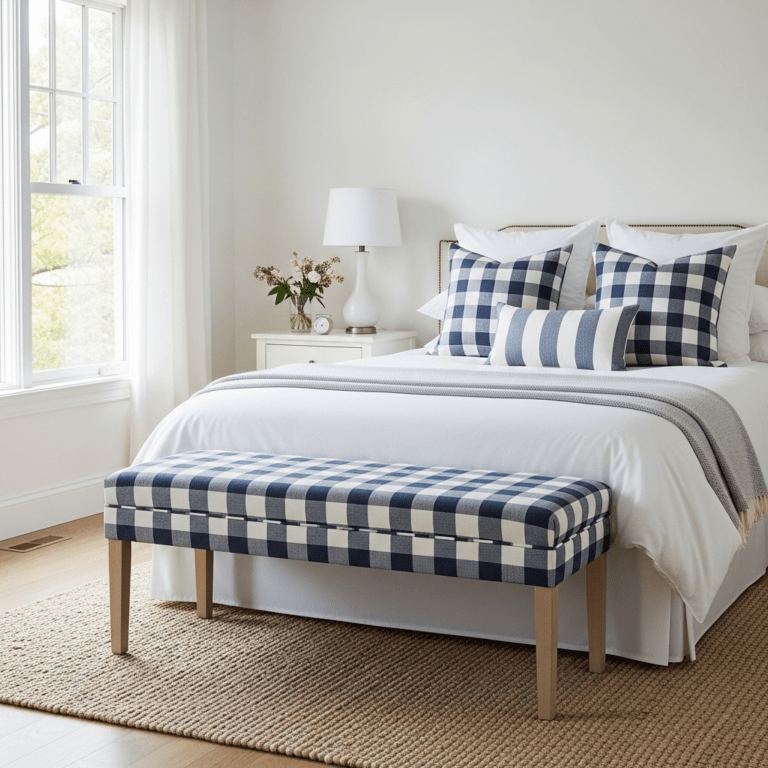
Basement guest bedroom designs: 14 ways to transform your lower level
Basement guest bedroom designs require a unique approach to lighting, moisture control, and space planning to overcome the challenges of a windowless or subterranean area. When designing a basement guest bedroom, the primary goal is to counteract the “closed-in” feeling by using bright color palettes, strategic artificial lighting, and cozy textures that make the space feel like a subterranean sanctuary rather than a cellar. These fourteen ideas focus on turning your lower level into a high-end retreat that guests will actually look forward to visiting.
See also: Living Room Designs in India 12 Stunning Styles for Indian Homes
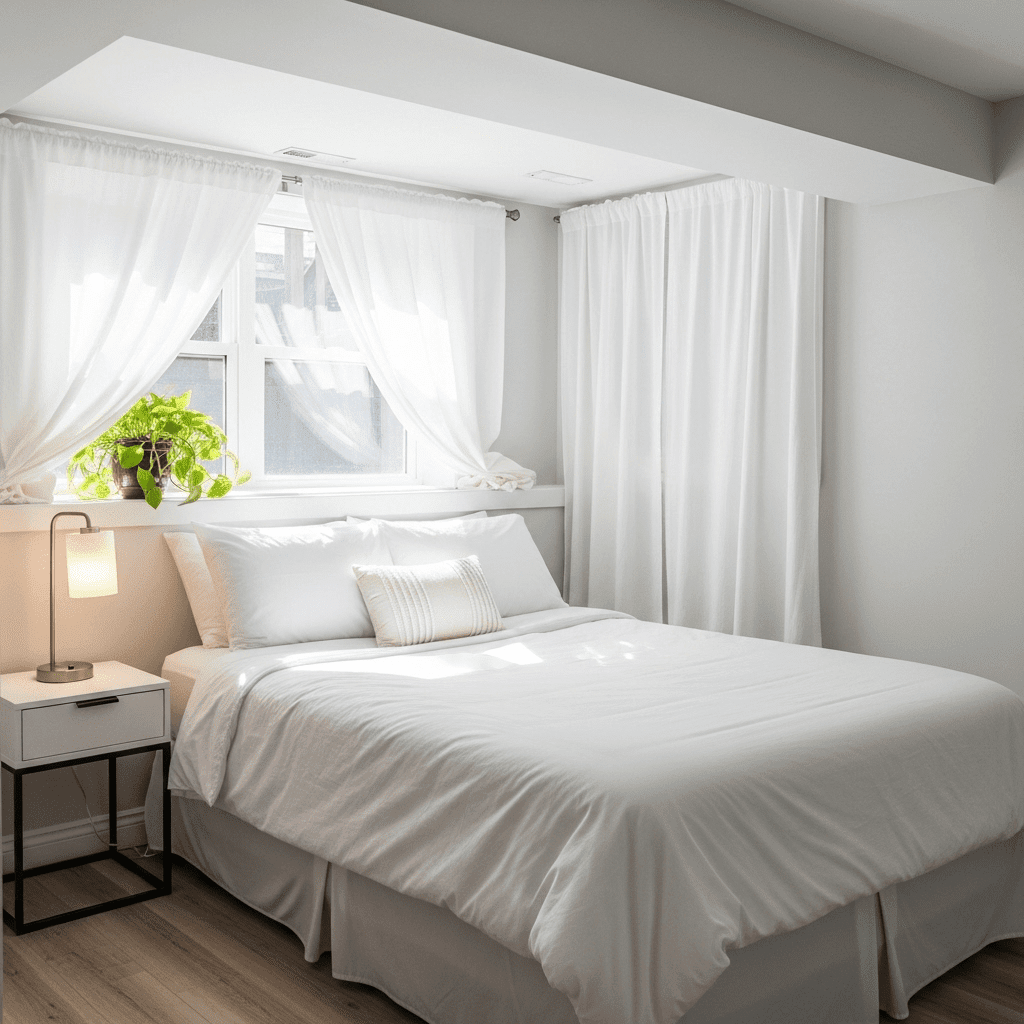
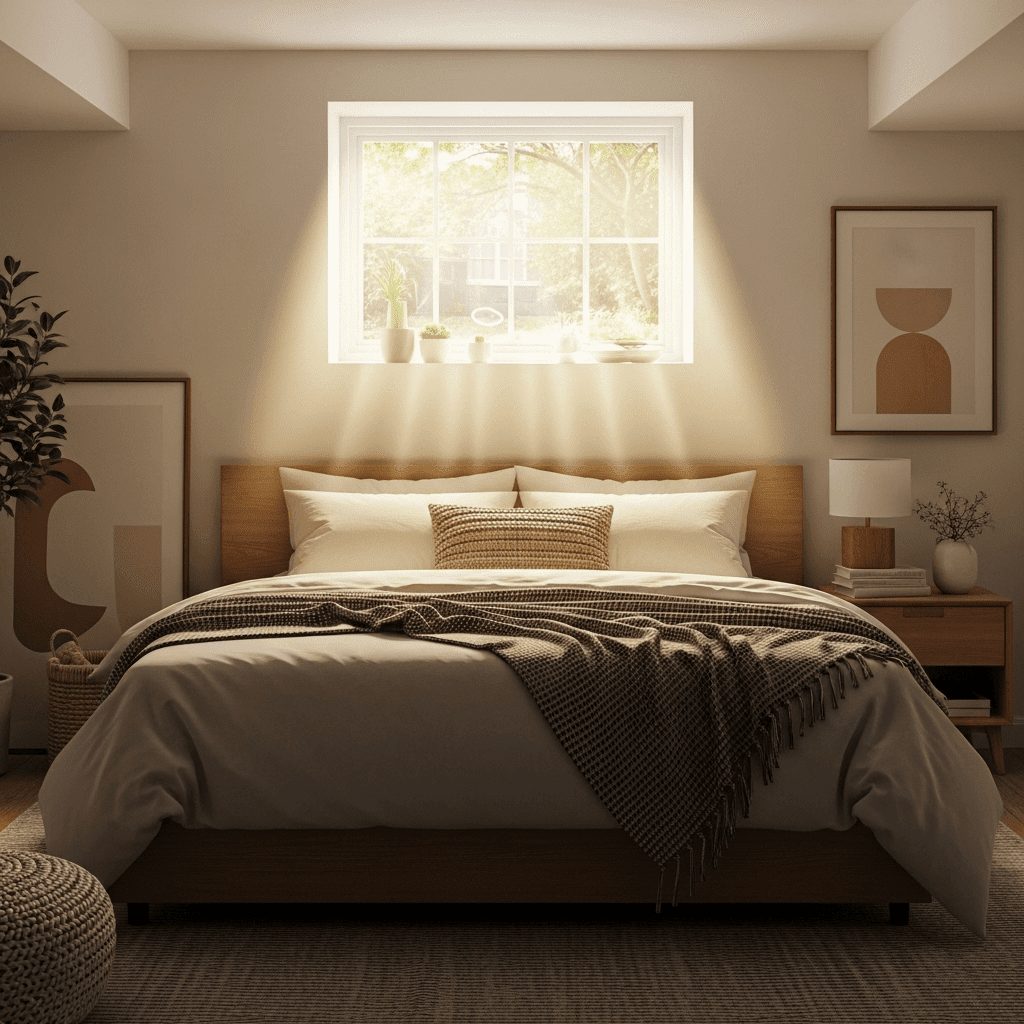
1. The “Light-Well” Oasis
If your basement has a small egress window, maximize it by painting the window well white to reflect more sun. Frame the window with light, airy curtains to trick the eye into thinking the light source is larger than it is.
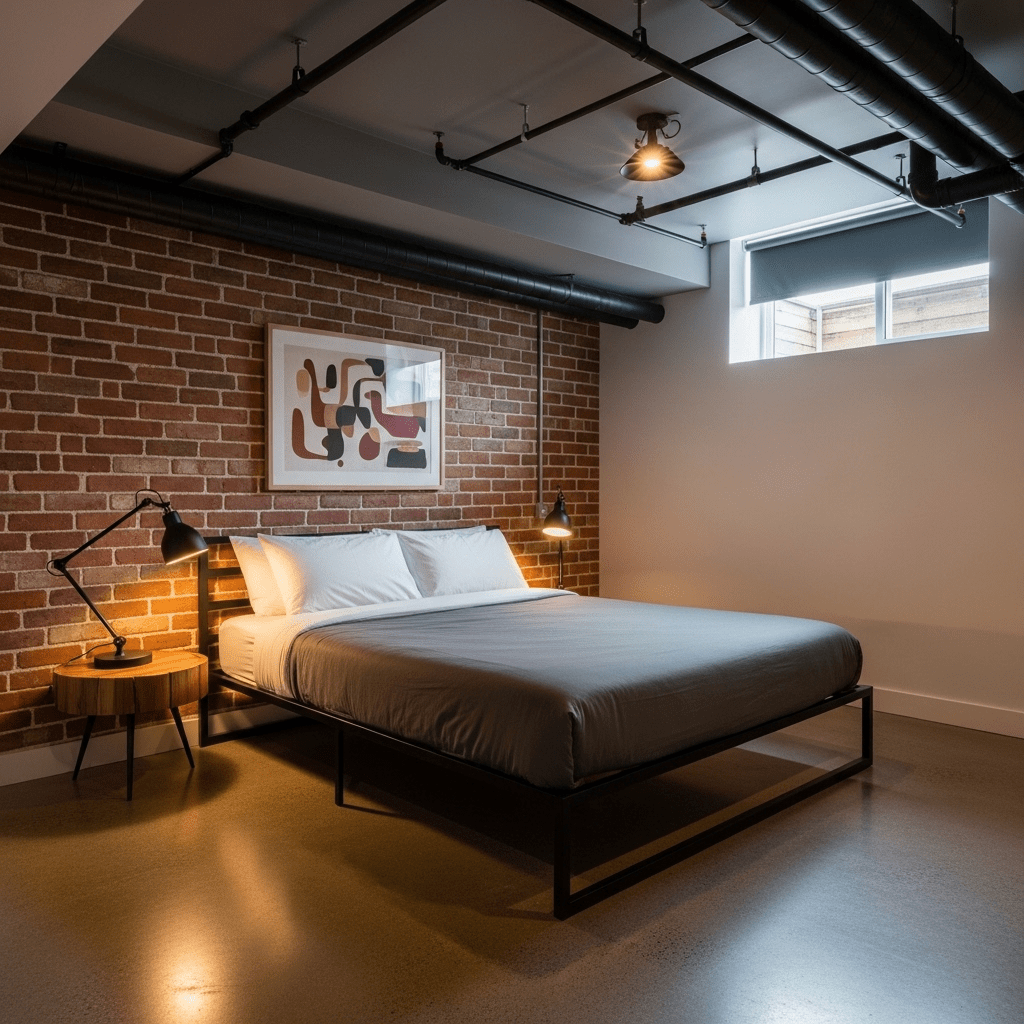
2. Industrial Chic with Exposed Pipes
Embrace the basement’s architecture by painting overhead pipes in matte black or metallic copper. Paired with an interior brick wall, this creates a trendy “loft” vibe that feels intentional and modern.
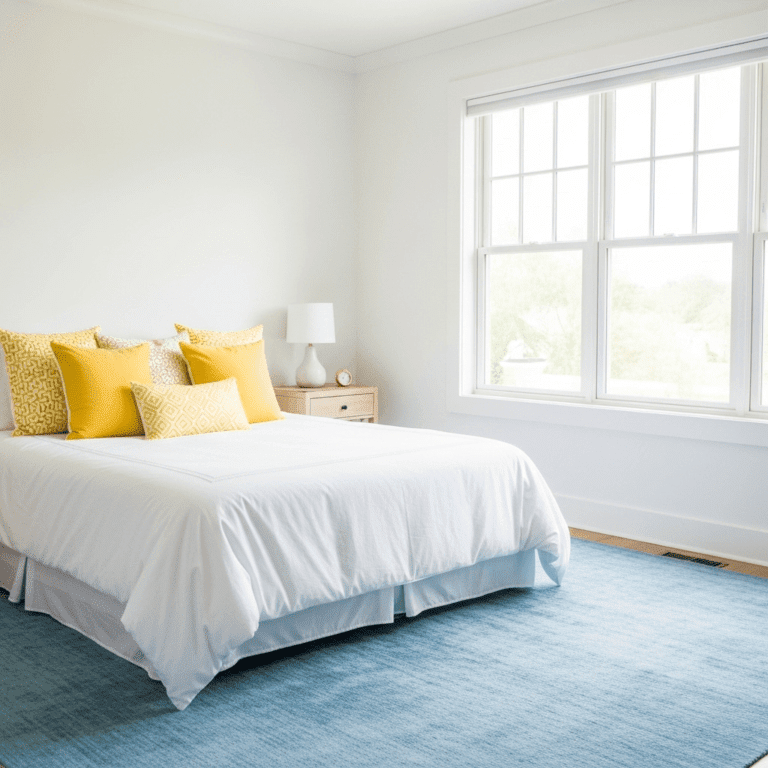
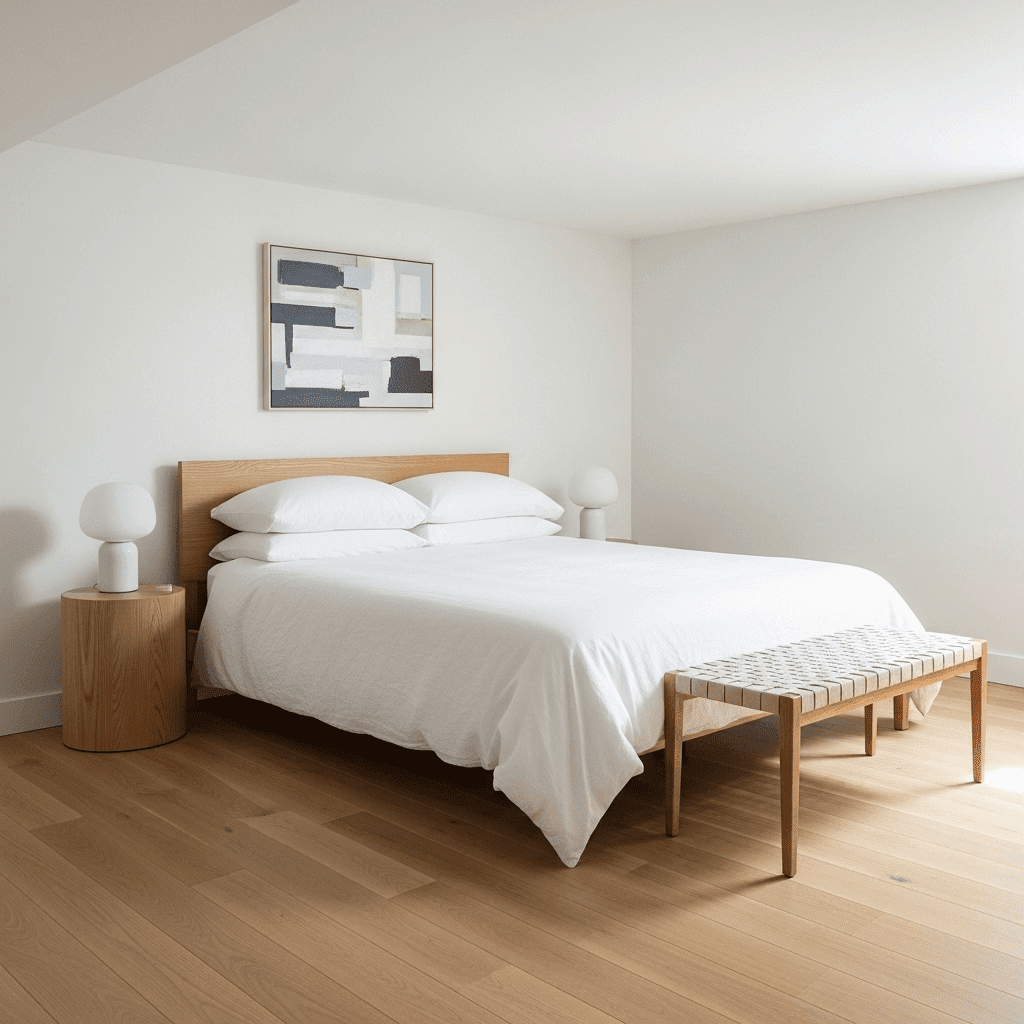
3. All-White Scandi Retreat
To combat the lack of natural light, use an all-white color palette. White walls, white bedding, and light-toned wood floors will bounce what little light is available around the room for a fresh, clean atmosphere.
See also: Cozy Living Room Designs 13 Warm and Inviting Spaces for Comfort
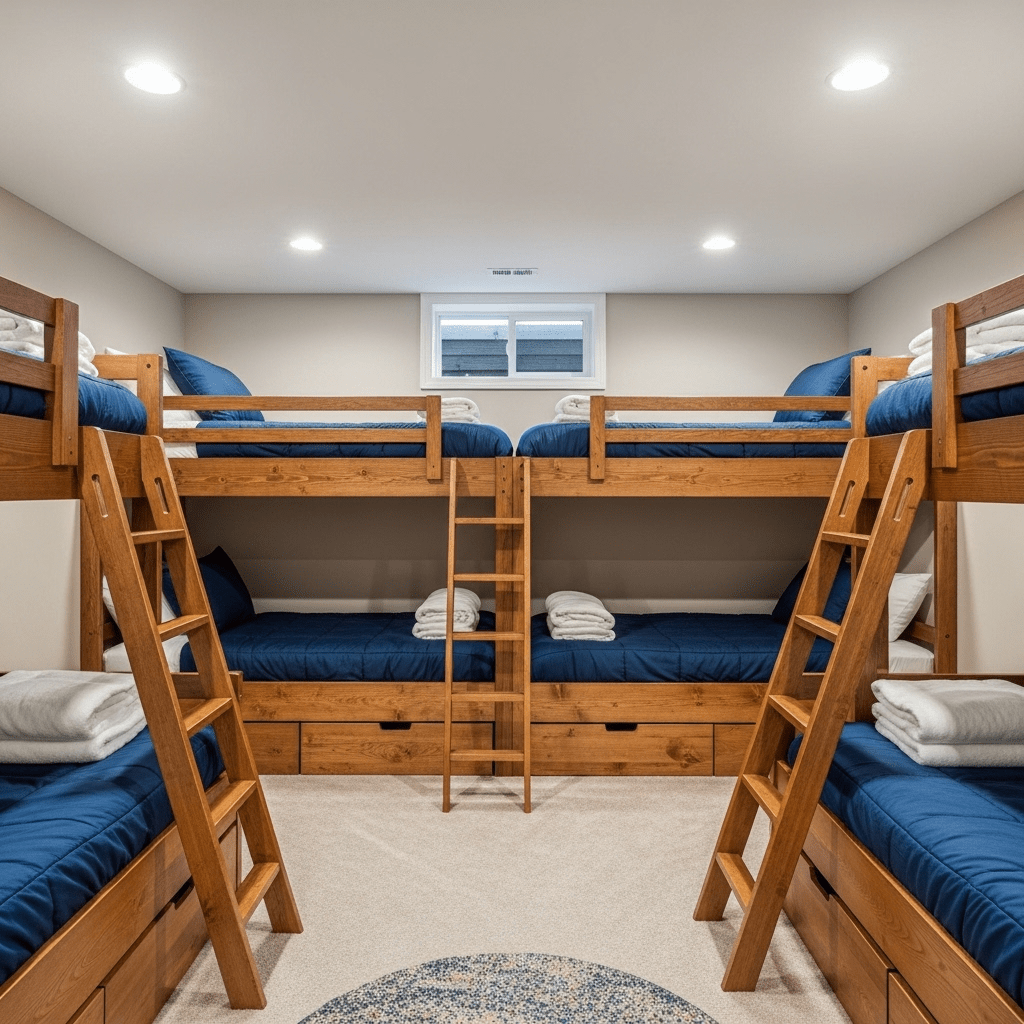
4. Built-In Bunk Room
Basements are ideal for maximizing sleeping capacity. Custom-built bunk beds with individual reading lights and privacy curtains turn a small basement corner into a high-capacity guest zone for families.
5. Faux Window with LED Backlighting
For completely windowless rooms, install a large decorative window frame with frosted glass and place LED strips behind it. This mimics the glow of natural daylight and eliminates the “dungeon” feel.
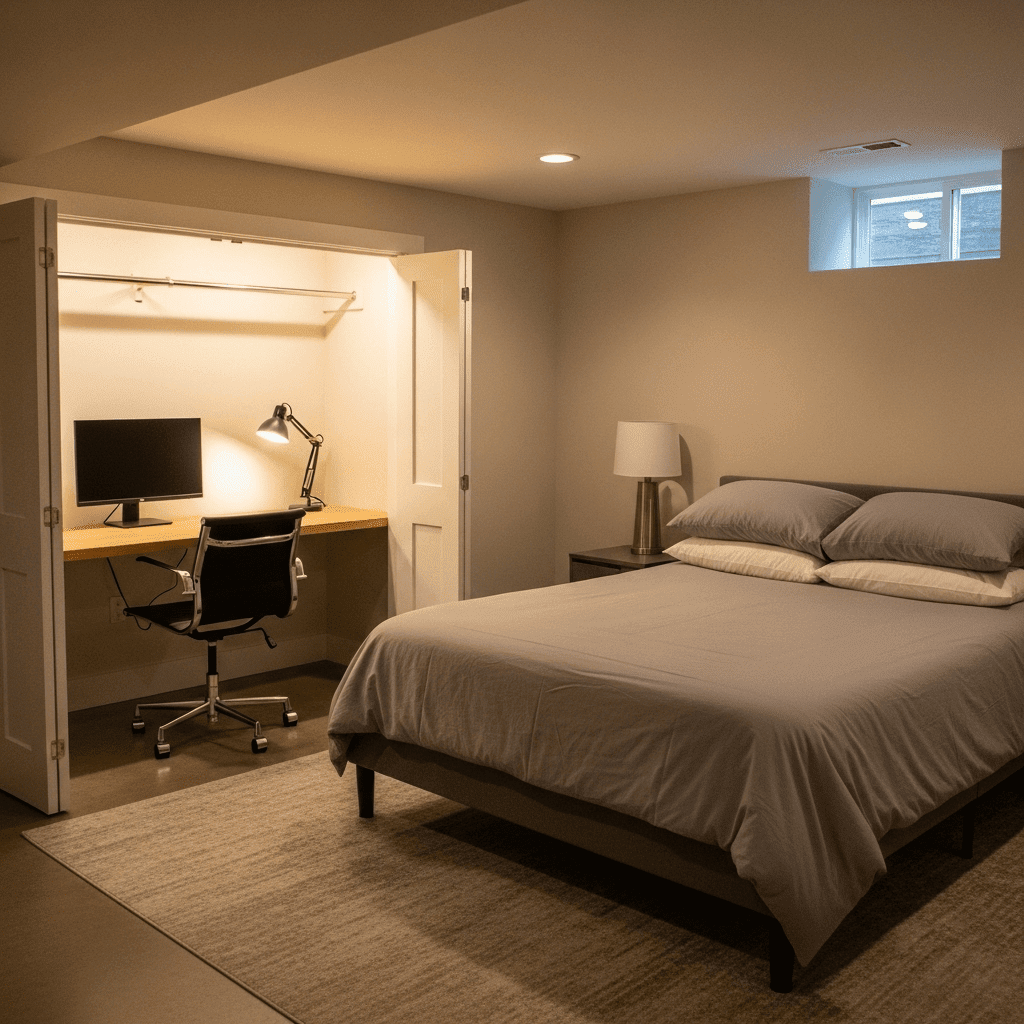
6. Luxury “Cloffice” Integration
If the room must serve two purposes, build a desk into a closet nook. This allows your guest to have a workspace that can be hidden away behind sliding doors when it’s time to sleep.
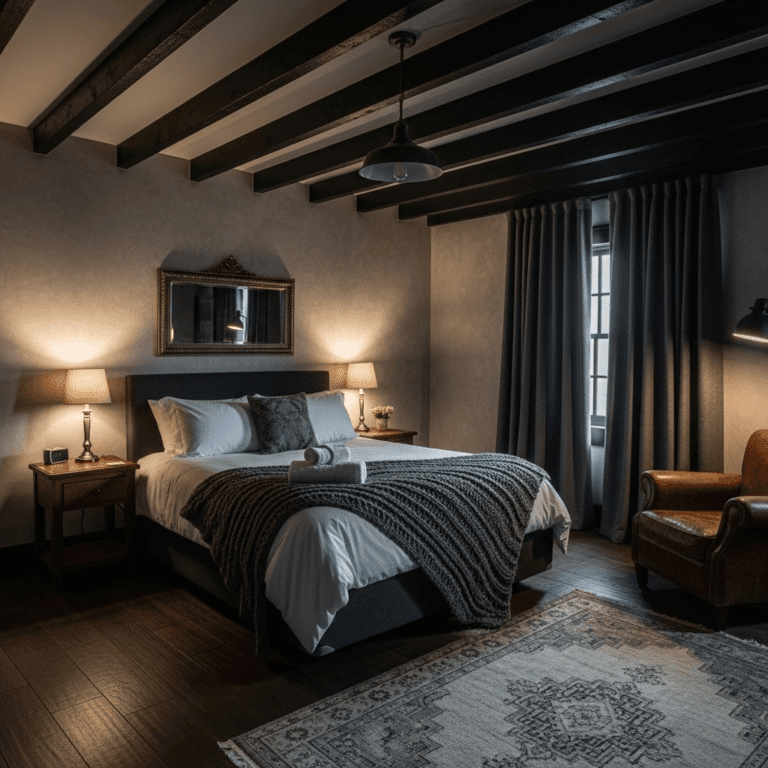
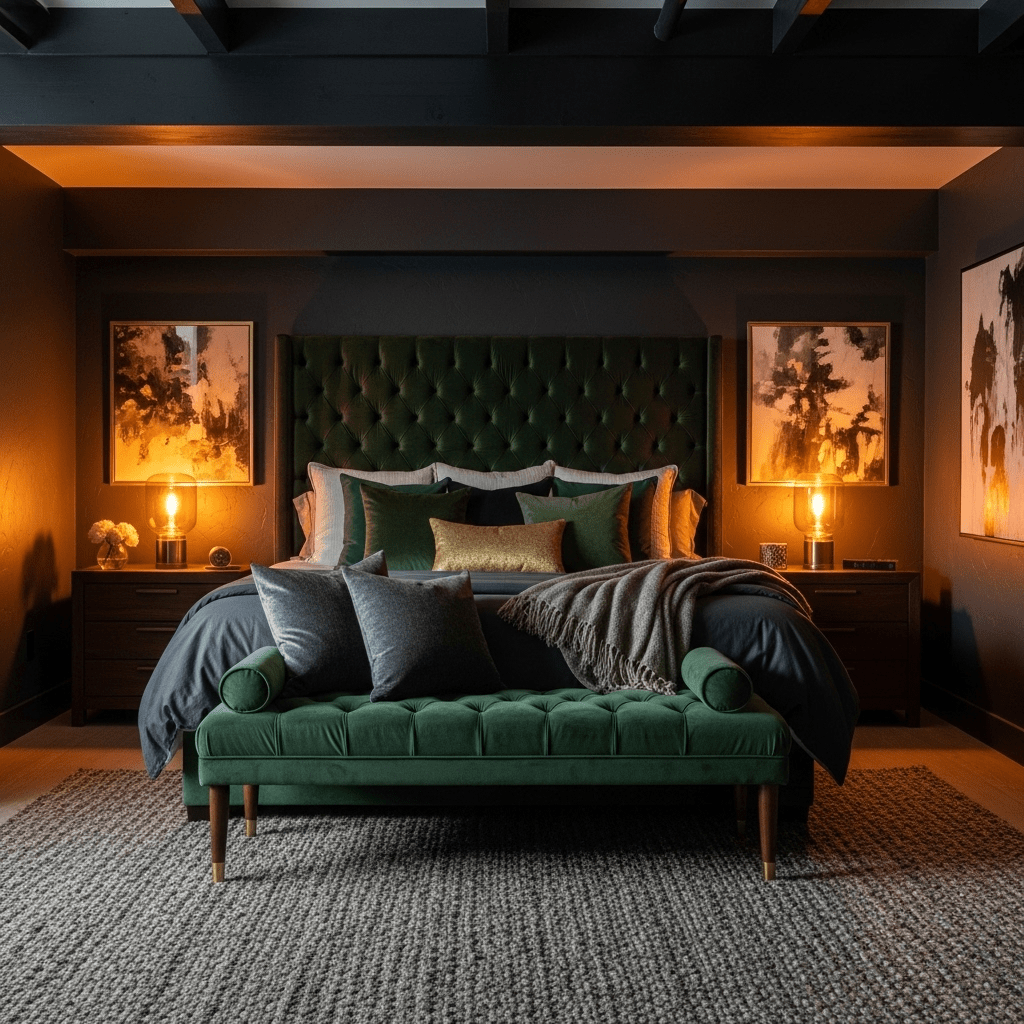
7. Moody “Hotel Noir” Suite
Instead of fighting the darkness, lean into it. Use deep navy or charcoal paint paired with warm, high-end lighting to create a moody, boutique-hotel atmosphere that feels protective and cozy.
8. Raised Platform Storage Bed
Basements often lack closet space. A raised platform bed with built-in drawers underneath provides ample storage for guest luggage and extra linens without needing extra furniture.
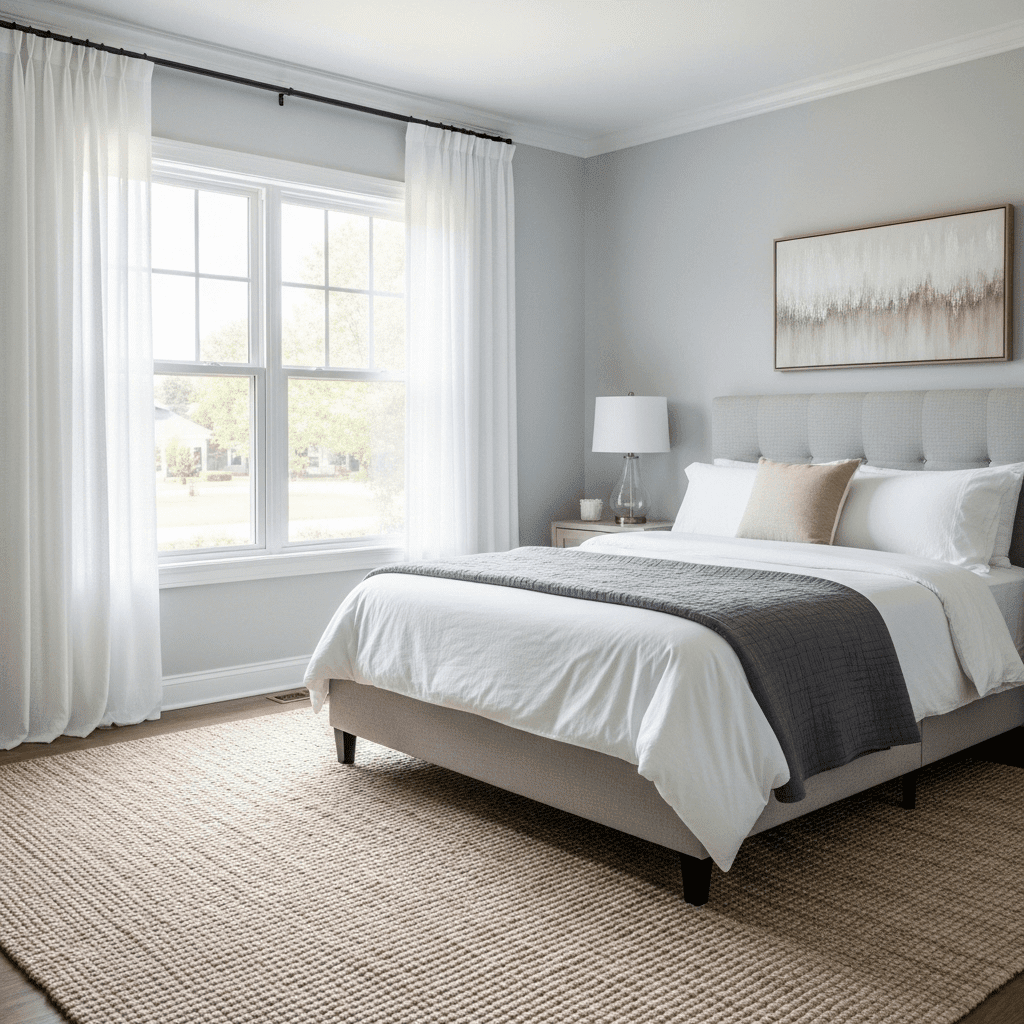
9. Sliding Barn Door Entrance
Standard doors can feel cramped in basement hallways. A sliding barn door saves space and adds an instant “modern farmhouse” design element to the entrance of the guest room.
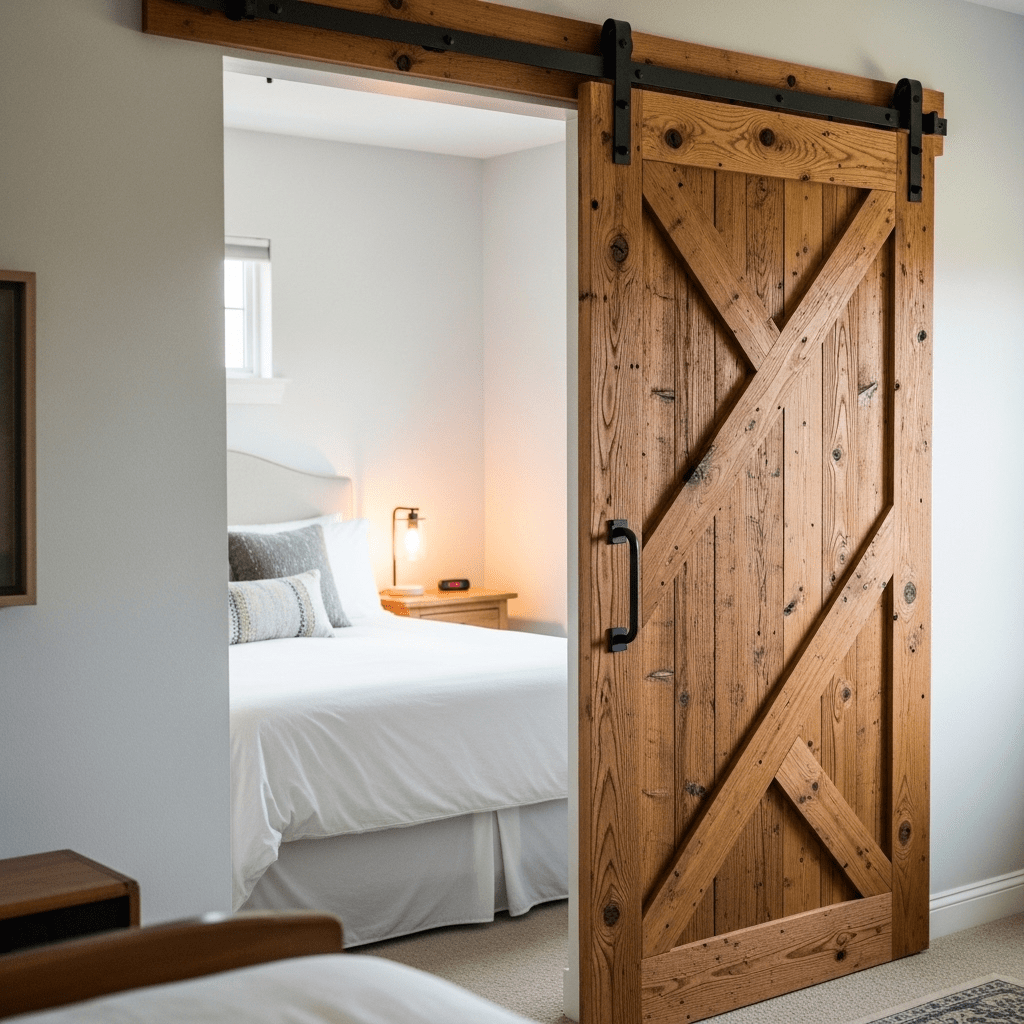
10. Cozy Carpeted Comfort
Since basement floors can be cold, a wall-to-wall plush carpet or a massive high-pile area rug is essential. It adds warmth and significantly improves the room’s soundproofing.
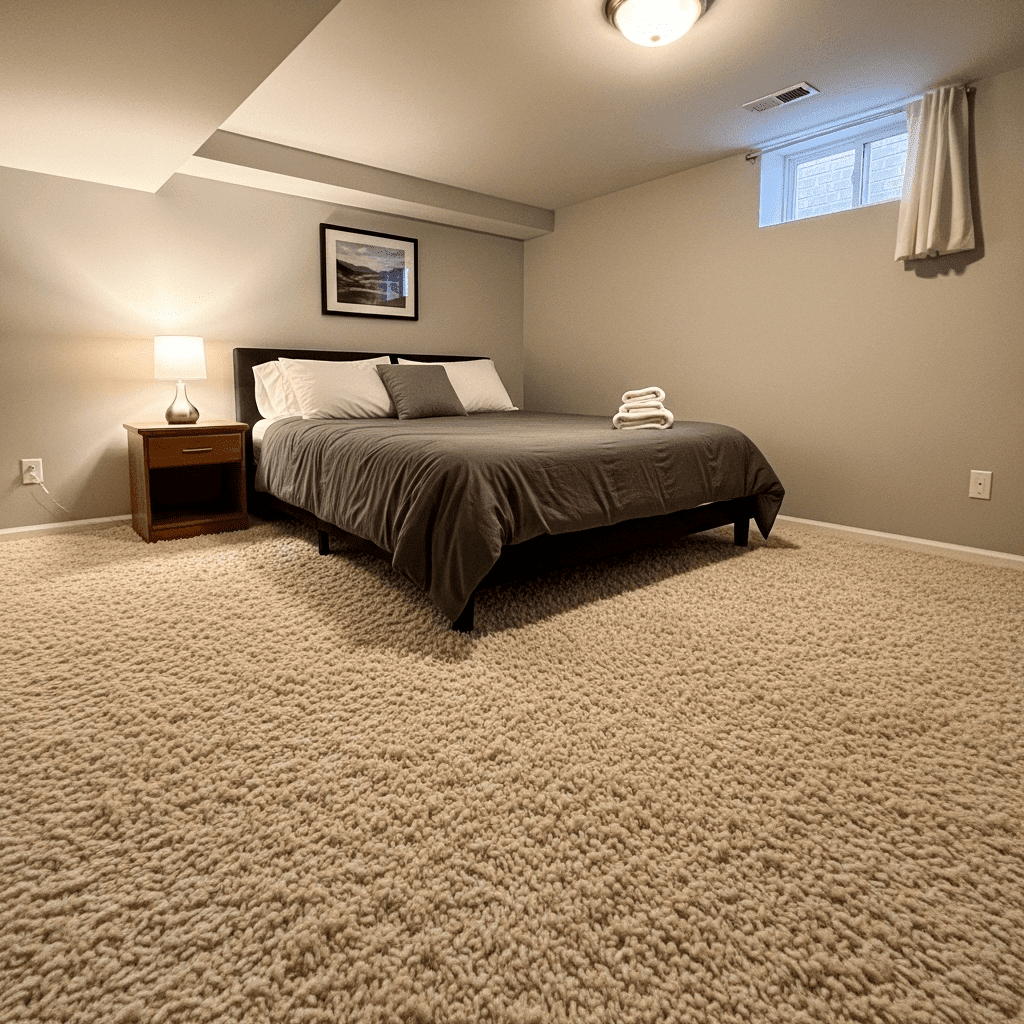
11. Recessed Ceiling Trays with Lighting
Elevate low basement ceilings by adding a recessed tray ceiling with “cove” lighting. This adds vertical depth and provides a soft, indirect light source that feels more natural than pot lights.
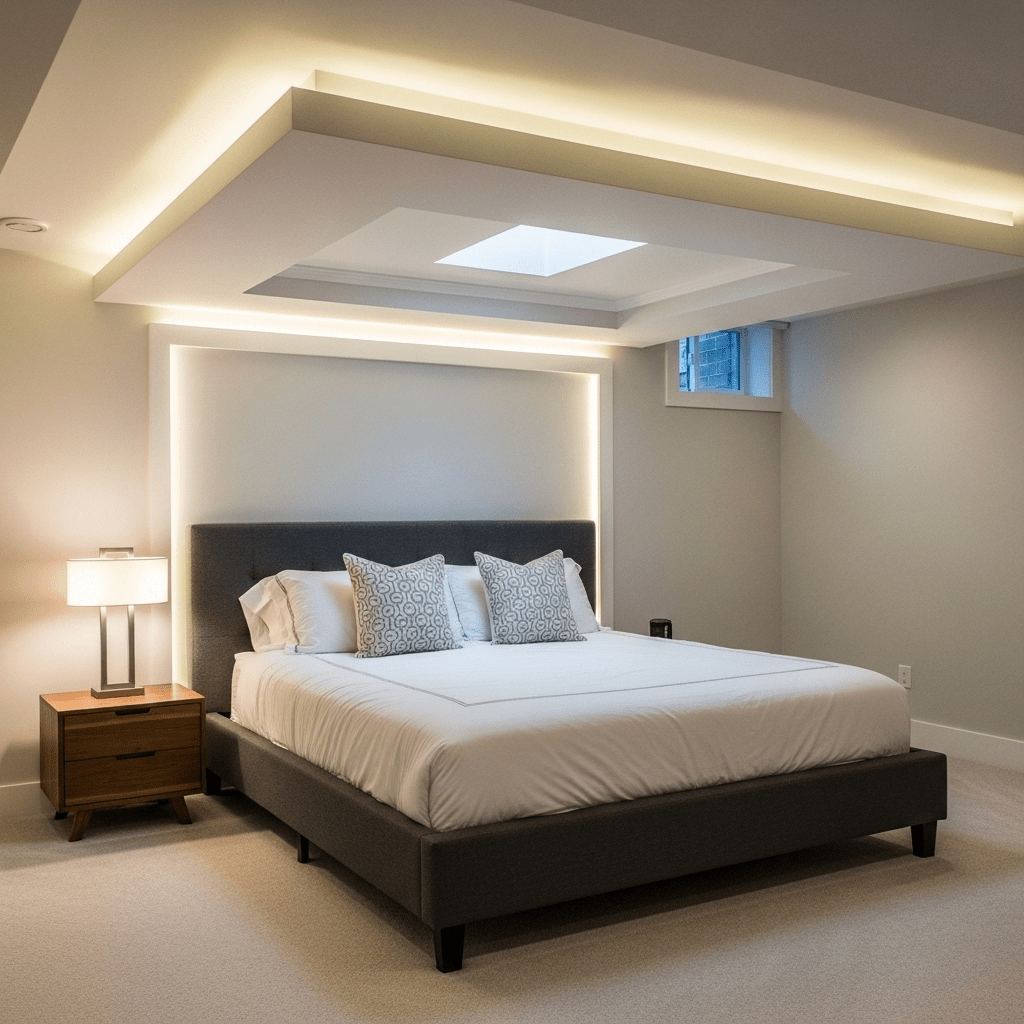
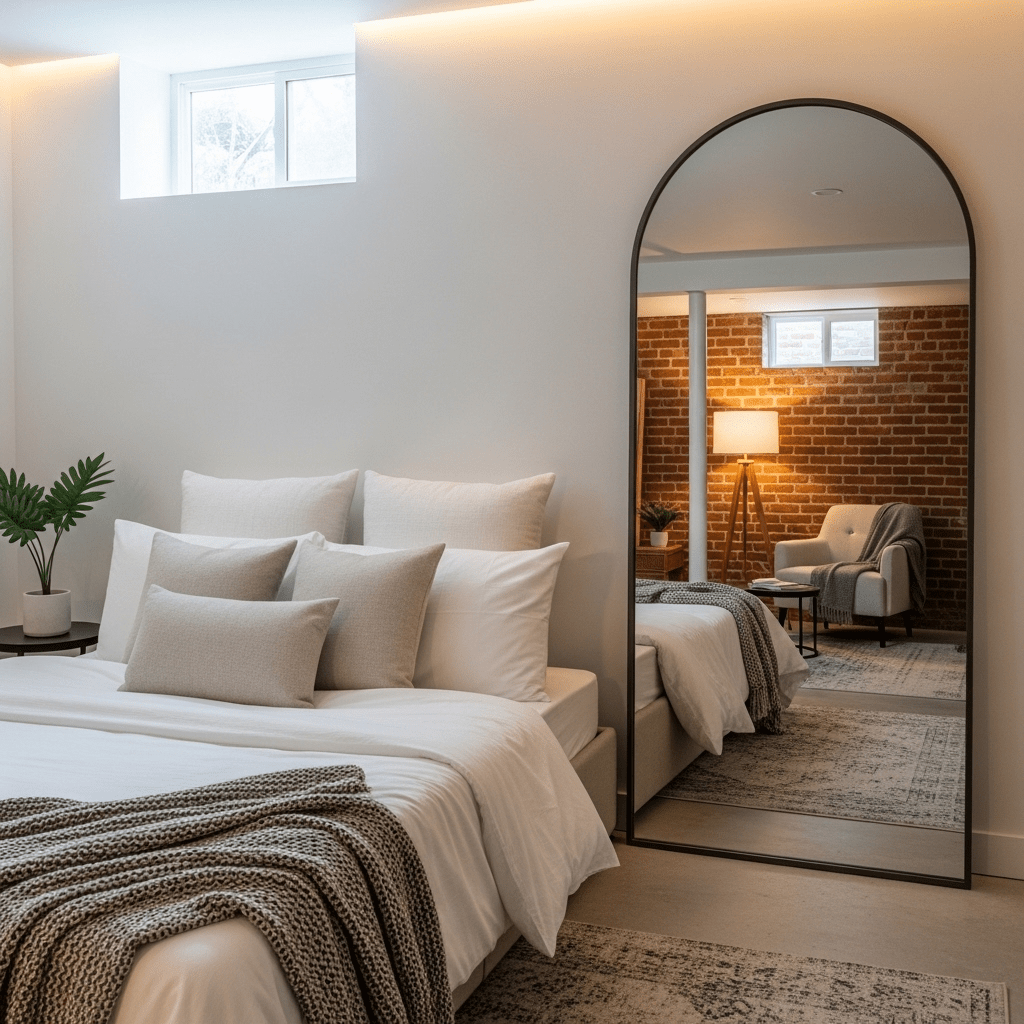
12. Mirror-Backed Headboard
Place a large mirror or a series of mirrored panels behind the headboard. This doubles the visual depth of the room and reflects the doorway’s light, making the space feel twice as large.
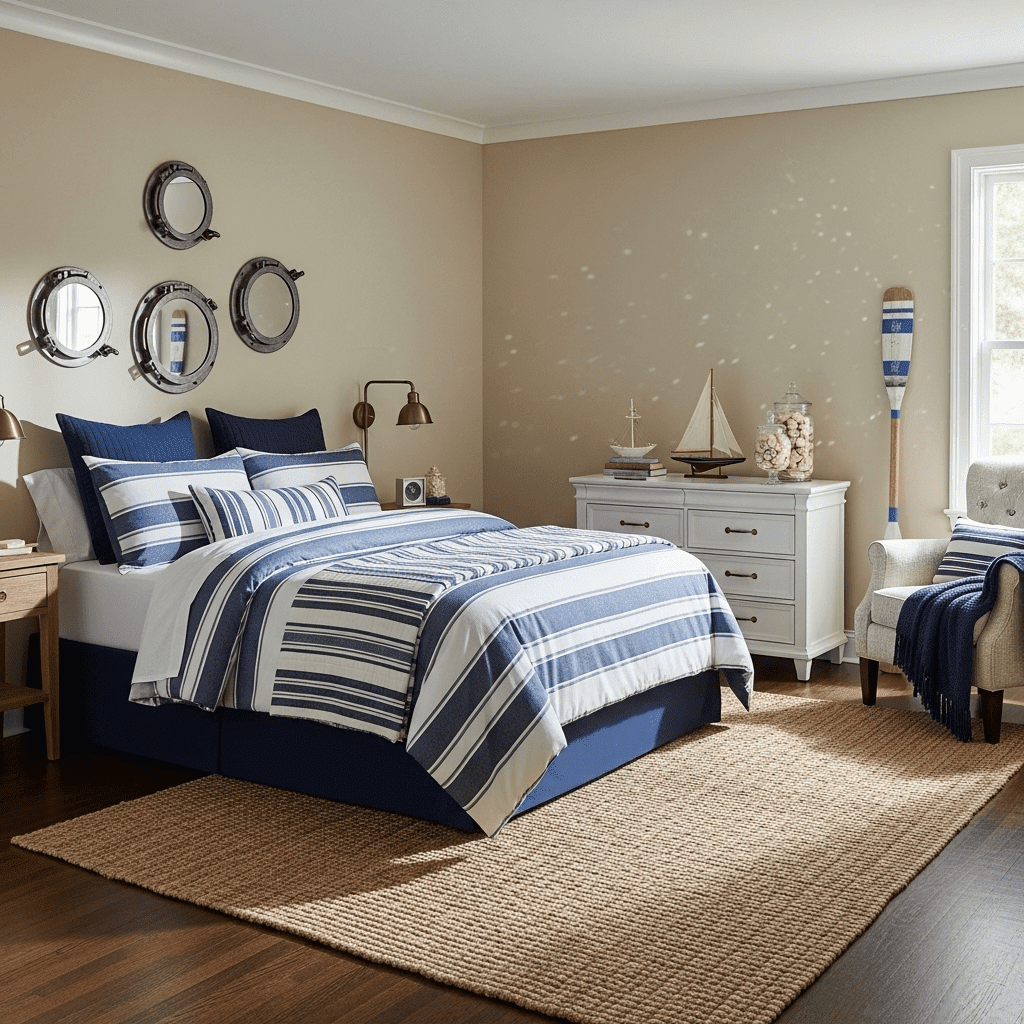
13. Nautical “Below Deck” Theme
Use the subterranean location to your advantage with a nautical theme. Brass porthole mirrors, navy stripes, and rope details make the basement feel like a luxury cabin on a high-end ship.
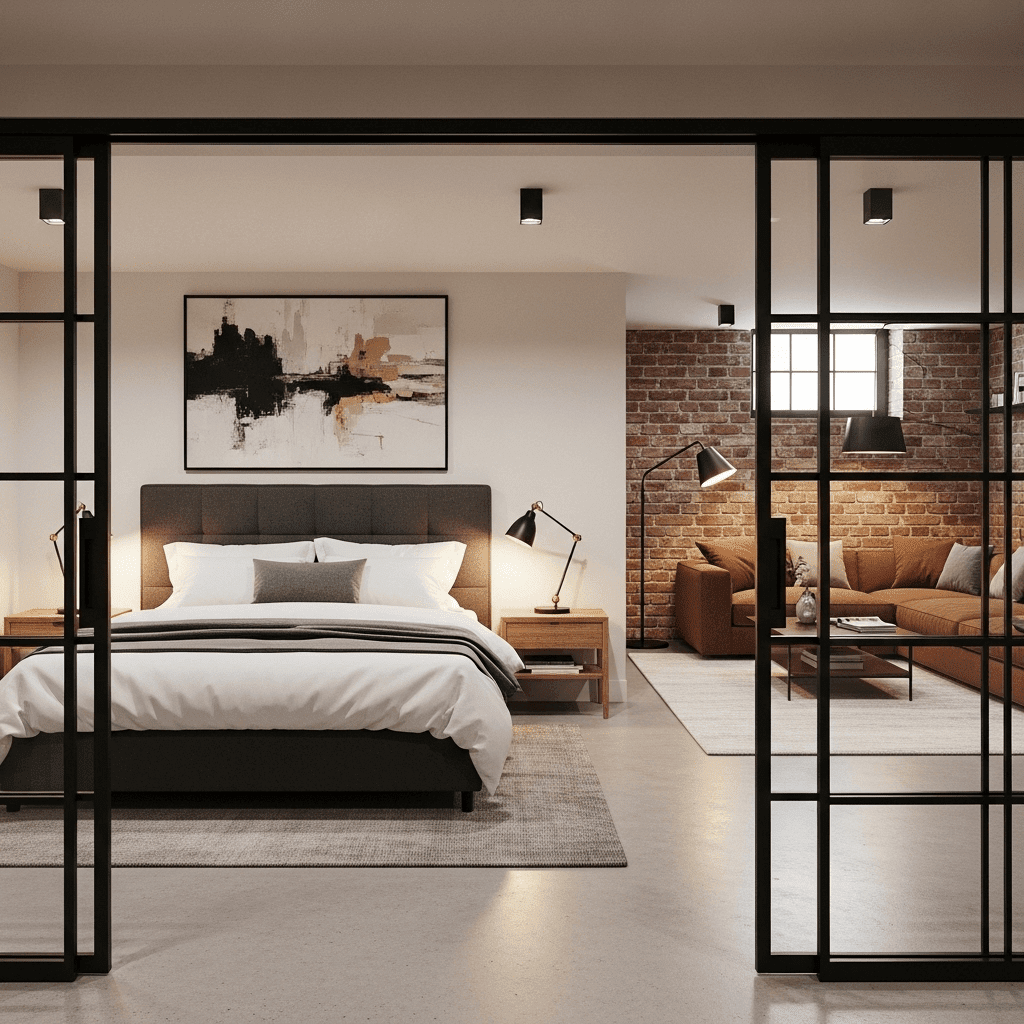
14. Modern Glass Partitions
If the basement is a large open studio, use black-framed glass partitions to define the sleeping area. This keeps the space feeling open while providing a clear “guest room” boundary.
Conclusion
Creating successful basement guest bedroom designs is about embracing the unique architecture of the lower level while prioritizing light and warmth. By using smart solutions like faux windows, integrated storage, and strategic color palettes, you can turn a formerly neglected space into the most sought-after room in the house. A well-designed basement room offers a level of quiet and privacy that upper-floor rooms simply cannot match.