Flute finger placement chart for beginners – Low notes, high notes, and various octaves


A flute finger placement chart for beginners is an essential tool that helps new flutists learn how to produce sound on the flute by guiding them through the finger placements for each note. The Boehm-system flute, is a modern flute and the most widely used type of flute, utilizes a standard set of finger placements that are also valid for other members of the flute family, such as the piccolo, alto flute, and bass flute. You can get the PDF or printable flute finger placement chart from here.
Basic flute finger placement chart for beginners – Low notes, high notes, various octaves or registers
For beginners, it’s crucial to have a modern flute finger placement chart that is easy to read and understand. Typically, a flute finger placement chart includes a diagram of the flute with labeled holes and keys, as well as a table that lists the finger placements for each note. The finger placements are often color-coded or marked with symbols to make them easier to memorize. The above chart contains all flute finger placements for any note you want to play.
Learning how to read a flute finger placement chart for beginners can be challenging, but with consistent practice, it can become second nature. One helpful tip is to start with the lower notes and work your way up gradually. It’s also important to practice proper finger placement and technique to ensure accurate sound production.
When using a flute finger placement chart for beginners, it’s important to keep in mind that there may be slight variations in finger placements depending on the specific type of flute or the player’s personal preference. However, the basic finger placements provided in the chart are a great starting point for any beginner flutist.
In addition to a flute finger placement chart, beginners may also benefit from instructional books, videos, or lessons with a qualified flute teacher. With dedication and practice, anyone can learn to play the flute and enjoy the beautiful sound it produces.
These flute finger placement chart can also serve as an alto flute finger placement chart. Alto flute finger placement refers to the placement of the fingers on the keys of the alto flute to produce different notes. The alto flute is a larger version of the standard C flute, with a longer tube and lower pitch. Therefore, the finger placements for the alto flute are different from those of the C flute.
Flute finger placement chart for high notes
A flute finger placement chart for high notes is a useful resource for intermediate to advanced flutists who are looking to expand their range and improve their technique. Playing high notes on the flute can be challenging, but with the right finger placements and proper technique, it is possible to achieve clear, resonant tones in the upper register.
High C flute finger placement
Below is the finger placement chart for how to play the high C on flute

High D flute finger placement
Below is the finger placement chart for how to play the high D on flute

High A flat flute finger placement
Below is the finger placement chart for how to play the high A flat on flute

High A flute finger placement
Below is the finger placement chart for how to play the high A on flute

High B flute finger placement
Below is the finger placement chart for how to play the high B on flute

High E flute finger placement
Below is the finger placement chart for how to play the high E on flute

High F flute finger placement
Below is the finger placement chart for how to play the high F on flute

High F sharp flute finger placement
Below is the finger placement chart for how to play the high F sharp on flute

High G flute finger placement
Below is the finger placement chart for how to play the high G on flute

Flute finger placement chart for low notes
For beginner and intermediate flutists who want to improve their tone quality and develop their lower register, a basic flute finger placement chart for low notes is a useful tool. The lower register on the flute requires a different approach than the higher register, and understanding the finger placements for the low notes is crucial for producing a clear and resonant sound.
It’s important to keep in mind that while the finger placements provided in a basic flute finger placement chart for low notes may vary slightly depending on the type of flute and personal preference, the basic finger placements included in the chart are an excellent starting point for most flutists.
Using a flute finger placement chart for low notes can help flutists develop their technique and improve their overall playing. In addition to using the chart, practicing long tones, scales, and arpeggios in the lower register can also be beneficial. It’s also helpful to listen to recordings of skilled flutists playing in the lower register to gain a better understanding of the tone quality and technique required.
Low C flute finger placement
Below is the finger placement chart for how to play the low C on flute

Low B flute finger placement
Below is the finger placement chart for how to play the low B on flute

Low D flute finger placement
Below is the finger placement chart for how to play the low D on flute

Flute trill finger placement chart
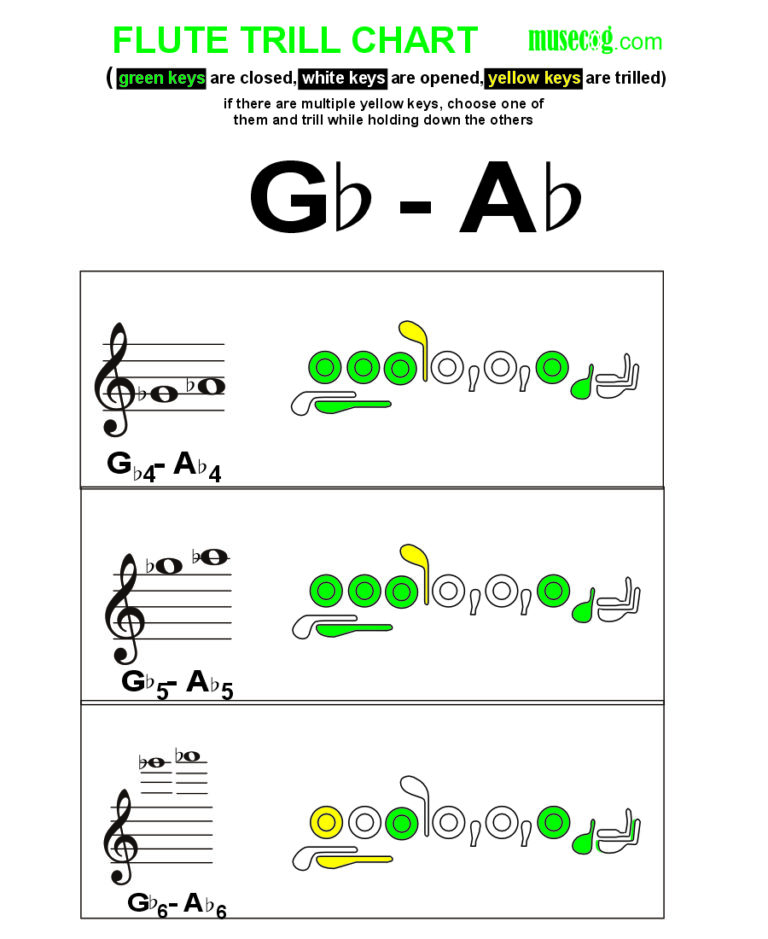
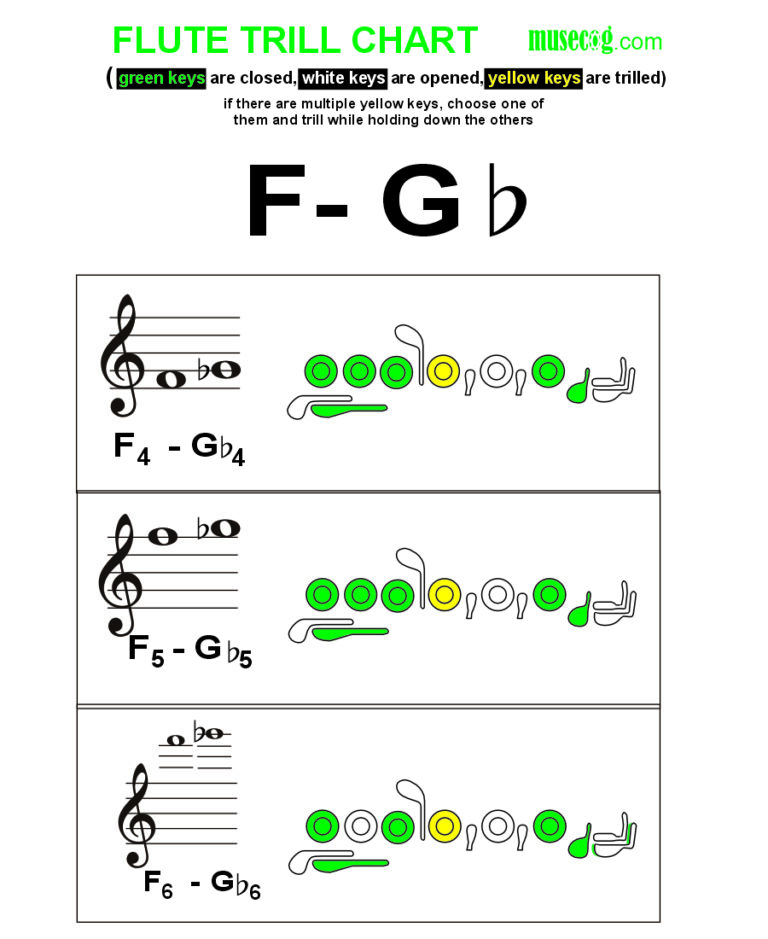
A flute trill finger placement chart is a useful resource for flutists who are looking to add trills to their playing. Trills are a series of quick, alternating notes that add ornamentation and interest to a melody. While trills can be challenging to execute, with the right finger placements and practice, they can become a valuable addition to any flutist’s playing. The trill chart is an advanced flute finger placement chart that requires greater technique to understand and use it for flute playing.


When using a flute trill finger placement chart, it’s important to remember that the finger placements may vary depending on the specific trill and the key of the flute being played. However, the basic finger placements provided in the chart are a great starting point for most flutists.
Typically, a flute trill finger placement chart includes a diagram of the flute with labeled holes and keys, as well as a table that lists the finger placements for each trill. The finger placements may also be color-coded or marked with symbols to make them easier to memorize.
Some tips for playing trills on the flute include using a light, quick tongue to articulate the notes, maintaining a consistent and steady airstream, and practicing the trill slowly at first before gradually increasing the speed. It’s also important to use precise finger movements and to keep your fingers close to the keys for a clear, accurate sound.
In addition to using a flute trill finger placement chart, flutists may benefit from practicing scales and arpeggios to improve their technique and finger dexterity. It’s also helpful to listen to recordings of skilled flutists playing trills to gain a better understanding of their technique and to attend concerts or masterclasses to observe and learn from experts.
finger placement for flute notes
finger placement for flute notes refers to the placement of the fingers on the flute’s keys to produce different notes. Each note on the flute has a specific finger placement that must be memorized by the flutist. Proper finger placement is crucial to producing accurate and clear notes on the flute.
It takes time and practice to master the finger placements for all the different notes on the flute, but with regular practice and repetition, it becomes easier to remember and execute them accurately. These flute finger placement charts can also serve for flute chromatic scale finger placements or major scales as well.
finger placement for various flute notes
- How to play G sharp on the flute: finger placement and trill chart for low and high octaves
- How to play G natural on the flute: finger placement and trill chart for low and high octaves
- How to play G flat on the flute: finger placement and trill chart for low and high octaves
- How to play F sharp (F#) on the flute: finger placement and trill chart for low and high octaves
- How to play F natural on the flute: finger placement and trill chart for low and high octaves
- How to play F flat on the flute: finger placement and trill chart for low and high octaves
- How to play E natural on the flute: finger placement and trill chart for low and high octaves
- How to play E flat on the flute: finger placement and trill chart for low and high octaves
- How to play D sharp on flute: finger placement and trill chart for low and high octaves
- How to play D on the flute: finger placement chart, trill and finger placement
- How to play D flat on the flute: finger placement and trill chart for low and high octaves
- How to play C sharp on the flute: finger placement and trill chart for low and high octaves
- How To Play C Flat Note On the Flute: finger placement and trill chart for low and high octaves
- How To Play C On Flute: finger placement and trill chart for low and high octaves
- How to Play B Sharp on Flute: finger placement and trill chart for low and high octaves
- How to Play B Flat on Flute: finger placement and trill chart for low and high octaves
- How to Play B Natural on Flute: finger placement and trill chart for low and high octaves
- How to Play A on Flute: finger placement and trill chart for low and high octaves
- How to Play an A Flat on Flute: finger placement and trill chart for low and high octaves
flute finger placement chary instead of flute finger placement chart
There is nothing like flute finger placement chary, rather it is a typographical error in most cases. If a typographical error occurs where a “Y” is typed instead of a “T,” it can cause confusion and potentially lead to misunderstandings. However, it is important to remember that mistakes can happen even in the most careful and diligent of circumstances. It is important to approach these errors with a level head and a willingness to address and correct them.
Chinese flute or Bamboo flute finger placement chart

Bamboo flute finger placement refers to the placement of the fingers on the holes of a bamboo flute to produce different notes. The bamboo flute can also be referred to as the Chinese flute which is a simple, ancient instrument that is widely used in many traditional and folk music styles around the world. The finger placements for bamboo flutes can vary depending on the type of flute, the key, and the cultural tradition.
It’s important to note that different cultures and traditions may have variations in finger placements and playing techniques for the bamboo flute. It’s always best to consult a teacher or instructional material specific to the style or tradition you’re interested in learning.