Skip to content
 In music theory, “F flat” is a term used to describe a pitch that is a semitone lower than an “F” natural. It is essentially the same note as “E natural,” but is referred to as “F flat” in certain contexts to indicate its role in a specific key or chord progression. Similarly, other notes can also be referred to using enharmonic equivalents in different contexts, such as “C sharp” being the same note as “D flat.”
F flat flute fingering chart
What is an F flat on the flute?
On the flute, an “f flat” is a note that is a semitone lower than an “F” natural. It is essentially the same note as “E natural,” but is referred to as “F flat” in certain contexts to indicate its role in a specific key or chord progression. Similarly, other notes can also be referred to using enharmonic equivalents in different contexts, such as “C sharp” being the same note as “D flat.” It is the key to eight flats.
This key consists of a specific set of notes, including F-flat, G-flat, A-flat, B-double flat, C-flat, D-flat, and E-flat. The key signature for this key includes six flats and one double flat. However, it is worth noting that F-flat major is not commonly used in actual music composition and performance, as it is considered difficult to read and play due to the many accidentals involved.
How to play F flat on the flute: finger position and placement
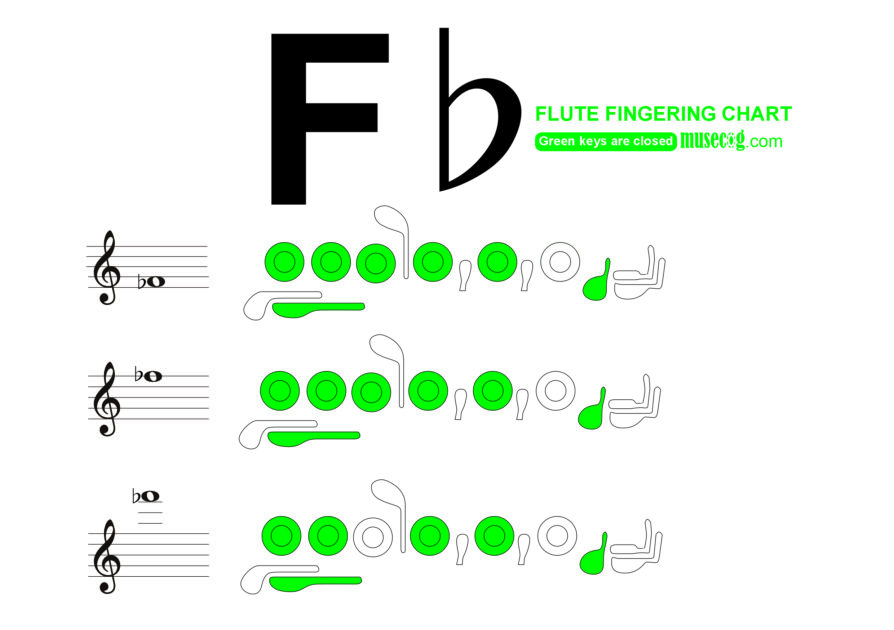
There are three different F flats that can be played on the C flute and they include the low F flat, middle F flat, and high F flat. Below are fingering charts and finger placements on the various ranges of F flat you can play on the C flute.
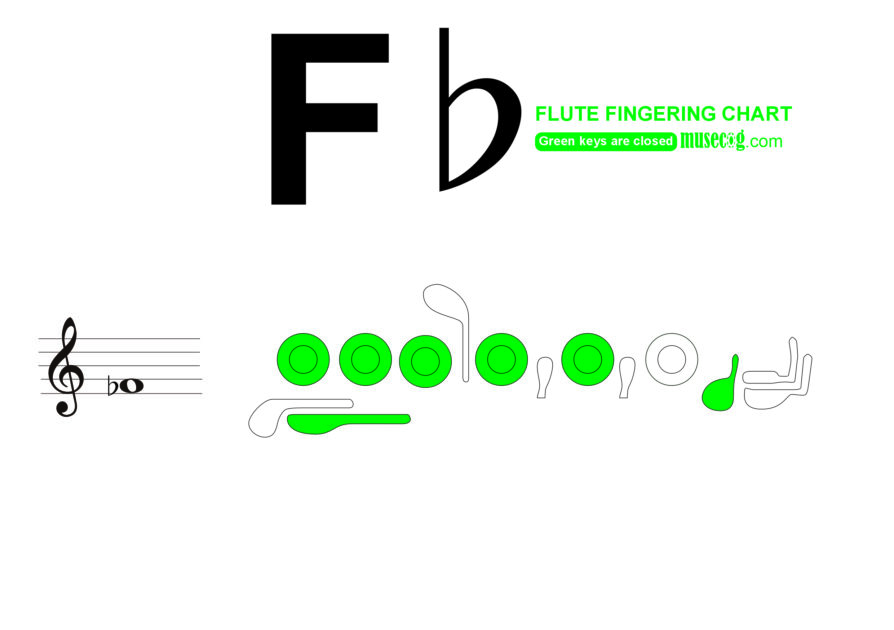
Low F flat flute fingering chart (First space of the treble staff)
To play the lowest F flat on the flute, you need to:
- close every key that is meant to be closed with your right fingers except for the G sharp lever that is closed with the left little finger.
- press the B key with your left thumb.
- press every key that the right index finger and middle finger are supposed to close leaving the right ring finger open.
- then press the D sharp lever key on your right little finger.
Middle F flat flute fingering chart (Fifth line of the treble staff)
To play the middle F flat on the flute, you need to;
- close every key that is meant to be closed with your right finger except for the G sharp lever that is closed with the left little finger.
- press the B key with your left thumb.
- press every key that the right index finger and middle finger are supposed to close leaving the right ring open.
- then press the D sharp lever key on your right little finger.
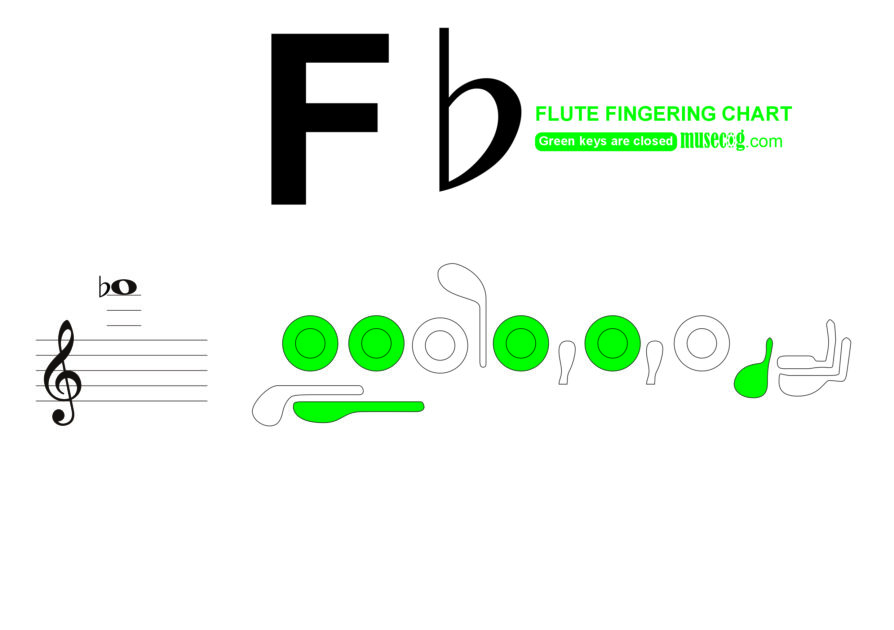
High F flat flute fingering chart (Third ledger line above the treble staff)
If you want to know how to play high F flat on the flute, you need to;
- close every key that is meant to be closed with your right index finger and middle finger while leaving the key for the right ring finger open.
- press the B key with your left thumb.
- press every key that the right index finger and middle finger are supposed to close leaving the right ring open.
- then press the D sharp lever key on your right little finger.
- For an alternate fingering for a high E natural flute fingering, you will need to use the fingering for low and middle E natural as stated above but you will have to increase the pressure of air that you will blow into the flute so as to give you a higher pitch.
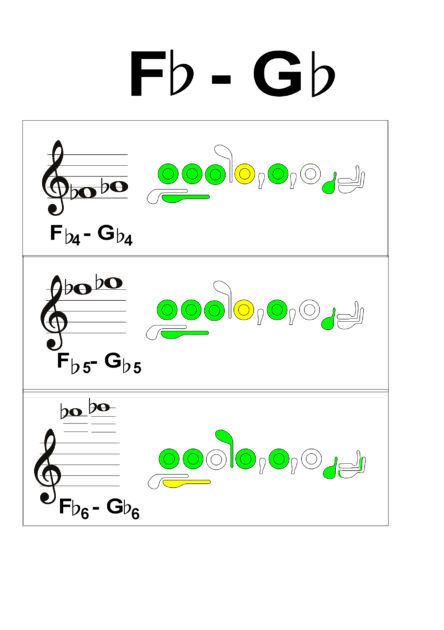
F flat to G flat trill chart for flute
To play F flat to G flat trill on the flute, use the flute trill fingering chart below: