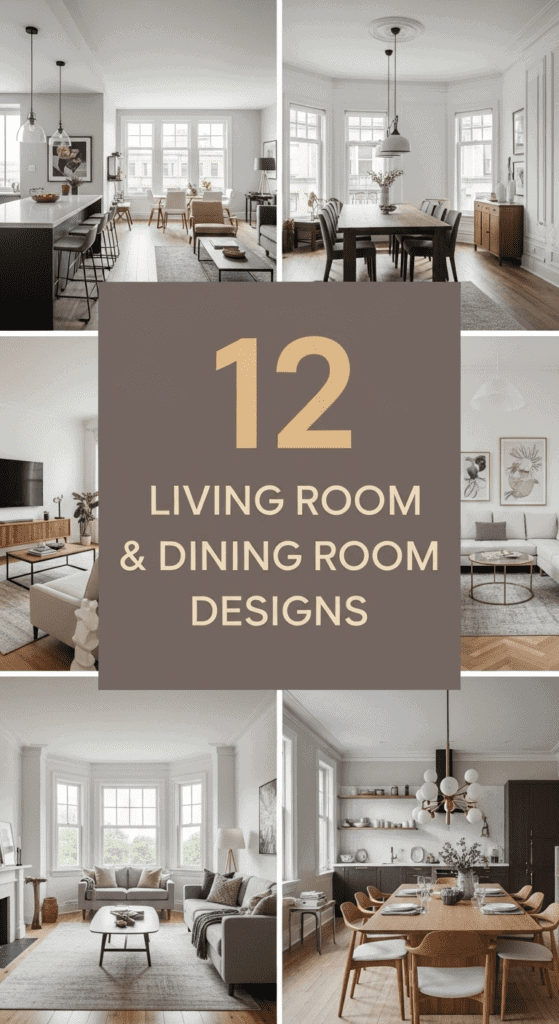
Living Room and Dining Room Designs
Living room and dining room designs have become increasingly essential as modern homes embrace open-plan layouts that merge these two spaces into one seamless, versatile environment. Creating harmony between a comfortable lounging area and a functional dining space requires thoughtful planning—balancing two distinct purposes within a single visual narrative. Done well, combined living and dining rooms feel expansive, connected, and beautifully cohesive. Done poorly, they feel cramped, confused, and visually chaotic. These twelve designs demonstrate how to achieve the former, offering inspiring approaches that honour both spaces while creating unified environments where family gathers, guests linger, and life unfolds naturally.
1. Neutral Flow Open Plan
A consistent neutral palette—warm whites, soft creams, and natural wood tones—flows effortlessly between living and dining zones. This unified colour story creates visual continuity while allowing each area its own functional identity through furniture arrangement and lighting variation.

2. Zoned by Rugs
Different area rugs define living and dining zones without physical barriers. A plush rug anchors the seating area while a complementary runner or second rug grounds the dining table, creating visual separation while maintaining the open-plan feel that makes these combined spaces so appealing.

3. Industrial Loft Fusion
Exposed brick, polished concrete floors, and metal accents create cohesive industrial atmosphere across both zones. A large wooden farmhouse table pairs naturally with leather sofas, unified by consistent raw materials and warm Edison bulb lighting throughout.

4. Mid-Century Modern Continuity
Walnut wood furniture in both zones creates immediate visual connection. A mid-century dining table with matching chairs echoes the sofa’s tapered legs and organic forms, while bold graphic artwork ties the entire space together cohesively.


5. Coastal Breeze Lifestyle
White furniture, natural textures, and sandy neutrals create breezy, relaxed combined spaces perfect for coastal living. A white dining table with woven chairs flows naturally into a white slipcovered sofa, unified by driftwood accents and ocean-inspired accessories.

6. Dramatic Dark Accent Wall
One bold dark wall—deep navy, forest green, or charcoal—spans both living and dining areas, creating dramatic visual anchor. Both zones reference this statement wall through coordinating accessories, drawing the eye across the entire space cohesively.

7. Scandinavian Minimalist Harmony
Functional simplicity defines this approach—light wood dining table, matching chairs, and a clean-lined sofa arranged with generous breathing room between zones. Minimal accessories, abundant natural light, and a restrained palette create effortless Scandinavian unity.

8. Bohemian Eclectic Mix
Layer vibrant textiles, collected artwork, and diverse furniture pieces across both zones for personality-rich bohemian fusion. Mismatched dining chairs in complementary colours echo cushions on the sofa, while a gallery wall spanning both areas creates visual connection.

9. Luxury Contemporary Statement
Premium materials—marble dining table, velvet sofa, brass fixtures—create sophisticated combined spaces where luxury flows seamlessly between zones. Consistent metallic accents and a refined colour palette unify both areas into one impressive, cohesive environment.

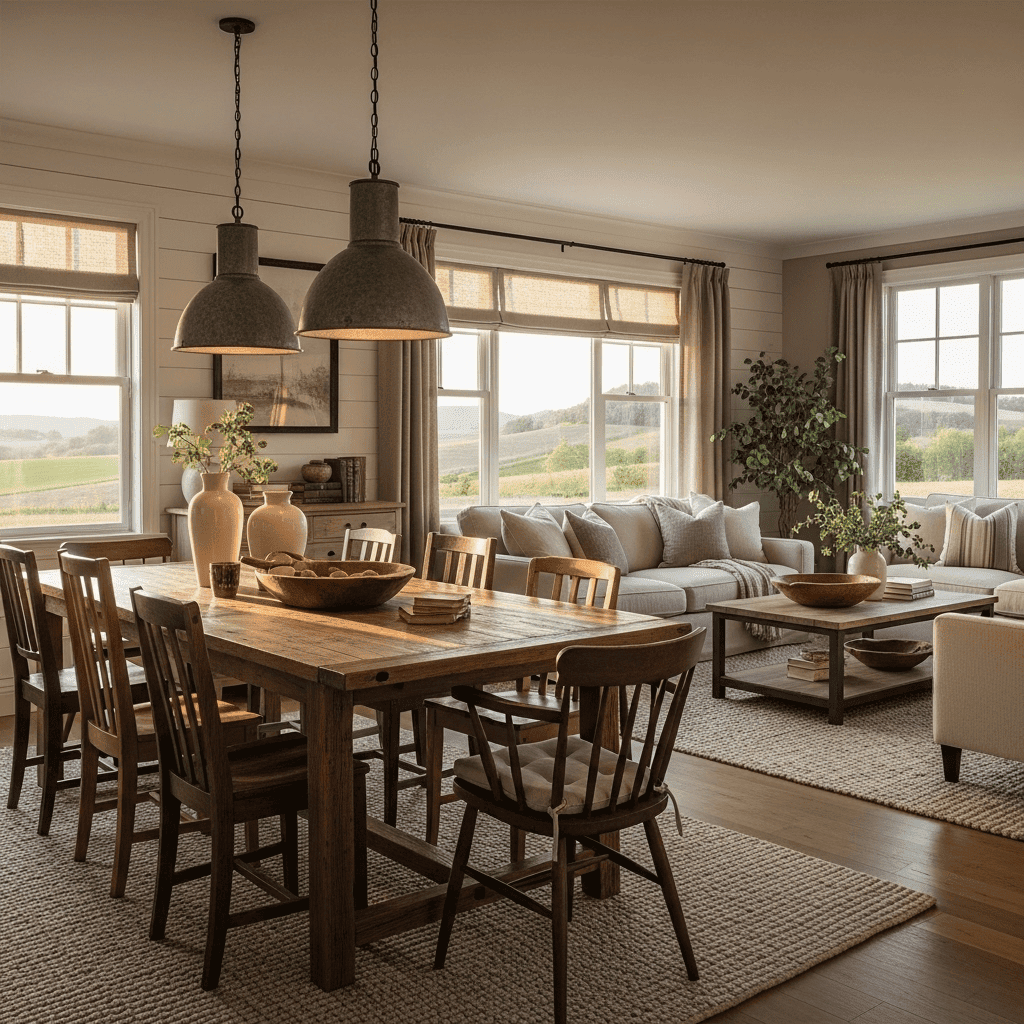
10. Farmhouse Warmth Throughout
Reclaimed wood dining table, shiplap accent wall, and cream linen furniture create authentic farmhouse atmosphere spanning both zones. Galvanised metal accents, vintage accessories, and warm natural lighting unite the entire space under one comforting farmhouse narrative.
11. Partition Screen Separation
A decorative room divider—jaali screen, tall bookshelf, or glass partition—creates gentle separation while maintaining visual connection. This approach suits spaces where slight definition between zones feels more comfortable than complete openness.

12. Colour Story Coordination
Choose one hero colour appearing in both zones—perhaps a blue dining table paired with a blue accent chair in the living area, or green cushions echoing green dining chairs. This deliberate colour repetition creates invisible threads connecting both spaces into one unified design story.

Designing Combined Spaces Successfully
The greatest challenge in living and dining room designs lies in honouring each space’s unique purpose while preventing visual fragmentation. Lighting becomes your most powerful tool—warmer, softer light over the dining table creates intimate gathering atmosphere, while slightly brighter, more ambient light across the living area supports relaxation and conversation equally well.
Furniture scale matters enormously in combined spaces. Oversized pieces in either zone create imbalance and visual heaviness. Choose pieces proportional to their individual zones while ensuring nothing dominates so aggressively that the other area feels forgotten or squeezed.
Finally, resist the temptation to fill every gap between zones with additional furniture or accessories. The breathing room between living and dining areas actually strengthens both spaces—it creates visual rhythm, allows comfortable circulation, and ensures each zone feels purposeful and intentional rather than cramped together out of necessity. The best combined living and dining rooms feel like one beautifully choreographed space where two distinct chapters of daily life unfold together in perfect, harmonious balance.