How to play G natural on the flute: finger placement and trill chart for low and high octaves
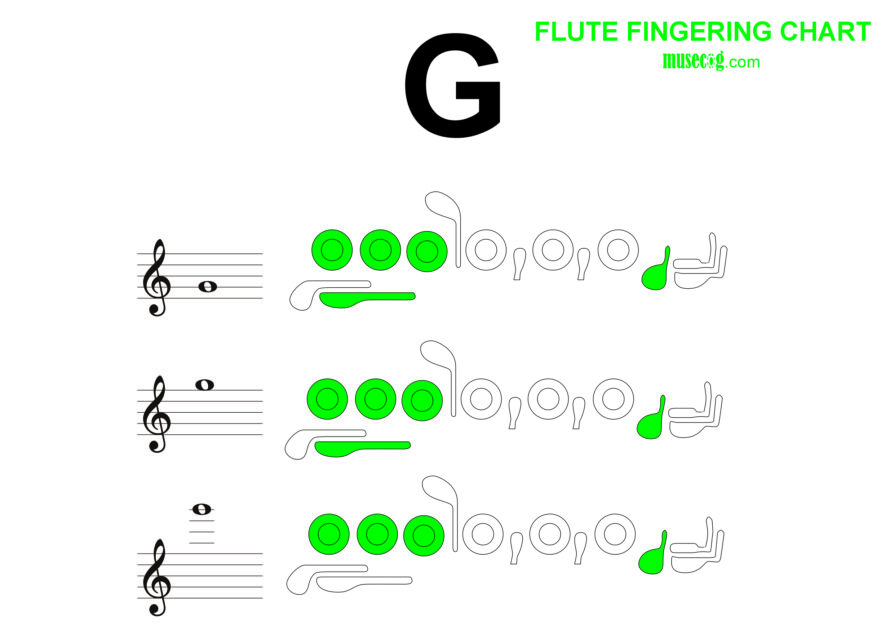
g flute finger chart

In flute music, “G natural” refers to the G note that is played without any sharpening or flattening. It is the natural form of the G note and is seen on the second line, first ledger space and fourth ledger line of the treble clef. G natural flute finger placement chart Below is a G … Read more
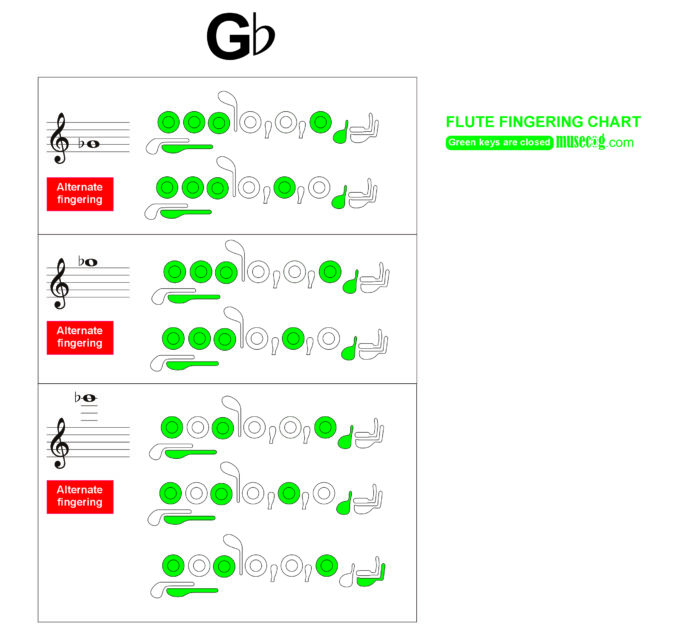
How to play G flat on the flute: finger placement and trill chart for low and high octaves

g flat flute finger chart

In music theory, G flat (Gb) is a musical note that is a half step lower than G natural and a half step higher than F natural. It is also known as F sharp (F#) enharmonically, which means that although they are different notations, they represent the same pitch. G flat flute finger placement chart … Read more

finger placement For A Sharp on Flute: Ultimate Guide to Finger Placement, Scale, and Notes

The flute is a beautiful instrument that offers a wide range of notes, from low to high. One of the most challenging notes to play on the flute is A sharp, but with the right finger placement and technique, you can master it in no time. In this article, we’ll explore the best finger placement … Read more

How to play C-sharp (C♯) major scale on flute, notes, finger placement chart, and concert tips

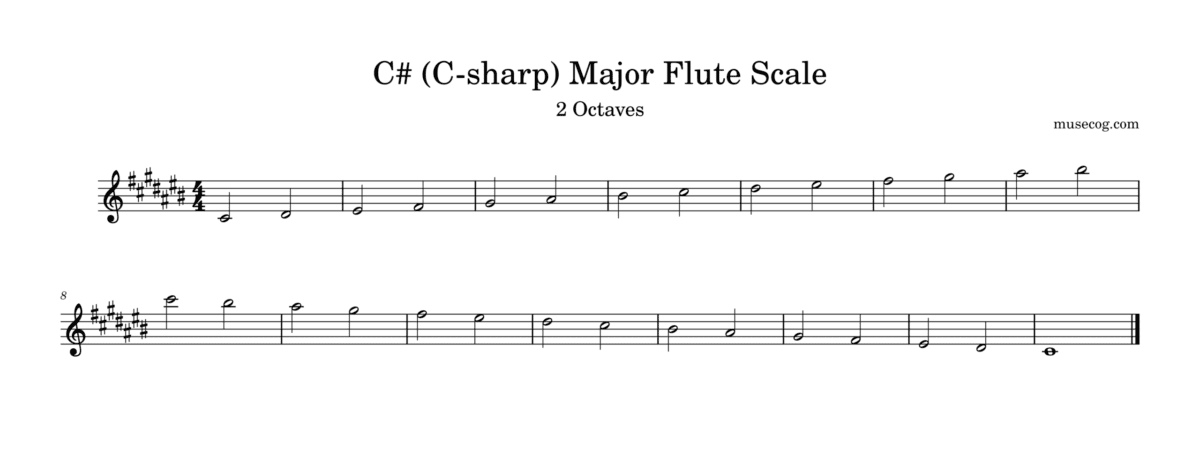
C-sharp (C♯) major scale on flute

The C-sharp (C♯) major scale on flute is the scale of the key of C-sharp or seven sharps. This implies that its tonic note is C-sharp. C-sharp major is relative to the key of A-sharp minor, parallel to the key of C-sharp minor, dominant to the key of G-sharp major, enharmonic to the key of … Read more

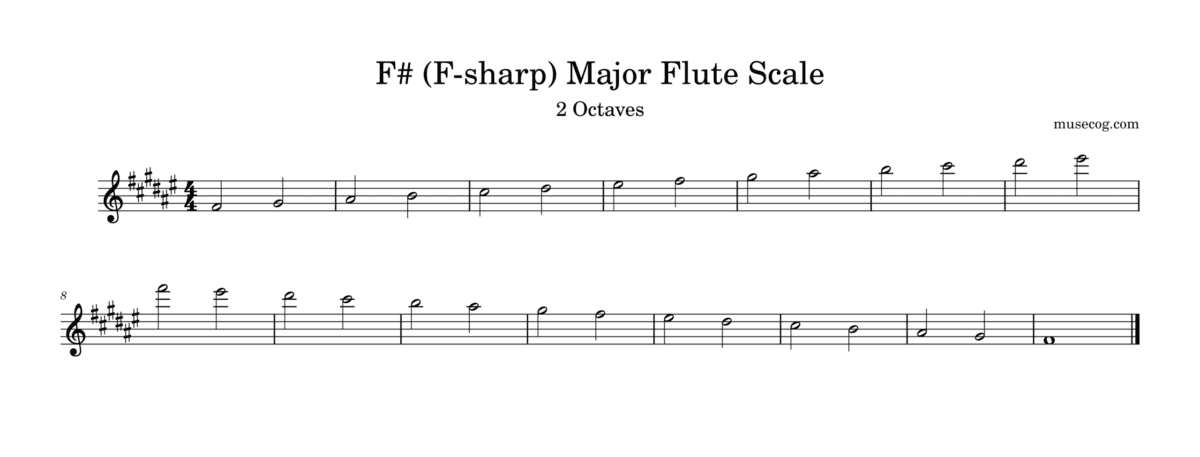
How to play F-sharp (F♯) major scale on flute, notes, finger placement chart, and concert tips

F-sharp (F♯) major scale on flute

The F-sharp major scale on flute is the scale of the key of F-sharp or six sharps. This implies that its tonic note is F-sharp. F-sharp major is relative to the key of D-sharp minor, parallel to the key of F-sharp minor, dominant to the key of C-sharp major, enharmonic to the key of G-flat … Read more

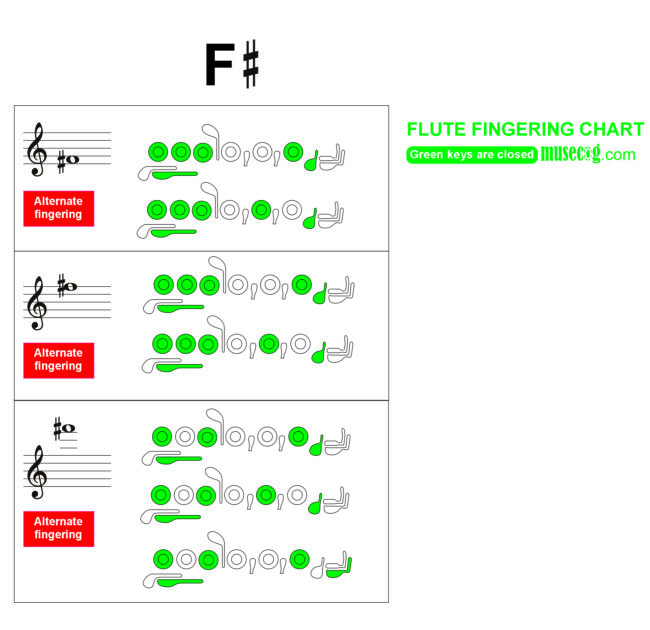
How to play F sharp (F#) on the flute: finger placement and trill chart for low and high octaves

f sharp flute finger

F sharp in music is a note that is half-step higher than F in pitch. It is represented by the note “F#” on the musical staff. F sharp can be found in many different scales, including the F# major scale, which includes F#, G#, A#, B, C#, D#, and E#. It can also be found … Read more

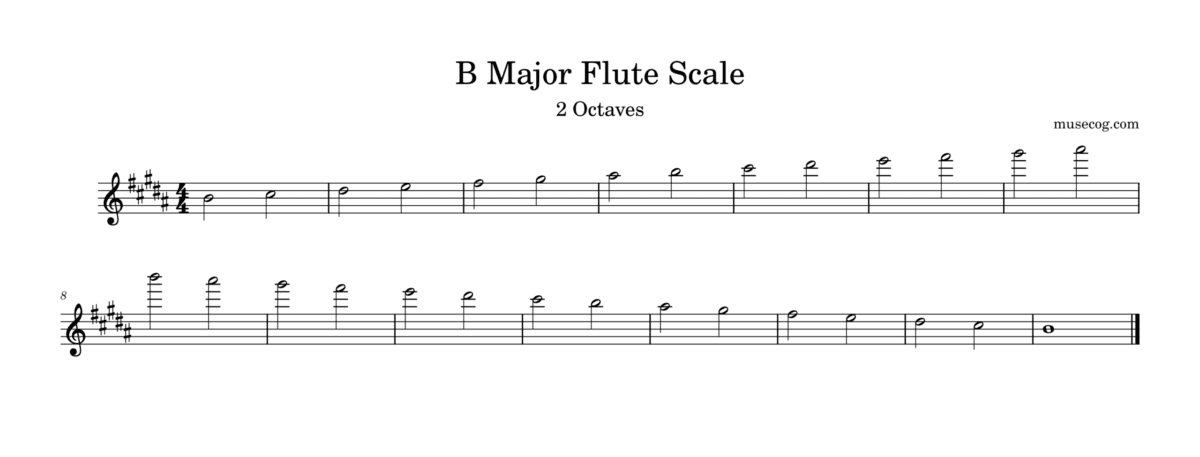
How to play B major scale on flute, notes, finger placement chart, and concert tips

B major scale on flute

The B major scale on flute is the scale of the key of B natural or five sharps. This implies that its tonic note is B natural. B major is relative to the key of G-sharp minor, parallel to the key of B minor, dominant to the key of F-sharp major, enharmonic to the key … Read more

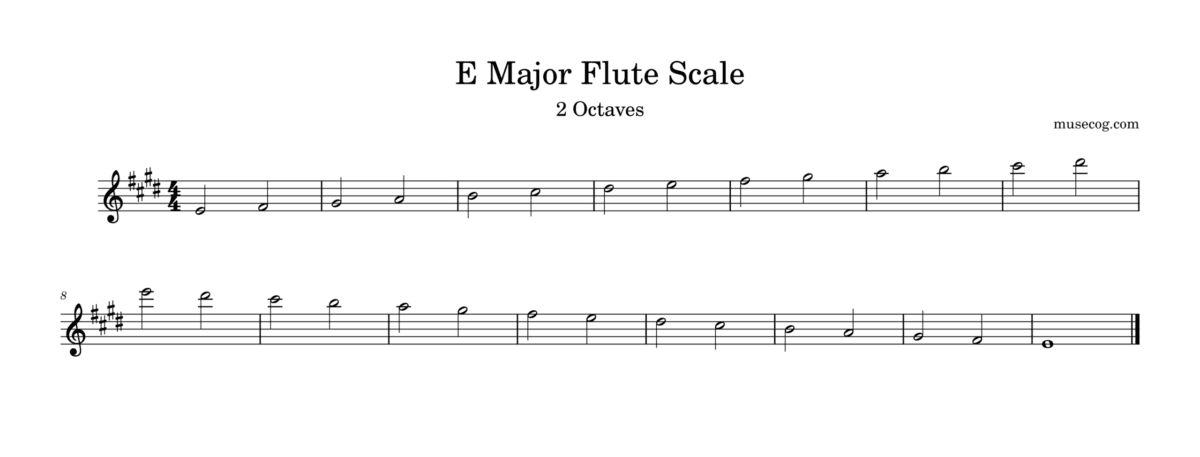
How to play E major scale on flute, notes, finger placement chart, and concert tips

E major scale on flute

The E major scale on flute is the scale of the key of E natural or four sharps. This implies that its tonic note is E natural. E major is relative to the key of C-sharp minor, parallel to the key of E minor, dominant to the key of B major, and subdominant to the … Read more

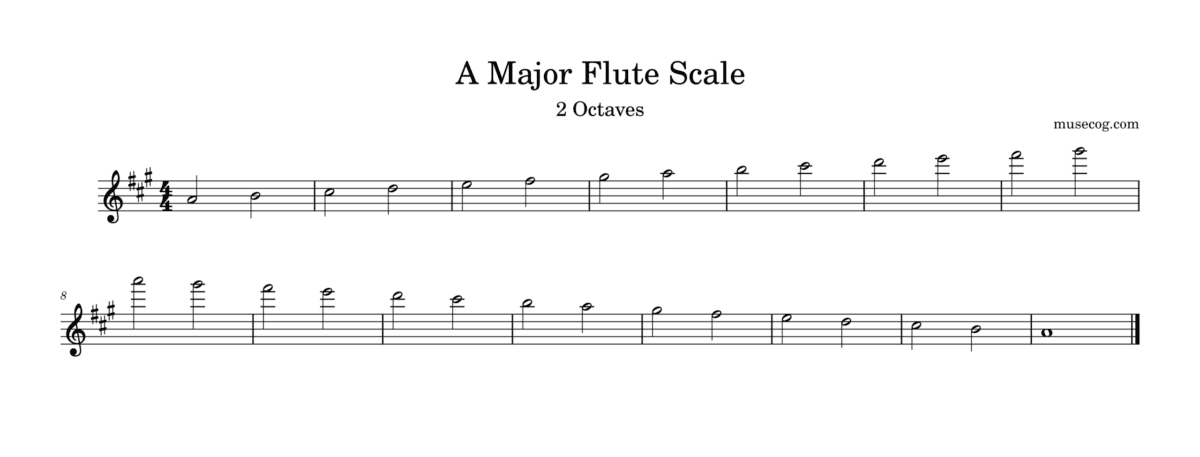
How to play A major scale on flute, notes, finger placement chart, and concert tips

A major scale on flute two octaves

The A major scale on flute is the scale of the key of A or three sharps. This implies that its tonic note is A natural. A major is relative to the key of F-sharp minor, parallel to the key of A minor, dominant to the key of E major, and subdominant to the key … Read more

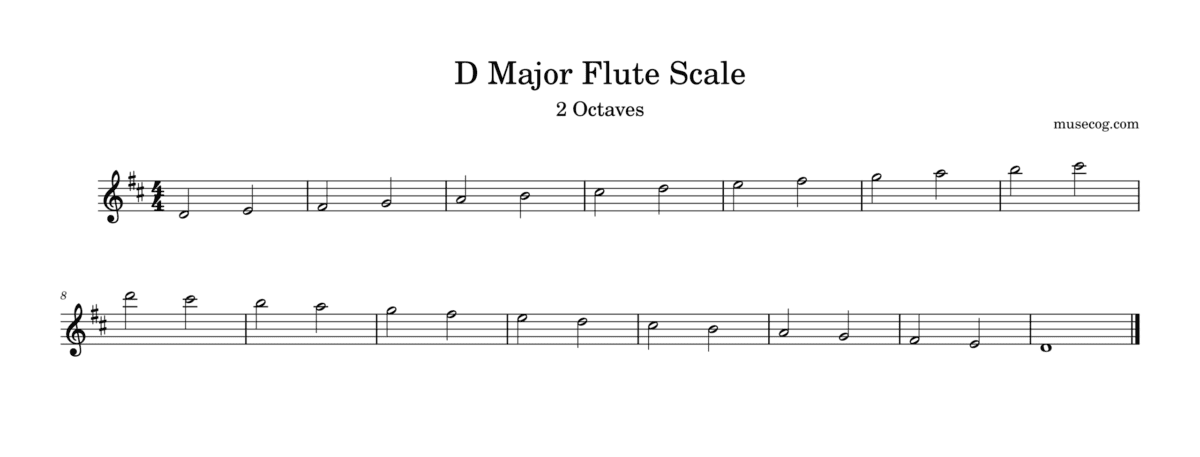
How to play D major scale on flute, notes, finger placement chart, and concert tips

D major scale for flute

The D major scale on flute is the scale of the key of D or two sharps. This implies that its tonic note is D natural. D major is relative to the key of B minor, parallel to the key of D minor, dominant to the key of A major, and subdominant to the key … Read more